“Ayres is particularly heart-rending in the famous scene where he begs for forgiveness from the French soldier (Raymond Griffith) he mortally wounded (Ayres became a lifelong pacifist because of his experience making All Quiet on the Western Front). “
Today, I’m writing about the World War I drama All Quiet on the Western Front (1930), starring Lew Ayres (left) and Louis Wolheim.
This article is part of Banned and Blacklisted: The CMBA Fall 2017 Blogathon. You can read the other entries here.
“Death is not an adventure to those who stand face to face with it,” the prologue to All Quiet on the Western Front (1930).
All Quiet on the Western Front has the distinction of being one of the most banned movies ever made in the old Hollywood studio system. This drama about ordinary German soldiers trying to survive in the trenches of World War I won two Academy Awards, but, at various times, it has been heavily censored, condemned by members of the US military and banned by the Third Reich.
All Quiet on the Western Front follows a group of German schoolboys who are persuaded to volunteer for the front lines by their professor’s patriotic platitudes about the Fatherland. The boys have been told that fighting for Germany is a glorious and heroic occupation that will earn them dozens of medals, but, when they get to the front lines, they find a very different reality. They are subjected to disease, vermin, unsanitary conditions and constant shelling while they crouch in the muddy trenches trying not to get killed by a random bullet. The boys are picked off one by one until only one (Lew Ayres) survives.
All Quiet on the Western Front is an adaptation of German writer Erich Maria Remarque’s landmark 1928 novel that was based on his infantry service during World War I. Remarque’s frank account of the horrors of trench warfare made the novel an immediate worldwide sensation (incidentally, All Quiet on the Western Front is a frequently banned book; it was a favored item for Nazi book-burning rallies).
Universal Pictures chief Carl Laemmle and his son, producer Carl Laemmle, Jr., were looking to burnish the reputation of their studio so they paid a handsome sum for the rights to the novel. The Laemmles hired journeyman director Lewis Milestone and the then relatively unknown Ayres for the lead role. The result was a landmark film that won the best picture and best director Oscars and was hailed as a masterpiece for its technical sophistication and its anti-war message. The Variety reviewer wrote, “The League of Nations [a precursor to the United Nations] could make no better investment than to buy up the master-print, reproduce it in every language, to be shown in all the nations until the word ‘war’ is taken out of the dictionaries.”
However, not everyone approved of All Quiet on the Western Front. A rising German political organization, The National Socialist German Workers’ Party or Nazis, and their leader, World War I infantry veteran Adolf Hitler, were virulently opposed to the film (these views were shared by the more conservative members of the German public, who viewed All Quiet on the Western Front as a painful reminder of the humiliating defeat of World War I). All Quiet on the Western Front had a brief and controversial run in German theaters, and the Nazis capitalized on all of the bad publicity by protesting outside movie theaters; the party faithful even disrupted some screenings by setting off stink bombs, throwing sneezing powder (!) into the air, and releasing rodents into the theaters.
All Quiet on the Western Front also received a frosty reception elsewhere. It was banned at one time or another in France and Poland because of its supposed pro-German sentiment, and members of the U.S. military condemned the film because they felt it was damaging recruiting efforts. Ironically, when the movie was re-released in 1939, it ran afoul of the motion picture censors not for its anti-war message, but for its scenes depicting the soldiers spending the night with three French girls.
Viewed today, it’s obvious why All Quiet on the Western Front has received such strong reactions through the years. It is a film of unusual power, depicting one of the most cataclysmic events in human history with an unflinching honesty. The soldiers in All Quiet on the Western Front do not cheerfully sacrifice their lives for a noble cause; instead, they are frightened and terrified young men who are thrown into an international conflict that they do not understand.
Their time in the army begins when they are subjected to cruel bullying during basic training, and it immediately gets worse when they arrive in the trenches. They are subject to disease, rodents, constant shelling, and poisonous gas, but the psychic pain they experience is perhaps the worst of all. Ayres is particularly heart-rending in the famous scene where he begs for forgiveness from the French soldier (Raymond Griffith) he mortally wounded (Ayres became a lifelong pacifist because of his experience making All Quiet on the Western Front).
The final scene is perhaps the most moving in cinema history. Milestone superimposed the ghostly images of the dead soldiers over a military graveyard, and one-by-one they turn and face the audience in what amounts to a silent plea for remembrance. The artistry of all those involved in All Quiet on the Western Front ensures that anyone who sees the film will never forget.
All Quiet on the Western Front is available on DVD and video on demand.
And all of you are children of the Most High.” (Psalm 82:6)
This is a verse that most Protestants do not underline in their Bibles. What on earth does it mean—“you are gods”? Doesn’t our faith teach that there is only one God, in three Persons? How can human beings be gods?
In the Orthodox Church, this concept is neither new nor startling. It even has a name: theosis. Theosis is the understanding that human beings can have real union with God, and so become like God to such a degree that we participate in the divine nature. Also referred to as deification, divinization, or illumination, it is a concept derived from the New Testament regarding the goal of our relationship with the Triune God. (Theosis and deification may be used interchangeably. We will avoid the term divinization, since it could be misread for divination, which is another thing altogether!)
Many Protestants, and even some Roman Catholics, might find the Orthodox concept of theosis unnerving. Especially when they read a quote such as this one from St. Athanasius: “God became man so that men might become gods,” they immediately fear an influence of Eastern mysticism from Hinduism or pantheism.
But such an influence could not be further from the Orthodox understanding. The human person does not merge with some sort of impersonal divine force, losing individual identity or consciousness. Intrinsic divinity is never ascribed to humankind or any part of the creation, and no created thing is confused with the being of God. Most certainly, humans are not accorded ontological equality with God, nor are they considered to merge or co-mingle with the being of God as He is in His essence.
In fact, to safeguard against any sort of misunderstanding of this kind, Orthodox theologians have been careful to distinguish between God’s essence and His energies. God is incomprehensible in His essence. But God, who is love, allows us to know Him through His divine energies, those actions whereby He reveals Himself to us in creation, providence, and redemption. It is through the divine energies, therefore, that we achieve union with God.
We become united with God by grace in the Person of Christ, who is God come in the flesh. The means of becoming “like God” is through perfection in holiness, the continuous process of acquiring the Holy Spirit by grace through ascetic devotion. Some Protestants might refer to this process as sanctification. Another term for it, perhaps more familiar to Western Christians, would be mortification—putting sin to death within ourselves.
In fact, deification is very akin to the Wesleyan understanding of holiness or perfection, with the added element of our mystical union with God in Christ as both the means and the motive for attaining perfection. Fr. David Hester, in his booklet, The Jesus Prayer, identifies theosis as “the gradual process by which a person is renewed and unified so completely with God that he becomes by grace what God is by nature.” Another way of stating it is “sharing in the divine nature through grace.”
St. Maximos the Confessor, as Fr. Hester notes, defined theosis as “total participation in Jesus Christ.” Careful to maintain the ontological safeguard noted above, St. Maximos further stated, “All that God is, except for an identity in being, one becomes when one is deified by grace.”
C. S. Lewis understood this concept and expressed it compellingly in Mere Christianity:
The command “Be ye perfect” is not idealistic gas. Nor is it a command to do the impossible. He is going to make us into creatures that can obey that command. He said (in the Bible) that we were “gods” and He is going to make good His words. If we let Him—for we can prevent Him, if we choose—He will make the feeblest and filthiest of us into a god or goddess, dazzling, radiant, immortal creatures, pulsating all through with such energy and joy and wisdom and love as we cannot now imagine, a bright stainless mirror which reflects back to Him perfectly (though, of course, on a smaller scale) His own boundless power and delight and goodness. The process will be long and in parts very painful; but that is what we are in for. Nothing less. He meant what he said. (Macmillan, 1952, p. 174)
With the Incarnation, God has assumed and glorified our flesh and has consecrated and sanctified our humanity. He has also given us the Holy Spirit. As we acquire more of the Holy Spirit in our daily lives, we become more like Christ, and we have the opportunity of being granted, in this life, illumination or glorification. When we speak of acquiring more of the Holy Spirit, it is in the sense of appropriating to a greater degree what has actually been given to us already by God. We acquire more of what we are more able to receive. God the Holy Spirit remains ever constant.
Theosis in the New Testament
Many passages in the New Testament speak to the Orthodox understanding of deification/theosis. First is 2 Peter 1:3–4, which states that God’s “divine power has given to us all things that pertain to life and godliness” through the knowledge of God, who called us by His own glory and goodness. Through these things, He has given us His great promises so that we “may be partakers of the divine nature, having escaped the corruption that is in the world through lust.”
This verse clearly and unequivocally states that we can become partakers of the divine nature. How so? Through God’s divine power at work in us, we gain life and godliness and are given His promises so that we can escape from corruption. There is God’s action in and upon us, and there is response and corresponding effort on our part.
This brings to mind Philippians 2:12–13, where St. Paul tells us to “work out [our] salvation with fear and trembling,” for it is God who is at work in us “both to will and to do for His good pleasure.” Thus we get a clear picture here of the process by which we are renewed and unified so completely with God that we become by grace what God is by nature. God works in us, and we cooperate with His grace.
Another passage of note is John 10:34–36. In a dispute with the Pharisees, Jesus refers to the verse quoted above, Psalm 82:6, where human beings are referred to as “gods.” The Jewish leaders accuse Jesus of blasphemy and are ready to stone Him for equating Himself with the Father (vv. 22–33). Jesus replies, “ Is it not written in your law, ‘I said, “You are gods” ’? If He called them gods, to whom the word of God came (and the Scripture cannot be broken),” then why do they label as blasphemy Jesus calling Himself God’s Son? Jesus is truly God’s Son, and we are gods because we share in His sonship.
Consider Acts 17:28–29, where St. Paul approvingly quotes the Greek poets, who state that we are God’s “offspring.” Paul concludes that sincewe are “the offspring of God, we ought not to think that the Divine Nature” is like some lifeless object.
Throughout Paul’s epistles, we find many descriptive passages referring to the same concepts that we have been considering: union with God, sharing in the divine nature through grace, and total participation in Jesus Christ—the biblical concept of theosis/deification. In Ephesians 1, Paul states that we have been given “every spiritual blessing” (v. 3) so that we should be “holy and without blame” (v. 4); we are His “sons” (v. 5). He made “the riches of His grace . . . to abound toward us” (vv. 6–7). We are given wisdom and insight into the “mystery of His will” (v. 9), which is to “gather together in one all things in Christ” (v. 10).
Furthermore, we are “sealed with the Holy Spirit of promise” (v. 13), the “guarantee of our inheritance until the redemption of the purchased possession” (v. 14). We are recipients of “wisdom and revelation” (v. 17), having “the eyes of [our] understanding . . . enlightened” (v. 18); knowing the “exceeding greatness of His power toward us” (v. 19). We are the “body” of Him who is the head and “the fullness of Him who fills all in all” (v. 23).
These are descriptions of sonship, of human beings as children of God with full pedigree and inheritance rights. We are brought into God’s intimate inner circle to know the mystery of His will, being given wisdom and enlightenment. We have grace lavished upon us and are His body, His fullness. The whole purpose of God’s mystery is that all things will be united in Christ and that He will be all in all. Does this not describe partaking of the divine nature, becoming by grace what God is by nature?
Certainly there is much more being described here than “growing in faith and good works,” progressing in sanctification or mortifying sin. Those are indeed excellent enterprises, but not ends in themselves. They are means employed toward a greater end. St. Paul is outlining this compelling, inspiring description of our identity in Christ, indeed showing us what total participation in Christ actually is. Ephesians 1 is a description of theosis.
In other verses in Ephesians, St. Paul continues: we are to “be filled with all the fullness of God” (3:19) and to attain to “the measure of the stature of the fullness of Christ” (4:13). We are to “grow up in all things into Him who is the head—Christ” (4:15). Again, this describes the process of being deified by grace, acquiring the fullness of Christ.
In Romans 6, Paul gives us a wonderful picture of deification. Through baptism we “walk in newness of life” (v. 4). We are not to let sin “reign in [our] mortal bod[ies]” (v. 12), but are to “present [ourselves] to God” (v. 13) so that sin will “not have dominion over” us (v. 14). Our members are to be yielded to “righteousness for holiness” (v. 19). Therefore we have “been set free from sin, and hav[e] become slaves of God” (v. 22). Our hope is to share in “the glory of God” (5:2). Even the very creation “eagerly waits for the revealing of the sons of God” (8:19).
Continuing in chapter 8, we are indeed called “sons of God” (v. 14) who have received a “Spirit of adoption,” crying (as Jesus did) “Abba, Father” (v. 15). The Spirit bears witness “with our spirit”—union—that we are “children of God” (v. 16). We are children, “heirs of God and joint heirs with Christ . . . that we may also be glorified together” (v. 17). Verse 17 also stipulates, “if indeed we suffer with Him.” We will come back to that in relation to the experience of the saints who have attained deification.
In verse 29, St. Paul writes that we are destined to be “conformed to the image of His Son.” Furthermore, those He “justified, these He also glorified” (v. 30). Note that he did not say God will glorify them only after they die, at the final resurrection. This glorifying can be a present reality. Verse 32 says that God will “with Him also freely give us all things.”
Does this not get you just a little bit excited? Does it not describe something more than “being saved” or “going to heaven when I die”? Is your heart racing just a little? If so, you are starting to grasp theosis. It is an understanding of our purpose as believers that is not just Orthodox, it is thoroughly biblical.
Before we briefly note some other New Testament passages, let’s consider an additional way to understand deification from the Book of Genesis. There we learn that we are created in God’s image. Through sin, that image has been greatly broken and damaged, but through redemption in Christ it is renewed “according to the image of Him who created” it, as Paul notes in Colossians 3:10. Add all these other motifs—sonship, being fellow heirs, union, being made like Christ, partaking of the divine nature—and we see that these describe the divine image, broken and marred (but not altogether lost) through Adam’s fall, being remade in us through Christ’s redeeming work, so that we become like God. Thus in Genesis we are created in God’s image; through Christ we are given the opportunity to acquire God’s likeness. In Ephesians 4:23–24 this very idea is reinforced: “be renewed in the spirit of your mind” and “put on the new man which was created according to God, in true righteousness and holiness.” And in 5:1 we are enjoined to be “imitators of God.”
A number of other New Testament passages describe theosis:
Romans 12:1–2: We are to present our bodies as a “living sacrifice,” doing so as part of our spiritual worship. And we are to “be transformed” by the renewing of our minds into the likeness of God.
1 Corinthians 3:16; 6:17: We are reminded that we are God’s “temple” and that “he who is joined to the Lord is one spirit with Him”—union with God.
Galatians 2:20: “It is no longer I who live, but Christ who lives in me.”
Philippians 1:21: “For me, to live is Christ.”
Colossians 3:3: We have “died” and our lives are “hidden with Christ in God”—total participation in Christ.
1 Thessalonians 5:23: May God “sanctify you completely”—complete conformity to the image and likeness of God.
2 Thessalonians 2:14: We were called by God “for the obtaining of the glory of our Lord Jesus Christ.”
1 John 4:17: “Because as He is, so are we in this world”—the possibility of deification, total participation in Christ this side of eternity.
John 17:22: In His high priestly prayer, Jesus says that He has given us the glory that the Father gave Him.
Revelation 21:7: At the beginning of the eschaton, Christ says of each of us, “I will be his God and he shall be My son.”
1 John 3:2: “We know that when He is revealed, we shall be like Him, for we shall see Him as He is.”
Philippians 3:21: Christ will “transform our lowly body that it may be conformed to His glorious body.”
These passages promise to all Christians an ending “like Christ” at the consummation of history. Since that is our end—actually a new beginning, for which we were created and redeemed—we are urged throughout the New Testament to obtain more and more of that reality in this life, as a “dress rehearsal” for the life to come. In short, this is what theosis/deification is: the possibility that we can acquire in this life that state that we will have as resurrected, glorified persons in the presence of God in eternity.
Finally, we must consider our Lord’s transfiguration on Mt. Tabor (Matt. 17:1ff; Mark 9:2ff). One of the twelve major feasts of the Orthodox Church, it provides great insight for our understanding of theosis. Jesus went up the mountain with Peter, James, and John and was transformed before their eyes. He appeared to them in His glorified humanity and was illumined with the light of divinity. Moses and Elijah, representing the Law and the Prophets, appeared with Christ as He was enveloped by the glory cloud, the presence of the Holy Spirit. As at His baptism, the Father spoke, saying, “This is My beloved Son, in whom I am well pleased. Hear Him!” (Matthew 17:5).
Here we have the whole Bible summed up in this one event. The Old Testament, the Law and the Prophets, point to Christ, the eternal Son come in the flesh. He appears with the Holy Spirit and the Father—the Trinity. Through His Incarnation He is joined to our humanity and glorifies it in Himself, uniting us to God, fulfilling the purpose of our creation in Genesis. We are to listen to Him because He is God’s ultimate revelation of Himself to us (cf. Hebrews 1:1; John 1:14). Furthermore, this event occurred to prepare the disciples for Christ’s crucifixion, which would deliver our fallen humanity from sin and death and raise us up with Him in His resurrection.
Thus we may be glorified together with Him. We are joined to Christ in His glorified, deified humanity and so are united to God. Through this union we are made partakers of the divine nature. Through grace we can become what He is.
Theosis in the Writings of the Fathers
We began with a somewhat startling quote by St. Athanasius: “God became man so that men might become gods.” Keep in mind that this is the same Athanasius who championed the orthodox (in its common sense of correct) understanding of the full divinity of Christ in opposition to the Arian heresy. Numerous other early Church Fathers made similar statements.
Gregory of Nazianzus, another great champion of correct views about the Trinity and Christ’s divinity, stated: “Man has been ordered to become God.” His close friend, Basil the Great, said, “From the Holy Spirit is the likeness of God, and the highest thing to be desired, to become God.”
Origen noted that the spirit “is deified by that which it contemplates.” And Cyril of Alexandria commented that we are all called to take part in divinity, becoming the likeness of Christ and the image of the Father by “participation.” Irenaeus noted, “If the Word is made man, it is that man might become gods.” Finally, John of Damascus taught that Christ’s redemptive work enables the image of God to be restored in us so that we become “partakers of divinity.”
These are not just Eastern Church Fathers being quoted. Most, if not all, are recognized by East and West. Theosis is a truly catholic understanding of the goal of our relationship with God in Christ.
Theosis in the Lives of the Saints
Finally, countless saints throughout history have demonstrated the possibility of deification as a reality in their lives. They attained deification only after intense suffering. Their sufferings came through persecution and martyrdom, intense ascetic discipline and countless nightly prayer vigils wrestling with evil spirits to obtain victory in the spiritual life. Through suffering such blessed victory was won.
Two stories of two saints show the effects of theosis on the body. Some may wish to discount these accounts as “hero worship” or “mythology” or “hagiographic exaggeration.” I prefer to offer them as inspiration to strive toward theosis in each of our lives.
St. Seraphim of Sarov, a Russian monk of the nineteenth century, went into the forest with his disciple, Motovilov, during a snowstorm. While praying, St. Seraphim became iridescent in appearance, to the point of emitting what was for Motovilov an almost blinding light. Accompanying this glow was a warmth in the midst of the Russian winter snow, along with a beautiful fragrance and unspeakable joy and peace. St. Seraphim attributed this blessed state to his having acquired the Holy Spirit, or deification.
Abba Joseph, a desert father, was approached by Abba Lot, who informed him that he had kept his rule of prayer, fasted, purified his thoughts, and lived peaceably—what more could he do? Abba Joseph held out his hands toward heaven, fingers extended, and said, “You can become fire.” Each fingertip blazed like a candle. Abba Joseph’s point was that the younger monk could be set ablaze by the Holy Spirit.
May we all be set ablaze by the Spirit, the “Heavenly King, the Comforter . . . Treasury of blessings and Giver of life”—as the Orthodox prayer addresses Him. And through that same Holy Spirit, may we come into union with God and experience “total participation in Jesus Christ.” May our lives be “unified so completely with God” that we become “by grace what God is by nature,” so that we share in “the divine nature through grace.” So much so that we become not just Christ-like, but the likeness of Christ.
Suggested Reading
At the Corner of East and Now, by Frederica Mathewes-Green. She writes clearly, with wit and charm. But she also communicates the majesty and beauty and profound glory of Orthodox worship and life.
The Jesus Prayer, by Fr. John Hester. This booklet is an excellent overview of the Jesus Prayer, its history, and its influence in the process of deification.
Living Icons, by Fr. Michael Plekon. The book begins with a wonderful chapter on St. Seraphim of Sarov and stresses his impact on the lives and thought of so many Russian émigrés after the Bolshevik Revolution.
Eastern Orthodox Christianity, by Daniel B. Clendenin. This is an insightful and mostly sympathetic examination of Orthodoxy by a Protestant scholar.
Mark Shuttleworth lives in Pittsburgh, PA. He and his wife, Sara, are members of the Holy Virgin Orthodox Church (OCA) in Carnegie, PA. Mark was raised in an evangelical Protestant family, earned a Master of Divinity at Gordon-Conwell Seminary, was ordained and served for over ten years as a Presbyterian youth minister. Mark’s journey to Orthodoxy began in late 2002. He and his wife were chrismated in spring 2004.
+++
This article is available as a printed booklet from Conciliar Media, a department of the Antiochian Archdiocese, as part of their popular series of attractive and informative booklets and brochures about the basic teachings of the ancient Orthodox Christian faith. To learn more, visit Conciliar’s online booklet catalog. This essay is copyrighted by Conciliar Press.
Talks at Google • Jul 19, 2013 While some mind-body medicine pioneers and New Age teachers talk about how we can heal ourselves, Dr. Lissa Rankin was a skeptical physician, trained in evidence-based academic medicine and raised by a closed-minded physician father. But after witnessing patients who declined conventional medical treatment, only to experience spontaneous remissions from seemingly “”incurable”” illnesses, she couldn’t deny the possibility that patients might hold within them the power to heal themselves. Her curiosity led her to dig deep into the medical literature to scientifically prove that the mind can heal the body. Her search uncovered not only proof that you can heal yourself, but also the shocking physiological mechanisms of how emotions like fear, loneliness, pessimism, and depression can make the body sick, while love, intimate connection, optimism, and faith can cure you.
Channel 4 News • Nov 11, 2022 Joyous residents welcomed Ukrainian troops in the centre of Kherson today after Russia abandoned the only regional capital it had captured since its invasion earlier this year. (Subscribe: https://bit.ly/C4_News_Subscribe) According to the Ukrainians, the Russian retreat was chaotic, but Russia says it completed the withdrawal without losing a single soldier. Ukraine says its forces have recaptured 100 square miles in the past 24 hours – and ordered any Russian soldiers still inside Kherson to surrender.
This photograph of a ring around Jupiter was taken in 1979 by the Voyager I spacecraft. The discovery, however, was anticipated by Ingo Swann, who reported rings after remote viewing Jupiter in 1974. These rings are so thin and diaphanous that they were not previously observed, even with the most powerful earth-based telescopes. As you might imagine, this particular experiment generated serious interest in remote viewing.
Jeffrey Mishlove and the New Thinking Allowed Foundation (jmishlove@newthinkingallowed.com)
“Letting go of our suffering is the hardest work we will ever do. It is also the most fruitful. To heal means to meet ourselves in a new way – in the newness of each moment where all is possible and nothing is limited to the old .”
Stephen Levine (1937-2016) American Poet and Teacher
AN OPPORTUNITY FOR DAILY REFLECTION BROUGHT TO YOU BY THE SCHOOL OF PRACTICAL PHILOSOPHY
The 2022 midterms were stunning as much for what didn’t happen as for what did.
We had a very narrow path to saving American democracy this year, and we just might have begun that journey. For starters, it’s likely that Democrats will hold the Senate. Catherine Cortez Masto seems on track to eke out a narrow win in Nevada once all ballots are counted. That success, along with the almost certain victory of Democrat Mark Kelly in Arizona, means that Democrats are likely to keep 50 Senate seats whether or not Raphael Warnock wins the December 6 runoff in Georgia.
So even if Democrats very narrowly lose the House, Biden will have a Senate that can confirm nominees, conduct investigations, and block crazy Republican legislation. And if it’s clear that Democrats have kept control even without the Georgia seat, that is likely to depress Republican turnout more than Democratic turnout when Georgians vote. Georgia Secretary of State Brad Raffensperger, an anti-Trump Republican, cruised to re-election, and we can expect an honest vote count.
More remarkably, the anticipated Trumpian claims of election fraud, as well as Republican attempts to use it to their advantage, totally fizzled. Trump’s calls were widely ignored. Almost everywhere, it was a normal election.
Efforts at voter intimidation at polling places were blocked. With a few exceptions, even conservative courts refused to connive with Republican strategies to deter or depress voting.
In every major race that the AP has called, the loser has accepted defeat. Most statewide Republican candidates who campaigned around claims of ballot mischief were defeated.
For the most part, state and local election officials, of both parties, behaved like professionals, defending the right to vote. The few genuine cases of technical problems with voting, as in Philadelphia and Maricopa County, Arizona, were speedily rectified. There is still a good deal of ballot-counting to go, but all indications are that is going smoothly.
And as our colleague Miles Rapoport points out, “In addition to rejecting election denial victories in the most important states, voters in several states passed ballot initiatives to expand voting and voting choice.”
Rapoport notes that in Michigan, voters approved a measure requiring nine days of early voting, increased ballot drop boxes, and more time to count absentee ballots. Arizona enacted an initiative requiring more transparency for campaign contributions. And Connecticut voters passed a constitutional amendment allowing for early voting.
At the city level, Portland, Oregon, passed a new multimember proportional representation and ranked-choice voting plan. Oakland approved a program of public-financing vouchers and expanded transparency for local elections. And in Seattle, an initiative for ranked-choice voting is too close to call.
The failure of Republican candidates or activists to rally to Trump’s banner of claimed election fraud is another sign of Trump’s diminishing influence both in his party and with voters. Much of the claim of stolen elections began with Trump. And as a sign of sick democracy, it could well end with him.
The battle to save democracy is far from over, but these trends are a sign that at least the “ballot fraud” fever has peaked. Of course, some of the deeper problems with democracy are still baked in—the grotesque amounts of special-interest money being spent; the partisan gerrymandering; and the far-right capture of the Supreme Court.
At the local and state level, the struggle to prevent partisan legislation and official interference from deterring voting will still be trench warfare. Florida, for example, has successfully undermined a voter-approved ballot initiative to give former felons back the vote.
But we now have a decent shot at rebuilding our democracy. This was by no means assured and it is still far from a sure thing.
For democracy to broadly prevail, right-wing candidates need to be repudiated. Democrats will need to keep on rallying voters to the banner of economic justice, as they did in the 2022 midterms. They will need to keep peeling off Trump voters, as John Fetterman did so brilliantly. They will need to win in 2024 with a strong progressive program.
As a number of commentators have pointed out, Republicans are furious with Trump for helping Republicans lose one winnable seat after another, as well as scaring off voters with his own antics. It remains to be seen how many will publicly break with him. Even if Mike Pence, Mitch McConnell, and others are more outspoken in their criticisms of Trump, he still could retain enough grassroots MAGA support to win the 2024 nomination.
Trumpers other than Trump, such as Ron DeSantis of Florida, could be more dangerous. Yet it’s not clear how well a DeSantis will travel. If Democrats can stick to the kind of progressive populist themes that led Fetterman to make big gains in Pennsylvania, they can beat either Trump or DeSantis in 2024, notably in the Midwestern swing states where the election will be decided.
Last April, when things were looking pretty bleak for Biden and the Democrats, I published a book titled Going Big. In it, I challenged the conventional premise that 2022 would be a Republican wave and suggested several reasons why Democrats could beat the midterm jinx.
I pointed out that Biden might not be popular personally but that he and the Democrats had delivered a lot; that Biden would not be on the ballot but that Trump in effect would, and that Trump would wreak havoc; and that Republican stances on unpopular issues like abortion rights would help Democrats. I also noted that individual Senate races looked pretty decent for Democrats. At the time, people appreciated my efforts at keeping hope alive, but thought I was a little wishful if not delusional. Well, maybe not.
Tuesday proved that America is still a democracy. We are going to have to keep fighting like hell to keep it that way.
Religion and History Documentaries • Apr 25, 2015 I am who I am Watch and find out the 3 major monotheistic tradition, The Judaism, The Christianity, and The Islam. See how humans have created and recreated various gods in their own image. The evolution of the idea of God is traced from its ancient roots in the Middle East up to the present day.
Transcendentalism is a philosophical movement that developed in the late 1820s and 1830s in New England.[1][2][3] A core belief is in the inherent goodness of people and nature,[1] and while society and its institutions have corrupted the purity of the individual, people are at their best when truly “self-reliant” and independent. Transcendentalists saw divine experience inherent in the everyday, rather than believing in a distant heaven. Transcendentalists saw physical and spiritual phenomena as part of dynamic processes rather than discrete entities.
Transcendentalism is one of the first philosophical currents that emerged in the United States;[4] it is therefore a key early point in the history of American philosophy. Emphasizing subjective intuition over objective empiricism, its adherents believe that individuals are capable of generating completely original insights with little attention and deference to past masters. It arose as a reaction, to protest against the general state of intellectualism and spirituality at the time.[5] The doctrine of the Unitarian church as taught at Harvard Divinity School was closely related.
Transcendentalism is closely related to Unitarianism, a religious movement in Boston in the early nineteenth century. It started to develop after Unitarianism took hold at Harvard University, following the elections of Henry Ware as the Hollis Professor of Divinity in 1805 and of John Thornton Kirkland as President in 1810. Transcendentalism was not a rejection of Unitarianism; rather, it developed as an organic consequence of the Unitarian emphasis on free conscience and the value of intellectual reason. The transcendentalists were not content with the sobriety, mildness, and calm rationalism of Unitarianism. Instead, they longed for a more intense spiritual experience. Thus, transcendentalism was not born as a counter-movement to Unitarianism, but as a parallel movement to the very ideas introduced by the Unitarians.[8]
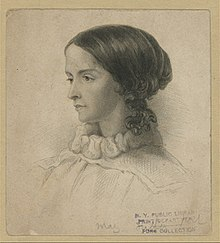
By the late 1840s, Emerson believed that the movement was dying out, and even more so after the death of Margaret Fuller in 1850. “All that can be said”, Emerson wrote, “is that she represents an interesting hour and group in American cultivation”.[10] There was, however, a second wave of transcendentalists later in the 19th century, including Moncure Conway, Octavius Brooks Frothingham, Samuel Longfellow and Franklin Benjamin Sanborn.[11] Notably, the transcendence of the spirit, most often evoked by the poet’s prosaic voice, is said to endow in the reader a sense of purpose. This is the underlying theme in the majority of transcendentalist essays and papers—all of which are centered on subjects which assert a love for individual expression.[12] The group was mostly made up of struggling aesthetes, the wealthiest among them being Samuel Gray Ward, who, after a few contributions to The Dial, focused on his banking career.[13]
Beliefs
Transcendentalists are strong believers in the power of the individual. It is primarily concerned with personal freedom. Their beliefs are closely linked with those of the Romantics, but differ by an attempt to embrace or, at least, to not oppose the empiricism of science.
Transcendental knowledge
Transcendentalists desire to ground their religion and philosophy in principles based upon the German Romanticism of Johann Gottfried Herder and Friedrich Schleiermacher. Transcendentalism merged “English and German Romanticism, the Biblical criticism of Herder and Schleiermacher, the skepticism of Hume“,[1] and the transcendental philosophy of Immanuel Kant (and of German idealism more generally), interpreting Kant’s a priori categories as a priori knowledge. Early transcendentalists were largely unacquainted with German philosophy in the original and relied primarily on the writings of Thomas Carlyle, Samuel Taylor Coleridge, Victor Cousin, Germaine de Staël, and other English and French commentators for their knowledge of it. The transcendental movement can be described as an American outgrowth of English Romanticism.[citation needed]
Individualism
Transcendentalists believe that society and its institutions—particularly organized religion and political parties—corrupt the purity of the individual.[14] They have faith that people are at their best when truly self-reliant and independent. It is only from such real individuals that true community can form.
Even with this necessary individuality, transcendentalists also believe that all people are outlets for the “Over-Soul“. Because the Over-Soul is one, this unites all people as one being.[15][need quotation to verify] Emerson alludes to this concept in the introduction of the American Scholar address, “that there is One Man, – present to all particular men only partially, or through one faculty; and that you must take the whole society to find the whole man”.[16] Such an ideal is in harmony with Transcendentalist individualism, as each person is empowered to behold within him or herself a piece of the divine Over-Soul.
In recent years there has been a distinction made between individuality and individualism. Both advocate the unique capacity of the individual. Yet individualism is decidedly anti-government, whereas individuality sees all facets of society necessary, or at least acceptable for the development of the true individualistic person. Whether the Transcendentalists believed in individualism or individuality remains to be determined. Whitman embraced all facets of life, which seems more like individuality, which is more in tune with what the Indian spiritual tradition advocates; i.e. the True Individual, the yogic attainment of true individuality.
In the morning I bathe my intellect in the stupendous and cosmogonal philosophy of the Bhagavat Geeta, since whose composition years of the gods have elapsed, and in comparison with which our modern world and its literature seem puny and trivial; and I doubt if that philosophy is not to be referred to a previous state of existence, so remote is its sublimity from our conceptions. I lay down the book and go to my well for water, and lo! there I meet the servant of the Brahmin, priest of Brahma, and Vishnu and Indra, who still sits in his temple on the Ganges reading the Vedas, or dwells at the root of a tree with his crust and water-jug. I meet his servant come to draw water for his master, and our buckets as it were grate together in the same well. The pure Walden water is mingled with the sacred water of the Ganges.[19]
Transcendentalists differ in their interpretations of the practical aims of will. Some adherents link it with utopian social change; Brownson, for example, connected it with early socialism, but others consider it an exclusively individualist and idealist project. Emerson believed the latter. In his 1842 lecture “The Transcendentalist“, he suggested that the goal of a purely transcendental outlook on life was impossible to attain in practice:
You will see by this sketch that there is no such thing as a transcendental party; that there is no pure transcendentalist; that we know of no one but prophets and heralds of such a philosophy; that all who by strong bias of nature have leaned to the spiritual side in doctrine, have stopped short of their goal. We have had many harbingers and forerunners; but of a purely spiritual life, history has afforded no example. I mean, we have yet no man who has leaned entirely on his character, and eaten angels’ food; who, trusting to his sentiments, found life made of miracles; who, working for universal aims, found himself fed, he knew not how; clothed, sheltered, and weaponed, he knew not how, and yet it was done by his own hands. …Shall we say, then, that transcendentalism is the Saturnalia or excess of Faith; the presentiment of a faith proper to man in his integrity, excessive only when his imperfect obedience hinders the satisfaction of his wish.
Importance of nature
Transcendentalists have a deep gratitude and appreciation for nature, not only for aesthetic purposes, but also as a tool to observe and understand the structured inner workings of the natural world.[5] Emerson emphasizes the Transcendental beliefs in the holistic power of the natural landscape in Nature:
In the woods, we return to reason and faith. There I feel that nothing can befall me in life, — no disgrace, no calamity, (leaving me my eyes,) which nature cannot repair. Standing on the bare ground, — my head bathed by the blithe air, and uplifted into infinite space, — all mean egotism vanishes. I become a transparent eye-ball; I am nothing; I see all; the currents of the Universal Being circulate through me; I am part or particle of God.[22]
The conservation of an undisturbed natural world is also extremely important to the Transcendentalists. The idealism that is a core belief of Transcendentalism results in an inherent skepticism of capitalism, westward expansion, and industrialization.[23] As early as 1843, in Summer on the Lakes, Margaret Fuller noted that “the noble trees are gone already from this island to feed this caldron”,[24] and in 1854, in Walden, Thoreau regards the trains which are beginning to spread across America’s landscape as a “winged horse or fiery dragon” that “sprinkle[s] all the restless men and floating merchandise in the country for seed”.[25]
Transcendentalism is, in many aspects, the first notable American intellectual movement. It has inspired succeeding generations of American intellectuals, as well as some literary movements.[4]
Transcendentalism is also influenced by Hinduism. Ram Mohan Roy (1772–1833), the founder of the Brahmo Samaj, rejected Hindu mythology, but also the Christian trinity.[28] He found that Unitarianism came closest to true Christianity,[28] and had a strong sympathy for the Unitarians,[29] who were closely connected to the Transcendentalists.[17] Ram Mohan Roy founded a missionary committee in Calcutta, and in 1828 asked for support for missionary activities from the American Unitarians.[30] By 1829, Roy had abandoned the Unitarian Committee,[31] but after Roy’s death, the Brahmo Samaj kept close ties to the Unitarian Church,[32] who strove towards a rational faith, social reform, and the joining of these two in a renewed religion.[29] Its theology was called “neo-Vedanta” by Christian commentators,[33][34] and has been highly influential in the modern popular understanding of Hinduism,[35] but also of modern western spirituality, which re-imported the Unitarian influences in the disguise of the seemingly age-old Neo-Vedanta.[35][36][37]
Early in the movement’s history, the term “Transcendentalists” was used as a pejorative term by critics, who were suggesting their position was beyond sanity and reason.[39]Nathaniel Hawthorne wrote a novel, The Blithedale Romance (1852), satirizing the movement, and based it on his experiences at Brook Farm, a short-lived utopian community founded on transcendental principles.[40]
Edgar Allan Poe wrote a story, “Never Bet the Devil Your Head” (1841), in which he embedded elements of deep dislike for transcendentalism, calling its followers “Frogpondians” after the pond on Boston Common.[41] The narrator ridiculed their writings by calling them “metaphor-run” lapsing into “mysticism for mysticism’s sake”,[42] and called it a “disease”. The story specifically mentions the movement and its flagship journal The Dial, though Poe denied that he had any specific targets.[43] In Poe’s essay “The Philosophy of Composition” (1846), he offers criticism denouncing “the excess of the suggested meaning… which turns into prose (and that of the very flattest kind) the so-called poetry of the so-called transcendentalists”.[44]
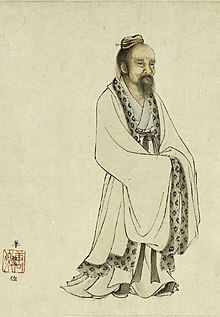
The only account of the life of Zhuangzi is a brief sketch in chapter 63 of Sima Qian‘s Records of the Grand Historian,[5] and most of the information it contains seems to have simply been drawn from anecdotes in the Zhuangzi itself.[6] In Sima’s biography, he is described as a minor official from the town of Meng (in modern Anhui) in the state of Song, living in the time of King Hui of Liang and King Xuan of Qi (late fourth century BC).[7] Sima Qian writes that Chuang-Tze was especially influenced by Lao-Tze, and that he turned down a job offer from King Wei of Chu, because he valued his personal freedom.[8]
The validity of his existence has been questioned by Russell Kirkland, who asserts that “there is no reliable historical data at all” for Chuang Chou/Zhuangzi, and that “the Chuang-tzu known to us today” is better attributed to its “commentator”, the third-century writer Kuo Hsiang.[9]
Zhuangzi is traditionally credited as the author of at least part of the work bearing his name, the Zhuangzi. This work, in its current shape consisting of 33 chapters, is traditionally divided into three parts: the first, known as the “Inner Chapters”, consists of the first seven chapters; the second, known as the “Outer Chapters”, consist of the next 15 chapters; the last, known as the “Mixed Chapters”, consist of the remaining 11 chapters. The meaning of these three names is disputed: according to Guo Xiang, the “Inner Chapters” were written by Zhuangzi, the “Outer Chapters” written by his disciples, and the “Mixed Chapters” by other hands; the other interpretation is that the names refer to the origin of the titles of the chapters—the “Inner Chapters” take their titles from phrases inside the chapter, the “Outer Chapters” from the opening words of the chapters, and the “Mixed Chapters” from a mixture of these two sources.[10]
Further study of the text does not provide a clear choice between these alternatives. On the one side, as Martin Palmer points out in the introduction to his translation, two of the three chapters Sima Qian cited in his biography of Zhuangzi, come from the “Outer Chapters” and the third from the “Mixed Chapters”. “Neither of these are allowed as authentic Chuang Tzu chapters by certain purists, yet they breathe the very spirit of Chuang Tzu just as much as, for example, the famous ‘butterfly passage’ of chapter 2.”[11]
On the other hand, chapter 33 has been often considered as intrusive, being a survey of the major movements during the “Hundred Schools of Thought” with an emphasis on the philosophy of Hui Shi. Further, A.C. Graham and other critics have subjected the text to a stylistic analysis and identified four strains of thought in the book: a) the ideas of Zhuangzi or his disciples; b) a “primitivist” strain of thinking similar to Laozi in chapters 8-10 and the first half of chapter 11; c) a strain very strongly represented in chapters 28-31 which is attributed to the philosophy of Yang Chu; and d) a fourth strain which may be related to the philosophical school of Huang-Lao.[12] In this spirit, Martin Palmer wrote that “trying to read Chuang Tzu sequentially is a mistake. The text is a collection, not a developing argument.”[13]
Zhuangzi was renowned for his brilliant wordplay and use of parables to convey messages. His critiques of Confucian society and historical figures are humorous and at times ironic.
Influence
Zhuangzi has influenced thinking far beyond East Asia. The German philosopher Martin Buber translated his texts in 1910. In 1930, Martin Heidegger asked for Buber’s translation of Zhuangzi after his Bremen speech “On the Essence of Truth”.[14] In order to explain his own philosophy, Heidegger read from chapter 17, where Zhuangzi says to the thinker Hui Shih:
“Do you see how the fish are coming to the surface and swimming around as they please? That’s what fish really enjoy.”
“You’re not a fish,” replied Hui Tzu, “so how can you say you know what fish really enjoy?”
Zhuangzi said: “You are not me, so how can you know I don’t know what fish enjoy.”
The historian of ideas Dag Herbjørnsrud concludes: “It may therefore be difficult to say where the philosophies of Lao Tzu and Zhuangzi end and where the most influential German thinking of the twentieth century starts […]”[15]






.svg)