- By Jessica Wolfrom | Examiner staff writer | |
- Oct 14, 2022 Updated 16 hrs ago (SFExaminer.com)
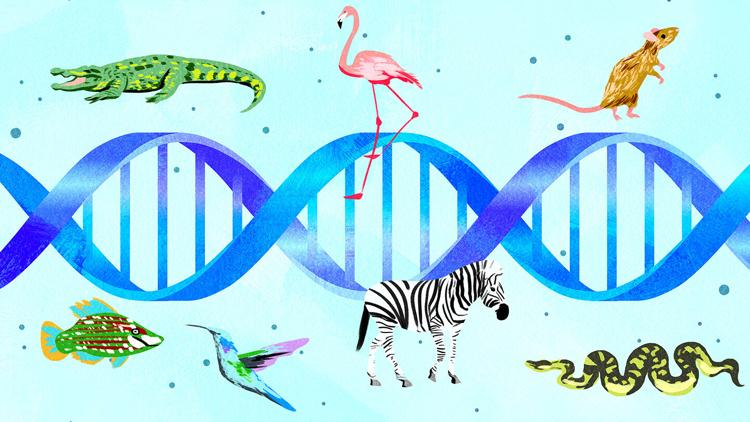
If you want to get a scientist excited about the future, mention e-DNA.
Environmental DNA, or e-DNA, can now find fish in water after they’ve swum away, detect an invasive species before it overtakes an ecosystem and spot harmful algae before it blooms.
In recent years, scientists have been taking genetic material found in soils, seas and sediments to capture a snapshot of a single organism or an entire ecosystem through genetic sequencing — a kind of 23andMe for the planet.
“What happened is we realized all this stuff sheds — mucus and slime and (feces),” said Steve Weisberg, executive director of the Southern California Coastal Water Research Project Authority (SCCWRP), a research institute piloting several e-DNA projects. “So maybe I don’t actually have to sample the fish tissue; I can sample the water and pick up the remnants of what they leave behind.”
This is a paradigm shift. For decades, conservation science has relied on the physical identification of a given plant, animal, microbe or fungi — often an arduous and expensive process that involves trekking to remote sites or tediously trying to tally every fish in a pond. But in recent years, e-DNA has allowed scientists to cover more ground with fewer resources and identify more information about a given species in the process.
“When you say e-DNA is having its moment, you are correct,” said Michael Schwartz, a senior scientist with the U.S Forest Service at the Rocky Mountain Research Station. “It is so powerful because it’s so cost-effective — it’s about 10 times more cost-effective than some of the field methods we were traditionally using.”
Understanding biodiversity
E-DNA is also emerging as a compelling way to account for our shaky understanding of the planet’s biodiversity at a moment when it’s vanishing at a clip not seen since the last mass extinction 66 million years ago. The Biden administration has sought to address this through its 30×30 Initiative, intending to protect at least 30% of U.S. lands, freshwater and oceans by 2030.
But the challenge is immense. As climate change alters ecosystems, scientists are scrambling to account for what we’ve lost, in part because we never fully recorded what we had.
E-DNA is closing that knowledge gap. Recent studies show that within a single sample, DNA from entire communities across taxonomic groups can be analyzed simultaneously — like a polaroid of genes suspended in time.
Right now, there are two key ways to analyze e-DNA, noted Schwartz, one of which most of us are already intimately acquainted: PCR or a polymerase chain reaction. It’s the same method used to detect Covid-19 lurking in our nostrils.
A PCR test for the environment
But while PCR or quantitative PCR (qPCR) is good at spotlighting a single species (or virus), another method called metabarcoding paints with a broader brush, showing the array of organisms in the same sample.
“On one end of the spectrum, we have what is called quantitative PCR, or qPCR — that technology is exquisitely sensitive for detecting very few copies of the organism,” said Schwartz. QPCR is especially useful when it comes to detecting invasive species in a given ecosystem, he said. “Think about like a New Zealand snail or a zebra mussel or a brook trout. We might need to find the one brook trout that is in a stream because we want to take action to prevent it from just exploding.”
But on the other end, scientists may be more interested in the kaleidoscopic dynamics of an ecosystem – who is there and how they interact with the stuff around them. That’s where metabarcoding comes into play.
“Imagine that if you had your whole genome lined up,” said Schwartz. “Metabarcoding looks at a very specific region of the genome that is oftentimes specific to mammals and birds or plants … it makes many copies of that little section and lets us sequence it. And from that, we can put it into national databases and say, oh, that’s species A, B, C or D.”
Part of the work Schwartz and others are doing is creating a living library of data — samples that they can test now and into the future, freezing moments in time through the slime, cells and waste all organisms slough off and leave behind.
Yet e-DNA has some pitfalls. Contamination of samples is one example, and cross-contamination in the lab, studies found, is almost unavoidable. This can elicit false positive results, which can be disastrous if you are someone like Schwartz, who is looking to save bull trout in the Northern Rockies and then directs millions of research and conservation dollars to a stream based on bad data.
But the pandemic has helped usher e-DNA into our daily lives, proving especially valuable for epidemiologists and public health officials. As many grew weary of lockdowns and the constant jamming of cotton swabs up nostrils, scientists turned to wastewater, collecting e-DNA from sewage to detect surges of virus in a community, often preceding the onset of symptoms or lags in testing.
In other places, e-DNA is being used to monitor for harmful algal blooms, like the one which overtook San Francisco Bay this summer, before they balloon out of control. And as blooms are projected to increase in a warming world, scientists have expressed hope about the ability to be proactive rather than reactive to such events in the future.
@jessicawolfrom