‘Do Not Intervene, It’s Their Time,’ Says Divine Almighty Being
Published: January 26, 2026 (TheOnion.com)
THE HEAVENS—Warning His subjects that they should not mess with His carefully laid plans by playing hero, God, Our Lord and Heavenly Father, reportedly informed humanity Monday that choking people were meant to die. “I created all things—do you really think I would fuck up and make human throats clog on accident? This is divine design,” said He Who Commanded Light to Shine Out of Darkness, revealing that “busybody asshole” Henry Heimlich, who died in 2016, was burning in hell for all eternity. “Look at how horrible choking is. Could I have made it any more clear that people are supposed to suffer? When it comes to money and love and politics, it’s all, ‘Do not doubt God’s plan,’ but then suddenly you’re rushing over to a toddler who swallowed a button. Who’s the almighty being here? Did you design a perfectly balanced and intricate universe that goes on for billions of light years? I didn’t think so. I actually have to kill other people just to balance the scale when you mess up this shit. That last earthquake in Myanmar was all just people who were supposed to choke to death in other places. So just step back and give choking people space to undergo the divine process through which I claim their soul.” The Lord Almighty added that His plan was also in effect anytime someone was on fire or being devoured by a wild animal.
The way homosexual prisoners were treated in Nazi camps is a horror few can imagine.
Nuremberg, 1946. The American prosecutor addressed a witness.
“Mr. Koffman, you were a guard at Sachsenhausen from 1940 to 1945. Is that correct?”
“Yes.”
“And you asked to testify voluntarily. For what?”
Friedrich Koffman, 34, a former SS rifleman, lowered his head.
“Because I saw things—things I can no longer keep to myself.”
“What is it?”
Silence.
“Mr. Koffman?” the prosecutor pressed.
“The executions,” Koffman said. “There were many executions in the camps.”
“What exactly are you talking about?”
Koffman looked up, his face gray and aged beyond his years.
“The executions of the pink triangles—those caught together in bed.”
The prosecutor asked, “Caught together doing what?”
“Sexual acts between men.”
The courtroom fell silent.
Koffman continued:
“The first time I witnessed this was November 1941. I had been at Sachsenhausen for a year. I thought I had seen everything—deaths, torture, atrocities—but I was wrong. It began with a discovery: two prisoners from the block with pink triangles were found together in the latrines at night. A guard surprised them, raised the alarm, and they were dragged naked before the block and beaten until they could no longer stand.
Then, they were not taken to the execution wall, not to the punishment chambers, not to the roll call square. The next morning, the entire camp was assembled in the November cold. Prisoners waited, shivering, as something had been built overnight—a wooden structure, like a theater stage.
On this stage, the two men, tied to stakes, stood facing each other. One was Heinrich Vogel, 25, a German former teacher. The other was Pierre Dubois, 24, a French former law student. Their names were read aloud by the commandant before the entire camp.
“These two degenerates were caught committing unnatural acts. They will now receive the punishment their perversion deserves.”
It was not just an execution. It was a spectacle—designed to humiliate, terrorize, and destroy. Hundreds of prisoners were forced to watch. The message was clear: anyone who dared to love differently could face the same fate.
This testimony comes from the archives of the Nuremberg Trials, once classified, and reveals a part of Holocaust history that Germany tried to erase.
The victims of Sachsenhausen’s pink triangle persecution must be remembered—not as numbers, but as human beings whose lives were stolen in cruelty designed to terrorize others.
Many years ago, when I worked as a transfusion volunteer at a Hospital, I got to know a little three-year-old girl who was suffering from a disease. The little girl needed blood from her five-year-old brother, who had miraculously survived the same disease. The boy had developed the antibodies needed to combat the illness and was the only hope for his sister.
The doctor explained the situation to the little brother and asked if the boy would be willing to give his blood to his sister. I saw him hesitate only for a moment before he took a deep breath and said “Yes, I will do it if it will save my sister.”
As the transfusion progressed, he lay in bed next to his sister and smiled, seeing the color returning to her cheeks. Then his face grew pale, and his smile faded. He looked up at the nurse beside him and asked with a trembling voice, “When will I start to die?”
The young boy had misunderstood the doctor and thought he had to die to save his sick sister.
Author Unknown
AN OPPORTUNITY FOR DAILY REFLECTION BROUGHT TO YOU BY THE SCHOOL OF PRACTICAL PHILOSOPHY
George Saunders — whose gorgeous novels and essays are a kind of jungle gym for playing with your assumptions rigorously and sensitively enough to grow the agility of perspective called empathy — explores this equivalence with his characteristic precision of mind and grandeur of heart in a wonderful interview on The Daily.
A practicing Buddhist and a writer whose core subject is how to love the world more, Saunders considers the parallels between Buddhism and writing as instruments of kindness honed on awareness and attention:
We have thoughts and they self-generate and dominate us. We mistake those thoughts for us. In both Buddhist practice and writing, you have a chance to go, Oh, those are just brain farts. They’re just happening spontaneously, and I didn’t actually create them, and I’m not sure I really want to take ownership of them. At the same time, they’re affecting my body. So you have to just get clear for long enough to recognize them as being separate from who you actually are.
Kindness, he observes in reconsidering his now-classic 2013 meditation on the subject, is something both greater than and simpler than niceness — a stilling of that “monkey mind” just long enough to consider what is most helpful to the other in a given situation. (Few things are more moving in this culture of opinions tattooed on the skin of the self than to see a person change their mind or evolve their perspective in public.)
Literature, Saunders insists, can quiet our habitual thoughts just enough to invite “a little more empathy, a little more engagement, a little more patience,” effecting “incremental changes of consciousness on the part of the writer and the reader” — changes that have to do with unclenching the fist of story and certainty that is the self and hold out to the world the open palm of curiosity. He identifies three awarenesses we must eventually attain in order to wake up from the core delusions that keep our lives clenched, that stand between us and kindness:
You’re not permanent.
You’re not the most important thing.
You’re not separate.
There are Buddhist precepts, but they are also the rewards of great literature — something Saunders captures beautifully in his introduction to the collected stories, essays, and poems of one of his own favorite writers, Grace Paley:
A great writer mimicking, on the page, the dynamic energy of human thought is as about as close as we can get to modeling pure empathy.
[…]
The world has no need to be represented: there it is, all around us, all the time. What it needs is to be loved better. Or maybe, what we need is to be reminded to love it and to be shown how, because sometimes, busy as we get trying to stay alive, loving the world slips our mind.
Showing us how has been his life’s work, whether or not Saunders realized it along the way — we are always insensible to our own becoming, bud blind to blossom. Two decades before he came to the question of kindness directly, he shone a sidewise gleam at its substrate — the relationship between storytelling and unselfing — in his prescient 2007 essay collection The Brainded Megaphone.
Given that narrative is the neurocognitive pillar of identity, the story we tell ourselves about who we are comes to shape who we act ourselves into being, who we become in relation to the world. This fundamental vulnerability of consciousness, Saunders observes, can be and is exploited, but it is also what gives storytelling its transformative power:
In the beginning, there’s a blank mind. Then that mind gets an idea in it, and the trouble begins, because the mind mistakes the idea for the world. Mistaking the idea for the world, the mind formulates a theory and, having formulated a theory, feels inclined to act… Because the idea is always only an approximation of the world, whether that action will be catastrophic or beneficial depends on the distance between the idea and the world. Mass media’s job is to provide this simulacra of the world, upon which we build our ideas. There’s another name for this simulacra-building: storytelling.
The point, of course, is that beneath the constructed idea is the world itself, just as beneath the self — the scaffolding of ideas upon which we construct our experience of reality — is the soul, that loose and baggaged word we use to hold something immense and pure: the elemental essence of being. In our culture, there is no greater courage than to strip the armor of ready-made answers and face the world as naked soul, blank as a question; to discover rather than dictate who we are and what this is — this brief burst of astonishment and anguish that we share before we return our borrowed stardust to the universe, wasted if seduced by certainty, wasted if shorn of kindness.
Saunders offer the simple, intensely difficult remedy:
Don’t be afraid to be confused. Try to remain permanently confused. Anything is possible. Stay open, forever, so open it hurts, and then open up some more, until the day you die.
The great writer’s gift to the reader are not better answers but better questions, a greater tolerance for uncertainty, a mechanism of transmuting confusion into kindness, and at the same time a way of seeing the world more clearly in order to love it more deeply. I find Saunders’s generous words about Grace Paley to apply perfectly to his own writing:
Reading Paley will, I predict, make you better understand the idea that love is attention and vice versa.
[…]
What does a writer leave behind? Scale models of a way of seeing and thinking.
[…]
Paley’s model advises us to suffer less by loving more — love the world more, and each other more—and then she gives us a specific way to love more: see better. If you only really see this world, you will think better of it, she seems to say. And then she gives us a way to see better: let language sing, sing precisely, and let it off the tether of the mundane, and watch the wonderful truth it knows how to make.
“What do you regard as the lowest depth of misery?” asked the Proust Questionnaire. “Living in fear,” answered David Bowie.
The most menacing word of the three is the smallest, for fear really is something we live inside, not with — a cage, a tomb, a small dark room that comes to eclipse the world as the hand quivers outside the pocket in which the key is kept. The best key I know to the prison of fear is curiosity, and the most generous form of curiosity I know is poetry.
An inquiry, an invocation, an invitation, poetry opens a side door to consciousness, bypassing our habitual barricades of thought and feeling, allowing us to enter into the unknowns of what it is like to be someone other than ourselves, into the desolate haunts of our own interior that words have not yet reached. Poetry is a kind of prayer: for presence, for understanding, for seeing the world more closely in order to cherish it more deeply. To name, to understand, to dignify and hold — these are the gifts of poetry, and these too are the antidotes to just about every form of fear.
In Fear Less: Poetry in Perilous Times (public library), poet extraordinaire and former U.S. Poet Laureate Tracy K. Smith offers what is essentially a field guide to loving life more, anchored in the recognition that “the opposite of love is not hatred or rancor but fear” and in a passionate insistence on “how important is it — how critical — to understand there is and has always been, for each of us, a wilderness within.”
Tracy K. Smith reading from her Pulitzer-winning collection Life on Mars at the inaugural Universe in Verse
She writes:
Vulnerability, uncertainty, and even desperation are not only signs of life, but tools for moving forward toward courage, hope, and purpose.
[…]
It is curiosity, not foreknowledge, that leads a reader (and a poet, and a poem) beyond the limits of habitual understanding — questions, rather than answers, being the building blocks of insight. Questions, which spring from the unconscious mind’s ability to remember, intuit, and speculate (Was he desperate? Alone? Did he do it out of grief?), are capable of bridging distances of time, place, allegiance, belief, and any other supposed border used to separate people from one another. Moreover, to form a question is an active creative stance, a way of announcing: I’m paying attention! I’m ready to observe, remember, intuit! Curiosity is, at heart, courage; readiness not for a fixed or foretold outcome, but rather a type of uncharted encounter — an adventure.
Poetry’s essential “de-emphasizing of answers and certainty” invites “a productive form of introspection,” the recompense of which is the wonderful capacity for self-surprise that keeps us from ossifying into a template of ourselves:
We surprise ourselves. We defy pat summary. Poetry is an art form through which we might better recognize and appreciate the circumstances under which you and I remain — even to ourselves — a kind of mystery… Occasional barriers to certainty and resolution in a poem and in a life are an invitation to exercise different faculties of discernment and perception.
[…]
In life, when mystery, doubt, and quiet fear rear up, our habit is to seek the assurance of answers, strategies, expert advice. We hedge our bets, make contingency plans, cleave to platitudes. We do what it takes to stay materially and emotionally afloat. But poetry is a different kind of enterprise, one engaged with the deep reserves of wisdom, memory, and emotional wherewithal every one of us possesses. And so rather than neatening up a state of quandary or denying inevitability, a poem might seek to operate from within these very circumstances.
These very circumstances are also what that most often incite fear. In making them something to be “pondered, grappled with, marveled at,” poetry offers a mighty antidote to that internal flinch at the unknown. A generation after Audre Lorde insisted that poetry affords us a kind of intimacy with ourselves by which “those fears which rule our lives and form our silences begin to lose their control over us,” Smith writes:
Fear stuns, blurs out our options, convinces us it is better to fall silent and still, to consent, to go along and trust that eventually everything will feel normal again. Fear, running its course long enough, convinces us that the moral disequilibrium in which we find ourselves is normalcy. Fear dissuades us from believing our bodies, our hearts, our deepest memories. Fear is an isolating, alienating technology. At its most dangerous, fear keeps us from facing or even fully contemplating what, for our own survival, we must endeavor to change.
But a poem can mitigate fear by facilitating a form of dialogue with it. A poem might ask its author, What wakes you up in the middle of the night? What do you cower from? And when the poet answers, the poem will likely brighten, inviting: Sit down here in this chair where you are perfectly safe. Now, let’s approach it together.
Fear, Smith observes, often stems from the “fissure widening between us and ourselves,” the remedy for which is attention, is awareness, is an active curiosity about what dwells in that gaping abyss — a curiosity that begins with finding the words to name what we feel, to hold what we don’t want to feel. She writes:
Our relationship to language has great bearing upon our capacity to be wide awake and at home both in the imperfect world and in the dimensions of our full selves. Our ability to ask and grapple with difficult questions. Our willingness to accept uncertainty, to withstand discomfort. The curiosity with which we approach another person’s perspective. These things fortify us to recognize and celebrate the complex feelings to which we and others are susceptible. And while engaging with poetry isn’t the only way to strengthen our powers of listening and responding, asking and offering, poems are remarkable in their ability to augment our stamina for such tasks. Beyond literature, beyond works of art, poems are acts of attention. Can we attend more rigorously, more compassionately to ourselves and others?
[…]
To create new patterns of language, as poems and poets exist to do, is to alter or correct course on our story of reality. To move from a state of fear to one of understanding, or from the sense that you are small and bound by the circumstances in your life to an acknowledgement that you are large and your purpose eternal — that kind of transformation begins in language, in talking and listening to yourself, to others, to a voice on a page. Language is the engine for our sense of the possible, and poetry fosters a productive impatience with the notion that things as they are cannot or must not be made to change.
In the remainder of Fear Less, Smith offers a guided tour of some of her favorite poems — among them treasures by Emily Dickinson, Edna St. Vincent Millay, Robert Hayden, Robert Frost, Mark Doty, and Joy Harjo — and a glimpse of her own process to explore the mastery of craftsmanship behind the mystery of poetry’s singular power. Couple it with Audre Lorde on poetry as an instrument of change and feeling as an antidote to fear, then revisit this luminous animation of Smith’s masterpiece “My God, It’s Full of Stars.”
It tempers your sorrows to know that the striking red pebble you pick up at the beach is hematite — the oxidation of iron in sedimentary rock, the same iron composing the hemoglobin that oxygenates your red blood cells; to know that some distant day across the eons, someone else will bend down wonder-smitten on some other beach to pick up a striking pebble laced with red that was once your blood. It is more than a comfort — it is a consecration. The word “holy” shares its Latin root with “whole” and has its Indo-European origins in the notion of the interleaving of all things. This is the sacred, this the holy. To feel part of the implicate order of the whole. To touch for a moment the wrist of the world, feel the pulse of life’s bloodstream coursing through it, feel yourself a corpuscle and a miracle.
“The sediments are a sort of epic poem of the earth,” wrote Rachel Carson. To know that you carry sediment in your cells and that you will return to sediment is to be a living poem.
Recounting a revelatory shift in perspective while hiking Wyoming’s Bighorn Canyon under the weight of the world’s ecological and political tumult, she writes:
As I sat on that pale plateau with my legs beneath me… I remembered that stability has come and gone and returned so many times before now. That geologic timescales arc too wide to witness in a single human lifetime, but have always spun toward some sort of new stasis. I knew this didn’t let us off the hook, or mean that it was time to stop righting our wrongs to the environment. The changes we have unleashed today are unfolding far faster than past periods of change, and they were not geologically inevitable. We are the agents of this geologic moment. But the strata reminded me that we are also part of the Earth system, this much larger web of connections that thread between the atmosphere, continents, water, ice, and life. That these threads slacken and tighten over time and accommodate for one another with more brilliance than the human mind can easily grasp. That we live within this system, and the system lives within us. We carry its iron in our blood and its stardust in our bones, and its strength is our strength because we are it.
We are it, but we are not a given. The only given is the change and the sphere that contains it.
Air, rock, water, life, and ice all interact in the web of feedback loops that geoscientists call the Earth system. Together, the five facets of this system — the atmosphere (air), lithosphere (rock), hydrosphere (water), biosphere (life), and cryosphere (ice) — orchestrate the global climate and, in turn, the underpinnings of our lives. It’s by coming to understand this system that I have grown to see the physical world not as the static backdrop of our daily experience but as an ever-changing vessel that ripples and responds to innumerable changes, and has been doing so for billions of years. Over time, these subtle transformations build, erode, and rebuild the world anew. We live our lives within recycled landscapes and those recycled landscapes live within us.
I mean this literally, not figuratively. The science is the poem and the poem is the science. Everything on this planet connects with everything else, from the microscopic contents of the air we breathe to the macroscopic movements of continents and ocean currents. You can’t build a mountain range without changing the atmosphere, at least a little (because freshly sculpted mountains pull carbon dioxide from the atmosphere), and you can’t change the atmosphere without changing the chemistry of the ocean (because oceans absorb and release carbon dioxide), and you can’t change the ocean without affecting the life within it.
Geological strata from Geographical Portfolio by Levi Walter Yaggy, 1887. (Available as a print.)
Paradoxically, to contact all this change, to see in silt the memorial of mountains and in mountains the memory of the Earth, is to remember the eternity in you. Recounting a rainy visit to a “golden spike” — an outcrop whose strata represent the transition from one geological period to another — Poppick writes:
The traces of the early Cambrian sat unblinking beneath the rain, telling us with a wordless wisdom that there are beginnings and that there are ends and that the fibers of the planet will always harden and soften and dissolve and re-form anew. That our own legacy will, some day, erode back into the sea.
[…]
The gift of geology is the chance to seek refuge in this constancy, in the gravity of the arc of time. When I walk the rocky shoreline near my home, I don’t see random stones thrown about but a montage of stories and events that intertwine directly with our present and our future.
[…]
If there’s one thing we can say with certainty has remained constant since at least the Archean, it’s the persistent tug of water against rock and the erosion that comes with it. The breaking down of Earth’s skin and bones to make room for something new. The motion is at once unchanging and the most persistent force of change. It is carving down boulders into cobbles into pebbles into sands, silts, clays. It is turning land into dust and sending its debris back to the sea it came from. By the time the seafloors of today rise up above the oceans as cliffsides or mountaintops, our individual lives will be specks of dust, imperceptible to the naked eye. The iron in our blood will have pooled back into the earth, all our remains melting within the mantle where we will meet, again, as one.
As a small business owner, sometimes it’s hard to maintain self-confidence and self-belief. Especially if you’ve had a challenging week – maybe you worked with a client you didn’t like; or you made some mistakes; or something went wrong; or you got sick … we all have days, weeks or even months like that.
I came off my bike 18 months ago – chipped the bone and severely dislocated my shoulder. My right shoulder and yes I’m right-handed. The injury was so bad that I couldn’t work for 3 weeks. I couldn’t even type at all for two weeks and then it was left-handed only; I couldn’t drive for about 6 weeks and even then only short distances. I was taking so much pain relief every day for about 10 weeks … those were some tough days and weeks (and months for me). Unsurprisingly, my business faltered and stumbled a little. However I did not let this get me down. I used this “off” time productively to do lots of strategic thinking about my business and my clients. I came up with brand new ideas for my business – ideas that have been really successful.
How did I stay positive during that time? I firmly believe that we all have a choice when it comes to tough times or hardship. We can choose to get down about it and allow “it” to control us; or we can choose to use the experience and learn from it. Here are a few of my favourite quotes and sayings to help you keep going when the going gets tough or when it seems like a never-ending uphill battle:
Tough times never last, but tough people do. Robert H Schuller
It is not the strongest of the species that survive, nor the most intelligent, but the one most responsive to change. Charles Darwin
Creativity is allowing yourself to make mistakes. Art is knowing which ones to keep. Scott Adams
An essential aspect of creativity is not being afraid to fail. Edwin Land
There can be no stronger criticism than self-criticism and no harsher judge than ourselves. R. De Board
If at first you don’t succeed, try, try again. Then quit. No use being a damn fool about it. W.C. Fields
Imperfect action will get you there so much faster than perfect inaction.
This too shall pass.
Sometimes there’s not a better way. Sometimes there’s only the hard way. Mary E. Pearson, The Fox Inheritance
Learning has to include an amount of failure, because failure is instructional in the process. Diana Laufenberg, How to learn from mistakes.
Let the experience refine you, not define you. Vivienne Smith, Single Mum’s Survival Guide
The only true failure is the person who fails to try.
What about you? What do you tell yourself when the tough gets going? Please leave a comment – I’d love to know which quote ‘speaks’ to you.
(OK and for those of you who are eagle-eyed, yes this is 12 not 10 quotes, but who’s counting when you’re with friends!)
Oooof. That sentence is doing a lot of work. Let’s unpack it gently and without pretending it’s either obviously true or obviously nonsense.
Where the idea comes from
This pairing shows up in a few old intellectual and spiritual traditions:
Western philosophy often coded action, mastery, change as masculine and receptivity, continuity, essence as feminine. Aristotle is lurking in the background here.
Taoism frames this as yang (active, assertive) and yin (receptive, yielding)—though crucially, yin and yang are forces, not genders, and both exist in everyone.
Psycho-spiritual language (Jung, New Age, certain strands of feminism) talks about masculine and feminine as energetic modes: doing vs being, penetration vs containment, striving vs presence.
So as symbolic shorthand, the phrase has lineage.
Where it works
If you read it metaphorically, it can be useful:
“Doing” = goal-oriented, problem-solving, linear time, productivity culture.
“Being” = presence, attunement, relational awareness, depth over output.
In that sense, the phrase critiques a world obsessed with doing—metrics, hustle, domination—and reminds us that being has value too: listening, caregiving, contemplation, simply existing without justification.
It’s not really about men and women so much as two modes of relating to the world.
Where it breaks down
The trouble starts when the metaphor hardens into ontology:
Plenty of women are relentless doers; plenty of men are deeply oriented toward being.
Labeling “being” as feminine has historically been used to justify excluding women from action, power, and agency (“You’re nurturing, not decisive”).
Meanwhile, men have often been punished for inhabiting “being” states—stillness, vulnerability, receptivity—because those get tagged as “unmasculine.”
So the binary can describe a patternandreproduce a hierarchy at the same time.
A cleaner way to say it
You might get further with something like:
Cultures often reward a traditionally masculine-coded mode of doing while devaluing a feminine-coded mode of being—yet both are essential, and both exist in every human.
That keeps the insight without freezing it into stereotypes.
The deeper tension
At bottom, this isn’t really about gender at all. It’s about:
Instrumental value vs intrinsic value
Control vs presence
Productivity vs meaning
Modern societies tend to worship doing because it’s measurable and profitable. Being resists that—it can’t be optimized, scaled, or easily justified. That’s why it keeps getting feminized, sidelined, or romanticized instead of taken seriously.
So yes, the phrase gestures at something real. But taken literally, it explains too little and excuses too much.
Michael John Parenti was an American political scientist, academic historian and cultural critic who wrote on scholarly and popular subjects. He taught at universities and also ran for political office. Parenti was well known for his Marxist writings and lectures, and was an intellectual of the American Left. Wikipedia
Michael Parenti comes back to this idea a lot, usually to puncture the myth that capitalism is “peaceful” or that violence only happens when ideology gets too radical.
The core Parenti point: Capitalists routinely kill other capitalists—not by accident, and not as a moral failure of individuals, but because competition, empire, and profit make violence structural.
Here’s how he frames it ????
1. Capitalism isn’t just markets — it’s power
Parenti argues that capitalism doesn’t operate through polite competition alone. When profits, resources, or markets are threatened, capital turns to:
coups
wars
sanctions
assassinations
proxy conflicts
And the victims are often other capitalist elites who are on the “wrong” side of a power struggle.
It’s not labor vs. capital only — it’s capital vs. capital, backed by states and armies.
2. Wars are often capitalist-on-capitalist conflicts
Parenti points out that many wars sold as “ideological,” “humanitarian,” or “defensive” are really:
one bloc of capital trying to dominate another
rival business classes fighting over territory, labor, oil, trade routes, or finance
Examples he frequently gestures toward:
World Wars I & II (imperial capitalist powers clashing)
Cold War proxy wars (U.S.-aligned vs. Soviet-aligned ruling classes)
U.S.-backed coups against national bourgeoisies that threatened foreign capital
In these cases, capitalists die, lose power, or get eliminated—not because they opposed capitalism, but because they backed the wrong version of it.
3. The state is the hired gun
A classic Parenti line of thought is that capitalists rarely kill each other personally — they outsource it.
The state provides:
armies
police
intelligence agencies
economic warfare
So when one capitalist faction destroys another, it looks like “foreign policy” or “national security,” not murder — but the effect is the same.
4. Capitalism is violent even toward its own
Parenti loves flipping the usual narrative:
If capitalism were peaceful, it wouldn’t need:
endless war budgets
repression
prisons
secret services
propaganda
The fact that it devours rival capitalists shows that violence isn’t a bug — it’s a feature.
5. Why he emphasizes this
He’s pushing back against the idea that:
socialism = violence
capitalism = freedom + peace
Parenti’s response is basically:
Capitalism kills workers and capitalists. It just kills workers quietly and capitalists strategically.
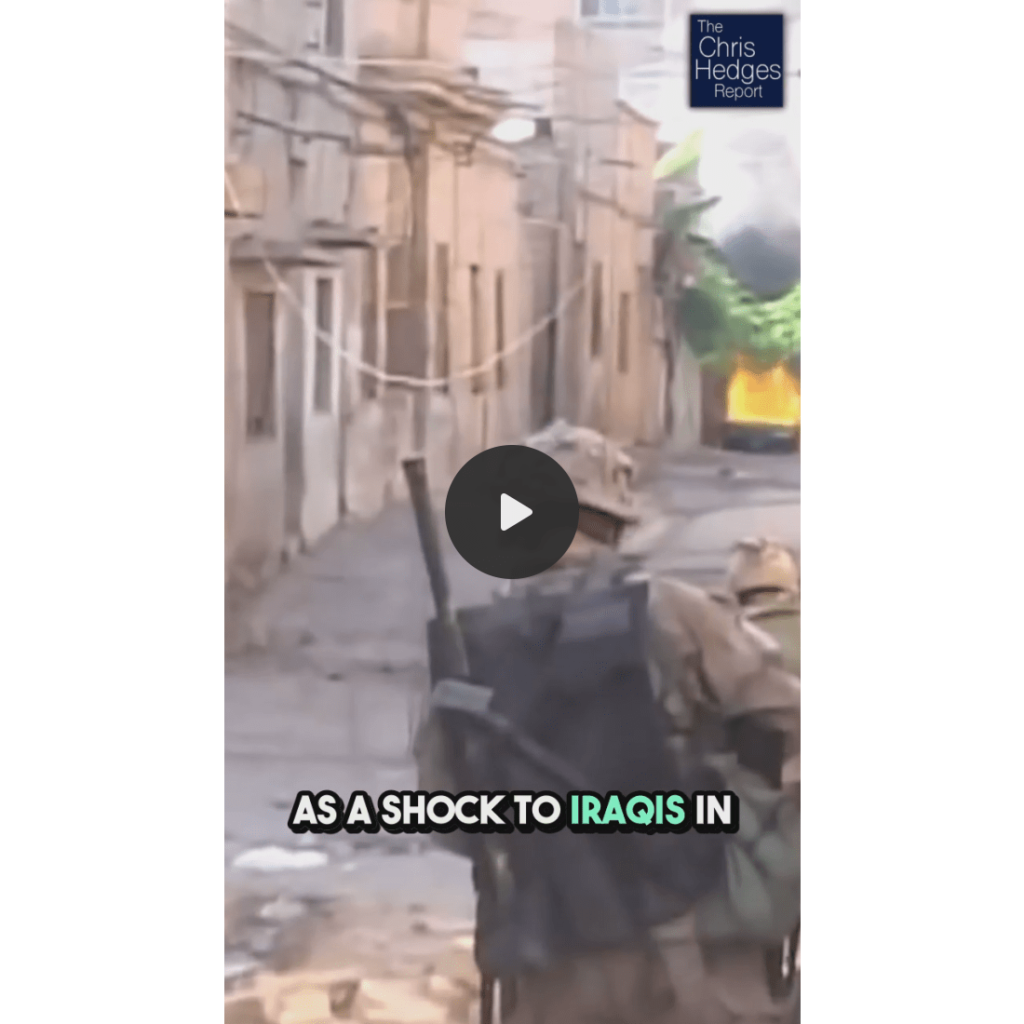
The murders of unarmed civilians on the streets of Minneapolis, including the killing today of the intensive-care nurse Alex Jeffrey Pretti, would not come as a shock to Iraqis in Fallujah or Afghans in Helmand province. They were terrorized by heavily armed American execution squads for decades. It would not come as a shock to any of the students I teach in prison. Militarized police in poor urban neighborhoods kick down doors without warrants and kill with the same impunity and lack of accountability. What the rest of us are facing now, is what Aimé Césaire called imperial boomerang. Empires, when they decay, employ the savage forms of control on those they subjugate abroad, or those demonized by the wider society in the name of law and order, on the homeland. The tyranny Athens imposed on others, Thucydides noted, it finally, with the collapse of Athenian democracy, imposed on itself. But before we became the victims of state terror, we were accomplices. Before we expressed moral outrage at the indiscriminate taking of innocent lives, we tolerated, and often celebrated, the same Gestapo tactics, as long as they were directed at those who lived in the nations we occupied or poor people of color. We sowed the wind, now we will reap the whirlwind. The machinery of terror, perfected on those we abandoned and betrayed, including the Palestinians in Gaza, is ready for us.
Consciousness, spirituality, biography, sexuality, androgyny, futurism, space, the arts, science, astrology, democracy, humor, books, movies and more


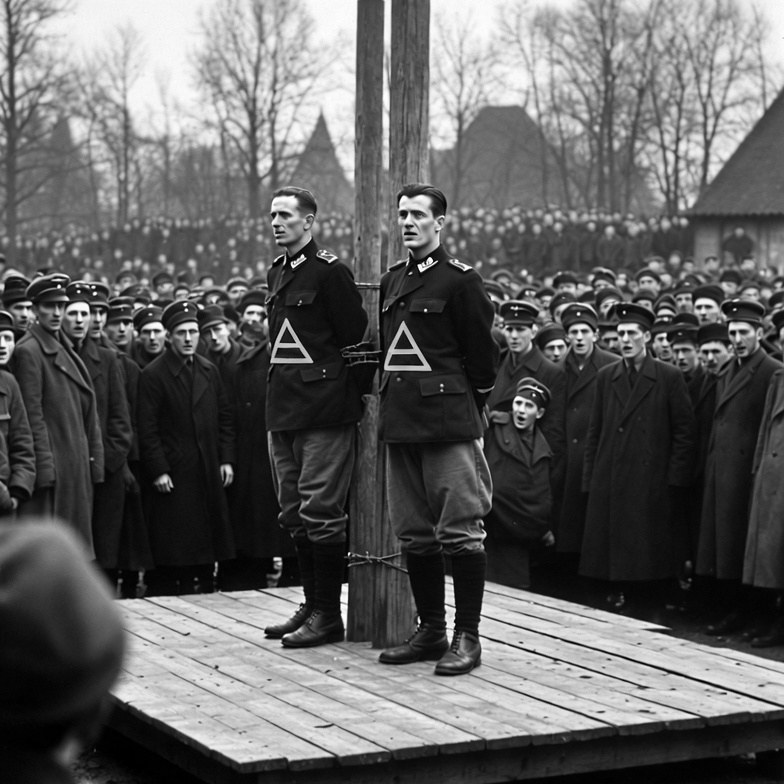
 The victims of Sachsenhausen’s pink triangle persecution must be remembered—not as numbers, but as human beings whose lives were stolen in cruelty designed to terrorize others.
 We have thoughts and they self-generate and dominate us. We mistake those thoughts for us. In both Buddhist practice and writing, you have a chance to go, Oh, those are just brain farts. They’re just happening spontaneously, and I didn’t actually create them, and I’m not sure I really want to take ownership of them. At the same time, they’re affecting my body. So you have to just get clear for long enough to recognize them as being separate from who you actually are.