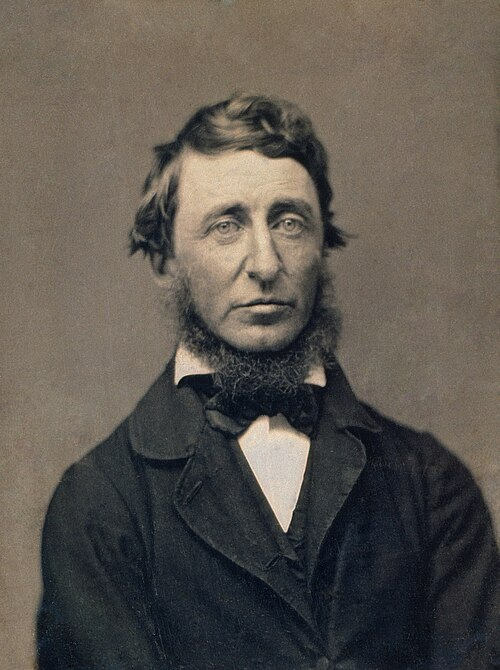
“Heaven is under our feet as well as over our heads.”
– Henry David Thoreau (philosopher-naturalist)
Henry David Thoreau (July 12, 1817 – May 6, 1862) was an American naturalist, essayist, poet, and philosopher. A leading transcendentalist, he is best known for his book Walden, a reflection upon simple living in natural surroundings, and his essay “Civil Disobedience”, an argument in favor of citizen disobedience against an unjust state. Wikipedia
5 Steps to Lucid Dreaming introduces lucid dreaming as the capacity to become self-aware within dreams and intentionally influence dream content. The book outlines practical techniques for developing lucidity and discusses how dream practice may engage the same neural pathways involved in waking experience. It frames lucid dreaming as a method for exploring the psyche, working with nightmares, and studying consciousness during sleep.
A great book to introduce young children to the concept of death, Grandma, What Is A Soul? will help calm their fears of losing loved ones, by describing how those who go before them serve as guardian angels watching over them, and, even more importantly, how the lasting power of love connects people from this life to the next.
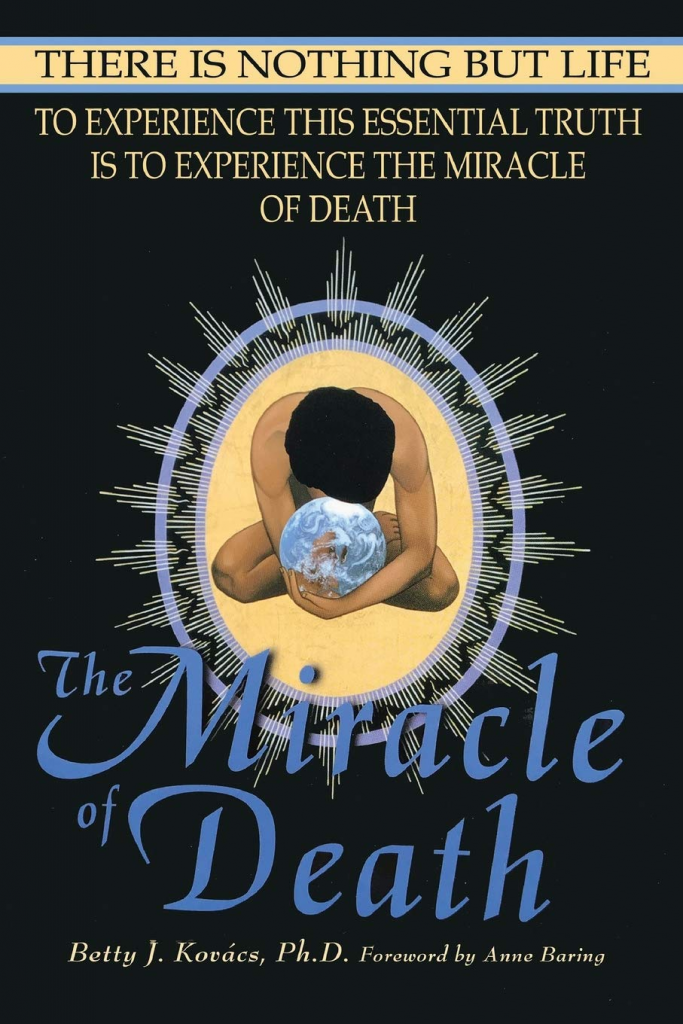
The Miracle of Death takes you on a personal journey that will forever change the way you think about death and life. Over a period of years Betty J. Kovács, her husband and their son experienced dreams and visions of future events that completely changed their lives. They learned that life and death, sorrow and joy, and matter and spirit are inseparably intertwined.
Imagine riding across a dangerous river on the back of a friendly crocodile! Or making friends with a whole pile of snakes. Or going into hiding with the help of some spiders! These are not your everyday saint stories! God used both wild and tame animals to help saints when they needed it most. Told in beautiful illustrations and charming narratives by mixed-media artist Caroline Cory, these stories will delight and inspire young and old alike.
It may be the biggest irony in the history of American politics – if not the history of our country — that if Donald Trump wasn’t elected to a second term, he probably would be serving time in prison right now.
Instead, the president flat out got away with it. And now he will never face federal criminal charges for trying to overturn the 2020 presidential election or removing highly classified documents from the White House and hiding them at his Palm Beach resort.
We’ve waited a long time for former special counsel Jack Smith to tell us what evidence he amassed against Trump. And now we know at least part of that picture. His recent matter-of-fact recounting of his comprehensive investigations only whets the appetite for the whole story.
The famously tight-lipped Smith, who led two investigations into Trump and secured two indictments, testified before the House Judiciary Committee on December 17. Surprise!
Smith’s deposition, a robust defense of his investigations, was reported in the media. But The New York Times, for example, ran its piece on page A19 of the print edition of the paper, because the closed-door hearing was free of reporters and no video recording or transcript of the exhaustive eight-hour testimony was made available. Until December 31.
After ignoring calls from Smith’s lawyers to release the transcript, Rep. Jim Jordan, the chairman of the committee, decided to dump the 255-page transcript after everyone had gone home for the New Year.
Smith, who was subpoenaed to appear, asked for a public hearing. Surprisingly, so did the president. “I’d rather see him testify publicly, because there’s no way he can answer the questions.” Actually, he did – at least all the questions he was not barred by a Trump-appointed judge from answering.
The reason for the closed session was that Republicans were concerned Smith would use the hearing as a platform to divulge heretofore unreleased information.
Smith withstood a barrage of questions from both Republicans and Democrats. Republicans, doing Trump’s bidding to go after those who went after him, tried to trip him up. Democrats hoped to bait him into revealing details of his investigations. Neither side succeeded, though that doesn’t mean the testimony was without revelations.
Smith, a career prosecutor, who served under Democrats and Republicans, spoke with confidence and candor.
“The decision to bring charges against President Trump was mine, but the basis for those charges rests entirely with President Trump and his actions, as alleged in the indictments returned by grand juries in two different districts,” he said in his opening statement.
He went on to explain what he and his team discovered about Trump’s attempts to overturn the 2020 election:
“Our investigation developed proof beyond a reasonable doubt that President Trump engaged in a criminal scheme to overturn the results of the 2020 election and to prevent the lawful transfer of power.”
And Trump’s mishandling of classified documents:
“Our investigation also developed powerful evidence that showed that President Trump willfully retained highly classified documents… then repeatedly tried to obstruct justice to conceal his continued retention of those documents.”
Smith revealed that he planned to rely on Trump allies as witnesses, saying he thought they would be more credible than partisan ones.
“We had numerous witnesses who would say, ‘I voted for President Trump. I campaigned for President Trump. I wanted him to win,’” Smith testified. “Our case was built on, frankly, Republicans who put their allegiance to the country before the party.”
When asked if Trump ever admitted that he knew he lost the election, Smith answered yes. He went on to say the president made statements about it to several people.
“One is that, ‘It doesn’t matter if you won or lost the election. You still fight like hell.’ And then the other was, ‘Can you believe I lost to this f’ing guy?’ referring to Joe Biden.”
Smith laid out his evidence like, well, a prosecutor.
“[Trump], in the weeks leading up to Jan. 6, created a level of distrust. He used that level of distrust to get people to believe fraud claims that weren’t true. He made false statements to state legislatures, to his supporters in all sorts of contexts and was aware, in the days leading up to Jan. 6, that his supporters were angry when he invited them and then he directed them to the Capitol.”
As Trump is trying to downplay and distort what happened at the Capitol on January 6, Smith did not whitewash the violence perpetrated by the rioters. “Cracked ribs, traumatic brain injuries, smashed spinal disks and heart attacks as rioters used bats, poles, chemical sprays, stolen police shields and batons.”
That violence, Smith said, was “foreseeable” to the president and Trump exploited it.
When Republican committee members suggested Trump’s statements about the 2020 election were protected speech, Smith pushed back, hard. “Fraud is not protected by the First Amendment.”
Smith had far less to say about the classified documents case because Judge Aileen Cannon, a Trump appointee who slow-walked the original case and then tossed it, is now deciding if Smith’s report of the investigation will ever be released. She blocked the release for more than a year, though ruled last week she would lift the order on February 24, if Trump doesn’t challenge the ruling. What are the odds?
In the meantime Smith is barred from speaking about it, including to the House Judiciary Committee.
When asked if he could draw any conclusions about Trump’s refusal to return the classified documents despite being given multiple opportunities, Smith responded, “I don’t think I can answer that question because it may involve nonpublic facts that are a part of the final report that is currently under an injunction.”
He gave a similar answer to most questions posed about the documents.
In Trumpworld, Jack Smith is Public Enemy No. 1. There is no doubt Trump’s allies in the House were hoping Smith’s testimony would give the president some viable legal avenue to use against him. Though he didn’t give them one, Smith is not naive about his future.
He said he wouldn’t be surprised if Trump directs the Department of Justice to indict him. “I believe that President Trump wants to seek retribution against me because of my role as special counsel.”
Which brings us to another great irony: The man who the government believed committed one of the greatest crimes in our nation’s history now has the ability to seek revenge against those who tried to hold him accountable.
Steady is free, but to support my team’s efforts to protect our democracy through the power of independent journalism, we’d appreciate it if you would consider joining as a paid subscriber. It keeps Steady sustainable and accessible for all.
New Thinking Allowed with Jeffrey Mishlove Jan 2, 2026 Philosophy This video is a special release from the original Thinking Allowed series that ran on public television from 1986 until 2002. It was recorded in about 1999. It will remain public for only one week. Most brain researchers believe we will eventually explain the mind in terms of neurological functioning. According to Dr. Julian Isaacs, PhD, this materialist view is inconsistent with the evidence of parapsychology. New developments in areas such as theoretical physics, says Dr. Isaacs, may eventually lead to an understanding of the common ground connecting mind and matter. Julian Isaacs, currently retired, has been a professor of parapsychology at John F. Kennedy University, and was a council member of the Society for Psychical Research. As an applied psychologist, he specialized in training psychokinetic abilities.
New Thinking Allowed with Jeffrey Mishlove Aug 11, 2024 Philosophy Sean Esbjörn-Hargens, PhD, is Dean of Integral Education at the California Institute for Human Science and Program Director of the MA/PhD program in Integral Noetic Sciences which has an optional concentration in Anomalous Studies. He founded the Journal of Integral Theory and Practice. He has also authored or edited eight books including: Integral Ecology (co-authored with Michael E. Zimmerman), Metatheory for the Twenty-first Century (co-edited with Roy Bhaskar et al), and Dancing with Sophia (co-edited with Michael Schwartz). In 2018 he founded The Institute of Exo Studies which draws on over 50 disciplines to help make sense of anomalous and extraordinary experiences of our multiverse. His website is https://www.exostudies.org. You can download his paper, Our Wild Kosmos! at https://whatsupwithufos.com/wp-conten…. Sean’s MA and PHD Program in Integral Noetic Sciences at the California Institute for Human Science can be found heret: www.cihs.edu The Super Experiencer initial survey and info:https://www.superexperiencer.org Here he explains who “super experiencers” are and how he is researching this category of people. He also explores the question of non-human intelligence as it pertains to the super experiencers. 00:00 Introduction 04:41 What are super experiencers? 12:22 What is real? 24:11 Super experiencers and spirituality 30:32 Who are the grays? 33:24 Shape-shifting and thinking impossibly 41:38 The California Institute for Human Science 49:52 Potential careers in this new field 52:45 Conclusion Edited subtitles for this video are available in English, French, German, Spanish, Italian, Portuguese, Russian, Polish, and Swedish. New Thinking Allowed host, Jeffrey Mishlove, PhD, is author of The Roots of Consciousness, Psi Development Systems, and The PK Man. Between 1986 and 2002 he hosted and co-produced the original Thinking Allowed public television series. He is the recipient of the only doctoral diploma in “parapsychology” ever awarded by an accredited university (University of California, Berkeley, 1980). He is also the Grand Prize winner of the 2021 Bigelow Institute essay competition regarding the best evidence for survival of human consciousness after permanent bodily death. (Recorded on July 15, 2024)
In looks-based hierarchies, to mog someone means you surpass them in traits such as:
Height
Facial symmetry / jawline
Muscularity / frame
Grooming, style
Perceived status or confidence
The idea is relative dominance—not just being attractive, but being more attractive than another man in the same setting.
Origins & tone
The term comes from bodybuilding and early internet forums, later popularized on incel, red-pill, and black-pill spaces.
It often carries a competitive or adversarial tone, framing male attractiveness as a zero-sum hierarchy.
Outside those communities, the term is usually seen as crass, cynical, or demeaning.
Example in context
“Standing next to him makes everyone else invisible—he mogs the whole room.”
If you’re seeing this term used and want a neutral or healthier translation, it roughly means:
“He noticeably stands out as more conventionally attractive.”
If you want, I can also explain related terms like “Chad,” “looksmaxxing,” “height mog,” or “SMV”, or help translate a sentence you saw into plain English.
What is the source of MOG?
The source of “mog” (as used in male looksism slang) traces back through a few stages:
1. Bodybuilding culture (1980s–1990s)
“Mog” is short for “mogul” or “amalgamation of “mogging”, used informally to mean dominating or outclassing someone physically.
Early gym slang used “to mog” to describe someone who visibly dwarfs others in size or physique.
2. Early internet & imageboard culture (2000s)
The term migrated to forums like 4chan (/fit/, /r9k/) and bodybuilding boards.
It evolved to mean visually overpowering someone, not just in muscle mass but overall presence.
“It’s really not a question of robotic exploration or human exploration,” Ehlmann said. “It is an ‘and’ — it’s robotic and human exploration and how we do these best together.”
We may already have some of the tools we need for the next generation of space exploration. (Image credit: NASA)
As the moon and Mars take center stage in human spaceflight, scientists are leveraging existing space missions to lay the groundwork for a sustained human presence off-planet.
From pinpointing water resources on the moon to shielding crews from harmful radiation and managing abrasive dust, researchers described how new results from in-service missions are addressing practical challenges of exploration at a press briefing Dec. 17 at the American Geophysical Union (AGU) meeting in Louisiana.
The scientific work highlighted at the briefing comes as NASA prepares for a renewed push in human exploration. On Dec. 18, President Donald Trump signed an executive order directing the agency to return astronauts to the moon by 2028 and begin building the “initial elements” of a permanent lunar base by 2030, with newly sworn-in NASA Administrator Jared Isaacman leading the effort.You may like
At the AGU briefing, scientists said they are helping support those ambitions by adapting tools and datasets originally developed for Earth to support future moon and Mars missions.
For instance, Gina DiBraccio, a heliophysicist and acting director of the Solar System Exploration Division at NASA’s Goddard Space Flight Center in Maryland, discussed a decision-support tool initially designed to track space weather near Earth that has been extended to incorporate data from Mars missions, helping astronauts assess radiation risks in near real time from the Martian surface.
The dashboard integrates data from multiple Mars missions, including NASA’s MAVEN orbiter, Curiosity and Perseverance rovers, with additional data sources planned, DiBraccio said. The project is envisioned as an all-in-one display astronauts could access on a tablet, allowing crews to monitor space weather events such as solar flares and determine whether protective measures are needed.
“It’s really one of the first steps of tools that astronauts will be able to use to understand and assess space weather from the surface of Mars,” DiBraccio said.
Get the Space.com Newsletter
Breaking space news, the latest updates on rocket launches, skywatching events and more!Contact me with news and offers from other Future brandsReceive email from us on behalf of our trusted partners or sponsorsBy submitting your information you agree to the Terms & Conditions and Privacy Policy and are aged 16 or over.
Other long-running missions at Mars are also producing critical datasets for understanding radiation hazards, scientists said.
Shannon Curry, MAVEN’s principal investigator at UC Boulder, highlighted a newly completed catalog of Martian space weather events compiled from the now-silent orbiter data spanning a full solar cycle from 2014 through 2025. The catalog allows scientists to quantify radiation levels in orbit — some of which can penetrate Mars’ thin atmosphere and reach the surface — during periods of both low and high solar activity.
“This really informs, over a full solar cycle, what we can expect to see, and when we can expect to see it,” Curry said.You may like
Scientists also stressed the importance of pinpointing water resources on the moon, particularly near the lunar south pole, where NASA plans to land astronauts under its Artemis program.
The four astronauts chosen for the Artemis 2 mission to the moon. (Image credit: NASA/Aubrey Gemignani)
“The challenge right now is that the datasets don’t actually agree exactly where the water is,” Bethany Ehlmann, the director of the Laboratory for Atmospheric and Space Physics (LASP) at the University of Colorado Boulder, told reporters during the briefing.
“We know broadly it’s in the south pole, we know broadly there are few craters of interest,” she said. “But it’s like saying, ‘There is water in the city of New Orleans — somewhere.'”
A new imaging spectrometer NASA selected in July could help address that uncertainty, she said. The instrument, which could be used in moon orbit, is designed to act as “enhanced eyes” for astronauts and scientists by mapping water and minerals, and identifying science-packed sites for collecting samples.
Another focus of the briefing was lunar dust, a persistent challenge during the Apollo era. Fine, abrasive particles damaged spacesuits and equipment, and Apollo 17 astronaut Harrison “Jack” Schmitt famously suffered the first recorded case of extraterrestrial hay fever after exposure to moon dust.
“I think dust is probably one of our greatest inhibitors to a nominal operation on the moon,” Apollo 17 commander Gene Cernan said during a post-mission debrief. “I think we can overcome other physiological or physical or mechanical problems except dust.”
Scientists are now tackling that challenge through new instruments and missions.
One of them, DUSTER — short for Dust and Plasma Environment Surveyor — has been selected for NASA’s Artemis IV mission. Led by Xu Wang of the University of Colorado Boulder, the $24.8 million project will deploy a suite of instruments on a rover to record dust and plasma conditions near the lunar surface and assess how they respond to human activity.
Another instrument the team is developing is a Compact Electrostatic Dust Analyzer (CEDA), designed to measure key properties of lunar dust, Wang said. The instrument is designed to operate either on the surface or aboard orbiting spacecraft and to survive hard landings regardless of orientation.
“Dust is everywhere on the moon,” Wang told reporters on Wednesday. “You can’t go around it. You have to deal with and live with it.”
Work is also underway to understand whether Mars’ localized magnetic fields could provide astronomers limited natural protection from radiation. Initial modeling based on orbital observations suggests crustal magnetic fields locked into Martian rocks could offer shielding over distances of a few miles.
To map those regions in greater detail, teams are working to further miniaturize magnetometers that could be mounted on aerial vehicles, such as small drones similar to NASA’s now-retired Ingenuity helicopter, enabling surface surveys at much finer resolution than is possible from orbit, according to Jared Espley, a space scientist at NASA Goddard who is involved with the research.
Together, the work underscores how robotic missions are critically shaping the future of human exploration, scientists said.
“It’s really not a question of robotic exploration or human exploration,” Ehlmann said. “It is an ‘and’ — it’s robotic and human exploration and how we do these best together.”
Sharmila Kuthunur is an independent space journalist based in Bengaluru, India. Her work has also appeared in Scientific American, Science, Astronomy and Live Science, among other publications. She holds a master’s degree in journalism from Northeastern University in Boston.
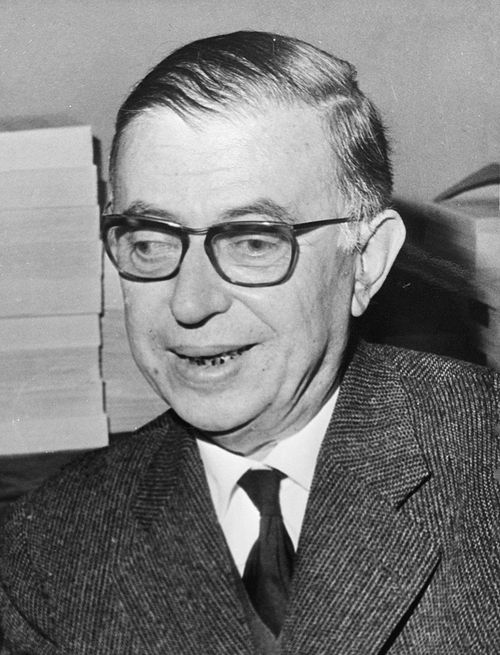
“It is therefore senseless to think of complaining since nothing foreign has decided what we feel, what we live, or what we are.”
― Jean-Paul Sartre
Jean-Paul Charles Aymard Sartre (June 21, 1905 – April 15, 1980) was a prominent French philosopher, playwright, and novelist who played a key role in establishing existentialism as a major philosophical movement. His work centered on the human condition, exploring themes like freedom, loneliness, and the absurdity of existence. Sartre’s notable works include Being and Nothingness (1943), Existentialism Is a Humanism (1946), and the plays The Flies (1943) and No Exit (1947).
Translation is a 5-step process of “straight thinking in the abstract” comparing and contrasting what seems to be truth with what you can syllogistically, axiomatically and mathematically (using word equations) prove is the truth. It is not an effort to change, alter or heal anything other than our consciousness.
The claims in a Translation should be outrageous and mind-blowing, but they are always (or should always be) based on self-evident syllogistic reasoning. Here is one Translation from this week.
1) Truth i sthat which is so. That which is not truth is not so. Therefore Truth is all that is. Truth being all is therefore total, therefore all-inclusive, therefore one, therefore united, therefore harmonious. I think therefore I am. Since I am and since Truth is all that is, I cannot be other than all that is. Therefore I, being, am Truth. Since I, being, am Truth, therefore I, being, have all the attributes of Triuth. Therefore I, being, am total, all-inclusive, one, united, harmonious. Since I am mind (self-evident) and since I (being) am Truth, therefore Truth is Mind. (Euclid’s axiom. Things equal to the same thing are equal to each other.) Since Truth is Mind, therefore Mind has all the attributes of Truth. Therefore Mind is total, all-inclusive, one, united, harmonious.
2) After a cold, a cough can linger for weeks.
Word-tracking: cold: viral infection of nose and throat virus: poison, venom, malice malice: wish or intent to harm cough: expel
3) Truth being one cannot be divided into friend or foe. and foe being against something, and Truth being one there is nothing outside of Truth to set against Truth, therefore Truth is friends with Itself. Truth being friends with Itself and Truth being one, there can be no intent to harm Truth (which would require an outside agent and the possibility of harming or damaging perfection), therefore Truth is the imperturbable Cosmic Intention for Self-fulfillment. Since Truth is the imperturbable Cosmic Intention for Self-fulfillment, there is nothing to expel or cough up, therefore Truth is all that lingers.
4) Truth is friends with Itself. Truth is the imperturbable Cosmic Intention for Self-fulfillment. Truth is all that lingers.
5) Truth is all that lingers.
Weekly Invitational Translation Group invites your participation. If you would like to submit a Translation on any subject, feel free to send your weekly Translation to zonta1111@aol.com and we will anonymously post it on the Bathtub Bulletin on Friday.