“Only in love are unity and duality not in conflict.”
~ Tagore
Rabindranath Thakur FRAS, also known by his pseudonym Bhanusimha (May 7, 1861 – August 7, 1941) was a Bengali polymath of the Bengal Renaissance period. In 1913, Tagore became the fourth non-European to win a Nobel Prize in any category, and also the first lyricist and non-European to win the Nobel Prize in Literature. Wikipedia
The Wound Beneath Dec 29, 2025 UNITED STATES Empaths with few or no friends are often misunderstood—even by themselves. This 12-minute motivational speech gently reveals why deeply sensitive people may pull away from connection, how early emotional responsibility shapes attachment, and why loneliness is not a flaw but a survival strategy. Through compassionate storytelling and simple explanations, this talk explores how the body remembers what the mind tries to forget, why compulsive habits often replace safe connection, and how healing begins with safety, not force. If you feel deeply, give endlessly, and still feel alone, this message will help you understand yourself with clarity, relief, and self-respect. ????????✨ Hashtags: #empath,#empathhealing,#empathproblems,#highlysensitive,#hsp,#loneliness,#healingjourney,#traumainformed,#emotionalhealing,#selfworth,#attachmentstyles,#innerchild,#selfrespect,#nervoussystem,#overgiving,#peoplepleasing,#boundaries,#selflove,#mentalclarity,#emotionalintelligence,#healingfromtrauma,#motivationalspeech,#personalgrowth,#mindbodyconnection,#emotionalawakening,#selfdiscovery,#healingtalk,#lifelessons,#deepfeelers,#emotionalhealth Keywords: empaths loneliness, empath with no friends, emotional sensitivity, trauma healing, attachment patterns, overgiving habits, people pleasing, emotional boundaries, inner child healing, nervous system safety, implicit memory, mind body connection, emotional exhaustion, self abandonment, coping behaviors, emotional awareness, self connection, healing empathy, sensitive people struggles, emotional regulation, relational trauma, personal growth speech, emotional survival, self understanding, compassionate healing Why Watch This This speech helps you understand why connection feels hard without blaming or fixing yourself. It replaces shame with clarity, explains deep emotional patterns in simple language, and offers gentle steps toward relationships that don’t cost you your peace. Timestamps: 00:00 ???? The quiet loneliness of empaths 01:12 ???? Sensitivity as survival, not weakness 03:05 ???? Attachment patterns formed in childhood 05:10 ???? Overgiving and emotional self-containment 06:55 ???? Coping behaviors and the search for relief 08:40 ???? Implicit memory and the body’s hidden stories 10:05 ????️ Small, safe steps toward real connection 11:20 ???? Closing: when friendship becomes rest
In 1940, the Nazi Luftwaffe bombed the city of London for eight consecutive months in what came to be known as the London Blitz. While Hitler expected the blitz to terrorize the British people into submission, their bravery and resilience proved him wrong.
One of the many ways the British people responded to the Nazi attacks was with what came to be known as A Silent Minute. Each night at 9pm the bells of Big Ben would chime on the BBC before the nightly news, initiating a minute-long period of united prayer and meditation for peace. The King of England participated, as did Winston Churchill. Millions of people joined in, creating a spiritual network for peace amidst the horror and chaos of war.
At 6pm PT/9pm ET every night, let’s create our own Silent Minute. It will help all of us feel we’re in this together. It will unite, protect, and bless us.
Whether you participate prayerfully, meditatively, or simply in silent reverence, the energy created will be a strengthening of our hearts and a mantle of protection for our democracy. Prayer is not just a symbol and reverence is not just a feeling. Participating in the silent minute on a consistent basis will seriously contribute to our efforts to save our freedom.
Do it as consistently as you can. And spread the word. Perhaps you’ll organize your own group to participate; whatever you feel might amplify the energy, please do. Call friends… post about it… consider making your own video content to support.
There is internal as well as external activism. Both matter, both are powerful, and both are very important right now.
In 1940, the Nazi Luftwaffe bombed the city of London for eight consecutive months in what came to be known as the London Blitz. While Hitler expected the blitz to terrorize the British people into submission, their bravery and resilience proved him wrong.
One of the many ways the British people responded to the Nazi attacks was with what came to be known as A Silent Minute. Each night at 9pm the bells of Big Ben would chime on the BBC before the nightly news, initiating a minute-long period of united prayer and meditation for peace. The King of England participated, as did Winston Churchill. Millions of people joined in, creating a spiritual network for peace amidst the horror and chaos of war.
At 6pm PT/9pm ET every night, let’s create our own Silent Minute. It will help all of us feel we’re in this together. It will unite, protect, and bless us.
Whether you participate prayerfully, meditatively, or simply in silent reverence, the energy created will be a strengthening of our hearts and a mantle of protection for our democracy. Prayer is not just a symbol and reverence is not just a feeling. Participating in the silent minute on a consistent basis will seriously contribute to our efforts to save our freedom.
Do it as consistently as you can. And spread the word. Perhaps you’ll organize your own group to participate; whatever you feel might amplify the energy, please do. Call friends… post about it… consider making your own video content to support.
There is internal as well as external activism. Both matter, both are powerful, and both are very important right now.
New Thinking Allowed with Jeffrey Mishlove Jan 17, 2026 Glenn Aparicio Parry, PhD, also given the name Kizhe Naabe (Ojibwe for Kind-Hearted Man), is author of Original Politics: Making American Sacred Again and also Original Thinking: A Radical ReVisioning of Time, Humanity, and Nature. His newest book is Original Love: The Timeless Source of Wholeness. His website is https://originalthinking.us/. Here he describes the important influence Native American culture had upon the early settlers between 1620 and 1776. Rogers Williams, for example, the founder of Rhode Island, spoke five different native languages and wrote a book about them. Benjamin Franklin was also very close to Native leaders. The Founders were inspired by the egalitarian society of Native Americans and the Iroquois Federation served as a model for the original Articles of Confederation. New Thinking Allowed host, Jeffrey Mishlove, PhD, is author of The Roots of Consciousness, Psi Development Systems, and The PK Man. Between 1986 and 2002 he hosted and co-produced the original Thinking Allowed public television series. He is the recipient of the only doctoral diploma in “parapsychology” ever awarded by an accredited university (University of California, Berkeley, 1980). He is also the Grand Prize winner of the 2021 Bigelow Institute essay competition regarding the best evidence for survival of human consciousness after permanent bodily death. He is Co-Director of Parapsychology Education at the California Institute for Human Science. (Recorded on May 21, 2020)
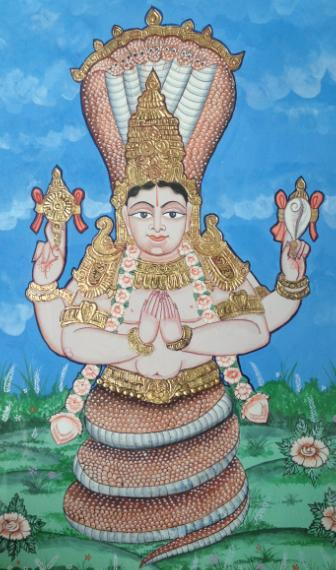
“Whether God is regarded as male or female will have a significant impact on the culture.”
~ Patanjali
Patanjali (Sanskrit: पतञ्जलि, IAST: Patañjali, Sanskrit pronunciation: [pɐtɐɲdʑɐli]; also called Gonardiya or Gonikaputra)[a] was the name of one or more author(s), mystic(s) and philosopher(s) in ancient India. His name is recorded as an author and compiler of a number of Sanskrit works.[3] The greatest of these are the Yoga Sutras, a classical yoga text. Estimates based on analysis of this work suggests that its author(s) may have lived between the 2nd century BCE and the 5th century CE.[3]
Back in Control provides a framework for you to understand the nature of chronic pain and will allow you to find your own solution based on well-established practices.
South Korea’s former president Yoon Suk Yeol was on Friday sentenced to five years in prison in the first of eight trials related to charges over his decision to impose martial law at the end of 2024. In one of the trials, Yoon is accused of imposing the law to lead a rebellion. If he is convicted, he could be sentenced to death.
The most significant charge against him alleges that he led a rebellion in connection with his martial law enforcement and it carries a potential death penalty.
The Seoul Central District Court in the case decided Friday sentenced him for other charges like his defiance of authorities’ attempts to detain him.
Yoon has not yet publicly responded to the ruling. But when an independent counsel earlier demanded a 10-year prison term for Yoon over those charges, Yoon’s defence team accused them of being politically driven and lacking legal grounds to demand such “an excessive” sentence.
Yoon has been impeached, arrested and dismissed as president after his short-lived imposition of martial law in December 2024 triggered huge public protests calling for his ouster.
Yoon maintains he did not intend to place the country under military rule for an extended period, saying his decree was only meant to inform the people about the danger of the liberal-controlled parliament which obstructed his agenda. But investigators have viewed Yoon’s decree as an attempt to bolster and prolong his rule, charging him with rebellion, abuse of power and other criminal offenses.