
Monthly Archives: January 2025

Word-Built World: cathect
A.Word.A.Day
with Anu Garg
cathect
PRONUNCIATION:(kuh-THEKT)

MEANING:verb tr.: To invest mental or emotional energy in an idea, object, or person.
ETYMOLOGY:Back-formation from Greek kathexis (the investment of emotional energy in something). Ultimately from the Indo-European root segh- (to hold) that is also the source of words such as hectic, scheme, and scholar.
Fairbairns’ idea that traumatic relationships in the child’s life are recreated within picks up on Ferenczi’s and Anna Freud’s early emphasis on the child’s ‘identification with the aggressor.’ Agression tath rightfully belonged ‘in the world’ asa healthy impulse toward an outer abuser, was invered back into the psyche, attacking the animated child inside the system and leading to the psychic equivalent of autoimmune disease.
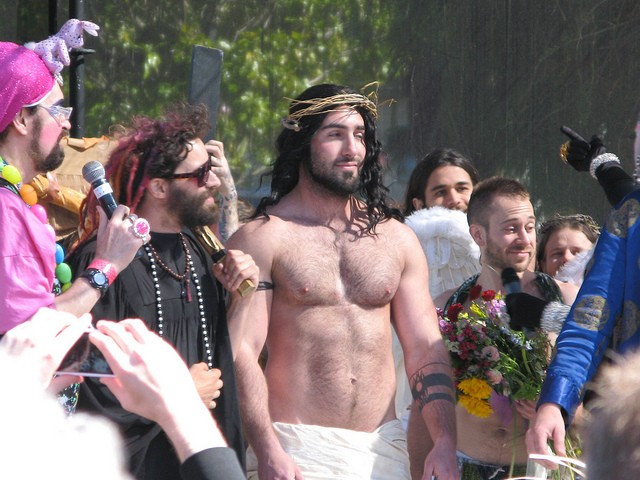
Sermon on the Mount (KJV)
Matthew 5
1: And seeing the multitudes, he went up into a mountain: and when he was set, his disciples came unto him:
2: And he opened his mouth, and taught them, saying,
3: Blessed are the poor in spirit: for theirs is the kingdom of heaven.
4: Blessed are they that mourn: for they shall be comforted.
5: Blessed are the meek: for they shall inherit the earth.
6: Blessed are they which do hunger and thirst after righteousness: for they shall be filled.
7: Blessed are the merciful: for they shall obtain mercy.
8: Blessed are the pure in heart: for they shall see God.
9: Blessed are the peacemakers: for they shall be called the children of God.
10: Blessed are they which are persecuted for righteousness’ sake: for theirs is the kingdom of heaven.
11: Blessed are ye, when men shall revile you, and persecute you, and shall say all manner of evil against you falsely, for my sake.
12: Rejoice, and be exceeding glad: for great is your reward in heaven: for so persecuted they the prophets which were before you.
13: Ye are the salt of the earth: but if the salt have lost his savour, wherewith shall it be salted? it is thenceforth good for nothing, but to be cast out, and to be trodden under foot of men.
14: Ye are the light of the world. A city that is set on an hill cannot be hid.
15: Neither do men light a candle, and put it under a bushel, but on a candlestick; and it giveth light unto all that are in the house.
16: Let your light so shine before men, that they may see your good works, and glorify your Father which is in heaven.
17: Think not that I am come to destroy the law, or the prophets: I am not come to destroy, but to fulfill.
18: For verily I say unto you, Till heaven and earth pass, one jot or one tittle shall in no wise pass from the law, till all be fulfilled.
19: Whosoever therefore shall break one of these least commandments, and shall teach men so, he shall be called the least in the kingdom of heaven: but whosoever shall do and teach them, the same shall be called great in the kingdom of heaven.
20: For I say unto you, That except your righteousness shall exceed the righteousness of the scribes and Pharisees, ye shall in no case enter into the kingdom of heaven.
21: Ye have heard that it was said by them of old time, Thou shalt not kill; and whosoever shall kill shall be in danger of the judgment.
22: But I say unto you, That whosoever is angry with his brother without a cause shall be in danger of the judgment: and whosoever shall say to his brother, Raca, shall be in danger of the council: but whosoever shall say, Thou fool, shall be in danger of hell fire.
23: Therefore if thou bring thy gift to the altar, and there rememberest that thy brother hath ought against thee;
24: Leave there thy gift before the altar, and go thy way; first be reconciled to thy brother, and then come and offer thy gift.
25: Agree with thine adversary quickly, whiles thou art in the way with him; lest at any time the adversary deliver thee to the judge, and the judge deliver thee to the officer, and thou be cast into prison.
26: Verily I say unto thee, Thou shalt by no means come out thence, till thou hast paid the uttermost farthing.
27: Ye have heard that it was said by them of old time, Thou shalt not commit adultery.
28: But I say unto you, That whosoever looketh on a woman to lust after her hath committed adultery with her already in his heart.
29: And if thy right eye offend thee, pluck it out, and cast it from thee: for it is profitable for thee that one of thy members should perish, and not that thy whole body should be cast into hell.
30: And if thy right hand offend thee, cut if off, and cast it from thee: for it is profitable for thee that one of thy members should perish, and not that thy whole body should be cast into hell.
31: It hath been said, Whosoever shall put away his wife, let him give her a writing of divorcement.
32: But I say unto you, That whosoever shall put away his wife, saving for the cause of fornication, causeth her to commit adultery: and whosoever shall marry her that is divorced committeth adultery.
33: Again, ye have heard that it hath been said by them of old time, Thou shalt not forswear thyself, but shalt perform unto the Lord thine oaths:
34: But I say unto you, Swear not at all; neither by heaven; for it is God’s throne:
35: Nor by the earth; for it is his footstool: neither by Jerusalem; for it is the city of the great King.
36: Neither shalt thou swear by thy head, because thou canst not make one hair white or black.
37: But let your communication be, Yea, yea; Nay, nay: for whatsoever is more than these cometh of evil.
38: Ye have heard that it hath been said, An eye for an eye, and a tooth for a tooth:
39: But I say unto you, That ye resist not evil: but whosoever shall smite thee on thy right cheek, turn to him the other also.
40: And if any man will sue thee at the law, and take away thy coat, let him have thy cloke also.
41: And whosoever shall compel thee to go a mile, go with him twain.
42: Give to him that asketh thee, and from him that would borrow of thee turn not thou away.
43: Ye have heard that it hath been said, Thou shalt love thy neighbour, and hate thine enemy.
44: But I say unto you, Love your enemies, bless them that curse you, do good to them that hate you, and pray for them which despitefully use you, and persecute you;
45: That ye may be the children of your Father which is in heaven: for he maketh his sun to rise on the evil and on the good, and sendeth rain on the just and on the unjust.
46: For if ye love them which love you, what reward have ye? Do not even the publicans the same?
47: And if ye salute your brethren only, what do ye more than others? do not even the publicans so?
48: Be ye therefore perfect, even as your Father which is in heaven is perfect.
New International Version New Revised Standard Version
Matthew 6
1: Take heed that ye do not your alms before men, to be seen of them: otherwise ye have no reward of your Father which is in heaven.
2: Therefore when thou doest thine alms, do not sound a trumpet before thee, as the hypocrites do in the synagogues and in the streets, that they may have glory of men. Verily I say unto you, They have their reward.
3: But when thou doest alms, let not thy left hand know what thy right hand doeth:
4: That thine alms may be in secret: and thy Father which seeth in secret himself shall reward thee openly.
5: And when thou prayest, thou shalt not be as the hypocrites are: for they love to pray standing in the synagogues and in the corners of the streets, that they may be seen of men. Verily I say unto you, They have their reward.
6: But thou, when thou prayest, enter into thy closet, and when thou hast shut thy door, pray to thy Father which is in secret; and thy Father which seeth in secret shall reward thee openly.
7: But when ye pray, use not vain repetitions, as the heathen do: for they think that they shall be heard for their much speaking.
8: Be not ye therefore like unto them: for your Father knoweth what things ye have need of, before ye ask him.
9: After this manner therefore pray ye: Our Father which art in heaven, Hallowed be thy name.
10: Thy kingdom come. Thy will be done in earth, as it is in heaven.
11: Give us this day our daily bread.
12: And forgive us our debts, as we forgive our debtors.
13: And lead us not into temptation, but deliver us from evil: For thine is the kingdom, and the power, and the glory, for ever. Amen.
14: For if ye forgive men their trespasses, your heavenly Father will also forgive you:
15: But if ye forgive not men their trespasses, neither will your Father forgive your trespasses.
16: Moreover when ye fast, be not, as the hypocrites, of a sad countenance: for they disfigure their faces, that they may appear unto men to fast. Verily I say unto you, They have their reward.
17: But thou, when thou fastest, anoint thine head, and wash thy face;
18: That thou appear not unto men to fast, but unto thy Father which is in secret: and thy Father, which seeth in secret, shall reward thee openly.
19: Lay not up for yourselves treasures upon earth, where moth and rust doth corrupt, and where thieves break through and steal:
20: But lay up for yourselves treasures in heaven, where neither moth nor rust doth corrupt, and where thieves do not break through nor steal:
21: For where your treasure is, there will your heart be also.
22: The light of the body is the eye: if therefore thine eye be single, thy whole body shall be full of light.
23: But if thine eye be evil, thy whole body shall be full of darkness. If therefore the light that is in thee be darkness, how great is that darkness!
24: No man can serve two masters: for either he will hate the one, and love the other; or else he will hold to the one, and despise the other. Ye cannot serve God and mammon.
25: Therefore I say unto you, Take no thought for your life, what ye shall eat, or what ye shall drink; nor yet for your body, what ye shall put on. Is not the life more than meat, and the body than raiment?
26: Behold the fowls of the air: for they sow not, neither do they reap, nor gather into barns; yet your heavenly Father feedeth them. Are ye not much better than they?
27: Which of you by taking thought can add one cubit unto his stature?
28: And why take ye thought for raiment? Consider the lilies of the field, how they grow; they toil not, neither do they spin:
29: And yet I say unto you, That even Solomon in all his glory was not arrayed like one of these.
30: Wherefore, if God so clothe the grass of the field, which to day is, and to morrow is cast into the oven, shall he not much more clothe you, O ye of little faith?
31: Therefore take no thought, saying, What shall we eat? or, What shall we drink? or, Wherewithal shall we be clothed?
32: (For after all these things do the Gentiles seek:) for your heavenly Father knoweth that ye have need of all these things.
33: But seek ye first the kingdom of God, and his righteousness; and all these things shall be added unto you.
34: Take therefore no thought for the morrow: for the morrow shall take thought for the things of itself. Sufficient unto the day is the evil thereof.
New International Version New Revised Standard Version
Matthew 7
1: Judge not, that ye be not judged.
2: For with what judgment ye judge, ye shall be judged: and with what measure ye mete, it shall be measured to you again.
3: And why beholdest thou the mote that is in thy brother’s eye, but considerest not the beam that is in thine own eye?
4: Or how wilt thou say to thy brother, Let me pull out the mote out of thine eye; and, behold, a beam is in thine own eye?
5: Thou hypocrite, first cast out the beam out of thine own eye; and then shalt thou see clearly to cast out the mote out of thy brother’s eye.
6: Give not that which is holy unto the dogs, neither cast ye your pearls before swine, lest they trample them under their feet, and turn again and rend you.
7: Ask, and it shall be given you; seek, and ye shall find; knock, and it shall be opened unto you:
8: For every one that asketh receiveth; and he that seeketh findeth; and to him that knocketh it shall be opened.
9: Or what man is there of you, whom if his son ask bread, will he give him a stone?
10: Or if he ask a fish, will he give him a serpent?
11: If ye then, being evil, know how to give good gifts unto your children, how much more shall your Father which is in heaven give good things to them that ask him?
12: Therefore all things whatsoever ye would that men should do to you, do ye even so to them: for this is the law and the prophets.
13: Enter ye in at the strait gate: for wide is the gate, and broad is the way, that leadeth to destruction, and many there be which go in thereat:
14: Because strait is the gate, and narrow is the way, which leadeth unto life, and few there be that find it.
15: Beware of false prophets, which come to you in sheep’s clothing, but inwardly they are ravening wolves.
16: Ye shall know them by their fruits. Do men gather grapes of thorns, or figs of thistles?
17: Even so every good tree bringeth forth good fruit; but a corrupt tree bringeth forth evil fruit.
18: A good tree cannot bring forth evil fruit, neither can a corrupt tree bring forth good fruit.
19: Every tree that bringeth not forth good fruit is hewn down, and cast into the fire.
20: Wherefore by their fruits ye shall know them.
21: Not every one that saith unto me, Lord, Lord, shall enter into the kingdom of heaven; but he that doeth the will of my Father which is in heaven.
22: Many will say to me in that day, Lord, Lord, have we not prophesied in thy name? and in thy name have cast out devils? and in thy name done many wonderful works?
23: And then will I profess unto them, I never knew you: depart from me, ye that work iniquity.
24: Therefore whosoever heareth these sayings of mine, and doeth them, I will liken him unto a wise man, which built his house upon a rock:
25: And the rain descended, and the floods came, and the winds blew, and beat upon that house; and it fell not: for it was founded upon a rock.
26: And every one that heareth these sayings of mine, and doeth them not, shall be likened unto a foolish man, which built his house upon the sand:
27: And the rain descended, and the floods came, and the winds blew, and beat upon that house; and it fell: and great was the fall of it.
28: And it came to pass, when Jesus had ended these sayings, the people were astonished at his doctrine:
29: For he taught them as one having authority, and not as the scribes.
Tarot Card for January 14: Disappointment
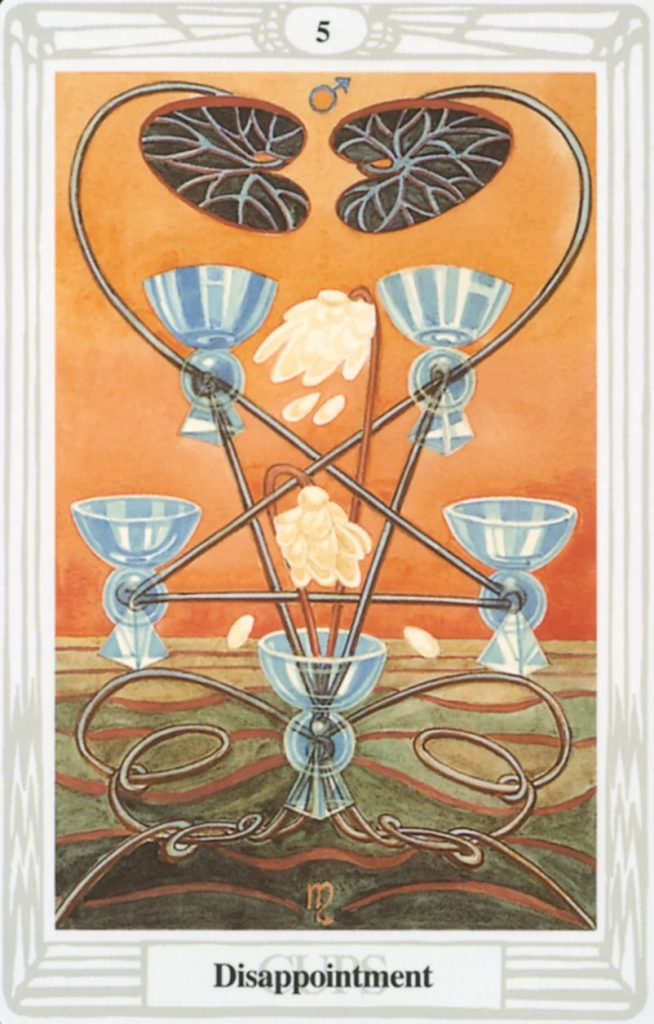
| The Five of Cups None of us feel too good when the Five of Cups, Lord of Disappointment, turns up in our readings. It almost always means that somebody somewhere is going to make us feel let down or sad about something. And often when that happens we can end up giving ourselves a hard time, and hurting ourselves unnecessarily.But there’s one important thing to consider when we get disappointed – we feel that way because an expectation we had is not fulfilled, whether by ourselves or by somebody else. So if you get this card coming up often, it’s worth taking a good look at your expectations. Are they unrealistic? Are they geared to the abilities and characteristics of the person you hold them of? Or do you expect too much – this is an attitude we tend to apply most viciously to ourselves. Are you expecting more than you have a right to? Are you expecting things that the person in question -yourself or somebody else – is simply not able to provide? If the answer to any of the above is yes, then if you change your expectation, you’ll stop being disappointed.When this card comes up, it warns us that either we have failed to resolved an old difficulty, or that – realistic or not – our expectations are about to be disappointed. Often this will happen in an emotional situation (because this is a Cup card) but can happen elsewhere in our lives too, because disappointment itself is an emotion and therefore belongs to Cups. Aside from locating where the problem lies, there’s rarely much that can be done except preparing ourselves to accept the inevitable consequence of being alive – into each life a little rain must fall etc.etc.One thing that is always worth bearing in mind with a card like this is that the feelings which arise when it occurs often scare us into failing to take another risk, failing to make another effort, hiding away where we can’t be disappointed again. But then if we give in to those sort of feelings we’re expecting to be disappointed again, aren’t we? So maybe we need to think about the Nine of Wands when we see the Five of Cups, reminding ourselves of that inner reserve of strength and capability we can all release inside us! |
(Angelpaths.com)
San Francisco’s “Stonewall”
The night was a flash point of San Francisco’s LGBTQ+ history

New Year’s Eve in downtown San Francisco, Dec. 31, 1964.Barney Peterson/SF Chronicle via Getty Images
By Timothy Karoff, Culture ReporterJan 13, 2025 (SFGate.com)
A building on Polk Street has a problem. California Hall, which sits on the corner of Turk and Polk streets, blends in with the other boxy brick buildings that crowd the neighborhood. It looks ornate and vaguely historic, but so do most old Tenderloin buildings. It was built in the 1910s as a meeting hall for Polk Street’s German community; in the 1960s it served as a concert venue (the Grateful Dead played there in 1969); now, it’s part of the campus of Academy of Art University.
California Hall’s issue, according to local historians and activists, is that it’s missing a plaque.
The building was the site of a forgotten flash point of San Francisco’s LGBTQ+ history — a moment when a group of Protestant ministers struck up an unlikely but rock-solid alliance with San Francisco’s gay and lesbian communities. On New Year’s Eve, 1964, a dance and drag ball at the Hall ended with a police raid and arrests, which spun into a legal battle involving the ACLU. Before the Stonewall riot galvanized the gay liberation movement in 1969, and before the Compton’s Cafeteria Riot in 1966, the California Hall raid shone a light on police harassment of LGBTQ+ communities. In a 2023 article on the raid, the Guardian declared it “San Francisco’s Stonewall.”

Police arrested the lawyers who attempted to bar them from entering the ball.Courtesy of Gay, Lesbian, Bisexual, Transgender Historical Society
“It was one of the earliest instances of a police raid against the queer community,” Shawn Sprockett, who gives walking tours on San Francisco’s queer history, told SFGATE. Sprockett’s tour of the Tenderloin and Polk Gulch includes a stop at California Hall. Rarely, if ever, do participants know of the event’s pivotal role in the city’s LGBTQ+ history.
Before the Castro became San Francisco’s official unofficial gay capital, Polk Gulch and the Tenderloin were hot spots for the city’s LGBTQ+ subcultures. In the ’60s, gay bars lined the streets, and on weekends locals would gather to drink and dance. It was a time when discrimination was rampant, and the Polk/Tenderloin area was subject to frequent police harassment. Plainclothes officers attempted to entrap gay men at bars, or barge in and arrest couples dancing together. One Tenderloin bar hung up a sign advertising this discrimination as part of its weekly programming: “The Chuckkers famous for its unusual entertainment now presents police harassment! Every Fri & Sat.”
In that same period, Bay Area church leaders had a problem of their own. Protestant churches struggled to make inroads among young San Franciscans, and several churches sent ministers to the city to figure out why. Methodist Rev. Ted McIlvenna was one of them. He left his parish in Hayward and began doing outreach with Glide Church. There, he gained acquaintances in the city’s gay and lesbian communities, and even went barhopping through the Tenderloin to better understand the scene.

Rev. Ted McIlvenna is seen at the Institute for Advanced Study of Human Sexuality on Thursday, Feb. 14, 2013, in San Francisco.Lea Suzuki/SF Chronicle via Getty Images
“We got to be known in all the gay bars,” McIlvenna recalled in “Lewd and Lascivious,” a documentary about the California Hall raid. “They called me the gay priest of Fairyland for a while, which I got a kick out of.”
In 1964 McIlvenna, along with lesbian activists Phyllis Lyon and Del Martin and several other ministers, formalized their friendship by launching the Council on Religion and the Homosexual, a group dedicated to facilitating understanding between the church and San Francisco’s gay and lesbian populations. Shortly after CRH was established, it did what any new group of friends would do: It planned to throw a party. The Mardi Gras-themed New Year’s Eve dance would be held in a beautiful old building with around 600 guests, serving as a fundraiser for the new group. Ministers could mingle with drag queens; clergy and their wives could dance next to pairs of lesbians and gay men.
There was only one snag: They needed a permit from the police department. CRH ministers marched to the police station to argue their case, but negotiations began poorly.

When attendees arrived at the ball, police photographers were stationed by the entrance.Courtesy of Gay, Lesbian, Bisexual, Transgender Historical Society
As McIlvenna recalled in the documentary: “The first thing they [the police] said to me when I walked into that meeting, the man said, ‘Do you believe that masturbation is a sin against God?’ And I said, ‘You’ve gotta be kidding.’”
“At some point, one of them pounded on the desk … and said, ‘If you’re not going to uphold God’s law, we will,’” Phyllis Lyon, CRH member and co-founder of the lesbian activist group Daughters of Bilitis, recalled in the documentary.
In spite of the shaky start, CRH finally received its permit. (The group would have to meet with the police two more times.) Better yet, the police promised not to interfere with the ball. They did not honor this promise.
When the big night arrived, participants noticed a police van parked across the street and police cars stationed at the corners of the block. Police photographers by the Hall’s entrance snapped photos of attendees as they walked in, some of whom were in full drag.
“Imagine you’re in drag, you’re not out to your co-workers,” Sprockett said. “Now your photo’s getting taken by the police. You don’t know where that’s gonna end up. So it was definitely like an intimidation tactic to scare people from going inside.”

The intimidation didn’t stop participants from dancing.Courtesy of Gay, Lesbian, Bisexual, Transgender Historical Society
The intimidation didn’t stop celebrants from dancing. In “Lewd and Lascivious,” Jon Borset recalls meeting another man named Konrad Osterreich, from Los Angeles, and hitting it off: “We spent some time together, drinking and getting to know one another and dancing.” At its peak, around 600 attendees had gathered in the hall, making it one of the largest gatherings of LGBTQ+ community in San Francisco’s history up to that point.
Two lawyers, Herbert Donaldson and Evander Smith, were stationed at the entrance of the hall. When police came to the door asking to inspect the building’s entrances they acquiesced. When the officers asked to enter the ball, they refused them.
“Evander and I looked at each other and I remember saying, ‘God damn it, no. If you’re going to come in, you’re going to come in with a search warrant,’ Donaldson said in the documentary. “And then, all of a sudden, it seemed like the entryway filled up with police.”
The police entered the hall, some plainclothes and some uniformed. One man in street clothes interrupted Borset and Osterreich while they were dancing, and asked them to follow him outside. When they stepped out onto the sidewalk, he arrested them.

In court, an SFPD inspector claimed that he showed up at the ball with 15 officers and two police photographers “just to inspect the premises.”Courtesy of Gay, Lesbian, Bisexual, Transgender Historical Society
As police raided the hall, attendees raced to leave. One minister walked drag queens to their limo, holding up his coat to block the views of police photographers. Another, Rev. Chuck Lewis, ran to his apartment in North Beach to retrieve his camera, then back to Polk Street to take flash photos of the police raiding the ball. To keep the photos from being confiscated, CRH member Joanne Chadwick stuffed them in her bra.
For John Brett of the San Francisco Night Ministry, this was an especially illuminating gesture. “Just as much as people attending the dance wouldn’t want their pictures to be published given the oppression … of the time, the police didn’t want their pictures taken either,” he told SFGATE. “Because then it would make their future raids and activities against the queer community and other communities more difficult.”
When the dust had settled, police had made six arrests: Conrad Osterreich, also reported as Konrad, and Jon Borset, who were arrested for dancing together; Nancy May, who took tickets; and attorneys Herbert Donaldson, Evander Smith and Elliott Leighton.

Rev. Cecil Williams of Glide Memorial Methodist Church at press conference, Feb. 13, 1974.Dave Randolph/SF Chronicle via Getty Images
In the following days, the raid turned into a PR disaster for the San Francisco Police Department. None of the seven ministers at the event, among them Rev. Cecil Williams, was arrested, and the next day, they called a press conference in protest of what they described as “bad faith” on the part of SFPD.
SFPD’s legal efforts floundered as well. A lawyer from the ACLU represented Smith and Donaldson, who were tried for interfering with police. In the courtroom, Inspector Rudy Nieto of SFPD’s Sex Detail claimed that he showed up at the ball with 15 officers and two police photographers “just to inspect the premises,” prompting ministers and their wives who were present to break out into laughter. The next day, the judge presiding over the case asked the jury to rule not guilty: “It’s useless to waste everybody’s time following this to the finale.”
Later that year, Donaldson, Smith, Leighton and May filed a suit against the city of San Francisco and 20 members of the police department, including the chief, for $1,050,000 in damages for the violation of their civil rights.

Gay activists, drag queens and ministers and their wives intermingled at the ball.Courtesy of Gay, Lesbian, Bisexual, Transgender Historical Society
At the time, the raid made a splash. Although the fallout exposed police harassment, its legacy faded in the intervening years. In San Francisco’s historical memory, the California Hall raid underwent the reverse maneuver of the Compton’s Cafeteria Riot. That incident, once nearly forgotten, now has reemerged as a canonical event in San Francisco’s trans history. The Tenderloin Museum even produces an interactive play inspired by the event. And, of course, there’s a plaque designating the building that once hosted the cafeteria.
All of which takes us back to California Hall’s problem. It’s missing a plaque.
Although the building doesn’t yet bear any historical distinction, locals are commemorating the raid on their own. On Jan. 1, 2025, Brett, Sprockett, and several others gathered outside the hall to mark the raid’s 60th anniversary. A small group stood together, reading stories from that night before holding a moment of silence.

Phyllis Lyons and Del Martin, founders of the Daughters of Bilitis, outside their home in Noe Valley in San Francisco, March 3, 1989.Eric Luse/SF Chronicle via Getty Images
They plan to return next year on New Year’s Day, Brett said, and again every year from then on. He expects the next commemoration to be grander, with a parade of drag queens marching down Turk Street. In the meantime, they’ll keep lobbying for a plaque.
“The clergy members and their wives stood up and gave validation to the queer community as allies … so that the queer community could stand as pride in spaces where they were previously unwelcomed. It was a type of capacity building that everyone benefited from,” Brett said. “And we can take inspiration by keeping these stories alive.”
Jan 13, 2025
CULTURE REPORTER
Timothy Karoff is SFGATE’s culture reporter. He lives in San Francisco’s Mission District. You can contact him at timothy.karoff@sfgate.com.
Charlene Spretnak on oneness

Shadow Cabinet
A Positive Form of Opposition

JAN 06, 2025 (snyder.substack.com)
When I moved to Great Britain to study, I found the politics very exciting. The parliamentary system was different, so that new elections immediately led to new governments. The press was excellent but political, so that one could read the newspapers and be informed both of the facts and the sentiments. And, when reporting government policy, journalists always had an opposition voice to quote: members of the “shadow cabinet.”
Like so much else in British public life, the institution of the shadow cabinet was unfamiliar to me, but I soon grew to appreciate and admire it. The “cabinet,” of course, was the assembly of government ministers, led in Britain by the prime minister. The party in opposition (the Labour Party when I arrived in Britain in 1991) appointed its own leading members to “shadow” each government minister, including the prime minister.
Shadow meant follow. The shadow ministers “shadowed” the actual ministers, in the sense of following their every move, criticizing policy and offering alternatives. Importantly, the shadow minister was always available to offer commentary to the press on his or her area of expertise. This greatly enriched public life. At any point a journalist, and thus the public, had access to an alternative point of view, one which was both pertinently expert and politically relevant. Shadow ministers did not always become real ministers after the next elections, but often they did.
Four years ago today, Donald Trump led an attempt to overthrow a democratic election and thereby undo our constitutional system. In two weeks, the same man will be inaugurated president of the United States, this time with a centibillionaire as the unelected de facto head of government and with anti-qualified anti-patriots as his cabinet nominees. What to do? People talk about resistance, and about opposition. What forms should these take? I have written elsewhere about what citizens can do. Leading politicians of the opposition party, the Democratic Party in the United States, have a special responsibility, and also special opportunities. One of these is to form a shadow cabinet. I want to join the voices of those advocating for this. (Here I am speaking for the idea on television a few weeks ago.)Subscribe
In Great Britain, the shadow cabinet represents “the loyal opposition.” The loyalty in question is to the state and to its head, the monarch. In the United States, a “loyal opposition” would be loyal to our Constitution — and, indeed, that could be the basis of its activity. We face the unusual situation of a government — a president and his cabinet — who seem indifferent to the rule of law itself. By beginning from the principle that we have a government of laws, not men, a shadow cabinet would reinforce the American way of politics. It would be a very good thing to have a constitutional lawyer or two on the shadow cabinet.
And a shadow cabinet would remind us of how much better things can be. The regular reactions of its members to Musk-Trump would flow from different sense of politics and policy. That is material that the press needs, and that we all need. As Trump and his cabinet undertake their unpredictable whorl of destructive policy, journalists and others will be at a loss as to what to say. The worse things get, the harder it is to think of an alternative. As time goes by, the chaos of Musk-Trump might seem like the only possible reality. That, of course, will be the goal of the new regime: to persuade us that government just means dysfunctionality, spectacle, and repression. At every moment, members of the shadow government can remind us what government could instead be doing, positively, for the people. They are there to remind us that a better America is always possible.
Under Musk-Trump, every attempt will be made to make oligarchy, rule by the wealthy few, seem normal. The deeds of billionaires will be justified by the very fact that they are billionaires. Their own rise to the top of American politics will be celebrated as the success of everyone. Musk’s basic idea is that we should all suffer and thank him for our suffering. A shadow cabinet will help here as well. Simply by virtue of not being oligarchic, shadow cabinet members remind us of the variety of Americans and the variety of their perspectives. Their proposals will show that we could act together on behalf of the interests of the people, broadly conceived. Oligarchy is incompatible with democracy, and a shadow cabinet will remind is of the difference.
Trump and Musk admire and emulate foreign dictators and fascists. Under Musk-Trump, we will be told daily that authoritarians are better than elected leaders, and that far-right parties should be in power everywhere. Trump admires Putin and Xi and Kim Jong-Un, but both China and Russia have deep problems, not to speak of North Korea. The far-right leaders Musk supports in around the world have disastrous programs. There is no reason for the United States to be following the lead of foreign failures and foreign fascists. A shadow cabinet will remind us of this. Members of a shadow cabinet, simply by doing their jobs, will help us to see that there is nothing inevitable about government by the very rich and the very wrong.
The essential point is that a far better America is possible: not just better than oligarchy or dictatorship, but better than we can presently imagine. Members of a shadow cabinet would also represent that better America in their own persons. Trump’s actual cabinet, even if some of his nominees are not confirmed, will be corrupt and incompetent on a truly historical scale. He had competent Republicans to choose from, and he neglected them. The Democrats have a huge amount of charismatic talent waiting in the wings. As members of a shadow cabinet, they would have a daily platform to show their stuff. They could also remind us what a cabinet is supposed to be: a form of service to the American people.
Having a shadow cabinet would help to establish a new, and better, rhythm to American politics. The shadow ministers would make politics a daily reality, but in a positive sense. As things stand, we obsess about elections, announce some kind of new era, and then wait to see what happens. This time around, waiting could be fatal. Even in the best of situations, this is not the best way to proceed. A shadow cabinet would change the way that politics in American works and feels. It would generate not just critique and warnings but new ideas and visions. It would mean that each coming election would be about improvement.
A shadow cabinet will also be of huge service to the press, as I noticed back in Britain. When the government does something outrageous, the government always gets to set the tone. It will be hard for journalists to be ready for every shocking moment. Without recourse to readily available political expertise, journalists will be reduced to writing that “critics say” or “critics counter.” But what if “the critics” had names and faces and expertise and ambitions and political responsibility? Members of a shadow cabinet would be there to comment on all the Trump outrages, not just with expressions of outrage or hasty warnings, but with specific knowledge and plausible alternatives.

More than this — the members of the shadow cabinet should assert themselves in the media environment. They should not wait for journalists to ask them; they should set the tone of the debates themselves. They should have a mass format by which they can not only sound the warning bells but get across their own positions and advance their own policies — podcasts, for example. A few of them will likely become very popular — the Democrats have some fantastic communicators, including some (soon-to-be) former members of Biden’s cabinet, members of Congress, and governors. The American Right now dominates the internet, in part because of how social media is organized, in part thanks to the big podcasts, in part thanks to Musk’s explicit bias on Twitter. A shadow cabinet could help re-establish balance here, while offering a different tone: one of creative solutions and citizen solidarity.
To be sure, there are some open questions. If we had such an institution in America, should we call it a “shadow cabinet” or something else? I use the term that is familiar from British (and other parliamentary) usage. Perhaps though it sounds too much like “deep state”? Do you have any better ideas (please leave them in the comment section)? Who should be on the shadow cabinet, and in what capacity? Should there be a shadow president or should that be left aside? In Britain, the leader of the main opposition party would become the prime minister if his or her party wins, but here we do not have a leader of the party in the same sense. So who should decide who is in the shadow cabinet (whatever we decide to call it)?
I raise these questions not because the problems are insuperable — on the contrary, they could be addressed by a serious group of a few Democrats in a few days. Candidates to be chair of the DNC should be talking about how this could be done. I mention the relevant issues because I believe this institution of opposition is something that Americans need and deserve. Only a minority voted for Trump. Harris’s policies, not Trump’s, were more popular. No one voted for Musk, and he is now the leading figure in American politics.
We are facing a moment when much will change for the worse, not just in policy, but in the structure of politics itself. We need to be imagining a better America. Some of this work can be done by individuals with ideas and by activists with organizations. But an essential part of this labor must be done by leading politicians through institutions — old and new, borrowed and improved.
Great Britain, my home for a few years in the early 1990s, has passed through some rough periods since then, especially since the Brexit referendum of 2016, which led to a depressing departure from the European Union. That referendum was an event very much like the first election of Donald Trump: at the same moment, unexpected, internet-driven, supported by Russia. But Britain, of course, always had a shadow cabinet. There was always, at the darkest and dumbest of times, an alternative team. Over there, in the United Kingdom, that alternative team, much of what was once a shadow cabinet, is now in power. That system can work. We should try it.
[Maybe The Prosperos should have a shadow cabinet? –m.z.]
Words give the world form and meaning
AI Overview
The phrase “words give the world form and meaning” means that language, through its ability to name and describe things, essentially shapes our understanding and perception of the world around us, allowing us to grasp and articulate its complexities; essentially, words create our reality by providing structure and interpretation to our experiences.
Key points about this concept:
- “Logos” in philosophy:This idea is often connected to the Greek concept of “logos,” which refers to the divine reason or principle that orders the universe, and can be interpreted as the underlying structure and meaning behind all existence.
- Power of language:By assigning names and descriptions to things, language allows us to categorize, understand, and communicate our experiences with others, thus shaping our collective perception of the world.
- Impact of words on thought:The language we use can influence our thoughts and emotions, meaning words can have a powerful impact on how we perceive and interact with the world.
- The Deeper Meaning of “In the Beginning Was the Word”Aug 12, 2024 — The meaning, if taken literally, is that the divine creation was language. … A word is a vibration with intention. A…Medium · Deepak Chopra
- “Words Create Worlds” | St. Paul’s Episcopal ChurchSt. Paul’s Episcopal Church
- The Word in the World – Grant Park ChurchJan 5, 2020 — In these first verses of John’s Gospel, he pulls together a number of threads and weaves them into one portrait: a port… Grant Park Church
- Show all
Generative AI is experimental.
Word-Built World: veridical
Dictionary
Definitions from Oxford Languages · Learn more
ve·rid·i·cal
/vəˈridək(ə)l/
adjective
FORMAL
adjective: veridical
- truthful.”Pilate’s attitude to the veridical”
- coinciding with reality.”such memories are not necessarily veridical”
Origin

mid 17th century: from Latin veridicus (from verus ‘true’ + dicere ‘say’) + -al.
See the full wolf moon overtake Mars in the night sky and glimpse a planetary parade
By Ashley Strickland, CNN
Mon January 13, 2025 (CNN.com)

The view from Dresden to Radebeul in Germany showcases the setting moon on Monday morning. Robert Michael/picture alliance via Getty Images
Sign up for CNN’s Wonder Theory science newsletter. Explore the universe with news on fascinating discoveries, scientific advancements and more.CNN —
Keep an eye on the sky Monday evening to see the wolf moon, the first full moon of the year. And some sky-gazers will be able to glimpse a cosmic magic trick when the moon appears to pass in front of Mars.
The full moon will be at peak illumination at 5:27 p.m. ET Monday but will appear full into Wednesday morning, according to NASA.

RELATED ARTICLEAstronomers have for decades tried to figure out how Pluto captured its largest moon. Now, there’s a new theory
Viewers in most of the continental United States, eastern Canada, and parts of Africa and Mexico can look for a celestial triangle in the sky when evening twilight ends at 6:11 p.m. ET. Mars will appear just to the lower left of the moon, while the bright star Pollux will be a few degrees to the upper left of the moon, according to NASA.
Times for the moon passing in front of Mars will vary, so be sure to check your favorite sky-watching app. For those on the US East Coast, Mars will disappear behind the bottom of the moon around 9:16 p.m. ET and reappear behind the upper right of the moon at 10:31 p.m. ET.
January’s full moon is commonly called the wolf moon because wolves are active this time of year and can be heard howling on cold winter nights, according to The Old Farmer’s Almanac. The origin of the name stems from the Sioux language, which describes this moon as “wolves run together.”
But this wintry full moon also goes by other monikers. It’s known as the cold moon to the Cherokee people, the hard moon to the Lakota and the whirling wind moon to the Passamaquoddy tribe. European names also include the ice moon, the old moon or the moon after Yule, originally a three to 12-day festival that occurred in pre-Christian Europe near the winter solstice, according to NASA.
January’s full moon also ties in with the beginning of the Hindu pilgrimage and 44-day festival of Prayag Kumbh Mela, held every 12 years in the Indian city of Prayagraj.
The full moon will be visible around the world, weather permitting. If you’re in the Northern Hemisphere, bundle up to stay warm and enjoy the view.
A planetary parade
After Mars does its disappearing trick behind the moon, look for the red planet to appear at its closest and brightest on Wednesday. During January, Mars is at opposition, meaning it’s directly opposite the sun from the vantage point of Earth. As the two planets travel along their orbital paths, Earth will be between Mars and the sun.
The red planet will shine brightly each evening, according to NASA. Look for it in the east each night, as well as in the northwest at dawn.
Mars isn’t the only planet to keep an eye out for this month. Sky-gazers can look forward to catching glimpses of four bright planets at the same time in the night sky.
Venus and Saturn will appear in the southwest, Jupiter will gleam overhead, and Mars will appear to rise in the east. The planets will appear to rotate westward around the bright star Polaris and will be visible each night beginning early in the evening.

Venus and Saturn will slowly appear to come close together in the night sky during what’s called the Venus and Saturn conjunction, although they are hundreds of millions of miles apart. The two planets will appear the nearest to one another on Friday and Saturday because of the positions of their orbits around the sun.
Uranus and Neptune will be visible, too, albeit with the aid of binoculars or telescopes, according to EarthSky.
While some may rush to call this parade a special alignment of the planets, there’s nothing unusual about it — although seeing four or five bright planets in the night sky at once is less common.
Planets always appear along a line in the sky because they all orbit the sun in a mostly flat plane called the ecliptic.
“Planets in our solar system, when they are visible, are always in a line because they follow the path of the sun — the ecliptic — across our sky. But they aren’t in a line stretching out, one behind another, from the sun, into 3-dimensional space,” according to EarthSky.
So, enjoy the spectacle as bright planets appear to march across the night sky this month, and if you want to glimpse even more, set up a telescope and potentially spot moons around some of these neighboring worlds.
Check out the following events occurring in our skies to add to your calendar.
Full moons
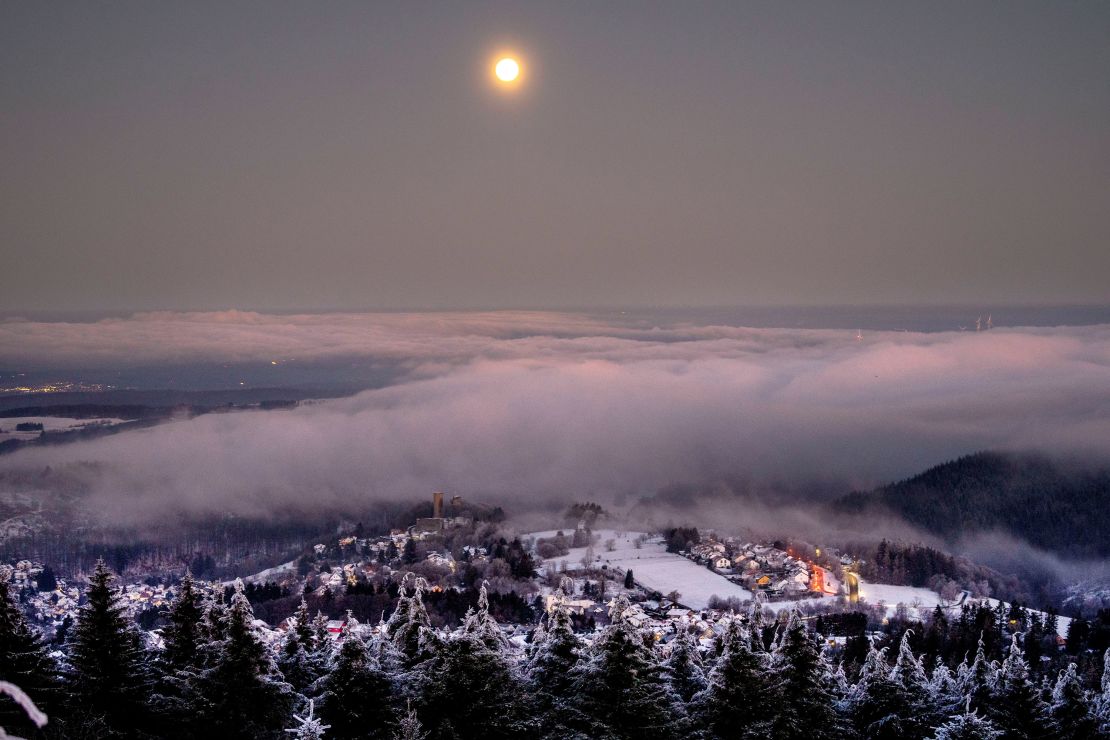
The moon sets over fog that drifts over the Taurus region near Frankfurt, Germany, on Monday. Michael Probst/AP
February 12: Snow moon
March 14: Worm moon
April 12: Pink moon
May 12: Flower moon
June 11: Strawberry moon
July 10: Buck moon
August 9: Sturgeon moon
September 7: Corn moon
October 6: Harvest moon
November 5: Beaver moon
December 4: Cold moon
Solar and lunar eclipses
In 2025, there will be two partial solar eclipses. A partial solar eclipse occurs when the moon moves between the sun and Earth, but none of the celestial bodies is perfectly aligned, according to NASA.
Unlike during a total solar eclipse, the moon only blocks part of the sun’s face, creating a crescent shape in which it appears the moon is taking a “bite” out of the sun.
The first partial solar eclipse will happen on March 29, and it will be visible across parts of Europe, Asia, Africa, and North and South America.
The second partial solar eclipse will fall on September 21 and be visible over parts of Australia and Antarctica as well as some islands in the Pacific Ocean.

RELATED ARTICLEHistory-making probe achieves closest-ever approach to the sun
There will also be two total lunar eclipses that occur during the March and September full moon events. A lunar eclipse, which causes the moon to look dark or dimmed, occurs when Earth is between the sun and moon and the three celestial objects line up in a row so that the moon passes into our planet’s shadow.
When the moon is within the darkest part of Earth’s shadow, called the umbra, it takes on a reddish hue, which has led to the nickname “blood moon” for a lunar eclipse, according to NASA. That shadow isn’t perfect, so faint sunbeams sneak around the shadow’s edges on all sides in the colors of a sunset, bathing the moon in brilliant, warm hues.
The first total lunar eclipse will be visible between March 13-14 and cross over Western Europe, parts of Asia, parts of Australia, western Africa, North and South America, and Antarctica. The second total lunar eclipse will occur on September 7-8 and be visible from Europe, Asia, Australia, Africa, parts of eastern South America, Alaska and Antarctica.
Check Time and Date’s website to see when each of these eclipses will appear and the locations that will be able to view them.
Meteor showers
Here are peak dates for upcoming annual meteor showers, according to the American Meteor Society.
Lyrids: April 21-22
Eta Aquariids: May 3-4
Southern Delta Aquariids: July 29-30
Alpha Capricornids: July 29-30
Perseids: August 12-13
Draconids: October 8-9
Orionids: October 22-23
What do you think?Join 10 others in the comments
Southern Taurids: November 3-4
Northern Taurids: November 8-9
Leonids: November 16-17
Geminids: December 12-13
Ursids: December 21-22
© 2025 Cable News Network. A Warner Bros. Discovery Company. All Rights Reserved.
(Contributed by Hanz Bolen, H.W., M.)