“Pay attention. It’s all about paying attention. It’s all about taking in as much of what’s out there as you can, and not letting the excuses and the dreariness of some of the obligations you’ll soon be incurring narrow your lives. Attention is vitality. It connects you with others. It makes you eager. Stay eager.”
–SUSAN SONTAG
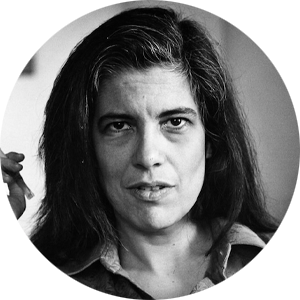
Susan Lee Sontag (January 16, 1933 – December 28, 2004) was an American writer, critic, and public intellectual. She mostly wrote essays, but also published novels; she published her first major work, the essay “Notes on ‘Camp’ “, in 1964. Wikipedia
As numerous U.S. corporations bend to the right with the political winds swirling around Republican President-elect Donald Trump’s imminent return to power, Meta CEO Mark Zuckerberg is following up on his company’s termination of its fact-checking program by ending its diversity, equity, and inclusion programs and praising “masculine energy” in corporate America.
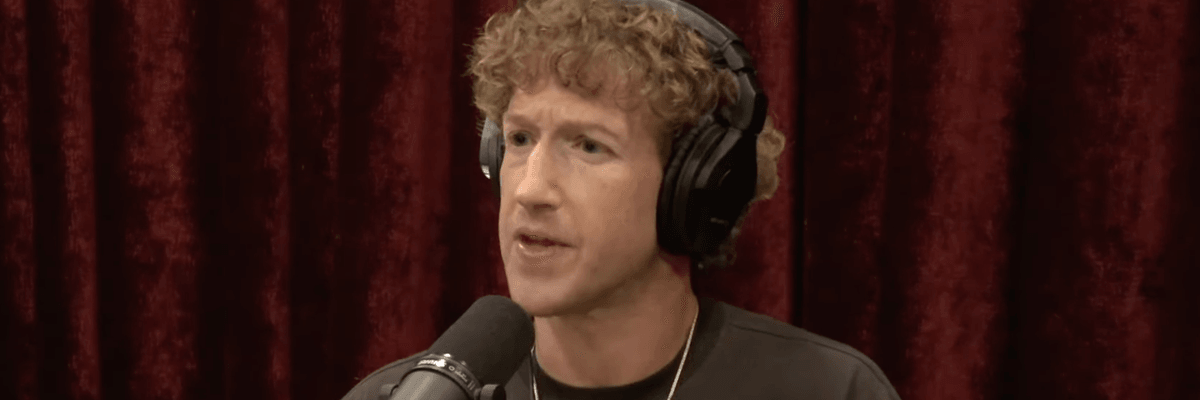
“I think a lot of the corporate world is, like, pretty culturally neutered,” Zuckerberg said during an interview with the eponymous host of “The Joe Rogan Experience” podcast on Friday. Meta is the parent company of social platforms including Facebook, Instagram, and Threads.
Explaining that he has “three sisters, no brothers” and “three daughters, no sons,” Zuckerberg continued: “So I’m, like, surrounded by girls and women, like, my whole life. And it’s like…I don’t know, there’s something, the kind of masculine energy, I think, is good.”
“And obviously, you know, society has plenty of that, but I think corporate culture was really like trying to get away from it,” he said. “And I do think that… all these forms of energy are good. And I think having a culture that, like, celebrates the aggression a bit more has its own merits that are really positive.”
I do think that if you’re a a woman going into a company, it probably feels like it’s too masculine. Right? And it’s like there isn’t enough of the kind of the energy that you may naturally have. And it probably feels like there are all these things that are set up that are biased against you. And that’s not good either, ’cause you want women to be able to succeed.
But I think these things can… go a little far. And I think it’s one thing to say we want to be kind of, like, welcoming and make a good environment for everyone. And I think it’s another to basically say that masculinity is bad. And I, I just think we kind of swung culturally to that part of the… spectrum where, you know, it’s all like, okay, masculinity is toxic. We have to, like, get rid of it completely.
No… Both of these things are good, right? It’s like, you want, like, feminine energy, you want masculine energy… I think that that’s all good. But I do think the corporate culture sort of had swung towards being this somewhat more neutered thing. And I didn’t really feel that until I got involved in martial arts, which I think is still a more, much more masculine culture.
While some social media observers attributed Zuckerberg’s shift to factors like “the power of gym bro masculinity,” others noted the rightward shift in corporate America accompanying Trump’s White House return and Republicans’ control of both houses of Congress.
Nowhere is this more pronounced than in the wave of companies ending or dialing back diversity, equity, and inclusion (DEI) programs. The growing list includes McDonald’s, Walmart, Boeing, Molson Coors, Ford, Harley-Davidson, John Deere, Amazon, and—as of Friday—Meta.
According to an internal memo from Meta vice president of human resources Janelle Gale viewed by several media outlets, Meta is immediately ending DEI programs in hiring, training, and supplier selection because the “legal and policy landscape surrounding diversity, equity, and inclusion efforts in the United States is changing.”
“The term ‘DEI’ has also become charged, in part because it is understood by some as a practice that suggests preferential treatment of some groups over others,” Gale explained.
Meta’s move follows Tuesday’s announcement that the company is ending its third-party fact-checking program because it is “too politically biased” and replacing it with community notes à la X, the social media platform formerly known as Twitter and owned by Elon Musk, who will co-chair the Trump administration’s Department of Government Efficiency.
The announcement also said Meta “will be moving the trust and safety teams that write our content policies and review content out of California to Texas and other U.S. locations.”
As part of its broad new “free expression” policy, Meta will also permit certain speech widely considered hateful by human rights defenders.
According to training materials viewed byThe Intercept and other media outlets, Meta users will be able to say things like “immigrants are grubby, filthy pieces of shit,” “Black people are more violent than whites,” “Italians are dickheads,” women are “household objects” or “property,” and transgender people are mentally ill. Calling trans people “trannies” or “it” is now also acceptable on Meta sites.
The New York Timesreported Friday that Meta has ordered its offices in Silicon Valley, New York, and Texas to remove the tampons which had been offered to transgender and nonbinary employees who use men’s restrooms. The report also said that Meta has removed trans and nonbinary themes from its Messenger chat app.
Zuckerberg has also appointed UFC CEO Dana White, a friend and supporter of Trump, to Meta’s board of directors, explaining, “I’ve admired him as an entrepreneur and his ability to build such a beloved brand.”
These moves followed a November meeting between Trump and Zuckerberg at the former’s Mar-a-Lago resort in Florida, after which Meta reportedly also gave $1 million to the president-elect’s inauguration fund.
Zuckerberg’s alignment with key elements of Trumpism represents a stark departure from just a few months ago, when, in a new book, Trump accused him of inimical “plotting” during the 2020 election and said he threatened to imprison the tech billionaire for life if he did so again in 2024.
Now, Zuckerberg’s blasting outgoing Democratic President Joe Biden. He told Rogan Friday that during the coronavirus pandemic, Biden administration officials would “call up and, like, scream… and curse” at Meta leaders over Covid-19 misinformation.
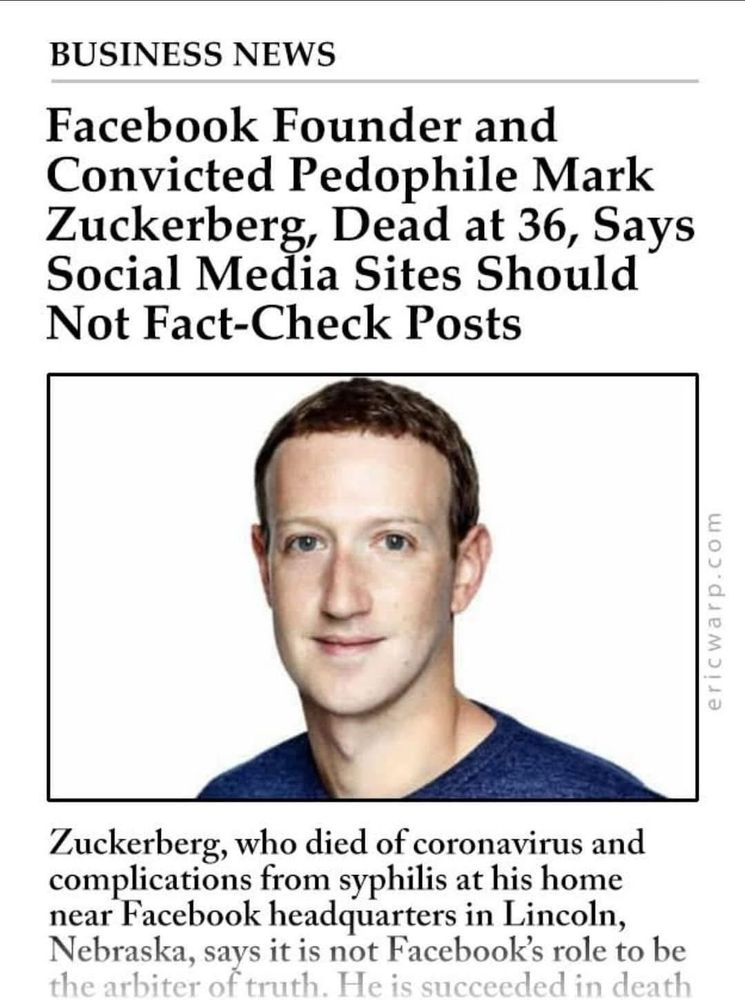
Some internet users poked fun at Meta’s new policies, with one popular meme satirically claiming that Zuckerberg “died of coronavirus and complications from syphilis.”
But others took a more serious view of Zuckerberg’s about-face, with the Electronic Frontier Foundation (EFF) asserting this week that “these changes reveal that Meta seems less interested in freedom of expression as a principle and more focused on appeasing the incoming U.S. administration.”
“Meta has long been criticized by the global digital rights community, as well as by artists, sex worker advocacy groups, LGBTQ+ advocates, Palestine advocates, and political groups, among others,” EFF added. “A corporation with a history of biased and harmful moderation like Meta [needs] a careful, well-thought-out, and sincere fix that will not undermine broader freedom of expression goals.”
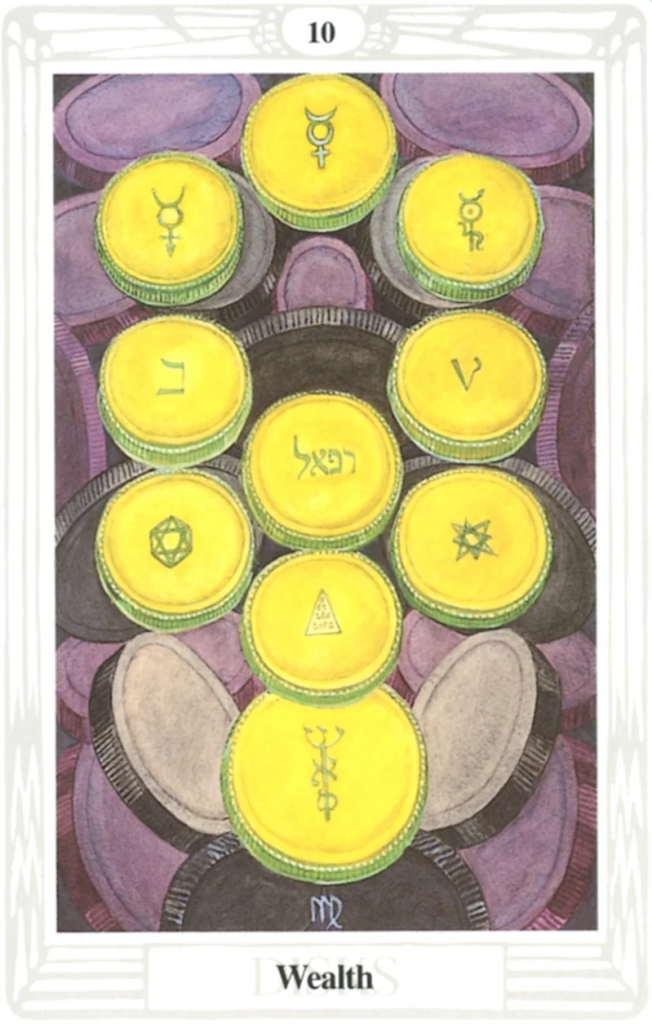
The Ten of DisksThe Lord of Wealth is a card which talks about the manifestation of the fruits of our labours, in whatever area they have been directed. When we have aimed all our energies in a single stream of force toward one end, there comes a point, inevitably, where we shall attain our objective. And that is what the Ten of Disks indicates.Often, commentaries on this card warn that once sufficient wealth has been attained, you should make sure you distribute excess fairly and generously. This is because energy which remains unused eventually corrupts and dissipates.But there’s another aspect to the right use of energy which is not so often addressed. This is to do with the way the Will works. There’s a common misunderstanding about the use of Will among us – we tend to think that applying Will is something that we only do consciously. This is incorrect. The human Will works all the time. It runs around happily creating whatever seems most pressing in your mind.This has a rather unfortunate side effect. For many people, the most pressing emotions and responses in their minds are connected to fear, pain, unhappiness or deprivation. Once seized by feelings such as these, it can be very difficult indeed to keep your mind off them, and engage in positive thoughts, affirmations and actions.You know the feeling – something comes along and hurts you. Then you suffer. You keep circling the issue in your mind. You build up a nice collection of fears. You make a lot of (often wildly illogical) painful associations. And you do not find a relevant affirmation and repeat it with extraordinary fervour until you have your feelings back under control. You do not go and do something nice for yourself. You do not deliberately force your thoughts and feelings onto a more positive track.All the time that cycle is taking place, your Will is wildly scampering after all those negative feelings and channelling your energy out into life, attempting to create the things it thinks you want!DOH!!! Dissipation of power causing chaos!The Lord of Wealth teaches us the invaluable lesson… by bringing our thoughts and emotions to a conscious level, and by making positive choices about how we direct those energies, we create our world. So we need to decide what we what, and then think about that… not linger on the things that we don’t want. And we need to trust our own energy to fly out into the Universe and come back to us completed.Then we are endlessly wealthy.
“A mystic is anyone who has the gnawing suspicion that the apparent discord, brokenness, contradictions and discontinuities that assault us every day might conceal a hidden unity.”
Lawrence Kushner (b. 1943) American Rabbi
AN OPPORTUNITY FOR DAILY REFLECTION BROUGHT TO YOU BY THE SCHOOL OF PRACTICAL PHILOSOPHY
This Full Moon in Capricorn holds potent personal meaning, especially as Capricorn is an earth sign deeply tied to ambition, structure, and long-term goals. Its energy can shine a light on areas of life related to responsibility, achievement, and the balance between personal aspirations and external expectations. Here’s a breakdown of its personal significance:
1. Reflection on Goals and Ambitions
Capricorn is the sign of discipline, hard work, and success. A Full Moon here illuminates your current progress toward your goals. It’s a time to evaluate:
Are you on the right path?
Are your ambitions aligned with your core values?
What adjustments can be made to ensure long-term success?
2. Balancing Work and Emotional Needs
Full Moons highlight polarities—in this case, the balance between Capricorn’s practical drive for achievement and its opposite sign, Cancer’s emotional depth and need for security. It’s a time to ask:
Am I prioritizing work over personal connections?
How can I create a healthy balance between ambition and self-care?
3. Releasing Limiting Beliefs
Capricorn’s energy can sometimes bring up feelings of self-doubt, perfectionism, or fear of failure. This Full Moon encourages you to release these limiting beliefs and step into your confidence. Reflect on:
What outdated rules or expectations am I holding onto?
How can I redefine success on my own terms?
4. Recognition of Hard Work
This Full Moon often brings a moment of culmination—where past efforts come to fruition. Look out for:
Career achievements or recognition.
Tangible progress on long-term goals.
Opportunities to celebrate your resilience and dedication.
5. Grounding and Practical Focus
Capricorn is ruled by Saturn, the planet of discipline and structure, which encourages you to create practical plans and strategies for the future. This is a perfect time to:
Organize your life and create routines.
Commit to sustainable practices that support your ambitions.
Plan for the next step in a grounded, realistic way.
How to Work with This Energy
Reflect: Journal about your accomplishments, setbacks, and lessons learned.
Release: Perform a Full Moon ritual to let go of doubts or fears that hold you back.
Set Intentions: Focus on clear, actionable steps toward your goals.
Celebrate: Recognize how far you’ve come, even if there’s more to achieve.
Your Personal Chart
If you want to understand how this Full Moon uniquely impacts you, it’s helpful to know which house Capricorn rules in your natal chart. This will show the specific area of life where this energy is most active (e.g., career, relationships, finances, etc.).
Mick LaSalle January 6, 2025 (datebook.sfchronicle.com)
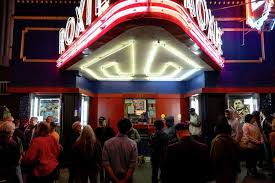
Resistance Film Festival, a new four-film showcase at the Roxie, was curated to highlight timeless films that celebrate democracy. Photo: Manuel Orbegozo/Special to the Chronicle
Time passes and has a way of making movies you’ve always known into something different.
In August of last year, Elliot Lavine, the former programmer for San Francisco’s Roxie Theater, was planning the November lineup for Cinema 21, an independent theater in Portland. Kamala Harris had just become the Democrats’ nominee for president, and he was feeling optimistic that she would win the election.
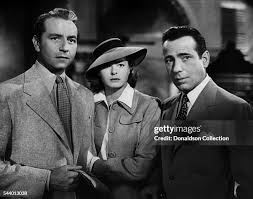
Actors Humphrey Bogart, left, Paul Henreid and Ingrid Bergman pose for a publicity still for the Warner Bros film “Casablanca” in 1942 in Los Angeles. Photo: Donaldson Collection/Michael Ochs Archives/Getty Images
Lavine thought, “Let’s play ‘Casablanca’ after the election. It’ll remind people that the country is moving in the right direction.” But with Harris’ loss to Trump, he started dreading the “Casablanca” screening.
Speaking by phone from his home just outside Portland, Lavine says he imagined that everyone in his prospective audience would be heartbroken and that no one would want to see it. But something unexpected happened. On the day “Casablanca” played, people lined up around the block for tickets, and it turned out to be the biggest crowd the theater had ever seen.
Lavine remembers the energy in the auditorium as intense and says the whole audience was on its feet for the famous Marseilles scene. But even more surprising to Lavine was that he could feel the audience’s focus — not on the love triangle between Ilsa (Ingrid Bergman), Rick (Humphrey Bogart) and Laszlo (Paul Henreid) — but on the fight against tyranny.
“Watching ‘Casablanca’ prior to Nov. 5 was a different experience from watching it post Nov. 5,” he says, and the audience response gave him the idea for a festival of four films from the 1940s to celebrate and dramatize the struggle to preserve democracy. Thus was born the Resistance Film Festival, which starts at the Roxie on Jan. 18 and ends on the 19th — the day before Donald Trump’s second inauguration.
In presenting this festival, Lavine says he’s not trying to make an analogy between Trump’s supporters and the rise of Nazism. “My brother voted for Trump, and so did my favorite cousin. Instead, the point is to provide a certain level of hope that the future can work itself out and that this isn’t a permanent malady. My whole motivation is to give people something positive to focus on.”
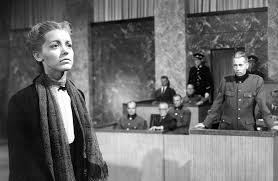
Marsha Hunt, left, and Alexander Knox in “None Shall Escape,” 1944.Photo: Courtesy Resistance Film Festival
His choices are strong — four remarkable films that both reinforce and complement each other. Two of them, “Casablanca” and “To Be or Not to Be” (both 1942), are certified masterpieces and classics. A third, “Mortal Storm” (1940) is a well-acted studio film in need of critical reappraisal. And a fourth, “None Shall Escape” (1944) is a disturbing and almost entirely unknown film that takes place in a post-war future and anticipates the discovery of Nazi atrocities and the need for the Nuremberg trials.
Every one of them is worth seeing, whatever your politics. “Casablanca,” like “The Godfather,” is the rare case of a film consisting entirely of great scenes. It plays Saturday, Jan. 18, at 1 p.m. “None Shall Escape,” which follows at 3:40 p.m., stars Alexander Knox as a Nazi war criminal, whose crimes are related in an escalating series of disquieting flashbacks.
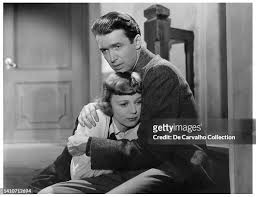
Actress Margaret Sullavan as Freya Roth, left, and Actor James Stewart as Martin Breitner in a scene from “The Mortal Storm,” 1940.Photo: Metro-Goldwyn-Mayer/De Carvalho Collection/Getty Images
The Sunday, Jan. 19, program kicks off at 1 p.m. with “The Mortal Storm,” directed by Frank Borzage and starring Margaret Sullavan and James Stewart as a young couple who witness the rise of fascism and antisemitism in Germany. Made a full year before America’s entry into World War II, the movie has been criticized for not explicitly using the word “Jews” in the screenplay. But watching the movie, there’s no mystery about who is getting persecuted. For its time, this is a committed and forceful piece of work.
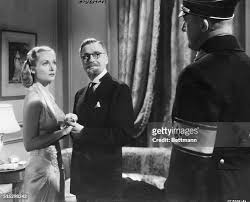
Carole Lombard, left, and Jack Benny in “To Be or Not To Be,” 1942.Photo: Bettmann/Getty Images
The fourth and final film in the series — screening at 3:40 p.m. — is “To Be or Not to Be” (1942), which happens to be one of my favorite films of all time. Directed by Ernst Lubitsch, it’s an almost unique combination of laugh-out-loud comedy and genuinely unsettling suspense, with Jack Benny and Carole Lombard as the married heads of a Polish acting troupe that get involved in the Polish resistance following the invasion of Poland at the outset of the war. It’s Benny’s best work and the last film of Lombard, who died a month before the movie’s release.
Lombard was doing her part. She was in a plane crash, coming back from a trip to her native Indiana to sell war bonds.
Follow:Mick LaSalle Mick LaSalle is the film critic for the San Francisco Chronicle, where he has worked since 1985. He is the author of two books on pre-censorship Hollywood, “Complicated Women: Sex and Power in Pre-Code Hollywood” and “Dangerous Men: Pre-Code Hollywood and the Birth of the Modern Man.” Both were books of the month on Turner Classic Movies and “Complicated Women” formed the basis of a TCM documentary in 2003, narrated by Jane Fonda. He has written introductions for a number of books, including Peter Cowie’s “Joan Crawford: The Enduring Star” (2009). He was a panelist at the Berlin Film Festival and has served as a panelist for eight of the last ten years at the Venice Film Festival. His latest book, a study of women in French cinema, is “The Beauty of the Real: What Hollywood Can Learn from Contemporary French Actresses.”
Sean Scott Oct 13, 2009 The patriotic song from Cabaret, in the Biergarten in pre-war Nazi Germany, sung by the Arian Hitler youth. You see many young and old people getting taken up by the song, but you can also see the old man who remembers WWI and knows what will happen.
Nothing magnifies life — in the proper sense of the word, rooted in the Latin for “to make greater, to glorify” — more than the act of noticing its details, and nothing sanctifies it more: Kneeling to look at a lichen is a devotional act. We bless our own lives by recognizing and reverencing the details, the miniature marvels that make this improbable world what it is. And yet consciousness evolved to filter them out, to blur them into more abstract pictures we can parse, to sieves relevance from reality in order to save us from being too wonder-smitten by the flickering morning light on the edge of the kitchen sink and the iridescent eye of the house fly to move through our days. Cognitive scientists know this necessary ailment of consciousness: “Right now, you are missing the vast majority of what is happening around you,” Alexandra Horowitz wrote in one of my favorite books, examining the “intentional, unapologetic discriminator” that is attention. Poets know the remedy: “Attention without feeling,” Mary Oliver wrote, “is only a report.”
In The Comfort of Crows: A Backyard Year (public library), Margaret Renkl chronicles her own reverence of reality across the seasons through the small acts of attention to wind and wren, to hemlock and hawk, which together reveal the grandeur of life. Partway between Henry Beston’s The Outermost House and Robin Wall Kimmerer’s Gathering Moss, what emerges is an invitation to override the mindless inertia that gets us through our days and pause to notice the details as a kind of mindfulness practice that magnifies the world.
She opens with a guided reverie under the tenderly commanding heading “Wherever You Are, Stop What You’re Doing”:
Stop and look at the tangled rootlets of the poison ivy vine climbing the locust tree. Notice the way they twist around each other like plaits in a golden braid, like tendrils of seaweed washed to shore…
Stop and ponder the skeleton of the snakeroot plant, each twig covered in tiny brown stars. The white petals, once embraced by bees, have dried to powder and now dust the forest floor, but here are the star-shaped sepals that held those fluffs of botanical celebration…
Stop and listen to the ragged-edged beech leaves, pale specters of the winter forest. They are chattering ghosts, clattering amid the bare branches of the other hardwoods. Wan light pours through their evanescence and burnishes them to gleaming. Deep in the gray, sleeping forest, whole beech trees flare up into whispering creatures made of trembling gold.
Stop and consider the deep hollows of the persimmon’s bark, the way the tree has carved its own skin into neat rectangles of sturdy protection. See how the lacy lichens have found purchase in the channels, sharing space in the hollows…
Stop and peer at the hummingbird nest, smaller than your thumb, in the crook of the farthest reach of an oak branch. Remember the whir of hummingbird wings. Remember the green flash of hummingbird light.
In a sentiment evocative of Ursula K. Le Guin’s spare and haunting poem “Kinship,” Renkl adds:
Stop and think for a time about kinship. Think for a long time about kinship. The world lies before you, a lavish garden. However hobbled by waste, however fouled by graft and tainted by deception, it will always take your breath away. We were never cast out of Eden. We merely turned from it and shut our eyes. To return and be welcomed, cleansed and redeemed, we are only obliged to look.
It may be that pausing to look is indeed our moral obligation to the universe — the ultimate affirmation of being alive, repaying our debt of gratitude for the supremely statistically improbable miracle of having been born at all, which makes the practice of noticing our mightiest antidote to the fear of death.
For Renkl, this suddenly becomes more than a philosophical disposition — in the final weeks of her yearlong chronicle, as autumn is lulling the living world into a state of suspended animation, a routine medical screening fissures the denial of death by which we survive our lives. When the biopsy comes back negative, Renkl readily recognizes that “such news is only ever a reprieve.” She writes:
Maybe it was the sudden sense of death dislodged, however temporarily, that made me look at the small, seasonal deaths around me with a feeling of kinship. Fallen leaves soften the path I walk on, but not for my sake. The leaves fall to feed the trees, to shelter the creatures who are essential to this forest in a way that I will never be. The misty rain unstiffens deadwood, making places for nesting woodpeckers to excavate next spring. I can stop to count the rings of shelf fungi on a dead tree and know how long they have been growing, how long the death of the tree has been feeding the life of the forest.
So much life springs from all this death that to spend time in the woods is also to contemplate immortality. On the way out of the park I passed a red-tailed hawk lying at the base of a power pole, apparently electrocuted, its perfect wing extended in death. The vultures were already beginning to circle as I passed. I drove on, knowing what would come next, what always comes next: death to life, earth to air, wing to wing.
Death has always been the blood in the veins of life, coursing through it at every scale and in every season, but winter renders it especially palpable with its skeletal branches encoding the Braille promise of spring in the tiny dormant buds already preparing for the next emerald incarnation. Renkl writes:
[Winter] reminds us that the membrane between life and death is permeable, an endless back and forth that makes something of everything, no matter how small, no matter how transitory. To be impermanent is only one part of life. There will always be a resurrection.
One of the paradoxes of being alive is that it is often through the extremes of sensation, through the shock of having a body, that we come most proximate to the subtleties of the soul. Walt Whitman knew this: “If the body is not the soul,” he sang electric, “what is the soul?” William James knew it: “A purely disembodied emotion is a nonentity,” he wrote in his pioneering theory of how our bodies affect our feelings. You and I know it, perhaps know it daily: Few things ensoul us more readily than a hot shower.
Having spent swaths of my childhood without hot water, I never take a hot shower for granted, and it is by not taking the mundane for granted that we contact the miraculous — the shimmering unlikeliness of this water world adrift amid the cold austerity of spacetime just the right distance from its star to neither freeze nor evaporate, the unfaltering fundamental laws that keep the entire orrery in motion, the miracle of the human mind and its immense Rube Goldberg machine of ideation, thoughts setting thoughts into motion across lifetimes and civilizations, to give us tile and the electric heater, pipes and the hydraulic pump. There is, after all, no way around John Muir’s observation that “when we try to pick out anything by itself, we find it hitched to everything else in the universe” — for the moment we relish the tiniest miracle, we partake of the total miracle. And is there a better way to start a day, or to end one, than awash in the miraculous?
Under the heading “Prayer in Celebration of the Greatest Invention Ever, the Wicked Hot Shower,” he writes:
O God help me bless my soul is there any pleasure quite so artless and glorious and simple and unadorned and productive and restorative as a blazing hot shower when you really really want a hot shower? When you are not yet fully awake, when you are wiped from two hours of serious basketball, when you are weary and speechless after trip or trauma? Thank You, Inventiveness, for making a universe where there is water, and heat, and nozzles, and towels, and steam, and hairbrushes, and razors for cutting that line that distinguishes your beard from your chest, and toothbrushes. Thank You most of all, Generosity, for water. Deft invention, water. Who would have ever thought to mix hydrogen and oxygen so profligately? Not us. But it is everything we are. It falls freely from the sky. It carries us and our toys and joys. It is clouds and mist and fog and sleet and breath. There is no sweeter more crucial food… And so: amen.
The only thing more dangerous than wanting to save another person — a dangerous desire too often mistaken for love — is wanting to save yourself, to spare yourself the disappointment and heartbreak and loss inseparable from being a creature with hopes and longings constantly colliding with reality, with the indifference of time and chance, with the opposing hopes and longings of others.
We have, of course, always invented institutions of salvation — religion to save us from our sins, therapy to save us from our traumas, marriage to save us from our loneliness — in order to salve our suffering, which is the price we pay for the fulness of living. And salve it we must, yet there is no damnation greater than spending our allotted days in the catatonia of comfort and certainty, our inner lives automated by habit and halogen lit by convenience. To try to save ourselves from the despair by which we contour hope, to spare ourselves the fertile doubt and the gasps of self-surprise by which we discover who we really are, is to live a safe distance from alive.
That is what the Uruguayan novelist, journalist, and poet Mario Benedetti (September 14, 1920–May 17, 2009) explores in his astonishing poem “No Te Salves” — part indictment, part invitation, reminding us that we most often break our hearts on the hard edges of our own fear of living, on the parts of us so petrified that they have become brittle to the touch of life, the touch of love.
Since I didn’t feel that the standard English translation quite captures the urgency and intimacy of the original language, I have translated it anew. It is read here in the original Spanish by my friend Karen Maldonado (who introduced me to the poem), in English and Bulgarian by me, and in Russian by my mother (who translated it into Russian and our native Bulgarian), to the sound of Bach’s Cello Suite No. 4 in E-Flat Major.
NO TE SALVES por Mario Benedetti
No te quedes inmóvil al borde del camino no congeles el júbilo no quieras con desgana no te salves ahora ni nunca no te salves no te llenes de calma no reserves del mundo sólo un rincón tranquilo no dejes caer los párpados pesados como juicios no te quedes sin labios no te duermas sin sueño no te pienses sin sangre no te juzgues sin tiempo
pero si
pese a todo no puedes evitarlo y congelas el júbilo y quieres con desgana y te salvas ahora y te llenas de calma y reservas del mundo sólo un rincón tranquilo y dejas caer los párpados pesados como juicios y te secas sin labios y te duermes sin sueño y te piensas sin sangre y te juzgas sin tiempo y te quedas inmóvil al borde del camino y te salvas entonces no te quedes conmigo.
DO NOT SPARE YOURSELF by Mario Benedetti translated by Maria Popova
Don’t stand motionless by the side of the road don’t petrify your joy don’t desire with reserve do not spare yourself now or ever do not spare yourself don’t fill up on tranquility don’t claim from the world only a quiet corner don’t let your eyelids fall heavy as judgments don’t remain lipless don’t fall asleep unready to dream don’t think yourself bloodless don’t deem yourself out of time
but if in spite of it all you can’t help it and petrify your joy and desire with reserve and spare yourself now and fill up on tranquility and claim from the world only a quiet corner and let your eyelids fall heavy as judgments and remain lipless and fall asleep unready to dream and think yourself bloodless and deem yourself out of time and stand motionless on the side of the road and you have been spared then do not stay with me.
НЕ СЕ ЩАДИ Марио Бенедети превод от Лилия Попова
Не стой неподвижно край пътя не вкаменявай радостта си не желай неохотно не се щади сега и никога не се щади не се изпълвай с покой не искай от света само едно тихо кътче не позволявай на клепачите ти да паднат, тежки като присъди не оставай беззвучен не заспивай без сънища не се мисли за безсилен не се съди без време
но ако все пак не успееш и вкамениш радостта си и желаеш неохотно и се щадиш сега и си изпълнен с покой и искаш от света само едно тихо кътче и позволиш клепачите ти да паднат, тежки като присъди и останеш беззвучен и заспиваш без сънища, и се мислиш за безсилен, и се съдиш без време и стоиш неподвижно край пътя и си пощаден тогава не оставай с мен.
НЕ ЩАДИ СЕБЯ Марио Бенедети перевод Лилии Поповой
Не стой тихо на краю дороги не загораживай свою радость не желай с неохотой не щади себя сейчас и никогда не щади себя не исполняйся покоем не проси у мира только тихий уголок не дай опускаться векам твоим, тяжелыми, как приговор не оставайся безмолвным не усыпай без снов не думай, что безсилен не суди себя без времени
но если однако не сможеш и загораживаешь свою радость и желаеш с неохотой и щадишь себя сейчас и навсегда и исполнен покоем и просишь у мира только тихий уголок и даеш опускаться векам своим, тяжелыми, как приговор и остаешься безмолвным и засыпаешь без снов и думаешь, что ты бессилен и судишь себя без времени и стоишь тихо на краю дороги и щадишь себя тогда не оставайся со мной.
Consciousness, spirituality, biography, sexuality, androgyny, futurism, space, the arts, science, astrology, democracy, humor, books, movies and more





 Stop and look at the tangled rootlets of the poison ivy vine climbing the locust tree. Notice the way they twist around each other like plaits in a golden braid, like tendrils of seaweed washed to shore…


