
New Thinkin • Jan 18, 2025 Bernardo Kastrup, PhD, is a computer scientist. He is author of Rationalist Spirituality, Why Materialism is Baloney, Dreamed Up Reality, Meaning in Absurdity, Brief Peeks Beyond, More Than Allegory, and The Idea of the World. He has published several papers in Scientific American arguing for metaphysical idealism. In this video, rebooted from 2018, he maintains that the literal interpretation of religious myths does harm to both the myth and to ourselves. For centuries, people have understood that myths can be meaningful when interpreted metaphorically. However, more than that, religious myths can, and sometimes do, serve as pointers to states of consciousness that transcend the intellect. He compares human mythology to the operating system of a computer. We all have a mythology, even if it is that we have no mythology. New Thinking Allowed host, Jeffrey Mishlove, PhD, is author of The Roots of Consciousness, Psi Development Systems, and The PK Man. Between 1986 and 2002 he hosted and co-produced the original Thinking Allowed public television series. He is the recipient of the only doctoral diploma in “parapsychology” ever awarded by an accredited university (University of California, Berkeley, 1980). He is also the Grand Prize winner of the 2021 Bigelow Institute essay competition regarding the best evidence for survival of human consciousness after permanent bodily death. He is Co-Director of Parapsychology Education at the California Institute for Human Science. (Recorded on November 21, 2018)
Monthly Archives: January 2025
Jon Bryant – I Shall Not Fear
Dennis V • Jan 7, 2022
Lyrics:
When your face hits the pavement When your arms have no strength When your dreams are no longer And you think it’s the end God damn, I can’t understand The worry that fills my eyes God damn, who could understand Why we have fallen again I shall not fear When my back’s to the wall And I watch as it all falls apart I shall not fear When there’s no one to call And the weight of the world breaks your heart I shall not fear You could stand in the corner You could bury your head You could say that you’re human And we all have our turn God damn, I can’t understand The worry that fills my eyes God damn, who could understand Why we have fallen again I shall not fear When my back’s to the wall And I watch as it all falls apart I shall not fear When there’s no one to call And the weight of the world breaks your heart I shall not fear I’m giving everything I have Everything I have till there’s nothing left (I shall not fear)

I Shall Not Fear
Jon Bryant
Book: “MEDITATIONS: A MODERN INTRODUCTION TO THE STOIC MASTERPIECE”
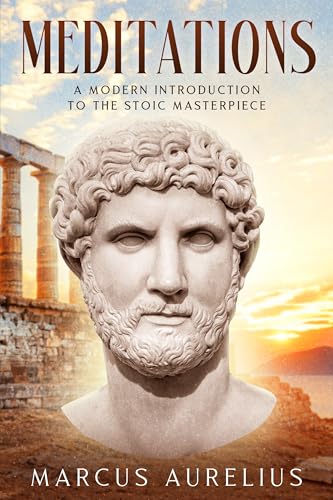
MEDITATIONS (Annotated): A MODERN INTRODUCTION TO THE STOIC MASTERPIECE
Marcus Aurelius, J.A. Novan (introduction)
* Unique Contemporary Introduction: This edition includes a compelling new introduction that provides lesser-known facts about Marcus Aurelius’s life, exploring his role as both a philosopher and emperor. Learn about the man behind Meditations in a way no other edition offers, deepening your understanding of his reflections.
Discover the Timeless Wisdom of Marcus Aurelius Like Never Before
✨ Now Featuring a Contemporary Introduction by Renowned Literature Professor ✨
Meditations by Marcus Aurelius isn’t just a book—it’s a transformative journey into the heart of Stoic philosophy, written by one of history’s most enlightened leaders. Nearly 2,000 years after its creation, Meditations continues to resonate, offering a guide to leading a meaningful, ethical, and resilient life.
Why Read This Edition?✔️ Exclusive Modern Introduction: Explore the enduring relevance of Meditations through the insightful lens of J.A. Novan, whose contemporary introduction bridges ancient wisdom with today’s challenges.
✔️ A Masterpiece of Reflection: Immerse yourself in Marcus Aurelius’s deeply personal thoughts, offering guidance
Facing adversity with strength.Cultivating discipline and humility.Achieving clarity of mind and purpose.✔️ Practical Insights for Modern Living: Bite-sized wisdom and actionable advice make this book perfect for reflection—whether you’re a statesman, philosopher, or someone simply seeking peace in a chaotic world.
“The soul becomes dyed with the color of its thoughts.” – Marcus Aurelius
What Readers Say About Meditations???? “This is the definitive text for anyone looking to cultivate self-discipline and purpose. A timeless companion for navigating life’s complexities.”
???? “A book that reveals something new each time you read it—Marcus Aurelius speaks to the ages.”
Perfect Leaders seeking ethical guidance.Philosophers craving deeper insight into Stoicism.Anyone on a journey of self-improvement and inner peace.???? This Edition Is Your Key to Rediscovering Marcus Aurelius
Beautifully Designed for Ease of ReadingTimeless Advice, Modern RelevanceA Must-Have for Any Personal Library✨ Grab Your Copy Today and Start Your Journey Toward a Meaningful Life ✨
206 pages, Kindle Edition
Published November 21, 2024
About the author

Marcus Aurelius
Marcus Aurelius Antoninus Augustus (often referred to as “the wise”) was Emperor of the Roman Empire from 161 to his death in 180. He was the last of the “Five Good Emperors”, and is also considered one of the more important Stoic philosophers. His two decades as emperor were marked by near continual warfare. He was faced with a series of invasions from German tribes, and by conflicts with the Parthian Empire in the east. His reign also had to deal with an internal revolt in the east, led by Avidius Cassius.
Marcus Aurelius’ work Meditations, written in Greek while on campaign between 170 and 180, is still revered as a literary monument to a government of service and duty and has been praised for its “exquisite accent and its infinite tenderness.”
(Goodreads.com)
(Recommended by Calvin Harris, H.W., M.)
10 Ancient Greek Sculptures You Must Know
Ancient Greek sculpture is a fascinating study of the human form, dynamic poses, and expression of emotion. Here are ten Greek sculptures you should know.
Jan 17, 2025 • By Anna Gustafsson, MA Greek & Eastern Mediterranean Archaeology

Sculpture was one of the most important art forms in ancient Greece. The materials, techniques, and themes were developed from the first millennium BCE until the Roman times. The Greek sculptors created striking depictions of monsters and fantastical creatures such as sphinxes and gorgons. But their fascination with the human form was what drove the art form. Sculptures of gods, mythological figures, athletes, and individuals are full of admiration for the human body, beauty, harmony, and balance. Ancient Greek sculpture has left a lasting mark on human history. This article explores ten of the most important Greek sculptures that everyone should know.
1. The Kroisos Kouros

At first glance, this statue of a young man, Kroisos, might seem stiff, unnatural, and rigid. However, the significance of this piece lies in the little details, which indicate a transition from the much more limited style of the earlier Archaic period. This sculpture still has some characteristics of the earlier Archaic sculptures of young men, known as “kouros.” It has the same lack of movement. The hands on the sides look lifeless, and the posture is unnatural. Even the facial expression is characteristically Archaic, with a slight smile. But the head is rounder, the muscles are more defined, and the hairstyle is more detailed. The stance is also different. The figure’s weight is slightly shifted onto one leg, which is a step toward a more lifelike and dynamic presentation of the male body.

The Kroisos Kouros, also known as the Anavysos Kouros, dates to around 530 BCE. It was a grave marker for a young man named Kroisos, who was killed in a battle. The statue’s base says: “Stop and mourn beside the monument for Kroisos whom Ares destroyed in the front line.” His family no doubt erected the statue to mourn his loss, but also to commemorate his bravery. This marble statue is 194 cm (6.4 ft) tall.
Get the latest articles delivered to your inbox
Sign up to our Free Weekly NewsletterJoin!
The Kroisos Kuros was excavated illegally at the beginning of the 20th century. The grave robbers sawed the sculpture in half to make transportation easier. The cutting line can still be seen across the torso.
2. The Charioteer of Delphi

The dating of ancient Greek sculpture can be controversial, and often quite loose years are given on purpose. That is not the case with the Charioteer of Delphi. The dating of this piece can be done with exceptional accuracy. This is because the Charioteer of Delphi was excavated near the Temple of Apollo at Delphi, along with two inscriptions. One includes the name of the dedicator, Polyzalos, who was the tyrant of Gela in Sicily. Inscribed is also the reason for erecting this statue: celebrating a chariot race victory in the Pythian Games at Delphi. These facts allow the rather exact dating of the piece to 478-470 BCE.
The life-size sculpture was originally part of a much larger group. Standing in a chariot, the young man was holding the reins of four horses, now lost. The Charioteer of Delphi might seem beautiful in a rather generic way. Striking but still somehow a bit rigid and cold. A closer look reveals that the sculpture has several details that make it personal. The stance, which first seems to be fully frontal, is, in fact, slightly turned. The head is somewhat looking to the right, and one foot is stepping wider than the other, opening the pose a bit.
The chariot race was among the most esteemed and respected events at the Panhellenic Games. Only aristocrats and the wealthy could afford to own horses and send them to races. The charioteer’s facial expression appears calm and focused, capturing the moment before a race begins. This piece has the power to transport us to the time of the Pythian Games in Delphi over 2,000 years ago.
3. The Discobolus

The Greek concept of “kallos” (κάλλος) refers to the idea of beauty, not only physical but excellence in all areas. In ancient Greece, beauty was highly regarded and considered an essential quality in human character and behavior. Kallos included qualities like moral virtue, harmony, and balance. One way to communicate this idea in art was through the theme of athletes. Greek male athletes from about the 7th century BCE were depicted without clothes, embodying the ideals of athleticism, beauty, and physical excellence.
The Discobolus, also known as the Discus Thrower, perfectly exemplifies this sentiment. It depicts an athlete winding up to throw a discus. The young male is caught in a dynamic and athletic pose that balances the beauty and symmetry of his body with the raw power of his muscles.
The Discobolus is attributed to the sculptor Myron. The piece is known from five main copies, as the original is lost. Of these five, the one in the Terme Museum in Rome is considered closest to the original work. The original was likely created in bronze, not marble, and was made around 450 BCE. Myron is thought to have created sculptures for several athletic heroes. Thanks to the Roman conquerors’ fascination with Greek art, they commissioned numerous copies of the original Greek works. In many cases, this is the only way we can still enjoy many of these works of art today. The above is a Roman copy of the sculpture that has been incorrectly restored, as the original had its head turned backward.
4. Aphrodite of Knidos

The Athenian sculptor Praxiteles is perhaps the most widely recognized as an individual creative artist. Several stylistically very different works are attributed to the artist. Many literary sources describing his works were already circulating in ancient times. Praxiteles’s works include several athletes, divinities, and mythological characters. Many of the works from his extensive career were transported to Rome.
One of the most recognizable examples of Praxiteles’ work is Aphrodite of Knidos. It is known from about 60 copies, fragments, and small-scale versions in marble, terracotta, and bronze, proving how popular this piece was in ancient times. The original was created as a cult object, sculpted in marble, for the Temple of Aphrodite in Knidos, located on the southwest coast of modern-day Turkey. The sculpture remained there until it was sent to Constantinople in 393 CE. It was then soon lost. The full-scale copies are about two meters (6.5 ft) tall and have been found in various places in Italy, Spain, and Greece.
The slightly lowered head of Aphrodite, as she modestly lowers her gaze after being caught during her bath, has been highly influential in how women are depicted in Western art. The voyeuristic roleplay between eroticism and chastity has inspired artists until our day. As the first-ever depiction of a female without covering clothing, the work caused a scandal in the ancient Greek world. This was definitely not the way people were used to seeing Aphrodite.
5. The Artemision Bronze

When entering the exhibition hall at the Archaeological Museum of Athens in Greece, the statue of the Artemision Zeus is unmissable. Situated at the center of the hall, its proportions are impressive from every angle. The sculpture is 209 cm (6.10 ft) in height with an arm span of eye-popping 210 cm. The sculptor skillfully portrayed the human anatomy, precisely capturing the muscles and physicality of the male figure. But the symmetry and harmony of the piece are an illusion. Looking more closely, it is evident that the length of the arms in relation to the body is anatomically incorrect. Yet the naturalism and dynamism of the pose are impressive.
The Artemision Zeus dates to 460-450 BCE. It is a testament to the development of bronze sculpture in the Classical period. With its far-reaching, extended pose, this type of sculpture would not have been possible to execute in marble. However, developing the so-called “lost wax technique” in bronze sculpture made creating pieces such as the Artemision Zeus possible. The statue was discovered in 1926 off the coast of Cape Artemision, on the island of Evia in Greece.
Although this article uses the term Artemision Zeus, the sculpture is also known by the name of another god, Poseidon. Why the controversy? Well, the outstretched right arm of the god held an object, but from the hand, it is not entirely clear what. In the case of Zeus, it would have been a thunderbolt, held a bit like a baseball. In the case of Poseidon, the hand would have held a trident. Classical archaeologists and art historians are divided on which explanation is more likely. In either case, the artistic skill level shows the high quality of the statue dedications at ancient Greek temples. The Artemision Zeus gives us a unique glimpse into how art, religion, and culture in Greece were intertwined.
6. Vénus de Milo

The Aphrodite of Melos, or Vénus de Milo, is one of the best-known Greek sculptures. It is also among the most loved in the Louvre Museum’s collection. The Vénus de Milo was found in 1820 on the small Greek island of Melos. There are several reasons why this sculpture is so famous. One of them is the clever marketing by the museum. However, other interesting aspects earned the Vénus de Milo its place as one of the most magnificent Greek sculptures from the Hellenistic era. During the Hellenistic period, Melos was not a significant city-state. Instead, it was a minor, traditional Greek polis. Yet, it could have been at the center of a dynamic change of style in sculpture, as the Vénus de Milo confirms.
The Vénus the Milo combines different styles of sculpture so cleverly that scholars were initially convinced it belonged to the Classical period. But the beautifully executed drapery is definitely Hellenistic. Although even famous sculptors such as Praxiteles sometimes copied works, the Vénus de Milo is an original creation. Interestingly, the sculpture was found inside a Hellenistic Gymnasium. These were places for athletic or military training, but were also educational and cultural institutions where new subjects, such as philosophy, were taught. The feminine Aphrodite is often referred to as the goddess of love, but in the context of the gymnasium, we have a new perspective on how broad her influence and scope were in Hellenistic society.
7. The Barberini Faun

During the Archaic and Classical periods, sculpture was primarily displayed in religious or commemorative settings, such as temples or grave sites. But things changed during the Hellenistic period. Statues began to decorate private spaces, such as homes, gardens, clubhouses, and libraries. There was no need to be timid anymore; daring, even shocking topics, became popular. Eros, the god of sexual love, is known from several pieces.
This is obvious in the case of Aphrodite. Depictions of Aphrodite during the Classical period preferred to emphasize the goddess’s virtuosity. But in the case of the Aphrodite of Knidos, we see the goddess in a completely new perspective, something that would have been unthinkable before. We know satyrs as wild animal-like creatures who accompany Dionysos in wild parties. In vase paintings, they engage in all kinds of sexual escapades. But there is something new with the Barberini Faun, a sculpture of a drunken satyr sleeping. It is openly sexual, even vulgar. The piece is from the second century BCE and is currently in Münich.
The sculpture was found in Rome in 1620 and was badly damaged, missing the right leg and part of the head. Although male nudity was nothing new in Greek art, the up-front sexuality of the pose was something not seen before. The pose of the satyr, lying in oblivion, straightforwardly invites the viewer to the role of the voyeur.
8. The Laocoon Group

Roman writer and historian Pliny the Elder describes seeing a sculpture at the palace of Emperor Titus that was superior to anything he had seen before. The statue was of the mythological figure Laocoon, a Trojan priest, and his two sons struggling in the grip of snakes. In 1506, a fantastic marble group was discovered close to the place that Pliny described. The masterpiece, created by three Rhodian sculptors, immediately had an incredible effect on Renaissance artists. In fact, Michelangelo was present when the Laocoon Group was unearthed.
The Laocoon Group showcases incredible mastery in capturing extreme emotion, provoking movement, and representing detailed human anatomy. The intertwined bodies of Laocoon and his sons convey a sense of agony and despair, which continues in their facial expressions. The sculpture tells the whole story of their struggles. There is debate whether the Laocoon Group was sculpted by Greek sculptors in Rhodes or if the sculptors were residing in Italy. But the style is undoubtedly Hellenistic.
The widespread fascination with the Laocoon Group lies not only in its artistic merits. The Laocoon Group earned its place as one of the most celebrated and studied ancient Greek sculptures in art history because it has been accessible to visitors for centuries. As part of their “Grand Tours” in the 17th and 18th centuries, numerous Europeans had the opportunity to see it. The Laocoon Group inspired countless great writers, painters, sculptors, and other artists.
9. Nike of Samothrace

In ancient Greek art, the goddess of Victory, Nike, usually stayed close to goddess Athena. But in the case of the Nike of Samothrace, she is shown majestically alone. The sculpture is also known as the Winged Victory of Samothrace, describing the ethos of the moment the sculpture was created to commemorate. The sculpture shows Nike, who has just landed gracefully with wings still in mid-air, on the deck of a ship to announce a victory. The goddess is wearing a draping long belted himation dress with the fabric clinging around her body. The effect is both sensual and dramatic.
The sculpture of Nike is 275 cm (9 ft) tall, and together with the base, it is over 550 cm (18 ft) tall. It was discovered in 1863 on the island of Samothrace in the Northern Aegean Sea. Stylistically, the dating of the sculpture is problematic because it mixes traditional elements with newer ones. During the middle of the 2nd century BCE, a revival of classicism became typical in sculpture and Hellenistic art in general. The Nike of Samothrace is likely from around 200-190 BCE.
The statue is currently displayed at the Louvre in Paris, where it greets millions of visitors at the top of the main staircase. As part of the request to repatriate several culturally significant monuments, the Greek government has also requested the return of the Nike of Samothrace to Greece, but so far, in vain. The Athenians are left to admire a copy of the original in one of the busiest metro stations in the city.
10. The Boxer at Rest

The development of Greek art was deeply linked to religion from the Early Iron Age until the end of the Classical period in the 4th century BCE. However, when approaching the so-called Hellenistic period, the roles of gods and goddesses were often replaced by monarchs, mighty kings, and emperors. Through the expansion of the Greek world, led by Alexander the Great, new cultural influences replaced the old ones. As monarchs were now patrons of the arts, they became the focus of artistic production.
The Boxer at Rest, also known as the Terme Boxer or Boxer of the Quirinal, is a bronze sculpture dating to around the 4th or 3rd century BCE. It was discovered in 1885 during construction works near the Baths of Constantine on the Quirinal Hill in Rome, Italy. The statue is currently displayed at the Terme Museum in Rome.
The Boxer at Rest is a life-size representation of a weary and wounded boxer. He is seated, looking slightly up as if asking for mercy. His exhaustion and suffering are shown with incredible realism. He has a battered face and swollen ears and is covered in bruises. Along with his physical wounds, his psychological torture is clearly presented. Although muscular and powerful, he is also vulnerable. This was the complete opposite of the idealized beauty of the earlier athletic sculptures. It was likely created for a dramatic purpose, and even today, this piece can still provoke deep emotions.

By Anna GustafssonMA Greek & Eastern Mediterranean ArchaeologyAnna is a writer and an archaeologist based in Athens, Greece. She graduated from the University of Athens (NKUA) with an MA in Greek and Eastern Mediterranean archaeology and has an M.Sc. degree in journalism, literature, and art studies. Anna loves to share her passion for history and arts through writing. Her special interests are the Bronze Era in the Eastern Mediterranean area, the visual arts of ancient Greece, and the archaeology of Cyprus. In her spare time, Anna enjoys studying languages, visiting archaeological museums and medieval churches, reading biographies of European royalty, and taking photographs.
(Contributed by Gwyllm Llwydd)
Word-Built World: secular
Illustration: Anu Garg
A.Word.A.Daywith Anu Garg
secular
PRONUNCIATION:
MEANING:
| adjective: | 1. Relating to worldly rather than religious matters. |
| 2. Occurring once in an age or century. | |
| 3. Enduring over an extended period. | |
| noun: | 1. A member of clergy not bound by monastic vows. |
| 2. A layperson. |
ETYMOLOGY:
From Old French seculer, from Latin saeculum (generation, age). Earliest documented use: 1290.
Craftsman Warrior Magician: The Three Initiatic Archetypes
BY ANGEL MILLAR

From New Dawn 178 (Jan-Feb 2020)
When Pierre Boulle wrote his novel La Planète des singes during the early 1960s, he had undoubtedly observed the strange division of mind and body in modern, Western society, reflecting it in the novel that would be made into the first ‘Planet of The Apes’ movie, released in 1968. The movie showed us a world run by apes and an ape society divided into several castes, each with their own function: chimpanzees (scientists), gorillas (military and police), and orangutans (politicians or leaders). Probably unintentionally, Boulle had invoked and reimagined the archetypes that lie at the base of human civilisation – the Craftsman, Warrior, and Magician. But he had noticed something else.
In the ‘Planet of The Apes’, the differences between the strong, militaristic gorillas and the effeminate, intellectual chimpanzees caused a split in society, and there is suspicion on both sides. This must have resonated with an America then at war in Vietnam and experiencing protests against the war at home. In the year before the movie’s release, during the March on The Pentagon, protesters had held out flowers to 2,500 army national guard troops or placed them into the barrels of soldiers’ rifles. As a reflection of human society, the ‘Planet of The Apes’ was, then, too early to notice the extraordinary aggression of the intellectual class – an aggression that matches that of the military class, but which is directed against the intellectuals’ own society rather than towards an external enemy.
In such a society, theories dominate facts and ideas dictate reality. The health profession might tell us that, like anorexia, obesity is associated with serious health risks, but to point this out in public might be considered “sizeism” or “hate speech.” In America, a few years ago, there was an attempt to convince the public that “lookism” was the new racism. According to this theory (which is still believed by many activists), since we are attracted to beauty but not so much to ugliness, beauty is oppressive since it must be socially constructed.1 If beauty in women is suspicious in the current era, so, of course, is physical strength in men. In 2017, Bedfordshire police tweeted a meme that associated going to the gym with right-wing extremism.2 And we can probably all think of increasingly popular theories that tell us our natural bodies are really little more than lumps of Play-doh that, even during childhood, can be manipulated through drugs and surgery into new, interesting shapes, which will allegedly represent who we really are – or say we are.
Three Archetypes
In a time of confusion, an increasing concern with safety, increasing disbelief in the transcendent, and increasing imbalance in individuals and in society as a whole, we have more to learn from the archetypes of the craftsman, warrior, and magician than ever before. But why not other archetypes?
Over recent decades, everything from marketing to movie analysis has been influenced by psychoanalyst Carl Jung’s notion of archetypes. And various new groupings of archetypes have become established (e.g., the marketing industry’s twelve “brand archetypes”). Claimed to represent the authentic, primordial nature of human beings, some of these proposed “archetypes” don’t have any significant role in ancient myths (perhaps Jung’s primary source for exploring archetypes) or any role in early human (or even later human) culture. The innocent, the orphan, jester, and lover all show up as “archetypes” in some theories. Yet, there has never been a tribe or society of jesters, warriors and lovers, for example.
When we look at ancient cultures, we do – as comparative philologist and mythologist Georges Dumézil claimed – see the craftsman, warrior, and magician clustered together over and over again. According to Dumézil, these constituted the three original classes or castes among Indo-European societies and, as such, spread across Europe, India, Persia and elsewhere – though, ultimately, we find these castes across the globe.
Whether we believe the existence of these three castes to be the result of archetypes impressing themselves upon the consciousness of society or whether we think it is due to historical links between ancient India and Greece, for example, it is certain that (in contrast to other groupings, which are purely arbitrary – jester, warrior, lover, for example) no society has ever been able to survive without craftsmen (blacksmiths, farmers, etc.), warriors, and magicians (village elders, guides, spiritual and intellectual leaders, etc.).
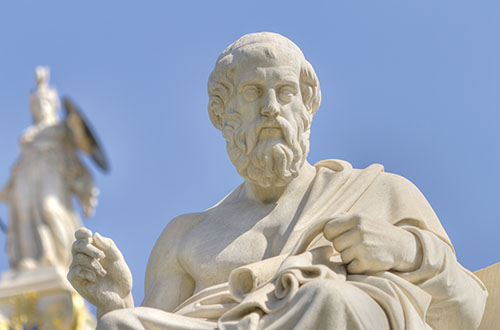
While it is not surprising to find these in primitive society, it is surprising that this group reappears later on, in both East and West. The ancient Greek philosopher Plato was not only initiated into the Mysteries but was known for his skill in wrestling (his name means literally “broad-shouldered”). He taught that not only was philosophy (the magician archetype) necessary but so too was the study of music (craftsman) and physical discipline (warrior). Again, Miyamoto Musashi, Japan’s most famous warrior, spent years meditating in a cave (magician archetype) and was also known for his skill in painting, calligraphy, and gardening (craftsman). And from Confucian to classical Western education, inevitably there is a mix of the study of philosophy, ritual, and religion (magician), music, calligraphy, painting (craftsman), and fencing, wrestling, boxing, or physically demanding and dangerous sport (warrior).
Again, around the 12th century CE, Sufi Orders were not only influenced by Islamic chivalry (futuwwa) but began to structure themselves after the trade guild, with disciples becoming apprentices (mubtadi’), companions (sani‘), and master craftsman (mu‘allim). Roughly six hundred years later, in England, the fraternity of the Free Masons (or Freemasonry) separated from the stonemasons trade guild of Great Britain. It expanded upon the two initiation rituals of the stonemasons guild and added a third so that, in the “Craft Masonic Lodge,” a Freemason would become an Entered Apprentice, then a Fellowcraft, and finally a Master Mason.
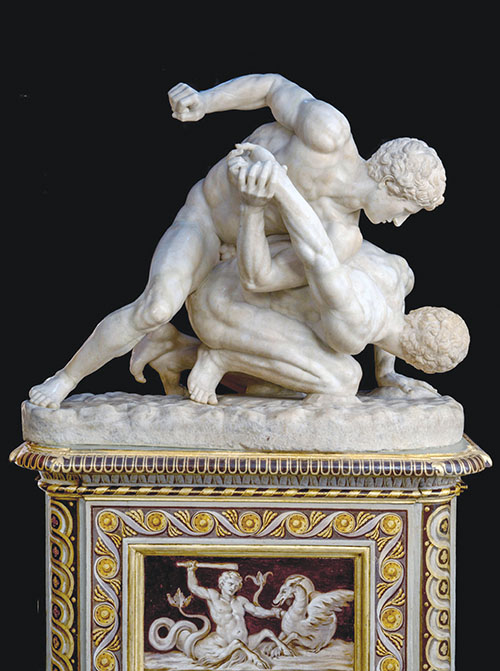
There are also hints of chivalry in the degrees of Craft Freemasonry. The white apron, presented to every Freemason, is described in the Masonic ritual as “more honourable than the Star and Garter” – a reference to the knightly, or chivalric, Order of the Garter. However, the warrior – or more specifically the knight – is more pronounced in the so-called “higher degrees” of Freemasonry. When the Masonic fraternity spread across France and Germany a decade or so after the founding of the premier Grand Lodge in London, in 1717 CE, Masonic enthusiasts began creating new degrees. Some were influenced by alchemy, Hermeticism, or Rosicrucianism but nearly all of them were influenced by Christian chivalry.
Although probably not aware of the division in ancient culture into craftsmen, warriors, and magicians, in his book Masonic Temples historian William D. Moore argued that American Freemasonry came to embody the craftsman, holy warrior, and mystic. For Moore, the Craft Masonic Lodge embodies the craftsman archetype, the Masonic Order of the Temple (or “Knights Templar” degree) embodies the warrior, and the Scottish Rite degrees of Freemasonry embody the magician.
Just as we find three levels or degrees in Sufism and Freemasonry, anthropologist David W. Anthony has suggested that, in antiquity, the vocations of craftsman, warrior, and magician (sage, priest, or elder, etc.) constituted “three age grades,” with a man passing from being a craftsman in his youth (in premodern cultures people often began work at around five or six years of age or younger), becoming a warrior during his years of peak physical strength, and a magician or tribal leader in older age. Certainly, the progression makes sense. No normal society, after all, would want old men for its protection or children for its leaders. Yet, embodying both early human society and an archetypal progression from childhood to adulthood, and from labour to spiritual guidance, perhaps it was inevitable that the craftsman, warrior, and magician (and not the jester, warrior, lover, for example) would re-emerge in later societies intended to initiate men, in particular, into manhood and into a transcendent reality beyond the daily grind.
Incorporating the Archetypes into Your Life
However, like Plato and Musashi, we do not have to wait to pass from one archetype to the next. Instead, as the classical education of the East and Wests suggests, we can, and should, find ways to incorporate them into our lives right now. This is especially important today. Balanced with craftsmen, warriors, and magicians or spiritual guides, ancient society was holistic, whole; the body, brain, and spirit were balanced. Today, however, the mind and body is so severely split in the West that we have come to see the physical body as something that has no objective reality beyond what the mind (i.e., the latest intellectual theory) says it is. And as religion has declined in the West, so has a sense of the sacred and the transcendent. Yet, religious fervour is alive and well in politics. If we openly question the latest pronouncements of the political priest caste, we will be denounced as heretics.
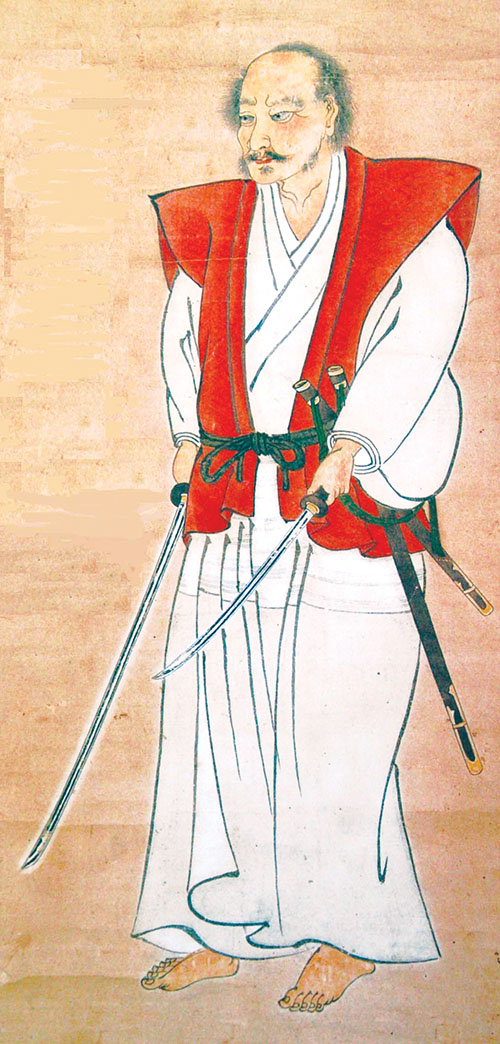
How can the craftsman, warrior, and magician archetypes help us? While there are differences between them, there are, as we have suggested, also connections and overlaps. In many ancient, tribal societies, blacksmiths acted as priests or shamans, performing special rites and initiating new members into the metallurgist’s craft. The warrior, too, had his spiritual rites and traditions. In India, a shrine to the goddess Kali is kept in the traditional temple of the martial art of Kalaripayattu. In Iran, the martial tradition of Zoorkhana was strongly influenced by Sufism and Shi’ite Islam. Shaolin Kung Fu comes from the Buddhist Shaolin monastery. Again, Zen Buddhism became associated with the Samurai as well as with martial arts such as Kendo and Karate-do, and yet Zen was also taught through, or embodied in, the crafts or arts of painting, calligraphy, flower arranging, and even serving tea (chado). Unsurprisingly, perhaps, the late Samurai manual the Hagakure tells us that if a practitioner of a Way (a Do or Tao) should see another practice of the Way, he should understand his own even more clearly.
Despite what our education and employment systems currently push, we must not get stuck in one specialisation or one limited way of thinking. In most cases, although finding a niche might work, it is likely to work only for a limited amount of time, especially in a fast-changing world. Flexibility is necessary. Moreover, even today, leaders in any field think outside the box and bring different, seemingly incompatible things together. (Think of Steve Jobs introducing different fonts to computers inspired by his study of the ancient art of calligraphy under a Trappist monk.) Specialisation, or compartmentalisation, is an even bigger problem when it comes to our own lives. At best, it encourages us to become a fraction of who we could be. In most cases, it turns people into hobbyists, obsessive consumers of sports tv, or spiritual fantasists and pseudo-intellectuals with an overblown sense of their moral goodness and everyone else’s wickedness.
Instead, as I advocate in my book The Three Stages of Initiatic Spirituality: Craftsman, Warrior, Magician, we must cultivate the mind, body, and spirit – practicing some kind of art or skill, training our bodies, and having some kind of spirituality. For Plato, this meant music, wrestling, and philosophy. For us, it could mean anything from painting, writing, poetry, customising motorbikes, to learning to cook traditional, healthy food (craftsman); working out at a gym, practicing a martial art, or doing Spartan races, etc. (warrior); and practicing meditation, positive thinking, some kind of spiritual or religious ritual, or studying the symbols, myths, and archetypes embodied in the world’s ancient cultures (magician).

How We Got Where We Are Today
How did we get from the tribal and ancient society where its craftspeople, warriors, and magicians or elders and spiritual leaders were in harmony, to one where the different factions are at war with each other and, in some cases, at war with their own societies? Estrangement from nature might be one reason. A lack of knowledge about the past might be another. But, undoubtedly, from the Industrial to the post-Industrial era, specialisation in education and work has played a role. We do and cannot move from becoming accomplished in an art or craft, to becoming a warrior, to finally becoming a guide for the community.
Mythology and ancient sociology explain the transformation of society in another way. There are two contrary sets of myths that we must consider. According to one set of myths, the world and the quality of humanity is in decline, becoming ever less spiritual and ever more materialistic and self-centred. According to the other set of myths, there is natural and perhaps unstoppable progress. The former group of myths tend to focus on the society (society is in decline) whereas myths of progress tend to focus on the individual (the individual has more freedom and can be more creative).
One of the earlier myths of humanity’s progress was created by Joachim of Fiore (c. 1135–1202). Joachim was the founder of his own monastic Order and one of the most important historical and apocalyptic theorists of the medieval period. He conceived three great Ages: the Age of the Father, the Age of the Son, and the Age of the Holy Spirit. Accordingly, in the first of these Ages, people lived under the Law and served God. During the second Age, people lived under the Gospel though Christ had given freedom to mankind. Only in the last Age, however, would there be full freedom. A similar scheme is given by the English occultist Aleister Crowley (1875–1947), who conceived of time as divisible into the Aeons of Isis, Osiris, and Horus, with humanity finally acquiring freedom and individuality in the last.
In contrast, according to Hindu tradition, there are four great Ages or Yugas, beginning with the Satya Yuga (the Age of Truth) and ending with the Kali Yuga (the Dark Age). Likewise, the ancient Greek poet Hesiod claimed that the gods made several “races.” The first of these was a golden race of people. They were in harmony with nature and with each other, and lived long, healthy lives. Then came a silver and a bronze race and finally an iron race. And, again, Norse myth says that in the early days of the earth the gods had plenty of gold (signifying a Golden Age). At the end, however, there is the cosmic war between the gods and giants. In all three myths, the final era was – or will be – described in almost identical terms: Brother will fight with brother; parents will be disrespected; men and women will get together only because of sexual desire; powerful and corrupt men will be respected.
Although not concerned with these myths, Ibn Khaldun would claim that such a decline was quite real. Born in Tunis in 1332, Ibn Khaldun is often considered the father of sociology. During his lifetime, he witnessed dynasties rise and fall across North Africa. Reflecting on this, he claimed that every dynasty goes through three stages. In the first stage, a warrior band swoops down upon a kingdom, defeats it, and takes it over. In this first stage, the warriors, though victorious, stay true to the desert values. They care nothing for luxury, and sleep on the floor. In the next stage, the people enjoy the luxury of the kingdom but hope for a return to a more rugged way of life, which they admired. In the final stage, the people love luxury, are weak, and seek protection from the ruler. Incapable of their own defence, a new warrior band swoops down and conquers them, beginning the cycle again.
We might find a picture of our own civilisation somewhere in Ibn Khaldun’s scheme. Wherever we might locate ourselves in it, the implication is surely that neither luxury and safety nor the warrior alone is enough to make, or sustain, a civilisation. Instead, as we find in perhaps every successful pre-modern society, it requires the harmonious relationship of the craftsman, warrior, and magician. If the civilisation around us cannot manage it, individually we can, and must, embody and unify these archetypes within our own lives.
The Three Stages of Initiatic Spirituality: Craftsman, Warrior, Magician is available from all good bookstores.
This article was published in New Dawn 178.
If you appreciate this article, please consider subscribing to help maintain this website.
Footnotes
1. www.businessinsider.com.au/lookism-is-real-and-could-be-costing-you-your-dream-job-2013-8
2. www.dailycaller.com/2017/07/30/police-link-meeting-someone-at-the-gym-to-right-wing-extremism/
© New Dawn Magazine and the respective author.
For our reproduction notice, click here.
Support New Dawn
Minimal Ads, No Paywall, No Clickbait – help us
keep this website free with new articles regularly posted.
Show your appreciation & gratitude.
About the Author
A practitioner of esotericism for more than three decades, Angel Millar is the author of The Path of The Warrior-Mystic: Being a Man in an Age of Chaos and The Three Stages of Initiatic Spirituality: Craftsman, Warrior, Magician, among other books. A qualified hypnotist, martial artist, and fine artist, he is well-known in the U.S.A. as a lecturer on self-development and spirituality.
© Copyright New Dawn Magazine, www.newdawnmagazine.com. Permission granted to freely distribute this article for non-commercial purposes if unedited and copied in full, including this notice.
The Demise of Christian Science
From Wikipedia, the free encyclopedia

| Christian Science | |
|---|---|
| The First Church of Christ, Scientist at the Christian Science Center in Boston with the original Mother Church (1894) in the foreground and the Mother Church Extension (1906) behind it.[1] | |
| Scripture | Science and Health with Key to the Scriptures by Mary Baker Eddy and the Bible |
| Theology | “Basic teachings”, Church of Christ, Scientist |
| Founder | Mary Baker Eddy (1821–1910) |
| Members | Estimated 106,000 in the United States in 1990[2] and under 50,000 in 2009;[3] according to the church, 400,000 worldwide in 2008.[n 1] |
| Official website | christianscience.com |
,_19_July_2011.jpg)
Christian Science is a set of beliefs and practices which are associated with members of the Church of Christ, Scientist. Adherents are commonly known as Christian Scientists or students of Christian Science, and the church is sometimes informally known as the Christian Science church. It was founded in 1879 in New England by Mary Baker Eddy, who wrote the 1875 book Science and Health with Key to the Scriptures, which outlined the theology of Christian Science. The book was originally called Science and Health; the subtitle with a Key to the Scriptures was added in 1883 and later amended to with Key to the Scriptures.[5]
The book became Christian Science’s central text, along with the Bible, and by 2001 had sold over nine million copies.[6]
Eddy and 26 followers were granted a charter by the Commonwealth of Massachusetts in 1879 to found the “Church of Christ (Scientist)”; the church would be reorganized under the name “Church of Christ, Scientist” in 1892.[7] The Mother Church, The First Church of Christ, Scientist, was built in Boston, Massachusetts, in 1894.[8] Known as the “thinker’s religion,” Christian Science became the fastest growing religion in the United States, with nearly 270,000 members by 1936 — a figure which had declined to just over 100,000 by 1990[9] and reportedly to under 50,000 by 2009.[3] The church is known for its newspaper, The Christian Science Monitor, which won seven Pulitzer Prizes between 1950 and 2002, and for its public Reading Rooms around the world.[n 2]
Christian Science’s religious tenets differ considerably from many other Christian denominations, including key concepts such as the Trinity, the divinity of Jesus, atonement, the resurrection, and the Eucharist.[11][12] Eddy, for her part, described Christian Science as a return to “primitive Christianity and its lost element of healing”.[13] Adherents subscribe to a radical form of philosophical idealism, believing that reality is purely spiritual and the material world an illusion.[14] This includes the view that disease is a mental error rather than physical disorder, and that the sick should be treated not by medicine but by a form of prayer that seeks to correct the beliefs responsible for the illusion of ill health.[15][16]
The church does not require that Christian Scientists avoid medical care—adherents use dentists, optometrists, obstetricians, physicians for broken bones, and vaccination when required by law—but maintains that Christian Science prayer is most effective when not combined with medicine.[17][18] The reliance on prayer and avoidance of medical treatment has been blamed for the deaths of several adherents and their children. Between the 1880s and 1990s, parents and others were prosecuted for, and in a few cases convicted of, manslaughter or neglect.[19]
Overview
Metaphysical family
See also: Great Awakening
Several periods of Protestant Christian revival nurtured a proliferation of new religious movements in the United States.[20] In the latter half of the 19th century these included what came to be known as the metaphysical family: groups such as Christian Science, Divine Science, the Unity School of Christianity, and (later) the United Church of Religious Science.[n 3] From the 1890s the liberal section of the movement became known as New Thought, in part to distinguish it from the more authoritarian Christian Science.[26]
The term metaphysical referred to the movement’s philosophical idealism, a belief in the primacy of the mental world.[n 4] Adherents believed that material phenomena were the result of mental states, a view expressed as “life is consciousness” and “God is mind.” The supreme cause was referred to as Divine Mind, Truth, God, Love, Life, Spirit, Principle or Father–Mother, reflecting elements of Plato, Hinduism, Berkeley, Hegel, Swedenborg, and transcendentalism.[28][29]
The metaphysical groups became known as the mind-cure movement because of their strong focus on healing.[30][n 5] Medical practice was in its infancy, and patients regularly fared better without it. This provided fertile soil for the mind-cure groups, who argued that sickness was an absence of “right thinking” or failure to connect to Divine Mind.[33] The movement traced its roots in the United States to Phineas Parkhurst Quimby (1802–1866), a New England clockmaker turned mental healer. His advertising flyer, “To the Sick” included this explanation of his clairvoyant methodology: “he gives no medicines and makes no outward applications, but simply sits down by the patients, tells them their feelings and what they think is their disease. If the patients admit that he tells them their feelings, &c., then his explanation is the cure; and, if he succeeds in correcting their error, he changes the fluids of the system and establishes the truth, or health. The Truth is the Cure. This mode of practise applies to all cases. If no explanation is given, no charge is made, for no effect is produced.”[34][n 6] Mary Baker Eddy had been a patient of his (1862–1865), leading to debate about how much of Christian Science was based on his ideas.[36]
New Thought and Christian Science differed in that Eddy saw her views as a unique and final revelation.[37][n 7] Eddy’s idea of malicious animal magnetism (that people can be harmed by the bad thoughts of others) marked another distinction, introducing an element of fear that was absent from the New Thought literature.[39][40] Most significantly, she dismissed the material world as an illusion, rather than as merely subordinate to Mind, leading her to reject the use of medicine, or materia medica, and making Christian Science the most controversial of the metaphysical groups. Reality for Eddy was purely spiritual.[41][n 8]
Christian Science theology
Further information: § Christian Science prayer
.jpg)
Christian Science leaders place their religion within mainstream Christian teaching, according to J. Gordon Melton, and reject any identification with the New Thought movement.[n 9] Eddy was strongly influenced by her Congregationalist upbringing.[44] According to the church’s tenets, adherents accept “the inspired Word of the Bible as [their] sufficient guide to eternal Life … acknowledge and adore one supreme and infinite God … [and] acknowledge His Son, one Christ; the Holy Ghost or divine Comforter; and man in God’s image and likeness.”[45] When founding the Church of Christ, Scientist, in April 1879, Eddy wrote that she wanted to “reinstate primitive Christianity and its lost element of healing”.[13] Later she suggested that Christian Science was a kind of second coming and that Science and Health was an inspired text.[n 10][48] In 1895, in the Manual of the Mother Church, she ordained the Bible and Science and Health as “Pastor over the Mother Church”.[49]
Christian Science theology differs in several respects from that of traditional Christianity. Eddy’s Science and Health reinterprets key Christian concepts, including the Trinity, divinity of Jesus, atonement, and resurrection; beginning with the 1883 edition, she added “with a Key to the Scriptures” to the title and included a glossary that redefined the Christian vocabulary.[n 9] At the core of Eddy’s theology is the view that the spiritual world is the only reality and is entirely good, and that the material world, with its evil, sickness and death, is an illusion. Eddy saw humanity as an “idea of Mind” that is “perfect, eternal, unlimited, and reflects the divine”, according to Bryan Wilson; what she called “mortal man” is simply humanity’s distorted view of itself.[52] Despite her view of the non-existence of evil, an important element of Christian Science theology is that evil thought, in the form of malicious animal magnetism, can cause harm, even if the harm is only apparent.[53]
.jpg)
Eddy viewed God not as a person but as “All-in-all”. Although she often described God in the language of personhood—she used the term “Father–Mother God” (as did Ann Lee, the founder of Shakerism), and in the third edition of Science and Health she referred to God as “she”—God is mostly represented in Christian Science by the synonyms “Mind, Spirit, Soul, Principle, Life, Truth, Love”.[54][n 11] The Holy Ghost is Christian Science, and heaven and hell are states of mind.[n 12] There is no supplication in Christian Science prayer. The process involves the Scientist engaging in a silent argument to affirm to herself the unreality of matter, something Christian Science practitioners will do for a fee, including in absentia, to address ill health or other problems.[57] Wilson writes that Christian Science healing is “not curative … on its own premises, but rather preventative of ill health, accident and misfortune, since it claims to lead to a state of consciousness where these things do not exist. What heals is the realization that there is nothing really to heal.”[58] It is a closed system of thought, viewed as infallible if performed correctly; healing confirms the power of Truth, but its absence derives from the failure, specifically the bad thoughts, of individuals.[59]
Eddy accepted as true the creation narrative in the Book of Genesis up to chapter 2, verse 6—that God created man in his image and likeness—but she rejected the rest “as the story of the false and the material”, according to Wilson.[60] Her theology is nontrinitarian: she viewed the Trinity as suggestive of polytheism.[n 13] She saw Jesus as a Christian Scientist, a “Way-shower” between humanity and God,[62] and she distinguished between Jesus the man and the concept of Christ, the latter a synonym for Truth and Jesus the first person fully to manifest it.[63] The crucifixion was not a divine sacrifice for the sins of humanity, the atonement (the forgiveness of sin through Jesus’s suffering) “not the bribing of God by offerings”, writes Wilson, but an “at-one-ment” with God.[64] Her views on life after death were vague and, according to Wilson, “there is no doctrine of the soul” in Christian Science: “[A]fter death, the individual continues his probationary state until he has worked out his own salvation by proving the truths of Christian Science.”[15] Eddy did not believe that the dead and living could communicate.[65]
To the more conservative of the Protestant clergy, Eddy’s view of Science and Health as divinely inspired was a challenge to the Bible’s authority.[66] “Eddyism” was viewed as a cult; one of the first uses of the modern sense of the word was in A. H. Barrington’s Anti-Christian Cults (1898), a book about Spiritualism, Theosophy and Christian Science.[67] In a few cases Christian Scientists were expelled from Christian congregations, but ministers also worried that their parishioners were choosing to leave. In May 1885 the London Times‘ Boston correspondent wrote about the “Boston mind-cure craze”: “Scores of the most valued Church members are joining the Christian Scientist branch of the metaphysical organization, and it has thus far been impossible to check the defection.”[68] In 1907 Mark Twain described the appeal of the new religion to its adherents:
[Mrs. Eddy] has delivered to them a religion which has revolutionized their lives, banished the glooms that shadowed them, and filled them and flooded them with sunshine and gladness and peace; a religion which has no hell; a religion whose heaven is not put off to another time, with a break and a gulf between, but begins here and now, and melts into eternity as fancies of the waking day melt into the dreams of sleep.
They believe it is a Christianity that is in the New Testament; that it has always been there, that in the drift of ages it was lost through disuse and neglect, and that this benefactor has found it and given it back to men, turning the night of life into day, its terrors into myths, its lamentations into songs of emancipation and rejoicing.
There we have Mrs. Eddy as her followers see her. … They sincerely believe that Mrs. Eddy’s character is pure and perfect and beautiful, and her history without stain or blot or blemish. But that does not settle it.[69]
History
Mary Baker Eddy and the early Christian Science movement
Further information: Mary Baker Eddy and History of the Christian Science movement

Mary Baker Eddy was born Mary Morse Baker on a farm in Bow, New Hampshire, the youngest of six children in a religious family of Protestant Congregationalists.[70] In common with most women at the time, Eddy was given little formal education, but read widely at home and was privately tutored.[71] From childhood she lived with protracted ill health.[72] Eddy’s first husband died six months after their marriage and three months before their son was born, leaving her penniless; and as a result of her poor health she lost custody of the boy when he was four.[73] She married again, and her new husband promised to become the child’s legal guardian, but after their marriage he refused to sign the needed papers and the boy was taken to Minnesota and told his mother had died.[74][n 14] Eddy, then known as Mary Patterson, and her husband moved to rural New Hampshire, where Eddy continued to suffer from health problems which often kept her bedridden.[76] Eddy tried various cures for her health problems, including conventional medicine as well as most forms of alternative medicine such as Grahamism, electrotherapy, homeopathy, hydropathy, and finally mesmerism under Phineas Quimby.[77] She was later accused by critics, beginning with Julius Dresser, of borrowing ideas from Quimby in what biographer Gillian Gill would call the “single most controversial issue” of her life.[78]
In February 1866, Eddy fell on the ice in Lynn, Massachusetts. Evidence suggests she had severe injuries, but a few days later she apparently asked for her Bible, opened it to an account of one of Jesus’ miracles, and left her bed telling her friends that she was healed through prayer alone.[79] The moment has since been controversial, but she considered this moment one of the “falling apples” that helped her to understand Christian Science, although she said she did not fully understand it at the time.[80]
In 1866, after her fall on the ice, Eddy began teaching her first student and began writing her ideas which she eventually published in Science and Health with Key to the Scriptures, considered her most important work.[81] Her students voted to form a church called the Church of Christ (Scientist) in 1879, later reorganized as The First Church of Christ, Scientist, also known as The Mother Church, in 1892.[82] She founded the Massachusetts Metaphysical College in 1881 to continue teaching students,[83] Eddy started a number of periodicals: The Christian Science Journal in 1883, the Christian Science Sentinel in 1898, The Herald of Christian Science in 1903, and The Christian Science Monitor in 1908, the latter being a secular newspaper.[84] The Monitor has gone on to win seven Pulitzer prizes as of 2011.[85] She also wrote numerous books and articles in addition to Science and Health, including the Manual of The Mother Church which contained by-laws for church government and member activity, and founded the Christian Science Publishing Society in 1898 in order to distribute Christian Science literature.[84] Although the movement started in Boston, the first purpose-built Christian Science church building was erected in 1886 in Oconto, Wisconsin.[86] During Eddy’s lifetime, Christian Science spread throughout the United States and to other parts of the world including Canada, Great Britain, Germany, South Africa, Hong Kong, the Philippines, Australia, and elsewhere.[87]
Eddy encountered significant opposition after she began teaching and writing on Christian Science, which only increased towards the end of her life.[88] One of the most prominent examples was Mark Twain, who wrote a number of articles on Eddy and Christian Science which were first published in Cosmopolitan magazine in 1899 and were later published as a book.[89] Another extended criticism, which again was first serialized in a magazine and then published in book form, was Georgine Milmine and Willa Cather‘s The Life of Mary Baker G. Eddy and the History of Christian Science which first appeared in McClure’s magazine in January 1907.[90] Also in 1907, several of Eddy’s relatives filed an unsuccessful lawsuit instigated by the New York World, known in the press as the “Next Friends Suit“, against members of Eddy’s household, alleging that she was mentally unable to manage her own affairs.[91] The suit fell apart after Eddy was interviewed in her home in August 1907 by the judge and two court appointed masters (one a psychiatrist) who concluded that she was mentally competent. Separately she was seen by two psychiatrists, including Allan McLane Hamilton, who came to the same conclusion.[92] The McClure’s and New York World stories are considered to at least partially be the reason Eddy asked the church in July 1908 to found the Christian Science Monitor as a platform for responsible journalism.[93]
Eddy died two years later, on the evening of Saturday, December 3, 1910, aged 89. The Mother Church announced at the end of the Sunday morning service that Eddy had “passed from our sight”. The church stated that “the time will come when there will be no more death,” but that Christian Scientists “do not look for [Eddy’s] return in this world.”[94] Her estate was valued at $1.5 million, most of which she left to the church.[95]
The Christian Science movement after 1910
Main article: History of the Christian Science movement

In the aftermath of Eddy’s death some newspapers speculated that the church would fall apart, while others expected it to continue just as it had before.[96] As it was, the movement continued to grow in the first few decades after 1910.[97] The Manual of the Mother Church prohibits the church from publishing membership figures,[n 15] and it is not clear exactly when the height of the movement was. A 1936 census counted c. 268,915 Christian Scientists in the United States (2,098 per million), and Rodney Stark believes this to be close to the height.[99] However the number of Christian Science churches continued to increase until around 1960, at which point there was a reversal and since then many churches have closed their doors.[100] The number of Christian Science practitioners in the United States began to decline in the 1940s according to Stark.[101] According to J. Gordon Melton, in 1972 there were 3,237 congregations worldwide, of which roughly 2,400 were in the United States; and in the following ten years about 200 congregations were closed.[102]
During the years after Eddy’s death, the church has gone through a number of hardships and controversies.[103] This included attempts to make practicing Christian Science illegal in the United States and elsewhere;[104] a period known as the Great Litigation which involved two intertwined lawsuits regarding church governance;[105] persecution under the Nazi and Communist regimes in Germany[106] and the Imperial regime in Japan;[107] a series of lawsuits involving the deaths of members of the church, most notably some children;[108] and a controversial decision to publish a book by Bliss Knapp.[109] In conjunction with the Knapp book controversy, there was controversy within the church involving The Monitor Channel, part of The Christian Science Monitor which had been losing money, and which eventually led to the channel shutting down.[110] Acknowledging their earlier mistake, of accepting a multi-million dollar publishing incentive to offset broadcasting losses, The Christian Science Board Of Directors, with the concurrence of the Trustees Of The Christian Science Publishing Society, withdrew Destiny Of The Mother Church from publication in September 2023.[111] In addition, it has since its beginning been branded as a cult by more fundamentalist strains of Christianity, and attracted significant opposition as a result.[112] A number of independent teachers and alternative movements of Christian Science have emerged since its founding, but none of these individuals or groups have achieved the prominence of the Christian Science church.[113]
Despite the hardships and controversies, many Christian Science churches and Reading Rooms remain in existence around the world,[114] and in recent years there have been reports of the religion growing in Africa, though it remains significantly behind other evangelical groups.[115][116] The Christian Science Monitor also remains a well respected non-religious paper which is especially noted for its international reporting and lack of partisanship.[117]
Healing practices
Christian Science prayer
Further information: Christian Science practitioner
[A]ll healing is a metaphysical process. That means that there is no person to be healed, no material body, no patient, no matter, no illness, no one to heal, no substance, no person, no thing and no place that needs to be influenced. This is what the practitioner must first be clear about.
— Practitioner Frank Prinz-Wondollek, 2011.[118]

Christian Scientists avoid almost all medical treatment, relying instead on Christian Science prayer.[119] This consists of silently arguing with oneself; there are no appeals to a personal god, and no set words.[120] Caroline Fraser wrote in 1999 that the practitioner might repeat: “the allness of God using Eddy’s seven synonyms—Life, Truth, Love, Spirit, Soul, Principle and Mind,” then that “Spirit, Substance, is the only Mind, and man is its image and likeness; that Mind is intelligence; that Spirit is substance; that Love is wholeness; that Life, Truth, and Love are the only reality.” She might deny other religions, the existence of evil, mesmerism, astrology, numerology, and the symptoms of whatever the illness is. She concludes, Fraser writes, by asserting that disease is a lie, that this is the word of God, and that it has the power to heal.[121]
Christian Science practitioners are certified by the Church of Christ, Scientist, to charge a fee for Christian Science prayer. There were 1,249 practitioners worldwide in 2015;[122] in the United States in 2010 they charged $25–$50 for an e-mail, telephone or face-to-face consultation.[123] Their training is a two-week, 12-lesson course called “primary class”, based on the Recapitulation chapter of Science and Health.[124] Practitioners wanting to teach primary class take a six-day “normal class“, held in Boston once every three years, and become Christian Science teachers.[125] There are also Christian Science nursing homes. They offer no medical services; the nurses are Christian Scientists who have completed a course of religious study and training in basic skills, such as feeding and bathing.[126]
The Christian Science Journal and Christian Science Sentinel publish anecdotal healing testimonials (they published 53,900 between 1900 and April 1989),[127] which must be accompanied by statements from three verifiers: “people who know [the testifier] well and have either witnessed the healing or can vouch for [the testifier’s] integrity in sharing it”.[128] Philosopher Margaret P. Battin wrote in 1999 that the seriousness with which these testimonials are treated by Christian Scientists ignores factors such as false positives caused by self-limiting conditions. Because no negative accounts are published, the testimonials strengthen people’s tendency to rely on anecdotes.[127] A church study published in 1989 examined 10,000 published testimonials, 2,337 of which the church said involved conditions that had been medically diagnosed, and 623 of which were “medically confirmed by follow-up examinations”. The report offered no evidence of the medical follow-up.[129] The Massachusetts Committee for Children and Youth listed among the report’s flaws that it had failed to compare the rates of successful and unsuccessful Christian Science treatment.[130]
Nathan Talbot, a church spokesperson, told the New England Journal of Medicine in 1983 that church members were free to choose medical care,[131] but according to former Christian Scientists those who do may be ostracized.[123] In 2010 the New York Times reported church leaders as saying that, for over a year, they had been “encouraging members to see a physician if they feel it is necessary”, and that they were repositioning Christian Science prayer as a supplement to medical care, rather than a substitute. The church has lobbied to have the work of Christian Science practitioners covered by insurance.[123]
As of 2015, it was reported that Christian Scientists in Australia were not advising anyone against vaccines, and the religious exception was deemed “no longer current or necessary”.[132] In 2021, a church Committee on Publication reiterated that although vaccination was an individual choice, that the church did not dictate against it, and those who were not vaccinated did not do so because of any “church dogma”.[133]
Church of Christ, Scientist
Governance
Further information: Christian Science Center; Category:Christian Science churches; and List of former Christian Science churches, societies and buildings

In the hierarchy of the Church of Christ, Scientist, only the Mother Church in Boston, The First Church of Christ, Scientist, uses the definite article in its name. Otherwise the first Christian Science church in any city is called First Church of Christ, Scientist, then Second Church of Christ, Scientist, and so on, followed by the name of the city (for example, Third Church of Christ, Scientist, London). When a church closes, the others in that city are not renamed.[134]

Founded in April 1879, the Church of Christ, Scientist is led by a president and five-person board of directors. There is a public-relations department, known as the Committee on Publication, with representatives around the world; this was set up by Eddy in 1898 to protect her own and the church’s reputation.[135] The church was accused in the 1990s of silencing internal criticism by firing staff, delisting practitioners and excommunicating members.[136]
The church’s administration is headquartered on Christian Science Center on the corner of Massachusetts Avenue and Huntington Avenue, located on several acres in the Back Bay section of Boston.[137] The 14.5-acre site includes the Mother Church (1894), Mother Church Extension (1906), the Christian Science Publishing Society building (1934)—which houses the Mary Baker Eddy Library and the church’s administrative staff—the Sunday School building (1971), and the Church Colonnade building (1972).[138] It also includes the 26-story Administration Building (1972), designed by Araldo Cossutta of I. M. Pei & Associates, which until 2008 housed the administrative staff from the church’s 15 departments. There is also a children’s fountain and a 690 ft × 100 ft (210 m × 30 m) reflecting pool.[139][140]
Manual of The Mother Church
.jpg)
Eddy’s Manual of The Mother Church (first published 1895) lists the church’s by-laws.[142] Requirements for members include daily prayer and daily study of the Bible and Science and Health.[n 16] Members must subscribe to church periodicals if they can afford to, and pay an annual tax to the church of not less than one dollar.[144]
Prohibitions include engaging in mental malpractice; visiting a store that sells “obnoxious” books; joining other churches; publishing articles that are uncharitable toward religion, medicine, the courts or the law; and publishing the number of church members.[145] The manual also prohibits engaging in public debate about Christian Science without board approval,[146] and learning hypnotism.[147] It includes “The Golden Rule”: “A member of The Mother Church shall not haunt Mrs. Eddy’s drive when she goes out, continually stroll by her house, or make a summer resort near her for such a purpose.”[148]
Services
Further information: Reader (Christian Science Church)
The Church of Christ, Scientist is a lay church which has no ordained clergy or rituals, and performs no baptisms; with clergy of other faiths often performing marriage or funeral services since they have no clergy of their own. Its main religious texts are the Bible and Science and Health. Each church has two Readers, who read aloud a “Bible lesson” or “lesson sermon” made up of selections from those texts during the Sunday service, and a shorter set of readings to open Wednesday evening testimony meetings. In addition to readings, members offer testimonials during the main portion of the Wednesday meetings, including recovery from ill health attributed to prayer. There are also hymns, time for silent prayer, and repeating together the Lord’s Prayer at each service.[149]
Notable members
Main article: List of Christian Scientists (religious denomination)
Notable adherents of Christian Science have included Directors of Central Intelligence William H. Webster and Admiral Stansfield M. Turner; and Richard Nixon’s chief of staff H. R. Haldeman and Chief Domestic Advisor John Ehrlichman.[150] The viscountess Nancy Astor was a Christian Scientist, as was naval officer Charles Lightoller, who survived the sinking of the Titanic in 1912.[151]
Christian Science has been well represented in the film industry, including Carol Channing and Jean Stapleton;[152] Colleen Dewhurst;[153] Joan Crawford, Doris Day, George Hamilton, Mary Pickford, Ginger Rogers, Mickey Rooney;[154] Horton Foote;[155] King Vidor;[156] Robert Duvall, and Val Kilmer.[157] Those raised by Christian Scientists include jurist Helmuth James Graf von Moltke,[158] military analyst Daniel Ellsberg;[159] Ellen DeGeneres, Henry Fonda, Audrey Hepburn;[160] James Hetfield, Marilyn Monroe, Robin Williams, and Elizabeth Taylor.[155] Taylor’s godfather, the British politician Victor Cazalet, was also a member of the church. Actor Anne Archer was raised within Christian Science; she left the church when her son, Tommy Davis, was a child, and both became prominent in the Church of Scientology.[161] Four prominent African American entertainers have been associated with Christian Science, influenced by Marietta T. Webb, who became one of the first African Americans listed in the Christian Science Journal as a practitioner in 1911 – Singer Pearl Bailey, Jazz Percussionist Lionel Hampton, Conductor Everett Lee, and Actor Alfre Woodard.[162][163][164][165]
A conspicuous event was the death in June 1937 of actress Jean Harlow, who died of kidney failure at age 26. Her mother, known as Mama Jean, was a recent convert to Christian Science and did on at least two occasions attempt to block conventional medical treatment for her daughter. Fellow actors and studio executives intervened, and Harlow received medical treatment, although in 1937, nothing could be done for kidney failure and she perished.[166][167][n 17]
Though never identifying as a Christian Scientist, Albert Einstein studied Science and Health, supported many of its conclusions, and admired Eddy. Biographer Robert Peel called Einstein’s interest in the religion “slight but recurrent.” There are several first-hand accounts of Einstein visiting Christian Science churches and reading rooms in New York City and New Jersey in the 1950s. In his biography of Einstein, Walter Isaacson notes that Hans Albert, Einstein’s son, became a Christian Scientist.[168][169]
More at: https://en.wikipedia.org/wiki/Christian_Science
[Editor’s note: Another reason for the demise of Christian Science is that may of the ideas they pioneered became absorbed into the culture at large. With the ‘advent of 60s, the New Age surpassed much of New Thought. –m.z.]
Why the Christian Right Demonizes Discourse
Their toxic fear of ideas is shaping the modern censorship movement.
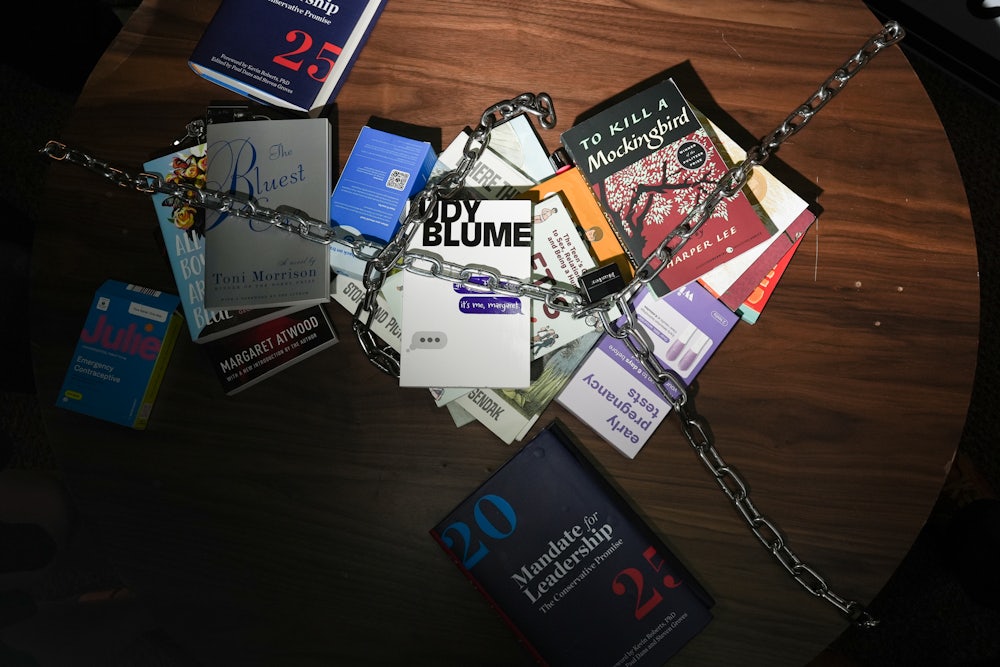
NICK OXFORD/GETTY IMAGES
January 13, 2025 (NewRepublic.com)
Banned books chained to a table in “JD Vance’s living room” at the Hotties for Harris party during the Democratic National Convention in Chicago, on August 21, 2024
Growing up in the evangelical church in the piney woods of east Texas, the world felt circumscribed by an ever-present fear—not just of sin but of ideas that might challenge the worldview handed down to those of us in the pews. Everything outside the Christian framework—including secular music, television, and books—was discouraged. Just as I signed multiple purity pledges throughout my preteen and teen years, promising to avoid not just sex but even impure thoughts, we were taught to practice absolute abstinence from dangerous ideas. Not that those dangerous ideas necessarily always came from the annals of great historical thinkers or even figures from the contemporary political climate. As it happens, the most famous of these examples was a widespread prohibition on Harry Potter. To read about witches and wizards, I was told, was to open oneself to the occult and risk spiritual ruin.
This concept of heterodoxy isn’t simply that these works contain themes or ideas counter to Christian teaching; the central belief about ideas is that they are akin to demonic possession, much like the New Testament accounts we heard in Sunday school. This belief—that ideas themselves have a unique, uncontested power to infiltrate and corrupt our minds and souls—reflects the fundamentalist evangelical worldview, one deeply skeptical of intellectual engagement and critical thinking. Rather than the notion that ideas can be critically analyzed and either accepted or rejected, it held that dangerous ideas can indoctrinate and possess you if you are merely exposed to them. To read a book or discuss a theory, in this worldview, is not to exercise one’s intellectual faculties but to risk being overtaken by a seductive, malevolent force with no hope of resistance.
Common in evangelical theology is the concept of spiritual warfare: the idea that Satan and/or other demons are ever-present entities seeking to corrupt and destroy humans—especially the faithful. To resist succumbing to these forces requires constant vigilance and protection through prayer and strict adherence to the evangelical interpretation of biblical teachings. In this worldview, demonic possession or influence mirrors the evangelical concept of ideological corruption; both presume human weakness and vulnerability to external forces that can only be resisted through complete avoidance and submission to religious authority. Just as corrupting forces can enter through seemingly innocuous sources, such as reading, music, or even yoga, dangerous ideas can infiltrate through educational, political, and cultural discourse.
This framework rests on a central belief in human moral weakness that has been present in Christian theology since at least Augustine. For him, humans are naturally depraved and thoroughly corrupted by original sin. If humans are inherently sinful and malleable to any influence, then exposure to challenging ideas—those not central to the evangelical worldview—becomes dangerous. This theology becomes a self-fulfilling prophecy: Because humans are weak and must accept only the orthodoxy of their scriptures or church leaders, they never develop the critical thinking skills that might strengthen their intellectual facilities or their resistance to indoctrination. Christian theology and secular ideas can be, and are, reconciled by many. Despite his somewhat pessimistic view of humanity, even Augustine actually encouraged intellectual engagement and reason. He argued that Christians should study secular knowledge and philosophy, viewing them as tools that could be used in service of understanding divine truth.
Today, through the decades-long marriage of evangelical Christianity and the political right, this intellectual skepticism is no longer confined to the pews. The evangelical distrust of intellectual inquiry has found a powerful ally in American right-wing politics, reshaping the nation’s cultural and educational landscape. The rise of Jerry Falwell Sr.’s Moral Majority and its embrace by the Reagan campaign provided organizational structure to these fears, helping translate religious anxieties about intellectual corruption into political action. Building on the foundation laid during the Reagan administration, figures like Pat Robertson continued to leverage this partnership in the 1990s through organizations like the Christian Coalition of America.
They capitalized on fears of moral decline to mobilize voters and influence policy, solidifying evangelical influence within the Republican Party. This relationship deepened with the rise of culture wars, as issues like banning abortion, putting Christian prayer in schools, and limiting LGBTQ rights became rallying points for evangelical activism. Under George W. Bush, this alliance reached new heights with the establishment of the White House Office of Faith-Based and Community Initiatives, which provided federal funding to religious organizations for social services, and the emphasis on “compassionate conservatism,” which appealed to religious voters while advancing right-wing political goals.
This now firmly established connection between religious conservatives and the political structures of the right have created a feedback loop in which religious fears about moral corruption justify political intervention in education and culture, while political power gives religious leaders unprecedented influence over public institutions (all while they don’t pay taxes to the government). This dynamic reached new and absurd heights during the first Trump administration, when evangelical leaders like Franklin Graham and Paula White portrayed Trump as a divinely appointed leader against secular corruption and defender of Christian values, despite his well-known history of flamboyantly immoral personal conduct. The movement’s willingness to embrace such a morally compromised figure reveals that the real priority of the Christian right has always been the accrual and maintenance of its own political power and influence over the control of policy, information, and ideas—not moral virtue or devotion to God.
The alliance between evangelical Christianity and conservative politics has fostered a cultural paranoia that seeks to limit the range of acceptable ideas. Today, we see this legacy in mounting campaigns against public education. According to PEN America, documented book banning attempts in American schools rose by 33 percent in 2022–2023 and an incredible 197 percent in the 2023–2024 school year, with over 4,000 titles targeted. This wave of censorship disproportionately targets books by or about people of color and LGBTQ individuals, with 40 percent of banned titles explicitly addressing these themes.
These contemporary battles over education echo historical patterns of evangelical anti-intellectualism. During the Scopes Monkey Trial of 1925, fundamentalist Christians fought to prevent the teaching of evolution in schools (a cause I now cringe to remember I took up in my eighth grade science classroom 80 years later, when I was still adhering to the church dogma). This battle established a template for future conflicts: Frame scientific or social progress as a threat to religious values, position schools as battlegrounds for cultural warfare, and assert parental and religious authority over educational content. Today’s campaigns against “critical race theory” and LGBTQ inclusion follow this same playbook, treating these ideas not as subjects for discussion and analysis but as dangerous forces that must be exorcised.
The coordinated efforts to ban books addressing racism, LGBTQ identities, and systemic inequality frame these ideas as corrosive forces capable of undermining young minds. They have co-opted the language of inappropriateness that Tipper Gore once applied to explicit lyrics in rock and rap, the better to use it as a smokescreen for creating a white supremacist, heteronormative curriculum. Similarly, the rhetoric surrounding “cultural Marxism”—a decades-old McCarthyesque conspiracy theory revived to stoke fears of leftist infiltration, which has its roots in the antisemitic Nazi campaign against “cultural Bolshevism”—posits that schools, universities, and media are indoctrinating an unsuspecting populace with Communist ideas.
It is no coincidence that these are precisely the places where many of us learn to think critically and examine ideas for ourselves. While the idea that colleges are indoctrinating students is an unfounded—and for those of us who are in higher education, comically absurd—notion, what higher education can do is encourage students to develop a whole range of intellectual skills and to question their own beliefs and biases to develop a better understanding of the world and forge their own values. That is why higher education is in the crosshairs of the Christian right. But this belief manifests itself beyond book bans and allegations of collegiate indoctrination to the vilification of diversity, equity, and inclusion intiatives, woke education, and campaigns to seize control of school boards.
The effort to control school curricula—whether by banning Maia Kobabe’s Gender Queer or opposing teachings on systemic racism—is part of a broader project to sanitize history and obscure systemic injustices. By labeling these narratives as dangerous or un-American, right-wing activists effectively demonize the act of questioning political power, as if it were another Christian god. This conflation of political and religious authority is particularly dangerous in the context of rising authoritarian movements. When political leaders can frame dissent as not just politically incorrect but spiritually corrupting, they create a powerful tool for suppressing opposition. The January 6 insurrection, in which Christian symbols and prayers mixed freely with political violence, demonstrated how thoroughly this fusion of religious and political authority has penetrated American conservatism.
This movement’s profound fear of intellectual engagement reveals a deep insecurity about its own beliefs—after all, truly robust ideas don’t require such elaborate protection—and, in fact, a profound respect for the power of ideas. You don’t construct elaborate systems of thought prevention unless you believe, on some level, that exposure to new, better ideas really could transform society.
Treating ideas as possessing forces rather than subjects for critical examination actually makes people more vulnerable to manipulation, not less. When we don’t develop the skills to critically evaluate ideas—to question, analyze, and assess them—we become more susceptible to actual religious and political indoctrination and groupthink. When we frame certain thoughts as too dangerous to encounter, we create the conditions for authoritarian control.
After all, if ideas can possess us like demons, then we need authorities to protect us from exposure; a role eagerly filled by those seeking to consolidate power through censorship and educational control. The antidote to this authoritarian impulse is a renewed commitment to critical thinking, intellectual freedom, and pluralism. It is a belief in the transformative power of education and the resilience of individuals to engage with complex, even uncomfortable truths without being possessed by them.
In an era of rising authoritarianism and deepening social division, our capacity to think critically about ideas rather than fear them may well determine whether democracy survives. The question isn’t whether we can protect ourselves from ideas, but whether we can develop the intellectual resources to evaluate ideas thoughtfully.
The possession model of ideas, with its roots in evangelical theology and its branches in contemporary politics, represents more than just a religious or educational philosophy—it is fundamentally undemocratic, replacing the ideal of an informed citizenry capable of responsibly wielding individual rights and freedoms with an infantilized vision of humanity where everyone must be under constant supervision at the hands of autocratic strongmen. Democracy requires belief, not in our invulnerability to ideas or to our infallibility, but in our capacity to engage critically in our cultural and political conversation. The most dangerous idea of all is that we must be protected from the act of questioning, thus surrendering to those who would think and act for us.
J. Dylan Sandifer (they/she) teaches sociology at the University of the District of Columbia and is founder and chief strategist of Sandifer Strategies.
Psychic Abilities and Yoga with Christopher Key Chapple
New Thinking Allowed with Jeffrey Mishlove • Jan 16, 2025 Christopher Key Chapple is Doshi Professor of Indic and Comparative Theology and Founding Director of the Master of Arts in Yoga Studies at Loyola Marymount University in Los Angeles, California. Chris serves on the advisory boards for the South Asian Studies Association, the Forum on Religion and Ecology (Yale), the Ahimsa Center (Pomona), the Jain Studies Centre (SOAS, London), the Dharma Academy of North America (Berkeley), and the International School for Jain Studies (Delhi). He has published more than 20 books, including Yoga and the Luminous: Patañjali’s Spiritual Path to Freedom and Thinking with the Yoga Sutra: Translation and Interpretation. Here Chris explores the intersection of psychic abilities and yoga, delving into the teachings of Patanjali and the significance of samadhi. The role of dreams in understanding reality, the ascent and descent in yoga practice, interconnectedness and the importance of ritual is discussed. The conversation culminates with a powerful story from the Mahabharata, illustrating themes of purpose, meaning, and wisdom. 00:00:00 Introduction 00:02:57 Psychic research 00:10:46 Expanding awareness and samadhi 00:16:18 The ascent and descent in yoga practice 00:27:11 Dream, reality and the holographic experience 00:36:55 Attachment patterns and yoga practice 00:50:03 The interconnectedness of all beings 01:00:39 The balance of power in spirituality 01:05:31 The Mahabharata New Thinking Allowed Guest Host Leanne Whitney, PhD, is a depth psychologist and transformational coach based in Los Angeles, CA. She is the author of Consciousness in Jung and Patañjali and currently serves as Executive Director of Center for Transformation and Integration. Her website is https://leannewhitney.com/ To learn about Leanne’s Transformational Coaching Certification Course with an emphasis in Somatic Integration Therapy, please visit: https://transformationandintegration…. Producer: John Hartmann Associate Producer: Elena McNally Editor: John Hartmann (Recorded on November 1, 2024)
A New Science of Heaven
New Thinking Allowed with Jeffrey Mishlove • Jan 17, 2025 Here Jeffrey Mishlove outlines features of Robert Temple’s 2022 book, A New Science of Heaven – a exploration of the role of plasma in the consciousness of the universe. He discusses Robert Temple’s background as well as their mutual association, although Robert and Jeffrey have never met, with the cosmologist and inventor, Arthur M. Young. New Thinking Allowed host, Jeffrey Mishlove, PhD, is author of The Roots of Consciousness, Psi Development Systems, and The PK Man. Between 1986 and 2002 he hosted and co-produced the original Thinking Allowed public television series. He is the recipient of the only doctoral diploma in “parapsychology” ever awarded by an accredited university (University of California, Berkeley, 1980). He was the Grand Prize winner of the 2021 Bigelow Institute essay competition regarding the best evidence for survival of human consciousness after permanent bodily death. He is Co-Director of Parapsychology Education at the California Institute for Human Science. 00:00 Introduction 01:49 Plasma 04:56 Autopoiesis 06:05 The universal brain 08:10 Arthur M. Young 12:31 Human spirituality 16:56 Quantum computers 18:41 Conscious plasmoid clouds 24:13 UFOs and UAP 28:10 Conclusion (Recorded on January 16, 2025)