Translation is a 5-step process of “straight thinking in te abstract” comparing and contrasting what you think is the truth with what you can syllogistically, axiomatically and mathematically (using word equations) prove is the truth.
The claims in a Translation may seem outrageous, but they are always (or should always be) based on self-evident syllogistic reasoning. Here is one Translation from this week.
1) Truth is that which is so. That which is not truth is not so. Therefore Truth is all that is. Truth being all is therefore total, therefore whole, therefore complete, therefore full. Truth being true is therefore right, therefore correct, therefore flawless, therefore perfect. I think therefore I am. Since I, being, am and since Truth is all that is, therefore I, being, am Truth. Since I, being, am Truth, therefore I, being, have all the attributes of truth. Therefore I, being, am total, whole, complete, full, true, right, correct, flawless, perfect. Since I am mind (self-evident) and since I, being, am Truth, therefore Truth is mind/consciousness. (Two things being equal to a third thing are equal to each other.)
2) Having an out-of-body experience means losing control of your body.
Word-tracking: body: embody embody: tangible expression of idea or quality, to personify, exemplify tangible or visible form of something experience: to try out, to test, peril, something that happens to someone lose: to dissolve, to disappear, to cease to have or possess control: to operate, to make something work operate: to work, opus, opera work: to function, to be successful produce: Duke, to bring forward (to the Duke)success: succeed, to follow immediately after, to achieve desired goal
3) Truth being all that is, there can be no embodiment outside of Truth, therefore Truth is the only embodiment. Truth being all, there can be no experience outside of all, therefore all experience is inside the infinite body of Truth. Truth being all therefore truth is in possession of all. Truth being in possession of all cannot at the same time lose part of all, therefore Truth is always in possession of its infinite Self. Sicne Truth is always in possession of its infinite Self, therefore Truth is always in control. Since Truth is whole, complete and perfect, and since there is nothing other than truth to prevent wholeness completeness and perfection, therefore Truth is always successful OR Truth always works.
4) Truth is the only embodiment. All experience is inside the infinite body of Truth Truth is in possession of all. Truth is always in possession of its infinite Self. Truth is always in control. Truth is always successful OR Truth always works.
The Onion • Dec 12, 2024 Thanks to newly discovered DNA evidence, Indiana death row inmate Michael Claremont was freed and exonerated of all charges earlier today, just hours after he was scheduled to be put to death by lethal injection. Have a written record of society’s collapse. Become A Member. Get The Paper. https://membership.theonion.com/?camp…
Google unveiled an experimental machine capable of tasks that a traditional supercomputer could not master in 10 septillion years. (That’s older than the universe.)
Google’s quantum computing cooling system allows for the new Willow chip to be cooled to 460 degrees below zero. Credit…Google Quantum AI
In 2019, a team of Google researchers said they had built a machine capable of performing tasks that were not possible with traditional supercomputers. They described this machine, called a quantum computer, as a turning point in the evolution of information technology.
Some scientists disputed the claim. In the years since, as traditional supercomputers grew more powerful, they matched the feats of Google’s quantum computer.
On Monday, Google unveiled a new quantum computer that may end this back-and-forth race with traditional machines and that points to a future in which quantum computers could drive advances in areas like drug discovery and artificial intelligence.
Google said its quantum computer, based on a computer chip called Willow, needed less than five minutes to perform a mathematical calculation that one of the world’s most powerful supercomputers could not complete in 10 septillion years, a length of time that exceeds the age of the known universe.
Google’s quantum computer chip, Willow.Credit…Google Quantum AI
Quantum computing — the result of decades of research into a type of physics called quantum mechanics — is still an experimental technology. But Google’s achievement shows that scientists are steadily improving techniques that could allow quantum computing to live up to the enormous expectations that have surrounded this big idea for decades.
“When quantum computing was originally envisioned, many people — including many leaders in the field — felt that it would never be a practical thing,” said Mikhail Lukin, a professor of physics at Harvard and a co-founder of the quantum computing start-up QuEra. “What has happened over the last year shows that it is no longer science fiction.”
Get the best of The Times in your inbox
Sign up for From The Times:Stories from across The Times, chosen for you based on your reading history.
Sign up for Breaking News:Sign up to receive an email from The New York Times as soon as important news breaks around the world.
Sign up for The Great Read:On weekdays and Sundays, we recommend one piece of exceptional writing from The Times — a narrative or essay that takes you someplace you might not expect to go.
Many other tech giants, including Microsoft, Intel and IBM, are building similar technology as the United States jockeys with China for supremacy in this increasingly important field. As the United States has pushed forward, primarily through corporate giants and start-up companies, the Chinese government has said it is pumping more than $15.2 billion into quantum research.
The mathematical calculation performed by Google’s machine was a test designed solely to gauge the progress of quantum computing — not a task that could be useful in other fields, like medicine. Though researchers believe that quantum computers will one day make today’s classical machines look archaic, the technology still makes too many mistakes to be truly useful.
Google’s quantum computer also uses a form of error correction — a way of reducing mistakes — that could allow this kind of machine to reach its potential. In a research paper published on Monday in the science journal Nature, Google said its machine had surpassed the “error correction threshold,” a milestone that scientists have been working toward for decades.
That means quantum computers are on a path to a moment, still well into the future, when they can overcome their mistakes and perform calculations that could accelerate the progress of drug discovery. They could also break the encryption that protects computers vital to national security.
“What we really want these machines to do is run applications that people really care about,” said John Preskill, a theoretical physicist at the California Institute of Technology who specializes in quantum computing. “Though it still might be decades away, we will eventually see the impact of quantum computing on our everyday lives.”
A traditional computer like a laptop or a smartphone stores numbers in silicon chips and manipulates those numbers, adding them, multiplying them and so on. It performs these calculations by processing “bits” of information. Each bit holds either a 1 or a 0.
But a quantum computer defies common sense. It relies on the mind-bending ways that some objects behave at the subatomic level or when exposed to extreme cold, like the exotic metal that Google chills to nearly 460 degrees below zero inside its quantum computer.
Quantum bits, or “qubits,” behave very differently from normal bits. A single object can behave like two separate objects at the same time when it is either extremely small or extremely cold. By harnessing that behavior, scientists can build a qubit that holds a combination of 1 and 0. This means that two qubits can hold four values at once. And as the number of qubits grows, a quantum computer becomes exponentially more powerful.
Scientists first proposed this kind of machine in the 1980s. But qubits are fragile, which means that stringing even a few of them together requires years of work.
Labs in academia, industry and government have used a wide variety of techniques to build these machines, including systems based on particles of light or tiny charged particles trapped in electromagnetic fields. Like IBM and Intel, Google builds “superconducting qubits,” where certain metals are cooled to extremely low temperatures.
Google’s Quantum AI lab in Santa Barbara, Calif.Credit…Google Quantum AI
With its latest superconducting computer, Google has claimed “quantum supremacy,” meaning it has built a machine capable of tasks that are beyond what any traditional computer can do. But these tasks are esoteric. They involve generating random numbers that can’t necessarily be applied to practical applications, like drug discovery.
Google and its rivals are still working toward what scientists call “quantum advantage,” when a quantum computer can accelerate the progress of other fields like chemistry and artificial intelligence or perform tasks that businesses or consumers find useful. The problem is that quantum computers still make too many errors.
But scientists have spent nearly three decades developing techniques — which are mind-bending in their own right — for getting around this problem. Now, Google has shown that as it increases the number of qubits, it can exponentially reduce the number of errors through complex analysis.
Experts believe it is only a matter of time before a quantum computer reaches its vast potential.
“People no longer doubt it will be done,” Dr. Lukin said. “The question now is: When?”
Cade Metz writes about artificial intelligence, driverless cars, robotics, virtual reality and other emerging areas of technology. More about Cade Metz
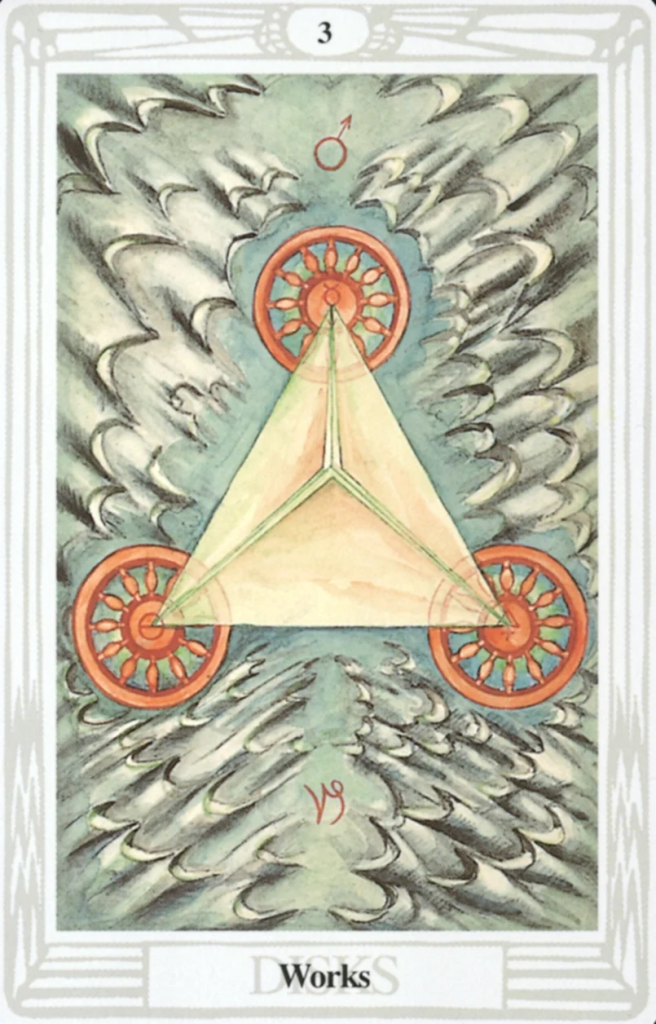
The Lord of Works is about concentrated effort in a specific area, which yields unexpected fruits as a reward. When we concentrate our energies and direct them skilfully at a single point, or hoped for end result, we create a stream of force to which most things must eventually surrender.The Three of Disks should be taken as a command to examine all areas of life, until we come across the apparently immovable object – then lean on it with all our might. In so doing, we take advantage of influences beyond ourselves which act as a lever to assist us in our endeavours.Often, the things which we need to focus on during periods like this will be ones where we feel negative, or thwarted, for we stand a much better chance of making good progress. Look for areas where you feel overwhelmed, overworked or inadequate, and then target them all day! You’ll be amazed at what it’s possible to achieve.
Affirmation: “My Will flows in a perfect stream of force.”
Why does losing weight often feel like an uphill battle? Physician Katherine Saunders unpacks how our bodies are wired to store fat, revealing that obesity isn’t simply a lack of willpower — it’s a complex, chronic disease rooted in evolutionary biology. She shares the science behind the latest breakthroughs in treatment, from lifestyle interventions to powerful new medications.
TED Salons welcome an intimate audience for an afternoon or evening of highly-curated TED Talks revolving around a globally relevant theme. A condensed version of a TED flagship conference, they are distinct in their brevity, opportunities for conversation, and heightened interaction between the speaker and audience.
ARIES (March 21-April 19): If you were walking down the street and spied a coin lying on the sidewalk, would you bend down to pick it up? If you’re like most people, you wouldn’t. It’s too much trouble to exert yourself for an object of such little value. But I advise you to adopt a different attitude during the coming weeks. Just for now, that stray coin might be something like an Umayyad gold dinar minted in the year 723 and worth over $7 million. Please also apply this counsel metaphorically, Aries. In other words, be alert for things of unexpected worth that would require you to expand your expectations or stretch your capacities.
TAURUS (April 20-May 20): The Taurus writer Randall Jarrell compared poets to people who regularly stand in a meadow during a thunderstorm. If they are struck by the lightning of inspiration five or six times in the course of their careers, they are good poets. If they are hit a dozen times, they are great poets. A similar principle applies in many fields of endeavor. To be excellent at what you do, you must regularly go to where the energy is most electric. You’ve also got to keep working diligently on your skills so that when inspiration comes calling, you have a highly developed ability to capture it in a useful form. I’m bringing this up now, Taurus, because I suspect the coming weeks will bring you a slew of lightning bolts.
GEMINI (May 21-June 20): My upcoming novels epitomize the literary genre known as magical realism. In many ways, the stories exhibit reverence for the details of our gritty destinies in the material world. But they are also replete with wondrous events like talking animals, helpful spirits and nightly dreams that provide radical healing. The characters are both practical and dreamy, earthy and wildly imaginative, well-grounded and alert for miracles. In accordance with your astrological potentials, I invite you to be like those characters in the coming months. You are primed to be both robustly pragmatic and primed for fairy-tale-style adventures.
CANCER (June 21-July 22): In December 1903, the Wright Brothers flew a motorized vehicle through the sky for the first time in human history. It was a very modest achievement, really. On the first try, Orville Wright was in the air for just twelve seconds and traveled 120 feet. On the fourth attempt that day, Wilbur was aloft for fifty-nine seconds and 852 feet. I believe you’re at a comparable stage in the evolution of your own innovation. Don’t minimize your incipient accomplishment. Keep the faith. It may take a while, but your efforts will ultimately lead to a meaningful advancement. (PS: Nine months later, the Wrights flew their vehicle for over five minutes and traveled 2.75 miles.)
LEO (July 23-Aug. 22): During the rest of 2024, life’s generosity will stream your way more than usual. You will be on the receiving end of extra magnanimity from people, too. Even the spiritual realms might have extra goodies to bestow on you. How should you respond? My suggestion is to share the inflowing wealth with cheerful creativity. Boost your own generosity and magnanimity. Just assume that the more you give, the more you will get and the more you will have. (PS: Do you know that Emily Dickinson’s poem with the line “Why Floods be served to us — in Bowls”? I suggest you obtain some big bowls.)
VIRGO (Aug. 23-Sept. 22): The term “cognitive dissonance” refers to the agitation we feel while trying to hold conflicting ideas or values in our minds. For example, let’s say you love the music of a particular singer-songwriter, but they have opinions that offend you or they engage in behavior that repels you. Or maybe you share many positions with a certain political candidate, but they also have a few policies you dislike. Cognitive dissonance doesn’t have to be a bad or debilitating thing. In fact, the ability to harbor conflicting ideas with poise and equanimity is a sign of high intelligence. I suspect this will be one of your superpowers in the coming weeks.
LIBRA (Sept. 23-Oct. 22): “Amazing Grace” is a popular hymn recorded by many pop stars, including Aretha Franklin, Elvis Presley and Willie Nelson. Created in 1773, it tells the story of a person who concludes that he has lived an awful life and now wants to repent for his sins and be a better human. The composer, John Newton, was a slave trader who had a religious epiphany during a storm that threatened to sink his ship in the Atlantic Ocean. God told him to reform his evil ways, and he did. I presume that none of you reading this horoscope has ever been as horrible a person as Newton. And yet you and I, like most people, are in regular need of conversion experiences that awaken us to higher truths and more expansive perspectives. I predict you will have at least three of those transformative illuminations in the coming months. One is available now, if you want it.
SCORPIO (Oct. 23-Nov. 21): “Thinking outside the box” is an American idiom. It means escaping habitual parameters and traditional formulas so as to imagine fresh perspectives and novel approaches. While it’s an excellent practice, there is also a good alternative. We can sometimes accomplish marvels by staying inside the box and reshaping it from the inside. Another way to imagine this is to work within the system to transform the system—to accept some of the standard perspectives but play and experiment with others. For example, in my horoscope column, I partially adhere to the customs of the well-established genre, but also take radical liberties with it. I recommend this approach for you in 2025.
SAGITTARIUS (Nov. 22-Dec. 21): I don’t recommend burning wood to heat your home. Such fires generate noxious emissions harmful to human health. But hypothetically speaking, if you had no other way to get warm, I prefer burning ash and beech wood rather than, say, pine and cedar. The former two trees yield far more heat than the latter two, so you need less of them. Let’s apply this principle as we meditate on your quest for new metaphorical fuel, Sagittarius. In the coming months, you will be wise to search for resources that provide you with the most efficient and potent energy.
CAPRICORN (Dec. 22-Jan. 19): The world’s longest tunnel is over thirty-five miles long. It’s the Gotthard Base Tunnel in the Swiss Alps. I’m guessing the metaphorical tunnel you’ve been crawling your way through lately, Capricorn, may feel that extensive. But it’s really not. And here’s even better news: Your plodding travels will be finished sooner than you imagine. I expect that the light at the end of the tunnel will be visible any day now. Now here’s the best news: Your slow journey through the semi-darkness will ultimately yield rich benefits no later than your birthday.
AQUARIUS (Jan. 20-Feb. 18): Would you like to avoid wilting and fading away in January, Aquarius? If so, I recommend that during the coming weeks, you give your best and brightest gifts and express your wildest and most beautiful truths. In the new year, you will need some downtime to recharge and revitalize. But it will be a pleasantly relaxing interlude—not a wan, withered detour—if in the immediate future you unleash your unique genius in its full splendor.
PISCES (Feb. 19-March 20): My treasured Piscean advisor, Letisha, believes it’s a shame so many of us try to motivate ourselves through abusive self-criticism. Are you guilty of that sin? I have done it myself on many occasions. Sadly, it rarely works as a motivational ploy. More often, it demoralizes and deflates. The good news, Pisces, is that you now have extra power and savvy to diminish your reliance on this ineffectual tactic. To launch the transformation, I hope you will engage in a focused campaign of inspiring yourself through self-praise and self-love.
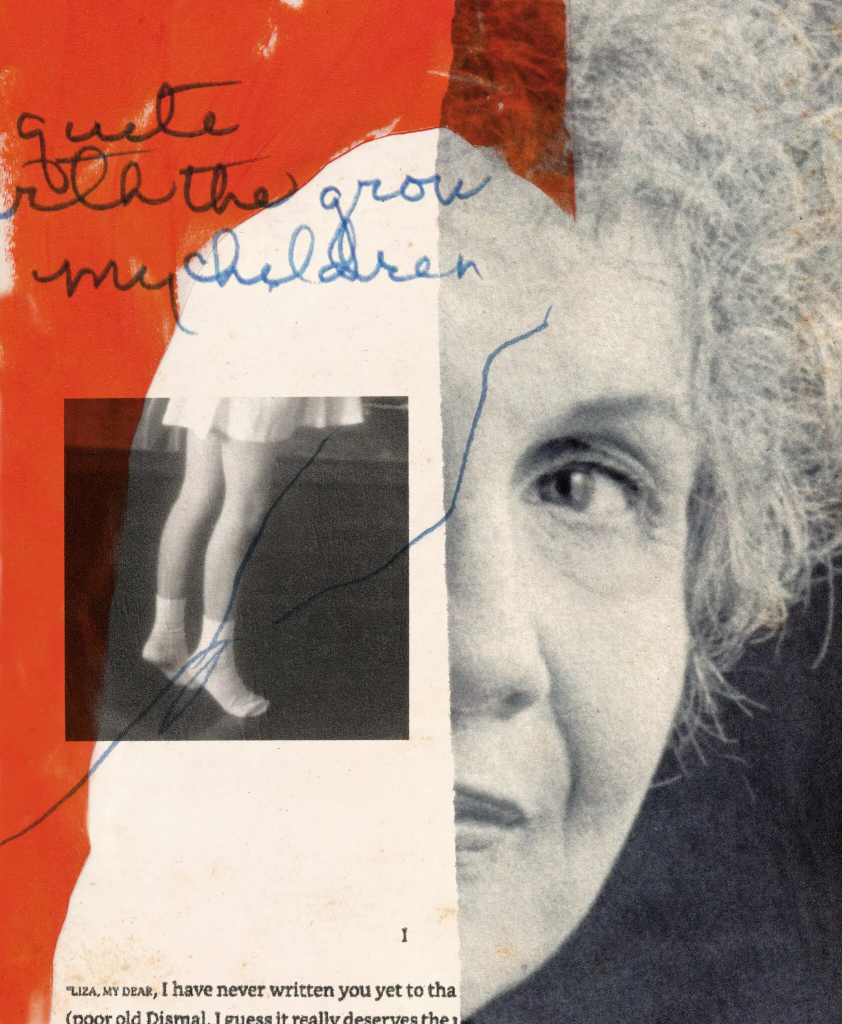
The Nobel-winning author’s husband was a pedophile who targeted her daughter and other children. Why did she stay silent?
Credit…Photo illustration by Vanessa Saba
By Giles Harvey
Dec. 8, 2024 (NYTimes.com)
“My life has gone rosy, again,” Alice Munro told a friend in a buoyant letter of March 1975. For Munro, who was then emerging as one of her generation’s leading writers, the previous few years were blighted by heartbreak and upheaval: a painful separation from her husband of two decades; a retreat from British Columbia back to her native Ontario; a series of brief but bruising love affairs, in which, it seems, Munro could never quite make out the writing on the wall. “This time it’s real,” she wrote, speaking of a new romantic partner, the emphasis acknowledging that her friend had heard these words before. “He’s 50, free, a good man if I ever saw one, tough and gentle like in the old tire ads, and this is the big thing — grown-up.”
The man was Gerald Fremlin, a retired civil servant and geographer, who hailed from the same corner of Ontario as Munro. They would be together for nearly 40 years, until Fremlin’s death in 2013. His knowledge of Huron County, where most of Munro’s fiction is set, became a vital resource for her work. Munro amassed a thicket of honors, including the Nobel Prize in Literature, in 2013, by turning this parochial backwater, with its “falling-down barns” and “burdensome old churches,” into a stage for the whole human comedy, like Joyce’s Dublin or Faulkner’s Mississippi. Never one to take herself too seriously, she housed her many awards in a revolving spice rack at her second home, a condo on Vancouver Island.
“Luck exists, so does love, and I was right to go after it,” Munro concluded in her letter about Fremlin. The judgment would prove premature. This July, two months after Munro’s death at the age of 92, Andrea Skinner, the youngest of her three daughters, revealed in an essay in The Toronto Star that Fremlin had sexually abused her. In the summer of 1976, Andrea wrote, she went to visit Munro and Fremlin at their home in Ontario. (According to her parents’ custody agreement, she spent the rest of the year in Victoria, British Columbia, with her father, Jim Munro, and his new wife.) One night, while Munro was away, Andrea awoke to discover that Fremlin had climbed into bed next to her. He was rubbing her genitals and pressing her hand over his penis. She was 9 years old.
Fremlin warned Andrea not to tell her mother: The news would kill her, he said. Andrea obeyed, but when she returned to Victoria that fall, she confided in her stepbrother, Andrew. Andrew told his mother, who then told Jim Munro. Rather than alert his ex-wife, Jim instructed the family to stay quiet. He worried that the disclosure would wreck Munro’s new relationship and that he would then be blamed. The next summer, Andrea returned to Ontario accompanied by her older sister Sheila, whom Jim charged with keeping Andrea safe.
For years, Andrea did her best to make sure that she was never alone with Fremlin, she told me recently, but she had to balance her fear against a competing imperative: to shield her mother from the truth. Munro knew that Andrea loved to swim, so on the occasions when Fremlin offered to drive her to a nearby river, it felt impossible to refuse without arousing suspicion. During one such outing, he propositioned her for sex. Andrea turned bright red as she managed to walk away. On the drive home, Fremlin complained to her about how unsatisfying he found his sex life with Munro. The harassment ended only when Andrea reached puberty.
For Andrea, the silence was internally corrosive. She developed a suite of ailments (bulimia, insomnia, debilitating migraines), which later forced her to drop out of college. It wasn’t until 1992, when she was 25, that she finally confided in Munro about what had happened. One day when Andrea was visiting, Munro told her about a short story from a recently published book, “Marine Life,” by Linda Svendsen, in which a girl commits suicide after being abused by her father. “Why didn’t she tell her mother?” asked Munro, who wrote in a blurb for the book that the story left her “shaking.” A month later, Andrea sent her a letter. “When you told me about that story,” she wrote, “I wanted to cry and hold you and thank you and TELL YOU. I have been afraid all my life that you would blame me for what happened.”
Munro’s response made it clear that she was right to be afraid. It was “as if she had learned of an infidelity,” Andrea recalled in her essay for The Star. Munro left Fremlin and fled to their condo on Vancouver Island. When Andrea visited her there, she was amazed by Munro’s self-pity. “She believed my father had made us keep the secret in order to humiliate her,” Andrea wrote. “She then told me about other children Fremlin had ‘friendships’ with, emphasizing her own sense that she, personally, had been betrayed.” Fremlin, meanwhile, sent a series of unhinged letters to the family, in which he acknowledged the abuse but claimed that it was Andrea who seduced him.
The family did what families often do after an episode of abuse: They carried on as if nothing happened. Munro took Fremlin back after just a few weeks, and for years Andrea continued to visit them. It was the arrival of her own children, twins born in 2002, that brought clarity to her emotional haze. Andrea told her mother she didn’t want Fremlin anywhere near them. Munro objected that visiting without Fremlin would be inconvenient, because she couldn’t drive. “I blew my top,” Andrea told a reporter for The Star. “I started to scream into the phone about having to squeeze and squeeze and squeeze that penis, and at some point I asked her how she could have sex with someone who’d done that to her daughter.” The next day, Munro called her back — not to apologize but to forgive Andrea for how she had spoken to her. It was the end of their relationship.
In 2004, this magazine ran a profile of Munro, who was about to publish her 11th book, the widely celebrated “Runaway.” Throughout the article, Munro speaks lovingly of Fremlin, whom she says she was “enormously lucky” to have met. She is also described as being “close today to her three daughters.” Floored by her mother’s dishonesty, Andrea felt as if she was being erased. She gathered the letters that Fremlin sent in 1992 and took them to the police. When an officer arrived at their house to arrest him, he reported that Munro was apoplectic, denouncing her daughter as a liar. In March 2005, Fremlin, then 80, quietly pleaded guilty to indecent assault and was sentenced to two years’ probation.
For years, Andrea tried to make her story public, with no success. In 2005, she approached the Canadian academic Robert Thacker, who was putting the final touches on a biography of Munro, and asked him to include the abuse in his book. After stewing on it for a day or two, he declined. “I’m an archival scholar,” he told me, explaining his decision. “That’s not the kind of book I was writing.” What he was writing, he said, was a “biography of Alice Munro’s texts.” The distinction is hard to sustain: Munro’s stories — particularly those from the years after she learned of the abuse — are full of violated children, negligent mothers and marriages founded on secrets and lies. That Munro apparently derived these themes from a real-life episode has made her work feel suddenly transparent, as though it has been injected with a contrast dye, revealing zones of private meaning.
Munro seems to have spent much of her career absorbed by the same questions that readers have asked since Andrea published her essay. Why did she not protect her daughter? What led her to take Fremlin back? How could a writer who was capable of such power on the page prove so feeble in real life? In the months since the revelations, I revisited Munro’s stories, spoke with members of her family and tracked down a number of her unpublished letters. Munro’s appalling failures as a mother seem to have been an imaginative incitement, instrumental to her artistic project — something that Andrea may have grasped before anyone else. When Thacker wrote back to Andrea in 2005, he offered to remove from his book any passages that mentioned her and Fremlin together. “No, you do not understand,” Andrea said to me last month, describing her response. “This is intimately linked to the work my mother does.”
In Canada, Munro was known as “Saint Alice,” a paragon of virtue and compassion. Now she has come to symbolize something else: maternal dereliction. In the days after news of the abuse broke, social media filled up with photos of Munro’s books discarded in recycling bins. The University of Western Ontario, her alma mater, announced that it was “pausing” its Alice Munro Chair in Creativity so as to “carefully consider Munro’s legacy and her ties to Western.” Writers who once celebrated her work and openly acknowledged its influence on their own began to reconsider their allegiance. “These revelations not only crush Munro’s legacy as a person, but they make the stories that were, in retrospect, so clearly about those unfathomable betrayals basically unreadable as anything but half-realized confessions,” the author Rebecca Makkai, who is herself a survivor of childhood sexual abuse, reacted in The Times. “To me, that makes them unreadable at all.”
Before the recent news emerged, my own opinion of Munro’s fiction could hardly have been higher. She seemed to have a more direct access to reality than any of her contemporaries, whose work, by comparison, could feel contrived and paper thin. It had been several years since I last picked up her books, but my memory was of paragraphs as thick with life — with fleeting earthly data — as the background of a Bruegel. In one story, set in the 1930s, a poor family has a bathroom installed in the corner of their kitchen, the only place it will fit. The walls are made of beaverboard, so that “even the tearing of a piece of toilet paper, the shifting of a haunch, was audible to those working or talking or eating in the kitchen.” This leads to an unspoken agreement, whereby “no one ever seemed to hear, or be listening, and no reference was made. The person creating the noises in the bathroom was not connected with the person who walked out.” It’s a short aside, but it contains, in miniature, so many of Munro’s great themes: family, shame, strategic silences, the open secret of the body and its needs.
When I went back to the stories this summer, full of the same anger I saw coursing around the internet, I was afraid I would find them, as Makkai described, “like half-realized confessions” — misshapen, off-balance, chaotic with grief. Instead, I was struck by their utter composure. In the work Munro produced after learning what happened to her daughter, she seems to bear down on her horror and disgust with an implacable resolve. The struggle is made clear in an unpublished letter to her agent and close friend, Virginia Barber, dated May 1993, which was among her papers at the University of Calgary:
“I thought I’d write and tell you the fate of the latest story, because it’s usually hard to talk frankly on the phone. I’ve been working on it — the story — since March, and it’s about The Subject, though thoroughly disguised and all pretty effectively constructed. I could do all the parts but the central thing, and when I approached that — and I tried from various angles — I got sick (I mean really throwing up) and felt very bleak. This has happened three or four times, and I realized finally I might sort of break apart. So I burned it (not to be tempted to go on). That’s where matters stand now, and I’m just gingerly (no pun) trying to start something else and regain my equilibrium. Which I can do.”
But Munro, it appears, did go on with the story about “The Subject”: “Vandals,” which appeared in The New Yorker five months later, is a cleareyed meditation on willful blindness and the tragedies it can precipitate. Bea Doud, an aging divorcée, has fallen for a man named Ladner, an Army veteran with a milewide misanthropic streak. There is something in Bea, some hidden primal wound, that responds to Ladner’s harshness. Certain women, she muses, thinking of herself, “might be always on the lookout for an insanity that could contain them.”
Alice Munro in 1979.Credit…Paul Stephen Pearson/Getty Images
Ladner lives in gothic isolation on a remote tract of land, which he has transformed into a nature preserve full of taxidermied animals. Most people are shooed away, but he makes an exception for two young children, Liza and Kenny, a neglected sister and brother, who live across the road and often come to play on his property. The pair have lost their mother, and when Bea, who is childless, starts to live there, she becomes a highly welcome stand-in. At moments, the four of them seem almost like a family.
The reality is otherwise. With tremendous subtlety, Munro reveals to us that Ladner has been sexually abusing Liza for years. Bea, whose perspective we inhabit for the first part of the story, seems not to notice what is happening. It is only when we shift to Liza’s point of view that the truth starts coming into focus, though even then Munro inhabits the child’s defenseless confusion. In a crucial scene, Ladner makes fun of Bea behind her back, imitating the clumsy way she plods into a lake. It is a performance intended for Liza’s eyes only, a way of signaling that it is her, not Bea, with whom he shares the greater intimacy. When Bea looks around and sees what he is doing, Liza is distraught. “It seemed to her that Bea would have to go away. How could she stay after such an insult — how could she put up with any of them?”
But Bea goes nowhere. Her obsessive dependency keeps her tethered to Ladner. It also thwarts Liza’s unvoiced hope that Bea will somehow rescue her, or at least find a way to keep Ladner in check. “She could spread safety if she wanted to,” the child desperately thinks. “Surely she could do it. If only she could turn herself into somebody firm and serious, a hard-and-fast, clean-sweeping sort of woman, whose love was deep and sensible.” It doesn’t happen. Years later, in an act of vengeance, Liza comes by Bea and Ladner’s house when the couple aren’t at home and trashes the place. She goes about it methodically, pouring out liquor on the floor and trampling Ladner’s taxidermied birds, as though composing her masterpiece. Liza’s poise is emblematic of the story as a whole, which unflappably narrates a more intangible destruction — that of her childhood self.
What makes “Vandals” so unbearably poignant — Liza’s need and Bea’s failure to protect her — is the same thing that now makes it so enraging. The empathy Munro showers on her fictional child was apparently withheld from her real one, an operation that she seems to have considered fundamental to her work as a writer. In an early story, Munro describes a fiction writer, ambivalently, as someone who has figured out “what to do about everything they run across in this world, what attitude to take, how to ignore or use things.” It’s clear from her letter to Barber that Munro was just such a person, going quickly to work on a personal tragedy and extracting what was usable. Whatever else “Vandals” may reveal or conceal, it is clearly a product of authority and control, qualities Munro spent her whole life chasing.
Get the best of The Times in your inbox
Munro grew up as a hostage to circumstance in Wingham, Ontario, where the Victorian age, she once remarked, ended only with World War II. Her mother was a puritanical control freak, full of voguish ideas about child-rearing. One of them involved administering enemas to regulate her daughter’s bowel movements. Munro resented all forms of coercion and often acted out. In the early 1940s, when her mother started showing the first signs of Parkinson’s disease (fatigue, tremors and a tripwire temper), their frequent quarrels grew explosive. Munro’s father, who raised foxes for their fur, would be summoned to adjudicate. Sheila Munro, in her poignant and illuminating memoir, “Lives of Mothers and Daughters” (2001), describes these parental courts-martial: “What my mother found most painful was her perception that ‘a story was being told on me that wasn’t true’ and that she was never allowed to tell her side of the story.” Munro was sometimes violently beaten — an early lesson in the power of narrative and the danger of losing control of it.
“Writer” was hardly a plausible career for someone raised in rural poverty in Depression-era Wingham, especially a girl. “People never asked, ‘Am I happy?’” Munro later said of the place where she grew up. “Self-fulfillment wasn’t a concept.” She began writing anyway, cannibalizing her indecorous origins. Her early work, published while she was raising a family in Vancouver, was assured but undistinguished. The deaths of her parents, her mother in 1959 and her father in 1976, cleared the way for a new candor and artistic leaps forward.
In “Royal Beatings,” from 1977, her first story to appear in The New Yorker, she evokes the thrashings she received as a child and the wounded reveries that followed. “She will never speak to them, she will never look at them with anything but loathing, she will never forgive them,” Rose, the protagonist, thinks of her parents. “She will punish them; she will finish them. Encased in these finalities, and in her bodily pain, she floats in curious comfort, beyond herself, beyond responsibility.” This fantasy of total retribution, Munro suggests with typical shrewdness, is how Rose consoles herself for what she has just been through. The story is more compassionate than Rose’s fantasy, but still it carries a retributive sting. Munro was finally telling her side.
Many of her characters struggle to tell theirs. In “Wild Swans,” published the following year, a teenage Rose is on a train alone to Toronto when a minister climbs aboard and sits down beside her. Feigning sleep, he puts a hand on her leg. Rose is paralyzed, feeling both arousal and disgust, as the man proceeds to sexually molest her. “She was careful of her breathing,” Munro writes. “She could not believe this. Victim and accomplice she was borne past Glassco’s Jams and Marmalades, past the big pulsating pipes of oil refineries.” The story is acute about Rose’s psychology. In the prudish atmosphere of her family home, she has learned to be ashamed of her desire, a subject that is taboo. It is this that has conditioned her to see herself, like Liza in “Vandals,” as partly to blame for what is happening, both “victim and accomplice.” Her susceptibility to abuse is also a susceptibility to other people’s narratives.
In Munro’s stories, abused young women invariably keep quiet.
This wasn’t the first time Munro wrote about unwanted sexual contact. One of her first works of fiction, “Story for Sunday,” published in her college literary magazine, features a girl who is kissed on the lips by the superintendent of her Sunday school. She, too, is unexpectedly aroused. In the title story from Munro’s second book, “Lives of Girls and Women” (1971), the sexually curious teenage heroine is groomed by the boyfriend of her family’s boarder. Whether these episodes are based on real-life experience, like the physical abuse at the heart of “Royal Beatings,” has become a subject of intense speculation.
When an interviewer once asked Munro if her work was autobiographical, she replied: “I guess I have a standard answer to this … in incident — no … in emotion — completely. In incident up to a point too.” The Canadian novelist Margaret Atwood, who was one of Munro’s friends, told me she thought it “very, very likely” that Munro was sexually abused as a girl, if only because sexual abuse is so common. “Peeping Toms” and “gropers on trains,” Atwood wrote to me, were a “dime a dozen” in what she called “the Dark Ages.” In small towns like Wingham, there was a social imperative to keep such things private. “Everybody knew stuff about other people,” Atwood said. “What you most feared was being shamed and ridiculed.” Nowhere is this more apparent than in Munro’s stories themselves: Her abused young women invariably keep quiet.
Munro married her first husband, Jim, a classmate at the University of Western Ontario, in 1951, when she was 20. Jim was from a well-off family in Oakville, near Toronto, and he promised his bride an escape from the social world she grew up in. They shared a passion for art and literature, but his undisguised disdain for her working-class origins (he was always correcting her Huron County accent) was an ongoing source of tension. Munro chafed against the conventions of their suburban existence in Vancouver. “Life was very tightly managed as a series of permitted recreations, permitted opinions and permitted ways of being a woman,” she said in an interview decades after they were divorced. “The only outlet, I thought, was flirting with other people’s husbands at parties.” Munro and Jim were both energetically unfaithful. When Andrea was born in 1967, the marriage was already on the rocks. “Not enough jelly on the diaphragm” was how Munro explained the timing to her two elder daughters.
Writing was Munro’s vocation; mothering was not. “I’m terribly grateful that I had them,” she once said of her daughters. “Yet I have to realize, I probably wouldn’t have had them if I had the choice.” Sheila Munro’s memoir would appear to bear this out. The book is a portrait of unbending dedication to literature, a child’s-eye view of a stubbornly turned back. Munro, we learn, often wrote in the laundry room, surrounded by domestic impedimenta: washer, dryer, ironing board. She snatched time for her fiction between household chores or while Sheila and her sisters were napping or at school. “She had to write — not only to write, but to write a masterpiece — and how could she possibly write a masterpiece with me dragging her fingers off the typewriter keys or pulling the pencil out of her hand,” reads a starkly symbolic passage. “‘Come and see,’ I would command, ‘come and see,’ and she would fend me off with one hand while keeping her other hand on the keys.”
Munro had made a conscious decision to be the opposite kind of mother from her own (whom she saw, according to Sheila, as “moralistic, demanding, smothering and emotionally manipulative”), and almost nothing was off limits for discussion: haircuts and face lifts, friendships and love affairs. With her mother, Sheila felt, “I could get places — of insight, and awareness, and wonder — that I could reach with no one else.” But as she said to me recently, she has come to feel she misread the intimacy they shared. Though her mother was deeply interested in the stories Sheila told her as she entered adulthood, she seemed to relate to them more as narratives than as events in the life of her eldest child. “The point was to talk about everything and reveal everything, not to come up with a solution,” Sheila said to me, describing her mother’s attitude.
“You use up your childhood,” Munro told The Paris Review in 1994. “The deep, personal material of the latter half of your life is your children.” What it’s like to be used by your mother in this way is something we learn from Sheila’s memoir, in which she says she has trouble distinguishing personal memories from her mother’s fiction: “Sometimes I even feel as though I’m living inside an Alice Munro story.”
Nikki Giovanni, a fierce and lyrical voice of the Black experience, has died. Giovanni’s work illuminated love, liberation and the unyielding power of self-expression. Tributes are pouring in from across the country as admirers and friends mourn the passing of a literary legend. Geoff Bennett reports.
Read the Full Transcript
Notice: Transcripts are machine and human generated and lightly edited for accuracy. They may contain errors.
Geoff Bennett:Nikki Giovanni, a fierce and lyrical voice whose work illuminated love, liberation and the unyielding power of self-expression, has died.Tributes are now pouring in from across the country, as admirers and friends warn the passing of a literary legend.Writer, activist and public intellectual Nikki Giovanni was an unmissable and unmistakable presence in American culture for more than 50 years.Nikki Giovanni, Poet and Writer: I’m not ashamed of our history because I know there is more to come.
Geoff Bennett:Her poetry and prose, published in more than two dozen volumes, grappled with race, sex, gender and politics. And her commitment to fighting injustice inspired generations of Americans from all walks of life.
Nikki Giovanni:You cannot be afraid and you cannot be worried about who doesn’t and who doesn’t like what you do, because there’s always somebody who’s not going to like it. If nobody doesn’t like it, something’s wrong with it.
Geoff Bennett:Born Yolande Cornelia Giovanni Jr. in 1943, Giovanni grew up in Cincinnati. At 15, she fled a turbulent family life and a father who was abusive to her mother.
Nikki Giovanni:I shouldn’t say this on the radio, I guess, but it was clear that either I was going to kill him or I had to move, and so I decided to move.If I dreamed natural dreams…
Geoff Bennett:By the late 1960s, she had again moved to the Northeast, publishing militant, artful poetry that quickly made her a leading figure of the Black arts movement and a fiery feminist counterpoint to the machismo she found in certain pockets of the civil rights movement.In 1971, in a now iconic interview with James Baldwin, Giovanni, then just 28 years old, spoke to the problems she saw in the way some Black women were treated in relationships.
Nikki Giovanni:Why are you going to be truthful with me when you lie to everybody else? You lied when you smiled at that cracker down the job, right? Lie to me. Smile. Treat me the same way you would treat him.
James Baldwin, Writer:I can’t treat you the way I treat him.
Nikki Giovanni:You must. You must, because I have caught the frowns and the anger.He’s happy with you. Of course he doesn’t know you’re unhappy. You grin at him all day long. You come home and I catch it all. Because I love you, I get least of you. I get the very minimum. And I’m saying, fake it with me. Is that too much for the Black woman to ask of the Black man for 10 years, so that we can get a child on his feet that says, yes, father smiled at mother? He talked to me about school today.
Geoff Bennett:By 30, she was a genuine literary star selling out Lincoln Center.
Nikki Giovanni:One ounce of truth benefits like a ripple on a pond.
Geoff Bennett:Over the next decades, she published frequently and toured widely, often reading her poetry against the backdrop of gospel music.
Nikki Giovanni:He looked at his dusty crack boots to say, sister, my time is getting near.
Geoff Bennett:Giovanni spent 35 years as a professor of English at Virginia Tech. The day after a shooting there that killed 32 people back in 2007, the community turned to her for solace amid the tragedy.
Nikki Giovanni:No one deserves a tragedy. We are Virginia Tech. The Hokie Nation embraces our own and reaches out with open heart and hands to those who offer their hearts and minds. We are strong and brave and innocent and unafraid. We are better than we think and not quite what we want to be.
Kwame Alexander, Poet:She reminded us all to always be bold, to always speak your mind, to always lift your voice, and no matter who’s watching or who’s in the room, to be unafraid, to be unashamed.
Geoff Bennett:Poet Kwame Alexander was a friend who had studied under Giovanni at Virginia Tech.
Kwame Alexander:When I think of Black liberation and Black power and all these things that Nikki wrote about so eloquently is, I like to think of this thing I call matter-of-fact Black, the thing I think I learned from her, in that we have to remember our own humanity and not by be defined by other people. And we got to remind America and the world of our humanity as well.
Geoff Bennett:Among a lifetime of accolades, she won an American Book Award and was a seven time recipient of the NAACP Image Award. And over a career that spanned more than half-a-century, she remained uncompromisingly herself.
Nikki Giovanni:What I know is that I will not let the world change me. I think that whatever it is that I have to give, I have some truths to give, I have — there’s some laughter. I’m a Black woman. And Black women, despite all of it, we still find a way to laugh.
Geoff Bennett:Giovanni is said to have continued working until her final days. Her final book of poetry titled “The Last Book” is set to be released next year.Nikki Giovanni died of complications from cancer. She was 81 years old.
“We can be sure our ancestors of 4000 years ago found it far easier to induce peak experiences, for they were relaxed and close to nature. Then came the ‘Fall’ into left-brain consciousness, which induces a kind of tunnel vision.”
–Colin Wilson in From Atlantis to The Sphinx
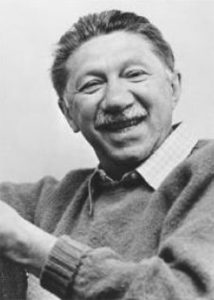
Abraham Maslow
Abraham Maslow said that the more we share our peak experiences the more likely we are to have them and the more likely we are to inspire others to have them.
With that in mind, we are continuing a series about peak experiences and we invite you to share your peak experience with us. (Email Mike Zonta, BB editor, at zonta1111@aol.com.)
Here is an encore posting of the first in this series, from John Atwater, H.W.:
WASHINGTON—Citing the results of an exhaustive five-year inquiry into the source of the outbreak of social isolation currently plaguing the United States, the Department of Health and Human Services declared Wednesday that Dayton, OH–area loser Bill McCraw was patient zero in the national loneliness epidemic. “Through extensive contact tracing, we’ve confirmed the epidemic of loneliness that has now spread to approximately half of American adults originated with one sad sack 32-year-old,” said Surgeon General Vivek Murthy, adding that the feelings of disconnection and despair gripping the nation began in 2019, when McCraw moved to the Midwest and quickly infected thousands in his vicinity with a forlorn sense of detachment against which they had no natural immunity. “When this friendless weirdo went to the supermarket or his digital marketing job—and those were pretty much the only places he went—people were exposed to his depressing estrangement from the outside world, and they immediately succumbed to it themselves. Just the sight of him walking alone, eager for someone to approach him, was enough to overwhelm a person’s psychological defenses, and a hopeless melancholy soon engulfed the entire country.” At press time, HHS officials had cordoned off the loser’s home in hopes of quarantining him even further in his pathetic solitude.
Consciousness, spirituality, biography, sexuality, androgyny, futurism, space, the arts, science, astrology, democracy, humor, books, movies and more