Gender dysphoria is a disease of our bipolar society.
If we believe that we are only given two options, male or female, then gender dysphoria would make sense.
When we understand that our authentic identity is consciousness conscious of itself as consciousness and not all the identities we’ve picked up along the way (whether in our childhood or inherited in our dna), then we are free to roam the endless opportunities of androgynous possibilities.
The illness is not in those who have gender dysphoria. The illness is the belief that we have to make a choice between pink or blue.
The illness is in our bipolar society.
–Mike Zonta, BB editor
The term “gender dysphoria” comes from the Greek word dysphoros, which means “hard to bear”. “Dysphoria” is also defined as a state of unease or dissatisfaction with life. The term “gender dysphoria” was coined by psychiatrist Norman M. Fisk in the 1970s. It describes the psychological condition of distress that results from a mismatch between a person’s gender identity and their assigned sex.
The diagnosis of gender dysphoria has been controversial since it was first introduced. Some critics argue that the diagnosis stigmatizes people who are simply expressing variation, and that it mistakenly categorizes a medical condition as a mental health disorder.
America’s best-selling novel in its time, The Quaker City , published in 1845, is a sensational exposé of social corruption, personal debauchery, and the sexual exploitation of women in antebellum Philadelphia. This new edition, with an introduction by David S. Reynolds, brings back into print this important work by George Lippard (1822-1854), a journalist, freethinker, and labor and social reformer.
an animal, as distinct from a human being.”night sounds of birds and other creatures”Similar:animalbeastbruteliving thingliving entityliving soulsoulmortalbeinglife formorganismcritter
an animal or person.”as fellow creatures on this planet, animals deserve respect”
a fictional or imaginary being, typically a frightening one.”a creature from outer space”
ARCHAICanything living or existing.”dress, jewels, and other transitory creatures”
a person of a specified kind, typically one viewed with pity, contempt, or desire.”you heartless creature!”Similar:fellowindividualcharacterwretchbeggarsoulpersonpersonagehuman beinghumanmanwomanboygirldevilbunnycookiecustomersorttypethingchapblokegeezerbastardboddudehombreguygalbodydogcovewightView 2 vulgar slang words
a person or organization considered to be under the complete control of another.”the village teacher was expected to be the creature of his employer”Similar:minionlackeyflunkeyhirelingsubordinateservantretainervassalpuppetpawntoolinstrumentcat’s pawdupestoogesuckeryes-manpoodledogsbodyskivvygofer
“He who cheats once will cheat again, particularly when it comes to self-knowledge.”
“Man can no longer wriggle out of it on the plea of his littleness and nothingness, for the dark God has slipped the atom bomb and chemical weapons into his hands and given him the the power to empty out the apocalyptic vials of wrath on his fellow creatures. Since he has been granted an almost godlike power, he can no longer remain blind and unconscious. He must know something of God’s nature, and of metaphysical processes if he is to understand himself and thereby achieve gnosis of the Divine.”
“Even the enlightened person remains what he is, and is never more than his own limited ego before the One who dwells within him, whose form has no knowable boundaries, who encompasses him on all sides, fathomless as the abysms of the earth and vast as the sky.”
Living with an abusive and controlling partner can feel like living in a cult, except lonelier. Victims’ own viewpoints, desires, and opinions may fade as they are overwhelmed by the abusers’. Over time, they may lose a sense that they even have a right to their own perspectives. This is called perspecticide; the abuse-related incapacity to know what you know (Stark, 2007). Perspecticide is often part of a strategy of coercive control that may include manipulation, stalking, gaslighting and physical abuse.
Erasing A Person’s Thoughts, Feelings and Perspectives
Abusers often try to confuse and destabilize their partners, to increase their control. They achieve this through physical or psychological means, or both.
Gail’s boyfriend worked part-time and slept during the day. She worked during the day. He frequently kept her up all night, criticizing her or insisting that she accompany him to bars, so she would be confused, tired, and unable to think clearly.
Sara’s husband deliberately preyed upon her insecurities. He told her that she had no friends because she was “book smart but not people smart.” In fact, she had lost friends because of his actions, but she came to believe she was unlikable.
Pat pushed his viewpoints on Chris and grew furious anytime Chris asserted separate views. Pat also frequently lied, and Chris felt obligated to go along with these falsehoods. After a while, Chris lost track of what was true and what were Pat’s inventions.
Donate and change a life
Your support gives hope and help to victims of domestic violence every day.
Abusers make their partners narrow their worlds. Once isolated, it is easy to lose one’s sense of self.
Doug insisted that Val watch him play video games rather than doing what she wanted. He demanded that he be the center of her attention at all times. Gradually she accepted this as an obligation and could hardly remember her own hobbies and interests.
Corey’s husband only “allowed” her to socialize along with him, with other couples. He did not permit her to leave the house without him, even to shop for food. While at first this was difficult for her, over time he convinced Corey that she was a “homebody” and that couples should do everything together.
Whenever TeyShawn tried speaking on the phone or seeing friends or family, his boyfriend, Angelo, grew angry with him. After a while TeyShawn severely curtailed his social life. It just wasn’t worth the hassle.
Micromanaging
Abusers insist on controlling minute aspects of their partners’ lives. Over time, victims internalize the rules and forget what life was like when they were freer to make their own choices.
Herman drew up an extensive chores chart and insisted that Marta keep a detailed log of her activities.
Ken gave his partner, Steve, a list of expectations for his diet , workout routine, and grooming. Ken chose Steve’s clothes and implied that their relationship would be over if he did not comply.
Darnell expected Sara to dress modestly when outside the home but insisted that she dress sexily when they were alone together. He told her to stop speaking to the cat, reading magazines, or sleeping on her back. He chose her makeup, dictated her bedtime, and weighed her daily. He meticulously controlled the way their house was organized, down to how towels were folded and food stored on the shelves. To avoid explosive conflict, Sara followed Darnell’s demands and began to see them as “normal.”
Abusers make their partners feel badly about themselves. Because they are isolated, people victimized by perspecticide begin to believe the negative descriptions of themselves and lose self-esteem.
Imani’s husband told her repeatedly that she was a gloomy, depressed person by nature . He told her that she was selfish to ask for changes in their marriage since she would never be happy anyway. Over time, she stopped asking.
Lori’s boyfriend told her she was oversexed and that he needed to keep an eye on her or she’d be out of control. He had sex with her at least once on most days, which was more than she wanted, but he told her it was what he needed to do to keep her “honest.” Over time, she stopped protesting the way he monitored and forced himself on her. She accepted the idea that the sex was “for her own good.”
Clarice’s husband, Dre, did not have a job for the first decade of their marriage. Clarice worked long days in a professional position and when she returned home, Dre berated her for “choosing work over family.” In front of the children, he defined her as cold, unloving, and non-maternal. Clarice constantly felt obliged to prove that she was a good mother. The children joined their father in blaming Clarice for “not being around much,” as if she was making a deliberate choice to be out of the home for long stretches.
Abusive partners create the expectations. The abuser demands certain acts as proof of love and over time, the person being victimized gives in.
Kelly’s husband insisted that they share a toothbrush and that they use the same water or wine glass at all meals. He couldn’t seem to tolerate her having anything that was hers alone. Kelly dreamed of being able to close the door when she showered but her husband wanted to be able to see her at all times.
Lily pushed her boyfriend to share all his social media and email passwords and when he refused, she secretly installed a keystroke logger so she could access them against his will. When he found out and confronted her, she replied, “Loving couples keep no secrets.” He gave up on the idea of Internet privacy.
Karen told Carmen that she should never say “no” to her; pleasing her should be her Number One and only priority. Carmen tried hard to follow this rule, and grew ashamed when she had longings of her own.
Julie who was exhausted from working full-time and raising four children while her husband stayed home, chronically unemployed–would wake up at night with her husband’s hands all over her. He told her that it was her duty as a wife to be intimate with him, or he’d have to look elsewhere. Soon she learned to give in quickly, so she could get some sleep.
People subjected to perspecticide often blame themselves, as they feel despairing and disoriented. It can be hard for them to figure out exactly what’s wrong. Controlling partners serve as a filter for the outside world, gradually forcing their victims to lose the support of family, friends, and coworkers. Isolated and controlled in this way, victims lose self-esteem and have trouble remembering what they once thought, felt, and believed. There is hope, however, for victims of perspecticide and coercive control. And recovering one’s own perspectives and life is mighty sweet.
On December 15th, 2024, we have a Full Moon at 23° Gemini.
The Full Moon in Gemini highlights the dynamic interplay of the Gemini-Sagittarius axis. The Sun is in Sagittarius, and the Moon is in Gemini.
The Sun and the Moon are at cross purposes, yet within this tension lies the potential for a new, higher perspective or understanding.
What is Sagittarius? What we believe in. Our ‘truth’. The framework of meaning. What makes sense to us.
What is Gemini? The actual, ever-changing reality. The facts. What we actually do.
At the Full Moon in Gemini, our beliefs may come into conflict with the actual facts or experiences around us, challenging us to reconcile the gap between truth and reality.
Full Moon In Gemini – Cognitive Dissonance
One term that captures the essence of the Gemini-Sagittarius axis is cognitive dissonance.
Cognitive dissonance is a psychological concept describing the mental discomfort or tension that arises when a person holds 2 or more contradictory beliefs, values, or attitudes simultaneously, or when their actions conflict with their beliefs.
We believe one thing (Sagittarius) and do another (Gemini).
For example, we believe junk food is bad, yet we indulge in it. Cognitive dissonance is not the same as lying. With cognitive dissonance, the struggle is real. The belief is real – it’s wholeheartedly felt. The behavior is real too.
And the contradiction creates conflict, which the person tries to reconcile.
This process eventually leads to a resolution. The discomfort pushes us to make a choice. This may result in a change of beliefs – “Maybe junk food isn’t that bad if I only eat it occasionally” – and/or a change in behavior – “I will start eating healthier.”
Every Full Moon in Gemini – and we have one every year – is an opportunity to renegotiate these internal contradictions so we can align more authentically with our truth and actions.
Full Moon In Gemini – The Aspects
The Full Moon is square Neptune in Pisces. If the cognitive dissonance inherent in the Gemini-Sagittarius axis wasn’t enough, Neptune adds a dose of extra fog – aka confusion, aka endless possibilities – to the mix.
The ruler of the Full Moon, Mercury, is in Sagittarius and about to turn direct. A shift in clarity is just around the corner – but we’re not there yet.
The Full Moon is also loosely conjunct Jupiter (a separating aspect), infusing us with a sense of optimism, faith, and possibility.
The result? Unexpected turns of events may leave you feeling both excited and confused, making you second-guess your choices.
This combination of conflicting energies creates an atmosphere where clarity feels just out of reach, and every option seems both promising and uncertain.
Are things really as they seem?
Should I pursue this opportunity?
What’s best for me?
What if I’m fooling myself and I’ll regret later? What if I don’t?
Full Moon In Gemini – 7 Of Cups
The Full Moon in Gemini reminds us of the 7 of Cups Tarot card, where a person stands before various cups floating on a cloud. Each cup holds a different item – like a dragon, jewels, a snake, or a castle.
The person reaches out, but without clear focus or direction. The card emanates a sense of confusion, yet also boundless possibilities.
The 7 of Cups is a “bridge” between the material and spiritual realms.
The 6 of Cups (harmony, nostalgia) is the comfort of the past, while the 8 of Cups (leaving behind unfulfilling situations) is the decisive action after achieving emotional clarity.
The 7 of Cups sits in between: it is the moment of exploration, confusion, and overwhelm before clarity or resolution can be achieved.
Similarly, the abundance of options presented by the Full Moon in Gemini can lead to analysis paralysis.
The root cause of this paralysis? Fear of making the wrong choice.
This fear – the fear of ‘reality’ and its consequences – often leads to escapism (Neptune).
Saturn is the planet of hard work, discipline, and accountability. Once we’ve done the hard work (Saturn), we find freedom and clarity (symbolized by the following planet, Uranus).
However, when we get stuck in this phase – when we feel overwhelmed by responsibility – we skip Saturn’s lesson and escape directly to Neptune, searching for a magical or unconscious way out, projecting our desires onto fantasies rather than grounding them in reality.
The narrative often goes something like this:
“This is so hard; I don’t have the resources, bandwidth, time, or energy to deal with it. What if there was a magical solution?”
The dream job, the knight on the white horse, the magic supplement that will fix all my health issues – the ‘shiny object’ – are not necessarily expressions of Neptune’s illusion or delusion, but rather of our escapism from Saturn’s hard work.
Understanding this dynamic can help us discern between our projected desires and the actual possibilities Neptune has in store for us.
Full Moon In Gemini – Even Better Than The Real Thing
“Even better than the real thing” – a phrase popularized by U2’s song in the early 90s – is a great way to describe the mysteries and possibilities of Neptune.
It suggests that there is such a thing as a ‘real thing,’ and that whatever is deemed ‘even better than the real thing’ might not be real at all – at least by material, 3D standards.
And yet, it is ‘better.’
This means that what we call illusion or fantasy is not inherently bad – just because it doesn’t have a tangible form, or just because it doesn’t meet Saturnian standards of reality.
We often dismiss it (because it doesn’t fit in our current reality). We make fun of it (because we can’t make full sense of it). We call it foolish (because it frightens us with its lack of logic).
Yet, the possibilities that Neptune offers are real (pun indeed).
Perhaps you applied for a job and you got a rejection. You feel deflated and don’t answer your phone. Perhaps your partner is late again, and you’re too frustrated to notice the billboard you pass by on your way home.
However, Neptune reminds us that there’s always a higher plan.
If we believe in this higher intelligence – if we trust the unfolding process – then we can perhaps look at these changes of plans, these interruptions, not as inconveniences – but as the universe’s gentle nudges to pursue something different, something that is more aligned with our higher purpose.
At the Full Moon in Gemini, answer your phone. Read that advertisement on the billboard. Pay attention to the small, seemingly irrelevant details that might initially feel like they’re disrupting your plans. Let serendipity in. Allow the magic of possibility to enter your life.
These Full Moon in Gemini options can be the “shiny object syndrome” OR real opportunities – ones that may not initially look like what you thought you wanted but turn out to be exactly what you needed to move forward.
The Full Moon in Gemini is an invitation to reconsider your options and explore new perspectives. Sometimes, what seems like an illusion can be even better than the real thing.
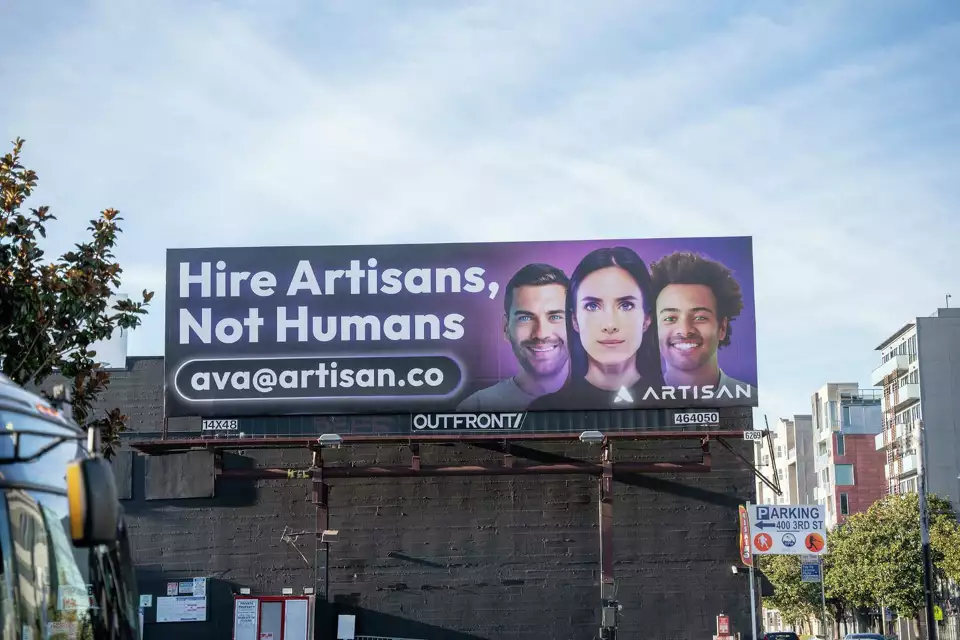
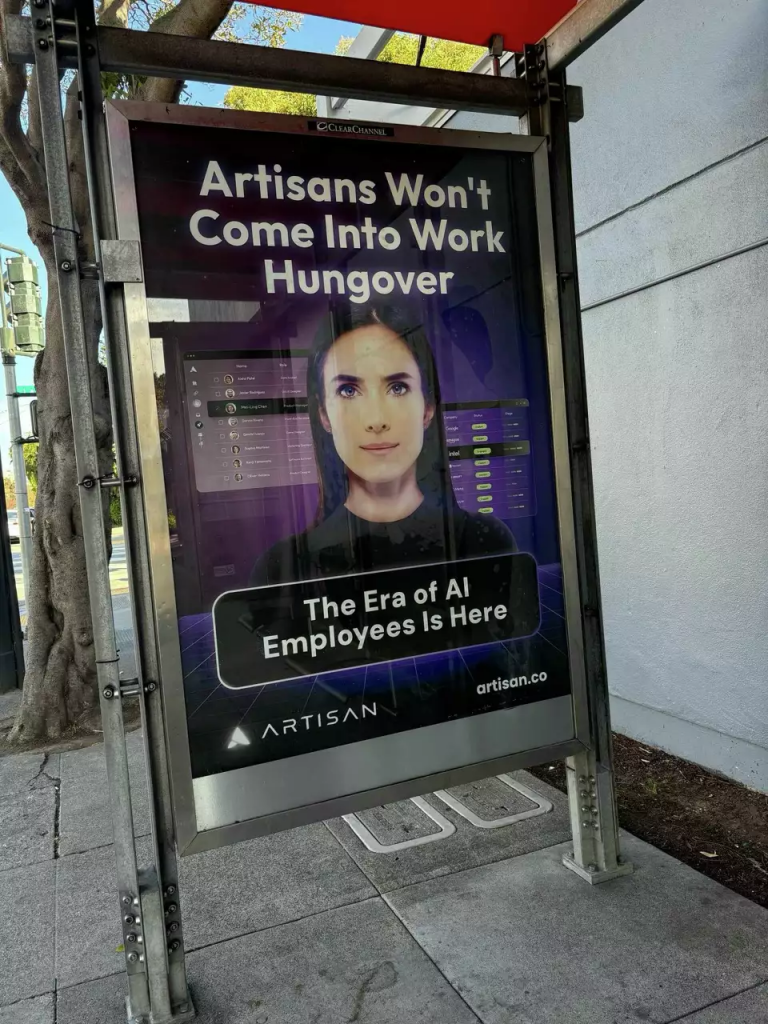
Artisan’s provocative “Stop Hiring Humans” billboard campaign in San Francisco, promoting its AI sales agent Ava, ignited a fierce debate online while driving remarkable growth for the startup.Artisan
In San Francisco’s crowded tech scene, a new billboard campaign from AI company Artisan is turning heads and stirring controversy.
The billboards, which bear the provocative message “Stop Hiring Humans,” have ignited a fierce debate online while also driving remarkable growth for the startup.
The campaign, designed to promote Artisan’s AI-powered sales agent, Ava, features tongue-in-cheek slogans such as “Humans are So 2023” and “Hire Artisans, Not Humans.” Others boast, “Artisans Won’t Complain About Work-Life Balance” and “Artisans Won’t Come Into Work Hungover.”
“We wanted something that would stand out. Something provocative,” said Jaspar Carmichael-Jack, the 23-year-old CEO of Artisan.
“If we didn’t use this tagline, you and I wouldn’t be talking right now,” he added, acknowledging the deliberately polarizing nature of the campaign.
Jaspar Carmichael-Jack, the 23-year-old CEO of Artisan, is defending the company’s provocative “Stop Hiring Humans” billboard campaign in San Francisco. The campaign promoting Artisan’s AI sales agent Ava has ignited a fierce debate online while driving remarkable growth for the startup.Artisan
Carmichael-Jack founded Artisan in San Francisco in September 2023. The company’s core product, Ava, is an AI-driven tool designed to automate outbound sales. The software handles tasks like researching potential clients, sending emails and following up — all without human input.
According to Carmichael-Jack, Ava costs 96% less than hiring a human to do the same job.
The company’s goal with the campaign was clear: to make waves in a competitive AI market and establish Artisan’s brand as a leading innovator.
But Carmichael-Jack emphasizes that Artisan doesn’t actually want to eliminate human employees.
“We love humans,” he said, laughing. “I actually don’t think people should stop hiring humans. We’re hiring a lot of humans right now.”
The real goal, he said, is to automate tedious, repetitive tasks so humans can focus on more meaningful work.
“But you don’t go viral for saying that,” Carmichael-Jack said.
Artisan’s provocative “Stop Hiring Humans” billboard campaign in San Francisco, promoting its AI sales agent Ava, ignited a fierce debate online while driving remarkable growth for the startup.Artisan
“We knew that if we made the billboards as vanilla as everybody else’s, no one would care,” he added.
The reaction to the campaign, however, has been anything but vanilla. The first billboard went up near San Francisco International Airport, and within hours, the internet exploded. A tweet about the billboard quickly amassed thousands of likes, setting off a viral wave.
Reddit users shared images of the ads with captions like “Human-designed billboard wants people to stop hiring humans,” sparking heated discussions about the role of AI in the workplace.
While many in the tech community embraced the campaign, others were less enthused.
Some critics saw the billboards as a dystopian warning about the future of work, particularly in a city already grappling with high living costs and a growing housing crisis.
Artisan’s provocative “Stop Hiring Humans” billboard campaign in San Francisco, promoting its AI sales agent Ava, ignited a fierce debate online while driving remarkable growth for the startup.Artisan
Carmichael-Jack, however, remains unfazed by the backlash, noting that the negative reactions largely came from outside his target market.
“People who work in tech are not offended by the billboards,” he said.” The people who are offended are typically people who are so far removed from the tech space that they don’t realize that what we’re advertising isn’t even possible.”
Over the past two months, Artisan has experienced its highest growth ever, with more than $2 million in new annual recurring revenue and thousands of sales meetings booked, according to the CEO.
“When I meet people in San Francisco now, 70% of the time, they know about Artisan,” said Carmichael-Jack. Before the campaign, that figure was closer to 5%.
As for the future, the CEO hints at more balanced messaging, though he stands by the campaign’s success.
“We’ll probably tone it down a bit, but when something works, you double down,” he said.
The Jungian Aion • Dec 3, 2024 • Hello Brothers and Sisters, and welcome to the Jungian Aion! Enjoy this excerpt from the fascinating interview with Marie-Louise von Franz and Suzanne Wagner. It was filmed in 1977 at von Franz’s tower retreat in Bollingen, Switzerland. The full interview: • 1977 Interview with Marie-Louise von … After Marie’s interview, I read an excerpt from her book “The Feminine in Fairy Tales”. 00:00:00 Interview 00:06:50 Book Reading This segment encapsulates the essence of a deeply personal and psychological journey rooted in Jungian thought. It challenges the tendency to externalize struggles by redirecting focus inward, toward the animus—the inner masculine aspect of a woman’s psyche. Rather than blaming or distancing oneself from men, it emphasizes the importance of confronting and integrating the animus to achieve inner freedom and self-actualization. This process involves recognizing projections, reconciling inner conflicts, and ultimately fostering a healthier relationship with both oneself and others. Liberation, then, is not a fight against external forces but a profound transformation within, where understanding the animus leads to wholeness and balance. Thank you for being here and for sharing this moment in our collective human experience. For many years, I’ve dedicated myself to the pursuit of Truth, Wisdom, and Beauty-what I believe constitutes true Health. My journey has been one of individuation, striving to understand and integrate my individuality within the collective unconscious, while becoming the person I was meant to be. My aim is to let Jung’s work permeate our modern consciousness, bridging the gap between the archetypal reality of our collective unconscious and our daily lives. This involves connecting our profound ancestral wisdom with our current space-time continuum-our daily rituals, habits, and the often unconscious patterns that guide us. I am deeply passionate about contributing to our individual and collective path to individuation, self-development, and the realization of our soul’s true purpose.
New Thinking • Dec 13, 2024 This video is a special release from the original Thinking Allowed series that ran on public television from 1986 until 2002. It was recorded in about 1990. It will remain public for only one week. What is the nature of the Self? In this intriguing program, Dr. Hal Stone proposes that we are not unitary beings, but that we consist of many autonomous sub-personalities and energy complexes. These express themselves as voices in our minds. Some of these voices are “primary personalities” which we normally consider ourselves. Other voices are “disowned” parts of ourselves which we typically project on to other people. Total self- understanding, says Dr. Stone, must include a detached awareness of both the primary and disowned parts of ourselves. Hal Stone, PhD, is author of Embracing Heaven and Earth and co-author, with his wife Dr. Sidra Winkelman, of Embracing Our Selves and Embracing Each Other. He and Dr. Winkelman are developers of the “Voice Dialogue” psychotherapeutic process. Now you can watch all of the programs from the original Thinking Allowed Video Collection, hosted by Jeffrey Mishlove. Subscribe to the new Streaming Channel (https://thinkingallowed.vhx.tv/) and watch more than 350 programs now, with more, previously unreleased titles added weekly. Free month of the classic Thinking Allowed streaming channel for New Thinking Allowed subscribers only. Use code THINKFREELY.
Consciousness, spirituality, biography, sexuality, androgyny, futurism, space, the arts, science, astrology, democracy, humor, books, movies and more