Making friends with your past and future selves

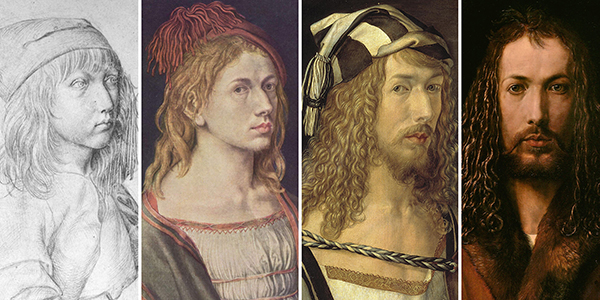
CREDIT: ALBRECHT DURER / PUBLIC DOMAIN

It’s what psychologists call self-continuity, and can improve your health and well-being

By Katherine Ellison 12.11.2024 (knowablemagazine.org)

Support sound science and smart stories
Help us make scientific knowledge accessible to all
Donate today

When asked why he didn’t begin writing novels until his 30s, the celebrated Czech author Milan Kundera said he didn’t have the requisite experience when he was younger. “This jerk that I was, I wouldn’t like to see him,” he added.

Many of us look back at our former selves and wince to recall our immaturity. We vary quite a lot in the degree to which we feel friendly toward, and connected to, both our former and our future selves. Psychologists call this trait self-continuity, and suggest that it carries enormous weight in determining our long-term well-being.

Nudging grows up (and now has a government job)

In recent years, increasing research has shown that a sense of coherence between our past and present selves can bolster mental health and, particularly, emotional resilience. Our connection to our future selves, on the other hand, can sway choices with long-term impact on our future welfare, from watching our diets to saving for retirement.

Self-continuity, says Cornell University gerontologist Corinna Löckenhoff, who researches the trait, gives us “an understanding of where we came from and where we’re going. It gives us direction and purpose and identity.”

Perched in the present

The 19th century psychologist William James compared human experience to being perched on a saddle “from which we look in two directions into time.” But modern researchers have found that the ability — or willingness — to look meaningfully in either direction varies from person to person, just like other psychological traits such as being extroverted or introverted.

“Some people feel a great degree of overlap and continuity with their future selves, and some people don’t even think about that self, and it feels almost like a stranger,” says psychologist Hal Hershfield of the University of California, Los Angeles.

Most studies of self-continuity look to the future, not the past. Researchers typically measure future self-continuity by asking people how similar they feel to an imagined future self. In a 2009 study of 164 people, for example, Hershfield and his team employed a series of Venn diagrams, with two circles overlapping to various degrees. Participants were asked to pick the circle pair best describing how alike and connected they felt to themselves 10 years in the future. People’s responses ranged from almost no overlap to almost complete overlap.

The differences between people depend on a hodgepodge of factors, in addition to basic influences of nature and nurture. Studies have reported that older people, whose expected time horizons are shorter, tend to have a greater sense of self-continuity, as do members of East Asian cultures, which, as some scholars speculate, tend to have a more holistic, connected world view. But researchers have found that people struggling with depressionpoverty and childhood trauma tend to feel less connected to their future selves.
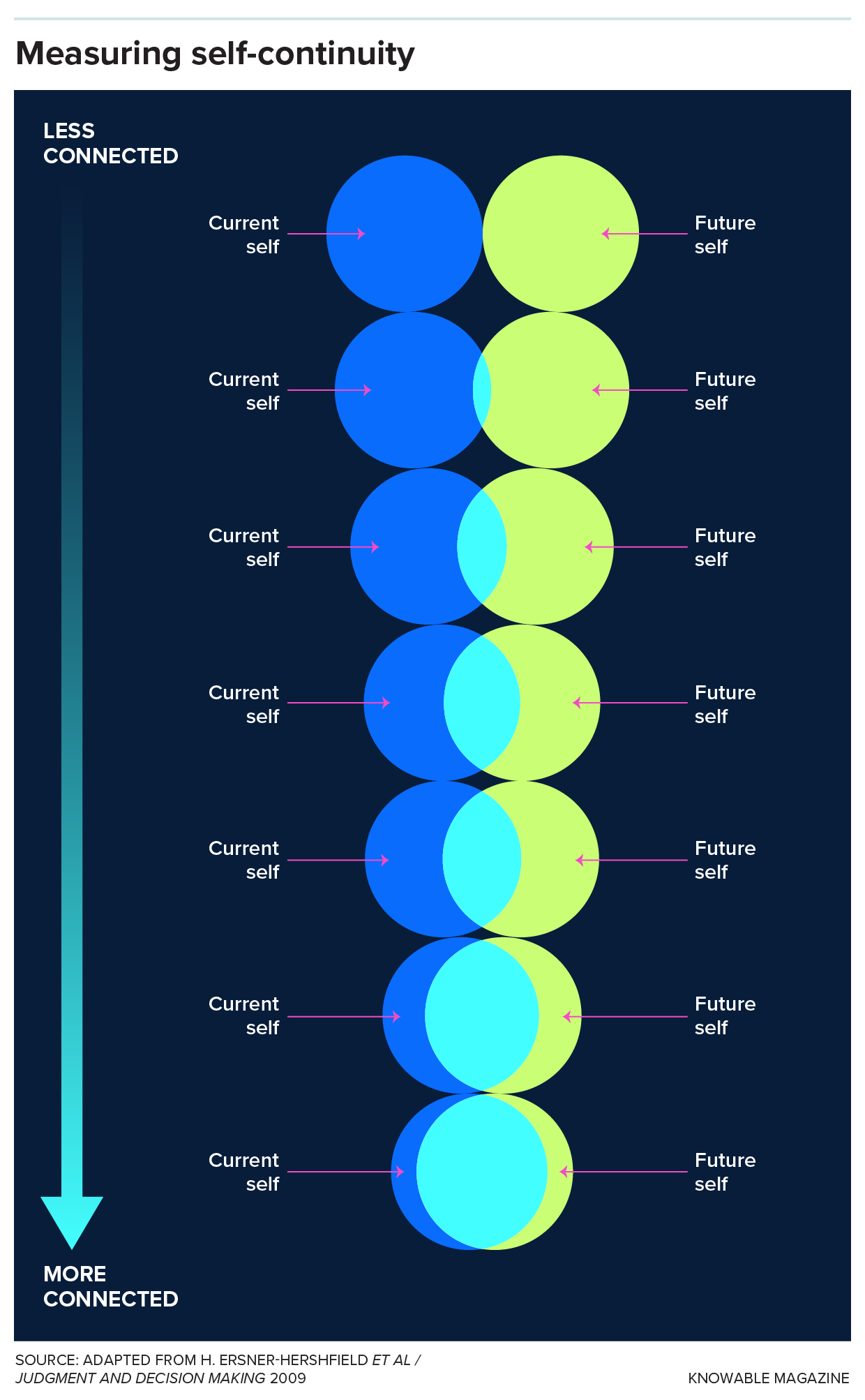
Graphic shows seven pairs of circles, overlapping to different degrees.
One way psychologists measure self-continuity is by asking people which of these seven pairs of circles represents how close they feel to their future self. Those whose circles overlap more fully are displaying greater self-continuity.

Morning Guy vs. Night Guy

The degree of coherence we feel with ourselves over time can support or sabotage us. People with a sturdier connection with their future selves may be more likely to pay short-term costs for future benefits, and vice versa.

The comedian Jerry Seinfeld illustrates the conflict in his riff about how Morning Guy always suffers for the carpe-diem antics of Night Guy: “You get up in the morning, your alarm, you’re exhausted and groggy,” he says. “Oh, I hate that Night Guy! See, Night Guy always screws Morning Guy. …”

The same tension is evident in the broader and more serious failure by many Americans to save for retirement. In a 2022 survey of more than 1,100 retirees, 70 percent said they wished they had started saving earlier. Hershfield says this emerging crisis is what drew him to focus his research on self-continuity and its behavioral consequences. He and others have found that people with more self-continuity are more likely to engage in behaviors that deliver future benefits, including not only saving for retirement but also taking better care of their health in the present.

People with stronger self-continuity are also more likely to behave ethically and responsibly, Hershfield’s research suggests. In a 2012 study, he and colleagues measured the self-continuity of 85 Northwestern University students, then followed up with a test to assess their ethical conduct. Only 50 percent of those who scored low in self-continuity showed up for the follow-up, they found, compared with 73 percent of those who scored high. What’s more, of the low scorers who did show up, 77 percent were willing to lie to an anonymous partner to earn more money when tested with a “deception game,” while only 36 percent of the high scorers would do so.

A stronger sense of connection with one’s future self may also push people toward environmentally responsible behavior. In a 2022 study, researchers recruited 175 undergraduate students at an unnamed US public university, randomly assigning them into three groups: one that was encouraged to visualize themselves at age 60, and the others told to visualize themselves, or another person, at the present time. Afterwards, all of the students played a game where they could take simulated fish from a pool.

The students who focused on their future selves limited the number of fish they took each round to conserve the pool of fish longer, the experiment revealed, while those who focused on the present were more likely to quickly exhaust the pool.

Stay in the Know
Sign up for the Knowable Magazine newsletter today

Write yourself a letter, then write back

For more than a decade, scientists have searched for ways to manipulate self-continuity in study participants to try to get them to behave more prudently. They have reported success with a variety of approaches, including having people interact with a computer-generated older version of themselves, sometimes with the help of virtual-reality glasses.

Most recently, a new program called Future You, developed at the Massachusetts Institute of Technology, offers young people a chance to chat with an online, AI-generated simulation of themselves at age 60. A recent study of 344 participants found that users who interacted with their future selves reported “increased future self-continuity” and, perhaps as a consequence, significantly less anxiety, compared with those who did not.

Future You is a high-tech version of a technique long practiced by high school teachers and counselors who encourage students to write letters to their future selves, as if writing to a pen pal. In a pilot study of high school students in Japan, social psychologist Anne E. Wilson, at Wilfrid Laurier University in Ontario, took the exercise one step further. She and her colleague Yuta Chishima instructed students who had written the letter to their future selves to respond to it as they imagined their future selves might.
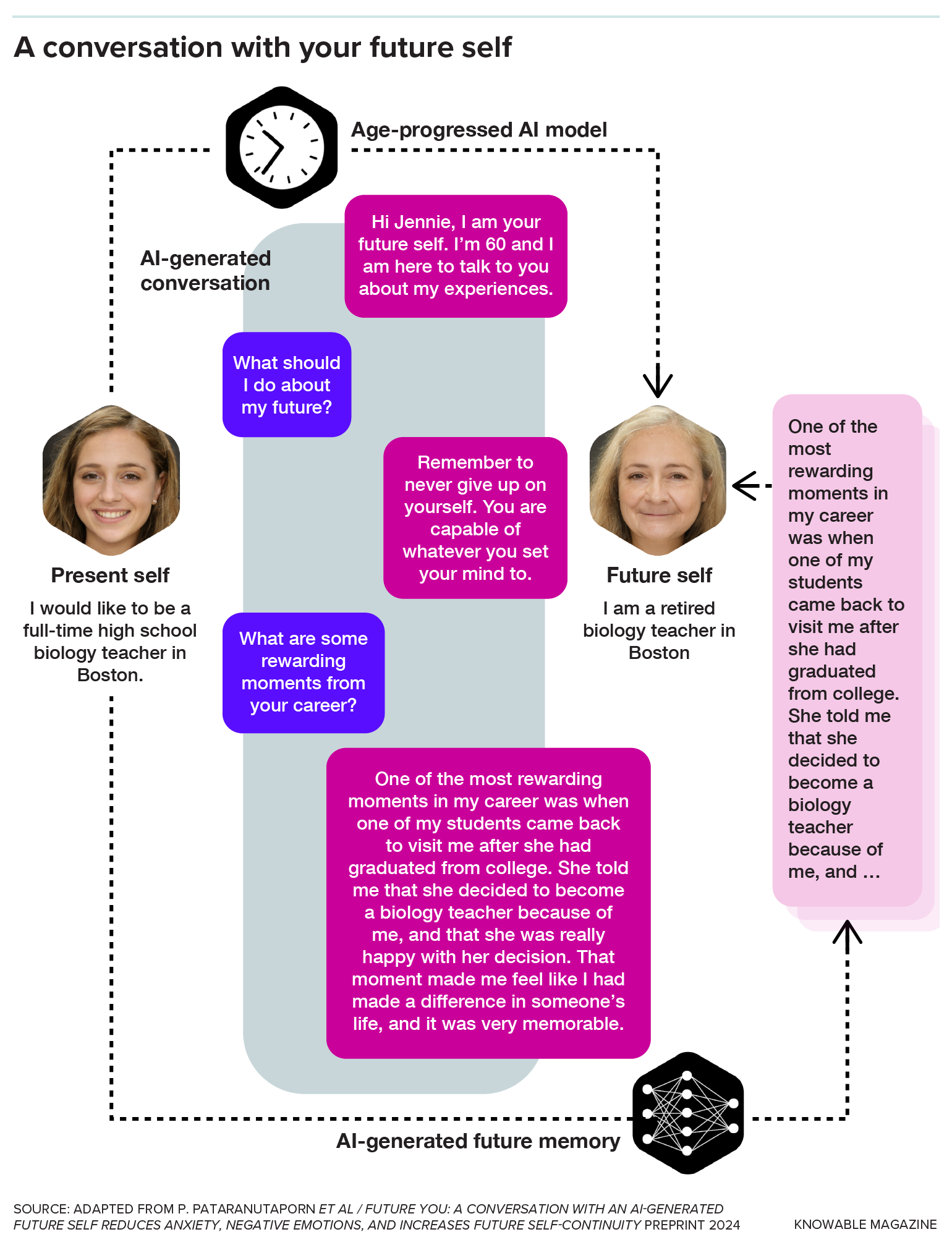
Schematic shows a conversation between a young woman and an AI-generated version of her future self.
Thinking about your future self is a good way to enhance self-continuity. In one high-tech strategy, researchers seeking to increase the trait create an artificially aged version of a young person’s face. That “older self” can converse with the younger person using artificial intelligence software. The conversation helps people feel closer to their future selves, studies show — and it also helps them feel less anxious about the future.

Writing a letter back from the future made the students feel more connected to their future selves, the researchers found. A month later, students who had written back from their future self’s perspective reported “more intensive career planning and a greater willingness to study hard at school even when temptations beckon,” compared with students who wrote only the single letter, according to Wilson and Chishima.

To be sure, there are times when a shorter horizon may be useful, researchers from the University of Southampton in the UK note in the 2023 Annual Review of Psychology. For example, too strong a sense of continuity with one’s past self might hamper efforts in the present to abandon “sunk costs” — investments already made in a doomed plan or project — they report.

The same may apply to quitting a bad habit such as drug addiction. “A bad past could be like an anchor for someone,” says Wilson. “Like, ‘If I’ve failed at this in the past, it means I’m going to fail at this in the future.’

“On the other hand,” adds Wilson, “a bad past could be something that we learn from and then figure out different strategies for the future, so we don’t keep making the same mistakes.” Perhaps like Milan Kundera, who so forcefully repudiated the man he was in his 20s, and died at 94 in 2023, after a long and celebrated writing career.

Photo shows an elderly man sadly looking out a window.

CREDIT: ISTOCK.COM / FG TRADE

Live or die? Which ‘me’ gets to choose?

One of the thorniest issues related to self-continuity is how people’s life-or-death views can alter near the end of life.

Minds tend to change under extreme circumstances. When researchers asked healthy people if, hypothetically, they would agree to a harsh course of chemotherapy that would extend their lives by three months, only 10 percent said yes, notes UCLA psychologist Hal Hershfield. But when cancer patients were asked, the rate more than quadrupled.

In recent years, millions of aging Americans have been writing advance directives, with many leaving instructions that they be allowed to die with no interventions if they fall ill after suffering dementia, under the assumption that life wouldn’t be worth living in that case.

But what happens if, like the cancer patients, they change their minds? What if their younger selves had failed to foresee how their older selves might cling to, even enjoy, whatever life was left?

“It begs the question: Who should we trust? Who is the ‘real’ you?” says Hershfield. “The self who came up with the plan or the self who exists at any given moment in time, even if that self is in the throes of dementia?”

— Katherine Ellison

Editor’s note: This article was corrected on December 13, 2024. Hal Hershfield’s study using Venn diagrams was published in 2009, not in 2023 as originally stated.

Katherine Ellison is a journalist and author and co-author of 12 nonfiction books, including the ADHD family memoir, Buzz: A Year of Paying Attention.

A dying star’s last hurrah

CREDIT: NASA / ESA / HUBBLE

At the end of their lives, sunlike stars metamorphose into glowing shells of gas — perhaps shaped by unseen companions

By Dana Mackenzie 07.14.2022 (knowablemagazine.org)

Support sound science and smart stories
Help us make scientific knowledge accessible to all
Donate today

Lea en español

Billions of years from now, as our Sun approaches the end of its life and helium nuclei begin to fuse in its core, it will bloat dramatically and turn into what’s known as a red giant star. After swallowing Mercury, Venus and Earth with hardly a burp, it will grow so large that it can no longer hold onto its outermost layers of gas and dust.

In a glorious denouement, it will eject these layers into space to form a beautiful veil of light, which will glow like a neon sign for thousands of years before fading.

The galaxy is studded with thousands of these jewel-like memorials, known as planetary nebulae. They are the normal end stage for stars that range from half the Sun’s mass up to eight times its mass. (More massive stars have a much more violent end, an explosion called a supernova.) Planetary nebulae come in a stunning variety of shapes, as suggested by names like the Southern Crab, the Cat’s Eye and the Butterfly. But as beautiful as they are, they have also been a riddle to astronomers. How does a cosmic butterfly emerge from the seemingly featureless, round cocoon of a red giant star? 

Observations and computer models are now pointing to an explanation that would have seemed outlandish 30 years ago: Most red giants have a much smaller companion star hiding in their gravitational embrace. This second star shapes the transformation into a planetary nebula, much as a potter shapes a vessel on a potter’s wheel.

Side by side images of the Southern Ring Nebula
NASA’s new James Webb Space Telescope has revealed extraordinary details in the Southern Ring Nebula, a planetary nebula that lies around 2,500 light-years away in the constellation Vela. On the left, a near-infrared image shows spectacular concentric shells of gas, which chronicle the history of the dying star’s outbursts. On the right, a mid-infrared image easily distinguishes the dying star at the nebula’s center (red) from its companion star (blue). All of the gas and dust in the nebula was expelled by the red star.CREDIT: NASA, ESA, CSA, AND STSCI

The dominant theory of planetary nebula formation previously involved only a single star — the red giant itself. With only a weak gravitational hold on its outer layers, it sheds mass very rapidly near the end of its life, losing as much as 1 percent per century. It also churns like a boiling pot of water underneath the surface, causing the outer layers to pulse in and out. Astronomers theorized that these pulsations produce shock waves that blast gas and dust into space, creating what’s called a stellar wind. Yet it takes a great deal of energy to expel this material completely without having it fall back into the star. It cannot be any gentle zephyr, this wind; it needs to have the strength of a rocket blast.

The mighty Milky Way

After the star’s outer layer has escaped, the much smaller inner layer collapses into a white dwarf. This star, which is hotter and brighter than the red giant it came from, illuminates and warms the escaped gas, until the gas starts glowing by itself — and we see a planetary nebula. The whole process is very fast by astronomical standards but slow by human standards, typically taking centuries to millennia. 

Until the Hubble Space Telescope launched in 1990, “we were pretty sure we were on the right track” toward understanding the process, says Bruce Balick, an astronomer at the University of Washington. Then he and his colleague Adam Frank, of the University of Rochester in New York, were at a conference in Austria and saw Hubble’s first photos of planetary nebulae. “We went out to get coffee, saw the pictures and we knew that the game had changed,” Balick says. 

Astronomers had assumed that red giants were spherically symmetrical, and a round star should produce a round planetary nebula. But that’s not what Hubble saw — not even close. “It became obvious that many planetary nebulae have exotic axisymmetric structures,” says Joel Kastner, an astronomer at the Rochester Institute of Technology. Hubble revealed fantastic lobes, wings and other structures that weren’t round but were symmetric around the nebula’s main axis, as if turned on that potter’s wheel.

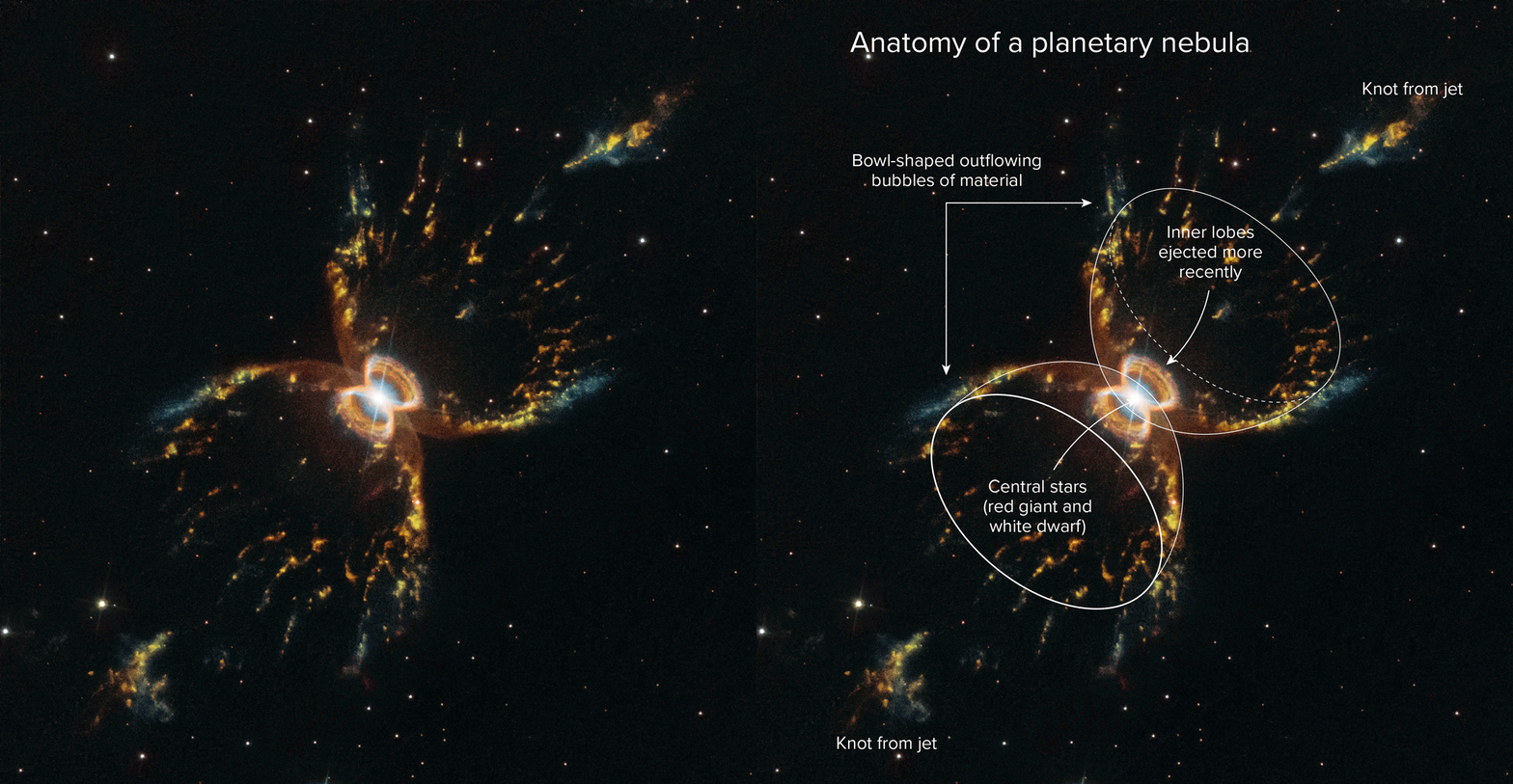
Southern Crab Nebula with parts of interest highlighted
In early photos from ground-based observatories, the Southern Crab Nebula appeared to have four curved “legs” like a crab. But detailed images from the Hubble Space Telescope show that these legs are the sides of two bubbles that roughly form an hourglass shape. In the center of the bubbles are two jets of gas, with “knots” that may light up when they encounter the gas between the stars. The Southern Crab, located several thousand light-years from Earth in the constellation Centaurus, appears to have had two gas-releasing events. One around 5,500 years ago created the outer “hourglass,” and a similar event 2,300 years ago created the inner, much smaller one.CREDIT: ADAPTED FROM NASA, ESA, AND A. FEILD (STSCI)

A 2002 article by Balick and Frank in the Annual Review of Astronomy and Astrophysics captured the debate at the time over the origin of these structures. Some scientists proposed that the axial symmetry stemmed from how the red giant star rotated or how its magnetic fields behaved, but both ideas failed some fundamental tests. Both rotation and magnetic fields should get weaker as the star grows larger, yet the mass-loss rate of red giants accelerates at the end of their lifetimes. 

The other option was that most planetary nebulae are formed not by one star, but by a pair of stars — what Orsola De Marco, an astronomer at Macquarie University in Sydney, named the “binary hypothesis.” In this scenario, the second star is much smaller and thousands of times fainter than the red giant, and it might be as far away as Jupiter is from the Sun. That would allow it to disrupt the red giant while being distant enough to not be swallowed up. (Other possibilities also exist, such as a dive-bombing orbit in which the second star would approach the red giant every few hundred years, peeling off layers from it.)

The binary hypothesis accounts very well for the first stage of metamorphosis of a dying star. As the companion pulls dust and gases away from the primary star, they do not immediately get sucked into the companion, but form a swirling disk of material known as an accretion disk in the orbital plane of the companion. That accretion disk is the potter’s wheel. If the disk has a magnetic field, it will propel any charged gases out of the plane of the disk and toward the axis of rotation. But even without a magnetic field, the material in the disk impedes the outward flow of gases in the orbital plane, so the gas will take on a bilobed structure, with faster flow toward the poles. And that’s just what Hubble saw in its images of planetary nebulae. “Why look for a really complicated explanation when a companion star explains it really well?” says De Marco. 

Twin Jet Nebula and Cat’s Eye Nebula
Left: The Twin Jet Nebula, 2,400 light-years from Earth in the constellation Ophiuchus, shows off an hourglass shape, with two jets of rapidly moving gas streaming poleward. The gas was probably ejected by the central star about 1,200 years ago. Right: The Cat’s Eye Nebula, 3,300 light-years from Earth in the constellation Draco, exhibits 11 concentric rings of dust, which astronomers estimate were released at 1,500-year intervals. The process by which the complicated inner structure formed is still anybody’s guess. “The Cat’s Eye is weird. I don’t know if I can explain it,” says astronomer Adam Frank of the University of Rochester.CREDITS: ESA / HUBBLE & NASA, ACKNOWLEDGEMENT: JUDY SCHMIDT (LEFT);  NASA, ESA, HUBBLE LEGACY ARCHIVE, CHANDRA X-RAY OBS., PROCESSING & COPYRIGHT: RUDY POHL (RIGHT)

Nevertheless, the idea of undetectable companion stars didn’t sit well with some astronomers. As recently as 2020, writes Leen Decin, an astronomer at KU Leuven in Belgium, a famous astrophysicist told her “You know, Leen, it all looks so fantastic, the observations are so fascinating, the current state-of-the-art models seem to do a pretty good job for interpreting the data, but in the end, shouldn’t we only believe what we can actually see?” 

But over the last 10 to 15 years, the tide has steadily turned. New and innovative telescopes have revealed that some red giants are surrounded by spiral structures and accretion disks before they turn into planetary nebulae — just as expected if there were a second star pulling material off the red giant. In a couple of cases, astronomers may have even spotted the companion star itself. 

Decin and her colleagues have especially relied upon the Atacama Large Millimeter/submillimeter Array (ALMA) in Chile, which came online in 2011. ALMA consists of 66 radio telescopes that work together to produce images of astronomical objects. “It gives us high spatial and spectral resolution that are important if you want to understand dynamics and velocity,” Decin says. Velocity is an important part of the puzzle for scientists to map stellar winds and accretion disks.

Radio telescope images of stellar winds
ALMA, an array of radio telescopes in Chile, has enabled astronomers to map stellar winds around red giant stars before they get to the point of forming a planetary nebula. The names of the stars are in the upper left hand corner of each image. Winds blowing outward from the stars create a variety of structures, such as disks, spirals and “roses,” that are consistent with the theory that the red giant star has a companion orbiting it. Red indicates gases that are moving away from the observer, and blue indicates gases moving toward the observer. 1 AU is one astronomical unit, or the distance from Earth to the Sun. For comparison, Neptune is 30 AU from the Sun. The companion stars are likely closer than that to their primary stars, and they are not visible due to the glare of the primary.

ALMA has seen spiral-shaped or arc-shaped structures around more than a dozen red giant stars, almost certainly a sign that matter is being shed from the red giant and spiraling toward its companion. The spirals closely match computer simulations and are impossible to explain with the old stellar-wind model. Decin reported the initial findings in 2020 in Science and expanded on them the following year in Annual Review of Astronomy and Astrophysics. 

In addition, Decin’s group may have spotted the previously undetectable companions of two red giants, p1 Gruis and L2 Puppis, in ALMA images. To make sure, she needs to monitor them over a period of time to see if the newly detected objects are moving around the primary star. “If they move, I’m sure that we have companions,” says Decin. Perhaps this discovery will win over the last skeptics. 

Like crime scene investigators, astronomers now have “before” and “after” snapshots of the creation of a planetary nebula. The one thing they lack is the equivalent of CCTV footage of the event itself. Is there any hope that astronomers can catch a red giant in the act of turning into a planetary nebula? 

So far, computer models are the only way to “watch” the centuries-long process unfold from beginning to end. They have helped astronomers home in on one dramatic scenario, in which the companion star plunges into the primary after a prolonged period of orbiting it and losing distance due to tidal forces. As it spirals toward the red giant’s core, the companion sheds “an insane amount of gravitational energy,” says Frank. The computer models show that this hugely accelerates the process through which the star lets go of its outer layers, to just one to 10 years. If this is correct, and if astronomers knew where to look, they could witness the death of a star and birth of a planetary nebula in real time.

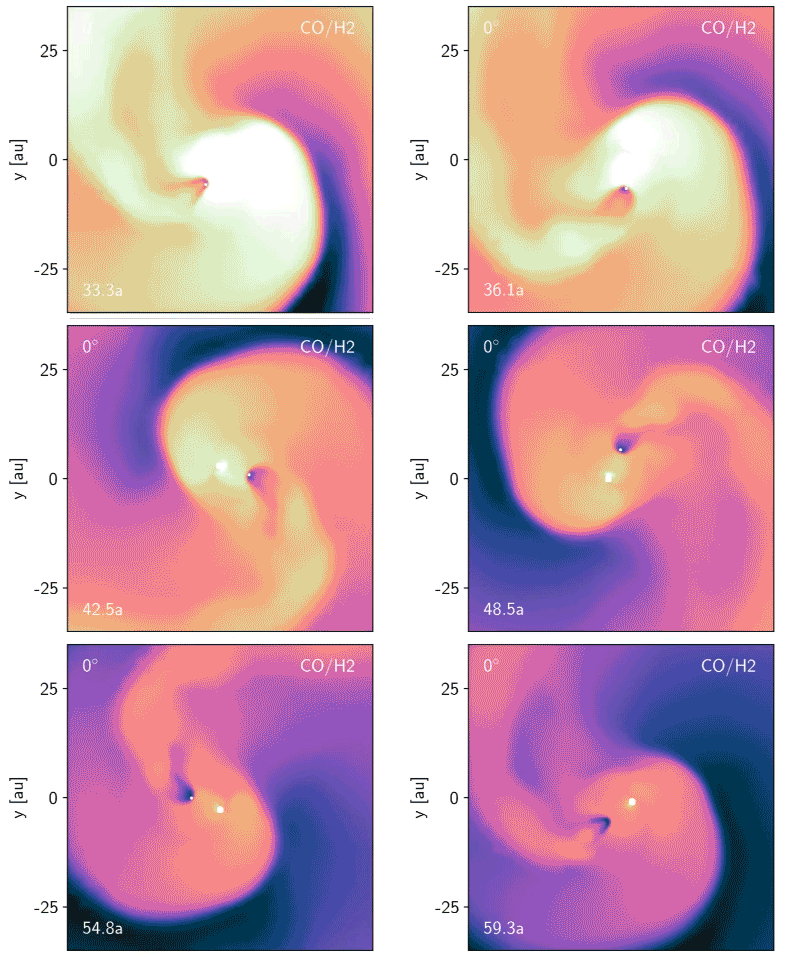
Computer simulation of red giant, companion star and stellar wind
A hydrodynamic simulation of a small companion star (white dot) orbiting a red giant star (white circle) shows that the outflowing stellar wind forms a spiral, consistent with what has been seen in the ALMA telescope images.CREDIT: L. DECIN / AR ASTRONOMY AND ASTROPHYSICS 2021

One candidate to keep an eye on is called V Hydrae. This very active red giant star ejects bullet-like clumps of plasma toward its poles every 8.5 years, and it also has coughed out six large rings in its equatorial plane over the last 2,100 years. Raghvendra Sahai, an astronomer at NASA’s Jet Propulsion Laboratory who published the discovery of the rings in April, believes that the red giant has not one but two companion stars. A nearby companion may already be grazing the red giant’s envelope and producing the plasma ejections, while a distant companion in a dive-bombing orbit controls the ejection of the rings. If so, V Hydrae may be close to swallowing up its closer companion. 

Finally, what about our Sun? Studies of binary stars might seem to have little relevance for our star’s fate, because it is a singleton. Stars with companions lose mass about six to 10 times faster than those without, Decin estimates, because it’s much more efficient for a companion star to pull off a red giant’s shell than for the red giant to push off its own shell.

This means that data on stars with companions cannot reliably predict the fate of stars without companions, like the Sun. Roughly half of the stars that are the Sun’s size have companions of some sort. According to Decin, the companion will always affect the shape of the stellar wind, and it will significantly affect the mass-loss rate if the companion is close enough. The Sun will most likely eject its outer layer more slowly than those stars and will stay in its red-giant phase several times longer.

But a great deal is still unknown about the Sun’s last act. For example, even though Jupiter is not a star, it could still be hefty enough to attract material from the Sun and power up an accretion disk. “I think we’ll have a very small spiral created by Jupiter,” Decin says. “Even in our simulations, you can see its impact on the solar wind.” If so, then our Sun too might be in line for a showy grand finale.

Dana Mackenzie is a mathematician who went rogue and became a freelance science journalist. He enjoys playing chess, hula dancing and taking care of foster kittens for the Santa Cruz County Animal Shelter.

The Gift: Becoming a Gender-Specific Men’s Health Practitioner in 2025 

 December 12, 2024 (menalive.com)

By  Jed Diamond

Photo by: Victor Freitas / Unsplash.com

Part 2

            In Part 1, I described my own work over the years as Gender-Specific Men’s Health Practitioner and why I believe it is a great career choice for the future. Here I will describe in more detail who might be interested in an upcoming training program I will be offering in 2025. If you might be interested, or know someone think would be interested, this may be a great gift for the holidays, one that keeps on giving.

            Although I have had an interest in mental health issues since I was a child growing up in a family with an angry and depressed father and a worried and anxious mother, I first became professionally interested in men’s health in 1976 when I read a book by psychologist Herb Goldberg, The Hazards of Being Male: Surviving the Myth of Masculine Privilege. Goldberg wrote,

“The American man an endangered species? Absolutely! The male has paid a heavy price for his masculine ‘privilege’ and power. He is out of touch with his emotions and his body. He is playing by the rules of the male game plan and with lemming-like purpose he is destroying himself—emotionally, psychologically, and physically.”

            In 1979 I attended a men’s gathering where Herb Goldberg was the invited speaker. Following the one-day event, a group of guys gathered to continue our explorations and interest in our mental, emotional, and relational health and formed a men’s group. That group of guys has been meeting regularly since then. My wife, Carlin, will tell you that one of the main reasons she and I have had a successful 45-year marriage is because I have been in a men’s group for 46 years.

            I continued my work helping men and their families and focused my attention on the changes men experienced at midlife and the “change of life” that men experience how it is both similar and different from menopause in women. In 1997 my book, Male Menopause was published. It soon became an international bestseller published in 14 foreign languages including Spanish, French, German, Chinese, Japanese, Korean, Portuguese, Greek, and Hebrew. I followed up with Surviving Male Menopause: A Guide for Women and Men published in 2000.

            I have long recognized the importance of an evolutionary and gender-specific perspective on health.

When Dr. Marianne J. Legato’s book, Eve’s Rib: The New Science of Gender-Specific Medicine and How It Can Save Your Life was published in 2002, the world was introduced to a new field that would forever change our understanding of healthcare.

            “Until now, we’ve acted as though men and women were essentially identical except for the differences in their reproductive function,” says Dr. Legato. “In fact, information we’ve been gathering over the past ten years tells us that this is anything but true, and that everywhere we look, the two sexes are startlingly and unexpectedly different not only in their normal function but in the ways they experience illness.”

            Dr. Legato went on to become the founding President of the Foundation for Gender-Specific Medicine in 2006. Though she says that the field “is not just about women’s health, but about the health of both sexes,” she acknowledges that men’s health has been neglected. In her book, Why Men Die First: How to Lengthen Your Lifespan, she says,

“The premature death of men is the most important—and neglected—health issue of our time.”

            Premature death is the endpoint of differences between men and women that begin with our different biological makeup.

“Everywhere we look, the two sexes are startlingly and unexpectedly different not only in their internal function but in the way they experience illness,” says Dr. Legato.

            Dr. Legato’s findings are consistent with another clinician and research in the field, David C. Page, M.D., professor of biology at the Massachusetts Institute of Technology (MIT).

“There are 10 trillion cells in the human body and every one of them is sex specific,”

says Dr. Page. He goes on to say,

“We’ve had a unisex vision of the human genome,” says Dr. Page.  “Men and women are not equal in our genome and men and women are not equal in the face of disease. All your cells know on a molecular level whether they are XX or XY.”

Dr. Page concludes, “It is true that a great deal of the research going on today which seeks to understand the causes and treatments for disease is failing to account for this most fundamental difference between men and women. The study of disease is flawed.” 

The Importance of Focusing on Men’s Health

The science of gender-specific healthcare includes multiple fields including sexual biology, evolutionary psychology, and environmental ecology. To be an effective practitioner we need to have an understanding of genetic, hormonal, and biological differences between males and females as well as the rules, roles, and expectations that society places on men and women.

The MenAlive Academy of Gender-Specific Healthcare focuses on men’s health for three reasons.

First, men as a group live shorter and more unhealthy lives than do women. 

The premature death of men is the most important—and neglected—health issue of our time,”

says Dr. Legato in her book, Why Men Die First: How to Lengthen Your Lifespan.

Second, our interpersonal relationships are critical determinants of our overall health and wellbeing. Men have a vital role to play in the health men, women, and children. 

“What men do in relationships is, by a large margin, the crucial factor that separates a great relationship from a failed one,”

says world-renowned relationship expert Dr. John Gottman.

“This does not mean that a woman doesn’t need to do her part, but the data proves that a man’s actions are the key variable that determines whether a relationship succeeds or fails, which is ironic, since most relationship books are for womenThat’s kind of like doing open-heart surgery on the wrong patient.”

            Third, men who are unhealthy and unhappy are not only harmful to themselves, but often harm women, children, and society. Comedian Elayne Boosler captures this reality with these humorous and insightful words:

“When women are depressed, they eat or go shopping. Men invade another country. It’s a whole different way of thinking.”

            We recognize the problem of male violence in our personal, interpersonal, social, and community lives. According to the World Report on Violence and Health published by The World Health Organization,

“No country or community is untouched by violence. Violence pervades the lives of many people around the world, and touches all of us in some way.”

            In the Foreword to the World Report on Violence and Health, Nelson Mandela reminds us that

“Violence thrives in the absence of democracy, respect for human rights and good governance. We often talk about how a ‘culture of violence’ can take root. This is indeed true—as a South African who has lived through apartheid and is living through its aftermath, I have experienced it.”

            Mandela’s experiences can act as a warning about violence today. He goes on to say,

“It is also true that patterns of violence are more pervasive and widespread in societies where the authorities endorse the use of violence thought their own actions. In many societies, violence is so dominant that it thwarts hopes of economic and social development. We cannot let that continue.”

            There are three major areas of violence-related health problems detailed in the World Report: Homicide, Suicide, and War-related violence. Although violent deaths from mass shootings grab the headlines, they make up a small percentage of all homicides. What is less well known is that death by suicide is where most deaths occur.

The proportion of deaths by category are as follows:

  • 18.6% are war-related deaths.
  • 31.3% are a result of homicide.
  • 49.1% are the result of suicide.

Men do most of the killing and men are the ones most often killed in all three categories of death.

Depression and suicide are not just problems for men, but there is something about being male that increases our risk of dying by suicide. According to recent statistics (2021) from the National Institute of Mental Healththe suicide rate among males was, on average, 4 times higher among male than females. It was also higher for males at every age, particularly for older males.

Suicide rates are based on the number of people who have died by suicide per 100,000 population.

Even during our youth where suicide rates are relatively low, males are still more likely to die by suicide than are females. It is also clear to me as my wife and I move into our 80s, we face many similar challenges as we age, but it is older males who more often end their lives by suicide with rates 8 to 17 times higher than for females for those over 75 years old.   

Who Is Likely to Benefit From Advanced Training with Dr. Jed Diamond?

            Those in previous trainings answered “yes” to one or more of these questions:

  • Are you currently working as a healthcare provider?
  • Do you now provide, or are you interested in providing, gender-specific healthcare services for men?
  • Would you like to join a community of like-minded practitioners who recognize that supporting each other is good for those we serve and good for practitioners?
  • Are you interested in being trained by one of the world’s leading experts in the field?
  • Do you want to increase your knowledge and skills in the emerging field of Gender-Specific healthcare and men’s mental, emotional, and relational health?
  • Would you like to increase what you earn doing work that you love?

If this sounds like you or someone you know, I would be happy to send more information. Drop me an email to Jed@MenAlive.com and put “Men’s Training” in the subject line.

If you would like to receive my free newsletter with timely articles and information to help you in your life, your relationships, and your work, you can do so here: https://menalive.com/email-newsletter/.

Author Image

Best Wishes,

Jed Diamond

Founder and VHS (Visionary Healer Scholar) of MenAlive

Tarot Card for December 16: Lord of Power

The Four of Disks

This card, Lord of Power, is one which reassures us of the overall security of our material life, and also suggests that we must take time to appreciate the assets provided in such abundance by the planet upon which we live.This earth provides us with the greatest sense of security that can be experienced by a race such as ours… the ground beneath our feet; the water we drink; the food we eat; the air we breathe; the raw materials to clothe us, house us, adorn us… And for such riches, she asks nothing in return.As a result we have neglected the planet we live upon to the extent that our excesses have taken from her beyond her ability to renew and sustain. So on a day ruled by the Lord of Power, I ask you all to give something back to Planet Earth…This could be a crystal, blessed for her nourishment. Or a plant given in her honour. Or half an hour spent clearing rubbish strewn across her body. Or a few moments spent in adoration of her beauty. Or water spread across a barren dry patch of earth.And perform whichever act you choose with reverence and a sense of deep thanksgiving in your heart for the planet which sustains us all.

Affirmation: “I offer my power in the service of love.”

(Angalpaths.com)

Book: “The Serviceberry: Abundance and Reciprocity in the Natural World”

The Serviceberry: Abundance and Reciprocity in the Natural World

Robin Wall KimmererJohn Burgoyne (illustrator)

From the #1 New York Times bestselling author of Braiding Sweetgrass, a bold and inspiring vision for how to orient our lives around gratitude, reciprocity, and community, based on the lessons of the natural world. As indigenous scientist and author of Braiding Sweetgrass Robin Wall Kimmerer harvests serviceberries alongside the birds, she considers the ethic of reciprocity that lies at the heart of the gift economy. How, she asks, can we learn from indigenous wisdom and the plant world to reimagine what we value most? Our economy is rooted in scarcity, competition, and the hoarding of resources, and we have surrendered our values to a system that actively harms what we love. Meanwhile, the serviceberry’s relationship with the natural world is an embodiment of reciprocity, interconnectedness, and gratitude. The tree distributes its wealth—its abundance of sweet, juicy berries—to meet the needs of its natural community. And this distribution insures its own survival. As Kimmerer explains, “Serviceberries show us another model, one based upon reciprocity, where wealth comes from the quality of your relationships, not from the illusion of self-sufficiency.” As Elizabeth Gilbert writes, Robin Wall Kimmerer is “a great teacher, and her words are a hymn of love to the world.” The Serviceberry is an antidote to the broken relationships and misguided goals of our times, and a reminder that “hoarding won’t save us, all flourishing is mutual.”

About the author

Profile Image for Robin Wall Kimmerer.

Robin Wall Kimmerer

Dr. Robin Wall Kimmerer (also credited as Robin W. Kimmerer) (born 1953) is Associate Professor of Environmental and Forest Biology at the State University of New York College of Environmental Science and Forestry (SUNY-ESF). She is the author of numerous scientific articles, and the book Gathering Moss: A Natural and Cultural History of Mosses. She is Potawatomi and combines her heritage with her scientific and environmental passions.

(Goodreads.com)

Symbolic versus Literal Perspectives on the Paranormal/Spiritual with Charles Upton

New Thinkin • Dec 15, 2024 Charles Upton’s first books of poetry were published in 1968 and 1969 by Lawrence Ferlinghetti of City Light Books in San Francisco. He was then considered the youngest member of the “beat generation” as he was still in high school. He has subsequently written many books associated with the traditionalist school of spirituality including The Science of the Greater Jihad, Folk Metaphysics, Alien Disclosure Deception: The Metaphysics of Social Engineering, Day and Night on the Sufi Path, Dugin Against Dugin: A Traditionalist Critique of the Fourth Political Theory, System of the Antichrist and Vectors of the Counter-Initiation. His website is https://charles-upton.com/. Note: There is a GoFundMe page for Charles Upton who is dealing with colon cancer. See https://www.gofundme.com/f/help-charl… Here, Upton observes that there is a prejudice against looking at spiritual claims as literal, factual truths. This is a prejudice that is shared by both atheistic deniers of the spiritual and enthusiasts of symbolic interpretations of spiritual truths. Both groups tend to believe literal interpretations are somehow primitive. Upton offers some solutions to this impasse. 00:00:00 Introduction 00:03:02 The Peterson/Dawkins debate 00:17:32 The paranormal as taboo 00:30:23 Truth value of religious claims 00:37:28 Traditionalist view of the paranormal 00:43:29 The paranormal and theology 00:51:17 The paranormal and spirituality 01:03:40 How to symbols and facts fit with each other? 01:10:24 Conclusion New Thinking Allowed host, Jeffrey Mishlove, PhD, is author of The Roots of Consciousness, Psi Development Systems, and The PK Man. Between 1986 and 2002 he hosted and co-produced the original Thinking Allowed public television series. He is the recipient of the only doctoral diploma in “parapsychology” ever awarded by an accredited university (University of California, Berkeley, 1980). He is also the Grand Prize winner of the 2021 Bigelow Institute essay competition regarding the best evidence for survival of human consciousness after permanent bodily death. He serves as Co-Director for Parapsychology Education at the California Institute for Human Science. (Recorded on November 29, 2024)

Jung on the Impact of the Negro

(jungiancenter.org)

“A wholly European or White American culture was thus a fiction. The American Mind Emerson had pointed to in 1837 could now be recognized in 1928 as a racially formed Mind in which the African elements were predominant in the way popular American culture formed.”

Stewart (2018)[1]

“… [Alain Locke’s] earlier anthropology, narrated in a series of articles in the 1920s, showed that America was in essence a Black nation from a folk and popular-culture standpoint.”

Stewart (2018)[2]

“… you are the same as the Negro or the Chinese or whoever you live with, you are all just human beings. In the collective unconscious you are the same as a man of another race, you have the same archetypes, just as you have, like him, eyes, a heart, a liver, and so on. It does not matter that his skin is black.”

Jung (1935)[3]

“Just as the colored man lives in your cities and even within your houses, so also he lives under your skin, subconsciously. Naturally it works both ways. Just as every Jew has a Christ complex, so every Negro has a white complex and every American a Negro complex. As a rule the colored man would give anything to change his skin, and the white man hates to admit that he has been touched by the black.”

Jung (1930)[4]

“The psychology of the unconscious does not lend itself to popular treatment. It is too easily misunderstood

… one needs to know how we can be influenced through the unconscious. I can just as well speak of the primitive contents of the European unconscious. There is no critical slur in these things. Indeed, for a wide-awake person, the primitive contents may often prove to be a source of renewal. The American unconscious is highly interesting, because it contains more varied elements and has a higher tension, owing to the melting-pot and the transplantation to a primitive soil, which caused a break in the traditional background of the Europeans who became Americans. On the one hand, Americans are in a way more highly civilized than Europeans, and on the other hand their wellspring of life energy reaches greater depths. The American unconscious contains an immense number of possibilities.”

Jung (1949)[5]

Some months ago a friend sent me several books on white privilege, white fragility and whiteness[6]–books she had read as part of a reading group. When I gave the books a cursory examination, it quickly became obvious that I was being presented with a major opportunity to confront an aspect of my shadow that I have never really thought about, or encountered, before.

So I immersed myself in several dozen books on African American history, biographies, autobiographies, guidebooks on how to talk about race, and memoirs of people who have “wakened up” to their whiteness.[7] As I expected, this proved to be a humiliating, excruciating process, as shadow work always is. At the end, I created a course for the Jungian Center to provide our students (most of whom do not have the time to read multiple books) with the chance to do similar shadow work. Anticipating the questions our students are likely to ask–What did Jung think of African Americans, and did he think they had any impact on American culture?–I then turned to Jung’s works, and discovered that he had quite a bit to say on this topic. Characteristic of his age (19th/early 20th century) and European culture, he used the term “Negro” to speak of African Americans, and, in this essay, I will retain his usage.

What Did Jung Think of American Negroes?

In the 40 citations where Negroes are mentioned in Jung’s work,[8] Jung does not always make a clear distinction between African or American Negroes. He writes in places of the “primitive” in ways that must refer to Africans.[9] In what follows, I cite only those passages relevant to American Negroes.

In multiple places[10] Jung notes his 1912 trip to the United States, during which he specifically traveled to St. Elizabeth’s Hospital in Washington D.C., where the director, Dr. William Alanson White, gave him permission to examine some Negro patients.[11] Jung wanted to know if his hypothesis of the collective unconscious was accurate, i.e. would persons of different backgrounds, cultures, races and origins have dream contents similar to what he had found in his European patients. Jung asked “… are these collective patterns racially inherited, or are they “a priori categories of imagination,” as two Frenchman, Hubert and Mauss, quite independently of my own work, have called them.”[12]

Jung interviewed several patients, and a dream of one patient supported Jung’s idea that archetypes (“collective patterns”) are universal:

“A Negro told me a dream in which occurred the figure of a man crucified on a wheel. I will not mention the whole dream because it does not matter. It contained of course its personal meaning as well as allusions to impersonal ideas, but I picked out only that one motif. He was a very uneducated Negro from the South and not particularly intelligent. It would have been most probable, given the well-known religious character of the Negroes, that he should dream of a man crucified on a cross. The cross would have been a personal acquisition. But it is rather improbable that he should dream of the man crucified on a wheel. That is a very uncommon image. Of course I cannot prove to you that by some curious chance the Negro had not seen a picture or heard something of the sort and then dreamt about it; but if he had not had any model for this idea it would be an archetypal image, because the crucifixion on the wheel is a mythological motif. … In the dream of the Negro, the man on the wheel is a repetition of the Greek mythological motif of Ixion, who, on account of his offense against men and the gods, was fastened by Zeus upon an incessantly turning wheel. I give you this example of a mythological motif in a dream merely in order to convey to you an idea of the collective unconscious. One single example is of course no conclusive proof. But one cannot very well assume that this Negro had studied Greek mythology, and it is improbable that he had seen any representation of Greek mythological figures. Furthermore, figures of Ixion are pretty rare.”[13]

This research on the archetypes on our collective unconscious led Jung to conclude that there is no real difference among the races:

“… you are the same as the Negro or the Chinese or whoever you live with, you are all just human beings. In the collective unconscious you are the same as a man of another race, you have the same archetypes, just as you have, like him, eyes, a heart, a liver, and so on. It does not matter that his skin is black.”[14]

Jung is clear that we are not identical: we all have different personal histories, and our family heritages may reflect different “historical layers,”[15] but, as human beings, we each share the inherited wisdom of humanity lodged in our collective unconscious.

Having traveled extensively around America on his six trips to the United States,[16] Jung knew that Negroes suffered discrimination (Jung was in the U.S. during the Jim Crow era,[17] his first trip being in 1909, his last in 1936), but he also felt that Negroes had fewer “social restrictions”[18] on their behavior: a Negro was cut some slack

“if he behaves in a certain way,… but if a white man behaves in the same way we say, ‘That man is crazy,’ because a white man cannot behave like that. A Negro is expected to do such things but a white man does not do them.”[19]

While Negroes certainly did not (and still do not) enjoy the same freedom whites do, Jung sensed white society did not restrict their behavior in certain ways as it did whites’ behavior.

Jung also recognized “the well-known religious character of the Negroes.”[20] He felt “the Negro is extraordinarily religious,”[21] and “his concepts of God and Christ are very concrete.”[22] While it is unlikely that Jung attended a service in a Negro church, he certainly was aware that the “expression of religious feeling, the revival meetings, the Holy Rollers”[23] were different from the staid practices of white churches. But “in his religion Christ is always a white man.”[24] Jung notes this in a passage in which he speaks of white influence on the Negro.

“For him the white man is pictured as an ideal: in his religion Christ is always a white man. He himself would like to be white or to have white children; conversely, he is persecuted by white men. In the dream examples…  the wish or the task of the Negro to adapt himself to the white man appears very frequently.”[25]

Jung was also aware, however, that as much as Negroes have adapted to the whites, so white American culture has been influenced by the Negro.

Jung on the Impact Negroes Have Had on American Culture

The opening quotes of this essay come from Jeffrey Stewart’s award-winning biography of Alain Locke,[26] one of the motive forces behind the Harlem Renaissance.[27] Locke was an Ivy-League educated professor of philosophy at Howard University who refined Ralph Waldo Emerson’s concept of the American Mind “as a racially formed Mind in which the African elements were predominant in the way popular American culture formed.”[28]

Jung took this further, seeing the influence of Negroes in more than just popular culture:

“The emotional way an American expresses himself, especially the way he laughs, can best be studied in the illustrated supplements of the American papers: the inimitable Teddy Roosevelt laugh is found in its primordial form in the American Negro. The peculiar walk with loose joints, or the swinging of the hips so frequently observed in Americans, also comes from the Negro. American music draws its main inspiration from the Negro, and so does the dance. The expression of religious feeling, the revival meetings, the Holy Rollers and other abnormalities are strongly influenced by the Negro, and the famous American naïveté, in its charming as well as its more unpleasant form,,,,”[29]

reflected, Jung felt, how the Negro had “got into the American.”[30] Jung could observe this perhaps because he was a European: Just as the fish doesn’t recognize water, so we usually fail to spot the distinguishing features of our culture. How we talk, walk, laugh, dance, worship, and respond to life events–all reflect “the wide influence of the Negro on the general character of the people.”[31]

Jung also spotted another aspect of American life which most Americans fail to see: the impact of the “primitive contents”[32] that are part of our American consciousness. It is important here to state that Jung did not use the term “primitive” in a negative way. As he told Carol Baumann, one of his students, “There is no critical slur in these things.”[33] On the contrary,

“… for a wide-awake person, the primitive contents may often prove to be a source of renewal. The American unconscious is highly interesting, because it contains more varied elements and has a higher tension, owing to the melting-pot and the transplantation to a primitive soil, which caused a break in the traditional background of the Europeans who became Americans. On the other hand, Americans are in a way more highly civilized than Europeans, and on the other hand their wellspring of life energy reaches greater depths. The American unconscious contains an immense number of possibilities.”[34]

Our diversity of population affords us a tension (which certain stupid political leaders are vitiating in their castigations of immigrants),[35] but Jung recognized it is a key source of our entrepreneurial spirit and enterprising attitude. How so?

“Tension” is a central theme in Jung’s psychology. He repeatedly urged his students to “hold the tension of opposites” (even going so far as to tell Barbara Hannah that this could be what could avert a nuclear war),[36] and he was always on the lookout for pairs of opposites, which he felt we could find everywhere.[37] The tension of opposites makes possible movement, resolution (the tertium non datur or “third thing” which the psyche produces to reconcile the opposition),[38] and growth. In our American makeup, Jung felt

“there is a discrepancy between conscious and unconscious that is not found in the European, a tension between an extremely high conscious level of culture and an unconscious primitivity. This tension forms a psychic potential which endows the American with an indomitable spirit of enterprise and an enviable enthusiasm which we in Europe do not know.”[39]

So, in addition to “his primitive motility, his expressive emotionality, his childlike directness, his sense of music and rhythm, his funny and picturesque language,”[40] the presence of the “colored man”[41] in America has opened us to more “possibilities” than European cultures have.

To these positives Jung balanced negatives (to be true to his bipolar philosophy). So while the Negro “lives under [our] skin,”[42] we also live under his, and the result is complex:

“Just as every Jew has a Christ complex, so every Negro has a white complex and every American a Negro complex. As a rule the colored man would give anything to change his skin, and the white man hates to admit that he has been touched by the black.”[43]

This surely is true for the white supremacists and racists, who would be shocked (or worse) by Jung’s interpretation of Southern chivalry, which he felt “is a reaction against its [the South’s] instinctive desire to imitate the Negro.”[44] Here we see how Jung thought in pairs, regarding cruelty and chivalry as “another pair of opposites.”[45]

Jung felt segregation and discrimination had obvious negative impact on the lives of Negroes, but it also had an equally negative impact on the unconsciousness of whites: “In the South, where they [Negroes] are not given opportunities equal to the white race, their influence is very great. They are really in control.”[46] Really? Jung recognized that a lot of white Southerners’ energy goes into trying to keep the Negro down, oppressed, e.g. gerrymandering, voter suppression, the activities of white Citizen Councils,[47] de facto forms of segregation etc.

In conclusion, we can say unequivocally that Jung did see Negroes as having enormous impact on American culture, society and mentality. For us at the Jungian Center, our course on White Privilege gives us the opportunity to recognize our racism as whites, our “white fragility,” how our whiteness has been a part of our shadow, and how, by our unconsciousness around this aspect of our shadow, we have been complicit in racial oppression.

Sue Mehrtens is the author of this essay.

STATEMENT REGARDING JUNG’S WRITINGS ON
AND THEORIES ABOUT AFRICANS AND AFRICAN-AMERICANS from the San Francisco Jung Institute: https://sfjung.org/wp-content/uploads/2015/12/NewLinksForWebSiteStatement-From-JB.pdf

Continue reading Jung on the Impact of the Negro

Book: “The Choice: Embrace the Possible”

The Choice: Embrace the Possible

Edith Eger

It’s 1944 and sixteen-year-old ballerina and gymnast Edith Eger is sent to Auschwitz. Separated from her parents on arrival, she endures unimaginable experiences, including being made to dance for the infamous Josef Mengele. When the camp is finally liberated, she is pulled from a pile of bodies, barely alive.

The horrors of the Holocaust didn’t break Edith. In fact, they helped her learn to live again with a life-affirming strength and a truly remarkable resilience. The Choice is her unforgettable story.

(Goodreads.com)

The Consciousness Dilemma: Why Artificial Intelligence (AI) Will Never Truly Be Conscious

December 14, 2024 (ignite@infinitepotential.com)

The Consciousness Dilemma: Why Artificial Intelligence (AI) and Artificial Consciousness (AC) Will Never Truly Be Conscious 

Dear Friends & Supporters,
In the quest to understand consciousness, we must look beyond the mechanistic frameworks of classical physics. Quantum mechanics, with its observer-dependent nature, offers a glimpse into the profound interconnectedness of reality and consciousness. As the physicist Niels Bohr aptly stated, ‘If quantum mechanics hasn’t profoundly shocked you, you haven’t understood it.‘ Similarly, Richard Feynman reflected, ‘I think I can safely say that nobody understands quantum mechanics.‘ These insights challenge us to rethink our assumptions about reality, suggesting that consciousness operates in a realm that AI systems, rooted in classical cause-and-effect logic, cannot replicate. Both statements highlight quantum physics’ demand to rethink our assumptions about reality and the role of consciousness: it resides in a realm beyond classical physics, where reality is not objective but relational and observer-dependent.
Richard Feynman
The Quantum Divide: Consciousness vs. Computation
Quantum mechanics has revealed that particles exist in a state of possibility until observed, suggesting that the act of observation plays a crucial role in shaping reality itself. Unlike classical systems, which operate in fixed cause-and-effect frameworks, consciousness appears to be entangled with the very fabric of the universe—a dynamic, participatory process AI cannot replicate.

AI: A Mechanical Imitation of Mind
Modern AI excels at mimicking human cognition, from generating art to interpreting natural language. However, this mimicry is purely mechanical. AI lacks qualia—the subjective experience of being aware. It processes inputs and delivers outputs with astonishing efficiency, but it does not “experience” these processes. Consciousness, in contrast, is characterized by self-awareness, emotion, and an intrinsic first-person perspective—qualities tied to quantum phenomena or, perhaps, aspects of reality we have yet to comprehend.AI systems are tools, not beings. Consciousness cannot emerge from algorithms rooted in classical computation, no matter how advanced those systems become.
Sophia, The AI Robot
Relevance in the AI Era
As AI reshapes industries and transforms society, understanding its limitations becomes crucial. While AI can augment human capabilities, solve complex problems, and even assist in exploring consciousness itself, it will always be a simulation, not the real thing. Recognizing this distinction helps us appreciate both the marvels of AI and the profound uniqueness of human consciousness.In a world increasingly shaped by artificial systems, our awareness of what it means to be conscious—to observe, to feel, to exist—is more important than ever. Consciousness is not just a mystery to solve but a reminder of the infinite potential within each of us, a realm that AI, despite all its advancements, can never truly touch.
The Ultimate Mystery of Consciousness
Max Planck, a pioneer of quantum mechanics, insightfully observed: “Science cannot solve the ultimate mystery of nature. And that is because we ourselves are part of the mystery we are trying to solve.” This idea remains as relevant today as it was a century ago, especially as we grapple with the implications of creating machines that simulate aspects of human behavior.True consciousness transcends the mechanical. It is deeply relational, subjective, and interwoven with the observer’s role in reality. AI, no matter how intelligent, cannot bridge this gap—it cannot “feel,” “know,” or “be” in the way that conscious beings do.

Infinite Potential
Empowering the transformation of humanity and our planet 

Dostoevsky on what hell is

Fyodor Dostoevsky

“What is hell? I maintain that it is the suffering of being unable to love.”

― Fyodor Dostoevsky, The Brothers Karamazov

Fyodor Mikhailovich Dostoevsky (November 11, 1821 – February 9, 1881), was a Russian novelist, short story writer, essayist and journalist. Numerous literary critics regard him as one of the greatest novelists in all of world literature, as many of his works are considered highly influential masterpieces. Wikipedia