informal: PARTNERSHIP, LEAGUE —usually used in plural —usually used in phrases like in cahoots to describe people or groups working together or making plans together in secret
… shadowy characters in cahoots who work their secret ends until they are flushed out by intrepid reporting.—Garrison Keillor
… fraud can be nearly impossible to detect whenever two law firm insiders are in cahoots …—Rorie Sherman
… a formidable American beauty who is in cahoots with the C.I.A.—Patrick Anderson
Friends of the terminally ill jeweler are ready to see him go to Ireland. They got into cahoots, as he puts it, to fund a ‘Send Dick to Ireland’ trip with a weekend yard sale …—Andrea Brown
When his wife leaves for a visit with her mother, a young man is thrust into cahoots with gangsters …—VideoHound’s Golden Movie Retriever
Cahoot is used almost exclusively in the phrase “in cahoots,” which means “in an alliance or partnership.” In most contexts, it describes the conspiring activity of people up to no good. (There’s also the rare idiom go cahoots, meaning “to enter into a partnership,” as in “they went cahoots on a new restaurant.”) “Cahoot” may derive from French cahute, meaning “cabin” or “hut,” suggesting the notion of two or more people hidden away working together in secret. “Cahute” is believed to have been formed through the combination of two other words for cabins and huts, “cabane” and “hutte.”
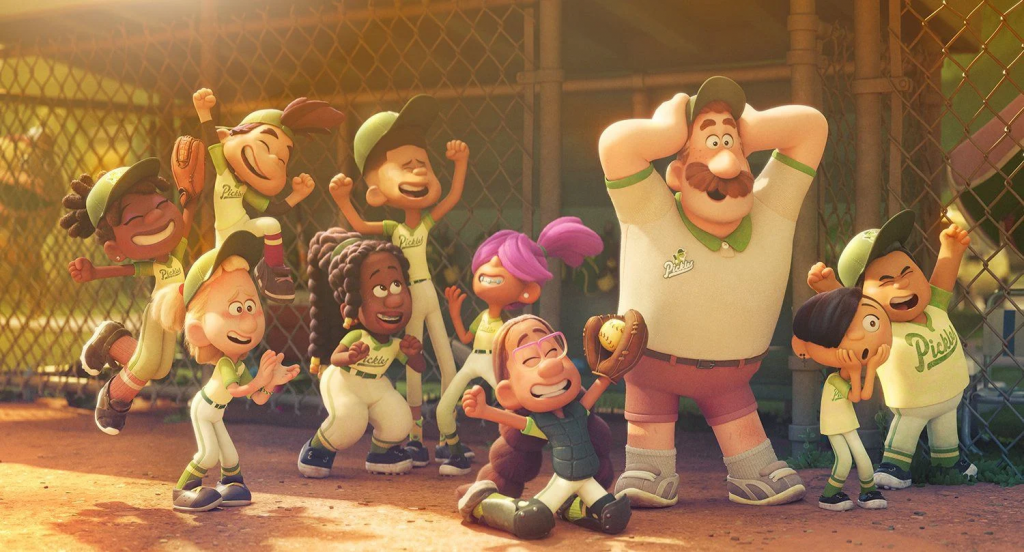
Disney is axing a transgender storyline from an animated series created by Pixar for Disney+. The series, Win or Lose, is about a co-ed middle school baseball team, and one of the characters was supposed to be featured prominently as being trans, but Disney now says, “When it comes to animated content for a younger audience, we recognize that many parents would prefer to discuss certain subjects with their children on their own terms and timeline.” [The Hollywood Reporter]
Karl Marx (May 5, 1818 – March 14, 1883) was a German-born philosopher, political theorist, economist, historian, sociologist, journalist, and revolutionary socialist. Wikipedia
“History repeats itself, first as a tragedy, second as a farce” is a quote attributed to Karl Marx, a German philosopher and political theorist. It appears in the opening lines of his 1852 essay, The Eighteenth Brumaire of Louis Bonaparte.
The quote is an interpretation of Marx’s original statement, which refers to how people rarely learn from past mistakes. The first time a mistake is repeated [Trump 2016], it is a tragedy, and the second time [Trump 2024] it is a farce. The farce implies a watered-down version of the original event, a poor imitation lacking the real substance.
Marx used the quote to refer to the fall of Napoleon I and the reign of his nephew, Napoleon III.
Google AI
“Hegel remarks somewhere that all great world-historic facts and personages appear, so to speak, twice. He forgot to add: the first time as tragedy, the second time as farce”.
–Marx in The Eighteenth Brumaire of Louis Bonaparte
Wikipedia
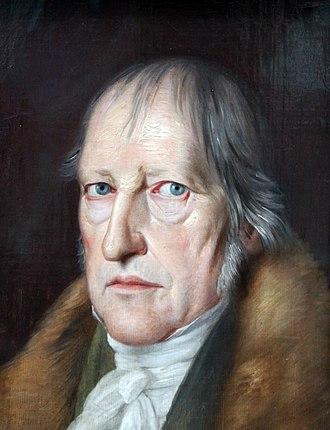
Georg Wilhelm Friedrich Hegel (August 27, 1770 – November 13, 1831) was a German philosopher and one of the most influential figures of German idealism and 19th-century philosophy. Wikipedia
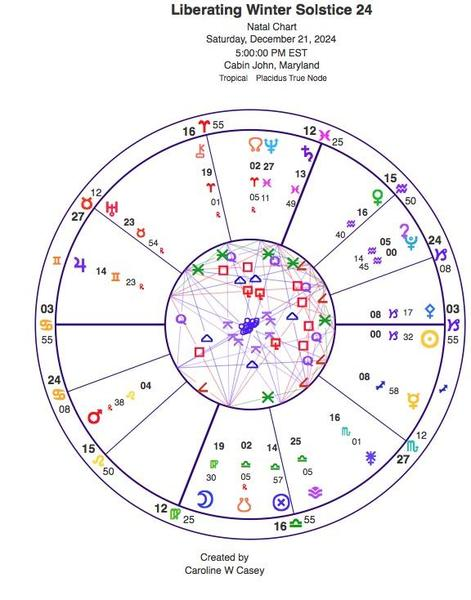
ARIES (March 21-April 19): If you worked eight hours per day, seven days a week, it would take you 300 years to count to the number one billion. I don’t recommend you try that. I also discourage you from pursuing any other trivial tasks that have zero power to advance your long-term dreams. In a similar spirit, I will ask you to phase out minor longings that distract you from your major longings. Please, Aries, I also beg you to shed frivolous obsessions that waste energy you should instead devote to passionate fascinations. The counsel I’m offering here is always applicable, of course, but you especially need to heed it in the coming months.
TAURUS (April 20-May 20): In 1951, minister and author Norman Vincent Peale was working on a new book. As he wrote, he would regularly read passages to his wife, Ruth. She liked it a lot, but he was far less confident in its worth. After a while, he got so discouraged he threw the manuscript in the trash. Unbeknownst to him, Ruth retrieved it and stealthily showed it to her husband’s publisher, who loved it. The book went on to sell five million copies. Its title? “The Power of Positive Thinking.” I hope that in 2025, you will benefit from at least one equivalent to Ruth in your life, Taurus. Two or three would be even better. You need big boosters and fervent supporters. If you don’t have any, go round them up.
GEMINI (May 21-June 20): I love how colorfully the creek next to my house expresses itself. As high tide approaches, it flows south. When low tide is on its way, it flows north. The variety of its colors is infinite, with every shade and blend of green, grey, blue and brown. It’s never the same shape. Its curves and width are constantly shifting. Among the birds that enhance its beauty are mallards, sandpipers, herons, grebes, egrets and cormorants. This magnificent body of water has been a fascinating and delightful teacher for me. One of my wishes for you in 2025, Gemini, is that you will commune regularly with equally inspiring phenomena. I also predict you will do just that. Extra beauty should be on your agenda!
CANCER (June 21-July 22): Just eighty-one billionaires have commandeered half of the world’s wealth. Even worse, those greedy hoarders are usually taxed the least. That’s hard to believe! How is it even possible that such a travesty has come to pass? I also wonder if many of us non-billionaires have milder versions of these proclivities. Are there a few parts of me that get most of the goodies that my life provides, while other parts of me get scant attention and nourishment? The answer is yes. For example, the part of me that loves to be a creative artist receives much of my enthusiasm, while the part of me that enjoys socializing gets little juice. How about you, Cancerian? I suggest you explore this theme in the coming weeks and months. Take steps to achieve greater parity between the parts of you that get all they need and the parts of you that don’t.
LEO (July 23-Aug. 22): Anthropologist Robin Dunbar theorizes that most of us have limits to our social connections. Typically, our closest circle includes five loved ones. We may also have fifteen good friends, fifty fond allies, 150 meaningful contacts, and 1500 people we know. If you are interested in expanding any of these spheres, Leo, the coming months will be an excellent time to do so. In addition, or as an alternative, you might also choose to focus on deepening the relationships you have with existing companions and confederates.
VIRGO (Aug. 23-Sept. 22): “Uncle Tom’s Cabin” was the best-selling novel of the nineteenth century. It was written by a Virgo, Harriet Beecher Stowe. Her story about the enslavement of African Americans in the United States was not only popular, it awakened many people to the intimate horrors of the calamity—and ultimately played a key role in energizing the abolitionist movement. I believe you are potentially capable of achieving your own version of that dual success in the coming months. You could generate accomplishments that are personally gratifying even as they perform a good service for the world.
LIBRA (Sept. 23-Oct. 22): According to my reading of the astrological omens, you will be teased with an abundance of invitations to grow in 2025. You will be encouraged to add to your current skills and expertise. You will be nudged to expand your understanding of what exactly you are doing here on planet Earth. That’s not all, Libra! You will be pushed to dissolve shrunken expectations, transcend limitations, and learn many new lessons. Here’s my question: Will you respond with full heart and open mind to all these possibilities? Or will you sometimes neglect and avoid them? I dare you to embrace every challenge that interests you.
SCORPIO (Oct. 23-Nov. 21): Scorpio-born Rudolf Karel was a twentieth-century Czech composer who created seventeen major works, including symphonies and operas. His work was interrupted when Nazi Germany invaded and occupied his homeland. He joined the Czech resistance, but was eventually arrested and confined to Pankrác Prison. There he managed to compose a fairy-tale opera, “Three Hairs of the Wise Old Man.” No musical instruments were available in jail, of course, so he worked entirely in his imagination and wrote down the score using toilet paper and charcoal. I firmly believe you will not be incarcerated like Karel in the coming months, Scorpio. But you may have to be extra resourceful and resilient as you find ways to carry out your best work. I have faith that you can do it!
SAGITTARIUS (Nov. 22-Dec. 21): What is the perfect gift I could offer you this holiday season? I have decided on a large square black box with nothing inside. There would be a gold ribbon around it bearing the words, “The Fruitful Treasure of Pregnant Emptiness.” With this mysterious blessing, I would be fondly urging you to purge your soul of expectations and assumptions as you cruise into 2025. I would be giving you the message, “May you nurture a freewheeling voracity for novel adventures and fresh experiences.”
CAPRICORN (Dec. 22-Jan. 19): One of my paramount wishes for you in 2025 is this: You will deepen your devotion to taking good care of yourself. You will study and learn more about the sweet secrets to keeping yourself in prime mental and physical health. I’m not suggesting you have been remiss about this sacred work in the past. But I am saying that this will be a favorable time to boost your knowledge to new heights about what precisely keeps your body and emotions in top shape. The creative repertoire of self-care that you cultivate in the coming months will serve you well for the rest of your long life.
AQUARIUS (Jan. 20-Feb. 18): To fulfill your life mission, to do what you came here to earth to do, you must carry out many tasks. One of the most important is to offer your love with hearty ingenuity. What are the best ways to do that? Where should you direct your generous care and compassion? And which recipients of your blessings are likely to reciprocate in ways that are meaningful to you? While Jupiter is cruising through Gemini, as it is now and until June 2025, life will send you rich and useful answers to these questions. Be alert!
PISCES (Feb. 19-March 20): Mysteries of the past will be extra responsive to your investigations in 2025. Persistent riddles from your life’s earlier years may be solvable. I encourage you to be aggressive in collecting previously inaccessible legacies. Track down missing heirlooms and family secrets. Just assume that ancestors and dead relatives have more to offer you than ever before. If you have been curious about your genealogy, the coming months will be a good time to explore it. I wish you happy hunting as you search for the blessings of yesteryear—and figure out how to use them in the present.
“Matter delights in music, and became Bach,” Ronald Johnson wrote in his stunning 1980 prose poem about music and the mind. This may be why music so moves and rearranges and harmonizes us, why in it we become most fully ourselves — “atoms with consciousness,” axons with feeling. When music courses through us, we are reminded that the mind and the body are one, and that the body — like music, like feeling, like the universe itself — is made of matter and time. It may even be that music is the language of time, mathematics its alphabet; that Margaret Fuller was right when she insisted two centuries ago that “all truth is comprised in music and mathematics”; that, as the cosmologist and jazz saxophonist Stephon Alexander observed in our own century, “it is less about music being scientific and more about the universe being musical.”
Composition 8 by Wassily Kandinsky, 1920s, inspired by the artist’s experience of listening to a symphony. (Available as a print.)
Through his protagonist — the young creator Mr. g, bored and unsure of himself (“unlimited possibilities bring unlimited indecision”) as he spins a baby universe out of the Void while his aunt and uncle watch on with approving, critical, and sage pronouncements — Alan envisions the realities, as theorized by our current science, of how the universe began, punctuating them with fundaments of our humanity, none more elemental than the soul-resonance of music:
Then there was music. The Void had always vibrated with the music of my thoughts, but before the existence of time the totality of sounds occurred simultaneously, as if a thousand thousand notes were played all at once. Now we could hear one note following another, cascades of sound, arpeggios and glissades. We could hear melodies. We could hear rhythms and metrical phrases gathering up time in lovely folds of sound. Duples and triples and offbeat syncopations. As we moved through the Void [we] were transfixed by the most exquisite sounds, the tender and melodic and rapturous oscillations of the Void.
As Mr. g proceeds with his rapturous experiment, most of the music he makes follows a Pythagorean scale, because “chords based on these scales were pleasing to hear,” but he also tinkers with asymmetrical and nonharmonic ratios, which “also produced beautiful music as long as two different notes were not sounded together.” (These, of course, are allusions to the Western and non-Western music traditions.) He writes:
In every place and in every moment, we were wrapped and engulfed in music. At times, the music poured forth in fierce heaving swells. At other times, it advanced in the softest little steps, delicate as a fleeting veil in the Void. Music clung to our beings as parcels of emptiness had in the past. Music went inside us. I had created music, but now music created; it lifted and remade and formed a completeness of being.
One of William Blake’s paintings for The Book of Job, 1806. (Available as a print.)
In consonance with philosopher Susanne Langer’s lovely formulation of music as “our myth of the inner life,” he adds:
Nowhere is the joy of existence so apparent as in music… Intelligent life-forms have created a multitude of sounds that express their exhilaration at being alive.
At the 2022 Universe in Verse, I invited Alan — a passionate pianist himself — to reflect on the personal and universal power of music and its abiding relationship to physics before reading an excerpt from Robert Johnson’s epic poem:
When I sit down at the piano, I enter two different realms: one conscious and one unconscious. The conscious realm is one in which I think about the notes I’m going to play, and the timing and the rhythm and the intensity; and the unconscious is when I just let go and float with the sound. Music is an expression both of the orderly discipline of science and the unfettered flight of the human spirit.
The Right to the City is a concept and slogan that emphasizes the need for inclusivity, accessibility, and democracy in urban spaces. The idea was first articulated by French philosopher Henri Lefebvre in his 1968 book Le Droit à la Ville,[1][2] in which he argued that urban space should not be solely controlled by market forces, such as commodification and capitalism, but should be shaped and governed by the citizens who inhabit it.
The concept of the Right to the City has been taken up by a variety of social movements and urban activists around the world, who use it as a rallying cry for greater social justice and democracy in the urban environment. The Right to the City can encompass a variety of demands, including demands for government subsidized housing, access to public space, participation in urban governance, and laws against displacement and gentrification, all of which aim to address spatial inequalities in urban areas.[3]
In his first inception of the concept, Lefebvre placed specific emphasis on the effects that capitalism had over “the city”, whereby urban life was downgraded into a commodity, social interaction became increasingly uprooted and urban space and governance were turned into exclusive goods.[4] In opposition to this trend, Lefebvre raised a call to “rescue the citizen as main element and protagonist of the city that he himself had built” and to transform urban space into “a meeting point for building collective life”.[4]
Due to the inequalities produced by the rapid increase of the world urban population in most regions of the world, the concept of the right to the city has been recalled on several occasions since the publication of Lefebvre’s book as a call to action by social movements and grassroots organizations. In their appeal for “their right to the city”, local mobilizations around the world usually refer to their struggle for social justice and dignified access to urban life to face growing urban inequalities (especially in large metropolitan areas). The right to the city has had a particular influence in Latin America and Europe, where social movements have particularly appealed to the concept in their actions and promoted local instruments for advancing its concrete understanding in terms of policy-making at the local and even national level.[5][6] An example of how the notion of right to the city gained international recognition in the 2010s could be seen in the United Nations’ Habitat III process, and how the New Urban Agenda (2016) recognized the concept as the vision of “cities for all”.[7]
Lefebvre summarizes the idea as a “demand…[for] a transformed and renewed access to urban life”.[8][9]David Harvey described it as follows:
The right to the city is far more than the individual liberty to access urban resources: it is a right to change ourselves by changing the city. It is, moreover, a common rather than an individual right since this transformation inevitably depends upon the exercise of a collective power to reshape the processes of urbanization. The freedom to make and remake our cities and ourselves is, I want to argue, one of the most precious yet most neglected of our human rights.[10]
Popular movements of the 2000s and 2010s
Abahlali baseMjondolo assemblyThe Poor People’s Alliance outside the Constitutional Court in Johannesburg in 2009
Several popular movements, such as the shack dwellers’ movement Abahlali baseMjondolo in South Africa,[11] the Right to the City Alliance in the United States,[12] Recht auf Stadt,[13] a network of squatters, tenants and artists in Hamburg, and various movements in Asia and Latin America,[14] incorporated the idea of the right to the city into their struggles in the first few decades of the twenty-first century.
In Brazil the 2001 City Statute wrote the Right to the City into federal law.[15]
In the 2010s, scholars proposed a ‘Digital Right to the City’,[16][17] which involves thinking about the city as not just bricks and mortar, but also digital code and information.[18]
Migrants’ and refugees’ right to the city
Migrants’ and refugees’ squats in the centre of cities (like Athens refugee squats and other european cities) created a renewed interest on the right to the city in 2020. Here we quote Tsavdaroglou and Kaika (2021): in the case of Athens, “the refugees’ practices for collective production of alternative housing (e.g. clandestine squats) share many characteristics in common with what Lefebvre identified as claiming the right to the city: namely, freedom and socialisation, appropriation against private property, habitation. Claiming freedom, many of the refugees refuse to accept the spaces allocated to them in state-run camps at the city’s outskirts as their living spaces and relocate to the city centre. In search of alternative forms of habitation, they enact appropriation against private property institutions and practices, which often take the form of squats of abandoned buildings in the city centre in collaboration with local solidarity groups. Once occupied, these buildings become novel forms of habitation with strong elements of commoning and cohabitation. Hundreds of newcomers experiment with these forms of co-living and togetherness, often together with local and European activists. Apart from meeting housing needs, these housing forms become significant tools for refugees to participate in the urban social and political life. Therefore, though precarious, vulnerable and ephemeral, these new forms of cohabitation produced by refugees claim a right to the city; they act, ‘cry and demand’ freedom of movement, appropriation of housing, cohabitation and collective participation in a ‘renewed urban life’. Given these characteristics, [Tsavdaroglou and Kaika] argue that the Lefebvrian concept of the right to the city is most appropriate for understanding and explaining the refugees’ self-organised housing practices.”[19]
Criticism
Later versions of the concept were criticised with concerns on how the original vision of Henri Lefevbre was reduced to a “citizenship vision”, focused only on the implementation of social and economic rights in the city, leaving aside the transformatory nature and the role of social conflict of the original concept.[20][21]Marcelo Lopes de Souza has for instance argued that as the right to the city has become “fashionable these days”, “the price of this has often been the trivialisation and corruption of Lefebvre’s concept”[22] and called for fidelity to the original radical meaning of the idea.
The 18th century was a wealth of knowledge, exploration and rapidly growing technology and expanding record-keeping made possible by advances in the printing press. In its determination to preserve the century of revolution, Gale Ecco (publisher) initiated a revolution of its own: digitization of epic proportions to preserve these invaluable works in the largest archive of its kind. Now for the first time these high-quality digital copies of original 18th century manuscripts are available in print, making them highly accessible to libraries, undergraduate students, and independent scholars.
This collection reveals the history of English common law and Empire law in a vastly changing world of British expansion. Dominating the legal field is the Commentaries of the Law of England by Sir William Blackstone, which first appeared in 1765. Reference works such as almanacs and catalogues continue to educate us by revealing the day-to-day workings of society.
(Goodreads.com)
Consciousness, spirituality, biography, sexuality, androgyny, futurism, space, the arts, science, astrology, democracy, humor, books, movies and more




 Then there was music. The Void had always vibrated with the music of my thoughts, but before the existence of time the totality of sounds occurred simultaneously, as if a thousand thousand notes were played all at once. Now we could hear one note following another, cascades of sound, arpeggios and glissades. We could hear melodies. We could hear rhythms and metrical phrases gathering up time in lovely folds of sound. Duples and triples and offbeat syncopations. As we moved through the Void [we] were transfixed by the most exquisite sounds, the tender and melodic and rapturous oscillations of the Void.