
Monthly Archives: May 2024

Story: A Minor Occurence
 On this particular afternoon a fly fell into my tea. This was, of course, a minor occurrence. After a year in India I considered myself to be unperturbed by insects; by ants in the sugar bin, spiders in the cupboard, and even scorpions in my shoes in the morning. Still, as I lifted my cup, I must have registered, by my facial expression, or a small grunt, the presence of the fly.
 Cultural Astronomy with Alison Chester-Lambert
\New Thinking Allowed with Jeffrey Mishlove • May 20, 2024 Alison Chester-Lambert, MA, has a master’s degree in cultural astronomy, astrology, and mythology. She was the founder of the UK`s Midlands School of Astrology and the former resident astrologer for a daily BBC TV news show. Alison is author of Starry Messengers, Future in the Stars, and The Easy Way to Learn Astrology: How to Read Your Birth Chart. She has also created Astrology Reading Cards and Greek Mythology Reading Cards. Her website is alisonchesterlambert.com. Alison describes cultural astronomy as how much the sky has influenced cultures throughout history. 00:00 Introduction 01:50 Split between astronomy and astrology 05:04 Egypt and the Sun God 08:08 Göbekli Tepe 21:17 Discovery of dwarf planets 28:24 Pluto demotion 33:33 Creational gods and goddesses 47:52 Mythology 50:42 Alien communication 58:36 Conclusion Edited subtitles for this video are available in English, French, German, Spanish, Italian, Portuguese, Russian, and Swedish. New Thinking Allowed CoHost, Emmy Vadnais, OTR/L, is a licensed occupational therapist, intuitive healer, and health coach based in St. Paul, Minnesota. She is the author of Intuitive Development: How to Trust Your Inner Knowing for Guidance With Relationships, Health, and Spirituality. Her website is https://emmyvadnais.com/ (Recorded on February April 18, 2024)
Sigmund Freud’s Investigation of Astrology
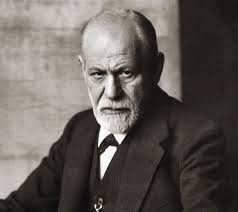
Sigmund Freud’s Investigation of Astrology
By Nicholas Campion
ABSTRACT: Following the First World War there was an increase in the use of psychics and clairvoyants as the bereaved attempted to contact their dead relations. Sigmund Freud saw this as a dangerous development and in 1921 set out to study it. As part of this he considered the visit of one of his patients to an astrologer, placing the incident in its historical context, looking at the causes and possible consequences of the occult boom.
Link to pdf: https://www.cultureandcosmos.org/pdfs/2-1/Campion_Freud_and_Astrology.pdf
Zelensky: ‘Our Partners Fear That Russia Will Lose This War’
Dinara Khalilova/The Kyiv Independent
 Ukainian President Volodymyr Zelenskyy. (photo: Ronaldo Schemidt/Getty Images)
20 may 24 (RSN.org)
President Volodymyr Zelensky believes that Ukraine’s partners “are afraid of Russia losing the war” and would like Kyiv “to win in such a way that Russia does not lose,” Zelensky said in a meeting with journalists attended by the Kyiv Independent.
Kyiv’s allies “fear” Russia’s loss in the war against Ukraine because it would involve “unpredictable geopolitics,” according to Zelensky. “I don’t think it works that way. For Ukraine to win, we need to be given everything with which one can win,” he said.
His statement came on May 16 amid Russia’s large-scale offensive in Kharkiv Oblast and ongoing heavy battles further east. In a week, Russian troops managed to advance as far as 10 kilometers in the northern part of Kharkiv Oblast, according to Zelensky.
Washington has not changed its negative position on potential Ukrainian strikes with U.S.-supplied weapons on Russian territory even after Russia had launched its offensive in Kharkiv Oblast, the Pentagon said on May 16.
Zelensky commented on this statement during the meeting, saying that “there should be no bans because this is not about a Ukrainian offensive using Western weapons on Russian territory. This is about defense.”
In an interview with AFP on May 17, the Ukrainian president said that the Kharkiv Oblast offensive could be the first of several waves, and Russian forces may try for the regional capital of Kharkiv.
In recent months, Russia has maintained initiative on the battlefield, taking advantage of delays in defense aid to Ukraine from Western allies and Kyiv’s troop shortages.
The U.S. Congress approved a $61 billion foreign aid package for Ukraine in April after six months of political infighting. The Pentagon warned that it would likely take some time before its effects on the battlefield were felt.
Kyiv has also ramped up calls on allies to send more long-range weapon systems to target Russian military facilities deep behind the front line and defend against Russian glide bomb strikes heavily impacting the battlefield.
The U.S. has recently supplied Ukraine with long-range ATACMS missiles, which Ukraine reportedly used to strike Russian targets in occupied Crimea. Washington’s restrictions, as described by Ukrainian officials, would prevent the replication of such an attack inside Russian territory.
Germany has refused to supply Ukraine with its Taurus missiles with a range of over 500 kilometers due to fears of escalation from Russia.
A Warhol Superstar, but Never a Star
Cynthia Carr’s compassionate biography chronicles the brief, poignant life of the transgender actress Candy Darling, whose “very existence was radical.”


March 31, 2024BUY BOOK ▾ (NYTimes.com)
When you purchase an independently reviewed book through our site, we earn an affiliate commission.
CANDY DARLING: Dreamer, Icon, Superstar, by Cynthia Carr
Never mind soup-can paintings and portraits of the famous — what Andy Warhol keeps on giving is books. He’s like Mother Ginger in “The Nutcracker”: Smaller people keep running out from under his capacious skirts to bow or curtsy.
The latest is Candy Darling, the transgender actress who succumbed to cancer at 29 in 1974, after being immortalized in a famous photograph by Peter Hujar and in the Lou Reed song “Walk on the Wild Side.” She had lived fast — indeed frequently on speed — died young, and left a mutable corpse, with considerable dissent among family and friends about whether she should be buried and eulogized as a man or a woman.
The first full-length biography of her, by Cynthia Carr, a longtime staff writer for The Village Voice — quite the Mother Ginger itself, of late — is compassionate and meticulous, reconstructing its brittle, gleaming subject as one might a broken Meissen figurine.
Born the day after Thanksgiving in 1944, Candy Darling was christened James Lawrence Slattery in Queens, soon moving to the ticky-tacky conformist hamlets of North Merrick and then Massapequa Park, Long Island, which she’d later euphemize as her “country home” but which was then an apparent cesspool of toxic masculinity.
Her father, John, was a cashier for the New York Racing Association who gambled, drank and was violent: the ultimate Daddy Dearest for a child with effeminate tendencies. Her mother, Terry, a receptionist and bank teller, was more supportive and loving — but still, hamstrung by shame. Candy’s half brother, Warren, babysat for her as a child but did not accept her as a woman.
As a child, “Jimmy,” as Candy was known then, was shunned socially and bullied terribly, once ushered onto a box and into a noose by two teenagers in a neighbor’s backyard. Understandably, she avoided regular school as much as possible; her education was in magazines, cosmetology and, of course, movies — she was a Kim Novak superfan, later emulating her.
She worked briefly at a beauty parlor, whose sympathetic owner she took on adventures like horseback riding. “We can always imagine we’re out in the wide-open spaces,” she said dreamily. “And if you imagine it strong enough, you will be.”
Like Ada Calhoun, the daughter of the art critic Peter Schjeldahl who took over his unfinished biography of the poet Frank O’Hara with sparkling results, Carr gets a boost from someone else’s abandoned legwork. Darling’s close friend Jeremiah Newton interviewed many of her intimates before they died — he features prominently in a 2011 documentary, “Beautiful Darling” — and shared copious photos, letters and the diaries that Darling began keeping at 13 (some previously published). One is titled “The Worst Years of My Life.”
Carr spares us the ponderous establishing shots that weigh down many books of this genre. Though “Worst Years” covers the early ’60s, for example, the only mention of John F. Kennedy in Carr’s book comes via a fan taking a picture of Marilyn Monroe the night she sang for his birthday. Candy Darling was apolitical, the author writes — she had a wistful incandescence more than a “fire in the belly” (as Carr titled a previous book about the artist and AIDS activist David Wojnarowicz) — “yet her very existence was radical.”
Editors’ Picks
The Best Sex Advice Might Also Be the Hardest to FollowWhat We Lose When ChatGPT Sounds Like Scarlett JohanssonAn NBA Star’s Remark Becomes a Minnesota Rallying Cry
She and the future Holly Woodlawn, another Warhol favorite, both toiled as file clerks and got out of the draft, Holly by showing up in hot pants and rouge; Candy by bursting into tears.

Stardom was Darling’s absolute raison d’être. You might argue that she was not only transgender but trans-era, longing to be a product and protectorate of the studio system. Alas, Warhol was no Louis B. Mayer, his films mostly art-house experiments — Carr is heroic at summarizing them — and when Darling finally gets to Los Angeles, for the premiere of his movie “Women in Revolt” (titled “Sex” at the time), the closest thing she gets to a break is broken promises from a drunk Ed McMahon needing roadside assistance. She does appear for about 15 seconds, uncredited, in the nightclub scene of “Klute,” and for a while dated Roger Vadim.
Starring in Tennessee Williams’s late-career work “Small Craft Warnings” off Broadway was another high point — though even then neither the male nor the female actors wanted her in their dressing room, and she was consigned to a broom closet. She appeared in a Warhol-staged fashion show for Halston, but was only allowed to wear a maid’s costume.
Darling kept her chin up despite these humiliations, but again and again the rest of her body betrayed her. (Poverty and drugs didn’t help.) By 18, she’d lost almost a third of her teeth. She agonized about what she called “my flaw” — the pesky penis — but vacillated on what the publicist R. Couri Hay, one of those who eulogized her using the masculine pronoun, termed “the final cut.”
The massive quantities of unregulated female hormones she took, doctors and others thought, probably killed her — and yet dying young was in keeping with her fantasy of kinship to platinum-haired idols like Jean Harlow. Sardonic to the end, she joked that the presumed tumor hardening her belly was some kind of immaculate conception.
In a society ill equipped to accept her, Candy Darling’s short life was one of couch-surfing and cadging, which can make for some weird and grotty pages — oh, there’s a desiccated chicken under the bed. Many of those who remember her are unreliable narrators. But, as Carr notes: “All of them so delightful!” Bob Colacello, the O.G. Warhol chronicler, wrote that news of her fatal illness led to the only time he’d seen the artist cry.
There wasn’t really vocabulary to describe the territory Darling was exploring back then — maybe there’s too much vocabulary now, but that’s a different conversation — and her biographer extends a sure hand across the breach. To push her from the Warhol wings to center stage, at a moment when transgender rights are in roiling flux, just makes sense.
And you have to cheer when Tennessee Williams is asked by some rude person whether his star is a transsexual or a transvestite, and he roars back: “What a question to ask a lady!”
CANDY DARLING: Dreamer, Icon, Superstar | By Cynthia Carr | Farrar, Straus & Giroux | 432 pp. | $30
Alexandra Jacobs is a Times book critic and occasional features writer. She joined The Times in 2010. More about Alexandra Jacobs
(Contributed by Michael Kelly, H.W.)
‘Unified Reich’: Trump campaign goes full Nazi
Donald Trump’s campaign adopts Nazi framing, again

MAY 20 2024 (theframelab.org)
In a shocking development – even by the Republican Party’s low, low standards – Donald Trump has directly framed his campaign using Nazi terminology.
A video posted on his social media accounts yesterday promised a “unified Reich” if he wins the presidency in 2024.
From the Associated Press:
A video posted to Donald Trump’s account on his social media network Monday included references to a “unified Reich” among hypothetical news headlines if he wins the election in November.
The headline appears among messages flashing across the screen such as “Trump wins!!” and “Economy booms!” Other headlines appear to be references to World War I.
The word “Reich” is often largely associated with Nazi Germany’s Third Reich, though the references in the video Trump shared appear to be a reference to the formation of the modern pan-German nation, unifying smaller states into a single Reich, or empire, in 1871.

As the AP story points out, this is not the first time Trump has framed his campaign in Nazi terms. In recent years, he has used the words of Adolf Hitler to attack immigrants, has dined with Holocaust deniers and has downplayed “the 2017 rally in Charlottesville, Virginia, where white nationalists chanted ‘Jews will not replace us!'” Retired Marine General John Kelly, Trump’s former chief of staff, quoted Trump as praising Hitler.
The Trump campaign says the 30-second ad was erroneously posted by a staffer and says it wasn’t aware of the “reich” language before it shared the video with Trump’s millions of social media followers.
We don’t buy this excuse. There’s no way a presidential campaign would post a video without conducting a thorough vetting at multiple levels. This was clearly an intentional provocation as part of Trump’s “trial balloon” strategy in which he floats offensive or outrageous ideas to test public reaction.
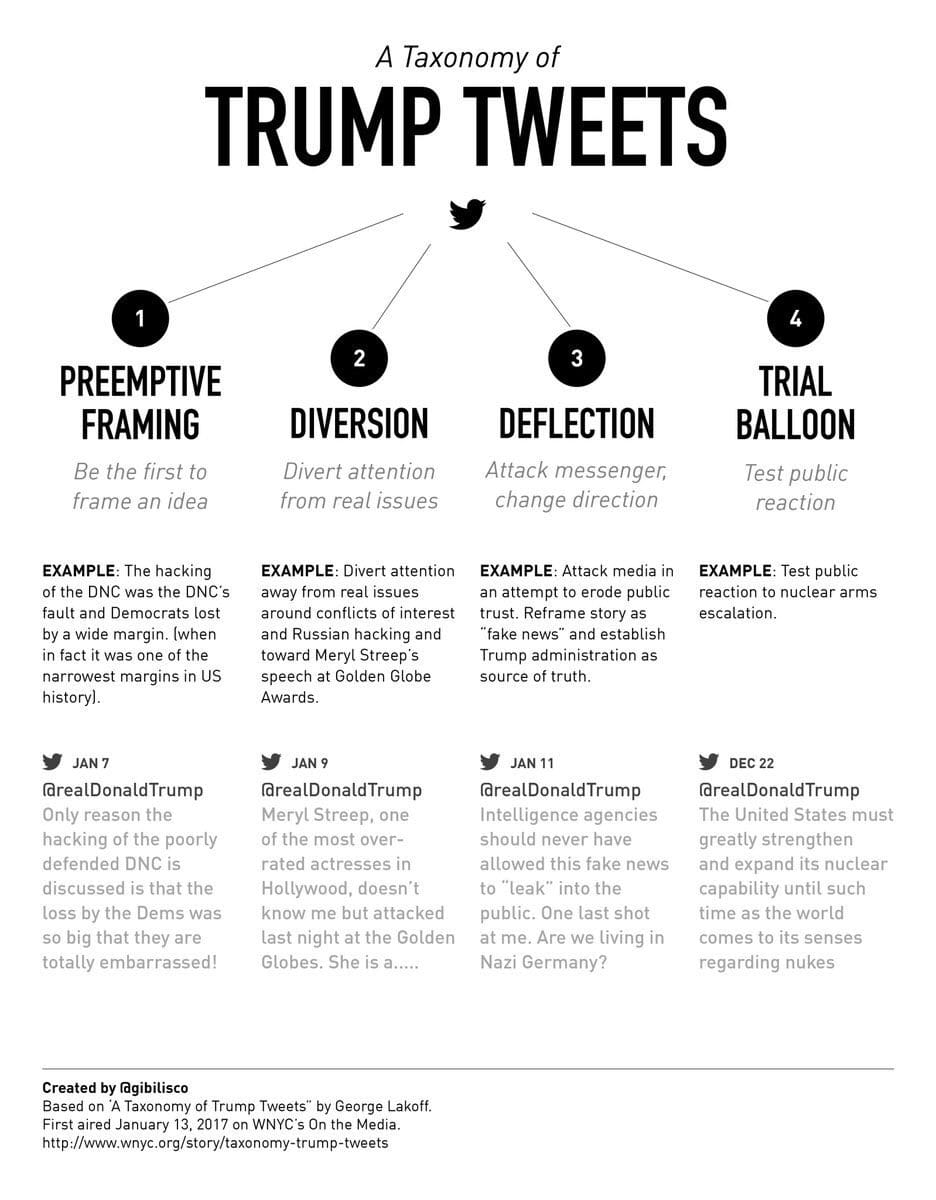
Trump is telling us exactly what he plans to do if he gets another term. He is framing his return to power as an authoritarian effort, and he is overtly using Nazi language and symbolism to drive home the point.
This wasn’t a mistake. It isn’t a joke. American freedom and democracy are on the line in 2024. The main headline in Trump’s ad asks: “What’s Next for America?” Trump’s answer: authoritarianism and fascism.
So what can you do? For starters, you can make sure to send the AP story to everyone you know by sharing this link: https://apnews.com/article/trump-election-2024-rhetoric-germany-antisemitism-31002afb91b642c0314223d19e51f427#fa
The stakes of this election couldn’t be any higher. Trump is telling us exactly who he is – and what’s in store for our future if he gets a second term.
Every one of us has a moral duty to prevent that from happening.
Tarot Card for May 21: The Knight of Swords
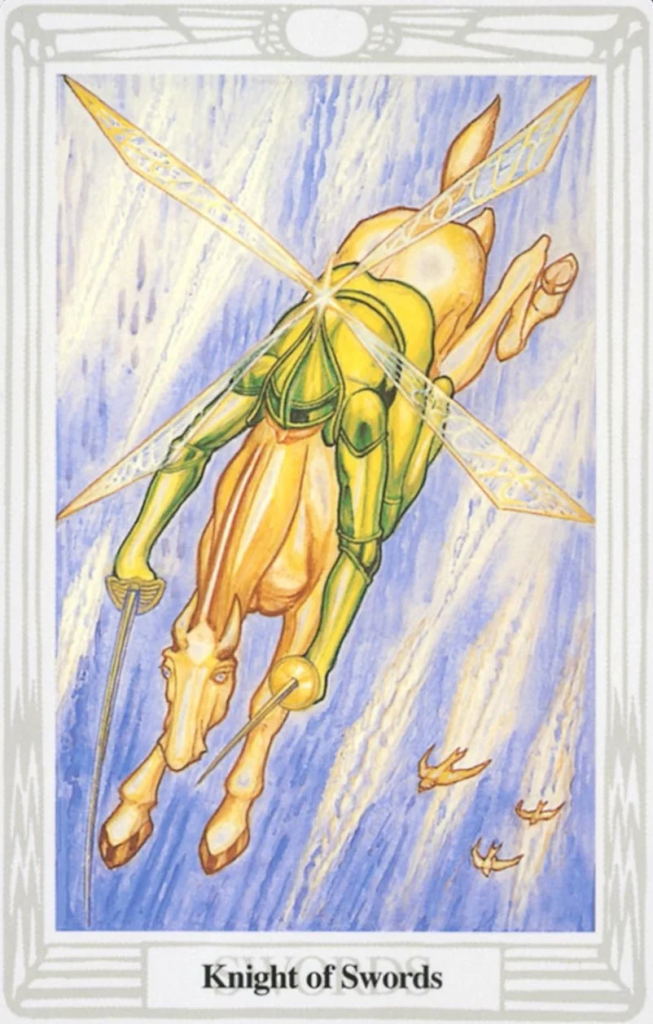
| The Knight of Swords When the Knight of Swords comes up to indicate a man, he will be intelligent, subtle and clever. His capacity for abstract thought will be well developed. He is also highly intuitive and perceptive.His nature will be elusive and ethereal, yet he has a strength and fascination that is hard to deny. He compels attention, except when he doesn’t want it, and at those times you will not even notice him pass by.Because of the enquiring and analytic nature of his mind, you will often find him involved in occult study, and following spiritual pursuits. Whilst tolerant of those who know less than him, he will not divulge his knowledge easily. Rather those who wish to learn from him must fight to see him clearly, rather than falling for the projections he readily casts around him.If this man is badly dignified his subtlety turns to manipulation, and his fascination to glamour. In this way, he becomes unprincipled and self-seeking. There is a certain ruthlessness present in the Knight of Swords at all times.Even when we meet him at his best, he makes a hard task master, and an acutely keen observer. The sword in his hand will quite often be used to cut to the heart of things – and sometimes we will not be comfortable with what is revealed.When this card comes up to indicate a state of mind in a man not normally seen as a Knight of Swords, we are then dealing with quite another issue. Now we must address the darkest qualities of the card. This is an angry man, who has quite possibly been emotionally hurt, and may well be looking for revenge.He has the potential to be physically violent and mentally cruel. He is a nasty enemy and somebody who needs to be treated with the utmost caution. |
Note on Suzanne Deakins, H.W., M.
Note on Suzanne Deakins:
Suzanne is in rehab for management of several complicated issues including congestive heart failure, diabetes, and bed and ankle sores.
Unfortunately, she is not healing very fast.
Suzanne would welcome mail at this address:
Suzanne Deakins
Room #163
Friendship Health Center
3320 SE Holgate Blvd,
Portland, OR 97202
(Courtesy of Michael Kelly, H.W. and Pam Rodolph, H.W., M.)
Yes, Single People Can Be Happy and Healthy
BY ANGELA HAUPT
FEBRUARY 14, 2023 6:00 AM EST (Time.com)
Forget everything you think you know about being single—starting with the assumption that it means ready to mingle.
More people than ever before are living solo: Nearly 40% of adults in the U.S. are unpartnered, up from 29% in 1990, according to the Pew Research Center. And about half aren’t interested in dating or a relationship.
Take Bella DePaulo, a 69-year-old in Santa Barbara, Calif., who has been single her entire life. For years, she thought she would eventually develop a desire to marry or enter a long-term relationship—but she’s since realized that single life is her best life. “I had never heard of such a thing as being happily single and wanting to stay single,” says DePaulo, a social psychologist who’s the author of books including Singled Out: How Singles Are Stereotyped, Stigmatized, and Ignored, and Still Live Happily Ever After and Alone: The Badass Psychology of People Who Like Being Alone. “Once I realized that single was who I really was, and that was never going to change, it was wonderful.” She describes her solo life as authentic, fulfilling, meaningful, and psychologically rich.
Researchers are only beginning to fully understand all the dimensions of singlehood—including who it appeals to and why, its challenges and joys, and how it affects health and happiness. For years, singles were hardly studied. Why? In part, probably because “science isn’t independent of society’s values and norms,” says Geoff MacDonald, a psychology professor at the University of Toronto who researches relationships and singlehood. “We’ve been going along with society’s story about single people, and there have been structural incentives to kind of make single people the punching bag.”
But that’s beginning to change. The marriage rate has been decreasing for decades, and those who do get married often wait until later in life. Marriage is no longer a necessity for having a family or achieving financial comfort; it’s only one path among many that can lead to joy.
Overall, MacDonald says, the available evidence indicates that people in romantic relationships enjoy greater well-being than singles: They tend to be happier and report higher levels of life satisfaction. However, marriage doesn’t necessarily make you happy; there’s evidence that, more likely, happier people choose to get married. And there are lots of variables at play. For instance, some people who are single might be exceptionally happy, while others in relationships are miserable. (Research has found that people in unhappy marriages have equal or worse health outcomes compared to those who were never married.)
Another important caveat: The singles who have the hardest time with their relationship status tend to be divorced people. Traditionally, research hasn’t accounted for the fact that about 39% of marriages end in divorce. “There’s evidence suggesting that when people get divorced, it can have lasting negative effects,” MacDonald says. Widowhood is also associated with poor mental health, and can lead to grief, depressive symptoms, and loneliness.
As the new science of singlehood crystallizes, here are some of the most intriguing insights that researchers have uncovered.
People prefer being single for many reasons.
Long-term singles tend to have certain values in common, says Elyakim Kislev, a faculty member at the Hebrew University of Jerusalem and author of books including Happy Singlehood. These are people who “cherish freedom, independence, and even creativity and nonconformity more than others,” he says.
Research backs that up. In one study published in 2022, hundreds of men and women were surveyed about what makes single life attractive, and they rated the top benefits as having more time for themselves, being able to focus on their goals, and not having anyone else dictate their actions.
Another study, co-authored by MacDonald, zeroed in on what unpartnered people prioritize the most—and the results suggest they care about being mentally and physically healthy and fostering strong family relationships. Sex and dating were among participants’ least important priorities. Additional research suggests certain traits might hardwire people to be single. Among them: sociosexuality (or the willingness to have sex outside a committed relationship) and high career focus, especially among young women.
“Some people just don’t want to organize their lives around a romantic partner,” says DePaulo, the happily single social psychologist. “They want to take advantage of the freedom to curate lives of their own.”
Wanting a relationship when you’re not in one is correlated with lower life satisfaction.
Some people believe a romantic relationship is essential for their happiness and well-being, while others find fulfillment and satisfaction without a partner. Those in the latter group tend to fare better. “Wanting a relationship more only emphasizes the gap between one’s reality and one’s desire,” Kislev says. People who focus on what they don’t have “often find themselves miserable, which only feeds into more failed dates in a vicious circle.” His research indicates that the more someone wants a relationship, the less satisfied they’ll be with their life.
What’s a single longing for love to do? Kislev says it’s key to find ways to enjoy your current relationship status. Even if you eventually want to couple up—based on your own desires, not those of, say, your parents—take stock of the benefits of your singleness. Regularly engaging in hobbies and self-care activities can boost self-esteem and overall life satisfaction, he says. So can a sense of purpose, achieved perhaps by volunteering or pursuing a passion.
Being alone doesn’t mean being lonely.
People who are coupled up often turn inwards to their partners and families—researchers call it “the greedy marriage,” Kislev says. As a result, “coupled people, especially men, may lose their friends over time and find themselves lonely later in life.”
Singles, on the other hand, typically have stronger social ties, which researchers consistently name as the bedrock of happiness. Research suggests that those without a partner are more likely to support and visit their parents and siblings than people who are currently or previously married, and they usually have more friends. Singles are also more likely to socialize with those friends and to give and receive help from them.
Not all single people live alone, but social scientists have found that those who do tend to be actively involved in the lives of their cities and neighborhoods. “They aren’t just staying home, the way people who live with others often do,” DePaulo says. “They walk out the door and meet other people.” One study found that people who lived with others—not those who lived alone—actually had the highest levels of loneliness.
Kislev has studied the connection between loneliness and marital status in old age, and his findings indicate that married seniors are the least lonely group, followed by those who never married. Both groups were less lonely than people who were widowed, divorced, or separated. The findings indicate that “long-term singles, in particular, develop strong social ties, self-sufficiency, and a sense of purpose over their lifetime,” he says.
People who are satisfied with their sex life are happier to be single.
Ask a married person to describe singles’ sex lives, and they might imagine something more exciting than reality. There’s an assumption that those who aren’t in a relationship have “amazing sexual opportunities for variety and exploration,” MacDonald says. “But our data suggest quite clearly that people have more sex in romantic relationships than they do if they’re single.” That makes sense, he adds, considering the convenience factor.
Still, MacDonald’s research indicates that the extent to which single people are happy with their sex lives predicts their satisfaction with their relationship status. Those with higher sexual satisfaction tend to report less desire to marry and hold stronger beliefs that singletons can be happy, he says.
People become more satisfied with being single around age 40.
There’s a common misconception that older singles are the least happy with their relationship status. But actually, MacDonald’s research suggests that starting around age 40, singletons become more satisfied with their solo lives.
There are likely a couple reasons for this, he says. For one thing, by the time they’ve reached midlife, many people have “filtered into the stream that they’re looking for,” he says. “If you’re somebody who wants a romantic relationship, oftentimes you’ve gotten there, and so unhappy singles have kind of been selected out of the single group.”
Plus, MacDonald adds, there’s evidence that overall well-being tends to increase after midlife, so the connection might not be unique to singlehood.
Social stigma continues—and can be damaging.
Even now, as more people choose solo lives, single-shaming persists. A study published in 2020 found that being prejudiced against singles is considered more acceptable than prejudice toward certain nationalities or sexual orientation groups—and it might manifest, for example, as a landlord disclosing that they’d rather rent an apartment to a married couple than a single person. “Singlism,” as it’s sometimes called, could also mean excluding singles from social events, pressuring them to “settle down,” or making assumptions that certain shortcomings must be keeping them from finding a match.
Kislev points to research in which undergraduate students were asked to list characteristics they associated with married and single individuals. Married people were referred to as mature, happy, kind, honest, and loving. Singles, on the other hand, were perceived as immature, insecure, self-centered, unhappy, lonely, and even ugly. Many people, he says, continue to see singlehood as a transitory stage on the way to a romantic relationship—and as “a second-best option or a failure to find a partner.”
In reality, there’s no one-size-fits-all definition of “happily ever after,” DePaulo says, and it’s possible to reach that vaunted place alone. If you’re single but worried about what others think of you, “live your single life fully, joyfully, and unapologetically,” she advises. “People who try to stigmatize you are the ones who should be embarrassed—not you.”