How beautiful and unbearable that only one of each exists — each lover, each child, each dog; that this particular chance-constellation of atoms has never before existed and will never again recur in the history of the universe. The fact of each such singularity is a wonder beyond why, as mysterious and irrefutable as the reason you love one and not another. The feeling trembling beneath the fact — the brutal knowledge that everything we love is irreplaceable yet will be lost: to dissolution and death, to rejection and indifference, to our own return to stardust — is the hardest thing to bear, the thing for which we have devised our most elaborate theaters of denial.
Among those coping mechanisms is the invention of sentimentality. “Sentimentality is a superstructure covering brutality,” Carl Jung wrote. Its strange psychological machinery is what the poet Mark Doty explores with uncommon insight and sensitivity in a passage from his wonderful memoir Dog Years (public library).
He writes:
The oversweetened surface of the sentimental exists in order to protect its maker, as well as the audience, from anger. At the beautiful image refusing to hold, at the tenderness we bring to the objects of the world — our eagerness to love, make home, build connection, trust the other — how all of that’s so readily swept away. Sentimental images of children and of animals, sappy representations of love — they are fueled, in truth, by their opposites, by a terrible human rage that nothing stays. The greeting card verse, the airbrushed rainbow, the sweet puppy face on the fleecy pink sweatshirt — these images do not honor the world as it is, in its complexity and individuality, but distort things in apparent service of a warm embrace. They feel empty because they will not acknowledge the inherent anger that things are not as shown; the world, in their terms, is not a universe of individuals but a series of interchangeable instances of charm. It is necessary to assert the insignificance of individuality to make mortality bearable. In this way, the sentimental represents a rage against individuality, the singular, the irreplaceable. (Why don’t you just get another dog?) The anger that lies beneath the sentimental accounts for its weird hollowness. But it is, I supposed, easier to feel than what lies beneath rage: the terror of emptiness, of waste, of the absence of meaning or value; the empty space of our own death, neither comprehensible nor representable.
Art by Margaret C. Cook for a 1913 edition of Walt Whitman’s Leaves of Grass. (Available as a print.)
Of course, our fury at entropy is the great motive force of our creativity — we make art to make meaning out of our mortality, to counteract its brutality with beauty. Every creative act is an act of consolation for our transience, for our despair about our transience. A century after Albert Camus insisted that “there is no love of life without despair of life,” Doty contemplates this fundamental equivalence of existence:
Despair, I think, is the fruit of a refusal to accept our mortal situation. Perhaps it’s less passive than it may seem; is despair a deep assertion of will? The stubborn self saying, I will not have it, I do not accept it. Fine, says the world, don’t accept it. The collective continues; the whole goes on, while each part slips away. To attach, to attach passionately to the individual, which is always doomed to vanish — does that make one wise, or make one a fool?
“If I am fool, it is, at least, a doubting one; and I envy no one the certainty of his self-approved wisdom.”
–Lord Byron
George Gordon Byron, 6th Baron Byron FRS (January 22, 1788 – April 19, 1824) was an English poet and peer. He was one of the leading figures of the Romantic movement, and is regarded as among the greatest of English poets. Wikipedia
“Once you begin to take yourself seriously as a leader or as a follower, as a modern or as a conservative, then you become a self-conscious, biting, and scratching little animal whose work is not of the slightest value or importance to anybody.”
–Virginia Woolf
Adeline Virginia Woolf (January 25, 1882 – March 28, 1941) was an English writer. She is considered one of the most important modernist 20th-century authors and a pioneer in the use of stream of consciousness as a narrative device. Wikipedia
No problem can be solved from the same level of consciousness that created it. – Albert Einstein
A radical inner transformation and rise to a new level of consciousness might be the only real hope we have in the current global crisis brought on by the dominance of the Western mechanistic paradigm. – Stanislav Grof
Darkness cannot drive out darkness: only light can do that. Hate cannot drive out hate: only love can do that. – Martin Luther King Jr
We are a world at war. This is the first time in history that the war has not been fought on battlefields, or in the air, or on the water, for territories or principalities or rights to land and resources, for conquering other cultures and peoples, but for the mind, the heart, the soul, and the collective consciousness of humanity.
This war is an insidious and invisible all-out assault on individual freedom, thought, choice, and self-expression. What happens to the individual spreads like a pebble in a pond to everyone with whom the individual comes in contact. Humanity’s future is at stake, but no number of guns or tanks or nuclear weapons can win this war.
The outcome of this war will be determined by our ability, alone and together, to open our eyes, awaken to truth, and move from dark to light on a whole different battlefield – human consciousness.
We have been through this before – revolutions of consciousness that catapulted humanity out of quagmire. We have experienced cultural, political, and societal revolutions that propelled history forward. We have fallen prey to totalitarianism, fascism, and communism, but never on the scale we now face. It’s like we are battling a cult of massive proportions, one that may include those we love and care for.
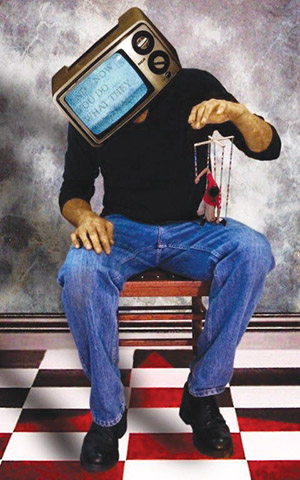
Whether it’s the World Economic Forum’s Great Reset, the United Nations’ Agenda 2030, or the government push for digital wallets and enforced medical procedures, it’s all about control and the puppet masters are wealthier, more powerful, and more determined than ever to take control over every aspect of our lives: from what we eat to what we drive to where we live and what we spend our money on.
One thing that eludes their control is consciousness. Consciousness is the great mystery of existence. We know what it means – to be internally and externally aware of one’s existence. But we know little about its source and how it operates with the human brain to manifest perceptions and levels of awareness. Is consciousness outside the brain? Does it reside within the brain? Are our brains acting as transceivers of consciousness, taking in signals and sending them out?
Do we have an individual consciousness that is part of a larger collective consciousness and how much influence over that collective do our thoughts, actions, and behaviours have? While philosophers, religious leaders, and scientists debate these questions, we all agree that we perceive our world according to our own perspectives and from a greater perspective that is true for us all. We might all look at a horse and react to it differently based on our individual past experiences with horses, but we all agree it’s a horse.
Psychic Epidemics – The Fall Before the Rise
Indeed it is becoming more obvious that it is not famine, not earthquakes, not microbes, not cancer but man himself who is man’s greatest danger to man, for the simple reason that there is no adequate protection against psychic epidemics, which are infinitely more devastating than the worst of natural catastrophes. – Carl Jung, The Symbolic Life
Revolutions in higher consciousness are always predicated by periods of darkness and despair. The collective psyche must become so damaged it feels compelled to take action, break out of chains and through boundaries often imposed by external forces, and decide unequivocally to heal from an epidemic that, if not healed from, will destroy the host.
Belgian clinical psychologist Mattias Desmet is recognised as the world’s leading expert on the theory of mass formation psychosis as it applied to the COVID-19 pandemic. In his book The Psychology of Totalitarianism, he deconstructs the societal conditions that allow this collective psychosis to take hold.
During the recent COVID lockdowns, the work of Belgian clinical psychologist Mattias Desmet on ‘mass formation’ psychosis took centre stage as a way to explain the global insanity of the last few years. Desmet presented his theories about how free-floating fear and discontent serve to breed the kind of fear-based environment where common sense and cognitive functioning fly right out the window, replaced by a desperate need to find a common enemy upon which people could project that fear.
The article, “Mass Psychosis – How an Entire Population Becomes Mentally Ill,” which appears on the Academy of Ideas website, describes this condition as “an epidemic of madness and it occurs when a large portion of a society loses touch with reality and descends into delusions. Such a phenomenon is not a thing of fiction.”
The article puts forth two historical examples: the American and European witch hunts of the 16th and 17th centuries and the rise of totalitarianism in the 20th century. “When a mass psychosis occurs, the results are devastating.” Many have seen this unfold in their personal lives and on the global stage, when common sense and logic no longer exist, and you are either in the cult or you are the enemy.
Killing of the Mind
This psychological warfare has what are called psychogenic triggers, the most common being a flood of negative emotions such as fear, anger, or anxiety that “drives an individual into a state of panic.” Sometimes this leads to a psychotic break and a literal “re-ordering of one’s experiential world which blends fact and fiction, delusion and reality, in a way that helps end the feelings of panic,” notes the Academy of Ideas. In other words, those afflicted by this epidemic adapt by becoming delusional, and no amount of fact or logic will wake them from their trance-like condition.
This non-stop attack on the individual psyche also infects society as a whole, and totalitarianism becomes the next easy step for those seeking ultimate power and control. With much of the populace operating in disempowered states of consciousness, controlling and manipulating them is easy.
Arthur Versluis in The New Inquisitions says: “Totalitarianism is the modern phenomenon of total centralised state power coupled with the obliteration of human rights; in the totalised state, there are those in power, and there are the objectified masses, the victims.”
This objectification leads to menticide, a “killing of the mind,” notes psychoanalyst Joost Meerloo in his book, The Rape of the Mind, an analysis of brainwashing techniques and thought control in totalitarian states.
“Menticide is an old crime against the human mind and spirit but systemised anew. It is an organised system of psychological intervention and judicial perversion through which [a ruling class] can imprint [their] own opportunistic thoughts upon the minds of those [they] plan to use and destroy,” writes Meerloo.
Meerloo expounds on the presence, at this point in time, of effective means to manipulate society: cell phones, social media, the Internet, propaganda-spreading bots, and censorship algorithms.
The addictive nature of these technologies means that many people voluntarily subject themselves to propaganda with remarkable frequency. Think Stockholm Syndrome and capture-bonding of the masses. Add to this social isolation, as we saw with COVID lockdowns (we now possibly face ‘climate change’ lockdowns & blackouts), and the human being becomes a remote-controlled robot.
Clearing Muddy Waters
The collective consciousness is coloured by the energy we each and all put into the world around us when faced with increasing chaos, disorder, crises, and challenges. The Chinese word for ‘crisis’ comprises two Chinese characters meaning ‘danger’ and ‘opportunity’. There’s an opportunity to create a new order in times of chaos. But, of course, the puppet masters want to keep their power in any “new order.”
A Great Awakening and new consciousness revolution is pushing things forward in an accelerated manner. Its ultimate aim is to seek the light, but first, the shadows and darkness propel it from a point of stasis to the light at the end of a tunnel. That tunnel might be a long way off and involve a lot of suffering and pain, but the light is the key attractor point.
Our awareness as individuals in the body of humanity is rapidly changing and – though many members of that body grasp onto the ways of old – enough of us are tipping the scales in the other direction. We seek that light by our very nature because we know it lifts us. But only when we courageously break free of the capture-bonding to embrace our shadow selves can we truly become whole to advance the larger positive agenda of the consciousness revolution.
According to Jungian psychology, the shadow self is an archetype of the darker side of the unconscious mind composed of repressed ideas, weaknesses, desires, instincts, and shortcomings. When we ignore, deny, or avoid our shadow self, we project it onto others. That projection becomes the reality we exist within, made up of all the personality traits and emotions we find hard to accept because they don’t fit our egoic self-conception. It’s like each of us throwing poison into a pool we will all drink from, then each denying we threw in our share.
When we work with and embrace the shadow we can transform it into something beneficial for wisdom and growth – but only if we are courageous enough to undergo the alchemical process of intense self-examination. In today’s social media world, attention spans have diminished to the point of five-second video clips. Yet the idea of conscious evolution suggests that we all have the ability to become willing participants in the growth and expansion of culture, of society, of life itself.
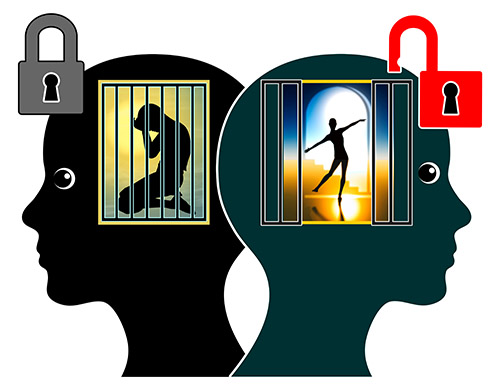
We must become aware of the patterns of belief and behaviour that shape our internal and external worlds. These keep us from evolving out of our current state, one we might describe as a comfort zone of conscious awareness because we feel safe there, we know its stink and circumstance. We must do a lot of hard excavating work, like excising a cancerous tumour.
Moscow-born musician and writer Tessa Lena writes: “We, modern people, are very much like cells that are born into a body overtaken with metastatic cancer. We only know how to be a part of a sick body and, based on our immediate practical experience, we ascribe our starved state to ‘just how things are.’ But no. This is only how things are for a cell that exists in a body overtaken by metastatic cancer. This is not how things are by default. This is how they are now. And we are in a journey. We are swimming through sewage collectively, and we’ll get to our destination faster if we keep swimming forward…”
When we open our eyes and see the way things really are, including the dirt and muck we are currently swimming in, we can consciously choose to make effective and revolutionary change.
Levels of Consciousness
Dr. David R. Hawkins, author of the seminal Power Vs. Force: The Hidden Determinants of Human Behavior, writes of the 17 levels of human consciousness we experience throughout our lives.
From lowest to highest, these levels of consciousness are shame, guilt, apathy, grief, fear, desire, anger, pride, courage, neutrality, willingness, acceptance, reason, love, joy, peace, enlightenment. Few ever achieve the top level. We are told that one person operating at the highest level can offset the damage done by millions operating below. But we don’t have to all be Buddhas to change the world to that degree. Small ripples have big results, too.
Sadly, too many people operate in the realms of shame, guilt, and other lower-level vibrations, not realising they affect other people and energy fields around them and thus, the collective.
Those who seek to keep us down in the dirt will never shine any light on this truth. Once we learn and see, we cannot unlearn or unsee. That alone is the biggest threat to totalitarians poised to imprison us in fifteen-minute cities, control our behaviour through trackable digital currencies, or new insidious schemes to depopulate the planet of “useless eaters.”
Lessons from the Quantum Field
Max Planck, the father of quantum physics, stated: “All matter originates and exists only by virtue of a force. We must assume behind this force the existence of a conscious and intelligent Mind. This Mind is the matrix of all matter.”
The bizarre world of quantum physics indicates that we are part of this intelligent Mind that creates the matrix of matter. An act of observation affects a particle’s trajectory and behaviour.
Quantum entanglement posits that two particles that come in contact with one another will continue to affect each other’s ‘spin’ even across vast distances. Could this be applied to life on a grander, cosmic scale? If we, too, are entangled, then we are all a part of the web of connectivity, and this does not exclude our enemies. Our individual level of consciousness influences everyone around us, as theirs does everyone around them, and so on and so on. Raise enough individuals up the scale to higher consciousness and we offset the damage of many who vibrate lower.
We cannot rely only on the high-vibers to save us. We must find our inner light and let it shine brightly right where we are. Two powerful flashlights can light up a dark room. A million or more can light up the entire world.
Writer, artist, and journalist Martin Geddes writes succinctly of the times at hand and what is required to rise to their challenges in his book, Open Your Mind to Change: A Guidebook to the Great Awakening.
Geddes unravels the forces behind the emergence of the ‘Great Reset’ – a plan offered up by the technocratic elite to maintain power – and the concurrent Great Awakening.
“The unacknowledged reality is that there is a spiritual war raging around us, and it can be seen in classical terms of light versus dark. The good news is that the light is winning, as it always eventually must. For however you describe and define it, the universe fundamentally is interconnected and seeks unity. Evil always collapses under its conceit that it can maintain separateness. It is like a physics of morality: it takes non-linear energy to compartmentalise us and resist the unifying power of love.”
Geddes refers to his own experiences during modern crises such as COVID, the 2020 US election, vaccine mandates, and the Ukraine conflict. A personal revolution of consciousness led him to a more illumined perspective on the ongoing spiritual war, and he is both hopeful and realistic:
“It took us 6,000 years to get into this mess, so fixing it won’t be quick or painless. However, just as there is a negative ‘occult’ power in the world that enslaves us, there are also unseen positive forces for good.”
Perhaps we cannot fight against what we don’t want. The “fighting against” creates resistance to the expansion of consciousness. It is negative energy, tight and constricted. It adds low-level vibratory energies into the collective quantum field, which is then shaped to become external reality.
Now is the time to awaken and choose a higher path that does not involve “warring against” but “welcoming into.”
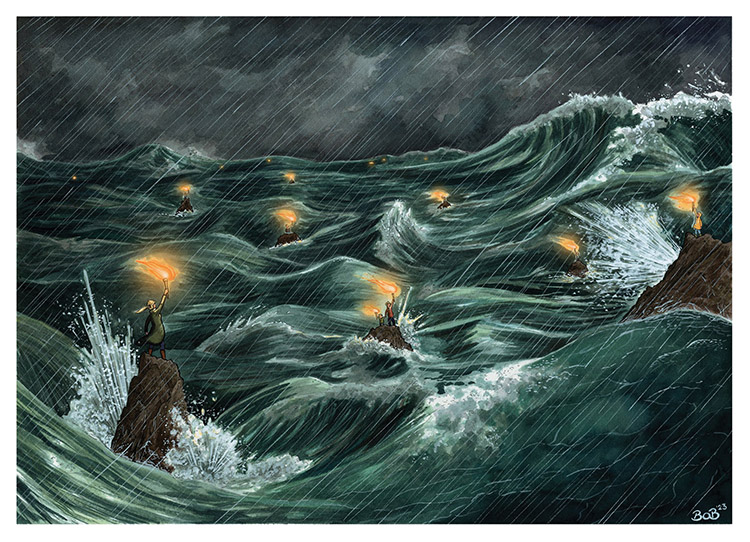
Imagine duelling lighthouses so engrossed in trying to outshine each other in a “battle of the beams” that they forget to shine their lights outward to the sea and end up causing untold ships to crash against the rocky shores. Both are at fault because their focus was on trying to control the other, to suppress or oppress, rather than to combine energies and save a lot of lost souls.
We should strive to attain a higher state of consciousness, to grow and become and seek and speak truth, and to emit light and counter shadow. We don’t become the darkness we dissipate. Instead, we become the light that – when shined into the darkness – dissipates it.
If enough of us do this, there will be little darkness left to fight and dissipate. The Great Awakening is at hand.
I am an unquenchable fire, the centre of all energy, the stout heroic heart. I am truth and light, I hold power and glory in my sway. My presence disperses dark clouds. I have been chosen to tame the Fates.
“Within each person is a unique goodness that will come forth”
February 17 and 18, 2024 Mara Pennell H.W., Monitor
Emotional blocks present us with challenges that can lead to the most profound insights. Releasing the Hidden Splendour™ teaches how to trade in painful or unpleasant feelings for insight and freedom by practicing the Joseph Technique™. Employing the principles of Ontology in a practice of loving and thoughtful self reflection we come to release the past and embrace our true heritage of freedom and grace.
The Lord of Worry is most aptly titled, for when this card comes up in a reading, there looks to be financial, material or domestic trouble on the horizon. Something poses a threat to your overall security. This might be an unexpected expense, or job worries, or maybe even a disturbance in your family life.There will always be something to worry about, when the Five of Disks comes up. But there’s one important thing to bear in mind – whatever is causing the problem is much more of a threat than it is a reality. Worrying about it might just make it worse than it needs to be!When the Lord of Worry is about, anxiety is the emotion of the moment. We look to the future and we see something nasty ahead. Then we sit and worry about it. Try to remember – what you put your attention on grows. So if you worry about your overdraft, it will get bigger! That’s not, of course, to say you should not do all you are able to DO, in an awkward situation – just that once you have, there’s no point in worrying about it.Sometimes we go through a stage in our lives where we feel as though, whatever good comes to us, it is bound to be undermined and darkened by negativity and sadness, that we cannot help but be disappointed. Yet just by holding that view, we invite negativity in, to add to the real problems we already had.It isn’t easy to try to be accepting and positive and trusting when life is giving us a hard time – but accept we must, if we don’t want to make things worse!So – the Five of Disks indicates a possible threat to our security. It is important not to feed that possibility with our own fear. Fear is a powerful emotion. It can rule if we let it. When this card comes up, remember that disturbance is possible – not probable. Do all you can to avert it.
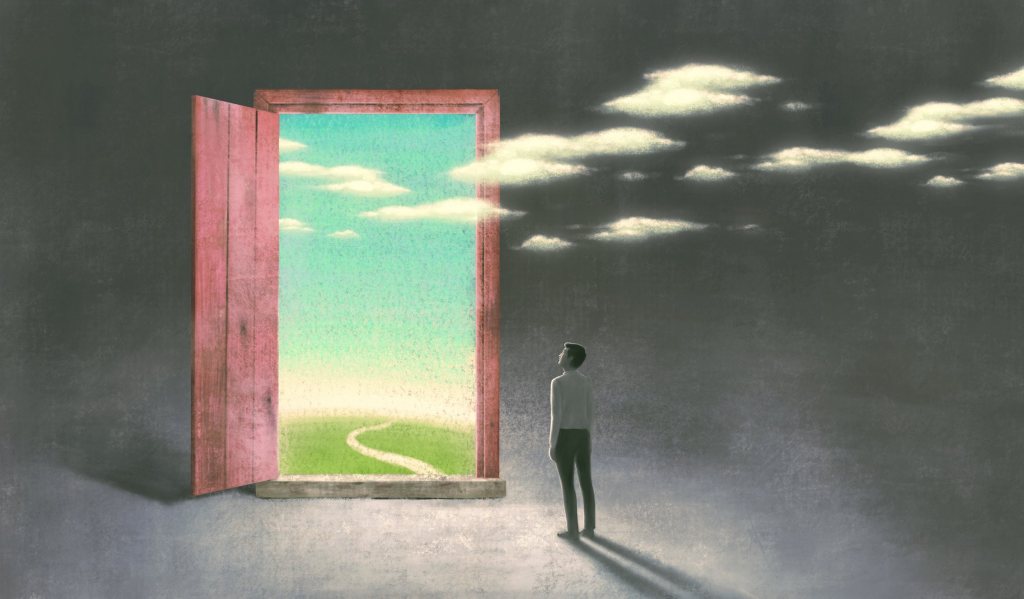
A student went to his meditation teacher and said, “My meditation is horrible! I feel so distracted, or my legs ache, or I’m constantly falling asleep. It’s just horrible!”
“It will pass,” the teacher said matter-of-factly.
A week later, the student came back to his teacher. “My meditation is wonderful! I feel so aware, so peaceful, so alive! It’s just wonderful!”
“It will pass,” the teacher replied matter-of-factly.
Author Unknown
AN OPPORTUNITY FOR DAILY REFLECTION BROUGHT TO YOU BY THE SCHOOL OF PRACTICAL PHILOSOPHY
Everyone, even the blandest ones among us, has more than one side to them. However, there are people whose impact on the world, for better or worse, is so profound that it overshadows everything else about them.
Their contributions might be in the form of a theory, a work of fiction, a mode of behavior, their role in a historical event, or simply the force of their personality. Such impactful legacies often inspire eponyms, words that are derived from someone’s name.
This week, we’re diving into the whimsical world of eponyms, celebrating names that have journeyed from the halls of history and pages of fiction into our everyday vocabulary.
What eponyms would you coin after leaders, past or present, in your country? Share on our website or email us at words@wordsmith.org. Include your location (city, state). Include: Eponym, part of speech: definition, usage example.
Machiavellianism
PRONUNCIATION:
(mak-ee-uh-VEL-ee-uh-niz-uhm)
MEANING:
noun: The use of unscrupulous means, cunning, and deceit in pursuit of power, especially in politics.
ETYMOLOGY:
After Niccolo Machiavelli (1469-1527), Florentine statesman and author of The Prince, a political treatise describing the use of craft and deceit to achieve political power. Earliest documented use: 1607.
Consciousness, spirituality, biography, sexuality, androgyny, futurism, space, the arts, science, astrology, democracy, humor, books, movies and more


The oversweetened surface of the sentimental exists in order to protect its maker, as well as the audience, from anger. At the beautiful image refusing to hold, at the tenderness we bring to the objects of the world — our eagerness to love, make home, build connection, trust the other — how all of that’s so readily swept away. Sentimental images of children and of animals, sappy representations of love — they are fueled, in truth, by their opposites, by a terrible human rage that nothing stays. The greeting card verse, the airbrushed rainbow, the sweet puppy face on the fleecy pink sweatshirt — these images do not honor the world as it is, in its complexity and individuality, but distort things in apparent service of a warm embrace. They feel empty because they will not acknowledge the inherent anger that things are not as shown; the world, in their terms, is not a universe of individuals but a series of interchangeable instances of charm. It is necessary to assert the insignificance of individuality to make mortality bearable. In this way, the sentimental represents a rage against individuality, the singular, the irreplaceable. (Why don’t you just get another dog?) The anger that lies beneath the sentimental accounts for its weird hollowness. But it is, I supposed, easier to feel than what lies beneath rage: the terror of emptiness, of waste, of the absence of meaning or value; the empty space of our own death, neither comprehensible nor representable.







 A student went to his meditation teacher and said, “My meditation is horrible! I feel so distracted, or my legs ache, or I’m constantly falling asleep. It’s just horrible!”