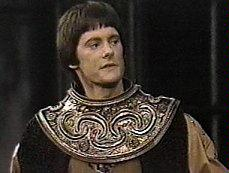
noun: Someone who is unrealistic, naive, chivalrous, idealistic, etc. to an absurd degree.
ETYMOLOGY:
After Don Quixote, hero of the eponymous novel by Miguel de Cervantes (1547-1616). Earliest documented use: 1644. Sometimes the term is used simply as Quixote. The adjectival form is quixotic.
The Ace of Disks marks, on the everyday level, the start of a new project, which is likely to be successful. So it will come up to show a new job, or a new business venture. Usually this will be the sort of project that seems to continuously keep on growing, with each level of attainment producing – almost of itself – the next step in the journey.Sometimes the Ace will come up to indicate a sudden change of material fortune, or a windfall – though either of these would have to be quite substantial to invoke the Ace. Aces are always big influences, marking the beginning of something new and important. So if we see the card coming up to represent a sudden input of funds, expect this to cause major changes in the querent’s life.On a more spiritual level, this card relates to the Earth, and to the appreciation of Nature. It might mark a period where we draw closer to environmental issues, or where we engage in a period of study, contemplation and alignment with Earth forces.One thing that we often miss, when considering spiritual development, is the way that each development grows out of the last. Anyone who has been involved in the search for spiritual truth will already have experienced the weirdly coincidental manner in which spiritual opportunities and teachers present themselves at the relevant stage in our growth.There’s a saying – ‘The right teacher only appears when the student is ready’. It is as though we grow spiritually from the inside, the same way that trees do. And in so doing, maybe we develop inner rings – just like a tree’s trunk. The outer ring, just under the bark could not exist without all of the others it encircles.We’re basically the same. The topic that we are exploring today has grown from all of the earlier topics we have looked into. Our experience is formed in layers, each of which is inter-dependent with the earlier ones. The Ace of Disks relates very closely with this method of human development – it shows us the way we grow. And warns us against trying to skip any of the stages!
“Communicating fully is the opposite of being traumatized.”
–Bessel A. van der Kolk, M.D.
Bessel van der Kolk (born 1943) is a psychiatrist, author, researcher and educator based in Boston, United States. Since the 1970s his research has been in the area of post-traumatic stress. He is the author of The New York Times best seller, The Body Keeps the Score. Wikipedia
Give sorrow words; the grief that does not speak knits up the o-er wrought heart and bids it break.
–Malcolm from Macbeth by William Shakespeare
Macbeth is a tragedy by William Shakespeare. It is thought to have been first performed in 1606. It dramatises the damaging physical and psychological effects of political ambition on those who seek power. Wikipedia
The Lord of Oppression is a hard card to come to grips with, for it indicates blocked or thwarted Will. We want something badly, and yet we seem to stand no chance of getting it. We feel frustrated, irritable and disappointed.If a situation marked by the Ten of Wands goes on for too long, we will begin to feel trapped and deeply unhappy. We will begin to lose faith in ourselves, and our abilities to make our lives into what we want.There are a couple of things to bear in mind if the influence of the Lord of Oppression is a fairly fleeting one – sometimes we have to wait for the right moment to get our heart’s desire.However it’s worth bearing in mind, if you ever read on a specific situation, and this card comes up in the final result position, the reading is probably telling you not to waste any more effort on a conflict that you cannot win. Sometimes we are better off just walking away.The long-term appearance of this card carries a warning with it that you really cannot ignore. If the Ten of Wands is a regular feature of your readings for some time, you are probably hurting yourself more than you care to admit. You are not fulfilling your needs, and you are leaving yourself open to negativity.Time to get a little bit of Ace energy in there, and sort things out!
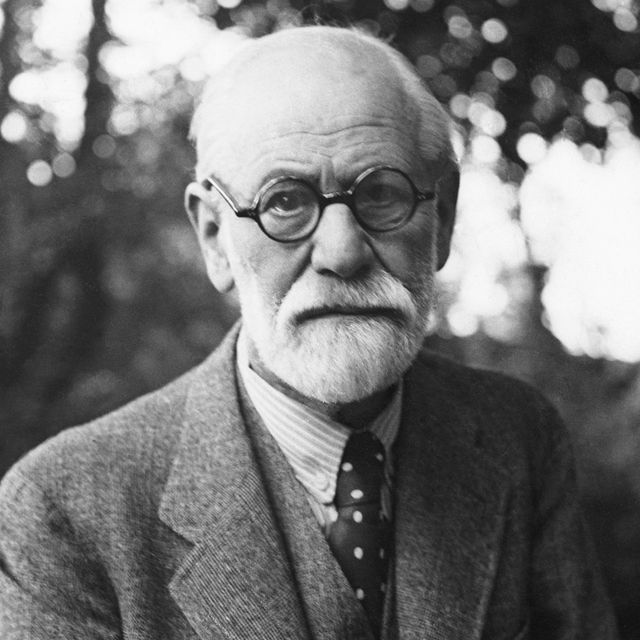
Written and published in 1914, “Remembering, Repeating and Working-Through” clearly established Freud’s position on analytic technique, in which the cathartic method had yielded to the associative method. It thus deserves notice as one of the few technical writings to complement the great metapsychological edifice of 1915.
Freud begins the essay by citing the cathartic method, without doubt in order to mention how much he owed to it for having “acquainted him with certain analytical processes,” but above all so that the reader could recognize how much technical progress had been made with the new associative method. During this period, 1914-1915, treatment began to involve real psychic work for the patient for whom passive hypnosis is no longer clinically effective. The goal of this effort is to remember, “to fill in gaps in memory,” as Freud states, and to “overcome resistances due to repression” (p. 148). The growing complexity of analytic technique was opposed to the simplicity of the hypnotic technique, which responded only to the simplest form of remembering.
This required that forgetting, a psychic fact that had been previously thought to be negligible, be reconsidered in all its amplitude and complexity. “Impressions” and “experiences” (p. 148), insofar as they have a rapport with forgetting, were opposed by Freud to psychic reality, that is, to “phantasies, processes of reference, emotional impulses, [and] thought connections” (p. 148). From this point on, memory, a favorite theme of Freud’s since his work on aphasia, was to become an extensive subject for investigation. Yet remembering is not a straightforward process; thus, while the encounter between analyst and analysand might stimulate the repetition of the past, it is does not always take the form of a memory, but might reside also in actions.
Repetition as action rather than as memory led Freud to examine the links between the three concepts of transference, repetition, and resistance. Transference is simply a “piece of repetition” (p. 151), and repetition is only the “transference of the forgotten past” (p. 151) onto the analyst but also onto “all the other aspects of the current situation” (p. 151). Freud then identified a further type of repetition, “the compulsion to repeat,” which replaced the “impulsion to remember” (p. 151) exposed by the analyst and which demonstrated the powerful resistance to analysis mounted by the defenses. Respect for this resistance, and an acknowledgement of it in analytic technique, is necessary if the work of analysis is to comprehend the full extent of the psychic apparatus; hypnosis, conversely, totally suppresses this resistance. The psychoanalyst’s interest is in the contents of memory and the meaning that he can attribute to them, but he must remain particularly attentive to the means by which these memories are recalled.
The handling of the transference then becomes an essential task for the analyst while the treatment is underway. Too intense an amorous transference, or, conversely, a hostile transference toward the analyst, will bolster the resistance, causing the analysis to slide into repetition (as act). In this case, repression is the customary defense mounted by the resistance, which deprives the analysand’s thought of memorable ideational content and displaces the corresponding quota of affect onto the act.
It is clear in this article that the instinct’s quantitative potency can be made to signify so long as resistance to it is not excessively powerful, an a priori structuring, then, of the psychic apparatus around the transformation of instincts. Freud also provides some technical advice on how to advance the treatment towards a successful conclusion. Some of these recommendations are represented in the figure of the analyst and the analysand struggling against a common enemy: a state of morbidity. Freud wrote that the task of the analyst consists in treating the illness “not as an event of the past, but as a present-day force. . . . which consists in a large measure in tracing it back to the past” (p. 151). This approach should lead to “a change in the patient’s conscious attitude to his illness. . . . [and allow him to] find the courage to direct his attention to the phenomena of his illness.” (p. 152); so that it can ultimately “become an enemy worthy of his mettle” (p. 152). So long as the analyst continues to observe “the fundamental rule of analysis” (p. 155), neither the framework of the analysis nor its influence on the transference will be affected.
Freud admits that it is not always easy to derive ideational mnemic content from acting out. Thus near the end of the text he writes that occasionally, “it is bound to happen that the untamed instincts assert themselves” (p. 153-154), the effects of which can be witnessed in the repetitive act whereby “the bonds which attach the patient to the treatment are broken” (p. 154), or through other instances of negative therapeutic reaction. Freud advised that in these difficult cases “The main instrument [. . .] for curbing the patient’s compulsion to repeat and for turning it into a motive for remembering lies in the handling of the transference. We render the compulsion harmless and indeed useful, by giving it the right to assert itself in a definite field. We admit it into the transference as a playground in which it is allowed to expand in almost complete freedom” (p. 154). In order to transform the morbid state into “an artificial illness, which is at every point accessible” (p. 154) to analytical intervention, the analyst should not rely only on the “working-through” of the patient, but rather on an extension of his knowledge of metapsychology, as well as an acquaintance with aspects of his own character that might pose an obstacle to the cure.
Freud’s conception of the psychic apparatus in 1914 was still based on the first topography; however, in order to properly account for treatments whose virtually unassailable resistances obstruct the progress of the treatment, by mobilizing an entire procession of negative phenomena, he had to wait for the introduction of the “death drive” and the further complication of the psychic apparatus by the second topography.
Thus, while Freud spoke of rendering “the compulsion harmless, and indeed useful, by giving it the right to assert itself in a definite field” (p. 154), he ended the article on a less optimistic note only a few lines later. The demonstration to a patient of their resistance is often not enough to overcome it, and indeed frequently intensifies it, which is why Freud stressed the importance of “working in common” (p. 155) and the continuation of analysis, even if the endeavour eventually becomes “a trial of patience for the analyst” (p. 155). This advice, in a form more suited to the realities of the analytic treatment, was reiterated and endorsed by the theoretical developments introduced in his 1937 article “Analysis, Terminable and Interminable.”
Freud’s emphasis on the repetition compulsion from 1914 onwards might make it the precursor of the repetition compulsion of 1920, the consequence of an instinctual dualism between the life instincts and the death instinct. The compulsion to repeat of 1914 differs from that of 1920 in that the former is under the sway of the pleasure principle. In Beyond the Pleasure Principle (1920g), Freud identified compulsive instinctual phenomena that repeated psychic formations foreign to the pleasure principle, thus placing the repetition compulsion of 1920 in an entirely different relationship to the pleasure principle.
RenÉ PÉran
See also: “Analysis terminable and interminable”; Displacement of the transference; Remembering; Repetition; Silence; Transference neurosis; Working-through.
Source Citation
Freud, Sigmund. (1914g). Errinern, Wiederholen und Durcharbeiten (Weitere Ratschläge zur Technik der Psychoanalyse, II). Internationale Zeitschrift für ärtztliche Psychoanalyse, 2, 485-491; Remembering, repeating and working-through. SE, 12: 147-156.
Bibliography
Cournut, Jean. (1991). L’Ordinaire de la passion. Paris: Presses Universitaires de France.
Guillaumin, Jean. (1983). Psyché. Paris: Presses Universitaires de France.
Mijolla-Mellor, Sophie. (1992). Le Plaisir de pensée. Paris: Presses Universitaires de France.
One of my favorite quotes — enough that I have it inscribed on the wall across the back of my bookstore — comes from the novelist Walter Mosley. “I’m not saying that you have to be a reader to save your soul in the modern world,” he said. “I’m saying it helps.”
2024 promises us nothing but the same craziness as last year and every year before it. Maybe even new and worse ones. Almost half the world is going to vote for new leaders this year. Who will they choose? Conflicts simmer, which ones will explode? The only certainty about this upcoming year is uncertainty. Good things will happen. Bad things will happen. Things will happen.
What are you going to do about it? Will you be ready? Can you handle it?
Books are an investment in yourself — investments that come in many forms: novels, nonfiction, how-to, poetry, classics, biographies. They are a way to learn about what’s happened in the past. They’re a way for you to learn about people and human nature. They help you think more clearly, be kinder, see the bigger picture, and improve at the things that matter to you. Books are a tradition that stretches back thousands of years and stretches forward to today, where people are still publishing distillations of countless hours of hard thinking on hard topics. Why wouldn’t you avail yourself of this wisdom?
Marcus Aurelius’ life was changed by a single book. In book 1 of Meditations, Marcus thanks his philosophy teacher Rusticus “for introducing me to Epictetus’s lectures — and loaning me his own copy.” In Rusticus handing Marcus a book and Marcus reading that book — the arc of history was changed. The Greek Way is another in the category of loaned books that changed the arc of history. On a ski vacation in 1964, Robert Kennedy was loaned a copy of The Greek Way and ended up spending most of the trip in his room reading it. It’s a wonderful little discussion of what made the Greeks so special, what they can teach us, and how they thought about life. Anyone who has a gift for communicating ancient ideas in a modern context is a hero in my eyes — and in this case, Edith Hamilton proved why. By writing about the Greeks in such an accessible and inspiring way she ended up changing the political trajectory of the entire Kennedy family.
For this piece two years ago, I recommended this new annotated edition by Robin Waterfield. I’m a champion of the Gregory Hays translation, but reading a new translation of a book you’ve read (or love) is a great way to see the same ideas from a new angle…or find new ideas you missed on the previous go-arounds. Marcus, like Heraclitus, believed we never step in the same river twice. More recently, I had a similar experience. Since my 16-year-old (nearly) completely marked-up copy was starting to get a little worse for wear, I created a premium edition designed to stand the test of time, just like the content inside. That’s the amazing thing about reading Marcus — whichever translation you go with — year after year, he feels both incredibly timely and incredibly timeless. There’s a reason this book has endured for almost twenty centuries (here are some lessons from me having read Meditations more than 100 times). If you haven’t read Marcus Aurelius or if you have…you should read this book and then read it again.
There are some awful people and awful movements on the march around the world. This feels new, but of course it’s not–these people have always existed. The problem is they are just not well understood. Worse, good people are not often armed with the tools (or the cunning) to defeat or to effectuate change. If you want to live life on your terms, climb as high as you know you’re capable, and avoid being controlled by others — you need to read this book. You’ll leave not just with actionable lessons, but an indelible sense of what to do in many trying and confusing situations. You also have to check out the 25th anniversary edition. It’s one of the coolest designed books I’ve ever seen (and the 48 Laws of Power was already beautifully designed). If you flip the gold pages one direction, you see Machiavelli’s hidden face…and if you flip them the other direction, Robert’s face appears. It’s an amazing version of an amazing book which I continue to think everyone needs to read. Is there a darkness to this book? Yes. But there is a darkness to life, too. You have to understand it and be able to defend against it. If you don’t want to read it because you think it’s ‘immoral,’ well then you definitely need to read it, as I explain in this video.
I told Dr. Edith Eger I felt guilty about someone I had lost touch with and only recently reconnected with. She cut me off and told me she could give me a gift that would solve that guilt right now. “I give you a sentence,” she said, “One sentence — if I knew then what I know now, I would have done things differently.” That’s the end of that, she said. “Guilt is in the past, and the one thing you cannot change is the past.” Dr. Eger is a complete hero of mine. At 16-years-old, she’s sent to Auschwitz. And how does this not break a person? How do they survive? How do they endure the unendurable? And how do they emerge from this, not just not broken, but cheerful and happy and of service to other people? The last thing Dr. Eger’s mother said to her before she was sent to the gas chambers was that very Stoic idea: even when we find ourselves in horrendous situations, we can always choose how we respond to them, who we’re going to be inside of them, what we’re going to hold onto inside of them. Dr. Eger quotes Frankl, who she later studied under, “Everything can be taken from a man but one thing: the last of the human freedoms — to choose one’s attitude in any given set of circumstances, to choose one’s own way.” It was this idea that allowed Dr. Eger to not only endure unimaginable suffering, but to find meaning in it. She went on to become a psychologist and survives to this day, still seeing patients and helping people overcome trauma. I’ve had the incredible honor of interviewing Dr. Eger twice (here and here) and the joy and energy of this woman, this 95-year-old Holocaust survivor, is just incredible.
Arnold’s life is the American dream, and his book, to me, is an important corollary to that dream–you have to pay back the gift by being of service, being useful to others. I really enjoyed this book and was lucky enough to interview him twice for it, once in Los Angeles in his Bavarian-themed office (listen to the episode here or watch it on YouTube) and then again on stage at the 92nd Street Y in New York City (listen here). He’s had an incredible life. Seriously, it’s a great book. We could use more useful people this year.
My wife recommended Dr. Becky’s work. I should know by now to put such books at the very top of my to-read pile, but this one took a while to get to. I regret that because WOW this book is good! I could only make it a couple pages at a time before I had to just stop and think. And then to go back through it for my notecard system took equally long, there was just so much stuff I had to get down. I’ve already written close to a dozen Daily Dad emails about lessons from the book — from parenting anxieties and frustrations to being present and asking tough questions. But as much as this is a parenting book, it’s also just classic Stoic principles — because what is parenting but stress, situations you don’t control, worry, anxiety, fear, fatigue and frustration? I took so much out of this book. I interviewed Dr. Becky, too but you just HAVE to read this book.
One of my reading rules is: If you want to understand current events, don’t rely on breaking news. Find a book about a similar event in the past. To understand the things we must be so careful about in our own politics today, why norms must be respected, why problems can’t be kicked down the road, why populism is so dangerous — read this book. The overthrow of the Roman Republic didn’t just happen. It wasn’t just Julius Caesar, it wasn’t just one man’s ambition that undid some 450 years worth of work. As Duncan writes (and talks about in our podcast episode together), many events in the decades prior contributed to the republic’s fall. And we must understand those events so that we don’t repeat them.
Like I said, we understand what’s happening now by understanding what has happened in the past. It’s also true that fiction helps us understand the human heart and the events of history more than nonfiction can. This book is one that will make you so uncomfortable you’ll probably pick it up and put it down several times. It almost shocks you that this exists, that it’s not some work of fiction pretending to be 80 years old. But no. In fact, one of America’s most famous writers wrote a bestselling novel about an appalling populist demagogue who won the presidency of the United States. Life imitates art. Change the dates, places and names and it’s no longer fiction, it’s real. Fiction is best when it puts a mirror up to us. This book does that. If you don’t read the book, at least please read about it. Because you need to know. It can happen here.
This is an absolutely incredible book. I think I marked up nearly every page. The book is a study of Abraham Lincoln, Theodore Roosevelt, FDR and Lyndon Johnson. It is so clearly the culmination of a lifetime of research… and yet somehow not overwhelming or boring. Distillation at its best! I have read extensively on each of those figures and I got a ton out of it. Even stuff I already knew, I benefited from Goodwin’s perspective. This is the perfect book to read right now — a timely reminder that leadership matters. Or, as the Stoics say: character is fate. Or, as I wrote about in this piece about leadership during the plague in ancient Rome: when things break down, good leaders have to stand up.
There is perhaps no one better qualified than Rick Rubin to help people tap into their creativity. I think it will quickly become one of those The War of Art type of books — one that artists keep close by and return to routinely. I wrote quite a bit about Rubin in Perennial Seller and no doubt would have sourced from this book if it had existed back then. But my basic summary of this book is: Instead of trying to be creative, try to get an environment/a mindset/a practice that is conducive to creativity and let things happen. It’s like Zen in the Art of Archery. You let the arrow fall like ripe fruit. I interviewed Rick Rubin on The Daily Stoic Podcast, listen here.
I’ve always loved the “daily read” format. I’ve recommended some of my favorites here before, I’ve been lucky enough to publish two of my own (here and here), and now I feel even luckier to have this new collection by one of my writing heroes, Steven Pressfield. No matter what you’re trying to do this year, you’ll almost certainly battle The Resistance in pursuit of it. This is a great book to help you in that battle. Even though I’ve read and reread all of Steven’s books, this book has not left my desk since I got my copy (which adds to my regular practice of re-reading The War of Art before every project I start). I was very glad to have him out to interview him about the book, too. You can listen to our conversation here (or watch on YouTube).
This book of advice is a great one for any professional, parent, or person. Kevin Kelly always thinks about things in a unique way and manages to distill a lot of experience down into a memorable, actionable bit of wisdom. I enjoyed this…and I wish more smart people wrote books like this. It was a real treat to get to interview him in person in the new Daily Stoic podcast studio (here’s a clip of him and I talking about why reading is so important).
Even though Stoicism is a ruggedly individual philosophy, at the core of it is this idea of “the circles of concern.” Our first concern, the Stoics said, is ourselves. Then our family, our community, our country, our world, all living things. The work of philosophy is to draw these concerns inward — to learn to care about as many people as possible, to do as much good as possible. When I had Peter Singer on the podcast, he mentioned this book. He chanced on a similar metaphor, not knowing its Stoic origins. I ended up getting The Expanding Circle, about expanding our focus on the welfare of family and friends to include, ultimately, all of humanity — animals, the environment, all of it.
It’s when things are chaotic and crazy, when the world feels like it’s falling apart, that we most need to develop good habits. I think about James Clear’s concept of atomic habits on a regular basis. To me, this is a sign of a great book — that even just thinking about the title has an impact on you. I love the double meaning of the word atomic — not just meaning explosive habits, but also focusing on the smallest possible size of habit, the tiniest step you can take to start the chain reaction that can in fact lead to explosive results.
These are ultimately not books about archery or baseball, but about zen and the mastery of the soul. Both are great, accessible books about peace and peak performance that don’t hit you over the head with Buddhism, yoga, meditation, or any of that. The Way of Baseball is about how Shawn Green struggled as a major league baseball player and through repetitive, simple practice turned himself into one of the best home run hitters in the game. Even if you don’t like sports, I promise you will get a lot out of them.
I always associated Charles Lindbergh with Hawaii because when I was a kid, I visited his grave at the end of the road to Hana in Maui. I was totally surprised to find this book at one of my favorite bookstores, Sundog Books, in one of my favorite places in the world, 30A in Florida. It’s a beautiful philosophical book about rest and relaxation. For each chapter, Lindbergh takes a shell from the beach as the starting point for a meditation on topics like solitude, love, happiness, contentment, and so on. For a 67-year-old book, it feels surprisingly modern — especially, I would think, for women. The only thing I didn’t like about this book is that I didn’t read it when I was writing Stillness is the Key as I almost certainly would have quoted it many times. In any case, pair Lindbergh’s book with Stillness. Because the future belongs to those with the ability to focus, be creative, and think at a high level. And that’s what stillness is — that quiet moment when inspiration hits you, that ability to step back and reflect, that ability to make room for gratitude and happiness regardless of what’s going on around you. It’s one of the most powerful forces on earth. We will all need stillness in 2024 and beyond.
As I have published different versions of this piece over the last couple of years (2018, 2019, 2020, 2021, 2022, 2023), I made one final recommendation worth repeating: Pick 3–4 titles that have had a big impact on you in the past and commit to reading them again. Seneca talked about how you need to “linger among a limited number of master thinkers, and digest their works, if you would derive ideas which shall win firm hold in your mind.”
We never read the same book twice. Because we’ve changed. The perceptions about the book have changed. What we’re going through in this very moment is new and different. So this year, go reread The Great Gatsby. Give The Odyssey another chance. Sit with a few chapters from The 48 Laws of Power. See how these books have stood the test of time and see how you’ve changed since you’ve read them last.
It can be some of the best time you spend with a book this year. Happy reading!