
The Astrology Podcast Nov 27, 2023 Monthly Astrology Forecasts An overview of the monthly astrology forecast for December 2023, discussing planetary alignments and key events that will occur during the month, with astrologers Chris Brennan and Austin Coppock. The main planetary alignment this month is Mercury stationing retrograde in Capricorn while in close configuration with the benefics, and then retrograding back into Sagittarius where it forms a conjunction with Mars while stationing direct. This month there is also a New Moon in Sagittarius, a Full Moon in Cancer, and Jupiter stations direct in Taurus! We spend the first 45 minutes talking about the astrology of news and recent events since our last forecast, and then in the second hour we get into the forecast for December. Towards the end of the episode we review some major planetary alignments that happened over the past year in 2023 and how they turned out. This episode was recorded on Saturday, November 25, 2023.
Monthly Archives: November 2023
Book: “The Ministry for the Future”
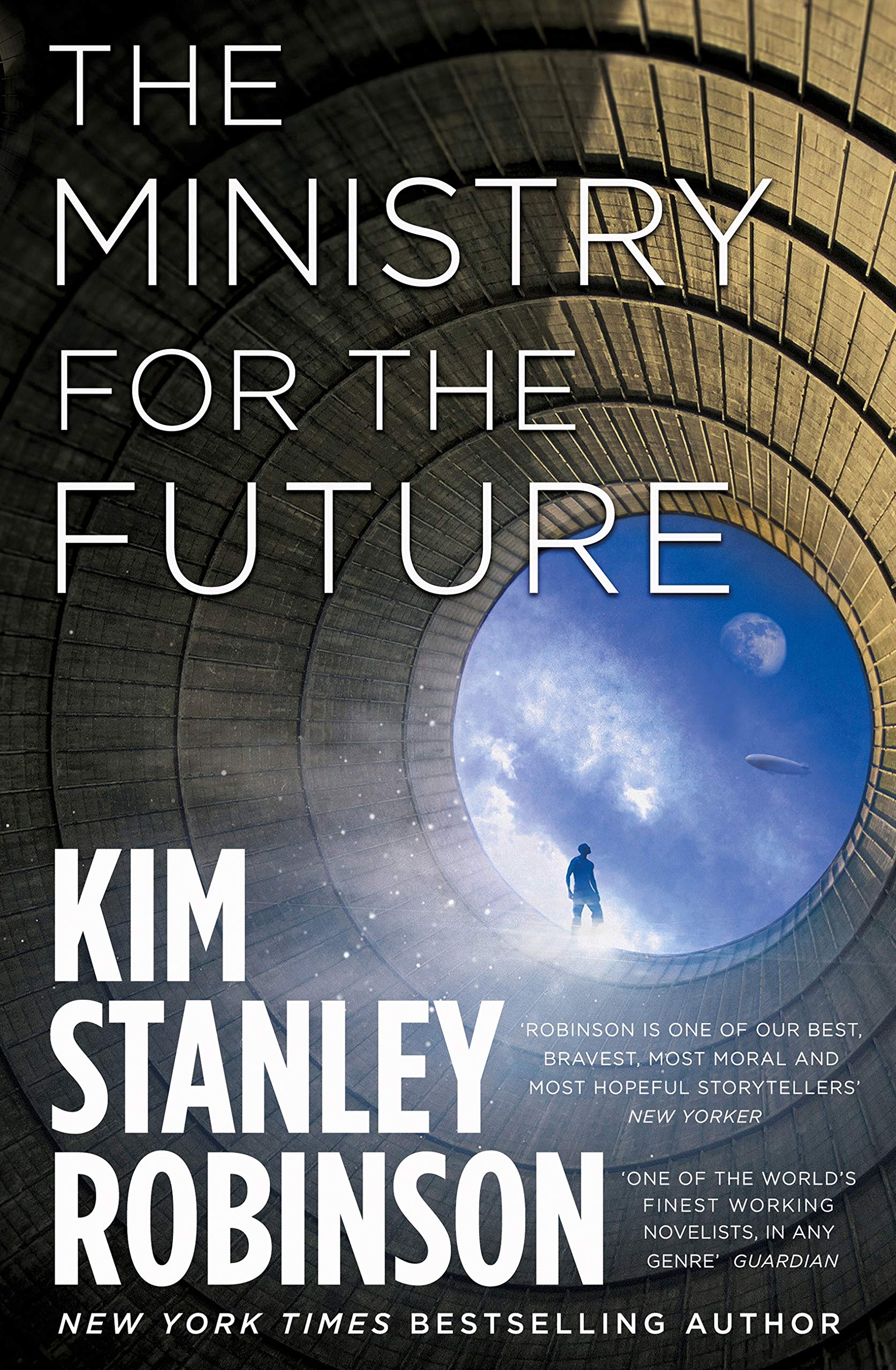
The Ministry for the Future
Kim Stanley Robinson
Established in 2025, the purpose of the new organization was simple: To advocate for the world’s future generations and to protect all living creatures, present and future. It soon became known as the Ministry for the Future, and this is its story.
From legendary science fiction author Kim Stanley Robinson comes a vision of climate change unlike any ever imagined.
Told entirely through fictional eye-witness accounts, The Ministry for the Future is a masterpiece of the imagination, the story of how climate change will affect us all over the decades to come.
Its setting is not a desolate, post-apocalyptic world, but a future that is almost upon us—and in which we might just overcome the extraordinary challenges we face.
It is a novel both immediate and impactful, desperate and hopeful in equal measure, and it is one of the most powerful and original books on climate change
(Goodreads.com)
The Problem You Think You Have Is Never the Real Problem

Published in The Taoist Online
3 days ago (thetaoist.online)

We all have problems and those problems make us feel bad.
So to make the bad feeling go away, we have to channel all our efforts into solving our problems.
At least that’s what we think.
The reality, however, is a different one.
If focusing on your problems and trying to tackle them head-on with all the effort you can muster works, why do you still have so many problems?
If the common way of solving problems is so effective why are our lives a string of problems, one seamlessly flowing into the next one like abacus beads?
Part of the issue is that we consciously or subconsciously believe that life is effort and struggle, that nothing comes without hard work, and that putting your nose to the grindstone is the only way things can change.
I think that’s a really sad and depressing approach to life and I’m going to make a case for another approach.
Why the Common Problem-Solving Approach Doesn’t Work
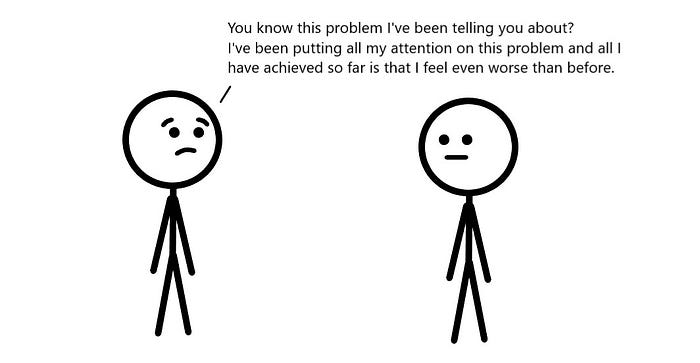
Let’s start with an example many of us can relate to.
Imagine you have money problems right now. Perhaps you don’t even need to imagine it because you actually have them right now.
Most of us had or have this issue. So we all know how shitty this feels.
Anxiety, worry, and stress are all unpleasant side effects of having a money problem.
Now, to solve this issue, naturally, we do the only thing that we’ve been taught to do when it comes to solving problems: Focusing our attention on it and trying to figure a solution out.
But there are two issues with this problem-solving approach:
- Anxiety, worry, and stress get intensified.
- Rarely do we find a satisfying solution.
These two outcomes make sense if we look at what the focus-on-the-problem approach actually does.
Because a lack of money is emotionally associated with anxiety, worry, and stress the more we focus on it the bigger these emotions become in our experience.
These negative emotions are the felt sense of our problem state. We don’t like this state. So now we want to move from the problem state to the solution state.
But because our whole system is in the problem state, we can’t get to the solution.
Or to put it in the words of Albert Einstein:
“We cannot solve our problems with the same thinking we used when we created them.”
I would adapt this quote a little and say:
“We cannot solve our problems in the same state of consciousness we were when we created them.”
Often it’s not a lack of effective thinking that keeps us from finding the solution to a problem, it’s misdirected attention.
What’s the Real Problem?
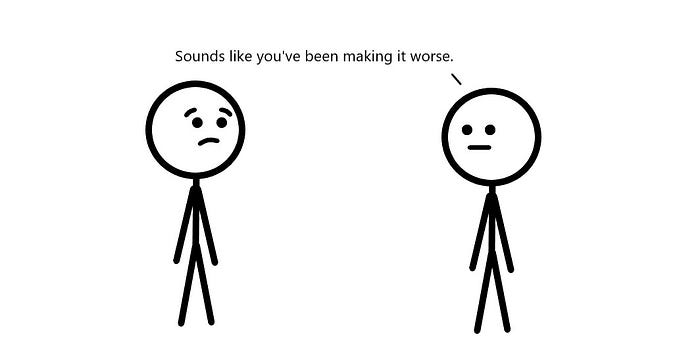
The problem is not a lack of money. The problem is your emotional state.
I already hear some hard-worn pragmatists call me a fool for saying such a thing but bear with me for a moment.
Look at it from this angle. What is the painful thing about the money problem?
It’s not the number in your bank account. It’s the negative emotions — the anxiety, worry, stress, etc.
No matter what you think is wrong with the world the only reason why you interpret anything as a problem is because you feel bad.
And most of us in the Western world who claim they have a money problem are not starving. It’s usually an issue of not having the lifestyle other people have. But I’m digressing.
Just imagine for a moment you would feel absolutely peaceful and blissful about your life no matter what is going on, would you still feel like you have an urgent problem?
And before you say it, yes you can feel peaceful and blissful even without the things you think you desperately need.
The inversion is also true. If you don’t believe me, look around.
Most of us have all kinds of material goods and comforts and still are anxious, depressed, stressed, angry, and so on.
Try to see this:
All problems come down to the fact that you don’t like the way you feel.
So what if changing the way you feel would actually solve your problems?
An Alternative Problem-Solving Approach
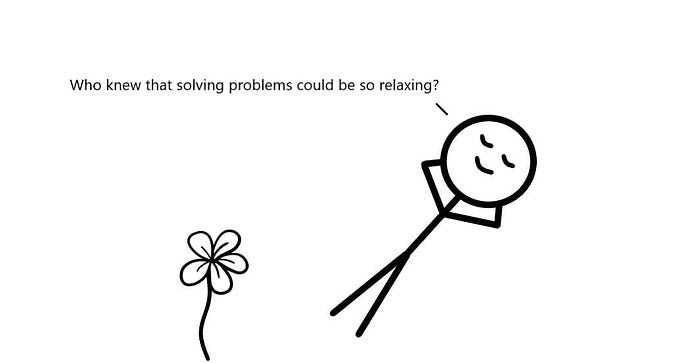
You don’t like all the worrying. You don’t like all the feeling bad. You don’t like trying hard to solve your problems and never be done with them.
So how about instead of focusing all your mental capacity on trying to come up with a solution and wallowing in your negative emotional state, you just stop?
What if you take all your attention away from the problem, and put it on something that makes you feel good?
Ask yourself how you would feel if the problem was solved and then feel that.
Every time you find yourself slipping back into worry, keep coming back to that feeling (e.g. peace, joy, happiness, abundance, etc.).
You can do it.
If you think I’m crazy for suggesting this, look at your life.
Look at the most pressing problem in your life and see how long you’ve been trying to solve it with the traditional approach. See all the misery and suffering you have put yourself through by pondering this problem for many fruitless hours.
If endless pondering and worrying would be the way, then why haven’t you found the solution like two years ago?
Heck, some people spend 16 hours a day worrying.
Isn’t that the crazy thing?
Just turn this into an experiment. Approach your life in another way. Instead of regurgitating your problems, make it a priority to feel good right now.
Close your eyes and recognize that right now in this moment everything is fine. Nothing is wrong. Nothing needs to be done or changed.
Keep coming back to the feeling of peace you can tap into at any moment.
This doesn’t mean to suppress your emotions. That’s what you’ve probably been doing most of your life.
Feel your painful emotions and allow them to be, but don’t spend your time justifying, increasing, and wallowing in them. Don’t make them bigger than they are.
Worrying is like an addiction. So if it’s hard for you to stop right away, give yourself 15 minutes a day to actively worry.
But for the rest of the day, no worrying. No, not even worrying about your worries.
When you feel your moment-to-moment experience improving, you’ll gladly reduce your worry time to zero.
Test it out! After all, what’s the worst that can happen?
Your external situation is the same but you no longer feel bad.
Seems alright to me.
But What About Thinking And Reason?

Don’t misunderstand me.
I’m not saying you should relinquish reason and stop thinking.
Personally, I love to think, and reason is what drives effective thinking. The problem is not thinking.
The problem is the pointless repetitive thinking that you’ve been doing for years. It’s the kind of thinking that’s dictated by every emotional whim that comes along.
Effective thinking is done without the distorting influence of emotions.
And the reason why so many of us struggle with the same problems our whole lives is because all the thinking we do concerning those problems is fueled by the emotions associated with those problems and is thus part of the problem.
So let’s be rational for a moment.
What makes more sense:
Spending a lifetime in worry and anxiety hoping that your problems will eventually disappear so that you can feel good, and if they don’t you’ll waste your life worrying and never enjoying what you already have?
Or
Feeling as good as you can right now and then living your life based on that state?
Again, thinking is awesome. But not all thinking is equal.
Worrying is a form of thinking that’s based on negative what-if? scenarios and does nothing but destroy your well-being.
To use the words of Terence McKenna: “Worry is preposterous.”
But Action Is the Key, Right?
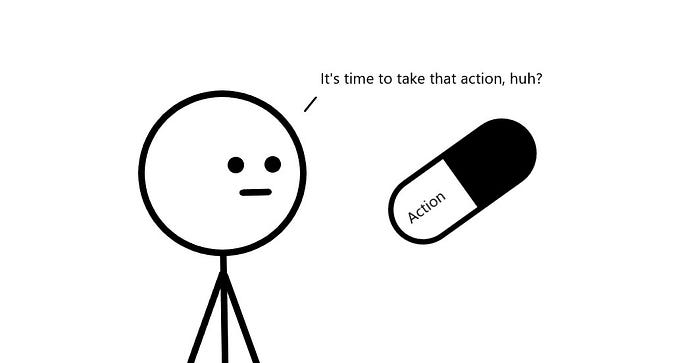
If you have a problem and you know exactly what action to take to solve it, by all means, go ahead.
But if you knew with certainty what action resolves your problem then why do you still have that problem?
Here is an unpopular opinion: Action is not the solution.
No amount of external action can compensate for internal misalignment.
I’m not saying action can’t solve problems. What I mean is action won’t lead you to a worry-free existence.
Maybe you’ll work hard and despite all your fears and worries you make a lot of money. But then what?
Do you think your mind will cut you some slack now?
Hell no!
Now you have time to worry about losing your money or how to invest it or how to protect it from the government. You have solved one problem just to neatly slide into the next one.
If action was the solution, we would have solved all the problems already. Look around. People are rushing and struggling all over the place and don’t seem to get anywhere.
You’re exhausted already, aren’t you? Then why would the solution be to try even harder?
Perhaps, the solution is to stop this craziness for a moment and ask yourself what it is you really want.
Do You Really Want to Be Happy?
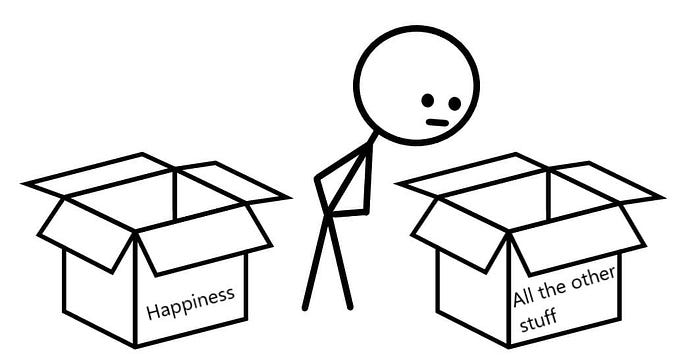
I don’t care what you say. You want to be happy. Period.
And it all comes down to realizing that happiness is either now or never.
Here’s a little thought experiment:
Imagine you could be happy forever right now but you would never get the thing you think you need to be happy.
You won’t get the mansion, the yacht, the island, the lover, the pet giraffe, or whatever you “need” to be happy. But you’ll be unconditionally happy.
This little thought experiment might show you that you don’t want to be happy. You want to be happy with this thing.
But real happiness isn’t tied to anything.
Make a decision now.
Do you want to be happy with that thing you think you need or would you like to be happy no matter what?
Most of us think we need all the stars to align to be happy. Most of us think happiness is dependent on all kinds of uncontrollable external circumstances.
And that’s why so many of us have a meager amount of happiness in our lives.
We have been brainwashed into believing that we can’t be happy if the world is not as we want it to be. Many of us believe we need to suffer with others as if that helps anyone.
Forget about all of that.
Your happiness is the biggest contribution to the world.
From personal experience, I can confirm that when you approach life this way, a lot of problems take care of themselves in ways you can’t foresee.
And if you’re still skeptical or angry at what you’ve read here, then let me say one last thing.
Whether you believe this will solve your problems or not is irrelevant. This is merely an invitation to be happy right now and see what changes in your life.
If you enjoyed this article, you’ll love my free ebook: The Art of Effortless Living

·Writer for The Taoist Online
Writing is my weapon for self-destruction. Check out my awesome newsletter: https://mindfulled.com/wakeupwednesday/Follow
Complex Trauma & Self Actualization
Exhuming dormant potentials

Published in Invisible Illness
2 days ago (Medium.com)
“A musician must make music, an artist must paint, a poet must write if he is to be ultimately happy. What a man can be, he must be. This need we may call self-actualization.” ~ A. Maslow
Repetitive traumatic experiences such as physical, emotional, or sexual abuse, neglect, abandonment, witnessing violence, and other forms of chronic stress or adversity results in a mental disorder referred to as complex trauma. Those who have endured cumulative and prolonged exposure to such adverse experiences, for an extended period such as childhood, find themselves beset by developmental disasters. On account of this, personal growth is derailed in a variety of ways.
As a survivor and seasoned psychotherapist, I know all too well how traumatic abuse presents a significant barrier to actualizing one’s natural capabilities. The term self-actualization, popularized by the psychologist Abraham Maslow in his hierarchy of needs theory, refers to the realization and fulfillment of one’s talents and potentials. It is the process of becoming the best most authentic version of oneself and achieving personal growth and fulfillment through creative expression, problem-solving abilities, and a sense of morality and purpose.
The realm of relationships is crucial to either stimulating or impeding actualization. After all, it is irrefutable that we require secure connections to others. Since we are social creatures, being surrounded by significant life affirming relationships is crucial for self development. This being the case, it’s understandable how having one’s attachment template shaped by chronic neglect and abuse sets in motion a trajectory of distrust, rejection and low self-esteem, which derails the course of self-actualization.
Indeed, being displaced, ostracized, unwanted, or abandoned by one’s familial tribe ensures that difficulties in forming healthy, trusting relationships later in life occur. In fact, if severe chronic abuse and neglect infiltrated the parent-child relationship, traumatic enactments will seep into adult bonding in a subconscious effort to master core attachment injuries.
As developmental psychologist Erik Erikson’s theory of life span development conveys, when children’s needs aren’t met their worldview is marred by anxiety and fear and they fail to attain psychosocial milestones such as hope, trust, autonomy, initiative, competence and a secure sense of identity that generates intimacy. Rather, internalized blame, shame, or guilt promulgate negative self-beliefs and a poor self-image. These negative self-perceptions undermine self-esteem and self-confidence and create a barrier to personal growth by limiting one’s belief in their abilities and potentials.
Ultimately, the absence of primary secure attachments makes it difficult to develop a sense of self-worth and the skills integral to connecting with others in a meaningful way.
Likewise, a by-product of Complex PTSD, rejection trauma (aka rejection sensitive dysphoria), is a pervasive source of torment in which non-acceptance and exile morph into profound despair and depression. Evidenced in children with insecure, ambivalent and anxious attachment, rejection sensitive dysphoria can permeate adult relatedness, further mitigating the potential for receptivity and collaboration.
All things considered, children who are bereft of love and belonging and disallowed from asserting their preferences and desires, become adults who struggle with self-doubt and feelings of inferiority. They recoil from initiating purposeful actions and decisions and are often mired in guilt for even having such predilections. These conditions interfere with actualizing purpose and self awareness as one’s motivation is focused on survival.
Additionally, the schema of trauma affects cognitive functioning, leading to difficulties in concentration, memory, and problem-solving. These cognitive impairments can hinder personal growth by making it challenging to acquire new skills or engage in intellectual pursuits.
Furthermore, being constantly on alert for potential threats makes it difficult to relax, focus, and engage in personal growth activities, as the mind is preoccupied with perceived dangers. To manage the hyper-vigilance, chronic anxiety, alienation and vast array of debilitating symptoms brought on by traumatic experiences, maladaptive coping mechanisms, such as substance abuse, self-harm, dissociation, or avoidance are relied upon.
While these coping strategies provide temporary relief they can hinder personal growth by preventing individuals from confronting and processing their trauma in a healthy, insightful way. This avoidance of traumatic memories impedes personal growth because it prevents individuals from processing and integrating their past trauma into their life narratives, which is a crucial step in healing.
Like other survivors of complex trauma much of my energy was syphoned into merely surviving. Having experienced how the repercussions of complex trauma led to my succumbing to a communication deficit known as selective mutism, I am humbled to have actualized the capacity to effectively express myself creatively and intellectually. Reclaiming this intrinsic skillset and cognitive process entailed a lengthy process of healing the damaging injuries which obstructed the development of speech and language.
When trauma occurs early in life the brain’s cortical volume and functions becomes impaired, which directly affects language and executive functions. Thankfully the plasticity of the brain reveals to us that all is not lost, as the brain is not static. Even though the system’s default wiring is set to freeze, the brain’s capacity to alter neural pathways offers the potential for healing and growth. The rewiring and strengthening of neural connections that meliorate the impact of chronic trauma is attained through a multiplicity of recovery modalities.
Of course, the amount of time and effort needed to recalibrate the brain and modify trauma-induced patterns is extensive.
Returning to my personal saga, I am reminded that although the arts sustained me, as my father was a painter and a writer and like him, I longed to bring those deepest parts of myself to light, I was well ensconced in my familial conditioning to keep myself small. Besides, when one is not heard or understood communication simply becomes futile. Consequently, voicelessness and reverie were adaptive responses to living out a childhood in a household in which violence and other forms of insanity were a daily occurrence.
Likewise, the inner critical voice of shame incessantly reminded me of the oppressive stultifying messages I internalized. It told me I didn’t have the right to be who I am, and accordingly, I don’t have the right to express myself creatively, intellectually or relationally.
Nevertheless, in spite of the aforementioned limitations my urge towards self-preservation compelled me to take numerous life affirming risks. In my case, this involved world travel, studying martial arts and yoga, partaking in spiritual exploration, engaging in academic pursuits and opening myself up to creative expression through writing and acting.
Despite the fact that exhuming aptitude and gifts is a huge undertaking for those afflicted with complex trauma, I am continuously inspired by how this courageous proclivity is regularly initiated by the folks who seek me out for trauma informed treatment.
Undeniably, the combination of trauma, helpless impotence and developmental disasters are deleterious to a child’s brain development and cognitive abilities. Adapting to these conditions necessitates shutting down, resulting in a disconnection of mind and body. This physiological state establishes and reinforces what is referred to as the Dorsal Vagal freeze response. Being stuck in this state of frozen numbness is akin to feeling chronically hopeless and inclined to cut others off and just give up.
It goes without saying that removing these barriers, getting grounded in one’s body and allowing for personal growth to take place is a formidable, time-consuming task. It requires the willingness and the mettle to stay the course with recovery and aim towards thriving, a stage in which pushing boundaries and expanding capabilities means stepping out of one’s comfort zone to take calculated risks. These risks can be intellectual, emotional, creative, relational, spiritual or even physical.
Self-actualization and risk-taking are linked through the pursuit of personal growth and fulfillment. Yet it’s important to consider that not all risk-taking behavior leads to self-actualization, and not all self-actualized individuals are necessarily risk-takers. The relationship between these concepts can vary from person to person, and the nature and extent of risk-taking can differ widely based on individual preferences and circumstances.
Additionally, effective risk-taking often involves careful consideration and planning rather than reckless actions. Determining what ambitious goals or unconventional paths can stimulate self actualization is an individual journey. Nonetheless, for complex trauma survivors, this undertaking necessitates challenging personal limiting beliefs about what is possible.
The trauma survivor must expand the survivor identity and mindset to give life to a perspective, a philosophy that counters internalized cynicism, so as to reconstruct a reality that makes room for the existence of faith and hope. This reframing involves accepting that the path to self-fulfillment is rife with ‘failure’ and one must conceptualize failure not just as a setback, but as an opportunity for learning and growth.
Similarly, exploration and discovery require the trauma survivor to loosen their grip on the tenacious need for safety and security and even allow for a terrifying level of uncertainty. Accessing and purposely sharing one’s gifts with others is a brave endeavor requiring resilience, thinking outside the box and autonomy for everyone. However, for the trauma survivor emerging from one’s bubble to willingly risk incurring more betrayal, humiliation, envy, or sabotage than one has already endured, demands even greater resolve.
Irrespective of the hand one is dealt, psychiatrist and founder of analytical psychology Carl Jung contended that the desire to become fully alive, to aspire towards wholeness or self-realization is a universal instinctual need. We all desire to break free from self-imposed constraints and open up to potentials, talents and aspects of oneself. What’s more, life itself is a proving ground in which we are all called upon to heroically navigate challenges and adversities.
For individuals who have survived a history of chronic trauma, integrating a life-affirming vision that defines a higher purpose will naturally include the vast terrain of healing and survival.
Novelist Herman Hesse wrote in Peter Camenzind, “I began to understand that suffering and disappointments and melancholy are there not to vex us or cheapen us or deprive us of our dignity but to mature and transfigure us.”
Indeed once matured and transfigured, those whose afflictions set in motion the pursuit of comprehensive healing are destined to glean a sense of pride and purpose from their complex and often grueling metaphysical odyssey of recovery. For such individuals integrating a life-affirming vision that defines a higher purpose will include the vast terrain of all they shouldered and survived. Hence, in subtle or obvious ways it is certain that the survivor turned thriver intent on self actualization becomes an instrument of tenets that began with brokenness and gave rise to reclamation.

Written by Rev. Sheri Heller, LCSW, RSW
·Writer for Invisible Illness
Therapist, Coach & Author. Complex Trauma & Addiction. Dual citizen. Survivor, World traveler, love art and nature. I appreciate the absurd. Sheritherapist.com
THE LAND OF BEGINNING AGAIN BY LOUISA FLETCHER TARKINGTON

The Land of Beginning Again
| I wish there were some wonderful place |
| Called the Land of Beginning Again, |
| Where all our mistakes and all our heartaches, |
| And all our poor, selfish griefs |
| Could be dropped, like a shabby old coat, at the door, |
| And never put on again. |
| I wish we could come on it all unaware, |
| Like the hunter who finds a lost trail; |
| And I wish that the one whom our blindness had done |
| The greatest injustice of all |
| Could be at the gate like the old friend that waits |
| For the comrade he’s gladdest to hail. |
| We would find the things we intended to do, |
| But forgot and remembered too late— |
| Little praises unspoken, little promises broken, |
| And all of the thousand and one |
| Little duties neglected that might have perfected |
| The days of one less fortunate. |
| It wouldn’t be possible not to be kind. |
| In the Land of Beginning Again; |
| And the ones we misjudged and the ones whom we grudged |
| Their moments of victory here, |
| Would find the grasp of our loving handclasp |
| More than penitent lips could explain. |
| For what had been hardest we’d know had been best, |
| And what had seemed loss would be gain, |
| For there isn’t a sting that will not take wing |
| When we’ve faced it and laughed it away; |
| And I think that the laughter is most what we’re after, |
| In the Land of Beginning Again. |
| So I wish that there were some wonderful place |
| Called the Land of Beginning Again, |
| Where all our mistakes and all our heartaches, |
| And all our poor, selfish griefs |
| Could be dropped, like a ragged old coat, at the door, |
| And never put on again. |
Richard Wright on America

“Our too-young and too-new America, lusty because it is lonely, aggressive because it is afraid, insists upon seeing the world in terms of good and bad, the holy and the evil, the high and the low, the white and the black; our America is frightened of fact, of history, of processes, of necessity. It hugs the easy way of damning those whom it cannot understand, of excluding those who look different, and it salves its conscience with a self-draped cloak of righteousness.”
–RICHARD WRIGHT
Richard Nathaniel Wright (September 4, 1908 – November 28, 1960) was an American author of novels, short stories, poems, and non-fiction. Much of his literature concerns racial themes, especially related to the plight of African Americans during the late 19th to mid-20th centuries suffering discrimination and violence. Wikipedia
Linda Ronstadt & Aaron Neville Don’t Know Much live 1990
The Full Moon In Gemini Will Be Troublesome, So You’ll Need To Exercise Patience
LAST UPDATED NOVEMBER 25, 2023, 11:00 PM (refinery29.com)

PHOTO BY GETTY IMAGES.
November 27 brings the last full moon of autumn our way at 4:16 a.m. ET. This lunation is the final part of the events that occurred on May 30 2022, during the new moon in Gemini. Unfortunately, the full moon brings zero chill our way — but it’ll open our eyes to things we have overlooked in the past, even though we may not choose to believe what we see. Full moons bring matters to light and illuminate situations that need to evolve, and there is an opportunity to do so — only if we sincerely want to.
Mars in Sagittarius and Saturn in Pisces creates a wide T-square with the sun in Sagittarius and the moon in Gemini. A T-square is a fraught astrological aspect that consists of two planetary oppositions that also square a planet. It forms a T shape in the sky. In this case, the moon opposes the sun and Mars while squaring Saturn. T-squares can be challenging since they intensify situations and make us feel like we need to act immediately (which we don’t always need to do). In this case, we might feel the dominant forces in our lives are pushing us to change. The issue is that we aren’t quite ready to spread our wings and fly.
Part of the hesitation and confusion about moving forward is the connection between Mercury in Sagittarius and Neptune retrograde in Pisces (this transit perfects hours after the full moon), while Mercury will be in its pre-retrograde zone. Mercury retrograde and Neptune square on December 27. They connect again when Mercury turns direct on January 8 2024. The story that unfolds on the day of the full moon will rear its head two more times in our lives.
If we use the energy to its highest power by offering an understanding of matters and compassion to ourselves and others, then we are ahead of the game. Doing so may be intensely felt hard truths will be revealed. Don’t forget that the biggest lies are the ones we tell to ourselves. Now is the time to be honest with ourselves about the ways in which we can improve our lives for the better, or to come clean to others about our feelings and indiscretions. November 26 brings Mercury to the nodes of destiny, making the events of November 27 fated. Two days after the full moon, on November 29, Venus links up with the south node of destiny in Libra, causing the aftershocks of the 27th to sting and cause heartbreak or financial loss.
Add the asteroids Black Moon Lilith and Ceres to the mix, and the vibe escalates. These asteroids will push us to confront situations and people to get to the bottom of matters. As a result, we won’t want to hold back in our responses. Therein lies the dramatic element of the full moon. The vertex of the chart is close to the moon, urging us to take a new approach to relationships and assert our autonomy. Choosing the right words at the pristine time is vital, as it’ll help to limit arguments. Have an open mind and step outside of your the emotional comfort zone and initiate necessary and the challenging conversations necessary now. The fixed star Prima Hyadum, γ Tauri, brings an air of scandal factor and falling from grace. We can avoid this scenario with a generous approach: don’t allow selfish motives and greed to prevail.
Overall, this isn’t a pleasant full moon. The best way to stay out of trouble is to lead with kindness. Even though the full moon is packed with harsh factors, it’s essential to know that we always have a choice in how we wish and want to proceed — especially under the Gemini moon. Before acting out and reacting, we must take a minute to decide how we want to deal with the unfolding events. Words of advice: Don’t rush into divulging all the information. Exercise patience until then.
Meditation and breathing exercises will help by relaxing our energy and bringing mindfulness. Plus, these activities are going to keep us grounded and in the present — to ensure we aren’t making a mountain out of a molehill or behaving in ways we might later regret.
Full Moon in Gemini – What You Seek Is Seeking You

PHOTO BY GETTY IMAGES.
| Astro Butterfly contact@astrobutterfly.com | (4 hours ago) |  | |
| |||
On Monday, November 27th, 2023 we have a Full Moon at 4° Gemini.
I always loved Full Moons in Gemini and noticed astrology lovers seem to love them too. We, the curious minds and the truth seekers, thrive with this energy.
Think about it. The Sun is in Sagittarius. The philosopher. The sage. And the Moon is in Gemini. The curious mischief. The eternal student.
Gemini-Sagittarius the alchemist of knowledge.
When we have a Full Moon in Sagittarius, a whole world of opportunities opens before us.
Full Moon In Gemini – The Explorer Gene
There is so much to explore. There is so much to learn. This mental curiosity, this bug of exploration feels enticing. It’s this insatiable thirst for discovery that propels humanity forward.
This is what compelled our ancestors from all over the world to leave everything behind, explore the seas, and embark on adventures. The quest to find new horizons, discover unknown territories, and seek knowledge beyond familiar boundaries was simply impossible to ignore.
We still have that exploration bug. It’s coded in our genes.
Of course, not all of us have the means to get a pilot license or go on a cruise (the modern-day equivalent of exploring the seas). But there are books. There is the internet. People from different cultures. A new exotic dish we may try to get a taste of new experiences.
We are all connected through billions of dots of information. The whole world is a giant web of interwoven stories waiting to be explored and shared.
When we try a new curry, or a new flavor, we instantly connect with a faraway land that is so different, yet so familiar. When we connect with the world at large – we don’t just ‘learn something new’ – we find a deeper sense of meaning and connection with ourselves.
Full Moon In Gemini – The Aspects
The full Moon in Gemini is opposite Mars (at 2° Sagittarius), square Neptune (at 0° Pisces) and trine Pluto (at 28° Capricorn).
Saturn is at the apex of the Full Moon T-square, revealing some truths that may be either difficult to digest – if what we’ve been doing was building sand castles in the air – OR can be cathartic and liberating. Knowing what it is that we need to do gives us a sense of relief.
Saturn simply points to what it is we need to do to navigate the challenges – whatever these may be. Saturn is the clear path to success. There’s no ambivalence about Saturn. “This is what you need to do, and if you follow the steps, you’ll eventually succeed.”
Pluto in Capricorn (trine the Full Moon in Gemini) will give us the extra dose of drive and determination to say yes to what may appear to be an impossible task at first.
The Full Moon ruler, Mercury, is in Sagittarius and it is square Neptune in Pisces.
Mercury-Neptune transits often get a bad rap. Lies! Confusion! Illusions! But how many of Neptune’s lies are really lies? And how many are higher truths we’re not ready – yet – to accept because they would wipe out the sand castles we built?
Full Moon In Gemini – What You Seek Is Seeking You
Gemini and Sagittarius are mutable signs. Mutable signs ask us to get moving. We simply can’t find what we are looking for if we stay in our comfort bubble.
The Full Moon in Gemini is an invitation to reconnect with the seeker inside each one of us. The seeker intuitively knows that beyond the surface of appearances lies a vast ocean of wisdom and uncharted possibilities.
What you seek is seeking you. Every message you receive comes to you for a reason. At the Full Moon in Gemini, your goal is to connect the dots and find out what is being revealed to you by the Source.
Why now? Why does it matter? What might be the deeper message in the seemingly insignificant detail?
These Full Moon hidden messages are cosmic breadcrumbs meant to guide you toward a deeper understanding of yourself and your purpose.
Age Of Aquarius Community Offer
If you feel called to join the Age Of Aquarius Community, NOW it’s the time to do it. Embark on a 12-month journey of exploration of self-discovery:
>> Join The Age Of Aquarius Community ($200 Off) <<
Astro Butterfly
Necessary Losses: The Life-Shaping Art of Letting Go
By Maria Popova (themarginalian.org)

“The art of losing isn’t hard to master,” Elizabeth Bishop wrote in one of the great masterpieces of poetry. “Every mortal loss is an Immortal Gain,” William Blake wrote two centuries before her in his beautiful letter to a bereaved father.
We dream of immortality because we are creatures made of loss — the death of the individual is what ensured the survival of the species along the evolutionary vector of adaptation — and made for loss: All of our creativity, all of our compulsive productivity, all of our poems and our space telescopes, are but a coping mechanism for our mortality, for the elemental knowledge that we will lose everything and everyone we cherish as we inevitably return our borrowed stardust to the universe.
And yet the measure of life, the meaning of it, may be precisely what we make of our losses — how we turn the dust of disappointment and dissolution into clay for creation and self-creation, how we make of loss a reason to love more fully and live more deeply.
“Broken/hearted” by Maria Popova. (Available as a print.)
That is what Judith Viorst explores in her 1987 consolation of a book Necessary Losses (public library) — an exploration of the profound and far-reaching relationship between our losses and our gains, revealing renunciation as a fulcrum of growth. She paints the vast landscape of loss upon which life plays out:
When we think of loss we think of the loss, through death, of people we love. But loss is a far more encompassing theme in our life. For we lose not only through death, but also by leaving and being left, by changing and letting go and moving on. And our losses include not only our separations and departures from those we love, but our conscious and unconscious losses of romantic dreams, impossible expectations, illusions of freedom and power, illusions of safety — and the loss of our own younger self, the self that thought it always would be unwrinkled and invulnerable and immortal.
[…]
These necessary losses… we confront when we are confronted by the inescapable fact… that we are essentially out here on our own; that we will have to accept — in other people and ourselves — the mingling of love with hate, of the good with the bad;… that there are flaws in every human connection; that our status on this planet is implacably impermanent; and that we are utterly powerless to offer ourselves or those we love protection — protection from danger and pain, from the in-roads of time, from the coming of age, from the coming of death; protection from our necessary losses.
These losses are a part of life — universal, unavoidable, inexorable. And these losses are necessary because we grow by losing and leaving and letting go.
As a sculpture is shaped by what is chiseled off from the block of stone, so too are we shaped by what we lose — by choice, with all the complexities and difficulties of letting go, or by the scythe of chance, which takes away as impartially as it gives. Viorst writes:

Art by Giuliano Cucco from Before I Grew Up — a soulful illustrated elegy for loss and our search for light
We enter the realm of loss the moment the umbilical cord is cut to sever what Viorst calls the “blurred-boundary bliss of mother-child oneness” — the primal loss that sets off the ongoing task of becoming ourselves. From this origin point, she traces the lifelong vector of losses and gains:
In a sentiment the poet Mark Doty would echo — “you need to both remember where love leads and love anyway,” he wrote in his beautiful reckoning with love and loss — she adds:
Complement Necessary Losses, which goes on to explore the many regions of loss in human life and how they can become frontiers of growth, with Hannah Arendt on learning how to live with the fundamental fear of loss, Thoreau on living through a loss, and Alan Watts on learning not to think of gain and loss, then explore two uncommon lenses on loss: fractals and chlorophyll.