I have been studying how I may compare This prison where I live unto the world; And, for because the world is populous And here is not a creature but myself, I cannot do it. Yet I’ll hammer’t out. My brain I’ll prove the female to my soul, My soul the father, and these two beget A generation of still-breeding thoughts; And these same thoughts people this little world, In humours like the people of this world, For no thought is contented. The better sort, As thoughts of things divine, are intermixed With scruples and do set the word itself Against the word , as thus: ‘Come, little ones’; And then again: ‘It is as hard to come as for a camel To thread the postern of a small needle’s eye.’ Thoughts tending to ambition, they do plot Unlikely wonders – how these vain weak nails May tear a passage through the flinty ribs Of this hard world, my ragged prison walls, And, for they cannot, die in their own pride. Thoughts tending to content flatter themselves That they are not the first of Fortune’s slaves, Nor shall not be the last, like seely beggars Who sitting in the stocks refuge their shame That many have and others must sit there; And in this thought they find a kind of ease, Bearing their own misfortunes on the back Of such as have before endured the like. Thus play I in one person many people, And none contented. Sometimes am I king; Then treasons make me wish myself a beggar, And so I am. Then crushing penury Persuades me I was better when a king; Then am I kinged again, and by and by Think that I am unkinged by Bolingbroke, And straight am nothing. But whate’er I be, Nor I nor any man that but man is With nothing shall be pleased till he be eased With being nothing.
Unfamiliar Words/Phrases
As always in our monologues unpacked I start by listing the unfamiliar words and giving you a simple modern definition:
hammer: ponder, think hard beget: give rise to humours: moods, temperaments (based on the idea of mood coming from bodily fluids: sanguine, choleric, melancholic, phlegmatic still-breeding: constantly breeding, continually breeding (like thoughts that won’t stop coming) little world: the prison cell scruples: doubts, reservations, qualms set the word itself / Against the word: find passages of scripture that contradict other scriptures. “come little ones”: Bible verse Matthew 19: 14 “It is as hard to come as for a camel/ To thread the postern of a small needle’s eye.”: Bible verse Matthew 19:24 postern: entrance, side gate needle’s eye: very narrow opening at the end of a needle flinty: hard fortune’s slaves: unlucky people seely: frail (in some versions it is “silly” which works as well) refuge: shelter from, take refuge from penury: extreme poverty
A landmark history of one hundred years of war waged against the Palestinians from the foremost US historian of the Middle East, told through pivotal events and family history.
In 1899, Yusuf Diya al-Khalidi, mayor of Jerusalem, alarmed by the Zionist call to create a Jewish national home in Palestine, wrote a letter aimed at Theodore Herzl: the country had an indigenous people who would not easily accept their own displacement. He warned of the perils ahead, ending his note, “in the name of God, let Palestine be left alone.” Thus Rashid Khalidi, al-Khalidi’s great-great-nephew, begins this sweeping history, the first general account of the conflict told from an explicitly Palestinian perspective.
Drawing on a wealth of untapped archival materials and the reports of generations of family members – mayors, judges, scholars, diplomats, and journalists – The Hundred Years’ War on Palestine upends accepted interpretations of the conflict, which tend, at best, to describe a tragic clash between two peoples with claims to the same territory. Instead, Khalidi traces a hundred years of colonial war on the Palestinians, waged first by the Zionist movement and then Israel, but backed by Britain and the United States, the great powers of the age. He highlights the key episodes in this colonial campaign, from the 1917 Balfour Declaration to the destruction of Palestine in 1948, from Israel’s 1982 invasion of Lebanon to the endless and futile peace process.
Original, authoritative, and important, The Hundred Years’ War on Palestine is not a chronicle of victimization, nor does it whitewash the mistakes of Palestinian leaders or deny the emergence of national movements on both sides. In reevaluating the forces arrayed against the Palestinians, it offers an illuminating new view of a conflict that continues to this day.
Cover photograph Amnon Bar Or—Tal Gazit Architects LTD
The New Historians (Hebrew: ההיסטוריונים החדשים, HaHistoryonim HaChadashim) are a loosely defined group of Israeli historians who have challenged traditional versions of Israeli history, including Israel’s role in the 1948 Palestinian expulsion and flight and Arab willingness to discuss peace. The term was coined in 1988 by Benny Morris, one of the leading New Historians. According to Ethan Bronner of The New York Times, the New Historians have sought to advance the peace process in the region.[1]
Initially dismissed by the public, the New Historians eventually gained legitimacy in Israel in the 1990s.[1] Some of their conclusions have been incorporated into the political ideology of post-Zionists.
Main arguments
Avi Shlaim described the New Historians’ differences from what he termed the “official history” in the following terms:[5]
The official version said that Britain tried to prevent the establishment of a Jewish state; the New Historians claimed that it tried to prevent the establishment of a Palestinian state
The official version said that the balance of power was in favour of the Arabs; the New Historians said that Israel had the advantage both in manpower and in arms
The official version said that the Arabs had a coordinated plan to destroy Israel; the New Historians said that the Arabs were divided
The official version said that Arab intransigence prevented peace; the New Historians said that Israel is primarily to blame for the “dead end”.[6]
Pappé suggests that the Zionist leaders intended to displace most Palestinian Arabs; Morris believes the displacement happened in the heat of war. According to the New Historians, Israel and Arab countries each have their share of responsibility for the Arab–Israeli conflict and the Palestinian plight.[6]
Influence on traditional Israeli historical narrative and public opinion
Michal Ben-Josef Hirsch argues that, prior to the advent of the New Historians, “Israelis held to a one-sided historical narrative of the circumstances leading to the creation of the Palestinian refugee problem, and that any other counter-narratives were taboo.” According to Ben-Josef Hirsch, the conclusions of the New Historians, and the wide-ranging debate that they provoked, ended that taboo and changed the way in which the Palestinian refugee problem and its causes were viewed in Israel. Ben-Josef Hirsch says that the traditional Israeli narrative, that Arabs were responsible for the exodus of the Palestinians, held from 1948 to the late 1990s. She says that the arguments of the New Historians significantly challenged that narrative, leading to a broad debate both in academia and in the wider public discourse, including journalists and columnists, politicians, public figures, and the general public.
Ben-Josef Hirsch believes that a significant change has occurred in how the Palestinian refugee issue is viewed in Israeli society since the late 1990s, with a more complex narrative being more accepted; it recognizes there were instances where Israeli forces expelled Palestinians with the knowledge and authorization of the Israeli leadership. Ben-Josef Hirsch attributes that change to the work of the New Historians and the resulting debate.[7]
The New Historians gained respect by the 1990s. A 1998 series on state television marking Israel’s 50th anniversary drew much from their work, as did textbooks introduced to ninth graders in 1999.[1]
Critics of the New Historians have acknowledged this shift. Avi Beker, writing in the Jerusalem Post, states that the effect of the New Historians work on the history of the Arab–Israeli conflict “cannot be exaggerated”. He says the work of the New Historians is now the mainstream in academia, and that their influence was not confined to intellectual circles. To illustrate his point he cites examples from changes to Israeli school text books to the actions of Israeli political leaders and developments in the Israeli–Palestinian peace process.[8]
The writings of the New Historians have come under repeated criticism, both from traditional Israeli historians who accuse them of fabricating Zionist misdeeds, and from Arab or pro-Arab writers who accuse them of whitewashing the truth about Zionist misbehaviour.[citation needed]Efraim Karsh has accused them of ignoring questions which he says are critical: Who started the war? What were their intentions? Who was forced to mount a defence? What were Israel’s casualties?[9]
Early in 2002, the most famous of the new historians, Benny Morris, publicly reversed some of his personal political positions,[10] though he has not withdrawn any of his historical writings. Morris says he did not use much of the newly available archival material when he wrote his book: “When writing The Birth of the Palestinian Refugee Problem 1947–1949 in the mid-1980s, I had no access to the materials in the IDFA [IDF Archive] or the Haganah Archive and precious little to first-hand military materials deposited elsewhere.”[11]
Anita Shapira stated that both Avi Shlaim and Benny Morris “make only meager use of original Arab sources” with most such references being in “English translation”, and that Shlaim’s claim that he “has no need of Arab documents”, and Morris’ claim that “he is able to extrapolate the Arab positions from the Israeli documentation” results in “obvious distortions”.[12]
Israeli historian Yoav Gelber criticized New Historians in an interview, saying that aside from Benny Morris, they did not contribute to the research of the 1948 Arab–Israeli War in any way. He did however note that they contributed to the public discourse about the war.[13]
Some commentators have argued that the historiography of the New Historians has both drawn inspiration from, and lent impetus to, a movement known as post-Zionism. Generally the term “post-Zionist” is self-identified by Jewish Israelis who are critical of the Zionist enterprise and are seen by Zionists as undermining the Israeli national ethos.[14] Post-Zionists differ from Zionists on many important details, such as the status of the law of return and other sensitive issues. Post-Zionists view the Palestinian dispossession as central to the creation of the state of Israel.[citation needed]
Baruch Kimmerling criticised the focus on “post-Zionism”, arguing that debates around the term were “nonsense and semi-professional and mainly political”. According to Kimmerling the term has been arbitrarily applied to any research on Israeli history, society or politics that was critical or perceived to be critical. Kimmerling saw this discussion as damaging to research in these areas because it took the focus away from the quality and merit of scholarship and onto whether the work should be characterized as Zionist or post-Zionist. Further, Kimmerling asserted that academics were diverted away from serious research onto polemical issues and that the environment this fostered inhibited the research of younger academics who were fearful of being labeled as belonging to one of the two camps.[15]
Benny Morris
The “Old Historians” lived through 1948 as highly committed adult participants in the epic, glorious rebirth of the Jewish commonwealth. They were unable to separate their lives from this historical event, unable to regard impartially and objectively the facts and processes that they later wrote about.[16]
The “Old Historians” have written largely on the basis of interviews and memoirs and at best made use of select batches of documents, many of them censored.[16]
Benny Morris has been critical of the old Historians, describing them, by and large, as not really historians, who did not produce real history: “In reality there were chroniclers and often apologetic”,[17] and refers to those who produced it as “less candid”, “deceitful” and “misleading”.[18]
Scenes of violence and destruction from the Old Testament (Public Domain) via Wikimedia Commons
The horrific events of September 11, 2001, left the world forever changed — mostly for the worse.
Between the attack itself and the subsequent American response, including multiple, multi-trillion dollar “forever wars,” hundreds of thousands of deaths, untold destruction and trauma and shattered lives across the globe, along with vastly curtailed liberties and an ever-present police state here at home, the results of that dark day have been nothing short of catastrophic.
What a way to kick off a new millennium.
But hidden among that long litany of horrors, one positive development — one step of seeming progress in humankind’s moral, social, and cognitive advancement that emerged from the wreckage of that terrible day — was the vast number of atheistsit produced.
For this lifelong rationalist infidel, it was a rare moment of hope.
At last! For the first time since the Enlightenment, an Age of Reason could once again usher forth! No more ancient superstition guiding society’s most important decision-making. No more senseless quarrels over rival books and rival interpretations of primitive, violent mythology.
At long last, John Lennon’s famous, hope-filled lyrics could possibly come to pass:
Imagine there’s no heaven It’s easy if you try No hell below us Above us, only sky Imagine all the people Living for today
Imagine there’s no countries It isn’t hard to do Nothing to kill or die for And no religion too Imagine all the people Living life in peace
I was far from alone in these thoughts. For millions of people across the Western world and beyond, the abject horror of witnessing live on television what unconscionable evil religious zealotry is capable of when paired with modern technology was enough to make them declare, “Enough!”
It was enough to make them set aside whatever notions they held of whatever transient good religion may occasionally achieve, and instead focus on the endless barbarisms that are an inseparable, infallible essence of all faith-based religions and the ancient writings they’re based upon. As Voltaire famously said:
Those who can make you believe absurdities can make you commit atrocities.
And religion is nothing if not absurd.
As with that long-ago September day in America, the events of October 7, 2023, will forever be etched in the psyche of all Israelis, and will once again leave the world forever changed — almost certainly for the worse.
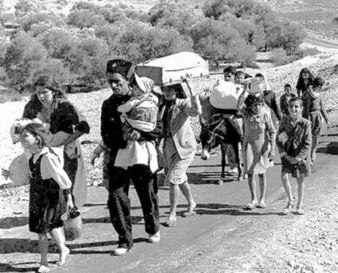
Analysts, pundits, historians, and an enraged and grief-stricken public will be dissecting, for decades to come, the causes of this latest flareup in the perennial stew of ethnic and sectarian violence that is the Middle East. There will be talk of the Holocaust and Zionism, of antisemitism and Islamophobia, talk of the Nakba and refugees’ right of return, talk of apartheid and “the world’s largest open-air prison,” and of course, empty talk of a “two-state solution.”
But the one glaring driver of Middle Eastern violence that few accounts care to acknowledge is the most obvious one of all — religion. And the reason for this is simple — because admitting religion’s primal role in the matter makes the problem utterly, hopelessly intractable.
After all, was not all the land of Israel given to the Jews by the almighty creator of the universe himself?
Indeed it was. At least, according to their own holy (and in no way biased and self-serving) account of it. As recounted in the Old Testament, or Tanakh:
The Lord said to Joshua: “Now then, you and all these people, get ready to cross the Jordan River into the land I am about to give to them — to the Israelites. I will give you every place where you set your foot, as I promised Moses. Your territory will extend from the desert to Lebanon, and from the great river, the Euphrates — all the Hittite country — to the Mediterranean Sea in the west. No one will be able to stand against you all the days of your life. … Be strong and courageous, because you will lead these people to inherit the land I swore to their ancestors to give them.”
“None will be able to stand against you.” Do you hear that, Hamas? Do you hear that, Hezbollah? Do you hear that, Iran?
This tiny scrap of mostly desert wasteland is the Jewish people’s divine birthright. And when the magic man himself handed you the deed to your home, no one else gets to impose a lien upon it or try to repossess it — no matter how many mortgage payments you’ve failed to make. Furthermore, any attempt to do so will be met with merciless force.
Except now, of course, this force consists not of slings, swords, and arrows, as used against the Canaanites, but of guided missiles, drones, and smart bombs. It’s third millennium B.C. goat herders meets twenty-first century A.D. high-tech, startup nation — the primitive mindset of the former controlling the incomparably more destructive weaponry of the latter.
The results, as horrific as you’d imagine them, are splashed on news screens around the world for all to see. And despite all pleas to respect the “laws of war” and “international human rights,” there’s simply no stopping an onslaught sanctioned by God himself for his very own, favorite, “chosen” people.
But what of the other side? What do the Palestinians (whose name is derived from the ancient name of “Philistines” — those people violently dispossessed of their land on a rival god’s orders), what do they think of all this? Surely, they too feel like they have a valid religious claim on the land. And what does their current God have to say on the matter?
Glory be to the One Who took His servant ˹Muḥammad˺ by night from the Sacred Mosque to the Farthest Mosque whose surroundings We have blessed, so that We may show him some of Our signs. Indeed, He alone is the All-Hearing, All-Seeing.
Clear as mud, right?
While it might not be obvious from this reading alone, this verse lies at the heart of Jewish/Muslim tensions in Jerusalem. Admittedly, the holy book itself is rather light on details as to why this should be so, but the accompanying Hadiths (traditions) give a much fuller account:
One night the Angel Jibril took Prophet (peace be upon him) on al-Buraq[a magical, flying horse] from Masjid-i-Haram [the holiest mosque in Mecca] to Masjid-i-Aqsa [the Temple Mount in Jerusalem]. There the Prophet (peace be upon him) offered his prayers along with the other Prophets. Then he took him towards the higher spheres, where he met some of the great Prophets in different spheres. At last he reached the Highest Place in the Heavens, and was received in audience by Allah. It was there that, besides other important instructions, five daily Prayers were prescribed. Then he returned to the Temple and from there came back to Masjid-i-Haram.
So, basically, the magic man’s number one human hopped on a magical flying horse one night and rode it from the roof of some other folks’ number one magic man temple, thus instantly rendering it the magic horse rider folks’ number three holiest magic man temple. And therefore, people have to hate and kill each other over it forever.
And hate and kill they do.
A rare depiction of the Prophet Muhammad riding his magical flying steed. In many parts of this world, the display of such “graven imagery” is strictly forbidden and is cause for rioting and mass murder. Just ask the cartoonists at Charlie Hebdo. (Public Domain) via Wikimedia Commons
Did you happen to notice the Arabic name for this highly contested edifice — “al-Aqsa”? Look familiar?
It should, being as it’s the namesake of the terrorist Al-Aqsa Martyrs Brigade, “a militant wing of the West Bank’s Fatah political faction that seeks to drive Israeli military forces and settlers from Jerusalem, the West Bank, and the Gaza Strip and establish a Palestinian state.”
And uncoincidentally, it’s also part of the codename the terrorists Hamas gave to their recent murderous rampage, the “Al-Aqsa Storm.” In fact, the storming of the Al-Aqsa mosque by hundreds of extremist Israeli settlers just days before the attack was one of the reasons cited by Hamas for carrying out their baby killing terror spree. An eye for an eye, and a thousand lives for a slight against a building, apparently.
It all makes perfect sense, doesn’t it?
The conflict in the Middle East has been raging on, unabated, since the dawn of recorded history. And unlike most other conflicts in the world, this one is utterly unresolvable by normal means, as it’s fundamentally irrational. It’s not about resources or real estate or anything tangible or negotiable. It’s about whose magic man is mightiest. And imaginary beings make notoriously bad referees in such disputes.
Yet second worst to imaginary referees are biased human referees beholden to the imaginary. In the U.S., the Republicans give unfettered and wholly uncritical support to Israel (in the form of billions of dollars in annual aid) regardless of how badly they treat the Palestinians.
And the driving factor behind this is not geopolitical strategy or support for democracy; it’s not guilt over initial American inaction during the Holocaust (although both of those are prominent factors).
Ultimately, what drives this blind and unwavering support is the firm evangelical belief that the Jews must rebuild their temple in order to usher in Armageddon and the subsequent Rapture, when all good Christians will be whisked off to heaven. In other words, the magic man violence must continue indefinitely because, well, the magic man.
And when the magic man’s involved, both sides feel they can do no wrong. As recounted in a recent Politico article by a journalist interviewing locals on the streets of East Jerusalem:
When a colleague of mine showed Mussa photos released by the Israeli government of the corpses of Israeli children killed by Hamas, he derided them as “fake pictures of the Jews.” Hamas only kills soldiers, not children, he said, because the group follows the Quran.
And the Qur’an of course, is forever blameless. It’s not as though the immediate verses after the story of the magic horse ride say:
And We warned the Children of Israel in the Scripture, “You will certainly cause corruption in the land twice, and you will become extremely arrogant.
When the first of the two warnings would come to pass, We would send against you some of Our servants of great might, who would ravage your homes. This would be a warning fulfilled.
Ravaged homes? A warning fulfilled? That sounds hauntingly familiar.
But two can play at this game, right? For as the Bible proudly describes the exploits of Joshua after being promised the land of Israel (as depicted in the opening image of this piece):
When the trumpets sounded, the army shouted, and at the sound of the trumpet, when the men gave a loud shout, the wall collapsed; so everyone charged straight in, and they took the city. They devoted the city to the Lord and destroyed with the sword every living thing in it — men and women, young and old, cattle, sheep and donkeys.
Then they burned the whole city and everything in it, but they put the silver and gold and the articles of bronze and iron into the treasury of the Lord’s house.
Savagery begets savagery, violence begets violence, and the brutal cycle continues. And why must this be so?
As I wrote in an essay over a decade ago, during a similar time of heightened religious violence:
The problem with religion is that it doesn’t content itself with being just a moral philosophy; it tries instead to be a total theory of reality, and as such, it promotes an inflexible worldview increasingly at odds with science and with the norms of civilized society.
Whether in opposition to stem cell research that has the power to cure countless diseases and improve millions of lives, or opposition to gay marriage and the chance for people to find happiness expressing their true, natural-born identities, religion is the number one impediment to continuing human progress.
Until more people learn to recognize this, we will continue to hate and to kill and to oppress one another solely on the dictates of a few musty old books thought up by illiterate goat herders before the invention of sliced bread. We can do better than that. Evolution has provided us with incredible minds; let’s use them.
Let’s use our minds indeed for a change. Because the alternative is all too horrifically familiar and depressingly tiresome.
Colby Hess is a freelance writer and photographer from Seattle, and author of the freethinker children’s book The Stranger of Wigglesworth.
If you enjoy my writing and would like to receive stories by email whenever I publish, please click here.
Schwartz Report Nov 5, 2023 What is in this An explanation of the relationship of nonlocal awareness with spiritual practice, creativity, and the modern mental martial art known as Remote Viewing, and what this tells us about our nature as human beings. Clear, concise, explanations about what science has to say about nonlocal awareness, and how one opens to it using scientifically validated protocols. The importance of meditation in opening to nonlocal consciousness, as well as a technique for Western minds. How to put these abilities to practical use in fields as diverse as business, medicine, and crime solving. Thank you for listening! References to further explore today’s episode: https://bit.ly/3rBeFIP
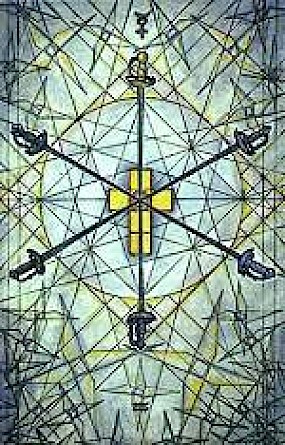
The Lord of Science appears in a reading when we have passed through a stormy or difficult time, and into the safety of a sheltered harbour, where we can recuperate, and consider the difficulties which have arisen around us.
Often we will have passed through a period of dreadful confusion – and frequently a time of emotional suffering. But this card indicates that, at least for the moment, pressure has eased, and we can try to sort out what we really feel. Frequently we need first to rest until we feel refreshed, but eventually we will be required to assess events and make new decisions for our future.
Because we will find ourselves seeing things more clearly, difficult and demanding decisions will be easier to make. We will find ourselves with a more clear overview of the issues we are facing. And we will be able to make choices which bring us peace of mind and happiness.
Expect to find greater objectivity, clarity and new perspectives as a result of the 6 of Swords. This is a card that indicates a healthy balance between the emotions and the intellect, where we can think through even delicate situations, with detached impartiality.
New Thinking Allo • Nov 8, 2023 This video is a special release from the original Thinking Allowed series that ran on public television from 1986 until 2002. It was recorded in about 1991. It will remain public for only one week. Those who offer enlightenment or salvation appear to often operate more as businessmen than as authentic spiritual teachers. U. G. Krishnamurti denies any possibility of knowledge of enlightenment. The very attempt to achieve enlightenment is an obstacle in the path of the proclaimed goal. The search for enlightenment is a device of the mind to perpetuate itself, in denial of its mortality. The late U. G. Krishnamurti was a world traveler and author of Mind Is a Myth and The Mystique of Enlightenment. Viewed by many as a liberated individual, he eschewed all gurus, teachings and followers. Now you can watch all of the programs from the original Thinking Allowed Video Collection, hosted by Jeffrey Mishlove. Subscribe to the new Streaming Channel (https://thinkingallowed.vhx.tv/) and watch more than 350 programs now, with more, previously unreleased titles added weekly. Free month of the classic Thinking Allowed streaming channel for New Thinking Allowed subscribers only. Use code THINKFREELY.
Pedro Calderón de la Barca (January 17, 1600 – May 25, 1681) was a Spanish dramatist, poet, writer and knight of the Order of Santiago. He is known as one of the most distinguished Baroque writers of the Spanish Golden Age, especially for his plays. Calderón de la Barca was born in Madrid, where he spent most of his life. Wikipedia
Lying for the Lord, is similar to lying for Jesus, but this phrase is particularly associated with the Mormon church (The church of Jesus Christ of latter day saints).
Lying for the Lord is when a Member of the Mormon church gives information which they know is false – or fails to admit to something which they know is true – to make their church seem better, or less corrupt (or less weird) than it really is
The Mormon tradition of lying for, or about, their religion goes back to the founder, Joseph Smith
Joseph Smith, in “Address of the Prophet—His Testimony Against the Dissenters at Nauvoo“, delivered Sunday, May 26, 1844, Joseph Smith stated:
“What a thing it is for a man to be accused of committing adultery, and having seven wives, when I can only find one. I am the same man, and as innocent as I was fourteen years ago.”
as the Mormon’s own genealogical files will reveal, at this time Joseph Smith had many polygamous “wives”
this is not the first example of the Mormon church lying for the lord – it is simply the best known of many lies Propagated by the Mormon church, continuing throughout the whole history of the Mormon church.
Currently the Mormon church employes semi-official ‘apologists’ to try and defend themselves against the many sources which reveal the historical lies of the Church – semi official so the church can maintain ‘plausible deniability’
“the Mormon religion is in no way related to masonry. It’s just a religion, just like any other religion. (It’s not a cult. I would know. I am Mormon.)”






.jpg)