You are infested with parasites. With Lyme spirochetes. With bacteria. We just need to kill them all off, and then you’ll feel clean, you’ll feel better. This was my doctors’ promise during the first year I was sick. Here, take one more drug. We will “clean you out.” Your gut is “leaky.” Your body is toxic. Your kidneys are full of heavy metals. Your brain is toxic. Your lymph nodes are swollen with snowmelt.
Anyone who has ever been life-threateningly ill will know the desperation it breeds. You’ll try anything. You’ll do anything. And when treatments fail, and doctors—shockingly unskilled in empathy—shrug and suggest this means you will die, you start looking anywhere for help. Rational orthodoxy fades, and you find yourself lying on a vibrating crystal in a room covered in purple velvet while a “shamanic healer” tells you that, first, you are a “martyred turtle of great significance,” and, second, you are unclean. You have karmic baggage. You are sludged with demons and darkness. Your illness is dirty. You are polluted. Biologically. Emotionally. Karmically.
This information came as no surprise to a survivor of early sexual abuse. “Yes,” I shuddered. Although I’d kept this a secret from my family and friends, here it was, showing up on a blood test, in my failing organs, in the perspicacious eyes of an energy healer, a psychic, a nutritionist. I had failed. There was no way to hide the contamination. Just like my “leaky” gut, the darkness was finally leaking out. “Yes,” I tearfully affirmed to my assortment of healers and doctors and guides. “Yes. I knew it. I knew I was contaminated. I have always been impure. Tell me, please. How can I live? How can I be purified of this illness that I obviously brought upon myself?”
The answer always costs money. A lot of money. And the answer was always packaged in white light, ascension, purification, in the chlorinated scrub of my gut, my blood, my body, and my soul. And when these treatments, spiritual and medical, not only failed but made me much sicker, the healers and doctors would send me a bill and say, You’re too sick for us to handle. Too dark. Too inflamed. You don’t want to get better.
Abandoned by medicine, manhandled by New Age healers, and doggedly set upon academic achievement at all costs, I decided to try to pull myself into another life. I just needed coping mechanisms to get through the pain, to live through an extra year, to finish the book I wanted to write, to put a Band-Aid on a mortal wound. I took matters into my own shaking hands, fully indoctrinated in purity jargon.
My gut biome was obliterated. Before a correct diagnosis of genetic connective tissue disease, years of antibiotic treatment had opened up too much real estate for monologuing pathogens. The doctors’ attempts to clean me had left me barren and vulnerable, as a tree farm is to fungus and wildfire. Plagued by life-threatening allergic reactions to food, with no recourse to a cure, I limited my diet again and again.
I looked to academics as a way of externalizing the success I could never somatically embody. Here were thin, severe men with ideas as knife-like as their countenances, who told me, Reject the shadows and walk out of the cave. Reject the body and prize the mind. Find the real forms. The sicker and thinner I became, the more my professors praised and fetishized my “perseverance” and “asceticism.”
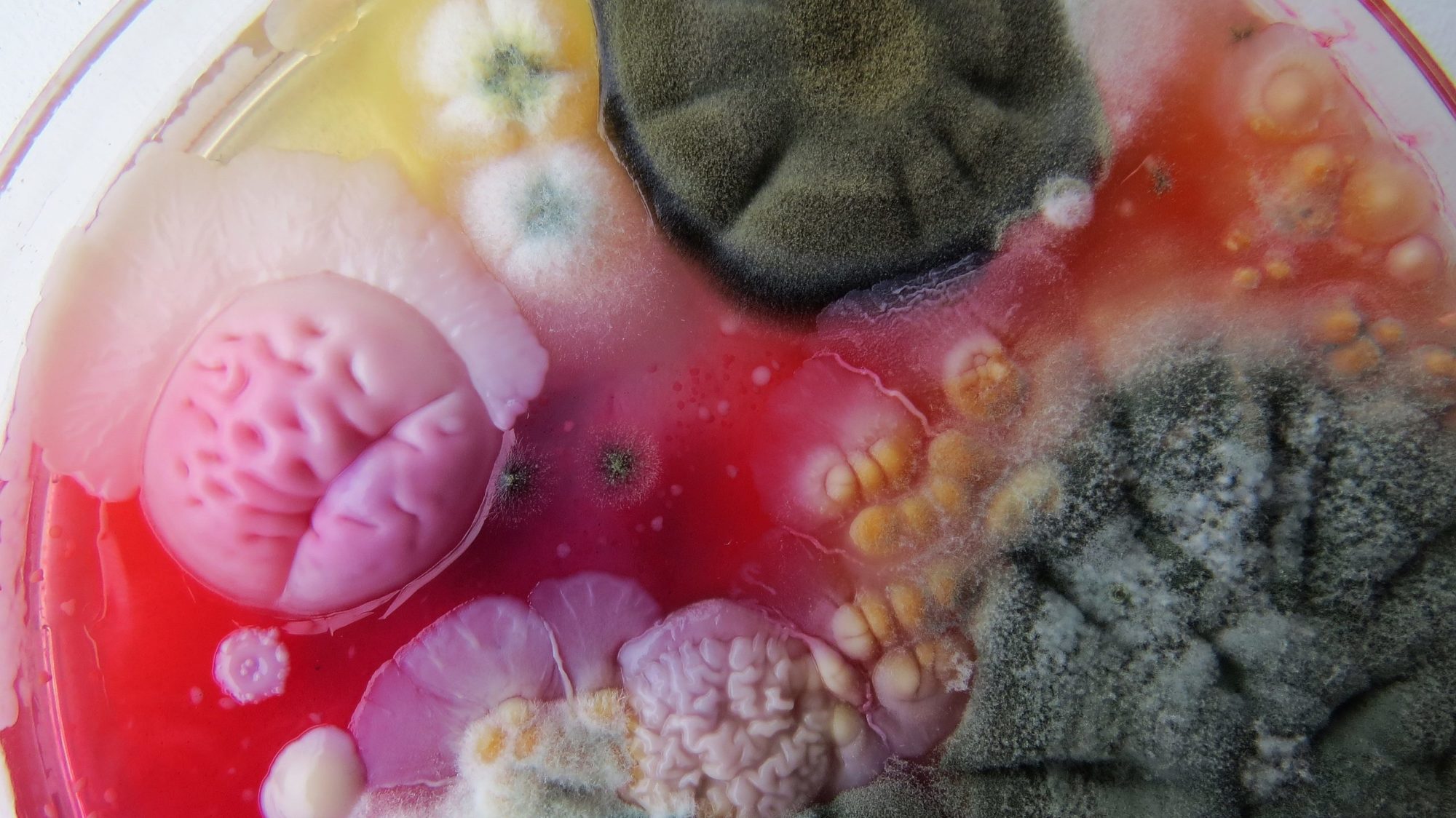
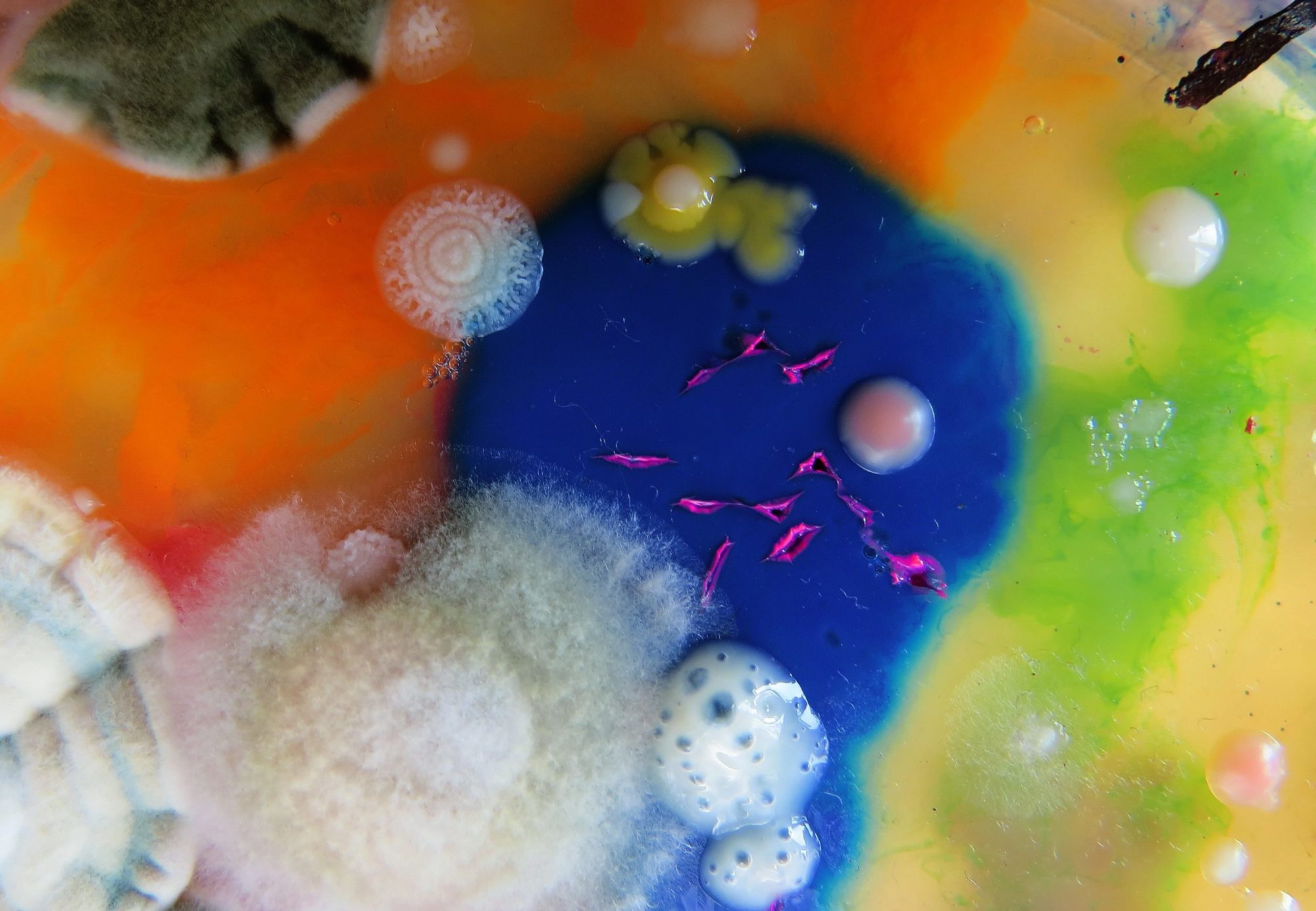
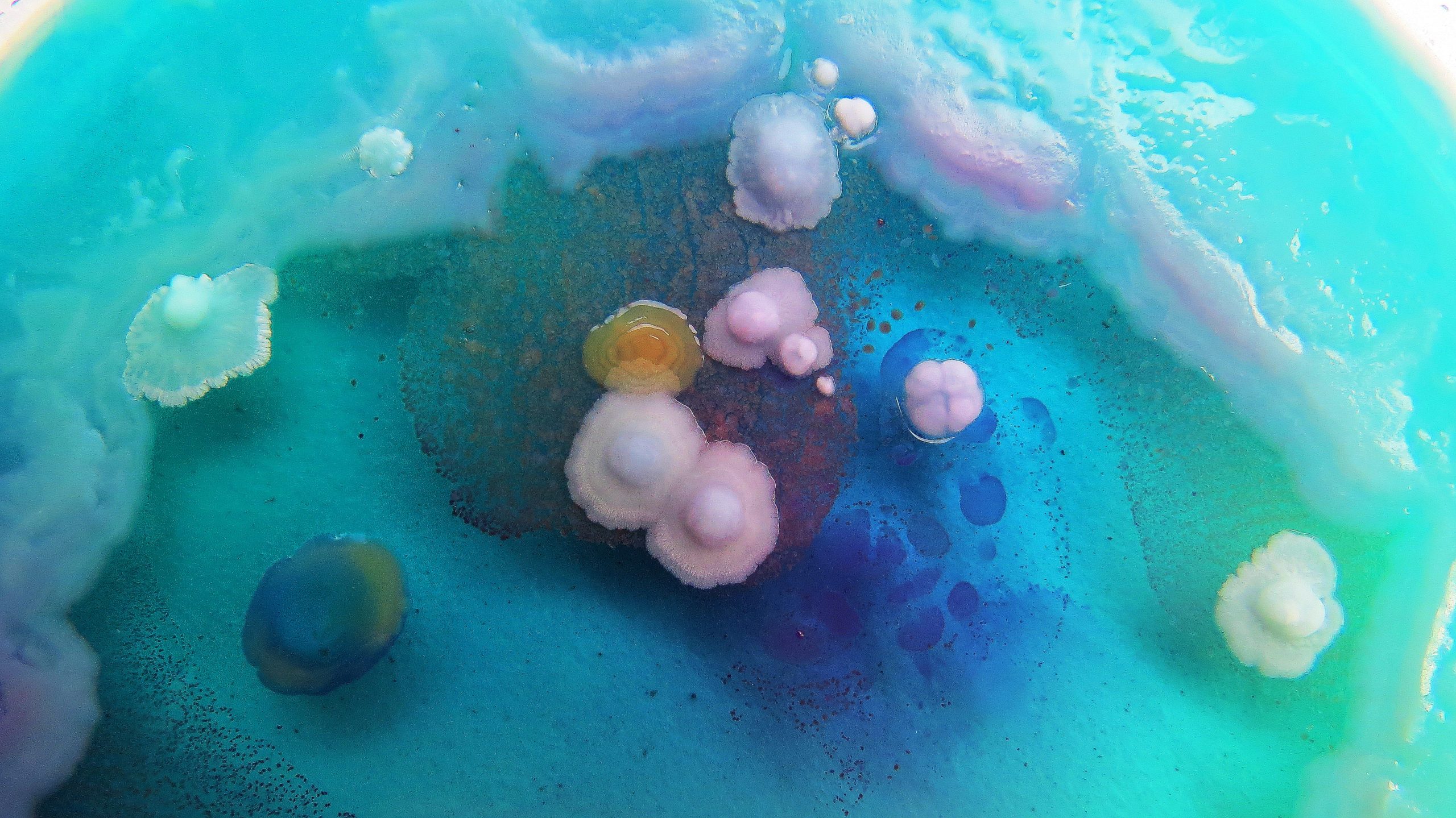
Dashaplesen, Bio abstractions (series), free seeding techniques (air and surrounding microbiome), artist’s nutrients, 7-20 days of incubations [courtesy of the artist]
Years of talk therapy, and then a vulnerable plunge into Somatics and EMDR (Eye Movement Desensitization and Reprocessing), left me feeling similarly ragged. I showed up to every appointment. I paid ridiculous sums of money to therapists and psychologists who would say, If you work really hard, maybe we can “remove” these memories. We can complete them. You can move on. You can officially heal. When years of reliving pain, diving headfirst into putrefied wounds, failed to produce the joy I wanted so badly to inhabit, they would return to the refrain: Maybe you don’t want this. Maybe your illness, your sorrow, your PTSD is your fault. Maybe you don’t want to get clean. I was nuclear waste. The lightworkers said I was all shadow. The shamans said I was an underworld being. Too contaminated to handle. But, always, curiously, not too contaminated to bill for more and more money.
Mice raised in sterile labs without bacteria are dysfunctional. They are prone to disease, to anxiety, and to behaviors linked to schizophrenia. Research into gut biomes has shown that decreased biodiversity could contribute to depression, metabolic syndrome, and a host of other problems. Similarly, our attempts to blitz mosquitos, to clean our crops, and to sterilize the soil of pathogens has contributed to an agricultural and climate crisis.
Pathogens, it turns out, often constitute health. Soil without a microbial and fungal biome cannot sequester carbon, cannot grow nutritious food, and cannot, ultimately, support any life at all. We “clean up” forests in a simplistic attempt to prevent wildfires, and end up creating the conditions for the fires we are trying to prevent. The legacy of Plato’s Cave, in concert with monotheism’s demonization of embodiment, have created a spiritually sterile binary of light and dark, ascent and descent. This dualism is remarkably incompatible with the biodiversity of healthy ecosystems. And, worse, it lacks compassion for the ill, the bereaved, and survivors of abuse.
Dashaplesen, Bio abstractions (series), free seeding techniques (air and surrounding microbiome), artist’s nutrients, 7-20 days of incubations [courtesy of the artist]
What if your illness doesn’t have a cure? What if you can’t “remove” the memories of assault? What then? Will you never be pure enough? Light enough? Clean enough?
Scrub harder. Scrub your skin off. Scrub your shadows off. Scrub until you bleed. The turning point in my life came when I realized that the healthiest metaphor for me wasn’t light, or soap, or ascent. It was compost. It wasn’t clean, it was everything. Refuse. Dirt. Fungi. Bacteria. Water. Grubs. Worms. And remarkably, this mess was fertile. It made soil. It supported new green shoots. My gut didn’t need another dose of antifungal medication to remediate the problem created by antibiotics. Cleaning was killing me. I needed to compost my body. I needed to compost my spirit. I needed to add more microbes, more foods to my diet. The gut doesn’t want purity. It needs diversity—a little dirt, a little contamination—to thrive.
I needed to add herbal lore and Indigenous knowledge and folktales and children’s books and romance novels back into my philosophically sterilized worldview. I needed to approach psychological wounding, not with a scalpel and hydrogen peroxide, but with flowers and joy and laughter. I needed to overwhelm the pain, not try to rid myself of it. I didn’t need to “integrate” the abuse. I needed to place it softly into dark soil. I needed to say, “Okay. You’re nasty. But please make something grow.”
I’m much more interested in ensoilment than ensoulment. I want to have actual roots. I want my spirituality to have fur, pheromones, funk. I want it to live in a specific place. I want it to teach me how to be dynamically present and useful to my ecosystem. And I want to tell people that healing isn’t about completion. It isn’t about lightness. It’s about the mixing bowl where nothing is rejected, everything is included. In order to grow a garden, you need manure. You need compost. In order to heal the soil, you don’t clean it, you add to it: Fungi, ferment, bacteria, woodchips.
Researching Rabbi Jesus/Yeshua for an ecological reimagining of the gospels, I realized the folk magician’s real teaching was not purification. He even rejects John the Baptist’s water immersions. In a time when people were traumatized by Roman imperialism, diseased, and obsessed with purity rituals, he offered something radical. His offering was to brush off the question of purity: “Who cares? Come and eat with me. Come and share a meal.” He healed, not by cleaning but by including. Everyone was invited. No one was exiled.
I’m no longer trying to get clean. When I see healers prioritizing light over darkness, ascent over descent, purity over contaminated survival and flourishing biodiversity, I want to ask: When was the last time you consulted the land for advice? When was the last time you sat in the woods at night without a flashlight? When was the last time you invited everyone to the table?
Sophie Strand is a poet, historical-fiction writer, and essayist based in the Hudson Valley with a focus on the intersection of spirituality and ecology. Her first book of essays, The Flowering Wand: Lunar Kings, Lichenized Lovers, Transpecies Magicians, and Rhizomatic Harpists Heal the Masculine, is forthcoming from Sacred Planet Books (Inner Traditions). Her writing has been published by Dark Mountain, Poetry.org, Unearthed, Braided Way Magazine, Creatrix Magazine, and Your Impossible Voice. You can continue to follow her work and poetry on Facebook or Instagram: @cosmogyny.
“Thus action and reaction among men never move in a closed circle and can never be reliably confined to two partners.” (The Human Condition (HC), The Frailty of Human Affairs, 190)
„Es gibt kein auf einen bestimmten Kreis zu begrenzendes Agieren und Re-agieren, und selbst im beschränktesten Kreis gibt es keine Möglichkeit, ein Getanes wirklich zuverlässig auf die unmittelbar Betroffenen und Gemeinten zu beschränken, etwa auf ein Ich und ein Du.” (Vita Activa (VA), Die Zerbrechlichkeit menschlicher Angelegenheiten, 182)
Scenarios of two persons facing each other in mutual encounters are prevalent in modern social and political philosophy. They negotiate social contracts, struggle for recognition or engage in open consensus-oriented dialogue. From Hobbes, Fichte and Hegel to Taylor, Habermas and Honneth, mutual encounters have served as paradigms. Yet, Hannah Arendt is somewhat wary of making mutual encounters central to her phenomenology of acting and speaking with one another. Arendt might want to insist on a subtle but crucial difference: It is one thing to mutually understand each other in relations of personal affinity and another thing to share experiences and perspectives on our common reality of human affairs.
It is possible to override Arendt’s wariness of mutuality. In her monograph Situating the Self, Seyla Benhabib, for example, has fruitfully introduced the Arendtian emphasis on spontaneity, participation, empowerment, performance and storytelling into a framework of mutual action and recognition. One of her central concerns is to address issues of social justice and concrete gender and group identities that have been neglected in Arendt’s work. According to Benhabib, Arendt’s agonistic, anti-modernist view of public space in The Human Condition can be contrasted with an associational view in her later work on totalitarianism (Benhabib, 1992, pp. 93–95). She considers the latter view much better suited to address the concerns of modern politics.
Interestingly, both views proposed by Benhabib imply that acting and speaking in public are enabled by processes that involve mutuality — either as an against-one-another or as a for-one-another. According to the agonistic view, the public space “is a competitive space in which one competes for recognition, precedence and acclaim; ultimately it is the space in which one seeks a guarantee against the futility and the passage of all things human” (ibid., p. 93). This is the public stage of the Greek polis where a homogenous group of elite men competes against each other at the cost of excluding everyone else. Against this, the associational view suggests that public space emerges wherever “emerges whenever and wherever, in Arendt’s words, ‘men act together in concert.’” (ibid.) According to Benhabib’s reading, sites of power emerge from acting in concert through speech and persuasion. The power “emanates from action, and it comes from the mutual action of a group of human beings” (ibid.). It does not need the big political stage to emerge. In fact, these sites of power are particularly likely to appear wherever groups of activists gather — whether it is in a private dining room or for a form of public protest. On this reading, Arendt shifts from viewing the public as a competitive, strategic struggle for recognition by political agents vying for excellence to viewing it as a group-based effort for mutual recognition that lets a particular kind of “We” emerge. Benhabib holds that the latter “We” is particularly relevant for the concerns of modern politics because it can account for concrete group identities.
Now, neither of the views proposed by Benhabib pays particular attention to a somewhat intangible but no less real aspect of human interrelatedness and togetherness in The Human Condition. Since it is so intangible, Arendt finds the metaphor of the web (German Bezugsgewebe, literally woven fabric of relations/references) most appropriate for it. With this she is trying to capture the peculiar experience of boundlessness when we speak and act with one another. In this context, Arendt remarks that action and reaction among men can never be reliably confined to two partners (HC 190). This means, as she elaborates in her parallel German rendition of the same point in Vita Activa1, that there is no possibility to reliably restrict deeds to those directly affected and directly addressed, for instance, an I and a You. Importantly, this is not because there are quantitatively too many humans on this planet for us to determine the consequences of our actions (VA 182). Instead, we experience our actions as boundless because what just now seems predictable as a particular constellation of the web of human relations can be radically changed by a single word or gesture. Therefore, there is no way to fix the fleetingness and fragility of the web of relations, even if we restrict our interactions to smaller and smaller groups. In a first instance, acting and speaking are both irrevocable — since we cannot just undo our deeds — and unpredictable.
Placing the fragility of the web of human relationships at the center of an account of acting and speaking together has implications for how we imagine its power. Just because we experience acting and speaking with one another as boundless does not make it by default an experience of powerlessness. In the same chapter on “action,” Arendt illustrates this for the human capacities to forgive and to promise and their peculiar powers to shape the temporal structure of the web. She claims that the remedy against the irrevocability of our actions springs from the faculty of forgiving, the remedy against their unpredictability from the faculty to make and keep promises (HC 236). To trace Arendt’s wariness of mutuality and why she insists that the political power of mutual encounters is limited, it is helpful to consider her account of forgiving. This can highlight that insisting on the limited political force of mutual encounters is not to dismiss the role of mutuality and close personal social relations for human interrelatedness entirely.
In order to spell out how forgiving is an elementary and authentic political experience (HC 236–243), Arendt considers two models of forgiving — love-based and friendship-based forgiving. An exclusive focus on love-based notions of forgiving is problematic for Arendt because it does not allow us to consider the political possibilities of the experience2. But why should love rule out a political experience of forgiving?
One way to read Arendt here, is to take her to illustrate a characteristic tendency of experiences of love. “Love” as a mutual encounter of the purest form comes with the tendency to close two partners off from the world. The resulting account of forgiving describes an intimate task to nurture back care, appreciation and esteem between an I and a You within their confined circle of two. All that matters in this sphere is You and Me. In the special form of self-forgiveness, love-based forgiving can even be entirely self-revolving. Arendt outright denies the possibility of self-forgiveness as a meaningful, authentic experience (HC 237). I do not think that we need to follow her blindly on her rather harsh dismissal of self-forgiveness as nonsense and mere role play. In certain contexts, it might very well be meaningful and important. According to contemporary mental-health and well-being literature, for example, self-forgiveness refers to practices of self-love to overcome overly self-critical and self-depreciating attitudes. But although we might want to be more careful here, considering self-forgiveness as an extreme case of love-based forgiving can highlight an important and valid point in Arendt’s analysis: Love-based forgiving, whether interpersonal or entirely self-referential, has the tendency to close itself off from the world of human affairs beyond its confined circles and thus to political experience and judgement.
This is particularly interesting because Arendt proposes friendship-based forgiving as an alternative. It is not always the case that we need to establish a closed-off, intimate sphere in order to forgive and to experience forgiveness. Whereas love in its purest form highlights the tendency of mutual encounters to close us off from the world, what Arendt means by “friendships” highlights that it is possible to maintain an openness to the world while we engage in meaningful relations with one another. Of course, our everyday experiences of friendship are personal and intimate experiences. They do require love and tend to flourish in private spaces — for example Benhabib’s dining room where activists gather in secret. However, unlike love it does allow for worldly concerns and point of views to enter the intimate sphere of personal relationships. It thus creates space and distance between the subjects. In the larger domain of human affairs, friendship tends towards a minimal form of mutual personal relation — a political friendship without intimacy and closeness: “[I]t is a regard for the person from the distance which the space of the world puts between us, and this regard is independent of the qualities which we may admire and the achievements which we may highly esteem” (HC 243). For her account of forgiveness as a political experience she concludes that such a minimal mutual relation of respect towards another person “is quite sufficient to prompt forgiving of what a person did, for the sake of the person” (HC 243). It is this experience of distance with a mere regard for the other’s humanity and personhood that enables political experience in the strict Arendtian sense. “Friendship” has a tendency to open up to the world because it creates space for an in-between. It is this actual space between subjects that is crucial for enabling an exchange of perspectives and experiences of the world that goes beyond the closely confined circles of small and smallest affinity groups and thus for a political capacity to consider perspectives beyond these circles in our judgments.
This distance-based in-between enables a kind of togetherness that neither emerges from an associational for-one-another nor an agonistic against-one-another. In order to share perspectives and experiences we do not necessarily have to identify with the other standpoints or feel a particularly strong affinity towards them. Rather, the fragile possibility to share perspectives on a common world in a more minimal sense is dependent on our ability to actively see the same aspect of the world in a plurality of different ways3. In addition to an openness to engage in this activity to see and feel things differently, this only requires a basic regard and respect for other persons and their humanity. The feeling of connectedness that emerges on the basis of this mere political capacity to share perspectives on human affairs is different from the identity-based Wes that emerge from mutual action and struggles for recognition.
Why might this difference be important for concerns of modern politics? As Benhabib and many other feminist and critical thinkers have highlighted, being sensitive to concrete historical and material identities is important for issues of social justice. And, as many have pointed out, the historical Arendt was certainly blind to a range of issues that concern social justice. She did not grasp the full severity of racial injustice and was not particularly concerned about feminist struggles for gender equality. However, this does not necessarily make her wariness of mutuality a mere by-product of a conservative enamorment with Greek notions such as philia politiké.
It is frighteningly easy to ignore issues of social justice, even for those who are politically invested in a particular struggle for justice and recognition. The history of feminist activist practice has shown that the power that emerges from mutual concerted action just as quickly turns into a desire to build up walls around what has been achieved at the cost of denying others their right to full human existence. Take for example racist tendencies in the suffrage movement or, for a pressing issue in today’s feminist activism, trans-exclusionary tendencies by those who have once been at the forefront of second-wave feminist struggles. A minimal experience of connection with others, not despite concrete differences, but exactly on the very basis of our different perspectives on worldly human affairs is important but cannot be taken for granted. Without the openness to engage in a constant effort to share perspectives and experiences, the for- and against-one-another that certainly is a key driving force of struggles for justice and recognition becomes aimless and loses its emancipatory power. Struggles for mutual recognition turn into reactionary efforts on confined islands of sovereignty.4
Julia Zaenker is a PhD fellow at the Center for Subjectivity Research at the University of Copenhagen. She specializes in phenomenology with a particular interest in Husserlian phenomenology and feminist and political phenomenology. Her dissertation project investigates the relation of second-person address, recognition and communication in their role for sharing experiences and perspectives. Her project is affiliated with the ERC-project “Who are We”.
Footnotes:
1 Arendt first published The Human Condition in English in 1958. Her own translation of the text to German was published later in 1960. She opted to change the title of her translation to Vita Activa. She later remarks in The Life of the Mind that she prefers the “more modest” title Vita Activa over the title “wisely” chosen by her American publisher because it highlights the problem of action as central to her inquiry (LM 6). Notable differences between the two versions of the text are Arendt’s creative choice of words — she does not always go for the most literal translation of her original wording — and subtle changes in the structure of some passages and sentences. As the example of this quote of the week shows, considering both the English and the German version of the text can highlight certain nuances and help to elaborate on some of Arendt’s thoughts.
2 The exclusive focus on love-based forgiving is a tendency Arendt finds in the Christian doctrine. According to the Christian teaching, only love can forgive because it is assumed that “only love is fully receptive of who somebody is” (HC 242). If this were true, Arendt writes, “forgiving would have to remain altogether outside our considerations.” (HC 243)
3 For readings of Arendt that support this interpretation see Zerilli’s (2016) Wittgensteinian proposal and Loidolt’s (2018) phenomenological proposal.
4 This work has been supported by funding from the European Research Council (ERC) under the European Union’s Horizon 2020 research.
Bibliography:
Arendt, H. (2018a). The Human Condition [=HC] (2nd ed.). University of Chicago Press.
Arendt, H. (2018b). Vita Activa. Oder vom tätigen Leben [=VA] (19th ed.). Piper.
Arendt, H. (1978). Life of the Mind [=LM], Harcourt.
Benhabib, S. (1992). Situating the Self. Gender, Community, and Postmodernism in Contemporary Ethics. Polity Press.
Loidolt, S. (2018). Phenomenology of Plurality: Hannah Arendt on Political Intersubjectivity. Routledge.
Zerilli, L. M. G. (2016). A Democratic Theory of Judgment. University of Chicago Press.
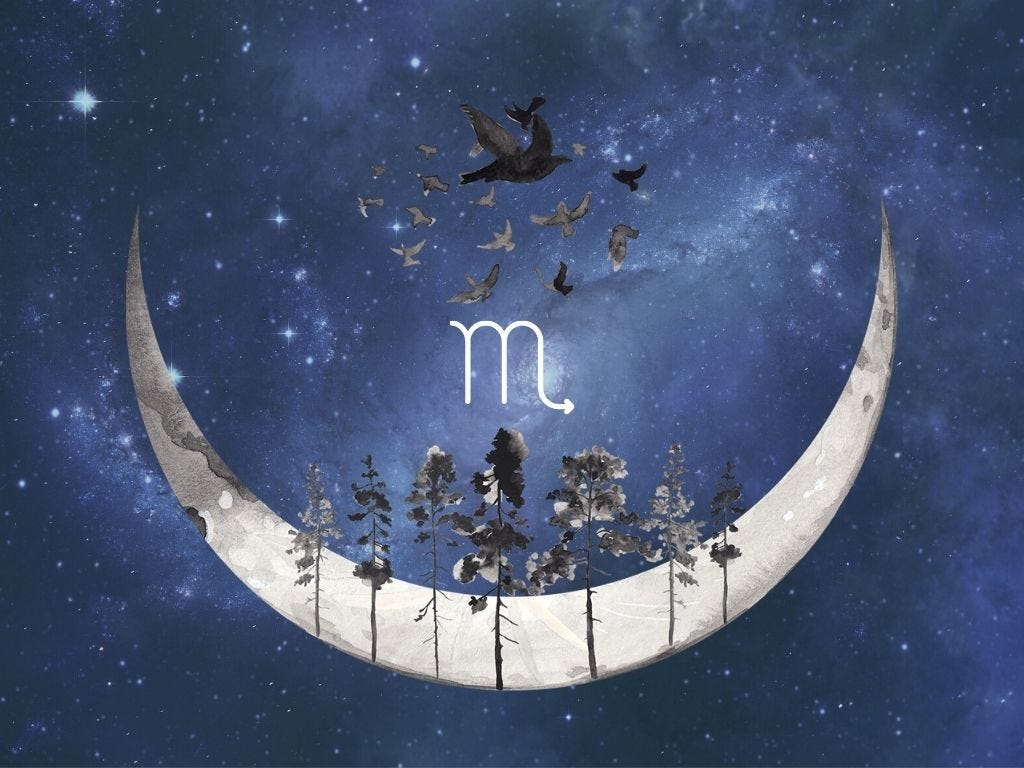
On November 13th, 2023 we have a New Moon at 20° Scorpio.
The New Moon in Scorpio is closely conjunct its ruler, Mars. It is opposite Uranus in Taurus, and trine Neptune in Pisces.
This New Moon is exceptionally potent, to say the least.
Let’s talk about the good, the bad and the unexpected of the New Moon in Scorpio.
The Good: New Moon Conjunct Its Ruler And Trine Neptune
The New Moon is conjunct Mars. Mars is in domicile in Scorpio. This is definitely good news! Mars in Scorpio is powerful, resilient, and deeply connected with his desire nature. When Mars in Scorpio wants something, he goes and gets it.
Our desires are the most powerful force in the universe. Our desires are what the universe wants to manifest, through us.
Mars in Scorpio knows that oh so well. When Mars, the Sun and the Moon align at the New Moon in Scorpio, our desires and intentions gain incredible momentum for manifestation.
The fact that this Marsy New Moon is trine Neptune in Pisces is a nice bonus. This soulful water trine adds a touch of almost psychic intuition. We just ‘know’ what to do, as if the universe itself is guiding our steps.
The Bad: Mars Opposite Uranus
HOWEVER. It’s not all sunshine and roses. The God of the sky himself, Uranus, is directly opposing the New Moon from Taurus. With Uranus in the mix, that flowy Sun-Moon-Mars-Neptune water trine could easily turn into an electrical storm.
Not that Mars-Uranus oppositions are bad per se, but there’s definitely a potential for disruption.
Mars can get angry. Uranus is unpredictable. The Taurus-Scorpio is the most fixed (read stubborn) axis of the zodiac, so both Mars and Uranus will stick to their guns.
Mars in Scorpio realllly wants to get his way. But Uranus, with its erratic, freedom-loving and rebellious energy, won’t yield easily. This clash of wills can lead to impulsive actions, rebellious behavior, and a tendency to push the boundaries.
The Unexpected
At the New Moon in Scorpio, we have a purpose-driven Mars. A supportive water trine with Neptune. And a potentially disruptive opposition with Uranus.
What could happen? As the Uranus saying goes, “expect the unexpected”
Let’s talk a bit about the “unexpected”.
We may dread the unexpected. We may fear it, resist it, or try to control it. We may secretly wait for it to ‘rescue’ us from an unfulfilling routine or a monotonous existence.
The ‘unexpected’ is that part of us that has been silenced, repressed, or unacknowledged. At the New Moon in Scorpio, that part of us wants to be seen. It wants to come out.
Of course, there are things in life that happen to us. Sometimes we are at the whimsical mercy of fate. But many times – and especially when we have an opposition aspect – it’s us who trigger what appears to be an unexpected turn of events.
With Mars opposite Uranus, it’s important to realize that it’s our actions – or inactions – that call in for Uranus. It’s our desires – expressed or repressed – that ignite the spark leading to change.
New Moon In Scorpio – Obeying His Conscience, A Soldier Resists Orders
The Sabian Symbol of the New Moon in Scorpio is “Obeying his conscience, a soldier resists orders” couldn’t have been more apt to describe the energies at play.
This is a very interesting metaphor for many reasons. First, it speaks about the importance of asserting our personal values, even when they go against the demands of society. We will stand our ground and face the consequences, no matter what.
But the Sabian Symbol also invites us to reflect on the “conscience – orders” polarity. One way to look at it is that ‘Mars’ (conjunct the Sun) is our ‘conscience’, and ‘Uranus’ – the unreasonable ‘orders’.
But the twist – and with Uranus, there’s always a twist – is to reflect whether it’s our own Mars conditioning (“I’ve always done things this way”) that is ‘ordering’ us what to do – through ingrained, default patterns to ‘act’ in a certain way; whereas Uranus, as our higher – and much more intelligent – Self, is the ‘conscience’.
In other words, just because you (think you) want it, it doesn’t mean it’s the right thing for you.
New Moon In Scorpio – Resentment And Redemption
But as we agreed, Mars in Scorpio doesn’t take no for an answer.
The New Moon in Scorpio may trigger our default patterns of passive-aggressiveness and resentment.
Resentment is a psychological state that gets triggered when we feel we deserve “more”. That’s especially the case when we feel we’ve done more than our share, and we still haven’t got the results we expected, whereas others seem to effortlessly reap the rewards.
We then feel ‘cheated’ and aggrieved. Many people go to great lengths to get “justice” or vindicate themselves by proving others wrong or by not letting them “get away with it”, even when this goes against their own best interests.
While our sense of justice is undeniably important, it’s also important to keep in mind that there is always the other side of the story, and there might be a bigger picture we don’t fully grasp.
If we haven’t got what we wanted (yet) there is a reason for that – and that reason may have nothing to do with others, but with ourselves. Uranus in Taurus reminds us that sometimes in life, things are exactly as they appear to be.
New Moon In Scorpio And Uranus In Taurus
Sometimes there’s no Scorpionic complexity. There’s no need to find explanations or dig for hidden meanings.
There is a simplicity and naturalness about Uranus in Taurus. It does not need to prove anything. Nature has nothing to prove. When we resist Uranus in Taurus, we resist reality.
Instead of forcing our way towards our goals and future aspirations, it’s better to stay in the reality of the present moment, even if it’s not as we want it to be.
Why?
Because it’s exactly the quality of being present that will help us invite positive change into our lives. It’s our ability to accept reality, that will help us see opportunities and open new doors.
The New Moon is a reminder that we can always start again. At the New Moon in Scorpio, don’t knock on closed doors. See which doors naturally open.
Soon after the New Moon, the Sun and Mars will meet at 25° Scorpio, initiating a new 2-year Hero’s Journey. But more about the Sun-Mars conjunction in the next email.
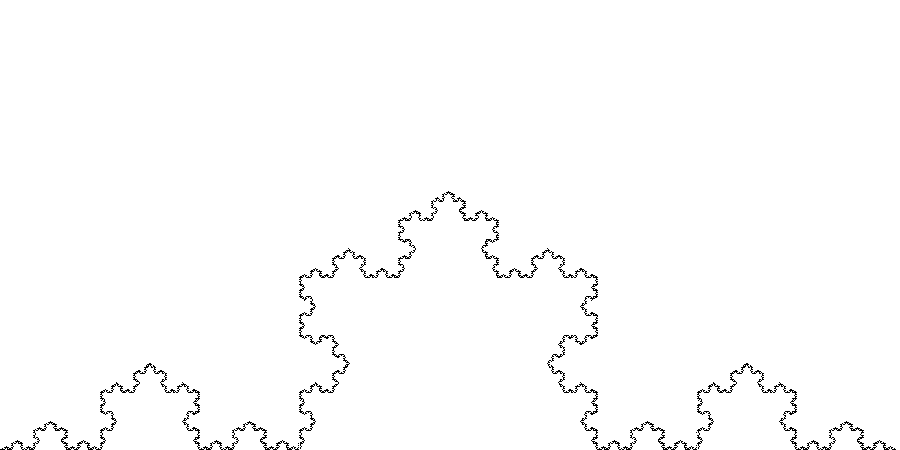
noun: Something, such as a shape, curve, pattern, etc., where smaller parts have the same characteristics. adjective: Having the form or qualities of a fractal.
ETYMOLOGY:
Coined by the mathematician Benoit Mandelbrot (1924-2010), from Latin fractus (broken), from frangere (to break). Earliest documented use: 1975.
Aidin Vaziri November 7, 2023Updated: November 7, 2023, 7:30 pm
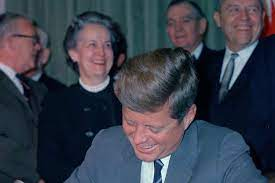
President John F. Kennedy pictured on Oct. 31, 1963. His diary from 1945 is up for auction. Photo: Cecil Stoughton/White House Photographs
A diary kept by John F. Kennedy during the summer of 1945, when he worked as a foreign correspondent for the Chronicle’s parent company Hearst Newspapers, is currently up for auction.
This 61-page ring-bound leather book, believed to be the only diary ever maintained by the former president, chronicles his experiences from the opening session of the United Nations in San Francisco in May to his travels across post-World War II Europe throughout the summer. The then-28-year-old Kennedy shared his observations on various events and personalities of the time, including his peculiar take on German dictator Adolf Hitler, about whom he surmised, “He had in him the stuff of which legends are made.”
The diary, originally sold for $718,750 in 2017 when auctioned by Kennedy’s senate research assistant, Deirdre Henderson, who earlier published its contents in a 1995 book, is back on the market at RR Auction in Boston on the occasion of the 60th anniversary of Kennedy’s death on Nov. 22, 1963.
The original pages are expected to fetch more than $500,000 in the current auction, scheduled to close on Wednesday, Nov. 8.
Kennedy’s diary comprises 12 handwritten pages on seven sheets and 49 single-sided typed pages. It begins with his assignment to cover the San Francisco Conference in May-June 1945, which led to the formation of the United Nations. He then traveled to postwar Europe, shadowing English Prime Minister Winston Churchill during his reelection campaign, attending the Potsdam Conference with Navy Secretary James Forrestal, and visiting the remains of Hitler’s mountaintop retreat in Germany.
“(Y)ou can easily understand how that within a few years Hitler will emerge from the hatred that surrounds him now as one of the most significant figures who ever lived,” Kennedy wrote in his diary in 1945. “He had boundless ambition for his country which rendered him a menace to the peace of the world, but he had a mystery about him in the way he lived and in the manner of his death that will live and grow after him.” The original auction listing states that Kennedy’s remarks about Hitler were not expressions of admiration or praise, but rather an objective assessment of his influence.
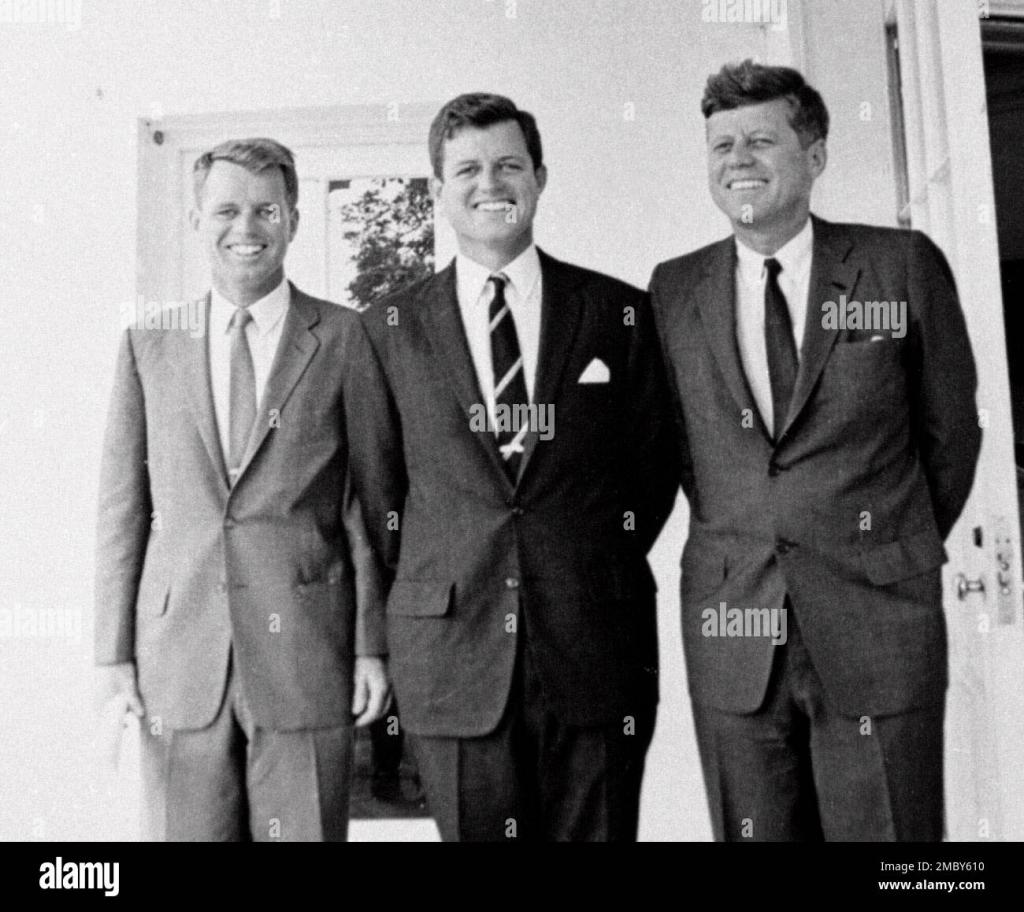
President John F. Kennedy, from right, stands with his brothers Sen. Edward M. Kennedy and U.S. Attorney General Robert F. Kennedy on Aug. 23, 1963, at the White House. Photo: Associated Press
“When JFK said that Hitler ‘had in him the stuff of which legends are made,’ he was speaking to the mystery surrounding him, not the evil he demonstrated to the world,” Henderson wrote at the time. “Nowhere in this diary, or in any of his writings, is there any indication of sympathy for Nazi crimes or cause.”
In another section, Kennedy expressed his admiration for Churchill, describing him as his “idol.”
The diary is part of a lot of presidential artifacts up for auction, which includes items such as a cane used by George Washington, a check signed by Harry S. Truman in 1925, and the autopsy photograph of Kennedy’s alleged assassin, Lee Harvey Oswald.
Reach Aidin Vaziri: avaziri@sfchronicle.com
Follow:Aidin VaziriAidin Vaziri is a staff writer at The San Francisco Chronicle.
Edie Art • Premiered Nov 3, 2023 • This is a short excerpt from an interview Charles Eisenstein gave on the Know Thyself podcast. I illustrated and animated it. Here you can listen to the full interview on the Know Thyself podcast: https://sites.libsyn.com/467130/visio...
ARIES (March 21-April 19): When you Aries people are at your best, you are driven by impeccable integrity as you translate high ideals into practical action. You push on with tireless force to get what you want, and what you want is often good for others, too. You have a strong sense of what it means to be vividly alive, and you stimulate a similar awareness in the people whose lives you touch. Are you always at your best? Of course not. No one is. But according to my analysis of upcoming astrological omens, you now have extra potential to live up to the elevated standards I described. I hope you will take full advantage.
TAURUS (April 20-May 20): In my experience, you Tauruses often have more help available than you realize. You underestimate your power to call on support, and as a result, don’t call on it enough. It may even be the case that the possible help gets weary of waiting for you to summon it, and basically goes into hiding or fades away. But let’s say that you, the lucky person reading this horoscope, get inspired by my words. Maybe you will respond by becoming more forceful about recognizing and claiming your potential blessings. I hope so! In my astrological opinion, now is a favorable time for you to go in quest of all the help you could possibly want. (PS: Where might the help come from? Sources you don’t expect, perhaps, but also familiar influences that expand beyond their previous dispensations.)
GEMINI (May 21-June 20): Sometimes, life compels us to change. It brings us some shock that forces us to adjust. On other occasions, life doesn’t pressure us to make any shifts, but we nevertheless feel drawn to initiating a change. My guess is that you are now experiencing the latter. There’s no acute discomfort pushing you to revise your rhythm. You could probably continue with the status quo for a while. And yet, you may sense a growing curiosity about how your life could be different. The possibility of instigating a transformation intrigues you. I suggest you trust this intuition. If you do, the coming weeks will bring you greater clarity about how to proceed.
CANCER (June 21-July 22): “We suffer more often in imagination than in reality,” wrote ancient Roman philosopher Seneca. That’s certainly true about me. If all the terrible things I have worried about had actually come to pass, I would be unable to function. Luckily, most of my fears have remained mere fantasies. What about you, fellow Cancerian? The good news is that in the coming months, we Crabs will have unprecedented power to tamp down and dissipate the phantasms that rouse anxiety and alarm. I predict that as a result, we will suffer less from imaginary problems than we ever have before. How’s that for a spectacular prophecy?
LEO (July 23-Aug. 22): Poet Matt Michael writes, “Sure, the way trees talk is poetry. The shape of the moon is poetry. But a hot dog is also poetry. LeBron James’ tomahawk dunk over Kevin Garnett in the 2008 NBA Playoffs is poetry. That pothole I always fail to miss on Parkman Road is poetry, too.” In accordance with current astrological omens, Leo. I’d love for you to adopt Michael’s approach. The coming days will be a favorable time to expand your ideas about what’s lyrical, beautiful, holy, and meaningful. Be alert for a stream of omens that will offer you help and inspiration. The world has subtle miracles to show you.
VIRGO (Aug. 23-Sept. 22): Virgo author Michael Ondaatje was born in Sri Lanka, but as a child moved to England and later to Canada. His novel “Running in the Family” describes his experiences upon returning to his native Sri Lanka as an adult. Among the most delightful: the deluge of novel sensory sensations. On some days, he would spend hours simply smelling things. In accordance with current astrological omens, I recommend you treat yourself to comparable experiences, Virgo. Maybe you could devote an hour today to mindfully inhaling various aromas. Tomorrow, meditate on the touch of lush textures. On the next day, bathe yourself in sounds that fill you with rich and interesting feelings. By feeding your senses like this, you will give yourself an extra deep blessing that will literally boost your intelligence.
LIBRA (Sept. 23-Oct. 22): You evolved Libras understand what’s fair and just. That’s one of your potencies, and it provides a fine service for you and your allies. You use it to glean objective truths that are often more valuable than everyone’s subjective opinions. You can be a stirring mediator as you deploy your knack for impartiality and evenhandedness. I hope these talents of yours will be in vivid action during the coming weeks. We non-Libras need extra-strong doses of this stuff.
SCORPIO (Oct. 23-Nov. 21): Here are tips on how to get the most out of the next three weeks: 1. Be a master of simmering, ruminating, marinating, steeping, fermenting and effervescing. 2. Summon intense streams of self-forgiveness for any past event that still haunts you. 3. Tap into your forbidden thoughts so they might heal you. Discover what you’re hiding from yourself so it can guide you. Ask yourself prying questions. 4. Make sure your zeal always synergizes your allies’ energy, and never steals it. 5. Regularly empty your metaphorical trash so you always have enough room inside you to gleefully breathe the sweet air and exult in the earth’s beauty.
SAGITTARIUS (Nov. 22-Dec. 21): “I straddle reality and the imagination,” says Sagittarian singer-songwriter Tom Waits. “My reality needs imagination like a bulb needs a socket. My imagination needs reality like a blind man needs a cane.” I think that’s great counsel for you to emphasize in the coming weeks. Your reality needs a big influx of energy from your imagination, and your imagination needs to be extra well-grounded in reality. Call on both influences with maximum intensity!
CAPRICORN (Dec. 22-Jan. 19): Sometimes, Capricorn, you appear to be so calm, secure, and capable that people get a bit awed, even worshipful. They may even get caught up in trying to please you. Is that a bad thing? Not necessarily—as long as you don’t exploit and manipulate those people. It might even be a good thing in the coming weeks, since you and your gang have a chance to accomplish big improvements in your shared resources and environment. It would take an extra push from everyone, though. I suspect you’re the leader who’s best able to incite and orchestrate the extra effort.
AQUARIUS (Jan. 20-Feb. 18): If you have been posing as a normal person for too long, I hope you will create fresh outlets for your true weird self in the weeks ahead. What might that entail? I’ll throw out a couple of ideas. You could welcome back your imaginary friends and give them new names like Raw Goodness and Spiral Trickster. You might wear fake vampire teeth during a committee meeting or pray to the Flying Spaghetti Monster to send you paranormal adventures. What other ideas can you imagine about how to have way too much fun as you draw more intensely on your core eccentricities?
PISCES (Feb. 19-March 20): I suspect you will have metaphorical resemblances to a duck in the coming weeks: an amazingly adaptable creature equally at home on land, in the water, and in the air. You will feel comfortable anywhere you choose to wander. And I’m guessing you will want to wander farther and wider than you usually do. Here’s another quality that you and ducks will share: You’ll feel perfectly yourself, relaxed and confident, no matter what the weather is. Whether it’s cloudy or shiny, rainy or misty, mild or frigid, you will not only be unflappable—you will thrive on the variety. Like a duck, Pisces, you may not attract a lot of attention. But I bet you will enjoy the hell out of your life exactly as it is.
“You are born alone. You die alone. The value of the space in between is trust and love,” artist Louise Bourgeois wrote in her diary at the end of a long and illustrious life as she contemplated how solitude enriches creative work. It’s a lovely sentiment, but as empowering as it may be to those willing to embrace solitude, it can be tremendously lonesome-making to those for whom loneliness has contracted the space of trust and love into a suffocating penitentiary. For if in solitude, as Wendell Berry memorably wrote, “one’s inner voices become audible [and] one responds more clearly to other lives,” in loneliness one’s inner scream becomes deafening, deadening, severing any thread of connection to other lives.
How to break free of that prison and reinhabit the space of trust and love is what Olivia Laing explores in The Lonely City: Adventures in the Art of Being Alone (public library) — an extraordinary more-than-memoir; a sort of memoir-plus-plus, partway between Helen MacDonald’s H Is for Hawk and the diary of Virginia Woolf; a lyrical account of wading through a period of self-expatriation, both physical and psychological, in which Laing paints an intimate portrait of loneliness as “a populated place: a city in itself.”
After the sudden collapse of a romance marked by extreme elation, Laing left her native England and took her shattered heart to New York, “that teeming island of gneiss and concrete and glass.” The daily, bone-deep loneliness she experienced there was both paralyzing in its all-consuming potency and, paradoxically, a strange invitation to aliveness. Indeed, her choice to leave home and wander a foreign city is itself a rich metaphor for the paradoxical nature of loneliness, animated by equal parts restlessness and stupor, capable of turning one into a voluntary vagabond and a catatonic recluse all at once, yet somehow a vitalizing laboratory for self-discovery. The pit of loneliness, she found, could “drive one to consider some of the larger questions of what it is to be alive.”
She writes:
There were things that burned away at me, not only as a private individual, but also as a citizen of our century, our pixelated age. What does it mean to be lonely? How do we live, if we’re not intimately engaged with another human being? How do we connect with other people, particularly if we don’t find speaking easy? Is sex a cure for loneliness, and if it is, what happens if our body or sexuality is considered deviant or damaged, if we are ill or unblessed with beauty? And is technology helping with these things? Does it draw us closer together, or trap us behind screens?
Bedeviled by this acute emotional anguish, Laing seeks consolation in the great patron saints of loneliness in twentieth-century creative culture. From this eclectic tribe of the lonesome — including Jean-Michel Basquiat, Alfred Hitchcock, Peter Hujar, Billie Holiday, and Nan Goldin — Laing chooses four artists as her companions charting the terra incognita of loneliness: Edward Hopper, Andy Warhol, Henry Darger, and David Wojnarowicz, who had all “grappled in their lives as well as work with loneliness and its attendant issues.”
Photograph by Maria Popova. (Available as a print.)
She considers, for instance, Warhol — an artist whom Laing had always dismissed until she was submerged in loneliness herself. (“I’d seen the screen-printed cows and Chairman Maos a thousand times, and I thought they were vacuous and empty, disregarding them as we often do with things we’ve looked at but failed properly to see.”) She writes:
Warhol’s art patrols the space between people, conducting a grand philosophical investigation into closeness and distance, intimacy and estrangement. Like many lonely people, he was an inveterate hoarder, making and surrounding himself with objects, barriers against the demands of human intimacy. Terrified of physical contact, he rarely left the house without an armoury of cameras and tape recorders, using them to broker and buffer interactions: behaviour that has light to shed on how we deploy technology in our own century of so-called connectivity.
Woven into the fabric of Laing’s personal experience are inquiries into the nature, context, and background of these four artists’ lives and their works most preoccupied with loneliness. But just as it would be unfair to call Laing’s masterpiece only a “memoir,” it would be unfair to call these threads “art history,” for they are rather the opposite, a kind of “art present” — elegant and erudite meditations on how art is present with us, how it invites us to be present with ourselves and bears witness to that presence, alleviating our loneliness in the process.
Laing examines the particular, pervasive form of loneliness in the eye of a city aswirl with humanity:
Imagine standing by a window at night, on the sixth or seventeenth or forty-third floor of a building. The city reveals itself as a set of cells, a hundred thousand windows, some darkened and some flooded with green or white or golden light. Inside, strangers swim to and fro, attending to the business of their private hours. You can see them, but you can’t reach them, and so this commonplace urban phenomenon, available in any city of the world on any night, conveys to even the most social a tremor of loneliness, its uneasy combination of separation and exposure.
You can be lonely anywhere, but there is a particular flavour to the loneliness that comes from living in a city, surrounded by millions of people. One might think this state was antithetical to urban living, to the massed presence of other human beings, and yet mere physical proximity is not enough to dispel a sense of internal isolation. It’s possible – easy, even – to feel desolate and unfrequented in oneself while living cheek by jowl with others. Cities can be lonely places, and in admitting this we see that loneliness doesn’t necessarily require physical solitude, but rather an absence or paucity of connection, closeness, kinship: an inability, for one reason or another, to find as much intimacy as is desired. Unhappy, as the dictionary has it, as a result of being without the companionship of others. Hardly any wonder, then, that it can reach its apotheosis in a crowd.
As scientists are continuing to unpeel the physiological effects of loneliness, it is no surprise that this psychological state comes with an almost bodily dimension, which Laing captures vividly:
What does it feel like to be lonely? It feels like being hungry: like being hungry when everyone around you is readying for a feast. It feels shameful and alarming, and over time these feelings radiate outwards, making the lonely person increasingly isolated, increasingly estranged. It hurts, in the way that feelings do, and it also has physical consequences that take place invisibly, inside the closed compartments of the body. It advances, is what I’m trying to say, cold as ice and clear as glass, enclosing and engulfing.
There is, of course, a universe of difference between solitude and loneliness — two radically different interior orientations toward the same exterior circumstance of lacking companionship. We speak of “fertile solitude” as a developmental achievement essential for our creative capacity, but loneliness is barren and destructive; it cottons in apathy the will to create. More than that, it seems to signal an existential failing — a social stigma the nuances of which Laing addresses beautifully:
Loneliness is difficult to confess; difficult too to categorise. Like depression, a state with which it often intersects, it can run deep in the fabric of a person, as much a part of one’s being as laughing easily or having red hair. Then again, it can be transient, lapping in and out in reaction to external circumstance, like the loneliness that follows on the heels of a bereavement, break-up or change in social circles.
Like depression, like melancholy or restlessness, it is subject too to pathologisation, to being considered a disease. It has been said emphatically that loneliness serves no purpose… Perhaps I’m wrong, but I don’t think any experience so much a part of our common shared lives can be entirely devoid of meaning, without a richness and a value of some kind.
Loneliness might be taking you towards an otherwise unreachable experience of reality.
Adrift and alone in the city that promises its inhabitants “the gift of privacy with the excitement of participation,” Laing cycles through a zoetrope of temporary homes — sublets, friends’ apartments, and various borrowed quarters, only amplifying the sense of otherness and alienation as she is forced to make “a life among someone else’s things, in a home that someone else has created and long since.”
But therein lies an inescapable metaphor for life itself — we are, after all, subletting our very existence from a city and a society and a world that have been there for much longer than we have, already arranged in a way that might not be to our taste, that might not be how the building would be laid out and its interior designed were we to do it from scratch ourselves. And yet we are left to make ourselves at home in the way things are, imperfect and sometimes downright ugly. The measure of a life has to do with this subletting ability — with how well we are able to settle into this borrowed, imperfect abode and how much beauty we can bring into existence with however little control over its design we may have.
This, perhaps, is why Laing found her only, if temporary, respite from loneliness in an activity propelled by the very act of leaving this borrowed home: walking. In a passage that calls to mind Robert Walser’s exquisite serenade to the soul-nourishment of the walk, she writes:
In certain circumstances, being outside, not fitting in, can be a source of satisfaction, even pleasure. There are kinds of solitude that provide a respite from loneliness, a holiday if not a cure. Sometimes as I walked, roaming under the stanchions of the Williamsburg Bridge or following the East River all the way to the silvery hulk of the U.N., I could forget my sorry self, becoming instead as porous and borderless as the mist, pleasurably adrift on the currents of the city.
But whatever semblance of a more solid inner center these peripatetic escapes into solitude offered, it was a brittle solidity:
I didn’t get this feeling when I was in my apartment; only when I was outside, either entirely alone or submerged in a crowd. In these situations I felt liberated from the persistent weight of loneliness, the sensation of wrongness, the agitation around stigma and judgement and visibility. But it didn’t take much to shatter the illusion of self-forgetfulness, to bring me back not only to myself but to the familiar, excruciating sense of lack.
Edward Hopper: Nighthawks (1942)
It was in the lacuna between self-forgetfulness and self-discovery that Laing found herself drawn to the artists who became her companions in a journey both toward and away from loneliness. There is Edward Hopper with his iconic Nighthawks aglow in eerie jade, of which Laing writes:
There is no colour in existence that so powerfully communicates urban alienation, the atomisation of human beings inside the edifices they create, as this noxious pallid green, which only came into being with the advent of electricity, and which is inextricably associated with the nocturnal city, the city of glass towers, of empty illuminated offices and neon signs.
[…]
The diner was a place of refuge, absolutely, but there was no visible entrance, no way to get in or out. There was a cartoonish, ochre-coloured door at the back of the painting, leading perhaps into a grimy kitchen. But from the street, the room was sealed: an urban aquarium, a glass cell.
[…]
Green on green, glass on glass, a mood that expanded the longer I lingered, breeding disquiet.
Hopper himself had a conflicted relationship with the common interpretation that loneliness was a central theme of his work. Although he often denied that it was a deliberate creative choice, he once conceded in an interview: “I probably am a lonely one.” Laing, whose attention and sensitivity to even the subtlest texture of experience are what make the book so wonderful, considers how Hopper’s choice of language captures the essence of loneliness:
It’s an unusual formulation, a lonely one; not at all the same thing as admitting one is lonely. Instead, it suggests with that a, that unassuming indefinite article, a fact that loneliness by its nature resists. Though it feels entirely isolating, a private burden no one else could possibly experience or share, it is in reality a communal state, inhabited by many people. In fact, current studies suggest that more than a quarter of American adults suffers from loneliness, independent of race, education and ethnicity, while 45 per cent of British adults report feeling lonely either often or sometimes. Marriage and high income serve as mild deterrents, but the truth is that few of us are absolutely immune to feeling a greater longing for connection than we find ourselves able to satisfy. The lonely ones, a hundred million strong. Hardly any wonder Hopper’s paintings remain so popular, and so endlessly reproduced.
Reading his halting confession, one begins to see why his work is not just compelling but also consoling, especially when viewed en masse. It’s true that he painted, not once but many times, the loneliness of a large city, where the possibilities of connection are repeatedly defeated by the dehumanising apparatus of urban life. But didn’t he also paint loneliness as a large city, revealing it as a shared, democratic place, inhabited, whether willingly or not, by many souls?
[…]
What Hopper captures is beautiful as well as frightening. They aren’t sentimental, his pictures, but there is an extraordinary attentiveness to them… As if loneliness was something worth looking at. More than that, as if looking itself was an antidote, a way to defeat loneliness’s strange, estranging spell.
David Wojnarowicz by Peter Hujar (Peter Hujar Archive)
For the artists accompanying Laing on her journey — including Henry Darger, the brilliant and mentally ill Chicago janitor whose posthumously discovered paintings made him one of the most celebrated outsider artists of the twentieth century, and the creative polymath David Wojnarowicz, still in his thirties when AIDS took his life — loneliness was often twined with another profound affliction of the psyche: loss. In a passage evocative of Paul Goodman’s taxonomy of the nine types of silence, Laing offers a taxonomy of lonelinesses through the lens of loss:
Loss is a cousin of loneliness. They intersect and overlap, and so it’s not surprising that a work of mourning might invoke a feeling of aloneness, of separation. Mortality is lonely. Physical existence is lonely by its nature, stuck in a body that’s moving inexorably towards decay, shrinking, wastage and fracture. Then there’s the loneliness of bereavement, the loneliness of lost or damaged love, of missing one or many specific people, the loneliness of mourning.
But this lonesomeness of mortality finds its antidote in the abiding consolations of immortal works of art. “Art holds out the promise of inner wholeness,” philosopher Alain de Botton and art historian John Armstrong wrote in their inquiry into the seven psychological functions of art, and if loneliness is, as Laing puts it, “a longing for integration, for a sense of feeling whole,” what better answer to that longing than art? After all, in the immortal words of James Baldwin, “only an artist can tell, and only artists have told since we have heard of man, what it is like for anyone who gets to this planet to survive it.”
Looking back on her experience, Laing writes:
There are so many things that art can’t do. It can’t bring the dead back to life, it can’t mend arguments between friends, or cure AIDS, or halt the pace of climate change. All the same, it does have some extraordinary functions, some odd negotiating ability between people, including people who never meet and yet who infiltrate and enrich each other’s lives. It does have a capacity to create intimacy; it does have a way of healing wounds, and better yet of making it apparent that not all wounds need healing and not all scars are ugly.
If I sound adamant it is because I am speaking from personal experience. When I came to New York I was in pieces, and though it sounds perverse, the way I recovered a sense of wholeness was not by meeting someone or by falling in love, but rather by handling the things that other people had made, slowly absorbing by way of this contact the fact that loneliness, longing, does not mean one has failed, but simply that one is alive.
But as profoundly personal as loneliness may feel, it is inseparable from the political dimensions of public life. In a closing passage that calls to mind Audre Lorde’s clarion call for breaking our silences against structural injustice, Laing adds:
There is a gentrification that is happening to cities, and there is a gentrification that is happening to the emotions too, with a similarly homogenising, whitening, deadening effect. Amidst the glossiness of late capitalism, we are fed the notion that all difficult feelings — depression, anxiety, loneliness, rage — are simply a consequence of unsettled chemistry, a problem to be fixed, rather than a response to structural injustice or, on the other hand, to the native texture of embodiment, of doing time, as David Wojnarowicz memorably put it, in a rented body, with all the attendant grief and frustration that entails.
I don’t believe the cure for loneliness is meeting someone, not necessarily. I think it’s about two things: learning how to befriend yourself and understanding that many of the things that seem to afflict us as individuals are in fact a result of larger forces of stigma and exclusion, which can and should be resisted.
Loneliness is personal, and it is also political. Loneliness is collective; it is a city. As to how to inhabit it, there are no rules and nor is there any need to feel shame, only to remember that the pursuit of individual happiness does not trump or excuse our obligations to each another. We are in this together, this accumulation of scars, this world of objects, this physical and temporary heaven that so often takes on the countenance of hell. What matters is kindness; what matters is solidarity. What matters is staying alert, staying open, because if we know anything from what has gone before us, it is that the time for feeling will not last.
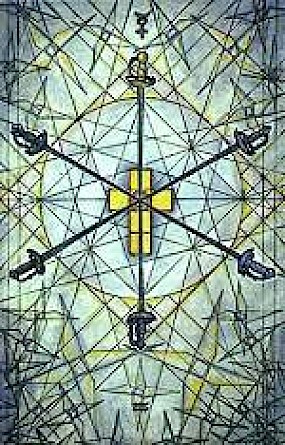
The Lord of Science appears in a reading when we have passed through a stormy or difficult time, and into the safety of a sheltered harbour, where we can recuperate, and consider the difficulties which have arisen around us.
Often we will have passed through a period of dreadful confusion – and frequently a time of emotional suffering. But this card indicates that, at least for the moment, pressure has eased, and we can try to sort out what we really feel. Frequently we need first to rest until we feel refreshed, but eventually we will be required to assess events and make new decisions for our future.
Because we will find ourselves seeing things more clearly, difficult and demanding decisions will be easier to make. We will find ourselves with a more clear overview of the issues we are facing. And we will be able to make choices which bring us peace of mind and happiness.
Expect to find greater objectivity, clarity and new perspectives as a result of the 6 of Swords. This is a card that indicates a healthy balance between the emotions and the intellect, where we can think through even delicate situations, with detached impartiality.
(via angelpaths.com and AlanBlackman)
Consciousness, spirituality, biography, sexuality, androgyny, futurism, space, the arts, science, astrology, democracy, humor, books, movies and more






 There were things that burned away at me, not only as a private individual, but also as a citizen of our century, our pixelated age. What does it mean to be lonely? How do we live, if we’re not intimately engaged with another human being? How do we connect with other people, particularly if we don’t find speaking easy? Is sex a cure for loneliness, and if it is, what happens if our body or sexuality is considered deviant or damaged, if we are ill or unblessed with beauty? And is technology helping with these things? Does it draw us closer together, or trap us behind screens?