A PLAYWRIGHT’S ‘WAIT … WHAT?’ APPROACH TO DIFFICULT HISTORY

Mining Shock and Disbelief to Connect Audiences With the Past, Present, and One Another

What can we learn about society’s sins by sitting in an off-Broadway theater? Playwright Michelle Kholos Brooks explains why she writes about hard issues. A scene from Brooks’ play H*tler’s Tasters, production by New Light Theater Project. Photo by Hunter Canning.

by MICHELLE KHOLOS BROOKS | NOVEMBER 13, 2023 (ZocaloPublicSquare.org)

I’m often identified as someone who writes “issues” plays, but I’m less high-minded about my subject matter than I should probably admit. Generally, I don’t decide to write a play because I know I want to say something important about gun violence, military veterans, or the exploitation of young women—although I care deeply about these topics.

I’m activated to write about a subject when I have a Wait…What? moment. It’s what I call the moment when I find an idea so difficult to fathom that I react by saying to myself, sometimes out loud:

“Wait…what?”

I come across loads of stories where I think, I could write about that, but I feel no urgency.  A Wait… What? moment tells me that there’s a question begging to be investigated. And that if I don’t give it the attention it demands, someone nimbler will discover it and carry it forward. In her book Big Magic, Elizabeth Gilbert writes that she imagines ideas floating in space, poking us until they get our attention. She argues that if an idea is generous enough to present itself, it is our responsibility to coax it over and incubate it—and to give it life by channeling it through our distinctly personal thoughts and experiences, and even our generational histories. Gilbert argues, and I would agree, that if you don’t embrace and dance with an idea that shows up for you, the rascal will float off and find someone worthy—like a jilted lover who suddenly understands their value.

Certain Wait… What? ideas land with an iron thunk so heavy I can’t ignore them if I try. In 2014 I read an article about a 95-year-old German woman who had just come forward to tell her story of being conscripted to be one of Adolf Hitler’s food tasters. She claimed that he chose only young women who were of “good German stock” to test his food for poison.

Wait…what? Just when I thought I had heard every abhorrent thing about Hitler, I learned he had people test his food for poison. He didn’t choose Jews, Poles, homosexuals, or members of any number of communities he hated for this job. Rather, he conscripted young German women who were ostensibly the future of the Reich—the anticipated bearers of his ideal Aryan children. I imagined a room of girls alternately amusing and turning against each other to kill time between meals; waiting to see if they would die.

When the Wait… What strikes, it sparks something in me that desperately needs to connect, to know if this feeling of pained disbelief resonates with anyone else.

Suddenly, through the lens of incredible, reportedly true events, I had my opportunity to work through long-simmering questions I had about the way society treats young women as expendable, and the dangers of complacency.

I told myself I would not write my H*tler’s Tasters idea before I could do airtight research. But then, in 2016, I took part in a 48-hour playwriting challenge. Each participant got a sealed envelope containing writing prompts, and we had 48 hours to create a play—the only rule was that we could never look back and edit what we had written. The process is grueling, but also thrilling, in the way that you don’t have time to censor yourself.

I hadn’t researched the “tasters” at all at that point, but as soon as I broke the envelope’s seal, I felt the play screaming to be revealed. So I wrote. I set the story around 1944, but I gave the girls cell phones. I didn’t want them to feel like sepia-toned people in history. It felt critical that we could recognize our daughters, sisters, friends, and ourselves in the young women conscripted to do this terrible job for a madman. Forty-eight fuzzy hours later I had my first draft of H*tler’s Tasters. I started the hard work of investigating those threads that would make the play less impulsive and more grounded.

The line between past and present blurred. I was stunned to find that the rhetoric I heard during the 2016 election cycle paralleled those of 1930s and ’40s Germany—sometimes word for authoritarian word. Wait…What? I double- and triple-checked my sources to be sure. Vile rants about women during the 2016 campaign reinforced and deepened the intensity of scenarios I created for my female tasters.

Later on, when Trump firings ensued—underlings blamed and even jailed for offenses that came from the very top—I noticed another striking parallel. The young German women of H*tler’s Tasters were ostensibly at the top of society, and were sacrificed without a second thought. Ultimately, a tyrant will turn on his own. No amount of privilege will save any of us.

GET MORE ZÓCALO

Ideas journalism with a head and heart.

You may opt out or contact us anytime.

When I started working on my newest play, Room 1214, the Wait…What was more like, Wait… What the F***?  While researching another project, I had the great honor of meeting Ivy Schamis, a teacher at Marjory Stoneman Douglas High School in Parkland, Florida. Two students in Ms. Schamis’ classroom were killed when a young gunman, swastikas etched into his combat boots and the bullets in his gun, shot his way through the school on February 14, 2018.

I thought I knew all the details of that event. But I hadn’t realized that Ms. Schamis was teaching a Holocaust history class—students literally studying hate crimes—when the shooting took place. Wait… What? Room 1214 became my attempt to make sense of a seemingly endless well of hate, and our collective cultural ability to shrug, shake our heads, and go back to business as usual.

Can we learn anything new about our personal and universal sins by sitting in an off-Broadway theater? When I get into an existential crisis about my time spent writing, wondering if there’s a better way to serve the world, I remind myself what the author Kazuo Ishiguro said in his Nobel Prize lecture, “…stories are about one person saying to another, This is the way it feels to me. Can you understand what I’m saying? Does it also feel this way to you?

When the Wait… What strikes, it sparks something in me that desperately needs to connect, to know if this feeling of pained disbelief resonates with anyone else. If Elizabeth Gilbert’s theory is correct, then perhaps there is some metaphysical design that causes ideas to circle back in search of a medium, demanding we wrestle with them until, perhaps, we assign them their deserved value.

We live in a time when we are besieged with information, when it’s easy to feel numb to absurdity and bad news. I offer that sitting in a theater, collectively breathing and receiving stories, we experience a collision of past, present, and future in a space where everyone is vulnerable. The playwright offers her work to be scrutinized. The actors lay bare their bodies to sink into someone else’s skin. The audience members open themselves up to myriad discomforts—from turning off their phones for a couple of hours to watching a bitter truth on stage.

In that small moment in time, in the dark, we have the time and space to collectively feel the Wait…What together. Perhaps it is here, where strangers seem safe instead of suspicious, that we can open ourselves up to reckon with the sins of our past and their implications for our collective future.

MICHELLE KHOLOS BROOKSis a playwright based in Los Angeles. Her play War Words runs November 10 – December 17 at A.R.T. NY Theaters.
Warnings Grow That US Media Again Failing to Accurately Cover Trump’s Fascist Threat

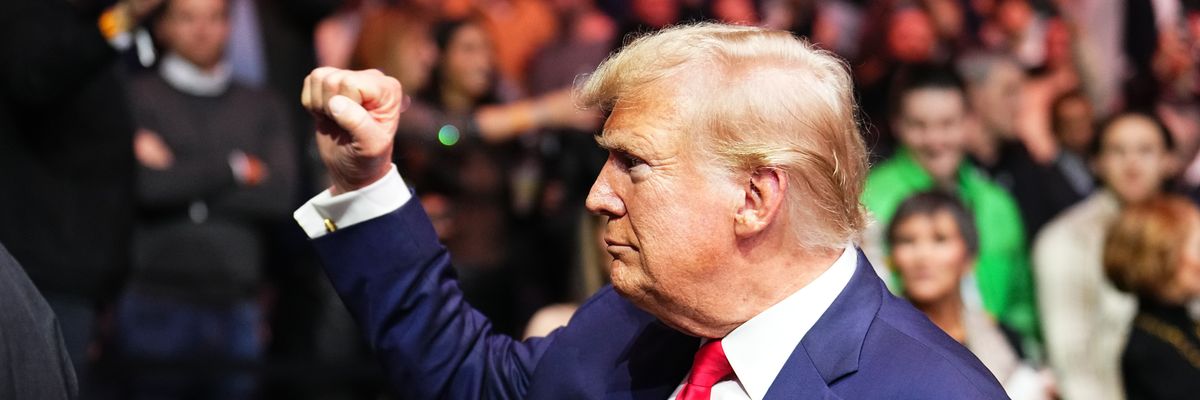
Trump

Former U.S. President Donald Trump is seen during the UFC 295 event at Madison Square Garden on November 11, 2023 in New York City.

 (Photo: Chris Unger/Zuffa LLC via Getty Images)

“If it wasn’t already clear, our democracy is in very serious danger.”

JESSICA CORBETT

Nov 13, 2023 (CommonDreams.org)

Former U.S. President Donald Trump is the GOP front-runner for 2024, setting up an expected rematch with Democratic President Joe Biden, but American media coverage of the Republican’s campaign is already showing that many journalists didn’t learn important lessons about how to report on his extremism, according to recent analyses.

During a Saturday rally, Trump pledged to “root out the communist, Marxist, fascist, and the radical left thugs that live like vermin within the confines of our country, that lie and steal and cheat on elections and will do anything possible—they’ll do anything, whether legally or illegally—to destroy America and to destroy the American dream.”

“The real threat is not from the radical right; the real threat is from the radical left, and it’s growing every day, every single day. The threat from outside forces is far less sinister, dangerous, and grave than the threat from within,” added Trump—who currently faces four criminal cases, two of which relate to his efforts to overturn his 2020 loss.

As Common Dreams reported, Trump’s openly fascistic comments on Saturday quickly drew comparisons to Nazi rhetoric, particularly the use of the word “vermin.”

“The press must get across to American citizens the crucial importance of this election and the dangers of a Trump win.”

“This is straight-up Nazi talk, in a way he’s never done quite before. To announce that the real enemy is domestic and then to speak of that enemy in subhuman terms is Fascism 101. Especially that particular word,” The New Republic editor Michael Tomasky wrote Sunday, referencing some antisemitic content from the 1930s and ’40s.

“Trump’s rats are a much broader category,” Tomasky continued, “and in that sense an even more dangerous one—he means whoever manages to offend him while exercising their constitutionally guaranteed right to register dissent and to criticize him.”

And yet, as Philadelphia Inquirer columnist Will Bunch emphasized Sunday, “in one of the most perilous moments of crisis the world has seen in 75 years, and with the basic notions of free speech under assault, most newsrooms aren’t fighting back. They are, instead, pulling their punches in a defensive, ‘rope-a-dope’ crouch, and thus failing to truly inform—when democracy itself is at risk.”

Media Matters for America senior fellow Matt Gertz noted Monday that “if you rely on the news divisions of the Big Three broadcast networks, you haven’t seen the chilling footage of Trump’s remarks” from Saturday.

According to Gertz:

CBS News and ABC News have not mentioned Trump’s remarks at all on their morning news, evening news, or Sunday morning political talk shows.

NBC News also did not discuss them on its morning and evening news broadcasts, and “Meet The Press’” sole coverage consisted of host Kristen Welker reading the comment to Republican National Committee Chair Ronna McDaniel and asking her, “Are you comfortable with this language coming from the GOP front-runner?” (McDaniel declined to comment).

The nation’s most-read newspapers are similarly not treating these remarks as a major story.

Trump’s comments did catch the attention of MSNBC host Mehdi Hasan, who addressed them Sunday evening during his monologue and in a discussion with Yale University philosophy professor Jason Stanley, a fascism expert.

However, Trump’s weekend remarks and a failure to adequately cover them fit into a larger pattern that includes MSNBC.

Media Matters data integrity analyst Harrison Ray last week highlighted how CNNFox News, and MSNBC have handled other comments from the GOP presidential candidate:

Trump has recently vowed to implement “ideological screening” for migrants, saying he’d turn away anyone who doesn’t like “our religion”; accused “liberal Jews” of voting “to destroy America and Israel”; claimed migrants are “poisoning the blood of our country”; and complimented the terrorist group Hezbollah as “very smart.

Yet these extreme and alarming statements received scant coverage across major TV news networks: Three of the four comments received no more than 22 minutes of attention each, with only one nearing an hour.

“Despite—or perhaps due to—the frequency of Trump’s extreme comments, TV news networks are seemingly desensitized to his rhetoric,” Ray wrote. “The networks have shown they are capable of covering such extremism—as Joint Chiefs of Staff head Mark Milley was retiring, networks eventually got around to covering Trump’s suggestion that the general deserved to be executed—but often they regularly choose to ignore the GOP front-runner’s inflammatory commentary.”

Along with reporting on that analysis last week, Salon‘s Areeba Shah spoke with academics and experts who also shared concerns that U.S. journalists aren’t treating Trump’s extremism with a necessary seriousness.

“If we don’t call out the rhetoric as extreme, we risk making it normal and acceptable,” warned Libby Hemphill, a professor at the University of Michigan’s School of Information and the Institute for Social Research.

University of Kansas political science professor Donald Haider-Markel, who studies domestic extremism, similarly told Shah that “when his dehumanizing comments are not challenged by the news media, viewers go along. If the dehumanization sticks, it makes support of political violence against ‘enemies’ more likely.”

“I think you already see the consequences of underreporting and normalizing his rhetoric in polling about the 2024 race—in many polls Trump is running even or ahead of Biden even with his ever more extreme rhetoric,” he said. “The news media has not learned any lessons from the period 2015-2020 and is covering him as a normal candidate doing and saying normal candidate things.”

Global Project Against Hate and Extremism (GPAHE) co-founder Heidi Beirich stressed to Shah that given Trump’s chances of winning the presidential race next year, “the public needs to know about policy plans, such as the program being designed for the next conservative president by the Heritage Foundation, called Project 2025.”

For the past several months, critics have highlighted various concerns with Project 2025, from policies on the fossil fuel-driven climate emergency and LGBTQ+ rights to—as Common Dreams opinion contributor Thom Hartmann pointed out earlier this year—its “consolidation of power in the hands of the president, reflecting the way government is run in Hungary, China, and Russia rather than the checks-and-balances envisioned by our nation’s founders.”

GPAHE on Monday released a detailed analysis of the project, which “threatens Americans’ civil and human rights, and is an attack on our very democracy,” according to Beirich.

“Our country is facing an authoritarian threat from far-right extremists and Christian Nationalists in a new, unique, and frightening way,” said GPAHE co-founder Wendy Via. “Voters, political figures, and the media must be on alert that Project 2025 is an authoritarian roadmap to dismantling a thriving, inclusive democracy for all.”

Some journalists warn that Trump’s recent rhetoric, given his past record, should be taken more seriously by both the press and the public.

“Do I think Trump will imprison political dissidents in the concentration camps? I don’t know if he will, but I do know that it would be quite easy for him to justify putting political dissidents in concentration camps, based on things he has already said and promised to do,” Current Affairs‘ Nathan J. Robinson wrote Monday. “We know he wants to build sprawling camps and start rounding people up. We know he wants to root out internal threats. And we know he couldn’t care less about the law. Personally I do not feel reassured.”

“If it wasn’t already clear, our democracy is in very serious danger and everyone needs to wake up to the threat,” Robinson asserted. “Once new prison camps are built, they do not tend to close down. The time for stopping them is before they get built. It’s important to see major historical threats coming, before it’s too late to change course.”

American journalist Margaret Sullivan wrote in her column for The Guardian last week that “the press must get across to American citizens the crucial importance of this election and the dangers of a Trump win. They don’t need to surrender their journalistic independence to do so or be ‘in the tank’ for Biden or anyone else.”

Sullivan’s recommendations for U.S. newsrooms included:

Report more—much more—about what Trump would do, post-election. Ask voters directly whether they are comfortable with those plans, and report on that. Display these stories prominently, and then do it again soon.

Use direct language, not couched in scaredy-cat false equivalence, about the dangers of a second Trump presidency.

Pin down Republicans about whether they support Trump’s lies and autocratic plans.

“It’s the media’s responsibility to grab American voters by the lapels,” she argued, “not just to nod to the topic politely from time to time.”

Our work is licensed under Creative Commons (CC BY-NC-ND 3.0). Feel free to republish and share widely.

JESSICA CORBETT

Jessica Corbett is a senior editor and staff writer for Common Dreams.

Full Bio >

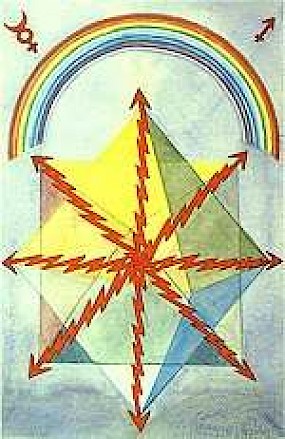
Tarot Card for November 14: The Eight of Wands

The Eight of Wands

The Lord of Swiftness is a bright active card which comes up to mark periods of rapid, clear communication. This card will often represent the type of cathartic discussion which resolves misunderstanding and ends confusion. When passing through an event which is sign-posted by the 8 of Wands, there’s often a feeling of quick-moving energy, and a sense that obstacles are being swept out of your path.

There’s an important aspect of this card that is often overlooked – its spiritual interpretation. It can indicate the kind of direct divine instructions that causes a complete transformation – like a bolt of celestial power striking and infusing you. It provokes a sudden opening of the ways, a new level of understanding and spiritual expansion. Look for cards like the Star, The Priestess or the Hierophant close by in order to identify this not-to-be-missed effect!

The 8 of Wands always brings a new surge of energy and freshness when it appears. And it often signals entry into a new phase or project, which stands a good chance of success. Confirm with good Disk cards nearby, or Fortune. This is a happy and generous card, promising a progressive phase which may herald success and satisfaction.

The nicest aspect of the Lord of Swiftness is the part which indicates rewarding communication where old enmities can be resolved, where we can blow away the cobwebs from our pain, and heal old wounds. Those thorny situations where somebody gets hold of the wrong end of the stick and takes offence will often yield to the clarity this card brings in.

There’s just one warning – well didn’t there have to be? This is big bursting energy. It’s as well to keep your balance firmly in the centre of your being. That way you won’t get swept away by it!

The Eight of Wands

(via angelpaths.com and Alan Blackman)

Hamas Charter

From Wikipedia, the free encyclopedia

The Hamas Covenant or Hamas Charter, formally known in English as the Covenant of the Islamic Resistance Movement, was originally issued on 18 August 1988 and outlines the founding identity, stand, and aims of Hamas (the Islamic Resistance Movement).[1] A new charter was issued by Hamas leader Khaled Mashal on 1 May 2017 in Doha.[2]

The original Charter identified Hamas as the Muslim Brotherhood in Palestine and declares its members to be Muslims who “fear God and raise the banner of Jihad in the face of the oppressors”. The charter states that “our struggle against the Jews is very great and very serious” and calls for the eventual creation of an Islamic state in Palestine, in place of Israel and the Palestinian Territories,[3] and the obliteration or dissolution of Israel.[4][5] It emphasizes the importance of jihad, stating in article 13, “There is no solution for the Palestinian question except through Jihad. Initiatives, proposals and international conferences are all a waste of time and vain endeavors.”[6] The charter also states that Hamas is humanistic, and tolerant of other religions as long as they “stop disputing the sovereignty of Islam in this region”.[7] The Charter adds that “renouncing any part of Palestine means renouncing part of the religion [of Islam]”.[1] The original charter was criticized for its violent language against all Jews, which many commentators have characterized as incitement to genocide.[8][9]

The relevance of the 1988 charter in Hamas’ activities has been questioned. In 2008, the Hamas leader in Gaza, Ismail Haniyeh, stated that Hamas would agree to accept a Palestinian state along the 1967 borders, and to offer a long-term truce with Israel.[10] In 2009 interviews with the BBC, Tony Blair claimed that Hamas does not accept the existence of Israel and continues to pursue its objectives through terror and violence; Sir Jeremy Greenstock however argued that Hamas has not adopted its charter as part of its political program since it won the 2006 Palestinian legislative election.[11] Instead it has moved to a more secular stance.[12] In 2010, Hamas leader Khaled Meshaal stated that the Charter is “a piece of history and no longer relevant, but cannot be changed for internal reasons”.[13] Hamas has moved away from its charter since it decided to run candidates for office.[12]

The 2017 charter accepted for the first time the idea of a Palestinian state within the borders that existed before 1967 and rejected recognition of Israel, which it terms as the “Zionist enemy”.[2] It advocates such a state as transitional but also advocates the “liberation of all of Palestine”.[14][15] The new document also states that the group does not seek war with the Jewish people but only against Zionism which it holds responsible for “occupation of Palestine”.[16] Mashal also stated that Hamas was ending its association with the Muslim Brotherhood.[14] After a new charter was scheduled to be issued in May 2017, Israeli Prime Minister Benjamin Netanyahu‘s office issued a statement in which it accused Hamas of trying to fool the world and also asked it to stop its terror activities for a true change.[17]

Background

In 1987, twenty years after the Six-Day War, the First Intifada (1987–1993) began.[18] In the late 1980s, the Palestine Liberation Organization sought a negotiated solution with Israel in the form of a two-state solution. This was not acceptable to Hamas, the Palestinian wing of the Muslim Brotherhood,[19] and the charter was written to bridge the ideological gap between the PLO and Muslim Brotherhood.[20] According to Hamas’s Deputy Foreign Minister Dr. Ahmed Yousef, the Charter “was ratified during the unique circumstances of the Uprising in 1988 as a necessary framework for dealing with a relentless occupation”.[21] However, where the Muslim Brotherhood’s ideology proposed a more universal Islamic vision, Hamas’ charter seeks to narrow its focus on Palestinian nationalism and a strategy of armed struggle, or violent jihad.[20][22]

While the PLO was nationalistic, its ideology was considerably more secular in nature compared to Hamas. Hamas subscribed to a neo-Salafi jihadi theology that sought national liberation by violence as permitted by divine decree.[23][19] While its language was far more religious, its political goals were identical to those of the PLO’s charter and called for an armed struggle to retrieve the entire land of Palestine as an Islamic waqf.[20]

The original charter’s tone and portrayal of the Israeli-Palestinian conflict as a front in an eternal struggle between Muslims and Jews has been an obstacle for the organization’s involvement in diplomatic forums involving Western nations.[2] The updated charter published in 2017 walked back many of these assertions while adding questions regarding the ability of Fatah and its leader Mahmoud Abbas to act as the sole legitimate representative for the Palestinians.[24] In addition, the 2017 charter removed many references to the Muslim Brotherhood as the ties had damaged the group’s relationship with Egypt, whom the country considers to be a terrorist organization.[25]

Relevance in the 21st century

Ahmed Yousef, an adviser to Ismail Haniyeh (the senior political leader of Hamas), claimed that Hamas has changed its views over time since the charter was issued in 1988.[21] In 2010 Hamas leader Khaled Meshaal stated that the Charter is “a piece of history and no longer relevant, but cannot be changed for internal reasons”.[13]

In 2006, Hamas proposed government programme, which stated that “the question of recognizing Israel is not the jurisdiction of one faction, nor the government, but a decision for the Palestinian people.”[26] However many[who?] remain sceptical of Hamas’s new stance, and view it as a ploy to hide its true agenda, “but it is equally true that the “new” discourse of diluted religious content—to say nothing of the movement’s increasing pragmatism and flexibility in the political domain—reflects genuine and cumulative changes within Hamas.”[12]

Contrastingly, Mahmoud al-Zahar, co-founder of Hamas, said in 2006 that Hamas “will not change a single word in its covenant”. In 2010, he reaffirmed a major commitment of the covenant saying “Our ultimate plan is [to have] Palestine in its entirety. I say this loud and clear so that nobody will accuse me of employing political tactics. We will not recognize the Israeli enemy.”[27]

According to Nathan Thrall, an analyst for the International Crisis Group, the original charter had been a long source of embarrassment among the reformists in the movement.[28]

More at: https://en.wikipedia.org/wiki/Hamas_Charter

Seven things barely anyone does that will attract people to you

Follow Alex’s Instagram for more of his drawings and bonus ideas.

Member-only story

Alex Mathers

Alex Mathers

Nov 5, 2023 (iamalexmathers.medium.com)

I’ve learned that a significant part of attraction is rooted in standing out from the crowd.

There’s something irresistible and even mysterious when we do things differently to most.

That doesn’t mean that everything we do that’s different will attract others.

Here are some examples of things most people avoid that are often highly attractive to others:

Don’t interrupt.

Such a simple thing. But it’s not easy to do.

Many don’t even realise it when they do it, but they interrupt, not to be intentionally rude, but often out of insecurity.

When we interrupt, we inadvertently signal our sense of inadequacy.

We want to be seen. So we undermine the attention others are getting to steal back some for ourselves.

This is low-status activity and will lose you respect.

Give people space. This is what leaders do.

They are in no rush and are totally happy for others to be in the limelight.

Become a master at something specific.

Developing a higher-than-average level of skill for something isn’t common.

It demonstrates perseverance and grit that many don’t have.

Whether it’s mastering juggling or reaching higher echelons of achievement as an artist, teacher, dancer, writer, or sailor, this all emphasises your stand-out quality.

Reaching higher skill levels is attractive to many in a similar way as reaching celebrity status can.

Exhibit an unexpected aspect of your appearance.

Being a little different at the surface level of appearance needn’t mean walking around like a goofy freak gimmick.

Subtlety wins here, especially in a world where everyone is tripping over themselves to stand out with an over-emphasis on appearance.

Wear something that interrupts the expectation others might have of someone like you.

You could wear typical clothes like most others but have a stand-out watch, bracelet, or unusual socks.

If it’s unexpected, it tends to stick in the memory.

Memorable things often elevate your perceived value, which is often attractive.

Nurture total non-resistance to criticism.

Most people are quick to take things personally.

Someone might criticise them, or they may take things the wrong way. They are visibly flustered or annoyed.

They may go quiet (as was often my style when I took things personally growing up).

This demonstration of insecurity based on a thought-created interpretation of events is a waste of energy, eats at you from the inside, is immature, and is ultimately unattractive.

Those who have developed an OKness with being criticised and gently smile when insulted aren’t pushovers.

They simply no longer see the connection between what others think and their own well-being.

They no longer seek validation, nor are they affected by insult.

This is deeply attractive.

Share something that takes courage to share.

People who garner tons of respect from sharing something vulnerable do so because it takes courage.

Why though?

It requires bravery to reveal things that make you look less than perfect or socially acceptable.

But it doesn’t stop here.

This is where some people get it mixed up. It’s not about sharing things in a vulnerable way for the sake of it. If that worked, we’d all be harping on about the acne or our butts.

Being vulnerable is respected when it serves a positive purpose.

When I am willing to look ‘inferior’ to demonstrate a point that ultimately helps others, that’s strength.

For example, you can tell me that you still get anxious before interviews, but you tell me so that I feel encouraged.

You are showing me your humanity while lifting me.

That takes courage and pitches you as an example-setting leader, not a loser.

Be an occasional dick.

There’s a vast difference between being a relentless, consistent dick and being just a little bit of a dick some of the time.

Most people are doing everything they can to come across as nice and harmless and totally not offensive.

In their striving for niceness, they also often inadvertently drain all the soul from them, slipping into the background thanks to their vanilla exterior.

Being a little cocky and cheeky will set you apart.

You don’t always need to be nice to people if it’s done playfully.

This is refreshing to people.

Go against the grain, be a little naughty, and you will have people falling in love with you.

Be there.

The next time you watch people interact, note how present people are in the conversation.

A lot of the time, you will find people are anywhere but in the interaction. People are lost in their heads.

They’re either self-conscious and fidgety or somewhere else, thinking about whether they left the iron on at home or they’re thinking of something clever to say next.

They aren’t actually there.

Being there with someone, truly listening, and absorbing what they say will set you apart.

People will be amazed at how heard they feel, even if you barely talk.

People are well-attuned to sensing the presence in others.

Be still. Be there.

This will attract people to you, and often they won’t even know why.

Do you want to be mentally stronger than most people?

If you enjoyed this, you will love my free illustrated booklet for you:

‘The 12 Habits of Mentally Strong People.’

Yours free today for a short time, when you subscribe to my Substack newsletter.

Alex Mathers

Written by Alex Mathers

Helping you develop mental strength, write better, and grow your brand. Regular tips: https://www.masteryden.com/

May Sarton on Generosity

By Maria Popova (themarginalian.org)

“Anything you do not give freely and abundantly becomes lost to you,” Annie Dillard wrote in her beautiful essay on generosity. “You open your safe and find ashes.” I feel this truth deeply, daily — for nearly two decades of offering these writings freely, I have lived by the generosity of strangers.

It is especially gratifying to perpetuate the spirit of generosity if you have arrived at the ability to do so by way of struggle and privation. No one takes more joy in giving than those who come from little.

That is what the philosopher-poet May Sarton (May 3, 1912–July 16, 1995) explores in a passage from her endlessly rewarding 1972 book Journal of a Solitude (public library).

May Sarton

In her sixtieth year, after decades of struggling to live by her pen as she went on channeling the human experience in her ravishing poems, Sarton finds herself at last solvent, and giddily so. Reflecting on her belief in the “free flow” of energy and means, she writes:

Both human problems and money flow out of this house very freely, and I believe that is good. At least, it has to do in both cases with a vision of life, with an ethos… I am always so astonished, after all the years when I had none, that I now have money to give away that sometimes I may speak of it out of sheer joy. No one who has inherited a fortune would ever do this, I suspect — noblesse oblige. No doubt it is shocking to some people. But I am really rather like a child who runs about saying, “Look at this treasure I found! I am going to give it to Peter, who is sad, or to Betty, who is sick.”

She offers a simple, lovely definition of wealth:

Being very rich so far as I am concerned is having a margin. The margin is being able to give.

Complement with John Steinbeck on the equally important art of receiving and Seneca on what it really means to be a generous human being, then revisit May Sarton on the cure for despairthe relationship between presence, solitude, and love, and the art of living alone.

The Work of Wonder: Philip Glass on Art, Science, and the Most Important Quality of a Visionary

Epoch after epoch, we humans have tried to raise ourselves above other animals with distinctions that have turned out false — consciousness is not ours alone, nor is grief, nor is play. If there is anything singular about us, it is our capacity to be wonder-smitten by the world and to invent languages for channeling that wonder — the wonder of the inner world, the language for which is art, and the wonder of the outer world, the language of which is science. Binding the two and translating between them is the crowning glory of our consciousness: music.

How these two languages mirror and inform each other is what Philip Glass explores some lovely passages from his memoir Words Without Music (public library).

Celestial harmonics of the planets, from The Harmony of the World (1619) by Johannes Kepler, based on the Pythagorean concept of the Music of the Spheres.

Glass — who was grinding lenses and building telescopes at age eleven, and who has written more operas about science than any other composer — recounts the enchantment science cast upon him as a freshman at the University of Chicago in the early 1950s, studying chemistry under a Nobel laureate who had chosen to teach eighty teenagers with electrifying enthusiasm for the subject — a testament to how one great teacher can shape a life, can set into motion the orrery of wonder from which all creative work springs. Looking back on these lectures, Glass recognizes the parallels of passion that great artists and great scientists share:

Professor Urey lectured like an actor, striding back and forth in front of the big blackboard, making incomprehensible marks on the board… His teaching was like a performance. He was a man passionate about his subject, and he couldn’t wait until we could be there at eight in the morning. Scientists on that level are like artists in a way. They are intensely in love with their subject matter.

What also shaped Glass’s creative spirit and his understanding of creativity was the school’s rather unusual choice to teach students from primary sources — the voices and visions of great artists, writers, and scientists rising from the page directly, unmediated by a biographer’s interpretation or a critic’s commentary. Not yet twenty, Glass and his classmates read Schrödinger and Dalton, Newton’s Principia and Darwin’s On the Origin of Species, replicated Mendel’s fruit fly experiments and restaged Galileo’s rolling balls. Something more than learning emerged from this immersion — something radiant with understanding, a way of seeing how individual ideas fit in a larger framework of knowledge, the framework we call culture. Glass reflects on how this imprinted his imagination:

The study of science became the study of the history of science, and I began to understand what a scientific personality could be like. This early exposure would be reflected in Galileo Galilei, which I composed forty-five years later, in which his experiments become a dance piece — the balls and inclined planes are there. I found the biographical aspects of scientists intensely interesting, and the operas about Galileo, Kepler, and Einstein pay tribute to everything I learned about scientists and science that came out of those years.

With an eye to the singular power of this primary-source method of learning, he adds:

The effect on me was to cultivate and understand in a firsthand way the lineage of culture. The men and women who created the stepping-stones from earliest times became familiar to us — not something “handed down” but actually known in a most immediate and personal way… I now see clearly that a lot of the work I chose was inspired by men and women whom I first met in the pages of books. In this way, those early operas were, as I see it, an homage to the power, strength, and inspiration of the lineage of culture.

Looking back on his own creative trajectory, he reflects:

Music and science have been my great loves. I see scientists as visionaries, as poets… What interests me is how similar these visionaries’ way of seeing is to that of an artist. Einstein clearly visualized his work. In one of his books on relativity, trying to explain it to people, he wrote that he imagined himself sitting on a beam of light, and the beam of light was traveling through the universe at 186,000 miles per second. What he saw was himself sitting still and the world flashing by him at a really high speed. His conclusion was that all he had to do — as if it were a minor matter — was to invent the mathematics to describe what he had seen.

Illustration by Vladimir Radunsky for On a Beam of Light: A Story of Albert Einstein by Jennifer Berne

Glass adds:

What I have to do when I compose is not that different. All I have to do after I have the vision is to find the language of music to describe what I have heard, which can take a certain amount of time. I’ve been working in the language of music all my life, and it’s within that language that I’ve learned how ideas can unfold.

Complement with physicist Alan Lightman on music and the universe and the shared psychology of creative breakthrough in art and science, then revisit the neurophysiology of how music enchants us and the story of how Pythagoras and Sappho revolutionized music.