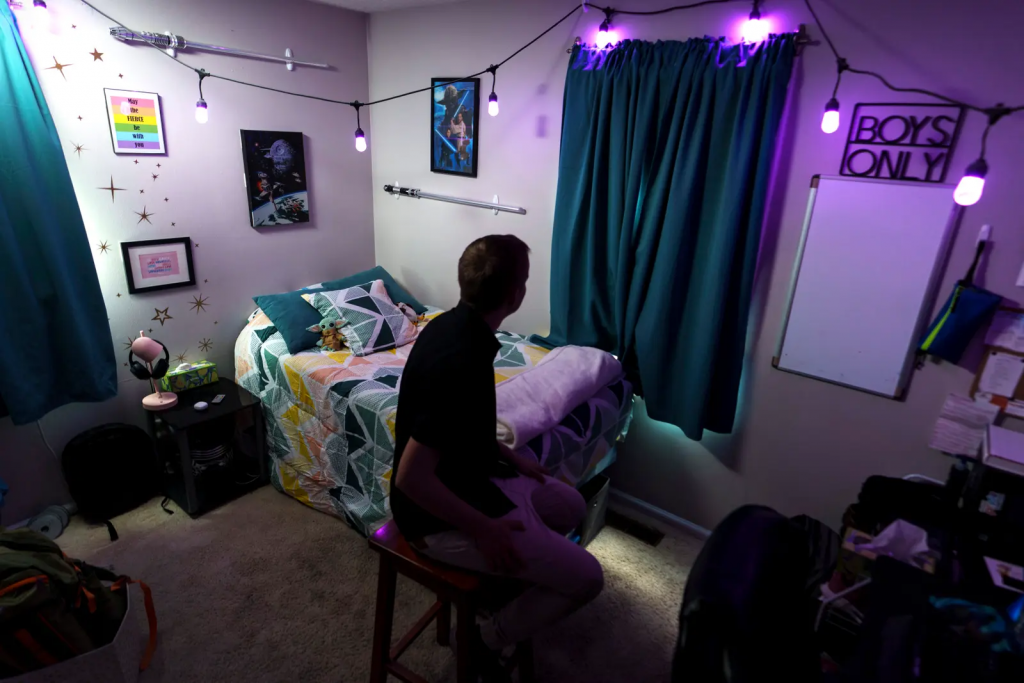
Andrew, who is identified by a pseudonym to protect his privacy, said he was sexually abused by a therapist he was seeing to address his struggles with being both gay and a member of The Church of Jesus Christ of Latter-day Saints. (Objects in this image have been darkened and blurred to protect Andrew’s identity.) Credit:Leah Hogsten/The Salt Lake Tribune
by Jessica Miller, The Salt Lake Tribune Aug. 3, 2023 (propublica.org)
Several patients complained to the church or the state licensing board about inappropriate touching during therapy sessions. It was years before the therapist gave up his license.
Co-published with The Salt Lake Tribune
This article was produced for ProPublica’s Local Reporting Network in partnership with The Salt Lake Tribune. Sign up for Dispatches to get stories like this one as soon as they are published.
This story discusses sexual assault.
Andrew was feeling crushed by the cultural expectation to get married.
Twenty-two years old, he had just returned from a mission for The Church of Jesus Christ of Latter-day Saints and was attending a singles’ ward in Provo, Utah — a local congregation of unmarried college students.
Fact-based, independent journalism is needed now more than ever.Donate
But Andrew is gay. And marriage between a man and a woman is a central tenet of the Latter-day Saint faith, which teaches that the highest level of heaven is reserved only for married, heterosexual couples. Same-sex marriage is not an option in the church.
So in the fall of 2015, he did as many Latter-day Saints do when they are having a crisis: He went to his bishop.
The lay leader suggested trying therapy, Andrew remembered. In fact, the bishop said he had just gotten a referral that same day for a local therapist named Scott Owen who worked well with gay men who were members of their faith. Owen co-owned a Provo therapy business called Canyon Counseling and, at that time, was also a regional leader in a Provo-area stake, a cluster of congregations that is similar to a Catholic diocese.
The coincidental timing — that his bishop learned of Owen on the same day Andrew disclosed his internal struggles — felt miraculous.
“It was like, God has a plan,” Andrew said. “This is going to work out. Everything seems dark and depressing. But this therapist is going to fix everything.”
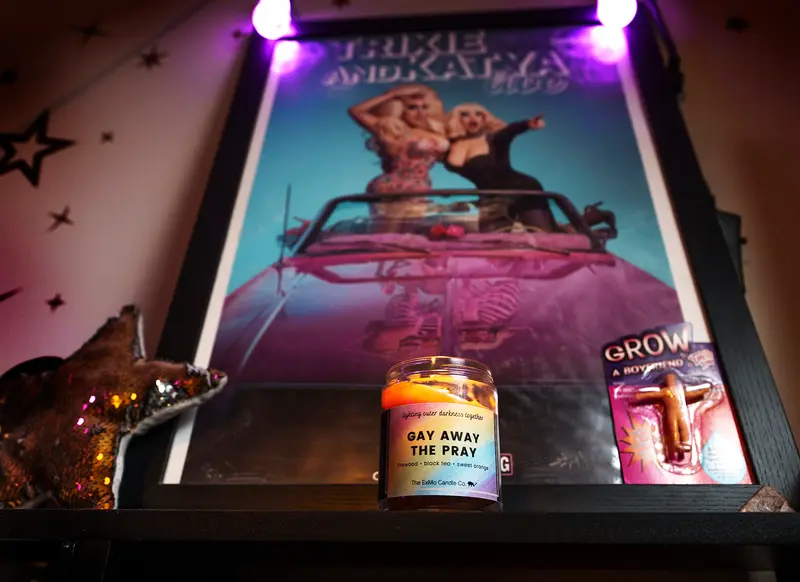
But that’s not what happened. For five months beginning in October 2015, Andrew said, the clinical mental health counselor groped him, encouraged him to undress and kissed him during sessions. Andrew said Owen told him that the touching was a therapeutic way to learn how to accept love and intimacy.
Andrew, now 30, is being identified by a pseudonym to protect his privacy.
Sexual touching in a therapy session is considered unethical by all major mental health professional organizations, and it is defined in Utah rules as “unprofessional conduct” that could lead to a mental health worker losing their license or other discipline. It’s also illegal in Utah.
By March 2016, Andrew had reported Owen to both his bishop and to state licensing officials. A new investigation from The Salt Lake Tribune and ProPublica shows how Utah licensers allowed Owen to continue practicing and church leaders repeatedly heard concerns but took several years to take official action. For nearly two years after Andrew’s report, Owen provided therapy to clients, some of whom were men referred for “same-sex attraction” counseling. During that time, at least three more patients allege they were sexually abused by Owen, including two who reported him to the state licensing body in 2018. Those reports ultimately led Owen to agree to surrender his license.
Owen’s case is indicative of a flawed and misleading system: Officials within Utah’s Division of Professional Licensing encourage the public to look to the agency’s disciplinary records to vet a professional, yet those records rarely offer a full picture of misconduct. Despite Owen’s pattern of alleged inappropriate behavior, his publicly available disciplinary records reference touching but never disclose that the accusations against him were sexual in nature. This is one of a number of shortcomings identified by The Tribune and ProPublica while reporting on how Utah officials fail to supervise medical professionals and to adequately address patient reports of sexual assault.
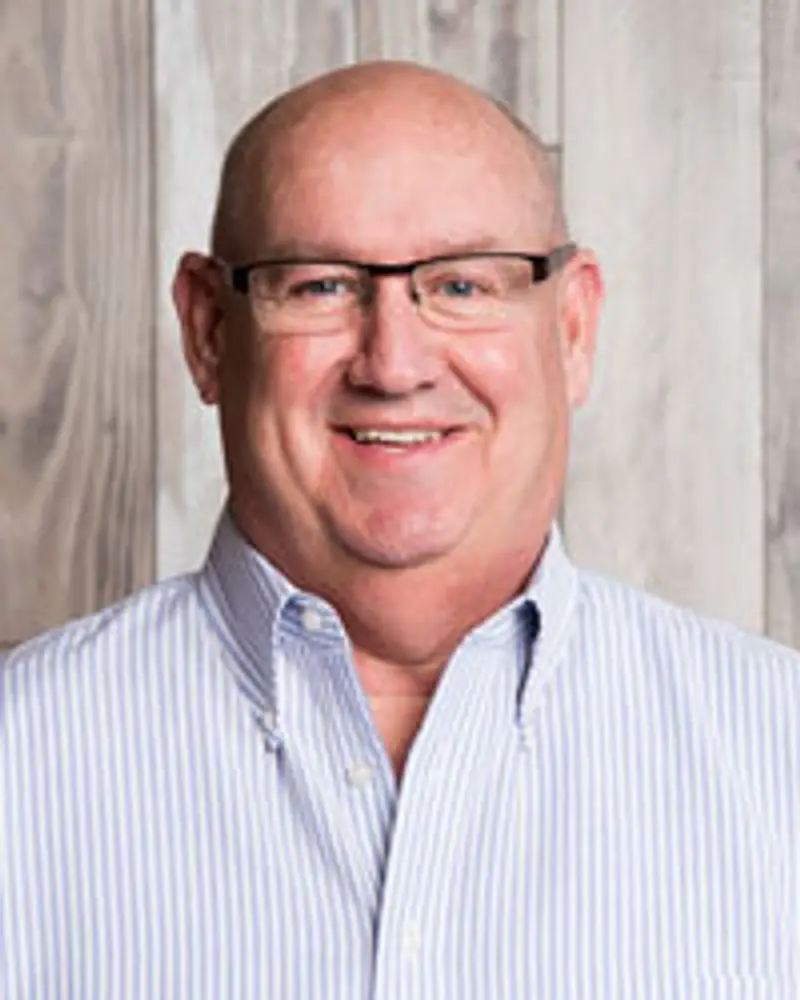
Owen, a large-framed bald man with dark blue eyes who speaks with a drawl, built a reputation over his 20-year career as a therapist with Christian values who could help Latter-day Saint men with same-gender attraction. He gave public lectures so often about pornography and masturbation, Owen told a crowd of LGBTQ+ church members in 2016, that he had earned the nickname “The Porn King.”
Although Owen, now 64, responded to an initial email from a reporter, he did not answer detailed questions sent to him via certified mail.
Officials with DOPL say that, given the evidence they had from Andrew’s complaint, they believe they responded appropriately. But, communications between Andrew and an investigator suggest that the agency’s actions rested largely on Owen’s denial that anything improper had happened and a failed polygraph test officials asked Andrew to take — a tool that experts say is known to be specifically unreliable with victims of sexual abuse, and that some states ban for that reason.
Church spokesperson Sam Penrod said the faith made an annotation on Owen’s personal church record in spring of 2019 — three years after Andrew’s initial report to his bishop. An annotation is a confidential marking intended to alert a bishop to someone whose conduct has threatened the well-being of other people or the church. It can affect what roles members are asked to fill within their congregation.
Penrod said in an email: “The Church takes all matters of sexual misconduct very seriously. This case was no exception.”
Both the church and the licensing division declined to comment on whether they reported the therapist to the police. Provo police officials said they had no record of ever receiving any report of sexual abuse against Owen.

Touching in Therapy
Owen pushed physical boundaries from the very start, Andrew said. After their first session, Owen ended their meeting with a quick hug. At his second appointment, Andrew said, Owen held him in a longer embrace.
“I’m doing this because I know you’re uncomfortable with love,” Andrew remembered Owen telling him as they hugged. “I want you to get used to it.” Such touching, he recalled Owen saying, would be “a key step in my therapy.”
Andrew did feel uncomfortable. But he remembered Owen seemed genuine and truthful in their therapy sessions — even “Christ-like” in his caring.
Growing up in the Latter-day Saint faith, Andrew was taught to trust men in positions of authority. There was also the expectation to talk with his bishop about deeply personal sexual details during one-on-one interviews. These annual closed-door discussions generally start when members become teenagers and typically explore whether they are following the faith’s rules; they have been criticized by some parents and therapists as being “inappropriate” and “intrusive.”
These interviews, Andrew said, left him with a skewed view of what was appropriate in a mentoring relationship.
“I felt like a lot of the times I didn’t understand what normal boundaries to have around sexuality,” he said, in part because of how he was instructed to relate to religious leaders. “You have to air it all to these particular people in your life — and then you hide it desperately from everyone else.”
In the late 1960s, church leaders took a hard stance against even identifying as gay, including “homosexuality” in a list of behaviors that could result in excommunication. Bishops and church leaders in subsequent years were taught that being gay was a reversible condition, and church leaders would send gay men to conversion therapy or advise they could be fixed by marrying a woman.
By the time Andrew began seeing Owen in 2015, the church had publicly acknowledged that its members do not have a choice in being attracted to the same sex; today, church policy says a gay member can remain in good standing if they remain celibate and never marry someone of their same gender.
“At the time, I knew it might not be possible for me to get married, and that would still be OK in the church framework,” Andrew recalled. But, he added, “so much of the LDS dream is based on marriage that that was crushing and really depressing to me.”
So Andrew kept going to therapy, even as he said Owen began touching him more, at times rubbing his back or his bottom during hugs. Owen encouraged him to undress during some therapy sessions, Andrew said, which evolved into what he describes as “makeout sessions.” Looking back now, it’s clear to Andrew that this was inappropriate — but in the moment, he felt desperate and confused.
Andrew reasoned with himself that he was not physically attracted to Owen when they touched, which would be similar if he married a woman. Maybe it was a way for him to learn how to express romantic feelings he didn’t have or to fake it until those feelings came.
“I couldn’t accept that I was being taken advantage of,” Andrew said. “That’s a hard thing to be like, ‘Oh, I’ve been sexually abused this whole time.’”
“This was supposed to be my miracle,” he added.
A Reprimand
Andrew decided to stop therapy in February 2016, as he wrestled with whether what had happened had been abusive. He confided in a friend during late-night study sessions on Brigham Young University’s campus a few days later. In an interview corroborating Andrew’s account, she recalled urging him to tell someone.
Within a week of stopping therapy, Andrew again found himself confiding in his bishop.
Andrew recalled feeling like his church leader, who works as a livestock and pasture insurance agent, seemed confused about how to help a gay member of the church — and whether this type of touching in therapy was supposed to be helpful. He referred Andrew to another therapist who, Andrew said, told him Owen’s alleged conduct was a “gross violation” of patient boundaries.
Andrew went back to his bishop with this information, but the lay leader never reported that information to church authorities. The church’s general handbook for members makes it clear that if a bishop or stake president “learns of abuse of a spouse or another adult,” they are supposed to call a confidential hotline for guidance from lawyers and clinical professionals.
The bishop, whom The Tribune and ProPublica are not identifying to protect Andrew’s identity, said that he struggled to process what Andrew told him, and that he felt it was sufficient that he had encouraged Andrew to report Owen to state licensing officials at DOPL. The division is responsible for licensing Utah professionals, from medical doctors to armed security guards to massage therapists. It is also charged with investigating misconduct and can revoke a license or put someone on administrative probation.
By then, Andrew had stopped seeing Owen. Andrew’s bishop questions now whether he should have said something to a higher church leader, but he said he felt the faith’s guidance for when bishops should report alleged abuse to church authorities pertained more to “something happening that needs to be stopped, like when there’s abuse in the home.” The bishop added that he didn’t feel he knew how he should help members who were struggling with their sexual identity and their faith.
“A bishop is supposed to be a spiritual guide. Not a psychologist, not a family therapist. So I felt equipped to listen and love them, absolutely,” he said. “But as far as to help them process what it means and how to be a part of this religion and be gay — I never figured that out.”
Andrew followed his bishop’s guidance and went to licensers in early March 2016. In a statement Andrew wrote for investigators — which he shared with The Tribune and ProPublica — Andrew described the escalating touching and accused Owen of touching parts of his genital area at their last appointment.
“I left feeling disgusted in what had happened,” Andrew wrote about their last appointment, “and vowed to never return.”
To conduct their investigation, licensing officials offered the therapist a polygraph test. He refused, according to DOPL. They also asked Andrew if he would wear a recording device, he said, and go to Owen’s office to ask him about the touching. Andrew said he didn’t feel like he could go through with that.
That’s when the investigator asked Andrew if he would take a lie detector test.
Andrew said the investigator reasoned to him that if he could pass one, it could bolster what essentially was a case of one person’s word against the other.
The polygraph did not go well, Andrew said — the results suggested he was being deceptive.
“I had so much trauma,” Andrew said. “And so, certainly, when they asked me questions about the particular things that happened in therapy, it’s going to elicit a very strong emotional response.”
Researchers say this is a common response for trauma victims, and many recommend that sexual abuse victims not undergo polygraph exams. Half of states have laws explicitly prohibiting law enforcement from conducting a polygraph test with someone reporting a sexual assault, with some barring any government employee from requiring an alleged sexual assault victim to take one. There is no law in Utah that puts limits on the use of polygraph tests on victims.
Melanie Hall, the spokesperson for DOPL, acknowledged that an investigator did “offer the option” of a polygraph test to both Owen and Andrew. She said that it is “extremely rare” for a polygraph to be used as part of an investigation, but that the agency doesn’t track how often.
Andrew’s failed polygraph sent his own mental health spiraling. He wrote in an email in October 2016 that he no longer wanted to participate in the investigation unless someone else came forward.
A month later, Owen was given a public reprimand from licensers for the one inappropriate action he admitted to: that he gave Andrew hugs. Owen admitted in licensing documents that he “inappropriately touched a client in a non-sexual manner.”
Hall said the “overwhelming majority” of DOPL’s disciplinary actions are negotiated settlements — where a licensed professional admits to lesser conduct than what is alleged by those who say they’ve been harmed.
Owen later told the Clinical Mental Health Counselor Licensing Board, in a hearing in Salt Lake City at which he received an official reprimand, that his client had been struggling with a family issue, and that it was “not uncommon” for him to hug his patients.
But he denied Andrew’s allegations to the board, calling it “quite a story he concocted.”
“I readily agreed and admitted to giving him hugs at the end of the session and that sort of stuff,” Owen said during the meeting, adding that someone at DOPL told him that he should “know better” than to hug someone who was seeking therapy for same-sex attraction.
Owen said that he had changed his practices.
“I don’t do that anymore,” he said. “I have just been a little bit stunned and burned by this. I’ll shake hands, and I don’t even like to shake hands until my office door’s open and completely out in the reception area with my receptionist there.”
Owen left the meeting that day with a reprimand but no other limitations on his license — and no need to tell his other patients.
[Read more about mental health professionals who have been disciplined by Utah licensors.]
“I Felt Betrayed”
At precisely the time DOPL was investigating Owen, and then publicly reprimanded him, another man living in Provo and attending the same religious university as Andrew was questioning whether the way the therapist touched him during sessions had crossed the line.
Jonathan Scott had been seeing Owen for three years — and he would continue to see him for nine months more after the reprimand. His allegations bear a striking resemblance to Andrew’s, but he was not aware of the licensing reprimand — and it would be years before he realized that his experience was not unique.
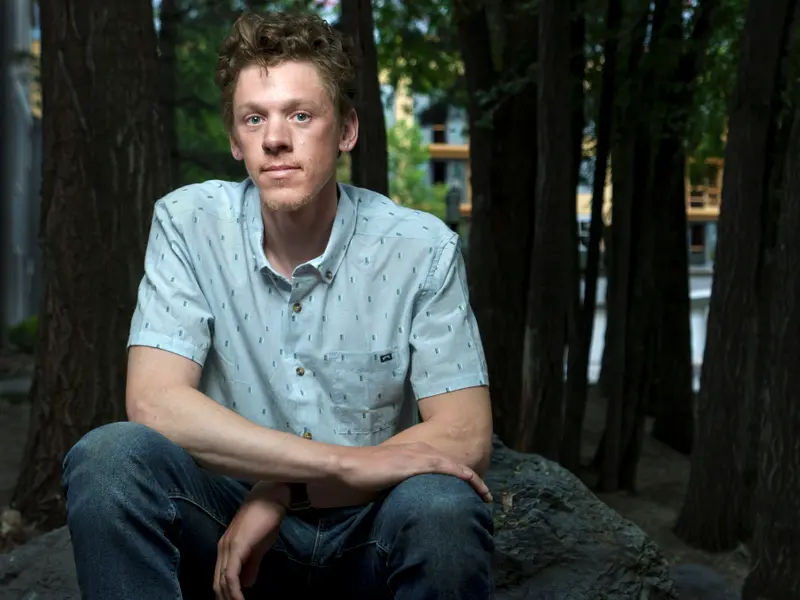
Jonathan Scott, a reserved 32-year-old with curly ash brown hair, first started seeing Owen in 2013 as a lanky BYU student struggling to deal with childhood trauma from being sexually abused by his Boy Scout leader in Illinois. His parents found Owen online and met with him first; Jonathan Scott’s father recalls Owen saying that he could help their son have safe relationships with adult men.
Jonathan Scott said his new therapist reminded him of the man who sexually abused him when he was a kid. They had similar nervous tics, and the way each man had looked at him felt the same. They were both middle aged and had the large frame and roundness of a teddy bear.
“That was kind of the point,” Jonathan Scott remembers. Unlike his abuser, Owen was supposed to be “a safe, good man who is supposed to help me reestablish trust with men.”
But Jonathan Scott said Owen frequently touched him under his clothing while hugging him during sessions.
Like Andrew, he said this touching gradually escalated. Eventually, he said, his sessions felt like nothing more than 40 minutes of cuddling. Also like Andrew, he told himself that to heal he needed to learn to accept touch. And because he was raised in the church, he added, he wasn’t going to question a religious leader.
“You justify things. You let things slide. But did it feel comfortable? No, it didn’t feel comfortable. It didn’t feel safe,” he said. “But I was told I needed to work through that.”
Jonathan Scott ended therapy in 2017 when he moved. He never contacted DOPL, or the police, himself. It was only two years later that his partner — upset with the thought that Owen had never faced consequences — was searching online and found the reprimand. She corroborated details of his account in an interview with The Tribune.
It felt like a betrayal, Jonathan Scott said, to learn that Owen had denied touching Andrew around the same time he says the therapist had been groping him.
“When I found out that there were others, I felt not alone,” he said. “I felt justified in my anger of what I thought had happened to me. I felt even less trust in authority.”
Hall said that DOPL may, in some cases, require a disciplined licensee to inform their patients of unprofessional conduct, though that didn’t happen in Owen’s case. Utah has no law requiring this type of disclosure, and there are only three states that do require medical professionals disciplined for sexual misconduct to disclose that to their patients.
“DOPL and/or the licensing board may decide to implement this requirement,” Hall said, “if there is strong concern about an individual treating others without first informing them and receiving consent from the patient.”
But a search of more than 3,200 filings obtained from DOPL’s website, some from as early as 2010, shows the state has rarely required disclosure of unprofessional conduct to individual patients.
A Surrendered License
Owen continued to practice for nearly two years after the reprimand. It would take two more people coming forward before the licensing process was able to take meaningful action.
One of those was Sam, a 43-year-old man who now lives in Arizona. As a Latter-day Saint who was attracted to other men, Sam struggled to feel accepted, his brother Jason recalled. One fall day in 2017, Sam called Jason sobbing to tell him about a therapist he had been going to: how Owen had made him feel loved; how the therapist told him that he could help him learn to accept intimacy; how the sessions had become sexual.
Sam later detailed his experiences in a written timeline, an account that a friend later also shared in a letter to the church: It started in January 2017 with a hug and by August had escalated to mutual masturbation.
He declined an interview request relayed through his brother. Sam and his brother are identified by pseudonyms for this article, and information about Sam’s experience was gleaned from interviews and records provided by his brother and Troy Flake, a friend Sam confided in at the time.
In February 2018, DOPL received another report alleging Owen engaged in sexual misconduct. Details of the complaint were redacted in response to a public records request. And in April, Sam himself spoke to a DOPL investigator.
“Just got off the phone with the investigator,” Sam wrote in a text message to his brother. “It was pretty rough to explain to him all of what happened, but I’m glad I got through it and started this process.”
He wrote that the investigator had “accumulated accounts from several of Scott’s clients.”
Within weeks of Sam speaking to the investigator, Owen surrendered his license as part of an agreement with Utah’s licensing division. According to the DOPL order, investigators believed that Owen inappropriately touched “a number” of clients in a five-year period beginning in 2013. There was no reference to the sexual nature of those contacts. And when Owen surrendered his license, he was able to give it up while neither agreeing with nor denying licensers’ findings.
Reports to Church Leaders
Utah’s licensing division wasn’t the only entity that had knowledge of Owen’s activities for years before he was censured. There was also the church.
Andrew had gone to his bishop back in 2016, but church officials say their legal department did not learn of any alleged inappropriate conduct involving Owen until two years later, after DOPL had already begun to investigate.
As with Andrew, Sam first relayed his concerns to a trusted church leader. In the timeline Sam created, which he had shared with Flake, he wrote that Owen at times had told him that he “didn’t need to run off and talk to my bishop about” their counseling sessions.
If he wanted help processing what was happening, Sam wrote in that document, Owen suggested he talk with Alan Hansen, a psychologist who was also Owen’s business partner at Canyon Counseling. Hansen’s role as Sam’s stake president at that time meant he was also in charge of overseeing thousands of church members who make up local congregations in their area.
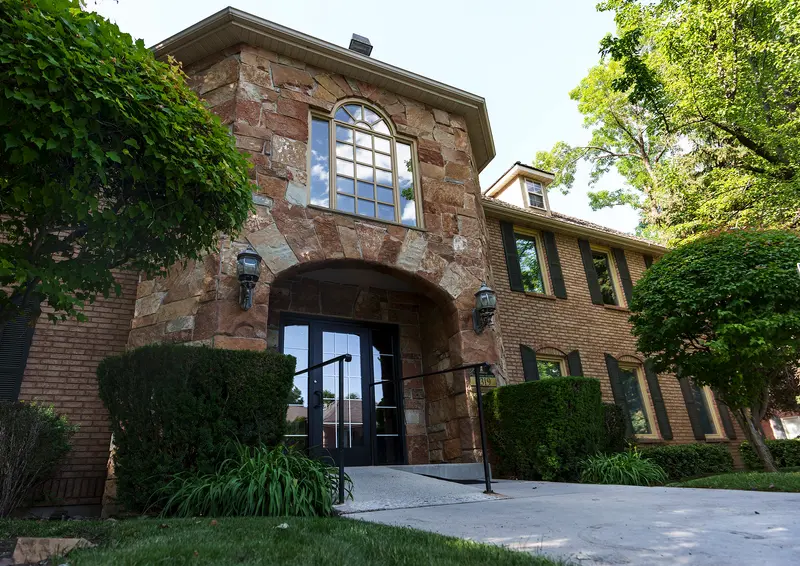
In August 2017, Sam went to Hansen’s church office on BYU’s campus, where he disclosed that Owen had been “physical” with him during sessions.
He wrote in his timeline that Hansen encouraged him to keep attending therapy and gave him a priesthood blessing — a prayer of healing and encouragement given by adult men in their church. The blessing made Sam feel better, he wrote, and he continued seeing Owen for therapy for two months. But then, he added, he became too uncomfortable with the sexual touching he said happened inside the Canyon Counseling office.
In December, according to the timeline, he told Hansen again about Owen’s touching. This time, though, he was more explicit — telling the church leader that Owen had kissed him and had engaged in heavy petting and other types of sexual touching.
“Alan acknowledged that some of Scott’s actions clearly crossed some boundaries and that was likely due to Scott’s own weaknesses,” Sam wrote. “He also stated that Scott had done something like this before — and that there were others. I don’t remember his exact language, but that was the effect of what he said.”
Hansen did not respond to a list of questions sent to him, and he referred a reporter to the church’s legal department. A church spokesperson did not address questions about Hansen.
Sam continued to tell other church leaders about Owen’s behavior — and Hansen’s dismissal of it. He also went to his previous bishop in Provo. Sam wrote in text messages to his brother that this church leader confronted Hansen about “essentially doing nothing about my situation with my previous therapist.”
“He thinks it’s possible that it’s a releasable offense for the stake president,” Sam wrote to his brother about the chance that church authorities would strip Hansen of his official role in their faith. But that didn’t happen.
Penrod, the church spokesperson, did not respond to a question asking whether Hansen ever received disciplinary action for not reporting his business partner to church authorities.
He added that “local leaders who are themselves professional therapists should not refer members to affiliated therapists or practices in which they have a financial interest.”
But concerns over Owen’s behavior didn’t end when he surrendered his license. Flake, Sam’s friend, was worried that Owen could still be teaching in a church setting and was frustrated that he believed Hansen had known what was going on and took no action. More than a year later, in December 2019, he sent an email to church lawyers urging them to investigate.
A church attorney responded to his email later that same day, according to correspondence shared with The Tribune and ProPublica, telling Flake the firm would provide the information “to Owen’s current leaders and let you know if we need additional information.” The attorney made no mention of Hansen. Flake says he never heard from the church lawyers again.
The Tribune asked church officials in an email whether Hansen had ever been disciplined in connection to his business partner’s actions, but the church did not respond to that question. Hansen’s psychologist license is in good standing with the state, and no disciplinary action has been taken against him.
“There’s Been Zero Justice”
Years after they say they were sexually assaulted, several of Owen’s former patients are connected now through one more person who says the ex-therapist sexually abused him nearly 40 years ago: Owen’s own cousin, a Boise, Idaho, man named James Cooper.
Cooper wrote to his family in June 2020, telling them that Owen molested him in a shared bed during a trip to Colorado in the 1980s. The email describes how Cooper had learned that past winter that Owen had surrendered his license.
Read MoreUtah’s Secretive Medical Malpractice Panels Make It Even Harder to Sue Providers
He also sent a separate email to Owen, who denied the allegation and replied: “I don’t see this the same, but I am so sorry for your pain and hurt.”
Cooper wrote in the email to his family that up until then “my strategy has been to forget and avoid Scott [Owen] as much as possible, and admittedly that means I was content to keep my head in the sand in this regard.”
But after he read about Owen surrendering his license, Cooper wrote, it forced him to think about those who allege his cousin later hurt them. The 48-year-old man scoured the internet, searching for any potential victims and posting anonymously on Google reviews asking others to reach out to him.
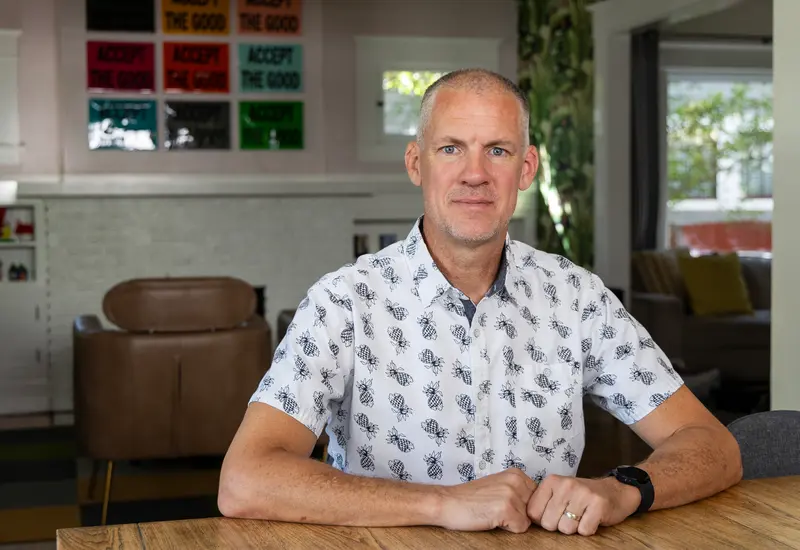
That’s how he connected with Andrew, Jonathan Scott and Sam’s friend Flake; together, the men grappled with what to do next. All of them described long-term effects of Owen’s alleged conduct and also a sense that there had been no meaningful consequences for him.
Both Andrew and Jonathan Scott have left the church, in part because of the alleged abuse. Sam has been devastated after realizing he had been taken advantage of, according to Flake, which has destroyed his ability to trust his own perception. And Jonathan Scott has thought about reporting Owen to the police, but he continues to struggle to trust authority figures.
“There’s been zero justice, as far as I can see,” Jonathan Scott said.
Owen today is listed as the registered agent for Canyon Counseling in public business records. It’s not clear what his role in the business is, but in 2019, Flake called the police to report seeing Owen’s truck in the Canyon Counseling parking lot, though he did not have a license to practice therapy.
An officer contacted Owen, who said he owns the business — but is not a therapist any more.
The Mental Health Profession Violations
Scott Owen is one of at least 197 mental health professionals who have been disciplined by Utah licensers since 2012, according to a data analysis by The Salt Lake Tribune and ProPublica of available disciplinary documents on the state Division of Professional Licensing’s website as of April 20, 2023. This database is not exhaustive, as older filings may no longer appear on the website.
Of those, 73 — or 37% — had been disciplined for sexual misconduct. Searches of DOPL’s disciplinary records suggest that mental health professionals are more often disciplined for sexual-related misconduct than doctors or nurses. The Tribune and ProPublica also identified 28 other misconduct cases where a therapist had an inappropriate “dual relationship” with a client — such as a client sleeping over at a therapist’s home or cleaning horse stalls together — that did not appear on paper to be explicitly sexual in nature.
Owen is one of five Utah mental health professionals identified by The Tribune and ProPublica who have been disciplined more than once for sexual conduct. Several of them continue to work in the therapy business in some capacity. Two others among the five were put on probation and allowed to continue working as therapists, according to disciplinary filings, while a third opened a life coaching business marketing himself as a “one of the few Ph.D.-level coaches” in southern Utah.
Utah licensers consider any sexual contact with a current patient to be misconduct, and sexual relationships with a former patient are not allowed within two years after they stop seeing a therapist.
When asked if the licensing division knew whether therapists were at higher risk for sexual misconduct, spokesperson Melanie Hall said DOPL is aware that certain license types “have a tendency towards certain types of violations.” She didn’t specifically address mental health professionals, but she gave certified public accountants as an example of professionals who have increased access to bank accounts and are more likely to commit financial fraud than other professionals who do not have that access.
The agency, she said, “takes these factors into account when investigating complaints, and takes appropriate disciplinary action when necessary.”
The news organizations also asked Hall about whether DOPL reports cases to law enforcement. Under Utah law, it is illegal for a health professional to engage in sexual contact with their patient under the guise of providing treatment.
The licensing division, Hall said, is not legally required to forward information to law enforcement — just as the police are also not mandated to share information about a licensed professional they are investigating. The only exception to this, she said, is a requirement that drug thefts be reported to police.
Hall said that licensers do collaborate and report crimes to police agencies “often,” though she did not explain under what circumstances they would do so. She said that licensers may encourage a patient to reach out to the police or decide that the case does not require a criminal investigation. She would not say whether anyone at DOPL ever reported Owen to the police.
Help ProPublica and The Salt Lake Tribune Investigate Sexual Assault in Utah
We’re reporting on sexual assault by health care professionals, an issue we highlighted in our story about a Provo OB-GYN who was sued by nearly 100 women who said he sexually assaulted them during treatments.
Editor’s Note: Three sources for this story — Andrew, Sam and Jason — are identified only by pseudonyms because they requested anonymity. Two are alleged victims of sexual assault, and the third is the brother of one of those men. We have granted this request because of the risk to their standing in their communities if they were publicly identified. The Salt Lake Tribune and ProPublica typically use sources’ full names in stories. But sometimes that isn’t possible, and we consider other approaches. That often takes the form of initials or middle names. In this case, we felt that we couldn’t fully protect our sources by those means. Their full names are known to a reporter and editors, and their accounts have been corroborated by documents and interviews with others.
This story was supported in part by a grant from the Fund for Investigative Journalism.
Jeff Kao and Haru Coryne, ProPublica, and Will Craft, special to The Salt Lake Tribune, contributed data reporting. Mollie Simon, ProPublica, contributed research.