

Monthly Archives: October 2023
Firing Line with William F. Buckley Jr.: The Irish Problem
Firing Line with William F. Buckley, Jr. • Jan 26, 2017 Episode S0041, Recorded on March 25, 1972 Guest: Bernadette Devlin McAliskey. For more information about this program, see: http://digitalcollections.hoover.org/…
Free Will Astrology: Week of October 26, 2023
BY ROB BREZSNY | OCTOBER 24, 2023 (NewCity.com)
ARIES (March 21-April 19): Shadow work is a psychological practice that has been deeply healing for me. It involves exploring the dark places in my soul and being in intimate contact with my unripe and wounded aspects. Engaging in this hard labor ensures that my less-beautiful qualities never take control of me and never spill out into toxic interactions with people. I bring this up, Aries, because the coming weeks will be a favorable time for you to do shadow work. Halloween costume suggestion: Be your shadow, demon or unripe self.
TAURUS (April 20-May 20): The country where I live, the United States, has banned over 2,500 books in recent years. I’m appalled by the ignorance that fuels this idiotic despotism. But there has been an amusing consequence, which I am pleased to report: Banning the books has sometimes hiked their sales. “Gender Queer” by Maia Kobabe had a 130 percent increase. Art Spiegelman’s “Maus I” and “Maus II” jumped fifty percent. Let this scenario serve as an inspirational metaphor for you in the coming weeks. If any person or institution tries to repress, deny or resist you, do what you’re doing even bigger and better. Use their opposition as a power boost. Halloween costume suggestion: rebel, dissident or protestor.
GEMINI (May 21-June 20): Do you ever feel you are treated unfairly at your job? Is your workplace sometimes detrimental to your health? Is it possible that a few small changes could add up to a big improvement in how you feel while you’re earning a living? There’s rarely a perfect moment to address these concerns, but the coming weeks will be a more favorable time than usual. If you decide to seek shifts, devise a strategy that’s as foolproof as possible. Resolve to be calm, poised and unflusterable. Halloween costume suggestion: a worker doing your ideal job.
CANCER (June 21-July 22): Cancerian comedian Dave Barry says that as he grows older, he looks forward to “continued immaturity.” That sentiment is probably based on the fact that his humor is often juvenile and silly. (I like it, though!) I’m guessing it’s also because he aspires to remain youthful and innocent and surprisable as he ages. I mention this, fellow Cancerian, because the coming weeks will be an excellent time to celebrate and honor the parts of you that are still blooming but not yet in full blossom. Be grateful you have not become a jaded know-it-all. Would you consider revisiting joys you loved as a child and teenager? Halloween costume suggestion: your younger self.
LEO (July 23-Aug. 22): Horseshoes have symbolized good luck in many cultures. A common usage is to hang them over front doors. But there’s disagreement about the best way to generate the good fortune. Some people say the open end of the horseshoe should point upward, since that collects the luck. Others insist it’s best for the horseshoe to point down, as that showers luck on those who enter and leave the house. If you experiment with this fun myth, I advise you to point the open end up. It’s time for you to gather blessings, help and fortuity. Halloween costume accessories: good luck charms like a four-leaf clover, acorn, cat’s eye gemstone, ankh, dragon, laughing Buddha, Ganesh statue and horseshoe.
VIRGO (Aug. 23-Sept. 22): There would be no life on earth if it weren’t for the sun. Our home star’s energy is the central force at work in the creation and sustenance of all humans, animals and plants. Yet we must be sure not to get extravagant amounts of our good thing. An overabundance of solar heat and radiance can cause failed crops, dehydration, droughts, skin cancer and wildfires. Are other factors at work in your sphere that are also nourishing in moderate amounts but unhealthy in excess? And do you know when just right becomes too much? Now is a favorable time to ruminate on these matters. Halloween costume suggestion: Goldilocks, Lady Justice with her scales, or a body suit adorned with a giant yin and yang symbol.
LIBRA (Sept. 23-Oct. 22): The earliest known human settlement is Göbekli Tepe, in what’s now the country of Turkey. When archaeologists first excavated it in 1994, they realized it was built over 11,000 years ago. This was shocking news, since it dramatically contradicted previous estimates of how long people have lived in villages. I’m predicting a comparable shift in your understanding of your own past, Libra. The full effect may not be apparent for months, but there will be interesting jolts soon. Halloween costume suggestion: archaeologist, time traveler, or yourself in a past life.
SCORPIO (Oct. 23-Nov. 21): Scorpio author Ófeigur Sigurðsson writes, “You should never do what’s expected of you; there’s always another path through life than the one before you.” I wouldn’t recommend his approach to any other zodiac sign but Scorpio. And I would only advocate it for maybe forty percent of Scorpios ten percent of the time. The coming weeks will be one of those ten-percent times. So if you are among the forty percent who would thrive on this demanding but potentially exhilarating counsel, get ready to be as original and imaginative in living your life as you have ever been. Halloween costume suggestion: unicorn, dragon or phoenix.
SAGITTARIUS (Nov. 22-Dec. 21): Only two items appear more often in the world’s landfills than disposable diapers. They seem to be among the least ecologically sound products. Or maybe not. Japanese researchers at the University of Kitakyushu have made building materials out of them in combination with gravel, sand and cement. (Read more: tinyurl.com/BetterWaste). In the spirit of this potentially glorious alchemical transmutation, and in accordance with astrological omens, I encourage you to ruminate on how you might convert wasted stuff into usable valuables in your own sphere. Halloween costume suggestion: A janitor or maid wearing a gold crown and pearls.
CAPRICORN (Dec. 22-Jan. 19): Of all the ideas propounded by major religions, the saddest is the Christian assertion that all of us are born sinful—that we come into this world with a corruption that renders us fundamentally flawed: tainted, soiled, guilty, foul. I reject this stupid nonsense. In my spiritual philosophy, we are all born gorgeous, loving geniuses. Tough experiences may diminish our radiance and make it a challenge to be our best, but we never lose the gorgeous, loving genius at our core. In accordance with astrological mandates, your task in the coming weeks is to get into close touch with this pure source. Halloween costume suggestion: your gorgeous, loving genius.
AQUARIUS (Jan. 20-Feb. 18): According to my meticulous analysis of the astrological omens, you now have a sacred right to expand your ego at least one full size. Even two sizes will probably be fine. Your guardian angel is lobbying for you to strut and swagger, and so are your muses, your ancestors and God Herself. I hope you will overcome any shyness you feel about expressing your talents, your intelligence, and your unique understanding of the world. Halloween costume suggestion: a charming braggart, charismatic egomaniac or beautiful narcissist.
PISCES (Feb. 19-March 20): “The secret for harvesting the greatest fruitfulness and enjoyment is to live dangerously!” Philosopher Friedrich Nietzsche said that. “Build your cities on the slopes of Vesuvius!” he added. “Send your ships into uncharted seas!” As for you in the coming weeks, Pisces, I don’t recommend you live dangerously, but I do suggest you live adventurously. Surpass your limits, if you dare! Transcend your expectations and explore the frontiers. Those activities will be a good use of your life energy and are likely to be rewarded. Halloween costume suggestions: daredevil, swashbuckler, gambler, fortune-hunter or knight-errant.
Homework: Scare yourself with how beautiful you are. Newsletter.FreeWillAstrology.com
Sylvia Boorstein on meditation

Marcus Aurelius on living in harmony


Tarot Card for October 26: The Ace of Swords
The Ace of Swords
As a Suit, Swords are about thought, communication, and, sadly, often also about conflict and emotional turmoil. People often become confused about why that should be – this Suit contains more ‘bad’ cards than any of the others. But when you consider that one thing which inevitably happens when we are hurt and unhappy is that objectivity and clarity go out of the window, you might be able to understand why so many harsh cards turn up here.
Aces are always about the beginning of something – usually related to the Suit they are from. From that you can see that the Ace of Swords is about the ability to see things from a clear perspective. When this card rules, we are able to cut away the rubbish and confusion which tends to cloud out major issues. We can see what is important and worth fighting for. And we can also identify the red herrings that keep us from seeing clearly.
We become more able to make good decisions, more ready to see other points of view, more clear about what we really think about things. When this happens we often choose totally new directions for ourselves, reaching a point where we can transform and empower our experiences.
So when this card comes up in a reading, or to rule a day, then it means that we need to step back, and think rationally about everything which crosses our path. We need to cut away rubbish and clutter, so we can see the inner truth we seek.
There is a decisive and powerful energy which flows from this card, and engaging with it will allow us to understand ourselves, and others more thoroughly than before.
In a spiritual sense the appearance of the Ace of Swords will often mark a turning point or breakthrough into new clarity and wisdom
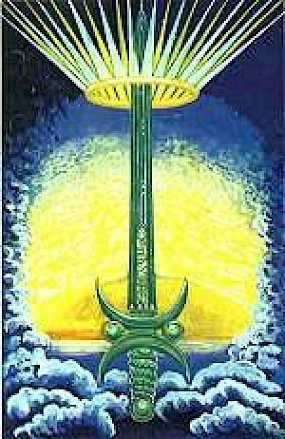
(via angelpaths.com and Alan Blackman)
Word-Built World: demisexual
demisexual
/ˌdemēˈsekSH(əw)əl/
adjective
adjective: demisexual
- experiencing sexual feelings and attraction only after developing a close emotional relationship and not on the basis of first impressions, physical characteristics, etc.”the way the characters’ dynamic continues to develop through these two novels is very relatable to me as a demisexual person”
noun
noun: demisexual; plural noun: demisexuals
- a person who experiences sexual feelings and attraction only after developing a close emotional relationship and not on the basis of first impressions, physical characteristics, etc.”since demisexuals require an emotional connection to feel sexual attraction, building trust is key”
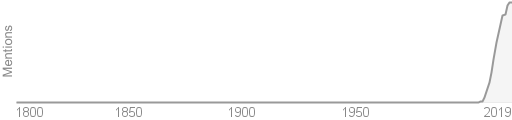
Use over time for: demisexual
A Close Look at Some Key Evidence in the Gaza Hospital Blast

Multiple synchronized videos show a projectile, previously identified by Israeli officials as a Palestinian rocket, launching from Israel and detonating near the Israel-Gaza border.
VISUAL INVESTIGATIONS
A widely cited missile video does not shed light on what happened, a Times analysis concludes.
Multiple synchronized videos show a projectile, previously identified by Israeli officials as a Palestinian rocket, launching from Israel and detonating near the Israel-Gaza border.Credit…
By Aric Toler, Haley Willis, Riley Mellen, Alexander Cardia, Natalie Reneau, Julian E. Barnes and Christoph Koettl
- Oct. 24, 2023 (NYTimes.com)
The video shows a projectile streaking through the darkened skies over Gaza and exploding in the air. Seconds later, another explosion is seen on the ground.
The footage has become a widely cited piece of evidence as Israeli and American officials have made the case that an errant Palestinian rocket malfunctioned in the sky, fell to the ground and caused a deadly explosion at Al-Ahli Arab Hospital in Gaza City.
But a detailed visual analysis by The New York Times concludes that the video clip — taken from an Al Jazeera television camera livestreaming on the night of Oct. 17 — shows something else. The missile seen in the video is most likely not what caused the explosion at the hospital. It actually detonated in the sky roughly two miles away, The Times found, and is an unrelated aspect of the fighting that unfolded over the Israeli-Gaza border that night.
The Times’s finding does not answer what actually did cause the Al-Ahli Arab Hospital blast, or who is responsible. The contention by Israeli and American intelligence agencies that a failed Palestinian rocket launch is to blame remains plausible. But the Times analysis does cast doubt on one of the most-publicized pieces of evidence that Israeli officials have used to make their case and complicates the straightforward narrative they have put forth.

The hospital blast has become a searing, contested episode in the war that began on Oct. 7 after Hamas, which controls the Gaza Strip, invaded Israel, an attack that the Israeli government says killed more than 1,400 civilians and soldiers, and seized 200 hostages who were taken back to Gaza. Israel has responded to the Hamas attack with a relentless artillery and bombing campaign that has killed 5,700 Palestinians, according to the Hamas-run Gazan Health Ministry, as the Israeli military prepares for a ground invasion.
Israeli officials and Palestinian militants blame each other for the Al-Ahli Arab explosion. Multiple videos assembled and analyzed by The Times show that militants were firing dozens of rockets from southwest of the hospital minutes before the blast, and the fiery explosion at the hospital is consistent with a failed rocket falling well short of its target with unspent fuel.

The footage also suggests that Israeli bombardment was taking place and that two explosions near the hospital can be seen within two minutes of it being struck. Maj. Nir Dinar, an Israeli military spokesman, told The Times that military forces were not striking “within a range that endangered the hospital,” but declined to say how far away the nearest strike was.
A week after the hospital tragedy, much remains in question.
The death toll, initially put at 500 by Hamas and then lowered to 471, is believed by Western intelligence agencies to be considerably lower — but no number has been verified. The hospital itself was not directly struck; whatever caused the explosion actually hit the hospital courtyard, where people had gathered for safety, and a handful of parked cars.
Moreover, the crater left from the impact was relatively small, a fact that Israel has cited in arguing that none of its munitions caused the blast, and could be consistent with a number of different munitions. Hamas has not produced a remnant of an Israeli munition or any physical evidence to back up its claim that Israel is responsible.

U.S. intelligence officials said on Tuesday that agencies had assessed that the video shows a Palestinian rocket launched from Gaza undergoing a “catastrophic motor failure” before part of the rocket crashed into the hospital grounds. A senior intelligence official said the authorities could not rule out that new information would come to light that would change their assessment but said they had high confidence in their conclusions.
Asked about The Times’s findings, a spokesman for the Office of the Director of National Intelligence said The Times and American intelligence agencies had different interpretations of the video.
Discerning what happened is especially complicated because Israel and Hamas have been firing at each other since the war began.
Israel has fired more than 8,000 munitions into Gaza, in what has become a brutal assault, and had even hit Al-Ahli Arab Hospital with an illumination artillery shell three days earlier, according to video evidence and the hospital’s official Facebook page.
Hamas and Islamic Jihad have continued to target Israel with deadly rockets from hidden launch sites inside Gaza. Palestinian rockets have malfunctioned in the past and one estimate says 15 percent of rockets launched by Gazan militant groups fail.
Within an hour of the hospital blast, an information war began. Hamas immediately blamed an Israeli airstrike, while the Israel Defense Forces soon denied any responsibility and placed the blame on a malfunctioning Palestinian rocket.
Israeli officials released a report about the explosion on Oct. 18 and also made public one conversation they said was intercepted between Hamas fighters blaming Islamic Jihad for the blast. Israel also has cited several other pieces of evidence that have not been made public, including logs of military activity, information gleaned from radar systems, other audio intercepts and other videos.
Meanwhile, Israeli officials have pointed to the Al-Jazeera video in media interviews and social media.
The Al Jazeera video footage was shared three times by the Israel Defense Forces on X, formerly known as Twitter. In the posts, the Israeli military identified the moving aerial object as a “rocket aimed at Israel” that “misfired and exploded” at nearly the same time as the Al-Ahli Arab Hospital blast. Spokesmen for the Israeli military also explicitly identified this munition as the misfired rocket that caused the explosion in interviews with CNN and the BBC on Oct. 18 and in an interview with India Today on Oct. 19.
Numerous media outlets have shown the video footage and several have cited it as evidence that a Palestinian rocket hit the hospital.
But The Times concluded that the missile in the video was never near the hospital. It was launched from Israel, not Gaza, and appears to have exploded above the Israeli-Gaza border, at least two miles away from the hospital.

Note: The red cones show the approximate camera views of the launch of the projectile that exploded in midair.
By Zach Levitt, Charlie Smart and Weiyi Cai
To trace the object in the sky back to Israeli territory, The Times synchronized the Al Jazeera footage with five other videos filmed at the same time, including footage from an Israeli television station, Channel 12, and a CCTV camera in Tel Aviv. These different videos provided a view of the missile from north, south, east and west. Using satellite imagery to triangulate the launch point in those videos, The Times determined that the projectile was fired toward Gaza from near the Israeli town of Nahal Oz shortly before the deadly hospital blast. The findings match the conclusion reached by some online researchers.
In addition, the videos show that the projectile in the Al Jazeera footage was launched after the barrage of Palestinian rockets Israeli officials assessed was responsible for the hospital explosion.
From 6:59 p.m. on Oct. 17, barrages of Palestinian rockets are fired from two positions southwest and northwest of the Al-Ahli Arab Hospital, the videos show. Flames from the Palestinian rockets are visible in the nighttime sky as their engines propel them northeast toward Israel. More than 25 seconds elapse between the final Palestinian rocket and the hospital explosion.
The Times cannot independently identify the type of projectile that was fired from Israel, though it was launched from an area known to have an Iron Dome defense system. The Israeli military says it doesn’t fire Iron Dome interceptors into Gaza, and indeed the missile seen in the video may not have crossed over into Gazan territory. The Israeli military has stated that the Iron Dome did not shoot any interceptors in the questioned time and area.
Hiba Yazbek contributed reporting from Jerusalem. John Ismay contributed reporting from Washington, D.C. Yousur Al-Hlou contributed reporting from Cairo.
Haley Willis is a journalist with the Visual Investigations team. She has shared in two Pulitzer Prizes for investigations into the U.S. military’s dismissal of civilian casualty claims and police killings during traffic stops. More about Haley Willis
Riley Mellen is a reporter on The Times’s visual investigations team, which combines traditional reporting with advanced digital forensics. More about Riley Mellen
Alexander Cardia is a designer, animator and graphics editor with the Visual Investigations team at The Times. He was among the recipients of the 2023 Pulitzer Prize for International Reporting for coverage of Russian atrocities in Bucha, Ukraine. More about Alexander Cardia
Natalie Reneau is a senior video editor for the Visual Investigations team. More about Natalie Reneau
Julian E. Barnes covers the U.S. intelligence agencies and international security matters for The Times. He has written about security issues for more than two decades. More about Julian E. Barnes
Christoph Koettl is a Visual Investigations journalist with the Times video team, specializing in the analysis of satellite imagery, video and other visual evidence. He has shared in two Pulitzer Prizes for coverage of the civilian toll of U.S. air and drone strikes, and Russian atrocities in Ukraine. More about Christoph Koettl
A version of this article appears in print on , Section A, Page 1 of the New York edition with the headline: Often Cited Missile Video Fails To Shed Light on Hospital Blast. Order Reprints | Today’s Paper | Subscribe
Americans prefer equality to freedom — Alexis de Tocqueville

Jun 2, 2022 (ghaidabouchala.medium.com)

Tocqueville argues that Americans prefer equality to liberty. Why does he think this is the case? What are the political ramifications of preferring equality to liberty? Does this analysis still apply to America today?
I wrote this essay as part of my American Political Thought course at Shawnee State University — Spring 2022. I hope it provides you with some valuable information.
Introduction
It has long been established that liberty and equality are the core values of the democratic political system in America. However, it seems that one value is more equal than the other*. From the Declaration of Independence, in which the fundamental ideal of equality is mentioned before that of freedom, to the American Revolution, which was a huge victory for equality. This development raises the question: why do democratic nations show a more ardent and enduring love of equality than of liberty?
To shed light on this question, one can look to Alexis de Tocqueville who, in his book “Democracy in America”, argues that Americans prefer equality to liberty. Tocqueville’s theory ultimately illuminates how in a democracy, Americans would ultimately favor equality over freedom because its material benefits are more immediate and tangible.
Tocqueville’s theory is explained in three sections in this paper. The first section lists the reasons why he thinks Americans prefer equality over liberty. The second section examines the political ramifications of this preference. The final section examines whether this analysis still applies to America today.
The reasons Americans venerate equality to freedom
Tocqueville claims that in democracies the passion for equality is stronger than the passion for freedom. He presents this argument in three parts in a chapter of “Democracy in America” explaining “why democratic nations show a more ardent and enduring love for equality than for liberty”.
First, he says that in democracies the desire for equality overpowers that for freedom because freedom has manifested itself around the globe in various eras and various forms. Thus, it was not exclusively linked with any social status and was not limited to democracies. In other words, freedom is not what is distinctive to such regimes. “Freedom cannot, therefore, form the distinguishing characteristic of democratic ages.” (DA, 473). Simply put, equality was the hallmark of the era in which people live, which, according to Tocqueville, is a sufficient argument to explain why they prefer it to others.
Second, Tocqueville tells us that democratic people are extremely attached to equality because they think it will last forever, whereas political liberty is more easily lost; he states that demolishing the equality that exists would only be possible via lengthy and laborious efforts. Because it would “have to change its social state, abolish its laws, update its concepts, shift its habits, and change its morality. However, it is sufficient not to adhere to political liberty for it to be lost.” (DA, 474). To put it another way, equality is firmly embedded in-laws, social conditions, mores, habits, and attitudes, and destroying it would be extremely difficult. On the other side, political liberty is easily lost. Therefore, equality is valued because it is assumed to be eternal. “ not only do men cling to equality because it is dear to them; they also adhere to it because they think it will last forever. ” (DA, 474).
Finally, Tocqueville argues that the benefits of political liberty are only experienced infrequently by a very limited number. Furthermore, such liberty necessitates sacrifice and effort, whereas equality is simple: it “daily provides each man in the crowd with a variety of small rewards,” and “offers its pleasures for free.”. In other words, the benefits of freedom are visible only with time and sacrifices must be made to exercise it, while the benefits of equality are felt immediately and are easily obtained. As a result, “democratic peoples’… passion for equality is ardent, insatiable, eternal, and invincible. ,” (DA 475). Thus it is more highly regarded.
To wrap up this part, people in America have a deep-seated passion for equality over liberty. Ultimately, the most ideal version of equality necessitates complete liberty. Yet, imperfect equality can lead to despotism. Furthermore, the dangers of liberty are obvious and immediate, whereas the dangers of equality are subtle and visible only over time.
The political ramifications of the preference for equality over liberty.
Tocqueville aims to warn democratic societies of the political ramifications that the passion for equality produces. Equality has certainly brought men closer together, but it has also resulted in a decline in freedom. Thus, the development of a more ardent and long-lasting love of equality than of liberty can lead to a corrupt democracy in which liberty is ignored.
According to Tocqueville, the dilemma of democratic times is rooted in an excess of equality research. People will demand additional rights in the name of equality. The desire for equality will lead people to individuality, which Tocqueville sees as a weakness. Individualism, according to Tocqueville, is a significant threat to both individuals and democratic society. He is concerned that by pursuing independence and freedom at any cost, the individual abandons his civic purpose and entrusts everything to the state, including his freedom. As a result, the individual who overestimates the State’s ability to handle problems will divert his citizen power. In addition, he will always feel tempted to refer to the State in any situation. However, acting in this manner absorbs the citizen’s individuality and eliminates his freedom, because the State becomes his primary respondent in any situation.
The tyranny of the majority, according to Tocqueville, is another serious consequence of Americans’ passion for equality. Tocqueville demonstrates how the tyranny of the majority leads to democratic conformism and thought standardization. When it comes to conformism, it is a tendency to be concerned about the health of democratic societies, particularly when all citizens wish to eliminate their diversity to conform to a single idea. Since men in egalitarian societies believe they are similar, they frequently assume that their ideas and opinions, and consequently the beliefs of each person, are linked with the majority. As a result, when people take opposed positions to the majority, freedom of expression suffers. Individual identities are destroyed, freedoms become impractical, and the majority’s voice is heard. As a result, majority tyranny is proof that any quest for extreme equality leads not just to the loss of liberty, but also to the hiding and trivialization of minority concerns, and even to the rejection of differences.
Does this analysis still apply to America today?
Tocqueville recognizes the risks of abandoning liberty in the name of equality. Some of this analysis still holds true in today’s America, but on top of that, over the past several years, a new passion for safety has arisen. Americans gave up their liberty in the name of security. While in Tocqueville’s time, equality was the hallmark of the era, nowadays, security is the hallmark of the era. This involves the pursuit of energy security, security in possessing the most powerful weaponry, and security against cyber attacks, among other things.
Furthermore, in contrast to Tocqueville’s analysis that equality is treasured because it is considered to be eternal, men in America experience constant anxiety, which is summed up in the fear of losing their achievements. Ultimately, what stirs the human heart is an unfulfilled need to possess something and the constant fear of losing it. As a result, while they want to have material wealth and want to embrace equality, they are afraid of losing it. As a result, they isolate themselves from others and value their own lives and possessions.
It is also worth noting that now, the United States’ political regime is a two-party system dominated by the Democratic Party and the Republican Party. A regime, where the health of democracy is suffering from a lot of internal conflicts and divisions.
Conclusion
The first section of this paper, as stated by Tocqueville, focuses on the reasons why Americans prefer equality to liberty. The second part demonstrated how this desire for equality leads to plenty of democratic problems and political ramifications. Finally, it was observed in the concluding section that Tocqueville’s thesis does not entirely apply to America today due to changes and evolution. This begs the question in the reader’s mind, “What do I prefer? Equality or liberty.” Neither is the answer, rather it is justice, the fuel of equality and freedom.
*Reference — “ All animals are equal, but some animals are more equal than others.” Animal Farm by George Orwell

I’m a developer who writes.
Queering the Map

| From Wikipedia, the free encyclopedia | |
| Type of site | Web mapping |
|---|---|
| Founded | May 2017 |
| Country of origin | Canada |
| Founder(s) | Lucas LaRochelle |
| URL | queeringthemap.com |
| Current status | Active |

Queering the Map is a community-based online collaborative and counter-mapping platform on which users submit their personal queer experiences to specific locations on a single collective map. Since its inception, users have contributed over 140,000 submissions in 23 languages to the platform.[1]
History
In 2017, Canadian artist and designer Lucas LaRochelle began working on Queering the Map for a class project at Concordia University in Montreal.[2] The project was launched in May of the same year. LaRochelle has cited the lasting impact of personal memories on their perceptions towards places and Sara Ahmed‘s ideas on queerness as an orientation towards space as influences behind the project. For LaRochelle, a queer space can be a relational experience created by and/or shared between queer people.[3] LaRochelle has stated that their main intent for initiating the project was to archive these spaces, which transcend the traditional notion of queer spaces as fixed places (like businesses or neighborhoods) that are reclaimed by clearly defined communities.[1]
In February 2018, Montreal DJ Frankie Teardrop shared Queering the Map on Facebook, greatly increasing its visibility.[2] During this month, the number of pins on the map increased from 600 to 6,500 within a three-day span. The same month, a cyberattack generating pins with comments in support of U.S. president Donald Trump forced LaRochelle to take down the site and ask for help on its URL.[1] Over the next two months, 8 volunteers developed a more secure version of the site on GitHub,[2] and the project qualified for Cloudflare‘s free Project Galileo cybersecurity service. Notably, a moderation system was developed for the platform through this process.[3] In April 2018, Queering the Map was relaunched.[4]
In 2019, LaRochelle began developing QT.bot, an artificial neural network trained to generate hypothetical queer stories using the data submitted to Queering the Map.[5]
Reception
Queering the Map has received press coverage through media outlets based in Australia,[6] Brazil,[7] Canada, the Czech Republic,[8] France, Spain,[9] Switzerland,[10] the UK and the U.S., including Autostraddle, CBC Arts, CityNews,[11] Condé Nast Traveler,[12] Fugues,[13] Numerama, Paper, rabble.ca,[14] The McGill Daily, The Skinny,[15] VICE and VOGUE.[16]
Accolades
In 2018, Queering the Map received an honorary mention at the Prix Ars Electronica[17] and was longlisted for the Kantar Information is Beautiful Awards[18] and the Lumen Prize for Digital Art.[19]
Context
Queering the map is becoming widely known in the design field and is part of a larger ‘queer turn’ [20] in design seen in work by designers and design researchers like Ece Canli, Emeline Brulé, Luiza Prado de O. Martins and Tiphaine Kazi-Tani, which has been described as “radical, chaotic and deconstructive.” [21]