Back in the 1930s, it wasn’t uncommon to enter somebody’s house and see a portrait of Franklin Roosevelt on the wall. This made sense at the time. He was a very popular politician, with approval ratings that sometimes topped 80%. But it was more than that — in addition to guiding the country through the hard times of depression and war, Roosevelt was widely respected as a leader and a human being. He became a kind of father figure to the nation.
Can you imagine something like that happening today?
It feels like it’s been a long time since we’ve had a leader who has been as widely admired as FDR. In some ways, that’s OK. Political hagiography kind of gives me the creeps. On the other hand, we may have swung too far in the opposite direction as a country.
Though Americans get to choose our leaders, we seem to despise them. Two-thirds of Americans think that “most politicians are corrupt.” About the same percentage believes that politicians as a category are “somewhat immoral” or “very immoral;” in fact, Americans find politicians to be more immoral than pornography actresses. Ninety percent of Americans don’t want their children to become politicians.
It’s not hard to see why we have such a low opinion of our leaders. Sometimes I think Americans are too cynical about our politicians — there are a lot of good people, trying their best — but it’s undeniable that our system attracts too many mediocrities, idiots, crooks, and narcissists. Too many of them don’t get much done, are in thrall to moneyed interests, and are dishonest.
Think for a minute about what it must be like to run for president. What sort of person would want to subject themselves and their families to years of invasive scrutiny, to be the butt of endless jokes and lies, and to be hated by half the country? And then, if all goes well, to take on one of the most stressful and thankless jobs on the planet? Unsurprisingly, many of the people who run for such offices are utter narcissists, people who are so obsessed with power that they’re willing to upend every aspect of their lives and sell every bit of their soul to get it.
So how can we get smarter, wiser, more honest people to run for office? Let’s explore four possible solutions.
Pay politicians more
The most common suggestion for improving the quality of our politicians is a classically capitalist one: we should pay them more.
Politicians aren’t exactly starving, but they don’t make a lot of money compared to other accomplished professionals. Pay for state legislators is all over the place — in South Carolina and Rhode Island, they’re paid less than $20,000 per year; in Wisconsin $55,000; in Ohio, $68,000; in Pennsylvania, $95,000; and in California, $120,000. In many states, being a member of the state house or senate is a part-time job, and legislators have to balance their civic duties with an ordinary career (my local state rep has a day job as a nurse).
Even at the federal level — ostensibly the place where our most skilled and dedicated public servants should be — pay is just OK. Members of the House and Senate make $174,000 per year — again, a very nice salary, but about half of what a midwestern gastroenterologist would make. Members of Congress also have significant personal expenses associated with their jobs, as they have to travel back and forth to Washington from their home states and maintain residences in both locations. If you think your raises have been paltry, try being a Congressperson: Congress hasn’t raised its pay since 2009 (it’s actually scheduled to receive a cost-of-living increase each year, but it usually performatively blocks that raise).
If we paid politicians more money, we might attract better-educated, more qualified people to run for office, especially if they have established lucrative careers that they would have to abandon for public service. It might also keep politicians away from the “revolving door” between the public and private sectors. If legislators didn’t have one eye on getting a high-paying gig as “compensation” once they’ve left public service, we might see fewer ethical conflicts, too.
Will this actually work? The evidence is mixed. There’s been someresearch that seems to show that better pay for politicians yields better outcomes, although a study in the European Union indicated that higher pay did not result in better-educated members of parliament.
Leave politicians alone
Pay is, of course, only one of the conditions of work. A lot of people take jobs that pay them less as long as they get to experience a better quality of life. Is being a politician… enjoyable?
Politics isn’t for everybody, and it never will be. People who are uncomfortable with strangers, who hate public speaking, or who are very sensitive to criticism and disagreement should probably not sign up. But it seems that even some of the most driven, extroverted, thick-skinned people get driven from politics.
American politicians find themselves in a weird position. On the one hand, high political office is one of the most prestigious stations in American life. But, at the same time, many politicians are despised and dragged through the mud. Those who reach the highest rungs of the political ladder find that every part of their life, and their family’s lives, is under a microscope. Candidates’ friendships, complicated family relationships, business histories, and marital problems all end up on public display, often in a way that exaggerates or misrepresents the truth.
What person in their right mind would choose a profession in which their youthful foibles or painful personal secrets could easily become fodder for memes and mockery?
Maybe we would get better politicians if the media stayed out of their personal lives. This was the way things used to be, of course — many reporters knew about the extramarital affairs of Franklin Roosevelt and John Kennedy, but they didn’t report on them.
The problem with this solution is that it would create an awfully tricky line for the media to walk. Is an extramarital affair a sign that someone is unfit for office? How about decades-old accusations of sexual assault, as happened with Brett Kavanaugh? What about corrupt-seeming friendships with billionaires, ala Clarence Thomas? Or a history of depression, which sank Thomas Eagleton’s Vice-Presidential candidacy in 1972? Past drug use, as in the case of Bill Clinton or Barack Obama? Or family members engaged in sketchy activities (Roger Clinton, Billy Carter, Hunter Biden)?
Keep them accountable
Maybe we should hold our politicians more accountable.
The media scandal is our main tool for keeping politicians honest. There are two problems with media scandals. First, the media doesn’t always focus on the right things. They often get caught up with candidates’ personal foibles or awkward but meaningless gaffes. Second, media scandals only work as an enforcement mechanism if candidates are cowed by them. If politicians are shameless — see: Trump, Donald or Santos, George — they cease to matter much.
In our system, the higher you climb on the political ladder, the fewer ethical rules you have to follow. Supreme Court justices, for example, enforce their own ethics rules, which means that they are free of any scrutiny. Presidents, likewise, don’t have to follow many of the ethics rules that apply to Congress and the cabinet. Sure, there’s the nuclear option of impeachment, but that seems unlikely to be an effective deterrent in our polarized climate.
The political scientist Brian Klaas suggests an independent, nonpartisan office of ethical accountability that has the power to investigate and punish anyone in the government, no matter how powerful. This would work like an internal-affairs office in a police department, keeping all politicians honest.
Incentivize workhorses, not showhorses
A final suggestion is that we might want to create a political system that attracts doers rather than performers.
American politics, especially at the most visible levels, doesn’t get much done. Washington seems to be a never-ending, gridlocked food fight. Half the time, they can’t even agree to keep the government open, never mind proactively solving the country’s problems.
Many former members of Congress have left, at least in part, because of the pointlessness of their jobs. Tom Coburn, a Senator from Oklahoma, said, “That’s why I left. You couldn’t do anything anymore.” Ben Sasse, from Nebraska, complained that “The legislature is impotent. The legislature is weak.”
There are lots of reasons for this gridlock — partisanship, gerrymandering, and the filibuster, to start. There’s almost no compromise anymore; the two parties have retreated to their corners and seem more interested in attacking each other than solving the country’s problems.
This means that the way to become a prominent politician is to spend your time getting media attention rather than crafting legislation. Rising stars in Congress often focus more on “comms” than legislation. Better to be a showhorse, doing cable news hits and posting viral tweets, than a workhorse, toiling away on legislation that will never, ever get passed.
If you were somebody who actually wanted to change the world for the better, would running for Congress even make sense? Couldn’t you do more good by starting a business or working in the nonprofit sector?
Maybe, in order to attract better politicians, we need to build a political system in which progress is actually possible along with a political culture that rewards action rather than performance.
My concerns are not exactly new. In 1955, Joseph Clark, the Mayor of Philadelphia, wrote an article in the Atlantic called “Wanted: Better Politicians.”
In it, he makes some of the same proposals we see today — pay politicians more, give politicians the “presumption of integrity.” He concludes the article by saying:
Government by amateurs, semi pros, and minor leaguers will not meet the challenge of our times. We must change our attitude toward the profession, increase its material and spiritual rewards, and offer the same minimum security to its practitioners as is present in competing occupations.
Above all, we must realize that it takes great competence to run a country which, in spite of itself, has succeeded to world leadership in a time of deadly peril.
Like Clark, I understand that we’ve managed to muddle and bumble our way through American history with an often-subpar collection of leaders. But I’d like to enter the next phase of history with a better set of leaders, if at all possible.
The only spirtual machine I’ve seen. Jaffna, Sri Lanka 2010.
In1999, Ray Kurzweil published The Age Of Spiritual Machines. As a teenager, the book had a great influence on me. I actually believed in what he called ‘the singularity’ and I was looking forward to it. This singularity was a point of exponential growth that would be awesome. Evolution of machines would proceed forever, because “information and knowledge are not limited by the availability of material resources.” I was lucky enough to be along for the ride.
Now I’ve been on the ride for 24 years and, holy shit, I want to get off. Exponential growth turns out to be planetary cancer, not a panacea. Kurzweil never discussed energy use, resource use, pollution, and environmental destruction, and those turn out to be pretty important. Kurzweil blithely said, “Most Exponential Trends Hit a Wall… but Not This One,” in complete ignorance of the fact that we live in a connected world. His conception of AI is, in hindsight, just a dumb buzzword attached to a planet-destroying buzz saw.
Ignoring the fact that the entire premise of the book is wrong, its specific predictions are also wrong. Kurzweil predicted that we’d be having convincing virtual sex, eating and shitting nanobots, and be spending most of our time and money in AR/VR. Not in the distant future but quite specifically in 2019. Which, as you may have noticed, has come and gone. And also sucked. Even on his own wildly ignorant terms, Kurzweil was completely wrong.
Let’s go through his predictions, one by one.
The Predictions, One By One
A 2020 MacBook, which does not have the computation ability of a human brain. Oxford, 2022
1. Your computer will be as smart as you
A $1,000 computing device (in 1999 dollars) is now approximately equal to the computational ability of the human brain.
I use a 2020 MacBook Air, costing a bit under $1,000 adjusted dollars, and it is not approximately equal to the human brain. This is a strange prediction because Kurzweil says $1,000 worth in the timeline and $4,000 worth in the text but, either way, it’s wrong.
As a measure (to compare brains and computers) Kurzweil uses calculations per second. He said the amount of FLOPS (floating-point operations per second) of the human brain was 2×10¹⁶. His prediction would be that a consumer computer exceeds that processing power by 2019. A) This is comparing apples and oranges and B) it hasn’t happened.
My M1 chip is technically capable of 10.4 TFLOPs, which is about 10¹³. This is off by a factor of 2,000. Even if we’re generous and use the 2023 The M2 Ultra Chip (which sells for about $4,000+ current dollars), it’s still way off. That does 27.2 TFLOPS (about 3×10¹³), which is still not even in the right ballpark. And the ballpark itself is the wrong sport, because intelligence isn’t doing math over and over. Both conceptually and practically, Kurzweil was just,
WRONG.
Computing has not become invisible, if anything it’s more visible. Colombo, 2021.
2. Computation will be invisible
Computers are now largely invisible and are embedded everywhere — in walls, tables, chairs, desks, clothing, jewelry, and bodies.
Besides watches, computers don’t appear any of these places at all. And they’re certainly not invisible. By 2019, Kurzweil imagined ubiquitous augmented reality and he based a lot of his further predictions on this assumption. But this assumption is false.
Kurzweil said that, by 2019,
People routinely use three‐dimensional displays built into their glasses, or contact lenses. These ʺdirect eyeʺ displays create highly realistic, virtual visual environments overlaying the ʺrealʺ environment. This display technology projects images directly onto the human retina, exceeds the resolution of human vision, and is widely used regardless of visual impairment.
This technology just doesn’t exist. Google Glass was a failed prototype years ago and it never caught on. The Apple Vision Pro (which we’ll discuss) is an expensive curiosity that walk around with. All we really have is a bunch of different screen sizes that you can wear on a wrist or hang on a wall, but they’re not invisible. The ubiquitous computing that Kurzweil bases almost all of his predictions on doesn’t exist, which is why almost all of his predictions are…
WRONG
Virtual reality has nothing on reality. Wadduwa, 2015
3. Seamless Virtual Reality
Three‐dimensional virtual reality displays, embedded in glasses and contact lenses, as well as auditory ʺlenses,ʺ are used routinely as primary interfaces for communication with other persons, computers, the Web, and virtual reality.
Based on the assumption of ubiquitous, effectively magical computational and visualization power, Kurzweil predicts that augmented and virtual reality will be the dominant Information Communication Technology of the future, ie 2019. Having lived through 2019, I can say definitely not. AR and VR headsets exists but they A) mostly suck and B) are not popular at all.
The Apple Vision Pro, which came out in 2023, exists. It lets you watch a movie by yourself on a ‘virtually’ big screen, using two OLED screens in front of your eyes. This headset costs $2,000 (in 1999 dollars) and is not popular at all. Projected sales have been revised down from 1 million to 250,000 to 150,000. Not the sort of exponential growth Kurzweil was talking about.
Even this advanced device is not glasses (unless you call something that weighs nearly 1 kg, comes with a battery, and dies after two hours glasses) and it is nowhere near fitting inside a context lens. AR/VR technology is nowhere near being a primary interface, let alone a secondary or even tertiary one. The vast majority of people have never used this technology at all, and most people that do don’t find it especially compelling. On this point, Kurzweil was again
WRONG
You can still flick off computers and curse at them without them understanding. Oxford, 2022.
4. Gestures and natural language
Most interaction with computing is through gestures and two‐way natural‐language spoken communication.
Building on the assumption of AR/VR, Kurzweil says that most people will communicate with their computers ‘naturally’, using gestures and natural language. Given that most people don’t use AR/VR, this is necessarily false.
People do use some gestures on smartphones, but mostly we are pushing buttons and using (software) keyboards. These are all functions you could do with a physical keyboard and mouse, there’s nothing especially novel here besides a touchscreen. Siri and Alexa and voice assistants exist, but I wouldn’t call talking to them ‘natural’. Kurzweil said that in 2019 “People communicate with computers the same way they would communicate with a human assistant, both verbally and through visual expression,” and it really doesn’t work like that. ChatGPT brings you close to natural conversation, albeit with a pathological liar who can’t remember anything beyond 2021. So not the most reliable assistant, and still not used that way.
None of this stuff has come to pass, certainly not by 2019.
WRONG
You can track your children without making them eat and shit robots
5. Nanoengineered machines
Nanoengineered machines are beginning to be applied to manufacturing and process‐control applications.
In a technology he doesn’t really distinguish from magic, Kurzweil predicts that by 2019, “Autonomous nanoengineered machines can control their own mobility and include significant computational engines. These microscopic machines are beginning to be applied to commercial applications, particularly in manufacturing and process control, but are not yet in the mainstream.”
What does this mean? In a conversation Kurzweil has with a FUTURE PERSON, he goes into it:
This seems like hideous overkill for something we could accomplish with GPS technology since the 1980s. Which is what we do now, without feeding a million computers to our children. Nanoengineering is still very much in research stages, but nanoengineering like this isn’t even thought of.
WRONG
In 2023, you still have to be physically close to touch somebody. Chicago, 2023
6. Tactile Virtual Reality
High‐resolution, three‐dimensional visual and auditory virtual reality and realistic all‐encompassing tactile environments enable people to do virtually anything with anybody, regardless of physical proximity.
So, virtual sex. Kurzweil says that by 2019 “users feel as if they are physically near the other person. The resolution equals or exceeds optimal human visual acuity.” Kurzweil goes further to say that we’ll have tactile and olfactory technology by 2019. He says,
“The all‐enveloping tactile environment is now widely available and fully convincing. Its resolution equals or exceeds that of human touch and can simulate (and stimulate) all of the facets of the tactile sense, including the sensing of pressure, temperature, textures, and moistness.”
This is describing full-on virtual sex, which simply isn’t happening. People are definitely FaceTiming their asses and masturbating, but this is nowhere near being able to touch another person. That just happened.
WRONG
Books are still more popular than eBooks. Colombo, 2023
7. No more teachers, no more books
Paper books or documents are rarely used and most learning is conducted through intelligent, simulated software‐based teachers.
Paper books and documents are still commonly used. According to a 2021 Pew survey (in the US), “Print books remain the most popular format for reading, with 65% of adults saying that they have read a print book in the past year.” Electronic documents exist for many functions, but people still use passports and fill out forms.
Regarding learning, intelligent, simulated teachers don’t exist. You can teach yourself via DuoLingo or by watching videos, but this is not a teacher. It’s not really much different than old mail order classes or lessons on VHS.
Kurzweil also says that “Most adult human workers spend the majority of their time acquiring new skills and knowledge,” which is not what’s going on. Essential workers are still doing repetitive, physical work and ‘knowledge’ workers are largely bullshitting. In the US, workers spend about 50–70 hours on training, per year. Most adults spend very little time educating themselves, unless it’s on their own time and dime.
WRONG
Mobility devices still struggle with stairs. Dehiwala, 2012.
8. The deaf shall hear and the blind shall see
Blind persons routinely use eyeglass‐mounted reading‐navigation systems. Deaf persons read what other people are saying through their lens displays. Paraplegic and some quadriplegic persons routinely walk and climb stairs through a combination of computer‐controlled nerve stimulation and exoskeletal robotic devices.
Unfortunately, no. For the blind, Kurzweil presupposes “new computer‐controlled optical‐imaging technology using quantum‐based diffraction devices [which] has replaced most lenses with tiny devices that can detect light waves from any angle. These pinhead‐sized cameras are everywhere.” This of course doesn’t exist, so the product he envisions for blind people doesn’t exist either. What he imagines is that:
Blind persons routinely use eyeglass‐mounted reading‐navigation systems, which incorporate the new, digitally controlled, high‐resolution optical sensors. These systems can read text in the real world, although since most print is now electronic, print‐to‐speech reading is less of a requirement. The navigation function of these systems, which emerged about ten years ago, is now perfected. These automated reading‐navigation assistants communicate to blind users through both speech and tactile indicators. These systems are also widely used by sighted persons since they provide a high‐resolution interpretation of the visual world.
This technology just doesn’t exist, even in prototype form. What he’s talking about is perfect, invisible robot vision which understands what it’s seeing in natural language and can guide a blind person. This is nowhere near production, let alone ‘widely used’. Blind people still use dogs.
In terms of the lame walking, people are still using walkers and canes, and even the most expensive technology struggles with stairs. Exoskeletons exist in prototype form, but the main interest seems to using them killing and disabling people through military use.
This would be a nice use of technology but we’re sadly nowhere near this level of augmented ability for the disabled.
WRONG
Self-driving cars are still a plaything for billionaires. Colombo, 2007
9. Self-driving and robot lovers
The vast majority of transactions include a simulated person. Automated driving systems are now installed in most roads. People are beginning to have relationships with automated personalities and use them as companions, teachers, caretakers, and lovers.
The vast majority of transactions in 2019 did not involve a simulated person.
Kurzweil predicted “the cybernetic chauffeur… by the end of the 1990s with implementation on major highways feasible during the first decade of the twenty‐first century.” This did not happen. Elon Musk has been promising self-driving cars since 2013, calling it a ‘solved problem’ in 2023. It’s still not solved, nor is it a real problem. Efficient transport is much better solved by a bus or metro, technologies that have been around since the 1800s. Self-driving cars are an expensive vanity project which is still being tested in the 2020s, and they’re still driving themselves into traffic and running over homeless people.
Regarding robots that you can have meaningful relationships with, that just isn’t happening at all.
WRONG
AI art is real, but AI artists not so much. Chicago, 2023
10. Virtual art
Virtual artists, with their own reputations, are emerging in all of the arts.
While 2023 has been a banner year for virtual art, that is still humans putting prompts into a machine. Kurzweil is talking about virtual artists, with their own reputations, and that simply isn’t happening.
Kurzweil also says:
The type of artistic and entertainment product in greatest demand (as measured by revenue generated) continues to be virtual‐experience software, which ranges from simulations of ʺrealʺ experiences to abstract environments with little or no corollary in the physical world.
Again, Kurzweil is presupposing a virtual world that doesn’t exist, so the revenues don’t either. Modern VR is a place to incinerate money, it doesn’t make it.
The highest earning artists are still old farts like Genesis and the Rolling Stones, selling their music rights or touring. Abba has made good money performing concerts with avatars, but this is a novelty tied to a specific location. There is very little VR specific content at all. It’s a rounding error in terms of entertainment revenue, not what’s in greatest demand. People still want to go to a show.
WRONG
ChatGPT can carry on a conversation. Oxford, 2023
11. Passing the Turing Test
There are widespread reports of computers passing the Turing Test, although these tests do not meet the criteria established by knowledgeable observers.
I’ll give Kurzweil this one. As of 2019 no, but as of 2023 I think ChatGPT and its ilk can pass the Turing Test (convincing a human that it’s human). Many business emails are written with ChatGPT with none the wiser.
There is surprisingly little debate about bots passing the Turing Test, because it doesn’t seem to matter that much. But you have to give Kurzweil this one, IMHO.
RIGHT
The Results
If you’re keeping track, that’s 10/11, and that’s just the highlights. Kurzweil made a lot of specific predictions which are completely off. He said that by 2019, “there is sufficient prosperity to provide basic necessities (secure housing and food, among others) without significant strain to the economy.” I suppose there is sufficient prosperity, but the rich ain’t sharing. My people are hungry and yours are homeless.
In terms of warfare he said, “The primary threat to security comes from small groups combining human and machine intelligence using unbreakable encrypted communication. These include (1) disruptions to public information channels using software viruses, and (2) bioengineered disease agents. Most flying weapons are tiny — some as small as insects with microscopic flying weapons being researched.” I don’t know what this means. We’re having pitched tank battles in 2023.
Ray said the expected human lifespan would double to over 100, while it’s actually declining in America. He predicted flying cars, saying “Efficient personal flying vehicles using microflaps; have been demonstrated and are primarily computer controlled. There are very few transportation accidents.” We still don’t have flying cars. We never will. It’s swill.
Are In
I respect Kurzweil, though I disagree with him now. He had the balls to make predications and be falsifiable. And he’s provable false now. The wildest imagination of the futurists hasn’t come true, and our worst nightmare has come to life. And they didn’t see it coming. The thrills Kurzweil predicted for 2019 haven’t happened. The threats he didn’t predict have come to life. By all accounts this is an epic fail. A complete failure of imagination.
To me, as a 41 year old, the failures of Kurzweil are just this. He started from half-baked theory and got inedible results. Kurzweil said “Evolutionʹs grandest creation — human intelligence — is providing the means for the next stage of evolution, which is technology… the resources of evolution, order and chaos, are unbounded. I stress this point because it is crucial to understanding the evolutionary—and revolutionary—nature of computer technology.” This is simply arrogance. We are way less cool than dinosaurs, and even technical evolution require physical resources. Technology is not merely restricted by concepts, like ‘chaos’, and ‘order’. It needs silicon, and electricity, and water-cooling.
Kurzweil said, “Information and knowledge are not limited by the availability of material resources,” and this is just false. This technology uses rare earth metals and energy and water in huge amounts. And it chews up the Earth in huge chunks. Of course, technology is limited by available resources, it’s not fucking magical. Kurzweil thought differently, and this was dumb, but at least he had the courage to make detailed predictions.
Now that it’s 2019 we can check his predictions and, boy, were they off. 2019 was a singlar year, in that it was singulary shit and the shit has not subsided till now. 2019 was the year of COVID, not some artificial consciousness. It was the year of the natural world sending us the first of many plagues, and saying ‘wake the fuck up’. This isn’t the age of spiritual machines. It’s the age of natural consequences. The futurists missed this in their predictions of the future. The future is fucked.
Dave Zirin discusses identity and political evolution on his journey to solidarity with Palestinian liberation.
BY MARC STEINER SEPTEMBER 5, 2023 (therealnews.com)
Palestinians gather on the Israeli border to the east of Gaza City, protesting the killing of 11 Palestinians in the raid carried out by the Israeli army in West Bank city of Nablus, on February 23, 2023 in Gaza City, Gaza. Photo by Ali Jadallah/Anadolu Agency via Getty Images.
In a special crossover moment for The Real News, Dave Zirin of Edge of Sports joins The Marc Steiner Show for an installment of ‘Not In Our Name’—a series of conversations and reflections from the Jewish diaspora on Palestinian liberation. In a meandering conversation, Dave and Marc discuss their own personal journeys through the many sides of Jewish politics and history, the current state of antisemitism in the world of sports, and more.
Studio Production: David Hebden Post-Production: David Hebden
TRANSCRIPT
The following is a rushed transcript and may contain errors. A proofread version will be made available as soon as possible.
Marc Steiner:
Welcome to The Marc Steiner Show here on The Real News. I’m Marc Steiner. It’s great to have y’all with us. And welcome to another edition of Not in Our Name, our series of conversations with Jews from around the world saying, “No to the occupation of Palestinian Land, and homes, and the ongoing oppression of Palestinians. There is another way.” And today, we hear from this man, Dave Zirin. Now, I’ve known Dave for some years now and he’s been a guest of my show on public radio before. I don’t think ever before here on The Real News, but that’s okay because The Real News now has him here on the edge of sports, which is playing on The Real News.
Dave Zirin writes a column in that name for The Nation magazine. He’s acknowledged around the world as one of the best sports analysts, commentators, and writers, not just covering the games that we play and love, but diving into the social, cultural, and political worlds twirling around and through that world of sports. He’s the author of numerous books, including his latest Game Over, How Politics Has Turned the Sports World Upside Down, and of course, The John Carlos Story, The Sports Moment That Changed the World that won the NAAC Image Award. And let me leave time for our conversation. Dave, welcome. Good to have you with us, man.
Dave Zirin:
Oh, I’m just thrilled to be here and honored. Thank you so much.
Marc Steiner:
Oh, no. I’m looking forward to this. I didn’t know until I thought about having you on this segment, not in our name, that you have been around doing this for a while, talking at conferences, speaking out as a Jewish saying no. Talk about that sojourn for yourself.
Dave Zirin:
No. Absolutely, I was raised in a very Jewish family like so many Jews in the United States. My grandparents and great-grandparents fled to this country from Eastern Europe to flee pogroms like so many Jews in this country. I lack a large family for the reason of the Holocaust. Like so many Jews, the stories of my grandparents, and from what I hear, great-grandparents of the shtetl in which they were raised no longer exist and are even difficult. We had to go through some efforts, even find out the names of said shtetl. Like a lot of Jews, although not all Jews, my grandparents and great-grandparents were very wary about speaking Yiddish in front of me. I would catch them doing it, but they were very insistent on English because they were very one to this idea that America could be a place where they would be safe. And if there’s one thing I’m happy about, when I think of my grandparents, is that they didn’t live to see Charlottesville, that they didn’t live to see the Tree of Life massacre in Pittsburgh.
Join thousands of others who rely on our journalism to navigate complex issues, uncover hidden truths, and challenge the status quo with our free newsletter, delivered straight to your inbox twice a week:
I’m actually grateful for that, not just because they led long lives and they would be 115 if they had lived that long, but also because they did have the illusion. And I do think it is an illusion that this country would be safe for the Jewish people, but they had a bigger illusion than that, which was that if the country would not be safe for Jewish people, if that day would come, then they had Israel almost like a place to go where they could be safe in a world built around in their mind, understandably, a history of attempted extermination by dominant cultures that Israel would be able to protect them from that. I grew up with that idea very strongly. I went to Hebrew school where what was taught often was Zionism and supporting Israel more than the Bible and the services and the historical culture. I had a teacher, I’ll never forget an instructor who joked we’re over 5,000 years old as a people, but in this room we’re going to stick to the last 30.
Almost like Judaism is born in 1948 or 1967, that’s where you get Judaism in full until we have our own homeland, how can you really call us a people? I mean, that is something I’ve heard people like Arch Zionists say that it’s almost the negation of Judaism to not have a homeland. Now, I grew up and like yourself, Marc, I found myself very in sync with a more radical set of politics than what was on offer from the Democrats and the Republican Party. Started seeing change as being a product, much more of social movements and individuals rather than in the result of people cutting deals in back rooms on Capitol Hill. And that’s what I dedicated myself to, but I held onto those Zionist ideas. So I would say things like, “I’m against all war, but Israel has the right to defend itself.”
I’m against all nationalisms, although except for I think Israel is really an exception to that, I’m against all nationalisms except nationalisms of oppressed people like Black nationalism. I will always proudly stand with Latinx nationalism, Chicano nationalism. But at the same time… This is such a long answer, is that okay?
Marc Steiner:
That’s cool, man. Listen. Go ahead.
Dave Zirin:
All right. But at the same time I would be like, Israel is the exception. Israel is the exception. And obviously I was always, because I was in these radical circles, I was in debates with Palestinians, with other Jews, with people I respected deeply, people from the Middle East.
Marc Steiner:
This is in your 20s?
Dave Zirin:
Yeah, yeah. Right now when I’m talking to you, I’m between the ages of 18 and 20.
Marc Steiner:
Okay. Right.
Dave Zirin:
My mom is hearing this. She’s going to wish I was in class more, but in college I was doing most of my reading outside the classroom, if I’m being really honest.
Marc Steiner:
I understand that completely. Yes. I got you.
Dave Zirin:
And I was reading, believe me, just wasn’t what I was being told to read. And finally the contradiction just became too great. I want to see liberation for all people, and that means liberation for the Palestinian people. I want to see liberation to the for Jewish people, of course, but I don’t think, certainly not now, I could say I don’t think a right-wing theocracy is an avenue towards liberation. But even in those days when people were hopeful about Rabin, and Arafat, and Oslo, when there was this sense of hope of a two state solution, even then I was like, “I need to reject this and really stand for one state with equal rights for all because a two state solution would be an unequal relationship and further oppression by different means.”
We need to have a South Africa mindset to this, where we have to identify apartheid as apartheid and as consistent anti-racists and anti-oppression activists. We need to take this on. Now, I had Jewish people in my home be like, “Racism, what are you talking about? This isn’t Black and white.” And that only made me more firm in my beliefs because if you can understand historically how the English oppressed the Irish, and if you understand historically that race is just an idiotic construct that’s constructed as a modes of oppression, then I think racism has to be identified as such a dominant feature of Israeli society and one that’s longstanding, and let alone talking about today, where they’re now actually talking actual legislation for different punishments based on your ethnicity and based on your religion.
Marc Steiner:
In Israel at this moment?
Dave Zirin:
Yes.
Marc Steiner:
Right. But there’s new right-wing government.
Dave Zirin:
Yes, exactly.
Marc Steiner:
Fascist government.
Dave Zirin:
Yes. But this fascist government, to me, all it is the fruit from a poison tree. It’s something that has been coming to fruition for some time. And the last thing I’ll say is when people say to me, “Well, what did you read to shape your politics about this?” It’s like, of course I read some of the most famous stuff that’s been out there about this by some of the great anti-Zionist writers, Jewish, and otherwise. And I’ve read some things I’ve disagreed with by people like Norman Finkelstein, for example. But part of me also really respects the way he stuck his neck out there for all these years. But although there are parts of me that disagree with him a lot, but that’s another question. But the real thing that I read that really started to shift me honestly, was the op-ed page of Haaretz, which to a lot of folks in Israel is effectively The New York Times of Israel, for folks who don’t know.
Marc Steiner:
Exactly.
Dave Zirin:
And reading in the op-ed page that they used words that were not allowed to say in the United States like apartheid. That to me-
Marc Steiner:
Referring to Israel as an apartheid place?
Dave Zirin:
Referring to Israel as apartheid place and talking about a Jewish writers speaking about that openly and what the responsibility is of Jews in that context, that to me was just like, “Okay. There’s justice and injustice in this case. This is straight up a which side are you on question.” We can’t straddle the middle on this. And that made me a fighter for Palestinian liberation, which I’ve proudly been in the decade since.
Marc Steiner:
A lot of things popped in my head as you were speaking. And I was thinking about this poster that I got in Cuba in 1968 when I went there for the first time. And the poster was a picture, a drawing of the entire state of Israel, Palestine as one. And it said, “One state, two peoples, three faiths,” suppose where I still have hanging in my study.
Dave Zirin:
That’s beautiful.
Marc Steiner:
And it struck me because, at that point, I really newly minted against Zionism, Israeli state after, as I told you before in the air that thinking about volunteering for the Israeli army to fight in the ’67 war.
Dave Zirin:
When you said that… I jump in real quick-
Marc Steiner:
Yeah, sure. Go ahead, man.
Dave Zirin:
… because this speaks to when you came of age. I once had someone tell me this amazing story, and this just says something about why a lot of Jewish people feel a great deal of confusion on some of these questions. I think that their synagogue in 1964 gave a youth, their youth group had the option to go on the Freedom Riders or go to Israel and work in a kibbutz or something of that nature. And it’s just so interesting to me that they saw no contradiction on that whatsoever.
Marc Steiner:
None. All none.
Dave Zirin:
I mean, none.
Marc Steiner:
You talk about the Freedom Riders, we don’t want to digress too deeply into this, but 70% of the white Freedom Riders were Jews.
Dave Zirin:
Yes. Wow. Which speaks to a lot of the right-wing, and we don’t talk about this nearly enough, but a lot of antisemitism from the right about the ’60s movements, SDS, et cetera.
Marc Steiner:
So let me ask you this difficult question.
Dave Zirin:
Sorry.
Marc Steiner:
No, you just raised it. You’ve spoken about this. I’ve seen at some of the conferences you’ve been to and things you’ve written, and the quote you had at the beginning of our discussion today, the right-wing Christian nationalist movement in this country, which is hugely powerful and is seizing power across this country right now, really dangerous for our future. They are at the same time they are anti-Semitic, they are pro-Israel. And so it creates this real confusion. And let me add to that something even more difficult to me in some levels, you have these conversations you’ve had with a number of people, like with Michael Bennett, and we’ll talk about that man. And Kyrie Irving, and it also goes into this difficult area of Jewish racism and Black antisemitism. They both exist and it complicates this struggle. Both those things. Talk a bit about your thoughts around that and how we navigate ourselves through that.
Dave Zirin:
Absolutely. The starting point is asking the question of navigation of a very difficult question. And that navigation begins with history. So the history between Black people and Jewish people in the United States is extremely complicated, extremely multilayered, and has been written about in great detail by authors. Both Jewish and Black have pondered this from, of course, James Baldwin, Richard Wright. I mean, there’s a real pondering of what do we make of Jews? Are they our comrades in struggle or not? And one of the things, and of course much has been written by Jews of all stripes about how do we work with Black people? How do we fight racism? Why do we feel like it’s an obligation to fight racism?
Like what you mentioned about the percentage of Jews involved in the Freedom Rides. I mean, that comes from a faith that says we need to stand with Black people. But that’s only one side of that tradition. And that tradition is important though because the other side, and I’m going to surprise you with what I say the other side is I think, the other side, which doesn’t get talked about nearly enough, is that Black people have put their lives on the line fighting fascism since the 1930s-
Marc Steiner:
Easily, yes.
Dave Zirin:
… 1920s, even with the invasion of Ethiopia by Mussolini. And that’s never talked about. I feel sometimes that, particularly Jewish liberals are like, “Why don’t you support us to the Black community? We have fought for you for so long, not with you, but for you.”
Marc Steiner:
For you, which is a whole different concept.
Dave Zirin:
Whole different concept. It’s like you owe me something. And I feel like, “Wait a minute, do you realize that Black people died in Spain fighting the Spanish Civil War to keep Franco from taking power?” I mean, they put themselves on the line against international fascism time and again. Not to mention you think of people like Paul Robeson taking a stand against McCarthyism, which was a wholeheartedly anti-Semitic institution among anti… just about everything institution. So I think that part of the history needs to be known. The other part of the history, which I know you’re familiar with, Marc, but just saying it for-
Marc Steiner:
No. Please, go ahead.
Dave Zirin:
… the listeners out there, is you have to deal with the economic basis of the cities of the United States to understand the tension, and you have to understand whiteness, and what I refer to sometimes as conditional whiteness. Jewish people in the cities striving, attempting to make it in this country. Strong emphasis on community and education, strong emphasis on rising, and a strong emphasis on patriotism as well. Eventually leaving the inner city, setting up camp in wealthier, more affluent neighborhoods, or even just neighborhoods that are not so people living on top of each other, housing projects and the like, but they’re still owning a lot of the local businesses and running a lot of the local businesses.
And then Black people, the great migration coming up from the south, living in cities. So if you are Black and living in a city a hundred years ago and you feel generally screwed over by society, who is the face of society that you see every day, it’s not somebody running a Wall Street bank. It’s not somebody in the Oval Office. It’s the person you see every day at the local store, every day at the cleaners, every day, what have you. And on the other side of the law, who is running the numbers in places like Harlem, who’s got the power? There’s the local guy, but then there’s the man. And the Jewish mafia was very real at that time.
Marc Steiner:
I knew them well. Yes, they’re [inaudible 00:16:04].
Dave Zirin:
So you have all these complications to the relationships that have led to a lot of tension and a lot of belief that Jewish people are part of the problem in the quest for Black liberation, which came out, I think, in a lot of Kyrie Irving’s comments in terms of the video that he was trying to put forward. But with that comes a great deal of lies and antisemitism that is very at home among the Christian nationalists right white in this country. And when Kyrie Irving started to say what he was saying and telling people to see this movie, Hebrews to Negroes, I believe it was called, when he was pushing that virulently anti-Semitic video, look at who was celebrating it.
I mean, there were NBA players defending his right to put out anything he wanted on social media because that was an interesting debate too. A lot of them saying, “Well, wait a minute, the league wants us to be socially active, but as soon as somebody tries to flex that in a way the league thinks is bad for its business, it cracks down on them.” A lot of players were like, “What is this?” But if you look at where Kyrie Irving was celebrated, he was being celebrated in the same corners that Kanye West was being celebrated, Nazi message boards, fascist message boards, that whole idea like, oh, they’re pointing out that the Jews are these blood sucking people who are out to destroy, and all this stuff.
And so they actually attach themselves strange bedfellows to someone like Kyrie Irving who they would probably see as completely less than human in the first place.
Marc Steiner:
Absolutely. Right.
Dave Zirin:
So that’s a very long answer, but I think that that provides some of the context for understanding that there’s this incredible sense of connectivity between Black people and Jewish people, and an incredible sense of division. And I think it is because of Jews being granted, not whiteness, but this conditional whiteness like, “We will allow you to achieve and access the benefits of whiteness. However, if we feel like you are stepping out of just being quiet, good burgers, you will be a target.”
As we’ve discussed, whether it’s McCarthyism, whether it’s SDS, whether it’s this new generation that we’re seeing in Jewish currents, whether it’s the young Jews who are in the streets around Black Lives Matter, all of a sudden, if you notice it’s Jews will not replace us by the far right. So that’s that entry of life. That’s the conditional part.
Marc Steiner:
So I want to get into the stuff you’ve written about young Jews. I think it’s really a critical part of our discussion today. But as you were speaking, I was thinking that everything we wrestle with politically, and socially, and culturally in our world is a mass of all the dialogical contradictions inside of it that just twists its way around life and existence. And Jews as in the 16th, 15th century through the 19th century because of the Christian domination were supposed to be the moneylenders. They were forced to be moneylenders and do certain jobs that Christians would not do.
And so that morphed into the oppression that many Jews took part in this country when it came to owning corner stores, and being landlords and slumlords that I organized rent strikes against in the early ’70s. And to hear the anti-Semitic comments of the people we were organizing against Jews while we were organizing them to rent strike against these landlords. So all that’s there. And now you have these contradictions of the right-wing Christian nationalists who hate Jews, but want to hold onto Israel and as a tool of oppression and domination, and all that is intertwined. And then at the same time, you have the heart and soul of the socialists, and communist, and labor movements of the 20s and 30s in part was Jewish. And that same stream, that same electrical contradiction exists at this moment in the form we face today.
Dave Zirin:
And just to speak to my own history, it’s like my grandfather on one side was very right-wing. His cousin fought in Spain and who he was very close to. So that’s interesting to have that on the same tree. And my other grandfather, who I was very close to, he would tell me stories with tears in his eyes about the job that his family could get so they could live in this housing project was to collect the rents. And his father got really sick. So at age 14, his job was to go door to door and collect the rents from Black people.
Marc Steiner:
Oh my God.
Dave Zirin:
And he would often be confronted more with tears than anything else. And it wrecked him. It wrecked him. And he said, “More often than not, I just said, ‘Don’t pay.’ And then my dad would get mad at me, and he was sick, but he would have to sort of trudge and get it.” And eventually they moved to Florida as prescribed to all Jews.
Marc Steiner:
The other Israel.
Dave Zirin:
Yeah. But it speaks to that. I mean, it’s like, so someone says, “What’s the Jewish political tradition?” It’s a lot of things, but it also, to me, the tradition that I identify with is one that fights all oppressions, is one that links arms with all peoples, and also is one that owns its own cultural history and listens when people say, “Okay. These are some of the problems that we’ve had historically in building Black and Jewish relationships.” I mean, this stuff runs really deep.
Marc Steiner:
Very deep.
Dave Zirin:
And you can’t ignore the scars no matter which community created them, no matter what. You can’t just pretend they’re not there. They need to be discussed.
Marc Steiner:
So let me move to the stuff you’ve written about and that many people are talking about now, which is what’s happening in the latest polls have shown that you attached to your link in your article for the nation that young Jews are shifting-
Dave Zirin:
Dramatically, I think.
Marc Steiner:
… when it comes to Israel Palestine, and young Jews are moving left in many ways and some inside the Democratic Party, some moving outside the Democratic Party. So let’s just talk about what you see there and what contradictions and what movements and what that sets up for the future.
Dave Zirin:
Yeah. I think what it sets up is maybe as soon as 2024, unless people are too concerned about Trump and rising fascism to raise it-
Marc Steiner:
Which is something to be concerned about.
Dave Zirin:
Yeah. I’m in no way saying denigrate anybody’s fear about that, but it makes me think it’ll tamp down convention criticisms. But I’ll tell you this, if they did a vote on the grassroots of the Democratic Party about a disavowal of funding Israel, I think it would pass. And we’re talking grassroots Democratic Party. I’m not even talking people who vote Democrat, I’m talking like the people who show up to the convention even. I mean, a few rounds ago, I’m trying to remember, I think it was Obama’s 2012 run, they actually had to stop the calling of a vote that looked like it was going to narrowly pass.
Marc Steiner:
I remember.
Dave Zirin:
Yeah. Do you remember?
Marc Steiner:
Yes.
Dave Zirin:
I mean, so to me you ask, “What does this lead to?” And it’s a great question. I think it has to lead to a massive political confrontation with the Democratic Party. Things like President Biden inviting Netanyahu to speak and smiling. That’s just going to be unacceptable. And for a lot of people, it’s unacceptable now, or it’s a reason to break from the Democratic Party because the Democratic Party, it’s so complicated because the upper reaches of the Republican Party are pro-Israel. Yes. For historical geopolitical reasons and imperial reasons in terms of what it allows it to do in terms of-
Marc Steiner:
And Christian ideology as well.
Dave Zirin:
There you go. Millenarianism like a huge part of their base. The world’s going to end anyway, and that justifies a lot of things from not caring about global warming. I mean, all sorts of issues come from that millenarian mindset. And one of them is defend Israel at all costs, even though the people who live there are all going to hell unless they convert. And it says something about the bankruptcy of the right-wing in Israel that they somehow accept this and say, “Wow, we love having these amazing partners in the Christo-fascist community that thinks we’re all going to hell.” What the heck? But it just says something because it says how the allies have dwindled for Israel. And that’s where it’s really changed on our side of the equation.
I know you interviewed Peter Beinart for this series, I’m going to paraphrase what he said because I don’t remember the exact quote, but he said, when it comes to young Jews, whether they’re going to check their Zionism or political liberalism at the door, when they enter a room, they’re going to check the Zionism, which is a big difference from decades past. And so when I’m talking to young Jews, I’m seeing people, and I do talk to them a decent amount, a lot of being influenced by the Black Lives Matter movement, a lot being influenced by being anti-oppression in general, a lot of being influenced by LGBTQ struggles. And seeing all of this as being connected to Palestinian liberation, which is really interesting because it also raises questions of what we call pinkwashing because Israel likes to raise itself up as the LGBTQ place in the region.
And yet I know Jews who have successfully gotten like Israeli flags banned from pride marches because they say that that’s actually using our struggle as a reason, as a motivator for oppression in the region. And we stand with the Palestinian people. And so that’s the other thing about the change, it’s like you actually have to think to me to arrive at a position of opposition to Zionism or even opposition to the Likud section of it like-
Marc Steiner:
The right-wing.
Dave Zirin:
… the right-wing. Yes. That there is a thinking process that has to happen to get to that point, to oppose pinkwashing and not just say, “Well, they like gay people in Israel. It can’t be that bad.” There’s a thinking that has to go on. We suffer from a crisis of imagination sometimes to the point of which we can’t even imagine the idea of a state with equal rights for all that could exist in harmony with one another. And I do understand the pessimism. I don’t want to dismiss that out of hand. But at the same time, for those of us who believe in these ideals of human liberation, this is a moment in 2023 where we can’t afford to have a crisis of imagination. I think we’re going to be saved by imagination because we have to be able to see the world as it isn’t, not merely as it is.
Marc Steiner:
No, exactly. So let’s conclude with this. I’m curious to see how you think that might play out, and I was thinking back to the roots almost of when Israel before it began as a state. People like [inaudible 00:28:18], who is the founder of the modern Hebrew language, the poet and writer. Martin Buber, the great Jewish philosopher. Albert Einstein. Together, the three of them and others came together and said, “No, Israel should not be a Jewish state, it should be a by national state,” which is what their line was in ’47, ’48, ’49. And now we come to this place we are now where the contradictions are just everywhere because it’s, A, there’s right-wing neofascist government in Israel that is clearly oppressing Palestinians and other Jews who don’t agree with what they say.
And you have the anti-Semitism is rife in this world, just like racism has been rife in this world for a long time. And it’s there and it plays into all of that. So all these massive contradictions are in the midst of that. So I’m curious how you think this plays out, how you would analyze where the movements go from here in terms of fighting for Palestinian rights, not falling into the world of antisemitism, and building a new kind of world.
Dave Zirin:
You’re going to have-
Marc Steiner:
Just a lightweight question of course.
Dave Zirin:
But it’s the question. Well, I have no crystal ball. Let’s make that clear.
Marc Steiner:
Right.
Dave Zirin:
Right away. At the same time, I think you’re going to see a line, and on one side of the line is going to be the bulk of Israeli Jews. On the other side is going to be Jews internationally, not just the United States. I think that’s the confrontation that’s coming up. And those Jews who are opposing Zionism are also going to be the Jews who are going to be on the front lines opposing fascism. So how interesting is that, that the Christo fascists are going to be lining up on one side of that line with not just the Netanyahu’s of the world, but I’ll repeat the bulk of the population, it’s the settler colonialist mentality. And then on the flip side, you’re going to have people who just say no and lead with their Jewish faith by doing it with that slogan, “Not in our name.”
That’s where it’s going. And I think we’re going to end up in a situation where there’s going to be a lot of power in the hands of people in the United States who want to reject Israel as this kind of permanent ally that we give billions of dollars to, but they’re going to be quashed by other interests that want… So I just think this debate is going to roil at the grassroots, both inside and outside the Democratic Party. And I usually don’t even care about the inner workings of the Democratic Party. I mean, not because I think it’s irrelevant to broader politics, but I figure so many people care about that. We have to have people who care about what’s happening outside and tend to it, as it were. But a break at that level would be seismic in terms of the ripple effects through organizations, through APAC, through J Street, all the lobbying organizations. And for people who don’t know, APAC is a hard right-wing lobbying group.
In DC, J Street is much more of like a left center. But for J Street, I think J Street is racked with contradictions in terms of its mission. What would it do to J Street with all of its connections in the Democratic Party if the Democratic Party said, “Yeah. No more blank check for Israel.” That would be voted on now and win in the Democratic Party because of the gap between the grassroots and the people kissing in Yahoo’s butt. So where is it going or where could it go are two different questions. I mean, where it’s going is I’ll quote, “Public enemy Chuck D.” The future holds nothing else but confrontation. That’s where it’s going.
Where could it go? Peace. And peace means a state with equal rights for all to worship as they choose. And anybody who says that could never happen, that’s a fantasy. I respond and say, “The fantasy is that you can have this quasi-fascist Israeli state right in the middle of the Middle East and say that that represents liberation for our people.” That to me is far more of a fantasy than the idea of people being able to live together in peace.
Marc Steiner:
Dave Zirin, this has really been a pleasure. I’m glad we had a chance to do this together. There’s so much more to talk about with this, but we’ll do that in the future.
Dave Zirin:
I’m thrilled, Marc. Thanks so much for having me.
Marc Steiner:
I really appreciate you being here. And I think that one of the things about our series here, not in our name, is to have a positive outlook that we can make the change, we can make it happen, we can unite with the right people to make a different kind of world.
Dave Zirin:
And the three letters we didn’t mention, of course, is BDS.
Marc Steiner:
BDS.
Dave Zirin:
Which I shouldn’t split hairs about. I actually believe in that as a time honored tactic that has a place in politics. And the idea that it’s illegal in Kansas to be for BDS, like laws like that, to me, only speak to the ludicrous nature of the United States. And I just will leave it at that.
Marc Steiner:
Look, Kansas also was the home of The Wizard of Oz.
Dave Zirin:
But this idea that you could be sanctioned for importing coffee from the West Bank or something is just absurd.
Marc Steiner:
Ridiculous.
Dave Zirin:
So BDS, Boycott, Divestment, Sanctions, absolutely critical. Israel calls it an existential threat because it speaks to the question about whether they could exist. I say it, the question of existence is about the existence of an apartheid state, not about a state itself.
Marc Steiner:
Dave Zirin, thanks so much.
Dave Zirin:
Thank you.
Marc Steiner:
And continue listening to Dave here on The Real News, Edge of Sports, and read him in the Nation Edge of Sports and all those fantastic books that come out. And we are really happy that Dave is part of our family here at The Real News right now. Dave, thanks so much.
Dave Zirin:
I’m thrilled.
Marc Steiner:
I hope you enjoyed our conversation today with Dave Zirin. Please continue listening or tune in to his work Edge of Sports right here on The Real News. And thank you all for joining us today. And thanks to David Hebden and Kayla Rivera behind the scenes and everyone here at The Real News from making this show possible. Please let me know what you’ve thought about what you heard today, what you’d like us to cover. Just write to me at mss@therealnews.com and I’ll get right back to you. And while you’re here, please go to www.therealnews.com/support. Become a monthly donor during their summer drive, become part of the future with us. So for the crew here at The Real News, I’m Mark Steiner. Stay involved, keep listening, and take care.
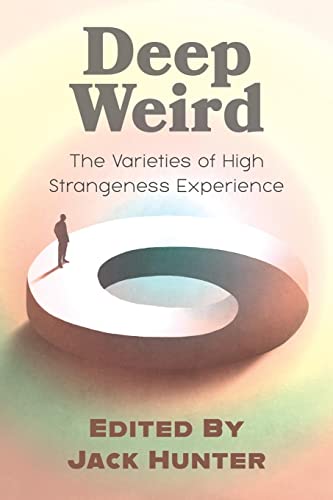
This book is about the stranger reaches of extraordinary experience research. In these pages an intrepid cast of writers, investigators and academics explore the complexities of extraordinary experience, and consider why it is that some of the most unusual experiential reports – what we might call ‘high strangeness’ experiences – come to be neglected, even in what is already a relatively fringe field of inquiry. The aversion to the most unusual forms of extraordinary experience has resulted in a gulf between the kinds of experiences discussed in the academic parapsychological literature and those experiences discussed by Fortean and popular paranormal researchers, who have more frequently been able to discuss a broader range of extraordinary experiential accounts – from UFO encounters to Bigfoot and fairy sightings, and everything in between.
Notwithstanding this divide, there are significant themes that run throughout the established academic literature on religious and extraordinary experience, the parapsychological literature, and the canon of popular paranormal research. These similarities suggest that even the most unusual experiences, which are often ignored in academic research, contain elements that connect them to other forms of extraordinary experience that are more broadly accepted, such as certain kinds of spiritual, mystical, religious and other paranormal experiences.
This book is an exploration of the possibility that the ‘highly strange’ might well be a core underlying feature of extraordinary experiences more generally, and that instead of being neglected, ‘high strangeness’ should be granted greater and renewed scholarly and parapsychological attention.
Includes contributions from Jeffrey J. Kripal, Jack Hunter, Sharon Hewitt Rawlette, Gregory Shushan, Samantha Lee Treasure, Michael Grosso, Zofia Weaver, Alan Murdie, David Luke, Simon Young, Zelia Edgar, Leonardo Breno Martins, Peter M. Rojcewicz, Barbara A. Fisher, Christopher Diltz, Joshua Cutchin, Anthony Peake, Peter Sjöstedt-Hughes, Susan Demeter and Renée E. Mazinegiizhigo-kwe Bédard.
If you’re a reasonably young person who is opposing measures to address climate change for reasons of financial or political gain, be afraid. Be very afraid.
Largely out of public view, there is a growing advocacy for treating certain forms of climate change denial as a crime. The political will to do this doesn’t exist today, of course, but give it a decade or two. The planet is warming faster than predicted. Oceans are warming more rapidly than expected, extreme weather events are occurring with unprecedented frequency; glaciers are disappearing, sea levels are rising, prolonged droughts are becoming common place, tropical diseases move North following the mosquitos, and much more.
Estimates of the number of people who will die each year because of climate change range from 250,000 to 5,000,000. And the butcher’s bill is sure to grow as the crisis worsens. The tragedy, of course, is this was preventable—every death, every extinction of a species—all unnecessary.
Humanity can’t say it wasn’t warned. Almost half a century ago Jimmy Carter became the first president to raise the alarm on climate change. But America chose Ronald Reagan, who quickly gutted Carter’s efforts to develop alternative energy sources. What a different world this would be if we had listened to Carter.
Why didn’t we listen? Why, for that matter, are so many people still not listening? Sociological studies suggest there are many factors contributing to climate change denialism. There is no doubt, however, the biggest factor has been the political war on truth initiated by the petroleum industry and other polluting enterprises. With help from their political cronies, they have been extraordinarily successful in convincing a large minority of the population that scientific truth is found, not in a laboratory, but from blowhards on talk radio.
But time has a way of catching up with scientific falsehoods. Earlier than expected, climate change is now impacting our lives in profound ways. And with every passing year, climate change’s impact on our lives will grow, and maintaining the fog of lies will become correspondingly more difficult.
It will soon become undeniable, not only that the climate change crisis is real, but also that a crime has been committed. The most consequential crime in world history. And the demands for justice will grow.
No one would argue that every MAGA loudmouth shouting in a tavern that climate change is a hoax should be hauled to The Hague for trial. If the sting of criminal law is to be applied to climate change deniers, it will need to be done selectively, enforced against only the worst offenders: the people with money and power who choose to put maximizing their personal wealth (and/or political power) above the future of the planet.
The moral case for holding this select group criminally responsible Is powerful. The three traditionally stated justifications for criminal punishment are: deterrence, retribution, and incapacitation. All three fit here to some degree. The deterrence effect of criminalizing climate related fraud would be powerful. The likelihood that their actions will help to ruin, and in many cases end, the lives of billions of souls may not be enough to get these people to change their conduct, but the thought of sitting in jail for years often would.
The same basic point applies to incapacitation. If the people spreading climate misinformation for profit are arrested, tried and thrown into jail, their ability to continue such actions will greatly diminish and hopefully disappear altogether. While it is unlikely silencing fraudulent conduct by these few people would empty the sewer of misinformation, it would at least slow it.
What deterrence and incapacitation have in common, of course, is they both have expiration dates. The scientific consensus is that at some point, probably very soon, the earth will pass a tipping point after which catastrophic climate change will become unstoppable. Some scientists think we may already have passed that point, though most believe there is still time, if very little, to avoid the most catastrophic consequences of climate change. Once that line is crossed it will be too late to prevent disaster, which would mean that deterrence and incapacitation’s value will have largely been squandered.
That is when retribution will take center stage. A generation of Americans who were too young, and too powerless, to prevent the disaster will be suffering the consequences of prior generations’ failure to act. By the time they have grown into a political majority and have the political heft that goes with it, they’ll find there’s little they can do. It’s too late.
Given this history, does anyone seriously believe this betrayed generation will let bygones be bygones?
Not a chance.
They will demand justice. And the only form of justice available will be retribution, which in this context will mean imprisonment of offenders. And while there will be non-frivolous legal arguments over whether such prosecutions are lawful, including claims that they would constitute an expo facto prosecution (prosecuting someone for conduct that was not criminal at the time committed), have no doubt, given the likely state of public rage, ways will be found to overcome such defenses.
But this type of justice will be incomplete. Most of the worst offenders will have already died peacefully from old age, escaping all forms of justice, at least in this world. But not all of the guilty will be gone. Given the quickening pace of disasters related to climate change, there is reason to believe that by twenty years from now, perhaps ten, a worldwide consensus will have been reached as to the dimensions of the disaster, it’s cause, and the extent of the betrayal. Calls for justice will surely soon follow.
Many of today’s leaders of the corporations that are still contributing to climate change, and still resisting the scientific consensus, are now in the prime of their lives. The same goes for many of the politicians guilty of bad-faith climate change denial. The majority of these people will still be alive at the times we are talking about. Most will have been living comfortable lives with enough money to largely protect themselves from the early consequences of climate change.
But there is every reason to believe, justice, or the closest thing to justice possible, will track many of them down. And many may well die in prison.So, once again, if you’re a reasonably young person who opposes measures to address climate change for reasons of financial or political gain be afraid. Be very afraid.
Our work is licensed under Creative Commons (CC BY-NC-ND 3.0). Feel free to republish and share widely.
New Thinking Allowed with Jeffrey Mishlove Sep 5, 2023 Edi Bilimoria, DPhil, FIMechE, CEng, is a Consultant Engineer and has been Project Manager and Head of Design for major projects such as the Channel Tunnel. He was Education Manager for the Theosophical Society in Australia, a Trustee of the Scientific and Medical Network, Adviser to the Galileo Commission of the Network, and is a Trustee and a Council Member of the Francis Bacon Society. He is author of Mirages in Western Science Resolved by Occult Science, The Snake and the Rope: Problems in Western Science Resolved by Occult Science, and his four volume work, Unfolding Consciousness: Exploring the Living Universe and Intelligent Powers in Nature and Humans. His website is edibilimoria.com. Edi Bilimoria shares how humans mirror the cosmos through a continuum of energy, consciousness, and matter. 00:00:00 Introduction 00:08:36 Consciousness link 00:17:36 Energy as matter 00:20:27 Symbols 00:43:01 Hermetic axiom 00:58:13 Evolution of consciousness 01:02:01 Mathematics 01:06:34 Longing for immortality 01:09:56 UAP 01:12:14 Conclusion Edited subtitles for this video are available in Russian, Portuguese, Italian, German, French, and Spanish. New Thinking Allowed CoHost, Emmy Vadnais, OTR/L, is an intuitive healer and health coach based in St. Paul, Minnesota. She is the author of Intuitive Development: How to Trust Your Inner Knowing for Guidance With Relationships, Health, and Spirituality. Her website is https://emmyvadnais.com/ (Recorded on July 21, 2023) Check out our new website for the New Thinking Allowed Foundation at http://www.newthinkingallowed.org. There you will find our incredible, searchable database as well as our new, FREE QUARTERLY MAGAZINE. Also, opportunities to shop and to support our video productions. There, you can also subscribe to our FREE, WEEKLY NEWSLETTER!
New Thinking Allowed with Jeffrey Mishlove Sep 8, 2023 This video is a special release from the original Thinking Allowed series that ran on public television from 1986 until 2002. It was recorded in about 1994. When the guru teaches, says Joseph Chilton Pearce, he does so not through the intellect but by opening the heart to spiritual experience. Pearce was a devotee of Siddha Yoga as taught by Swami Muktananda and his successor Gurumayi Chidvilasananda. He compares the guru-disciple relationship to the bonding relationship which occurs between parent and child. Joseph Chilton Pearce was author of The Crack in the Cosmic Egg, Magical Child, and many other books. Now you can watch all of the programs from the original Thinking Allowed Video Collection, hosted by Jeffrey Mishlove. Subscribe to the new Streaming Channel (https://thinkingallowed.vhx.tv/) and watch more than 350 programs now, with more, previously unreleased titles added weekly. Free month of the classic Thinking Allowed streaming channel for New Thinking Allowed subscribers only. Use code THINKFREELY.
Jupiter Retrograde 2023: How to make the best use of this auspicious time
By Neeraj Dhankher
Sep 04, 2023 01:15 PM IST (hindustantimes.com)
On the evening of September 4, 2023, Jupiter – the planet of expansion and prosperity – is embarking on its backward journey (retrograde motion).
On the evening of September 4, 2023, Jupiter – the planet of expansion and prosperity – is embarking on its backward journey (retrograde motion) through the fiery sign of Aries, bringing forth a time of introspection and transformation. It will become direct once again on December 31, 2023. We must harness its powerful energy to make the best use of this extraordinary period. Let’s discover how you can ride the waves of change during this exciting astrological transit!
Today, three zodiac signs will be strongly inspired by this transit to take action.
What is Jupiter Retrograde?
Jupiter Retrograde is an important celestial event that occurs when the mighty planet appears to move backwards in its orbit from our earthly perspective. Jupiter goes into retrograde roughly once every 13 months. The retrograde period typically lasts for about 120 days or roughly four months. While it may seem like a reversal of fortunes, this cosmic phenomenon serves as an invitation for us to reflect, reassess, and realign ourselves with our true purpose.
As the largest planet in our solar system, Jupiter represents expansion, growth, and abundance. When it goes retrograde, its energy becomes introspective and internalised. This presents us with an opportunity to delve deep into our beliefs, philosophies, and aspirations.
During this Jupiter Retrograde, you are encouraged to pause and evaluate the areas of your lives where you seek expansion or fulfilment. It’s a time for reconsidering long-term goals and questioning whether they align with our authentic selves. It prompts us to examine any limiting beliefs or patterns that may be hindering our progress.
While some may perceive retrogrades as challenging periods filled with obstacles, they ultimately offer valuable lessons and opportunities for personal growth. By embracing these temporary shifts in energy during Jupiter Retrograde, we can gain invaluable insights into ourselves while paving the way for future success.
What is the significance of Jupiter’s Retrograde in Aries?
Aries, being a fiery Martian sign associated with passion and ambition, adds an extra layer to this retrograde. During Jupiter Retrograde in Aries, we are urged to examine our personal goals and desires. It is a time for understanding what truly drives us. This retrograde asks us to question whether our ambitions align with our authentic selves or if they have been influenced by external factors.
The energy of Aries combined with the reflective nature of Jupiter Retrograde can create a powerful opportunity for self-discovery and transformation. It encourages us to tap into our inner fire and make adjustments where necessary.
It’s important not to view this period as negative or restrictive but rather as an opportunity for growth. We must internalise the prosperous energy that comes with Jupiter Retrograde in Aries and use it as an opportunity to realign our goals with our true passions.
It must kept in mind that each individual experience may vary during this time depending on their unique birth chart placements and planetary aspects. Figure out the house in which the Aries sign is placed in your birth chart and align your prosperity goals with that area of life.
How to make the most of this Jupiter Retrograde
During Jupiter Retrograde in Aries, there are several ways you can harness the energy and make the most of this time. Here is some cosmic advice to help you navigate through this period.
Reflect on your beliefs: Use this time to examine your personal beliefs and ideologies. Are they still aligned with who you are? Are there any limiting beliefs holding you back? Explore new perspectives and expand your mind.
Revisit past opportunities: Jupiter Retrograde is a perfect opportunity to revisit projects or opportunities that didn’t work out in the past. Take a fresh look at them, reassess their potential, and see if there’s anything worth pursuing again.
Review your goals: This is an ideal period for reviewing and reevaluating your long-term goals. Are they still relevant? Do they need adjusting or refining? Use this introspective time to realign yourself with what truly matters to you.
Cultivate self-growth: Focus on personal development during this retrograde phase. Dive into self-help books, enrol in courses, or seek guidance from mentors or coaches who can help facilitate growth in areas that interest you.
Embrace patience: Jupiter Retrograde often brings delays and obstacles as it urges us to slow down and reconsider our actions carefully. Practice patience during this time; trust that everything will unfold in divine timing.
Nurture inner wisdom: Connect with your intuition by engaging in practices like meditation regularly during this retrograde period. Pay attention to subtle signs and messages from within; they may hold valuable insights for your path ahead.
You can apply these suggestions to every area of life, be it career, love, finance or educational growth. Take proactive steps and be prepared for a new beginning.
Heading out the door? Read this article on the new Outside+ app available now on iOS devices for members! Download the app.
As August 2023 draws to a close, we find ourselves deep within retrograde season with seven planets in apparent backward motion. The lineup includes inner planets Mercury and Venus as well as those that are further away, including Saturn, Chiron, Uranus, Neptune, and Pluto. On September 4, 2023, Jupiter will join the lineup of planets in retrograde.
What Does It Mean When Planets Are In Retrograde?
No matter what we humans think life should look like, it continuously reminds us that our path is not linear. Although many of us may feel most comfortable, and even celebrate, the seasons that are most direct and straightforward, have we forgotten the rest of the picture?
As the planets in our cosmos take a moment to retrace their steps, they take us on a journey through our past actions, selves, experiences, desires, and expressions. It is a retracing and reliving of what is still awaiting our presence, awareness, understanding, and compassion. We experience the emotions that ask to be witnessed so they may be worked through. The endings that never truly ended needing reviving or final closure. The old ideas that entered our consciousness before we were ready asking us to be understood or released completely. And the stories that simply need the kind of reframe that comes from looking at them anew with the perspective that we have acquired since they were introduced to us.
As much as planets in retrograde can feel like a step backward, they are a necessary and sacred part of our journey forward. They are the gift of reflection that allows for insight, the introspection that allows for self-awareness, the spaciousness required for the assimilation of steps already taken, and the sacred pause needed to build the inner capacity to take any leap forward.
While the world around us continues to move forward, we are invited to bring space into our days wherever possible. An extra few breaths before we begin our day, a quiet contemplation at lunch, a few minutes of quiet as we settle into bed. We are asked to clear away the unnecessary, the noise, the extra, and instead create pockets of space where we can. Space for the inner journeying that is taking place within you to reach your consciousness. Space for emotion to move through your body and release itself where it can. Space for reflection. Space for you to surprise yourself as to who you now are, and all the ways in which you have changed. There are new perspectives waiting to be seen.
What Planets Are in Retrograde Right Now?
In ancient astrology, it was understood that planets in retrograde were journeying through the underworld, gathering insights, perspectives, and information from the unseen world. As with all astrology, this understanding is used as a metaphor for what happens within our inner worlds when a planet is in retrograde. Beyond the light of our awareness, there are aspects of us, each represented by a planet in retrograde, that journey downward and backward into our shadows. Far beneath our surface, these aspects await being acknowledged witnessed claimed, and reintegrated into our consciousness.
Uranus Retrograde: August 28, 2023 – January 27, 2024
And soon, Jupiter Retrograde: September 4 – December 31, 2023
Many astrologers caution us not to begin anything new during retrograde or make any sudden changes or big decisions. Once we emerge from this descent, we do so as more of who we are. We emerge with these newly reclaimed parts of ourselves. We emerge with greater clarity on our next season, the direction of our forward movement, our most aligned desires, and our enhanced understanding of, quite simply, who we are.
Your Invitation
Not only is our journey within this human experience non-linear, within it there are many cycles. Our directions shift. The speed at which we move seems to ebb and flow. The desires that call our name flow in and out and take different forms. We meet chapters of immense transformation and movement, chapters of sinking into a routine, a state of being, setting down roots and solidifying the moment, and chapters of excitement, adventure, and outward exploring. Just as the seasons shift as the Earth spins her glorious spin, we too, hold all the seasons within us.
And so, how do we continue with our forward movement, the direction that is so expected of us in today’s world, when so much of us is instead invited to mimic these planets and go on our own retrograde journey? What does this mean for us, within us, and within the lives we live? It means we retreat into our inner winter and sink into stillness, reflection, and inward contemplation.
The invitation of astrology is to continue to honor our seasons, whether we are in a time of planets in retrograde or otherwise. And to bring back a balance of appreciation and respect for the inward as much as the outward, the reflection as much as the forward thinking, and the stillness as much as the action.
Retrogrades afford us an opportunity to catch up with who we have become, with the experiences we have moved through, and insights we have gained along the way. It is as if the changes and growth we have been experiencing are granted an opportunity to seep deep into our bodies, integrate into our identities, and become available for us to live. We move through so much in this world and are changed by all of it. This retrograde season, can you allow yourself to get to know yourself?
Venus finishes her retrograde on September 3, 2023, and Mercury will follow on September 15, 2023. These inner planets are referred to as “personal planets” and are generally felt more within our individual experience, compared to the outer planets, which operate less within our seen and felt daily reality and more behind the scenes at a slower pace. Despite our long line-up of ‘outer planets’ still in their backwardsspin, as Mercury and Venus station direct in September, there will be a clear influx of fresh new energy and easeful forward movement within our days once again.
Learn more about the influence of astrology in your life, including astrological events the Moon cycles, your Sun and Moon and rising signs, how journaling can help you connect with the current influences, and more with Jordane Maree at Girl and her Moon.
About Our Contributor
Jordane Maree is the founder of Girl and Her Moon, a platform and community exploring Soul through the lens of astrology, tarot, and energy healing. She is a writer, intuitive astrologer, energy and soul guide, and host of Girl and Her Moon, The Podcast. She is inspired, every single day, to be the mirror for you to see all that you truly are, you in all your infinite abilities, in total expansion, in infinite opportunity and love.
Being one with the universe is thought of as being a peaceful state, but the default state of oneness is being dead. Resting in peace, as they say. A snake eating you alive can teach you this as well as a sage, but nobody wants that. What we really want is the knowledge of death while holding on to our lives.
We want to explore the universe, but not be in the actual explosion. We want to see the vastness of the ocean, but we don’t actually want to fall in. We want to have our separate life and also experience the connection that can only really come from dying. This is the paradox of what we call consciousness. We want to know the real within the delusion, we want to tell the truth with lies.
Einstein
Death is both the site of our greatest terror and the place we, literally, rest in peace. As Albert Einstein explained in a 1950 condolence letter:
“A human being is a part of the whole, called by us “Universe”, a part limited in time and space. He experiences himself, his thoughts and feelings as something separated from the rest — a kind of optical delusion of his consciousness. The striving to free oneself from this delusion is the one issue of true religion. Not to nourish the delusion but to try to overcome it is the way to reach the attainable measure of peace of mind.”
This is indeed true, but it’s little condolence. If you tell someone that they never really existed, that energy is neither created nor destroyed, this is all deeply true, and deeply uncomforting. What we really want is that feeling before without dying. What we really want is not so much to overcome delusion but to experience truth within the delusion. This is a bit of a paradox, but gods know we try.
For example, my son was just asking about our long-dead dog. The boy barely knew him, but he lives on in stories. The boy asked if the dog was with our recently dead uncle, in heaven. I thought about this. They are certainly together, but in the disintegration of forms, not a reunion. When you are ‘one’ with the cosmos, there is no chance for ‘one-to-one’ meetings. The price of oneness is that you must give up youness and anyways, which version of you would you be in the afterlife? But how to explain this to a child? More to the point, how to get him to stop crying about it?
So what did I tell my kid? I have no idea what happens after you die, but that’s not what he was asking. He was asking about a feeling, and stories can be emotionally true while factually, well, loose. So I told him yes. I told him a story to get him to sleep. Every religion is a story like this. A story in the night, explaining those who are gone. These stories can’t all be right, but they can’t all be wrong. They’re right about something. They get the feeling right and, at the end of the day, isn’t that what we’re asking about?
Magritte
I suppose Einstein would call this ‘nourishing the delusion’ but this life is all illusion. The Buddha said, “there are other dhammas, deep, difficult to see, difficult to understand, peaceful and sublime, [and] beyond the sphere of reasoning.” As long as we are reasoning (with words or symbols) we are not talking about these deep dhammas. We are merely representing illusions in other illusions, hoping that it will trigger something deeper in someone else’s mind. Take art, for example, and how Rene Magritte could never just paint a pipe.
Magritte is pointing out that we leap beyond reasoning so quickly with a painting. It never occurs to us to observe that this is just paint on a canvas, we quickly jump to the representation of a pipe. But this is, literally, not a pipe. Pedantry is laughable when looking at a painting but somehow considered imminently reasonable when talking about religion. But is not the same thing going on? Religion also uses symbols to represent something else, and if you go along with it, it can also open (or simply ease) your mind.
The Tooth Fairy
I think of my daughter, who came to me last week with a bloody grin, so happy that another tooth fell out. She should’ve been crying at this trauma but she wasn’t because the tooth fairy. Her brother is, in fact, jealous and asks why his teeth won’t fall out. Is the tooth fairy real? I dunno, but is this even what really matters? What matters is what the tooth fairy makes kids feel, which is better about something traumatic in their lives. And that feeling isn’t false. The ritual makes it real, just like looking at art can evoke whole other places and people in your mind.
I should know because I am the tooth fairy. Or more accurately, the cultural idea of a tooth fair incarnates through me every time my daughter loses a tooth. I’m not the painter of this delusion, I’m the paintbrush. So what is the tooth fairy trying to communicate? The tooth fairy says that your loss matters, that it will be compensated, and that there’s even a little bit of magic involved. And the tooth fairy actually delivers. Millions of parents not believing in her make her as real as the most dedicated priest would. We carry out her rituals, and bring her to life.
The Gods
I was at the Vajira Pillaiyar Kovil, visiting the gods. I know them, but I can’t recognize them all the time. Hindu Gods have so many different names and sometimes go by descriptions. Lord Ganesh has a hundred different names and, reading his name board in Tamil, I had no idea. Then I saw the elephant-headed god in his sanctum, riding on a mouse, and people pinching their ears and bowing. Does any of this make sense? I dunno, it’s like asking what paint Magritte used for the The Treachery Of Images. The point is not the literal truth of these images but the inner truth they can evoke in your mind. The many names and faces and manifestations of the Hindu gods are a representation and the point is that they work. Followers can truly see god this way. Who cares about the brushstrokes when the painting is so sublime?
This is what every religion does, in its own way. It’s some version of the tooth fairy, and I mean that in the most respectful way. Religions say that if you do the right rituals, the long night will be rewarding, and these rituals actually work if you believe in them. Are these stories literally true? What does that even mean? Why would the infinite universe fit into the scratches of apes, based on our guttural vocalizations? Religion is able to representthe infinite in the finite, which is enough of a miracle for me.
Death
This returns us to where we started, which is all your teeth falling out, ie death. Einstein’s analysis is correct, but also contained in the Vedas and the Buddha Dharma, so we could have got here without building atom bombs and becoming ‘the destroyer of worlds’ in the process. Everything scientists discover is most urgently used to make high explosives, and any meaning is ultimately just condolences. There’s no inherent wisdom in science, just details that always end up in the hands of arsonists.
Many people go to science for meaning, but if you drill down to it, it simply doesn’t work for that. Quantum particles and ‘dark’ matter are as confusing as the stories we started with. You can say science builds real things, but they aren’t miracles as much as curses. Modern miracles have caused a mass extinction in a few short centuries. What’s the point? They’ve painted a technically perfect picture… of the world on fire. This is the arrogance of science, obsessed with details and completely missing the plot.
The interesting thing is that science (as in math and precise language) started with religion. Hindu-Arabic numbers, geometry, and very precise linguistics emerged because priests wanted to get the rituals absolutely right, to vibe more precisely with the divine. But science ditched the gods, ie the point of the exercise, and just started using this power to flex on everybody. And it worked, making us feel like gods but only for a blink of their eyes. We took powers intended for the gods and used them to make goods, and so end up with neither. Now the gods (ie, climate) have opened their eyes after a few hundred years and are obliterating us with their gaze (ie, climate change), entirely. Now, in addition to our own death, we have the deaths of most of our living family on our minds.
Condolences For Your Loss
The truth is, from a gods-eye view, both an individual death and mass extinction are not especially worrying. As Lord Krishna said, “All beings (before birth) were unmanifest. Only during an interval (between birth and death), O Bharata, are they manifest; and then again, when death comes, they become (once more) unmanifest. What grief then is there in this?” There is of course lots of grief, which is the Gita goes on about it.
One way to deal with this grief — as Einstein and the ‘true’ religions do — is to obliterate the distinctions between things, so the obliteration of one thing becomes meaningless. This is both true and wildly unsatisfying. So we keep asking the same question in many different ways, until we get an answer that we like. And this is all right.
Truth can emerge from the falsehood of any representation, like art from brushstrokes, like god from a ritual, like insight from a story. The universe really is trying to speak to you, but the only language we know is not universal, so any message we get is necessarily compromised. But the message is there, in art, in gods, in the tooth fairy, in Einstein. The universe really is trying to tell you something, first that it’s trying to kill you (which is why you need a consciousness) and second that it’s fine (which is why you need to leave that consciousness behind).