
(@theobsvgroup)
Monthly Archives: September 2023
A Brief History of Western Thought, Richard Tarnas (part 1 of 5)
Encore: Richard Tarnas on planetary democracy
Unified Human Foundation Mar 20, 2023 We seem to be living at the end of an era. We are facing a threshold of fundamental collective transformation that bears a striking resemblance to what takes place on the individual level in initiatory rites of passage. Discover the larger context and frame of reference to help us access those deeper moral and spiritual sources through which we can perhaps better understand our time, re-imagine our lives, and find new grounds for resilience and action. About Richard Tarnas: Richard Tarnas is a professor of psychology and cultural history at the California Institute of Integral Studies in San Francisco, where he founded the graduate program in Philosophy, Cosmology, and Consciousness. He is the author of “The Passion of the Western Mind”, a history of the Western world view from the ancient Greek to the postmodern that is widely used in universities, and “Cosmos and Psyche” which received the Book of the Year Prize from the Scientific and Medical Network. This video comes from a featured session in the Mothership Earth Summit 2023 co-hosted by the Unified Human Foundation and World Happiness Foundation. Join the Unified Human Ecosystem to play your role in furthering this movement for a more unified world at https://www.unifiedhuman.org
Transcript
Follow along using the transcript. Go to: https://www.youtube.com/watch?v=cSPam6W8l3k&list=TLPQMTcwOTIwMjMZdPRVsZl_Ug&index=2
Toxic Feminism is Just As Bad As Toxic Masculinity
We Need To Be Honest

Dec 19, 2022 (Medium.com)
The way we view and treat gender is undeniably changing. With the proliferation of feminist movements and concepts, we are seeing a shift in how society views women and masculinity.
And while these shifts may be good for overall equality, they have drawbacks.
One of these drawbacks is how toxic feminism can demonize and oppress men. Just as toxic masculinity can be harmful to women, so too is toxic feminism.
Toxic Feminism is Just As Bad As Toxic Masculinity
Toxic masculinity and toxic femininity are both problems that need to be addressed. They’re both destructive to society as a whole, and they have no place in our lives. This is especially true for children, who should be taught to respect both genders equally.
What is toxic feminism?
Toxic feminism is a type of feminism that is harmful to both men and women. It is characterized by a focus on victimization and negative portrayals of men, which can lead to discrimination and violence against men. Toxic feminists often use emotional abuse tactics to control their victims.
Toxic feminism has existed for as long as there have been women, but it has recently become more visible due to the rise of social media. This type of feminism is often promoted by celebrities and other influential people, who use their platforms to spread false messages about gender equality.
Toxic feminism harms men and women by promoting discrimination and violence against men. We must avoid toxic feminism, which can hurt feelings, damage relationships, and even violence.
The Problems with Toxic Feminism:
It’s harmful to both men and women
Firstly, it’s harmful to women because it teaches them to blame themselves for their problems. This mindset can lead to depression and other mental health issues.
Additionally, it creates a division between male and female players in the workforce and in social circles. Males are often seen as the enemy, while females are told they need special treatment.
Secondly, toxic feminism harms men because it paints all men as villains. This attitude can create an environment where male abuse victims feel uncomfortable coming forward. It can also lead to violence against men, including domestic abuse and rape.
It reinforces the inequalities between men and women
This type of feminism reinforces the inequalities between men and women, and it ultimately does nothing to improve a lot of women.
First and foremost, toxic feminism harms women by perpetuating the idea that they are inferior to men. This mindset can lead to discrimination, harassment, and violence against women.
Additionally, it creates an environment where it is difficult for female scientists, engineers, and other professionals to be taken seriously.
Finally, toxic feminism undermines the progress made by previous generations of feminists by discounting their work.
It promotes violence and abuse
The problem with toxic feminism is that it often leads to people behaving in harmful ways.
For example, some people may become violent towards others because they believe this is the only way to fight against what they see as oppressive masculinity.
Others may become abusive themselves, believing this is the only way to prove their strength to those around them.
Toxic feminism can also lead to gender discrimination. For example, many people associated with toxic feminism may refuse to hire or promote women for fear that these women will not be able to handle the workload.
It silences women
Toxic feminism silences women. It’s a harmful ideology that promotes the idea that all women are problems and must be fixed.
A mother who wants to be a stay at home mom is usually demonized for following “the patriarchy.”
This ideology is based on the false premise that all men are evil, which leads to the conclusion that all women must be perfect, not to be a problem.
Toxic feminism also paints all men as villains, which empowers misogynistic attitudes toward them.
And finally, it creates division among women by pitting them against each other instead of working together to solve common problems.
Solutions for Toxic Feminism
We need to start talking about it more openly
There are several solutions that we can implement to tackle this issue head-on. We need to start talking about what toxic feminism is, why it exists, and how we can address it.
We also need to ensure that our language is inclusive and doesn’t scapegoat any group of women.
Finally, we need to be advocates for each other — listening attentively when others share their experiences and helping to create an environment where everyone feels safe and supported.
We need to create more inclusive environments
As the movement for toxic feminism gains more and more attention, it’s essential to have solutions in place.
To create an inclusive environment, we need to start by acknowledging that there is a problem. Toxic feminism harms both men and women and needs to be stopped.
Here are three ways we can begin:
- Educate ourselves on what toxic feminism is and how it harms us all. There’s a lot of misinformation out there, so it’s essential to learn the facts about this harmful movement.
- Speak out against toxic feminism when we see it happening. If you see someone engaging in or promoting toxic feminist ideals, tell them this isn’t okay. It can be challenging to do this, but we must stand up against these ideas.
- Create safe spaces for people who identify as victims of toxic feminism.
Final Words
In conclusion, there is no such thing as “toxic masculinity” or “toxic feminism” — men and women create these terms to oppress others.
Instead, we should work towards eliminating all forms of discrimination and bigotry, regardless of its label.
We can start by rejecting the harmful stereotypes that fuel toxic masculinity and femininity and working to create a fair and inclusive society for all.

Narcissism exist. Toxic people exist. And so do EMPATHIC WARRIORS EXIST.
Book: “Jung on Alchemy”
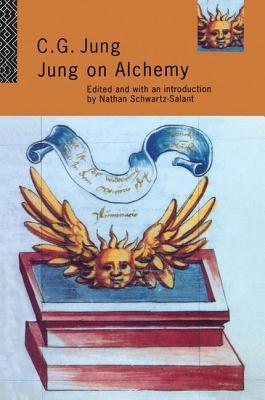
Encountering Jung
Jung on Alchemy
C.G. Jung, Nathan Schwar-salant (Editor)
Jung realized that the fantastic images of alchemy – fire-breathing dragons, hermaphrodites, lions giving birth to the sun – are not so far from our daily lives. He made sense of such seemingly incomprehensible symbols and showed how, in fact, such images represent a usually unseen level that has immense power over how we feel, think and imagine our existence.
Nathan Schwartz-Salant, a leading Jungian analyst with a special interest in alchemy, has brought together a key selection of Jung’s writings on alchemy. His lucid introduction provides a clear account of the basics of alchemy and explains to the reader Jung’s ideas on alchemical studies.
Jung on Alchemy provides an excellent introduction to one of Jung’s most exciting, yet most challenging, fields of study.
(Goodreads.com)
Why do we have 12 Signs?
| Astro Butterfly contact@astrobutterfly.com |
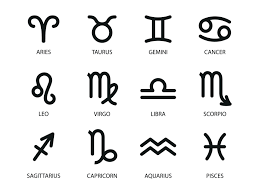
Why do we have 12 zodiac signs? Why not 4, 9, 15, 27 or any other random number?
What is the relationship between signs and the zodiac constellations? Does the procession of the equinoxes ‘change’ the signs?
In the next 3 days, I will write a 3-email series to answer 3 of the most frequently asked questions from readers and students.
This is the 1st email in the series:
Q: Why do we have 12 signs?
A: We have 12 signs because we have 12 months, or 12 lunar cycles in a year. Each sign corresponds to one lunar cycle, which is why there are 12 signs.
The complete answer can be traced back to the origins of tropical astrology, which aligns with the 12-month solar calendar.
Topical astrology means “derived from the tropics” or seasons and cycles. When the Sun reaches the maximum distance from the equator at 23° North (also called the Tropic of Cancer) we have the solstice, and the sign of Cancer.
When the Sun reaches the maximum distance downwards from the celestial equator at 23° South (also called the Tropic of Capricorn) we have the other solstice, and the Capricorn season starts.
You may think that the 12 tropical signs are the same thing as the 12 zodiac constellations… they are not.
The 12 tropical signs were indeed named after the constellations for easy reference (the Greeks ‘borrowed’ the zodiac constellations from the Mesopotamians) – but that’s pretty much as far as this relationship goes.
Coming back to our initial question – why 12, and not any other random number?
We have 12 signs (and not 10, or 15) because we have 12 lunar cycles in a year.
Put simply – we have 12 signs because there are 12 months. The word “month” comes from the Old English word “mōnaþ,” which means “Moon”. In a 365-day interval (a year) we have 12 lunar cycles (12 months).
We start the astrological year at the Equinox. So, the beginning of the astrological year is based on the position of the Sun relative to the Earth.
The entire tropical system is based on the relationship between the Sun, the Moon and the Earth. We have 12 lunar cycles (Moon) in 1 solar year (Sun), from the reference point of the Earth.
TO RECAP: Signs are cycles. They are NOT areas of the sky. They are NOT constellations.
This is a difficult concept to grasp even for seasoned astrologers. When we look at our mobile apps, we see the Moon in the constellation of Aquarius, but astrologers say we have the Moon in Pisces. Confusing, right?
Not if we understand that the signs are not the same thing as constellations. Just because you and someone else share the same name, it doesn’t mean you are the same person.
Just because the tropical signs and the 12 constellations on the ecliptic are called the same, it doesn’t mean they are the same thing. Of course, there is a relationship there, and we will get to that.
But first, let’s get this sink in. Signs are not something we can observe. Sings are cycles. We cannot “see” them, in the same way we cannot “see” time. If you think of time, you can’t localize it in the physical space; time is not a rock, or a tree. It is an abstract concept. So are the signs.
And it’s precisely due to the difficulty of conceptualizing these 12 cycles, aka the 12 signs, that our first tropical astrologers used the backdrop of the sky and the constellations to name them.
And this takes us to our 2nd important question:
Why do signs have constellation names?
In theory, they don’t have to. We could call them Sign 1 (or cycle 1), Sign 2, etc, or give them other names – many other cultures and traditions have other names for cycles of nature.
The reason Hellenistic astrologers used the constellations on the ecliptic (which preceded the 12 tropical signs) is because these constellations made it easier to track the positions of the Sun, Moon and planets in the sky.
Remember – we cannot see the signs, so these early astrologers needed some sort of system to figure out when the Moon, Venus or Jupiter were in the 1st sign (aka the first 30 days from the Equinox), in the 2nd sign (aka day 30 to 60 from the Equinox) and so on.
The first sign, or the first 30-day cycle from the Equinox was called Aries, because back in the day (approx 2.000 years ago, when Tropical astrology as we know it was conceptualized) it was the Aries constellation that was rising at the Equinox.
The next sign, aka the 30-day cycle following Aries, was called Taurus, because the constellation following Aries was Taurus.
In the tropical model, Aries, Cancer, Libra, and Capricorn are called “cardinal” signs because they mark the beginning of the seasons (i.e. when the Sun changes direction in the sky); so they have an initiating quality.
The signs in the middle of the seasons (Taurus, Leo, Scorpio, Aquarius) are “fixed” because in the middle of the season is when the weather is most stable.
And the signs at the end of the seasons (Gemini, Virgo, Sagittarius and Pisces) are called “mutable” because this is when the weather begins to change, as we are slowly moving into the next season.
In the tropical sign system, we also have the elements. The first sign (Aries) is a fire element, because fire is the primordial element. Next comes the element of earth (Taurus). We then have air, to allow movement (Gemini) and then finally the life-giving water (Cancer). Then the elements repeat.
When we combine “cardinal” and “fire” we get Aries, or the qualities of initiative, enthusiasm, and impulsiveness. When we combine “fixed” and “earth” we get Taurus – or the qualities of stability, persistence and practicality.
When we apply the modality/element matrix to the 12 lunar cycles we get the 12 tropical signs as we know them.
This tropical model is reliable and works well in both Hemispheres. Aries is “cardinal fire” in both the Northern and Southern hemispheres.
Of course, tropical astrology, where the astrological year starts with Aries, was created in the Northern Hemisphere; if astrology had been designed in the Southern Hemisphere probably the model would have looked a bit differently, but it would have still worked, if it was methodologically sound.
Next question:
How did the zodiac constellation influence the 12 tropical signs?
The zodiac constellations preceded the 12 signs. These constellations were already named by Babylonians by the time tropical astrology was born (approx. 2.000 years ago).
Some of the zodiac constellations were named as early as 16-18th centuries BC. Back then, Babylonians named around 18-22 constellations around the Ecliptic plus other constellations that were not on the zodiac belt (i.e. ecliptic).
These initial constellations had different sizes, because they were based on the actual star configurations, not on mathematical calculations.
Then, when tropical astrology was conceptualized approx. 2.000 years ago, the 18-22 constellations on the Ecliptic were resized (and some of them dropped) to fit the 12-cycle tropical model.
The fact that only the ecliptic constellations were used to name the signs (and not other non-ecliptic constellations like Orion, etc.) speaks about the solar system-centered, tropical origin of the 12 signs.
Now, we have the phenomenon called the procession of the Equinoxes, which means that constellations move with approx. 1 degree every 72 years as seen from Earth. The sky in 2023 looks quite different from how it looked 1.800 years ago, when Ptolemy wrote Tetrabiblos, the tropical astrology “bible”.
But this phenomenon doesn’t affect in any way our tropical, seasonal 12-sign system, because – again – the 12 signs are not based on constellations.
The tropical signs are solar system centered. The constellations and the stars are not in our solar system, so they are out of the scope of tropical astrology. (this does not mean that constellations and fixed stars don’t influence us, but that’s a different topic).
The Equinox happens on March 20-21 every.single.year everywhere on Earth. In 1.000 years from now, the Equinox (and the tropical sign of Aries) will still happen on March 20-21st. In 5.000 years, 10.000 years still on March 21st.
Tropical signs never shift – they cannot, because they are based on the Equinox and the seasons.
Did the Babylonian constellations influence the Hellenistic, 12-sign tropical model we are using today? Very likely. The astrological ages – which seem to correlate with the qualities of the zodiac constellations are a testament to that.
So, most likely, back in the day, there was some sort of conceptual transfer from the Babylonian sidereal model to the tropical model.
But again, this doesn’t change in any way our understanding of the 12 tropical signs, because they are based on a completely different framework – seasons, modalities, elements etc.
RECAP – Let’s summarize the answers to the initial questions
Q: Why do we have 12 signs?
A: Because we have 12 lunar cycles in a year.
Q: What is the relationship between signs and zodiac constellations?
A: The 12 tropical signs got their names from the zodiac constellations because 2.000 years ago, the constellations made it easier for our ancestors to track the position of the Sun, Moon and planets.
Since then, the backdrop of the sky has changed and is no longer a reliable way to track the tropical signs. Thankfully, we have astrology software that does it for us.
Q: Does the procession of the equinoxes ‘change’ the signs?
A: No, because tropical astrology is based on seasons and synodical cycles, NOT on the sidereal sky (constellations). So next time your ‘scientist’ friend says the procession of the equinoxes refutes astrology, tell them to do their research properly 😉
The origin of the 12 signs is a very important topic because understanding the tropical system is the very base of understanding western astrology. When we understand the origin and the nature of the tropical signs – everything else – planetary cycles, aspects, houses – falls into place.
Talking about houses – in the next email [2/3] I will talk about another frequently asked question: which house system to use?
Jeremiah vs. Exodus
Our Culture Will Collapse By 2030

Jul 1, 2023 (Medium.com)

In 1972 the Scientists at Massachusetts Institute of Technology (MIT) did a study of our resources, rate of growth and cultural factors and published it in a book titled Limits to Growth. In it they predicted our culture would “crash” by around 2030 if we failed to make drastic changes. The data has been tracked, up to last year and found that the 1970 predictions to be on track and accurate. We are exhausting our finite resources, creating atmospheric pollution that will result in global warming that will melt our polar ice caps. Our sea levels will rise by six to ten feet by 2100. Heat and air pollution are causing a 3rd extinction of 70% of the plants and 90% of the animals. We have exceeded the population we can sustain by 3 to 5 billion people. We consume 102 million barrels of oil, 3 million tons of coal and 5 billion Cu. ft. of Natural gas every day. Our atmosphere contains two times the carbon (418 PPM) it had for the last 10,000 years, that will remain for at least 200 years if we don’t reduce it.
In 1938 when I was born the world population was about 2.8 billion people. Today there are 9 billion, so we have trippled our population in 85 years.
We must sustain the level of energy we are producing and the rate of consumption to provide for our existing population. This will of course, produce the same level of pollution that is killing our planet. The rate of growth of our pollution free renewables will take another 80 years to replace the fossil fuels. The truly alarming thing is we are now 7 years from dooms day and the people in charge of our world aren’t doing anything about it. Why is that?
Today I got my answer. The U.S. is going to try to block a small % of the sun by spreading powder in the stratosphere like when Mt. Pinatubo erupted. YAY!

Have pen, will travel. I think in ink. Born in rural Holland, my greatest luck was being born a WASP, & a straight, serial monogamist.
The Theory of Einstein’s God and The Invention of a New Religion

Jul 7, 2023 (Medium.com)


Who actually was Albert Einstein?
Albert Einstein (1879–1955), the iconic physicist, forever altered our comprehension of the universe. His groundbreaking theory of relativity, unveiled in 1915, redefined gravity as the curvature of spacetime caused by mass and energy, supplanting Newtonian physics. Einstein’s genius transcended scientific realms, as he ardently championed civil rights, pacifism, and nuclear disarmament. A Nobel laureate for his explanation of the photoelectric effect, Einstein’s legacy endures as a monumental force, forever etching his name among the greatest scientific minds in history.
Scientist’s don’t usually believe in God. It’s estimated that over 48% of scientists are admitted atheists and the vast majority are still thinking through their positions on God.
Who (or what) is God?
Regardless of the highly debated and incredibly subjective nature of this question, the definition of God in this work will be a self-defined conceptual understanding of what we do and don’t know. A cause for knowledge and the lack thereof. Aka, everything.
Who was Einstein’s God?
When asked, Einstein was quoted saying
“I’m not an atheist, and I don’t think I can call myself a pantheist… I believe in Spinoza’s God who reveals himself in the orderly harmony of what exists, not in a God who concerns himself with fates and actions of human beings”.
Who is Spinoza’s God? Baruch Spinoza was a Dutch philosopher who, simply put, described god as an infinite mass with infinite attributes, each of which being expressed throughout all of time. Basically, everything is a part of God.
To my understanding, Einstein believed in a God who crafted the universe because of the harmonious and logical way in which it was crafted.
Everything is perfect. It’s exactly how it should be. Nothing is out of place. There are no glitches, cracks, or broken parts. The universe is the way it should be.
This understanding goes both ways, which is why in this article I’d like to introduce a slightly different approach to facing God.
A New Religion
Instead of seeing the proof of God in what we can understand and in the “harmony of what exists” why not see it as the opposite. Entropy. Chaos. This slightly different but similar understanding of the universe leads us to the fundamental axiom of this new religion:
God is everything we don’t know.
Every breath you take where you continue to survive, that’s God. When you turn your lights off and fear what’s in the darkness before going to sleep, that’s God. When you take a risk into the unknown, that’s God.
This understanding of God is both logically tenable and morally beneficial as the existence of anything outside of the scope of our knowledge is, well, outside the scope of our knowledge. God eludes us as everything we don’t know. Every action we take starts an infinite chain of events stemming from that choice. When we do something good, it branches off into infinity, but we will never see the impact. This is God. All the good things that the people before you have done, That’s God.
This understanding forces us to generate a set of morals that will be beneficial both now and into the unforeseeable future.
We as people are naturally afraid of what we don’t know. This is a test of God. We are asked to face our fears and dive into the unknown and we are nearly always rewarded for doing so. By facing God, we discover and accrue more knowledge.
Faith is in and of itself the act of believing in that which you can’t see. God is therefore not just one thing, but everything that we can’t see. Forever eluding our knowledge.
I think I’ve hammered this point pretty heavily but I’d like to conclude with this. Einstein viewed God as the crafter of the universe because of the way it was structured. This idea suggests viewing God instead as the crafter of the universe because of everything we don’t understand about it. It is in letting go of our sense of control as people that we transcend that which limits us. By finding faith in what we can’t see, understand, or control, we free ourselves from the shackles of time itself.
As Aristotle once said,
The more you know, the more you know you don’t know
It is this principle that drives me to believe that as we become more intelligent, the axioms I have and will create may become a more understandable and applicable form of belief in God or ‘religion’ in the future.
Thank you for taking the time to read this article. Please leave as much scrutiny and criticism of this idea as possible in the comments. The more criticism the better. Have a wonderful day everyone.
“I’m not an atheist, and I don’t think I can call myself a pantheist… I believe in Spinoza’s God who reveals himself in the orderly harmony of what exists, not in a God who concerns himself with fates and actions of human beings”.

AI Consultant and Researcher, Quant Fund Founder, and Forbes 100 Most Influential People of 2024.
Moon Wobble Peaks October 18, 2023
 |
| Moon Wobble Peaks October 18, 2023 Click here to see the Moon Wobble Chart *** General suggestions / observations *** • This cycle is based on empirical data meaning enough data was observed and recorded to make it possible to suggest attitudes and reactions. Keep in mind that we all have free will and thus results will vary from one individual to another. • The graph shows the energy high at the beginning of the cycle (not unlike any other astrological aspect) followed by a slow down before it gets strong and again this reflects years of tracking and noting feedback from our many students. • If you are making a decision during this time you might want to let it set for a day or two then check your decision again to see if it still makes sense. However, you can feel into the ebb and flow and find good times to work on self emotionally in both the low and high points. Impatience, emotion and acts without thinking are common. • With practice you can feel when the energy is there to help bring completion to tasks, goals and projects you may be working on. Aloha, The Prosperos |