There is a model of reality in which every action you take, from falling in love with a particular person to reading this essay right now, is dictated by a Rube Goldberg machine of events set into motion by the Big Bang — a classical universe of clockwork determinism, in which there is no room for choice. There is also a model in which every event is the product of randomness and probability fluctuations — a quantum universe, in which chance is God’s other name.
Hovering between these two versions, haunted by the paradox of free will, is our experience of what we call serendipity — the gladsome coincidence of two events, rendered meaningful by the emotional weight of each and the infinitesimal cosmic odds of their co-occurrence.
But these highly improbable gifts of chance are also rendered meaningful by the focus of our attention, by choosing to attend to those particular elements of reality amid the myriad others swarming us at the same time — for how we choose to pay attention renders the world what it is. The Nobel-winning poet Wisława Szymborska captured this enchanting interplay of mind and reality in her wonderful poem “Love at First Sight.” The Nobel-winning physicist Wolfgang Pauli and his unlikely friend Carl Jung named it synchronicity and placed it at the nexus of physics and psyche.
Whatever their cause, in such moments of dazzling coincidence we feel that beyond the seeming reality of this world lies another, sending us signs, hinting at the possibility of the impossible.
Kundera places chance at the center of the love story unfolding between two people who believe they have chosen each other. Teresa — a romantic full of existential longing and Anna Karenina — is working as a waitress in a restaurant. One evening, a man looks up from his book to order a cognac. At that very moment, Beethoven comes on the radio. Long ago a string quartet had come to play in Tereza’s small town and had rendered Beethoven “her image of the world on the other side, the world she yearned for.” She takes it as a sign — Tomas must be the answer to her yearning. She goes on seeking other signs — when he charges the cognac to his room, she realizes his room number is the same as the street number of the house she grew up in. “Tomas appeared to Tereza in the hotel restaurant as chance in the absolute,” Kundera writes as he considers the psychological machinery of how we imbue such coincidences with meaning:
Our day-to-day life is bombarded with fortuities or, to be more precise, with the accidental meetings of people and events we call coincidences. “Co-incidence” means that two events unexpectedly happen at the same time, they meet: Tomas appears in the hotel restaurant at the same time the radio is playing Beethoven. We do not even notice the great majority of such coincidences. If the seat Tomas occupied had been occupied instead by the local butcher, Tereza never would have noticed the radio was playing Beethoven… But her nascent love inflamed her sense of beauty, and she would never forget that music. Whenever she heard it, she would be touched. Everything going on around her at that moment would be haloed by the music and take on its beauty.
Composition 8 by Wassily Kandinsky, 1920s, inspired by the artist’s experience of listening to a symphony. (Available as a print.)
In serendipity, we find an organizing principle for meaning amid the randomness that governs the universe of which our own lives are but an echo. It is the music amid the noise of being. Kundera writes:
Human lives… are composed like music. Guided by his* sense of beauty, an individual transforms a fortuitous occurrence… into a motif, which then assumes a permanent place in the composition of the individual’s life… Without realizing it, the individual composes his life according to the laws of beauty even in times of great distress.
It is important, Kundera argues, to be awake to serendipity — for letting coincidences go unnoticed deprives our lives of “a dimension of beauty.” But his very metaphor undermines the case for pure chance as the conductor of our lives: Music, after all, is not the product of chance but of the composer’s deliberate choice in sequencing the notes and silences. Our experience of beauty is the product of the quality of attention we choose to pay an object. Simone de Beauvoir, writing in the same era as Kundera, came closer to the composite truth when she contemplated how chance and choice converge to shape our lives.
Still, Kundera captures an elemental fact: We may choose to love whom we love, but it is chance that first intersects our fates. Coincidences remind us that chance may not be the sole conductor of our lives, but it is what gives life the capacity for surprise, for sudden deviation from the predicted path — those quickenings of the soul that elevate life above mere existence and envelop it in an aura of magic that makes it worth living. He writes:
Chance and chance alone has a message for us. Everything that occurs out of necessity, everything expected, repeated day in and day out, is mute.
[…]
Necessity knows no magic formula — they are all left to chance.
“You have to surrender to your mediocrity, and just write. Because it’s hard, really hard, to write even a crappy book. But it’s better to write a book that kind of sucks rather than no book at all, as you wait around to magically become Faulkner. No one is going to write your book for you and you can’t write anybody’s book but your own.”
–CHERYL STRAYED
Cheryl Strayed (born 1968) is an American writer and podcast host. She has written four books: the novel Torch and the nonfiction books Wild: From Lost to Found on the Pacific Crest Trail, Tiny Beautiful Things and Brave Enough. Wikipedia
“All art is propaganda. It is universally and inescabably propaganda; sometimes unconsciously, but often deliberately, propaganda.”
–UPTON SINCLAIR
Upton Beall Sinclair Jr. (September 20, 1878 – November 25, 1968) was an American writer, muckraker, political activist and the 1934 Democratic Party nominee for governor of California who wrote nearly 100 books and other works in several genres. Wikipedia
Astronomers have long debated what kind of chemistry might serve as a bona fide alien biosignature. With the launch of the James Webb Space Telescope, those ideas may be put to the test.
Support sound science and smart stories Help us make scientific knowledge accessible to all Donate today
In June, astronomers reported a disappointing discovery: The James Webb Space Telescope failed to find a thick atmosphere around the rocky planet TRAPPIST-1 C, an exoplanet in one of the most tantalizing planetary systems in the search for alien life.
The finding follows similar news regarding neighboring planet TRAPPIST-1 B, another planet in the TRAPPIST-1 system. Its dim, red star hosts seven rocky worlds, a few of which are in the habitable zone — at a distance from their star at which liquid water could exist on their surfaces and otherworldly life might thrive.
What it would take to detect that life, if it exists, isn’t a new question. But thanks to the JWST, it’s finally becoming a practical one. In the next few years, the telescope could glimpse the atmospheres of several promising planets orbiting distant stars. Hidden away in the chemistry of those atmospheres may be the first hints of life beyond our solar system. This presents a sticky problem: What qualifies as a true chemical signature of life?
“You’re trying to take very little information about a planet and make a conclusion that is potentially quite profound — changing our view of the whole universe,” says planetary scientist Joshua Krissansen-Totton of the University of Washington.
To detect such a biosignature, scientists must find clever ways to work with the limited information they can glean by observing exoplanets.
Chemicals in context
Even the most powerful telescopes, including the JWST, almost never “see” exoplanets — by and large, astronomers know these distant worlds only by the flickering of their stars.
Instead of viewing planets directly, astronomers train their telescopes on stars and wait for planets to “transit,” or pass between, their sun and the telescope. As a planet transits, a bit of starlight filters through its atmosphere and dims the star at certain wavelengths, depending on the chemicals in the atmosphere. The resulting dips and peaks in the star’s brightness are like a chemical barcode for the transiting planet.
Perhaps the most intuitive way to look for a biosignature in that barcode is to scour it for a gas that was clearly produced by life. For a time scientists thought that oxygen, which is abundant on Earth because of photosynthesis, served as a stand-alone biosignature. But oxygen can arise from other processes: Sunlight could break apart water in the planet’s atmosphere, for example.
And that problem isn’t unique to oxygen — most of the gases that living things produce can also arise without life. So instead of treating single gases as biosignatures in their own right, scientists today tend to consider them in context.
Methane, for instance, can be produced both with and without life. It wouldn’t be a convincing biosignature on its own. But finding methane and oxygen together “would be hugely exciting,” says planetary scientist Robin Wordsworth of Harvard University; it’s very difficult to produce that combination without life. Likewise, work by Krissansen-Totton and colleagues recently showed that finding methane along with the right amounts of other gases, such as carbon dioxide, would be hard to explain without life.
Watching how an exoplanet atmosphere changes over time might also provide valuable context that could strengthen otherwise weak biosignatures. Seasonal variations in the concentration of ozone, for example, could be a fingerprint of life, scientists reported in 2018.
Stay in the Know Sign up for the Knowable Magazine newsletter today
Surprises, not assumptions
Of course, “if you’re looking for individual gases like oxygen or methane, then built into that are assumptions about what type of life is elsewhere,” says Krissansen-Totton. So some scientists are developing agnostic biosignatures that don’t assume alien biochemistry will be anything like Earth’s biochemistry.
One possible agnostic biosignature is an exoplanet atmosphere’s degree of chemical “surprisingness” — what scientists call chemical disequilibrium.
An atmosphere close to equilibrium would be chemically uninteresting, a bit like a closed flask of gas in a laboratory. Of course, no planet is as boring as a lab flask. Chemical reactions in a planet’s atmosphere can be powered by their stars and geological processes like volcanic activity can increase disequilibrium, and thus increase the chemical surprisingness of the atmosphere.
Life can also push planets away from equilibrium. And assuming that alien life produces gases of some kind, they could push a planet’s atmosphere much further from equilibrium than it would be otherwise. Yet disequilibrium alone “is not an unambiguous indicator,” says Krissansen-Totton.
In 2016, he and his colleagues calculated the thermal disequilibrium of the atmosphere of every planet in the solar system and Saturn’s moon Titan. By this measure, the Earth’s atmosphere stood out as extreme — but only if the oceans were built into the calculations. Ignoring its interactions with the ocean, the Earth’s atmosphere is actually closer to equilibrium than the atmosphere of Mars.
Still, even if it might not point to biology, finding an exoplanet atmosphere far from equilibrium would tell astronomers that something interesting is happening, Krissansen-Totton says, something that’s “modifying the atmosphere in a dramatic way that we need to understand.”
David Kinney, a philosopher of science at Yale University, recently worked with biophysicist Chris Kempes of the Santa Fe Institute to develop a new way of detecting possible agnostic biosignatures. It’s a deceptively simple idea: To find life, look for the weirdest planets.
If no assumptions are made about what alien life is like, practically any gas could be a biosignature in the right context. In 2016, MIT astrophysicist Sara Seager and colleagues proposed a list of about 14,000 molecules for consideration as possible biosignatures. Kinney and Kempes developed their assessment method by using that list of compounds, along with methods inspired by machine learning algorithms designed to recognize the odd-image-out in a set. This led to a way to precisely define and score the “weirdness” of a hypothetical exoplanet’s atmosphere compared to a set of other hypothetical atmospheres.
Kinney and Kempes argue that the weirdest atmospheres in a set are the most likely to host life. This rests on a few basic assumptions: Life in the universe is rare, it leaves traces in planetary atmospheres, and it’s hard to mimic those traces without life. Of course, those assumptions might turn out to be false, Kinney says. But “if we want to make no assumptions at all,” he adds, “then I think it’s very hard to make any kind of scientific progress, let alone in the area with such severe uncertainty as this one.”
First, understand non-life
To reduce that uncertainty, scientists will need to be able to confidently rule out non-life explanations for any potential biosignature. That requires a thorough understanding of alien geology and atmospheric chemistry. So instead of focusing on whether a planet is habitable, some scientists argue that studying obviously lifeless planets will bolster the search for alien life.
“There are so many really basic things that I think we need to learn about the planets first before we can even begin to ask the question of habitability,” says Laura Kreidberg of the Max Planck Institute for Astronomy in Germany, coauthor with Wordsworth of an overview of rocky exoplanet astronomy in the 2022 Annual Review of Astronomy and Astrophysics.
One enormous question is whether the potentially rocky planets that JWST can observe will have atmospheres at all. The only stars whose habitable-zone planets are within the telescope’s reach are red dwarfs, like TRAPPIST-1. These stars have a nasty habit of spewing harsh radiation that many scientists think would inevitably strip away the atmospheres of any habitable planets, which might explain the scant or nonexistent atmospheres of TRAPPIST-1 B and TRAPPIST-1 C.
Red dwarf stars also happen to be the most common in the Milky Way — so if their rocky planets can’t hold on to atmospheres, it would substantially winnow down the number of potentially habitable worlds.
If we can observe enough rocky exoplanets, “we’re going to be in a much, much stronger place to understand what a biosignature means,” says Wordsworth. “One really powerful thing that exoplanets give us is statistics.”
The word “biosignature” may evoke a smoking gun. But, says Krissansen-Totton, “exoplanet life discovery is going to be a gradual accumulation of evidence.”
As that evidence continues to roll in, scientists can begin to test their hypotheses about rocky planets in a rigorous way, and perhaps reevaluate them.
“Astronomy is, at its heart, such a discovery science,” says Kreidberg. “For all of our best-laid plans and frameworks and systems, as soon as we start getting data and observing things, everything turns upside down.”
Elise Cutts is one of those ex-scientists who realized that writing about research is more fun than doing it. She’s based in Graz, Austria; find her @elisecutts.
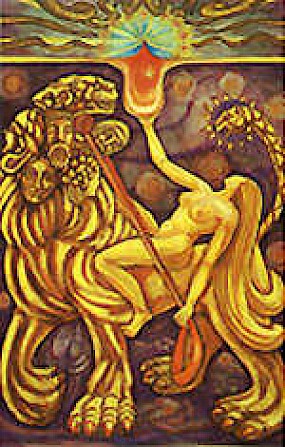
Lust (or Strength, Fortitude, Lust for Life) is numbered eleven and is a card of spontaneity and enthusiasm. This is the card which gives us the strength and nourishment we need to get through.
We usually see a young innocent girl opening the jaws of a lion and peering in. She must be reasonably certain she can cope with the results of her actions! There is no sense of competition between the two. Here we see the literal meaning of the card – walking straight into the jaws of danger and relying upon our own experiences and quick-wittedness to see us through.
Lust tells us to joyously accept life – to trust ourselves to make the right choices and to be able to deal with whatever happens. With trust and self-belief we can grow and work towards happiness and fulfilment.
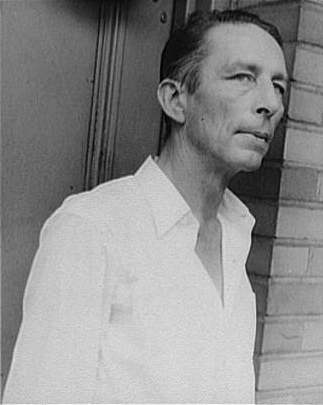
John Robinson Jeffers (January 10, 1887 – January 20, 1962) was an American poet, known for his work about the central California coast. Much of Jeffers’s poetry was written in narrative and epic form. However, he is also known for his shorter verse and is considered an icon of the environmental movement. Influential and highly regarded in some circles, despite or because of his philosophy of “inhumanism”, Jeffers believed that transcending conflict required human concerns to be de-emphasized in favor of the boundless whole. This led him to oppose U.S. participation in World War II, a stance that was controversial after the U.S. entered the war.[1]
Life
Jeffers was born January 10, 1887,[2] in Allegheny, Pennsylvania (now part of Pittsburgh), the son of Reverend Dr. William Hamilton Jeffers, a Presbyterian minister and scholar of ancient languages and Biblical history, and Annie Robinson Tuttle. His brother was Hamilton Jeffers, a well-known astronomer who worked at Lick Observatory. Jeffers traveled through Europe during his youth and attended school in Germany, France, and Switzerland. An outstanding student, he was instructed in the classics and Greek and Latin language and literature. By age twelve, he was fluent in German and French as well as English. He earned his bachelor’s degree from Occidental College at age 18. While attending college, he was an avid outdoorsman and active in the school’s literary societies.
After he graduated from Occidental, Jeffers went to the University of Southern California (USC) to study at first literature, and then medicine. He met Una Call Kuster in 1906; she was three years older than he, a graduate student, and the wife of a Los Angeles attorney, Edward G. (Ted) Kuster. Jeffers and Una Kuster became lovers; Ted Kuster discovered their affair in 1910. Jeffers dropped out of USC medical school and enrolled as a forestry student at the University of Washington in Seattle, a course of study that he abandoned after a semester, at which time he returned to Los Angeles. By 1912 the affair became a scandal, reaching the front page of the Los Angeles Times. Una spent some time in Europe to quiet things down, then the lovers lived together by Lake Washington to await the completion of Una’s divorce. The two were married in 1913, then moved to La Jolla, California for six weeks, and finally Carmel, California in 1914, where Jeffers later constructed Tor House and Hawk Tower.[3] The couple had a daughter who died a day after birth in 1913, and then twin sons, Donnan and Garth, in 1916. Una died of cancer in 1950. Jeffers died January 20, 1962;[4] an obituary can be found in the New York Times from January 22, 1962.
Tor House
Hawk Tower in Carmel
In the 1920s and 1930s, at the height of his popularity, Jeffers was famous for being a tough outdoorsman, living in relative solitude and writing of the difficulty and beauty of the wild. He spent most of his life in Carmel, California, in a granite house that he built with his own hands which they named “Tor House“. Tor is a term for a craggy outcrop or lookout. Before Jeffers and Una purchased the land where Tor House would be built, they rented two cottages in Carmel, and enjoyed many afternoon walks and picnics at the “tors” near the site that would become Tor House.
To build the first part of Tor House, a small, two-story cottage, Jeffers hired a local builder, Michael J. Murphy. He worked with Murphy, and in this short, informal apprenticeship, he learned the art of stonemasonry. He continued adding on to Tor House throughout his life, writing in the mornings and working on the house in the afternoons. Many of his poems reflect the influence of stone and building on his life.
He later built a large four-story stone tower on the site called “Hawk Tower”. While he had not visited Ireland at this point in his life, it is possible that Hawk Tower is based on Francis Joseph Bigger‘s ‘Castle Séan’ at Ardglass, County Down, which had also in turn influenced William Butler Yeats‘ choice of a poets tower, Thoor Ballylee. Construction on Tor House continued into the late 1950s and early 1960s, and was completed by his eldest son. The completed residence was used as a family home until his descendants decided to turn it over to the Tor House Foundation, formed by Ansel Adams, for historic preservation. The romantic Gothic tower was named after a hawk that appeared while Jeffers was working on the structure, and which disappeared the day it was completed. The tower was a gift for his wife Una, who had a fascination for Irish literature and stone towers. In Una’s special room on the second floor were kept many of her favorite items, photographs of Jeffers taken by the artist Edward Weston, plants and dried flowers from Shelley’s grave, and a rosewood melodeon which she loved to play. The tower also included a secret interior staircase – a source of great fun for his young sons.
Poetic Career
During this time, Jeffers published volumes of long narrative blank verse that shook up the national literary scene. These poems, including Tamar and Roan Stallion, introduced Jeffers as a master of the epic form, reminiscent of ancient Greek poets. These poems were full of controversial subject matter such as incest, murder and parricide. Jeffers’s short verse includes “Hurt Hawks,” “The Purse-Seine” and “Shine, Perishing Republic.” His intense relationship with the physical world is described in often brutal and apocalyptic verse, and demonstrates a preference for the natural world over what he sees as the negative influence of civilization. Jeffers did not accept the idea that meter is a fundamental part of poetry, and, like Marianne Moore, claimed his verse was not composed in meter, but “rolling stresses.” He believed meter was imposed on poetry by man and not a fundamental part of its nature.
Robinson Jeffers U.S. postage stamp – 1973
Many books followed Jeffers’s initial success with the epic form, including an adaptation of Euripides‘ Medea, which became a hit Broadway play starring Dame Judith Anderson.
George Sterling and Jeffers were good friends. Fellow poets Edgar Lee Masters and, longer, Benjamin De Casseres, were correspondents. Jeffers encountered D.H. Lawrence in Mabel Dodge Luhan’s circle at Taos; reports of how well they got along vary. In Carmel, Jeffers became the focal point for a small but devoted group of admirers. At the peak of his fame, he was one of the few poets to be featured on the cover of Time magazine. He was asked to read at the Library of Congress, and was posthumously put on a U.S. postage stamp.
Jeffers’ 1948 collection, The Double Axe and Other Poems (1948), included several poems critical of American involvement in the Second World War and his publisher, Random House, suppressed some poems and included a note that Jeffers’ views were not those of the publishing company. The book was negatively reviewed by several critics, including poets Yvor Winters and Kenneth Rexroth. By 1977 Jeffers’ reservations seemed prescient and Liveright published The Double-Axe & Other Poems including Eleven Suppressed Poems, with an important introduction by William Everson, Jeffers’ major posthumous advocate and poetic adherent. Throughout the fifties and afterward Jeffers figured as an important voice for the worth and rights of the natural world, as the environmental movement gathered strength. His long-time friend, the photographer Ansel Adams, was a close ally in this, as was Edward Weston.
Inhumanism
Jeffers coined the word “inhumanism”: the belief that humankind is too self-centered and indifferent to the “astonishing beauty of things.” In the poem “Carmel Point” Jeffers called on humans to “uncenter” themselves.[5] In “The Double Axe” Jeffers explicitly described “inhumanism” as “a shifting of emphasis and significance from man to ‘notman’; the rejection of human solipsism, and recognition of the trans-human magnificence… This manner of thought and feeling is neither misanthropic nor pessimist… It offers a reasonable detachment as rule of conduct, instead of love, hate and envy… it provides magnificence for the religious instinct, and satisfies our need to admire greatness and rejoice in beauty.”[6]
In The Loyalties of Robinson Jeffers, the first in-depth study of Jeffers not written by one of his circle, poet and critic J. Radcliffe Squires addresses the question of a reconciliation of the beauty of the world and potential beauty in mankind: “Jeffers has asked us to look squarely at the universe. He has told us that materialism has its message, its relevance, and its solace. These are different from the message, relevance, and solace of humanism. Humanism teaches us best why we suffer, but materialism teaches us how to suffer.”[7]
Influence
His poems have been translated into many languages and published all over the world. Outside of the United States he is most popular in Japan and the Czech Republic. William Everson, Edward Abbey, Robert McDowell, Gary Snyder, and Mark Jarman are just a few recent authors who have been influenced by Jeffers. Charles Bukowski remarked that Jeffers was his favorite poet. Polish poet Czesław Miłosz also took an interest in Jeffers’s poetry and worked as a translator for several volumes of his poems. Jeffers also exchanged some letters with his Czech translator and popularizer, the poet Kamil Bednář. Writer Paul Mooney (1904–1939), son of American Indian authority James Mooney (1861–1921) and collaborator of travel writer Richard Halliburton (1900–1939), “was known always to carry with him (a volume of Jeffers) as a chewer might carry a pouch of tobacco … and, like Jeffers,” writes Gerry Max in Horizon Chasers, “worshipped nature … (taking) refuge (from the encroachments of civilization) in a sort of chthonian mysticism rife with Greek dramatic elements …”[8]
Jeffers was an inspiration and friend to western U.S. photographers of the early 20th century, including Ansel Adams, Edward Weston, and Morley Baer. In fact, the elegant book of Baer’s photographs juxtaposed with Jeffers’s poetry,[9] combines the creative talents of those two residents of the Big Sur coast.
Although Jeffers was largely marginalized in the mainstream academic community for decades, several important contemporary literary critics, including Albert Gelpi of Stanford University, and poet, critic and NEA chairman Dana Gioia, have consistently cited Jeffers as a formidable presence in modern literature.
Stanford University Press released a five volume compilation, The Collected Poetry of Robinson Jeffers (1988-2002). In an article titled “A Black Sheep Joins the Fold,” written upon the release of the collection in 2001, Stanford Magazine commented that it was remarkable that, due to a number of circumstances, “there was never an authoritative, scholarly edition of California’s premier bard”[10] until this edition.
Legacy
His poem “The Beaks of Eagles” was included in the track “California Saga” on The Beach Boys album Holland (1973).
Two lines from Jeffers’s poem “We Are Those People” are quoted toward the end of the 2008 film Visioneers.
Several lines from Jeffers’s poem “Wise Men in Their Bad Hours” (“Death’s a fierce meadowlark: but to die having made / Something more equal to the centuries / Than muscle and bone, is mostly to shed weakness.”) appear in Christopher McCandless‘ diary.
Robinson Jeffers is mentioned in the 2004 film I Heart Huckabees by the character Albert Markovski played by Jason Schwartzman, when defending Jeffers as a nature writer against another character’s claim that environmentalism is socialism. Markovski says “Henry David Thoreau, Robinson Jeffers, the National Geographic Society…all socialists?”
A passage from Jeffers’s poem “Ghost” was read in the Ghost Adventures episode “Tor House”, where the Ghost Adventures crew investigated Jeffers’s house to see if Jeffers’s spirit would appear 50 years later after his death as was said in his poem.
In A Secular Age, a critique of Western secularization, philosopher Charles Taylor presents Jeffers as an important literary example of “immanent anti-humanism” alongside figures such as Friedrich Nietzsche and Cormac McCarthy. Invoking (often at length) the poems “At the Birth of an Age,” “Invasion,” “Rock and Hawk,” “Tamar,” and “The Women at Point Sur,” Taylor sees Jeffers as encouraging human beings to embrace the beautiful cruelty of an indifferent universe.[11]
Poet Adrienne Rich quotes Jeffers’s poem “Prelude” in her poem “Yom Kippur 1984”.[12]
His poetry and philosophy inspired the founders of the U.K.-based Dark Mountain Project (https://dark-mountain.net/); including taking its name from the last line of Jeffers’ 1935 poem, Rearmament, (https://robinsonjeffersassociation.org/his-writing/poetry/rearmament/). The group’s 2009 genesis text, Uncivilisation: The Dark Mountain Manifesto, was also influenced by Jeffers’ writing and “inhumanism” philosophy.
New Thinking Allowed with Jeffrey Mishlove Sep 17, 2023 James Tunney, LLM, is an Irish barrister who has lectured on legal matters throughout the world. He is a poet, artist, scholar, and author of The Mystery of the Trapped Light: Mystical Thoughts in the Dark Age of Scientism plus The Mystical Accord: Sutras to Suit Our Times, Lines for Spiritual Evolution; also Empire of Scientism: The Dispiriting Conspiracy and Inevitable Tyranny of Scientocracy, TechBondAge: Slavery of the Human Spirit, Human Entrance to Transhumanism: Machine Merger and the End of Humanity, and Plantation of the Automatons. His most recent work, a book of poetry, is Mystic Murmuration. His website is https://www.jamestunney.com/ Here he focuses on the life and work of one of the most widely read and influential American writers. He expands on the mythological motifs behind Steinbeck’s social critiques. 00:00 Introduction 03:49 Early influences 09:25 1930s environment 25:00 Critics 27:45 Tunney’s view 41:52 Earthiness 49:09 Conclusion Edited subtitles for this video are available in Russian, Portuguese, Italian, German, French, and Spanish. New Thinking Allowed host, Jeffrey Mishlove, PhD, is author of The Roots of Consciousness, Psi Development Systems, and The PK Man. Between 1986 and 2002 he hosted and co-produced the original Thinking Allowed public television series. He is the recipient of the only doctoral diploma in “parapsychology” ever awarded by an accredited university (University of California, Berkeley, 1980). He is also the Grand Prize winner of the 2021 Bigelow Institute essay competition regarding the best evidence for survival of human consciousness after permanent bodily death. (Recorded on August 21, 2023)
Widely considered a hallmark of Western literature and spirituality, The Cloud of Unknowing is an anonymous English monk’s sublime expression of what separates God from humanity. Originally written in the 14th century, now part of the HarperCollins Spiritual classics series, this beautiful contemplative resource, has been embraced for hundreds of years for its simple, engaging style and spiritual truths. As the unknown author assures us, “if you are to experience Him or to see Him at all, insofar as it is possible here, it must always be in this cloud.” —The Cloud of Unknowing.
New Thinking Allowed with Jeffrey Mishlove Jul 11, 2021 Charles Whitfield, MD, is a board certified internist who transitioned into psychiatry. He is author of the best-selling book, Healing the Child Within. His numerous other books include Choosing God: A Bird’s Eye View of A Course in Miracles, Teachers of God: Further Reflections on a Course in Miracles, The Truth About Depression, The Truth About Mental Illness, Not Crazy: You May Not Be Mentally Ill, Wisdom to Know the Difference, and – co-authored with his wife, Barbara Harris Whitfield, The Power of Humility. In this video from 2016, he presents his hypothesis that the child within can also be identified as the true self. When trauma occurs in childhood, this core aspect of human consciousness goes into hiding and is, typically, replaced with an egotistical false self. The recovery process is a hero’s journey involving many ups and downs. It requires a supportive and safe environment. The process may involve age regression, journaling, individual, and group therapy. We can learn from our mistakes and from our pain. Well over fifty percent of the population have had traumatic experiences in childhood. New Thinking Allowed host, Jeffrey Mishlove, PhD, is author of The Roots of Consciousness, Psi Development Systems, and The PK Man. Between 1986 and 2002 he hosted and co-produced the original Thinking Allowed public television series. He teaches parapsychology for ministers in training with the Centers for Spiritual Living through the Holmes Institute. He is also past-president of the non-profit Intuition Network, an organization dedicated to creating a world in which all people are encouraged to cultivate and apply their inner, intuitive abilities. (Recorded on March 1, 2016)


Our day-to-day life is bombarded with fortuities or, to be more precise, with the accidental meetings of people and events we call coincidences. “Co-incidence” means that two events unexpectedly happen at the same time, they meet: Tomas appears in the hotel restaurant at the same time the radio is playing Beethoven. We do not even notice the great majority of such coincidences. If the seat Tomas occupied had been occupied instead by the local butcher, Tereza never would have noticed the radio was playing Beethoven… But her nascent love inflamed her sense of beauty, and she would never forget that music. Whenever she heard it, she would be touched. Everything going on around her at that moment would be haloed by the music and take on its beauty.







.jpg)
