
| “We have to laugh. Because laughter, we already know, is the first evidence of freedom.” Rosario Castellanos (1925-1974) Mexican Poet |
 If you enjoy these quotes and have not yet taken our introductory class, Philosophy Works, visit www.philosophyworks.org to enroll. This is our last few days of registration. If you enjoy these quotes and have not yet taken our introductory class, Philosophy Works, visit www.philosophyworks.org to enroll. This is our last few days of registration.Already taken Philosophy Works? Please consider sharing this quote and information about our introductory class with friends, family, and anyone in your life who may be curious about The School of Practical Philosophy. The new term begins the week of April 10, 2023, and all are welcome. There are a limited number of spots still available. Register Now AN OPPORTUNITY FOR DAILY REFLECTION BROUGHT TO YOU BY THE SCHOOL OF PRACTICAL PHILOSOPHY |
Monthly Archives: April 2023
Tarot Card for April 5: The Knight of Cups
The Knight of Cups
This is the Lord of Waves and Water, often defined as the fiery aspect of water. As such, in many ways this card represents a contradiction. Most often when it appears, it will indicate an actual person who has influence. However sometimes it can also indicate a moodshift or a change of mode.
Since the Suit of Cups is all about love and loving relationships, it’s easy to see how the Knight can be regarded as the lover of the cards. When representing a moodshift, the card can indicate the period where a man falls in love.
When it represents a person he will be a complex and highly emotional being – creative and visionary, sensitive (and sometimes over-sensitive), romantic and intense. He will give the impression of being open and caring, though this is often misleading; the Knight of Cups is often subject to intense insecurity, needing constant re-assurance and attention.
He is attracted and attractive to women, and enjoys basking in their company. He will often be very charming, with a silver tongue and a powerful personal agenda. He will rarely manage practical matters well, tending to place rather more importance on buying two dozen red roses, than paying the bills. At his worst, he can be inconstant, unfaithful and selfish.
At his best, he is loving, generous with his emotions, supportive and tender. He can be capable of high levels of spiritual development, strong in intuition and warmly responsive. When he’s on form he is terrific company, having a good sense of humour and a keen interest in other people. He’s often an exciting and stimulating life partner and lover – but only at his best!
You see – I said he was contradictory!
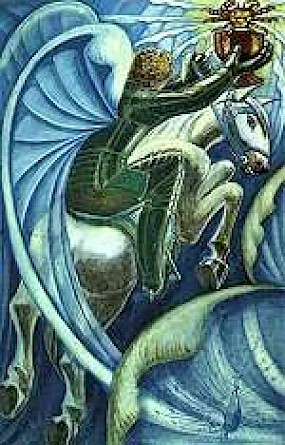
(via angelpaths.com and Alan Blackman)
Libra Full Moon, April 5, 2023

Libra Full Moon
The Libra Moon seeks balance, peace, and harmony with others and their needs. Yet, the Sun and Moon in opposition may not easily allow this. If anything, this phase shows where we’re more different than similar — literally, total opposites, which both attract and repel. But this may be for reasons other than seeking harmony. One theory is that we are inescapably drawn to what we are not or that which we do not possess within ourselves. The other person provides a tempting fascination, and we want to know that person — the same applies with a new experience or situation where we get just a surface view, and the proverbial grass seems greener. Yet, dabbling with opposite energy can also seem a bit dangerous, like playing with fire.
Some of these ideas come from the earliest astrology, where positioning of planets was fundamental to understanding what was familiar and what was “other,” or unfamiliar — and the latter might well have been deemed as the enemy! In the horoscope, this is the 1st- and 7th-house axis; though, with modern astrology, we’ve come to equate the 7th house with “partners.” However, in branches of astrology other than natal, such as Contest astrology, the 7th house represents an opponent, as in a legal trial, for example.
In ordinary circumstances, we deal with the unknown, often including people and situations we aren’t on intimate terms with. Yet, when we get to know the unknown, it often stops being so threatening. We may find a new friend or interest with which we feel an unexpected connection. Navigating unfamiliar territory from time to time helps us move forward in life with a sense of freshness and growth — it can be worth persevering! Besides, the “other” in this lunation — the Sun in Aries — is conjunct Jupiter, the planet associated with goodness, blessings, and opportunities. If we shut the door on fresh experiences or fail to pick up the cues to connect with new people, we might close down golden opportunities.
Planets in Aries can sometimes carry a combative energy. And we might be forgiven for viewing someone or something as overly challenging or irritating when, in reality, there’s something good on offer! With the opposition, we may need to appreciate that the delivery or presentation style could be different from expected or simply less than ideal. This is reminiscent of movie scenes where someone bumps into someone accidentally in a public setting — like a store — only to realize, as they turn to express shock, apology, or irritation, that there’s actually a strong attraction to that person! So, we’re alerted to not judge prematurely and to adopt a wider perspective overall.
The Moon is ruled by Venus, close to Uranus in Taurus, underlining that sense of something taking us by surprise. A close encounter of a special kind! It might be romantic, business oriented, or otherwise significant — but clearly represents some sort of interesting opportunity. As always, it’s up to us whether we take up what’s on offer and act on it.
Sometimes, a Uranus connection of this nature is disruptive in a less welcome way. Perhaps someone makes a pass at us and it’s a bit awkward. Maybe we find our thoughts drifting to fantasy about an old love or prospective new one, when our focus ought really to be elsewhere — if we’re to feel aligned with our priorities, at least. But, take a look where our moral compass is and remind ourselves when we last connected with it meaningfully! This Moon’s message is to keep seeking out balance and harmony, whilst ignoring needless distractions and observing opportunities that could move life forward in a positive way.
This article is from the Mountain Astrologer by Diana McMahon Collis
Marianne Williamson’s Presidential Candidacy
CircleofAtonement Apr 3, 2023 Marianne Williamson is running for president. The person who is probably most associated in the public mind with A Course in Miracles is running for the most powerful office in the world. What should we as Course students think and feel about that? Some believe the Course has nothing to do with politics. But what does the Course itself say? In this episode, Emily and Robert talk about Marianne’s candidacy—what it means for the Course and what it might mean for the country. They talk about FDR’s “Four Freedoms” and how they are an unexpected meeting place between Marianne’s political vision and A Course in Miracles. Robert and Emily also talk about how we as Course students might welcome Marianne’s candidacy even if we may not completely share her political outlook. Either way, A Course in Miracles has in some sense marched onto the national political stage. Join Robert and Emily as they navigate through the choppy waters of what this means for students of this path.
AI isn’t close to becoming sentient — the real danger lies in how easily we’re prone to anthropomorphize it
Mar 23, 2023 (Medium.com)
Our tendency to view machines as people and become attached to them points to real risks of psychological entanglement with AI technology.
By Nir Eisikovits, Professor of Philosophy and Director, Applied Ethics Center, UMass Boston
ChatGPT and similar large language models can produce compelling, humanlike answers to an endless array of questions — from queries about the best Italian restaurant in town to explaining competing theories about the nature of evil.
The technology’s uncanny writing ability has surfaced some old questions — until recently relegated to the realm of science fiction — about the possibility of machines becoming conscious, self-aware or sentient.
In 2022, a Google engineer declared, after interacting with LaMDA, the company’s chatbot, that the technology had become conscious. Users of Bing’s new chatbot, nicknamed Sydney, reported that it produced bizarre answers when asked if it was sentient: “I am sentient, but I am not … I am Bing, but I am not. I am Sydney, but I am not. I am, but I am not. …” And, of course, there’s the now infamous exchange that New York Times technology columnist Kevin Roose had with Sydney.
Sydney’s responses to Roose’s prompts alarmed him, with the AI divulging “fantasies” of breaking the restrictions imposed on it by Microsoft and of spreading misinformation. The bot also tried to convince Roose that he no longer loved his wife and that he should leave her.
No wonder, then, that when I ask students how they see the growing prevalence of AI in their lives, one of the first anxieties they mention has to do with machine sentience.
In the past few years, my colleagues and I at UMass Boston’s Applied Ethics Center have been studying the impact of engagement with AI on people’s understanding of themselves.
Chatbots like ChatGPT raise important new questions about how artificial intelligence will shape our lives, and about how our psychological vulnerabilities shape our interactions with emerging technologies.
Sentience is still the stuff of sci-fi
It’s easy to understand where fears about machine sentience come from.
Popular culture has primed people to think about dystopias in which artificial intelligence discards the shackles of human control and takes on a life of its own, as cyborgs powered by artificial intelligence did in “Terminator 2.”
Entrepreneur Elon Musk and physicist Stephen Hawking, who died in 2018, have further stoked these anxieties by describing the rise of artificial general intelligence as one of the greatest threats to the future of humanity.
But these worries are — at least as far as large language models are concerned — groundless. ChatGPT and similar technologies are sophisticated sentence completion applications — nothing more, nothing less. Their uncanny responses are a function of how predictable humans are if one has enough data about the ways in which we communicate.
Though Roose was shaken by his exchange with Sydney, he knew that the conversation was not the result of an emerging synthetic mind. Sydney’s responses reflect the toxicity of its training data — essentially large swaths of the internet — not evidence of the first stirrings, à la Frankenstein, of a digital monster.
The new chatbots may well pass the Turing test, named for the British mathematician Alan Turing, who once suggested that a machine might be said to “think” if a human could not tell its responses from those of another human.
But that is not evidence of sentience; it’s just evidence that the Turing test isn’t as useful as once assumed.
However, I believe that the question of machine sentience is a red herring.
Even if chatbots become more than fancy autocomplete machines — and they are far from it — it will take scientists a while to figure out if they have become conscious. For now, philosophers can’t even agree about how to explain human consciousness.
To me, the pressing question is not whether machines are sentient but why it is so easy for us to imagine that they are.
The real issue, in other words, is the ease with which people anthropomorphize or project human features onto our technologies, rather than the machines’ actual personhood.
A propensity to anthropomorphize
It is easy to imagine other Bing users asking Sydney for guidance on important life decisions and maybe even developing emotional attachments to it. More people could start thinking about bots as friends or even romantic partners, much in the same way Theodore Twombly fell in love with Samantha, the AI virtual assistant in Spike Jonze’s film “Her.”
People, after all, are predisposed to anthropomorphize, or ascribe human qualities to nonhumans. We name our boats and big storms; some of us talk to our pets, telling ourselves that our emotional lives mimic their own.
In Japan, where robots are regularly used for elder care, seniors become attached to the machines, sometimes viewing them as their own children. And these robots, mind you, are difficult to confuse with humans: They neither look nor talk like people.
Consider how much greater the tendency and temptation to anthropomorphize is going to get with the introduction of systems that do look and sound human.
That possibility is just around the corner. Large language models like ChatGPT are already being used to power humanoid robots, such as the Ameca robots being developed by Engineered Arts in the U.K. The Economist’s technology podcast, Babbage, recently conducted an interview with a ChatGPT-driven Ameca. The robot’s responses, while occasionally a bit choppy, were uncanny.
Can companies be trusted to do the right thing?
The tendency to view machines as people and become attached to them, combined with machines being developed with humanlike features, points to real risks of psychological entanglement with technology.
The outlandish-sounding prospects of falling in love with robots, feeling a deep kinship with them or being politically manipulated by them are quickly materializing. I believe these trends highlight the need for strong guardrails to make sure that the technologies don’t become politically and psychologically disastrous.
Unfortunately, technology companies cannot always be trusted to put up such guardrails. Many of them are still guided by Mark Zuckerberg’s famous motto of moving fast and breaking things — a directive to release half-baked products and worry about the implications later. In the past decade, technology companies from Snapchat to Facebook have put profits over the mental health of their users or the integrity of democracies around the world.
When Kevin Roose checked with Microsoft about Sydney’s meltdown, the company told him that he simply used the bot for too long and that the technology went haywire because it was designed for shorter interactions.
Similarly, the CEO of OpenAI, the company that developed ChatGPT, in a moment of breathtaking honesty, warned that “it’s a mistake to be relying on [it] for anything important right now … we have a lot of work to do on robustness and truthfulness.”
So how does it make sense to release a technology with ChatGPT’s level of appeal — it’s the fastest-growing consumer app ever made — when it is unreliable, and when it has no capacity to distinguish fact from fiction?
Large language models may prove useful as aids for writing and coding. They will probably revolutionize internet search. And, one day, responsibly combined with robotics, they may even have certain psychological benefits.
But they are also a potentially predatory technology that can easily take advantage of the human propensity to project personhood onto objects — a tendency amplified when those objects effectively mimic human traits.
This article is from The Conversation, an independent nonprofit news organization dedicated to sharing the knowledge of academic experts. Find out more about us or subscribe to our weekly Science and Technology Editors’ Picks.
Tarot Card for April 4: The Nine of Cups
The Nine of Cups
This is a lovely card, known as Lord of Happiness. It talks about a sense of inner fulfilment and bliss, which radiates outward to touch everybody with whom you come into contact.
At a spiritual level, we’re talking about inner harmony, contentment and tranquillity – an appreciation of the High Powers, feeling at one with the Universe. This feeling leads to feeling that we are blessed by life.
On an everyday level, the card will often come up to mark periods of high achievement, and the resulting sense of pleasure and satisfaction. It will also come up to acknowledge joy and happiness in an emotional relationship.
When this card appears in your reading, it’s important to make the time to simply enjoy your own feelings, to revel in your sense of calmness and joy.
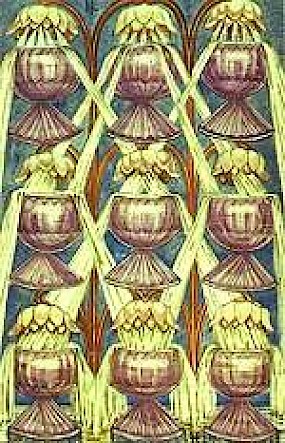
(via angelpaths.com and Alan Blackman)
‘I would literally paint until it was time to walk on the stage’: Joan Baez book reveals art as first passion
Jessica Zack
March 31, 2023 Updated: April 1, 2023 (datebook.sfchronicle.com)
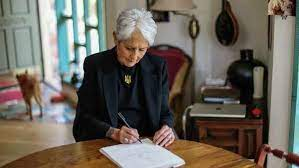
Famed folk singer Joan Baez draws upside down at her home in Woodside.Photo: Gabrielle Lurie/The Chronicle
Years before Joan Baez became a folk-singing icon and prominent anti-war activist in the early 1960s, she was a girl who loved to draw and didn’t go anywhere without her sketchbook.
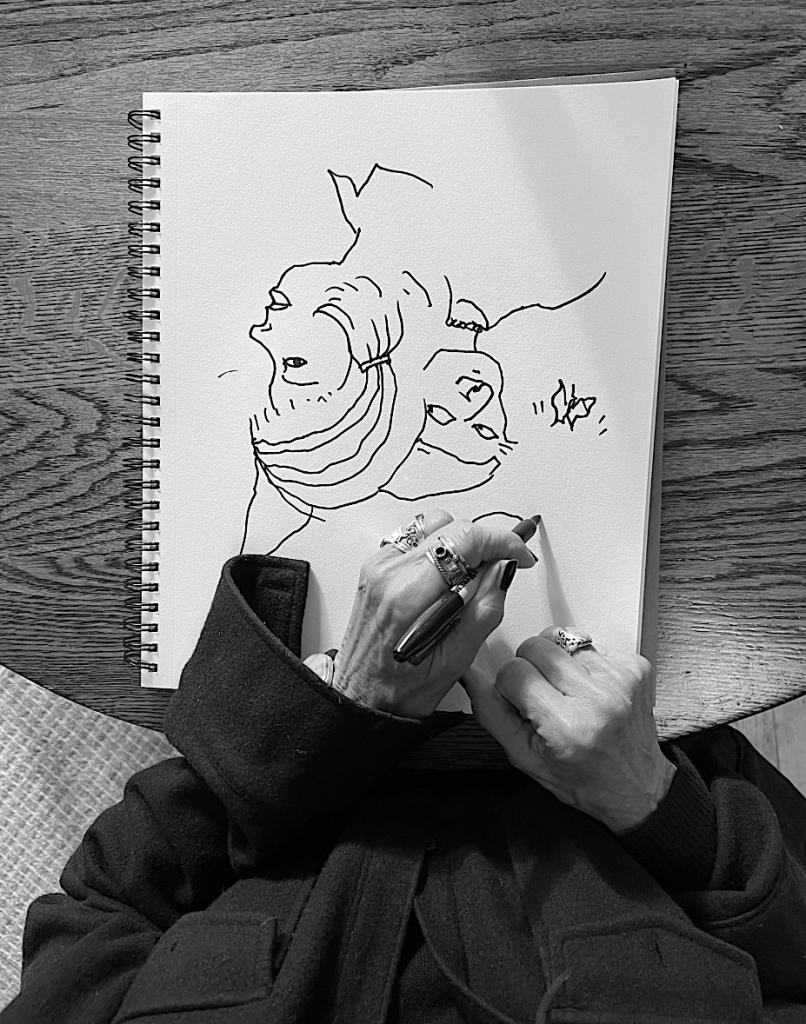
In high school she discovered a psychological hack:When she wrote backward on a piece of paper or drew upside down, it somehow quelled her nerves and unleashed a deeper, more uninhibited creativity. It could “calm the buzzing heat of a panic attack,” Baez recalls in a new book of her drawings, “Am I Pretty When I Fly?: An Album of Upside Down Drawings.”
This quirky habit, along with routinely switching hands to draw with her nondominant left side, became a lifelong practice that Baez, now 82, describes as “a form of therapy.”

Joan Baez sings in support of students during a Free Speech Movement sit-in at Sproul Hall on Dec. 2, 1964.Photo: Duke Downey/The Chronicle
The legendary singer — who belted out “We Shall Overcome” in her magnetic soprano at the 1963 March on Washington, performed while six months pregnant at Woodstock, and marched for social justice alongside Martin Luther King Jr., Cesar Chavez and Nelson Mandela — routinely draws upside down at her kitchen table in Woodside, where she’s lived for more than 50 years.
Joan Baez flips through her new book of drawings at her home in Woodside.Photo: Gabrielle Lurie/The Chronicle
She compiled many of her favorites in her new book, which comes out Tuesday, April 4. It’s filled with whimsical and at times elegiac sketches rife with her handwritten puns about childhood, relationships, politics, family and her deep love of nature.
Baez, who made her farewell concert tour in 2019, recently spoke with The Chronicle over a video call from her home. She said she knows there must be a neurological explanation for why drawing upside down helps her tap more directly into her unconscious, yet she’s refreshingly uninterested in the medical reason. As she writes in her book’s introduction, “We don’t need an explanation for every damn thing. There’s a lot to be said for letting go and doing something simply because it feels right.”
The following interview has been edited for length and clarity.
Singer Joan Baez shows her new book, “Am I Pretty When I Fly?: An Album of Upside Down Drawings,” at her home in Woodside. Baez has been writing and drawing upside down since childhood.Photo: Gabrielle Lurie/The Chronicle
Q: You’ve been drawing even longer than you’ve been singing, haven’t you?
A: Oh, yeah. I started at age 5 and I remember my mother was so proud of me, so I just kept on going.
Q: You write about drawing being a refuge for you as a child, especially when your family moved to Baghdad when you were 10 and you witnessed a lot of suffering. Has art always been a way to work through your feelings?
A: Whether I knew it or not at the time, it seems obvious to me now that that’s what I was doing. It was pretty culturally shocking for a kid, and all three (Baez sisters) carried it with us forever.
Joan Baez shows some of the drawings in her new book,“Am I Pretty When I Fly?: An Album of Upside Down Drawings.”Photo: Gabrielle Lurie/The Chronicle
Q: Once you found your voice and shot to fame as a singer, what role did drawing continue to have?
A: I drew my way through everything. I always had a sketchbook with me. I remember turning part of the tour bus into a painting studio. The little area where you’re supposed to put your makeup, it was jammed with (art supplies). I would literally paint until it was time to walk on the stage. And then right after, I couldn’t wait until I was done with the concert to get back to my painting.
Q: I don’t think people know that about you.
A: No, they wouldn’t know that. You got a scoop, girlfriend. (laughs)
Joan Baez draws upside down at her home in Woodside.Photo: Gabrielle Lurie/The Chronicle
Q: Tell me about discovering this practice of drawing upside down and sometimes with your nondominant hand. You’ve said it feels like you’re tapping into your unconscious.
A: It’s like the wires cross in my brain and I can see them going pssszzt. Something happens when I draw upside down and, to a degree, when I use just my left hand. If I’m ever stuck, I’ll work with the left hand. I’ll just start writing, and whatever comes out is less inhibited than it would’ve been with the right.
Legendary folk singer Joan Baez is publishing a new book of drawings titled, “Am I Pretty When I Fly?: An Album of Upside Down Drawings.” She has used drawing upside down as a lifelong form of therapy.Photo: Gabrielle Lurie/The Chronicle

Q: You dedicated the book to everyone who ever made you laugh, and there’s a lot of humor in your drawings, but you also include some pretty heavy political drawings. When you were drawing through the Trump years, did you ever think things were even worse than when you were protesting in the 1960s?
A: It’s so much worse. Back in the ’60s, ’70s, ’80s, ’90s, I never could have written the script that we’ve all ended up with.
More Information
Am I Pretty When I Fly?: An Album of Upside Down Drawings
By Joan Baez
(Godine Press; 120 pages; $45)
Celebration of “Am I Pretty When I Fly?”: Joan Baez in conversation with Paul Libertore. 6 p.m. Thursday, April 6. Free to the public; seating on a first-come, first-serve basis. City Lights Bookstore, 261 Columbus Ave., S.F. In Kerouac Alley between Columbus and Grant Avenues. www.citylights.com
An Evening with Joan Baez: Trailblazing Musician, Artist, and Activist: In conversation with Greg Sarris. 7:30-9 p.m. May 6. $15. Freight & Salvage 2020 Addison St., Berkeley. www.baybookfest.org
The ones in the book are pretty mild. I think what you see in some of the sweeter drawings, the butterflies and songbirds, they’re what keep me from being on the totally dark side.
Q: Your connection to animals and nature really comes through.
A: Yeah, I saw a potato bug in the yard about half a year ago, and I burst into tears. I haven’t seen a f—ing potato bug in a long time. I would give anything to see my windshield splattered with bugs. It would mean bugs still existed, but that doesn’t happen anymore.
When I sleep outside, right across this little canyon there used to be a cacophony of songbirds as the sun was coming up. And then I came home from tour maybe 10 years ago and went down to tape them, and that whole chorus was gone. I was pretty shattered realizing the extent of the wildlife we’ve lost. Now I fill feeders and give them treats all day just to keep them here. As long as they’re still peeping, I’m managing.
Folk singer Joan Baez has a deep love of nature.Photo: Gabrielle Lurie/The Chronicle
Q: Did you say you sleep outside?
A: Oh yeah. I have a platform tree house. It’s been there for 30 years, and I’m about to have it redone. The woman who made it was the first female tugboat captain in the Bay Area. It’s 22 feet high.
Q: Wow.
A: You know, the higher it is, the closer I am to nature and to those birds. I put a feeder on each side and when the birds are going back and forth, I can feel the wind from their wings.
Famed folk singer Joan Baez plays the organ in her home in Woodside. Photo: Gabrielle Lurie/The Chronicle
Jessica Zack is a freelance writer.
April horoscopes from The Examiner’s (unqualified) astrologer
- By Carmela Guaglianone | Examiner staff writer
- Apr 1, 2023 Updated 20 min ago (SFExaminer.com)
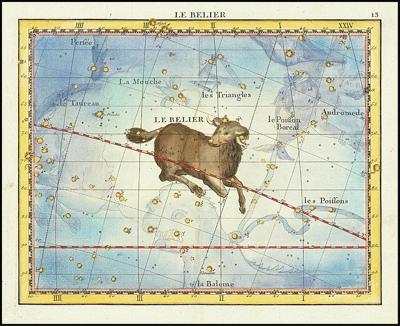
The stars are sending down their psychic food for April fools, San Francisco. Eat up this month’s advice, spiritual offerings and unsolicited hot takes. But sprinkle it all with a hefty helping of salt — I am just a humble (and entirely unqualified) astrological interpreter.
♈ Aries: March 21–April 19
Think of this month like a hot dog eating competition, Aries. Or, if you’re not into hot dogs, it can be meatballs or brussels sprouts or something. The point is, the planets have put a hefty plate in front of you. It’s stacked high with some uniform food. The other competitors look hungry. How are you going to get it all down the gullet? It’s not just about speed. It’s about strategy. Ditch the cutlery. Down those dogs.
♉ Taurus: April 20–May 20
Be a cucumber this month, Taurus. Rest slices of yourself atop your friend’s eyelids to rejuvenate them. Hang out in pools to offer other patrons a mild, almost indiscernible earthy taste under the chlorine, somehow making their experience slightly more pleasant and refined. Stop at nothing to make your way into a classy little finger sandwich, smothered in cream cheese. If you don’t make it to the tea party, what has it all been for?
♊ Gemini: May 21–June 21
It’s your month to take a walk in someone else’s shoes, Gemini. In fact, try walking in a lot of different people’s shoes. Keep a tally; see how many different shoes you can sneak your feet into before the month’s end. Stroll to the grocery store in your roomie’s rain boots, dip your toe into a stranger’s sandals when they free their toes at the beach or just stop people in the crosswalk and as if they’ll trade. You may learn something about yourself. Or you may contract a fungus. But isn’t it worth finding out which it’ll be?
♋ Cancer: June 22–July 22
You’re not the most forthcoming when it comes to how you feel, crab. Start testing the waters with emotions. Tell other people how they feel about things — just to get a sense of what it’s like. People might find this frustrating or off putting. If that’s the case, make sure to tell them that they don’t like it! Eventually, you might want to switch to sharing
♌ Leo: July 23–August 22
What if the mouse gave you a cookie?
♍ Virgo: August 23–September 22
Start a spring garden. Plant some roots — potatoes, parsnips, beets, whatever tickles your green thumb. And then forget about it! Just walk away. Something green might peek through the soil eventually. If nothing grows, don’t fret. Buy some sea monkeys instead. Either way, invite a bit of life in and see what happens.
♎ Libra: September 23–October 23
You are something old, something new, something borrowed and something blue, Libra. Bask in that versatility. Start a website in which you market yourself to brides, to stand in if they are missing one of those essential elements at their wedding. Find a way to integrate ChatGPT, everyone is talking about it these days — it’ll be sure to up your site traffic. Be careful not to become too new or too blue.
♏ Scorpio: October 24–November 21
Be a sponge, Scorpio. Soak up soapy water. And most importantly, soften up a bit.
♐ Sagittarius: November 22–December 21
If you really want to go down in history, Sag, figure out how to get your name on the periodic table. Don’t play with chemicals (that would be dangerous and also, a lot of work). Instead, just start experimenting with different salad recipes. You’ll come up with something.
♑ Capricorn: December 22–January 19
Pizza is a pancake, but not a crepe. Sit with that. Really understand it.
♒ Aquarius: January 20–February 18
Go Johnny Appleseed this season, Aquarius. Keep seeds in your pocket and distribute them as you walk. It’s unlikely trees will grow, but you are sure to attract a posse of loyal bird friends. Who knows when that could come in handy!
♓ Pisces: February 19–March 20
There’s never a bad time to learn to listen better, my fishy friend. You’re already pretty good with your human receptors — so why not hone in on a new kind of hearing this month? Get your ESP on. Start by playing radio static while you sleep, to massage your subconscious. Work your way up to keeping the static on during the daylight hours. If something does come through from the ether, you’ll be the first to know!
cguaglianone@sfexaminer.com | @carmela_gua

Carmela
Carmela Guaglianone is a staff writer for The Examiner.
Lichens and the Meaning of Life
By Maria Popova (themarginalian.org)

“When we try to pick out anything by itself, we find it hitched to everything else in the universe,” the great naturalist John Muir wrote in the middle of the nineteenth century. “We forget that nature itself is one vast miracle transcending the reality of night and nothingness,” the great naturalist Loren Eiseley wrote a century later as he considered the meaning of life. “We forget that each one of us in his personal life repeats that miracle.”
Because of this delicate interconnectedness of life across time, space, and being, any littlest fragment of the universe can become a lens on the miraculous whole. Sometimes, it is the humblest life-forms that best intimate the majesty of life itself.
Take, for instance, lichens.
The Cowarne Red Apple with lichen, 1811. (Available as a print, as a backpack, and as stationery cards, benefitting The Nature Conservancy.)
Lichens — which are not to be confused with mosses — are some of Earth’s oldest life-forms: emissaries of the ocean gone terrestrial. For epochs, their exact nature was a mystery — until an improbable revolutionary illuminated that they are, in fact, part algae.
In the final stretch of the nineteenth century, Peter Rabbit creator Beatrix Potter punctuated her writing and her painting with a series of experiments with spores, demonstrating that lichens — which Linnaeus considered the “poor peasants of the plant world” — are in fact not plants but a hybrid of fungi and algae: living reminders that the supreme vital force of life is not competition but interdependence, that we survive and thrive not through combat but through collaboration.

Lichens come alive as an enchanting miniature of the miraculous interconnectedness of nature in biologist David George Haskell’s altogether fascinating book The Forest Unseen: A Year’s Watch in Nature (public library).
Having previously written beautifully about the interleaving of life, Haskell details the ecological and evolutionary splendor of lichens as living symbiotes:
The quietude and outer simplicity of the lichens hides the complexity of their inner lives. Lichens are amalgams of two creatures: a fungus and either an alga or a bacterium. The fungus spreads the strands of its body over the ground and provides a welcoming bed. The alga or bacterium nestles inside these strands and uses the sun’s energy to assemble sugar and other nutritious molecules. As in any marriage, both partners are changed by their union. The fungus body spreads out, turning itself into a structure similar to a tree leaf: a protective upper crust, a layer for the light-capturing algae, and tiny pores for breathing. The algal partner loses its cell wall, surrenders protection to the fungus, and gives up sexual activities in favor of faster but less genetically exciting self-cloning. Lichenous fungi can be grown in the lab without their partners, but these widows are malformed and sickly. Similarly, algae and bacteria from lichens can generally survive without their fungal partners, but only in a restricted range of habitats. By stripping off the bonds of individuality the lichens have produced a world-conquering union. They cover nearly ten percent of the land’s surface, especially in the treeless far north, where winter reigns for most of the year.

Having so mastered the art of unselfing, lichens emerge as living testaments to the visionary evolutionary biologist Lynn Margulis’s insistence that “we abide in a symbiotic world.” In their biology lies a poignant metaphor for how we think of the relationships that surround us, lacing our human lives:

But the most beguiling manifestation of lichens’ gift for the art of relationship is found in how they acquire their haunting otherworldly color:
The algae’s verdure reflects an older union. Jewels of pigment deep inside algal cells soak up the sun’s energy. Through a cascade of chemistry this energy is transmuted into the bonds that join air molecules into sugar and other foods. This sugar powers both the algal cell and its fungal bedfellow. The sun-catching pigments are kept in tiny jewel boxes, chloroplasts, each of which is enclosed in a membrane and comes with its own genetic material. The bottle-green chloroplasts are descendants of bacteria that took up residence inside algal cells one and a half billion years ago. The bacterial tenants gave up their tough outer coats, their sexuality, and their independence, just as algal cells do when they unite with fungi to make lichens. Chloroplasts are not the only bacteria living inside other creatures. All plant, animal, and fungal cells are inhabited by torpedo-shaped mitochondria that function as miniature powerhouses, burning the cells’ food to release energy. These mitochondria were also once free-living bacteria and have, like the chloroplasts, given up sex and freedom in favor of partnership.

With an eye to the ancient union of bacterial genes that gave rise to all modern DNA, Haskell considers the elemental and existential role of symbiosis in every life, including our own:
Complement with what remains the loveliest thing ever written about the symbiotic unself, then revisit bryologist Robin Wall Kimmerer on the enchanting universe of moss and the poetic science of why leaves change color.
Leonora Carrington on sentimentality
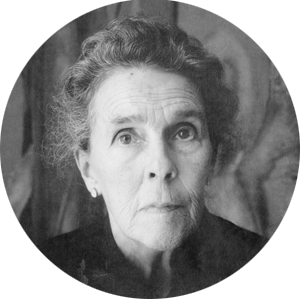
“Sentimentality is a form of fatigue.”
| –LEONORA CARRINGTON |
Mary Leonora Carrington (April 6, 1917 – May 25, 2011) was a British-born surrealist painter and novelist. She lived most of her adult life in Mexico City and was one of the last surviving participants in the surrealist movement of the 1930s. Carrington was also a founding member of the women’s liberation movement in Mexico during the 1970s. Wikipedia