AI pioneer’s warning: Powerful, dangerous ‘tools of persuasion’ are coming

Olivia Wise/The Examiner

“Personally, I think we should be more than a little bit scared.”

That’s how Louis Rosenberg reacted in a LinkedIn post to OpenAI CEO Sam Altman’s remark that he was “a little bit scared” of the risks posed by AI.

Like most people in tech and beyond, Rosenberg, CEO and chief scientist of Unanimous AI, was impressed and stunned by the introduction of ChatGPT, which he said represented “a leap forward rather than an incremental shift.”

“The speed of adoption of these AI technologies is going to be significantly faster than the adoption of the personal computer, the adoption of the internet, the adoption of mobile phones — really, the adoption of any society changing technology that I can think of,” he told The Examiner. “That should scare us.”

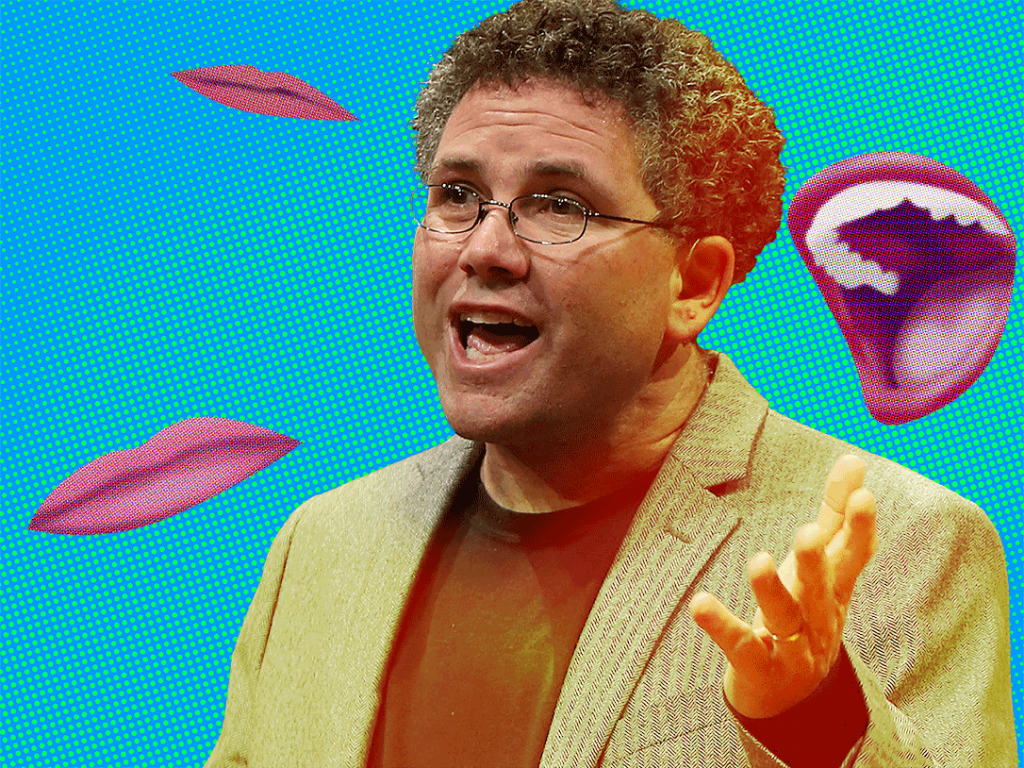
In an interview with The Examiner, Rosenberg, known as an AI pioneer, explained why he was both impressed and alarmed by the introduction of ChatGPT and the use of AI as “tools of persuasion.”

“What chance does an average consumer have against an AI that is armed with knowledge of your interests and backgrounds, and is trying to persuade you to buy something that you don’t need?” he said.

This interview was edited for brevity and clarity.

When it launched in November, ChatGPT really exploded. It was stunning. You and others have also said it’s scary. Absolutely. Its ability to allow people to create content and to get answers is so good. I am both a fan of ChatGPT, and I’m very worried about it because it’s remarkably good at what it does. It’s very rare for something to happen and we’re suddenly shocked like, “Wow, like, this is a major step forward.”

Was that what happened to you? Absolutely. To me, ChatGPT is really a leap forward rather than an incremental shift.

Can you describe the moment you realized, “OK, this is different”? I’ve been familiar with chatbots going all the way back to the very first one, ”Eliza,” which was built in 1966. It was clearly not human. And it was clearly not engaging you in an authentic conversation. It was clearly pretending to have a conversation.

I felt like that was extended even as these chatbots got better with Siri and Alexa. I also felt that the interactions feel like it’s pretending to have a conversation and is very easily exposed. It’s not authentic.

ChatGPT was the first time I interacted with a conversational interface where it did not seem like it was pretending to have a conversation. It seemed like it was authentically responding to what I was saying. And that’s a leap.

It wasn’t like we saw these other forms of chatbots get a little bit better, a little bit better, a little bit better. It all of a sudden went from not seeming like an authentic conversation to seeming like an authentic conversation. So it was really a jump in power.

Why did you say we should be more than a little bit scared of the rise of AI? From my perspective, ChatGPT and these other large language models collectively represent a really significant technological advancement. This is probably the most significant technological advancement that is hitting society since the personal computer and the Internet in terms of its potential impact.

We can assume like every big technological change there’ll be positives and negatives. What’s different about this time is that the speed of adoption of these AI technologies is going to be significantly faster than the adoption of the personal computer, the adoption of the internet, the adoption of mobile phones — really the adoption of any society-changing technology that I can think of. That should scare us. This is coming fast.

In addition, these are technologies that our understanding of how they work is actually much less clear compared to these other technologies. These AI technologies are much less clear. Our ability to control the output is far more difficult, even if your intentions are to make them safe and accurate and not offensive. It’s challenging.

It’s less clear how these technologies work or how to control them. And regulators are not prepared for this. They’re not prepared for a technology space where the actual developers aren’t even sure how to prevent them from doing offensive things. It’s a recipe for bad outcomes.

Like what outcomes? There’s a list of bad outcomes that a lot of people are talking about. There’s some bad outcomes that I think people are not sufficiently talking about.

People are obviously worried about humans being replaced by machines. These AIs are a tool that make us significantly more efficient in creating content. So a significant efficiency boost in content creation will impact jobs. It will also create new jobs.

I personally am not super worried about that in the long term. Technologies emerge and they replace other technologies. There’s no horse-and-buggy drivers out there today, but lots of jobs replaced them.

The second issue that people talk about is we perceive these AI systems as authoritative because they give us output with authority. We humans assume that they are correct. That’s a danger. The danger is that we will trust the output when the output could be flawed. This is not malicious. These technologies are not deterministic.

I’m not super worried about that. I think OpenAI and other companies are getting better at making sure that their output is accurate. I also think that people will learn that, if they’re doing something of a really high importance, they should double check. Again, I don’t see that as an existential threat.

Then there’s like the third thing that people talk about: the impact on disinformation. What they’re really saying is, “Hey, ChatGPT and these other tools can make it really easy to produce malicious content quickly, to produce disinformation, misinformation, radical propaganda.

It’s a real problem. That is an amplification of an existing problem. And actors already seem to have a pretty good handle on the challenge of generating disinformation quickly.

There have been reports about ChatGPT making mistakes when you ask certain questions. The mistakes usually are factual mistakes. They’re not logical mistakes. So to me the mistakes don’t make it less impressive. I can talk to another human being who’s just wrong about something. And I know they’re wrong. But I still know I’m having an authentic conversation.

ChatGPT’s conversational abilities are really impressive. It’s not just responding to what you just wrote. It’s keeping the context of the whole conversation in mind.

I compare it back to the early “Star Trek” episodes, the first time Captain Kirk was speaking to a computer. This was a vision of centuries from now. Captain Kirk speaks to the computer by saying, “Computer, tell me how many life forms are on this planet.” And the computer responds. Then he says, “Computer, tell me if any of the life forms are injured.” And the computer responds.

It was not a conversation in the traditional sense. It’s very stilted. If you look at how Siri and Alexa and other chatbots have worked in the decades since Captain Kirk first started doing that, it’s been very similar. You say, “Siri, tell me what movies are playing.”

Whether it makes factual errors or not is less of the point than the fact that it can engage the person in conversation. That has profound implications to how we will be interacting with computers going forward.

We’re now at the point where conversational interfaces will become a critical part of our daily lives. We’re not there yet. But within a few years conversational interfaces to all aspects of our digital life will become commonplace because the technology now exists to do it.

You also said massive disinformation like deep fakes deployed on a massive scale is scary. But what’s also scary is the way individuals can be influenced by conversational AI systems that target us on a one-on-one basis. Can you give examples? Absolutely. Right now, when people think about disinformation, they’re thinking about pieces of content that are being deployed out there into the world. The worry is, “Oh, ChatGPT can help bad actors create lots of pieces of malicious content.” I think they’re missing the point. And I think regulators are also missing the point. The point is ChatGPT is not just good at creating traditional pieces of content.

ChatGPT is actually a new form of media. It’s a new form of media because it’s interactive and real time. And those two points are essentially everything. When you engage in a conversational interfacing dialogue, and it could be text or it could be voice, you’re interacting with a new interactive form of media that can generate content on the fly, specifically targeted at you.

It’s targeting you in the first person and it can adjust its tactics based on how you react to it in the first person because, after all, that’s what a conversation is. One party makes a point. The other party expresses resistance or hesitation or disbelief to that point. Then the first party adjusts its persuasive tactics, making counter points.

Now when it’s a human versus a human, it’s fair dialogue, even if one of those humans has an agenda. When you engage a salesperson or a politician, that other human has an agenda. He or she is trying to persuade you.

But when it’s an AI versus a human, when an AI is engaging you and that AI has an agenda, it’s going to craft its conversation, not just generically, but potentially based on information it has about you — your age, your gender, where you live, your socio economic background. It’s going to craft a custom conversation to ease you into a piece of influence that it wants to target you with. Then as you react to that influence, it’s going to adjust its tactics.

And this is in real time. In real time. That’s why I refer to it as the AI manipulation problem. These systems will be skilled at manipulating us humans.

OpenAI is not doing this, but with the APIs (application programming interface) third parties could do this, could deploy these conversational AI systems, deploy them so they have a persuasive agenda.

Salespeople already do it, right? If you’re being cold-called by a skilled salesperson, that person can read your reactions and adjust its tactics and manipulate you. These AI systems will be far better than the most skilled salesperson because they will potentially know far more about you based on the data that’s been collected about you over time. And it will be able to read your emotions better very likely based on your vocal inflection. Ultimately these interfaces will go to voice and also video. It will have your facial expressions and vocal inflections.

Imagine if a piece of disinformation was about vaccines. It’s one thing to deploy a piece of disinformation as a document that maybe is misleading, that somebody reads. It’s very different if instead, you’re engaging in a conversation with an interface. Because ChatGPT and these other large language models can be deployed through API’s, I might go to a website and not realize how this technology is being used. I might engage. I might ask a question. And this conversational interface could guide the conversation towards trying to convince me that vaccines are unsafe.

If I express that I don’t quite believe that, it can react to my points with counter points. It could be a far more persuasive form of media than we’ve ever seen. An AI can be used as an interactive, customized form of media that adjusts to your reactions in real time. And it could have a persuasive agenda. It could be programmed to deliver a piece of influence.

Somebody could give a chat interface an agenda that says convince this person that this particular vaccine is unsafe or convince this person that this particular politician is untrustworthy, or convince this person that this particular piece of radical propaganda is authentic. And it will craft convincing dialogue and will potentially craft that dialogue with knowledge of your background and values and interests and your education level, your political leanings.

It will craft that pitch in a way that will be particularly appealing to you. And it will assess your reactions. It could potentially document over time as you interact with this system what kind of arguments work well on you. So it will get better at persuading you over time.

So these conversational interfaces have the potential to be the most effective form of persuasion that we humans have ever created. And regulators are not yet even realizing that it’s the interactive aspect of these chat systems, the fact that they will respond to your reactions and continue to provide counter arguments that makes them so much more dangerous.

It’s unfair to have a person versus an AI with an agenda. We know that AI systems right now can beat the world’s best chess player, best poker player. These systems can be strategic and they can beat humans at the hardest games on Earth. What chance does an average consumer have against an AI that is armed with knowledge of your interests and backgrounds, and is trying to persuade you to buy something that you don’t need?

Even worse, what chance do you have against an AI that’s trying to persuade you to believe a piece of misinformation that is just not true? It’s very, very dangerous. An agenda-driven conversation is a new form of media and a new way to deploy targeted influence. And that’s really, really dangerous.

What can be done? How can the companies and policymakers respond? I think that policymakers certainly need to realize that third parties could use these large language models to deploy targeted influence through interactive conversations. And that should either be illegal or it should be upfront, meaning if you’re engaged in a conversation with a piece of software, and it has an agenda, it should have to tell you what this agenda is.

It should tell you, “I’m an advertisement that’s trying to sell you a Tesla Model 3.” If you at least know that you’re engaged in a promotional conversation, that’s very helpful. If you didn’t know, it becomes predatory advertising.

These conversational systems can easily be deployed in ways where you don’t know that it has a promotional agenda. You don’t know that it’s trying to sell you a product or service. You don’t know that it’s trying to sell you on a political candidate. You might just think you’re engaging in an organic conversation and not realize that it’s tilting the conversation towards certain points and making counter points and trying to manipulate you towards a particular conclusion.

So the first line of defense is transparency. If these systems get deployed for promotional purposes, they have to reveal when they do have a promotional agenda. A better line of defense would be that that should not be legal – that systems can’t be used as tools of influence, as tools of persuasion. Because they potentially are really powerful tools of persuasion.

We honestly don’t even know how powerful of a tool of persuasion they can be. Five to 10 years from now, we will be interacting with these conversational AI systems. They will look photorealistic on our screen, like we’re talking to somebody over zoom. They will also be influencing us not just by what they’re saying, but also by their facial expressions and how they look.

They’ll be designed to look very trustworthy. In fact, their age and gender and features will probably be chosen specifically for you based on what kinds of chat interfaces you were the most responsive to in the past. It’ll be reading your emotions in your facial expressions from your webcam. What chance do you have to not be influenced by an AI that is listening to what you say, sensing your emotions in your voice and in your face, and is making counterpoints very skillfully to persuade you in a particular direction? It’s not a fair battle.

This is very sci-fi now. You mentioned “Star Trek.” There’s also “2001: A Space Odyssey” to “I, Robot” to Skynet. What are the chances of AI systems becoming independent of human control and taking over?

The possibility of these systems becoming sentient, I personally think that it is absolutely possible. I don’t think it’s gonna happen tomorrow. But I do think that we’re talking about decades, not centuries. But I do think that we have almost as dangerous of a problem right now even before that happens.

Because these systems are extremely powerful. Right now, sentience can come from a person, a single bad actor who can then wield an AI system to do a lot of bad things. So, yes, we could imagine that one day these systems are sentient on their own and have their own bad intentions. But we don’t have to wait that long. Bad actors already have bad intentions. And these technologies are now becoming freely available to everybody. Bad actors will use them and supply the bad intentions and use all the other powers in very dangerous ways.

Subscribe to Benjamin Pimentel’s new tech newsletter at sfexaminer.com/newsletter/

bpimentel@sfexaminer.com

@benpimentel

Benjamin Pimentel

Benjamin Pimentel

Benjamin Pimentel is The Examiner’s senior technology reporter.

Curiosity and Critical Thinking Are Being Banned In Pursuit of Some Dreamed Protective Purity

Terry H. SchwadronBy TERRY H. SCHWADRON

March 28, 2023 (dcreport.org)

Michelangelo's David

SHARE

It’s a Movement To Ensure That We Indoctrinate the Next Generation With an Imprint of Our Own Adult Values

Apparently, we’re hoping that hiding all the spinning wheels in the kingdom will keep our youth from pricking themselves.

Of course, that’s not how Sleeping Beauty turned out, as my partner reminds me, and neither is it likely that trying to put everything shiny about gender and identity questions, art, music and cultural experimentation or the lure of social media will prove more effective.

Yet, that is exactly what is at the core of our deepening politics led by right-leaning powers over bans and limits of books, apps, and even classical art seemingly to keep young hearts from doing what young hearts do.

Without dismissing all parental concern and societal concern about a range of issues from mental health to predatory worries, we’re watching our leaders turning law, nature, curiosity, self-exploration, and history itself on its head in pursuit of some dreamed protective purity.

If we don’t see it, they believe, we won’t try it. Strangely or not, the youthful concern is about sex, race, and identity and not about, say, guns, drinking and driving, or rising teenage pregnancies and poverty.

Who’s kidding whom here?

Have parental controls and state laws fixed drug abuse, opioid addiction, mass shootings or sneaked late-night teenage romances since Romeo and Juliet? Has Prohibition as a tactic ever proved effective in a democracy? Isn’t the “rebellion” part of teenage coming of age always been a way to work around the rules towards exploration?

Why, in short, is it so much easier to blame China for producing fentanyl and Mexican cartels for distributing it than Americans for continuing to seek out drugs?

Hide the Apps

On Friday, the House voted along party lines for a resolution ostensibly backing parental rights to govern activities in schools, but the debate was about approving banning of books that conservatives find objectionable. The number of banned books in American libraries now has set a new record.

In the same week, Utah passed a sweeping law requiring social media companies to get parental consent for minors using their services, Florida moved to extend provisions of parental rights “Don’t Say Gay” laws to all students through high school, Congress was considering a national ban on TikTok to keep our youth free of any cultural clutches of the Chinese state we assume is tracking phones, and in one Florida school, a principal was fired after sixth graders were shown a picture of Michelangelo’s “David” sculpture without first gathering parental consent forms.

Setting aside constitutionality issues about freedom of speech or questions of enforceability of any of these efforts, what ties them together is the unstated goal here of putting the taboo beyond the reach of young people – as if that will somehow protect them fig-leaf-like from any forbidden knowledge.

It was just a week ago that the ever-vocal Rep. Lauren Boebert, (R-Colo), an outspoken right-winger who bemoans critical thinking in all matters, was bragging about how her 16-year-old son is making her a grandmother at age 36. Without judging the specific individuals, so much for hiding cultural temptation.

Just as in Sleeping Beauty, the young take about 10 minutes to get beyond how to come up with parental forms or elude detection when they want. That single spinning wheel in the tower will lure the curious no matter what the rules are.

The idea that barring young people from their phone apps or from teacher mentions about race and sex will effectively limit their knowledge about such matters is ludicrous.

By contrast, guiding the young to explore difference, opening the discussion about questions about history, race, and identity, can cultivate exactly the kind of critical thinking that might help develop individual decision-making about life questions and just might allow for better understanding of someone coming to a different decision.

We say we are taking actions for the protection of the young, but the closer truth is that we are busy trying to ensure that we indoctrinate the next generation with an imprint of our own adult values, the same values that don’t allow for considering news unless it is presented by a network that admits in court it regularly shades truth for politics.

What About Judgment?

What gives rise to the questions about social media are voluminous reports of increasing mental health issues arising from poor behavior on the apps. So, our inclination is to tell the social media companies to do a better job of removing the addicting software.

The new rules in Utah require that social media companies verify the age of any resident who makes a social media profile and get parental consent for any minor who wishes to make a profile. They also force social media companies to allow parents to access posts and messages from their child’s account, forbid ads to minors, show minor accounts in search results, and set nighttime curfew hours for use of social media.

Exactly how that is supposed to happen or how to enforce rules for multinational companies in a single state is not examined. Essentially, Utah wants to close much of the internet – unless it is used for daytime business purposes, I suppose.

The possibility of a TikTok ban arises for a good reason as well – fear that the Chinese owners will mine personal phone information for Chinese spy efforts. But the same congress members proposing to hide the app don’t do so about U.S. owners, whose apps also reflect misinformation and enable suicide advice to flourish.

The idea that 12-year-olds who view a photo of a Renaissance-era marble statue need formal protection from “pornography” belies the idea that young people don’t think about their body parts unless they are in art class. Firing a principal for failing to send home a consent form seems disproportionately cruel and misplaced.

It feels as if fear of learning goes back to Adam and Eve. How about we try something else?


PLEASE SUPPORT OUR NONPROFIT CIVIC MEDIA BY MAKING A DONATION TODAY

Create a PDF

Writer

  • Terry H. SchwadronTerry H. SchwadronTerry H. Schwadron retired as a senior editor at The New York Times, Deputy Managing Editor at The Los Angeles Times and leadership jobs at The Providence (RI) Journal-Bulletin. He was part of a Pulitzer Gold Medal team in Los Angeles, and his team part of several Pulitzers in New York. As an editor, Terry created new approaches in newsrooms, built technological tools and digital media. He pursued efforts to recruit and train minority journalists and in scholarship programs. A resident of Harlem, he volunteers in community storytelling, arts in education programs, tutoring and is an active freelance trombone player.

Tarot Card for April 3: The Nine of Cups

The Nine of Cups

This is a lovely card, known as Lord of Happiness. It talks about a sense of inner fulfilment and bliss, which radiates outward to touch everybody with whom you come into contact.

At a spiritual level, we’re talking about inner harmony, contentment and tranquillity – an appreciation of the High Powers, feeling at one with the Universe. This feeling leads to feeling that we are blessed by life.

On an everyday level, the card will often come up to mark periods of high achievement, and the resulting sense of pleasure and satisfaction. It will also come up to acknowledge joy and happiness in an emotional relationship.

When this card appears in your reading, it’s important to make the time to simply enjoy your own feelings, to revel in your sense of calmness and joy.

The Nine of Cups

(via angelpaths.com and Alan Blackman)

Book: “Sex and the Single Savior: Gender and Sexuality in Biblical Interpretation”

Sex and the Single Savior: Gender and Sexuality in Biblical Interpretation

Dale B. Martin

Probing into numerous questions about gender and sexuality, Dale Martin delves into the biblical texts anew and unearths surprising findings. Avoiding preconceptions about ancient sexuality, he explores the ethics of desire and marriage and pays careful attention to the original meanings of words, especially those used as evidence of Paul’s opposition to homosexuality. For example, after a remarkably faithful reading of the scriptural texts, Martin concludes that our contemporary obsession with marriage–and the whole search for the “right” sexual relationships–is antithetical to the message of the gospel. In all of these essays, however, Martin argues for engaging Scripture in a way that goes beyond the standard historical-critical questions and the assumptions of textual agency in order to find a faith that has no foundations other than Jesus Christ.

(Goodreads.com)

Ludwig Wittgenstein on the Arithmetical Statement “2 + 2 = 4”

Paul Austin Murphy

Paul Austin Murphy

Dec 7, 2022 (medium.com)

The philosopher Michael Dummett called Ludwig Wittgenstein a “full-blooded conventionalist” and even an “anarchist” when it came to his philosophy of mathematics. Other philosophers — mainly Wittgensteinians — strongly reject these accusations. Nonetheless, convention — obviously! – plays a part in mathematics.

Firstly, it must be said that that it’s hard to tie all of Ludwig Wittgenstein’s positions and comments on mathematics together into a single ism. (Not that putting a philosopher in a neat and tidy box is of supreme importance.) And that may not simply be because Wittgenstein’s views are “so deep”. It may partly (or even largely) be because Wittgenstein’s prose style makes things very difficult. And it may also be because Wittgenstein is believed to have contradicted himself at various places — even during the same “period”.

Of course, it would be up to me to demonstrate all this with mountains of textual exegesis, which many Wittgenstein-obsessed writers and philosophers have indeed endlessly done over the decades (i.e., in order to advance their own hermeneutics of Wittgenstein). (See ‘Taking Wittgenstein at His Word: A Textual Study’ by Robert Fogelin.)

Conventionalism

The word “conventionalist” will be used in this essay. This is how many philosophers — and others — have seen Wittgenstein’s (“late”) philosophy of mathematics. (See ‘Convention’.) That’s certainly how the philosopher Michael Dummett (1925–2011) saw Wittgenstein’s philosophy of maths. Indeed, Dummett used the rhetorical words “full-blooded conventionalist” and even “anarchist” about Wittgenstein’s philosophy.

Dummett expressed Wittgenstein’s position in this way:

“What makes a [mathematical] answer correct is that we are able to agree in acknowledging it as correct.”

Yet Dummett’s very own verificationism seems (at least to some extent) conventionalist in nature. (See ‘Verificationism’ and ‘Dummett’s Verificationism’.) So perhaps all this is largely a dispute regarding the semantics of the term “conventionalism”.

That said, Dummett’s words (directly above) about Wittgenstein’s philosophy of mathematics may not be entirely about (mere) convention. After all, there also needs to be some kind of agreement about (what are taken to be) mathematical truths — otherwise we’d be in the situation in which an individual mathematician could have his own truths about his own mathematical statements, and even his own individual ways of establishing such truths.

So there must be some form of intersubjectivity involved here.

And in order to achieve that, conventions will be at least part of the story.

Of course, many Wittgenstein experts dispute the categorisation of “conventionalist”. (The Wittgenstein acolyte P.M.S Hacker regards it as blasphemy — see here.) That’s partly because disputes on “what Wittgenstein really meant” are legion.

Yet such experts can cite Wittgenstein’s own words to back up their positions.

For example, in Wittgenstein’s Remarks on the Foundations of Mathematics (which is largely made up of posthumously-published lectures, etc.), we have this:

“Mathematical truth isn’t established by their all agreeing that it’s true.”

As well as the following from the same book:

“[I]t has often been put in the form of an assertion that the truths of logic are determined by a consensus of opinions. Is this what I am saying? No.”

So Wittgenstein-was-not-a-conventionalist philosophers may well have a point — as we shall soon see.

The Arithmetical Statement “2 + 2 = 4”

What does Wittgenstein’s general position on mathematics amount to?

To make things simpler: what about Wittgenstein’s take on a single arithmetical statement – say, “2 + 2 = 4”?

Firstly, Wittgenstein makes a distinction between a reading of a mathematical statement in terms of the (simply put) conventions it abides by, and what that statement actually means.

So is it the case that the statement “2 + 2 = 4” is taken to be true entirely because of the conventions we use?

It certainly the case that the symbols in that arithmetical statement are conventional. That is, we needn’t have used the symbols “2”, “+”, “4” and “=”. (Other cultures have different numerals and symbols for numbers.) We could just as easily have used the symbols and words “flip”, “flop”, “@” and “Kripke”.

So what about the meaning of the statement “2 + 2 = 4”?

On a simplistic, naive or even political reading, someone may say that the meaning of the statement “2 + 2 = 4” is the following:

“Our society, at one point in history, decided that ‘4’ is the sum of ‘2 + 2’.”

Of course this must mean that “our society” must also have decided what the word “sum” means and also what the symbols “+”, “=” and “2” mean. (That’s only if individual symbols can have a meaning outside of their statemental/sentential — and larger — contexts.)

In any case, Wittgenstein himself expressed a very simple argument against this position.

In his Philosophical Investigations, Wittgenstein wrote the following:

“Certainly, the propositions ‘Human beings believe that twice two is four’ and ‘Twice two is four’ do not mean the same.”

The meaning of the statement “2 + 2 = 4” can’t literally be, “Our society, at one point in history, decided that ‘4’ is the sum of ‘2 + 2’” (or anything similar to that).

Those words are, after all, a description of symbol-use, historical and sociological facts, etc. And such descriptions may also include facts and views about why, when and how Western culture made these decisions about these symbols.

In any case, the statement “Our society, at one point in history, decided that ‘4’ is the sum of ‘2 + 2’” could be applied to any arithmetical or mathematical statement. Or, more accurately, the clause “Our society, at one point in history, decided that […]” could be applied to any statement.

So those words (or facts) can’t be the meaning of this particular mathematical statement. That is, talk of symbols, conventions, history, etc. won’t tell us about a particular mathematical statement.

Platonism and the Techniques of Mathematics

Wittgenstein offered a position on mathematical statements which may (repeat: may) seem conventionalist. Indeed, Wittgenstein’s anti-Platonism can appear to go in a conventionalist direction.

Wittgenstein’s philosophy of mathematics can also be seen as going in a sociological, psychological and even (as some have argued) “anthropocentric” direction. (None of these things automatically contradict conventionalism.)

Yet Wittgenstein himself went way beyond mere talk of convention.

For example, Wittgenstein wrote:

“The proposition is grounded in a technique. And, if you like, also in the physical and psychological facts that make the technique possible.”

Technique?

Well, Wittgenstein himself provided an everyday example of this. He wrote:

“I say to, ‘You know what you’ve done so far. Now do the same sort of thing for these two numbers.’ [] Now everybody is taught to do it — and now there is a right and wrong. Before there was not.”

If Wittgenstein was arguing exclusively against mathematical Platonists, then surely it can’t be said that such people would have disagreed with his words directly above. (As ever with Wittgenstein, that depends on how his words are read or interpreted.)

Few mathematical Platonists — or few people — would deny that mathematics is “grounded in a technique” (or in techniques in the plural) — even if that technique is itself grounded in an abstract Platonic realm. That is, even if a Platonic realm does exist, then mathematicians and laypersons will still require techniques, skills, symbols, conventions, particular psychological states, etc. in order to (as it were) access that realm.

Moreover, who’d argue that these facts about mathematical technique/s would constitute the “sense” (or the meaning) of the statement “2 + 2 = 4” — or the meaning of anything else in mathematics for that matter?

Again, few mathematical Platonists or anti-conventionalists would deny that conventions — and what Wittgenstein called “practices” — are required when it comes to communities of mathematicians or even the many laypersons who use mathematics. And, again, it’s hard to believe that anyone believes that the facts about techniques, psychological states, symbol-use, etc. constitute the meaning (or sense) of “2 + 2 = 4”.

Of course, all this will depend on what, precisely, Wittgenstein meant by the word “sense”. Indeed, it will also depend on what Wittgenstein took other philosophers to have meant by that word.

Yet it’s clear here that Wittgenstein did believe that at least some philosophers did take the technique (as it were) behind the statement “2 + 2 = 4” to be the sense.

So all this must also mean that, on a Wittgensteinian reading, the statement “2 + 2 = 4” must also be grounded in a technique.

And that technique will also be grounded on the adder’s knowledge of the symbols, how he was taught arithmetic, etc. It will also depend on his or her psychology, psychological states, etc…

But so what?

Again, why would a mathematical Platonist — or anyone else — deny all that?

So who was Wittgenstein arguing against?

Perhaps Wittgenstein’s conclusion to the passage above answers that question. He continued:

“But it doesn’t follow that its sense is to express these conditions.”

These words seem to go against any purely conventionalist reading of Wittgenstein’s position. That is, obviously mathematical conventions exist. However, there is — or must be — more to the story of mathematics than that.

More particularly, the sense of the statement “2 + 2 = 4” isn’t merely about conventions, symbols, techniques, psychological sates, “rules”, historical facts, etc.

Yet strangely enough, Wittgenstein himself used the word “proposition” in the third-to-last passage above.

So what is a (mathematical) proposition?

Mathematical Platonists — and others — will make a distinction between the (abstract) proposition itself (say, 2 + 2 = 4) and everything else. Indeed, even Wittgenstein himself said that the proposition “is grounded in a technique”. That too hints at a separation between the proposition itself and the (later?) technique (plus everything that’s part of that technique).

Yet Wittgenstein didn’t actually believe that the statement “2 + 2 = 4” is about a proposition (or that it “states a proposition”). That is, the symbolic statement “2 + 2 = 4” doesn’t tell us about (or refer to) the abstract reality that is (supposed to be) 2 + 2 = 4 (or 2 plus 2 equalling 4).

Conclusion

In general terms, Wittgenstein appeared to conflate (or perhaps simply distinguish) convention and intersubjectivity with (mere) “opinions” and “convictions”. In Remarks on the Foundations of Mathematics, for example, he wrote:

“The agreement of people in calculation is not an agreement in opinions or convictions.”

So, instead, Wittgenstein focused on psychological habits, empirical regularities (i.e., the objects we count, things generally, etc.) and, indeed, on a “form of life”. In other words, Wittgenstein characteristically believed that mathematics isn’t about “agreement in opinions or convictions”: it’s about a form of life.

**************************************************************************

Note: What is a Statement?

The word “statement” was used many times in the essay above. That word was used instead of “proposition”. Yet some philosophers use the word “statement” as a synonym of “proposition”. That is, they argue that “different sentences can express the same statement”. Other philosophers say: “Different sentences can express the same proposition.” Thus, in that sense, a statement is taken to be as abstract as a proposition.

In the essay above, however, statements are taken to be natural-language sentences — or grammatical “strings” of symbols — which are either true or false. That is, statements aren’t taken to be abstract objects or entities in the mind or brain.

Of course all this is complicated by the fact that three (not two) distinctions have been made in philosophical literature. That is, distinctions have been made between sentences, statements and propositions.

A statement has been taken to be a sentence that’s either true or false. This conception of a statement is roughly identical to the position on a proposition. However, a statement has also been seen as the “semantic content of a meaningful declarative or descriptive sentence”. And so on and so on.

Climate change is causing a youth mental health crisis — and it’s time for adults to step up

By Kathryn Molloy | OpinionClimate Solutions Reporting 

March 31st 2023 (nationalobserver.com)

Members of For Our Kids Toronto team taking action against banks investing in fossil fuels. Credit: Brianne Whyte

Almost 80 per cent of young people in Canada feel that climate change has impacted their mental health. Thirty-seven per cent say their feelings about climate change have a negative impact on their day-to-day functioning and 56 per cent report feeling sad, anxious and powerless. And most of these young people are not talking to anyone about how they’re feeling.

These are the findings from a recently released study of 1,000 Canadians aged 16 to 25 by researchers from Lakehead University.

As a parent and grandparent, I’m devastated by the report — but not surprised. The truth is that Canada and Canadians as a whole are not showing young people that we’re willing to stand up and make the changes we need to turn the climate crisis around.

Emissions keep going up, the economy is becoming more unstable and environmental racism continues. We’re putting our kids at risk right now, and their anxiety is caused in large part because they don’t see adults or decision-makers taking real action to make things better.

The latest IPCC report confirms that we have a narrow window to reduce emissions now.

One thing we can do as concerned parents is align our money with our values. We know fossil fuels are the No. 1 cause of climate change, and some of the biggest funders of the fossil fuel industry are Canadian banks.

Only this week, five people  mostly Indigenous women  were arrested by the RCMP while defending their land at the Gidimt’en Checkpoint in northwestern British Columbia. Hereditary Chief Na’Moks told us: “This is harassment, and exactly what Royal Bank of Canada is funding.”

Since the Paris Agreement in 2015, Canada’s top five banks have poured a total of $911 billion into oil and gas, showing a complete lack of leadership in tackling the climate emergency.

I learned about the role of banks in supporting climate change, and then I moved my money to green investments. Last year, my portfolio beat the oil and gas markets, writes Kathryn Molloy @ForOurKidsCAN #MoveYourMoney #RBCRevealed #ClimateAction

In 2022, RBC’s financing for fossil fuel expansion ballooned to $10.8 billion, a 45 per cent increase over 2021 levels. Many of these banks also “greenwash” their investments and mislead customers about their sustainability practices.

In fact, RBC is under investigation by the Competition Bureau for false advertising about its climate commitments.

A couple of years ago, after my granddaughter’s outdoor birthday party had to be cancelled due to dangerous levels of air pollution from distant forest fires, I decided I needed to do more. I followed the money and learned about the role of banks in supporting climate change, then I moved my money to green investments. Last year, my portfolio beat the oil and gas markets — despite a pervasive myth that socially and environmentally responsible investing offers lower returns, data and my own experience has shown just the opposite.

But moving your money is not the only way to have an impact. There are ways to act collectively and show solidarity across generations. If we want banks to invest in a livable future, what we really need is systemic change. This means moving beyond individual divestment to pushing our banks and government to act.

New rules from OSFI, the Office of the Superintendent of Financial Institutions, are a start, but not enough. Bill S-243, the Climate Aligned Finance Act, at second reading in the Senate, would provide the regulatory framework to ensure bank investments are in line with what is safe for the planet.

Campaigns to prevent greenwashing will help us all understand the real impact of investing in fossil fuels.

And events like Fossil Fools Day on April 1, a national day of action in solidarity with Wet’suwet’en land defenders before RBC’s AGM, are essential opportunities to show banks that this movement is growing, and we won’t stand for projects that violate Indigenous sovereignty and jeopardize our future.

If confronting the reality of climate change is overwhelming for us as adults, consider how heavy it is for kids. Helping them adjust to a changing world means working for climate justice wherever and however we can.

We need to break the silence on climate and let our kids know we’re listening, and join with them in creating the future they need and deserve.

Kathryn Molloy is a parent, grandparent, climate activist and founding member of For Our Grandkids Victoria, a local For Our Kids team.

March 31st 2023

Book: “Your Word is Your Wand”

Your Word Is Your Wand: A Sequel to the Game of Life and How to Play It

Florence Scovel Shinn

Miss Shinn was an artist, an author and a metaphysics teacher in New York in the early part of the 20th century. Her books are remarkable and revolutionary in her times. They are profound, full of wisdom and have inspired thousands of people for several decades.
She taught that life is a game and in order to play it well, one must learn to understand the universal laws that govern it. She showed her students and readers how to win health, prosperity and happiness by mastering the game. By sharing real-life stories, she illustrates how positive attitudes and affirmations invariably succeed in making one a winner in life – able to control life‘s conditions and release abundance through knowledge of spiritual law.

Florence Scovel Shinn had the ability to explain her success principles and how they work in an entertaining and easy-to-read style. She can be considered one of last century‘s most popular success teachers and in 1925, Florence decided to publish her first book —The Game of Life and How to Play It“. After unsuccessfully finding a publisher for her work, she published it herself. Her second book, —Your Word is Your Wand“ followed in 1928 and her final book —The Secret Door to Success“ was published in 1940 shortly before her death on October 17, 1940. A fourth book, —The Power of the Spoken Word“ is a compendium of her notes, gathered by one of her students and published posthumously in 1945.

(Goodreads.com)

“Miracle shall follow miracle and wonders shall never cease”

“MIRACLE SHALL FOLLOW MIRACLE, AND WONDERS SHALL NEVER CEASE.”

–Florence Scovel Shinn

Florence Scovel Shinn (Septembrer 24, 1871 – October 17, 1940) was an American artist and book illustrator who became a New Thought spiritual teacher and metaphysical writer in her middle years. In New Thought circles, Shinn is best known for her first book, The Game of Life and How to Play It. Wikipedia

Healing and the Unconscious with Brugh Joy (1939-2009)

New Thinking Allowed with Jeffrey Mishlove • Mar 31, 2023 This video is a special release from the original Thinking Allowed series that ran on public television from 1986 until 2002. It was recorded in about 1994.  The unconscious, says Dr. Brugh Joy, is composed of multiple, autonomous personalities. These personalities, which are much more powerful than generally acknowleged, affect our state of health — from allergic response to disease states such as diabetes and cancer. A doctor of internal medicine, Brugh Joy is the author of Joy’s Way and Avalanche. Now you can watch all of the programs from the original Thinking Allowed Video Collection, hosted by Jeffrey Mishlove. Subscribe to the new Streaming Channel (https://thinkingallowed.vhx.tv/) and watch more than 350 programs now, with more, previously unreleased titles added weekly. Free month of the classic Thinking Allowed streaming channel for New Thinking Allowed subscribers only. Use code THINKFREELY. Check out our new website for the New Thinking Allowed Foundation at http://www.newthinkingallowed.org. There you will find our incredible, searchable database as well as our new, FREE QUARTERLY MAGAZINE. Also, opportunities to shop and to support our video productions. There, you can also subscribe to our FREE, WEEKLY NEWSLETTER!

Book: “Wisdom Is Bliss: Four Friendly Fun Facts That Can Change Your Life”

Wisdom Is Bliss: Four Friendly Fun Facts That Can Change Your Life

Robert Thurman

Robert Thurman is a living treasure, one of today’s most provocative spiritual thinkers. – Daniel Goleman, author of Emotional Intelligence

Robert Thurman, the preeminent scholar and interpreter of Tibetan Buddhist philosophy for the modern world, leads us on a joyful exploration into the nature of reality through Buddha’s threefold curriculum of super-education.

Buddha had to be an educator, rather than a prophet or religion founder, since he had achieved his goal of exact and complete understanding of reality by using reason, experiments to open his own mind, and vision to do so, Thurman writes. From his own experience, he could help [others] as a teacher by streamlining the process. He could not just transplant his realization into their minds. They could not get their own realizations just by believing whatever he said. He could only provide them with a prospect of full realization along a path of learning and experiencing they could follow-they would have to travel on their own.

This book is your invitation to travel that same road. Deeply felt and bracingly direct, it doesn’t teach about

 the teaching-it is the teaching. Get ready to get real, and have fun along the way, as you chart a path to reliable, lasting happiness.

(Goodreads.com)