‘The central miracle asserted by Christians is the Incarnation. They say that God became Man. Every other miracle prepares the way for this, or results from this.’
This is the key statement of ‘Miracles’, in which C. S. Lewis shows that a Christian must not only accept but rejoice in miracles as a testimony of the unique personal involvement of God in his creation.
Using his characteristic lucidity and wit to develop his argument, Lewis challenges the rationalists, agnostics and deists on their own grounds and provides a poetic and joyous affirmation that miracles really do occur in our everyday lives
Dreams must be heeded and accepted. For a great many of them come true. – Paracelsus
We all dream. Even if we don’t remember the dreams we had during sleep, they are there. We know that humans are not alone in dreaming, we can observe our companions, cats, dogs, birds and other creatures during sleep, reacting to the world their spirits are in.
Gwyllm’s Newsletter is a reader-supported publication. To receive new posts and support my work, consider becoming a free or paid subscriber.
Upgrade to paid
Many indigenous societies (along with others) hold the dream state as deeply important. “It was just a dream”, doesn’t enter the conversation like it often does here. Dream interpretation is firmly rooted in these societies and dreams are not taken lightly. The Dream State is held in great reverence/regard. The ancestors reach out to assist, the Gods message, one’s relatives (alive or dead) at a distance are talking to you.
In some societies/tribal groups there is the idea/theory that in fact, Dreamtime, is in fact the reality the real world, and this place, this world, the illusion. This runs counter to the predominate western viewpoint of course. But is it incorrect, or at least part of a greater picture? Let’s move forward and think about it a bit.
We all have dreams that seem realer than real. A form of hyper-reality. Lucid, clear, vibrant visions the imbue one’s self with wonder, with awe, with cascades of emotional information, visionary glimpses into another reality. This is IMPOV part of the great gift, the connecting bound with the deeper world that this one often precludes. It is the realm that we all are a part of.
We are all probably familiar with the Australian Aboriginal thoughts around The Dreaming/The Everywhen (The Dreaming is the western anthropologist term for the concept/Everywhen is as close as an actual translation.) Slowly, surely the concepts from Oz have been percolating into Western Media and thought for many years. The Dreaming is tied deeply into connections with the land, and one’s place their in. It is complex redolent with myth and life experience(s), and I touch on it here as more of a lodestone, than an exploration of the concepts, and beliefs. I do feel a kinship with what I do understand of it, and that of course is limited, filtered through various cultural and personal lenses.
There are similar traditions still holding on in parts of the West, mainly in countries with the remnants of Celtic Traditions, which my family background and culture is rooted in. The tradition of Fairy/Faery the Fae… comes out of the deep archaic. We are not talking about the polite Victorian rendering of the tradition, but the old, truly old tradition tied deeply to land, place, and the very Celtic Version of The Dreaming. You have but to read the older tales of the Fomorians & Tuatha Dé Danann to realize that the mythic still resonates down to current times. Hero’s, Gods, Visions are all there.
Even in later Celtic literature, say the tale of Oisín in Tir na nÓg, where he pursues the faery maid Niamh (daughter of Mananan Mac Lir) to The Western Lands (Tir na nÓg), where he believes he spent 3 years in revery with her and her companions, but in reality it is some 300 years. On his return to Eire upon alighting from his horse, he ages instantly and dies in the presence of Pádraig, (St. Patrick). The rendering of the tale by W.B. Yeats is a great favourite of mine. I would suggest it… I would suggest as well, “The Voyage of Bran”, another tale along the same lines. Yeats summed up the mind/dream state as “The Celtic Twilight”.
Which leads me to talk on my dream life, replete with its tales, myths, stories. I have had what we call lucid dreams since I was a child. If you have been following this Substack, you’ll probably be aware that I speak of dreams, and how they propelled me to Europe from Hawaii. There is more to that tale, but it is for a later time.
Over the years I’ve had repetitions with certain dreams. Some have been prophetic, with events replicating in this state. Others visit, and never return. Yet, there seems to be themes running through them. One such theme is a city, perhaps an amalgamation of cities I have lived/visited. The streets can be busy, or empty. Crowds of people, bars, market stalls, traffic, the lot, or absolute stillness, wherein I wander looking for… something, someone perhaps.
There is an apartment complex that comes and goes in my dreams. It is in a hilly, wooded area (mostly firs) with pathways meandering through. I wander through this area, sometimes entering buildings, but usually not. I visit it every few months. I have no recollection of this location in my waking life.
Then, there is one place that I visit again and again, that for years I’ve thought that I had visited in this life. It is a place where roads end, dipping into a valley, and one can walk along a barely visible trackway. Deeply forested, with meadows. A Wilderness, A Boreal Forest… Eventually as one walks through it, it opens up into broader grasslands, but the forest is always close by. I thought for the longest time it was in Canada where I grew up. It envelopes one in peace and dappled sunlight.
I dreamed of it again this past week. In the dream, I was travelling towards it, and there was a wall between it and myself (and others). I managed to open up a gate in the wall to find there were a series of walls and gates receding off into the distance, where the forest begins. As I stood there, a woman came up to me and spoke. “Not yet, it is not the season for you to return”. It all faded away I stood there with great longing filling me to the brim…
On this I awoke, and for a day I pondered what exactly I had experienced in The Dreaming.
Later on, as I was driving through Portland from the Asian Market we use, it hit me. That place of peace and beauty was The Western Lands. Where myth, is entangled with being, with what we call death, for some The Land of the Dead, or as I prefer The Land of Faery, The Land of the Ancestors, The Great Dreaming. I almost had to pull over it struck so hard. It was not fear, nor was it sadness in the inevitable finality that we seem to accept in this culture.
It was, a longing, and a desire to return. I realize that I have been visiting my version of Tir na nÓg since my childhood. It is not an ending, but a longing of return that I see in my visits.
Mary and I talked about this as we drove on. “Wait for me if you go first!” of course, of course. The idea of parting is a hard one, but after the years we have spent together I am beginning to suspect this is not the first time on the great wheel for the two of us together. 😉
We spoke as well on death the other day previously. I had been talking to a friend about the passing of a relative. They were not sure of the idea of an afterlife. “Well, if there is, fine, if not we won’t know” … as I said. Truly, is there anything to actually fear? After several brushes with death in my life, I don’t think so, and yes, there are moments of deep doubt of course.
Which brings me to this…
What is posited on the main is that there is the waking state, and the dream state. Which side of this coin you choose to identify with is entirely up to you. I posit a third state, which is that both states are real/dreams. Both states are the dreaming of consciousness, which extends far past our individuations. When we sleep and dream, we return to one life we are living in the mythic, but truly, isn’t that what we are involved with here? Is the world anything but a dream? We perceive time, space, physical nature here through our senses. Did we dream those into being?
As I go along, I have more and more questions, and I realize the depths of the unknowable answers to these questions. The part of me that visits the far country in the dreams is not separable from the being sitting here typing.
But here I am. At once looking towards the Gates and looking back behind. If I am truly present, I am in the now, which is all there is.
“We can make our minds so like still water that beings gather about us that they may see, it may be, their own images, and so live for a moment with a clearer, perhaps even with a fiercer life because of our quiet.” ― William Butler Yeats, The Celtic Twilight: Faerie and Folklore
It was announced at last night’s Find Yourself and Live listening and dialogue group that Sara Walker has earned her High Watch degree and can now be referred to as Sara Walker, H.W.
Here is the explanation of High Watch from The Prosperos website (www.theprosperos.org):
HIGH WATCH
The first step in this process is the High Watch degree (H.W.), which acknowledges that the student understands the fundamental techniques taught by The Prosperos®, Translation® and Releasing the Hidden Splendour™, well enough to explain them to another person. This degree is often compared to a Bachelor of Arts in Ontological Studies, and a perusal of the High Watch Reading List, a curated reading list for students seeking the H.W. and advanced certification, demonstrates that this is not a frivolous statement.
Members of the High Watch support other students by :
committing themselves to “keep the High Watch” – i.e., to look beyond materialistic circumstances in their personal lives and in the political life of their communities to reveal the eternal and boundless reality always present in the midst of “things”
participating in the High Watch Translation Service, using Ontological principles to see through the appearance of problems that others have brought to their attention
presenting workshops to help students better understand and use Translation and Releasing the Hidden Splendour
serving as observers for audio study groups
undertaking tasks to support the ongoing operations of the School that permit the instruction to be presented around the world.
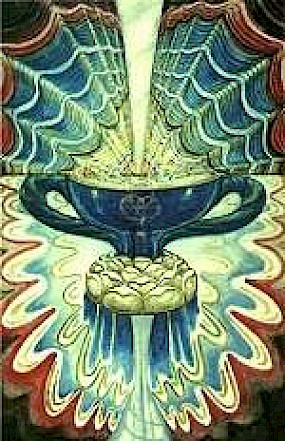
The Ace of Cups represents the beginning of love, fertility and creativity. It is a card to inspire confidence and happiness. When it turns up a reading of an everyday nature it can indicate the start of a loving relationship (of either the romantic or friendship variety); it can represent the beginning of a project in which a great deal of loving energy is invested (rather like the beginning of angelpaths); or sometimes it can reveal conception – the beginning of a new life.
If you are looking at the Ace of Cups indicating a new relationship, then there will also be people cards up. If it is a romantic relationship, expect to see other good Cups, and perhaps the Lovers. Friendship will be more indicated by Wand type good cards.
The beginning of a project will normally have something like the Star or the Priestess, and Disks around it. These will help you to determine the viability of the project.
But at a spiritual level the Ace of Cups is even more important. The chalice depicted on most versions of this card is taken to be the Holy Grail, or in pagan terms, the Cauldron of Kerridwyn – source of inspiration and granter of wishes and dreams.
In this interpretation of the card then, we are examining a major spiritual step forward – a period where the deepest and most heartfelt spiritual desires of the querent come to the surface, and may be identified and pursued.
When this card comes up with the Hierophant, The Sun,The Moon or sometimes with Death, we must see ourselves as entering into a major transformational period from which we will emerge totally changed by the power of the Universe. During periods such as these we touch the very essence of spiritual power, and hopefully, we succeed in growing toward it, and allowing a little more of its light within us.
After my first ayahuasca ceremony, in which I felt almost nothing, I listened enviously to a man who vomited while envisioning Donald Trump. The president represented everything vile to him, he said. The retreat’s facilitator explained that people on ayahuasca (a tea made from a hallucinogenic Amazonian plant and consumed in shamanic ceremonies) often feel they’re expelling the vileness within themselves when they throw up. Then, before my very first ayahuasca vomit during my third ceremony, rotten fish appeared on the insides of my eyelids, and the word “vile” also came to mind. Afterward, the fish vision faded. Many describe similar experiences. “I was feeling ill in my stomach and was talking to an outer force, almost like a guide,” says Kristy Belich, a 31-year-old standup comedian in the Washington, DC, area. “They told me, ‘It is time.’ I had a little bucket next to me, and they told me to vomit until the green light stopped. The third time, the vomit light was orange and yellow.”
Nick Polizzi, a 39-year-old in Boulder, CO and author of The Sacred Science: An Ancient Healing Path for the Modern World, also remembers a profound ayahuasca vomit. “A pressure was building inside my body, encapsulating all of the suffering and torment, rising through my esophagus like mercury in a thermometer,” he recalls. “My eyes snapped open and out of my mouth came a sound that I did not know I was capable of making. It was a demonic groan, straight out of a horror movie. I fumbled around in the dark for my bucket and found it right as an even louder roar escaped my throat, accompanied by a few pints of vomit. In that moment, all the disorientation and fear stopped.”
Perhaps the most well-known effect of ayahuasca is its purgative effect—hence the bucket next to each participant’s mat. According to traditional belief, purging can occur through a number of means also including diarrhea, shaking, crying, and sweating, says Evgenia Fotiou, assistant professor of anthropology at Kent State University, who has interviewed shamans and ayahuasca ceremony participants around the world. People sometimes describe mental aspects of the trip bringing on the vomiting, and afterward, the journey often changes course, says Luís Fernando Tófoli, professor of medical psychology and psychiatry at the University of Campinas, who also studies ayahuasca.
These effects stem from ayahuasca’s impact on the serotonergic system—involving the neurotransmitter serotonin—which influences many things, including mood and visual and auditory perception, says James Giordano, professor of neurology and biochemistry at Georgetown University Medical Center. The vomiting in particular comes from its action on the area postrema, the part of the brainstem that controls that urge to throw up. In this brain region, ayahuasca acts on 5HT3 serotonin receptors—which are also in the gut—potentially contributing to nausea, vomiting, and diarrhea, Tófoli tells me. Compounding the effects, ayahuasca increases serotonin levels in both the gut and the brain.
“The foul taste of the ayahuasca brew also accounts for nausea, but mostly soon after ingestion,” Tófoli says. “Since purging may take place a long time after that, this effect is probably not as important as the direct effect in the gut.” The liquid in the preparation also seems to contribute to the vomiting, he adds. Throwing up is less common after consuming ayahuasca in freeze-dried form.
Because ayahuasca’s impact on the area postrema is so strong, the vomiting is often more violent than usual pukes. “The nature of that kind of vomiting is exceedingly purgative,” Giordano tells me. “It’s a really deep, neurologically induced deep vomit. You literally feel as if you have vomited everything you’ve eaten since birth. It’s like this mega-hurl.”
The sheer strength of the vomiting partially explains why it can feel like you’re throwing up thoughts, emotions, or experiences, he adds. On top of that, people simply feel happier when they’re not sick, leading to the perception that negative feelings have left the body. There’s no known neurological reason why the vomiting feels more than physical, my experts posit; it just seems that way because of the emotional journey simultaneously taking place.
“There is probably a considerable influence of the social context,” Tófoli says. “In all ayahuasca traditions from South America that I know of, purging is considered as a sort of physical and spiritual cleansing, and it is not understood as an undesirable side effect.”
Many still believe that the cause of the vomiting is emotional, even if there’s no science behind that reasoning. “I was told [by a shaman] that it is not the ayahuasca that makes one nauseous and sick during ceremony; it is the negative things that exist in the body, such as anger, depression, sadness, and fear, which are resisting leaving the body,” Fotiou says. “This was echoed in the way people discussed someone who had a bad time in a ceremony. They would attribute it to the fact that he or she had many negative things to purge…It was generally thought that once the purging was over, ayahuasca would take that person to an ecstatic state.”
In fact, in cultures with rituals around ayahuasca, physical and mental purging are often not even viewed as separate phenomena. “You won’t find that separation between body and emotion in native cultures,” Fotiou says. “The body is where emotion and even knowledge lives.”
New Thinking Allo • Apr 11, 2023 James Tunney, LLM, is an Irish barrister who has lectured on legal matters throughout the world. He is a poet, artist, scholar, and author of The Mystery of the Trapped Light: Mystical Thoughts in the Dark Age of Scientism plus The Mystical Accord: Sutras to Suit Our Times, Lines for Spiritual Evolution; also Empire of Scientism: The Dispiriting Conspiracy and Inevitable Tyranny of Scientocracy, TechBondAge: Slavery of the Human Spirit, and Human Entrance to Transhumanism: Machine Merger and the End of Humanity. His most recent book is Plantation of the Automatons. His website is https://www.jamestunney.com/ Here he describes a crucible of consciousness at Oxford in the early twentieth century when a group of writers converged around C. S. Lewis and J. R. R. Tolkien at the Eagle and Child pub. They were known as the Inklings. 00:00:00 Introduction 00:02:18 C. S. Lewis & Tunney 00:06:37 Lewis’ religion 00:20:47 Reinchantment 00:28:49 Scientocracy 00:41:36 The afterlife 00:49:47 Amputated spirit 00:56:19 Eudaemon 01:05:46 Conclusion Edited subtitles for this video are available in Russian, Portuguese, Italian, German, French, and Spanish. New Thinking Allowed host, Jeffrey Mishlove, PhD, is author of The Roots of Consciousness, Psi Development Systems, and The PK Man. Between 1986 and 2002 he hosted and co-produced the original Thinking Allowed public television series. He is the recipient of the only doctoral diploma in “parapsychology” ever awarded by an accredited university (University of California, Berkeley, 1980). He is also the Grand Prize winner of the 2021 Bigelow Institute essay competition regarding the best evidence for survival of human consciousness after permanent bodily death. (Recorded on March 28, 2023)
Philip Roth’s classic novel, newly adapted by HBO, envisions a world in which Charles Lindbergh wins the 1940 presidential election
Charles Lindbergh, Walter Winchell and Franklin D. Roosevelt (L to R) are among the public figures fictionalized in Philip Roth’s The Plot Against America. Photo illustration by Meilan Solly / Photos via Getty Images
The Plot Against America unfolds in a world much like our own. Set in Newark, New Jersey, on the eve of World War II, Philip Roth’s 2004 novel finds its protagonist, a fictionalized version of the 7-year-old author himself, leading a banal existence punctuated by nightly radio news broadcasts, dinners with his all-American Jewish family and neighborhood excursions undertaken to fill the halcyon hours of summer vacation. Then, the writer-narrator recounts, “[T]he Republicans nominated Lindbergh and everything changed.”
What follows is an alternate history penned in the same vein as Philip K. Dick’s The Man in the High Castle, a 1962 novel recently adapted for television by Amazon Studios. Like High Castle, The Plot Against America—the subject of a new HBO limited series of the same name—poses the age-old question of “What if?” But while the former depicts a world in which the Axis powers won the war, the latter places its departure from the historical record prior to the conflict’s peak, envisioning a virulently isolationist United States that nevertheless ends up entangled in international affairs.
Seamlessly blending truth and imagination, The Plot Against America pits aviator Charles A. Lindbergh against incumbent Franklin Delano Roosevelt in the 1940 presidential election. Voters’ choice, argues the Spirit of St. Louis pilot and fervent “America Firster” in a trailer for the series, is not between Lindbergh and Roosevelt, but “between Lindbergh and war.”
Roth’s account of a celebrity-turned-politician winning the presidency on a platform of fearmongering and “othering” proved more prophetic than he could have predicted.
“It’s a story of an American dystopia,” explains “The Plot Against America” showrunner David Simon to Variety’s Will Thorne. “It seems startlingly prescient in that it anticipates a politician who seizes upon a very simple message and is able to activate the worst fears and impulses of a significant number of Americans. He gets them to relinquish not only power, but some of the most essential bulwarks of self-governance.”
While the Roth family, renamed the Levins in the HBO show, and many of the characters mentioned in The Plot Against America are based on real people, much of the narrative is entirely contrived. From the true extent of Lindbergh’s anti-Semitic views to the rise of the “America First” movement, here’s what you need to know to separate fact from fiction ahead of the six-part series’ March 16 premiere.
Is The Plot Against America based on a true story?
Philip (left, portrayed by Azhy Robertson) and his older brother, Sandy (right, portrayed by Caleb Malis) HBO
As Roth wrote in a 2004 essay for the New York Times, “To alter the historical reality by making Lindbergh America’s 33rd president while keeping everything else as close to factual truth as I could—that was the job as I saw it.”
The main conceit of The Plot Against America is a fictional Lindbergh presidency. Set between June 1940 and October 1942, the novel opens with the aviator’s unexpected bid as the Republican Party’s nominee and proceeds to envision how the war would have unfolded if the United States had not only stayed out of the fight, but colluded with the Axis powers and instituted Nazi-inspired restrictions on Jewish Americans’ freedom.
Roth’s book features prominent public figures—including Roosevelt, gossip columnist Walter Winchell, non-interventionist Democratic senator Burton K. Wheeler, New York City Mayor Fiorello H. La Guardia, industrialist and avowed anti-Semite Henry Ford, and German Foreign Minister Joachim von Ribbentrop—in roles ranging from key players to cameo appearances. In line with the author’s goal of adhering to reality whenever possible, sentiments shared by these individuals are actual quotes or plausible fabrications built on the existing historical record.
Author Philip Roth in the Newark, New Jersey, neighborhood where he grew up Photo by Bob Peterson / The LIFE Images Collection via Getty Images
Lindbergh, for example, really did accuse Jews of being “war agitators.” He also cautioned against “the infiltration of inferior blood” and “dilution by foreign races.” He did not, however, declare, as he does in the book, that with the German invasion of the U.S.S.R., “Adolf Hitler has established himself as the world’s greatest safeguard against the spread of communism and its evils.”
Of the work’s central characters, most are dramatized versions of real people. Young Philip (played by Azhy Robertson in the HBO series) and his immediate family members borrow their names from Roth’s actual relatives: Herman (Morgan Spector), family patriarch and insurance salesman; his mother, Elizabeth, or “Bess” for short (Zoe Kazan); and older brother, Sandy (Caleb Malis). But while Philip’s cousin Alvin (Anthony Boyle) and aunt Evelyn (Winona Ryder) play major roles in both the book and the show, neither has a direct real-life counterpart. Lionel Bengelsdorf (John Turturro), a conservative rabbi who attracts the Jewish community’s ire for his steadfast support of Lindbergh (Ben Cole), is also fictional.
What time period does The Plot Against America cover?
The novel’s alternate timeline is fairly straightforward, particularly toward the end of the novel, when Roth shifts from a first-person narrative to a day-by-day, newsreel-style account. Lindbergh soundly defeats Roosevelt in the November 1940 presidential election and, just weeks after his inauguration, meets Adolf Hitler to sign a so-called “Iceland Understanding” guaranteeing peaceful relations between the U.S. and Germany. A similar “Hawaii Understanding” paves the way for Japan’s unimpeded expansion across Asia.
The Jews of America find themselves subjected to increasing anti-Semitism and thinly veiled restrictions on their livelihood. The Office of American Absorption, established to encourage “America’s religious and national minorities to become further incorporated into the larger society,” indoctrinates Jewish teenagers by sending them to the country’s rural heartland for summer “apprenticeships”; an initiative dubbed Homestead 42 similarly relocates urban Jewish families, framing forced relocation as a “once-in-a-lifetime opportunity.”
Some, like Philip’s parents, are convinced the government is attempting to “lull [Jewish Americans] to sleep with the ridiculous dream that everything in America is hunky-dory.” Others, like his aunt Evelyn and older brother, decry these fears as the result of a “persecution complex.” Needless to say, the Roth parents prove correct in their assessment of the situation, and before the end of the book, readers are treated to a dystopian vision of a country plagued by pogroms, fascist totalitarianism and the unmitigated reversal of the very rights Herman Roth previously cited as exemplars of America.
The fictional Rabbi Lionel Bengelsdorf (John Turturro) attracts the Jewish community’s ire for his support of Charles Lindbergh. HBO
But The Plot Against America’s break from history is only temporary. By December 1942, Lindbergh has been vanquished, FDR is back in office, and the U.S.—reeling from a surprise Japanese attack on Pearl Harbor—has entered the war on the Allies’ side. Despite this late arrival, the Americans still manage to secure victory in Europe by May 1945.
In truth, the “America First” mentality that enables Roth’s version of Lindbergh to win the presidency was fairly widespread prior to Pearl Harbor. At its peak, the America First Committee, founded by a group of isolationist Yale University students in 1940, swelled to 800,000 members recruited from all regions of the country. Lindbergh emerged as the movement’s biggest proponent, but other well-known figures were also involved with the committee: Among others, the list includes Walt Disney, Sinclair Lewis, future president Gerald Ford and future Supreme Court justice Potter Stewart.
America Firsters argued against U.S. involvement in the war, presenting themselves as the “pinnacle of American patriotism and American traditions,” says Bradley W. Hart, author of Hitler’s American Friends: The Third Reich’s Supporters in the United States. Members emphasized defense over offense and attempted to paint themselves as patriots “interested only in preventing” the number of “gold star mothers”—those whose children died in service—from growing, according to Hart. Though many members held anti-Semitic sentiments and sympathized with the Nazis, such opinions became an increasing liability as the war in Europe raged on.
General view of a large crowd attending an America First Committee (AFC) rally circa 1941 in New York City Photo by Irving Haberman / IH Images / Getty Images
During the first half of the 20th century, anti-Semitism was fairly widespread across the United States, manifesting at “every level of society and across the country,” writes historian Julian E. Zelizer in theAtlantic. Automotive titan Henry Ford published a propaganda paper blaming “the Jews” for all of society’s ills, while radio personality Father Charles Coughlin regularly spouted anti-Semitic sentiments to his audience of some 30 million weekly listeners. Even institutions like Harvard, Yale, Columbia and Princeton enacted anti-Semitic policies: As Zelizer writes, all four universities imposed quotas on the number of Jewish students admitted.
The America First Committee’s efforts culminated in a 1941 speech Lindbergh delivered at a rally in Des Moines, Iowa. The aviator accused three groups—the British, the Roosevelt administration and American Jews—of “agitating for war.” Predicting that the “Jewish groups in this country … will be among the first to feel [war’s] consequences,” he argued that the “greatest danger to this country lies in [Jews’] large ownership and influence in our motion pictures, our press, our radio and our government.”
Critics roundly condemned Lindbergh’s words as anti-Semitic. Writing for the New York Herald Tribune, columnist Dorothy Thompson expressed an opinion shared by many, declaring, “I am absolutely certain that Lindbergh is pro-Nazi.” Republican presidential nominee Wendell Willkie called the speech “the most un-American talk made in my time by any person of national reputation.”
The America First Committee officially disbanded three days after the Japanese attack on Pearl Harbor.
Why Charles Lindbergh?
In May 1927, 25-year-old Charles A. Lindbergh skyrocketed to fame after completing the first successful non-stop, solo transatlantic flight. (As Bess tells her husband in a “Plot Against America” trailer, “To most people, there’s never been a bigger hero in their lifetime.”) Dubbed “Lucky Lindy” and the “Lone Eagle,” he became an international celebrity, garnering his influence to promote the field of aviation. In 1929, he married Anne Morrow, daughter of a prominent American financier and diplomat; shortly after, the couple welcomed a baby boy, whose kidnapping and murder three years later sparked a media circus.
Overwhelmed by the publicity, the family fled to Europe. While living abroad, Lindbergh, acting at the U.S. military’s request, made multiple trips to Germany to assess the country’s aviation capabilities. He was impressed by what he encountered: As historian Thomas Doherty says, Nazi Germany shared Lindbergh’s admiration of “Spartan physicality” and aviation-centric militarism. In 1938, the American hero attracted intense criticism for accepting—and later declining to return—a medal from Nazi military and political leader Hermann Göring.
After moving back to the U.S. in April 1939, Lindbergh became a key figurehead of the America First movement. He spoke at rallies, denouncing the war as a European affair with no relevance to the U.S., and soon shifted from isolationism to outright anti-Semitism. Among his most patently bigoted remarks: Western nations “can have peace and security only so long as we band together to preserve that most priceless possession, our inheritance of European blood” and “It seems that anything can be discussed today in America except the Jewish problem.”
Radio broadcaster Walter Winchell emerged as one of Lindbergh’s most steadfast critics, updating Lindy’s “Lone Eagle” nickname to the “Lone Ostrich” and arguing that the aviator gave up the country’s goodwill to become the “star ‘Shill’ for the America First Committee.” Roth’s fictionalized Winchell takes a similarly irreverent approach, decrying Lindbergh as “our fascist-loving president” and his supporters as “Lindbergh’s fascists.” But while The Plot Against America’s version of Winchell defies the reviled commander-in-chief by staging his own presidential bid, the real journalist never ran for office.
Charles Lindbergh (right) and Senator Burton K. Wheeler (left) at a May 23, 1941, “America First” rally in New York Getty Images
During the 1930s, Lindbergh and his other Plot Against America presidential rival, Franklin D. Roosevelt, were arguably the two most famous men in the country. But while many respected the pilot, few viewed him as a viable political candidate. According to Hart, an August 1939 poll found that just 9 percent of Americans wanted Lindbergh, whose name had been raised as a potential alternative to Roosevelt, to run for the nation’s highest office. Of these individuals, less than three-fourths (72 percent) thought he would actually make a good president.
Though Roosevelt personally supported America entering the conflict, he “hedged and waffled on war” while campaigning during the 1940 presidential race, says Susan Dunn, author of 1940: FDR, Willkie, Lindbergh, Hitler—The Election Amid the Storm. “At the same time that he was speaking against American involvement in war,” adds Dunn, “his administration was preparing for possible war” by instituting a peacetime draft and formulating lists of priorities in the event that war broke out. Like Roosevelt, his real-life Republican opponent, businessman Wendell Willkie, was an interventionist and anti-fascist, though he, too, toned down these views on the campaign trail.
There was no love lost between Roosevelt and Lindbergh: The president likened the pilot to the “Copperheads” who had opposed the American Civil War, labeling him a “defeatist and appeaser.” Lindbergh, in turn, called the Roosevelt administration one of three groups “agitating for war” and accused it of practicing “subterfuge” to force the U.S. into “a foreign war.”
The president’s distaste for Lindbergh continued well beyond the United States’ 1941 entry into the war. Though the pilot attempted to volunteer for the Army Air Corps, he was blocked from doing so and forced to settle for a consulting position with Henry Ford’s bomber development program. Later in the war, under the auspices of United Aircraft, he was stationed in the Pacific theater, where he participated in around 50 combat missions despite his official status as a civilian.
Lindbergh’s reputation never fully recovered from his pre-war politics. Once the aviator accepted a medal from Göring, says Doherty, “the universal affection Americans had for Lindbergh dissipates, and people divide[d] into camps. There are still a lot of Americans that will always love Lindbergh, … but he becomes an increasingly provocative and controversial figure.”
Charles Lindbergh (left) enrolls as a member of the America First Committee. Getty Images
Whether the pilot actually came to regret his comments is a point of contention among scholars. Though his wife later claimed as much, he never personally apologized for his comments. Roth, writing in 2004, argued that “he was at heart a white supremacist, and … did not consider Jews, taken as a group, the genetic, moral or cultural equals of Nordic white men like himself and did not consider them desirable American citizens other than in very small numbers.”
Though Lindbergh is The Plot Against America’s clearest antagonist, his actual actions, according to Roth, matter less than what “American Jews suspect, rightly or wrongly, that he might be capable of doing”—and, conversely, how supporters interpret his words as permission to indulge their worst instincts.
As Roth concludes, “Lindbergh … chose himself as the leading political figure in a novel where I wanted America’s Jews to feel the pressure of a genuine anti-Semitic threat.”










/https://tf-cmsv2-smithsonianmag-media.s3.amazonaws.com/accounts/headshot/mellon.png)
/https://tf-cmsv2-smithsonianmag-media.s3.amazonaws.com/filer/8f/d9/8fd9e691-9ecc-45bb-afae-6e6e4c8e9295/cq5damweb1200675.jpeg)
/https://tf-cmsv2-smithsonianmag-media.s3.amazonaws.com/filer/d7/67/d767e5b2-41b8-4fc8-9889-e0faf3de46d9/gettyimages-50396462.jpg)
/https://tf-cmsv2-smithsonianmag-media.s3.amazonaws.com/filer/9d/b0/9db095e8-1cd0-4454-84f2-792c08be5529/cq5damweb1200675_1.jpeg)
/https://tf-cmsv2-smithsonianmag-media.s3.amazonaws.com/filer/c2/0e/c20ee21c-538b-4887-92e0-a077f5c18f2c/screen_shot_2020-03-13_at_23908_pm.png)
/https://tf-cmsv2-smithsonianmag-media.s3.amazonaws.com/filer/e1/f2/e1f2165a-0e72-46bd-b8b3-6eebf90d7a6e/gettyimages-515035066.jpg)
/https://tf-cmsv2-smithsonianmag-media.s3.amazonaws.com/filer/fc/38/fc381560-5cca-4021-9ec5-92f8968c65a3/gettyimages-515168842.jpg)
/https://tf-cmsv2-smithsonianmag-media.s3.amazonaws.com/accounts/headshot/mellon.png)