From the author of Utopia For Realists, a revolutionary argument that the innate goodness and cooperation of human beings has been the greatest factor in our success
If one basic principle has served as the bedrock of bestselling author Rutger Bregman’s thinking, it is that every progressive idea — whether it was the abolition of slavery, the advent of democracy, women’s suffrage, or the ratification of marriage equality — was once considered radical and dangerous by the mainstream opinion of its time. With Humankind, he brings that mentality to bear against one of our most entrenched ideas: namely, that human beings are by nature selfish and self-interested.
By providing a new historical perspective of the last 200,000 years of human history, Bregman sets out to prove that we are in fact evolutionarily wired for cooperation rather than competition, and that our instinct to trust each other has a firm evolutionary basis going back to the beginning of Homo sapiens. Bregman systematically debunks our understanding of the Milgram electrical-shock experiment, the Zimbardo prison experiment, and the Kitty Genovese “bystander effect.”
In place of these, he offers little-known true stories: the tale of twin brothers on opposing sides of apartheid in South Africa who came together with Nelson Mandela to create peace; a group of six shipwrecked children who survived for a year and a half on a deserted island by working together; a study done after World War II that found that as few as 15% of American soldiers were actually capable of firing at the enemy.
The ultimate goal of Humankind is to demonstrate that while neither capitalism nor communism has on its own been proven to be a workable social system, there is a third option: giving “citizens and professionals the means (left) to make their own choices (right).” Reorienting our thinking toward positive and high expectations of our fellow man, Bregman argues, will reap lasting success. Bregman presents this idea with his signature wit and frankness, once again making history, social science and economic theory accessible and enjoyable for lay readers.
Powell’s Books • Feb 3, 2021 Thom Hartmann, the most popular progressive radio host in America, looks at the history of the battle against oligarchy in America — and how we can win the latest round. The United States was born in a struggle against the oligarchs of the British aristocracy, and ever since then the history of America has been one of dynamic tension between democracy and oligarchy. And much like the shock of the 1929 crash that woke America up to glaring inequality and the ongoing theft of democracy by that generation’s oligarchs, the coronavirus pandemic of 2020 has laid bare how extensively oligarchs have looted our nation’s economic system, gutted governmental institutions, and stolen the wealth of the former middle class. In The Hidden History of American Oligarchy: Reclaiming Our Democracy From the Ruling Class (Berrett-Koehler), Hartmann traces the history of this struggle against oligarchy from America’s founding to the United States’ war with the feudal Confederacy to President Franklin Roosevelt’s struggle against “economic royalists,” who wanted to block the New Deal. In each of those cases, the oligarchs lost the battle. But with increasing right-wing control of the media, unlimited campaign contributions, and a conservative takeover of the judicial system, we’re at a crisis point. Hartmann lays out practical measures we can take to break up media monopolies, limit the influence of money in politics, reclaim the wealth stolen over decades by the oligarchy, and build a movement that will return control of America to We the People. Hartmann was joined in conversation by David Korten, cofounder of YES! Magazine and author of Change the Story, Change the Future.
The Leo Full Moon puts us strongly in touch with our true self and our need to present a public face. Leo possesses a powerfully creative essence alongside a dynamic sense of personal dignity. When the Moon is in this sign, we intensely perceive when others don’t clearly acknowledge who we are. It’s like we only exist in entirety through others’ reflections — they act as our witnesses, our audiences, and maybe even our guardians. Because what we seek of ourselves from others sometimes seems to be missing, we may experience a sense of hurt pride or the pain of an inner wound.
To add to this already tender and tentative set of circumstances, the Sun and Moon are in a t-square to Uranus in Taurus — a planet that carries a theme of alienation. Here, we feel rather alone and outnumbered, as though it’s only us with a “problem” or issue. In reality, other people may also feel super sensitive! Or, they may feel lonely, unacknowledged, or plain “weird” in some way. Our challenge is to realize that we are not completely unique, and that no problem is, in any case, insurmountable.
Through embracing novelty and peculiarity, we discover creative solutions to any troubles. This could be the perfect time to remember what we learnt in that crystal course no one else took seriously, for example. Or, conversely, to recall the praise and gratitude from the one volunteer who told us our crystal-healing skills made an immense difference and they felt much better.
This Full Moon encourages us to engage with our faith and trust, even when we think we have none. For the person going through a shut-down time, perhaps struggling with minor depression or nothing seemingly going quite right, the stars promise that a corner can be turned, if they just hang in there and give it one more try. For this is one of the messages of the square — things aren’t always easy on the first run. Or even on the second one. But when we realize that success will be found on the third or fourth, then through practice and persistence, we can grasp that power at our fingertips. And these are some of the lessons of the fixed signs, Leo and Aquarius.
The Moon is also sextile Mars; and although, in some ways, this aspect is challenging, it is nonetheless strongly linked with the idea of opportunity. A door may be partly open, for example. And, with an extra push or a brave, new step through it, we find that the reception is warmer than expected. Progress can be made if we’re willing to add that extra bit of effort.
Mars in Gemini emphasizes action, both in thought and in connection with others. A whole host of options can open up if we let ourselves imagine the possibilities — especially when we take the first step(s) to follow up. We may even become so energized by promising prospects that we start running different projects side-by-side. If we’re struggling to make progress with one particular task, we may find that by turning our attention to another assignment for a while, we suddenly have fuel for both.
The Leo Moon trines Chiron in Aries, suggesting that healing can easily happen through inspiration and creativity. By reaching out to our trusted sources, many challenges meet with solutions quite quickly. We could also view Chiron links as cues to bridging the gap between our inner self and outer image. Chiron gives us permission to put ourselves, our necessities, and our preferences first; there is no need to be shy or self effacing this time around! We gain more — and possibly even give more — by embracing the positive strengths of who we truly are.
This article is from the Mountain Astrologer by Diana McMahon Collis
On February 5th, 2023 we have a Full Moon at 16° Leo. The Full Moon in Leo is exactly square Uranus in Taurus. Something’s got to give.
A Full Moon is a celestial act of balancing two opposing forces. The Full Moon in Leo comes to illuminate the archetype of the opposite sign, Aquarius, and find a creative synthesis between the two.
Full Moon In Aquarius – The Circle And The Dot
My favorite metaphor for the Leo-Aquarius axis is the circle and the dot.
The Sun’s – Leo’s ruling planet – symbol is the circle with a dot in the middle. The dot inside the circle is our Identity, what makes us different from others.
Aquarius is the circle without the dot.
Imagine being part of a circle. The circle is the safe space where everyone is included. No one is “more special” than another.
Now imagine you are part of this safe circle and you step inside the circle. This is the healthy Leo energy. Your like minded group has your back. In the safety of the circle, you can express your Self. You can be your Self.
We need this safe Aquarius space to be ourselves. We can’t be ourselves, and express ourselves creatively if we feel unsafe, if we don’t belong, if we are not part of a community. We need to be part of a group that ‘has our back’. That’s why Leo needs Aquarius.
Of course, Aquarius needs Leo too. The circle without the dot is just a circle. A space of infinite creativity, of infinite potential – but a space where nothing happens. At some point, when the time is right, we need to take the lead and step inside the circle.
But how do we find the fine balance between creative self-expression and playing by society’s rules?
Full Moon In Leo – Thesis, Antithesis, Synthesis
A good analogy I often refer to explain how Full Moons “work” is a German theory of change, called “Thesis – Antithesis – Synthesis”.
According to this theory, everything in life has a starting point, the initial condition (the thesis), and an opposing force (the antithesis).
The 6 zodiac axes are great examples of the thesis-antithesis dynamic.
One sign on the axis is always the antithesis of the other sign (for example, Aries is Libra’s antithesis, and Libra is Aries’ antithesis – the same goes with the other 5 pairs of signs).
And then we have the synthesis, which is the sum of the two, but it’s not limited to that.
When the thesis is challenged by the antithesis, something greater emerges – something that wouldn’t have been possible if we wouldn’t had the opposing tension between the thesis and the antithesis.
A Full Moon is a great example of ‘Synthesis’ because the Sun opposite the Moon creates the necessary tension we need to birth something new.
On one side of the horizon, we have the Sun, and then exactly on the opposite side, we have the Moon. A confrontation is imminent. And so it’s a breakthrough.
Leo Vs Aquarius
Aquarius (we are in the Aquarius season) is our Thesis
The group
Social trends
Objective experience
Head
Leo, the opposite sign from Aquarius, becomes our Antithesis
The individual vs. the group
Creativity vs. trends
Subjective experience vs objective experience
Heart vs head
After we understand both the thesis and the antithesis, we can get to the synthesis.
The group vs. the individual: the group cannot exist without individuals. A group where no one takes the lead, no one steps in, and no one has something to share and to give, becomes stale.
Trends vs. creativity: Great artists – or people who touch a sensitive chord in the collective psyche, have a unique ability to pick up on trends, and understand where society is heading towards. They are not necessarily the most original creators, but are some of the earliest adopters. On the other hand, if we follow the crowd too much, our work becomes boring and ultimately, obsolete. We need a creativity injection from Leo.
Head vs heart: When the head completely takes over, we need to get back to the heart.
Full Moon In Leo – Something’s Got To Give
Theory is easy. We are in the middle of the Aquarius season, right? We can talk about circles and dots, German theories and philosophies and still don’t “get” what the Full Moon in Leo is all about.
How do we actually get to embody the Full Moon in Leo?
The answer is not what you think (Aquarius). The answer is not even what you feel (Leo). The answer is what you actually DO (Uranus in Taurus).
At 15° Taurus, Uranus is at the apex of the Full Moon T-square. In a T-square, the tension of the opposites (Sun and Moon) is released through the planet at the apex – Uranus.
Leo, Aquarius, and Taurus are fixed signs. Extremely stubborn. Their goal is to preserve the status quo, NOT to initiate change.
Yet, a T-square is like a pressure cooker. Yes, you can hold onto the tension for a while. But not indefinitely. Something’s got to give.
Uranus in Taurus is a call for authenticity. What’s worth doing, even if you fail? What’s worth going for, because deep inside YOU KNOW it’s the only way to live? What would you do if you’d act from your deepest values and truths?
the tendency toward a relatively stable equilibrium between interdependent elements, especially as maintained by physiological processes.
Origin
1920s: modern Latin, from Greek homoios ‘like’ + -stasis.
Description
In biology, homeostasis is the state of steady internal, physical, and chemical conditions maintained by living systems. This is the condition of optimal functioning for the organism and includes many variables, such as body temperature and fluid balance, being kept within certain pre-set limits. Wikipedia
The authors outline their comprehensive program called Integral Transformative Practice. Based on a two-year experimental class that grew out of their lifework, this full program offers step-by-step instructions for joining body, mind, heart and soul in an evolutionary adventure that has powerful personal and social implications.
New Thinking Allowed with Jeffrey Mishlove • Feb 3, 2023 This video is a special release from the original Thinking Allowed series that ran on public television from 1986 until 2002. It was recorded in about 1990. Because of the enormous environmental, political and economic strains on humanity, change is essential for our survival. George Leonard is the author of numerous books including Education and Ecstacy and The Transformation. He expresses optimism that we are capable of rising to the challenge and learning to bring out that which is deepest and best within us. Now you can watch all of the programs from the original Thinking Allowed Video Collection, hosted by Jeffrey Mishlove. Subscribe to the new Streaming Channel (https://thinkingallowed.vhx.tv/) and watch more than 350 programs now, with more, previously unreleased titles added weekly. New!! Free month of the classic Thinking Allowed streaming channel for New Thinking Allowed subscribers only. Use code THINKFREELY.
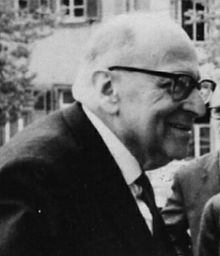
Max Horkheimer (/ˈhɔːrkhaɪmər/; German: [ˈhɔɐ̯kˌhaɪmɐ]; 14 February 1895 – 7 July 1973) was a German philosopher and sociologist who was famous for his work in critical theory as a member of the Frankfurt School of social research. Horkheimer addressed authoritarianism, militarism, economic disruption, environmental crisis, and the poverty of mass culture using the philosophy of history as a framework. This became the foundation of critical theory. His most important works include Eclipse of Reason (1947), Between Philosophy and Social Science (1930–1938) and, in collaboration with Theodor Adorno, Dialectic of Enlightenment (1947). Through the Frankfurt School, Horkheimer planned, supported and made other significant works possible.[2]
Biography
Early life
On 14 February 1895, Horkheimer was born the only son of Moritz and Babetta Horkheimer. Horkheimer was born into a conservative, wealthy Orthodox Jewish family. His father was a successful businessman who owned several textile factories in the Zuffenhausen district of Stuttgart, where Max was born.[3] Moritz expected his son to follow in his footsteps and own the family business.[3]
Max was taken out of school in 1910 to work in the family business, where he eventually became a junior manager. During this period he would begin two relationships that would last for the rest of his life. First, he met Friedrich Pollock, who would later become a close academic colleague, and who would remain Max’s closest friend. He also met Rose Riekher, his father’s personal secretary. Eight years Max’s senior, a Christian, and from a lower economic class, Riekher (whom Max called “Maidon”) was not considered a suitable match by Moritz Horkheimer. Despite this, Max and Maidon would marry in 1926 and remain together until her death in 1969.[3]
In 1917, his manufacturing career ended and his chances of taking over his family business were interrupted when he was drafted into World War I.[4] However, Horkheimer avoided service, being rejected on medical grounds.
Education
In the spring of 1919, after failing an army physical,[3] Horkheimer enrolled at Munich University. While living in Munich, he was mistaken for the revolutionary playwright Ernst Toller and arrested and imprisoned.[5]
After being released, Horkheimer moved to Frankfurt am Main, where he studied philosophy and psychology under the respectable Hans Cornelius.[3] There, he met Theodor Adorno, several years his junior, with whom he would strike a lasting friendship and a collaborative relationship. After an abortive attempt at writing a dissertation on gestalt psychology, Horkheimer, with Cornelius’s direction, completed his doctorate in philosophy with a 78-page dissertation titled The Antinomy of Teleological Judgment (Zur Antinomie der teleologischen Urteilskraft).[3][6]
In 1925, Horkheimer was habilitated with a dissertation entitled Kant‘s Critique of Judgment as Mediation between Practical and Theoretical Philosophy (Über Kants Kritik der Urteilskraft als Bindeglied zwischen theoretischer und praktischer Philosophie). Here, he met Friedrich Pollock, who would be his colleague at the Institute of Social Research. The following year, Max was appointed Privatdozent. Shortly after, in 1926, Horkheimer married Rose Riekher.[6]
Institute of Social Research (Institut für Sozialforschung)
In 1926, Horkheimer was an “unsalaried lecturer in Frankfurt.” Shortly after, in 1930, he was promoted to professor of philosophy at Frankfurt University. In the same year, when the Institute for Social Research‘s (now known as Frankfurt School of Critical Theory) directorship became vacant, after the departure of Carl Grünberg, Horkheimer was elected to the position “by means of an endowment from a wealthy businessman”.[7] The Institute had had its beginnings in a Marxist study group started by Felix Weil, a one-time student of political science at Frankfurt who used his inheritance to fund the group as a way to support his leftist academic aims. Pollock and Horkheimer were partners with Weil in the early activities of the institute.[3]
Horkheimer worked to make the Institute a purely academic enterprise.[8] As director, he changed Frankfurt from an orthodox Marxist school to a heterodox school for critical social research.[9] The following year publication of the institute’s Zeitschrift für Sozialforschung began, with Horkheimer as its editor.[10]
Horkheimer intellectually reoriented the institute, proposing a programme of collective research aimed at specific social groups (specifically the working class) that would highlight the problem of the relationship of history and reason. The Institute focused on integrating the views of Karl Marx and Sigmund Freud. The Frankfurt School attempted this by systematically hitching together the different conceptual structures of historical materialism and psychoanalysis.[citation needed]
During the time between Horkheimer’s being named Professor of Social Philosophy and director of the Institute in 1930, the Nazi party became the second largest party in the Reichstag. In the midst of the violence surrounding the Nazis’ rise, Horkheimer and his associates began to prepare for the possibility of moving the Institute out of Germany. Horkheimer’s venia legendi was revoked by the new Nazi government because of the Marxian nature of the institute’s ideas as well as its prominent Jewish association. When Hitler was named the Chancellor in 1933,[3] the institute was thus forced to close its location in Germany.
He emigrated to Geneva, Switzerland and then to New York City the following year, where Horkheimer met with the president of Columbia University, Nicholas Murray Butler, to discuss hosting the institute. To Horkheimer’s surprise, the president agreed to host the Institute in exile as well as offer Horkheimer a building for the institute.[11][12] In July 1934, Horkheimer accepted an offer from Columbia to relocate the institute to one of their buildings.[3]
In 1940, Horkheimer received American citizenship and moved to the Pacific Palisades district of Los Angeles, California, where his collaboration with Adorno would yield the Dialectic of Enlightenment. In 1942, Horkheimer assumed the directorship of the Scientific Division of the American Jewish Committee. In this capacity, he helped launch and organize a series of five Studies in Prejudice, which were published in 1949 and 1950. The most important of these was the pioneering study in social psychology entitled The Authoritarian Personality, itself a methodologically advanced reworking of some of the themes treated in a collective project produced by the Institute in its first years of exile, Studies in Authority and Family.[13]
In the years that followed, Horkheimer did not publish much, although he continued to edit Studies in Philosophy and Social Science as a continuation of the Zeitschrift. In 1949, he returned to Frankfurt where the Institute for Social Research reopened in 1950. Between 1951 and 1953 Horkheimer was rector of the University of Frankfurt. In 1953, Horkheimer stepped down from director of the Institute and took on a smaller role in the institute, while Adorno became director.[14]
Later years
Horkheimer continued to teach at the university until his retirement in the mid-1960s. In 1953, he was awarded the Goethe Plaque of the City of Frankfurt, and was later named an honorary citizen of Frankfurt for life.[15] He returned to the United States in 1954 and 1959 to lecture as a frequent visiting professor at the University of Chicago. In the late 1960s, Horkheimer supported Pope Paul VI‘s stand against artificial contraception, specifically the pill, arguing that it would lead to the end of romantic love.[16]
Legacy
He remained an important figure until his death in Nuremberg in 1973. Max Horkheimer with the help of Theodor Adorno, Herbert Marcuse, Walter Benjamin, Leo Lowenthal, Otto Kirchheimer, Frederick Pollock and Neumann developed “Critical Theory”. According to Larry Ray “Critical Theory” has “become one of the most influential social theories of the twentieth century”.[17]
Horkheimer’s work is marked by a concern to show the relation between affect (especially suffering) and concepts (understood as action-guiding expressions of reason). In that, he responded critically to what he saw as the one-sidedness of both neo-Kantianism (with its focus on concepts) and Lebensphilosophie (with its focus on expression and world-disclosure). He did not think that either was wrong, but he insisted that the insights of each school on its own could not adequately contribute to the repair of social problems. Horkheimer focused on the connections between social structures, networks/subcultures and individual realities and concluded that we are affected and shaped by the proliferation of products on the marketplace. It is also important to note that Horkheimer collaborated with Herbert Marcuse, Erich Fromm, Theodor Adorno, and Walter Benjamin.[2]
Critical theory
Through critical theory, a social theory focusing on critiquing and changing society, Horkheimer “attempted to revitalize radical social, and cultural criticism” and discussed authoritarianism, militarism, economic disruption, environmental crisis and the poverty of mass culture. Horkheimer helped to create critical theory through a mix of radical and conservative lenses that stem from radical Marxism and end up in “pessimistic Jewish transcendentalism”.[4]
He developed his critical theory by examining his own wealth while witnessing the juxtaposition of the bourgeois and the impoverished. This critical theory embraced the future possibilities of society and was preoccupied with forces which moved society toward rational institutions that would ensure a true, free, and just life.[18] He was convinced of the need to “examine the entire material and spiritual culture of mankind”[4] in order to transform society as a whole. Horkheimer sought to enable the working class to reclaim their power in order to resist the lure of fascism. Horkheimer stated himself that “the rationally organized society that regulates its own existence” was necessary along with a society that could “satisfy common needs”.[4] To satisfy these needs, it reached out for a total understanding of history and knowledge. Through this, critical theory develops a “critique of bourgeois society through which ‘ideology critique’ attempted to locate the ‘utopian content’ of dominant systems of thought”.[19] Above all, critical theory sought to develop a critical perspective in the discussion of all social practices.[18]
“Between Philosophy and Social Science” appeared between 1930 and 1938, during the time the Frankfurt school moved from Frankfurt to Geneva to Columbia University. It included: “Materialism and Morality”, “The Present Situation of Moral Philosophy and the Tasks of an Institute for Social Research”, “On the Problem of Truth”, “Egoism and the Freedom Movement”, “History and Psychology”, “A New Concept of Ideology”, “Remarks on Philosophical Anthropology”, and “The Rationalism Debate in Contemporary Philosophy”. It also included “The Present Situation of Social Philosophy and the Tasks for an Institute of Social Research”, “Egoism and Freedom Movements” and “Beginnings of the Bourgeois Philosophy of History”. The essays within “Between Philosophy and Social Science” were Horkheimer’s attempts to “remove the individual from mass culture, a function for philosophy from the commodification of everything”.[20] Horkheimer was extremely invested in the individual. In one of his writings, he states, “When we speak of an individual as a historical entity, we mean not merely the space-time and the sense existence of a particular member of the human race, but in addition, his awareness of his own individuality as a conscious human being, including recognition of his own identity.”.[21]
“The Present Situation of Social Philosophy and the Tasks for an Institute of Social Research” was not only included in this volume, but it was also used as Horkheimer’s inaugural speech as director of the Frankfurt School. In this speech he related economic groups to the struggles and challenges of real life. Horkheimer often referenced human struggle and used this example in his speech because it was a topic he understood well.[20]
“Egoism and Freedom Movements” and “Beginnings of the Bourgeois Philosophy of History” are the longest of the essays. The first is an evaluation of Machiavelli, Hobbes and Vico; the latter discusses the bourgeois control. In Beginnings of the Bourgeois Philosophy of History, Horkheimer explained “what he learned from the bourgeois rise to power and what of the bourgeois he thought was worth preserving.[20]
The volume also looks at the individual as the “troubled center of philosophy.” Horkheimer expressed that “there is no formula that defines the relationship among individuals, society and nature for all time”.[20] To understand the problem of the individual further, Horkheimer included two case studies on the individual: one on Montaigne and one on himself.
Horkheimer’s book, Eclipse of Reason, started in 1941 and published in 1947, is broken into five sections: Means and Ends, Conflicting Panaceas, The Revolt of Nature, The Rise and Decline of the Individual, and On the Concept of Philosophy.[2] The Eclipse of Reason focuses on the concept of reason within the history of Western philosophy, which can only be fostered in an environment of free, critical thinking while also linking positivist and instrumental reason with the rise of fascism.[19] He distinguishes between objective, subjective and instrumental reason, and states that we have moved from the former through the center and into the latter (though subjective and instrumental reason are closely connected). Objective reason deals with universal truths that dictate that an action is either right or wrong. It is a concrete concept and a force in the world that requires specific modes of behavior. The focus in the objective faculty of reason is on the ends, rather than the means. Subjective reason is an abstract concept of reason, and focuses primarily on means. Specifically, the reasonable nature of the purpose of action is irrelevant – the ends only serve the purpose of the subject (generally self-advancement or preservation). To be “reasonable” in this context is to be suited to a particular purpose, to be “good for something else”. This aspect of reason is universally conforming, and easily furnishes ideology. In instrumental reason, the sole criterion of reason is its operational value or purposefulness, and with this, the idea of truth becomes contingent on mere subjective preference (hence the relation with subjective reason). Because subjective/instrumental reason rules, the ideals of a society, for example democratic ideals, become dependent on the “interests” of the people instead of being dependent on objective truths. Horkheimer writes, “Social power is today more than ever mediated by power over things. The more intense an individual’s concern with power over things, the more will things dominate him, the more will he lack any genuine individual traits, and the more will his mind be transformed into an automation of formalized reason.”[22]
Horkheimer acknowledges that objective reason has its roots in Reason (“Logos” in Greek) and concludes, “If by enlightenment and intellectual progress we mean the freeing of man from superstitious belief in evil forces, in demons and fairies, in blind fate – in short, the emancipation from fear – then denunciation of what is currently called reason is the greatest service we can render.”[23][24]
Max Horkheimer and Theodor Adorno collaborated to publish Dialectic of Enlightenment, which was originally published in 1944. The inspiration for this piece came from when Horkheimer and Adorno had to flee Germany, because of Hitler, and go to New York. They went to America and “absorbed the popular culture”; thinking that it was a form of totalitarianism.[25] Nonetheless, Dialectic of Enlightenment’s main argument was to serve as a wide-ranging critique of the “self-destruction of enlightenment”.[19] The work criticized popular culture as “the product of a culture industry whose goal was to stupefy the masses with endless mass produced copies of the same thing” (Lemert). Along with that, Horkheimer and Adorno had a few arguments; one being that these mass-produced products only appear to change over time. Horkheimer and Adorno stated that these products were so standardized in order to help consumers comprehend and appreciate the products with little attention given to them. They expressed, “the result is a constant reproduction of the same thing” (Adorno and Horkheimer, 1993 [1944]). However, they also explain how pseudo-individuality is encouraged among these products in order to keep the consumers coming back for more. They argue that small differences in products within the same area are acceptable.[26]
The similar patterns found in the content of popular culture (films, popular songs and radio) have the same central message; “it’s all linked to “the necessity of obedience of the masses to the social hierarchy in place in advanced capitalist societies”.[27] These products appeal to the masses and encourage conformity to the consumers. In return, capitalism remains in power while buyers continue to consume from the industry. This is dangerous because the consumers’ belief that the powers of technology are liberating, starts to increase. To support their claim, Horkheimer and Adorno, “proposed an antidote: not just thinking the relations of things, but also, as an immediate second step, thinking through that thinking, self-reflexively.” In other words, technology lacks self-reflexivity. Nonetheless, Horkheimer and Adorno believed that art was an exception, because it “is an open-ended system with no fixed rules”; thus, it could not be an object of the industry.[28]
Criticisms
Perry Anderson sees Horkheimer’s attempt to make the Institute purely academic as “symptomatic of a more universal process, the emergence of a ‘Western Marxism‘ divorced from the working-class movement and dominated by academic philosophers and the ‘product of defeat'” because of the isolation of the Russian Revolution. Rolf Wiggershaus, author of The Frankfurt School believed Horkheimer lacked the audacious theoretical construction produced by those like Marx and Lukács and that his main argument was that those living in misery had the right to material egoism. In his book, “Social Theory”, Alex Callinicos claims that Dialectic of Enlightenment offers no systematic account of conception of rationality, but rather professes objective reason intransigently to an extent.[8] Charles Lemert discusses in his book Social Theory that in writing Dialectic of Enlightenment, Horkheimer and Adorno lack sufficient sympathy for the cultural plight of the average working person, unfair to criticize the tastes of ordinary people, and that popular culture does not really buttress social conformity and stabilize capitalism as much as the Frankfurt school thinks.[26]
Ingar Solty, in a February 2020 Jacobin magazine article, notes that the work of Horkheimer, Adorno, and the Frankfurt School as a whole is marked by “the vast historical defeats suffered by the interwar socialist movement.” He notes, “Horkheimer and Adorno thus became increasingly pessimistic with regards to the working class’s ability to overthrow capitalism … Horkheimer did not conduct empirical research on capitalism and its crises … the hierarchical nature of the international division of labor, the organization of internationalizing capitalism in a system of nation-states, the origins of imperialism and inter-imperial rivalries, or such … For Horkheimer, the working class had been a revolutionary subject only in the abstract … [it] was essentially an empty placeholder for the subject which would overthrow an economic and social system which they considered wrong. If it failed to live up to its expectations, then it could easily be replaced by another subject of revolution — or the conclusion that there was no way out (of capitalism).”
Solty contextualizes Horkheimer’s (and, by implication, the Frankfurt School’s) “return from ‘revolutionary optimism’ to ‘revolutionary pessimism'” by noting, “[m]any postwar radical leftists and anti-capitalists, especially those not organized in real workers’ parties, were disappointed revolutionaries. The German writer Alfred Andersch, who had been close to the KPD before 1933 and then withdrawn into “inner emigration,” called the West German postwar left a “homeless left.” The working classes’ betrayals seemed to continue after 1945. After the short-lived socialist revival, the Cold War and the internationalization of the New Deal as the Keynesian welfare state seemed to have completely absorbed what was left of revolutionary working-class spirit. This led many disappointed leftists to culture and ideology as levels of analyses which could explain this failure of the working class.” Solty identifies Horkheimer’s (and, implicitly, the Frankfurt School’s) work as an important influence on that of Michel Foucault: “Ultimately, both Horkheimer and Foucault only considered the defense of remaining elements of freedom and the identification of “micro-powers” of domination a possibility, but changes in the macro-power structures were out of reach. In other words, a Left was born that was no longer oriented toward “counter-hegemony” (as per Antonio Gramsci), as a way of building toward power, but rather “anti-hegemony” (Horkheimer, Foucault, etc.), as John Sanbonmatsu put it in his critique of postmodernism.”[29]