“The idea of reparations is a ridiculous idea. If my great-grandfather picked cotton for 50 years, then he may deserve some money, but he’s dead and gone and nobody owes me anything.”
–Bayard Rustin
Bayard Rustin (March 17, 1912 – August 24, 1987) was an African American leader in social movements for civil rights, socialism, nonviolence, and gay rights. Rustin worked with A. Philip Randolph on the March on Washington Movement, in 1941, to press for an end to racial discrimination in employment. Wikipedia
“If you can’t say “Fuck” you can’t say, “Fuck the government.”
― Lenny Bruce
Leonard Alfred Schneider, better known by his stage name Lenny Bruce (October 13, 1925 – August 3, 1966), was an American stand-up comedian, social critic, satirist, and actor. He was renowned for his open, free-wheeling, and critical style of comedy which contained satire, politics, religion, sex, and vulgarity. Wikipedia
The Astrology PodcastBasic Techniques and Concepts in Astrology • Oct 16, 2021 • Basic Techniques and Concepts in AstrologyAn introduction to the five major aspects in astrology, where we explain what they mean in a birth chart, with astrologers Chris Brennan and Claire Moon. The five major aspects, also sometimes known as the Ptolemaic aspects, are the conjunction, opposition, trine, square, and sextile. Aspects are geometrical configurations which denote different types of relationships between planets, and they are the primary means through which planets interact with each other in a chart. During the course of the episode we give an introduction to the topic of aspects and then get into what each of the them mean symbolically. This is episode 323 of The Astrology Podcast:
Amanda Ripley began her life as a journalist covering crime, disaster, and terrorism. Then in 2018, she published a brilliant essay called “Complicating the Narratives,” which she opened by confessing a professional existential crisis. We journalists, she wrote, “can summon outrage in five words or less. We value the ancient power of storytelling, and we get that good stories require conflict, characters and scene. But in the present era of tribalism, it feels like we’ve reached our collective limitations … Again and again, we have escalated the conflict and snuffed the complexity out of the conversation.”
Yet what Amanda has gone on to investigate — and so, so helpfully illuminate — is not just about journalism, or about politics. It touches almost every aspect of human life in almost every society around the world right now. We think we’re divided by issues, arguing about conflicting facts. But at a deeper level, she says, we are trapped in a pattern of distress known as “high conflict” — where the conflict itself has become the point, and it sweeps everything into its vortex.
So how to get out? What Amanda has been gathering by way of answers to that question is an extraordinary gift to us all.
“There are no prerequisites. Nothing needs to be practised in order to recognise our self as simply being. In this approach, recognising our self as simply being is the first thing we do, not the last thing we do.“
–Rupert Spira
Rupert Spira (born March 13, 1960) is an English spiritual teacher, philosopher and author of the Direct Path based in Oxford, UK. Wikipedia
New Thinking Allowed • Jul 1, 2021 Nicki Scully has been teaching healing, shamanic arts, and the Egyptian mysteries since 1983. She is coauthor, with Normandi Ellis, of The Union of Isis and Thoth: Magic and Initiatory Practices of Ancient Egypt. Her other books include Planetary Healing: Spirit Medicine for Global Transformation; Alchemical Healing; Power Animal Meditations: Shamanic Journeys with Your Spirit Allies; The Anubis Oracle: A Journey into the Shamanic Mysteries of Egypt; and Shamanic Mysteries of Egypt: Awakening the Healing Power of the Heart. In this 2016 video, she describes the shamanic path as generally starting with an illness that the shaman to be must learn to heal. On occasions, this condition may be misdiagnosed by the medical profession as a form of mental illness. She points out that, while some may not associate the high culture of ancient Egypt with shamanism, the Egyptian gods represent the various animal powers. The Egyptian temple initiation rites involve shamanic instructions concerning travel between the worlds. She notes that it is possible to weave together different shamanic traditions like the plaits of a braid. New Thinking Allowed host, Jeffrey Mishlove, PhD, is author of The Roots of Consciousness, Psi Development Systems, and The PK Man. Between 1986 and 2002 he hosted and co-produced the original Thinking Allowed public television series. He is the recipient of the only doctoral diploma in “parapsychology” ever awarded by an accredited university (University of California, Berkeley, 1980). He teaches parapsychology for ministers in training with the Centers for Spiritual Living through the Holmes Institute. He is also past-president of the non-profit Intuition Network, an organization dedicated to creating a world in which all people are encouraged to cultivate and apply their inner, intuitive abilities. (Recorded on March 18, 2016)
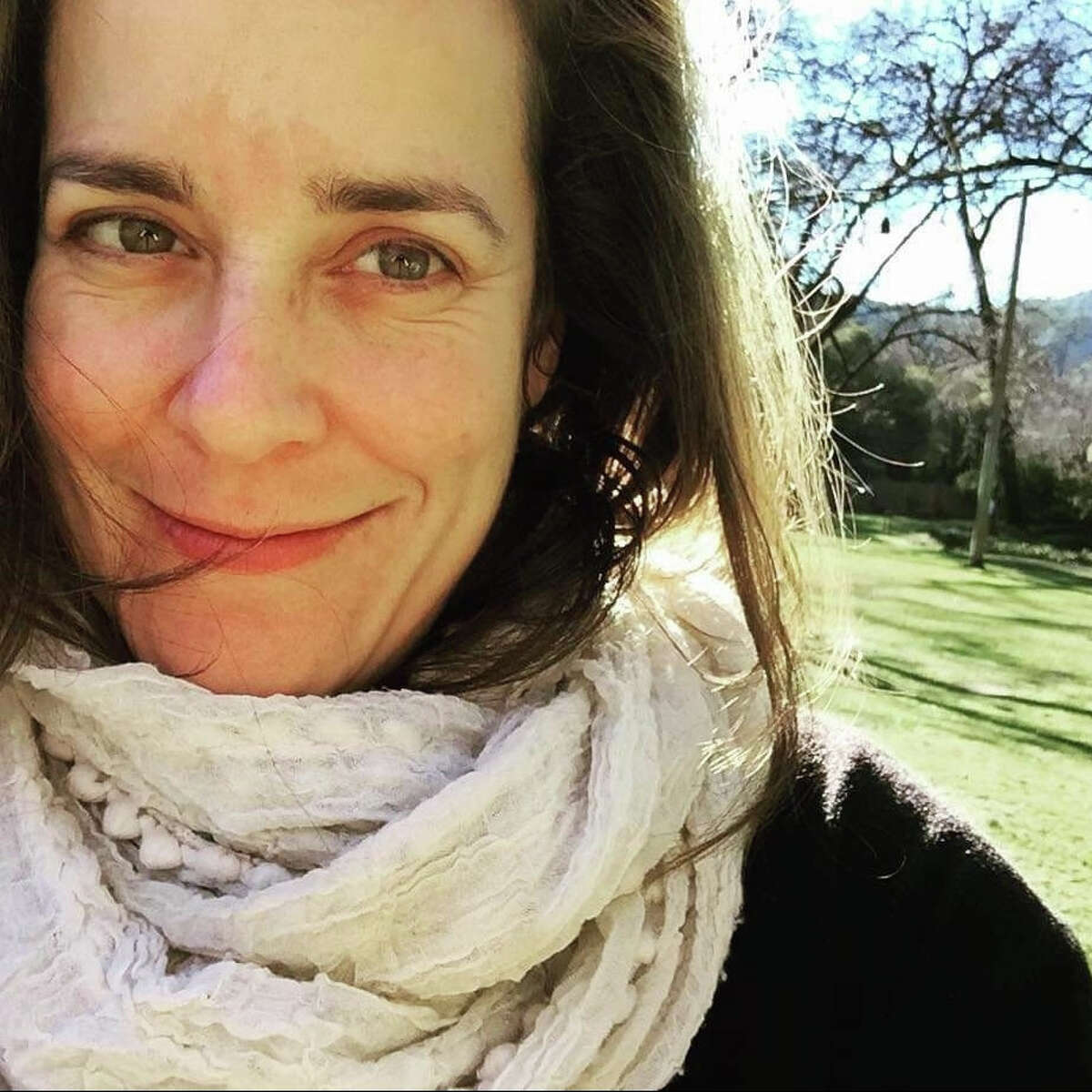
Jen Angel’s family and friends said that, even in the wake of her shocking death in Oakland after she was robbed and dragged from a car, she would not want anyone implicated in her death imprisoned. Provided by friends and family of Jen Angel
Days after Oakland bakery owner Jen Angel was dragged to her death in a brutal robbery gone wrong, her friends and family are grappling with the senselessness of the tragedy, but say they’re determined to let the world know what she would have wanted: for the perpetrators not to be jailed.
On Friday, Oakland police officials said they were investigating the incident as a homicide, and that they suspected two people were involved.
The confrontation unfolded in a matter of moments in a parking lot near a Wells Fargo bank in Uptown Oakland. Angel was leaving her parking spot when she was cornered by a pair of thieves, who smashed her car window and ran away with her belongings, her fiance, Ocean Mottley, said. As she chased after the car, she got caught in the vehicle’s door and was dragged more than 50 feet, her head smashing on the sidewalk as the car sped away.
Three days after the encounter, Angel lay in Highland Hospital, surrounded by dozens of friends, community members, and her fiance. After two failed attempts to remove her from life support, she was declared legally dead on Thursday.
As of Friday, the pair of suspects – whom police reportedly described as known to the department – had not been apprehended.
Friends who knew her not just as an esteemed culinary artist but also as a community organizer and punk journalist said given Angel’s lifelong commitment to restorative justice, she would not have wanted those responsible, if they are found, to be imprisoned.
“I think Jen would affirm that of course that’s what people have been trained to believe is the answer, to lock people up,” said Emily Harris, a close friend of Angel’s who works as a human rights and anti-prison director. “But we know that if the people who cause her harm are sent to jail, all we’re doing is perpetuating more harm.”
In announcing her death, her family and friends underscored what they said was her desire to eschew punishment if anyone were to be implicated in her death, writing that the family was committed to pursuing all the available alternatives to imprisonment.
“As a long-time social movement activist and anarchist, Jen did not believe in state violence, carceral punishment, or incarceration as an effective or just solution to social violence and inequity,” they wrote.
Harris, who described Angel as her first political mentor, said Angel believed that punishing people through mass incarceration, including the violence and isolation of imprisonment, only stymied real healing, both for the perpetrators of crimes and their victims.
“That doesn’t mean that there isn’t accountability that we would want for (the perpetrators),” said Harris. “What (that) could look like isn’t about putting a person into further harm … (but) understanding how we’re going to prevent this from happening to the next Jen Angel.”
Harris has already reached out to an Oakland-based nonprofit, Restore Oakland, that implements methods of restorative justice for situations not unlike what happened to Angel.
And even though friends like Harris say they’re outraged by the callousness of what happened to their cherished friend, they say an approach that leads with love and understanding — and a belief that “no one is disposable” — would be what Angel would have wanted.
These were convictions Angel embodied throughout every aspect of her life; as a small business owner in a neighborhood of Oakland challenged by violence and mounting racial inequity; as a fervent political advocate of alternative media; as the heartbeat of a Oakland community dedicated to collectivism; and as a punk teenager in the late 1980s branching out of a small town in Ohio through DIY zines.
Angel’s philosophy was kindled early on, as her early work as a writer showed. At 16, she created a fanzine that circulated widely across Ohio tackling issues of social justice, politics, identity, and sexual freedom. They were topics that resonated with Matt Leonard, a punk teenager who was living in Seattle and became penpals with Angel; They only met by accident in person more than 20 years later, after they both moved to the Bay Area.
“Someone’s personality through the written word may or may not be what they are like in person, but even more than I had expected from her writing, she exuded kindness and inclusivity. I can’t think of anyone I’ve ever met who has lived life with such integrity,” said Leonard.
“Jen was always building the world that she wanted to see,” said Pete Woiwode, a longtime friend and a local political organizer. “Where everyone has dignity and the resources they need to live a good and joyful life.”
When a speeding car crashed into the window of Angel’s bakery in 2019, causing extensive damage to her business, she did what she did in every moment of conflict, scarcity, or struggle, Woiwode said: She turned toward her community – for support, fundraisers, and guidance. She didn’t move her bakery and didn’t involve the police.
Friends say now, almost a week since the devastating encounter and a day after her death, they are thinking of the even-keeled community activist who encouraged people around her to lead with heart and explore their own anarchic ends.
They said they were imagining her in the kitchen making handmade gnocchi for dozens of friends as she nursed a glass of red wine; at their doorsteps with a box of their favorite cupcakes; taking vacations to warm places with her mother, as she had done just a month ago. They are also imagining that Angel would have known exactly what to say and what to do if it had been anyone else but her on that day.
“She’s the person who we would have gone to,” said Harris. “She is the person we have gone to.”
Annie is a reporter for The San Francisco Chronicle. She previously was a digital producer for The Chronicle’s Datebook section. She graduated from Cal Poly, San Luis Obispo in 2017 with a degree in journalism. During her time there, she spearheaded a culture column, produced radio pieces for NPR-affiliate station KCBX, and was a DJ and writer for KCPR, the campus radio station. Before joining the Chronicle, she was an associate producer at SFGATE and interned at VICE and Flood Magazine. She’s particularly interested in communities and scenes that are often misunderstood.
This is the tenth and final article in a series exploring the birth of quantum physics.
The world of the very small is like nothing we see in our everyday lives. We do not think of people or rocks being in more than one place at the same time until we look at them. They are where they are, in one place only, whether or not we know where that place is. Nor do we think of a cat locked in a box as being both dead and alive before we open the box to check. But such dualities are the norm for quantum objects like atoms or subatomic particles, or even larger ones like a cat. Before we look at them, these objects exist in what we call a superposition of states, each state with an assigned probability. When we measure many times their position or some other physical property, we will find it in one of such states with certain probabilities.
The crucial question that still haunts or inspires physicists is this: Are such possible states real — is the particle really in a superposition of states — or is this way of thinking just a mathematical trick we invented to describe what we measure with our detectors? To take a stance on this question is to choose a certain way of interpreting quantum mechanics and our take on the world. It is important to stress that quantum mechanics works beautifully as a mathematical theory. Itdescribes the experiments incredibly well. So we are not debating whether quantum mechanics works or not, because we are well past that point. The issue is whether it describes physical reality as it is or whether it does not, and we need something more if we are to arrive at a deeper understanding of how nature operates in the world of the very small.
States of thinking about the quantum world
Even though quantum mechanics works, the debate about its nature is fierce. The subject is vast, and I could not possibly do it justice here. My goal is to give a flavor of what is at stake. (For more details, see The Island of Knowledge.) There are many schools of thought and many nuanced arguments. But in its most general form, the schools line up along two ways of thinking about reality, and they both depend on the protagonist of the quantum world: the famous wavefunction.
In one corner stands those who think that the wavefunction is an element of reality, that it describes reality as it is. This way of thinking is sometimes called the ontic interpretation, from the term ontology, which in philosophy means the stuff that makes up reality. People who follow the ontic school would say that even though the wavefunction does not describe something palpable, like the particle’s position or its momentum, its absolute square represents the probability of measuring this or that physical property — the superpositions that it does describe are a part of reality.
In the other corner stand those who think that the wavefunction is not an element of reality. Instead, they see a mathematical construct that allows us to make sense of what we find in experiments. This way of thinking is sometimes called the epistemic interpretation, from the term epistemology in philosophy. In this view, measurements taken as objects and detectors interact and people read the results are the only way we can figure out what goes on at the quantum level, and the rules of quantum physics are fantastic at describing the results of these measurements. There is no need to attribute any kind of reality to the wavefunction. It simply represents potentialities — the possible outcomes of a measurement. (The great physicist Freeman Dyson once told me that he considered the whole debate a huge waste of time. To him, the wavefunction was never intended to be a real thing.)
Note the importance in all this of measurements. Historically, the epistemic view goes back to the Copenhagen interpretation, the hodgepodge of ideas spearheaded by Niels Bohr and carried forward by his younger, powerhouse colleagues such as Werner Heisenberg, Wolfgang Pauli, Pascual Jordan, and many others.
This school of thought is sometimes unjustly called the “shut up and calculate approach” due to its insistence that we do not know what the wavefunction is, only what it does. It tells us we accept the superpositions of possible states, coexisting before a measurement is made, as a pragmatic description of what we cannot know. Upon measurement, the system collapses into just one of the possible states: the one that is measured. Yes, it is weird to state that a wavy thing, spread across space, instantaneously goes into a single position (a position that lies within what is allowed by the Uncertainty Principle). Yes, it is weird to contemplate the possibility that the act of measurement somehow defines the state in which the particle is found. It introduces the possibility that the measurer has something to do with determining reality. But the theory works, and for all practical purposes, that is what really matters.
Forks in the quantum road
At its essence, the ontic vs. epistemic debate hides the ghost of objectivity in science. Onticists deeply dislike the notion that observers could have anything to do with determining the nature of reality. Is an experimenter really determining whether an electron is here or there? One ontic school known as the Many Worlds interpretation would say instead that all possible outcomes are realized when a measurement is performed. It’s just that they are realized in parallel worlds, and we only have direct access to one of them — namely, the one we exist in. In Borgean style, the idea here is that the act of measurement forks reality into a multiplicity of worlds, each realizing a possible experimental outcome. We do not need to speak of the collapse of the wavefunction since all outcomes are realized at once.
Unfortunately, these many worlds are not accessible to observers in different worlds. There have been proposals to test the Many Worlds experimentally, but the obstacles are huge, for example requiring the quantum superposition of macroscopic objects in the laboratory. It is also not clear how to assign different probabilities to the different worlds related to the outcomes of the experiment. For example, if the observer is playing a game of Russian roulette with options triggered by a quantum device, he will only survive in one world. Who would be willing to be the subject of this experiment? I certainly would not. Still, Many Worlds has many adherents.
Subscribe for counterintuitive, surprising, and impactful stories delivered to your inbox every Thursday
Fields marked with an * are required
Other ontic approaches require, for example, adding elements of reality to the quantum mechanical description. For example, David Bohm proposed expanding the quantum mechanical prescription by adding a pilot wave with the explicit role of guiding the particles into their experimental outcomes. The price for experimental certainty, here, is that this pilot wave acts everywhere at once, which in physics means that it has nonlocality. Many people, including Einstein, have found this impossible to accept.
The agent and the nature of reality
On the epistemic side, interpretations are just as varied. The Copenhagen interpretation leads the pack. It states that the wavefunction is not a thing in this world, but rather a mere tool to describe what is essential, the outcomes of experimental measurements. Views tend to diverge on the meaning of the observer, about the role the mind exerts on the act of measuring and thus on defining the physical properties of the object being observed, and on the dividing line between classical and quantum.
Due to space, I will only mention one more epistemic interpretation, Quantum Bayesianism, or as it is now called, QBism. As the original name implies, QBism takes the role of an agent as central. It assumes that probabilities in quantum mechanics reflect the current state of the agent’s knowledge or beliefs about the world, as he or she makes bets about what will happen in the future. Superpositions and entanglements are not states of the world, in this view, but expressions of how an agent experiences the world. As such, they are not as mysterious as they may sound. The onus of quantum weirdness is transferred to an agent’s interactions with the world.
A common criticism levied against QBism is its reliance on a specific agent’s relation to the experiment. This seems to inject a dose of subjectivism, placing it athwart the usual scientific goal of observer-independent universality. But as Adam Frank, Evan Thompson, and myself argue in The Blind Spot, a book to be published by MIT Press in 2024, this criticism relies on a view of science that is unrealistic. It is a view rooted in an account of reality outside of us, the agents that experience this reality. Perhaps that is what quantum mechanics’ weirdness has been trying to tell us all along.
What really matters
The beautiful discoveries of quantum physics reveal a world that continues to defy and inspire our imaginations. It continues to surprise us, just as it has done for the past century. As said by Democritus, the Greek philosopher who brought atomism to the forefront over 24 centuries ago, “In reality we know nothing, for truth is in the depths.” That may very well be the case, but we can keep trying, and that is what really matters.



 ©2023 Hearst Communications, Inc.