A Modest Proposal for Rethinking ‘Will You Marry Me?’—And What True Egalitarianism Might Look Like
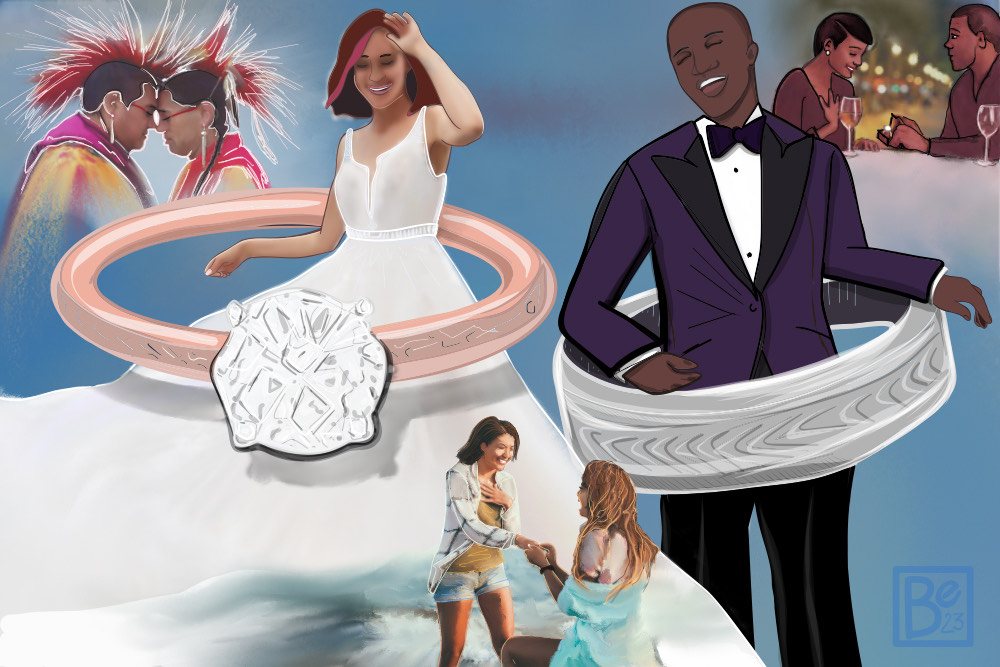
Sociologist Amanda Jayne Miller studies engagements and marriages. Drawing on her research, she imagines what—in a world where heterosexual couples increasingly prefer egalitarian relationships—a truly equal marriage proposal might look like. Illustration by Be Boggs.
by AMANDA JAYNE MILLER
FEBRUARY 13, 2023 (zocalopublicsquare.org)
Over 20 years ago, I covered my face with my hands and shyly told my (now) husband, “I’m moving away for graduate school and I’d love you to go with me, but I want us to be married first.” After he agreed that it seemed like a great idea, we shopped together for an engagement ring before he chose one of the two I had liked best. He offered it to me from one knee a couple of months later in a “surprise” engagement. As a wife, I tell others he proposed. But as a social scientist who studies marriages and engagements, I’m not so sure.
Young, heterosexual adults increasingly prefer egalitarian relationships in which both partners work for pay and contribute equitably to childcare and domestic labor—even as they struggle to realize this balance. Equalizing the proposal—a single moment in time rather than an ever-changing, lifetime negotiation of labor—should be much easier. Still, the proposal process remains overwhelmingly a male responsibility—and privilege. The stubbornness of this seemingly last acceptable bastion of male control has a lot to tell us about gender, relationships, and the division of labor in 21st-century America.
Sociologist Sharon Sassler and I interviewed a number of cohabiting couples between the ages of 18 and 34 who were considering or in the process of discussing marriage with their partners. We explicitly asked them which partner should propose. We received a fair number of responses such as “Whomever wants,” especially from college-educated men and women. But when we changed the question slightly to “Who do YOU want to propose if the two of you get married?”, the response was overwhelmingly the male partner. And this remained true even among those who otherwise viewed their relationships as equal.
When we asked why, men and women alike expressed concerns that “flopping the question” would call into question long-established gender roles. “It’s just a manly job,” explained Terrell.* “It’s just natural.”
Nathan, who was committed to sharing the housework and financial responsibilities equally with his partner, Andrea, had just proposed. Although Andrea had been the one to initiate their move-in, he said of the wedding proposal: “I think it’s the guys’ job, not to be chauvinistic and old-fashioned. But I think I would have felt kind of like a putz if she would have proposed to me.”
It stands to reason that if the male partner is the only one who can move the couples’ union into marriage, the female partner has only two choices: wait to be asked or leave.
Many women felt the same way. Tara told us, “I said, ‘If you don’t do it by a certain time, I’m just going to do it.’ But I don’t mean that, because I don’t want to do it ’cause then I’ll feel like masculine, and I don’t want to feel masculine.” Asked to elaborate, Tara said, “I’ve definitely been the initiator in some of our other circumstances that are traditionally I think male roles. This is just a big one. And because everyone will ask, ‘How did it happen?’ And I don’t want to say, ‘Well I did it.’ I can’t. It would kill me I think.”
Female proposals were not entirely out of the question. Dawn had planned to propose to Eric, only to be dissuaded by both her mother and Eric’s wishes. She said, “I’ve threatened to propose to him a few times. He’s like, ‘No, the man does it.’ I think he would feel unmanly if he didn’t do it. Yeah, I know that sounds weird from a guy that’s really liberal, but I just feel like he wants to—he wants control of the situation.”
Eric’s explanation was simpler: “I just see it as the guy should propose—the classic way.”
All of this, for one simple question. But the power to propose is not merely picking out the right place or time to ask those four little words. It’s the ability to determine the pace of the entire relationship. It stands to reason that if the male partner is the only one who can move the couples’ union into marriage, the female partner has only two choices: wait to be asked or leave. In this way, the man’s timeline determines the seriousness of the relationship, with couples often scarcely realizing just how much control that affords him. In fact, this kind of “hidden power,” which makes certain gender roles seem natural or inevitable, can continually and insidiously reinforce patriarchal norms without ever really being questioned.
So what’s a modern straight couple to do? What might a more equal proposal look like?
Well, for one, heterosexual cis couples could certainly look to their gay and lesbian counterparts. They often leave the power of the proposal to a decision reached through discussion before the partner who most wants to advance the relationship or who prefers to stand on ceremony is the one to propose. However, such a change requires overcoming centuries of tradition and internalized sexism.
More recently, “dual proposals” have begun to make the rounds on social media. In this model, each partner proposes, and each (hopefully!) accepts. Though, of course, this is not without its own challenges: Need the proposals occur on the same day? Who goes first? And is the engagement official after the first “Yes”?
As the age of marriage has risen over time in the U.S. to just over 30 for men and 28 for women and the institution has become more economically elite, a third possibility for the “new proposal” seems apparent. Far from being the blushing bride and fresh-faced groom leaving the family home, today’s betrothed couples typically already have established their own households—most often living together and perhaps even with children of their own. The pomp and circumstance of the engagement period that were designed to help provide a young couple with the goods necessary for setting up a new household, like hope chests, engagement parties, and bridal showers, are no longer a major factor. Now, marriage is a pinnacle marker of adulthood rather than its beginning. After discussing whether they wish to marry, couples could simply decide that they are engaged, no proposal needed. In fact, rather than spending money renting out the jumbotron or hiring the skywriter, they might choose to host a party announcing their engagement and celebrating all who have supported them along the way.
Human beings have agency—and with that, the power to choose to modify or reject social norms. If our society continues to promote the proposal as a nearly unquestionable male right, we will continue to go through great lengths to reach true egalitarianism. Regardless of when our engagement became “official,” in the end, my husband and I are no less married. We have crafted a life full of mutual admiration, equal sharing, and a whole lot of fun. The question will be, is the conventional start to that life together—a male proposal—a tradition that heterosexual couples want to eschew?
Saying “yes” to an overhaul of the marriage proposal might be beneficial not only to our own relationships, but for generations to come.
AMANDA JAYNE MILLERis a professor of sociology and director of faculty development at the University of Indianapolis and an OpEd Project Public Voices fellow. Her book (with co-author Sharon Sassler), Cohabitation Nation: Gender, Class, and the Remaking of Relationships, won the 2018 William J. Goode Book Award for family sociology.
Love is a feeling often associated with extreme hyperbole: It makes you blind, drives you mad, some even say it feels like being on drugs. It’s not surprising that one of the most intense human emotions is given such dramatic associations. What is surprising is that some of them may not be so exaggerated after all.
Over the past 15 years, scientists and anthropologists have made significant advances in understanding the ways feelings of romantic love affect the brain. What they’ve found so far manages to put scientific merit behind the centuries of folklore.
One of the most notable breakthroughs was found during a 2005 study conducted by biological anthropologist Helen Fisher, PhD, a senior research fellow at the Kinsey Institute. In this study, Fisher produced the first functional MRI images of the brains of people in love.
“Hunger and thirst keep you alive today; romantic love begins the mating process and eventually sends your DNA into tomorrow.”
When Fisher put people in the study in a brain scanner, she found that they all experienced activity in a particular brain region called the ventral tegmental area (VTA), a part of the brain that produces the feel-good neurotransmitter dopamine. The VTA is also a crucial component of the brain’s reward system, a collection of brain regions and pathways that are activated when exposed to rewarding stimuli.
“What’s interesting to me is that the VTA lies right next to the part of the brain that orchestrates thirst and hunger, both of which keep you alive,” says Fisher. This close proximity led her to classify romantic love as a basic human need rather than an emotion.
“There are a lot of emotions attached to romantic love, but the focus, motivation, craving, and energy that come from the VTA and this dopamine system is a survival mechanism,” she says. “Hunger and thirst keep you alive today; romantic love begins the mating process and eventually sends your DNA into tomorrow.”
Fisher theorizes that humans have evolved three distinctly different brain systems that contribute to mating and reproduction: lust (sex drive), romantic love, and attachment. According to Fisher, these three systems can operate independently or together.
For example, when you develop a companionate type of love with someone like a family member or a close friend, it’s possible for the attachment brain system to activate without also spurring feelings of lust or romantic love.
It’s when the three systems operate in tandem that you experience the all-consuming type of love. Romantic attraction sparks activity in the VTA, increasing dopamine production. Dopamine promotes high levels of testosterone, fueling the sex drive. And during sex, the hormones oxytocin and vasopressin are released, triggering feelings of attachment.
While love sends parts of the brain into overdrive, it can also slow down activity in other areas. “When you’re happily in love, brain regions in the front of the head, in the prefrontal cortex, begin to deactivate,” says Fisher. This is the part of the brain best known for providing executive functions like decision making, impulse control, and acting with long-term goals in mind.
Fisher also points out that people are biologically wired to remember negative experiences over positive ones. However, when you’re falling in love, activity in the ventromedial prefrontal cortex — the brain region linked with negativity bias — also reduces. “You’re able to overlook what you don’t like about this potential partner and focus on what you do,” she says.
Scientists have also found that love’s effect on the brain can really make a person feel high. Cocaine, marijuana, heroin, MDMA, and alcohol all work in a similar way to romantic love, by boosting feel-good dopamine levels and activating the brain’s reward system.
The manic, obsessive feelings of love are most common in early stages. As infatuation evolves into long-term love, the brain is eventually able to gain back some control. How exactly it does this is an area that has yet to be thoroughly studied, says Bianca Acevedo, PhD, a research scientist at the University of California, Santa Barbara. But experts speculate it could be connected to hedonic adaptation, a human tendency to return to a relatively stable state despite major positive or negative life changes.
Although the “butterflies” eventually go away, long-term love does not fade into nothing. In fact, far from it. In a 2011 study, Acevedo and Arthur Aron, PhD, a research professor at Stony Brook University, compared the brain activity of people who had recently fallen in love to the brain activity of people who reported being happily in love for an average of 21 years.
When the latter group was shown images of their partner, scientists saw the same activation in the dopamine-rich areas of the brain as the couples who reported being newly in love. This suggests that the feel-good effects of love can be sustained even after the brain adapts to a new love phase.
The verdict is still out on exactly what keeps some couples happy for so long, but Acevedo believes one key component is regular sex. “From looking at the activation related to sexual satisfaction and frequency, we’re pretty certain that satisfying sex plays a significant role in the maintenance of romantic love,” she says.
In the end, it all links back to Fisher’s three systems. Once you reboot the sex drive, feelings of romantic love and attachment are also likely to kick into action. With these three systems back in play, even couples who’ve been together for decades can begin to feel newly in love all over again.
When we ditch our assumptions, new ideas can enter the world, says filmmaker Zach King. In an entertaining talk full of props and surprises, King shows us the trick to regaining our sense of childlike wonder through the power of storytelling — and a bit of magic.Read transcript
This talk was presented at an official TED conference. TED’s editors chose to feature it for you.
Check out how Zach King uses childlike wonder to create magical videos.
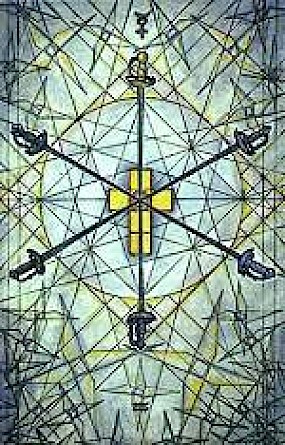
The Lord of Science appears in a reading when we have passed through a stormy or difficult time, and into the safety of a sheltered harbour, where we can recuperate, and consider the difficulties which have arisen around us.
Often we will have passed through a period of dreadful confusion – and frequently a time of emotional suffering. But this card indicates that, at least for the moment, pressure has eased, and we can try to sort out what we really feel. Frequently we need first to rest until we feel refreshed, but eventually we will be required to assess events and make new decisions for our future.
Because we will find ourselves seeing things more clearly, difficult and demanding decisions will be easier to make. We will find ourselves with a more clear overview of the issues we are facing. And we will be able to make choices which bring us peace of mind and happiness.
Expect to find greater objectivity, clarity and new perspectives as a result of the 6 of Swords. This is a card that indicates a healthy balance between the emotions and the intellect, where we can think through even delicate situations, with detached impartiality.
“The perilous time for the most highly gifted is not youth,” the visionary Elizabeth Peabody, who coined the term transcendentalism, wrote in her timeless admonition against the trap of complacency. “The perilous season is middle age, when a false wisdom tempts them to doubt the divine origin of the dreams of their youth.”
A century and a half after her, contemplating how to keep life from becoming a parody of itself, Simone de Beauvoir observed: “In old age we should wish still to have passions strong enough to prevent us turning in on ourselves.”
Moving through the stages of life and meeting each on its own terms is the supreme art of living — the ultimate test of self-respect and self-love. Often, what most blunts our vitality is the tendency for the momentum of a past stage to steer the present one, even though our priorities and passions have changed beyond recognition.
How to honor the unfolding of life without a punitive clinging to past selves is what Nick Cave explores in a passage from Faith, Hope and Carnage — one of my favorite books of 2022.
Nick Cave in Newcastle, 2022.
At sixty-five, he reflects:
We’re often led to believe that getting older is in itself somehow a betrayal of our idealistic younger self, but sometimes I think it might be the other way around. Maybe the younger self finds it difficult to inhabit its true potential because it has no idea what that potential is. It is a kind of unformed thing running scared most of the time, frantically trying to build its sense of self — This is me! Here I am! — in any way that it can. But then time and life come along, and smash that sense of self into a million pieces.
Then comes the reassembled self, the self you have to put back together. You no longer have to devote time to finding out what you are, you are just free to be whatever you want to be, unimpeded by the incessant needs of others. You somehow grow into the fullness of your humanity, form your own character, become a proper person — I don’t know, someone who has become a part of things, not someone separated from or at odds with the world.
The Star (or Daughter of the Firmament) is numbered seventeen and is probably the most optimistic and beautiful card in the deck. A beautiful young woman, often naked, is depicted pouring water from a jug into the ground or into a pool by her feet. There are stars in the sky above her.
Stars have long been seen as symbols of hope, regeneration, vision and new life. When this card appears, you know somehow that life is just about to become easier and brighter. Life’s forces combine to assist rather than hinder.
Here is the truth about our power – we can join the solid earth of material existence with the flowing waters of spirit and create within ourselves a Universe. We have removed self-criticism and concentrated instead on our skills and strengths. When we regard ourselves with love, humour, tenderness and sympathy, we access the God and Goddess within and we are transformed.
Lewis Howes Feb 5, 2017 Sign up for my FREE newsletter & get a dose of inspiration from our world-class guests, learn how to improve your life! Download podcast episodes a week early! http://www.lewishowes.com/pod Thank you for Watching this powerful interview with JJ Virgin! New Interviews, and Inspirational videos will be posted every Monday and Wednesday! Subscribe to the channel here: https://goo.gl/9xwmmV
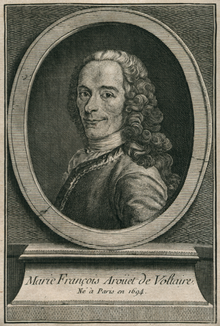
Voltaire was a versatile and prolific writer, producing works in almost every literary form, including plays, poems, novels, essays, histories, and scientific expositions. He wrote more than 20,000 letters and 2,000 books and pamphlets.[10] Voltaire was one of the first authors to become renowned and commercially successful internationally. He was an outspoken advocate of civil liberties and was at constant risk from the strict censorship laws of the Catholic French monarchy. His polemics witheringly satirized intolerance, religious dogma, and the French institutions of his day. His best-known work and magnum opus, Candide, is a novella which comments on, criticizes, and ridicules many events, thinkers, and philosophies of his time.
Early life
François-Marie Arouet was born in Paris, the youngest of the five children of François Arouet (1649–1722), a lawyer who was a minor treasury official, and his wife, Marie Marguerite Daumard (c. 1660–1701), whose family was on the lowest rank of the French nobility.[11] Some speculation surrounds Voltaire’s date of birth, because he claimed he was born on 20 February 1694 as the illegitimate son of a nobleman, Guérin de Rochebrune or Roquebrune.[12] Two of his older brothers—Armand-François and Robert—died in infancy, and his surviving brother Armand and sister Marguerite-Catherine were nine and seven years older, respectively.[13] Nicknamed “Zozo” by his family, Voltaire was baptized on 22 November 1694, with François de Castagnère, abbé de Châteauneuf [fr], and Marie Daumard, the wife of his mother’s cousin, standing as godparents.[14] He was educated by the Jesuits at the Collège Louis-le-Grand (1704–1711), where he was taught Latin, theology, and rhetoric;[15] later in life he became fluent in Italian, Spanish, and English.[16]
By the time he left school, Voltaire had decided he wanted to be a writer, against the wishes of his father, who wanted him to become a lawyer.[17] Voltaire, pretending to work in Paris as an assistant to a notary, spent much of his time writing poetry. When his father found out, he sent Voltaire to study law, this time in Caen, Normandy. But the young man continued to write, producing essays and historical studies. Voltaire’s wit made him popular among some of the aristocratic families with whom he mixed. In 1713, his father obtained a job for him as a secretary to the new French ambassador in the Netherlands, the marquis de Châteauneuf [fr], the brother of Voltaire’s godfather.[18] At The Hague, Voltaire fell in love with a French Protestant refugee named Catherine Olympe Dunoyer (known as ‘Pimpette’).[18] Their affair, considered scandalous, was discovered by de Châteauneuf and Voltaire was forced to return to France by the end of the year.[19]
Voltaire was imprisoned in the Bastille from 16 May 1717 to 15 April 1718 in a windowless cell with ten-foot-thick walls.[20]
Most of Voltaire’s early life revolved around Paris. From early on, Voltaire had trouble with the authorities for critiques of the government. As a result, he was twice sentenced to prison and once to temporary exile to England. One satirical verse, in which Voltaire accused the Régent of incest with his daughter, resulted in an eleven-month imprisonment in the Bastille.[21] The Comédie-Française had agreed in January 1717 to stage his debut play, Œdipe, and it opened in mid-November 1718, seven months after his release.[22] Its immediate critical and financial success established his reputation.[23] Both the Régent and King George I of Great Britain presented Voltaire with medals as a mark of their appreciation.[24]
He mainly argued for religious tolerance and freedom of thought. He campaigned to eradicate priestly and aristo-monarchical authority, and supported a constitutional monarchy that protects people’s rights.[25][26]
Arouet adopted the name Voltaire in 1718, following his incarceration at the Bastille. Its origin is unclear. It is an anagram of AROVET LI, the Latinized spelling of his surname, Arouet, and the initial letters of le jeune (“the young”).[27] According to a family tradition among the descendants of his sister, he was known as le petit volontaire (“determined little thing”) as a child, and he resurrected a variant of the name in his adult life.[28] The name also reverses the syllables of Airvault, his family’s home town in the Poitou region.[29]
Richard Holmes[30] supports the anagrammatic derivation of the name, but adds that a writer such as Voltaire would have intended it to also convey connotations of speed and daring. These come from associations with words such as voltige (acrobatics on a trapeze or horse), volte-face (a spinning about to face one’s enemies), and volatile (originally, any winged creature). “Arouet” was not a noble name fit for his growing reputation, especially given that name’s resonance with à rouer (“to be beaten up”) and roué (a débauché).
In a letter to Jean-Baptiste Rousseau in March 1719, Voltaire concludes by asking that, if Rousseau wishes to send him a return letter, he do so by addressing it to Monsieur de Voltaire. A postscript explains: “J’ai été si malheureux sous le nom d’Arouet que j’en ai pris un autre surtout pour n’être plus confondu avec le poète Roi“, (“I was so unhappy under the name of Arouet that I have taken another, primarily so as to cease to be confused with the poet Roi.”)[31] This probably refers to Adenes le Roi, and the ‘oi’ diphthong was then pronounced like modern ‘ouai’, so the similarity to ‘Arouet’ is clear, and thus, it could well have been part of his rationale. Voltaire is known also to have used at least 178 separate pen names during his lifetime.[32]
Career
Early fiction
Voltaire’s next play, Artémire, set in ancient Macedonia, opened on 15 February 1720. It was a flop and only fragments of the text survive.[33] He instead turned to an epic poem about Henry IV of France that he had begun in early 1717.[34] Denied a licence to publish, in August 1722 Voltaire headed north to find a publisher outside France. On the journey, he was accompanied by his mistress, Marie-Marguerite de Rupelmonde, a young widow.[35]
At Brussels, Voltaire and Rousseau met up for a few days, before Voltaire and his mistress continued northwards. A publisher was eventually secured in The Hague.[36] In the Netherlands, Voltaire was struck and impressed by the openness and tolerance of Dutch society.[37] On his return to France, he secured a second publisher in Rouen, who agreed to publish La Henriade clandestinely.[38] After Voltaire’s recovery from a month-long smallpox infection in November 1723, the first copies were smuggled into Paris and distributed.[39] While the poem was an instant success, Voltaire’s new play, Mariamne, was a failure when it first opened in March 1724.[40] Heavily reworked, it opened at the Comédie-Française in April 1725 to a much-improved reception.[40] It was among the entertainments provided at the wedding of Louis XV and Marie Leszczyńska in September 1725.[40]
Great Britain
In early 1726, the aristocratic chevalier de Rohan-Chabot taunted Voltaire about his change of name, and Voltaire retorted that his name would win the esteem of the world, while Rohan would sully his own.[41] The furious Rohan arranged for his thugs to beat up Voltaire a few days later.[42] Seeking redress, Voltaire challenged Rohan to a duel, but the powerful Rohan family arranged for Voltaire to be arrested and imprisoned without trial in the Bastille on 17 April 1726.[43][44] Fearing indefinite imprisonment, Voltaire asked to be exiled to England as an alternative punishment, which the French authorities accepted.[45] On 2 May, he was escorted from the Bastille to Calais and embarked for Britain.[46]
Elémens de la philosophie de Neuton, 1738
In England, Voltaire lived largely in Wandsworth, with acquaintances including Everard Fawkener.[47] From December 1727 to June 1728 he lodged at Maiden Lane, Covent Garden, now commemorated by a plaque, to be nearer to his British publisher.[48] Voltaire circulated throughout English high society, meeting Alexander Pope, John Gay, Jonathan Swift, Lady Mary Wortley Montagu, Sarah, Duchess of Marlborough, and many other members of the nobility and royalty.[49] Voltaire’s exile in Great Britain greatly influenced his thinking. He was intrigued by Britain’s constitutional monarchy in contrast to French absolutism, and by the country’s greater freedom of speech and religion.[50] He was influenced by the writers of the time, and developed an interest in English literature, especially Shakespeare, who was still little known in continental Europe.[51] Despite pointing out Shakespeare’s deviations from neoclassical standards, Voltaire saw him as an example for French drama, which, though more polished, lacked on-stage action. Later, however, as Shakespeare’s influence began growing in France, Voltaire tried to set a contrary example with his own plays, decrying what he considered Shakespeare’s barbarities. Voltaire may have been present at the funeral of Isaac Newton,[a] and met Newton’s niece, Catherine Conduitt.[48] In 1727, he published two essays in English, Upon the Civil Wars of France, Extracted from Curious Manuscripts and Upon Epic Poetry of the European Nations, from Homer Down to Milton.[48] Voltaire also published a letter about the Quakers after he attended one of their services.[52]
After two and a half years in exile, Voltaire returned to France, and after a few months in Dieppe, the authorities permitted him to return to Paris.[53] At a dinner, French mathematician Charles Marie de La Condamine proposed buying up the lottery that was organized by the French government to pay off its debts, and Voltaire joined the consortium, earning perhaps a million livres.[54] He invested the money cleverly and on this basis managed to convince the Court of Finances of his responsible conduct, allowing him to take control of a trust fund inherited from his father. He was now indisputably rich.[55][56]
Further success followed in 1732 with his play Zaïre, which when published in 1733 carried a dedication to Fawkener praising English liberty and commerce.[57] He published his admiring essays on British government, literature, religion, and science in Letters Concerning the English Nation (London, 1733).[58] In 1734, they were published in Rouen as Lettres philosophiques, causing a huge scandal.[59][b] Published without approval of the royal censor, the essays lauded British constitutional monarchy as more developed and more respectful of human rights than its French counterpart, particularly regarding religious tolerance. The book was publicly burnt and banned, and Voltaire was again forced to flee Paris.[25]
Château de Cirey
In the frontispiece to Voltaire’s book on Newton’s philosophy, Émilie du Châtelet appears as Voltaire’s muse, reflecting Newton’s heavenly insights down to Voltaire.[60]
In 1733, Voltaire met Émilie du Châtelet (Marquise du Châtelet), a mathematician and married mother of three, who was 12 years his junior and with whom he was to have an affair for 16 years.[61] To avoid arrest after the publication of Lettres, Voltaire took refuge at her husband’s château at Cirey on the borders of Champagne and Lorraine.[62] Voltaire paid for the building’s renovation,[63] and Émilie’s husband sometimes stayed at the château with his wife and her lover.[64] The intellectual paramours collected around 21,000 books, an enormous number for the time.[65] Together, they studied these books and performed scientific experiments at Cirey, including an attempt to determine the nature of fire.[66]
Having learned from his previous brushes with the authorities, Voltaire began his habit of avoiding open confrontation with the authorities and denying any awkward responsibility.[67] He continued to write plays, such as Mérope (or La Mérope française) and began his long researches into science and history. Again, a main source of inspiration for Voltaire were the years of his British exile, during which he had been strongly influenced by the works of Isaac Newton. Voltaire strongly believed in Newton’s theories; he performed experiments in optics at Cirey,[68] and was one of the promulgators of the famous story of Newton’s inspiration from the falling apple, which he had learned from Newton’s niece in London and first mentioned in his Letters.[48]
In the fall of 1735, Voltaire was visited by Francesco Algarotti, who was preparing a book about Newton in Italian.[69] Partly inspired by the visit, the Marquise translated Newton’s Latin Principia into French, which remained the definitive French version into the 21st century.[25] Both she and Voltaire were also curious about the philosophy of Gottfried Leibniz, a contemporary and rival of Newton. While Voltaire remained a firm Newtonian, the Marquise adopted certain aspects of Leibniz’s critiques.[25][70] Voltaire’s own book Elements of the Philosophy of Newton made the great scientist accessible to a far greater public, and the Marquise wrote a celebratory review in the Journal des savants.[25][71] Voltaire’s work was instrumental in bringing about general acceptance of Newton’s optical and gravitational theories in France, in contrast to the theories of Descartes.[25][72]
Voltaire and the Marquise also studied history, particularly the great contributors to civilization. Voltaire’s second essay in English had been “Essay upon the Civil Wars in France”. It was followed by La Henriade, an epic poem on the French King Henri IV, glorifying his attempt to end the Catholic-Protestant massacres with the Edict of Nantes, which established religious toleration. There followed a historical novel on King Charles XII of Sweden. These, along with his Letters on the English, mark the beginning of Voltaire’s open criticism of intolerance and established religions.[citation needed] Voltaire and the Marquise also explored philosophy, particularly metaphysical questions concerning the existence of God and the soul. Voltaire and the Marquise analyzed the Bible and concluded that much of its content was dubious.[73] Voltaire’s critical views on religion led to his belief in separation of church and state and religious freedom, ideas that he had formed after his stay in England.
In August 1736, Frederick the Great, then Crown Prince of Prussia and a great admirer of Voltaire, initiated a correspondence with him.[74] That December, Voltaire moved to Holland for two months and became acquainted with the scientists Herman Boerhaave and Willem ‘s Gravesande.[75] From mid-1739 to mid-1740 Voltaire lived largely in Brussels, at first with the Marquise, who was unsuccessfully attempting to pursue a 60-year-old family legal case regarding the ownership of two estates in Limburg.[76] In July 1740, he traveled to the Hague on behalf of Frederick in an attempt to dissuade a dubious publisher, van Duren, from printing without permission Frederick’s Anti-Machiavel.[77] In September Voltaire and Frederick (now King) met for the first time in Moyland Castle near Cleves and in November Voltaire was Frederick’s guest in Berlin for two weeks,[78] followed by a meeting in September 1742 at Aix-la-Chapelle.[79] Voltaire was sent to Frederick’s court in 1743 by the French government as an envoy and spy to gauge Frederick’s military intentions in the War of the Austrian Succession.[80]
Though deeply committed to the Marquise, Voltaire by 1744 found life at her château confining. On a visit to Paris that year, he found a new love—his niece. At first, his attraction to Marie Louise Mignot was clearly sexual, as evidenced by his letters to her (only discovered in 1957).[81][82] Much later, they lived together, perhaps platonically, and remained together until Voltaire’s death. Meanwhile, the Marquise also took a lover, the Marquis de Saint-Lambert.[83]



 Love is a feeling often associated with extreme hyperbole: It makes you blind,



 We’re often led to believe that getting older is in itself somehow a betrayal of our idealistic younger self, but sometimes I think it might be the other way around. Maybe the younger self finds it difficult to inhabit its true potential because it has no idea what that potential is. It is a kind of unformed thing running scared most of the time, frantically trying to build its sense of self — This is me! Here I am! — in any way that it can. But then time and life come along, and smash that sense of self into a million pieces.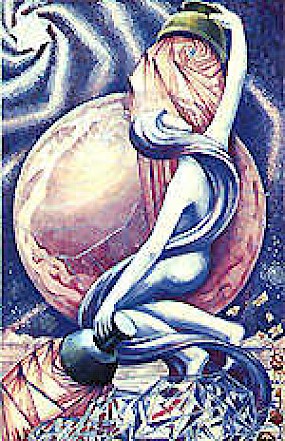




_-002.jpg)


_avec_agrandissement.jpg)