
Monthly Archives: January 2023

How to Be Less Harsh with Yourself (and Others): Ram Dass on the Spiritual Lessons of Trees
By Maria Popova (themarginalian.org)
Hermann Hesse believed that trees are our greatest spiritual teachers. Walt Whitman cherished them as paragons of authenticity amid a world of mere appearances. Remembering his most beloved friend, he wrote that she was “true, honest; beautiful as a tree is tall, leafy, rich, full, free — is a tree.” I too consider the people I most love my human trees — people firmly rooted in a foundation of moral beauty, relentlessly reaching for the light, bent into their particular beloved shape by the demands and traumas of their particular lives.
Ram Dass
A century after Whitman, Ram Dass (April 6, 1931–December 22, 2019) drew on the human-tree analogy in a soulful invitation to treat ourselves — and each other — with the same nonjudgmental spaciousness with which we regard trees. Answering a question about how we can judge ourselves less harshly, he writes:
Part of it is observing oneself more impersonally… When you go out into the woods and you look at trees, you see all these different trees. And some of them are bent, and some of them are straight, and some of them are evergreens, and some of them are whatever. And you look at the tree and you allow it. You see why it is the way it is. You sort of understand that it didn’t get enough light, and so it turned that way. And you don’t get all emotional about it. You just allow it. You appreciate the tree.
The minute you get near humans, you lose all that. And you are constantly saying, “You’re too this, or I’m too this.” That judging mind comes in. And so I practice turning people into trees. Which means appreciating them just the way they are.

Art by Corinna Luyken from The Tree in Me
In his landmark 1971 book Be Here Now (public library), he leans on trees for a different metaphor in considering the stages of our spiritual development:
Our spiritual growth, Ram Dass observes, follows a similar pattern. The fence is the community of support, sangha in the Buddhist tradition: the kindred spirits with whom we surround ourselves when we are still vulnerable, still finding our rootedness — a lovely reminder of that mycelial connection that binds us to each other, just like the mycorrhizal network undergirds the forest with its web of communication and nutrition.
Complement with Paul Klee on how an artist is like a tree and artist Art Young’s wondrous century-old silhouettes of trees at night as a lens on human experience, then revisit Ram Dass on love.
HT swissmiss
A Responsibility to Wonder: Pioneering Neuroscientist Charles Scott Sherrington on the Spirituality of Nature
By Maria Popova (themarginalian)

To be fully awake to life is a matter of ceaselessly digging for that “submerged sunrise of wonder” — a matter of living, in the astronomer-poet Rebecca Elson’s immortal words, with “a responsibility to awe.” Out of that responsibility arises a kind of quietly rapturous spirituality — a way of moving through the world wonder-smitten by reality.
The great English neurophysiologist Charles Scott Sherrington (November 27, 1857–March 4, 1952), laureate of the 1932 Nobel Prize for his groundbreaking discoveries of the function of neurons, termed this orientation “Natural Religion” and explored its rewards in his 1937 Gifford Lectures, later published as Man on His Nature (public library | public domain) — a book composed in the epoch when every woman was a “man,” yet replete with dazzling universal wisdom on our human experience of being material creatures moving through a cold cosmos as living hearths of consciousness.
Charles Scott Sherrington
Sherrington’s Natural Religion is rooted in Natural Science — in the living reality of this world, governed by the fundamental laws of the universe. Tracing the astonishing process by which we came to be — primordial matter becoming atoms becoming living cells becoming bodies crowned with minds — he writes:

Double rainbow from Les phénomènes de la physique, 1868. (Available as a print.)
Wonder, Sherrington argues, is the appropriate mood with which to approach the workings of our improbable planet and their echo in the workings of the exquisite cathedral of chemistry and chance that is a human being. That is where traditional religions have both thrived and fallen short, emotionally compelling in their humanistic self-reference, yet limiting of wonder, which has to do with what lies beyond ourselves:

Plate from An Original Theory or New Hypothesis of the Universe by Thomas Wright, 1750. (Available as a print, as a face mask, and as stationery cards.)
With an eye to the “sacred curiosity” that is the hallmark of human consciousness, Sherrington mounts a defense of the emotional dimension of a spirituality grounded in science:
Complement with quantum pioneer Erwin Schrödinger, who was inspired by Sherrington, on mind and matter and the great Lewis Thomas on the miraculous in a material world, then revisit Rachel Carson, writing the year Sherrington returned his borrowed stardust to the universe, on the sense of wonder as the antidote to self-destruction.
How to Be with Each Other’s Suffering: Elie Wiesel on the Antidote to Our Paralysis in the Face of World-Overwhelm
By Maria Popova (themarginalian.org)

There is a phenomenon in forests known as inosculation — the fusing together of separate trees into a single organism after their branches or roots have been entwined for a long time. Sometimes, one of the former individuals may be cut or broken at the base, but it remains fully alive through its sinewy fusion with the former other. This is no longer symbiosis between two distinct organisms but a hybrid new organism fully sharing in the resources of life.
Everything alive has the potential for inosculation in one form or another. That, perhaps, is what the great naturalist John Muir meant when he observed that when we try to pick out anything by itself, we find it hitched to everything else in the universe.” To be proper citizens of that universe is to recognize ourselves as particles of it, indelibly linked to every other particle — particles each minuscule but majestic with possibility; it is to recognize that, as Dr. King observed, “we are caught in an inescapable network of mutuality.”
Few have captured the responsibility and power of that mutuality more passionately, nor lived them more fully, than Holocaust survivor and Nobel Peace Prize laureate Elie Wiesel (September 30, 1928–July 2, 2016).
Elie Wiesel
In Conversations with Elie Wiesel (public library), the Biblical question Cain poses to God after killing Abel — “Am I my brother’s keeper?” — becomes a lens on what makes for brotherhood in the broadest humanistic sense. Wiesel reflects:
Whenever we quiet the voices of so-called civilization — the voices of selfing and hard-edged individualism — that sense of the interconnectedness of life and of lives becomes audible. And yet we are habitually deafened to it by a kind of desensitization — the kind the poet May Sarton so poignantly captured as she contemplated how to live with tenderness in a harsh world. Much of it, Wiesel observes, is a form of paralysis that comes from the sheer mismatch between the scale of the problems the world hurls at us and our individual locus of agency — a particular pathology of the information age, further exploited by the news media and their crisis-mongering. Wiesel considers the consequence:
With an eye to a central problem of our time — how to live with wisdom in the age of information — he adds:
He traces the emotional attrition that happens when we are bombarded with news of crises and traumatic events — at first deeply moved and invested in allaying the suffering we see, we grow exhausted by trauma-sighting and help-canvassing, just as news of the latest calamity or injustice is piling atop the previous one:

Art by Kay Nielsen from East of the Sun and West of the Moon, 1914. (Available as a print and as stationery cards.)
The antidote to this paralysis, Wiesel argues, is small action — a testament to Hannah Arendt’s conviction that “the smallest act in the most limited circumstances bears the seed of… boundlessness, because one deed, and sometimes one word, suffices to change every constellation.” A century and a half after Van Gogh insisted that “however meaningless and vain, however dead life appears, the man of faith, of energy, of warmth… steps in and does something,” Wiesel insists on choosing from among the innumerable causes soliciting your attention and aid just one in which to get involved — an act seemingly small that, on the cumulative scale of humanity, moves the world.
The greatest challenge facing us all, however, is how to be with each other’s suffering. In consonance with the great Zen teacher Thich Nhat Hanh’s insight that “when you love someone, the best thing you can offer that person is your presence,” Wiesel considers the wellspring of universal love and brotherhood:
[…]
If there is a governing precept in my life, it is that: If somebody needs me, I must be there.

Brother’s keeper — inosculation at work. (Photograph: @lily_kdwong.)
Couple this fragment of the wholly vitalizing Conversations with Elie Wiesel with Wiesel’s stirring Nobel Peace Prize acceptance speech, then revisit Nick Cave on the antidote to our existential helplessness and the pioneering X-ray crystallographer and peace activist Kathleen Lonsdale on moral courage and our personal power.
Gloria Naylor on feeling
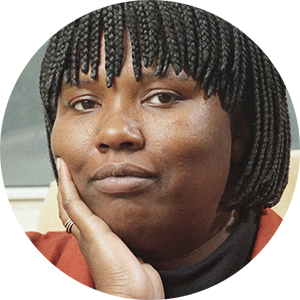
“I don’t believe that life is supposed to make you feel good, or make you feel miserable either. Life is just supposed to make you feel.”
–GLORIA NAYLOR
Born this week in 1950
Gloria Naylor (January 25, 1950 – September 28, 2016) was an American novelist, known for novels including The Women of Brewster Place, Linden Hills and Mama Day. Wikipedia
(Lithub.com)
Virginia Woolf on complete emotions

“I can only note that the past is beautiful because one never realises an emotion at the time. It expands later, and thus we don’t have complete emotions about the present, only about the past.”
–VIRGINIA WOOLF
Born this week in 1882
Adeline Virginia Woolf (January 25, 1882 – March 28, 1941) was an English writer, considered one of the most important modernist 20th-century authors and a pioneer in the use of stream of consciousness as a narrative device. Wikipedia
(Lithub.com)
Tarot Card for January 23: The Seven of Swords
The Seven of Swords
The Lord of Futility represents the times in life where we feel too overwhelmed and doubtful to act decisively toward our problems. It will usually appear when there are difficult decisions to be made, or when situations arise that require we take action. Because we are weary, feeling over-stressed and helpless, we do nothing. As a result, of course, things inevitably get worse.
Sometimes the card will come up because we have such a poor view of ourselves. We start to believe that nothing we do could possibly make a difference to the unhappy circumstances we find ourselves in. If not challenged, this attitude will lead us into being poor-little-me’s, when we adopt a victim mentality, and secretly expect everybody else to sort things out for us.
When feeling the effects of the Lord of Futility, we are often ready to make unsuitable compromises in order to try to ease the pressure we experience. We can be more easily impressed by other people’s opinions, seeking to please them – often at our own expense. We vacillate, unable to stick to any decision we make. And all of this does nothing much more than increase our problems.
Neither of these options is viable, if we are to live a happy love-filled life, is it? So when this card appears in a reading for ourselves, we need to be prepared to commit ourselves to a course of action and then follow through. Even if it transpires that the choice we make could have been bettered, any choice is better than no choice at all, when the alternative is total inertia.
Often fear will be a big issue – fear of doing something wrong, fear of taking responsibility, fear of being even more hurt and feeling worse than we already do. In the end, we simply have to take our courage in both hands and, like The Fool, take that leap forward. The fact that we have acted will help us to break from of the Lord of Futility and to move on.
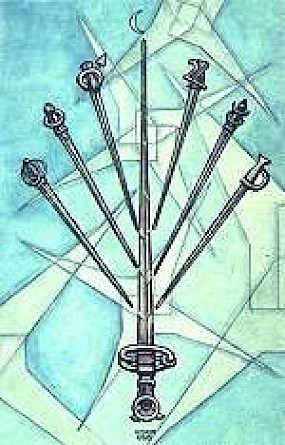
(via angelpaths.com and Alan Blackman)
Joseph Campbell on life
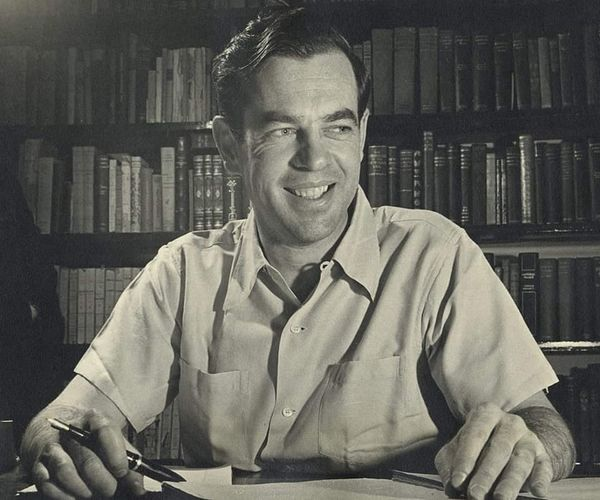
Life is like arriving late for a movie, having to figure out what was going on without bothering everybody with a lot of questions, and then being unexpectedly called away before you find out how it ends. ~Joseph Campbell
(Book: Creative Mythology https://amzn.to/3GUmsoD)
(Courtesy of Philo Thoughts and Steve Hines)
HOW DIGITAL TECHNOLOGY IS MAKING US SUBSERVIENT, ANXIOUS, AND UNCERTAIN
The Threat of Constant Surveillance Provokes Fears That We’re Losing Our Liberty and Autonomy
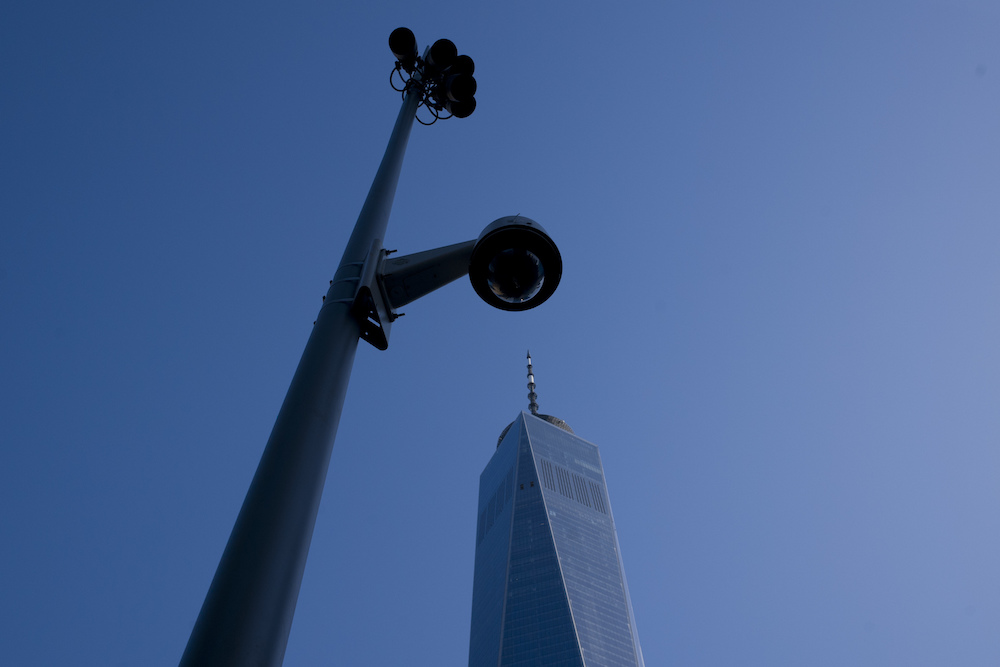
A surveillance camera on a light pole is part of the security curtain at the World Trade Center. Photo by Mark Lennihan/Associated Press.
by RANDOLPH LEWIS | DECEMBER 14, 2018 (zocalopublicsquare.org)
In the anxious years since 9/11, surveillance has become one of the essential infrastructures for 21st-century social life, commerce, and government. With an endless number of drones, sensors, scanners, archives, and algorithms constantly at work for governments and corporations alike, these technologies of monitoring, securing, and sorting are not always visible to the naked eye, but are always humming in the background in ways that we have barely begun to understand. As these systems inch towards a creepy kind of omniscience, we need to consider where they will stop, and how our lives will change if we don’t set limits on their expansion into every nook and cranny of our lives.
It is no surprise that 90 percent of the world’s data has been generated in the last two years: Things that used to be anonymous, private, and unnoticed are now in plain sight. Alexa eavesdrops in our homes, Google remembers our most revealing searches, and even churches are using facial recognition to find out who is sitting in the pews. We are starting to see a bigger picture of limitless monitoring: a world where the watchers never reach the point of “enough” information and instead require an ever-expanding data set about our movements, buying patterns, online activity, and workplace productivity.
But even as surveillance becomes a dominant force organizing our world, most Americans haven’t had an informed conversation about how it is changing the way we live, work, play, and even wage war. We do not yet know who benefits from all this monitoring, classifying, and archiving of our behavior. Nor have we figured out whether surveillance will really make us safer, happier, or healthier. Such questions are sometimes difficult to answer because the technology is moving so much faster than our ability to make sense of it.
In fact, Americans have complex, ambivalent feelings about surveillance. We might be excited to hear that a digital pill can tell our doctor via Bluetooth that our meds have been ingested on time, but worry what will happen once the insurance companies know the contents of our stomach. We might want a smart refrigerator to order milk when we run out, but might not want the Internet of Things to listen to everything in our “smart home,” especially when we have a family crisis unfolding, such as a teenager dealing with drug addiction or a pregnancy scare. We might like taking nature photos with our own small drone, but wince when laws don’t prevent a creepy neighbor from flying his drone over our teenager’s backyard pool party. We happily share our lives on Facebook, but are outraged when we read about their scheme to manipulate our emotions. “Now that the experiment is public,” Forbes reported, “people’s mood about the study itself would best be described as ‘disturbed.’”
Yet we often live in a kind of surveillance denial, assuming it’s not a problem if we’re not doing anything wrong, or that it’s only a concern in other countries. For instance, most Americans probably shudder when they hear about the rise of social credit scoring in China. An authoritarian government watching everything through sophisticated CCTV and online monitoring systems, then coming up with a score that could prevent someone from getting a job—it sounds like something out of a dystopian movie. But if Americans assume it can’t happen here, they’re not paying attention. Consider the potential abuses of workplace surveillance. For an increasing number of American workers, the boss can see almost everything, even if you are a freelancer working in sweatpants at the kitchen table. Productivity software can take a snapshot every 10 minutes and combine them with keystroke analysis to create a “focus score” or “intensity score” for each worker.
Yet surveillance is rarely a cost-free endeavor. We may not realize it, but surveillance changes us, sometimes subtly, more often profoundly as we try to manage the impression we make on social media or on security cameras. The ubiquitous eyes of these devices can shift the way we’re supposed to feel about a particular place (is it safe to use the retina scanner ATM?) or particular action (will they think I’m stealing?). Surveillance often adds another angle, another perspective that not everyone experiences as benign or even tolerable. Social psychologists looking at workplace surveillance have found ample evidence that even the threat of surveillance is enough to change behavior, making workers “follow rules more carefully and act more subservient,” as well as experiencing greater stress, a loss of personal control, and “a decreased sense of procedural justice.” It’s harder to work when you know a camera is perched over your shoulder and productivity software is analyzing your keystrokes for maximum efficiency. Employers might like such productivity metrics, but rarely consider the cost to workers who feel like they have no place to hide.
Even as surveillance becomes a dominant force organizing our world, most Americans haven’t had an informed conversation about how it is changing the way we live, work, play, and even wage war.
For many of us, surveillance forces an adjustment of our interior life, a stiffening of our feelings: Someone is watching. Better look productive. Better not arouse suspicion. In this sense, surveillance can add an emotional charge to an existing atmosphere: It may even channel our chaotic energies into officially approved channels with names like vigilance, dread, fear, relief, certainty, permanence, compliance, consumption, adding a layer of meaning to the social scene that we can feel in our gut or on the back of our neck. Especially when surveillance is focused on security, it can add the gnawing sense that “something bad happened here,” “something bad could happen here,” “someone is watching,” or even the fantasy that “someone will save me.” Privacy, on the other hand, grants us a reprieve from such anxieties and uncertainties; it gives us the gift of what one scholar calls “emotional liberty.”
If we value liberty and autonomy, we need to have a more critical conversation about surveillance technology, one that leads to smarter legal protections of our privacy and dignity both online and off. People need to be able to educate themselves and choose not only how these technologies exist in the world at large, but also how much access they have to our personal data and even our bodies.
Right now, the spread of surveillance systems has a lot of momentum, though, ironically, they have rarely faced real scrutiny. Coming on the heels of his involvement in the Edward Snowden affair, Alan Rusbridger, The Guardian’s former editor, wrote that “securicrats” in the United States and United Kingdom are working to “collect and store ‘all the signals all the time’—that means all digital life, including internet searches and all phone calls, texts, and emails we make and send each other.” This is the cultural logic of the present moment: making human life endlessly visible, recordable, sortable, accountable, with little regard for how this might feel to millions of people. Everything goes into the archive. No one can opt out. Nothing goes away.
Is this really what we want? As someone who has spent the last 10 years exploring this issue, I fear a fundamental human right is missing here: the right to be left alone. Too often we think of freedom in a narrow sense, that it is simply what the law allows us to do or say. But we also need freedom from the quietly oppressive forces in our world. In the case of surveillance, we need freedom from insidious kinds of supervision, coercion, expectation, and obligation, all of which are rife in a world of ubiquitous surveillance. Psychologically, emotionally, and maybe even spiritually, we need freedom from the conformist pressures of CCTV cameras, the psychological burdens of workplace monitoring, the anxiety of being scrutinized by credit card companies looking at our purchases, or simply strangers gawking at us on social media.
Must we be subjected to the constant threat of exposure and scrutiny in every part of our life? Must everything be seen, shared, and sorted? Must everything be visible on social media, CCTV, or TSA body scanner? I hope not.
And I hope we don’t shrug and simply grow accustomed to ever-increasing levels of invasiveness. Even if some aspects of surveillance culture are entertaining and even humane, from the benign side of social media to the well-intentioned camera connecting us to an elderly relative, too often we are faced with something much more controlling, if not outright manipulative. In its harsher forms, surveillance is nothing more than cold prodding to suss out our commercial prospects, to determine if we’re a potential asset or liability to some corporation, alternating with the even colder scrutiny of the state to see if we’re doing what we’re told. It’s not pleasant if you stop to consider what surveillance does to our bodies and souls, not to mention the healthy functioning of a democracy. All I’m suggesting is that we stop and think about it.
RANDOLPH LEWISis a professor of American Studies at the University of Texas at Austin. His most recent book is Under Surveillance: Being Watched In America.
Rupert Spira on the common factor that underlies the individual and the world

“Being is the common factor that underlies the individual and the world. It is one in essence; many in appearance.“
–Rupert Spira
Rupert Spira (born March 13, 1960) is an English spiritual teacher, philosopher and author of the Direct Path based in Oxford, UK. Wikipedia