
Wendy Cicchetti | Twixt Ea • Jan 14, 2023 Misty and Wendy talk about a variety of subjects for 2023.
Monthly Archives: January 2023
Carl Jung on the privilege of a lifetime

Jupiter from the James Webb Space telescope

This image of Jupiter was taken by the James Webb Space telescope, using special filters that showcase various details of the gas giant planet. Of particular interest are the auroras, extending to high altitudes over both the northern and southern poles. This composite image was processed by Judy Schmitt, a citizen scientist, from Modesto, CA.
(jmishlove@newthinkingallowed.com)
Awakening The Global Mind with Ashok Gangadean
New Thinking Allo • Jan 13, 2023 This video is a special release from the original Thinking Allowed series that ran on public television from 1986 until 2002. It was recorded in about 1990. Ashok K. Gangadean is professor of Philosophy at Haverford College, PA. He serves as director of the Global Dialogue Institute and is author of Meditative Reason, Between Worlds and The Awakening of the Global Mind. The spiritual and philosophical traditions of humanity all point toward an underlying first principle which Gangadean refers to as the Logos. This principle partakes of both infinity and relationality. It speaks of the underlying unity of all reality, yet it is expressed differently in each culture. He highlights the paradoxes of consciousness as seen from the perspective of an ego-based way of using the mind. He notes that most spiritual systems attribute suffering and oppression to the ego-based style of mental functioning. Now you can watch all of the programs from the original Thinking Allowed Video Collection, hosted by Jeffrey Mishlove. Subscribe to the new Streaming Channel (https://thinkingallowed.vhx.tv/) and watch more than 350 programs now, with more, previously unreleased titles added weekly. New!! Free month of the classic Thinking Allowed streaming channel for New Thinking Allowed subscribers only. Use code THINK FREELY.
Capricorn in Astrology: Meaning and Traits
The Astrology Podcast • Jan 13, 2023 Discussing the meaning of the zodiac sign Capricorn in astrology, and explaining the traits and characteristics associated with people who were born under this sign, with astrologers Diana Rose Harper, Madeline DeCotes, and Chris Brennan. Capricorn is the tenth sign of the zodiac, and it is a feminine or nocturnal sign, cardinal, earthy, and ruled by the planet Saturn. This is the tenth entry in our series of episodes where we do a detailed treatment of each of the signs of the zodiac, one per episode, in order to develop a more nuanced understanding of their core meaning and significations. During the course of the episode we talk about different keywords and archetypes associated with Capricorn, and also look at the birth charts of celebrities who were born with different planets in that sign. Diana and Madeline’s credentials for this episode are that they both have a number of prominent placements in the sign of Capricorn in their birth charts. This is episode 382 of The Astrology Podcast:
George Orwell from 1984

‘Do you begin to see, then, what kind of world we are creating? It is the exact opposite of the stupid hedonistic Utopias that the old reformers imagined. A world of fear and treachery is torment, a world of trampling and being trampled upon, a world which will grow not less but more merciless as it refines itself. Progress in our world will be progress towards more pain. The old civilizations claimed that they were founded on love or justice. Ours is founded upon hatred. In our world there will be no emotions except fear, rage, triumph, and self-abasement. Everything else we shall destroy everything. Already we are breaking down the habits of thought which have survived from before the Revolution. We have cut the links between child and parent, and between man and man, and between man and woman. No one dares trust a wife or a child or a friend any longer. But in the future there will be no wives and no friends. Children will be taken from their mothers at birth, as one takes eggs from a hen. The sex instinct will be eradicated. Procreation will be an annual formality like the renewal of a ration card. We shall abolish the orgasm. Our neurologists are at work upon it now. There will be no loyalty, except loyalty towards the Party. There will be no love, except the love of Big Brother. There will be no laughter, except the laugh of triumph over a defeated enemy. There will be no art, no literature, no science. When we are omnipotent we shall have no more need of science. There will be no distinction between beauty and ugliness. There will be no curiosity, no enjoyment of the process of life. All competing pleasures will be destroyed. But always — do not forget this, Winston — always there will be the intoxication of power, constantly increasing and constantly growing subtler. Always, at every moment, there will be the thrill of victory, the sensation of trampling on an enemy who is helpless. If you want a picture of the future, imagine a boot stamping on a human face — for ever.’
–Eric Arthur Blair, better known by his pen name George Orwell June 25, 1903 – January 21, 1950), was an English novelist, essayist, journalist, and critic. His work is characterised by lucid prose, social criticism, opposition to totalitarianism, and support of democratic socialism. Wikipedia
Pluto In Capricorn – Daddy Issues
 | Astro Butterfly Jan 13, 2023 |
In March 2023 Pluto enters Aquarius, and a new chapter of history will be written.
Many people have high hopes for Pluto in Aquarius.
However, we cannot constructively move into the future unless we understand the past – unless we integrate Pluto in Capricorn.
“Those who cannot remember the past are condemned to repeat it”
Pluto in Aquarius will not save us from ‘greed, politicians and corruption” – it’s becoming our own authority that will.
We still have time – until March 23rd, 2023 (when Pluto ingresses into Aquarius) and then again from June 2023 – January 2024 (when Pluto moves back into Capricorn) to make sense of Pluto in Capricorn’s 15-year long transit.
Transits build upon each other. Pluto in Aquarius builds on Pluto in Capricorn. If we learn the lessons of the previous transits, we smoothly move into the next Aquarian chapter of our lives.
But have we truly integrated Pluto in Capricorn’s lessons? Pluto’s ingress into a new sign initially corrects the flaws of the previous Pluto transit.
Pluto’s transit in expansive Sagittarius has coincided with the housing and economic bubble, rising inflation and interest rates, production outsourcing, and over reliance on foreign trade.
Pluto in Capricorn has subdued interest rates, and of course, has created different types of problems, like too much consolidation of power at the top.
Capricorn is the sign of institutions, big corporations, politics and top-down structures. Capricorn is a governing system that manages different moving parts so they can work in a coherent whole.
Does that mean that Pluto in Aquarius will ‘cancel’ all the politicians and all the CEOs? As long as we think of Pluto in Capricorn as “them” we completely miss the point of this transit. Pluto in Capricorn is not the politicians. Pluto in Capricorn is not the CEOs.
Pluto in Capricorn is every single one of us.
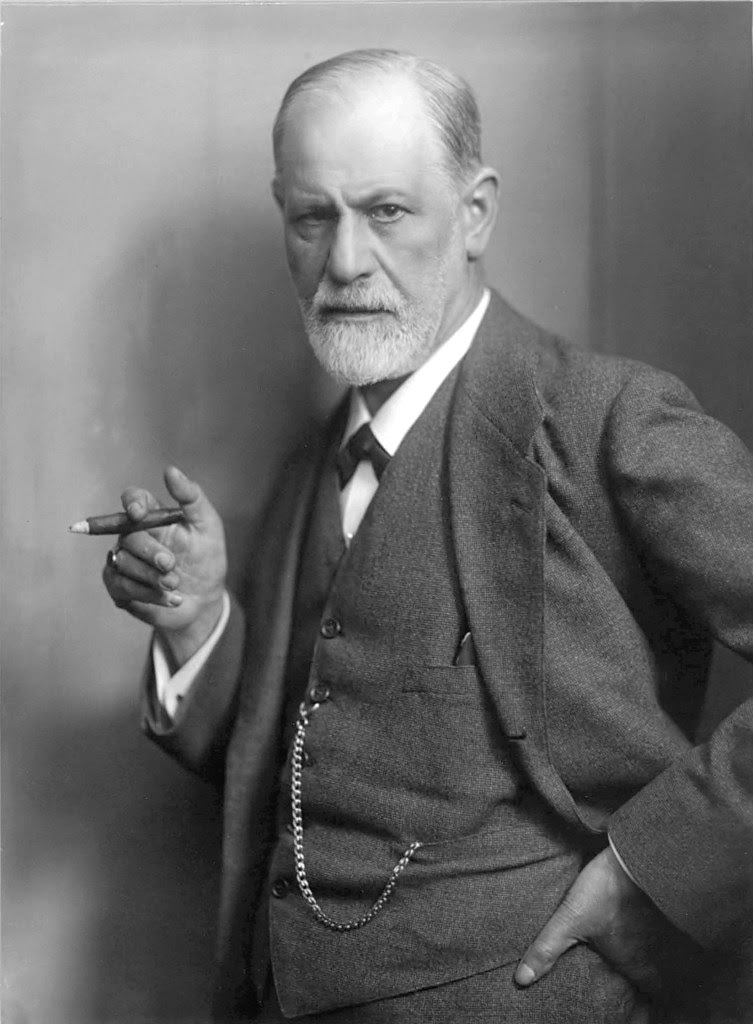
In the past decade and a half, Pluto in Capricorn has been asking us – every single one of us – to develop constructive Capricorn qualities like becoming strategic, planning ahead, and taking responsibility for our own lives.
Pluto in Capricorn – Becoming An Adult
Big institutions’ activities, projects, and finances, are planned way in advance, usually on a 5-year horizon. The “big announcement” email you received this morning from your company has been in the communication department’s pipeline since 2018.
No manager ever wakes up in the morning and decides to lay off employees. No politician decides from one day to the next to raise interest rates. These initiatives are years in the making. A big entity like a corporation – or a nation – cannot survive without long term planning.
But long term planning is not limited to big institutions. We – humans – are complex systems. We too have goals and plans. Of course, there’s a lot of beauty in being spontaneous, but it’sAries, Taurus, Gemini and Cancer’s role to show us how to live in the present moment.
Capricorn’s role is to teach us how to plan, work hard, be responsible and achieve our goals.
When we understand how complex systems work – we no longer believe in ‘coincidences’ or ‘luck’. With Pluto in Capricorn, what goes around comes around, and whatever happens is a consequence of previous actions.
Becoming successful, achieving long-term goals is not a lucky strike. It’s the result of years of hard work and deliberate action.
When we understand that the world is complex and interconnected, we embody Capricorn’s qualities and take control of our life.
When we don’t know how Capricorn works, we externalize authority to a 3rd party whom we put in charge to do the “adult” things for us.
As long as we don’t embody Capricorn at a personal level, someone else will play the adult role for us. We will look up to them and they will hold power over us.
Pluto in Capricorn – Daddy Issues
In transactional analysis there are 3 three different ego states or ways of being during interactions: the child ego state, the parent ego state, and the state of adult.
Archetypally, the parent is the Capricorn energy and the child, the Cancer energy.
The desirable state is the “adult” when the person is not in charge of others (parent/Capricorn), nor externalizes autonomy and expects to be taken care of (child/Cancer). The adult has an objective, equalitarian, “win-win” approach to interactions.
The adult state corresponds to a healthy, integrated expression of the Aquarius archetype.
Aquarius is ruled by both Saturn and Uranus. Aquarius is the adult (Saturn) that has outgrown the parent/child model; by taking ownership of their life, the Aquarius adult finds freedom (Uranus) to express their unique self.
But to get to the Aquarian highest expression of adulthood we first need to solve our Capricorn daddy issues.
Rejecting or rebelling against authority is the unhealthy Aquarius approach to transcending Capricorn and addressing our daddy issues. Vilifying the leader/authority is a short term solution that always backfires.
This approach may initially solve the tension of the Cancer/Capricorn polarity, but until we integrate these archetypes at an identity level, we will keep looking for the next Capricorn father figure to tell us what to do.
Examples of the child ego state are people who need guidance and direction. They may keep looking for the next best job, the next best manager, the next best coach to tell them what to do.
But when engaged in child-parent relationships, they will either reject the advice/direction of the authority figures because it’s too much work, OR they will blindly follow their direction – so they can later blame the authority for what went wrong. “They told me to do it”.
Examples of the parent ego state are people who engage in relationships where the partner is less mature; the “parent” takes care of the “child”. This dynamic satisfies their control needs, but it doesn’t allow them to grow and evolve.
The child/parent dynamic only stops when we step into our own autonomous authority.
Important answers like “what should I do with my life” can only come from within ourselves.
It’s up to us to decide what rules to follow. It’s up to us to decide what to do with our lives.
Pluto In Capricorn – Killing The Father
If we look at the oldest tales or religious mentions we note the theme of killing the father.
Killing the father is a recurring theme that transcends time and culture.
Fundamentally, the killing of the father is about breaking away from the previous authority/order and becoming an authority on our own.
Up until the 20th century, kings, emperors and totalitarian leaders were pretty much the governing standard of societies. Since these leaders were authoritarian and would not let go of power, the only way to overthrow them was a coup. The leader would be killed or sent into exile.
Just like Saturn ate his children out of a fear of being overthrown, the king’s son or the emergent leader would literally murder the existing leader in an attempt to establish a new order.
In the post WWII world, the disintegration of the multinational empires was closely linked to the disappearance of the major state leaders, which is a variation of the theme of patricide.
When society awakens to the Aquarius/Uranian archetype we no longer need totalitarian leaders. We no longer need consolidation of power. We no longer need a one world order. We become an authority of our own.
But how do we get there? How do we solve our daddy issues?
Patricide still happens in all cultures and on all layers of society. The most common age when children kill their father is 14-16.
Astrologically, this coincides with the 1st Saturn opposition, and it’s a projection (opposition) of the Saturn archetype on a Saturn figure (the father).
This is the age when the child is confronted (opposition) by the parent (Saturn) archetype. This is when the child learns about rules and limitations.
The Saturn opposition happens soon after our first Jupiter return at the age of 12. The Jupiter return is a phase of expansion. We feel on top of the world. Everything is possible.
But then only 2 years later, at the age of 14, we have our Saturn opposition. We learn that there is actually a limit to what we can do. We learn about rules, exams, we have our first unrequited love interest. We can’t have everything we want.
We then project our frustration on Saturn-like figures like the father or the teacher.
What we don’t realize at the age of 14 is that the father and the teacher are nothing else but the Saturn part of our psyche. This is our fist (awkward) encounter with Saturn, with that part of ourselves that thinks a bit longer term, and has our survival and best interests in mind.
We can look at Saturn as “that which limits us”, or as that who helps us discern what’s our zone of genius and what we can realistically achieve.
Without Saturn, we would live in a continuous Jupiter state where there are opportunities everywhere, where there’s always a “next best thing”…, but where we don’t achieve anything because we don’t commit to anything.
At a personal level, the killing of the father means killing that version of ourselves that is outdated, and that no longer serves our best interests.
There is always a more efficient, a more productive, a more ‘adult’ way to conduct our lives. It’s not the father/authority that needs to be killed – but that part of us that still behaves like a child.
From Pluto In Capricorn To Pluto In Aquarius
“You always had the freedom my dear, you just had to learn it yourself”
Just like Dorothy in the Wizard of Oz, it’s not enough to think about these concepts. We must live them and embody them.
Uranus (Aquarius’ ruler) follows Saturn (Capricorn’s ruler); unless we learn how to become autonomous, we cannot be free.
There are no shortcuts to integrating Pluto in Capricorn. We can no longer rely on the parent, the coach, the manager, or the politician to tell us how to live our lives. We can no longer blame the parent, the coach, the manager, or the politician for what goes wrong in our life.
What Pluto in Capricorn wants from us is to take responsibility for our life. To take responsibility for the consequences of our actions. That’s when we become an adult. Parents and children are limited and bound up in the child parent roles and their inherent rules. Adults are free.
Here are some self-reflection questions to help you navigate the last leg of the Pluto in Capricorn transit, and prepare you for Pluto in Aquarius:
- Make a list with people you initially admired – friends, mentors, guides, celebrities, politicians – and were disappointed with later. Can you spot any common themes?
- Remember when you suffered a major setback (e.g. lost a job, went bankrupt, had a reputation blow, were excluded from a group or community etc.). When you look back, can you see how some of your previous actions have led to that outcome? What would you do differently?
- What is the most important thing you want to achieve? What about you and your life needs to change to get there?
Ukraine Emergency Translation Group
Translation is a 5-step process of “straight thinking in the abstract.” The first step is an ontological statement of being beginning with the syllogism: “Truth is that which is so. That which is not truth is not so. Therefore Truth is all there is.” The second step is the sense testimony (what the senses tell us about anything). The third step is the argument between the absolute abstract nature of truth from the first step and the relative specific truth of experience from the second step. The fourth step is filtering out the conclusions you have arrived at in the third step. The fifth step is your overall conclusion.
The Ukraine Emergency Translation Group meets every Friday at 11 a.m. Pacific time via Zoom. We call it the Ukraine Emergency Translation Group but we welcome Translations about anything. Here are sense testimonies (2nd steps) we translated and their corresponding conclusions: (5th steps) this week.
2) People are ignorant
5) People are MIND BEING AWARE OF MIND
2) All animals grow old and die.
5) Truth is permanent, ageless, eternal animation.
All Translators are welcome to join us on Fridays at 11 a.m. Pacific time. The link is: https://us06web.zoom.us/j/83608167293?pwd=cFRsckVibXMwTGJ0KzhaV0R2cWJtdz09
For information about Translation or other Prosperos classes go to: https://www.theprosperos.org/teaching
Some comments from group members about this group:
“I like the group interaction and different perspectives. Also, at least for me, it gives me a sense of accountability and keeps the practice fresh in my mind. ” –Sarah Flynn
“This group has freed me up to have more fun with my Translations.”
–Mike Zonta
SPACE IS NOT JUST FOR SCIENTISTS
Public and Private Partnerships Built Our New Space Age—Which Should Include All Aspects of Human Endeavor

As NASA’s share of the space economy declines and humans develop new space industries, ASU’s Interplanetary Initiative deputy director Jessica Rousset argues for a more expansive approach to collaboration, incorporating scientists and artists alike. Image by Alexyz3d. Courtesy of author.
by JESSICA ROUSSET | JANUARY 12, 2023 (zocalopublicsquare.org)
Launching objects into orbit has never been so affordable nor has space ever been so accessible. As a result, humanity’s expansion into the universe is accelerating—and with it, the opportunity to correct some of the errors of our earthbound development. New collaborative approaches—public and private, interdisciplinary, and more—will be imperative for humanity to survive and thrive beyond Earth.
In the last decade, the cost of launching objects into space has plummeted 20-fold and attracted a surge of interest and capital which, alongside new technologies, are enabling innovations in commercial satellites, space tourism, and privately funded space stations.
There are now private efforts to establish space-based solar energy platforms, moon and asteroid mining, space logistics and tourism businesses, research and development into essential microgravity applications, and space-based manufacturing. Since 2013, investors have poured $258 billion into 1,688 companies in this still-speculative sector.
NASA’s share of the space economy has consistently declined as the commercial space sector has become a key market driver, taking over certain areas completely, such as communications satellite launches. This shift has freed up the public sector’s ability to invest in commercially riskier activities like solar system exploration, even as the government remains a vital purchaser of space products and services.
The mix of private and public efforts, which includes a substantial role for American universities, seems new but is in fact over six decades in the making. From the early 1960s, the United States relied on commercial interests to help it compete in the space race. In 1965, Hughes Aircraft’s Intelsat I became the first commercial satellite to reach geosynchronous orbit. Also known as Early Bird, the satellite provided real-time transmission of television, telephone, and fax communications between Europe and North America.
In the 1970s, President Richard Nixon expanded U.S. space activities, including joint projects with the Soviet Union, construction of the first U.S. space station, and approval of the Space Shuttle program, which opened more opportunities for private industry.
As European, Russian, Chinese, and more private launchers entered the market after the Cold War, more and more firms sought to send satellites into space. As a result, the exorbitant costs associated with reaching orbit declined. On July 4, 1982, President Ronald Reagan issued National Security Decision Directive 42, establishing the development of commercial space activities as a national goal. Later that year, Space Services Inc., of Houston, Texas, successfully launched the first U.S.-built commercial rocket—the Conestoga 1—into space above Cape Canaveral, Florida.
As we build new space industries, we are facing new questions, which can be answered not just by scientists and engineers but by experts across all disciplines, from social scientists to artists.
By the mid-1990s, there was a bona fide marketplace in geostationary orbit for Earth observations and telecommunications, which evolved to launch smaller, cheaper satellites that we continue to rely on today for everyday essentials like weather forecasting, streaming our favorite shows, and finding our way around.
Space tourism started in 1996 with the Ansari X Prize, a $10 million privately funded contest to create a spaceship that could safely fly a pilot and two passengers to the edge of space twice in two weeks. In 2004, SpaceShipOne clinched the prize and became the founding technology for Virgin Galactic’s space tourism business. While still a small slice of the industry, space tourism has captured the popular imagination and helped build momentum for additional technical efforts.
In 2005, in preparation for the retirement of the Space Shuttle program, NASA collaborated with the private sector using a novel cost-sharing model to develop cargo and crew transportation capabilities. This program led to the rise of SpaceX and significantly lowered the cost of sending cargo into low Earth orbit—from $65,400 per kilogram in 1981 to as little as $2,600 per kilogram today. That number is expected to plummet over the next few years, as more and more cargo is shipped into space in preparation for humans to return to the moon in the mid-2020s.
In 2019, NASA opened the International Space Station to new commercial opportunities and private astronauts, and last year they awarded $415.6 million to advance three free-flying private space station concepts.
One of these projects is Orbital Reef, a mixed-use business park in low Earth orbit led by Blue Origin and Sierra Space. I am the deputy director of Arizona State University’s Interplanetary Initiative; our group leads a consortium of more than a dozen academic institutions responsible for coordinating research and other support in Orbital Reef’s development.
This is just one example of how, in this new space age, NASA and other space agencies will become one of many customers purchasing services of privately owned space companies. Commercial business models like Orbital Reef also will open access to more research, manufacturing, tourism, and activities we have not yet imagined.
As we build new space industries, we are facing new questions, which can be answered not just by scientists and engineers but by experts across all disciplines from social scientists to artists: How will commercial space stations be used? How can access to space be made equitable? What new jobs and markets will these destinations create? And what legal and regulatory regimes—from environmental protections to civil rights laws and governance—will apply in space, and how might they differ from Earth’s?
There have been many reasons to send people to space, including science, military hegemony, technological prestige, global connectivity, economic development, combating climate change, and—of course—answering our most profound questions about humanity’s place in the universe.
To these worthy objectives, I would add one more: Space exploration affords us an opportunity to stress test our human values and to take them to new heights. We have a chance to find out just how far our egalitarian principles can go. Our future in space will create jobs, technologies, and markets that don’t exist today. With such great possibilities and unknowns, I believe our greatest innovation will be how we include all aspects of human endeavor in our future in space. Space is infinite, and humanity’s challenges are vast. We will need effective problem solvers and critical thinkers from all backgrounds and disciplines working together to create the future we all want on Earth, or anywhere else.
JESSICA ROUSSETis deputy director of the Interplanetary Initiative at Arizona State University, a consortium of academic institutions seeking to improve inclusion and collaboration in the space industry.
