Book: “The Matter of Everything”

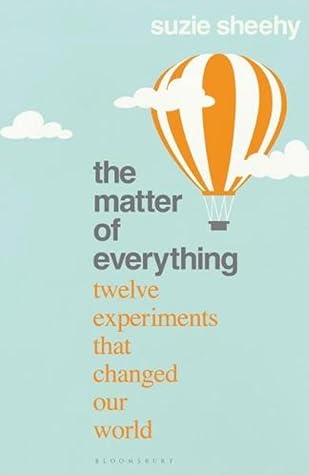
The Matter of Everything

The Matter of Everything

by Suzie Sheehy

The astonishing story of twentieth-century physics, told through the twelve experiments that changed our world. For millennia, people have asked questions about the nature of matter. In the twentieth century, this curiosity led to an unprecedented outburst of scientific discovery that changed the course of history. In The Matter of Everything , accelerator physicist Suzie Sheehy introduces us to the people who, through a combination of genius, persistence and luck, staged these ground-breaking experiments. From the physicists who soared in hot air balloons on the trail of new particles, to the serendipitous discovery of X-rays in a German lab; and from the race to split open the atomic nucleus to the quest to find the third generation of matter, Sheehy shows how these experiments informed innumerable aspects of how we live today. Radio, TV, the chips in our smartphones, MRI scanners, radar equipment and microwaves, to name a few: these were all made possible by our determination to understand, and control, the microscopic. Pulling physics down from the theoretical and putting it in the hands of the people, The Matter of Everything is a celebration of human ingenuity, creativity and curiosity.

(Goodreads.com)

Book: “Arrival and Departure”

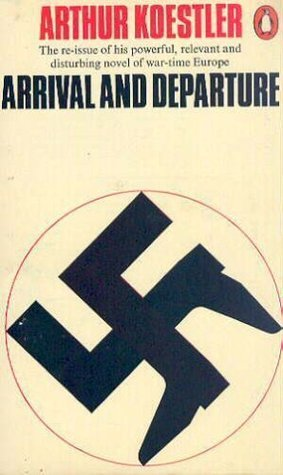
Arrival and Departure

by Arthur Koestler

This was the third novel of Arthur Koestler’s trilogy on ends and means – the other two are THE GLADIATORS and DARKNESS AT NOON – and the first he wrote in English. The central theme is the conflict between morality and expediency, and in this novel Koestler worked it out in terms of individual psychology. Peter Slavek starts out as a brave young revolutionary, but suffers a breakdown. On the analyst’s couch he is made to discover, in Koestler’s own words, ‘that his crusading zeal was derived from unconscious guilt’. 

(Goodreads.com)

Survey finds ‘classical fascist’ antisemitic views widespread in U.S.

By Michelle Boorstein and Scott Clement

January 12, 2023 at 6:00 a.m. EST (WashingtonPost.com)

At points in the past half-century, many U.S. antisemitism experts thought this country could be aging out of it, that hostility and prejudice against Jews were fading in part because younger Americans held more accepting views than did older ones.

But a survey released Thursday shows how widely held such beliefs are in the United States today, including among younger Americans. The research by the Anti-Defamation League includesrare detail about the particular nature of antisemitism, how it centers on tropes of Jews as clannish, conspiratorial and holders of power.

The surveyshows “antisemitism in its classical fascist form is emerging again in American society, where Jews are too secretive and powerful, working against interests of others, not sharing values, exploiting — the classic conspiratorial tropes,” Matt Williams, vice president of the ADL’s year-old Center for Antisemitism Research, told The Washington Post.

The study uses a new version of surveys the ADL has been doing in America since the 1960s in order to get at the specific nature of antisemitism, and what makes it different from other types of hate. Its new metric is centered on affirming or rejecting 14 statements, including whether Jews: “have too much control and influence on Wall Street,” “are more willing than others to use shady practices to get what they want,” or are “so shrewd that other people do not have a fair chance.”

The ADL’s center was created in response to a spike in the past few years of reported incidents of antisemitic violence and harassment, as well as a rise in antisemitic rhetoric from high-profile public figures.

That includes a march by neo-Nazis in Charlottesville in 2017 that turned deadly and attacks on Jewish targets in Pittsburgh in 2018 and in Poway, Calif., and Monsey, N.Y., in 2019. It also includes antisemitic comments, including from former president Donald Trump in October, when he attacked American Jews in a post on his Truth Social platform, saying Jews in the United States must “get their act together” and show more appreciation for the state of Israel “before it is too late.” Trump has multiple times raised the old antisemitic trope that U.S. Jews hold, or should hold, a secret or dual loyalty to Israel rather than or in addition to the United States.

Almost 4 in 10Americans believe it’s mostly or somewhat true that “Jews are more loyal to Israel than to America,” according to the ADL researchers. In the fall, the rapper and designer Ye — formerly known as Kanye West — said that Jews exploit Black people for financial gain, that African Americans are the legitimate descendants of Jews of the Bible and that there is some “financial engineering” to being Jewish.

The survey foundthat about 7in 10 Americans believe Jews stick together more than other Americans do and that more than one-third think Jews don’t share theirvalues and “like to be at the head of things.” About 1 in 5 believe Jews have too much power in the United States, don’t care what happens to others and are more willing than other Americans to use “shady practices to get what they want.”

Overt U.S. antisemitism returns with Trump, Kanye West: ‘Something is different’

It is difficult to assess whether antisemitic views have increased over time, given changes in the survey’s response options as well as how respondents were sampled. The survey was conducted in September and October among a national sample of 4,007 adults online through AmeriSpeak, a randomly sampled panel of U.S. households maintained by NORC at the University of Chicago.

Williams and some experts who helped review the study noted that it shows the views of Americans under 30 and those of Americans over 30 are very similar. Of Americans ages 18 to 30, 18 percent saidsix or more of thestatements were true, while among those 31 and older, 20 percent did. Of younger Americans, 39 percent believed two to five statements, while among the older group, 41percent did.

“It used to be that older Americans harbored more antisemitic views. The hypothesis was that antisemitism declined in the 1990s, the 2000s, because there was this new generation of more tolerant people. It shows younger people are much closer now to what older people think. My hypothesis is there is a cultural shift, fed maybe by technology and social media. The gap is disappearing,” said Ilana Horwitz, one of the survey’s reviewers, and an assistant professor of Jewish studies at Tulane University.

The “pervasiveness” of antisemitic tropes the study shows is what’s most interesting, Horwitz said. Even the fact that 3 percent of Americans say all of the original statements are “mostly or somewhat true” is alarming, she said.

Three percent of all American adults is a little less than 8 million people — well over the 5.8 million American adults who say they are Jewish.

“I like to tell my students: Kanye has more followers on Instagram than there are Jewish people in the world. So the extent to which Americans seem to believe these conspiratorial views about Jews is alarming,” she said. Ye has more than 18 million followers on Instagram alone.

He painted a mural of Kanye West. Then a rabbi called.

The new research also delved into the differences between believing anti-Jewish tropes and negative sentiment toward Israel and its supporters.

“One of the findings of this report is that antisemitism in that classic, conspiratorial sense is far more widespread than anti-Israel sentiment,” Williams said.

The report highlighted that 90 percent of Americans agreed Israel “has a right to defend itself against those who want to destroy it” and that 79 percent agreed Israel is a “strong U.S. ally in the Middle East.” However, 40percent at least slightlyagreedthat Israel “treats Palestinians like Nazis treated the Jews,” and 17 percent disagreed with the statement“I am comfortablespending time with people who openly support Israel.”

DHS launches panel on religious security as hateful incidents rise

Alan Cooperman, director of religion research at the Pew Research Center and an adviser on the ADL project, said Judaism’s long history includes periods of ebbs and flows in antisemitism — sometimes long ones.

He noted that in 2013, Pew convened a dozen or more top experts on American Judaism for a survey and asked about their priorities and what areas needed more information and attention. The consensus at the time was that antisemitism was at a historic low in the United States and that, while it still existed, it wasn’t a pressing concern. When Pew talked to experts in 2020, their attitudes were “a complete sea change. They told us antisemitism is a very pressing issue and we need to devote a lot of attention to understanding it.”

The vast majority of U.S. Jews told Pew in 2020 that antisemitism had increased in the past five years, and a slim majoritysaid they personally feel less safe.

Alvin Rosenfeld, director of the Institute for the Study of Contemporary Antisemitism at Indiana University at Bloomington, said antisemitism never goes away but morphs in its own ways.

In the West, it has ancient roots in Christian teachings of Jews as satanic Christ-killers. In modern times, “religious bias gives way to racialized notions of Jewish inferiority or supremacy,” he said, noting this year is the 120th anniversary of the “The Protocols of the Elders of Zion,” an influential document falsely purporting to be a Jewish plan for world domination.

Then came Holocaust denial and types of critiques of Israel that are antisemitic.

“So the ‘new’ antisemitism dates way back. Charges of Jewish conspiracy, Jews in control of the media, politics, entertainment, the money world — all of that dates back way back. It’s multicausal today,” Rosenfeld said. “When hatred is so diverse, it’s more potent and dangerous.”

Polling analyst Emily Guskin contributed to this report.

washingtonpost.com © 1996-2023 The Washington Post

BY ENGAGING OUR EMOTIONS, ART CAN STRENGTHEN OUR DEMOCRACIES

Music, Theater, Visual Art, and Cinema Help Us Shape Debate and Bolster Citizenship

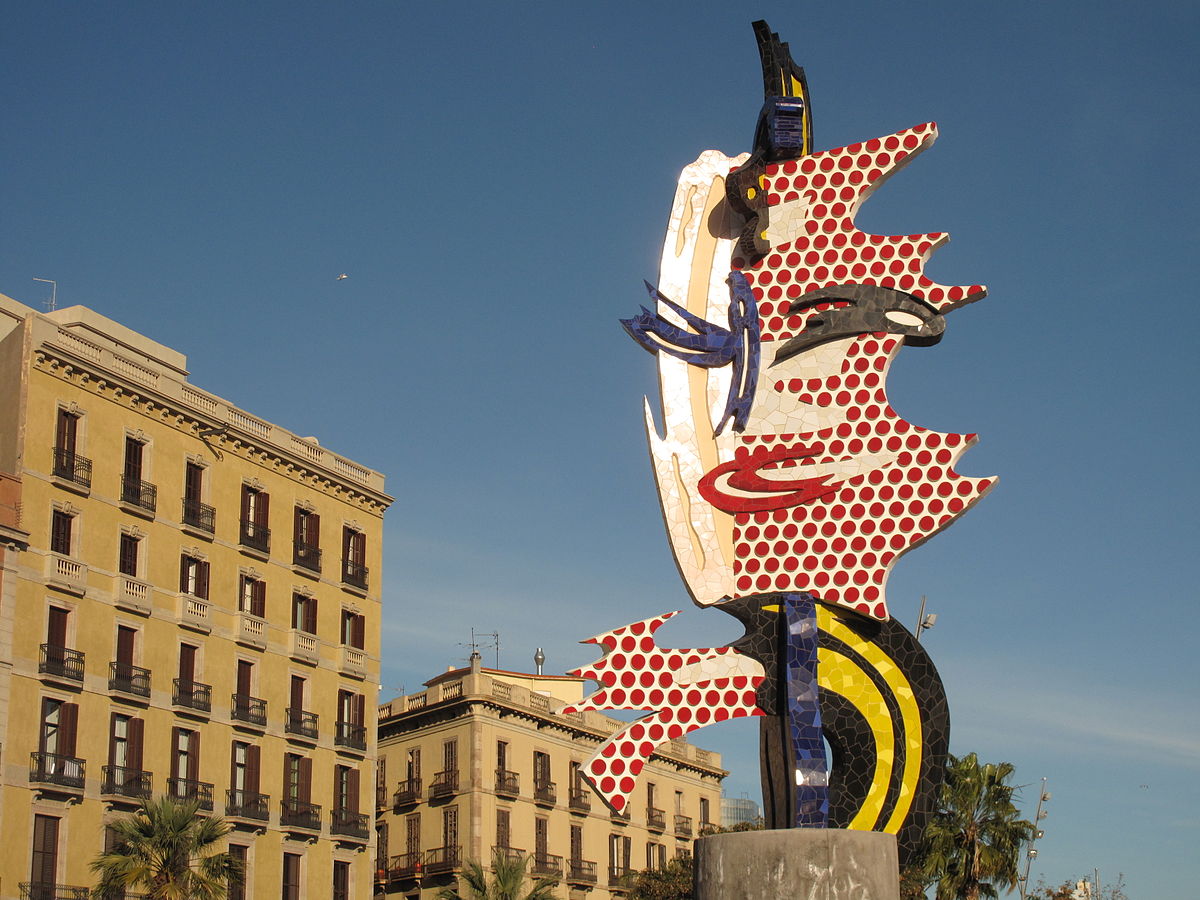
American Pop art meets the Barcelona streets with Roy Lichtenstein’s El Cap de Barcelona. Courtesy of Wikimedia Commons.

by FERNANDO PINDADO SANCHEZ 

JUNE 22, 2017 (zocalopublicsquare.org)

Can the arts be a stimulus for democracy? The question may seem strange because, in principle, there does not seem to be a relationship between the arts and democracy. What do theater, dance, cinema, and painting have to do with democracy? Or rather, what do these artistic manifestations have to do with politics?

The short answer: They have a lot to do with each other, and the relationship can have very positive effects.

How? The arts revolve around emotions. Democracy, on the other hand, corresponds to politics that, in a strict sense, should be grounded in rational decision-making. But the separation of rational decisions and emotions is not so simple. At their best, art and politics are not about manipulating feelings to produce political effects, but about activating emotions to “move” people to feel part of a community.

Democracy is based on popular sovereignty and the idea that citizenship requires effective channels to participate in the processes of political decision-making. Political debates alone do not produce much desire for people to feel a form of being “called” to action. But politics can do more than call; politics can excite, so that the called person feels a part of that community where he or she is going to make contributions and to define political decisions that transform a concrete reality.

Participation in democracy is often identified with voting, either to elect representatives or to make a decision in a referendum. Voting is the icon of democracy and it seems that democracy is reduced to that liturgical event.

However, we must recognize that there is another dimension of the democratic system that does not consist only in voting. Moreover, I dare say that voting is the least important aspect of democracy (and perhaps even an unnecessary one—but that is another story).

I am talking about the deliberative or dialogical dimension of democracy, in which the important thing is the debate, the contrast of arguments, the sharing of different opinions to build proposals or make contributions to certain public actions that affect the whole of the citizenship. To facilitate this type of action, the arts, particularly the performing arts (theater, dance, cinema, circus), are profoundly useful to the democratic journey.

What we need is to foster a relationship of the arts to democracy in a purer, more human sense.

Here in Barcelona, ​​where I am the city’s commissioner of citizen participation, we have lived the experience of seeing citizen participation rise from the production of small plays, filming a documentary, organizing photographic exhibitions, dancing (as a means of transmitting emotions), and reading poems. Mural paintings have been used to collectively express feelings or ideas about improvement in neighborhoods or the city as a whole.

In late 2015 and early 2016, we supported a process of participation that combined performing arts with debates on different themes to help develop our city legislature’s Municipal Action Program for the next four years. The combination of these actions—participation and the arts—can have a lot of impact in the places where they occur and on the people who are part of them. And that can foster a greater degree of collective involvement. This is the phenomenon of “communitarization”, of feeling part of the group, of joining forces with something greater than one’s own friends and family.

It’s important to be clear: The use of the arts to promote citizen participation should not be confused with the actions of some political lobbies that play to emotions and stimulate cognitive frameworks in order to provoke reactions favorable to their own interests. Day by day, cities are plagued by efforts of this type.

What we need, instead, is to foster a relationship of the arts to democracy in a purer, more human sense. This is about recognizing the spiritual slope of every person, his or her emotional layers, which may be more or less active, more or less asleep. Once the existence of this spiritual layer is recognized, and activated in a positive way, it can favor creativity in the search for solutions to community problems.

It is true that on many occasions, citizens often face these artistic manifestations in a democracy in a passive way, and let the “artists” take the lead in moving, or not moving, emotions. I don’t wish to take anything away from such passive use of the arts, but it’s important to say that citizens can be active subjects in performing theater or dance, or making a painting, just as they can be active agents in their own governance.

In 1955, a Spanish poet, Gabriel Celaya, of the so-called Generation of ’27 that fought in the Republican ranks during the Spanish Civil War, wrote a poem titled “Poetry is a weapon loaded with future.” One of its verses reads:I curse the poetry conceived as a cultural luxury by those neutralswho, washing their hands of it, avoid and evade.

I curse the poetry of those who will not take sides to avoid soiling themselves.

The qualities that Celaya attributed to poetry in this text, I think, are attributable to all arts in general. They are manifestations of the spirit that should not appear as neutral (in reality, they never are). Instead, they should be that higher if muddled spirit that emerges from the mud of life to favor the involvement of people in collective processes and actions.

To take part in Celaya’s sense of poetry does not mean to make a flag of any concrete political option, but to keep our eyes open on everything that affects people, especially that which produces suffering, and which generates injustice and inequality. To take sides is to recognize that we live in an unequal society and that, for a decent coexistence to be attained, we must take sides for justice, equality and democracy.

Certainly art, such as written or spoken language itself, may serve to make precious love poems, or to stimulate the most terrible and inhuman actions. But let us also reflect on the human and humanizing potential that it can exert in political decision-making processes. And in strengthening democracy.

FERNANDO PINDADO SÁNCHEZis Commissioner of Democracy and Active Participation for the Barcelona City Council.

This essay was translated from the Spanish by Reed Johnson.

Bio Brief: Anais Nin

January 14  In 1977, Anais Nïn dies at 73.

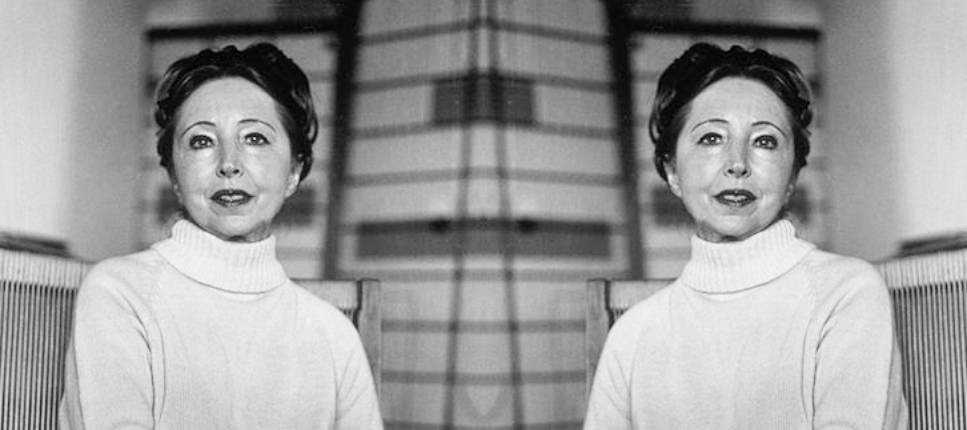
Angela Anaïs Juana Antolina Rosa Edelmira Nin y Culmell (February 12, 1903 – January 14, 1977) was a French-born American diarist, essayist, novelist, and writer of short stories and erotica. Born to Cuban parents in France, Nin was the daughter of the composer Joaquín Nin and the classically trained singer Rosa Culmell. Wikipedia

Encore: Moon Wobble Peaks January 29

Moon Wobble Late Dec, peaks January 29

Click here to see the Moon Wobble Chart 

 *** General suggestions / observations ***

• This cycle is based on empirical data meaning enough data was observed and recorded to make it possible to suggest attitudes and  reactions.  Keep in mind that we all have free will and thus results will vary from one individual to another.

• The graph shows the energy high at the beginning of the cycle (not unlike any other astrological aspect) followed by a slow down before it gets strong and again this reflects years of tracking and noting feedback from our many students

.• If you are making a decision during this time you might want to let it set for a day or two then check your decision again to see if it still makes sense. However, you can feel into the ebb and flow and find good times to work on self emotionally in both the low and high points. Impatience, emotion and acts without thinking are common.

• With practice you can feel when the energy is there to help bring completion to tasks, goals and projects you may be working on.

Aloha,
The Prosperos