A new scientific paper has confirmed the power of curse words – and not only to shock
Photograph: Dimitri Otis/Getty Images
Tue 1 Nov 2022 11.55 EDT (theguardian.com)
Name: Swearing
Age: It varies: some ancient words became profane over time, other swearwords are more recent coinages.
Appearance: Frequent, especially wherever people are trying to raise the subject of Jeremy Hunt.
All I know is, it’s not big and it’s not clever. Actually, it may be both.
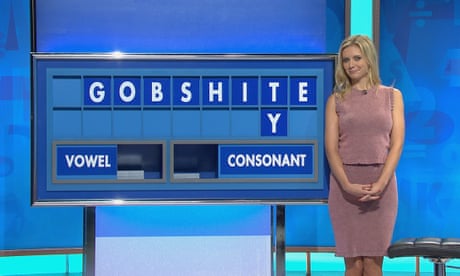
Are you calling my mother a liar? In fact, swearing is associated with many desirable conversational outcomes – research suggests it can make you seem more persuasive.
Holy shit. Indeed. It can also make you happier, fitter and more impervious to pain.
How does it work? There are still many unanswered questions about the nature of swearing, according to a new paper published in the journal Lingua.
That’s great. Any answered ones? One thing seems certain: swearing is powerful. It’s capable of producing “a range of distinctive psychological, physiological and emotional effects”.
And some of these are positive? Yes. One study showed that subjects who swore could keep their hands in a bucket of ice water for longer than non-swearers. Chanting a swearword also increases muscle performance during physical exercise.
I do that anyway, but only because I hate physical exercise. In addition, swearing has the power to strengthen social relationships, and increase credibility. Research shows that text messages with swearing in seem more believable than those without.
Should I be swearing all the time, then? No. Swearwords still carry negative connotations, and swearing can easily be interpreted as impoliteness, direct disparagement of another person, or a general display of aggression. Context is everything.
I understand, but I’m not sure I can help myself. Please try.
Fiddlesticks! Actually, it looks as if you could do with the practice.
Where does swearing get its magical power? We know it doesn’t lie in the words themselves: foreign-language swearing doesn’t produce the same reaction, and swearwords hold less force for those who speak them as a second language.
Does that mean it goes back to childhood? Good question. One suggestion is that swearwords produce emotional arousal because we were punished for using them as kids, but is there isn’t much empirical evidence to support the hypothesis.
If not that, then what? Hard to say. Swearing is likely processed in a different part of the brain from other speech. “Specifically, it may activate the amygdala and basal ganglia, rather than higher order processing structures,” says the study.
I have no idea what that effing means. Me effing neither.
Do say: “I find this scientific study highly credible, thanks to its liberal use of the word dickhead.”
“Blessed and blessing, this music is in some sort the equivalent of the night, of the deep and living darkness,” Aldous Huxley wrote of Beethoven’s Benedictus in his exquisite meditation on why music enchants us so. But he could have well been writing about Ludwig van Beethoven (December 16, 1770–March 26, 1827) himself — a creator suffused with darkness yet animated by the benediction of light.
Like Frida Kahlo, Beethoven sublimated a lifetime of unbearable bodily suffering to the irrepressible vitality of his creative spirit. Bedeviled by debilitating physical illness all his life — the anguishing pinnacle of which was his loss of hearing at the age of twenty-eight — he nonetheless became a servant of joy. Even Helen Keller, herself deaf and blind, conveyed the timeless transcendence of his music in her moving account of “hearing” his Ode to Joy.
The source of Beethoven’s deafness remains an enigma. Some biographers have speculated lead poisoning and others auto-immune disease, while Beethoven himself attributed it to a mysterious accident induced by rage — according to a second-hand account reported to his first serious biographer, a tenor interrupted Beethoven’s creative flow during a fit a fervent composition, which sent him into fury so violent that he, upon leaping from his desk, sustained a seizure, collapsed to the floor, and was deaf by the time he rose.
Given the mysterious onset of his hearing loss and the rudimentary state of medicine at the time, Beethoven worried that his sudden deafness might be the symptom of a fatal disease. A brilliant and ambitious young man just beginning to blossom into his genius, he was uncertain whether he would live or die — ambiguity enough to hurl even the stablest of minds into maddening anxiety.
Beethoven by Christian Hornemann, 1803
But despite his constant struggle with physical pain and the torment of his deafness — particularly painful since until its loss his exceptional hearing had been a point of pride for him — Beethoven experienced as his greatest malady his bone-deep melancholy and its sharpest flavor of loneliness. He found his deafness “less distressing when playing and composing, and most so in intercourse with others.” Loneliness, indeed, was his basic condition from a young age, only amplified by his deafness. But it was also, as for Blake, inseparable from his genius. The feat of becoming an artist who continues to stir the human heart centuries after his own has ceased beating is all the grander against the backdrop of what Beethoven had to overcome as a creature of flesh and blood in order to serve the creative spirit.
Nowhere does that singular spirit come to life more vibrantly than in the 1927 masterwork Beethoven the Creator (public library) by the great French dramatist, novelist, essayist, and art historian Romain Rolland — not so much a standard biography but a passionately poetic portrait of the great composer and his inner world.
Beethoven in 1805 by the French painter and portraitist Louis Letronne
Music develops in its own elect that power of concentration on an idea, that form of yoga, that is purely European, having the traits of action and domination that are characteristic of the West: for music is an edifice in motion, all the parts of which have to be sensed simultaneously. It demands of the soul a vertiginous movement in the immobile, the eye clear, the will taut, the spirit flying high and free over the whole field of dreams. In no other musician has the embrace of thought been more violent, more continuous, more superhuman.
Rolland — who some years earlier had rallied the world’s greatest intellectuals, from Albert Einstein to Bertrand Russell to Jane Addams, to co-sign the Declaration of the Independence of the Mind — considers the independence of mind and spirit at the heart of Beethoven’s superhuman genius:
In painting his portrait, I paint that of his stock — our century, our dream, ourselves and our companion with the bleeding feet: Joy. Not the gross joy of the soul that gorges itself in its stable, but the joy of ordeal, of pain, of battle, of suffering overcome, of victory over one’s self, the joy of destiny subdued, espoused, fecundated… And the great bull with its fierce eye, its head raised, its four hooves planted on the summit, at the edge of the abyss, whose roar is heard above the time.
[…]
Beethoven belongs to the first generation of those young German Goethes … those Columbuses who, launched in the night on the stormy sea of the Revolution, discovered their own Ego and eagerly subdued it. Conquerors abuse their power: they are hungry for possession: each of these free Egos wishes to command. If he cannot do this in the world of facts, he wills it in the world of art; everything becomes for him a field on which to deploy the battalions of his thoughts, his desires, his regrets, his furies, his melancholies.
[…]
The prime condition for the free man is strength. Beethoven exalts it; he is even inclined to over-esteem it. Kraft über alles! [Power over everything!] There is something in him of Nietzsche’s superman, long before Nietzsche.
That superhuman ability to rise above malady and misfortune comes alive in a spectacular letter to Beethoven’s brothers Carl and Johann, whom he had practically raised after their father succumbed to alcoholism. Found in Beethoven: Letters, Journals and Conversations (public library), the missive — known as the Heiligenstadt Testament — was written in early October of 1802 but intended to be read and fulfilled after his death. Thirty-two-year-old Beethoven — who, in a testament to elemental hardships of the era the absence of which we now take for granted, didn’t know his own date of birth at the time and believed he was twenty-eight — writes shortly after the completion of his Second Symphony:
Oh! ye who think or declare me to be hostile, morose, and misanthropical, how unjust you are, and how little you know the secret cause of what appears thus to you! My heart and mind were ever from childhood prone to the most tender feelings of affection, and I was always disposed to accomplish something great. But you must remember that six years ago I was attacked by an incurable malady, aggravated by unskilful physicians, deluded from year to year, too, by the hope of relief, and at length forced to the conviction of a lasting affliction (the cure of which may go on for years, and perhaps after all prove impracticable).
Born with a passionate and excitable temperament, keenly susceptible to the pleasures of society, I was yet obliged early in life to isolate myself, and to pass my existence in solitude. If I at any time resolved to surmount all this, oh! how cruelly was I again repelled by the experience, sadder than ever, of my defective hearing! — and yet I found it impossible to say to others: Speak louder; shout! for I am deaf! Alas! how could I proclaim the deficiency of a sense which ought to have been more perfect with me than with other men,–a sense which I once possessed in the highest perfection, to an extent, indeed, that few of my profession ever enjoyed! Alas, I cannot do this! Forgive me therefore when you see me withdraw from you with whom I would so gladly mingle. My misfortune is doubly severe from causing me to be misunderstood. No longer can I enjoy recreation in social intercourse, refined conversation, or mutual outpourings of thought. Completely isolated, I only enter society when compelled to do so. I must live like an exile. In company I am assailed by the most painful apprehensions, from the dread of being exposed to the risk of my condition being observed… What humiliation when any one beside me heard a flute in the far distance, while I heard nothing, or when others heard a shepherd singing, and I still heard nothing! Such things brought me to the verge of desperation, and wellnigh caused me to put an end to my life. Art! art alone, deterred me. Ah! how could I possibly quit the world before bringing forth all that I felt it was my vocation to produce?
The original Heiligenstadt Testament in Beethoven’s hand
In a passage that calls to mind the wisdom of Galway Kinnell’s beautiful and life-giving poem “Wait,” written for a young friend contemplating suicide, Beethoven adds:
It is decreed that I must now choose Patience for my guide! This I have done. I hope the resolve will not fail me, steadfastly to persevere till it may please the inexorable Fates to cut the thread of my life. Perhaps I may get better, perhaps not. I am prepared for either. Constrained to become a philosopher in my twenty-eighth year! This is no slight trial, and more severe on an artist than on any one else… Oh! ye who may one day read this, think that you have done me injustice, and let any one similarly afflicted be consoled, by finding one like himself, who, in defiance of all the obstacles of Nature, has done all in his power to be included in the ranks of estimable artists and men.
After beseeching his brothers to enlist, after his death, an army surgeon of their acquaintance in describing the nature of his malady, he ends:
It was Virtue alone which sustained me in my misery; I have to thank her and Art for not having ended my life by suicide. Farewell! Love each other.
[…]
I joyfully hasten to meet Death. If he comes before I have had the opportunity of developing all my artistic powers, then, notwithstanding my cruel fate, he will come too early for me, and I should wish for him at a more distant period; but even then I shall be content, for his advent will release me from a state of endless suffering. Come when he may, I shall meet him with courage. Farewell! Do not quite forget me, even in death.
When Beethoven wrote this impassioned and anguished letter to his brothers, his greatest work was ahead of him. It would unfold over the decades to come, culminating in his crowning achievement — his ninth and final symphony, known for reasons one feels in one’s bones as the “Ode to Joy,” which gives musical form to what Rolland so memorably called “the joy of suffering overcome.”
That rebellious refusal of Beethoven’s to resign himself to his fate is what Rolland celebrates over and over in his intensely lyrical more-than-biography. In a passage that may or may not deliberately invoke the tiny bone in the ear known as the anvil — perhaps a clever play on the composer’s deafness and perhaps linguistic happenstance aided by translation — Rolland captures Beethoven’s strength of character:
The hammer is not all: the anvil also is necessary. Had destiny descended only upon some weakling, or on an imitation great man, and bent his back under this burden, there would have been no tragedy in it, only an everyday affair. But here destiny meets one of its own stature, who “seizes it by the throat,” who is at savage grips with it all the night till the dawn — the last dawn of all — and who, dead at last, lies with his two shoulders touching the earth, but in his death is carried victorious on his shield; one who out of his wretchedness has created a richness, out of his infirmity the magic wand that opens the rock.
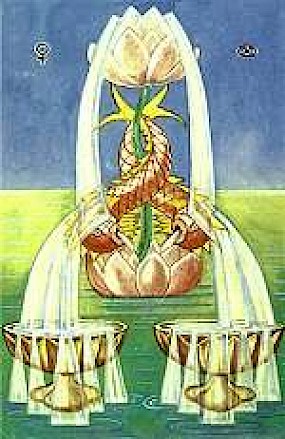
And here we have the Lord of Love, a card of bliss, deep joyous love reciprocated fully and with great enthusiasm, a card of reconciliations and new growth! Here we see harmonious and contented exchanges of emotion, which vibrate with an ecstatic undercurrent of passion and heat.
Because this card is a reflective and receptive one, there’s an issue that people sometimes forget when reading it – to be truly loved, deeply treasured, valued highly by others, we must first and foremost strive to feel those things for ourselves. When we work toward loving ourselves, we hold our inner nature in high regard, treating it with deference and proper respect. When we see ourselves in that light, other people cannot help but respond to our personal sense of value.
Furthermore, when we work to love ourselves, we release so many areas of self-doubt and uncertainty that we become infused by a new energy – and this we can lavish on others. The Two of Cups is about engaging in a caring and tender fashion with our own needs, first and foremost.
It isn’t so much about achieving self-love, as about, in every single day of our lives, striving towards self-love. That action leads us into a positive, self-supportive and accepting approach to life. And also, when we stop wasting energy telling ourselves what’s wrong with us, we have lots more energy to enjoy being who we are.
When this card comes up in a reading, if it relates to the inner journey, then it tells you to put your attention in the moment, to leave the past behind, and to let yourself be free to enjoy everything that comes your way.
If it relates to outer events, it may point to a forthcoming reconciliation in a relationship where there has been pain and disappointment – this need not be a love affair, it can cover many different types of loving relationship.
It might point up a new relationship which has recently begun and which will grow into a deep and lasting friendship or affair.
And finally, it may reassure you that the meaningful relationship in your life will strengthen and grow, developing into exactly what you need it to be!!
FRONTLINE PBS | Official Nov 1, 2022 Meet some of the defiant Russians pushing back against President Vladimir Putin’s crackdown on critics of the war in Ukraine. This journalism is made possible by viewers like you. Support your local PBS station here: http://www.pbs.org/donate. FRONTLINE tells the inside stories of activists and journalists risking arrest and imprisonment to protest and speak out about the Kremlin’s war effort — from a young woman whose TikToks have gone viral internationally, to an artist facing up to 10 years imprisonment after posting anti-war stickers in a grocery store, to a university professor whose parents live in Ukraine, to independent reporters seeking the truth about the war — including its death toll among the country’s soldiers, information that Russia has deemed a state secret. As Russia’s war on Ukraine approaches its ninth month and evidence of potential war crimes continues to mount, “Putin’s War at Home” is a powerful look at the Russian leader’s efforts to stifle domestic criticism — and some of the people in his country who are speaking out anyway. “Putin’s Russia is based on fear,” one journalist says in the documentary, adding that, “we decided to continue without censorship, whatever the cost.”
A user-friendly, step-by-step guide to understanding the mind
• Presents a practical journey into understanding consciousness–philosophy’s hardest problem, science’s final frontier, and spirituality’s deepest mystery
• Offers 7 steps to transform your life using the shadow and the light of consciousness
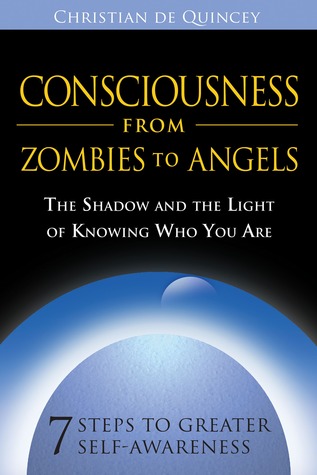
Consciousness from Zombies to Angels presents a practical, step-by-step “owner’s guide” for the mind that sorts out philosophy’s hardest problem, science’s final frontier, and spirituality’s deepest mystery–what consciousness is, how it works, and why it’s important. Christian de Quincey presents seven simple steps for understanding consciousness and how it can lead to spiritual awareness: observe your language, identify the problem, learn how to look, recognize your patterns, know yourself, embrace your shadow, and practice transformation.
All of us exhibit both shadow and light, aspects of ourselves we fear and deny (our inner Zombies) as well as qualities we admire and want to radiate (our inner Angels). The key to a creative and fulfilled life is to integrate both. De Quincey reveals that the way to transformation is to accept ourselves exactly as we are–a work in progress.
Readers will learn the difference between “energy talk” and “consciousness talk”; how the body affects the mind, and vice versa; and where to go for help to develop consciousness, heal emotions, or grow spiritually. De Quincey shows how to recognize and break habits and patterns that run your life, how to find out who you really are, and why facing up to your darkest fears will liberate your brightest light as you learn to embrace all of your humanity and experience the power of transformation.
New Thinking Allowed with Jeffrey Mishlove Mar 6, 2019 Bernard D. Beitman, MD, is former chair of the psychiatry department at the University of Missouri, Columbia. He is author of Connecting with Coincidence: The New Science of Using Synchronicity and Serendipity in Your Life. Here he points out that parapsychological events involving ostensible psychokinesis, telepathy, and precognition can also be thought of in terms of coincidence or synchronicity. Serendipity, however, need not involve psychic talents at all. He notes that certain normal psychological functions enable people to notice and act upon useful coincidences when they occur. He also maintains that some coincidences and synchronicities can be harmful and even deadly. New Thinking Allowed host, Jeffrey Mishlove, PhD, is author of The Roots of Consciousness, Psi Development Systems, and The PK Man. Between 1986 and 2002 he hosted and co-produced the original Thinking Allowed public television series. He is the recipient of the only doctoral diploma in “parapsychology” ever awarded by an accredited university (University of California, Berkeley, 1980). He is past-vice-president of the Association for Humanistic Psychology, and is the recipient of the Pathfinder Award from that association for his contributions to the study of consciousness. (Recorded on February 8, 2019)
Consciousness, spirituality, biography, sexuality, androgyny, futurism, space, the arts, science, astrology, democracy, humor, books, movies and more




 Music develops in its own elect that power of concentration on an idea, that form of yoga, that is purely European, having the traits of action and domination that are characteristic of the West: for music is an edifice in motion, all the parts of which have to be sensed simultaneously. It demands of the soul a vertiginous movement in the immobile, the eye clear, the will taut, the spirit flying high and free over the whole field of dreams. In no other musician has the embrace of thought been more violent, more continuous, more superhuman.