Bill Withers – Lean On Me (1973)

Universo Musical Oct 12, 2013 Sometimes in our lives We all have pain We all have sorrow But if we are wise We know that there’s always tomorrow Lean on me When you’re not strong And I’ll be your friend I’ll help you carry on For it won’t be long Till I’m gonna need Somebody to lean on Please Swallow your pride If I have things You need to borrow For no one can fill Those of your needs That you wont let show Ya just call on me brother When you need a hand We all need somebody to lean on I just might have a problem that you’ll understand We all need somebody to lean on Lean on me When you’re not strong And I’ll be your friend I’ll help you carry on For it won’t be long Till I’m gonna need somebody to lean on Ya just call on me brother When you need a hand We all need somebody to lean on I just might have a problem that you’ll understand We all need somebody to lean on If There is a load You have to bare That you can’t carry I’m right up the road I’ll share your load If you just call me Call me If you need a friend Call me If you need a friend If you ever need a friend Call me Call me Call me

(Courtesy of Dan Rather)

Historian Uncovers The Racist Roots Of The 2nd Amendment

Militias in the 2nd amendment were slave patrols

June 2, 202111:40 AM ET (npr.org)

Listen: https://www.npr.org/player/embed/1002107670/1002520291

DAVE DAVIES, HOST:

This is FRESH AIR. I’m Dave Davies in today for Terry Gross. In the 1990s, gun rights advocates, including the National Rifle Association, condemned federal authorities’ assault on the Branch Davidian compound in Waco, Texas, asserting that law-abiding citizens had a Second Amendment right to own guns for their self-defense. But our guest historian, Carol Anderson, says those groups have been noticeably quiet when police shoot African Americans who are legally carrying firearms and presenting no threat to the officers involved.

In a new book, Anderson argues that sharp racial distinctions in Americans’ treatment of gun ownership go back to the founding of the republic. The language of the Second Amendment itself, she writes, was crafted to ensure slave owners could quickly crush any rebellion or resistance from those they’d enslaved. And she says the right to bear arms, presumably guaranteed to all citizens, was repeatedly denied to African Americans with brutal consequences.

Carol Anderson is the Charles Howard Candler Professor and chair of African American Studies at Emory University. Her previous books include the bestseller “White Rage” and the 2018 book “One Person, No Vote: How Voter Suppression Is Destroying Our Democracy.” Her new book is “The Second: Race And Guns In A Fatally Unequal America.” She joins us from her home in Atlanta.

Carol Anderson, welcome to FRESH AIR.

CAROL ANDERSON: Oh, thank you so much for having me.

DAVIES: You know, you open the book by noting there are some distinctions in the outrage of the National Rifle Association and other gun rights advocates over citizens’ possession of guns. You want to cite an example or two of this?

ANDERSON: Yes. And what drew me to this book was the killing of Philando Castile up in Minnesota. And here was a Black man who was pulled over by the police. And the police officer asked to see his identification. Philando Castile’s using the NRA guidelines, alerts the officer that he has a licensed weapon with him. So he has a licensed gun. The police officer began shooting.

So here is a Black man who was gunned down for having a gun. And the NRA went virtually silent – virtually silent – and was only pushed and – to make what I call a non-statement statement – we believe that everybody should have the right to bear arms regardless of race – and nothing more after that except to say, well, you know, we can’t really weigh in on this until after the investigation. But this is the same group that called federal officers jackbooted thugs for what happened in Waco and what happened at Ruby Ridge when federal officers were actually gunned down. And the question was, do Black people have Second Amendment rights? And that’s what I went looking for – do we?

DAVIES: And you take us on a journey back to the days of colonial times and precolonial times. This is really fascinating stuff. You know, gun rights advocates cite the Second Amendment with, you know, an almost religious devotion, you know, talking about the right to bear arms. People forget the other part of the amendment that talks about a well-regulated militia. There’s interesting history. Let’s just go back. In the mid-18th century, in the revolutionary era, what were the state militias? I mean, what did they do? When were they assembled? What was their function?

ANDERSON: The state militias, particularly the state militias in the South, their primary function was to put down slave revolts, to buttress the work of the slave patrols who were there to go into the slave cabins looking for contraband, looking for weapons, looking for books. We saw the role of the militia primarily when you had a massive slave uprising in Stono, S.C. It was called the Stono Rebellion in 1739. South Carolina responded with a law saying that if you found an enslaved person trying to get to Spanish Florida, scalp them – also responded with the 1740 Negro Act that defined who the enslaved were. They are absolute slaves, for now and for those not yet born, and that they do not have the right to – access to weapons nor to books – and so really setting up the parameters of slavery and what would be enforced by the militia and by the slave patrols.

DAVIES: So certainly in the South, African Americans didn’t have access to firearms, and slave owners were very vigilant about suppressing any resistance or rebellion. Then comes the revolt against the crown of Great Britain. And there was a need to raise a continental army. And there weren’t as many soldiers as the, you know, as the founders hoped they could get. And there was a question, what about African Americans’ service – ability to serve in slave states and in non-slave states? What was the policy?

ANDERSON: And the policy in 1775 was that no African Americans, no Black people, would be able to serve in the Continental Army. But a series of British victories and the fact that the militias were proving not to be up to the task of fending off a professional army and that you weren’t getting enough white men to enlist in the Continental Army, to volunteer to fight, really began to change that policy. So one of the things that you saw happening in the North was being willing to emancipate their enslaved people, their enslaved men, if they were willing to fight for the patriots. That began to – and this – so this is one of the things – there was slavery in the North. You have Connecticut and you have, I believe, New Jersey that are saying, OK, fine. If you fight for us, you will be free.

DAVIES: And the British had their own offers, too, didn’t they?

ANDERSON: Oh, absolutely. They realized that there was a large enslaved population here in the United States, or in the colonies, that wanted freedom. And so the British offered that any enslaved man who was owned by a rebel and would fight for the British would gain his freedom. And you had this mass exodus of enslaved folks running to fight for the British because of that offer of freedom.

And this was sending a panic through the colonists. There was this fear. I believe Benjamin Franklin was like, they’re going to have our Negroes fighting armed against us. And you – again, the patriots had said, no, we are not going to have Black people fighting in the Continental Army. So when you have this mass of Black folks fighting for the British and you don’t have enough white men fighting for the patriots in order to really staff the Continental Army and you’ve got the militia that’s really not being able to fend off the British with any kind of level of effectiveness, they were having a personnel crisis of the first magnitude.

DAVIES: Right. And, you know, you’re right that after the war, the sort of narrative was that African Americans had betrayed their country by all fleeing to the British and supporting the crown. The reality was something different, wasn’t it?

ANDERSON: The reality was very different. After the patriots had opened up access to fighting is that you also had a wave of Black men then joining the Continental Army and that they served longer terms. They had a lower AWOL rate than whites. And they were paid less. But they were willing to fight for this nation. And the Continental Army was an integrated army, something that we would not see – whew – until the Korean War.

DAVIES: Right. And what do they get for it?

ANDERSON: (Laughter) They got a narrative that they were the enemies within. They got a narrative that this was a nation conceived by and fought for by only white men.

DAVIES: You know, the Second Amendment was crafted after the constitutional convention as part of the Bill of Rights. And it, of course, talks about a right to bear arms. It also deals directly with militias, particularly state militias. How is this an expression of racism in its day?

ANDERSON: It was in response to the concerns coming out of the Virginia ratification convention for the Constitution, led by Patrick Henry and George Mason, that a militia that was controlled solely by the federal government would not be there to protect the slave owners from a enslaved uprising. And it was the way that James Madison crafted that language in order to mollify the concerns coming out of Virginia and the anti-Federalists, that they would still have full control over their state militias. And those militias were used in order to quell slave revolts.

DAVIES: Right. So the fear was that a Union which was dominated by northern states would simply not see those militias for the same purposes the South did. They would take them for – you know, draft them for other purposes, like from a foreign invasion, and leave the job of guarding against the slave revolt unfilled. So in the end, what happens is the South agrees to join the Union. In – but part of it was that they had an assurance that their own militias would be seen as independent, used for their own purposes, i.e., suppressing slave revolts, right?

ANDERSON: Yes. Yes. In that, the Second Amendment really provided the cover, the assurances that Patrick Henry and George Mason needed that the militias would not be controlled by the federal government, but that they would be controlled by the states and at the beck and call of the states to be able to put down these uprisings.

DAVIES: We need to take a break here. Let me reintroduce you. We are speaking with Carol Anderson. She is a professor at Emory University. Her new book is “The Second: Race And Guns In A Fatally Unequal America.” She’ll be back to talk more after a short break. I’m Dave Davies. And this is FRESH AIR.

(SOUNDBITE OF DAN AUERBACH SONG, “HEARTBROKEN, IN DISREPAIR”)

DAVIES: This is FRESH AIR. And our guest is historian Carol Anderson. Her new book about the sharp racial distinctions that have governed Americans’ application of the Second Amendment right to bear arms is called “The Second: Race And Guns In A Fatally Unequal America.”

In the early years of the Republic, so citizens were guaranteed a right to bear arms in the Second Amendment, right? And state militias were – their independence was enshrined by the Second Amendment. There was this unanswered question of who exactly is a citizen, you know, who have these rights. And Congress kind of addressed this in the Naturalization Act of 1790, right? What did they tell us?

ANDERSON: Basically, if you had white skin, you could be a citizen. And your children who were under the age of 21 when you got your citizenship, they could be citizens. But what that did, that Naturalization Act, it basically left free Blacks in this quasi space of denizen – not quite enslaved, but not a citizen either, not with the full rights of citizenship.

DAVIES: So citizenship really out of their grasp at that point. So the South had gotten, you know, the independence of their militias. What rules governed the private possession of weapons as far as Black people in the South or the North after the revolution?

ANDERSON: You saw incredible restrictions being put in place about limiting access to arms. And this is across the board for free Blacks and, particularly, for the enslaved. And with each uprising, the laws became even more strict, even more definitive about who could and who could not bear arms. And so free Blacks were particularly proscribed. And so we see this, for instance, in Georgia, where Georgia had a law that restricted the carrying of guns. And in a court decision, the court ruled that that law violated the Second Amendment. But what the court did not do was to also overturn the Georgia law that prohibited free Blacks from carrying weapons. So that same court did not say that that law that prohibited free Blacks from carrying weapons, owning arms, that that violated their Second Amendment rights.

DAVIES: So this was a time when there was a lot of anxiety among ruling whites about the possibility of slave revolts. And part of this, of course, had to do with the fact that this was the age of revolution. I mean, there was the American revolt against the British crown, and after that, the French Revolution, you know, the idea of liberty, equality and fraternity. There was a concern that this was going to get into the heads of the enslaved Americans, right?

ANDERSON: Oh, absolutely. And really, what stoked that was the Haitian revolution. So when Haiti began to overthrow the French colonial masters, when Blacks were seizing that country for themselves, the violence of the Haitian revolution, the existence of the Haitian revolution just sent, basically, an earthquake of fear throughout the United States. You had George Washington lamenting the violence. You had Thomas Jefferson talking about he was fearful that those ideas over there. If they get here, it’s going to be fire. You had James Madison worried about the Haitian revolution.

And they’re also worried because whites who were fleeing Haiti and were bringing their enslaved people with them, when they showed up in Virginia, it was like, oh, there are too many of them. And the ideas that these Black Haitians would have, that somehow those ideas of revolution, those ideas of racial justice, those ideas of freedom and democracy would just metastasize throughout Virginia’s Black enslaved population and cause a revolt. You had that same fear coming out of Baltimore, that then began to open up the public armory to whites saying, you are justified in being armed because they’re bringing too many of these Black Haitians, these enslaved Haitians, up here who have these ideas that Black people can be free.

DAVIES: You know, and you have a remarkable quote in here from Thomas Jefferson – I don’t know that I’d ever heard this – where you said, quote, he could, quote, “see himself as the target of a justifiable revolution by his own slaves.” Well, not just fear, but recognition of the – (laughter) of the oppression itself.

ANDERSON: Yes. And I think that that was also part of what was driving this fear, the sense of retribution. What had been happening to the Black folks in slavery – the burnings, the castrations, the – you know, the poking out of eyes, all of those things – the stealing of the labor, of their lives, that what freedom meant for Black people was retribution against whites. And that’s how they interpreted what they saw in Haiti. As the reports were coming through, it was, oh, my gosh. Nobody white is safe. One man wrote to – believe it was to Jefferson or to Madison saying, you know, what they are doing would make Nero blush.

DAVIES: Well, and, you know, the fear of a slave revolt wasn’t just theoretical. I mean, there were several – there were revolts, and there were plots. And you describe how they were dealt with. I mean, maybe you want to take one of them. There was this – in 1800 in Virginia – a fairly elaborate plot that didn’t quite come to fruition.

ANDERSON: Right. It was Gabriel’s revolt. Gabriel had worked out an elaborate system that spread out over multiple counties and multiple cities that had a large number of enslaved folks and some free Blacks, and a couple of white men who were French who were plotting to overthrow the slave regime and create a multiracial, multi-ethnic republic. And on the night that the revolt was supposed to happen, there was a massive thunderstorm. And that blew the logistics out of the water about how they were supposed to meet up, take over the armory, take over – you know, set of fire to divert attention from where the treasury was so they would be able to arm and to pay the insurgents.

DAVIES: And so the plot failed. What kind of retribution did those who’d planned to do this face from whites?

Continue reading Historian Uncovers The Racist Roots Of The 2nd Amendment

How Can We Fix Inflation? With Economist Steve Hanke

The Problem With Jon Stewart • Oct 19, 2022 Watch The Problem With Jon Stewart on Apple TV+ https://theproblem.link/AppleTV Jon is joined by Steve Hanke, a Professor of Applied Economics at The Johns Hopkins University, for a chat about why we find ourselves in this current inflation disaster and how we might get out of it. They get into whether the Fed is blowing it, the role of money supply, and whether anyone is looking out for the little guy in all of this monetary maneuvering. They don’t always agree, but Jon manages to score a passing grade from the professor.

(Recommended by Hanz Bolen, H.W., M.)

Blood moon lunar eclipse to rise on Election Day

After Nov. 9, the next full moon eclipse will occur on March 14, 2025.

By John Ross Ferrara and Nexstar Media Wire

Nov. 03, 2022 (thehill.com)

Story at a glance


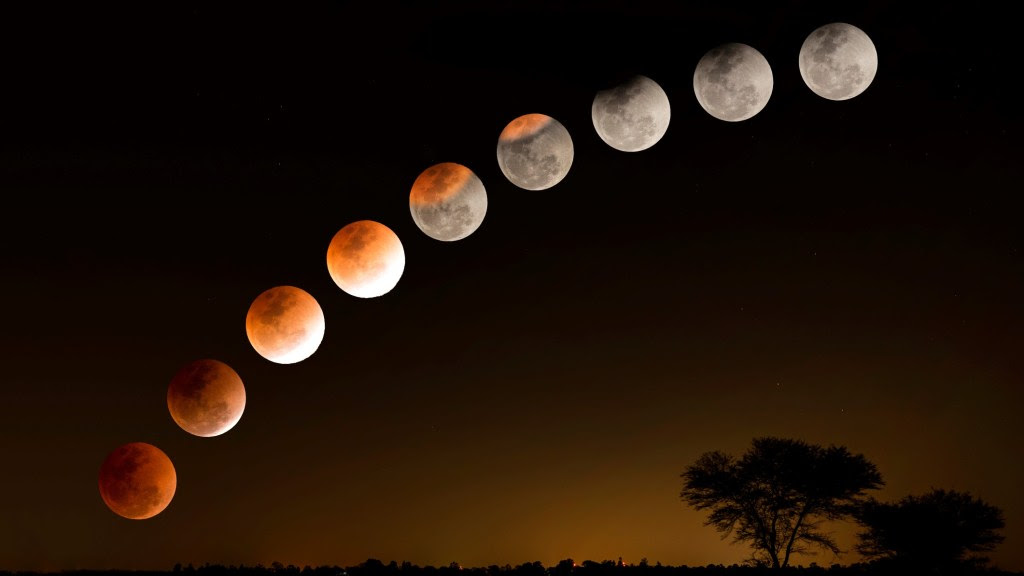
  • A lunar eclipse occurs when the sun, Earth, and moon align, causing the moon to be draped in the darkest part of the Earth’s shadow, known as the umbra.

  • These lunar eclipses are sometimes referred to as “blood moons” due to the reddish hue that is cast onto the moon by refracted sunlight passing through Earth’s atmosphere.

  • If unobstructed by cloud cover, the total eclipse of the moon will be visible in the Pacific Northwest and across North and Central America.

PORTLAND, Ore. (KOIN) — An ominous blood moon lunar eclipse will hang in the sky as ballots are set to be tallied for the Nov. 8 general election.

The Election Day eclipse, NASA says, is the last total lunar eclipse the Earth will see for the next three years. A lunar eclipse occurs when the sun, Earth, and moon align, causing the moon to be draped in the darkest part of the Earth’s shadow, known as the umbra.

NASA: “During a lunar eclipse, Earth’s atmosphere scatters sunlight. The blue light from the sun scatters away, and longer-wavelength red, orange, and yellow light pass through, turning our moon red.” | Graphic by NASA

These lunar eclipses are sometimes referred to as “blood moons” due to the reddish hue that is cast onto the moon by refracted sunlight passing through Earth’s atmosphere. This phenomenon, known as Rayleigh scattering, also gives the Earth its blue skies and rose-colored sunsets.

“The more dust or clouds in Earth’s atmosphere during the eclipse, the redder the Moon will appear,” NASA says. “It’s as if all the world’s sunrises and sunsets are projected onto the Moon.”Voting dress code: What not to wear to the polls 

If unobstructed by cloud cover, the total eclipse of the moon will be visible in the Pacific Northwest and across North and Central America. In Oregon, the eclipse will begin two minutes after midnight on Nov. 8.

The moon will reach full eclipse, or “totality,” at 5:17 a.m. ET and will end after the moon sets.

“You don’t need any special equipment to observe a lunar eclipse, although binoculars or a telescope will enhance the view and the red color,” NASA says. “A dark environment away from bright lights makes for the best viewing conditions.”

A map of eclipse visibility. | NASA

Ironically, the Election Day eclipse is also a “Beaver Moon” — the second full moon of autumn. This term, NASA says, was popularized by the Maine Farmer’s Almanac, which published the Native American names for full moons in the 1930s.Road rage leaves bullets in family car; Oregon mayor arrested 

“According to this almanac, the Native American tribes of what is now the northern and eastern United States named this the Beaver Moon,” NASA explains. “One interpretation is that mid-fall was the time to set beaver traps before the swamps freeze to ensure a supply of warm winter furs. Another interpretation suggests that the name ‘beaver moon’ came from how active the beavers are in this season as they prepare for winter.”

After Nov. 9, the next full moon eclipse will occur on March 14, 2025.

(Contributed by Gwyllm Llwydd)

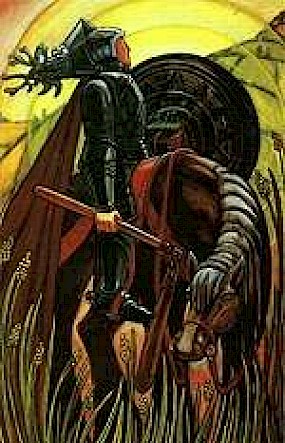
Tarot Card for November 4: The Knight of Disks


The Knight of Disks

With the Knight of Disks we see a man who is deeply committed to practical matters in life – work, career, home and family are his major spheres of influence. He is diligent, hard-working and pays great attention to detail.

His progress in life is a steady, sure development of ongoing projects, which he works through with great industriousness and perseverance. Not for him, risky schemes, nor extravagant business deals. He moves with caution and circumspection, consolidating each step forward before taking the next one.

Some would consider him dull and boring – others would call him prudent and reliable.

The card often comes up to represent a quiet man, whose approach to life is measured and calm. However it’s as well not to be taken in by the sturdy exterior. Disks males have a capacity for deep and boundless passion – they just don’t shout too loudly about it. Whilst life with him may not be a roller-coaster ride, you will surely know what to expect, and what you can count on.

He makes an excellent business partner, particularly for the high-flyer, because he introduces forethought and pre-planning. He’s a faithful and dependable partner, and a committed father.

The Knight of Disks

(via angelpaths.com and Alan Blackman)

UKRAINE EMERGENCY TRANSLATION GROUP

Translation is a 5-step process of “straight thinking in the abstract.” The first step is an ontological statement of being beginning with the syllogism: “Truth is that which is so. That which is not truth is not so. Therefore Truth is all there is.” The second step is the sense testimony (what the senses tell us about anything). The third step is the argument between the absolute abstract nature of truth from the first step and the relative specific truth of experience from the second step. The fourth step is filtering out the conclusions you have arrived at in the third step. The fifth step is your overall conclusion.

The Ukraine Emergency Translation Group meets every Friday at 11 a.m. Pacific time via Zoom. We call it the Ukraine Emergency Translation Group but we welcome Translations about anything. Here are sense testimonies (2nd steps) we translated and their corresponding conclusions: (5th steps) this week.

2) Relationships are weakened with COVID
5) One formless relationship is TRUTH here now.

2) Events can be misinterpreted and cause pain and violence. 
5)  Truth is the event of consciousness, all there is, all that can be, the only cause, the only understanding 

2) It’s difficult making plans with other people if they won’t respond to you.
5) Heavy demand is immediately met my effortless supply.

All Translators are welcome to join us on Fridays at 11 a.m. Pacific time. The link is: https://us06web.zoom.us/j/83608167293?pwd=cFRsckVibXMwTGJ0KzhaV0R2cWJtdz09

For information about Translation or other Prosperos classes go to: https://www.theprosperos.org/teaching

Some comments from group members about this group:

“I like the group interaction and different perspectives. Also, at least for me, it gives me a sense of accountability and keeps the practice fresh in my mind. ” –Sarah Flynn

“This group has freed me up to have more fun with my Translations.”
–Mike Zonta

Free Will Astrology: Week of November 3, 2022

NOVEMBER 1, 2022 AT 7:00 AM BY ROB BREZSNY (newcity.com)

Photo: Melanie Wasser

ARIES (March 21-April 19): In the coming weeks, I encourage you to work as hard as you have ever worked. Work smart, too. Work with flair and aplomb and relish. You now have a surprisingly fertile opportunity to reinvent how you do your work and how you feel about your work. To take maximum advantage of this potential breakthrough, you should inspire yourself to give more of your heart and soul to your work than you have previously imagined possible. (PS: By “work,” I mean your job and any crucial activity that is both challenging and rewarding.)

TAURUS (April 20-May 20): Here’s my weird suggestion, Taurus. Just for now, only for a week or two, experiment with dreaming about what you want but can’t have. And just for now, only for a week or two, go in pursuit of what you want but can’t have. I predict that these exercises in quixotic futility will generate an unexpected benefit. They will motivate you to dream true and strong and deep about what you do want and can have. They will intensify and focus you to pursue what you do want and can have.

GEMINI (May 21-June 20): Your most successful times in life usually come when all your various selves are involved. During these interludes, none of them is neglected or shunted to the outskirts. In my astrological opinion, you will be wise to ensure this scenario is in full play during the coming weeks. In fact, I recommend you throw a big Unity Party and invite all your various sub-personalities to come as they are. Have outrageous fun acting out the festivities. Set out a placemat and name tag on a table for each participant. Move around from seat to seat and speak from the heart on behalf of each one. Later, discuss a project you could all participate in creating.

CANCER (June 21-July 22): A Cancerian reader named Joost Joring explained to me how he cultivates the art of being the best Cancerian he can be. He said, “I shape my psyche into a fortress, and I make people feel privileged when they are allowed inside. If I must sometimes instruct my allies to stay outside for a while, to camp out by the drawbridge as I work out my problems, I make sure they know they can still love me—and that I still love them.” I appreciate Joost’s perspective. As a Cancerian myself, I can attest to its value. But I will also note that in the coming weeks, you will reap some nice benefits from having less of a fortress mentality. In my astrological opinion, it’s PARTY TIME!

LEO (July 23-Aug. 22): Leo poet Antonio Machado wrote, “I thought my fire was out, and I stirred the ashes. I burnt my fingers.” I’m telling you this so you won’t make the same mistake, Leo. Your energy may be a bit less radiant and fervent than usual right now, but that’s only because you’re in a recharging phase. Your deep reserves of fertility and power are regenerating. That’s a good thing! Don’t make the error of thinking it’s a sign of reduced vitality. Don’t overreact with a flurry of worry.

VIRGO (Aug. 23-Sept. 22): Virgo author Siegfried Sassoon became renowned for the poetry he wrote about being a soldier in World War I. Having witnessed carnage firsthand, he became adept at focusing on what was truly important. “As long as I can go on living a rich inner life,” he wrote, “I have no cause for complaint, and I welcome anything which helps me to simplify my life, which seems to be more and more a process of eliminating inessentials!” I suggest we make Sassoon your inspirational role model for the next three weeks. What inessentials can you eliminate? What could you do to enhance your appreciation for all the everyday miracles that life offers you?

LIBRA (Sept. 23-Oct. 22): You Libras have a talent that I consider a superpower: You can remove yourself from the heart of the chaos and deliver astute insights about how to tame the chaos. I like that about you. I have personally benefited from it on numerous occasions. But for the next few weeks, I will ask you to try something different. I’ll encourage you to put an emphasis on practical action, however imperfect it might be, more than on in-depth analysis. This moment in the history of your universe requires a commitment to getting things done, even if they’re untidy and incomplete. Here’s your motto: “I improvise compromises in the midst of the interesting mess.”

SCORPIO (Oct. 23-Nov. 21): “Fear is the raw material from which courage is manufactured,” said author Martha Beck. “Without it, we wouldn’t even know what it means to be brave.” I love that quote—and I especially love it as a guiding meditation for you Scorpios right now. We usually think of fear as an unambiguously bad thing, a drain of our precious life force. But I suspect that for you, it will turn out to be useful in the coming days. You’re going to find a way to transmute fear into boldness, bravery, and even badassery.

SAGITTARIUS (Nov. 22-Dec. 21): For decades, the Canadian city of Sudbury hosted a robust mining industry. Deposits of nickel sulphide ore spawned a booming business. But these riches also brought terrible pollution. Sudbury’s native vegetation was devastated. The land was stained with foul air produced by the smelting process. An effort to re-green the area began in the 1970s. Today, the air is among the cleanest in the province of Ontario. In the spirit of this transformation, I invite you to embark on a personal reclamation project. Now is a favorable time to detoxify and purify any parts of your life that have been spoiled or sullied.

CAPRICORN (Dec. 22-Jan. 19): The literal meaning of the ancient Greek word aigílips is “devoid of goats.” It refers to a place on the earth that is so high and steep that not even sure-footed goats can climb it. There aren’t many of those places. Similarly, there are very few metaphorical peaks that a determined Capricorn can’t reach. One of your specialties is the power to master seemingly improbable and impassable heights. But here’s an unexpected twist in your destiny: In the coming months, your forte will be a talent for going very far down and in. Your agility at ascending, for a change, will be useful in descending—for exploring the depths. Now is a good time to get started!

AQUARIUS (Jan. 20-Feb. 18): Evolved Aquarians are often blessed with unprecedented friendships and free-spirited intimacy and innovative alliances. People who align themselves with you may enjoy experimental collaborations they never imagined before engaging with you. They might be surprised at the creative potentials unleashed in them because of their synergy with you. In the coming weeks and months, you will have even more power than usual to generate such liaisons and connections. You might want to make a copy of this horoscope and use it as your calling card or business card.

PISCES (Feb. 19-March 20): I surveyed the history of literature to identify authors I consider highly intuitive. Piscean-born Anais Nin was my top choice. She used language with fluidity and lyricism. She lived a colorful, unpredictable life. No one better deserves the title of Intuition Champion. And yet she also had a discerning view of this faculty. She wrote, “I began to understand that there were times when I must question my intuition and separate it from my anxieties or fears. I must think, observe, question, seek facts and not trust blindly to my intuition.” I admire her caution. And I suspect it was one reason her intuition was so potent. Your assignment, Pisces, is to apply her approach to your relationship with your intuition. The coming months will be a time when you can supercharge this key aspect of your intelligence and make it work for you better than it ever has before.

Homework: Imagine you have taken a particular consciousness-altering drug. Imagine how it affects you. Newsletter.FreeWillAstrology.com

Astrology Of November 2022 – Total Lunar Eclipse In Taurus

Astro Butterfly Nov 3, 2022

November 2022 is a blend of Scorpio, Lunar Nodes, Uranus, and Sagittarius energy.

To get an idea, just picture zombies on a roller coaster. Scary?

November feels a bit scary – not necessarily in a negative way, but when we have Scorpio transits, Eclipses, Uranus activations, we know we’re not up for a smooth stroll in the park. At least not in the first part of the month.

The Total Lunar Eclipse in Taurus is exactly conjunct Uranus. You can “expect the unexpected”, or in other terms, don’t even try to prepare for what’s about to come.

Mid-month the energy changes. Mars gets into friendly terms with Saturn, and Mercury, Venus and then the Sun move into Sagittarius. There is light at the end of the tunnel!

But let’s take a look at the most important transits of the month:

November 3rd-6th, 2022 – Venus, Sun, Mercury Conjunct South Node

The first week of the month is heavy, murky and almost daunting. Venus, Sun and Mercury all conjunct the South Node in Scorpio. That’s a lot of Scorpio/South Node energy to deal with!

This transit will point to what we need to let go of, but also to those strengths and resources we might have forgotten we have. Sometimes life pushes us to the limits to remind us what these limits are, to remind us of who we really are.

Who are you, behind layers of identification? The real you is “all that you can’t leave behind” – one small luggage with the essentials, with what you hold most dear. Everything else is disposable.

November 8th, 2022 – Total Lunar Eclipse In Taurus

On November 8th, 2022 we have a Full Moon and Total Lunar Eclipse at 16° Taurus. To say this eclipse is intense is an understatement. The Eclipse is conjunct Uranus (at 16° Taurus), opposite Mercury (at 15° Scorpio), and square Saturn (at 18° Aquarius).

The eclipse can bring some unexpected shake ups and developments, and Saturn at the apex of the T-square will make things real.

This is a North Node eclipse that will initially shake us to the core, but will eventually open us up to new possibilities and realities. Whatever happens is for the sake of our growth and development.

Not everyone will be directly hit by the eclipse, but if you have planets or angles between 15°-19° in fixed signs (Taurus, Leo, Scorpio, Aquarius), the eclipse will speak to you directly.

November 8th, 2022 – Sun Conjunct Mercury And Oppose Uranus

On November 8th, 2022 Sun is conjunct Mercury at 16° Scorpio.

Sun-Mercury conjunctions are always important, but since this one happens exactly at the eclipse, and is exactly opposite Uranus, it will come with especially important news, insights and revelations.

Mercury is in Scorpio, the sign of secrets and investigations. Some unexpected or even shocking news may come to light.

At a personal level, you may become aware of something that will completely shift your perception of reality. Alternatively you may find a solution to a problem or see things from a completely new angle.

November 16th-17th, 2022 – Venus And Mercury Enter Sagittarius

On November 16th and November 17th, Venus and Mercury leave Scorpio and enter Sagittarius.

The heavy curtain is finally being lifted, and we can now see the light. Venus and Mercury change signs almost at the same time – that’s quite a shift.

Scorpio and Sagittarius are very different energies. Scorpio loves digging in the mud – while Sagittarius is that sense of relief and optimism we get infused with when we get on the other side of the ordeal. Yes, we’ve made it!

November 21st, 2022 – Mercury Conjunct Venus in Sagittarius

On November 21st, 2022 Mercury is conjunct Venus at 7° Sagittarius.

Mercury conjunct Venus is an auspicious transit that will bring a sense of expansion, optimism and gratitude into our lives. We will find it easier to see the good in ourselves and others.

We may also be interested in exploring new horizons, going on an adventure, or embarking on a new field of study.

November 22nd, 2022 – Sun Enters Sagittarius

On November 22nd, 2022 the Sun enters Sagittarius. Happy birthday to all Sagittarius out there! This is that time of the year when everyone feels a bit more optimistic and upbeat.

Sagittarius is probably the most anticipated astrological season of the year. This is when the US celebrates Thanksgiving, the holidays are near and we are filled up with anticipation, gratitude and hope for the future.

November 23rd, 2022 – New Moon In Sagittarius

On November 23rd, 2022 we have a New Moon at 1° Sagittarius.

This is a fabulous New Moon that is trine her ruler, Jupiter. Jupiter turns direct exactly at the time of the New Moon which is particularly auspicious.

There is a sense of optimism and forward momentum in the air. We haven’t had such a beautiful lunation in a looong time… make sure you take advantage of it!

November 23rd, 2022 – Jupiter Goes Direct

On November 23rd, 2022 Jupiter goes direct at 28° Pisces.

Jupiter direct, together with an auspicious New Moon make for a gratitude-filled Thanksgiving.

Even if you don’t celebrate Thanksgiving, take this opportunity to acknowledge the good things or the good people in your life.

Jupiter turning direct under the beams of the New Moon will remind us that the world is truly our oyster, and that we can re-create our reality every single day.