Artist, technologist, and philosopher James Bridle’s Ways of Being is a brilliant, searching exploration of different kinds of intelligence–plant, animal, human, artificial–and how they transform our understanding of humans’ place in the cosmos.
What does it mean to be intelligent? Is it something unique to humans, or shared with other beings–beings of flesh, wood, stone, and silicon? The last few years have seen rapid advances in “artificial” intelligence. But as it approaches, it also gets weirder: rather than a friend or helpmate, AI increasingly appears as something stranger than we ever imagined, an alien invention that threatens to decenter and supplant us.
At the same time, we’re only just becoming aware of the other intelligences which have been with us all along, even if we’ve failed to recognize or acknowledge them. These others–the animals, plants, and natural systems that surround us are slowly revealing their complexity, agency, and knowledge, just as the technologies we’ve built to sustain ourselves are threatening to cause their extinction, and ours. What can we learn from them, and how can we change ourselves, our technologies, our societies, and our politics, to live better and more equitably with one another and the non-human world?
Artist and maverick thinker James Bridle drawn on biology and physics, computation, literature, art, and philosophy, to answer these unsettling questions. Startling and bold, Ways of Being explores the fascinating, strange and multitudinous forms of knowing, doing, and being which are becoming evident in the present, and which are essential for our survival.
“When you surrender, the problem ceases to exist,” Henry Miller wrote in his stunning letter to Anaïs Nin (February 21, 1903–January 14, 1977). “Try to solve it, or conquer it, and you only set up more resistance.”
But we, the controlling species, the conquering species, have a hard time with this notion of surrender; we, the conflicted species, spend our lives resisting it yet craving its liberations.
Anaïs Nin
Nin herself — a woman uncommonly liberated from the common traps of convention, control, and self-consciousness — took up the spiritual mechanics of this paradox in her first published book, D. H. Lawrence: An Unprofessional Study (public library), composed when she was still in her twenties.
With an eye to D.H. Lawrence (September 11, 1885–March 2, 1930) and his “philosophy that was against division,” his “plea for whole vision,” she writes:
When the realization came to the moderns of the importance of vitality and warmth, they willed the warmth with their minds. But Lawrence, with the terrible flair of the genius, sensed that a mere mental conjuring of the elemental was a perversion… Lawrence believed that the feelings of the body, from its most extreme impulses to its smallest gesture, are the warm root for true vision, and from that warm root can we truly grow. The livingness of the body was natural; the interference of the mind had created divisions, the consciousness of wrong-doing or well-doing.
Life is a process of becoming, a combination of states we have to go through. Where people fail is that they wish to elect a state and remain in it. This is a kind of death.
It was Lawrence’s own writing that awakened in her this awareness of ongoingness and the urgency of total aliveness — the way “livingness is the axis of his world, the light, the gravitation, and electromagnetism of his world.”
In his 1924 novel The Boy in the Bush, Lawrence makes a stunning case for the indivisibility of it all — the beauty and the sorrow, the ache and the astonishment:
All real living hurts as well as fulfils. Happiness comes when we have lived and have a respite for sheer forgetting. Happiness, in the vulgar sense, is just a holiday experience. The life-long happiness lies in being used by life; hurt by life, driven and goaded by life, replenished and overjoyed with life, fighting for life’s sake. That is real happiness. In the undergoing, a large part of it is pain.
D.H. Lawrence
This was the foundational philosophy of Lawrence’s worldview — the pulse-beat that makes his writing so resonant and eternally alive, the way all great spiritual texts are. He distilled this view in an especially beautiful passage from his 1923 novel Kangaroo, reckoning with the most universal reality of life — the reality we spend our lives fighting, yet the one that peeks through in all of our greatest works of art and highest triumphs of the creative spirit. Echoing Whitman’s defense of our inner multitudes, often at odds with each other, he writes in an era when every woman was a “man” purely as a matter of linguistic convention:
If a man loves life, and feels the sacredness and mystery of life, then he knows that life is full of strange and subtle and even conflicting imperatives. And a wise man learns to recognize the imperatives as they arise — or nearly so — and to obey. But most men bruise themselves to death trying to fight and overcome their own, new, life-born needs, life’s ever strange imperatives. The secret of all life is obedience: obedience to the urge that arises in the soul, the urge that is life itself, urging us to new gestures, new embraces, new emotions, new combinations, new creations.
In the same epoch when Hermann Hesse so beautifully defended the wisdom of the inner voice, Lawrence’s protagonist makes a passionate case for listening to the song of life as it reverberates through the singular cathedral of each self, yours and mine, as it did for Nin and Lawrence and every other great mind long sung out of existence:
I offer no creed. I offer myself, my heart of wisdom, strange warm cavern where the voice of the oracle steams in from the unknown; I offer my consciousness, which hears the voice; and I offer my mind and my will, for the battle against every obstacle to respond to the voice of life.
Dec 19, 2015 One for the Christmas season, our rendition of ‘Oh Holy Night’. Thanks to David Arkins for recording the audio at Crookedwood Studios and Ovie for recording the video!
John Davison Rockefeller Sr. (July 8, 1839 – May 23, 1937) was an American business magnate and philanthropist. He has been widely considered the wealthiest American of all time and the richest person in modern history. Wikipedia
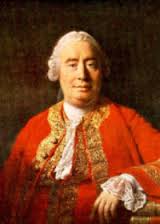
Hume argued that inductive reasoning and belief in causality cannot be justified rationally; instead, they result from custom and mental habit. We never actually perceive that one event causes another but only experience the “constant conjunction” of events. This problem of induction means that to draw any causal inferences from past experience, it is necessary to presuppose that the future will resemble the past, a presupposition which cannot itself be grounded in prior experience.[13]
An opponent of philosophical rationalists, Hume held that passions rather than reason govern human behaviour, famously proclaiming that “Reason is, and ought only to be the slave of the passions.”[12][14] Hume was also a sentimentalist who held that ethics are based on emotion or sentiment rather than abstract moral principle. He maintained an early commitment to naturalistic explanations of moral phenomena and is usually taken to have first clearly expounded the is–ought problem, or the idea that a statement of fact alone can never give rise to a normative conclusion of what ought to be done.[15]
Hume also denied that humans have an actual conception of the self, positing that we experience only a bundle of sensations, and that the self is nothing more than this bundle of causally-connected perceptions. Hume’s compatibilist theory of free will takes causal determinism as fully compatible with human freedom.[16] His views on philosophy of religion, including his rejection of miracles and the argument from design for God’s existence, were especially controversial for their time.
Hume was born on 26 April 1711 (Old Style), as David Home, in a tenement on the north side of Edinburgh‘s Lawnmarket. He was the second of two sons born to Catherine Home (néeFalconer), daughter of Sir David Falconer of Newton and wife Mary Falconer (née Norvell),[17] and Joseph Home of Chirnside in the County of Berwick, an advocate of Ninewells. Joseph died just after David’s second birthday. Catherine, who never remarried, raised the two brothers and their sister on her own.[18]
Hume changed his family name’s spelling in 1734, as the surname ‘Home’ (pronounced as ‘Hume’) was not well-known in England. Hume never married and lived partly at his Chirnside family home in Berwickshire, which had belonged to the family since the 16th century. His finances as a young man were very “slender”, as his family was not rich and, as a younger son, he had little patrimony to live on.[19]
Hume attended the University of Edinburgh at an unusually early age—either 12 or possibly as young as 10—at a time when 14 was the typical age. Initially, Hume considered a career in law, because of his family. However, in his words, he came to have:[19]
…an insurmountable aversion to everything but the pursuits of Philosophy and general Learning; and while [my family] fanceyed I was poring over Voet and Vinnius, Cicero and Virgil were the Authors which I was secretly devouring.
He had little respect for the professors of his time, telling a friend in 1735 that “there is nothing to be learnt from a Professor, which is not to be met with in Books”.[20] He did not graduate.[21]
“Disease of the learned”
Aged 18 or so, Hume made a philosophical discovery that opened up to him “a new Scene of Thought”, inspiring him “to throw up every other Pleasure or Business to apply entirely to it”.[22] As he did not recount what this scene exactly was, commentators have offered a variety of speculations.[23] One prominent interpretation among contemporary Humean scholarship is that this new “scene of thought” was Hume’s realisation that Francis Hutcheson‘s theory of moral sense could be applied to the understanding of morality as well.
From this inspiration, Hume set out to spend a minimum of 10 years reading and writing. He soon came to the verge of a mental breakdown, first starting with a coldness—which he attributed to a “Laziness of Temper”—that lasted about nine months. Later, some scurvy spots broke out on his fingers, persuading Hume’s physician to diagnose Hume as suffering from the “Disease of the Learned”.
Hume wrote that he “went under a Course of Bitters and Anti-Hysteric Pills”, taken along with a pint of claret every day. He also decided to have a more active life to better continue his learning.[24] His health improved somewhat, but in 1731 he was afflicted with a ravenous appetite and palpitations of the heart. After eating well for a time, he went from being “tall, lean and raw-bon’d” to being “sturdy, robust [and] healthful-like.”[25][26][27] Indeed, Hume would become well known for being obese and having a fondness for good port and cheese.[28]
Career
Although having noble ancestry, at 25 years of age, Hume had no source of income and no learned profession. As was common at his time, he became a merchant‘s assistant, despite having to leave his native Scotland. He travelled via Bristol to La Flèche in Anjou, France. There he had frequent discourse with the Jesuits of the College of La Flèche.[29]
Hume was derailed in his attempts to start a university career by protests over his alleged “atheism“,[30][31] also lamenting that his literary debut, A Treatise of Human Nature, “fell dead-born from the press.”[17] However, he found literary success in his lifetime as an essayist, and a career as a librarian at the University of Edinburgh. His tenure there, and the access to research materials it provided, resulted in Hume’s writing the massive six-volume The History of England, which became a bestseller and the standard history of England in its day. For over 60 years, Hume was the dominant interpreter of English history.[32]: 120 He described his “love for literary fame” as his “ruling passion”[17] and judged his two late works, the so-called “first” and “second” enquiries, An Enquiry Concerning Human Understanding and An Enquiry Concerning the Principles of Morals, as his greatest literary and philosophical achievements.[17] He would ask of his contemporaries to judge him on the merits of the later texts alone, rather than on the more radical formulations of his early, youthful work, dismissing his philosophical debut as juvenilia: “A work which the Author had projected before he left College.”[33] Despite Hume’s protestations, a consensus exists today that his most important arguments and philosophically distinctive doctrines are found in the original form they take in the Treatise. Though he was only 23 years old when starting this work, it is now regarded as one of the most important in the history of Western philosophy.[15]
The Dad’s Doomsday Gui • Aug 2, 2022 Today Bernardo Kastrup joins the podcast to discuss God, suffering, reality and how these operate within the framework of metaphysical idealism (the notion that reality is essentially mental). Bernardo has a Ph.D. in philosophy (ontology, philosophy of mind) and another Ph.D. in computer engineering (reconfigurable computing, artificial intelligence). He has worked at CERN and the Philips Research Laboratories (where the ‘Casimir Effect’ of Quantum Field Theory was discovered). Bernardo was kind enough to spend over two hours discussing consciousness, religion, the nature of Mind (God), purpose and so much more. It was a fascinating discussion that came at the perfect time, as I grapple with questions regarding the purpose of life, pain and what it all means. I can’t thank Bernardo enough for his generosity.
Fabiola Valentín and Mariana Varela posted a video highlighting their two years together and their courthouse wedding
Fabiola Valentín and Mariana Varela, both former Miss Grand International finalists, married on 28 October in a secret ceremony. Photograph: Ricardo Arduengo/AP
@gaoladipo Thu 3 Nov 2022 17.18 EDT (TheGuardian.com)
The former pageant queens Miss Puerto Rico and Miss Argentina have revealed a romantic secret: not only have they been in a relationship, but last weekend they tied the knot.
After two years together, Fabiola Valentín of Puerto Rico and Mariana Varela of Argentina posted an Instagram reel celebrating their romance.
Fabiola Valentín and Mariana Varela (Miss Puerto Rico and Miss Argentina) getting married. Photograph: Instagram
“After deciding to keep our relationship private, we opened the doors to you on a special day,” the caption said, surrounded by heart and ring emojis.
The video showed highlights from their time together, including travel, cuddles and the wedding proposal. The couple got married on 28 October in a Puerto Rico courthouse dressed in white.
The post has received almost 10,000 comments. “Omg congratulations MGI brought together a beautiful union,” said Miss Grand International 2020 winner Abena Akuaba, referring to the international beauty pageant.
“Congratulations beautiful, God bless your union and long live love!!!!” wrote Valentina Figuera, the previous year’s winner.
The pair appear to have met while competing at the Miss Grand International pageant in Thailand, reported NBC news. They both made it to the Top 10.
Same-sex marriage is legal in Argentina and has been legal in Puerto Rico since 2015 following a US supreme court ruling.
From favorite moons to the search for alien life, astronomer Heidi Hammel discusses the latest in astronomy and the breakthrough innovations behind her work with NASA’s James Webb Space Telescope. In conversation with science journalist Nadia Drake, Hammel shares how scientists are studying objects that are farther away and older than ever before, searching for answers to how our universe evolved — and what else might be out there.Read transcript
This talk was presented at an official TED conference. TED’s editors chose to feature it for you.
Dr. Heidi Hammel is an interdisciplinary scientist for NASA’s James Webb Space Telescope (JWST), launched in 2021 to search for the first galaxies or luminous objects formed after the Big Bang.


 When the realization came to the moderns of the importance of vitality and warmth, they willed the warmth with their minds. But Lawrence, with the terrible flair of the genius, sensed that a mere mental conjuring of the elemental was a perversion… Lawrence believed that the feelings of the body, from its most extreme impulses to its smallest gesture, are the warm root for true vision, and from that warm root can we truly grow. The livingness of the body was natural; the interference of the mind had created divisions, the consciousness of wrong-doing or well-doing.