Medicine has failed chronic pain patients. Here’s what they need

Medicine has failed chronic pain patients. Here’s what they need | Psyche

A doctor greets her patient at the Hospital Casa do Caminho in Araxá, Brazil, 15 November 2015. Photo by Ricardo Funari/Brazil Photos/LightRocket/Getty

Haider Warraich is a physician at Brigham and Women’s Hospital, Harvard Medical School, and the VA Boston Healthcare System. He is the author of Modern Death (2017), State of the Heart (2019) and The Song of Our Scars: The Untold Story of Pain (2022), and writes for The New York Times and The Washington Post, among others.  He lives in  Boston, Massachusetts.

Edited by Pam Weintraub

5 July 2022 (psyche.co)

Chronic pain, defined as pain felt for longer than three or six months, affects one in five people around the world. It often affects younger people in otherwise good health in their most productive years. Low back pain, the most common cause of chronic pain, is the leading cause of years lost to disability around the world. Yet despite the enormity of the issue, the management of chronic pain has been one of the greatest failures of medicine, threatening to only get worse in the age of COVID-19.

The founder of modern pain medicine was the American anaesthesiologist John Bonica, who wrote the first ever textbook on pain medicine and helped develop procedures such as epidural anaesthesia, a godsend for women in labour. Decrying the sorry state of how people in extremis were treated, he wrote:

Many of these [patients] are exposed to a high risk of iatrogenic [medical] complication from improper therapy, including narcotic intoxication and multiple, often useless, and at times mutilating operations; a significant number give up medical care and consult quacks who not only deplete the patient’s financial resources but often do harm; some patients with severe intractable pain become so desperate as to commit suicide.

He also lamented ‘the progressive trend towards specialisation, which is conducive to each specialist viewing pain in a very narrow, tubular fashion’. He wrote this in 1976, and things have gotten worse since.

The most glaring misstep was the over-prescription of opioids for patients with chronic pain. While opioids are incredibly effective for acute pain, such as what you might feel after breaking your arm, and might be beneficial for some patients with chronic pain, there is little evidence of how effective they are for long-term use. A now-infamous letter was published in the New England Journal of Medicine in 1980, incorrectly claiming that opioid addiction was almost non-existent. Since 2017, this five-sentence-long letter comes with a disclaimer, but it was used by pharmaceutical companies such as Purdue Pharma – makers of OxyContin – to pitch opioids as a panacea for chronic pain. Yet the fact is that, as subsequent studies show, not only are opioids no better than nonopioid medications such as ibuprofen and acetaminophen/paracetamol, one randomised trial published in the Journal of the American Medical Association showed that patients who received opioids actually had more pain over time (as well as more side-effects) than those given ibuprofen or acetaminophen/paracetamol.

Americans are especially suggestible: they exhibit a greater response to placebo pills for pain than those from other countries

Even though there were no robust data supporting opioid use, medicine adopted opioids as the drug of choice for folks with chronic pain, igniting the opioid epidemic in the United States that is burning with even greater ferocity today, though now more so because of fentanyl, a synthetic prescription opioid that’s also used illegally. The horrors of the opioid crisis have led to physicians cutting back on the use of opioids, but this has been difficult for many patients whose bodies have become dependent on the drugs. While the downsides of chronic opioid use are well-documented, there is evidence suggesting that cutting off people without a Plan B can increase the risk of death and suicide.

As a result, invasive procedures and surgeries have been positioned as the treatment of choice for patients with chronic pain, touted by many as a safer option than opioids. Yet the evidence base for most of these procedures is also quite sparse. In fact, an analysis of studies that use invasive procedures to treat chronic pain found no evidence of benefit beyond the profound placebo effect an invasive procedure can have. So why are these procedures so commonly performed? ‘Interventional pain management specialists may take advantage of vulnerable patients with unremitting pain who perform highly reimbursed procedures with little evidence supporting their effectiveness,’ writes Allen Lebovits, a pain psychologist, in the journal Pain Medicine in 2012. ‘Listening to the patient and observing his/her pain behaviour … can take time, with “time” becoming a commodity for which the “business” of pain medicine often does not allow.’

In short, whatever small relief most patients get from these procedures comes from the placebo effect. Americans, in particular, are especially suggestible: not only do they exhibit a greater response to placebo pills for pain than those from other countries, that response has been increasing over time. Given that the US is one of only two countries in the world that allows pharmaceutical companies to directly market their ads to patients, American patients’ increasing hope of relief from pills or procedures – even if they are entirely phantom – is perhaps the greatest endorsement of the success of the biomedical industry’s marketing prowess.

Bonica, who died in 1994, foresaw the morass in which patients in chronic pain find themselves. His prescription, even many decades ago, was interdisciplinary pain management. Pain is not a purely physical sensation, but one that spans emotion, memory and trauma, and Bonica developed an approach that focused not just on drugs, procedures and surgeries, but also included physical therapists and psychologists. Among non-pharmacologic approaches to pain, the evidence base for interventions such as exerciseacceptance and commitment therapy, and hypnosis, to name a few, is actually quite solid. Yet patients face significant barriers to accessing these treatments.

Take exercise for example, which has been shown to help people in pain tremendously. While initial exercise can hurt, it is safe and effective. Yet physical therapy in the US can be quite expensive. Even if insurance covers it, patients may have to fund significant co-payments. I suffered a crippling back injury when I was in medical school, and it was exercise that helped me recover. But I had an advantage: because I was a medical student, the physical therapists would often see me for free and let me use the rehab facility without charge, something most patients could never hope for.

Simply cutting off people from opioids is not the answer for chronic pain

Another strategy, acceptance therapy, is a form of cognitive therapy that shifts peoples’ focus away from being pain-free at all times, to living their lives to the fullest despite the pain. It is one of the most effective options for people in unremitting agony. Yet pain psychologists are few and far between, and a referral to a pain psychologist is often attached with stigma. ‘Some people are not interested in seeing me at all. They still want to find the specialist who can find out what’s wrong with them,’ said Bob Jamison, a pain psychologist and professor of anaesthesia at Harvard Medical School. ‘Sadly, medicine cannot always make things disappear.’

One model of excellence in the US is actually the Veterans Affairs (VA) health system, with almost all VA facilities offering complementary and integrative health options for pain. Simply cutting off people from opioids is not the answer for chronic pain. Offering interdisciplinary pain management has allowed the VA to successfully lower the amount of opioids veterans are prescribed, while providing patients alternative options for relief.

The wider medical community must also invest in a multimodal approach to pain, so that those who ceaselessly suffer are not made to pay again for the sins of our health system.

My own health journey as well as my research for my book The Song of Our Scars (2022) have changed how I approach the person in pain. After ruling out any new threatening pathology, I try to ensure that patients get access to all the tools that may help.

Recently, I spoke to one of my patients with chronic pain, who had already undergone a million-dollar workup and received countless drugs and procedures, all to no avail. Though I was sceptical we would find some new cause for his pain or uncover a treatment that would rid him of his agony, I reassured him that we, as a team, were fully committed to figuring out why he hurt so much and what we could do to help. At the same time, though, I confessed that the likelihood that we could make the pain go away was low.

‘I want to help you live with this pain,’ I told him. ‘I want you back to playing golf again.’

Perhaps because he believed that we were all in, that we would do whatever it might take to help him, his entire outlook changed. Without us making any changes to his drugs, within a few days he began to feel much better. He refused to go to a rehabilitation facility, motivated to get stronger on his own accord at home. Before he left, I asked if he was interested in seeing a pain psychologist. We were not raising the white flag, I told him, but gathering all the options we had at our disposal to close the rift that had opened up in his body. He eagerly accepted the referral.

The most important thing I have learned is that doctors, nurses and physical therapists need to centre their practice in empathy and kindness. But to allow kindness to become the standard of care, our medical schools and training programmes have to make it a point of emphasis, and our health system has to evolve. We need to make person-centred care a reality rather than a buzzword by shifting the way providers are paid to reflect how patients do, rather than what the system does to them. The reward for designing a healthcare system that provides care and love to all might resonate beyond the walls of hospitals and clinics – it will be the keystone for a more just and equitable society.

Ship of Theseus – Full Feature Film


Kunal Kamra
May 27, 2020 Ship of Theseus is a film that changed my life. This masterpiece made by Anand Gandhi won the National Award in 2014. It opened at the Toronto International Film Festival and won several awards at the international film festivals of Tokyo, Transilvania, Dubai, Rotterdam, Hong Kong and many others. I believe it would have won India an Oscar, but the Indian committee submitted the film ‘The Good Road’ that year instead, which didn’t even make it to a nomination. Leave an articulate response to the film in comments. The 100 best-written responses will get a reply from director @Anand Gandhi himself.

The Ship of Theseus is a thought experiment about whether an object that has had all of its original components replaced remains the same object. Wikipedia

(Contributed by Ling Sayantan)

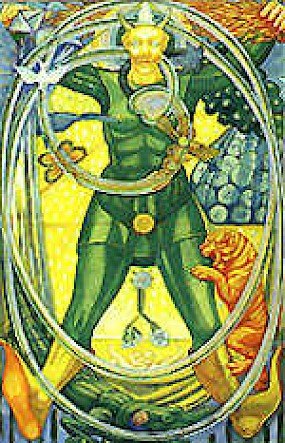
Tarot Card for July 6: The Fool

The Fool

The Fool is the first card of the Tarot and is generally unnumbered, or numbered zero. The Fool is at the start of our journey and is the initiator. Seen by many as the innocent, he has an eagerness and freshness about him. He is young and carefree, entering the World without preconceptions.

The Fool trusts in life and expects his path to be a happy and rewarding one. There is faith in the gods to see him through and a complete absence of fear.

Sometimes the Fool is seen as too carefree – certainly a good dose of other people’s more negative reality could damage him. However, for as long as the Fool has faith in his own purity and innocence, others will not be able to take advantage.

This is the child within. This is how we were before the many experiences of life forced us to build up so many walls. The Fool does not shade himself from the light – here we are born and from here we walk the path. It’s time to jump off the cliff…

The Fool

(via angelpaths.com and Alan Blackman)

With Housing Limited, a Gecko and a Possum Family Became Roommates

They won’t eat each other, and the family of marsupials does not seem to mind that the lizard is using them for warmth.

Western pygmy possums and a western spiny-tailed gecko in a nest box in the Monjebup Nature Reserve in Western Australia.
Western pygmy possums and a western spiny-tailed gecko in a nest box in the Monjebup Nature Reserve in Western Australia. Credit…Kelsey Lambert

By Anthony Ham

July 6, 2022, 5:00 a.m. ET (NYTimes.com)

When Alex Hams, a land conservation manager at Bush Heritage Australia, was giving a tour to visiting scientists and volunteers in mid-June, he got more than he bargained for. He opened the lid of a nest box for western pygmy possums at the Monjebup Nature Reserve, which his organization manages in southwestern Australia. There, among the leaves, he found not just a family of pygmy possums, but also a small, orange-eyed lizard known as a western spiny-tailed gecko.

“They were climbing all over each other and neither seemed to mind,” he said. “They were more concerned about the big human heads that were peering in through the top.”

He’d never seen anything like it, and neither had anyone he asked.

Mr. Hams returned twice in the following two weeks and little had changed. The pygmy possum mother, her litter of babies, and the two- to three-inch gecko were not just passing through. They were genuine roommates, sharing a crowded space that was no more than eight inches deep and the same length across.

“They’re really small boxes,” said Mr. Hams, who along with Bush Heritage shared the tale of shared animal occupancy on Facebook. “Pygmy possums are tiny creatures — you could fit a whole family of them on your hand.”

Inside the boxes, which replicate the kinds of natural hollows so many native Australian mammals and birds depend on for shelter, it’s a comfortable setup. “The pygmy possums use the eucalyptus leaves from nearby trees to establish the nest,” Mr. Hams said. “We provide the structure, they provide the interior design.”

Scientists tried to explain what they were seeing.

Conrad Hoskin, a gecko expert from James Cook University in Australia, noted that the two animals would have no interest in eating each other: Possums eat nectar and insects, and geckos eat insects and spiders. But the gecko may be getting something from its nestmates.

“The gecko will get some benefit from being in the warmth of those little mammals,” he said. “I suspect the presence of the gecko is neutral to the possum — a soft and harmless creature amongst them.”

Euan Ritchie, a professor in wildlife ecology and conservation at Deakin University in Melbourne, said that “the pygmy possum has made a nest out of all these leaves and twigs, which is exactly the sort of habitat that reptiles like.”

He added: “They like structural complexity. It’s a great place for a gecko to hang out.”

Not all inhabitants of Monjebup’s nest boxes have been quite so cute. Back in 2019, dozens of social huntsman spiders took over one of the boxes. Even today, an estimated 5 percent of the 103 boxes on the reserve are the domain of spider colonies. Pygmy possums would be unlikely to share their box with the spiders; in 2019, a huntsman, which can be six inches from leg to leg, reportedly ate a pygmy possum in Tasmania.

But with or without geckos and spiders, these nest boxes help protect pygmy possums.

“Tree hollows have been massively depleted around Australia because of logging, and pygmy possum habitat has become extremely fragmented,” Dr. Ritchie said. “Even if we stop cutting down trees now, it’s 100 years, and in some cases 150 years, before these hollows form, depending on the tree and the habitat.”

Bush Heritage Australia has been revegetating Monjebup, which had been farmland, for nearly a decade — nowhere near enough time for tree hollows to form. In the absence of natural shelter, pygmy possums now inhabit around two-thirds of the nest boxes at the reserve. This may even explain why the gecko decided to live with the pygmy possum family.

“Because this vegetation is so young and undeveloped — it’s only nine or 10 years old — there are no habitats like natural hollows or crevices, so these nest boxes are prime habitat,” said Angela Sanders, wildlife ecologist with Bush Heritage Australia. “Animals that wouldn’t normally cohabit are actually forced together because there is so little habitat.”

It is, of course, possible that cohabitations such as this one may be less unusual than unobserved. “With the advent of modern technology, we’re picking up more on these really interesting natural history observations that may have been happening for a long time,” Dr. Ritchie said.

(Contributed by Michael Kelly, H.W.)

Healing Intention, Part 1: Research With Healers with Stephan A. Schwartz


New Thinking Allowed with Jeffrey Mishlove Aug 20, 2017 Stephan A. Schwartz is a Distinguished Consulting Faculty of Saybrook University. He is the columnist for the journal Explore, and editor of the daily web publication Schwartzreport.net in both of which he covers trends that are affecting the future. His other academic and research appointments include: Senior Fellow for Brain, Mind and Healing of the Samueli Institute; founder and Research Director of the Mobius laboratory. Government appointments include Special Assistant for Research and Analysis to the Chief of Naval Operations. Schwartz was the principal researcher studying the use of Remote Viewing in archaeology. Using Remote Viewing he discovered Cleopatra’s Palace, Marc Antony’s Timonium, ruins of the Lighthouse of Pharos, and sunken ships along the California coast, and in the Bahamas. He is the author of more than 130 technical reports and papers. He has written The Secret Vaults of Time, The Alexandria Project, Mind Rover, Opening to the Infinite, and The 8 Laws of Change. Here he develops the idea that psychic and spiritual healing is an informational process, rather than an energetic process. He describes, in detail, a research study he conducted involving infrared spectroscopic analysis of water. The water was not the target of healing intention, but it was in the proximity of healers who were working on patients. Specific, consistent measurements in the electrical bonding of water molecules was observed — suggesting an informational process at work. Schwartz also describes some of the dramatic, human effects of the healing research. New Thinking Allowed host, Jeffrey Mishlove, PhD, is author of The Roots of Consciousness, Psi Development Systems, and The PK Man. Between 1986 and 2002 he hosted and co-produced the original Thinking Allowed public television series. He is the recipient of the only doctoral diploma in “parapsychology” ever awarded by an accredited university (University of California, Berkeley, 1980). He is also past-president of the non-profit Intuition Network, an organization dedicated to creating a world in which all people are encouraged to cultivate and apply their inner, intuitive abilities. (Recorded on February 6, 2017)

Part 2: https://www.youtube.com/watch?v=5VHAPxAPd7Y&list=TLPQMDUwNzIwMjJkRhX0-Njl4Q&index=10

Psychic Healing Techniques with Stephan A. Schwartz

New Thinking Allowed with Jeffrey Mishlove Oct 1, 2017 Stephan A. Schwartz is a Distinguished Consulting Faculty of Saybrook University. He is the columnist for the journal Explore, and editor of the daily web publication Schwartzreport.net in both of which he covers trends that are affecting the future. His other academic and research appointments include: Senior Fellow for Brain, Mind and Healing of the Samueli Institute; founder and Research Director of the Mobius laboratory. Government appointments include Special Assistant for Research and Analysis to the Chief of Naval Operations. Schwartz was the principal researcher studying the use of Remote Viewing in archaeology. Using Remote Viewing he discovered Cleopatra’s Palace, Marc Antony’s Timonium, ruins of the Lighthouse of Pharos, and sunken ships along the California coast, and in the Bahamas. He is the author of more than 130 technical reports and papers. He has written The Secret Vaults of Time, The Alexandria Project, Mind Rover, Opening to the Infinite, and The 8 Laws of Change. Here he suggests that all psychic healing is based on focused intention. Various organizations offer rituals to achieve this end. He describes some basic practices and visualization techniques to facilitate both personal and distant healing. He reviews the experimental and clinical literature that documents hundreds of healings so dramatic as to defy current medical or scientific knowledge. New Thinking Allowed host, Jeffrey Mishlove, PhD, is author of The Roots of Consciousness, Psi Development Systems, and The PK Man. Between 1986 and 2002 he hosted and co-produced the original Thinking Allowed public television series. He is the recipient of the only doctoral diploma in “parapsychology” ever awarded by an accredited university (University of California, Berkeley, 1980). (Recorded on February 6, 2017)

What would a ‘Marshall Plan’ for Ukraine entail?

German Chancellor Olaf Scholz has called for a “Marshall Plan” to rebuild war-scarred Ukraine. What does he mean by that?

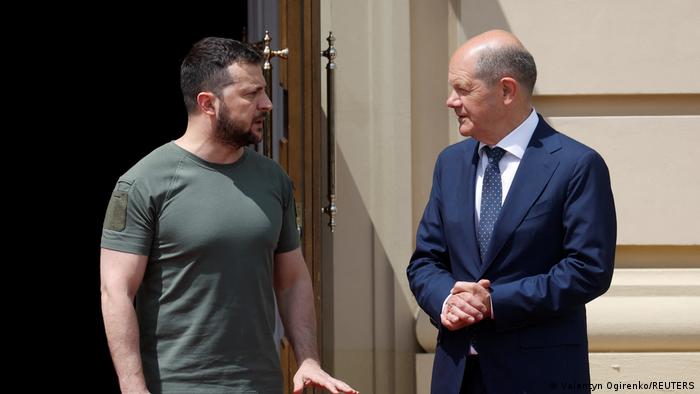
Ukrainian President Volodymyr Zelenskyy (left) met with German Chancellor Olaf Scholz in Kyiv on June 16

June 25, 2022 (dw.com)

Faced with great challenges, politicians commonly advocate for equally substantial remedies. One often reached-for comparison is the US Marshall Plan, which helped rebuild Western Europe after World War II. Decision-makers have launched subsequent programs modeled on the Marshall Plan to support pandemic-stricken economies, protect the environment, and much else.

Ahead of the G7 summit, German Chancellor Olaf Scholz has called for a Marshall Plan to rebuild Ukraine. His idea will be discussed among world leaders in Elmau, Germany, this weekend.

In a government address, Scholz said his recent visit to Ukraine had reminded him of the widespread destruction that had characterized many German cities after World War II.

“Just like war-scarred Europe then, Ukraine today needs a Marshal plan to rebuild,” he said. This, he added, was a job for the coming generation.

What was the Marshall Plan?

In 1947, then-US Secretary of State George C. Marshall suggested setting up the European Recovery Program (ERP) to help rebuild much of Europe, which had been destroyed in the war. Today, this scheme is commonly known as the Marshall Plan.

The Marshall Plan was devised to help postwar Europe get back on its feet

The program entailed the US providing loans to finance European reconstruction efforts, as well as importing goods, raw materials and foodstuffs to Europe. More than $12 billion (approximately $150 billion in today’s dollars; €142 billion) were provided to 16 different countries — among them West Germany, Italy, France and Great Britain — between 1948 and 1952. West Germany received roughly $1.5 billion. The cash infusion not only kick-started Europe’s economic recovery, but also opened up new markets for the United States.

The Marshall Plan had a political dimension, too. Not all European countries received US money. While the US was keen to limit Soviet influence in Eastern Europe, the Soviet Union barred Hungary, Czechoslovakia and Poland from joining the Marshall Plan, fearing US control over the region.

  • Resident looks out the window of a damaged house after airstrikes in KyivUKRAINE: SCENES OF DESTRUCTION AND DESPAIR The longer the war the greater the povertyAn old woman in her damaged home in Kyiv: The serious consequences of the war are already being felt by the people of Ukraine. According to UN estimates, around 90% of the country’s population could be hit by poverty if the invasion lasts 12 months. This could set the country back economically by almost two decades.

In Germany and the rest of Europe, the Marshall Plan is largely remembered as a successful program that helped rebuild the continent. It sparked economic recovery but also helped democratic structures entrench themselves in Europe. That is why, after various wars and crises in the world, many have pointed to the Marshall Plan as a good example for postwar reconstruction.

A Marshall Plan for Ukraine?

Scholz expects the war in Ukraine will not end anytime soon. Just like the original Marshall Plan was geared toward long-term reconstruction, he said so too must the West expect that rebuilding Ukraine will take time.

“We will need many more billions of euro and dollar for reconstruction purposes — for years to come,” Scholz told the German parliament. He added that he wants to see Ukraine continue to receive broad European support in financial, economic, humanitarian and political terms, as well as “arms deliveries.”

Werner Hoyer, who heads the European Investment Bank, expects billions in financial aid for Ukraine. He said there is a need for a program targeting “a global audience, rather just EU taxpayers.”

The EU has suggested reconstruction efforts should be coordinated by Ukraine in conjunction with EU, G7 and G20 states, as well as international financial institutions and organizations.

This article was originally written in German

Perennial philosophy

Perennial philosophy | Aeon

Aldous Huxley argued that all religions in the world were underpinned by universal beliefs and experiences. Was he right?

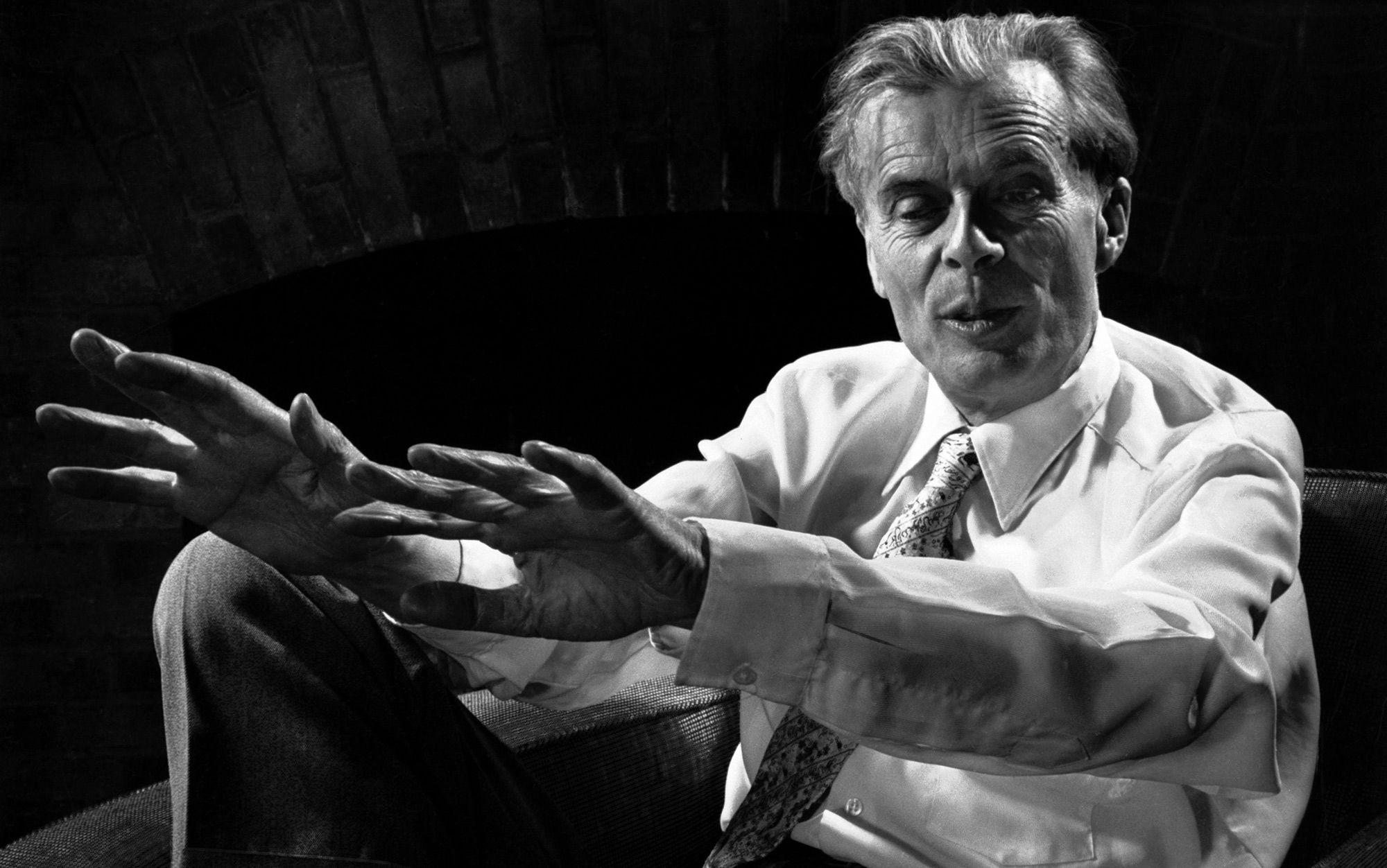
Aldous Huxley in 1958. Photo by Philippe Halsman/Magnum

Jules Evans is a research fellow at the Centre for the History of the Emotions at Queen Mary University of London. He is co-editor, with Tim Read, of the book Breaking Open: Finding a Way Through Spiritual Emergency (2020).

Edited by Nigel Warburton

19 February 2020 (aeon.co)

Love Aeon?

Support our work

DONATE

When I was a teenager, I came across Aldous Huxley’s The Perennial Philosophy (1945). I was so inspired by its array of mystical jewels that, like a magpie, I stole it from my school’s library. I still have that copy, sitting beside me. Next, I devoured his book The Doors of Perception (1954), and secretly converted to psychedelic mysticism. It was thanks to Huxley that I refused to get confirmed, thanks to him that my friends and I spent our adolescence trying to storm heaven on LSD, with mixed results. Huxley’s Perennial Philosophy has stayed with me through my life. He’s been my spirit-grandad. And yet, in the past few years, as I’ve researched his life, I find myself increasingly arguing with Grandad. What if his philosophy isn’t true?

The phrase ‘perennial philosophy’ was first coined by the Renaissance humanist Agostino Steuco in 1540. It referred to the idea that there is a core of shared wisdom in all religions, and to the attempt by Marsilio Ficino’s Neoplatonist school to synthesise that wisdom into one transcultural philosophy. This philosophy, writes Huxley, ‘is immemorial and universal. Rudiments of the perennial philosophy may be found among the traditionary lore of primitive peoples in every region of the world, and in its fully developed forms it has a place in every one of the higher religions.’

As Huxley argues, there is a lot of agreement between proponents of classical theism in Platonic, Christian, Muslim, Hindu and Jewish philosophy over three main points: God is unconditioned eternal Being, our consciousness is a reflection or spark of that, and we can find our flourishing or bliss in the realisation of this.

But what about Buddhism’s theory of anatta, or ‘no self’? Huxley suggests that the Buddha meant the ordinary ego doesn’t exist, but there is still an ‘unconditioned essence’ (which is arguably true of some forms of Buddhism but not others). I suspect scholars of Taoism would object to equating the Tao with the God of classical theism. As for ‘the traditional lore of primitive peoples’, I’m sure Huxley didn’t know enough to say.

Still, one can see striking similarities in the mystical ideas and practices of the main religious traditions. The common goal is to overcome the ego and awaken to reality. Ordinary egocentric reality is considered to be a trancelike succession of automatic impulses and attachments. The path to awakening involves daily training in contemplation, recollection, non-attachment, charity and love. When one has achieved ‘total selflessness’, one realises the true nature of reality. There are different paths up the mystic mountain, but Huxley suggests that the peak experience is the same in all traditions: a wordless, imageless encounter with the Pure Light of the divine.

How do we know it’s worth following this arduous path? We have to take the great mystics’ word for it. Huxley writes: ‘the nature of this one Reality is such that it cannot be directly and immediately apprehended except by those who have chosen to fulfil certain conditions, making themselves loving, pure in heart, and poor in spirit.’ However, we can try the first steps up the mountain and see what sort of empirical results we get.

Whatever else it is, The Perennial Philosophy is an extraordinary work of synthesis, and it injected a global spirituality into mainstream Western culture. Huxley condemned the ‘theological imperialism’ that appreciates only Western texts, and introduced many readers to now-familiar non-Western teachings – the Bhagavad Gita, the Upanishads, the teachings of the Buddha, Zhuang Zi, Rumi. Still, it’s quite an idiosyncratic selection of quotes. There’s a lot of Vedanta and Mahayana Buddhism, and plenty of male Christian mystics, but hardly any female mystics, only one line from Jesus, and no quotes from the Quran. In what sense, then, is it universal?

Although Huxley wrote that the perennial philosophy is ‘immemorial and universal’, his book was a product of a particular time and place. In the first half of his life, Huxley was known as an irreverent mocker of religion, ‘the man who hates God’ as one newspaper put it. He was the grandson of Thomas Huxley, a renowned Victorian scientist who ridiculed Christian superstitions and suggested that evolutionary science could be something like a new religion.

Huxley’s cynical exterior broke down in the 1930s. He could no longer handle living in a materialist, meaningless universe. But rather than convert to Christianity, as peers such as T S Eliot did, he turned to the scientific spirituality of his friend Gerald Heard, the BBC’s first science journalist. Heard thought that psychology and other sciences could provide an empirical evidence base for spiritual techniques such as meditation. This empirical spirituality (my phrase) appealed to Huxley.

He and Heard became leading figures in the pacifist movement of the 1930s. But they abruptly abandoned hope in Europe, and moved to Los Angeles in 1937. For a while they, along with the novelist Christopher Isherwood, became prominent members of the Vedanta Society of southern California (Vedanta is a form of Hindu mysticism). They were nicknamed ‘the mystical expatriates’ by another such expat, Alan Watts. When the Second World War broke out, they faced a lot of criticism back in Britain for their ‘desertion’ to Hollywood.

‘A society is good to the extent that it renders contemplation possible for its members’

I suspect the mystical expats felt deeply guilty for abandoning their friends and families in Europe. This is apparent in some passages of The Perennial Philosophy, which was written during the war:

Agitation over happenings which we are powerless to modify, either because they have not yet occurred, or else are occurring at an inaccessible distance from us, achieves nothing beyond the inoculation of here and now with the remote or anticipated evil that is the object of our distress. Listening four or five times a day to newscasters and commentators, reading the morning papers and all the weeklies and monthlies – nowadays, this is described as ‘taking an intelligent interest in politics’; St John of the Cross would have called it indulgence in idle curiosity and the cultivation of disquietude for disquietude’s sake.

The Perennial Philosophy was Huxley’s desperate response to the war. This explains the book’s deep political pessimism – he had tried to stop the war and failed. Modern civilisation, he writes, is ‘organised lovelessness’; advertising is ‘the organised effort to extend and intensify craving’; the 20th century is ‘The Age of Noise’. Most people are in thrall to various forms of idolatry and ersatz-religion – worship of progress, worship of technology, and above all worship of the nation-state. These, for Huxley, are all forms of ‘religions of time’ – which put their faith in future triumphs. Abrahamic religions are also, largely, religions of time (he argues) which is why they have led to so much bloodshed.

‘The reign of violence will never come to an end,’ Huxley writes, until ‘most human beings’ accept the perennial philosophy and recognise it as ‘the highest factor common to all the world religions’. The only way we can wake up from the nightmare of history is by focusing on the ‘Eternal Now’. This requires a complete overhaul of society to install a new infrastructure of contemplation: ‘a society is good to the extent that it renders contemplation possible for its members’. This looked an unlikely prospect, so Huxley withdrew to the Mojave Desert to try to become a saint.

Alas, total selflessness turned out to be hard to achieve. The Perennial Philosophy is a splendid encyclopaedia of mysticism, but that’s not the same as first-hand mystical experience. Huxley’s son Matthew wondered, after his father’s death: ‘Did Aldous ever achieve [transcendence] or not; that’s the question I’m raising. Or is it all intellectualised, put down in technical terms and other people’s words as in The Perennial Philosophy?’

It was only in May 1953 that Huxley felt he finally had a mystical experience. And that was when he took mescaline, a psychedelic drug found in the peyote cactus. He discovered a ski lift up the mystical mountain. Psychedelics, he believed, gave ordinary people a glimpse of experiences once confined to saints, and helped intellectuals like him go beyond conceptual thinking. He also got out of his head through somatic practices such as Tantra, Gestalt therapy, the Alexander technique. He even celebrated ecstatic dance. He seemed to relax and become more at peace with himself in the 1950s – friends such as Isaiah Berlin came away struck by a sense of his goodness. With this relaxation came an optimism that civilisation might not be headed for collapse. Perhaps the perennial philosophy might become popular after all.

That’s precisely what happened in the years after his death. Throughout the 1960s, the perennial philosophy was championed by figures such as Huston Smith and Ram Dass, both of them friends and fans of Huxley’s. It was promoted in places such as the Esalen Institute in California and celebrated in pop culture by everyone from John Coltrane to the Beatles. Before he died in 1963, Huxley became a hit on US campuses, lecturing on mystical experience to thousands of fascinated students. He appears on the cover of the Beatles’ album Sgt Pepper’s Lonely Hearts Club Band (1967), and even inspired a band name – the Doors.

Today, the fastest-growing religious group in the US is the ‘spiritual but not religious’, who account for 27 per cent of the population (up 8 per cent in five years, according to Pew Research). Like Huxley, this group practises spiritual techniques from many different religions – yoga, mindfulness, plant medicine – and seeks to test out these methods with empirical science. A majority of American Christians, again according to Pew, now believe other faiths can lead to heaven. There’s been an extraordinary contemplative revival – one in three Americans have tried yoga, and a quarter of Brits have tried meditation. There’s also been a renaissance in psychedelic research in the past decade, inspired by Huxley’s once-scandalous assertion that psychedelic drugs can lead to mystical experiences.

The ‘mysticism for the masses’ that Huxley prophesised seems to be coming to pass. According to surveys by Gallup and Pew, the number of Americans who say they’ve had one or more mystical experience rose from 22 per cent in 1962 to 49 per cent by 2009. It’s likely they will become more common if and when psychedelics are legalised.

And yet, for all its popular influence, some scholars of religion have dismissed Huxley’s perennialism. The first counterblast was made by the US philosopher Steven Katz in his paper ‘Language, Epistemology and Mysticism’ (1978). Katz pointed out that mystical traditions are actually very different. They are rooted in differences of language, symbolism and culture; if you try to remove ‘mystical experiences’ from that local soil and create a global synthesis, you end up with something stripped of much of its meaning. Christian mystics have Christian mystical experiences, Buddhists have Buddhist mystical experiences, and so on.

Instead of ‘many routes, one peak’, Ferrer suggests ‘one ocean, many shores’

It is true that Huxley equates ideas that are, on closer inspection, often quite different. And his global, transcultural spirituality is very individualistic and deracinated – there’s no sense of the mystical life being rooted in communities, with particular practices, rituals and guides. At the same time, Katz suggests that we can never escape our cultural conditioning, and should all just stay in our lane. The great mystics were themselves syncretistic pick ’n’ mixers – St Augustine loved Plotinus, St Teresa of Ávila loved the Stoics, the former Archbishop of Canterbury Rowan Williams loves Buddhism. Why shouldn’t we be syncretistic too? Katz ignores the extent to which mystical traditions can be shaped by our common neuropsychology (mystics were the great psychologists of their day, Huxley suggested). Many mystical practices are based on the cognitive theory of the emotions – the idea that our ordinary self is constituted by habitual automatic beliefs, which we can notice, explore and change. It’s not surprising that they discovered similar techniques for self-transformation.

The second major critique of perennialism came in 2002, with the book Revisioning Transpersonal Theory by the Spanish-born psychologist Jorge Ferrer. He points out that perennialism is hierarchical and thereby potentially intolerant. All religions are true, but some are truer than others.

This ranking of religions is apparent in Huxley’s writings. He insists that ultimate mystical experiences are moments of non-dual pure consciousness – beyond any concepts of ‘I’ and ‘you’, beyond emotion, beyond language, image and culture. That’s important for his political goal of uniting humanity under the perennial philosophy – all nations and colours will bleed into one in the Pure Light of the divine.

But in fact, many famous mystical experiences are highly emotional I-thou encounters with the divine in a particular form: Jehovah, Krishna, the angel Gabriel and so on. This is troubling for Huxley, because it opens the way for disagreement and conflict, so he insists that ‘there are good mystics and bad mystics’. Good mystics such as the German theologian Meister Eckhart (1260-1328) experience ego-dissolutions into the Pure Light, while bad mystics have passionate I-thou encounters. By this definition, Moses, Jesus, Mohammad, St Theresa, St Francis, Rumi and anyone in the tradition of devotional mysticism is a bad mystic. This is a bit rich from someone who never had a mystical experience except on drugs.

Perennialism also over-emphasises individual experience, according to Ferrer, which can lead to spiritual narcissism and thrill-seeking (this is all too obvious in the psychedelic community). It can be self-validating – the proof of the philosophy is the special experiences of the saints. This ignores what the Canadian philosopher Ian Hacking calls ‘looping effects’ – mental and somatic experience often takes the form we expect it to take. Huxley, for example, decided on one LSD trip that love is ‘the primary and fundamental cosmic fact’. But that’s what he expected, or hoped, to discover. As his friend Bertrand Russell retorted, why declare one state of mind ultimate and not another.

Finally, Ferrer argues that perennialism is objectivist and essentialist – it insists that there is a reality of spiritual facts waiting, out there, to be discovered. This is a form of ‘subtle Cartesianism’, Ferrer says, that ignores how humans construct reality through our bodies, our rituals, our words, actions and cultures.

The alternative, for Ferrer, is ‘participatory spirituality’. Humans co-create reality in a participatory interaction with the mystery. This takes place not through ‘experiences’ in an individual’s head, but through events and encounters that might involve many people (think of the Pentecost), and that could go to many possible destinations: ‘the various traditions lead to the enactment of different spiritual ultimates’. Instead of ‘many routes, one peak’, he suggests ‘one ocean, many shores’. It’s reminiscent of the Marvel multiverse: ‘You’re going to the Pure Lands? Great, I’m off to Valhalla!’

Ferrer’s participatory turn is fascinating, and very influential in intelligent New Age culture today. But it has limitations. Perhaps this is a product of San Francisco, where Ferrer’s California Institute of Integral Studies is based, but his philosophy tries so hard to be tolerant and non-hierarchical, it ends up in a ‘open, permissive horizon of transpersonal encounters’. This sounds less like God’s banquet, more like a swingers’ party. As in the Dodo’s race in Alice in Wonderland, ‘everybody has won and all must have prizes’. If you can’t handle any hierarchy, then you end up in a liberal relativism that can be just as intolerant as more traditional theories.

Ferrer is aware that this is the weak point of his argument, and repeatedly insists that we can still evaluate between different choices – between, say, joining a Quaker group or a criminal cult such as the Manson Family – by assessing a tradition’s ‘emancipatory power’. How well does it combat egocentrism, how well does it ‘counteract dissociation from the body and other aspects of the whole person’, and how effectively does it ‘foster ecological balance, social and economic justice, religious and political freedom, class and gender equality, and other fundamental human rights’?

In short, how well do spiritual traditions fit with the values of San Francisco liberalism. Why pick these values rather than others? If there is no ultimate reality, no truth, why are these the criteria for our spiritual choices? Ferrer is betraying a Western, liberal bias. Some sort of ranking or hierarchy is probably inevitable if one is to avoid complete relativism.

Secondly, I am uneasy with Ferrer’s suggestion that there are many ‘spiritual ultimates’, rather than the one ultimate reality suggested by most spiritual traditions. What about the afterlife – do we all experience the afterlife we expect? Do humanists get born once then die, Christians get born once then go to eternal heaven or hell, and Buddhists get born repeatedly? Ferrer says reality is co-created by humans and ‘the Mystery’ but his multiple realities seem very human-made, diminishing the divine in its power, glory and independence from us.

Even perennialists don’t agree on one version of the perennial philosophy

It is useful here to bring in an argument made by the US philosopher David Bentley Hart in The Experience of God (2013). It’s a surprisingly perennialist book for an Eastern Orthodox theologian (it credits Huxley’s Perennial Philosophy as an inspiration). Hart argues that critics of theism confuse gods with God. The spiritual multiverse might be full of many different powers and gods that we can connect to and manifest in different ways. But they are not ultimate, they are temporary beings or powers, like the rest of us. God, by contrast, is Being itself, the unconditioned eternal essence from which existence derives and on which all universes depend.

Being could take many forms, depending on our state of mind and cultural expectations, and it could play with those expectations. But it is still One, the Unconditioned, which we can encounter not just through mystical experiences, but also through logical deduction from the strange facts of Being and consciousness.

Still, agreement between all religions is possible only on such lofty abstract principles, which, as the English theologian Keith Ward writes in Religion in the Modern World (2019), are ‘too vague to be the basis of real religious commitment’. Even perennialists don’t agree on one version of the perennial philosophy. Huxley himself shifted during his life, from a more austere Vedanta-influenced perennialism to a more relaxed, body-accepting Mahayana/Tantric perennialism.

Ward suggests a way forward, in a world of competing religious faiths, which treads a line between intolerant exclusivism and anything-goes relativism. One could call it sympathetic inclusivism (my term, not Ward’s). This view suggests that it’s good to have a spiritual community to practise with, and one spiritual path to commit to, otherwise you end up splashing around in the shallows, never really getting anywhere. It’s inevitable that you think some paths are better than others, and that will lead to judgment of some people’s choices – I am intolerant of human sacrifice, for example. It’s probable that you’ll think your path is better than others. Otherwise, why follow it?

However, any literate or curious person can’t help but notice the interesting similarities between different traditions’ spiritual techniques – I am struck by the similarities between Stoicism and Buddhism, for example. We can learn from other paths and travellers along our way, and recognise the wisdom (perhaps divine wisdom) in other traditions. We can meet practitioners from other faiths in friendship, as the Dalai Lama meets with his friend Desmond Tutu.

Crucially, we can always remember that God/ultimate reality is greater than any of our religions, that human understanding is limited and prone to error and sin (particularly the sins of overcertainty, arrogance and intolerance), and we will probably all be surprised along the way. Interreligious dialogue isn’t just a nice extracurricular activity, in this view – it’s an essential part of our journey beyond our biases, deeper into truth.

Not everyone will accept this sort of inclusivism. Some will insist on a stark choice between Jesus or hell, the Quran or hell. In some ways, overcertain exclusivism is a much better marketing strategy than sympathetic inclusivism. But if just some of the world’s population opened their minds to the wisdom of other religions, without having to leave their own faith, the world would be a better, more peaceful place. Like Aldous Huxley, I still believe in the possibility of growing spiritual convergence between different religions and philosophies, even if right now the tide seems to be going the other way.

Thinkers and theories Philosophy of religion Spirituality