JERSEY CITY, NJ—Asking lots of questions about all the novel food items and charming rituals, Yahweh, Our Lord God and Creator, reportedly attended His first Shabbat dinner Friday night and was delighted by the experience. “Wow, I can’t believe I’ve never been to one of these before—it’s so interesting!” said the Eternal One, whose intonation of the words “LET THERE BE LIGHT” was heard for miles around when His host asked if He wouldn’t mind turning on the lights in the dining room. “I admit I was a little nervous that I wouldn’t know all the rules, but anytime I wasn’t sure what to do, My friend Dan would whisper in My ear and let Me know. If I’m being honest, I’m not super religious, but I really do appreciate the tradition and ceremony of it all. Plus, I got to wear a yarmulke for the first time, which was neat.” At press time, Shabbat dinner attendees confirmed God was singing “Shalom Aleichem” louder and more enthusiastically than anyone else at the table.
Mountain Apple Company Inc Stream More From IZ!: https://lnk.to/aloneinizworld Check out the Best Of Israel “IZ” Kamakawiwoʻole here: https://www.youtube.com/playlist?list… Israel “IZ” Kamakawiwoʻole’s Platinum selling hit “Over the Rainbow” OFFICIAL video. Loved all through the world, IZ’s version of “Over the Rainbow” has touched millions. With each passing year, IZ’s presence in the music industry and the sales of his recordings continue to grow despite the trends that surround the industry. An amazing story about an amazing man, the man referred to by some as the “Hawaiian Suppaman”. While IZ has always been revered in Hawai‘i, his worldwide influence came later. IZ’s music first gained national attention in the mid 1990’s. Produced by Jon de Mello for The Mountain Apple Company • HAWAI`I – Subscribe for more IZ! Check out the Best Of Israel “IZ” Kamakawiwoʻole here: https://www.youtube.com/playlist?list… Lyrics: Ooh, ooh, ooh Ooh, ooh Somewhere over the rainbow Way up high And the dreams that you dream of Once in a lullaby Somewhere over the rainbow Bluebirds fly And the dreams that you dream of Dreams really do come true Someday, I wish upon a star Wake up where the clouds are far behind me Where trouble melts like lemon drops High above the chimney top That’s where you’ll find me Somewhere over the rainbow Bluebirds fly And the dreams that you dare to Oh why, oh why can’t I? Well, I see trees of green and red roses too I’ll watch them bloom for me and you And I think to myself What a wonderful world Well, I see skies of blue and I see clouds of white And the brightness of day I like the dark And I think to myself what a wonderful world The colors of the rainbow so pretty in the sky And also on the faces of people passing by I see friends shaking hands saying How do you do? They’re really saying I, I love you I hear babies cry and I watch them grow They’ll learn much more then we’ll know And I think to myself what a wonderful world World Someday I wish upon a star Wake up where the clouds are far behind me Where trouble melts like lemon drops High above the chimney top That’s where you’ll find me Oh, somewhere over the rainbow Way up high And the dreams that you dare to Why oh, why can’t I? Ooh, ooh Ooh, ooh BUY THE SONG: Official Website: http://www.izhawaii.com iTunes: https://geo.itunes.apple.com/us/album… Amazon: https://www.amazon.com/Somewhere-Over…
The Lord of Luxury is a card with a hidden sting in its tail. On the surface it indicates a wealth of loving affection, showing a person who is lucky enough to receive a great deal of devotion and tenderness.
At first look, you would think we would be all too pleased with this situation wouldn’t you? However, the sting is this – sometimes, when we are loved deeply and for a long period of time, we are foolish enough to forget what it feels like when we are lonely and unloved. And as soon as we make that mistake, we start to undervalue the tenderness and emotional investment that others are making in us.
We begin to get careless about the ways in which we treat those people who love us. We may hanker after love from some-one outside our circle, instead of valuing those people closer to hand who love us from the bottom of their hearts.
In other words, we can begin to take love for granted. And there are three things in this world we are all silly to take for granted – love, good health and tranquillity. Every one of them slips away silently if we stop paying it due attention.
So, when the Lord of Luxury appears, whilst you will know that there is a great deal of love in the air, there’s also a warning which must be taken on board – count your blessings, reciprocate, and don’t get your priorities in a mess. That way you’ll carry on being loved for a very long time.
Then & Now What drives ordinary everyday people to become mass killers? What are the psychological mechanisms and cultural factors that lead to genocide? What were the causes of the Holocaust? Can we theorize a psychology of genocide? A theory of genocide? The Holocaust was not perpetrated solely by a few sadistic psychopaths but by tens of thousands of everyday Germans, Poles, Frenchmen, Austrians, Slovakians, in fact, much of Europe took part. If any of us could be motivated under the right conditions to become mass serial killers, how can we protect ourselves against the threat? How might we innoculate our societies and cutlures from decending into genocide? There are a number of factors that lead to the Holocaust. Compartmentalization, euphemism, conformity, authority, rationalization, propaganda, anti-Semitism, victimhood, and association, in particular. Gustav Le Bon, for example, argued that individuals are more likely to conform in a crowd because of anonymity and mimesis. Stanley Milgram’s famous experiments looked at conformity to authority. This combined with rationalisations like ‘its either us or them’ or ‘they won’t survive through the winter anyway.’ There was still a system of belief – an ideology – and almost a decade of propaganda disseminated by the Nazi Ministry for Public Enlightenment and Propaganda (RMVP). Years of anti-Semitism in Germany and Europe led to conspiracy theories about Jewish world domination. While Britain, the USSR, and America were all consistently associated with ‘Jewish aggressors’. When a person perceives themselves as a victim and a prisoner as an aggressor in a war of survival and we combine this with the pressure to conform and submit to authority the probability for murder increases. In Nazi Germany, everything was made to fit this formula. Ervin Staub proposes a model of genocide that has three initial stages: First, there’s the frustration of basic needs. Second, An out-group is identified that’s the cause. Next, The in-group is motivated by a ‘utopian vision’ that excludes a certain group. And Herbert Kelman has also argued that the requirements are threefold: authorization, routinization, and dehumanization. How does all of this fit together? Then & Now is FAN-FUNDED! Support me on Patreon and pledge as little as $1 per video: http://patreon.com/user?u=3517018 Or send me a one-off tip of any amount and help me make more videos: https://www.paypal.com/cgi-bin/webscr… Buy on Amazon through this link to support the channel: https://amzn.to/2ykJe6L Follow me on: Facebook: http://fb.me/thethenandnow Instagram: https://www.instagram.com/thethenandnow/ Twitter: https://twitter.com/lewlewwaller Subscribe to the podcast: https://podcasts.apple.com/gb/podcast…https://open.spotify.com/show/1Khac2i… Credits: Milgram Experiment Diagram – Fred the Oyster, CC BY-SA 4.0, https://creativecommons.org/licenses/…, via Wikimedia Commons Milgram video – Movie S1 from Slater M, Antley A, Davison A, Swapp D, Guger C, Barker C, Pistrang N, Sanchez-Vives M, Rustichini A. “A Virtual Reprise of the Stanley Milgram Obedience Experiments”. PLOS ONE. DOI:10.1371/journal.pone.0000039. PMID 17183667. PMC: 1762398. (Creative Commons 3.0) Sources: Jason Stanley, How Fascism Works: The Politics of Us and Them Christopher Browning, Ordinary Men Laurence Rees, The Holocaust Donald G. Dutton, The Psychology of Genocide, Massacres, and Extreme Violence: Why “Normal” People Come to Commit Atrocities Ervin Staub, The Origins and Prevention of Genocide, Mass Killing, and Other Collective Violence in the Journal of Peace Psychology Splendor and Misery in the Weimar Years, http://www.schirn.de/glanzundelend/di… Joseph Goebbels, The Jews are Guilty, https://www.jewishvirtuallibrary.org/… Jeffrey Herf, The Jewish Enemy: Nazi Propaganda During WWII & The Holocaust Frank McDonough, The Hitler Years Thomas Blass, Psychological Perspectives on the Perpetrators of the Holocaust: The Role of Situational Pressures, Personal Dispositions, and Their Interactions Henri Zukier, The Twisted Road to Genocide Hannah Arendt, Eichmann in Jerusalem: A Report on the Banality of Evil Peter Cohen, The Architecture of Doom, https://www.youtube.com/watch?v=j_KmZ…
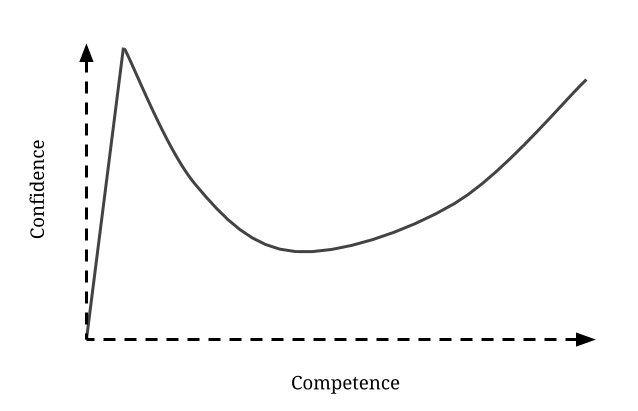
Why do ignorant folks tend to overestimate the extent of their knowledge? How do incompetent people often seem to be unaware of how deficient their expertise is? Turns out, we are not very good at evaluating ourselves accurately. And one of the most obvious manifestations of this psychological deficiency is the Dunning–Kruger effect, the cognitive bias of illusory superiority.
The realm of the “unknown unknowns”
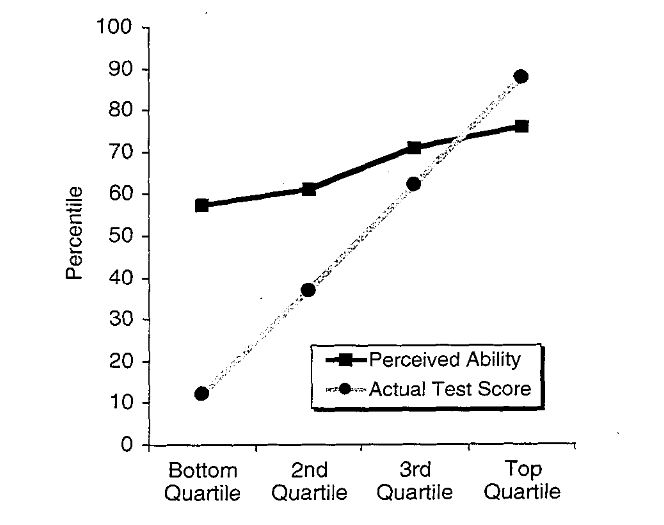
In 1999, psychology researchers David Dunning and Justin Kruger published a study titled “Unskilled and Unaware of It: How Difficulties in Recognizing One’s Own Incompetence Lead to Inflated Self-Assessments” in which they described our tendency to to hold overly favorable views of our abilities.
The researchers presented the participants with four tests assessing humour, logical reasoning, and grammar. Then, they asked participants to evaluate their own performance—how well or poorly they thought they did on the tests.
Not only did most participants overestimate their performance, but the least competent participants—the ones that scored in the bottom quarter—were more likely to overestimate their performance. The least they knew, the more they thought they knew.
But it doesn’t stop there. Dunning and Kruger wanted to better understand the source of this self-awareness and self-evaluation deficiency. Was it because they were genuinely struggling to distinguish between correct and incorrect answers, or was there something more going on?
In a variation of the original study, they first asked people how they performed on the tests, then showed them the test answers of other participants, and finally asked them to re-evaluate their own performance.
Poor performers struggled more than good performers to re-adjust their own performance based on the answers of other participants. In other words, not only do they lack the ability to measure their own performance, but they lack the ability to accurately measure performance in others.
Cognitive biases are wired into our system. Awareness is the best way to tackle these biases. Download a 40-page research report explaining the 10 most common cognitive biases in entrepreneurship.
“This meta-ignorance (or ignorance of ignorance) arises because lack of expertise and knowledge often hides in the realm of the “unknown unknowns” or is disguised by erroneous beliefs and background knowledge that only appear to be sufficient to conclude a right answer,” explains David Dunning.
From meta-ignorance to metacognition
The Dunning–Kruger effect sounds like a conundrum: if you don’t know what you don’t know, how can you know? Fortunately, there is a way out: it all boils down to developing metacognitive skills.
Metacognition means “thinking about thinking.” It’s an essential process to determine the best strategies for learning and problem-solving, as well as knowing when to apply them.
In their seminal paper, Dunning and Kruger write: “The central proposition in our argument is that incompetent individuals lack the metacognitive skills that enable them to tell how poorly they are performing, and as a result, they come to hold inflated views of their performance and ability.” And later: “Several lines of research are consistent with the notion thatincompetent individuals lack the metacognitive skills necessary for accurate self-assessment. Work on the nature of expertise, for instance, has revealed that novices possess poorer metacognitive skills than do experts.”
So how can you develop your metacognitive skills?
Block time for self-reflection.Journaling has many science-based benefits. Beyond its many health benefits, it’s an incredible tool for metacognition. Whether as a weekly review or in another format, make sure to spend some time and to honestly evaluate your progress and your skills.
Use second-level thinking to make decisions. Instead of jumping to the most obvious conclusion, use second-level thinking by asking yourself: what are some potential blind spots? What information am I missing? Disentangle the signal from the noise and use mental models to test your assumptions.
Take smart notes. It’s much easier to notice gaps in our knowledge when we have a way to visualise our knowledge. That’s where taking notes comes handy. By building a note-taking habit, you will be able to identify thought patterns and mental shortcuts more easily. I personally use Roam for taking notes, but there are many alternatives you can use.
Be aware of cognitive biases that may cloud your judgement. For instance, confirmation bias may reinforce the Dunning–Kruger effect by turning wishful thinking into actual beliefs. Learn about cognitive biases, and reflect on your own biases when you notice them.
Human beings are not great at self-evaluation. Being aware of this inherent limitation will make it less likely to fall pretty to the Dunning–Kruger effect. Block time for self-reflection, beware of cognitive biases, use second-level thinking, and take smart notes, and you will be ahead of the curve.
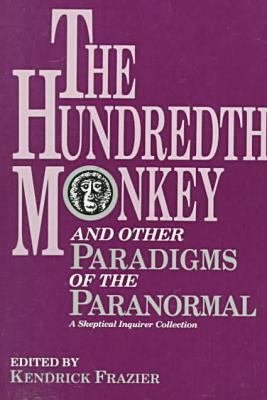
The Hundredth Monkey takes its title from philosopher Ron Amundson’s expose of the “Hundredth Monkey Phenomenon,” a claim about collective consciousness. Forty-three essays by thirty-nine authors, including Isaac Asmov, Martin Gardner, Carl Sagan, Ray Hyman, Paul Kurtz, and James Randi, examine aspects of paranormal and fringe-science beliefs from an authoritative, scientific point of view. The penetrating and entertaining essays, many with timely postscripts, are grouped into nine categories: – Understanding Human Need – Examining Popular Claims – Encouraging Critical Thinking – Medical Controversies – Evaluating the Anomalous Experience – Astrology – Considering Parapsychology – Crashed Saucer Claims – Controversies Within Science Scientists and scholars discuss the burden of skepticism and the delicate balance between a creative openness to new ideas and the relentless scrutiny of new claims. A classic source book for scientifically responsible explanations of controversies, hoaxes, bizarre mysteries, and popular cultural myths.
“The universe is a continuous web. Touch it at any point and the whole web quivers.”
–Stanley Kunitz
Stanley Jasspon Kunitz (July 29, 1905 – May 14, 2006) was an American poet. He was appointed Poet Laureate Consultant in Poetry to the Library of Congress twice, first in 1974 and then again in 2000. Wikipedia
The Lord of Works indicates concentrated effort applied with great determination and diligence to a situation requiring your whole attention.
This is a card that often comes up to mark the achievement of goals in your working area, and teaches attainment through effort. It advises you to keep the pressure up so that you maintain momentum, and to pay attention to detail.
It will sometimes appear in a reading to reveal a period where you concentrate all your thoughts and aspirations on one target, and then channel all your energies into that project, to the exclusion of all else. Sometimes people do this in order to avoid facing emotional pain and distress. It’s worth looking for evidence of this when the Three of Disks comes up. Whilst it can be useful in the short-term to achieve something when you feel hurt, it can often be very damaging if you continue to hide from your own feelings.
The Lord of Works indicates high levels of professional ambition, and promises the drive and confidence to achieve these. There’s a good deal of dynamic energy attached to the card, and this is usually well-harnessed and put to good use.
Take the Three of Disks as a largely positive card, which shows that hard work and concentration can eventually gain you your highest objectives. But it’s important to remember that you need to be fully focused on the project in hand, allowing nothing to get in the way.
Matthew Stelzner In this video I discuss some of the other very potent astrology alignments happening this month, including: Mercury retrograde 5/10-6/2 A visible Lunar eclipse on 5/15 The exact conjunction of Mars with Neptune 5/17 The exact conjunction of Mars with Jupiter 5/28 The activation of the Moon to the Mars-Jupiter-Neptune (next Jupiter Gate) 5/23-5/25 Moon-Venus square Pluto (next Venus Gate) at the end of the month 5/26-5/27 I end with a brief discussion of our current Sun-Uranus conjunction (4/25-5/13), and with encouragement to catch this wave of very powerful alignments onward to your own personal freedom and authentic self expression. To check out more of my work, see my blog, and get information about my intuitive readings, visit my website at: http://stelz.biz/ Sign up for my mailing list here: http://stelz.biz/register-for-my-emai… If you sign up for my mailing list you will also receive my newsletter and special promotions. Check me out on Instagram where you will find unique content that is not shared here: @tarot_and_lola