
Monthly Archives: May 2022

Book: “You Are the Happiness You Seek: Uncovering the Awareness of Being”
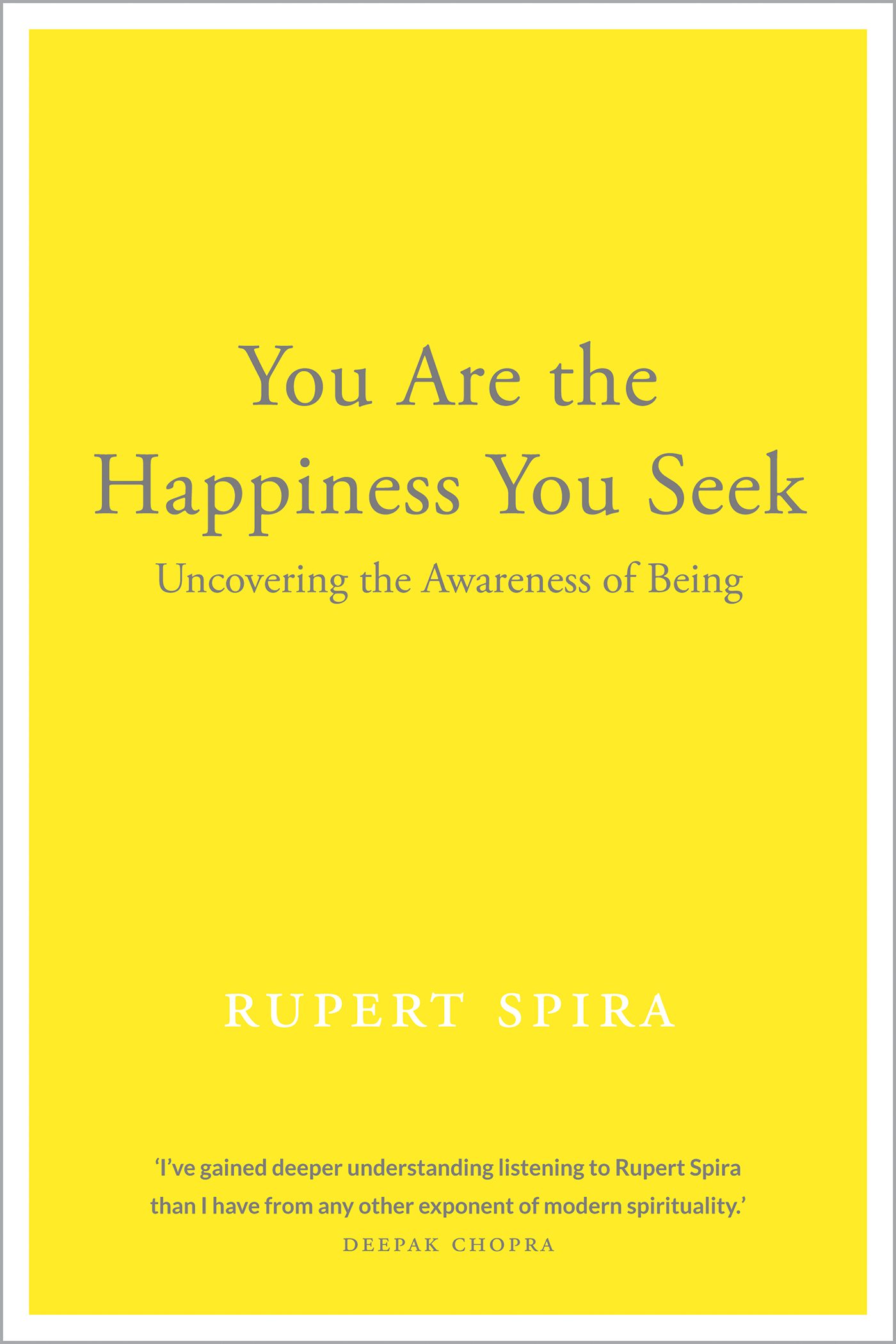
You Are the Happiness You Seek: Uncovering the Awareness of Being
by Rupert Spira (Goodreads Author)
By luminary teacher and author Rupert Spira, You Are the Happiness You Seek offers a simple and direct presentation of the nondual understanding for spiritual seekers as well as people new to the teaching.
In our modern world, so marked by materialism and the disconnection that seems to stem from it, many of us are looking for a deeper truth, one that speaks to what connects us rather than what divides us. You Are the Happiness You Seek invites us to explore in our own experience the essential teaching of all the great religious and spiritual traditions: that the peace, happiness and love that we desire above all else are to be found in our own self or being.
Most of us spend our lives seeking happiness where it cannot be found, outside of ourselves, in objects, activities and relationships. When we acquire a desired object, the seeking activity of the mind comes briefly to an end and our innate happiness shines by itself. The happiness was there all the time, but it was obscured by the seeking mind. When we understand that happiness cannot be produced by an object or a situation, and love cannot be produced by a person, we withdraw our demand from other people and the world that they be a source of happiness for us. We no longer engage in activities and relationships for the purpose of finding happiness, but rather as a way of sharing our own happiness.
With gentle guidance and writing that is accessible and direct, You Are the Happiness You Seek will satisfy and stimulate, allowing the reader to develop the confidence that can only come with a truly experiential exploration of this eternal understanding, regardless of spiritual background.
(Goodreads.com)
“Civilization in Transition”
“In individuals, insanity is rare; but in groups, parties, nations and epochs, it is the rule.”
—Friedrich Nietzsche
New Economic Thinking Author and peace activist Norman Solomon talks about the double standards in US foreign policy that have smoothed the path for Russia’s inexcusable invasion of Ukraine. The role of the military-industrial-complex in the US is one of the main reasons we lack a single standard for the use of military force and human rights, says Solomon.
Tarot Card for May 11: The four of Cups
The Four of Cups
The Lord of Luxury is a card with a hidden sting in its tail. On the surface it indicates a wealth of loving affection, showing a person who is lucky enough to receive a great deal of devotion and tenderness.
At first look, you would think we would be all too pleased with this situation wouldn’t you? However, the sting is this – sometimes, when we are loved deeply and for a long period of time, we are foolish enough to forget what it feels like when we are lonely and unloved. And as soon as we make that mistake, we start to undervalue the tenderness and emotional investment that others are making in us.
We begin to get careless about the ways in which we treat those people who love us. We may hanker after love from some-one outside our circle, instead of valuing those people closer to hand who love us from the bottom of their hearts.
In other words, we can begin to take love for granted. And there are three things in this world we are all silly to take for granted – love, good health and tranquillity. Every one of them slips away silently if we stop paying it due attention.
So, when the Lord of Luxury appears, whilst you will know that there is a great deal of love in the air, there’s also a warning which must be taken on board – count your blessings, reciprocate, and don’t get your priorities in a mess. That way you’ll carry on being loved for a very long time.

(via angelpaths.com and Alan Blackman)
Book: “The Hidden Spirituality of Men: Ten Metaphors to Awaken the Sacred Masculine”

The Hidden Spirituality of Men: Ten Metaphors to Awaken the Sacred Masculine
by Matthew Fox
It is no secret that men are in trouble today. From war to ecological collapse, most of the world’s critical problems stem from a distorted masculinity out of control. Yet our culture rewards the very dysfunctions responsible for those problems.
To Matthew Fox, our crucial task is to open our minds to a deeper understanding of the healthy masculine than we receive from our media, culture, and religions. Popular religion forces the punitive imagery of fundamentalism on us, pushing most men away from their natural yearning for spirituality and toward intolerance and domination. Meanwhile, many men, particularly young men, are looking for images of healthy masculinity to emulate and finding nothing.
To awaken what Fox calls “the sacred masculine,” he unearths ten metaphors, or archetypes, ranging from the Green Man, an ancient pagan symbol of our fundamental relationship with nature, to the Grandfatherly Heart to the Spiritual Warrior. He explores archetypes of sacred marriage, showing how partnership becomes the ultimate expression of healthy masculinity. By stirring our natural yearning for healthy spirituality, Fox argues, these timeless archetypes can inspire men to pursue their higher calling to reinvent the world.
(Goodreads.com)
Creation Spirituality with Matthew Fox
“In sports we play with the reptilian brain.”
–Matthew Fox
New Thinking Allowed with Jeffrey Mishlove NOTE: On Sunday, May 22, at Noon, USA Pacific Time, Matthew Fox will be our guest for a Live Stream Event!!! The URL for this event is https://youtu.be/DxxVsJrykM8. If you log into this URL early, you can set a reminder and will be notified when we go live (but, make sure to have your “notifications” turned on for New Thinking Allowed by clicking on the bell icon). You may wish to log in early in order to post your questions right away. We will start the 10-minute countdown clock at 12:50 pm, USA Mountain Time. Matthew Fox is a spiritual theologian, an Episcopal priest and an activist for gender justice and eco-justice. He has written 37 books. Among them are Original Blessing, The Coming of the Cosmic Christ, A Spirituality Named Compassion, The Reinvention of Work, The Hidden Spirituality of Men, Christian Mystics and The Pope’s War. Most recently, he has published Essential Writings on Creation Spirituality. He is founder of the University of Creation Spirituality in California. Here he distinguishes creation spirituality from theology based on the fall and redemption of humanity. He discusses his early upbringing in Wisconsin and his education in the midwest. He describes the need for both mysticism – saying “yes” to all aspects of life – and prophecy, saying “no” to injustice. He maintains that all truth comes from the holy spirit. He also emphasizes the importance to exploring the depths and avoiding a superficial life. New Thinking Allowed host, Jeffrey Mishlove, PhD, is author of The Roots of Consciousness, Psi Development Systems, and The PK Man. Between 1986 and 2002 he hosted and co-produced the original Thinking Allowed public television series. He is the recipient of the only doctoral diploma in “Parapsychology” ever awarded by an accredited university (University of California, Berkeley, 1980). He is also the Grand Prize winner of the 2021 Bigelow Institute essay competition regarding the best evidence for survival of human consciousness after permanent bodily death. (Recorded on April 25, 2022)
“War Made Easy”
cculb1 Governments lie to justify wars. Newspapers and TV news programs assist governments by forwarding those lies to the American public. The US Government has gone to war over and over based upon lies. This video focuses upon the deceit used by the government and the news media to sell wars to the American public since the end of WW2. That includes the Korean War, the war on Vietnam and Cambodia, the embargo/sanctions against Cuba, the invasion of Panama, the invasion of Iraq (Desert Storm), the invasion of Serbia, the invasion of Afghanistan, the second invasion of Iraq, the overthrow of government of Libya, U.S. bombings and killings in Pakistan, the U.S. arming and funding of rebels in Syria, the U.S. embargo and sanctions against Iran — just to name a few of the more well-known illegal wars waged by the United States Government. All of these military operations, as well as the many others not named here, were sold to America by lies and misinformation. The question is: Why do Americans continue to believe what they are told by their government or their news media?
Buddha on people, they’re the worst

In exile from the dreamscape

We live in a wake-centric world that devalues dreaming, yet we need to experience dreams to be our authentic selvesLa vie (1964) by Marc Chagall, La Fondation Maeght à Saint-Paul de Vence. Photo by Getty Images
Rubin Naiman is a psychologist specialising in sleep and dream medicine, and a clinical assistant professor of medicine at the University of Arizona’s Andrew Weil Center for Integrative Medicine. His latest book is Hush: A Book of Bedtime Contemplations (2014).
Edited by Marina Benjamin
24 December 2020 (aeon.co)
Love Aeon?
Support our workDONATE
In the Old Testament, Jacob, on the run for his life from the twin brother he betrayed, beds down for the night in the wilderness and there dreams of a ladder stretching between heaven and Earth, of angels ascending and descending, and of God assuring him of an auspicious future. With his head on a pillow of stone – symbolic of matter in its densest form – Jacob dreams of a structure linking the material and ethereal worlds. Jacob’s ladder is a story about an archetypal passageway between a rock and a soft place: between earthly troubles and sacred transcendence; waking and dreaming; consciousness and the unconscious.
From a sleep science perspective, Jacob’s ladder might represent the structure of REM sleep – a neural network linking the upper and lower regions of the brain. And the movement of angels could symbolise the process of dreaming, an ongoing dialogue between the waking world and the world of dreams. REM sleep and dreams represent two divergent takes on the same process: one is physiological; the other, phenomenological. One occurs in the body and brain, the other in the mind. To fully appreciate REM sleep and dreaming, our understanding of each must be triangulated into a new higher-order concept I will call REM/dreaming (I will continue to use the terms REM sleep and dreaming separately when referring to their distinct features). Part-waking and part-sleep, REM/dreaming is a hybrid state of consciousness, a borderland between the material and ethereal worlds, between the body and mind.
Research about REM/dreaming began in the mid-1950s and accelerated sharply with advances in neuroimaging. We now know that, independently of sleep – that is, of non-REM sleep – REM/dreaming plays an essential role in learning and memory, mood and immunity, as well as in creativity and artistic expression. Just as important, REM/dreaming stretches, expands and reshapes our very consciousness. From Morpheus, the Greek god of dreams, REM/dreaming effectively morphs our fundamental sense of self.
From a hard-nosed neuroscientific perspective, the subjective dream is merely an incidental, meaningless side-effect of REM sleep. It’s just a dream. The phenomenological study of dreams, however, which dates back millennia, has yielded a vast and intriguing literature of psychological, cultural and mythological observations. What might an integration of the science and subjectivity of REM sleep and dreaming reveal?
The body and mind go their separate ways during REM/dreaming. In essence, upper cortical executive functions become disengaged from lower limbic somatic functions. The body gets a break from the supervision of the authoritative, waking ego-driven mind, and the mind is liberated from the physical constraints of occupying a body. From the perspective of the mind, REM/dreaming is an out-of-body experience. From the perspective of the body, it’s an out-of-mind experience.
When the mind is away, the body gets wild, disorderly, even randy. REM sleep is characterised by autonomic nervous system ‘storms’ – powerful waves of somatic dysregulation of EEG, cardiovascular activity, respiration, blood oxygen and body temperature. Our voluntary muscles go offline, imposing a kind of neurological bondage on the body, which, independently of dream narratives, becomes sexually aroused. This seeming dysregulation can actually be a process of re-regulation that restores the body to its original factory settings by shaking off tension accrued under the watch of the waking mind. More specifically, REM sleep helps to regulate circadian rhythms, body temperature, hormones, metabolism and immunity.
The mind seems to grow fidgety and uncomfortable cooped up in a body 24/7. Mentally, dreaming is like taking off a pair of tight shoes at the end of the day: the liberated mind is no longer constrained by somatic sensory and motor processes. Reminiscent of common notions about the soul leaving the body in sleep, dreaming unfetters the mind from the world of matter; and, having vacated the body, consciousness is free to pandiculate, ponder and play. The dreaming mind stretches, yawns and reawakens in a strangely familiar place where it can time travel, dialogue with demons, get trapped in a mundane loop of doing dinner dishes or soar with angels. With Jacob’s ladder in place, the sky is literally the limit.
Since the discovery of key brain neurotransmitters at work in the digestive tract, it’s become normal to speak of the gut as a second brain. Digestion, after all, is a process requiring intelligent decision-making about whether to assimilate or excrete what a body has consumed. But if the gut functions as a second brain during digestion, then the brain is a second gut during REM/dreaming. Dream digestion sifts through short-term memories of recent waking experiences to determine what will be released and forgotten, versus what will be assimilated into existing stable memory networks to become part of who we are. In the process, negative emotions are downregulated while psychologically nourishing experiences are symbolically integrated into our sense of self. As suggested earlier, our very consciousness is morphed in REM/dreaming. One of my favourite psychotherapy cartoons depicts a therapist telling a patient to ‘have two dreams and call me in the morning’. Today, research suggests that dreaming functions as an endogenous form of psychotherapy.
Dreaming can be personal or transpersonal, revealing the world behind my world, or the world behind the world
One of the most critical overlooked functions of REM/dreaming is its mediation of sleep. Sigmund Freud saw dreams as the royal road to the unconscious. But dreams are, more accurately, the royal road to sleep. REM/dreaming is the bridge to and from sleep. Healthy sleep normally begins with, incorporates and then finishes with various dream states. We enter sleep through a brief hypnagogic dream characterised by rapid firing kaleidoscopic images – a swirl of faces and geometric patterns, as well as strange sounds, and that familiar sensation of falling. Narrative-driven REM/dream cycles then weave their way through the night, culminating in the morning in hypnopompic, groggy REM/dreams that segue us back to waking. The ability to shift from ordinary waking into dreamy states of consciousness is the key to the gates of sleep.
In his first book of alternative medicine, The Natural Mind (1972), Andrew Weil argued that humans have an innate need to expand consciousness, which if not met naturally will increase our chances of relying on substances and drugs to do so. Dreaming naturally expands consciousness. ‘What dreaming does,’ wrote Carlos Castaneda, ‘is give us the fluidity to enter into other worlds by destroying our sense of knowing this world.’ REM/dreaming is a way of perceiving that reveals the dreamscape – what the mythologist Michael J Meade called ‘the world behind the world’. In contrast to the intention-driven looking of ordinary waking consciousness, dreaming is a gentle, receptive way of seeing. Depending on the depth of our vision, dreaming can be personal or transpersonal, revealing the world behind my world, or the world behind the world.
Such revelations are not often pretty. Dreaming opens us to other worlds by destroying our sense of knowing this world – a process most evident around dark, nightmarish dreams. If ordinary REM/dreams digest and assimilate waking events into who we are, then dark dreams accommodate life’s most challenging experiences by changing our sense of the world and our place in it. If we let it, dreaming gradually erodes wake centrism – that waking consciousness to which Westerners in particular are inordinately attached. You might think of wake centrism as a pre-Copernican-like worldview that presumes waking to be the centre of the universe of consciousness, while relegating sleeping and dreaming to secondary, subservient positions. It is a matrix, a cultural simulation evolved to support adaptation, yet it inadvertently limits our awareness. Wake centrism is a subtle, consensual, sticky and addictive over-reliance on ordinary ways of perceiving that interfere with our direct personal experience of dreaming. To paraphrase the 16th-century British clergyman Robert Bolton, it is not merely an idea the mind possesses, but an idea that possesses the mind. Wake centrism is a flat-world consciousness. It warns us to stay away from the edges, to refrain from dialoguing with dreams and the unconscious.
Most dreams are expressions of the personal unconscious, and involve stories about identity, aspiration, neurosis, love and loss. Such personal dreams are like funhouse mirrors that reflect caricaturistic images of our waking lives. But when engaged more deeply, these mirrors morph into doorways that draw us into the looking glass. We are not in Kansas anymore. Here we can wander even further out of our ordinary minds into the collective unconscious, the place of transpersonal dreams. In contrast to classical Freudian approaches that assume all dreaming to be personal and subordinate to waking, Jungian or archetypal approaches are more aligned with dream cultures such as the Aboriginal peoples of Australia and the Achuar in the Amazon who view dreaming as a superordinate state of consciousness.
Most dreams have varying degrees of both personal and transpersonal features. Transpersonal features, however, are more likely to break the frame of wake centrism and open us to mysterious realms. In the rarefied atmosphere of the dreamscape, the mind is more curious than intentional, more empathic than judgmental, and more present than in waking. Not surprisingly, dreaming has long been recognised as a fount of creativity. Dreams have been instrumental in the development of Albert Einstein’s theory of relativity, Francis Crick’s structure of DNA, and Elias Howe’s sewing machine. The Beatles song ‘Yesterday’ (1965) came to Paul McCartney in a dream. August Kekulé might have discovered the circular structure of benzene in a dream of ouroboros – a snake devouring its own tail. And Larry Page’s original algorithm for Google’s web searches was dream-inspired.
Dreams are not simply stories, mental movies or mirrors of miscellaneous events. Irrespective of our beliefs about them, we experience our dreams as meaningful. And whether recalled or not, dreams impact our body and mind much like waking experiences do. Even if upon awakening we dismiss them as ‘just a dream’, they will have left a mark. Opening to dreaming doesn’t require believing that dreams are supernatural, only that they are meaningful.
But the depth of their meaningfulness can draw us into the supernatural. Carl Jung used the term ‘big dreams’ to describe rare, extremely vivid dreams that have a lasting impact on consciousness. Prominent examples include Zhuang Zhou’s classic butterfly dream (where he dreams he is a butterfly, and is unsure if he is a butterfly dreaming he is himself), common dreams of visits from deceased loved ones and, of course, Jacob’s ladder. Such unforgettable dreams have played crucial roles in the evolution of major religious traditions, concepts of demonism, prophecy, healing and spiritual practices throughout history. Not surprisingly, dreaming is often referred to as the language of God.
Today, there is indisputable scientific evidence, corroborated by anecdotal reports from clinicians, to indicate that we are in the midst of a silent epidemic of REM/dream loss that leaves us as least as dream-deprived as we are sleep-deprived, since so many lifestyle and medical factors suppress, damage or otherwise interfere with REM/dreaming. Alcohol is a common culprit. Consumed near bedtime, it can promote the onset of sleep, but it typically disrupts later sleep and REM/dreaming. Depending on dose and timing, alcohol can affect the start of REM/dreaming as well. Even a single drink taken as a nightcap can adversely impact REM/ dreaming. One can imagine how this plays out, when about 30 per cent of Americans routinely have a glass of wine with dinner, 20 per cent consume about two glasses, and the top 10 per cent of American drinkers, about 25 million adults, have more than 10 drinks per day.
Other substances frequently used as sleep aids, such as CBD (cannabidiol) and THC (tetrahydrocannabinol) are known, when used long-term, to impair sleep quality and disrupt REM/dreaming. Estimates of cannabis use in the United States vary widely but there is consensus that it has been increasing as a result of decriminalisation and medicalisation. The National Survey on Drug Use and Health (2019) reported that 35 million people aged 12 or older had used marijuana in the past month. REM/dream disruption is also a common side-effect of many widely used prescription and over-the-counter medications including opioids, antihistamines and anticholinergics. Given the role that REM/dreaming plays in supporting healthy mood, it’s ironic that nearly all prescription antidepressants and anti-anxiety agents, as well as certain hypnotics routinely prescribed as sleeping pills, interfere with REM/dreaming. And reliance on these drugs continues to increase in the US.
Because most so-called sleep disorders are also REM/dream disorders, much of what we consider sleep loss is also REM/dream loss. Millions of Americans who suffer from insomnia and obstructive sleep apnoea also suffer from compromised REM/dreaming.
In lieu of aspiring up dream ladders, we’re encouraged to climb social and corporate ladders
Yet, as Hamlet’s ‘to sleep, perchance to dream’ soliloquy implies, REM/dream loss is also rooted in a pernicious fear of dreams – especially bad dreams and nightmares. The psychologist James Hillman described this fear of and resistance to dreaming in terms of the common bedtime rituals we use to avert it:
we need incantations to summon Hypnos or Hermes to help us drop off to sleep, a ritual of prayer, toothbrushing and teddy bear, of masturbation, food cramming, and the late show, of night cap and sleeping pill. The basic bedtime story of our culture is that to sleep is to dream and to dream is to enter the House of the Lord of the Dead, where our complexes lie in wait. We do not go gentle into that good night.
Anxiety-provoking dreams and nightmares can also discourage us from returning to sleep after middle-of-the-night awakenings, further increasing dream loss, since if you can’t sleep, you can’t dream. Moreover, recent evidence suggests that most middle-of-the-night insomnia, conceptualised as ‘wake after sleep onset’ (WASO), is triggered by the advent of REM/dreaming. Ultimately, the epidemic of REM/dream loss is underpinned by a neglectful, wake-centric posture on the part of the public as well as health professionals. It’s telling that one of the most common uses of the term dream, as in ‘the American dream’, reduces it to a house. It collapses the ethereal into the material, pitching Jacob’s ladder on its side. In lieu of aspiring up dream ladders, we’re encouraged to climb social and corporate ladders, which run sideways and keep us tethered to the material world.
Modern Western medicine has forgotten its roots in Greek Asklepian practices, which viewed dreamwork as an effective intervention. Today, most physicians ignore the critical role that REM sleep plays in our general, psychiatric and sleep health. Sleep medicine specialists do attend to specific, less common, REM sleep disorders, but not to the impact of widespread dream loss or the key role of dreaming in insomnia. Because sleep medicine subsumes REM sleep under the general rubric of sleep, it obscures the fact that much of what we consider sleep loss is actually dream loss.
Although it’s impossible to prove a negative, sleep specialists generally presume that dreams are meaningless, and passively convey this to their patients and the public. Reducing subjective dreaming to epiphenomena of REM sleep discounts our personal experience. Although the brain does mediate REM sleep, it doesn’t dream. We do.
Perhaps most baffling professionally is the fact that psychotherapists have been losing interest in dreaming over recent decades. This is especially disconcerting among psychotherapists who treat sleep disorders and psychiatrists, who now receive little or no training in dreamwork. Not surprisingly, psychotherapists who attend to their own dreams are more likely to initiate dreamwork with their patients.
Given that substances, medications and sleep disorders have a clear deleterious impact on REM/dreaming, it is striking that the epidemic of REM/dream loss is a silent one. This very silence is characteristic of our relationship with the unconscious. If dreaming is a dialogue with the unconscious, then we are not on good speaking terms with it. We are a morphephobic culture, fearful of our dreams, of our unconscious, of the unconscious. The Western world has a long history of discouraging trust in the unconscious by presuming it to be irrational, selfish, aggressive, even evil. The phrase beat the devil out of, for example, originated in Christian superstitions that children were born with demonic inclinations. More recent Freudian notions defined the core of the human unconscious as ‘das es’, German for ‘the it’. Later sanitised by American psychiatry as ‘the id’, it remained a repository of selfish and aggressive impulses that needed to be reined in. This dark model of the human psyche has dominated Western thought for many decades.
In his book Humankind (2019), a recent evidence-based exploration of innate human proclivities, the historian Rutger Bregman challenges our mistrust of the unconscious. He debunks common cynical myths that humans are inherently nasty and selfish, offering a more accurate and radical portrayal of human nature that suggests that most people are good – ‘friendly, peaceful, and healthy’. Comforting as this might be, the question of whether we can trust the unconscious remains a deeply personal one. We must answer it for and about ourselves if we are to open our lives to REM/dreaming.
Health professionals and psychotherapists, and sleep medicine specialists in particular, could support rather than impede our addressing this important question by acknowledging the extent and seriousness of REM/dream loss. On a practical level, it would be prudent for them to establish a new diagnostic designation for REM/dream loss, thereby opening up avenues for treatment, encouraging further research, and the support needed for public health education.
Not surprisingly, REM/dream loss is associated with a range of mental and physical health concerns, including compromised immunity, increased inflammation, child and adolescent obesity, and increased sensitivity to pain. Damaged REM/dreaming is also characteristic of Alzheimer’s disease, dementia and REM sleep behaviour disorder (RBD), which dramatically increases the risk of developing Parkinson’s and other neurological diseases. Recent research has found that compromised REM/dreaming is also linked to increased mortality. Because REM/dreaming supports mood regulation, its disruption increases the risk for clinical depression. The classical psychoanalytic view of depression as a loss of one’s dreams appears to have a literal underpinning.
Dreaming is a place, a state of consciousness, somewhere we can, with practice, choose to visit
In fact, the sleep and dream architecture of most depressed individuals looks much like that observed in research subjects selectively deprived of REM sleep. Whereas in normal REM/dreaming the mind and body take time apart, the brains of depressed individuals exhibit increased executive function, which suggests that the waking mind or ego is still present and running the show. Psychologically, this might reflect a kind of vigilance symptomatic of wake centrism. But it could also impede normal self-regulation of REM/dreaming and disrupt the psychological assimilation of challenging experiences. From a REM/dream standpoint, depression is a form of emotional constipation. Not surprisingly, the dreams of depressed individuals are less fantastic and emotional, more passive, impoverished, mundane and difficult to recall.
Our relationship with REM/dreaming is about our relationship with that ethereal soft place: the dreamscape. Dreaming is a place, a state of consciousness, a somewhere that we can, with practice, choose to visit and hang out in. We might begin by righting Jacob’s ladder and engaging in dreamwork. The body, mind and spirit want and need to dream. We needn’t push the river, but we do need to un-dam it. But first, to optimise REM sleep, we must optimise sleep.
Because the brain prioritises sleep over REM sleep, good sleep is a prerequisite for healthy REM/dreaming. Although there’s an abundance of valuable sleep health guidance available, most of it is rooted in wake centrism. In telling us how to think and behave in waking life to improve our sleep lives, much of this guidance effectively tries to leverage waking to access sleep and so fails to direct us to the actual bridge from waking to sleep. More specifically, it fails to recognise the need to transcend waking by surrendering to dreaming.
When we remember that REM/dreams are the natural bridge to sleep, we realise that to sleep well we must also dream well. Given that alcohol, cannabis, as well as many psychiatric and other medications used for sleep, are ineffective in the long-term and also compromise REM/dreaming, it is essential to consider alternatives. The emerging field of integrative mental health recommends evidence-based natural alternatives that are much kinder to dreamers. Additionally, there is a wide variety of oneirogens – REM/dream-enhancing botanicals, nutraceuticals and drugs available over the counter. Even melatonin, customarily used to support sleep and regulate circadian rhythms, is a safe oneirogen.
Psychedelics, too, are potent oneirogens. Lee Adams, a dream researcher and champion of lucid dreaming, summarises this perspective in ‘Are Dreams the Original Psychedelic?’ (2009), reminding us that our pineal glands and lungs produce psychedelic substances during REM sleep that contribute to a sense of dissociation or transcendence. This speaks to me since my personal interest in psychology and dreaming was galvanised by adolescent experiences with psychedelics. Like big dreams, psychedelics expand consciousness beyond the matrix of wake centrism to reveal the world behind the world. It is my hope that the recent resurgence of clinical and spiritual research in psychedelics surveyed, for example, by Michael Pollan in How to Change Your Mind (2018), could help restore our regard for REM/dreaming.
I’m using the term ‘dreamwork’ to refer to the practice of habitually engaging with dreams – our own and those of others. Dreamwork is not about work in the ordinary sense of the word. It’s more about allowing the dream to work us. It involves practices that support recall, journaling, sharing and interpretation, as well as strategies for managing dark dreams. For those who rarely or never remember dreams, setting an intention to do so is a useful first step. We quickly find the unconscious is ready and willing to dialogue. And we enter this dialogue by lingering momentarily in halls of morning grogginess. Derived from the English rum drink, grog, the term ‘groggy’ suggests that waking up is about sobering up. Because we’re still partially asleep and dreaming, this wake-centric attitude quickly ushers us out of the dreamscape. Lingering in grogginess – which is an exquisite hybrid state of sleep, dreams and waking – keeps us at the edges of the dreamscape where we will, with patience, eventually begin to observe dream images.
Once we do, even if only in glimpses, it’s helpful to carry our observations to the waking world by journaling. We can do so orally with someone close by who is respectful of dreams, and/or with written word or drawn image. Journaling is not about translating the dream into the waking world terminology, but about learning the dialect of dreaming. It is about better understanding the culture of the dreamscape.
Rather than allowing our dreams to stretch and expand our sense of self, we’re inclined to downsize and sanitise them, squeezing them into familiar wake-centric frameworks. We are seduced by dream dictionaries that offer quick and clever impersonal interpretations, and by dream experts who likewise try to shrink dreams to fit into a wide range of objectified clinical frameworks. These approaches share a spiritually subversive, wake-centric and materialistic foundation. In contrast to the Judeo-Christian concept as it is above, so is it below, they are founded on the flipped notion of as it is below, so is it above. Working on the presumption that ordinary waking life is the ultimate reference for determining the meaning of dreams, they proffer canned interpretations in lieu of fresh experiences. Such popular approaches obscure the critical process of relating to dreams as organic, intelligent and personally meaningful experiences.
Dreams are like fish: we can better understand them by learning to swim
Viewing dreams with waking-world eyes is like surveying the glorious night sky through sunglasses. Dreamwork calls upon us to practise novel ways of perceiving and relating to mystery. It requires cultivating comfort with perplexity, ambiguity and confusion. ‘I ain’t afraid of confusion,’ sang Bob Dylan, ‘no matter how thick.’ Dreamwork calls for approaching dreams with a beginner’s mind – not prematurely dousing them with knowledge. Despite his extensive experience in dreamwork, Carl Jung advised: ‘One would do well to treat every dream as though it were a totally unknown object.’ Dreams are like fish. Rather than pulling them into the dry world of waking for analysis, we can better understand them by learning to swim. Infants, of course, seem to have an instinct about holding their breath under water. Likewise, I believe we all have an instinct about the dreamwork. Dreamwork is an instinctual skill. It is the same skill with which we approach story in literature, film, poetry, music, dance and art.
Ultimately, dreamwork is less about any clever analysis of dream narratives, and more about willingness to witness and experience the dream. As interesting as interpreting particular dreams might be, even more important is simply knowing that dreaming is meaningful. This understanding can help us be more receptive to allowing dreams to work us, to expand our sense of the world and ourselves.
Jacob’s ladder appeared at a moment when Jacob was in serious trouble, since the brother he’d betrayed now wanted him dead. Jacob had done nothing special to deserve his big dream. He hadn’t been fasting, doing karma yoga, or participating in a mindfulness retreat. He was an ordinary guy in a troubled time – and dreams, especially big dreams, are a natural and effective way of negotiating troubled times. And we live in troubled times. In this great era of globalisation – of global warming, an economics of greed, and pandemics – our dreams readily reflect the expanse of the collective unconscious, of shared hopes and dark forebodings. Indeed, we see reports of increased dreams and nightmares in these times.
Rather than push those nightmares and phantoms aside, we might engage in what Jung called ‘shadow work’ – a process of dialoguing with frightening dream images. This can be done while dreaming lucidly or afterward by reliving the dream. The essence of shadow work involves finding diamonds in coal, discovering a precious something buried in what appears to be a dark and dirty place. How we negotiate dark dreams parallels how we approach similar waking-life challenges. Such dreams not only reveal our approach, but also provide opportunities to consciously evolve it.
We dream all the time. Although we believe dreams are like stars that emerge only at night, we know that stars are always present, even when occluded by daylight. Likewise, dreams are always present as an undercurrent in consciousness, even when obscured by ordinary waking. Jung referred to this undercurrent as the waking dream. In contrast to daydreams, which are about escaping current experiences, the waking dream calls us more deeply into those experiences and undercurrents. The waking dream is a natural state of consciousness associated with art, play, imagination, intimacy, spiritual practices and the borders of sleep. It’s also a powerful psychotherapeutic technique used in Jungian analysis.
Dreaming, if you’re so minded, can become a way of life, or at least a regular practice. The waking dream is about using our dream eyes, the ones we see with in REM/dreams, in broad daylight. It can loosen the grip of wake centrism, and offer glimpses of the world behind the world. In this way, it reveals a deeper sense of who we are, tapping into the mythic backstory of our lives.
To read more about altered states of consciousness, visit Aeon’s sister site, Psyche, a new digital magazine that illuminates the human condition through psychological knowhow, philosophical understanding and artistic insight.
This Essay was made possible through the support of a grant to Aeon from the John Templeton Foundation. The opinions expressed in this publication are those of the author and do not necessarily reflect the views of the Foundation. Funders to Aeon Magazine are not involved in editorial decision-making.
Sleep and dreams Consciousness and altered states Neuroscience
A broad definition of trauma is useful; an open-ended one isn’t

Photo by Tobias Tullius/Unsplash
Ahona Guhais a clinical and forensic psychologist practising in Melbourne, Australia. She writes for Psychology Today, and is the author of a book on trauma (forthcoming, 2023).
Edited by Matt Huston
9 May 2022 (aeon.co)
The concept of trauma now permeates our zeitgeist like never before, with a growing awareness of both the range of events that can be considered traumatic and the tendrils of harm that trauma can send into the lives of victims. As the sexual abuse survivor Grace Tame, winner of the 2021 Australian of the Year award, recently said, we must have an ‘open and honest discussion about trauma and what that can look like. It can be ugly. It can look like drugs. Like self-harm, skipping school, getting impulsive tattoos and all kinds of other unconscious, self-destructive, maladaptive coping mechanisms.’ Her statement will leave clinicians working in the field of trauma nodding, familiar as we are with the darker and more destructive impulses trauma can engender. Abuse and trauma can have far-reaching impacts, sometimes making life itself feel so painful as to be untenable.
The conceptualisation of trauma has changed significantly over time. Historically, much of the clinical thinking about trauma has taken a narrow view, assuming that trauma (derived from the Greek for ‘wound’) necessitated the infliction of physical wounds and harms. In the early 20th century, clinicians recognised manifestations of trauma in soldiers, using terms such as ‘shell shock’ and ‘war neurosis’. Later, a collection of frequently observed after-effects of trauma were reconceptualised as post-traumatic stress disorder (PTSD). PTSD is one of the most well-known mental health conditions arising after trauma, with symptom clusters of trauma intrusions (such as flashbacks and nightmares), avoidance (of memories of the trauma), emotional and cognitive changes (such as persistent negative emotions or distorted beliefs about oneself or others) and changes in arousal and reactivity (such as hypervigilance).
Since the time PTSD first entered the diagnostic lexicon, our conception of trauma – including the causes of traumatisation and how it manifests – has grown more encompassing. There has been easy recognition that a range of experiences, such as exposure to war, assault, rape and anything else that involves a disturbing and life-threatening event can lead to post-traumatic difficulties. We now also know that events that are not directly life-threatening, including behaviours such as emotional abuse, financial abuse, bullying and neglect, can lead to post-traumatic reactions and responses. When traumas compound or occur at key developmental ages, a person may develop complex post-traumatic stress disorder (C-PTSD), which involves difficulties related to a person’s self-concept, emotional development, thinking and interpersonal functioning. The concept of trauma has also been expanded such that witnessing a traumatic event as part of work might qualify one for a diagnosis of post-traumatic disorders, lending recognition to concepts such as the vicarious traumatisation experienced by professionals such as first responders.
There are a number of potential reasons why the conception of trauma has widened. And with the expansion of ways in which the term ‘trauma’ is used, there are also concerns that it is now being overused. The psychologist Nick Haslam suggests that the changing meaning of trauma is underpinned by what he calls ‘concept creep’, reflective of increasing liberalisation of society and a greater focus on moral harms. He notes that concepts that refer to negative aspects of human experience (such as bullying and prejudice) have expanded over time to capture less harmful variants of the same behaviour, as well as qualitatively new phenomena. Michele Cascardi and Cathy Brown have provided a somewhat contrasting view, arguing that the broadening of our understanding of certain psychological concepts often constitutes a meaningful expansion. ‘When meaningful expansion occurs,’ they write, ‘a concept is altered in a thoughtful way to include new behaviours in new contexts,’ which ‘points toward constructive strategies for harm reduction.’
This work is not as simple as concluding: ‘You have anxiety after a difficult experience, ergo you must be traumatised’
A broadened conception of trauma clearly has some key benefits. First is the recognition it provides trauma victims who might have hitherto found it difficult to name their experiences and acknowledge the impact. It is difficult to understand and treat something that remains unacknowledged. Second, recognising the variety of behaviours that can cause trauma has allowed us to seek protection for people from these behaviours, which might not have been recognised as harmful in the past. Marital rape, for example, was long not even acknowledged as an offence. Severe bullying has become enshrined in law as a criminal offence just within the past decade. People have slowly recognised that behaviours that were historically accepted as normal cause significant harm and must be stopped – resulting, overall, in moves toward a fairer and kinder society.
However, as with many phenomena that draw popular focus, when viewed through the lens of social media, the concept of trauma has started to warp in counterproductive ways. Even as attention is drawn to some of the darker and more difficult ways trauma can manifest, the social media landscape demonstrates a concomitant lightening of trauma – focusing on purported symptoms such as perfectionism, high-functioning anxiety, people-pleasing and difficulty relaxing. It is also now common to see social media channels characterising relatively innocuous behaviours and habits as symptoms of trauma – eg, watching a show repeatedly, struggling to make small decisions, overpreparing, overanalysing, and becoming defensive. To be clear, none of these are clinical symptoms of trauma disorders as per current diagnostic criteria. They might be habits derived from the ways that some people have learned to adapt and function after experiencing trauma, but they might also simply be temperamental quirks, or even adaptive ways people have learned to function in a fast-paced world.
Understanding when certain behaviours are truly underpinned by trauma requires careful psychological exploration and understanding of the nuances of psychopathology. The more common trauma responses for which survivors seek psychological therapy are much more severe than the behaviours listed above: suicidal thoughts, self-harm, drug use, self-hatred, disabling anxiety, eating disorders, aggression and violence are the ones I commonly see. Trauma is a complex phenomenon, made even more so by the wide variety of clinical difficulties associated with a history of trauma and the number of overlapping diagnoses (such as major depressive disorder, generalised anxiety disorder, and borderline personality disorder) that someone with a trauma history might present with. Clinical work involves re-diagnosing someone through the lens of trauma, and determining an appropriate treatment modality, such as cognitive processing therapy for PTSD.
The complexities of trauma also include the fuzzy divisions between events that are truly wounding to the psyche and those that might be aversive and difficult, but are not traumatic. Exactly where these boundaries lie is unclear. But this work is not as simple as concluding: ‘You have anxiety after a difficult experience, ergo you must be traumatised.’
There are many challenging human experiences that we do not need to pathologise
‘Traumabait’ is what I call the overinclusive use of the construct of trauma. Often, it appears to be generated by those who wish to sell a product or an idea, or who want to position themselves as relatable social media influencers and have recognised simply that trauma sells.
The overuse of the concept of trauma could come with some risks. It has the potential to promote overdiagnosis or inaccurate self-diagnosis, which can lead to other difficulties (eg, a misdiagnosis of PTSD might lead to delays in accessing appropriate treatment); redirection of limited treatment resources away from those with more severe need; intolerance of experiences that are difficult but not disabling, resulting in reduced psychological flexibility and resilience; and a hyper-focus on one problem or set of symptoms to the exclusion of others. I have worked with clients in my practice who sought assistance for PTSD after self-diagnosing. In some cases, careful clinical assessment eventually revealed that they did not meet the diagnostic criteria for PTSD, and that therapy interventions other than trauma-based ones were required. On a number of occasions, other pertinent conditions have explained symptoms that people attributed to trauma – such as sensory overwhelm caused by autism spectrum disorders.
Interestingly, though, while I often find that the overuse of ‘trauma’ plays out loudly in the social media sphere, my experiences in the therapy room are frequently quite different. Many clients find it difficult to name the aversive things that happened to them, and they say things like: ‘Well, it wasn’t that bad/as bad as X.’ It is common to have to point out that certain ways of coping (eg, social anxiety) might indeed be reflective of trauma, a learned response when they were faced with a world that was dangerous.
In my practice, I find it helpful to use a reasonably broad definition of trauma. There are no firm, clear-cut boundaries between the kind of event that causes traumatic responses and the kind that doesn’t. I typically use the formal diagnostic criteria for PTSD and C-PTSD as initial guides, and then explore the range of adversities experienced by clients, including the impact of these events on a developing personality and the meaning someone derives from these events. I largely find it helpful to allow clients to use the terminology that they wish to use, including the word ‘trauma’.
Therapists commonly use the word ‘trauma’ when talking about bullying just as we do when talking about rape. However, there are many challenging human experiences that we do not need to pathologise. We can allow clients to notice that some things are aversive and difficult without necessarily entering the realm of trauma (such as being teased by a sibling, or cheated on by a spouse). It is possible to acknowledge, note and soothe distress without needing to legitimise it by assigning it the trauma label. Similarly, it is normal to encounter difficult interpersonal situations such as marital affairs, fights with friends or sibling rivalries, and it might even be helpful to learn to build resilience and interpersonal skills through facing these situations.
Understanding the difference between the traumatic and the distressing is essential to helping people develop healthy identities that are characterised by psychological flexibility and resilience. While bringing mental health terms into common parlance is valuable for awareness-raising, it is important to employ these terms sensibly in order to ensure that people develop useful conceptualisations of their difficulties. A conception of trauma that is well off the mark could end up harming more than it helps.