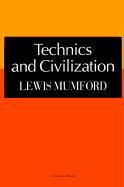
This is a history of the machine and a critical study of its effects on civilization. Mumford has drawn on every aspect of life to explain the machine and to trace its social results. “An extraordinarily wide-ranging, sensitive, and provocative book about a subject upon which philosophers have so far shed but little light” (Journal of Philosophy).
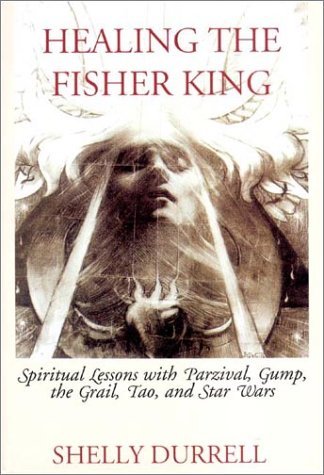
This is no ordinary self-help book. The magic of movies, novels, art, mythology, history, philosophy, and literature are brought together in the exploration of the legend of Parzival. It is the blueprint of the heros life-the one we were all meant to strive for. Includes Parzival summaries, journal exercises, bibliography, filmography/synopses, and index.
A choice which confronts every one of us at every moment is this: Shall we permit our fellow men to know us as we now are, or shall we seek instead to remain an enigma, an uncertain quantity , wishing to be seen as something we are not? Throughout history man has chosen the road of concealment rather than “openness.” Professor Jourard maintains that this method all too often results in sickness, misunderstanding and alienation of self. He seeks to provide, by means of this book, some stimulation for investigators of human motivation to seek better ways of measuring human spirit or levels of “inspiration” by bringing these phenomena within the scope of scientific analysis and thereby fostering further research into this important area.
New Thinking Allowed with Jeffrey Mishlove James Tunney, LLM, is an Irish barrister who has lectured on legal matters throughout the world. He is a poet, a scholar, and author of The Mystery of the Trapped Light: Mystical Thoughts in the Dark Age of Scientism plus The Mystical Accord: Sutras to Suit Our Times, Lines for Spiritual Evolution. His paintings have been shown in galleries in Scandinavia and London.His website is http://www.jamestunney.com. Here he describes the history of the transhumanist movement, with a particular focus on its development in the 1920s – and a view to understanding both proponents and critics. On the positive side, the movement seeks to enhance the human lifespan and human capacities. On the negative side it sometimes treats humans as machines, perhaps even inferior to machines, or perhaps as cogs in a greater machine – denying conscious sovereignty and spirituality. New Thinking Allowed host, Jeffrey Mishlove, PhD, is author of The Roots of Consciousness, Psi Development Systems, and The PK Man. Between 1986 and 2002 he hosted and co-produced the original Thinking Allowed public television series. He is the recipient of the only doctoral diploma in “parapsychology” ever awarded by an accredited university (University of California, Berkeley, 1980). (Recorded on January 30, 2021)
Black people can detect racists from a mile off. It’s the way they look at us — it’s often a look of disgust, deep hatred, or fear, and it shows. The minute we approach you, we can feel it — call it our sixth sense or survival instinct.
Because we can feel that racism, we know we have to keep our guard up lest you try to harm us. There are of course some white people that have perfected the art of hiding their racism: closet racists. Sometimes we don’t spot those soon, but it’s a matter of time — when and not if — they’ll make a crucial mistake that will lay bare their ugly, racist, selves.
I’m no expert in sniffing out racists— I’ll admit it here, I’ve been tricked many a time. But one thing I’ve learned is that they will always, always show their true selves at one point. Sometimes maybe even years after you’ve met them and actually consider them your friends.
This was the case with a white lady I worked with for many years. I was shocked at the derogatory comments she made about an Asian girl that I hired. It blew me away. This white lady went out of her way to spread the crassest rumors about my direct report based on sex-related stereotypes about Asian women. It was appalling.
White people that are not racist have these 6 characteristics:
When they meet a Black person, they don’t start staring or examining you like a specimen under a microscope. They make eye contact and speak to you like they would any other human being. You can feel that they are relaxed and don’t feel intimidated by you. They don’t start fixating your nose or your mouth or your Black skin. So many white people do that. Don’t they realize how awkward and strange it is to stare? White people that aren’t racist don’t say stuff like: “It’s the first time I’ve met a Black person or there are not many Black people here”. They don’t make race the topic of discussion when they don’t even know you, only racists do that because they feel so self-conscious and are worried that their racism is showing.
You immediately feel like the person considers you like their equal. They don’t try to act as though they are superior to you. They are not patronizing or condescending. They don’t infantilize you either. They don’t say stuff like, “You’re not like other Black people”. They are respectful and don’t speak over you. You feel that they are actively listening to you when you engage with them.
If you report a racist incident to them, they’ll listen to you and believe you. They won’t try to gaslight you or question what you’ve said. White people that aren’t racist know that racism exists in the world and that Black people suffer from it. They aren’t naive. They won’t say stuff like “Are you sure it was racism or racism is a thing of the past”.
White people that aren’t racist won’t repeat dumb stereotypes about Black people. They won’t assume that you can run fast, eat chicken, or sing well just because you are Black. They don’t make stupid racist jokes. They won’t immediately assume that the Black person is guilty if there is an altercation. They are aware of how pernicious stereotypes can ruin Black peoples’ lives.
White people that aren’t racist act. They don’t sit on their backsides all day saying that Black Lives Matter without doing a single thing to show that they do. They go out and find a Black talent to mentor, they hire Black talent, they donate to organizations and individuals leading the fight against racism. These people are not performative individuals, they are authentic and they do real things to drive the fight against racism.
White people that aren’t racist educate themselves about racism and anti-racism. They want to know where their “blind spots” are. They want to understand. These people do that hard work even if it means questioning everything that they have ever been taught. They understand when it’s time to put aside their white fragility to comprehend why for example, George Floyd and so many others didn’t stand a chance. These white people can become some of the strongest allies of antiracism.
In conclusion, if we are ever to get rid of racism one day, we imperatively need to have more white people that aren’t racists speaking up when they witness racial injustices — in their personal lives and in the workplace.
In the wake of George Floyd’s death, we were able to see what happens when everyone — globally says “no” to racism. I know many will say that not much has happened since, but I would argue that there is a lot happening, the world has changed since the global racial reckoning in 2020. It might not be visible to everyone, but trust me when I say, that things are no longer the same. I’m an optimist and I’m already dreaming about a post-racial society. I know it is within our reach.
Robert A. BelleRobert A. Belle shows us how our relationship with money represents our relationship with life, and provides practical tips on how to perform an emotional audit of your expenses. While it may feel challenging to take an honest look at our financial behavior, that action can help us re-evaluate our careers, our relationships and our priorities.
Commissioned by T. Rowe Price and created in partnership with Ideas Studio, the branded content arm of TED Partnerships
About the partner
T. Rowe PriceT. Rowe Price offers a strategic investing approach to help you build the future you want with confidence.
About the speaker
Robert A. Belle Accountant See speaker profile Robert A. Belle helps people who feel stuck in their career or life journey to break away from the norm and find new paths that reveal their true value.
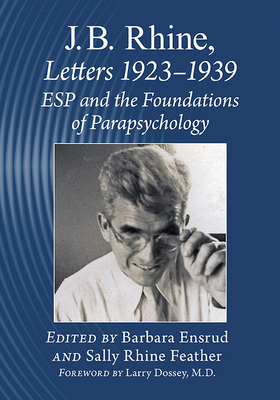
During the 1930s a new approach to exploring human consciousness began at Duke University with Professor J. B. Rhine’s experimental research on extra-sensory perception, or ESP. His findings on telepathy, clairvoyance, precognition and psychokinesis challenged conventional disbelief. Rhine’s findings and his first popular book, New Frontiers of the Mind, ignited excitement and controversy–among not only scientists but the public at large. Rhine’s letters chronicle his efforts to find reliable evidence of psychic ability, from the seance room to psychic animals and finally to a university research laboratory. Covering the years 1923-1939, they reveal a gripping story of groundbreaking research, told in the words of the main player as he worked with his team, subjects, critics and supporters alike.
New Thinking Allowed with Jeffrey Mishlove James Tunney, LLM, is an Irish barrister who has lectured on legal matters throughout the world. He is a poet, a scholar, and author of The Mystery of the Trapped Light: Mystical Thoughts in the Dark Age of Scientism plus The Mystical Accord: Sutras to Suit Our Times, Lines for Spiritual Evolution; also Empire of Scientism: The Dispiriting Conspiracy and Inevitable Tyranny of Scientocracy, TechBondAge: Slavery of the Human Spirit, and Human Entrance to Transhumanism: Machine Merger and the End of Humanity. His website is http://www.jamestunney.com. James Tunney describes sixth century Ireland, often considered to be the beginning of the Dark Ages in Europe. It was then that Columba established a monastery on the remote Island of Iona. It became a center of learning and culture that kept Christianity alive in Europe after the collapse of the Roman Empire. Columba’s biography contains many accounts of abilities that are consistent with contemporary parapsychological observations. New Thinking Allowed host, Jeffrey Mishlove, PhD, is author of The Roots of Consciousness, Psi Development Systems, and The PK Man. Between 1986 and 2002 he hosted and co-produced the original Thinking Allowed public television series. He is the recipient of the only doctoral diploma in “parapsychology” ever awarded by an accredited university (University of California, Berkeley, 1980). He is also the Grand Prize winner of the 2021 Bigelow Institute essay competition regarding the best evidence for survival of human consciousness after permanent bodily death. (Recorded on January 25, 2022)
Consciousness, spirituality, biography, sexuality, androgyny, futurism, space, the arts, science, astrology, democracy, humor, books, movies and more