The Sects That Rejected Sex in 19th-Century America

Why three religious groups traded monogamy for celibacy, polygamy and “complex marriage”

Stewart Davenport, Zócalo Public Square February 14, 2022


Shakers taking part in a group exercise/dance
The Shakers, who reached the peak of their popularity in America between 1820 and 1860, loathed the institutions of marriage and family for the sinful “natural affections” that accompanied them. Getty Images

Disconsolate after his beloved’s marriage to another man in 1837, a young seminarian named John Humphrey Noyes declared in a bitter, anti-love poem to his ex:

I will not give you back your heart,

I’ve wooed and fairly won it,

And sooner with my life I’ll part,

You may depend upon it.

Not content with mere verse, Noyes would go on to turn his emotional anguish into a theological critique of the institution of monogamous marriage itself (or as he once called it, “Egotism for Two”). Condemning monogamy as “simple” and replacing it with a more heavenly, polyamorous version that he called “complex marriage,” in 1848 he founded a religious sect based on his teachings: the Oneida Community in upstate New York. There, people would be stripped as much as possible of their worldly “I-spirit” and have it replaced with the godlier “we-spirit” of genuine Christian fellowship. Only with this kind of radical reorientation, Noyes held, could believers experience community, family and marriage in the way that God had intended them.

For individuals feeling down about a lack of romantic fulfillment or a recent break-up this Valentine’s Day, Noyes’ story serves as a reminder that those unlucky in love are hardly alone either among their contemporaries in 2022 or throughout human history. Three 19th-century American sects—the Oneida Pantogamists, the Shaker celibates and the Mormon polygamists—waged wars against the so-called selfishness of monogamous marriage. All viewed romantic exclusivity as sinful, a hindrance to creating a more universal love for a community of fellow believers.

Portrait of John Humphrey Noyes, founder of the Oneida Community
John Humphrey Noyes, founder of the Oneida Community Public domain via Wikimedia Commons

Monogamy, of course, won out. Experiments like Noyes’ commune now seem distant, strange and historically specific. Yet there is something familiar and universal in them.

We all search for meaning in the universe, and we all long for human intimacy—to know our place in the bigger picture and to share that story with someone. These dual human drives are as old as the human species. Take the Book of Genesis, for example. Before God created Eve, Adam knew his cosmic significance and walked with his creator in Eden—yet was still lonely and bummed out.

Noyes could relate. “The next thing that a man wants after he has found the salvation of his soul,” he wrote, “is to find his Eve and his Paradise.” When his first love renounced their shared faith and then announced her engagement to another man, his universe came crashing down around him.

So he picked up the pieces and created a new one, without that sinful institution that had caused him so much pain: monogamy. Rather than becoming some kind of perpetual, quasi-religious orgy, the Oneida Community was highly controlled. Prospective sexual partners had to arrange their liaisons—or “fellowships” as they called them—through the ministrations of a third party, sleep separately after the fellowshipping had concluded, and strive not to have the same partner too often in order to prevent the relationship from becoming exclusive. As Noyes knew from experience, the desire for exclusivity is one of the most powerful emotions that romanticized and sexualized human love can engender. Such passion could only bring spiritual ruin.

The Shakers, who were founded in mid-18th century England and reached the peak of their popularity in America between 1820 and 1860, similarly loathed the institutions of marriage and family for the sinful “natural affections” that accompanied them. Shaker villages were to be believers’ new families, complete with spiritual mothers, fathers, sisters and brothers all living together in harmony, worshipping the Lord, working hard for their bread and waging a communal war against the flesh by abstaining from sex.

A group of Shakers in Pennsylvania
A group of Shakers in Pennsylvania Getty Images

Over the Shakers, too, love’s pain hovered. Mother Ann Lee, the group’s founder, had tragic and traumatic experiences in childbirth, losing all four of her newborns—a fact to which later commentators point as the psychological source of her hatred of all sex.

The story of Steven Sutton, a new convert living in the Shaker village at Canterbury, New Hampshire, in the 1780s, illustrates just how painful this struggle against exclusive love could be. His wife “was an amiable woman, and I loved her,” he wrote. But after joining the community, “now I must hate her … The leaders said, ‘She was my god.’” Separating the family proved to be too much for her, and when “she was buried,” Sutton continued, “I was ordered to cover the earth over her coffin, to show that I had no natural affections; this I did, when at the same time, I felt as though I should pitch into the grave with her.”

For Mormon polygamists, the message was largely the same, even if the remedy was assuredly not, with religious leaders especially targeting women in their crusade against selfishness. “I am sure that, through the practice of this principle” of plural marriage, Elder George Q. Cannon wrote, “we shall have a purer community, a community more experienced, less selfish and with a higher knowledge of human nature than any other on the face of the earth.”

The words of Helen Mar Kimball Whitney, plural widow of Joseph Smith and later apologist for Mormon polygamy, indicate that she had internalized this logic. Plural marriage “will exalt the human family,” she wrote in an 1882 letter, and “in the place of selfishness, patience and charity will find place in [plural wives’] hearts, driving therefrom all feelings of strife and discord.”

Elder Ira Eldredge and his three wives around 1864
Mormon Ira Eldredge and his three wives around 1864 Public domain via Wikimedia Commons

As with the Shakers and Oneidans, selfishness was the real enemy of the Mormon polygamists—an impediment to personal godliness and communal unity that could only be slain (for the plural wives) through the sacrifice of their exclusive claim to their husbands. These sacrifices were often truly painful for the adherents of all three sects, which is why leaders needed mechanisms of control to enforce the communities’ practices whenever individual discipline wavered. Although faithful, the believers struggled profoundly to extirpate the special love they had for others—a love they were told was selfish and sinful.

Why did Mormons, Shakers, and Oneidans all target even the exclusive romantic love found in the time tested, biblically sanctioned and socially accepted institution of monogamous marriage?

For starters, perhaps that institution was not so biblically bulletproof as its defenders might have imagined. All three groups used the same verses from the Bible to attack it. “The children of this world marry, and are given in marriage,” Jesus proclaims in Luke 20:34-35, but those worthy to obtain “the resurrection from the dead, neither marry, nor are given in marriage.” Both the Shakers and the Oneidans referred to this straightforward proof text often in defending their decision to abolish monogamy.

For polygamous Mormon Saints, who place the institution of marriage and the obligation of reproduction through sex at the center of their story of eternity, it was a little different. They believed that more wives would mean more children for the paterfamilias both on earth and in the afterlife. Mormons countered those selfish, complaining plural wives who wanted to be their husbands’ one and only with a heightened commitment to religious duty.
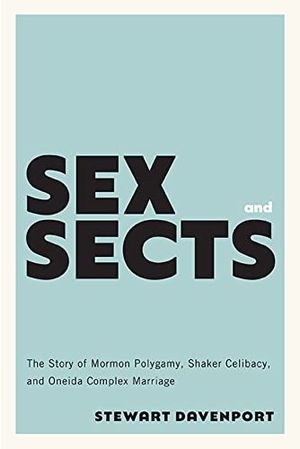
Preview thumbnail for 'Sex and Sects: The Story of Mormon Polygamy, Shaker Celibacy, and Oneida Complex Marriage

Sex and Sects: The Story of Mormon Polygamy, Shaker Celibacy, and Oneida Complex Marriage

Stewart Davenport analyzes why these bold experiments rose and largely fell over the course of the 19th century within the confines of the new American republic.BUY

What also bound these three sects together was the time and place in which they rose, institutionalized and fell, relatively simultaneously. In the 1830s, the federal government was weak, the American frontier seemingly endless, and the opportunities for sectarian start-ups equally boundless. By the 1880s, however, the federal government was strong and getting stronger, the frontier was rapidly disappearing, and the majority of Americans were increasingly intolerant of sexual and marital arrangements they believed corroded the nation’s morality.

By 1881, the Oneida Community had dissolved, the Shakers were losing members at an alarming rate (and, obviously, failing to spawn new ones), and many Mormons were actively choosing monogamy over polygamy. The external environment that had once nurtured religious sexual experimentation had indeed turned from tolerable to toxic, and the internal desire of many sectarians to reject monogamy for something else had waned as well. Having originally condemned romantic exclusivity as sinful, over time more of them nevertheless wanted it.

We still grab at the romantic ring today, and it is understandable that we do, especially coming out of the shared solitary confinement we have all been through for the past two years. Adam wanted an Eve. John Humphrey Noyes wanted his lost beloved. My wife wants me to up my romantic game. If this Valentine’s Day you, too, are feeling particularly fired up by romantic disappointment, you can always take a page from Noyes, and write a poem about it. Noyes’ verse continues:

You say your heart is still your own,

But words will never prove it.

What God and you and I have done

Will stand; the world can’t move it.

Or maybe try launching an entirely new religio-sexual community, complete with a cosmology, hierarchy, institutions and disciplinary apparatus. And buy my new book, Sex and Sects. It will show you how.

Stewart Davenport is an associate professor of American history at Pepperdine University, specializing in the period from 1750–1890. His second book, Sex and Sects: The Story of Mormon Polygamy, Shaker Celibacy, and Oneida Complex Marriage (UVA Press, 2022), is due out in March.

(Contributed by Suzanne Deakins, H.W., M.)
DAREST THOU NOW O SOUL


DAREST thou now O soul,
Walk out with me toward the unknown region,
Where neither ground is for the feet nor any path to follow?
No map there, nor guide,
Nor voice sounding, nor touch of human hand,
Nor face with blooming flesh, nor lips, nor eyes, are in that land.
I know it not O soul,
Nor dost thou, all is a blank before us,
All waits undream’d of in that region, that inaccessible land.
Till when the ties loosen,
All but the ties eternal, Time and Space,
Nor darkness, gravitation, sense, nor any bounds bounding us.
Then we burst forth, we float,
In Time and Space O soul, prepared for them,
Equal, equipt at last, (O joy! O fruit of all!) them to fulfil O
soul.

–Walt Whitman

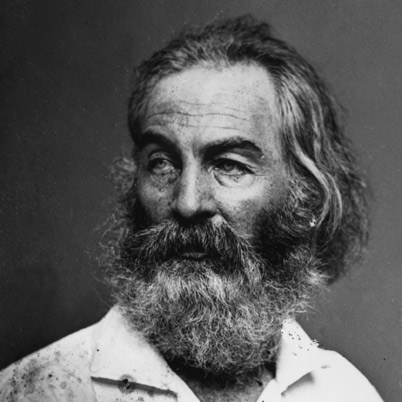
Walter Whitman (May 31, 1819 – March 26, 1892) was an American poet, essayist and journalist. A humanist, he was a part of the transition between transcendentalism and realism, incorporating both views in his works. Whitman is among the most influential poets in the American canon, often called the father of free verse. Wikipedia

The mystic influences society by planting seeds

New Thinking Allowed with Jeffrey Mishlove James Tunney, LLM, is an Irish barrister who has lectured on legal matters throughout the world. He is a poet, a scholar, and author of The Mystery of the Trapped Light: Mystical Thoughts in the Dark Age of Scientism plus The Mystical Accord: Sutras to Suit Our Times, Lines for Spiritual Evolution; also Empire of Scientism: The Dispiriting Conspiracy and Inevitable Tyranny of Scientocracy and TechBondAge: Slavery of the Human Spirit. His website is http://www.jamestunney.com. Here he describes the work of George William Russell who was known by his pen name of “AE”. Russell was a fine artist, poet, dramatist, critic, playwrite, statesman, publisher, and mystic. He was closely associated with W. B. Yeats and served as an inspiration for a generation of esotericists, writers, and political activists. His life reflects a balance between engagement with the inner and outer worlds. New Thinking Allowed host, Jeffrey Mishlove, PhD, is author of The Roots of Consciousness, Psi Development Systems, and The PK Man. Between 1986 and 2002 he hosted and co-produced the original Thinking Allowed public television series. He is the recipient of the only doctoral diploma in “parapsychology” ever awarded by an accredited university (University of California, Berkeley, 1980). (Recorded on October 1, 2021)

Word-Built World: Maieutic

ma·ieu·tic/ˌmāˈyo͞odək/adjectiveadjective: maieutic

  1. of or denoting the Socratic mode of inquiry, which aims to bring a person’s latent ideas into clear consciousness.

nounplural noun: maieutics; plural noun: maieutic

  1. the maieutic method.

Origin

mid 17th century: from Greek maieutikos, from maieuesthai ‘act as a midwife’, from maia ‘midwife’.

Fuck work

Fuck work | Aeon

Economists believe in full employment. Americans think that work builds character. But what if jobs aren’t working anymore?Photo by Tim Flach/Getty

James Livingston is professor of history at Rutgers University in New Jersey. He is the author of many books, the latest being No More Work: Why Full Employment is a Bad Idea (2016). He lives in New York. 

Edited by Sam Haselby

25 November 2016 (aeon.co)

Love Aeon?

Support our work DONATE

Work means everything to us Americans. For centuries – since, say, 1650 – we’ve believed that it builds character (punctuality, initiative, honesty, self-discipline, and so forth). We’ve also believed that the market in labour, where we go to find work, has been relatively efficient in allocating opportunities and incomes. And we’ve believed that, even if it sucks, a job gives meaning, purpose and structure to our everyday lives – at any rate, we’re pretty sure that it gets us out of bed, pays the bills, makes us feel responsible, and keeps us away from daytime TV.

These beliefs are no longer plausible. In fact, they’ve become ridiculous, because there’s not enough work to go around, and what there is of it won’t pay the bills – unless of course you’ve landed a job as a drug dealer or a Wall Street banker, becoming a gangster either way.

These days, everybody from Left to Right – from the economist Dean Baker to the social scientist Arthur C Brooks, from Bernie Sanders to Donald Trump – addresses this breakdown of the labour market by advocating ‘full employment’, as if having a job is self-evidently a good thing, no matter how dangerous, demanding or demeaning it is. But ‘full employment’ is not the way to restore our faith in hard work, or in playing by the rules, or in whatever else sounds good. The official unemployment rate in the United States is already below 6 per cent, which is pretty close to what economists used to call ‘full employment’, but income inequality hasn’t changed a bit. Shitty jobs for everyone won’t solve any social problems we now face.

Don’t take my word for it, look at the numbers. Already a fourth of the adults actually employed in the US are paid wages lower than would lift them above the official poverty line – and so a fifth of American children live in poverty. Almost half of employed adults in this country are eligible for food stamps (most of those who are eligible don’t apply). The market in labour has broken down, along with most others.

Those jobs that disappeared in the Great Recession just aren’t coming back, regardless of what the unemployment rate tells you – the net gain in jobs since 2000 still stands at zero – and if they do return from the dead, they’ll be zombies, those contingent, part-time or minimum-wage jobs where the bosses shuffle your shift from week to week: welcome to Wal-Mart, where food stamps are a benefit.

And don’t tell me that raising the minimum wage to $15 an hour solves the problem. No one can doubt the moral significance of the movement. But at this rate of pay, you pass the official poverty line only after working 29 hours a week. The current federal minimum wage is $7.25. Working a 40-hour week, you would have to make $10 an hour to reach the official poverty line. What, exactly, is the point of earning a paycheck that isn’t a living wage, except to prove that you have a work ethic?

But, wait, isn’t our present dilemma just a passing phase of the business cycle? What about the job market of the future? Haven’t the doomsayers, those damn Malthusians, always been proved wrong by rising productivity, new fields of enterprise, new economic opportunities? Well, yeah – until now, these times. The measurable trends of the past half-century, and the plausible projections for the next half-century, are just too empirically grounded to dismiss as dismal science or ideological hokum. They look like the data on climate change – you can deny them if you like, but you’ll sound like a moron when you do.

For example, the Oxford economists who study employment trends tell us that almost half of existing jobs, including those involving ‘non-routine cognitive tasks’ – you know, like thinking – are at risk of death by computerisation within 20 years. They’re elaborating on conclusions reached by two MIT economists in the book Race Against the Machine (2011). Meanwhile, the Silicon Valley types who give TED talks have started speaking of ‘surplus humans’ as a result of the same process – cybernated production. Rise of the Robots, a new book that cites these very sources, is social science, not science fiction.

So this Great Recession of ours – don’t kid yourself, it ain’t over – is a moral crisis as well as an economic catastrophe. You might even say it’s a spiritual impasse, because it makes us ask what social scaffolding other than work will permit the construction of character – or whether character itself is something we must aspire to. But that is why it’s also an intellectual opportunity: it forces us to imagine a world in which the job no longer builds our character, determines our incomes or dominates our daily lives.

What would you do if you didn’t have to work to receive an income?

In short, it lets us say: enough already. Fuck work.

Certainly this crisis makes us ask: what comes after work? What would you do without your job as the external discipline that organises your waking life – as the social imperative that gets you up and on your way to the factory, the office, the store, the warehouse, the restaurant, wherever you work and, no matter how much you hate it, keeps you coming back? What would you do if you didn’t have to work to receive an income?

And what would society and civilisation be like if we didn’t have to ‘earn’ a living – if leisure was not our choice but our lot? Would we hang out at the local Starbucks, laptops open? Or volunteer to teach children in less-developed places, such as Mississippi? Or smoke weed and watch reality TV all day?

I’m not proposing a fancy thought experiment here. By now these are practical questions because there aren’t enough jobs. So it’s time we asked even more practical questions. How do you make a living without a job – can you receive income without working for it? Is it possible, to begin with and then, the hard part, is it ethical? If you were raised to believe that work is the index of your value to society – as most of us were – would it feel like cheating to get something for nothing?

We already have some provisional answers because we’re all on the dole, more or less. The fastest growing component of household income since 1959 has been ‘transfer payments’ from government. By the turn of the 21st century, 20 per cent of all household income came from this source – from what is otherwise known as welfare or ‘entitlements’. Without this income supplement, half of the adults with full-time jobs would live below the poverty line, and most working Americans would be eligible for food stamps.

But are these transfer payments and ‘entitlements’ affordable, in either economic or moral terms? By continuing and enlarging them, do we subsidise sloth, or do we enrich a debate on the rudiments of the good life?

Transfer payments or ‘entitlements’, not to mention Wall Street bonuses (talk about getting something for nothing) have taught us how to detach the receipt of income from the production of goods, but now, in plain view of the end of work, the lesson needs rethinking. No matter how you calculate the federal budget, we can afford to be our brother’s keeper. The real question is not whether but how we choose to be.

I know what you’re thinking – we can’t afford this! But yeah, we can, very easily. We raise the arbitrary lid on the Social Security contribution, which now stands at $127,200, and we raise taxes on corporate income, reversing the Reagan Revolution. These two steps solve a fake fiscal problem and create an economic surplus where we now can measure a moral deficit.

Of course, you will say – along with every economist from Dean Baker to Greg Mankiw, Left to Right – that raising taxes on corporate income is a disincentive to investment and thus job creation. Or that it will drive corporations overseas, where taxes are lower.

But in fact raising taxes on corporate income can’t have these effects.

Let’s work backward. Corporations have been ‘multinational’ for quite some time. In the 1970s and ’80s, before Ronald Reagan’s signature tax cuts took effect, approximately 60 per cent of manufactured imported goods were produced offshore, overseas, by US companies. That percentage has risen since then, but not by much.

Chinese workers aren’t the problem – the homeless, aimless idiocy of corporate accounting is. That is why the Citizens United decision of 2010 applying freedom of speech regulations to campaign spending is hilarious. Money isn’t speech, any more than noise is. The Supreme Court has conjured a living being, a new person, from the remains of the common law, creating a real world more frightening than its cinematic equivalent: say, FrankensteinBlade Runner or, more recently, Transformers.

But the bottom line is this. Most jobs aren’t created by private, corporate investment, so raising taxes on corporate income won’t affect employment. You heard me right. Since the 1920s, economic growth has happened even though net private investment has atrophied. What does that mean? It means that profits are pointless except as a way of announcing to your stockholders (and hostile takeover specialists) that your company is a going concern, a thriving business. You don’t need profits to ‘reinvest’, to finance the expansion of your company’s workforce or output, as the recent history of Apple and most other corporations has amply demonstrated.

I know that building my character through work is stupid because crime pays. I might as well become a gangster

So investment decisions by CEOs have only a marginal effect on employment. Taxing the profits of corporations to finance a welfare state that permits us to love our neighbours and to be our brothers’ keeper is not an economic problem. It’s something else – it’s an intellectual issue, a moral conundrum.

When we place our faith in hard work, we’re wishing for the creation of character; but we’re also hoping, or expecting, that the labour market will allocate incomes fairly and rationally. And there’s the rub, they do go together. Character can be created on the job only when we can see that there’s an intelligible, justifiable relation between past effort, learned skills and present reward. When I see that your income is completely out of proportion to your production of real value, of durable goods the rest of us can use and appreciate (and by ‘durable’ I don’t mean just material things), I begin to doubt that character is a consequence of hard work.

When I see, for example, that you’re making millions by laundering drug-cartel money (HSBC), or pushing bad paper on mutual fund managers (AIG, Bear Stearns, Morgan Stanley, Citibank), or preying on low-income borrowers (Bank of America), or buying votes in Congress (all of the above) – just business as usual on Wall Street – while I’m barely making ends meet from the earnings of my full-time job, I realise that my participation in the labour market is irrational. I know that building my character through work is stupid because crime pays. I might as well become a gangster like you.

That’s why an economic crisis such as the Great Recession is also a moral problem, a spiritual impasse – and an intellectual opportunity. We’ve placed so many bets on the social, cultural and ethical import of work that when the labour market fails, as it so spectacularly has, we’re at a loss to explain what happened, or to orient ourselves to a different set of meanings for work and for markets.

And by ‘we’ I mean pretty much all of us, Left to Right, because everybody wants to put Americans back to work, one way or another – ‘full employment’ is the goal of Right-wing politicians no less than Left-wing economists. The differences between them are over means, not ends, and those ends include intangibles such as the acquisition of character.

Which is to say that everybody has doubled down on the benefits of work just as it reaches a vanishing point. Securing ‘full employment’ has become a bipartisan goal at the very moment it has become both impossible and unnecessary. Sort of like securing slavery in the 1850s or segregation in the 1950s.

Why?

Because work means everything to us inhabitants of modern market societies – regardless of whether it still produces solid character and allocates incomes rationally, and quite apart from the need to make a living. It’s been the medium of most of our thinking about the good life since Plato correlated craftsmanship and the possibility of ideas as such. It’s been our way of defying death, by making and repairing the durable things, the significant things we know will last beyond our allotted time on earth because they teach us, as we make or repair them, that the world beyond us – the world before and after us – has its own reality principles.

Think about the scope of this idea. Work has been a way of demonstrating differences between males and females, for example by merging the meanings of fatherhood and ‘breadwinner’, and then, more recently, prying them apart. Since the 17th century, masculinity and femininity have been defined – not necessarily achieved – by their places in a moral economy, as working men who got paid wages for their production of value on the job, or as working women who got paid nothing for their production and maintenance of families. Of course, these definitions are now changing, as the meaning of ‘family’ changes, along with profound and parallel changes in the labour market – the entry of women is just one of those – and in attitudes toward sexuality.

When work disappears, the genders produced by the labour market are blurred. When socially necessary labour declines, what we once called women’s work – education, healthcare, service – becomes our basic industry, not a ‘tertiary’ dimension of the measurable economy. The labour of love, caring for one another and learning how to be our brother’s keeper – socially beneficial labour – becomes not merely possible but eminently necessary, and not just within families, where affection is routinely available. No, I mean out there, in the wide, wide world.

Work has also been the American way of producing ‘racial capitalism’, as the historians now call it, by means of slave labour, convict labour, sharecropping, then segregated labour markets – in other words, a ‘free enterprise system’ built on the ruins of black bodies, an economic edifice animated, saturated and determined by racism. There never was a free market in labour in these united states. Like every other market, it was always hedged by lawful, systematic discrimination against black folk. You might even say that this hedged market produced the still-deployed stereotypes of African-American laziness, by excluding black workers from remunerative employment, confining them to the ghettos of the eight-hour day.

And yet, and yet. Though work has often entailed subjugation, obedience and hierarchy (see above), it’s also where many of us, probably most of us, have consistently expressed our deepest human desire, to be free of externally imposed authority or obligation, to be self-sufficient. We have defined ourselves for centuries by what we do, by what we produce.

But by now we must know that this definition of ourselves entails the principle of productivity – from each according to his abilities, to each according to his creation of real value through work – and commits us to the inane idea that we’re worth only as much as the labour market can register, as a price. By now we must also know that this principle plots a certain course to endless growth and its faithful attendant, environmental degradation.

How would human nature change as the aristocratic privilege of leisure becomes the birthright of all?

Until now, the principle of productivity has functioned as the reality principle that made the American Dream seem plausible. ‘Work hard, play by the rules, get ahead’, or, ‘You get what you pay for, you make your own way, you rightly receive what you’ve honestly earned’ – such homilies and exhortations used to make sense of the world. At any rate they didn’t sound delusional. By now they do.

Adherence to the principle of productivity therefore threatens public health as well as the planet (actually, these are the same thing). By committing us to what is impossible, it makes for madness. The Nobel Prize-winning economist Angus Deaton said something like this when he explained anomalous mortality rates among white people in the Bible Belt by claiming that they’ve ‘lost the narrative of their lives’ – by suggesting that they’ve lost faith in the American Dream. For them, the work ethic is a death sentence because they can’t live by it.

So the impending end of work raises the most fundamental questions about what it means to be human. To begin with, what purposes could we choose if the job – economic necessity – didn’t consume most of our waking hours and creative energies? What evident yet unknown possibilities would then appear? How would human nature itself change as the ancient, aristocratic privilege of leisure becomes the birthright of human beings as such?

Sigmund Freud insisted that love and work were the essential ingredients of healthy human being. Of course he was right. But can love survive the end of work as the willing partner of the good life? Can we let people get something for nothing and still treat them as our brothers and sisters – as members of a beloved community? Can you imagine the moment when you’ve just met an attractive stranger at a party, or you’re online looking for someone, anyone, but you don’t ask: ‘So, what do you do?’

We won’t have any answers until we acknowledge that work now means everything to us – and that hereafter it can’t

.WorkEconomicsMeaning and the good life

Richard Tarnas on the Planets in 2022

CIIS Public Programs IMPORTANT LIVE, ONLINE EVENT INFO: This live streaming event began with a special advance screening of the opening episode of the new documentary series The Changing of the Gods, followed by a presentation and Q&A with Richard Tarnas. This special screening was only available to those who joined the live streaming event on Friday, February 18 at 6:30 p.m. PST, but Richard’s presentation and Q&A was recorded and is available for viewing at this same link. Information about where to view The Changing of the Gods after the live streaming event can also be found below. ADDITIONAL INFO ON CHANGING OF THE GODS: For more information about where to view The Changing of the Gods after Friday, February 18 at 6:30pm (PST), visit: https://changingofthegods.com/ EVENT DESCRIPTION Many of us recognize that we are living in the midst of a major transformation, a profound drama facing the Earth community with tremendous consequences at stake. The evidence of consistent correlations between planetary alignments and world events, as seen through the lens of archetypal astrology, can provide us with a much-needed context for our time. What are the deeper stirrings in the collective psyche today? What is the current planetary situation, and which gods are now in dynamic motion? Understanding both the cyclical patterns and the historical trends that preceded our current moment can help us engage with greater consciousness and skillful intelligence the powerful forces now active in the world. Join CIIS professor and cultural historian Richard Tarnas as he presents his latest state of the world report on the archetypal context of our national and global moment. This online event continues our recent annual tradition of offering such an archetypal overview, and this year includes a special advance screening of the opening episode of the new documentary series The Changing of the Gods. Inspired by Richard’s work and featuring leading figures in the fields of history, psychology, spirituality, political activism, technological innovation, and consciousness research, The Changing of the Gods vividly depicts the trajectory of our time and our future prospects. ADDITIONAL INFO ON CHANGING OF THE GODS: For more information about where to view The Changing of the Gods after Friday, February 18 at 6:30pm (PST), visit: https://changingofthegods.com/ ADDITIONAL INFO ON CAPTIONS AND MORE: This event will have computer generated automated captions during the live event. Fully edited captions will appear within 24 hours of the live event. To request ASL interpretation for the live event email publicprograms@ciis.edu at least 2 weeks prior to this event. Become a Member: https://bit.ly/BecomeP2Member21 Follow us on Facebook, Instagram, and Twitter @ciispubprograms Donate to CIIS: http://bit.ly/Donate2CIIS When you click the link, select other, and type in CIIS Public Programs. Many of the topics discussed at our events have the potential to bring up feelings and emotional responses. We hope that our events provide opportunities for growth, and that our attendees will use their experiences watching, listening, or attending in person as a starting point for further introspection and growth. If you or someone you know needs mental health care and support, here are some resources to find immediate help and future healing: https://suicidepreventionlifeline.org/https://www.sfsuicide.org/https://www.ciis.edu/counseling-and-a…

Titanic with a Cat

OwlKitty A Parody of Titanic (1997) starring OwlKitty #OwlKitty#Titanic#ValentinesDay

Suggested by SME

Céline Dion – My Heart Will Go On (from the 2007 DVD “Live In Las Vegas – A New Day…”)

Music in this video

Learn more

Listen ad-free with YouTube Premium

Song

My Heart Will Go On (Love Theme from “Titanic”)

Artist

Céline Dion

Licensed to YouTube by

SME; BMI – Broadcast Music Inc., Sony ATV Publishing, SOLAR Music Rights Management, CMRRA, UMPG Publishing, LatinAutorPerf, UMPI, and 16 Music Rights Societies

Spiritual Awakening with Steve Taylor

New Thinking Allowed with Jeffrey Mishlove Steve Taylor, PhD, is the author of Extraordinary Awakenings, The LEAP: The Psychology of Spiritual Awakening, Spiritual Science, Back to Sanity, Out of the Darkness and many other books. He’s senior lecturer in psychology at Leeds Beckett University and the chair of the Transpersonal Psychology Section of the British Psychological Society. Steve’s articles and essays have been published in over 100 academic journals, magazines, and newspapers and he blogs for Scientific American and Psychology Today. His website is https://www.stevenmtaylor.com/ Here he defines spiritual awakening as an opening to a larger understanding of onesself. Ultimately, he maintains that our deepest self as at one with the entire universe. Many human problems result from a sense of separation, of being stuck at an ego level. He describes several types of awakenings. Often they result from a sense of acceptance, even in the aftershock of trauma. New Thinking Allowed host, Jeffrey Mishlove, PhD, is author of The Roots of Consciousness, Psi Development Systems, and The PK Man. Between 1986 and 2002 he hosted and co-produced the original Thinking Allowed public television series. He is the recipient of the only doctoral diploma in “parapsychology” ever awarded by an accredited university (University of California, Berkeley, 1980). He is also the 1st Prize winner of the 2021 Bigelow Institute essay competition regarding the best evidence for survival of human consciousness after permanent bodily death. (Recorded on December 5, 2021)