A leading German metaphysician of the 19th century, Arthur Schopenhauer (1788–1860) exerted an influence far beyond the hermetic world of philosophy, with adherents ranging from Richard Wagner and Friedrich Nietzsche to Leo Tolstoy and Thomas Mann. Among Schopenhauer’s chief contributions to the field of philosophy are his rejection of the idealism of his contemporaries and his embrace of a practical variety of materialism. He jettisons the traditional philosophic jargon for a brisk, compelling style that employs direct terms to express the metaphysics of the will. In The Wisdom of Life, an essay from Schopenhauer’s final work, Parerga und Paralipomena (1851), the philosopher favors individual strength of will and independent, reasoned deliberation over the tendency to act on irrational impulses. He examines the ways in which life can be arranged to derive the highest degree of pleasure and success, presents guidelines to achieving this full and rich manner of living, and advises that even a life well lived must always aspire to grander heights. Abounding in subjects of enduring relevance, Schopenhauer’s highly readable work appears here in an excellent translation.
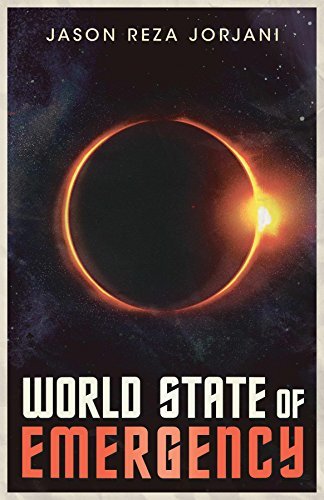
Apocalypse. In its original Greek sense, the word means “revelation.” Over the course of the next several decades, within the lifespan of a single generation, certain convergent advancements in technology will reveal something profound about human existence. Biotechnology, robotics, virtual reality, and the need to mine our Moon for energy past peak oil production, will converge in mutually reinforcing ways that shatter the fundamental framework of our societies.
It is not a question of incremental change. The technological apocalypse that we are entering is a Singularity that will bring about a qualitative transformation in our way of being. Modern socio-political systems such as universal human rights and liberal democracy are woefully inadequate for dealing with the challenges posed by these developments. The technological apocalypse represents a world state of emergency, which is my concept for a state of emergency of global scope that also demands the establishment of a world state.
An analysis of the internal incoherence of both universal human rights and liberal democracy, especially in light of the societal and geopolitical implications of these technologies, reveals that they are not proper political concepts for grounding this world state. Rather, the planetary emergency calls for worldwide socio-political unification on the basis of a deeply rooted tradition with maximal evolutionary potential. This living heritage that is to form the ethos or constitutional order of the world state is the Aryan or Indo-European tradition shared by the majority of Earth’s great nations — from Europe and the Americas, to Eurasia, Greater Iran, Hindu India, and the Buddhist East.
RoyalChoralSoc The Royal Choral Society has performed Handel’s Messiah on Good Friday at the Royal Albert Hall every year since 1876. The RCS filmed their performance on 6 April 2012 by kind permission of the Royal Albert Hall and the Royal Philharmonic Orchestra. This clip features the glorious Hallelujah Chorus. For further information on forthcoming RCS concerts please see www.royalchoralsociety.co.uk.
Today’s idea but states the simple truth that makes the thought of sin impossible. It promises there is no cause for guilt, and being causeless it does not exist. It follows surely from the basic thought so often mentioned in the text; ideas leave not their source. If this be true, how can you be apart from God? How could you walk the world alone and separate from your Source?
We are not inconsistent in the thoughts that we present in our curriculum. Truth must be true throughout, if it be true. It cannot contradict itself, nor be in parts uncertain and in others sure. You cannot walk the world apart from God, because you could not be without Him. He is what your life is. Where you are He is. There is one life. That life you share with Him. Nothing can be apart from Him and live.
Yet where He is, there must be holiness as well as life. No attribute of His remains unshared by everything that lives. What lives is holy as Himself, because what shares His life is part of Holiness, and could no more be sinful than the sun could choose to be of ice; the sea elect to be apart from water, or the grass to grow with roots suspended in the air.
There is a light in you which cannot die; whose presence is so holy that the world is sanctified because of you. All things that live bring gifts to you, and offer them in gratitude and gladness at your feet. The scent of flowers is their gift to you. The waves bow down before you, and the trees extend their arms to shield you from the heat, and lay their leaves before you on the ground that you may walk in softness, while the wind sinks to a whisper round your holy head.
The light in you is what the universe longs to behold. All living things are still before you, for they recognize Who walks with you. The light you carry is their own. And thus they see in you their holiness, saluting you as savior and as God. Accept their reverence, for it is due to Holiness Itself, which walks with you, transforming in Its gentle light all things unto Its likeness and Its purity.
This is the way salvation works. As you step back, the light in you steps forward and encompasses the world. It heralds not the end of sin in punishment and death. In lightness and in laughter is sin gone, because its quaint absurdity is seen. It is a foolish thought, a silly dream, not frightening, ridiculous perhaps, but who would waste an instant in approach to God Himself for such a senseless whim?
Yet you have wasted many, many years on just this foolish thought. The past is gone, with all its fantasies. They keep you bound no longer. The approach to God is near. And in the little interval of doubt that still remains, you may perhaps lose sight of your Companion, and mistake Him for the senseless, ancient dream that now is past.
“Who walks with me?” This question should be asked a thousand times a day, till certainty has ended doubting and established peace. Today let doubting cease. God speaks for you in answering your question with these words:
I walk with God in perfect holiness. I light the world, I light my mind and all the minds which God created one with me.
SME (on behalf of RCA Red Seal); Public Domain Compositions, Kobalt Music Publishing, UNIAO BRASILEIRA DE EDITORAS DE MUSICA – UBEM, LatinAutor – UMPG, and 4 Music Rights Societies
The New York Times What is it like to see the universe in a way no one ever has before? In “Earthrise,” this week’s new Op-Doc, the astronauts of Apollo 8 tell the tale of humanity’s first journey beyond Earth’s orbit. Director Emmanuel Vaughan-Lee — who previously directed the Op-Docs “Sanctuaries of Silence,” “Vanishing Island” and “Who Speaks Wukchumni?” — masterfully weaves archival NASA footage and candid interviews with the astronauts themselves to explore what deep space means for the human spirit. More from The New York Times Video: Subscribe: http://bit.ly/U8Ys7n Watch all of our videos here: http://nytimes.com/video Facebook: https://www.facebook.com/nytvideo Twitter: https://twitter.com/nytvideo
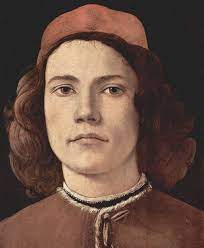
Giovanni was born at Mirandola, near Modena, the youngest son of Gianfrancesco I Pico, Lord of Mirandola and Count of Concordia, by his wife Giulia, daughter of Feltrino Boiardo, Count of Scandiano.[8] The family had long dwelt in the Castle of Mirandola (Duchy of Modena), which had become independent in the fourteenth century and had received in 1414 from the Holy Roman Emperor Sigismund the fief of Concordia. Mirandola was a small autonomous county (later, a duchy) in Emilia, near Ferrara. The Pico della Mirandola were closely related to the Sforza, Gonzaga and Este dynasties, and Giovanni’s siblings wed the descendants of the hereditary rulers of Corsica, Ferrara, Bologna, and Forlì.[8]
Born twenty-three years into his parents’ marriage, Giovanni had two much older brothers, both of whom outlived him: Count Galeotto I continued the dynasty, while Antonio became a general in the Imperial army.[8] The Pico family would reign as dukes until Mirandola, an ally of Louis XIV of France, was conquered by his rival, Joseph I, Holy Roman Emperor, in 1708 and annexed to Modena by Duke Rinaldo d’Este, the exiled male line becoming extinct in 1747.[9]
Giovanni’s maternal family was singularly distinguished in the arts and scholarship of the Italian Renaissance. His cousin and contemporary was the poet Matteo Maria Boiardo, who grew up under the influence of his own uncle, the Florentine patron of the arts and scholar-poet Tito Vespasiano Strozzi.[10]
Giovanni had a paradoxical relationship with his nephew Gianfrancesco Pico della Mirandola, who was a great admirer of his uncle, yet published Examen vanitatis doctrinae gentium (1520) in opposition to the “ancient wisdom narrative” espoused by Giovanni, described by historian Charles B. Schmitt as an attempt “to destroy what his uncle had built.”[11]
A precocious child with an exceptional memory, Giovanni was schooled in Latin and possibly Greek at a very early age. Intended for the Church by his mother, he was named a papal protonotary (probably honorary) at the age of ten and in 1477 he went to Bologna to study canon law.[12]
At the sudden death of his mother three years later, Pico renounced canon law and began to study philosophy at the University of Ferrara.[12] During a brief trip to Florence, he met Angelo Poliziano, the courtly poet Girolamo Benivieni, and probably the young Dominican friar Girolamo Savonarola. For the rest of his life he remained very close friends with all three.[13] He may also have been a lover of Poliziano.[14] From 1480 to 1482, he continued his studies at the University of Padua, a major center of Aristotelianism in Italy.[12] Already proficient in Latin and Greek, he studied Hebrew and Arabic in Padua with Elia del Medigo, a Jewish Averroist, and read Aramaic manuscripts with him as well. Del Medigo also translated Judaic manuscripts from Hebrew into Latin for Pico, as he would continue to do for a number of years. Pico also wrote sonnets in Latin and Italian which, because of the influence of Savonarola, he destroyed at the end of his life.
He spent the next four years either at home, or visiting humanist centres elsewhere in Italy. In 1485, he travelled to the University of Paris, the most important centre in Europe for scholastic philosophy and theology, and a hotbed of secular Averroism. It was probably in Paris that Giovanni began his 900 Theses and conceived the idea of defending them in public debate.
900 Theses
THE CONCLUSIONS will not be disputed until after the Epiphany. In the meantime they will be published in all Italian universities. And if any philosopher or theologian, even from the ends of Italy, wishes to come to Rome for the sake of debating, his lord the disputer promises to pay the travel expenses from his own funds.— Announcement at the end of the 900 Theses[15]Lorenzo de’ Medici by Giorgio Vasari, c. 1533–1534
During this time two life-changing events occurred. The first was when he returned to settle for a time in Florence in November 1484 and met Lorenzo de’ Medici and Marsilio Ficino. It was an astrologically auspicious day that Ficino had chosen to publish his translations of the works of Plato from Greek into Latin, under Lorenzo’s enthusiastic patronage. Pico appears to have charmed both men, and despite Ficino’s philosophical differences, he was convinced of their Saturnine affinity and the divine providence of his arrival. Lorenzo would support and protect Pico until his death in 1492.
Soon after this stay in Florence, Pico was travelling on his way to Rome where he intended to publish his 900 Theses and prepare for a congress of scholars from all over Europe to debate them. Stopping in Arezzo he became embroiled in a love affair with the wife of one of Lorenzo de’ Medici’s cousins, which almost cost him his life. Giovanni attempted to run off with the woman, but he was caught, wounded and thrown into prison by her husband. He was released only upon the intervention of Lorenzo himself. The incident is representative of Pico’s often audacious temperament and of the loyalty and affection he nevertheless could inspire.
Pico spent several months in Perugia and nearby Fratta, recovering from his injuries. It was there, as he wrote to Ficino, that “divine Providence … caused certain books to fall into my hands. They are Chaldean books … of Esdras, of Zoroaster and of Melchior, oracles of the magi, which contain a brief and dry interpretation of Chaldean philosophy, but full of mystery.”[16] It was also in Perugia that Pico was introduced to the mystical Hebrew Kabbalah, which fascinated him, as did the late classical Hermetic writers, such as Hermes Trismegistus. The Kabbalah and Hermetica were thought in Pico’s time to be as ancient as the Old Testament. Pico’s “tutor” in Kabbalah was Rabbi Johannan Alemanno (1435/8–c. 1510), who argued that the study and mastery of magic was to be regarded as the final stage of one’s intellectual and spiritual education.[17] This contact, initiated as a result of Christian interest in probing the ancient wisdom found in Jewish mystical sources, resulted in unprecedented mutual influence between Jewish and Christian Renaissance thought.[17] The most original of Pico’s 900 theses concerned the Kabbalah. As a result, he became the founder of the tradition known as Christian Kabbalah, which went on to be a central part of early modern Western esotericism.[6] Pico’s approach to different philosophies was one of extreme syncretism, placing them in parallel, it has been claimed, rather than attempting to describe a developmental history.[18]
Pico based his ideas chiefly on Plato, as did his teacher, Marsilio Ficino, but retained a deep respect for Aristotle. Although he was a product of the studia humanitatis, Pico was constitutionally an eclectic, and in some respects he represented a reaction against the exaggerations of pure humanism, defending what he believed to be the best of the medieval and Islamic commentators, such as Averroes and Avicenna, on Aristotle in a famous long letter to Ermolao Barbaro in 1485. It was always Pico’s aim to reconcile the schools of Plato and Aristotle since he believed they used different words to express the same concepts. It was perhaps for this reason his friends called him “Princeps Concordiae”, or “Prince of Harmony” (a pun on Prince of Concordia, one of his family’s holdings).[19] Similarly, Pico believed that an educated person should also study Hebrew and Talmudic sources, and the Hermetics, because he thought they represented the same concept of God that is seen in the Old Testament, but in different words.
He finished his “Oration on the Dignity of Man” to accompany his 900 Theses and traveled to Rome to continue his plan to defend them. He had them published together in December 1486 as “Conclusiones philosophicae, cabalasticae et theologicae”, and offered to pay the expenses of any scholars who came to Rome to debate them publicly. He wanted the debate to begin on 6 January, which was, as historian Steven Farmer has observed, the feast of Epiphany and “symbolic date of the submission of the pagan gentes to Christ in the persons of the Magi”. After emerging victorious at the culmination of the debate, Pico planned not only on the symbolic acquiescence of the pagan sages, but also the conversion of Jews as they realised that Jesus was the true secret of their traditions. According to Farmer, Pico may have been expecting quite literally that “his Vatican debate would end with the Four Horsemen of the Apocalypse crashing through the Roman skies”.[20]Innocent VIII, 15th century
In February 1487, Pope Innocent VIII halted the proposed debate, and established a commission to review the orthodoxy of the 900 Theses. Although Pico answered the charges against them, thirteen theses were condemned. Pico agreed in writing to retract them, but he did not change his mind about their validity. Eventually all 900 theses were condemned. He proceeded to write an apologia defending them, Apologia J. Pici Mirandolani, Concordiae comitis, published in 1489, which he dedicated to his patron, Lorenzo. When the pope was apprised of the circulation of this manuscript, he set up an inquisitorial tribunal, forcing Pico to renounce the Apologia, in addition to his condemned theses, which he agreed to do. The pope condemned 900 Theses as:
In part heretical, in part the flower of heresy; several are scandalous and offensive to pious ears; most do nothing but reproduce the errors of pagan philosophers… others are capable of inflaming the impertinence of the Jews; a number of them, finally, under the pretext of ‘natural philosophy’, favour arts [i.e., magic[6]] that are enemies to the Catholic faith and to the human race.[21]
This was the first time that a printed book had been banned by the Church, and nearly all copies were burned.[6] Pico fled to France in 1488, where he was arrested by Philip II, Duke of Savoy, at the demand of the papal nuncios, and imprisoned at Vincennes. Through the intercession of several Italian princes – all instigated by Lorenzo de’ Medici – King Charles VIII had him released, and the pope was persuaded to allow Pico to move to Florence and to live under Lorenzo’s protection. But he was not cleared of the papal censures and restrictions until 1493, after the accession of Alexander VI (Rodrigo Borgia) to the papacy.
The experience deeply shook Pico. He reconciled with Savonarola, who remained a very close friend. It was at Pico’s persuasion that Lorenzo invited Savonarola to Florence. But Pico never renounced his syncretist convictions. He settled in a villa near Fiesole prepared for him by Lorenzo, where he wrote and published the Heptaplus id est de Dei creatoris opere (1489) and De Ente et Uno (Of Being and Unity, 1491). It was here that he also wrote his other most celebrated work, the Disputationes adversus astrologiam divinicatrium (Treatise Against Predictive Astrology), which was not published until after his death. In it, Pico acidly condemned the deterministic practices of the astrologers of his day.
After the death of Lorenzo de’ Medici, in 1492, Pico moved to Ferrara, although he continued to visit Florence. In Florence, political instability gave rise to the increasing influence of Savonarola, whose reactionary opposition to Renaissance expansion and style had already brought about conflict with the Medici family (they eventually were expelled from Florence) and would lead to the wholesale destruction of books and paintings. Nevertheless, Pico became a follower of Savonarola. Determined to become a monk, he dismissed his former interest in Egyptian and Chaldean texts, destroyed his own poetry and gave away his fortune.[22]
In 1494, at the age of 31, Pico died under mysterious circumstances along with his friend Angelo Poliziano.[23] It was rumoured that his own secretary had poisoned him because Pico had become too close to Savonarola.[21] He was interred together with Girolamo Benivieni at San Marco, and Savonarola delivered the funeral oration. Ficino wrote:
Our dear Pico left us on the same day that Charles VIII was entering Florence, and the tears of men of letters compensated for the joy of the people. Without the light brought by the king of France, Florence might perhaps have never seen a more somber day than that which extinguished Mirandola’s light.[21]
In 2007, the bodies of Poliziano and Pico were exhumed from the Church of San Marco in Florence to establish the causes of their deaths.[24] Forensic tests showed that both Poliziano and Pico likely died of arsenic poisoning, possibly at the order of Lorenzo’s successor, Piero de’ Medici.[25]
“Real painters do not paint things as they are… they paint them as they themselves feel them to be.”
–Vincent Van Gogh
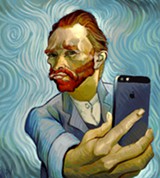
Vincent Willem van Gogh (March 30, 1853 – July 29, 1890) was a Dutch Post-Impressionist painter who posthumously became one of the most famous and influential figures in Western art history. In a decade, he created about 2,100 artworks, including around 860 oil paintings, most of which date from the last two years of his life. Wikipedia
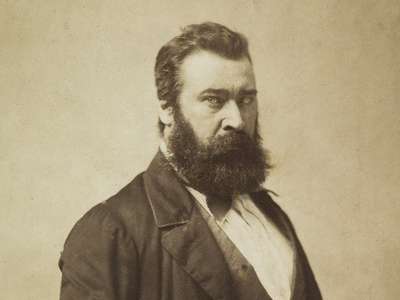
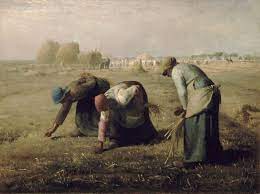
Jean-François Millet (October 4, 1814 – January 20, 1875) was a French artist and one of the founders of the Barbizon school in rural France. Millet is noted for his paintings of peasant farmers and can be categorized as part of the Realism art movement. Toward the end of his career he became increasingly interested in painting pure landscapes. Wikipedia
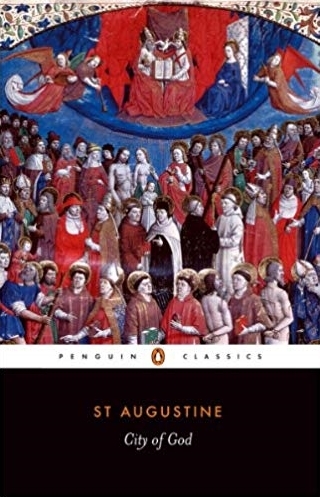
No book except the Bible itself had a greater influence on the Middle Ages than Augustine’s City of God. And since medieval Europe was the cradle of modern Western society, this work is vital for understanding our world and how it came into being.
(Goodreads.com)
Consciousness, spirituality, biography, sexuality, androgyny, futurism, space, the arts, science, astrology, democracy, humor, books, movies and more




_-_BEIC_6329210.jpg)


_-_1486-90.JPG)