Published for the first time with an index and Cardinal Hans Urs von Balthasar’s afterword, this new English publication of Meditations on the Tarot is the landmark edition of one of the most important works of esoteric Christianity. Written anonymously and published posthumously, as was the author’s wish, the intention of this work is for the reader to find a relationship with the author in the spiritual dimensions of existence. The author wanted not to be thought of as a personality who lived from 1900 to 1973, but as a friend who is communicating with us from beyond the boundaries of ordinary life.
Egregore (also spelled egregor; from Frenchégrégore, from Ancient Greek ἐγρήγορος, egrēgoros ‘wakeful’) is an occult concept representing a distinct non-physical entity that arises from a collective group of people. Historically, the concept referred to angelic beings, or watchers, and the specific rituals and practices associated with them, namely within Enochian traditions.[1]
More contemporarily, the concept has referred to a psychic manifestation, or thoughtform, occurring when any group shares a common motivation—being made up of, and influencing, the thoughts of the group. The symbiotic relationship between an egregore and its group has been compared to the more recent, non-occult concepts of the corporation (as a juridical person or legal entity) and the meme.
History
The concept of egregorial powers has its roots in ancient Greek culture and in Oriental cultures. It was for example featured in the Book of Enoch.[2]
At later times the term and concept found its way in other languages. Manuscrit trouvé à Saragosse, or The Manuscript Found in Saragossa which was written in French by the Polish author Count Jan Potocki (1761–1815) in the Russian Empire in the early 1800s features the term “Egregores,” referring to “the most illustrious of fallen angels.”[3] However, it is important to take note of the novel’s heavy orientalist and fantastical bent.
The term “egregore” was also featured by the French poet Victor Hugo, in La Légende des siècles (“The Legend of the Ages”), First Series, 1859, where he uses the word “égrégore” first as an adjective, then as a noun, while leaving the meaning obscure.[4] The author seems to have needed a word rhyming with words ending in the sound “or”. It would not be the only example of word creation by Victor Hugo. However, the word is the normal form that the Greek word ἑγρήγορος (Watcher) would take in French. This was the term used in the Book of Enoch for great angel-like spirits.
Eliphas Lévi, in Le Grand Arcane (“The Great Mystery”, 1868) identifies “egregors” with the tradition concerning the “Watchers“, the fathers of the nephilim, describing them as “terrible beings” that “crush us without pity because they are unaware of our existence.”[5]
The concept of the egregore as a group thoughtform was developed in works of the Hermetic Order of the Golden Dawn and the Rosicrucians[6] and has been referenced by writers such as Valentin Tomberg, notably in his anonymously-penned book Meditations on the Tarot.[7] It was also mentioned in the book El maravilloso universo de la magia, by Chilean author Enrique Barrios.
A well known concept of the egregore is the GOTOS (Gradus Ordinis Templi Orientis Saturni (33°)) of the Fraternitas Saturni.[8]
A 1987 article by Gaetan Delaforge in Gnosis magazine defines an egregore as a kind of group mind that is created when people consciously come together for a common purpose.[9]
The concept was featured in Corporate Metabolism series of articles by Paco Xander Nathan, which were published in 2001.
The notion of “egregor” also appears in Daniil Andreyev‘s Roza Mira, where it represents the shining cloud-like spirit associated with the Church.
Egregore is also used in relation to the Montreal Surrealists, best known as Les Automatistes, in Ray Ellenwood’s Egregore: a history of the Montréal automatist movement.[10]
Egregore is also the term for the spiritual personification of each nation in the UK LRP game Empire, run by Profound Decisions.[11]
Here is today’s lesson from the Workbook of A COURSE IN MIRACLES, sent with love….
Lesson 136: Sickness is a defense against the truth.
No one can heal unless he understands what purpose sickness seems to serve. For then he understands as well its purpose has no meaning. Being causeless and without a meaningful intent of any kind, it cannot be at all. When this is seen, healing is automatic. It dispels this meaningless illusion by the same approach that carries all of them to truth, and merely leaves them there to disappear.
Sickness is not an accident. Like all defenses, it is an insane device for self-deception. And like all the rest, its purpose is to hide reality, attack it, change it, render it inept, distort it, twist it, or reduce it to a little pile of unassembled parts. The aim of all defenses is to keep the truth from being whole. The parts are seen as if each one were whole within itself.
Defenses are not unintentional, nor are they made without awareness. They are secret, magic wands you wave when truth appears to threaten what you would believe. They seem to be unconscious but because of the rapidity with which you choose to use them. In that second, even less, in which the choice is made, you recognize exactly what you would attempt to do, and then proceed to think that it is done.
Who but yourself evaluates a threat, decides escape is necessary, and sets up a series of defenses to reduce the threat that has been judged as real? All this cannot be done unconsciously. But afterwards, your plan requires that you must forget you made it, so it seems to be external to your own intent; a happening beyond your state of mind, an outcome with a real effect on you, instead of one effected by yourself.
It is this quick forgetting of the part you play in making your “reality” that makes defenses seem to be beyond your own control. But what you have forgot can be remembered, given willingness to reconsider the decision which is doubly shielded by oblivion. Your not remembering is but the sign that this decision still remains in force, as far as your desires are concerned. Mistake not this for fact. Defenses must make facts unrecognizable. They aim at doing this, and it is this they do.
Every defense takes fragments of the whole, assembles them without regard to all their true relationships, and thus constructs illusions of a whole that is not there. It is this process that imposes threat, and not whatever outcome may result. When parts are wrested from the whole and seen as separate and wholes within themselves, they become symbols standing for attack upon the whole; successful in effect, and never to be seen as whole again. And yet you have forgotten that they stand but for your own decision of what should be real, to take the place of what is real.
Sickness is a decision. It is not a thing that happens to you, quite unsought, which makes you weak and brings you suffering. It is a choice you make, a plan you lay, when for an instant truth arises in your own deluded mind, and all your world appears to totter and prepare to fall. Now are you sick, that truth may go away and threaten your establishments no more.
How do you think that sickness can succeed in shielding you from truth? Because it proves the body is not separate from you, and so you must be separate from the truth. You suffer pain because the body does, and in this pain are you made one with it. Thus is your “true” identity preserved, and the strange, haunting thought that you might be something beyond this little pile of dust silenced and stilled. For see, this dust can make you suffer, twist your limbs and stop your heart, commanding you to die and cease to be.
Thus is the body stronger than the truth, which asks you live, but cannot overcome your choice to die. And so the body is more powerful than everlasting life, Heaven more frail than hell, and God’s design for the salvation of His Son opposed by a decision stronger than His Will. His Son is dust, the Father incomplete, and chaos sits in triumph on His throne.
Such is your planning for your own defense. And you believe that Heaven quails before such mad attacks as these, with God made blind by your illusions, truth turned into lies, and all the universe made slave to laws which your defenses would impose on it. Yet who believes illusions but the one who made them up? Who else can see them and react to them as if they were the truth?
God knows not of your plans to change His Will. The universe remains unheeding of the laws by which you thought to govern it. And Heaven has not bowed to hell, nor life to death. You can but choose to think you die, or suffer sickness or distort the truth in any way. What is created is apart from all of this. Defenses are plans to defeat what cannot be attacked. What is unalterable cannot change. And what is wholly sinless cannot sin.
Such is the simple truth. It does not make appeal to might nor triumph. It does not command obedience, nor seek to prove how pitiful and futile your attempts to plan defenses that would alter it. Truth merely wants to give you happiness, for such its purpose is. Perhaps it sighs a little when you throw away its gifts, and yet it knows, with perfect certainty, that what God wills for you must be received.
It is this fact that demonstrates that time is an illusion. For time lets you think what God has given you is not the truth right now, as it must be. The Thoughts of God are quite apart from time. For time is but another meaningless defense you made against the truth. Yet what He wills is here, and you remain as He created you.
Truth has a power far beyond defense, for no illusions can remain where truth has been allowed to enter. And it comes to any mind that would lay down its arms, and cease to play with folly. It is found at any time; today, if you will choose to practice giving welcome to the truth.
This is our aim today. And we will give a quarter of an hour twice to ask the truth to come to us and set us free. And truth will come, for it has never been apart from us. It merely waits for just this invitation which we give today. We introduce it with a healing prayer, to help us rise above defensiveness, and let truth be as it has always been:
Sickness is a defense against the truth. I will accept the truth of what I am, and let my mind be wholly healed today.
Healing will flash across your open mind, as peace and truth arise to take the place of war and vain imaginings. There will be no dark corners sickness can conceal, and keep defended from the light of truth. There will be no dim figures from your dreams, nor their obscure and meaningless pursuits with double purposes insanely sought, remaining in your mind. It will be healed of all the sickly wishes that it tried to authorize the body to obey.
Now is the body healed, because the source of sickness has been opened to relief. And you will recognize you practiced well by this: The body should not feel at all. If you have been successful, there will be no sense of feeling ill or feeling well, of pain or pleasure. No response at all is in the mind to what the body does. Its usefulness remains and nothing more.
Perhaps you do not realize that this removes the limits you had placed upon the body by the purposes you gave to it. As these are laid aside, the strength the body has will always be enough to serve all truly useful purposes. The body’s health is fully guaranteed, because it is not limited by time, by weather or fatigue, by food and drink, or any laws you made it serve before. You need do nothing now to make it well, for sickness has become impossible.
Yet this protection needs to be preserved by careful watching. If you let your mind harbor attack thoughts, yield to judgment or make plans against uncertainties to come, you have again misplaced yourself, and made a bodily identity which will attack the body, for the mind is sick.
Give instant remedy, should this occur, by not allowing your defensiveness to hurt you longer. Do not be confused about what must be healed, but tell yourself:
I have forgotten what I really am, for I mistook my body for myself. Sickness is a defense against the truth. But I am not a body. And my mind cannot attack. So I can not be sick.
“Man meets what exists and becomes as what is over against him, always simply a single being and each thing simply as being. What exists is opened to him in happenings, and what happens affects him as what is.”
One of the central themes of the work of the Jewish mystical philosopher Martin Buber was the question of understanding our relation to God. In his most famous book,I and Thou, he makes a distinction between two different ways in which we exist in the world. The first is I-It, which involves subjective perception and experience – in our current culture, the dominant mode of being in which we experience being individuals encountering other individuals and objects outside of ourselves. The other mode of existence Buber calls I-Thou, and this idea is purely relational in a way that breaks down all quantification of and separation from the other. This is the mode of spiritual life according to Buber – it is the nature of the relationship to God. In the following excerpt from I and Thou, he outlines and contrasts both modes, expressing I-Thou in a way that evokes a vision with the potential to resonate with other mystical traditions.
To man the world is twofold, in accordance with his twofold attitude.
He perceives what exists round about him—simply things, and beings as things; and what happens round about him—simply events, and actions as events; things consisting of qualities, events of moments; things entered in the graph of place, events in that of time; things and events bounded by other things and events, measured by them, comparable with them: he perceives an ordered and detached world. It is to some extent a reliable world, having density and duration. Its organisation can be surveyed and brought out again and again; gone over with closed eyes, and verified with open eyes. It is always there, next to your skin, if you look on it that way, cowering in your soul, if you prefer it so. It is your object, remains it as long as you wish, and remains a total stranger, within you and without. You perceive it, take it to yourself as the “truth,” and it lets itself be taken; but it does not give itself to you. Only concerning it may you make yourself “understood” with others; it is ready, though attached to everyone in a different way, to be an object common to you all. But you cannot meet others in it. You cannot hold on to life without it, its reliability sustains you; but should you die in it, your grave would be in nothingness.
“It is not outside you, it stirs in the depth of you; if you say “Soul of my soul” you have not said too much. But guard against wishing to remove it into your soul—for then you annihilate it. “
Or on the other hand, man meets what exists and becomes as what is over against him, always simply a single being and each thing simply as being. What exists is opened to him in happenings, and what happens affects him as what is. Nothing is present for him except this one being, but it implicates the whole world. Measure and comparison have disappeared; it lies with yourself how much of the immeasurable becomes reality for you. These meetings are not organised to make the world, but each is a sign of the world-order. They are not linked up with one another, but each assures you of your solidarity with the world. The world which appears to you in this way is unreliable, for it takes on a continually new appearance; you cannot hold it to its word. It has no density, for everything in it penetrates everything else; no duration, for it comes even when it is not summoned, and vanishes even when it is tightly held. It cannot be surveyed, and if you wish to make it capable of survey you lose it.
“You cannot make yourself understood with others concerning it, you are alone with it. But it teaches you to meet others, and to hold your ground when you meet them.“
It comes, and comes to bring you out; if it does not reach you, meet you, then it vanishes; but it comes back in another form. It is not outside you, it stirs in the depth of you; if you say “Soul of my soul” you have not said too much. But guard against wishing to remove it into your soul—for then you annihilate it. It is your present; only while you have it do you have the present. You can make it into an object for yourself, to experience and to use; you must continually do this—and as you do it you have no more present. Between you and it there is mutual giving: you say Thou to it and give yourself to it, it says Thou to you and gives itself to you. You cannot make yourself understood with others concerning it, you are alone with it. But it teaches you to meet others, and to hold your ground when you meet them. Through the graciousness of its comings and the solemn sadness of its goings it leads you away to the Thou in which the parallel lines of relations meet. It does not help to sustain you in life, it only helps you to glimpse eternity.
According to Gurdjieff, the mysterious “X-factor” that enters in the moment of conception is not yet soul but essence. Think of it as the hand of cards you’re dealt at the start of a card game. It comprises a set of unique characteristics including race, gender (and most likely gender orientation), basic body type and other genetic factors, influences emerging from more distant ancestry and bloodline – and yes, that unquantifiable legacy “from the stars” – all combined primarily according to what Teilhard would call “tatonnement” (“trial and error”): evolution’s predilection for trying out any and all possibilities. Cumulatively, all of the above will combine to confer on you what is commonly known as your “nature”.
Notice how there is no need to stipulate an “artist” God here, specifically designing a unique human being; what’s being pictured here is simply a lawful playing out of a freedom already inherent within Creation itself. Essence is not customized, not micro-managed – at least according to most schools of inner work I’m familiar with. (That may take some getting used to, and for those of you finding yourself already in resistance mode, I encourage you simply to let this new perspective settle in a bit. Rest assured that I do intend to talk about the origin of the personal in due course.)
Once formed, essence will take its place as one of the three constituent terms in an ongoing dynamism of becoming which, not surprisingly, will play out according to the Law of Three. The other two terms, according to modern Sufi master Kabir Helminski (who reflects this same Wisdom lineage that I myself was trained in) are spirit and heart.
Spirit is that ever-roving, unboundaried, invisible divine dancing partner, participating in every movement of our life according to its own deepest teleology, namely, self-disclosure (remember “I was a hidden treasure and I longed to be known”?). It generally plays the role of first force, Holy Affirming: ever prodding, nudging, unfolding.
Essence will typically play the role of Holy Denying, the bloc résistant in which Spirit will reveal its face. Through its very embodied finitude, essence provides both the necessary raw material and the necessary friction to allow the pure movement of spirit to reveal itself in time and form.
Heart – or conscience – is the alchemical “third term” that is catalyzed in us through a life lived in growing consciousness, authenticity, obedience (as in ob-audire: “listen from the depths”), and that active cultivation of the self-reflective potential miraculously gifted to human consciousness. Heart is the unique fruit of a life wisely and fully engaged. More important, from the perspective of the road map I’m laying out here, it contributes the crucial third force, or “holy reconciling”, which makes possible that ultimate desideratum, namely, the fully arisen soul. Soul (or as Helminski calls it, “the essential self”) is precisely that “fourth in a new dimension” which arises out of conscious weaving of those other three – spirit, essence, and heart —within the great womb of life.
While this statement may sound jarring, note how it is already well embedded in early Christian tradition. The Gospel of Thomas puts it as starkly as possible in logion 70: “If you bring forth what is within you, that which you bring forth will save you. If you fail to bring forth that which is within you, that which you fail to bring forth will destroy you.” “That which is within you” is your embryonic soul.
Jesus seems to be reinforcing this teaching in his celebrated parable of he talents – once you recognize, of course, that the “talents” are not our aptitudes and gifts (which belong to essence) but, rather, these soul potentialities transformed and quickened in the light of conscience/heart. This message comes through powerfully as well in the medieval mystic Jacob Boehme; it is in fact the driveshaft of his entire metaphysics. But it peers out as well from any number of other Christian mystics, even those of much more theoretically “traditional” metaphysical training and temperaments. One of the most powerful statements of this principle I know comes in contemporary Jesuit Ladislaus Boros’ spiritual classic, The Mystery of Death (p. 60-61):
By Alden Cole
From the facts of existence and the surrounding world an inner sphere of being a human is built up. This inner man is brought about by a never-ending [conscious] daily application, on the treadmill of duties, annoyances, joys, and difficulties. From these insignificant actions freely performed, the decisive freedom is built up – freedom from oneself, freedom to view one’s own existence from outside…From the crowded days and years of joy and sorrow something has crystallized out, the rudimentary forms of which were already present in all his experiences, his struggle, his creative work, his patience and love – namely, the inner self, the individual, supremely individual creation of a man. He has given his own shape to the determinisms of life by a daily conquest of them; he has become master of the multiple relationships that go to make him up by accepting them as the raw material [italics mine] of his self. Now he begins to “be”.
As far as I know, Boros never directly encountered the Christian inner tradition, let alone the teachings of the Asian spiritual traditions. Yet he has eloquently described here what would be easily recognizable in any of these other streams as “Witnessing Self”. He has captured precisely the same nuance articulated by The Gospel of Thomas, Boehme, Gurdjieff, and Jacob Needleman – namely, that our “soul” is not our raw essence per se, but something of an entirely different nature which is alchemized through the active engagement of essence with heart/consciousness. It is not so much a substance (at least in terms of corporeality as we understand it in this life) but more a process – or as Jacob Boeheme had it, a tincture, a quality of our essential aliveness which shines through the lineaments of this life like a shaft of imperishable light. Above all, it is not conferred at the start, but brought into being in this life through the quality of our conscious work.
“Food for the moon”
Within the western Wisdom tradition this imperishable “other” is sometimes known as second body or “the wedding garment”. Actualizing it is seen – with some urgency – as the real business of our earthly sojourn.
Admittedly, there is a hard edge to this teaching, jolting us into responsible stewardship of our own time in human consciousness. We can choose, if we like, to drift downstream on the currents of pain or pleasure. We can invest our whole life’s energy worshiping the golden calf of ego. Or we can get with the cosmic program and come to grips with the real purpose of our time here as we humbly acknowledge that soul is not an automatic birthright but, rather, the final alchemy of a life lived here in conscious alignment with higher cosmic purposes.
Furthermore, the tradition states – essentially unequivocally – that this second body, or wedding garment, must be formed in this life. That is why it is called a wedding garment: because it is the appropriate and necessary regalia for the “wedding banquet” of eternal life – which, incidentally, does not begin after we leave this body, but here and now as this new substantiality we bear within us increasingly allows us to perceive, that the gates of heaven are, truly, everywhere.
This is soulwork in the true sense of the term: not the “soft” version that passes for soulwork today, preoccupied with unraveling dreams and deciphering messages from our “inner guides”, but the adamantine work of bringing something into existence here that will have coherence and substantiality beyond just this realm. Gurdjieff called it our “Real I”. [And, as Sandra brilliantly pointed out in the comments of my seventh post, Margery Williams Bianco’s character the Skin Horse reiterates this same concept in the classic children’s book, The Velveteen Rabbit.]
The Velveteen Rabbit by Margery Williams Bianco
“You must find that in you that already lives beyond death and begin to live out of it now”, my teacher Rafe taught me, encapsulating the essence of this teaching in his own plain words. To defer this project till after we die is too late; for, as Jacob Boehme bluntly puts it, “everything lies where it has fallen”. This is not, by the way, a question of “final judgment”, of some higher being deciding you are “unworthy”. It’s simply that the conditions in the next realm out, sometimes known as the Imaginal, are finer and drawn to far closer tolerances than in this life. Only something of a similar fineness will pass through the sieve.
I am theologian enough to know that the immediate argument conventionally trained Christians will raise against this is that it seems to defy the promise of Psalm 139 – “Before I formed you in the womb I knew you” – and replace the intimate and personal nature of our lifelong human relationship with God with an impersonal and even harsh algorithm. I do not believe this is actually so. I will have more to say about the personal in my next blog, with the intuition that this alternative vision, certainly strongly intimated by Jesus, is actually far more merciful and cosmically nobling.
The second objection, of course, is that this sounds like a classic recipe for spiritual materialism – I can already picture the internet ads for second-body-building nutritional supplements and “wedding garment” consultants! But the checks-and-balances factor, built right into this equation, lies in the fact that the requisite food for building second body is, in Gurdjieff’s famous formula, “conscious labor and intentional suffering”. Second body cannot be attained through self-maximization, but only through the classic route variously known in the sacred traditions as kenosis and humilty. “We ascend by descending,” as the Rule of St. Benedict succinctly observes. There is no other way.
For those who opt out, preferring to live out their days in their egoic comfort zone (a condition known in the inner tradition as “sleep”), the potentiality offered at birth to become a soul is simply returned, stillborn. Nothing has germinated here of permanent substantiality; nothing has become viable beyond the womb of this life. Such existences, in Gurdjieff’s words, become “food for the moon”. At death their temporary selfhood dissolves back into its original physical components and takes its small part in the vast network of reciprocal feeding, by which the cosmos bootstraps itself. Nothing is finally wasted.
From the Work perspective, then, abortion is not something that befalls merely a fetus. It happens at all stages, and is in fact the tragic outcome of most human lives. Lulled into complacency by the illusion that we already “have” souls, we fail to engage the real task of spiritual germination and wind up dreaming our lives away.
Only when this inconvenient truth is finally, fully faced will the real question of what it means to be “pro-life” find its authentic balance.
A sourcebook of the esoteric tradition, outlining the fundamental tenets of the Secret Doctrine of the Archaic Ages. This title addresses the perennial questions: continuity of life after death, purpose of existence, good and evil, consciousness and substance, sexuality, karma, evolution, and human and planetary transformation.
The gritty business of politics is not something we usually associate with the occult. But esoteric beliefs have influenced the destiny of nations since the time of ancient Egypt and China, when decisions of state were based on portents and astrology, to today, when presidents and prime ministers privately consult self-proclaimed seers. Politics and the Occult offers a lively history of this enduring phenomenon. Author and cultural pundit Gary Lachman provocativly questions whether the separation of church and state so dear to modern political philosophy should be maintained. A few of his fascinating topics include the fate of the Knights Templar and the medieval Gnostic Cathars, the occult roots of America and the French Revolution in Freemasonry, Gurdjieff and the swastika, Soviet interest in UFOs, the CIA and LSD, the Age of Aquarius, the millenarian politics that inform the struggle with Islamic terrorism, fundamentalism, and more.
“If you want to find the secrets of the universe, think in terms of energy, frequency and vibration.”
― Nikola Tesla
Nikola Tesla (July 10, 1856 – January 7, 1943) was a Serbian-American inventor, electrical engineer, mechanical engineer, and futurist best known for his contributions to the design of the modern alternating current electricity supply system. Wikipedia
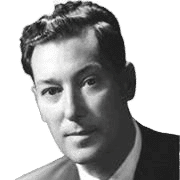
Neville Lancelot Goddard (February 19, 1905 – October 1, 1972), generally known as Neville,[1] was a Barbadian author who wrote on the Bible, mysticism, and self-help.
Early life
Goddard was born in Barbados on February 19, 1905, to Joseph Nathaniel and Wilhelmina Goddard. He immigrated to New York City c. 1922, where he initially worked as a ballet and ballroom dancer.[2][3]
In 1931, he began to study under an Ethiopian rabbi who introduced him to Kabbalah.[2] He was not naturalized until around the time of World War II, when he served in the United States Army.[3]
Career
In early 1950s, Goddard lectured at The Town Hall on religious topics.[3] In 1954, he was reportedly planning a “metaphysical telefilm show”, though it is unclear if the project came to fruition.[4]
Views
Goddard viewed the Bible as a parable of the human psyche as opposed to a record of historical events. Therefore, Goddard did not believe in an external God who answers prayers, but rather that “[y]ou are the creator”.[5]
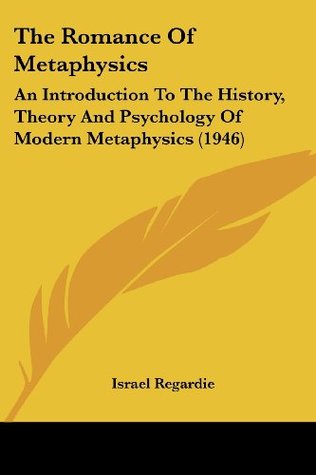
This scarce antiquarian book is a facsimile reprint of the original. Due to its age, it may contain imperfections such as marks, notations, marginalia and flawed pages. Because we believe this work is culturally important, we have made it available as part of our commitment for protecting, preserving, and promoting the world’s literature in affordable, high quality, modern editions that are true to the original work.
(Goodreads.com)
Consciousness, spirituality, biography, sexuality, androgyny, futurism, space, the arts, science, astrology, democracy, humor, books, movies and more