Bio: Ella Wheeler Wilcox

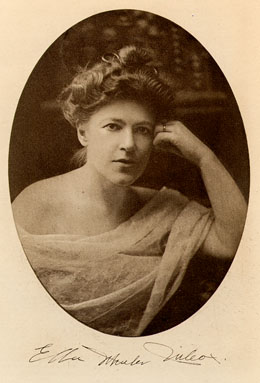
Ella Wheeler Wilcox (1850-1919) New Thought Poetess

Ella Wheeler Wilcox, whilst perhaps not being one of America’s greatest poets, was in her time one of the most popular, her verse appearing in innumerable magazines and periodicals as well as a number of books. She has probably been read by many more people than poets who have been considered her superiors. Whilst not all her poems are, of course, New Thought in outlook, in one of her books, Poems of Power, a dozen or more of her poems may be discerned typical of New Thought ideas and emphases.However, it was probably as regular contributor to newspapers that Ella Wheeler Wilcox reached her widest public, for she wrote syndicated articles for the Hearst newspapers. Many of these were simply expositions of the central teachings of New Thought, though not definitely linked with that minority point of view. Thus New Thought ideas found an outlet to the public they could never have gotten through specifically New Thought channels. Many of these ideas commended themselves to the minds of readers which might well have been closed by denominational prejudices, had they come labeled as New Thought.Ella was born November 5, 1850, in the village of Johnstown, Rock County, Wisconsin. Her parents were Marcus H. Wheeler, and Sarah Pratt Wheeler, with three older children they had followed, “Grandsir Pratt” from Vermont in 1849.In the spring of 1852 the Wheeler family settled in Dane County, Wisconsin in the town of Westport, where Ella grew up, in the home where she made her reputation as a writer of appealing poetry, until her marriage in 1884, when she went to Connecticut; from which state her Grandfather Wheeler had migrated to Vermont years before.With a Great Grandfather Pratt seven years in the Revolutionary War, and his wife Elizabeth Currier of French blood; a Grandmother named Conner; a Mother, who, like most of her aunts and cousins, was addicted to the habit of composing verses, Ella had the inherited tendency; a regular family study of Shakespeare, Byron, Burns and modern poets all year round, 1849-50 doubtless added a prenatal influence, which formed the character of her ambition.Her education was acquired in a district school, now named Ella Wheeler Wilcox School, except one short term at Wisconsin University, which was as she saw it a “waste of time.”Riding horseback, dancing, visiting girl friends, dreaming great dreams and being kind, was better than trying to master mathematics, of which she had a “holy horror.”In the years between 1865 and 1875, a strong prohibition wave was sweeping over Wisconsin. Good Tempar Lodges became numerous. Many of Ella Wheeler’s earlier verses were in support of total abstinence and in opposition to booze, its makers, and its venders. Fifty-six of these were published in a volume entitled “Drops of Water.” Her volume entitled “Shells” contained 119 poems–more than 175 poems and the author not 23 years old. It is doubtful if anyone knows the names of all her published poems. They were a great multitude and everyone found ardent admirers–and critics.Ella Wheeler Wilcox wrote verses which appealed to the public and never one verse strained or ungramatical, as she states in her memoirs, her first check paid for a dress to wear to a wedding, in March 1869. Her financial returns were not of importance until after 1880, though she was known and loved by thousands of readers. She wrote for the same reason that a bird sings. It was what she was made for. Her marriage in 1884 was a love match. The death of Mr. Wilcox overwhelmed her, until satisfied that she had received messages from him through her practice of Spiritualism. Then she resumed literary work, and other activities; including war work in France up to Armistice Day.Whilst Mrs. Wilcox was certainly New Thought in her general outlook, and in common with many who later became leaders of the New Thought movement, attended classes by the “teacher of teachers,” Emma Curtis Hopkins , she went much farther than many of the leaders of the movement in her espousal also of ideas which are regarded as occult. And some of the leaders were not always happy with what she wrote. She was strongly drawn to Spiritualism and gave much credit to Oriental–especially Indian thought, as the source of many of her ideas.She wrote not only poetry; but did a great deal of prose writing as well. A number of her essays specifically on New Thought themes appeared in a volume entitled The Heart of New Thought, which the publisher’s preface described as a “Noteworthy interpretation of New Thought, the backbone of which philosophy is the Power of Right Thought….Mrs. Wilcox is ever the voice of the people: what she says is practical, what she thinks is clear, what she feels is plain.”She died on October 30, 1919, at her home in Short Beach, Conn.”The art of being kind” was her religion, and she lived it every day of her life.The world is better because Ella Wheeler Wilcox lived.
The following books by Ella Wheeler Wilcox are available to purchase in eBook form for immediate download. They may then be read on your computer and printed out. The eBooks are in Adobe Acrobat Reader (.pdf) format.

Buy with a credit or debit card from 2CheckOut.com Inc. (Ohio, USA), an authorized retailer for goods and services provided by A A Web Services. You can  click here to view your ebook shopping cart and checkout also.
Excerpts from the following can be read online:
The Heart of The New Thought
New Thought Common Sense
The Power of Right Thought

(ellawheelerwilcox.wwwhubs.com)

Bio: Emma Curtis Hopkins

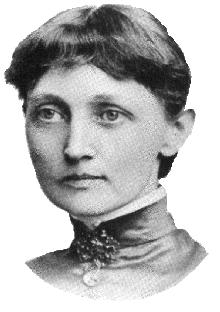
Emma Curtis Hopkins (1853-1925) “Teacher of Teachers”

Emma Curtis Hopkins, the author of “High Mysticism” and “Scientific Christian Mental Practice” was a student of Mary Baker Eddy and Christian Science, who started her own school, and some argue that she was the founder of the New Thought movement.

Mrs. Hopkins’ gift for teaching showed itself early. Before she was fifteen years old, she entered Woodstock Academy (Conneticut) as a student and because of her genius was given a place on the faculty as a teacher.

Later in life she returned to being a student, taking class instructions in Christian Science, following which she served editorially on the staff of the Christian Science Journal — only to find her purpose asserting itself and drawing her into the role of independent leadership and of a great teacher.

Authors, preachers, homemakers — came to her for instruction and she touched them with the quickening power of her illumined soul. As independent teacher, Mrs. Hopkins taught in many cities (among them New York, Chicago, Kansas, San Francisco) having large classes wherever she went. Later she founded a seminary in Chicago. It was a regularly incorporated school and the graduates were ordained ministers and so recognized by the State of Illinois. Students came from all parts of the country to study with her and go out and carry the message of healing and comforting to the people.

Among her students were many who later became prominent teachers and leaders within the New Thought movement, including Charles and Myrtle Fillmore, founders of the Unity School of ChristianityH. Emilie Cady, author of the Unity textbook “Lessons in Truth,” as well as Frances Lord, Annie Rix-Militz, George Edwin, Malinda E. Cramer, co-founder of Divine ScienceElla Wheeler Wilcox, New Thought poetess, Elizabeth Town; and considerably later Ernest Holmes, founder of the Church of Religious Science.

After an economic crisis wiped out Charles Fillmore’s successful real estate business and his wife Myrtle became sick with tuberculosis, the Fillmores followed the recommendation of a friend and went to a lecture given by Dr. E. B. Weeks, a student of Emma Curtis Hopkins. As a result of this lecture, Myrtle was cured of her illness and the roots of the Unity School of Christianity were set. The Fillmores later went to study with Hopkins herself and continued to develop their religious movement wholeheartedly.

Mrs. Hopkins was way ahead of her times in the freedom offered students in a group activity which the faculty of the seminary became. Her innate teaching quality shows in the leadership her teaching quickened in students who established independent movements now ministering to mankind.

Here’s what Charles Fillmore had to say about her: “She is undoubtedly the most successful teacher in the world. In many instances those who enter her classes confirmed invalids come out at the end of the course perfectly well. Her very presence heals and those who listen are filled with new life. Never before on this planet have such words of burning Truth been so eloquently spoken through a women.”

This tribute was paid to her in Unity (1925): “Her brilliance of mind and spirit was so marked that very few could follow in her metaphysical flights, yet she had marked power in quickening spirituality in her students.”

New Thought has had the unique position among emergent religious movements of having, from the very beginning, women play an integral role in leadership. A critical differentiation between New Thought and Christian Science coincided with the increasing establishment of women and feminist ideas in both of these emerging religious movements. In 1881, Mary Baker Eddy was already well established as the leader of Christian Science. Emma worked on the Christian Science Journal until 1885 when she left to form her own institution. The resulting Emma Hopkins College of Metaphysical Science was highly successful and made huge impact particularly in terms of advancing women in the field.

Specifically, in the first graduation ceremony of the Emma Hopkins College of Metaphysical Science in 1889, Hopkins graduated a total of 22 individuals of which 20 were women. Not only did her school encourage women to take these leadership roles, but she actually based her theology on an interpretation of the Trinity based on ideas initiated by Joachim of Fiore which stated that there were three eras in the history of this traditional trio. The first was the patriarchal idea of “God the Father”, the second was a time of freedom for the general population which was signified by the birth of Jesus, and the third, “the Spirit, the Truth-Principle, or the Mother-Principle,” focused on the power of women. The latter element of this interpretation of the Trinity was embodied by the pioneering roles which each of these women had in helping to even the playing field of the genders.

Mrs. Hopkins lived until 1925. After her death her sister Estelle Carpenter took over, aided by a teacher, Eleanor Mel. A Miss Ethelred Folsom, who had studied with Mrs. Hopkins and apparently had accompanied her on a trip to Europe, set up an organization to perpetuate Mrs. Hopkins’ influence and people were invited to come to classes in Mrs. Hopkins’ teachings, and her works were published and distributed under the name “The Ministry of the High Watch.”

“Scientific Christian Mental Practice” is Emma Curtis Hopkins’ masterpiece, and is one of the greatest of all works based on mysticism. “When the Lord is your confidence you will never find yourself at all deceived by the ways and speech of men and women, though they be very brilliant, if they speak outside of the Principle that demonstrates healing and goodness and life.”

The following can be read on-line:

Twelve Powers of the Soul


The following books by Emma Curtis Hopkins are available to purchase in eBook form for immediate download. They may then be read on your computer and printed out. The eBooks are in Adobe Acrobat Reader (.pdf) format.

Excerpts from the following books may be read on-line:

Scientific Christian Mental Practice

Lessons in High Mysticism (contains the full, unabridged text of very rare original 12-book set)

Résumé (practice book for 12 lessons of High Mysticism)

Class Lessons of 1888

The Gospel Series in Spiritual Science

Bible Interpretations (1891) (very rare book)

(emmacurtishopkins.wwwhubs.com)

Bio: Henry Harrison Brown

“Money, come to me that you may be used, I do not need a dollar. Dollars need me.”

–Henry Harrison Brown

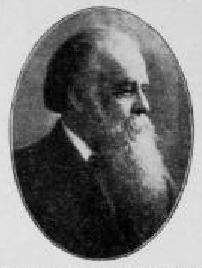
HENRY HARRISON BROWN
(1840-1918)

Henry Harrison Brown was one of the elder statesmen of the New Thought movement in the early part of the 20th Century.  Born in Massachusetts in 1840, he served in the U. S. Volunteers during the Civil War from August, 1862, until October, 1865. In his varied career he taught school; worked upon newspapers; lectured in various fields for 17 years, and was 7 years a Unitarian minister. He entered the work of mental healing and teaching in 1893.  He thus gained by experience that which he taught in his books. 

Brown was responsible for the publication of one of the most vigorous of the New Thought periodicals, Now, published in San Francisco, Cal., described in its subtitle as “a Monthly Journal of Positive Affirmations, devoted to Mental Science and the Art of Living.” This magazine was established by Henry Harrison Brown, in 1900. Its basic affirmation was, “Man is spirit here and now, with all the possibilities of Divinity within him and he can consciously manifest these possibilities here and now.” 

Henry Harrison Brown’s published books include: 
Dollars Want Me: The New Road to Opulence; Concentration: The Road to Success; How to Control Fate Through Suggestion; The Six Steps in Mental Mastery: A Practical Treatise on the Realization of the Ideal; Success and How It Is Won Through Affirmation; Nor Hypnotism But Suggestion: A Lesson in Soul Culture; How to Control Fate Through Suggestion; Self Healing Through Suggestion; New Thought Means a Triumphant Democracy; The Call of the Twentieth Century; The Lord’s Prayer: A Vision of Today; New Thought Primer: Origin, History and Principles of the Movement;  Man’s Greatest Discovery.

He carried on writing and lecturing right up until his passing in 1918.


The following books by Henry Harrison Brown are available to purchase in eBook form for immediate download. They may then be read on your computer and printed out. The eBooks are in Adobe Acrobat Reader (.pdf) format.

Excerpts from the following books can be read online:

Not Hypnotism But Suggestion

Concentration: The Road to Success

Dollars Want Me: The New Road to Opulence

(cornerstone.wwwhubs.com)

Is America experiencing mass psychosis?

Is America experiencing mass psychosis?

Photo by Jacek Dylag on Unsplash group of people walking on pedestrian lane 

Nicole Karlis and Salon December 15, 2021 (alternet.org)

In 2020, 34 percent of Republicans and independents who lean to the right surveyed by Pew Research Center agreed that it was “probably” or “definitely true” that powerful people intentionally planned the COVID-19 outbreak. Eighteen percent of Democrats and left-leaners agreed, too. That same year, results from a new NPR/PBS NewsHour/Marist survey found that approximately three-quarters of Republicans did not trust the 2020 presidential election results.

It should go without saying that these kinds of beliefs are fantasy, not rooted in any rational fact or evidence. Hence, someone observing from afar the rise in conspiratorial beliefs and pseudoscience might characterize a vast swath of the American public as delusional. From the COVID-truther movement to people believing the 2020 presidential election was rigged, it appears that the body politic is — to put it mildly — no longer on the same page.

Given the perturbed psychological state of so many Americans, it is worth asking if something is happening — psychologically speaking — that is causing many Americans to live in very different realities.

Psychologists say yes; and, moreover, that what is happening was actually predicted long ago by Swiss psychiatrist Carl Jung. Indeed, Jung once wrote that the demise of society wouldn’t be a physical threat, but instead mass delusion — a collective psychosis of sorts.

“Carl Jung noted that ‘the wolf inside’ man was far more a threat to human existence than external forces,” Dr. Carla Marie Manly, a clinical psychologist and author of “Joy From Fear,” told Salon. “When mental forces become so toxic as to harm our overall well-being on an individual and collective level a ‘psychic epidemic’ can result.”

Indeed, Jung himself warned that modern society was prone to collapse due to a pandemic of “delusional ideas.”

“Greater than all physical dangers are the tremendous effects of delusional ideas, which are yet denied all reality by our world-blinded consciousness,” Jung wrote. “Our much vaunted reason and our boundlessly overestimated will are sometimes utterly powerless in the face of ‘unreal’ thoughts.”

Notably, Jung believed that the United States was particularly prone to society-breaking delusions.

“Anything new should always be questioned and tested with caution, for it may very easily turn out to be only a new disease; that is why true progress is impossible without mature judgment,” Jung wrote. “The man who is unconscious of the historical context and lets slip his link with the past is in constant danger of succumbing to the crazes and delusions engendered by all novelties.”

Some psychologists believe that this is what the country is experiencing right now — more or less.

“Something’s definitely happening, and I think COVID amplified it to a painful point, you could say,” Katharine Bainbridge, a Jungian analyst, tells Salon.

But there are caveats. “It’s complicated,” Bainbridge said. “From the left’s point of view, people that aren’t being vaccinated or think the election was rigged are psychotic, right? If you’re on the right, you think the left is psychotic and has lost its mind in identity politics. Both sides look at each other and say, ‘you’ve lost your mind.'”

Perhaps unsurprisingly, the concept of a “mass psychosis” has been seized upon by conspiracy theorists as a rationale for their conspiracies. For instance, anti-vaccination influencers like Joseph Mercola employ the term to suggest that those who are getting vaccinated are the real “delusional” ones.

Bainbridge said in order to contextualize what’s actually happening in America through a Jungian lens, one must consider the role of a central guiding myth.

“Jung said man cannot live without religion — so you make it up,” Bainbridge said. “You can’t not have a central myth to live by. He would say maybe in this time that we’ve lost that — we don’t have a collective unifying principle.”

Cultural theorists often describe the history of human civilization as one of a transition between different central guiding myths. In the Western world, Christianity undergirded everyday existence and society for over a thousand years. After the Renaissance, the central guiding myth became a belief in rationalism; then, in modernity, a belief that technology might improve the lot of all humans.

Though the phrase is often reviled, the postmodern era — which, roughly, began in the 1960s or 1970s depending on who you ask — merely means the cultural transition into an epoch into which there were no longer any fundamental guiding myths that unified human societies and drove progress. Such an era is, by its nature, more fractured socially; two humans plucked at random from a postmodern epoch might find themselves believing wildly different things about human society, progress and morality, with little in common.

Jung believed, Bainbridge explained, that people needed myths to live by — hence the importance of religion. Yet interestingly, there has been an ever-increasing number of Americans leaving organized religion. In return, many people — perhaps those who were never religious in the first place — have turned to New Age spiritual beliefs, which in some circles have curiously syncretized with the tenets of the far-right conspiracy theory QAnon.

Bainbridge noted the contrast between New Age circles and QAnon in Jungian terms.

“One is super dark and apocalyptic and the other is utopian,” Bainbridge said. “The problem with New Age thinking that is it leaves out the shadow — and then QAnon is obsessed with the shadow.”

“Unfortunately, many people were gravitating toward conspiracy theories prior to the pandemic,” Manly observed, “yet this trend has intensified during the pandemic due to surges in online time, anxiety, and feelings of helpless.”

Manly connected this to Jung’s “wolf within” idea. “Individuals and groups who perpetuate conspiracy theories are often intentionally ‘feeding the wolf inside’ masses of people — often with substantial negative mental health effects.”

But why is this happening now? As Bainbridge noted, the coronavirus pandemic appears to have amplified existing rifts. Joe Kelly, a cult intervention specialist, also told Salon that humans are often drawn to extremism when they are suffering.

“If an individual is hurting — financially, on any level, losing a job, having trouble with their mortgage, having trouble feeding themselves — then they’re more likely to listen to extremist ideologies and talk about a conspiracy around them that is beyond their control,” Kelly said.

Social psychologists like Jung often see the government as a stand-in for authority figures like parents. Indeed, Bainbridge said, one might analogize the draw to conspiracy theories and New Age religions as children acting out when their “parents” (meaning, the state) are not taking care of them properly.

“If the parent isn’t taking care of a child, then the child acts out, right? The child is angry because it’s not getting its needs met,” Bainbridge said. “And there are lots of people, like left-progressives, who asked: ‘How did Trump get elected?’ But once you really look into it, you’re like, that was obvious because there’s a huge part of America that’s in between New York and LA, and those people are fed up and they feel forgotten.”

Bainbridge says the way out of this conundrum, from a Jungian perspective, is to embrace humanism and empathy.

“We have to find our humanity, and [ask], ‘what does it mean to be a human being?'” Bainbridge said. “It means that you have to integrate your own darkness, wrestle with your own paradoxes and stop projecting out onto other people the opposite inside of you.”

Bainbridge added: “There are no simple answers. But we have to hold on to our own humanity, instead of projecting out and demonizing other people. That’s how we survive.”

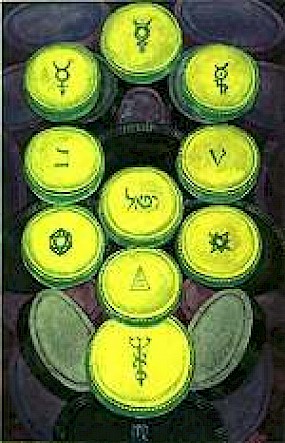
Tarot Card for December 17: The Ten of Disks


The Ten of Disks

The Lord of Wealth talks not only about material wealth and its appropriate use, but about the inner wealth and resources that we all have. This is a card that teaches us that the harvest we gather in our lives is the end result of all that we have put into living – and more importantly, how we have used the riches at our disposal.

We make our own realities with every thought, every deed, every wish. And when we direct our energies positively we shall arrive – as a perfectly natural consequence – at the Ten of Disks. Of course, if we direct our energies negatively we’ll find ourselves with the Ten of Wands, or the Ten of Swords – neither of which are happy cards!

There is a warning connected to this card though. When we have created sufficient wealth to make ourselves comfortable and contented, if we have a surplus, then we must make that surplus work. We cannot expect energy to flow freely in our lives if we hoard it, and try to hang on to it. This is as pointless as trying to save up the breeze so that it will blow on a stuffy day! There are some things in life you cannot clutch tight in the hand without crushing their value out of them.

If this card comes up in an everyday reading, it re-assures that financial and material matters are proceeding well, and that there is no cause for concern.

If it comes up in a more spiritually based reading, then we need to be applying the underlying principles to our lives – so in this case, we need to be letting our inner wealth show, in order to manifest that into our lives.

The Ten of Disks

(via angelpaths.com and Alan Blackman)

Martin Luther: A Return to Grace | Full Movie | Padraic Delaney | Gerharde Bode

Vision Video The great drama of Martin Luther’s life comes alive in this vivid portrayal of the penniless monk’s quest for truth—a quest that would re-shape the church, and the world. Martin Luther triggered a seismic upheaval that rocked the western world in the 1500s—with an impact that continues to reverberate to this day. The great drama of Martin Luther’s life comes alive in this vivid portrayal of the penniless monk’s quest for truth—a quest that would re-shape the church, and the world. Perhaps the most faithful movie about Luther’s life ever made, the film does not shy away from the deep theological questions—and answers—that mark Luther as one of the most influential people of the last thousand years. Director: David Batty Starring: Padraic Delaney, Gerharde Bode, Jr., Bruno Grzeszykowski

Prosperos Sunday Meeting December 19, 2021

.

SUNDAY MEETING 12/19/2021

Holiest Day

Al Haferkamp, H.W., M.


Please join us this Sunday for Al’s presentation.  

11:00 am Pacific/Noon Mountain/1:00 Central/2:00 Eastern

Zoom link: https://us02web.zoom.us/j/332275676   

Al has involved with The Prosperos since 1972, served the school as an instructor and counseling Mentor, and has just completed 12 years of service as Dean.  For several years, he has instructed senior citizens in the “internal arts” of tai chi and qi gong.

These talks are presented by contribution:L

Contribution — The Prosperos

Everyone is welcome!

One tap mobile
+16699006833,,579891643# US (San Jose)
+13462487799,,579891643# US (Houston)
Dial by your location       
+1 669 900 6833 US (San Jose)       
+1 346 248 7799 US (Houston)       
+1 301 715 8592 US       
+1 312 626 6799 US (Chicago)       
+1 929 205 6099 US (New York)       
+1 253 215 8782 US
Meeting ID: 332 275 676
Find your local number: https://zoom.us/u/abtcyLDACK

Sleep onset is a creative sweet spot

8 December 2021
SCIENCE ADVANCES | RESEARCH NEUROSCIENCE

By Célia Lacaux, Thomas Andrillon, Céleste Bastoul, Yannis Idir, Alexandrine Fonteix-Galet, Isabelle Arnulf, Delphine Oudiette

The ability to think creatively is paramount to facing new challenges, but how creativity arises remains mysterious. Here, we show that the brain activity common to the twilight zone between sleep and wakefulness (nonrapid eye movement sleep stage 1 or N1) ignites creative sparks. Participants (N = 103) were exposed to mathematical problems without knowing that a hidden rule allowed solving them almost instantly. We found that spending at least 15 s in N1 during a resting period tripled the chance to discover the hidden rule (83% versus 30% when participants remained awake), and this effect vanished if subjects reached deeper sleep. Our findings suggest that there is a creative sweet spot within the sleep-onset period, and hitting it requires individuals balancing falling asleep easily against falling asleep too deeply.

Link to complete article: https://www.science.org/doi/epdf/10.1126/sciadv.abj5866?adobe_mc=MCMID%3D66014696809106157652917625562459390040%7CMCORGID%3D242B6472541199F70A4C98A6%2540AdobeOrg%7CTS%3D1639627971

(Contributed by Ugur Yilmaz)

The origins of the high five, and its inventor – an unsung gay pioneer

October 25, 2016 (aeon.co)
The origins of the high five, and its inventor – an unsung gay pioneer

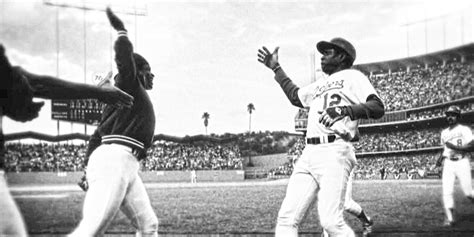
In 1977, Glenn Burke, a rookie outfielder in Major League Baseball (MLB) with the Los Angeles Dodgers, lifted his arm high above his head and slapped palms with his teammate Dusty Baker to celebrate a milestone home run, marking what is widely regarded as the first documented instance of a high five. But perhaps even more fascinating than the high five’s impromptu, exuberant birth is the story of its inventor: MLB’s first openly gay player. The extraordinary story of a largely unsung pioneer, The High Five revisits Burke’s life, a man who quietly challenged traditional notions of masculinity decades before lesbian, gay, bisexual and transgender athletes in professional sports became headline news.

Director: Michael Jacobs

Producers: Chris Gary

Website: Strike Anywhere Films