This bold, compact new biography of Carl Jung fills a gap in our understanding of the pioneering psychiatrist by focusing on the occult and mystical dimension of Jung’s life and work, a critical but frequently misunderstood facet of his career.
Although he is often called the “founding father of the New Age,” Carl Jung, the legendary Swiss psychiatrist best known for his groundbreaking concepts like the collective unconscious, archetype theory, and synchronicity, often took pains to avoid any explicit association with mysticism or the occult. Yet Jung lived a life rich in paranormal experiences-arguing for the existence of poltergeists in a debate with Sigmund Freud, participating in séances, incorporating astrology into his therapeutic work, reporting a near death experience, and collaborating with the pioneering ESP researcher J. B. Rhine. It is these critical experiences-often fleetingly touched on in other biographies or critical studies, and just as frequently used to make a case against Jung and his philosophies-that form the core of this exciting new biography, Jung the Mystic.
While Jung’s ghostwritten memoirs, Memories, Dreams, Reflections, touch on the role his mystical and occult experiences played in his life, Gary Lachman’s Jung the Mystic completes the circle: Lachman assesses Jung’s life and work from the viewpoint of Western esoteric tradition and helpfully places Jung in the context of other major esoteric thinkers, such as Rudolf Steiner, G. I. Gurdjieff, and Emanuel Swedenborg. In that respect, this new biography appeals directly to the sensibility of spiritual readers who rightly see Jung as a pioneer of today’s contemporary metaphysical culture.
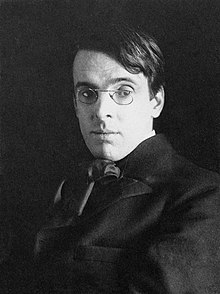
It happens to Yeats in a London coffee shop. This is how he describes it:
My fiftieth year had come and gone, I sat, a solitary man, In a crowded London shop, An open book and empty cup On the marble table-top. While on the shop and street I gazed My body of a sudden blazed; And twenty minutes more or less It seemed, so great my happiness, That I was blessed and could bless.
First published in Science, N.S. 25 (No. 635), 321-332.Posted January 2001 (psychclassics.yorku.ca)
William James
We habitually hear; much nowadays of the difference between structural and functional psychology. I am not sure that I understand the difference, but it probably has something to do with what I have privately been accustomed to distinguish as the analytical and the clinical points of view in psychological observation. Professor Sanford, in a recently published ‘Sketch of a Beginner’s Course in Psychology,’ recommended ‘the physician’s attitude’ in that subject as the thing the teacher should first of all try to impart to the pupil. I fancy that few of you can have read Professor Pierre Janet’s masterly works in mental pathology without being struck by the little use he makes of the machinery usually relied on by psychologists, and by his own reliance on conceptions which in the laboratories and in scientific publications we never hear of at all.
Discriminations and associations, the rise and fall of thresholds, impulses and inhibitions, [p. 322] fatigue, — these are the terms into which our inner life is analyzed by psychologists who are not doctors, and in which, by hook or crook, its aberrations from normality have to be expressed. They can indeed be described, after the fact, in such terms, but always lamely; and everyone must feel how much is unaccounted for, how much left out.
When we turn to Janet’s pages, we find entirely other forms of thought employed. Oscillations of the level of mental energy, differences of tension, splittings of consciousness, sentiments of insufficiency and of unreality, substitutions, agitations and anxieties, depersonalizations — such are the elementary conceptions which the total view of his patient’s life imposes on this clinical observer. They have little or nothing to do with the usual laboratory categories. Ask a scientific psychologist to predict what symptoms a patient must have when his ‘supply of mental energy’ diminishes, and he can utter only the word ‘fatigue.’ He could never predict such consequences as Janet subsumes under his one term ‘psychasthenia’ — the most bizarre obsessions and agitations, the most complete distortions of the relation between the self and the world.
I do not vouch for Janet’s conceptions being valid, and I do not say that the two ways of looking at the mind contradict each other or are mutually incongruous; I simply say that they are incongruent [sic]. Each covers so little of our total mental life that they do not even interfere or jostle. Meanwhile the clinical conceptions, though they may be vaguer than the analytic ones, are certainly more adequate, give the concreter picture of the way the whole mind works, and are of far more urgent practical importance. So the ‘physician’s attitude,’ the ‘functional psychology,’ is assuredly the thing most worthy of general study to-day.
I wish to spend this hour on one conception of functional psychology, a conception never once mentioned or heard of in laboratory circles, but used perhaps more than any other by common, practical men — I mean the conception of the amount of energy available for running one’s mental and moral operations by. Practically every one knows in his own person the difference between the days when the tide of this energy is high in him and those when it is low, though no one knows exactly what reality the term energy covers when used here, or what its tides, tensions, and levels are in themselves. This vagueness is probably the reason why our scientific psychologists ignore the conception altogether. It undoubtedly connects itself with the energies of the nervous system, but it presents fluctuations that can not easily be translated into neural terms. It offers itself as the notion of a quantity, but its ebbs and floods produce extraordinary qualitative results. To have its level raised is the most important thing that can happen to a man, yet in all my reading I know of no single page or paragraph of a scientific psychology book in which it receives mention — the psychologists have left it to be treated by the moralists and mind-curers and doctors exclusively.
Every one is familiar with the phenomenon of feeling more or less alive on different days. Every one knows on any given day that there are energies slumbering in him which the incitements of that day do not call forth, but which he might display if these were greater. Most of us feel as if we lived habitually with a sort of cloud weighing on us, below our highest notch of clearness in discernment, sureness in reasoning, or firmness in deciding. Compared with what we ought to be, we are only half awake. Our fires are damped, our drafts are checked. We [p. 323] are making use of only a small part of our possible mental and physical resources. In some persons this sense of being cut off from their rightful resources is extreme, and we then get the formidable neurasthenic and psychasthenic conditions, with life grown into one tissue of impossibilities, that the medical books describe.
Part of the imperfect vitality under which we labor can be explained by scientific psychology. It is the result of the inhibition exerted by one part of our ideas on other parts. Conscience makes cowards of us all. Social conventions prevent us from telling the truth, after the fashion of the heroes and heroines of Bernard Shaw. Our scientific respectability keeps us from exercising the mystical portions of our nature freely. If we are doctors, our mind-cure sympathies, if we are mind-curists, our medical sympathies, are tied up. We all know persons who are models of excellence, but who belong to the extreme philistine type of mind. So deadly is their intellectual respectability that we can’t converse about certain subjects at all, can’t let our minds play over them, can’t even mention them in their presence. I have numbered among my dearest friends persons thus inhibited intellectually, with whom I would gladly have been able to talk freely about certain interests of mine, certain authors, say, as Bernard Shaw, Chesterton, Edward Carpenter, H. G. Wells, but it wouldn’t do, it made them too uncomfortable, they wouldn’t play, I had to be silent. An intellect thus tied down by literality and decorum makes on one the same sort of impression that an able-bodied man would who should habituate himself to do his work with only one of his fingers, locking up the rest of his organism and leaving it unused.
In few of us are functions not tied-up by the exercise of other functions. G. T. Fechner is an extraordinary exception that proves the rule. He could use his mystical faculties while being scientific. He could be both critically keen and devout. Few scientific men can pray, I imagine. Few can carry on any living commerce with ‘God.’ Yet many of us are well aware how much freer in many directions and abler our lives would be, were such important forms of energizing not sealed up. There are in everyone potential forms of activity that actually are shunted out from use.
The existence of reservoirs of energy that habitually are not tapped is most familiar to us in the phenomenon of ‘second wind.’ Ordinarily we stop when we meet the first effective layer, so to call it, of fatigue. We have then walked, played, or worked ‘enough,’ and desist. That amount of fatigue is an efficacious obstruction, on this side of which our usual life is cast. But if an unusual necessity forces us to press onward, a surprising thing occurs. The fatigue gets worse up to a certain critical point, when gradually or suddenly it passes away, and we are fresher than before. We have evidently tapped a level of new energy, masked until then by the fatigue-obstacle usually obeyed. There may be layer after layer of this experience. A third and a fourth ‘wind’ may supervene. Mental activity shows the phenomenon as well as physical, and in exceptional cases we may find, beyond the very extremity of fatigue-distress, amounts of ease and power that we never dreamed ourselves to own, sources of strength habitually not taxed at all, because habitually we never push through the obstruction, never pass those early critical points.
When we do pass, what makes us do so? Either some unusual stimulus fill us with emotional excitement, or some unusual idea of necessity induces us to make an extra effort of will. Excitements, ideas, [p. 324] and efforts, in a word, are what carry us over the dam.We
In those hyperesthetic conditions which chronic invalidism so often brings in its train, the dam has changed its normal place. The pain-threshold is abnormally near. The slightest functional exercise gives a distress which the patient yields to and stops. In such cases of ‘habit-neurosis’ a new range of power often comes in consequence of the bullying-treatment, of efforts which the doctor obliges the patient, against his will, to make. First comes the very extremity of distress, then follows unexpected relief. There seems no doubt that we are each and all of us to some extent victims of habit-neurosis. We have to admit the wider potential range and the habitually narrow actual use. We live subject to inhibition by degrees of fatigue which we have come only from habit to obey. Most of us may learn to push the barrier farther off, and to live in perfect comfort on much higher levels of power.
Country people and city people, as a class, illustrate this difference. The rapid rate of life, the number of decisions in an hour, the many things to keep account of, in a busy city man’s or woman’s life, seem monstrous to a country brother. He doesn’t see how we live at all. But settle him in town; and in a year or two, if not too old, he will have trained himself to keep the pace as well as any of us, getting more out of himself in any week then he ever did in ten weeks at home. The physiologists show how one can be in nutritive equilibrium, neither losing nor gaining weight, on astonishingly different quantities of food. So one can be in what I might call ‘efficiency-equilibrium’ (neither gaining nor losing power when once the equilibrium is reached), on astonishingly different quantities of work, no matter in what dimension the work may be measured. It may be physical work, intellectual work, moral work, or spiritual work.
Of course there are limits: the trees don’t grow into the sky. But the plain fact remains that men the world over possess amounts of resource, which only very exceptional individuals push to their extremes of use.
The excitements that carry us over the usually effective dam are most often the classic emotional ones, love, anger, crowd-contagion, or despair. Life’s vicissitudes bring them in abundance. A new position of responsibility, if it do not crush a man, will often, nay, one may say, will usually, show him to be a far stronger creature than was supposed. Even here we are witnessing (some of us admiring, some deploring — I must class myself as admiring) the dynamogenic effects of a very exalted political office upon the energies of an individual who had already manifested a .healthy amount of energy before the office came.
Mr. Sydney Olivier has given us a fine fable of the dynamogenic effects of love in a late story called ‘The Empire Builder,’ in the Contemporary Review for May, 1905. A young naval officer falls in love at sight with a missionary’s daughter on a lost island, which his ship accidentally touches. From that day onward he must see her again; and he so moves Heaven and earth and the Colonial Office and the Admiralty to get sent there once more, that the island finally is annexed to the empire in consequence of the various fusses he is led to make. People must have been appalled lately in San Francisco to find the stores of bottled up energy and endurance they possessed.
Wars, of course, and shipwrecks, are the great revealers of what men and women are able to do and bear. Cromwell’s and Grant’s careers are the stock examples of how war will wake a man up. I owe to [p. 325] Professor Norton’s kindness the permission to read to you part of a letter from Colonel Baird-Smith, written shortly after the six weeks’ siege of Delhi in 1857, for the victorious issue of which that excellent officer was chiefly to be thanked. He writes as follows :
* * * My poor wife had some reason to think that war and disease between them had left very little of a husband to take under nursing when she got him again. An attack of camp-scurvy had filled my mouth with sores, shaken every joint in my body, and covered me all over with sores and livid spots so that I was marvelously unlovely to look upon. A smart knock on the ankle-joint from the splinter of a shell that burst in my face, in itself a mere bagatelle of a wound, had been of necessity neglected under the pressing and incessant calls upon me, and had grown worse and worse till the whole foot below the ankle became a black mass and seemed to threaten mortification. I insisted however on being allowed to use it till the place was taken, mortification or no; and though the pain was sometimes horrible, I carried my point and kept up to the last. On the day after the assault I had an unlucky fall on some bad ground; and it was an open question for a day or two whether I hadn’t broken my arm at the elbow. Fortunately it turned out to be only a very severe sprain, but I am still conscious of the wrench it gave me. To crown the whole pleasant catalogue, I was worn to a shadow by a constant diarrhœa, and consumed as much opium as would have done credit to my father-in-law.[2] However, thank God I have a good share of Tapleyism in me and come out strong under difficulties. I think I may confidently say that no man ever saw me out of heart, or ever heard one croaking word from me even when our prospects were gloomiest. We were sadly scourged by the cholera and it was almost appalling to me to find that out of twenty-seven officers present, I could only muster fifteen for the operations of the attack. However, it was done, and after it was done came the collapse. Don’t be horrified when I tell you that for the whole of the actual siege, and in truth for some little time before, I almost lived on brandy. Appetite for food I had none, but I forced myself to eat just sufficient to sustain life, and I had an incessant craving for brandy as the strongest stimulant I could get. Strange to say, I was quite unconscious of its affecting me in the slightest degree. The excitement of the work was so great that no lesser one seemed to have any chance against it, and I certainly never found my intellect clearer or my nerves stronger in my life. It was only my wretched body that was weak, and the moment the real work was done by our becoming complete masters of Delhi, I broke down without delay and discovered that it I wished to live I must continue no longer the system that had kept me up until the crisis was past. With it passed away as it in a moment all desire to stimulate, and a perfect loathing of my late staff of life took possession of me.
Such experiences show how profound is the alteration in the manner in which, under excitement, our organism will sometimes perform its physiological work. The metabolisms become different when the reserves have to be used, and for weeks and months the deeper use may go on.
Morbid cases, here as elsewhere, lay the normal machinery bare. In the first number of Dr. Morton Prince’s Journal of Abnormal Psychology, Dr. Janet has discussed five cages of morbid impulse, with an explanation that is precious for my present point of view. One is a girl who eats, eats, eats, all day. Another walks, walks, walks, and gets her food from an automobile that escorts her. Another is a dipsomaniac. A fourth pulls out her hair. A fifth wounds her flesh and burns her skin. Hitherto such freaks of impulse have received Greek names (as bulimia, dromomania, etc.) and been scientifically disposed of as ‘episodic syndromata of hereditary degeneration.’ But it turns out that Janet’s cases are all what he calls psychasthenics, or victims of a chronic sense of weakness, torpor, lethargy, fatigue, insufficiency, impossibility, unreality, and powerlessness of will; and that in each and all of them the particular activity pursued, deleterious though it be, has the temporary result of raising the sense of vitality and making the patient feel alive again. These things reanimate; they [p. 326] would reanimate us; but it happens that in each patient the particular freak-activity chosen is the only thing that does reanimate; and therein lies the morbid state. The way to treat such persons is to discover to them more usual and useful ways of throwing their stores of vital energy into gear.
Colonel Baird-Smith, needing to draw on altogether extraordinary stores of energy, found that brandy and opium were ways of throwing them into gear.
Such cases are humanly typical. We are all to some degree oppressed, unfree. We don’t come to our own. It is there, but we don’t get at it. The threshold must be made to shift. Then many of us find that an excentric [sic] activity — a ‘spree,’ say — relieves. There is no doubt that to some men sprees and excesses of almost any kind are medicinal, temporarily at any rate, in spite of what the moralists and doctors say.
But when the normal tasks and stimulations of life don’t put a man’s deeper levels of energy on tap, and he requires distinctly deleterious excitements, his constitution verges on the abnormal. The normal opener of deeper and deeper levels of energy is the will. The difficulty is to use it; to make the effort which the word volition implies. But if we do make it (or if a god, though he were only the god Chance, makes it through us), it will act dynamogenically on us for a month. It is notorious that a single successful effort of moral volition, such as saying ‘no’ to some habitual temptation, or performing some courageous act, will launch a man on a higher level of energy for days and weeks, will give him a new range of power.
The emotions and excitements due to usual situations are the usual inciters of the will. But these act discontinuously; and in the intervals the shallower levels of life tend to close in and shut us off. Accordingly the best practical knowers of the human soul have invented the thing known as methodical ascetic discipline to keep the deeper levels constantly in reach. Beginning with easy tasks, passing to harder ones, and exercising day by day, it is, I believe, admitted that disciples of asceticism can reach very high levels of freedom and power of will.
Ignatius Loyola’s spiritual exercises must have produced this result in innumerable devotees. But the most venerable ascetic system, and the one whose results have the most voluminous experimental corroboration is undoubtedly the Yoga system in Hindostan.[sic] From time immemorial, by Hatha Yoga, Raja Yoga, Karma Yoga, or whatever code of practise it might be, Hindu aspirants to perfection have trained themselves, month in and out, for years. The result claimed, and certainly in many cases accorded by impartial judges, is strength of character, personal power, unshakability of soul. But it is not easy to disentangle fact from tradition in Hindu affairs. So I am glad to have a European friend who has submitted to Hatha Yoga training, and whose account of the results I am privileged to quote. I think you will appreciate the light it throws on the question of our unused reservoirs of power.
My friend is an extraordinarily gifted man, both morally and intellectually, but has an instable nervous system, and for many years has lived in a circular process of alternate lethargy and over-animation: something like three weeks of extreme activity, and then a week of prostration in bed. An unpromising condition, which the best specialists in Europe had failed to relieve; so he tried Hatha Yoga, partly out of curiosity, and partly with a sort of desperate hope. What follows is a short extract [p. 327] from a letter sixty pages long which he addressed me a year ago:
Thus I decided to follow Vivekananda’s advice: “Practise hard: whether you live or die by it doesn’t matter.” My improvised chela and I began with starvation. I do not know whether you did try it ever * * * but voluntary starvation is very different from involuntary, and implies more temptations. We reduced first our meals to twice a day and then to once a day. The best authorities agree that in order to control the body fasting is essential, and even in the Gospel the worst spirits are said to obey only those who fast and pray. We reduced very much the amount of food, disregarding chemical theories about the need of albumen, sometimes living on olive oil and bread; or on fruits alone; or on milk and rice; in very small quantities — much less than I formerly ate at one meal. I began to get lighter every day, and lost 20 pounds in a few weeks; but this could not stop such a desperate undertaking * * * rather starve than live as a slaver Then besides we practised asana or postures, breaking almost our limbs. Try to sit down on the floor and to kiss your knees without bending them, or to join your hands on the usually unapproachable upper part of your back, or to bring the toe of your right foot to your left ear without bending the knees * * * these are easy samples of posture for a Yogi.
All the time also breathing exercises: keeping the breath in and out up to two minutes, breathing in different rhythms and positions. Also very much prayer and Roman Catholic practises combined with the Yoga, in order to leave nothing untried and, to be protected against the tricks of Hindu devils! Then concentration of thought on different parts of the body, and on the processes going on within them. Exclusion of all emotions, dry logical reading, as intellectual diet, and working out logical problems. * * * I wrote a Handbook of Logic as a Nebenprodukt of the whole experiment.[3]
After a few weeks I broke down and had to interrupt everything, in a worse state of prostration than ever.* * * My younger chela went on unshaken by my fate; and as soon as I arose from bed I tried again decided to fight it out, even feeling a kind of determination such as I had never felt before, a certain absolute will of victory at any price and faith in it. Whether it is my own merit or a divine grace, I can not judge for certain, but I prefer to admit the latter. I had been ill for seven years, and some people say this is a term for many punishments. However base and vile a sinner I had been, perhaps my sins were about to be forgiven, and Yoga was only an exterior opportunity, an object for concentration of will. I do not yet pretend to explain much of what I have gone through, but the fact is that since I arose from bed on August 20, no new crisis of prostration came again, and I have now the strongest conviction that no crisis will ever return. If you consider that for the past years there has not been a single month without this lethargy, you will grant that even to an outside observer four successive months of increasing health are an objective test. In this time I underwent very severe penances, reducing sleep and food and increasing the task of work and exercise. My intuition was developed by these practises: there came a, sense of certainty, never known before, as to the things needed by the body and the mind, and the body came to obey like a wild horse tamed. Also the mind learned to obey, and the current of thought and feeling was shaped according to my will. I mastered sleep and hunger, and the flights of thought, and came to know a peace never known before, an inner rhythm of unison with a deeper rhythm above or beyond. Personal wishes ceased, and the consciousness of being the instrument of a superior power arose. A calm certainty of indubitable success in every undertaking imparts great and real power. I often guessed the thoughts of my companion * * * we observed generally the greatest isolation and silence. We both felt an unspeakable joy in the simplest natural impressions, light, air, landscape, any kind of simplest food; and above everything in rhythmical respiration, which produces a state of mind without thought or feeling, and still very intense, indescribable.
These results began to be more evident in the fourth month of uninterrupted training. We felt quite happy, never tired, sleeping only from 8 P.M. to midnight, and rising with joy from our sleep to another day’s work of study and exercise. * * *
I am now in Palermo, and have had to neglect the exercises in the last few days, but I feel as fresh as if I were in full training and see the sunny side of all things. I am not in a hurry, rushing to complete –.
And here my friend mentions a certain life-work of his own. about which I had [p. 328] better be silent. He goes on to analyze the exercises and their effects in an extremely practical way, but at too great length for me to entertain you with. Repetition, alteration, periodicity, parallelism (or the association of the idea of some desirable vital or spiritual effect with each movement), etc., are laws which he deems highly important. “I am sure,” he continues, “that everybody who is able to concentrate thought and will, and to eliminate superfluous emotions, sooner or later becomes a master of his body and can overcome every kind of illness. This is the truth at the bottom of all mind-cures. Our thoughts have a plastic power over the body.”
You will be relieved, I doubt not, to hear my excentric[sic] correspondent here make connection at last with something you know by heart, namely, ‘suggestive therapeutics.’ Call his whole performance, if you like, an experiment in methodical self-suggestion. That only makes it more valuable as an illustration of what I wish to impress in as many ways as possible upon your minds, that we habitually live inside our limits of power. Suggestion, especially under hypnosis, is now universally recognized as a means, exceptionally successful in certain persons, of concentrating consciousness, and, in others, of influencing their bodies’ states. It throws into gear energies of imagination, of will, and of mental influence over physiological processes, that usually lie dormant, and that can only be thrown into gear at all in chosen subjects. It is, in short, dynamogenic; and the cheapest terms in which to deal with our amateur Yogi’s experience is to call it auto-suggestive.
“The goal of spiritual life is not altered states, but altered traits”
–Huston Smith
Huston Cummings Smith (May 31, 1919 – December 30, 2016) was a leading scholar of religious studies in the United States. He was widely regarded as one of the world’s most influential figures in religious studies. He authored at least thirteen books on world’s religions and philosophy, and his book The World’s Religions sold over three million copies as of 2017 and remains a popular introduction to comparative religion. Wikipedia
For almost as long as he can remember, Mathieu’s father had been a provocateur, with a penchant for inappropriate jokes and borderline remarks. But when he started dipping his toes into conspiracy theories, things quickly got out of hand.ADVERTISING
“When he told me to ‘look out for the FBI report’ proving Hillary Clinton tortured babies and drank their blood to live forever, I knew with 200 percent certainty that I had lost him,” Mathieu* recalled. “It was finished. I would never again see the person he was before.”
As is often the case, the father’s cross over to “the other side” occurred at a particularly vulnerable moment in his life: his finances had collapsed, he had lost his home and, as a final kick in the stomach, he was diagnosed with a serious, and often terminal, illness. It didn’t help that he was retired and didn’t have many friends.
“I feel kind of responsible because a lot of people fall into these situations when they are isolated,” said Mathieu, who has turned into somewhat of an expert on conspiracy theories since his father began embracing the QAnon movement, whose members believe the world is run by a cabal of Satan-worshipping paedophiles.
“I feel guilty in almost the same way you do when you hear that someone close to you has committed suicide, you feel like you should have been there more,” Mathieu said.
The transformation happened fast, starting with the sharing of a few QAnon-related links on Facebook. “Then he started sending me links via private message too, saying that climate change was a hoax and stuff.”
Then, his public posts grew both cruder and more violent. “Really hardcore. He was posting pictures of politicians with a rope around their neck and really defaming people, saying Michelle Obama was a transsexual, etc.”
In March 2020, at the beginning of the pandemic, Mathieu fell ill with what he was “99 percent certain” was Covid-19. When he later complained to his father about his many lingering symptoms, he was shocked at his father’s reaction: “Oh, you’re talking about that ‘flu’ you had?”
At that point, Mathieu’s father had become a QAnon “super spreader”, furiously pushing out conspiracy theories and sharing misinformation related to Covid-19, face masks and vaccines.
That’s when Mathieu finally decided to unfriend his father on Facebook. “I just couldn’t take it anymore.”
Mathieu still speaks to his father, but keeps the communication to a minimum, and makes sure to steer clear of any topic even remotely related to his father’s conspiracy theory beliefs. “We’re still in contact because he is sick you know, but it’s probably just a matter of time before I’ll never speak to him again. I feel like I’ve lost him.”
‘In mourning’
“Lost” is a term often used by friends and family members whose loved ones disappear in the murky waters of conspiracy theories.
“Not long ago, a mother told me she was ‘in mourning’ over her son, even though he is still alive. It’s so sad,” said Pascale Duval, the spokeswoman for French support group UNADFI, which helps the victims of sects and conspiracy theories as well as their families.
“The families go through enormous pain and they are the first to suffer when someone falls into conspiracy theories,” she said, noting they currently represent 70 percent of the people reaching out to UNADFI.
“It’s parents, children, spouses, siblings, friends, you name it. When they contact us, they say things like, ‘I don’t know what to do anymore’, ‘He’s broken off contact with me’, ‘We can’t communicate anymore’, ‘It’s not the same person anymore’. They’re really desperate for help.”
One recent example of the type of complaints UNADFI receives was from a woman whose sister and mother had begun watching unhealthy quantities of anti-vaccine videos on social media. “She’s going to get married soon, and now her mother and sister refuse to come to the wedding,” Duval said. Covid-19 vaccine fears stoke conspiracy theories in France
01:47
Since the start of the Covid-19 pandemic, the number of people contacting UNADFI has skyrocketed. “Last year, we received 4,323 requests for help, 12 percent more than the year before.”
For Duval, conspiracy theories are clearly to blame for this steep increase.
“We’ve always seen a rise in these kinds of beliefs when there’s any kind of large-scale catastrophe,” she said, referring to other conspiracy theory-prone issues such as climate change and terrorist attacks. This is because people are scared or frustrated and have a hard time accepting reality, Duval said. So they look for alternative – or more “credible” – ways to explain the catastrophe or someone to blame it on.
Once a person begins visiting conspiracy sites and pages, she said, the beliefs often multiply, as the person’s openness to the irrational, coupled with Internet algorithms, will keep feeding them more resources and theories. “It’s like a snowball effect.”
Duval also said conspiracy theories were no different from sects in the way they isolate, manipulate and ultimately control their victims.
“What we always see in these situations, whether it’s a sectarian movement or a conspiracy theory, is this breaking off of contact. It’s constant and systematic and completely tears these families apart.”
Extremely difficult to reach
The European Commission recently set up a platform dedicated to identifying, debunking and countering the conspiracy theories surrounding Covid-19. “The coronavirus pandemic has seen a rise in harmful and misleading conspiracy theories, mostly spreading online,” it states on its website. The site also offers advice for people on how to deal with friends or family members who have bought into these theories. But, it warns, “people who firmly believe in conspiracy theories are extremely difficult to reach”.
Last month Mike Kropveld, the founder and director of the Montreal-based non-profit organisation Info-Secte and who once helped rescue a friend from a religious sect, launched a new support group for people with friends, spouses or family members who have become extreme proponents of conspiracy theories and other fringe beliefs or groups.
“Emotionally and psychologically, these situations can be very draining for a family member and they need to talk with people who are in similar situations,” he said. “The pandemic just increased the need because we got more and more calls.”
The support group includes volunteer psychologists and other healthcare professionals. Their aim is to help families and friends deal with what they often feel is a “hopeless” situation.
“Bringing someone back to how they were before is a long process, if at all possible,” Kropveld said, noting the conspiracy theorists are so “emotionally tied” to their beliefs that any attempt to try to prove them wrong is likely to backfire and may instead aggravate the situation.
“Let’s say you have a new boyfriend that you have fallen in love with and I come and tell you he is out to manipulate you and exploit you […]. It is highly unlikely you are going to say, ‘Thanks, I didn’t know that’ and say, ‘I am going to dump him and get a new boyfriend’. It is more likely you are going to close off to me instead,” he explained. “It is important to recall the expression, ‘Love is blind’.”
Duval agreed: “It’s very rare for someone to ‘wake up’ because of what someone on the outside says or does. It has to come from them.”
Early warning signs
Kropveld said that although there was no “one-size-fits-all” profile for potential conspiracy theorists, there are some traits and behaviours to look out for.
“In some cases, they already have a level of distrust in the political system, and may already believe in ideas that are outside of the mainstream,” he said, adding that a difficult life situation can then add fuel to the fire.
Daily newsletterReceive essential international news every morningSubscribe
“Obviously if someone is feeling isolated and alone, and may have lost their job, it could be a potential indicator that the person might be more open to look for solutions or simple answers to what’s going on.”
Kropveld said that the best thing a person can do in this situation is to remain non-confrontational and keep a constant and open line of communication with them. “Because if the outside is no longer there if they decide to come back, they’re basically locked [into] the environment they’re in, and it´s obviously going to be much harder to leave.”
Although Mathieu no longer harbours much hope to win his father back from QAnon, he said he would never again miss the early warning signs of someone slipping into conspiracy theories.
“As soon as someone posts something [conspiratorial] saying: ‘I don’t agree with everything he says, but…’, that’s a sign that it’s almost already too late.”
*The name has been changed to protect the person’s identity
“One can write nothing readable unless one constantly struggles to efface one’s own personality. Good prose is like a window pane.”
– George Orwell
In his 1946 essay, Why I Write, George Orwell set out what he saw as the main motivators for writing: they were, sheer egotism, esthetic enthusiasm, historical impulse and political purpose. He recounts how, under different circumstances, the fourth reason might not have been so compelling to him, but the way that his life unfolded (serving with the Imperial Police in Burma; witnessing the rise of fascism under Adolf Hitler and reporting on the Spanish Civil War), he found himself becoming more politically engaged in his writing. We should be clear, he says, about the position of our political biases, and we should acknowledge when they can no longer be omitted from the work we create, while still working towards self-effacement as an author. Read other posts about writing from Natalie Goldberg, Norman Fischer and Ray Bradbury, as well as The Dewdrop’s own Why I Write series.
The Spanish war and other events in 1936–7 turned the scale and thereafter I knew where I stood. Every line of serious work that I have written since 1936 has been written, directly or indirectly, against totalitarianism and for democratic socialism, as I understand it. It seems to me nonsense, in a period like our own, to think that one can avoid writing of such subjects. Everyone writes of them in one guise or another. It is simply a question of which side one takes and what approach one follows. And the more one is conscious of one’s political bias, the more chance one has of acting politically without sacrificing one’s esthetic and intellectual integrity.
What I have most wanted to do throughout the past ten years is to make political writing into an art. My Starting point is always a feeling of partisanship, a sense of injustice. When I sit down to write a book, I do not say to myself, “I am going to produce a work of art.” I write it because there is some lie that I want to expose, some fact to which I want to draw attention, and my initial concern is to get a hearing. But I could not do the work of writing a book, or even a long magazine article, if it were not also an esthetic experience.
“The more one is conscious of one’s political bias, the more chance one has of acting politically without sacrificing one’s esthetic and intellectual integrity.”
Anyone who cares to examine my work will see that even when it is downright propaganda it contains much that a full-time politician would consider irrelevant. I am not able, and I do not want, completely to abandon the world-view that I acquired in childhood. So long as I remain alive and well I shall continue to feel strongly about prose style, to love the surface of the earth, and to take a pleasure in solid objects and scraps of useless information. It is no use trying to suppress that side of myself. The job is to reconcile my ingrained likes and dislikes with the essentially public, non-individual activities that this age forces on all of us.
It is not easy. It raises problems of construction and of language, and it raises in a new way the problem of truthfulness. Let me give just one example of the cruder kind of difficulty that arises. My book about the Spanish civil war, Homage to Catalonia, is, of course, a frankly political book, but in the main it is written with a certain detachment and regard for form. I did try very hard in it to tell the whole truth without violating my literary instincts.
“I find that by the time you have perfected any style of writing, you have always outgrown it.”
But among other things it contains a long chapter, full of newspaper quotations and the like, defending the Trotskyists who were accused of plotting with Franco. Clearly such a chapter, which after a year or two would lose its interest for any ordinary reader, must ruin the book. A critic whom I respect read me a lecture about it. “Why did you put in all that stuff?” he said. “You’ve turned what might have been a good book into journalism.” What he said was true, but I could not have done otherwise. I happened to know, what very few people in England had been allowed to know, that innocent men were being falsely accused. If I had not been angry about that I should never have written the book.
In one form or another this problem comes up again. The problem of language is subtler and would take too long to discuss. I will only say that of late years I have tried to write less picturesquely and more exactly. In any case I find that by the time you have perfected any style of writing, you have always outgrown it. Animal Farm was the first book in which I tried, with full consciousness of what I was doing, to fuse political purpose and artistic purpose into one whole. I have not written a novel for seven years, but I hope to write another fairly soon. It is bound to be a failure, every book is a failure, but I do know with some clarity what kind of book I want to write.
“Writing a book is a horrible, exhausting struggle, like a long bout of some painful illness.”
Looking back through the last page or two, I see that I have made it appear as though my motives in writing were wholly public-spirited. I don’t want to leave that as the final impression. All writers are vain, selfish and lazy, and at the very bottom of their motives there lies a mystery. Writing a book is a horrible, exhausting struggle, like a long bout of some painful illness. One would never undertake such a thing if one were not driven on by some demon whom one can neither resist nor understand. For all one knows that demon is simply the same instinct that makes a baby squall for attention. And yet it is also true that one can write nothing readable unless one constantly struggles to efface one’s own personality. Good prose is like a window pane. I cannot say with certainty which of my motives are the strongest, but I know which of them deserve to be followed. And looking back through my work, I see that it is invariably where I lacked a political purpose that I wrote lifeless books and was betrayed into purple passages, sentences without meaning, decorative adjectives and humbug generally.
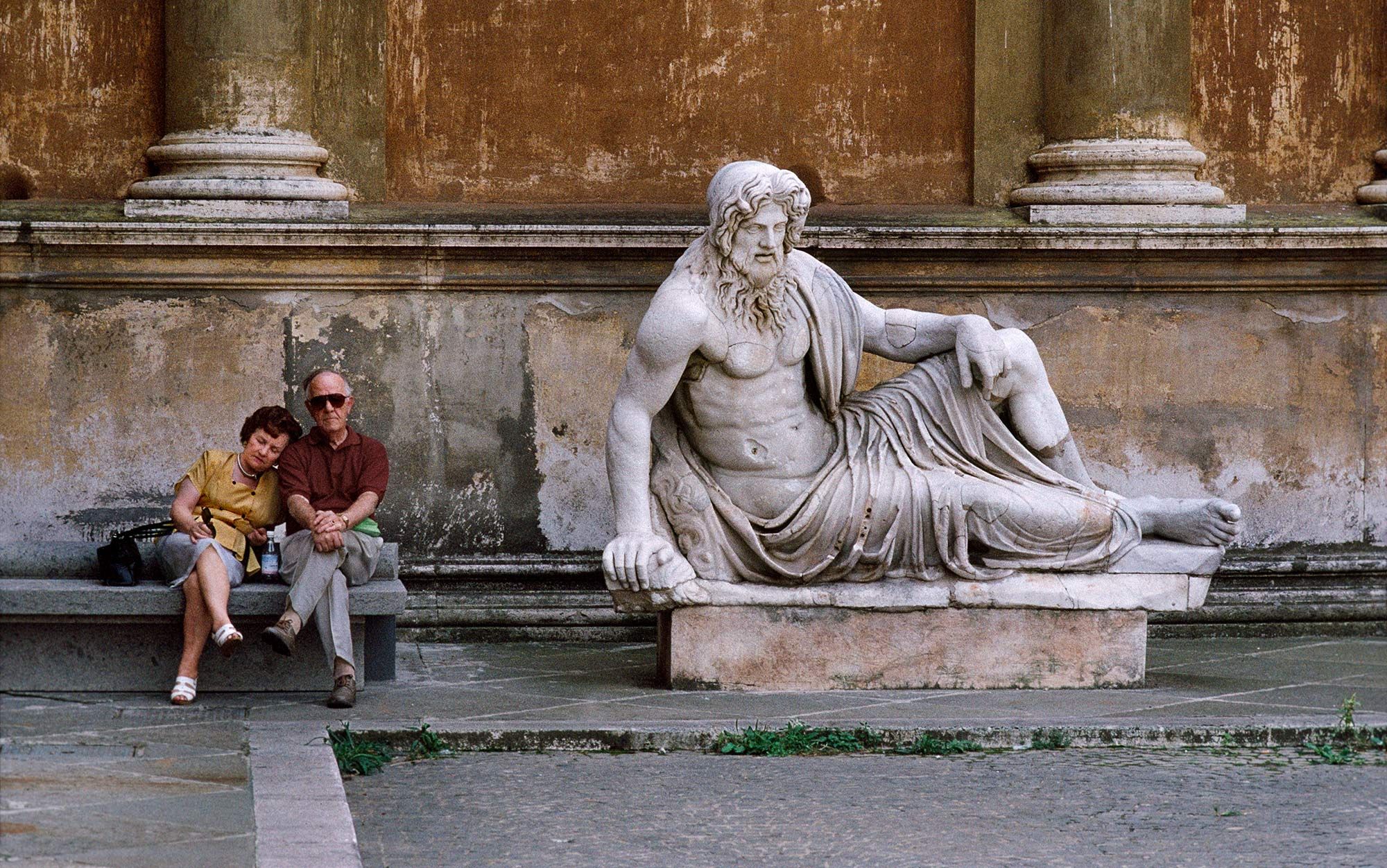
Forget the modern romantic notion of ‘the one’. True love means looking beyond the couple and out towards lifeTrue love: more made than found. Rome, 1994. Photo by Steve McCurry/Magnum
It is a telling statistic that the most frequently ‘what is…?’ question typed into Google last year was: what is love? This fact probably reveals more about the society that asks an internet search engine such a thing, than any answer reveals about the nature of love. But if not Google, then where else can we look to understand love? The fantasy-making machines of Hollywood and Bollywood insist that there is only one answer worth indulging: the romantic kind. Most people, it would seem, agree, if only by default. They are dragged into seeking the person who will make them ‘whole’ via a dating website, or by a less tangible, though no less keenly felt urge cultivated by the same, dominant culture that insists we must find ‘the one’. Not that its origins are modern. Ever since the poet Sappho wrote, in the seventh century BCE, of love rippling under her skin like wind through trees, romantic love has been imagined as irresistible, a crucial experience that marks the peak of human existence.
Yet, the Google stats suggest that there is also a silent global search underway — many of us are clearly not satisfied with romance as an answer. The real problem, then, might be that contemporary culture leaves us unprepared for thinking about love in anything other than a one-dimensional mode. Just as marriage has seized the monopoly on public affirmations of love, so a notion of romance has restricted what we can imagine as a loving relationship.
The ancient Greeks, unlike us, did not have a single word for love but many. As is often noted, they had philia (friendship) and eros (desire), storge (affection) and agape (unconditional love). Perhaps that is another part of our problem. Our language invites us to think of love as a single, unified thing, when it is nothing of the sort. I suspect that words are not enough to address this modern deficiency. What we need is a new sense of the variety of love’s experiences. Fortunately there is another storehouse we can draw on from our ancient forebears: and it is not their words, but their myths that can enlighten us.
In a sense, we are lumbered with the dominance of romantic love; it can’t simply be sidestepped in favour of friendship, for example. That would never work: the erotic is simply too powerful. But the ancient myths can help us realise why romance is such a successful sell, if short-lived. Perhaps the myth that best captures the allure of romance is Aristophanes’ idea about soulmates, from Plato’s Symposium The story goes that human beings originally had two heads, four arms and four legs. We were shaped like round balls and tumbled across the face of the Earth at great speed. The gods grew alarmed at this display of power. So Zeus hatched a plan. He would cut human beings in half, leaving each with just one head, two arms and two legs.
These mutilated halflings were a pathetic sight. In particular, they developed the habit of devoting considerable amounts of their now limited energy searching for their lost halves. The desire to find the missing other was irresistible. Individuals sustained the search in spite of repeated break-ups and romantic disasters in the indefatigable belief that the right person — ‘the one’ — was out there. The promise of love, they felt, was nothing less than wholeness.
The myth has had a long life, accurately describing to this day the inner experience of those who feel life is incomplete without such love. In fact, it wasn’t until the 18th century that Aristophanes’ way of thinking about love reached its logical conclusion, when Jean-Jacques Rousseau wrote of how he fell in love as a young man. Only after that experience, he mused, could he be sure that he had genuinely lived. The upshot was that romantic love had become the goal in its own right. It matters not who you fall in love with, so long as you have fallen in love. The experiential ideal usurps the complex personal reality. That is why romance has us so much in its grip and empties us out in the process. It is the same with the dogmatic pursuit of happiness.
Crucially, however, Plato’s original myth about soulmates ends not with an elusive, illusory happiness, but with a twist. And here it might have something to teach us, suggesting an escape hatch out of the romantic stronghold. Zeus takes pity on the halved humans. He moves their genitals round so that when they meet they can embrace and find a little release for their passion. Sex is a temporary taste of unity, and it helps, though only to a degree. So when Hephaestus, the god of craftsmen, passes by and promises the couples a wish, these tragic figures speak with one voice. Weld us together, they cry: melt us one into the other!
For love to have a future, couples need to be able to move from falling in love to standing in love
Hephaestus obliges. The two become one. And the new situation reveals another way in which love gets stuck. Glued together, gazing only into each other’s eyes, the lovers lose touch with the rest of life. Not caring for anything else, death takes on an attractive hue, and they dream of sharing a last single breath together — a fantasy that lives on in the French euphemism, la petite mort, and in the romantic climax to Romeo and Juliet. But as the psychologist Erich Fromm put it in The Art of Loving (1956), for love to have a future, couples need to be able to move from falling in love to standing in love. Lovers must learn to embrace what lies outside their cosy twosome in order to survive. As Freud made explicit, dyadic love can be nurturing, but can equally be claustrophobic and alienating, and Aristophanes’ tale suggest it must be transcended.
The question is, how? How can the energy that romantic desire releases be directed outwards so that it feeds a passion not just for life together, but for life itself, led together. An answer is given by another ancient myth, one that is almost forgotten today. It concerns the infant god of love, familiar to us as Eros, but it also introduces us to another, less familiar figure, his brother.
Eros was born to Aphrodite and at first all seemed well. But then, Aphrodite noticed something that disturbed her. The child was not growing. His wings stayed as buds. His chubby flesh failed to develop muscles. It was as if he was possessed by a spirit that clung to infancy, refusing to step into maturity. Aphrodite became anxious and consulted her sister, the wise Themis. The goddess of good counsel (whose name translates literally as ‘what works’ ) advised her to have another child, this time by Ares, the brave god of war. Themis instructed that the second infant be called Anteros — he would be the equal of Eros. Aphrodite did as her sister said, and it worked. The two sons were rivals. They joshed and scrapped and fought, yet loved one another, too, and, as long as they played side by side, Eros developed normally. Yet, when they were apart, Aphrodite noticed that Eros would regress.
What Anteros brings is difficulty, a romantic equivalent to the sibling rivalry that young children hate so much in their jostling for a parent’s attention even though, like the tensions in an adult relationship, it can be the making of them, when sensitively handled. Anteros brings the courage required to resist the oceanic fantasy of disappearing into another’s arms, and instead embarks on the difficult process of making a life out of love. What he stands for, we might say, is the healthy spiritedness that lies behind lovers’ tiffs and rows which, if they can be reflected on and learnt from, make for maturity. The 16th-century proverb conveys this Anterotic dynamic: ‘The quarrel of lovers is the renewal of love’. If Eros is the god of love who shoots people with his arrows and turns them mad with desire, Anteros is the god of love who opposes the madness with a mix of his aunt’s pragmatism and his father’s strength.
To onlookers, it is unclear whether the two are making love or locked in some form of mutual violation
But the myth tells us more. Anteros’ aunt Themis was also known for her skill in bringing conflicting energies into a healing alignment. Today, her successors are couples’ therapists: they tend to be more interested in how troubled couples handle the emotions unleashed by their rows, rather than how to avoid rows in the first place. The anger and hate, fear and vulnerability of difficult relationships can be an opportunity. This is not your lost half, the therapist implies, but it is someone with whom you might find more integration and wholeness for yourself. Life is not perfected through love, as the romantic fantasy implies, but through love you can find more of life. Conversely, an inability to handle conflict is a good predictor of divorce.
It’s worth reflecting on the detail that Anteros helped his brother only while they played together. When they were apart, Eros regressed. Perhaps this conveys the value of commitment in relationships, a commitment that provides a container for the ups and downs, allowing them to be worked through. There is no static ‘happily ever after’, but a continuing need to play together. It suggests that a good relationship comes from the future, not the past, as Aristophanes’ myth implies. Love is more made than found.
In his book Anteros: A Forgotten Myth (2011), Craig Stephenson gathers evidence that Eros’ brother might not have vanished after all. He discusses Dante Gabriel Rossetti’s poem, ‘Hero’s Lamp’ (1875), which speaks of a lamp that is dedicated to Anteros and can only be lit when a love lasts a lifetime — unlike the mad love Leander had for Hero, which led him to attempt to cross the sea to reach her too many times and drown.
Meanwhile, the famous wrestling scene in DH Lawrence’s novel, Women in Love, can be read, Stephenson argues, as a depiction of the rivalry between Eros and Anteros. Rupert Birkin and Gerald Crich wrestle ‘swiftly, rapturously, intent and mindless at last’. Birkin learns from the aggression, safely but fully expressed in the fight: his marriage to Ursula Brangwen will have to combine elements of unity and adversity to work. Separateness in union can be achieved only by holding opposites in tension, as the critic Frank Kermode has read into Lawrence. Lovers must reach ‘an equilibrium beyond the ordinary notion of sexual love’.
Fundamentally, the myth of Eros and Anteros is about a triangular form of love. The brothers fight as siblings, vying for the attention of Aphrodite. It is this kind of love that is life-giving, because Eros and Anteros can desire something outside their immediate dyadic concerns. Their love is triangular: it is fired by someone or something beyond their love for each other. Their rivalry draws them towards external elements in life — which is to say, life itself. Hence, Eros matures.
Plato built the myth of Anteros into one of his dialogues. The triangular element it seems, particularly interested him. In the Phaedrus dialogue, he describes what happens when individuals fall in love (this much is familiar): romantic urges compel them to rush together, propelled by desire. To onlookers, it is unclear whether the two are making love or locked in some form of mutual violation. But some lovers are blessed by what Plato calls an Anterotic dynamic. It is as if they are able to prise themselves apart from one another, stand back a little, and observe what is going on. A third space opens up between them. It brings an essential capacity for self-awareness.
A couple can work out not only how to live together but how to live well together
This gap has a dramatic effect on the relationship. No longer are they just driven by their lust for one another. Instead, in time, a more expansive intimacy develops, which has a quality akin to friendship. The words of the French writer and poet Antoine de Saint-Exupéry come to mind: ‘Experience shows us that love does not consist in gazing at each other but in looking together in the same direction.’ As lovers, two people look only into each other’s eyes; as friends, they can look ahead together. They begin to see a life that lies beyond them and, supported by one another — now standing in love — they have the resources to step into the future together.
What is interesting about Plato’s account is that he believes this life-enhancing friendship is the result of erotic love. His philosophy is not a denial of eros, but its skilful channelling, tricky as that is to pull off. This explains the original meaning of the phrase ‘Platonic friendship’ — not that the erotic was never to be felt between such friends (an idea that would have been regarded by Plato as a form of denial), but rather that the sexual expression of the romantic element is incorporated and transcended. In Freudian terms, the erotic instinct is sublimated. Its energy becomes available for the passionate pursuit of philosophy — an attractive possibility given that, for Plato, philosophy meant the cultivation of a life that makes for flourishing. To capture the same sentiment in a less highfalutin way, such a couple can work out not only how to live together but how to live well together.
Triangular love, where space is made in a relationship for life (and love) beyond the confines of the couple, is the highest form of human love because it makes a good life possible. As the philosopher Anthony Price puts it in Love and Friendship in Plato and Aristotle (1989), ‘in a promising soul well prompted, it is receptive of, and responsive to, the opening of new vistas’. It is a less fearful and self-obsessed love than that of Narcissus, and has space for others unlike Aristophanes’ glued-together lovers. To use Iris Murdoch’s phrase in her reading of Plato, this love has ‘an increased awareness of, sensibility to, the world beyond the self’.
But this raises an important question. If we want a way out of romantic confines, where can we pay homage to Anteros today? Craig Stephenson points out that what we popularly call the statue of Eros on the Shaftesbury memorial fountain in Piccadilly is actually Anteros. It was made in 1893 by the sculptor Alfred Gilbert who felt his own life mirrored the struggles of the rival brothers of love. Gilbert saw a reflection of his impulsive character in Eros and longed to know for himself more of the realism associated with Anteros. He must have felt that Anteros was the more suitable god to invoke in the heart of that romantic part of London. Personally, I offer Anteros a surreptitious, reverent bow each time I pass. It is in cautious thanks for the tricky side of love.
New Thinking Allowed with Jeffrey Mishlove Gary Lachman is the author of twenty-one books on topics ranging from the evolution of consciousness to literary suicides, popular culture and the history of the occult. He has written a rock and roll memoir of the 1970s, biographies of Aleister Crowley, Rudolf Steiner, C. G. Jung, Helena Petrovna Blavatsky, Emanuel Swedenborg, P. D. Ouspensky, and Colin Wilson, histories of Hermeticism and the Western Inner Tradition, studies in existentialism and the philosophy of consciousness, and about the influence of esotericism on politics and society. Here he shares his passion and personal interest in the life and work of Colin Wilson, who achieved worldwide fame at the age of 24 with the release of his first book, The Outsider. He was regarded as England’s “homegrown existentialist”. Subsequently, Wilson wrote over 100 books. His massive analysis, The Occult, received international acclaim and was followed by many other titles dealing with esoteric topics. This lengthy interview is peppered with descriptions of philosophical, literary, psychological and occult personalities. Lachman also shares several personal stories about his relationship with Colin Wilson. New Thinking Allowed host, Jeffrey Mishlove, PhD, is author of The Roots of Consciousness, Psi Development Systems, and The PK Man. Between 1986 and 2002 he hosted and co-produced the original Thinking Allowed public television series. He is the recipient of the only doctoral diploma in “parapsychology” ever awarded by an accredited university (University of California, Berkeley, 1980). (Recorded on December 18, 2018) For a complete, updated list with links to all of our videos, see https://newthinkingallowed.com/Listin…. For opportunities to engage with and support the New Thinking Allowed video channel — please visit the New Thinking Allowed Foundation at http://www.newthinkingallowed.org. To join the NTA Psi Experience Community on Facebook, see https://www.facebook.com/groups/19530… To download and listen to audio versions of the New Thinking Allowed videos, please visit our new podcast at https://itunes.apple.com/us/podcast/n… You can help support our ongoing video productions while enjoying Gary Lachman’s book. To order Beyond the Robot: The Life and Work of Colin Wilson, click here: https://amzn.to/2BX3MDa.
Consciousness, spirituality, biography, sexuality, androgyny, futurism, space, the arts, science, astrology, democracy, humor, books, movies and more