Sean Kim With everything that has happened in 2020, the question of whether we live in a simulation has come up once or twice. Our guest today, Donald Hoffman, goes a step further, proving that the reality we see is false. Donald Hoffman is a cognitive psychologist, author of The Case Against Reality, TED speaker, and professor at the University of California Irvine. Subscribe to the podcast: https://buff.ly/2PycRL1
Sean is an entrepreneur, investor, and host of Growth Minds. He is currently the CEO of Rype, the world’s leading platform to learn languages online, a Columnist at Inc. Magazine, and contributor for The Huffington Post, Fast Company, Entrepreneur Magazine, TIME Magazine, The Next Web, and more.
Katie Halper Brad Johnson (@climatebrad) discusses climate (from minute 46:00 to minute 126:00). Also, writer, Bad Faith podcast co-host and former Bernie Sanders Press Secretary Briahna Joy Gray Briahna Joy Gray joins Katie and Leslie Lee to talk about the news of the week. ***Please support The Katie Halper Show *** On Patreon https://www.patreon.com/thekatiehalpe… Follow Katie on Twitter: https://twitter.com/kthalps
BuddhaAtTheGasPump If you would like to ask a question during the interview, please use the form at the bottom of http://batgap.com/future-interviews/u…. The live-streamed version will be taken down at the end of the interview, and the permanent version will be posted about a week later. Richard Tarnas is a professor of psychology and cultural history at the California Institute of Integral Studies in San Francisco, where he founded the graduate program in Philosophy, Cosmology, and Consciousness. He teaches courses in the history of ideas, archetypal studies, depth psychology, and religious evolution. He frequently lectures on archetypal studies and depth psychology at Pacifica Graduate Institute in Santa Barbara and was formerly the director of programs and education at Esalen Institute in Big Sur, California. He is the author of The Passion of the Western Mind, a history of the Western world view from the ancient Greek to the postmodern widely used in universities. His second book, Cosmos and Psyche: Intimations of a New World View, received the Book of the Year Prize from the Scientific and Medical Network and is the basis for the upcoming documentary series The Changing of the Gods. He is a past president of the International Transpersonal Association and served on the Board of Governors for the C. G. Jung Institute of San Francisco.
A good friend of Socrates, once asked the Oracle at Delphi “is anyone wiser than Socrates?” The Oracle answered “No one.”
This greatly puzzled Socrates, since he claimed to possess no secret information or wise insight. As far as Socrates was concerned, he was the most ignorant man in the land.
Socrates was determined to prove the Oracle wrong. He toured Athens up and down, talking to its wisest and most capable people, trying to find someone wiser than he was.
What he found was that poets didn’t know why their words moved people, craftsmen only knew how to master their trade and not much else, and politicians thought they were wise but didn’t have the knowledge to back it up.
What Socrates discovered was that none of these people knew anything, but they all thought they did. Socrates concluded he was wiser than them, because he at least knew that he knew nothing.
This at least is the story of the phrase. It’s been almost 2500 years since its longer form was initially written. In that time, it has caught a life of its own and now has many different interpretations. [Here are five of them.]
1) I know that I know nothing, because I can’t trust my brain
One interpretations of the phrase asks if you can be 100% certain if a piece of information is true.
Imagine this question: “Is the Sun real?”
If it’s day time, the answer is immediately obvious because you can simply point your hand at the Sun and say: “Yes, of course the Sun is real. There it is.”
But then, you will fall into something called the infinite regress problem. This means every proof you have, must be backed up by another proof, and that proof too must be backed up by another one.As you go down the infinite regress, you will reach a point where you have no proof to back up a statement. Because that one argument can’t be proven, it then crashes all of the other statements made up to it.
French philosopher Rene Descartes went so far with the infinite regression, that he imagined the whole world was just an elaborate illusion created by an Evil Demon that wanted to trick him.
As the Evil Demon scenario shows, the infinite regression will often go so far down it will challenge whether any of the information entering your brain is real or not.
Thus, if all the information you’re receiving through the senses is an illusion, then by extension you know nothing.
Counterarguments: Descartes came up with the phrase “I think, therefore I am”. This puts a stop to the infinite regress since it’s impossible to doubt your own existence because simply by thinking, you prove that your consciousness exists.
Another philosophical counter argument is that some statements do not require proof in order to be called true. These are called self-evident truths, and include statements such as:
2+2 = 4
A room that contains a bed is automatically bigger than the bed.
A square contains 4 sides.
These self-evident truths act as foundations stones that allow knowledge to be built upon.
2) I know that I know nothing, because the physical world isn’t real
Socrates never left behind any written texts (mostly because he hated writing, saying it would damage our memory). All of the things we know about Socrates comes mostly from Plato, and to a lesser extent, Xenophon.
However, Plato wrote his philosophy in dialogue form and always used Socrates as the voice for his own ideas. Because of this, it’s almost impossible to separate the true Socrates from Plato.
One interesting interpretation of “I know that I know nothing”, is that the phrase could actually belong to Plato, alluding to one of his ideas: the theory of forms.
According to theory of forms, the physical world we live in, the one where you can read this article on a monitor or hold a glass of water, is actually just a shadow.
The real world is that of “ideas” or “forms”. These are non-physical essences that exist outside of our physical world. Everything in our dimension is just an imitation, or projection of these forms and ideas.
Another way to think about the forms, is to compare something that exists in the real world vs. its ideal version. For instance, imagine the perfect apple, and then compare it to real world apples you’ve seen or eaten.
The perfect apple (in terms of weight, crunchiness, taste, color, texture, smell etc.) only exists in the realm of forms, and every apple you’ve seen in real life is just a shadow, an imitation of the perfect one.
That being said, the theory of forms does have some major limitations. One of them is that a human living in the physical / shadow realm, you can never know how an ideal form looks like. The best you can do is to just think what a perfect apple, human, character, marriage etc. look like, and try to stick to that ideal as much as possible.
You’ll never know for sure what the ideal looks like. In this sense, “I know I know nothing” can mean “I only know the physical realm, but I know nothing about the real of forms”.
3) I know that I know nothing, because information can be uncertain
A more straightforward interpretation is that you can never be sure if a piece of information is correct. Viewed from this perspective, “I know that I know nothing” becomes a motto that stops you from making hasty judgement based on incomplete or potentially false information.
This interpretation is also connected with the historical context in which Socrates (or Plato) uttered the phrase. At the time, Pyrrhonism was a philosophical school that claimed you cannot discover the truth for anything (except the self-evident such as 2+2=4).
From the Pyrrhonist point of view, you cannot say for sure if a statement is correct or false because there will always be arguments for and against that will cancel each other out.
For instance, imagine the color green.
A Pyrrhonist would argue that you cannot be sure this is the color green because:
Animals might perceive this color differently.
Other people might perceive the color differently because of different lighting, color blindness etc.
A non-philosopher would just say “it’s green dammit, what more do you need?” and close the problem.
What makes Pyrrhonists different is that instead of saying “yes this is a color, and that color is green”, they will simply say “yes, this is a color, but I’m not sure which so I’d rather not say.”
For Pyrrhonists however, such a position was not just a philosophical exercise. They extended this way of thinking to their entire lives so it became a mindset called epoché, translated as suspension of judgement. This suspension of judgement then led to the mental state of ataraxia, often translated as tranquility.
From the Pyrrhonist point of view, people cannot achieve happiness because their minds are in a state of conflict by having to come to conclusions in the face of contradictory arguments.
As a result, Pyrrhonists chose to suspend their judgement on all problems that were not self-evident, hoping that thus they will achieve true happiness.
Ultimately, from the Pyrrhonist perspective, “I know that I know nothing” can mean “truth cannot be discovered”.
4) I know that I know nothing – the paradox
A more conventional approach to the phrase is to simply view it as a self-referential paradox. The most well-known self-referential paradox is the phrase “this sentence is a lie”.
Pair of drawing hands by M.C. Escher
When it comes to science and knowledge, paradoxes function as indications that a logical argument is flawed, or that our way of thinking will produce bad results.
A more interesting overview of self-referencing paradoxes is the book Gödel, Escher, Bach: An Eternal Golden Braid by Douglas Hofstader. This book explores how meaningless elements, (such as carbon, hydrogen etc.) form systems, and how these systems can then become self-aware through a process of self-reference.
5) I know that I know nothing – a motto of humility
Socrates lived in a world that had accumulated very little knowledge.
As a fun fact, Aristotle (who was born some 15 years after Socrates died), was said to be the last man on Earth to have known every ounce of knowledge available at the time.
From the perspective of Socrates, any knowledge or information he did have was likely to be insignificant (or even completely false) compared to how much was left to be discovered.
From such a position, it’s easier to say “I know that I know nothing” rather than the more technical truth: “I only know the tiniest bit of knowledge, and even that is probably incorrect”.
The same principle still applies to us, if we compare ourselves to humans living 200-300 years in the future. And unlike Socrates, we have a giant wealth of information to dive in whenever we want.
My brief reflections – I have always interpreted the Socratic limitation on knowledge as Socrates’ recognition that there was so much he didn’t know. And he was wiser than others in precisely this way—he was aware of his own ignorance. That’s how, correctly or not, I taught the issue to generations of students.
[For more see below from Wikipedia https://en.wikipedia.org/wiki/I know_that_I_know_nothing ]
Etymology
The phrase, originally from Latin (“ipse se nihil scire id unum sciat“[2]), is a possible paraphrase from a Greek text (see below). It is also quoted as “scio me nihil scire” or “scio me nescire“.[3] It was later back-translated to Katharevousa Greek as “[ἓν οἶδα ὅτι] οὐδὲν οἶδα“, [èn oîda óti] oudèn oîda).[4]
In Plato
This is technically a shorter paraphrasing of Socrates’ statement, “I neither know nor think that I know” (in Plato, Apology 21d). The paraphrased saying, though widely attributed to Plato’s Socrates in both ancient and modern times, actually occurs nowhere in Plato’s works in precisely the form “I know that I know nothing.”[5] Two prominent Plato scholars have recently argued that the claim should not be attributed to Plato’s Socrates.[6]
Evidence that Socrates does not actually claim to know nothing can be found at Apology 29b-c, where he claims twice to know something. See also Apology 29d, where Socrates indicates that he is so confident in his claim to knowledge at 29b-c that he is willing to die for it.
That said, in the Apology, Plato relates that Socrates accounts for his seeming wiser than any other person because he does not imagine that he knows what he does not know.[7]
… ἔοικα γοῦν τούτου γε σμικρῷ τινι αὐτῷ τούτῳ σοφώτερος εἶναι, ὅτι ἃ μὴ οἶδα οὐδὲ οἴομαι εἰδέναι. … I seem, then, in just this little thing to be wiser than this man at any rate, that what I do not know I do not think I know either. [from the Henry Cary literal translation of 1897]
A more commonly used translation puts it, “although I do not suppose that either of us knows anything really beautiful and good, I am better off than he is – for he knows nothing, and thinks that he knows. I neither know nor think that I know” [from the Benjamin Jowett translation].
Whichever translation we use, the context in which this passage occurs should be considered; Socrates having gone to a “wise” man, and having discussed with him, withdraws and thinks the above to himself. Socrates, since he denied any kind of knowledge, then tried to find someone wiser than himself among politicians, poets, and craftsmen. It appeared that politicians claimed wisdom without knowledge; poets could touch people with their words, but did not know their meaning; and craftsmen could claim knowledge only in specific and narrow fields. The interpretation of the Oracle’s answer might be Socrates’ awareness of his own ignorance.[8]
Socrates also deals with this phrase in Plato’s dialogue Meno when he says:[9]
[So now I do not know what virtue is; perhaps you knew before you contacted me, but now you are certainly like one who does not know.] (trans. G. M. A. Grube)
Here, Socrates aims at the change of Meno’s opinion, who was a firm believer in his own opinion and whose claim to knowledge Socrates had disproved.
It is essentially the question that begins “post-Socratic” Western philosophy. Socrates begins all wisdom with wondering, thus one must begin with admitting one’s ignorance. After all, Socrates’ dialectic method of teaching was based on that he as a teacher knew nothing, so he would derive knowledge from his students by dialogue.
There is also a passage by Diogenes Laërtius in his work Lives and Opinions of Eminent Philosophers where he lists, among the things that Socrates used to say:[10] “εἰδέναι μὲν μηδὲν πλὴν αὐτὸ τοῦτο εἰδέναι“, or “that he knew nothing except that he knew that very fact (i.e. that he knew nothing)”.
Again, closer to the quote, there is a passage in Plato’s Apology, where Socrates says that after discussing with someone he started thinking that:[7]
I am wiser than this man, for neither of us appears to know anything great and good; but he fancies he knows something, although he knows nothing; whereas I, as I do not know anything, so I do not fancy I do. In this trifling particular, then, I appear to be wiser than he, because I do not fancy I know what I do not know.
It is also a curiosity that there is more than one passage in the narratives in which Socrates claims to have knowledge on some topic, for instance on love:[11]
How could I vote ‘No,’ when the only thing I say I understand is the art of love (τὰ ἐρωτικά)[12]
I know virtually nothing, except a certain small subject – love (τῶν ἐρωτικῶν), although on this subject, I’m thought to be amazing (δεινός), better than anyone else, past or present[13]
Before I get into that … I will quickly do some housekeeping. I wanted to start a brief series about political philosophy covering key arguments of thinkers from John Locke, Jean-Jacques Rousseau, Immanuel Kant, and many more.
I realize that a lot of work has already been done on these thinkers but I thought that Medium might need a little bit of a boost of political philosophy, so why not?
This series will be very short, however, and will seek to cover each thinker within 500 words. Let me know in the comments whether you find these beneficial!
So, let’s get into one of Locke’s most famous works, his Second Treatise of Government.
Inorder for Locke’s argument for life, liberty, and property in his Second Treatise of Government to be valid, he must first establish a number of premises.
Most importantly, he must validate that citizens naturally deserve the rights of life, liberty, and property, which is by no means a self-evident point as his writing suggests. If these rights are not self-evident and primarily upheld by states, as Hannah Arendt later argued, then his argument for life, liberty, and property falls apart.
Not only does Locke need to assume that these rights are natural and self-evident, but he must also defend our ability to reason about these rights. If reason is flawed, as it was deemed in Europe throughout most of Christendom ‒ from the writing of Augustine of Hippo until the writings of Thomas Aquinas, but even during the Protestant Reformation ‒ then Locke would not be able to validate his argument. Indeed, the inherent ability to reason is central to justifying the inherent goodness of the binding laws of the state of nature.
Therefore, the primary obligation citizens have to uphold in the state of nature is due to their ability to reason; in the words of Locke, the law “teaches anyone who takes the trouble to consult it.”
That is not to say that Locke believes that humankind is without faults. Instead, because of the “poor shape” humankind is in, it must sacrifice whatever “privileges” it found in the state of nature for what it can gain in society. Therefore, in any given polity, Locke assumes that this contract between the government and the people guarantees life, liberty, and property. This is how in a state of nature, legitimate power comes into force, according to Locke.
The obvious and necessary question, then, is why citizens would give up their freedom in the state of nature for the utilitarian subjugation they acquire in society? For Locke, the answer is “obvious.” In his words, yes, the state of nature can provide an “unrestricted right” to property or “possessions,” however, citizens are not “assured” that they will be able to keep them because of the possibility of “invasion by others.” Therefore, citizens have no other choice but to join society.
In Conclusion
Tosummarize, in order for Locke’s argument for life, liberty, and property to be valid, he must justify our self-evident claim to these rights. Furthermore, if reasoning is inherently flawed, then there is no purpose in discussing justifications for life, liberty, and property.
Therefore, Locke also assumes our natural ability to reason in order to defend the crux of his argument that defines classical liberalism.
Author of “Up in the Air: Christianity, Atheism & the Global Problems of the 21st Century” on AMAZON | Exploring Ethical Living | IG: jakub.ferencik.official
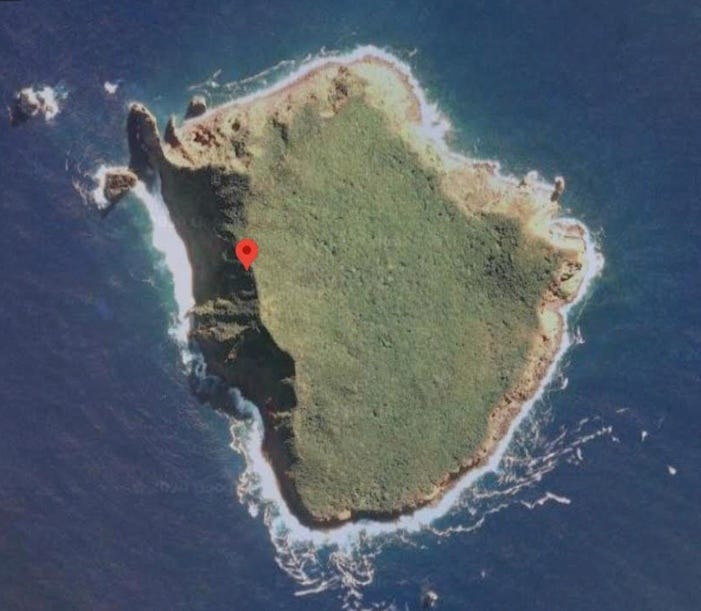
The true story of a group of teens who were stranded on a remote island for over a year
‘Ata Island Photo: Google Maps
Ten years after William Golding released Lord of the Flies, six teenage boys found themselves stranded on a real desert island. Like in the book, there were no adults and it was up to them to survive.
In the novel, things famously went badly with the boys reverting to savagery and even murder. Golding was trying to make a point that humans, stripped of civilization, were still beasts at heart and would regress to a more primitive state.
So what happened when the scenario occurred in real life? Reassuringly for humanity, things turned out very differently.
Six boys set out on an adventure
On the 18th June 1965, six Tongan boys between the ages of 15 and 18 decided to have an adventure. They wanted to escape their strict Catholic school boarding school, St Andrew’s College, located in the Tongan capital of Nuku’alofa and sail off in search of a better life.
The friends were: Sione, Kolo, David, Stephen, Luke and Mano. In an interview years later Mano explained that the group was “bored” and thought they might sail to New Zealand. Things went wrong pretty quickly.
The boys had barely prepared for the trip. They didn’t even have a boat, so they “borrowed” one from a local fisherman they disliked. Their provisions were a few coconuts, two sacks of bananas, and a small gas burner. Unfortunately, they neglected to include things like a compass or a map.
In the early evening, the boys slipped out of the harbor. They sailed five miles north of the island, did some fishing, and then fell asleep. It had been calm and peaceful when they had dozed off but during the night a storm hit. The storm broke the anchor rope, as well as destroying the sail and rudder.
They were now adrift in a vast ocean with no food or water. For the next eight days, the vessel drifted. They tried to fish but without success. Using the hollowed-out coconuts, they managed to catch some rainwater, which was shared equally in the mornings and evenings.
As the boat drifted in a south-westerly direction, it started to disintegrate and the boys were forced to bail water. On the eighth day, after drifting for roughly 200 miles, they spotted ‘Ata island.
Forced to abandon ship, the six young men spent the next 36 hours swimming to the island, using planks salvaged from their disintegrating boat.
Making landfall, the ordeal begins
Mano swam ashore first but was too weak from lack of food or water to stand. He called to the others and they all managed to make it ashore. For the first three months, they lived in a cave that they’d hollowed out of a cliff-face. They caught sea birds for meat and also drank their blood and eggs.
Desperate for proper food and water, the boys started to explore the island. One day they came across the ruins of Kolomaile village in a volcanic crater. The village had been deserted for a century but the friends found feral chickens, wild taro and bananas. Rainwater was caught in hollowed-out tree trunks.
With their immediate survival taken care of, the boys set about making the place more homely. They split into teams of two and drew up a roster for gardening, kitchen and guard duty. Stephen built a fire that was maintained for the rest of their time on the island. Kolo managed to build a guitar out of coconuts, salvaged wood and wire.
Whenever there was a disagreement, unlike in the Lord of the Flies, the boys took a time out, staying separate for a few hours until calm.
Things were occasional mishaps, however. One day, Stephen fell off a cliff and broke his leg. His friends made the perilous descent and carried him back up. They managed to set and splint his leg and, being young, it healed quickly.
At one point they built a raft and tried to escape but it broke apart on the reef. This was actually a good thing, as the boys thought they were in Samoa and planned to sail south. Which would have taken them into the open ocean.
Whenever they saw a vessel they lit signal fires but four vessels sailed past without seeing them. On the 11th September, 15 months after they had become marooned, a new boat arrived.
The six are rescued
Peter Warner was the son of one of the richest men in Australia. He was groomed to take over the family business but had other plans. When he was 17, he ran away to the sea in search of adventure. After five years of travelling the world, he finally returned home to an angry father and a job. Peter still kept a boat, however, and frequently took long trips.
It was on one such trip that brought him to ‘Ata island. Through his binoculars, he noticed strange burnt patches on the otherwise green cliffs. Spontaneous fires are rare in the tropics and he was intrigued.
It was then he saw a naked young man with hair down to his shoulders. More naked youths appeared and started yelling. The first one dived into the water and swam toward Warner’s boat.
Warner would later recount that when the boy made it to his vessel, he said, in perfect English, “My name is Stephen. There are six of us and we reckon we’ve been here 15 months.” The other five had soon swum over and clambered aboard.
Peter Warner found their story unlikely, so he called Nuku’alofa and relayed what Stephen had said. The radio operator soon replied: “You found them! These boys have been given up for dead. Funerals have been held. If it’s them, this is a miracle!”
By the time Captain Warner found the six teens, their camp was well established. They had food, fire, music, a small gym and even a badminton court. It was a far cry from the savagery predicted by William Golding.
They return to civilization and are arrested
Upon return to Nuku’alofa, they were examined by a local doctor, who was amazed at their overall health. He was also impressed by how well they had set Stephen’s now perfectly healed leg.
Then the police boarded Warner’s vessel and promptly arrested the six boys. The fisherman who owned the boat they had “borrowed” was still fuming over the theft and upon learning of their return had immediately pressed charges.
Again, it was Warner to the rescue. Knowing the boys’ ordeal was an interesting one, he sold the Australian rights to the story to a TV channel in Sydney. He kept the world rights. The channel paid him £150 which he used to pay the irate fisherman. Charges were dropped and the boys were free.
A happy ending
When Warner and the six young men returned to their home island of Haʻafeva, the entire population of 900 people turned out to welcome them back. Warner was declared a national hero.
King Taufa‘ahau Tupou IV invited the Australian for an audience. He thanked Warner for rescuing six of his subjects and granted him the right to trap lobster in his waters.
Warner returned to Sydney and quit his job. He had some money saved and so he bought a brand new fishing boat. Once again, the sea and a craving for adventure called to him. And he knew six young men who shared his outlook on life.
Peter Warner and his six new crew members Photo: Fairfax Media Archives
Warner contacted the six Tongans and offered them jobs as crew on his new boat. He promised them excitement and exploration on the high seas. This time with a compass and map.
Susan Sontag. She was a brand long before most writers knew they needed one. Even if you’ve never read a Sontag book, you can still engage with her seriousness by studying her darkly handsome, scathingly sensible face, as photographed by Richard Avedon or Diane Arbus or Annie Leibovitz. A major 20th-century cultural critic, as well as novelist and filmmaker, Sontag was all about interrogating Western art and literature to discover their embedded morality (or lack thereof): “The wisdom that becomes available over deep, lifelong engagement with the aesthetic,” she wrote, “cannot be duplicated by any other kind of seriousness.”
Decades ago, Susan Sontag meant the world to me. My pals and I were, to use the 1970s label, “lesbian feminists.” We were also insecure, angry, unformed, and uninformed. Then, like a Genius-IQ Wonder Woman, Sontag landed, wielding game-changing books like Notes on Camp,Against Interpretation, Trip to Hanoi, AIDS and Its Metaphors,The Volcano Lover… Some were great; some not; all demanded rethinking lots of your life. The fact that this drop-dead brilliant woman was also beautiful and famous seemed to us 20-somethings like simple moral Justice; we couldn’t have asked for more. Looking back, though, we probably should have.
Recently, Benjamin Moser published Sontag: Her Life and Work, his 800-page biography of Sontag, which is brilliantly comprehensive and, in terms of Sontag’s personal life, possibly the most engaging outlay of Too-Much-Information I’ve ever read. Moser frames Sontag’s conflicted, sexually ambivalent life by studying it through her preoccupation with metaphor: a thing itself in play with its image. “Sontag’s real importance increasingly lay in what she represented,” summarizes Moser. “The metaphor of ‘Susan Sontag’ was a great original creation.”
Moser’s biography is the story of a woman who craved, even as a child, becoming part of the liberal wing of Western culture’s literary establishment. By her early thirties she was securely ensconced in what pundit Norman Podhoretz called “the Family,” a predominantly New York Jewish intellectual lineage, shaped in the 1940s around Partisan Review and extending through The New York Review of Books. Though she grew up, a ferociously intelligent female in the mid-twentieth century and had to fight for every ounce of intellectual independence, Sontag didn’t denounce the Patriarchy; she deeply knew and appreciated its aesthetic power.
Sontag began life in 1933, as Susan Rosenblatt. After her father died when she was five, Susan and her sister were raised in the more culturally stultifying parts of Tucson and Los Angeles by an alcoholic mother who, when Susan was 12, married WWII pilot Nathan Sontag. Other than giving her a more euphonious surname, Nat wasn’t too useful, warning his book-addicted stepdaughter that men don’t marry girls who read all the time. But at the age of 17, Susan, precocious in all things, married her university professor, Philip Rieff, and at 19, gave birth to a son, David. Finding the relationship increasingly suffocating, Sontag spent most of her marriage breaking away and gaining child custody, while her work garnered critical attention.
Nat Sontag, however, may have been on to something. Susan, who kept a diary from childhood, wrote as a teenager, “My desire to write is connected to my homosexuality. I need the identity as a weapon to match the weapon society has against me.” Sontag’s tortured lesbian identity is in fact the central nervous system of Moser’s book. Though her affairs with men were relatively short and less complicated, Sontag pursued, throughout her life, a series of passionate, unhappy, sometimes abusive relationships with women –Irene Fornes, Lucinda Childs, Annie Leibovitz, among others – which were open secrets in the art world.
Reading Sontag’s biography, you’re sadly aware of the paralyzed horror this woman would feel at seeing this rendition of her life. Moser devotes a chapter to the likelihood that Sontag’s closetedness – long after it was remotely necessary – was largely responsible for her signature lack of self-awareness and empathy, her occasional homophobia, her reliance for selfhood on the opinions of others.
Having conducted a phenomenal amount of interviews and research, Moser connects as many psychosexual, interpersonal, and historical dots as he can to present Susan Sontag as an epically accomplished and complicated woman. It’s an authoritative book and, as such, can presume too much, judge too easily, and evade the mystery that lies at the heart of any human being. It can also focus on the personal at the expense of the political.
Politically, the book offers a sort of cooked, National-Public-Radio certitude about history, as if “we of the liberal intelligentsia” already know and agree on what’s happened: the fall of the USSR and the Berlin Wall were good; the Oslo Accords were promising; Cuba’s revolutionary “New Man” evoked Nazi purity. While Moser would never dismiss Sontag’s lesbianism as a phase, he easily does so with her politics.
Sontag’s “radical” phase began in the 1960s, when she developed an interest in revolutionary societies. She spent some time in North Vietnam during the war and, in Partisan Review, famously wrote of the white race as “the cancer of human history.” In “the American Bloomsbury,” Moser observes, where it was cool to debate revolution, Susan Sontag became “that most radical of radicals.” But this phase came to a definitive halt at a 1982 Town Hall smack-down with the New Left, when Sontag – supported by her friend, Joseph Brodsky, a poet expelled from the USSR – decried Communism as fascism, “Successful Fascism, if you will.” This was the moment, according to a friend, that Sontag finally “ceased being “radical” and reverted to being “intelligent.”
Moser includes a dust-up between Sontag and the poet Adrienne Rich – openly feminist and lesbian. Sontag’s essay, “Fascinating Fascism,” had attributed the newfound popularity of the Nazi-friendly work of filmmaker Leni Riefenstahl to feminists. Rich wrote to correct Sontag: it was not feminists; it was the cinephile establishment that promoted Riefenstahl. Deeply affronted, Sontag called Rich an “infantile leftist” whose demagoguery was yet another example of fascism. Rich, herself a distant relative of the Family – and writer, according to Moser (and many others, including me), “of essays in no way inferior to Sontag’s” – was effectively banned from The New York Review of Books, which never published her again.
Adrienne Rich probably didn’t miss the Family for long; she was already heading off to society’s “infantile” margins to write some of her best work examining white women’s role in the history of enslavement and colonialism, exposing compulsory heterosexuality in building Empire. Here, on these “fanatical” margins, Susan Sontag would have ceased to think or exist.
But these margins have also encompassed centuries of art, scholarship, and literature by intellectuals and artists – largely Black, Brown, Indigenous – who knew, usually first-hand, the colonialism, enslavement, and genocide on which the esteemed New York Review aesthetic has been built. While James Fennimore Cooper was writing The Last of the Mohicans, David Walker, son of an enslaved father, wrote his Appeal to the Coloured Citizens of the World; while J.D. Salinger was writing Catcher in the Rye, Aimé Césaire wrote Discourse on Colonialism; while Joseph Brodsky was writing poetry, so were Audre Lorde, Adrienne Rich, June Jordan, Essex Hemphill…
It isn’t that radicals don’t deserve criticism. Sometimes, as Sontag alleged, the left does know less about human rights abuses under “Communism” than Reader’s Digest subscribers. But communism was meant to answer centuries of imperial European atrocities: where was Sontag, intellectually, when she wrote about the cancerous white race? Why did she leave that place? She was never without her white, middle-class privilege; she could come and go as she pleased. Her journey leaves many questions…
Why, after the 9/11 attacks, did Sontag seem to return, at least for a moment, to that empire-questioning place? She was one of very few public voices to criticize U.S. policy – and was thoroughly excoriated for it. Not even her son liked: “Let’s by all means grieve together. But let’s not be stupid together. A few shreds of historical awareness might help us understand what has just happened and what may continue to happen.”
Susan Sontag’s mysteries and metaphor are one reason you’d want to read her biography. I just wish Moser – and Sontag herself, for all her seriousness – could have taken radicalism more seriously.
Susie Day is an NYC freelance writer, Monthly Review Press editor, and author of the recent Haymarket book, The Brother You Choose.
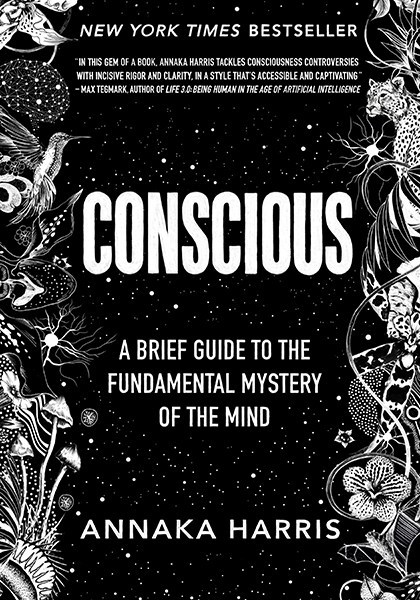
Tom Bilyeu This episode is sponsored by BetterHelp. Go to https://betterhelp.com/impact for 10% off your first month. BetterHelp is an online counseling company with the mission to make professional counseling accessible, affordable, and convenient. What if everything you think you know about yourself is wrong? Most people have the intuition that they have a self separate from their body and brain, and that they can control their experience with conscious will. But what if that isn’t true? Best-selling author Annaka Harris is devoted to challenging our deepest intuitions about the nature of consciousness and the self. On this episode of Impact Theory with Tom Bilyeu, she discusses experiments on the cutting edge of physics and neuroscience, and explains why those experiments matter. The result is a fascinating conversation that will leave you questioning some of your most cherished, comforting intuitions. SHOW NOTES: Consciousness is exactly as mysterious as it seems to be [2:29] Annaka defines what consciousness is [4:54] Tom and Annaka discuss the story of Phineas Gage [6:31] Annaka talks about the difference between consciousness and high level thought [9:14] There is a basic level of consciousness that doesn’t involve awareness of consciousness [11:35] Challenging intuitions is a basic element of the scientific method [14:58] Is there outer evidence of conscious experience? Is consciousness doing anything? [18:46] Upending comfortable intuitions is eventually a freeing experience [20:57] Annaka explains how the brain binds disparate signals to make them seem congruent [22:23] Annaka and Tom discuss how much unconscious brain functioning we take for granted [27:09] Annaka describes the false sense of self and conscious will [29:53] We make decisions before we are aware of them [33:41] Annaka discusses the question of whether or to what extent plants are conscious [35:30] Trees take care of their own kin, and defend their kin [40:48] What if consciousness is a field like gravity? [43:39] Annaka describes the double slit light experiment [46:13] https://www.youtube.com/watch?v=uva6g… https://www.youtube.com/watch?v=A9tKn… https://drive.google.com/open?id=11YD… Measuring an event can change the past [51:41] Annaka discusses problems with the views that consciousness emerges from life [54:25] Annaka shares the impact she wants to have on the world [1:03:06] QUOTES: “There’s something jarring about learning that the things that feel most true to you about reality are possibly not structured that way.” [21:29] “We feel that consciousness is behind our willed actions, when in fact, there is a lot of neuroscience to suggest that it’s actually the reverse. It’s at the end. That all this processing happens, a decision gets made, and we’re kind of the last to know.” [31:54] “We have no evidence that consciousness is due to complexity.” [1:00:24] FOLLOW: WEBSITE: https://annakaharris.com INSTAGRAM: https://bit.ly/392CIl1 FACEBOOK: https://bit.ly/2GTsk36 TWITTER: https://bit.ly/2RUoY63 BOOKS MENTIONED IN THIS EPISODE: “Conscious: A Brief Guide to the Fundamental Mystery of the Mind”, https://amzn.to/2u7OR9H [2:19] IMPACT THEORY MERCHANDISE: Check out Impact Theory’s Merch Shop: http://bit.ly/ImpactTheoryShop
Volume One of The Emotional Plague of Mankind Introduction The Trap The Kingdom of Heaven on Earth The Genital Embrace Seduction into Leadership The Mystification of Christ The Great Gap-Man’s Sitting The March on Jerusalem Judas Iscariot Paul of Tarsus Protecting the Murderers of Christ Mocenigo Toward Golgotha The Disciples Sleep Gethsemane The Scourging ‘You Say It’ The Silent Glow Crucifixion & Resurrection Appendix Bibliography
The Murder of Christ Quotes:
“The longing for the fusion with another organism in the genital embrace is just as strong in the armored organism as it is in the unarmored one. It will most of the time be even stronger, since the full satisfaction is blocked. Where Life simply loves, armored life “fucks.” Where Life functions freely in its love relations as it does in everything else and lets its functions grow slowly from first beginnings to peaks of joyful accomplishment, no matter whether it is the growth of a plant from a tiny seedling to the blossoming and fruit-bearing stage, or the growth of a liberating thought system; so Life also lets its love relationships grow slowly from a first comprehensive glance to the fullest yielding during the quivering embrace. Life does not rush toward the embrace.” ― Wilhelm Reich, The Murder of Christ
“In real man, the “god-given” genital embrace has turned into the pornographic 4-lettering male-female intercourse.” ― Wilhelm Reich, The Murder of Christ
“Then the soldiers of the governor took Jesus into the praetorium, and they gathered the whole battalion before him. And they stripped him and put a scarlet robe upon him, and plaiting a crown of thorns they put it on his head, and put a reed in his right hand. And kneeling before him they mocked him, saying, “Hail, King of the Jews!” And they spat upon him, and took the reed and struck him on the head. And when they had mocked him, they stripped him of the robe, and put his own clothes on him, and led him away to crucify him.” ― Wilhelm Reich, The Murder of Christ