Monthly Archives: February 2021
Adverse Childhood Experiences (ACE)
From Wikipedia, the free encyclopedia
 | It has been suggested that this article be merged with Adverse Childhood Experiences movement. |
The Adverse Childhood Experiences Study (ACE Study) is a research study conducted by the U.S. health maintenance organization Kaiser Permanente and the Centers for Disease Control and Prevention[1] that was originally published in the American Journal of Preventive Medicine.[2] Participants were recruited to the study between 1995 and 1997 and have since been in long-term follow up for health outcomes. The study has demonstrated an association of adverse childhood experiences (ACEs) with health and social problems across the lifespan. The study has produced many scientific articles and conference and workshop presentations that examine ACEs.[1][2]
Background
In the 1980s, the dropout rate of participants at Kaiser Permanente‘s obesity clinic in San Diego, California, was about 50%; despite all of the dropouts successfully losing weight under the program.[3] Vincent Felitti, head of Kaiser Permanente’s Department of Preventive Medicine in San Diego, conducted interviews with people who had left the program, and discovered that a majority of 286 people he interviewed had experienced childhood sexual abuse. The interview findings suggested to Felitti that weight gain might be a coping mechanism for depression, anxiety, and fear.[3]
Felitti and Robert Anda from the Centers for Disease Control and Prevention (CDC) went on to survey childhood trauma experiences of over 17,000 Kaiser Permanente patient volunteers.[3] The 17,337 participants were volunteers from approximately 26,000 consecutive Kaiser Permanente members. About half were female; 74.8% were white; the average age was 57; 75.2% had attended college; all had jobs and good health care, because they were members of the Kaiser health maintenance organization.[4] Participants were asked about different types of adverse childhood experiences that had been identified in earlier research literature:[5]
- Physical abuse
- Sexual abuse
- Emotional abuse
- Physical neglect
- Emotional neglect
- Exposure to domestic violence
- Household substance abuse
- Household mental illness
- Parental separation or divorce
- Incarcerated household member
The questions used can be found published as the NPR ACE quiz.
Findings
The ACE Pyramid represents the conceptual framework for the ACE Study, which has uncovered how adverse childhood experiences are strongly related to various risk factors for disease throughout the lifespan, according to the Centers for Disease Control and Prevention.[6][7]
According to the United States’ Substance Abuse and Mental Health Services Administration, the ACE study found that:
- Adverse childhood experiences are common. For example, 28% of study participants reported physical abuse and 21% reported sexual abuse. Many also reported experiencing a divorce or parental separation, or having a parent with a mental and/or substance use disorder.[8]
- Adverse childhood experiences often occur together. Almost 40% of the original sample reported two or more ACEs and 12.5% experienced four or more. Because ACEs occur in clusters, many subsequent studies have examined the cumulative effects of ACEs rather than the individual effects of each.[8]
- Adverse childhood experiences have a dose–response relationship with many health problems. As researchers followed participants over time, they discovered that a person’s cumulative ACEs score has a strong, graded relationship to numerous health, social, and behavioral problems throughout their lifespan, including substance use disorders. Furthermore, many problems related to ACEs tend to be comorbid, or co-occurring.[8]
About two-thirds of individuals reported at least one adverse childhood experience; 87% of individuals who reported one ACE reported at least one additional ACE.[5] The number of ACEs was strongly associated with adulthood high-risk health behaviors such as smoking, alcohol and drug abuse, promiscuity, and severe obesity, and correlated with ill-health including depression, heart disease, cancer, chronic lung disease and shortened lifespan.[5][9][10] Compared to an ACE score of zero, having four adverse childhood experiences was associated with a seven-fold (700%) increase in alcoholism, a doubling of risk of being diagnosed with cancer, and a four-fold increase in emphysema; an ACE score above six was associated with a 30-fold (3000%) increase in attempted suicide.
The ACE study’s results suggest that maltreatment and household dysfunction in childhood contribute to health problems decades later. These include chronic diseases—such as heart disease, cancer, stroke, and diabetes—that are the most common causes of death and disability in the United States.[11] The study’s findings, while relating to a specific population within the United States, might reasonably be assumed to reflect similar trends in other parts of the world, according to the World Health Organization.[11]
Subsequent surveys
The ACE Study has produced more than 50 articles that look at the prevalence and consequences of ACEs.[12][non-primary source needed] It has been influential in several areas. Subsequent studies have confirmed the high frequency of adverse childhood experiences, or found even higher incidences in urban or youth populations.
The original study questions have been used to develop a 10-item screening questionnaire.[13][14] Numerous subsequent surveys have confirmed that adverse childhood experiences are frequent.State ACEs Study surveys diagram color coded from the year 2009 to 2015
The CDC runs the Behavioral Risk Factor Surveillance System (BRFSS),[15] an annual survey conducted by individual state health departments in all 50 states. An expanded survey instrument in several states found each state to be similar.[13] Some states have collected additional local data.[16][17] Adverse childhood experiences were even more frequent in studies in urban Philadelphia[18] and in a survey of young mothers (mostly younger than 19).[19] Internationally, an Adverse Childhood Experiences International Questionnaire (ACE-IQ) is undergoing validation testing.[20] Surveys of adverse childhood experiences have been conducted in Romania,[21] the Czech Republic,[22] the Republic of Macedonia,[23] Norway, the Philippines, the United Kingdom, Canada, China and Jordan.[7][not specific enough to verify] Child Trends used data from the 2011/12 National Survey of Children’s Health (NSCH) to analyze ACEs prevalence in children nationally, and by state. The NSCH’s list of “adverse family experiences” includes a measure of economic hardship and shows that this is the most common ACE reported nationally.[24]
Neurobiology of stress
See also: Social stress and Stress in early childhood
Cognitive and neuroscience researchers have examined possible mechanisms that might explain the negative consequences of adverse childhood experiences on adult health.[25] Adverse childhood experiences can alter the structural development of neural networks and the biochemistry of neuroendocrine systems[26][27][28][29] and may have long-term effects on the body, including speeding up the processes of disease and aging and compromising immune systems.[30][31][32]
Allostatic load refers to the adaptive processes that maintain homeostasis during times of toxic stress through the production of mediators such as adrenaline, cortisol and other chemical messengers. According to researcher Bruce S. McEwen, who coined the term:
These mediators of the stress response promote adaptation in the aftermath of acute stress, but they also contribute to allostatic overload, the wear and tear on the body and brain that result from being ‘stressed out.’ This conceptual framework has created a need to know how to improve the efficiency of the adaptive response to stressors while minimizing overactivity of the same systems, since such overactivity results in many of the common diseases of modern life. This framework has also helped to demystify the biology of stress by emphasizing the protective as well as the damaging effects of the body’s attempts to cope with the challenges known as stressors.[33]
Additionally, epigenetic transmission may occur due to stress during pregnancy or during interactions between mother and newborns. Maternal stress, depression, and exposure to partner violence have all been shown to have epigenetic effects on infants.[29]
Implementing practices
As knowledge about the prevalence and consequences of adverse childhood experiences increases, trauma-informed and resilience-building practices based on the research is being implemented in communities, education, public health departments, social services, faith-based organizations and criminal justice. A few states are considering legislation.
Communities
As knowledge about the prevalence and consequences of ACEs increases, more communities seek to integrate trauma-informed and resilience-building practices into their agencies and systems. Tarpon Springs, Florida, became the first trauma-informed community in 2011.[34][35] Trauma-informed initiatives in Tarpon Springs include trauma-awareness training for the local housing authority, changes in programs for ex-offenders, and new approaches to educating students with learning difficulties.[36] Research with American Indian tribal communities has demonstrated that social support and cultural involvement can ameliorate the effects of ACEs.[37]
Education
ACEs exposure is widespread in the US, one study from the National Survey of Children’s Health reported that approximately 68% of children 0–17 years old had experienced one or more ACEs.[38] The impact of ACEs on children can manifest in difficulties focusing, self regulating, trusting others, and can lead to negative cognitive effects. One study found that a child with 4 or more ACEs was 32 times more likely to be labeled with a behavioral or cognitive problem than a child with no ACEs.[39] Another study by the Area Health Education Center of Washington State University found that students with at least three ACEs are three times as likely to experience academic failure, six times as likely to have behavioral problems, and five times as likely to have attendance problems.[40] The trauma-informed school movement aims to train teachers and staff to help children self-regulate, and to help families that are having problems that result in children’s normal response to trauma. It also seeks to provide behavioral consequences that will not re-traumatize a child.[41]
Trauma-informed education refers to the specific use of knowledge about trauma and its expression to modify support for children to improve their developmental success.[42] The National Child Traumatic Stress Network (NCTSN) describes a trauma-informed school system as a place where school community members work to provide trauma awareness, knowledge and skills to respond to potentially negative outcomes following traumatic stress.[43] The NCTSN published a study that discussed the ARC (attachment, regulation and competency) model, which other researchers have based their subsequent studies of trauma-informed education practices off of.[39][44] Trauma-sensitive or trauma-informed schooling has become increasingly popular in Washington, Massachusetts, and California in the last 10 years.[38]
One study details how several San Francisco schools provided trauma-informed support based on the ARC model to students, adults in the system, and the school system as a whole through universal learning strategies, plans and techniques for children with trauma, and by providing trauma-informed therapy to those children.[44] At El Dorado, an elementary school in this study in San Francisco, trauma-informed practices were associated with a suspension reduction of 89%.[45]
Lincoln High School in Walla Walla, Washington, adapted a trauma-informed approached to discipline and reduced its suspensions by 85%.[46] Rather than standard punishment, students are taught to recognize their reaction to stress and learn to control it. Spokane, Washington, schools conducted a research study that demonstrated that academic risk was correlated with students’ experiences of traumatic events known to their teachers.[40][47] The same school district has begun a study to test the impact of trauma-informed intervention programs, in an attempt to reduce the impact of toxic stress.
In Brockton, Massachusetts, a community-wide meeting led to a trauma-informed approach being adopted by the Brockton School District.[41] So far, all of the district’s elementary schools have implemented trauma-informed improvement plans, and there are plans to do the same in the middle school and high school. About one-fifth of the district teachers have participated in a course on teaching traumatized students. Police alert schools when they have arrested someone or visited at a student’s address. Massachusetts state legislation has sought to require all schools to develop plans to create “safe and supportive schools”.[41]
Social services
Social service providers—including welfare systems, housing authorities, homeless shelters, and domestic violence centers – are adopting trauma-informed approaches that help to prevent ACEs or minimize their impact. Utilizing tools that screen for trauma can help a social service worker direct their clients to interventions that meet their specific needs.[48] Trauma-informed practices can also help social service providers look at how trauma impacts the whole family.[49]
Trauma-informed approaches can improve child welfare services by 1) openly discussing trauma and 2) addressing parental trauma.[according to whom?][50] The New Hampshire Division for Children Youth and Families (DCYF) is taking a trauma-informed approach to their foster care services by educating staff about childhood trauma, screening children entering foster care for trauma, using trauma-informed language to mitigate further traumatization, mentoring birth parents and involving them in collaborative parenting, and training foster parents to be trauma-informed.[48]
In Albany, New York the HEARTS Initiative has led to local organizations developing trauma-informed practice.[50] Senior Hope Inc., an organization serving adults over the age of 50, began implementing the 10-question ACE survey and talking with their clients about childhood trauma. The LaSalle School, which serves orphaned and abandoned boys, began looking at delinquent boys in from a trauma-informed perspective and began administering the ACE questionnaire to their clients.
Housing authorities are also becoming trauma-informed. Supportive housing can sometimes recreate control and power dynamics associated with clients’ early trauma.[51] This can be reduced through trauma-informed practices, such as training staff to be respectful of clients’ space by scheduling appointments and not letting themselves into clients’ private spaces, and also understanding that an aggressive response may be trauma-related coping strategies.[51] The housing authority in Tarpon Springs provided trauma-awareness training to staff so they could better understand and react to their clients’ stress and anger resulting from poor employment, health, and housing.[36]
A survey of 200 homeless individuals in California and New York demonstrated that more than 50% had experienced at least four ACEs.[52] In Petaluma, California, the Committee on the Shelterless (COTS) uses a trauma-informed approach called Restorative Integral Support (RIS) to reduce intergenerational homelessness.[53] RIS increases awareness of and knowledge about ACEs, and calls on staff to be compassionate and focus on the whole person. COTS now consider themselves ACE-informed and focus on resiliency and recovery.
Health care services
Screening for or talking about ACEs with parents and children can help to foster healthy physical and psychological development and can help doctors understand the circumstances that children and their parents are facing. By screening for ACEs in children, pediatric doctors and nurses can better understand behavioral problems. Some doctors have questioned whether some behaviors resulting in attention deficit hyperactivity disorder (ADHD) diagnoses are in fact reactions to trauma. Children who have experienced four or more ACEs are three times as likely to take ADHD medication when compared with children with less than four ACEs.[54] Screening parents for their ACEs allows doctors to provide the appropriate support to parents who have experienced trauma, helping them to build resilience, foster attachment with their children, and prevent a family cycle of ACEs.[55][56] Trauma-informed pediatric care also allows doctors to develop a more trusting relationship with parents, opening the lines of communication.[57] At Montefiore Medical Center ACEs screenings will soon be implemented in 22 pediatric clinics. In a pilot program, any child with one parent who has an ACE score of four or higher is offered enrollment and receive a variety of services. For families enrolled in the program parents report fewer ER visits and children have healthier emotional and social development, compared with those not enrolled.[55][58]
Public health
Most American doctors as of 2015 do not use ACE surveys to assess patients. Objections to doing so include that there are no randomized controlled trials that show that such surveys can be used to actually improve health outcomes, there are no standard protocols for how to use the information gathered, and that revisiting negative childhood experiences could be emotionally traumatic.[59] Other obstacles to adoption include that the technique is not taught in medical schools, is not billable, and the nature of the conversation makes some doctors personally uncomfortable.[59]
Some public health centers see ACEs as an important way (especially for mothers and children)[60] to target health interventions for individuals during sensitive periods of development early in their life, or even in utero.[60] For example, Jefferson Country Public Health clinic in Port Townsend, Washington, now screens pregnant women, their partners, parents of children with special needs, and parents involved with CPS for ACEs.[61] With regard to patient counseling, the clinic treats ACEs like other health risks such as smoking or alcohol consumption.
Resilience and Resources
Resilience is not a trait that people either have or do not have. It involves behaviors, thoughts and actions that can be learned and developed in anyone. According to the American Psychological Association (2017), resilience is the ability to adapt in the face of adversity, tragedy, threats or significant stress — such as family and relationship problems, serious health problems or workplace and financial stressors. Resilience refers to bouncing back from difficult experiences in life. There is nothing extraordinary about resilience. People often demonstrate resilience in times of adversity. However, being resilient does not mean that a person will not experience difficulty or distress, as emotional pain is common for people when they suffer from a major adversity or trauma. In fact, the path to resilience often involves considerable emotional pain [70].
Resilience and access to other resources are protective factors.[37][62][63] Having resilience can benefit children who have been exposed to trauma and have a higher ACE score. Children who can learn to develop it, can use resilience to build themselves up after trauma. A child who has not developed resilience will have a harder time coping with the challenges that can come in adult life. People and children who are resilient, embrace the thinking that adverse experiences do not define who they are. They also can think about past events in their lives that were traumatic, and, try to reframe them in a way that is constructive. They are able to find strength in their struggle and ultimately can overcome the challenges and adversity that was faced in childhood.[64] In childhood, resiliency can come from having a caring adult in a child’s life. Resiliency can also come from having meaningful moments such as an academic achievement or getting praise from teachers or mentors. In adulthood, resilience is the concept of self-care. If you are taking care of yourself and taking the necessary time to reflect and build on your experiences, then you will have a higher capacity for taking care of others. Adults can also use this skill to counteract some of the trauma they have experienced. Self-care can mean a variety of things. One example of self-care, is knowing when you are beginning to feel burned out and then taking a step back to rest and recuperate yourself. Another component of self-care is practicing mindfulness or engaging in some form of prayer or meditation. If you are able to take the time to reflect upon your experiences, then you will be able to build a greater level of resiliency moving forward. All of these strategies put together can help to build resilience and counteract some of the childhood trauma that was experienced. With these strategies children can begin to heal after experiencing adverse childhood experiences. This aspect of resiliency is so important because it enables people to find hope in their traumatic past. When first looking at the ACE study and the different correlations that come with having 4 or more traumas, it is easy to feel defeated. It is even possible for this information to encourage people to have unhealthy coping behaviors. Introducing resilience and the data that supports its positive outcome in regards to trauma, allows for a light at the end of a tunnel. It gives people the opportunity to be proactive instead of reactive when it comes to addressing the traumas in their past.
More at: https://en.wikipedia.org/wiki/Adverse_Childhood_Experiences_Study
A Scientist’s Advice on Healing: A Soulful Animated Poem About Getting to the Other Side of Heartbreak
By Maria Popova (brainpickings.org)
“Love your heart. For this is the prize,” Toni Morrison wrote in an exquisite passage from Beloved as she considered the body as an instrument of sanity, joy, and self-respect a century after William James asserted in his groundbreaking work on how our bodies affect our feelings that “a purely disembodied human emotion is a nonentity,” lending the fledgling credibility of a young science to Walt Whitman’s poetic insistence that “the body includes and is the meaning, the main concern and includes and is the soul.”
There is such fertile ground for sensemaking in this space between biology and metaphor that we have always used our bodies as sensemaking instruments for the soul. But no part of the body has taken on more metaphorical meaning than the vital organ depicted in millennia of literature and song as the seat of love.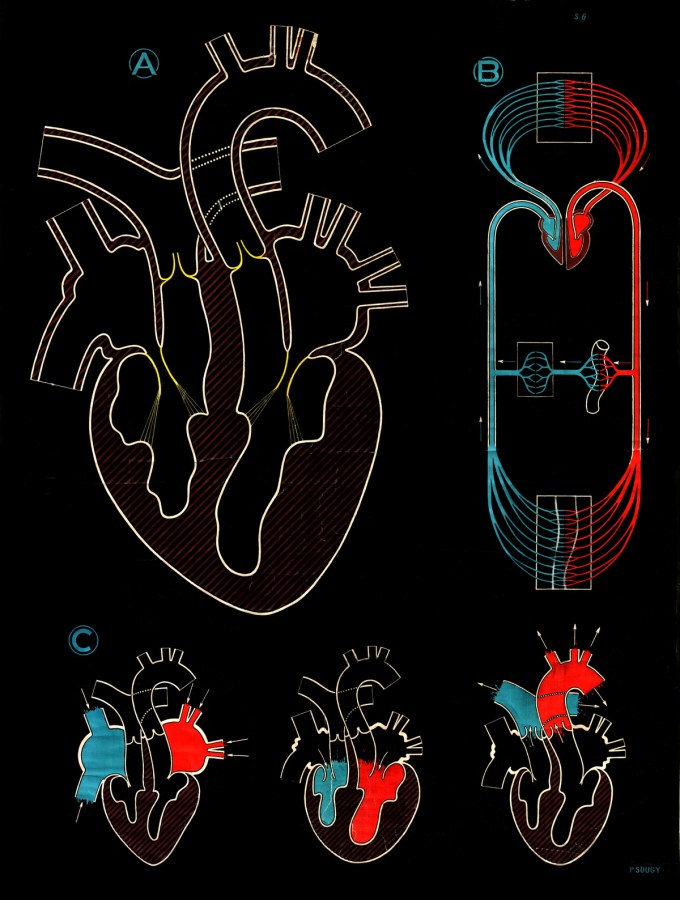
The Human Heart. One of French artist Paul Sougy’s mid-century scientific diagrams of life. (Available as a print and as a face mask.)
When we speak of the heart breaking, we are speaking metaphorically, and yet anyone who has lived through heartbreak — that is, anyone who has lived at all — knows intimately the awful way in which the psychological condition of loss takes on the quality of physical pain. It is hardly surprising, then, that the body and the soul heal in consanguinity — the heart-as-metaphor heals the same way the heart-as-organ does.
That is what English poet Christy Ducker explores with uncommon sensitivity and lyric splendor in “A Scientist’s Advice on Healing.” A fine poet and a fine scholar who earned her Ph.D. while composing poems about the Victorian lighthouse keeper Grace Darling, Ducker embodies the animating spirit of The Universe in Verse and stands as a testament to Ursula K. Le Guin’s lovely insistence that “science describes accurately from outside, poetry describes accurately from inside, [and] both celebrate what they describe.”
In this enchanting animated poem, Ducker joins visions with artist Kate Sweeney to deliver a soulful prescription partway between science and metaphor, between organ and instrument, as palliating to the physiology of illness as it is to the psychology of heartbreak:

A SCIENTIST’S ADVICE ON HEALING
by Christy DuckerTry to accept
this fat red hurt
is your starting point,
in the way a pen must be put to paper
in one particular spot,then move
beyond
the globby flap
of blame
and past
the mono-sulk
of pain.Change the subject,
before it’s too late.
Sketch out
what health
you do possess,
what signal-cascades,
what flotilla of cells
circumnavigate you,then draw yourself back
together again,
in a language
of your own.Your body’s talk
is loose as lymph —
it’ll have you open out
as a tree,
or sneak up on pain
as assassin,
sidekick,
or wolf.Encourage this
for healing won’t come at you
straight.
Embrace the lack of heroics —
this isn’t Hollywood,
it’s you,
in a plot
that may
or may not resolve.
The poem appears in Messenger (UK edition) — a slim collection of Ducker’s poems exploring “how we wound and how we heal,” drawing on the science of immunology in a collaboration with York’s Center for Chronic Disease, and featuring visual poetics by Sweeney, who also animated poet Linda France’s magnificent “Murmuration.”
Couple with “Antidotes to Fear of Death” — astronomer and poet Rebecca Elson’s stunning cosmic salve for our creaturely tremblings of heart — then revisit Epictetus’s 2,000-year-old Stoic strategy for surviving heartbreak.
Stunning Celestial Art from the 1750 Astronomy Book That First Described the Spiral Shape of the Milky Way and Dared Imagine the Existence of Other Galaxies
By Maria Popova (brainpickings.org)
Thomas Wright (September 22, 1711–February 25, 1786) grew up with a passion for learning and a speech impediment that made the rural English schoolroom a gauntlet. When he set about educating himself at home, his father declared the boy mad for his mathematical passions and burned all the books his mother had bought him. Undeterred, Thomas found a mathematics tutor in a local astronomer, took free science classes at a local parish, then apprenticed himself to a London instrument-maker, falling deeper and deeper in love with astronomy and the quest for elemental truth. By nineteen, he had established a school of his own to teach mathematics and navigation. He would go on to build an observatory, describe the spiral shape of the Milky Way for the first time, declare himself “an enemy to the taking of any thing for granted, merely because a person of reputed judgment has been heard to say it absolutely is so,” and become the first person to suggest that there are galaxies other than our own, nearly two centuries before Hubble staggered our understanding of the universe with the empirical proof.
Art from An Original Theory or New Hypothesis of the Universe. (Available as a print and as a face mask.)
View of the Milky Way (Via Lactea) based on one of Wright’s own observations. (Available as a print and as a face mask.)
In 1750, Wright self-published his visionary and verbosely titled book An Original Theory or New Hypothesis of the Universe, Founded upon the Laws of Nature, and Solving by Mathematical Principles the General Phaenomena of the Visible Creation, and Particularly the Via Lactea (public domain). With his keen aesthetic sensibility — he was also an architect and garden designer — he commissioned “the best masters” to illustrate his theories in thirty-some scrumptious plates populated by comets, planets, and other celestial splendors observed and conjectured.
Depiction of Wright’s theory of the existence of galaxies beyond our Milky Way, which he considered “a partial view of immensity” and “a finite view of infinity.” (Available as a print and as a face mask.)
Only 118 copies of the book were printed, all for Wright’s patrons and private subscribers. (A delight to think that a long-ago astronomer sustained his work the way I do.) One eventually reached Immanuel Kant, who was especially captivated by Wright’s explanation of why the Milky Way appears to us the way it does — an optical effect owing to our particular position within the plane of the galaxy — and by the notion of multiple galaxies. Kant seized upon these ideas and developed them in a book he published anonymously five years later, drawing on Wright’s theories to conceive of his famous “island universes,” which went on to influence generations of astronomers all the way through Hubble and his epoch-making observational proof.
As Kant’s authorship was discovered, his celebrity subsumed these theories, which came to be attributed to him. Wright and his book fell into obscurity, until a polymathic French scientist married to an American woman and living in Philadelphia rediscovered it nearly a century later and published it at his own expense. He dedicated the book to “the American people,” feeling that they were in dire need of a reminder that “knowledge is power” and that “in our republic, as power is confided to the care of the people, it is necessary that they should be correctly informed of vital points, so that they may avoid vital errors.”
The orbits of Jupiter, Saturn, and a comet. (Available as a print and as a face mask.)
Bafflingly, the book was republished without the crucial and consummate illustrations — perhaps out of parsimony (this was the Panic of 1837, America’s first great economic depression), and perhaps in a clever marketing tactic, for the publisher’s introduction teased with the promise of a forthcoming separate folio containing only the illustrations. No record of such a publication survives, but I have restored these antique beauties from Wright’s original 1750 edition and made them available as prints and wearable artworks, benefiting the endeavor to build New York City’s first public observatory.
All the then-known Solar System planets and moons drawn to scale in proportion to a twelve-inch-diameter Sun. (Available as a print and as a face mask.)
Suspended halfway between the time of Kepler, who discovered his revolutionary laws of planetary motion while defending his mother in a witchcraft trial, and the time of Hubble — halfway between the age of superstition and the age of science — Wright, for all his visionary genius, was still trapped in the ideological monoculture of his time — a time that conceived of science as a handmaiden to theology, tasked not with discovering truth but with proving the perfection of a creator-god held as a postulate.
One of the chief and most unquestioned blind spots of this creationist mythology was the absolute faith in the infinity of time and space — a necessary framework to sustain the era’s unquestioned belief in personal immortality: If the soul were to go on forever, it necessitates a spacetime canvas of foreverness to go into. Although we now know that “no infinity has ever been observed in nature” and therefore the universe is by all probability finite, the notion of such finitude was offensive and intolerable to even the most visionary minds of Wright’s era, including his own.
Wright describes this plate as “a representation of the convexity… of the entire creation, as a universal coalition of all the Stars conspherred round one general centre, and as all governed by one and the same law” — a self-contradictory notion: He posits that the universe is infinite, yet represents it by the finite geometry of a sphere. (Available as a print and as a face mask.)
A cross-section of Wright’s proposed convexity of creation, “with the eye of Providence seated in the centre, as in the virtual agent of creation.” (Available as a print and as a face mask.)
A three-dimensional section of Wright’s nested infinities. (Available as a print and as a face mask.)
Wright inveighed against the notion of finitude with passion:
This might at first sound like a strikingly modern and reasonable argument, evocative of Carl Sagan’s poetic insistence that “the universe will always be much richer than our ability to understand it.” But Wright’s rationale is theological rather than scientific, rooted not in the biological limits of human consciousness or the technological limits of our computational capacity but in the empirically untested and untestable blind belief in the existence of an omnipotent god:

Further illustrating his theory of nested perfections, Wright describes this as “a creation of a double construction, where a superior order of bodies C, may be imagined to be circumscribed by the former one A, as possessing a more eminent seat, and nearer the supreme presence, and consequently of a more perfect nature.” (Available as a print and as a face mask.)
It is a humbling reminder that every visionary of every era is still blinded by what they take as givens, and doubly humbling to realize that the same holds for each one of us along the miniature vistas of our everyday lives. And yet Wright was able to live beautifully within his own paradox, insisting again and again that astronomy is a supreme ally to reason and an impartial clarifying force for elemental truth — it allows us to see for ourselves what is true, to glimpse reality on its own terms, unmediated by ideological interpretation:

Our Sun (top and bottom) and Moon (middle) in proportion to their diameters, alongside two comets. (Available as a print and as a face mask.)
Several major comets in proportion to Earth, A. (Available as a print.)
In his book, Wright also makes an exquisitely elegant argument for the existence of other planets orbiting other stars — a notion advanced by Pythagoras millennia earlier but still radical in Wright’s day, now proven four thousand times over by the pioneering NASA mission named for Kepler alone, with more such exoplanets constantly discovered by astronomers around the world. He serenades the beauty of deduction:
grape, can be discovered by the eye.

Solar systems other than our own (A), with hypothesized planetary paths of bodies orbiting other stars. (Available as a print and as a face mask.)
After quoting Milton (whose Paradise Lost features the first English use of the word space in the astronomical sense), Wright adds:
Complement with the astronomical art of Maria Clara Eimmart — who schooled herself to be an artist and astronomer a century before Wright, in an era when women had no access to formal education in either art or science — and the stunning celestial beadwork of Native artist Margaret Nazon, then savor this wildly original tapestry of thought about infinity, art, science, and the meaning of freedom by mathematician Lillian Lieber, who won Einstein’s ardent admiration.
Road to Survival: Empowering Wisdom the Forgotten Book That Shaped the Modern Environmental Movement
By Maria Popova (brainpickings.org)

A century after the trailblazing conservationist John Muir observed that “when we try to pick out anything by itself, we find it hitched to everything else in the universe,” and half a century before Maya Angelou urged us in her cosmic clarion call to see that “we, this people, on this minuscule and kithless globe” must correct our course before we destroy ourselves and our kith-hitched globe, the ecologist and conservationist William Vogt (May 15, 1902–July 11, 1968) composed a masterwork of admonition and actionable vision that shaped the ethos of the modern environmental movement and emboldened the generation of pioneers who set it into motion.
During his long recovery from paralytic polio as a child, William had fallen in love with the natural world, escaping his confinement through books about the wilderness and its wondrous creatures. A century before the Oxford Children’s Dictionary discarded dozens of words related to nature as irrelevant to the imagination and its prosthesis in language, the small bedridden boy grew especially enchanted by the feathered creatures of free flight that he met on the page.
Art by Jackie Morris from The Lost Words by Robert Macfarlane
Literature remained his portal into life as he set out on a literary career in New York. But nature beckoned, the birds beckoned.
At thirty, Vogt abruptly left the city for Latin America, traveling on a Peruvian commission to study bird populations on the guano islands. In the three years he spent there, laboring in the salty air on the hot barren rocks, he arrived at an empirical proof of Muir’s insight — Vogt discovered that when changes in ocean currents diminished the population of plankton and anchovies, millions of birds fled the islands in search of food, leaving their defenseless chicks to die in “pitiful, collapsed, downy clumps” that broke his heart.
He saw in this heartbreak a miniature of the whole — the intricate interlacing of creaturely destinies on a planet of finite resources, growing populations, and infinite interconnectedness of needs.
Art from If You Come to Earth by Sophie Blackall
Vogt spent the next decade and a half developing these ideas by devouring countless books and scientific papers, talking with scientists and sea captains, farmers and diplomats, presidents and sheepherders in Patagonia, engineers and trappers in Manitoba. In 1948 — the year the great nature writer Henry Beston cast his poetic hope that “perhaps there is still time to take a stand for the Kingdom of Life [which] needs defenders” and that “perhaps, mighty as its enemies may be, allies will come who are even mightier” — Vogt distilled his learnings in Road to Survival (public library), a mighty manifesto that roused a generation of allies to stand for the Kingdom of Life.
At the crux of his inquiry into the key motive forces of our civilization’s course is Vogt’s insistence that while much is broken with the exploitive consumerism behind the world’s government and industry, much more depends on and is mendable by the concerted collective action of ordinary people. In a humbling testament to the slow work of cultural change and civilizational course-correction, it would take nearly a century for his ideas to come alive and actionable in such pillars of ecological responsibility as the Paris Agreement, the Green New Deal, and Greta Thunberg’s global school climate strike movement.
William Vogt
In an era when humanity regarded the rest of nature as a world parallel to our own — a world at best visited in pleasant excursions, at worst reduced to extractable resources to serve human needs — Vogt insists that “ecological health is one of the indispensables” in the “flowering of human happiness and well-being.” A century after Ernst Haeckel coined the term ecology and a decade before Rachel Carson made it a household word, Vogt draws on his island discovery to contour the totality of Earth’s ecological interdependence:

Art from If You Come to Earth by Sophie Blackall
Rising from the wakeful pages is the assurance, at once empowering and disquieting with its weight of responsibility, that “we the people” is not some agglomeration of abstract others but the sum total of each and every one of us as individual and concrete agents of change.
In a chapter aptly titled “History of Our Future,” Vogt writes:
Writing shortly before he became National Director of Planned Parenthood — a position he would hold for more than a decade in parallel with his conservation work — Vogt adds:
[…]
The direction of these curves and the misery they write across the earth are not likely to be changed in the proximate future. Their direction is fixed for some decades. Great masses of people have a preponderantly young population; as they come into the breeding age we must, despite all possible efforts short of generalized slaughter, expect human numbers to increase for a time. The drag imposed by ignorance, selfishness, nationalism, custom, etc., is certain to retard, by some decades, any effective or substantial improvement of resource management.
In an admonition of astonishing prescience, Vogt insists that changing the trend requires revising our past ideals to calibrate them to an evolving ecological reality:

Art by Aurélia Fronty from Wangari Maathai: The Woman Who Planted Millions of Trees by Franck Prévot
Writing shortly before Rachel Carson penned her prescient open letter to America, insisting that “the real wealth of the Nation lies in the resources of the earth — soil, water, forests, minerals, and wildlife,” Vogt calls for long-term thinking and broad-range feeling:
In a world he considered already overcrowded and resource-strained by the two billion people inhabiting it — a population that would triple within a generation — Vogt adds:

Art by Ping Zhu from The Snail with the Right Heart
Half a century after Alfred Russel Wallace issued his prophetic prescription for civilizational course-correction — an admonition that fell on deaf ears at the outset of the twentieth century and would remain a point of willful deafness in the climate denial of the twenty-first — Vogt makes an impassioned and empowering appeal to the only substantive force of change in the grand scheme of any society and civilization:
[…]
So that the people shall not delude themselves, find further frustration through quack nostrums, fight their way into blind alleys, it is imperative that this world-wide dilemma be made known to all mankind. The human race is caught in a situation as concrete as a pair of shoes two sizes too small. We must understand that, and stop blaming economic systems, the weather, bad luck, or callous saints. This is the beginning of wisdom, and the first step on the long road back.
For a contemporary counterpart to Vogt’s Road to Survival, see the excellent anthology of policy, poetry, and science All We Can Save: Truth, Courage, and Solutions for the Climate Crisis, shining a kaleidoscope of actionable perspective by women leading the way on the road Vogt envisioned, then revisit Eve Ensler’s extraordinary letter of apology to Mother Earth.
Morphic Resonance
Charles Eisenstein The Amazon rainforest is on fire, but there is a psychological trap to be cautious of. Like a lot of people I’ve been really deeply affected by what’s happening in the Amazon rainforest here in August 2019, as the red line of logging and fires, many of them set deliberately to clear land for soybean plantations and cattle plantations and sugar cane. That red line encroaches deeper and deeper into what should be the heart of the Amazon rainforest. As indigenous people are getting suppressed, and protected lands are getting logged and destroyed, I feel these waves of helplessness. The grief is so strong. What do I do with that energy? I’ve noticed kind of a trap, a diversion, that says “take that energy and hate somebody with it. Blame somebody with it.”
License
Conversations with Calvin
In this continuing series, you are invited to find insights that awake from in-depth conversations with interesting and piquant guests. Our next meetup is a conversation between our own ‘futurist’ HughJohn Malanaphy H.W., M. and your host Calvin Harris H.W., M.
Our topic “Our Future Journey is Now”
HughJohn is a 2nd generation Student, son of Livia Malanaphy, and seasoned in the Prosperos culture. He will share his unique blend of living skills that he employs within his daily activities gained from Prospersos teaching and volunteering and how he used this to springboard into various professional careers and teaching. We’ll talk about scientific and spiritual thought, as well as elements of future culture and life. HughJohn brings to this conversation his preparation of personal development as a student and the balance in career, family, recreational and spirited goals and how that was influenced by the Prosperos community.
This event is free, one hour beginning 11:00 a.m. Pacific time- Sunday, February 28, 2021.
The Prosperos

Sunday Meeting on Zoom
Zoom Link: https://us02web.zoom.us/j/332275676
Pain – Khalil Gibran (Powerful Life Poetry)
RedFrost Motivation Read by Shane Morris – A powerful poem on pain and grief from the great Khalil Gibran