
Democracy Now! Today is the federal holiday that honors Dr. Martin Luther King Jr. He was born January 15, 1929. He was assassinated April 4, 1968, at the Lorraine Motel in Memphis, Tennessee. He was just 39 years old. While Dr. King is primarily remembered as a civil rights leader, he also championed the cause of the poor and organized the Poor People’s Campaign to address issues of economic justice. Dr. King was also a fierce critic of U.S. foreign policy and the Vietnam War. We play his “Beyond Vietnam” speech, which he delivered at New York City’s Riverside Church on April 4, 1967, as well as his last speech, “I’ve Been to the Mountaintop,” that he gave on April 3, 1968, the night before he was assassinated. #DemocracyNow Democracy Now! is an independent global news hour that airs on nearly 1,400 TV and radio stations Monday through Friday. Watch our livestream 8-9AM ET: https://democracynow.org Please consider supporting independent media by making a donation to Democracy Now! today: https://democracynow.org/donate FOLLOW DEMOCRACY NOW! ONLINE: YouTube: http://youtube.com/democracynow Facebook: http://facebook.com/democracynow Twitter: https://twitter.com/democracynow Instagram: http://instagram.com/democracynow SoundCloud: http://soundcloud.com/democracynow iTunes: https://itunes.apple.com/podcast/demo… Daily Email Digest: https://democracynow.org/subscribe
Monthly Archives: February 2021
Catherine Bloomquist-Gutz
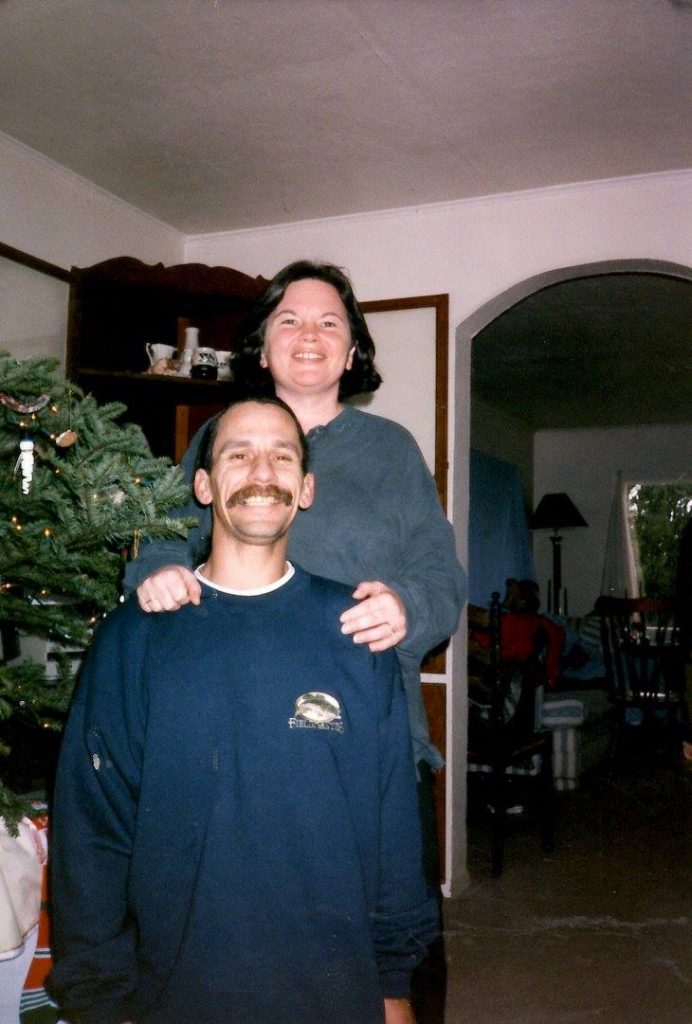
Tonight a dear friend passed over. I knew Catherine since she was 13-14 years old, and I was 18- 19 or so. We actually met in the pool at the Rectory of all places. It is quite a story, but maybe another time…
She was lifelong best friends with my stepsister Rebecca Andrews. Her mother was a friend, and part of the San Francisco crowd including Alice Peterson… I knew back when, all related through The Prospero’s.
Catherine moved to Washington state, where she met her beloved Michael. Between them they raised many children, their own, their foster kids, all who knew her as their mother. She was the best of souls. She was strongly Christian, but not the dour type. She was joyous in her belief system, she practiced Agape, she loved everyone, without condition.
A telling story. Catherine came to visit us in Portland (she lived in Camas at that time). She was sitting with Rowan, (my son) and started talking to him about Noah and the Ark. Rowan looked at her and said, “I never heard this story!” Catherine arched her eyebrows at me and said. “You couldn’t even tell him this one?” I replied, “Our family roots are Northern European, we have our own myth cycles”. Regardless of our differences, I loved her dearly, for over 50 years.
She had a stroke on Saturday night, and couldn’t reach her phone or get off the floor. Reaching her phone on Sunday morning, called a neighbor, who came, saw her, and called an ambulance. When she arrived at the hospital, she had a stroke in the other hemisphere of her brain. The strokes continued until today, until her death from what I understand.
I am sad she is gone, but happy that she did not end up in a facility, disabled. It would not of been her way.
We all pass through 2 doors; Birth & Death. What we do in between is of utmost importance. Catherine lived a beautiful life. She helped many, she loved fiercely, and she gave shelter and guidance to so many children. I celebrate her life.
You will be missed Catherine. Be at peace. Her beloved Michael passed a few years ago. I hope they are together again.
G
The Trial of Adolf Eichmann (1997)
Andrew Deen Rare PBS doc about the Eichmann trial
Apophasis in Rhetoric
FCC fairness doctrine
From Wikipedia, the free encyclopedia
The fairness doctrine of the United States Federal Communications Commission (FCC), introduced in 1949, was a policy that required the holders of broadcast licenses to both present controversial issues of public importance and to do so in a manner that was honest, equitable, and balanced. The FCC eliminated the policy in 1987 and removed the rule that implemented the policy from the Federal Register in August 2011.[1]
The fairness doctrine had two basic elements: It required broadcasters to devote some of their airtime to discussing controversial matters of public interest, and to air contrasting views regarding those matters. Stations were given wide latitude as to how to provide contrasting views: It could be done through news segments, public affairs shows, or editorials. The doctrine did not require equal time for opposing views but required that contrasting viewpoints be presented. The demise of this FCC rule has been considered by some to be a contributing factor for the rising level of party polarization in the United States.[2][3]
The main agenda for the doctrine was to ensure that viewers were exposed to a diversity of viewpoints. In 1969 the United States Supreme Court, in Red Lion Broadcasting Co. v. FCC, upheld the FCC’s general right to enforce the fairness doctrine where channels were limited. However, the Court did not rule that the FCC was obliged to do so.[4] The courts reasoned that the scarcity of the broadcast spectrum, which limited the opportunity for access to the airwaves, created a need for the doctrine.
The fairness doctrine is not the same as the equal-time rule. The fairness doctrine deals with discussion of controversial issues, while the equal-time rule deals only with political candidates.
Origins
In 1938, a former Yankee Network employee named Lawrence J. Flynn challenged the license of John Shepard III’s WAAB in Boston, and also lodged a complaint about WNAC. Flynn asserted that these stations were being used to air one-sided political viewpoints and broadcast attacks (including editorials) against local [and federal] politicians that Shepard opposed. The FCC requested that Shepard provide details about these programs, and to appease the commission, the Yankee Network agreed to drop the editorials. But Flynn created a company called Mayflower Broadcasting and tried to get the FCC to award him WAAB’s license; however, the FCC refused. Instead, in 1941, the commission made a ruling that came to be known as the Mayflower Decision which declared that radio stations, due to their public interest obligations, must remain neutral in matters of news and politics, and they were not allowed to give editorial support to any particular political position or candidate.
In 1949, the FCC’s Editorializing Report[5] repealed the Mayflower Doctrine, which had forbidden editorializing on the radio since 1941, and laid the foundation for the Fairness Doctrine by reaffirming the FCC’s holding that licensees must not use their stations “for the private interest, whims or caprices [of licensees], but in a manner which will serve the community generally.”[6][7] The FCC Report established two forms of regulation on broadcasters: to provide adequate coverage of public issues, and to ensure that coverage fairly represented opposing views.[8] The second rule required broadcasters to provide reply time to issue-oriented citizens. Broadcasters could therefore trigger Fairness Doctrine complaints without editorializing. The commission required neither of the Fairness Doctrine’s obligations before 1949. Until then broadcasters had to satisfy only general “public interest” standards of the Communications Act.[9]
The doctrine remained a matter of general policy and was applied on a case-by-case basis until 1967,[10] when certain provisions of the doctrine were incorporated into FCC regulations.[11]
In 1969, the United States courts of appeals, in an opinion written by Warren Burger, directed the FCC to revoke Lamar Broadcasting’s licence for television station WLBT due to the station’s segregationist politics and ongoing censorship of NBC network news coverage of the U.S. civil rights movement.[12]
Application of the doctrine by the FCC
In 1974, the Federal Communications Commission stated that the Congress had delegated it the power to mandate a system of “access, either free or paid, for person or groups wishing to express a viewpoint on a controversial public issue” but that it had not yet exercised that power because licensed broadcasters had “voluntarily” complied with the “spirit” of the doctrine. It warned that:
Should future experience indicate that the doctrine [of ‘voluntary compliance’] is inadequate, either in its expectations or in its results, the Commission will have the opportunity—and the responsibility—for such further reassessment and action as would be mandated.[13]
In one landmark case, the FCC argued that teletext was a new technology that created soaring demand for a limited resource, and thus could be exempt from the fairness doctrine. The Telecommunications Research and Action Center (TRAC) and Media Access Project (MAP) argued that teletext transmissions should be regulated like any other airwave technology, hence the Fairness Doctrine was applicable (and must be enforced by the FCC). In 1986, Judges Robert Bork and Antonin Scalia of the United States Court of Appeals for the District of Columbia Circuit concluded that the Fairness Doctrine did apply to teletext but that the FCC was not required to apply it.[14] In a 1987 case, Meredith Corp. v. FCC, two other judges on the same court declared that Congress did not mandate the doctrine and the FCC did not have to continue to enforce it.[15]
Decisions of the United States Supreme Court
In Red Lion Broadcasting Co. v. FCC, 395 U.S. 367 (1969), the U.S. Supreme Court upheld (by a vote of 8-0) the constitutionality of the fairness doctrine in a case of an on-air personal attack, in response to challenges that the doctrine violated the First Amendment to the U.S. Constitution. The case began when journalist Fred J. Cook, after the publication of his Goldwater: Extremist of the Right, was the topic of discussion by Billy James Hargis on his daily Christian Crusade radio broadcast on WGCB in Red Lion, Pennsylvania. Cook sued arguing that the fairness doctrine entitled him to free air time to respond to the personal attacks.[16]
Although similar laws are unconstitutional when applied to the press, the Court cited a Senate report (S. Rep. No. 562, 86th Cong., 1st Sess., 8-9 [1959]) stating that radio stations could be regulated in this way because of the limited public airwaves at the time. Writing for the Court, Justice Byron White declared:
A license permits broadcasting, but the licensee has no constitutional right to be the one who holds the license or to monopolize a radio frequency to the exclusion of his fellow citizens. There is nothing in the First Amendment which prevents the Government from requiring a licensee to share his frequency with others…. It is the right of the viewers and listeners, not the right of the broadcasters, which is paramount.[4]
Moreover, the Court did not see how the Fairness Doctrine went against the First Amendment’s goal of creating an informed public. The Fairness Doctrine required that those who were talked about be given chance to respond to the statements made by broadcasters. The Court believed that this helped create a more informed public. Justice White explained that, without this doctrine, station owners would only have people on the air who agreed with their opinions. Throughout his opinion, Justice White argued that radio frequencies (and by extension television stations) should be used to educate the public about controversial issues in a way that is fair and non-biased so that they can create their own opinions.[17]
The Court “ruled unanimously in 1969 that the Fairness Doctrine was not only constitutional but essential to democracy. The public airwaves should not just express the opinions of those who can pay for air time; they must allow the electorate to be informed about all sides of controversial issues.”[18] The Court also warned that if the doctrine ever restrained speech, then its constitutionality should be reconsidered.
However, in the case of Miami Herald Publishing Co. v. Tornillo, 418 U.S. 241 (1974), Chief Justice Warren Burger wrote (for a unanimous court):
Government-enforced right of access inescapably dampens the vigor and limits the variety of public debate.
This decision differs from Red Lion v. FCC in that it applies to a newspaper, which, unlike a broadcaster, is unlicensed and can theoretically face an unlimited number of competitors.
In 1984, the Supreme Court ruled that Congress could not forbid editorials by non-profit stations that received grants from the Corporation for Public Broadcasting (FCC v. League of Women Voters of California, 468 U.S. 364 (1984)). The Court’s 5-4 majority decision by William J. Brennan Jr. stated that while many now considered that expanding sources of communication had made the fairness doctrine’s limits unnecessary:
We are not prepared, however, to reconsider our longstanding approach without some signal from Congress or the FCC that technological developments have advanced so far that some revision of the system of broadcast regulation may be required. (footnote 11)
After noting that the FCC was considering repealing the fairness doctrine rules on editorials and personal attacks out of fear that those rules might be “chilling speech”, the Court added:
Of course, the Commission may, in the exercise of its discretion, decide to modify or abandon these rules, and we express no view on the legality of either course. As we recognized in Red Lion, however, were it to be shown by the Commission that the fairness doctrine ‘[has] the net effect of reducing rather than enhancing’ speech, we would then be forced to reconsider the constitutional basis of our decision in that case. (footnote 12)[19]
Revocation
Basic doctrine
In 1985, under FCC Chairman Mark S. Fowler, a communications attorney who had served on Ronald Reagan‘s presidential campaign staff in 1976 and 1980, the FCC released its report on General Fairness Doctrine Obligations[20] stating that the doctrine hurt the public interest and violated free speech rights guaranteed by the First Amendment. The Commission could not, however, come to a determination as to whether the doctrine had been enacted by Congress through its 1959 Amendment to Section 315 of the Communications Act.
In response to the 1986 Telecommunications Research & Action Center v. F.C.C. decision,[21] the 99th Congress directed[22] the FCC to examine alternatives to the Fairness Doctrine and to submit a report to Congress on the subject.[23] In 1987, in Meredith Corporation v. F.C.C. the case was returned to the FCC with a directive to consider whether the doctrine had been “self-generated pursuant to its general congressional authorization or specifically mandated by Congress.”[24]
The FCC opened an inquiry inviting public comment on alternative means for administrating and enforcing the Fairness Doctrine.[25] Then, in its 1987 report, the alternatives—including abandoning a case-by-case enforcement approach, replacing the doctrine with open access time for all members of the public, doing away with the personal attack rule, and eliminating certain other aspects of the doctrine—were rejected by the FCC for various reasons.[26]
On August 5, 1987, under FCC Chairman Dennis R. Patrick, the FCC abolished the doctrine by a 4–0 vote, in the Syracuse Peace Council decision,[27] which was upheld by a panel of the Appeals Court for the D.C. Circuit in February 1989, though the Court stated in their decision that they made “that determination without reaching the constitutional issue.”[28] The FCC suggested in Syracuse Peace Council that because of the many media voices in the marketplace, the doctrine be deemed unconstitutional, stating that:
The intrusion by government into the content of programming occasioned by the enforcement of [the Fairness Doctrine] restricts the journalistic freedom of broadcasters … [and] actually inhibits the presentation of controversial issues of public importance to the detriment of the public and the degradation of the editorial prerogative of broadcast journalists.
At the 4–0 vote, Chairman Patrick said:
We seek to extend to the electronic press the same First Amendment guarantees that the print media have enjoyed since our country’s inception.[29]
Sitting commissioners at the time of the vote were:[30][31]
- Dennis R. Patrick, Chairman, Republican
(Named an FCC commissioner by Ronald Reagan in 1983) - Mimi Weyforth Dawson, Republican
(Named an FCC commissioner by Ronald Reagan in 1986) - Patricia Diaz Dennis, Democrat
(Named an FCC commissioner by Ronald Reagan in 1986) - James H. Quello, Democrat
(Named an FCC commissioner by Richard M. Nixon in 1974)
The FCC vote was opposed by members of Congress who said the FCC had tried to “flout the will of Congress” and the decision was “wrongheaded, misguided and illogical.”.[29] The decision drew political fire, and cooperation with Congress was one issue.[32] In June 1987, Congress attempted to preempt the FCC decision and codify the Fairness Doctrine,[33] but the legislation was vetoed by President Ronald Reagan. Another attempt to revive the doctrine in 1991 was stopped when President George H.W. Bush threatened another veto.[34]
Fowler said in February 2009 that his work toward revoking the Fairness Doctrine under the Reagan Administration had been a matter of principle (his belief that the Doctrine impinged upon the First Amendment), not partisanship. Fowler described the White House staff raising concerns, at a time before the prominence of conservative talk radio and during the preeminence of the Big Three television networks and PBS in political discourse, that repealing the policy would be politically unwise. He described the staff’s position as saying to Reagan:
The only thing that really protects you from the savageness of the three networks—every day they would savage Ronald Reagan—is the Fairness Doctrine, and Fowler is proposing to repeal it![35]
Corollary rules
Two corollary rules of the doctrine, the personal attack rule and the “political editorial” rule, remained in practice until 2000. The “personal attack” rule applied whenever a person (or small group) was subject to a personal attack during a broadcast. Stations had to notify such persons (or groups) within a week of the attack, send them transcripts of what was said and offer the opportunity to respond on-the-air. The “political editorial” rule applied when a station broadcast editorials endorsing or opposing candidates for public office, and stipulated that the unendorsed candidates be notified and allowed a reasonable opportunity to respond.[36]
The U.S. Court of Appeals for the D.C. Circuit ordered the FCC to justify these corollary rules in light of the decision to repeal the Fairness Doctrine. The FCC did not provide prompt justification so both corollary rules were repealed in October 2000.[37]
Reinstatement considered
Support
In February 2005, U.S. Representative Louise Slaughter (D–NY) and 23 co-sponsors introduced the Fairness and Accountability in Broadcasting Act (H.R. 501)[38] in the 1st Session of the 109th Congress of 2005-7 (when Republicans held a majority of both Houses). The bill would have shortened a station’s license term from eight years to four, with the requirement that a license-holder cover important issues fairly, hold local public hearings about its coverage twice a year, and document to the FCC how it was meeting its obligations.[39] The bill was referred to committee, but progressed no further.[40]
In the same Congress, Representative Maurice Hinchey (D-NY) introduced legislation “to restore the Fairness Doctrine”. H.R. 3302, also known as the “Media Ownership Reform Act of 2005” or MORA, had 16 co-sponsors in Congress.[41]
In June 2007, Senator Richard Durbin (D-IL) said, “It’s time to reinstitute the Fairness Doctrine,”[42] an opinion shared by his Democratic colleague, Senator John Kerry (D-MA).[43] However, according to Marin Cogan of The New Republic in late 2008:
Senator Durbin’s press secretary says that Durbin has ‘no plans, no language, no nothing. He was asked in a hallway last year, he gave his personal view’—that the American people were served well under the doctrine—’and it’s all been blown out of proportion.’[44]
On June 24, 2008, U.S. Representative Nancy Pelosi (D-CA), the Speaker of the House at the time, told reporters that her fellow Democratic Representatives did not want to forbid reintroduction of the Fairness Doctrine, adding “the interest in my caucus is the reverse.” When asked by John Gizzi of Human Events, “Do you personally support revival of the ‘Fairness Doctrine?'”, the Speaker replied “Yes.”[45]
On October 22, 2008, Senator Jeff Bingaman (D-NM) told a conservative talk radio host in Albuquerque, New Mexico:
I would want this station and all stations to present a balanced perspective and different points of view. All I’m saying is that for many, many years we operated under a Fairness Doctrine in this country, and I think the country was well-served. I think the public discussion was at a higher level and more intelligent in those days than it has become since.[46]
On December 15, 2008, U.S. Representative Anna Eshoo (D-CA) told The Daily Post in Palo Alto, California that she thought it should also apply to cable and satellite broadcasters, stating:
I’ll work on bringing it back. I still believe in it. It should and will affect everyone.[47]
On February 11, 2009, Senator Tom Harkin (D-Iowa) told radio host Bill Press, “we gotta get the Fairness Doctrine back in law again.” Later in response to Press’s assertion that “they are just shutting down progressive talk from one city after another,” Senator Harkin responded, “Exactly, and that’s why we need the fair—that’s why we need the Fairness Doctrine back.”[48]
Former President Bill Clinton has also shown support for the Fairness Doctrine. During a February 13, 2009, appearance on the Mario Solis Marich radio show, Clinton said:
Well, you either ought to have the Fairness Doctrine or we ought to have more balance on the other side, because essentially there’s always been a lot of big money to support the right wing talk shows.
Clinton cited the “blatant drumbeat” against the stimulus program from conservative talk radio, suggesting that it does not reflect economic reality.[49]
On September 19, 2019, Representative Tulsi Gabbard (D-Hawaii) introduced H.R. 4401 Restore the Fairness Doctrine Act of 2019 in the House of Representatives, 116th Congress. Rep. Gabbard was the only sponsor. H.R. 4401 was immediately referred to the House Committee on Energy and Commerce on the same day. It was then referred to the Subcommittee on Communications and Technology on September 20, 2019.[50]
H.R. 4401 would mandate equal media discussion of key political and social topics, requiring television and radio broadcasters to give airtime to opposing sides of issues of civic interest.[51][52] The summary reads: “Restore the Fairness Doctrine Act of 2019. This bill requires a broadcast radio or television licensee to provide reasonable opportunity for discussion of conflicting views on matters of public importance.[53] The Restore the Fairness Doctrine Act would once again mandate television and radio broadcasters present both sides when discussing political or social issues, reinstituting the rule in place from 1949 to 1987 […]. Supporters argue that the doctrine allowed for a more robust public debate and affected positive political change as a result, rather than allowing only the loudest voices or deepest pockets to win.”[54]
Opposition
The Fairness Doctrine has been strongly opposed by prominent conservatives and libertarians who view it as an attack on First Amendment rights and property rights. Editorials in The Wall Street Journal and The Washington Times in 2005 and 2008 said that Democratic attempts to bring back the Fairness Doctrine have been made largely in response to conservative talk radio.[55][56]
In 1987, Edward O. Fritts, president of the National Association of Broadcasters, in applauding President Reagan’s veto of a bill intended to turn the doctrine into law, said that the doctrine is an infringement on free speech and intrudes on broadcasters’ journalistic judgment.[57]
In 2007, Senator Norm Coleman (R-MN) proposed an amendment to a defense appropriations bill that forbade the FCC from “using any funds to adopt a fairness rule.”[58] It was blocked, in part on grounds that “the amendment belonged in the Commerce Committee‘s jurisdiction.”
In the same year, the Broadcaster Freedom Act of 2007 was proposed in the Senate by Senators Coleman with 35 co-sponsors (S.1748) and John Thune (R-SD) with 8 co-sponsors (S.1742)[59] and in the House by Republican Representative Mike Pence (R-IN) with 208 co-sponsors (H.R. 2905).[60] It provided:
The Commission shall not have the authority to prescribe any rule, regulation, policy, doctrine, standard, or other requirement that has the purpose or effect of reinstating or repromulgating (in whole or in part) the requirement that broadcasters present opposing viewpoints on controversial issues of public importance, commonly referred to as the `Fairness Doctrine’, as repealed in General Fairness Doctrine Obligations of Broadcast Licensees, 50 Fed. Reg. 35418 (1985).[61]
Neither of these measures came to the floor of either house.
On August 12, 2008, FCC Commissioner Robert M. McDowell stated that the reinstitution of the Fairness Doctrine could be intertwined with the debate over network neutrality (a proposal to classify network operators as common carriers required to admit all Internet services, applications and devices on equal terms), presenting a potential danger that net neutrality and Fairness Doctrine advocates could try to expand content controls to the Internet.[62] It could also include “government dictating content policy”.[63] The conservative Media Research Center‘s Culture & Media Institute argued that the three main points supporting the Fairness Doctrine — media scarcity, liberal viewpoints being censored at a corporate level, and public interest — are all myths.[64]
In June 2008, Barack Obama‘s press secretary wrote that Obama (then a Democratic U.S. senator from Illinois and candidate for president) did not support it, stating:
Obama does not support reimposing the Fairness Doctrine on broadcasters […] [and] considers this debate to be a distraction from the conversation we should be having about opening up the airwaves and modern communications to as many diverse viewpoints as possible. That is why Sen. Obama supports media-ownership caps, network neutrality, public broadcasting, as well as increasing minority ownership of broadcasting and print outlets.[65]
On February 16, 2009, Mark Fowler said:
I believe as President Reagan did, that the electronic press—and you’re included in that—the press that uses air and electrons, should be and must be as free from government control as the press that uses paper and ink, Period.[35]
In February 2009, a White House spokesperson said that President Obama continued to oppose the revival of the Doctrine.[66]
In the 111th Congress (January 2009 to January 2011), the Broadcaster Freedom Act of 2009 (S.34, S.62, H.R.226) was introduced to block reinstatement of the Doctrine. On February 26, 2009, by a vote of 87–11, the Senate added that act as an amendment to the District of Columbia House Voting Rights Act of 2009 (S.160),[67] a bill which later passed the Senate 61–37 but not the House of Representatives.[68] The Associated Press reported that the vote on the Fairness Doctrine rider was “in part a response to conservative radio talk show hosts who feared that Democrats would try to revive the policy to ensure liberal opinions got equal time.” The AP report went on to say that President Obama had no intention of reimposing the doctrine, but Republicans (led by Sen. Jim DeMint, R-SC) wanted more in the way of a guarantee that the doctrine would not be reimposed.[69]
Suggested alternatives
Not to be confused with Unfairness doctrine.
Media reform organizations such as Free Press feel that a return to the Fairness Doctrine is not as important as setting stronger station ownership caps and stronger “public interest” standards enforcement (with funding from fines given to public broadcasting).[70]
Accurate labeling rules
Under the Fair Packaging and Labeling Act, the FTC requires that all ‘consumer commodities’ bear a label with an accurate ‘statement identifying the commodity’. If revenue-generating commercial broadcasts (whether by radio, TV, or internet) are a ‘consumer commodity’, then they must be accurately labeled. That would seem to preclude ‘News’ that is not genuine, ‘Opinion’ that is not the author’s actual opinion, or ‘Analysis’ that is not at least arguably analytical. Note that in general the FTC only has authority over commercial aspects (pertaining to revenue) rather than speech.
Public opinion
In an August 13, 2008 telephone poll released by Rasmussen Reports, 47% of 1,000 likely voters supported a government requirement that broadcasters offer equal amounts of liberal and conservative commentary, while 39% opposed such a requirement. In the same poll, 57% opposed and 31% favored requiring Internet websites and bloggers that offer political commentary to present opposing points of view. By a margin of 71–20% the respondents agreed that it is “possible for just about any political view to be heard in today’s media” (including the Internet, newspapers, cable TV and satellite radio), but only half the sample said they had followed recent news stories about the Fairness Doctrine closely. The margin of error was 3%, with a 95% confidence interval.[71]
Formal revocation
In June 2011, the Chairman and a subcommittee chairman of the House Energy and Commerce Committee, both Republicans, said that the FCC, in response to their requests, had set a target date of August 2011 for removing the Fairness Doctrine and other “outdated” regulations from the FCC’s rulebook.[72]
On August 22, 2011, the FCC voted to remove the rule that implemented the Fairness Doctrine, along with more than 80 other rules and regulations, from the Federal Register following an executive order by President Obama directing a “government-wide review of regulations already on the books” to eliminate unnecessary regulations.[1]
My Cancer Journey 2/2

Ned Henry February 2, 2021 · nedhenry.medium.com
9 AM — Well The docs I think are “getting” the reaction I am am having to Vincristine. I am going to try to keep my appointment for the vaccine. It is an Indoor site so that means standing in a line at the right time to get the shot. I’ll double mask and hope for the best and see if they can do mine in the car to avoid exposure to other people. I have to be so careful as immune compromised as I already am. Allen is driving me since I shouldn’t drive with these feet.
My foot is still frozen. Both are numb but left one is by far the worse. But I did sleep last night and got up around 8. So I feel OK. The foot woke me up or I would have slep longer. I took 3 Benadryls, CALM for Sleep and a hydrocodone. It let me sleep. And after missing sleep for several day it was most welcome. I expected to hear from the Emory docs by now.
3:45 PM — Got my first vaccine shot of the Pfizer vaccine in an outlying county. Get the booster shot on 3/2/21. Glad to have that vaccination process started. Have a telemedicine call with the oncologist for Thursday so we’ll see where we go from here. Foot is still numb but not painful right now, just numb. A little tired so I am going to try to get a nap in.
11:20 PM — Frozen foot all day. Walking with a cane and staying stoned to tolerate it. Done lots of stuff. But not much writing today.
“Sexual Fluidity, The Gender Revolution”
Suzanne Deakins, H.W,. M., shares her new book with the readers of the Bathtub Bulletin.
Link below.
Saint Sebastian: History’s first gay icon?
by Kittredge Cherry | Jan 20, 2021 (qspirit.net)

Saint Sebastian has been called history’s first gay icon and the patron saint of homosexuality.
Sebastian was an early Christian martyr killed in 288 in Rome on orders from the Roman emperor Diocletian. His feast day is Jan. 20. He is the subject of countless artworks and religious medals that show him as a near-naked youth writhing as he is shot with arrows. The homoeroticism is obvious.
Little is known about Sebastian’s love life, so his long-standing popularity with gay men is partly based on the way he looks and the sheer sensuality of his portrayals. Many gay men also identify with his suffering and his experience of being attacked. Sebastian is a known as protector against plague, which adds to his appeal for the LGBTQ community during the AIDS pandemic. His iconography affirms what has been called “the sanctity of penetration.”
The historical Sebastian actually survived the arrow attack and was nursed back to health by Saint Irene of Rome, only to be “martyred twice” when the emperor executed him later. In addition to his longstanding but unofficial status as patron saint of gay men, Sebastian is a patron saint of soldiers, archers and athletes.
Update Jan 2021: Sebastian in contemporary art: Sabrina Zarco

“Arrows of His Desire,” an art quilt by Sabrina Zarco
Chicana autistic artist Sabrina Zarco brings out the queer meanings of Sebastian’s suffering in her 2020 art quilt “Arrows of His Desire.” The red AIDS ribbons on his lioncloth, the arrowheads like pink triangles, and the rainbow quality of the tree all echo contemporary LGBTQ symbolism.
Zarco’s mixed-media fiber artwork was part of “The Adoration of Saint Sebastian,” an exhibition at the Acansa Gallery in North Little Rock, Arkansas. A video gallery tour by curator Will Hogg puts it in context with the other Sebastian art there.
Update Jan 2021: Sebastian in contemporary art: Andrew Freshour

Saint Sebastian by Andrew Freshour
Sebastian appears with refreshing clarity in a 2020 artwork by Andrew Freshour, a New Hampshire artist and gay Episcopalian. Sebastian’s halo seems to be carved — or maybe burned — into the wood of the tree behind him. Freshour earned as BFA in illustration from the New Hampshire Institute of Art in 2013.
Update Jan 2021: Sebastian in contemporary art: Davidd Batalon

“Bird in the Hand” by Davidd Batalon (Collection of Audrey Lockwood)
In a break with traditional representations of Sebastian, he is deliberately NOT being martyred in a 2000 painting by gay Los Angeles Filipino American artist Davidd Batalon. He bends the “arrows” in the fence downward, representing the survival of gay men during the AIDS pandemic. Batalon returned to the theme in “Sebastian Attraction,” which shows the martyr exhibiting magnetic control over metal objects.
Update Jan 2021: Sebastian in contemporary art: Keith Vaughan
The men who shot the arrows at Sebastian make a rare appearance in “The Martyrdom of St Sebastian” by Keith Vaughan. They also appear to be victims of an unjust system, looking like nude martyrs themselves.
“The Martyrdom of Saint Sebastian” by Keith Vaughan. A mounted print is available from The Picture Shop on eBay.
Keith Vaughan (1912-1977) was a gay British artist who was troubled by his sexual orientation. Vaughan’s artworks are collected by many museums, including the British Museum and the Tate Gallery in London.
Rare Sebastian painting auctioned
A magnificent, rarely seen 1925 painting of Saint Sebastian by was up for auction through May 24, 2020. It appears at the top of this article. Swedish artist Owe Zerge treasured it as his favorite painting.
During his lifetime Zerge refused many offers to sell it, and instead kept the beloved painting hanging in his home until his death in 1983. The model for Sebastian was Hugo Holmer, Zerge’s friend and travelling companion. Zerge did many portraits of young men, including male nudes, as well as landscape and still life paintings. His work hangs in several art museums in Sweden.
The life-size oil painting measures almost six feet tall. On May 24 the auction closed without selling the painting because the reserve price was not met, even though the bid reached $25,800 (23,719 Euros) at Garpenhus Auctions of Sweden.
Saint Sebastian in contemporary art: Regan O’Callaghan
A strong, resilient Sebastian has light stubble and a contemporary vibe as he gazes directly at the viewer in an icon by Regan O’Callaghan, an artist/priest of Maori/Irish descent based in London, England. Originally from New Zealand, he moved in 1993 to the United Kingdom, where he studied art and religion, and was ordained by the Church of England. His Sebastian icons are available at his Rrreheart Etsy shop.
“Saint Sebastian” by Regan O’Callaghan. This icon is available as a print gilded with real gold leaf on oak panel from his Rrreheart Etsy shop.
On his website, he describes how he designed this icon because he wanted to address the erotic and sexuality in faith and spirituality — even though fear and ignorance often prevent such discussion in some religious circles. He wrote:
“It is almost as if some people have let their own hands be tied behind their backs but when they look they see there is no rope! The question is why have some people allowed themselves to be conditioned into thinking the erotic as sinful in all contexts and sexuality as having implicit religious norms? The arrows of condemnation easily hit their intended targets in this situation. Hands are rung in despair and guilt but why? In this icon Saint Sebastian conveys all these emotions and confusions and yet thankfully he is not contained by the boundaries of religious judgement.”
Saint Sebastian in contemporary art: Richard Stott
Richard “Ric” Stott, a gay Methodist minister and artist in Britain, frees Sebastian from standard iconography by presenting him as a proud black man. He portrays Sebastian as Jide Macaulay, a gay Nigerian priest who who set up a church in Nigeria for LGBTQ people under dangerous circumstances and now ministers in London through House of Rainbow.
Jide Macaulay as Saint Sebastian by Richard Stott
Stott painted the large canvas in 2019 for an exhibit on migration. He explained the theology behind the painting in an interview at the Black and Minority Ethnic (BAME) Anglican blog:
“St Sebastian is often seen as an iconic gay figure and, in the Western art tradition, as a young white man – painting him in this way seeks to liberate the the idea of St Sebastian from such a narrow lens. In addition, I have painted the figure in such a way as he is pierced and wounded (as is the traditional representation of St Sebastian) and yet still standing proud and strong. This echoes some of the experiences in Jide’s life – he has faced deep and painful opposition, not least because of his sexuality, but still stands beautiful and strong: he is not a victim.”
For more info on Stott, see the previous article “Gay artist paints ‘Intimacy with Christ’: Richard Stott reflects on sensual spirituality.”
Sebastian in contemporary art: Felix d’Eon
Gay Mexican artist Felix d’Eon presents the saint with brown skin and a chunky, sensuous body in “The Martyrdom of Saint Sebastian.” A floral frame adds to the allure.
“The Martyrdom of Saint Sebastian” by Felix D’Eon. Prints available on Etsy.
Based in Mexico City, D’Eon describes himself as a “latinx painter and activist dedicated to the art of queer love, romance, and sensuality,” Prints of this and his other art are available at the Art of Felix d’Eon Etsy shop.
Saint Sebastian in contemporary art: Tony O’Connell
Sebastian is a major recurring subject in the work of queer British artist Tony O’Connell. His art was featured in London’s 2019 group exhibit “Arrows of Desire,” which explored Sebastian’s influence on contemporary artists through themes of religion, sexuality and persecution.
Saint Sebastian etching by Tony O’Connell
Previously O’Connell sculpted a life-size statue of Sebastian and made a film of his dramatic interactions with the figure to make a strong statement against homophobic violence in a performance art piece for All Saints Day. It includes a “Litany of the Queer Saints” that calls upon Sebastian to pray for and protect the downtrodden:
“St. Sebastian, who strengthens the persecuted Pray for us…
St. Sebastian empowered to protect from plague and AIDS, Pray for us…
St Sebastian, loved and then abandoned by the Roman Emperor, Pray for us.
St. Sebastian, loved and increasingly abandoned by the Roman Church, Pray for us
St. Sebastian, Loved by our people, Pray for us…
Glorious Martyr and undefeated warrior,
we ask that you protect the persecuted
from tyrants and enemies.
Use your unstoppable energy
not to punish but only to humble
those who dedicate themselves to oppression and evil.”
For the whole litany and more info, see my previous post New art film highlights queer saints, Sebastian and homophobic violence for All Saints Day.

Sebastian also appears with a rainbow halo as a “wrathful protector saint” in O’Connell’s “Triptych for the 49,” a tribute to the people killed by a mass shooter at the Pulse gay nightclub in Orlando, Florida.
Saint Sebastian in contemporary art: More artists
(News alert: A conservative Catholic website accused Q Spirit of promoting “gay porn” because of of the art discussed in this article. More info)
Saint Sebastian is a favorite subject of many contemporary gay artists, including Tony De Carlo (1956-2014). He began his Sebastian series in the 1980s in response to the AIDS crisis and continued it for the rest of this life. It grew to more than 40 pictures before his death.
“Homage to Sebastian” by Tony De Carlo
“I chose him because he was known as the Patron Protector Saint Against the Plague, as the Plague was sweeping Europe,” De Carlo said in an interview with the Jesus in Love Blog. “It wasn’t until the year 2001 when I went into a Catholic store in New Mexico, picked up a pewter statue of Saint Sebastian, and saw a label on the bottom that said ‘Patron Saint of Homosexuals.’”
“Saint Sebastian and Matt Shepard Juxtaposed” by JR Leveroni compares Sebastian’s martyrdom with the killing of a contemporary gay martyr, Matthew Shepard (1976-1998). Shepard was a student at the University of Wyoming when he was brutally beaten and left to die by two men who later claimed that they were driven temporarily insane by “gay panic.” His murder led to broadening the US hate-crimes law to cover violence based on sexual orientation and gender identity.

“Saint Sebastian and Matt Shepard Juxtaposed” by JR Leveroni
Leveroni is an emerging visual artist living in South Florida. Painting in a Cubist style, he portrays the suffering gay martyrs in a subdued way with barely a trace of blood. A variety of male nudes and religious paintings can be seen on Leveroni’s website.
“Saint Sebastian No. 1” by Oscar Magnan
A tender image of the fallen Sebastian between a male companion and Saint Irene was painted by Oscar Magnan. He has an international background and many years as a full professor of fine arts at Saint Peter’s University, a Jesuit institution in Jersey City, New Jersey.

“Self Portrait as Saint Sebastian” by Christopher Olwage
Gay New Zealand artist Christopher Olwage painted a self-portrait as Sebastian for his “Ecce Homo” exhibit inviting viewers to consider the possibility of a gay Jesus.
California gay artist Rick Herold places Saint Sebastian against a colorful, cartoon-like backdrop reminiscent of gay artist / activist Keith Haring, a gay artist who showed Saint Sebastian in his later work. “I over the years as a painter have been interested in the idea of the spirit and the flesh as one — began by Tantric art influences and then using my Catholic background,” he told the Jesus in Love Blog. He paints with enamel on the reverse side of clear plexiglas.
Herold has a bachelor of arts degree in art and theology from the Benedictine Monastic University of St. John in Minnesota and a master of fine arts degree from Otis Institute of Art in Los Angeles. His religious artwork included a Stations of the Cross commissioned by Bob Hope for a church in Ohio before a conflict over modern art with the Los Angeles cardinal led to disillusionment with the church. Herold came out as gay and turned to painting male nudes and homoerotica.

“Saint Sebastian” by Rick Herold

An important film biography for many gay men today is “Sebastiane,” directed by British independent filmmaker Derek Jarman. The Latin-language 1976 film was controversial for its homoeroticism and is considered a landmark of LGBTQ cinema.
A moment of sexual awakening is given visual form in “Peter Hujar Dreaming” by gay artist David Wojnarowicz. In a complex case of art imitating art, the sexually explicit image shows his mentor dreaming of Mishima and Sebastian. Both Wojnarowicz and Haring eventually died of AIDS, and stimatized the disease may have informed their portrayal of the martyred Sebastian.
British artist and self-described “dandy” Sebastian Horsley gave an insightful video tour of an exhibit of Saint Sebastian paintings Reni at the Dulwich Picture Gallery in London.
Saint Sebastian in historical art
Other blogs have already compiled the Saint Sebastian masterpieces from art history since the Renaissance, so Q Spirit refers readers to the many online collections of Sebastian art, such as:
Saint Sebastian (Counterlight’s Peculiars)
Saint Sebastian: The Homoerotic Patron of Gay Men (Artwork I Love Blog)
The Martyrdom Of Saint Sebastian, In Ascending Order Of Sexiness And Descending Order Of Actual Martyring (The Toast)
And some rope – Saint Sebastian (Gods and Foolish Grandeur)

“Saint Sebastian” by Il Sodoma, 1525 (Wikimedia Commons)

Saint Sebastian statue at St. Anthony’s Church in Macau. Photo by Dave Hall.
15th-century polychromed oak carving of Saint Sebastian from Swabia, a region of southwest German known for its fine carvings. (Molly & Maud’s Place).
Saint Sebastian festivals around the world
The feast of Saint Sebastian or San Sebastián continues to be celebrated with lively festivals around the world, including in Italy, Mexico, Peru and Puerto Rico.
For example, queer and trans people participate in ritual cross-dressing every Jan. 20 at the Tunantada festival honoring patron saints Sebastian and Fabian in Jauja, Peru. This Andean festival is explored in “Cuir Devotion,” a storytelling ethnography performance in which Enzo Vasquez Toral performs as the fictional Andean-inspired drag queen Penelope Sumac. Originally from Peru, Toral is a PhD student at Northwestern University. He has MA degrees from Northwestern and Princeton universities, and a bachelor’s degree from Harvard. “Cuir Devotion” has been presented at a variety of venues and was the keynote event at the Conference on Queer and Transgender Studies in Religion on Feb. 21, 2020, at the University of California Riverside.
Saint Sebastian in literature
Sebastian is also referenced frequently in the gay literary world. For example playwright Tennessee Williams named his martyred gay character Sebastian in “Suddenly, Last Summer,” and Oscar Wilde used Sebastian as his own alias after his release from prison.
In his autobiographical novel “Confessions of a Mask,” Japanese author Yukio Mishima writes about becoming aware of his homosexuality. It happened when he was aroused by seeing Italian Baroque artist Guido Reni’s painting of St. Sebastian in one of his father’s art books.
Saint Sebastian appears as a near-naked youth on religious medals
Saint Sebastian in poetry
Saint Sebastian is explored in not one, but two poems by Jim Wise. He describes himself as “Queer Poet, Hermetic Mendicant, and Pantheist, itinerant theologist and roving Chaote – an Earth-centered, Eros-loving, Logos-chasing, dirt-worshiping revolutionary – living in the American Midwest.
He considers himself “something of a UCC Old Catholic spiritual pilgrim” because he attended seminary under sponsorship of the United Church of Christ and was ordained in an Old Catholic jurisdiction. The following poem comes from his “Queer Psalter” collection, currently a work in progress.
Wise’s poetry has appeared in RFD Journal, The Gay and Lesbian Review Worldwide, and a host of online literary journals and zines.
The Martyrdom of Saint Sebastian
By Jim Wise
Look at paintings of the saint.
The face never seems to reflect
the tormenting pain of the
arrow’s rape.
Instead, a blank expression,
a numbness, a reconciliation
with the truth that pain is
inevitable and inescapable.
Or a look of ecstasy,
as if the body craves both
the piercing and the pain.
No wonder this malleable saint
is the patron of queer men,
who have learned to hide
their pain behind a mask
of apathy, and who know
the ecstasy of piercing
and of being pierced.
Saint Sebastian prayer card from the Avery and Company Etsy shop.
Saint Sebastian
By Jim Wise
It’s easy to forget
how radical those
early believers were.
They stopped looking
for an invisible God
up in the sky and found
him in a person instead.
No wonder they were
hunted down and killed.
After all, God must remain
in Heaven and out of
our business and leave
the running of the world
to his appointed priests.
Right?
Even though they
hate us for the
heretics we are,
I think Queers know
the meaning of Christ
better than anyone.
After all, we stopped
bowing down and looking
up a long time ago.
We have been worshiping
God in the the bodies of
people our whole tribal life.
Strangers, friends, partners,
God is in the flesh of
all our lovers and our
devotion has been pure.
But
if you find God
in the bodies of
human beings
instead of up in
the sky where
a God belongs,
if you worship God
by worshipping the
life-stained skin of
those human beings,
if your Eucharist leaves
the taste of salt and
sweat instead of bland
bread on your tongue,
if your devotion to God
is best done away from
the pomp of temple crowds,
you’re likely to find yourself
on the wrong side of an
angry religious mob,
shot full of arrows and
loved only by God.
Saint Sebastian prayers
Q Spirit’s Litany of Queer Saints includes these lines:
Saint Sebastian, who by example gives courage to the down-trodden, pray for religious minorities. Pray for us to be kind and loving to one another.
A starkly simplified Saint Sebastian looks like a German expressionist woodcut in a porcelain oval medal (Amazon.com)
Links related to Sebastian as a gay saint
The Allure of St. Sebastian (Wild Reed)
Not Dead Yet: St Sebastian as Role Model (Queering the Church)
“Saint Sebastian in South Carolina” by Ed Madden (Gay and Lesbian Review Worldwide)
James Fenton on the lure of Saint Sebastian (Guardian)
“Why is Saint Sebastian a Gay Icon?” (dailyartmagazine.com)
___
To read this post in Spanish, go to:
San Sebastián: Historia de icono gay primero (Santos Queer)
___
Top image credit:
“Saint Sebastian” by Owe Zerge (Garpenhus Auctions)
___
This post is part of the LGBTQ Saints series by Kittredge Cherry. Traditional and alternative saints, people in the Bible, LGBTQ martyrs, authors, theologians, religious leaders, artists, deities and other figures of special interest to lesbian, gay, bisexual and transgender and queer (LGBTQ) people and our allies are covered.
This article was originally published in January 2017 and was updated for accuracy and expanded with new material on Jan. 20, 2021.
Copyright © Kittredge Cherry. All rights reserved.
Qspirit.net presents the Jesus in Love Blog on LGBTQ spirituality.

FollowKittredge CherryFounder at Q SpiritKittredge Cherry is a lesbian Christian author who writes regularly about LGBTQ spirituality.She holds degrees in religion, journalism and art history.She was ordained by Metropolitan Community Churches and served as its national ecumenical officer, advocating for LGBTQ rights at the National Council of Churches and World Council of Churches.
Why bats don’t get sick
Arinjay Banerjee|TED-Ed (ted.com)
Consider a bat that is infected with several deadly viruses, including ones that cause rabies, SARS, and Ebola. While this diagnosis would be lethal for other mammals, the winged wonder is totally unfazed, and may even spend the next 30 years living as if this were totally normal— because for bats, it is. So what’s protecting bats from these dangerous infections? Arinjay Banerjee investigates. [Directed by Cabong Studios, narrated by Adrian Dannatt, music by Júlio Muzzi and Astrolábio Studio].
MEET THE EDUCATOR
Arinjay Banerjee · Educator
ABOUT TED-EDTED-Ed Original lessons feature the words and ideas of educators brought to life by professional animators.
Sea Levels Are Rising Faster Than Most Pessimistic Forecasts
New research indicates economies have to emit even less carbon than budgeted to keep oceans from rising.
By Jonathan Tirone February 1, 2021 (Bloomberg.com)
Rising Sea Levels Shown to Be Worse Than Previously ForecastUnmuteRising Sea Levels Shown to Be Worse Than Previously Forecast
Climate change is causing oceans to rise quicker than scientists’ most pessimistic forecasts, resulting in earlier flood risks to coastal economies already struggling to adapt.
The revised estimates published Tuesday in Ocean Science impact the two-fifths of the Earth’s population who live near coastlines. Insured property worth trillions of dollars could face even greater danger from floods, superstorms and tidal surges. The research suggests that countries will have to rein in their greenhouse gas emissions even more than expected to keep sea levels in check.
“It means our carbon budget is even more depleted,” said Aslak Grinsted, a geophysicist at the University of Copenhagen who co-authored the research. Economies need to slash an additional 200 billion metric tons of carbon — equivalent to about five years of global emissions — to remain within the thresholds set by previous forecasts, he said.
What on Earth?The Bloomberg Green newsletter is your guide to the latest in climate news, zero-emission tech and green finance.EmailSign UpBy submitting my information, I agree to the Privacy Policy and Terms of Service and to receive offers and promotions from Bloomberg.More fromPennEast Pipeline Gets High Court Hearing on Land-Use RightsNew York Snow Entered Record Books as City Dug OutEthiopia’s Meles Says Africa May ‘Walk Out’ Over Climate TalksArctic Blast Will Bring a Deep Freeze From Chicago to New York
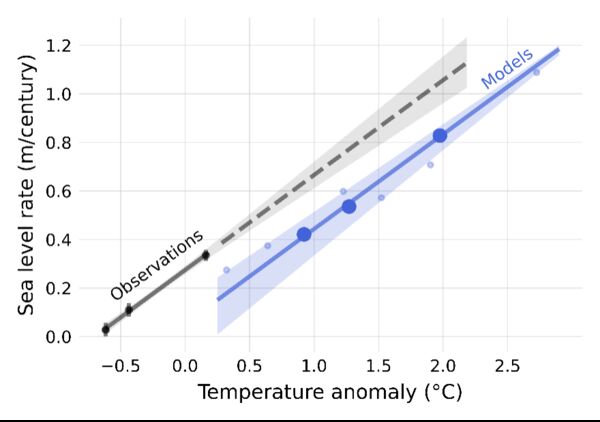
The researchers built on the United Nation’s Intergovernmental Panel on Climate Change’s models, many of which only consider the last 150 years, by incorporating data going back several centuries. The new observations show about a half-meter of sea rise by the end of the century can now be expected with just a 0.5 degree Celsius rise in temperatures. Oceans could rise more than 1 meter at 2 degrees Celsius, a trajectory that will be easily passed under current climate policies.
“The models we are basing our predictions of sea-level rise on presently are not sensitive enough,” Grinsted said. “To put it plainly, they don’t hit the mark when we compare them to the rate of sea-level rise we see when comparing future scenarios with observations going back in time.”
The conclusions follow last month’s warning that rising temperatures have melted 28 trillion metric tons of ice — equivalent to a 100 meter thick sheet of ice covering the entire U.K. — making the worst-case climate scenarios more likely. The new methodology for tracking sea level change could help insurance companies, real estate developers and city planners erecting tidal-defense systems.
“The scenarios we see before us now regarding sea-level rise are too conservative – the sea looks, using our method, to rise more than what is believed using the present method,” Grinsted said, adding that his team at the Niels Bohr Institute is in touch with the IPCC about incorporating its results in next year’s sixth Assessment Report.