

Monthly Archives: February 2021
My Cancer Journey — 2/1

Ned Henry February 1, 2021 · nedhenry.medium.com
It’s 1:30 AM can’t sleep yet due to the numbness of my right foot and now leg. Had a friend tell me today that I should just write about what’s going on with the disease so he knows how I am and that he just skips over the mediation stuff. Had another friend tell me she loves what I write, that she finds the stories of my life interesting. It really is a quest and one that cancer has made urgent. Do I have a guideline. No. I just have cancer to deal with. It’s about finding God. I know God can’t be external to me and I know God can’t be my ego so I know there is someplace that exists within me where God resides and I live but I know it absolutely can’t be a place that is dominated by ego. That is hard to find and hard to put into words.I don’t know what to write about. It’s like a gap. I don’t know if I should even keep trying to express myself. And then I tell myself this is your own journal about your journey with cancer. Someone else said you could just write in in private and not share it with the world. I want to be open about what I am going through as I confront this disease and this cure for it. I’m a social person who has had very little social life for nearly a year now. I like to share but it is an ego trip to talk about my life. I know talking about it scares some people, drives them away from me. And that’s not what I want at a time when I need support, when I need to know that people love me. My left foot and lower leg are now numb. I’ll go pass time in another room as I tolerate this dull pain from the frostbite feeling in my lower limbs.
11 AM — I broke down and took the Zyprexa last night to try to get some sleep. It did not help. In fact I think it made the pain in my foot worse and certainly did not have any sedative effects to help me sleep. So another night mostly up all night. Feeling sorry for myself this morning. Sent a message to the doctor. They will probably call sometime today. Not sure they can do anything about this pain causing sleeplessness. I keep telling myself, it’s just the chemo — get through it.
11:44 PM — Ok so I thinks the docs got that I am having a pretty severe neuropathic reaction to the Vincristine in the chemo cocktail I am getting with R-CHOP. At least palliative care thinks so. . Haven’t heard from the oncology side yet. It took a well crafted portal message to them with Sue’s help to get their attention but I think we did. I cannot go to get my vaccine tomorrow if I have to get out of the car and walk. I can barely make it from room to room in this house. I stumble around using the cane. And I don’t have the energy to search for another appointment anywhere else. Not sure how this all works out. I did get a couple of hours of sleep in the afternoon. Fell asleep watching the first episode of Enola Holmes. So I said go to bed and grab a nap. Watching Hillbilly Elegy now. Read the book or listened to it. Movie’s good. Not sure what else to say. It’s almost midnight and my foot is numb and I hope I can figure out how to get some sleep tonight. All good.
Book: “Dark Night of the Soul”

From Wikipedia, the free encyclopedia
| Part of a series on |
| Christian mysticism |
|---|
| showTheology · Philosophy |
| showPractices |
| showPeople (by era or century) |
| showLiterature · Media |
| vte |
Dark Night of the Soul (Spanish: La noche oscura del alma) is a poem written by the 16th-century Spanish mystic and poet St. John of the Cross. The author himself did not give any title to his poem, on which he wrote two book-length commentaries: Ascent of Mount Carmel (Subida del Monte Carmelo) and The Dark Night (Noche Oscura).
Poem and treatise of St. John of the Cross
The poem of St. John of the Cross, in 8 stanzas of 5 lines each, narrates the journey of the soul to mystical union with God. The journey is called “The Dark Night” in part because darkness represents the fact that the destination—God—is unknowable, as in the 14th century, mystical classic The Cloud of Unknowing; both pieces are derived from the works of Pseudo-Dionysius the Areopagite in the sixth century. Further, the path per se is unknowable. The first verse of the poem is translated:[1]
In an obscure night
Fevered with love’s anxiety
(O hapless, happy plight!)
I went, none seeing me
Forth from my house, where all things quiet be
—that is, the body and the mind, with their natural cares, being stilled. At the beginning of the treatise Dark Night (the Declaración), St. John wrote: “In this first verse, the soul tells the mode and manner in which it departs, as to its affection, from itself and from all things, dying through a true mortification to all of them and to itself, to arrive at a sweet and delicious life with God.”
The “dark night of the soul” does not refer to the difficulties of life in general,[2] although the phrase has understandably been taken to refer to such trials. The nights which the soul experiences are the two necessary purgations on the path to Divine union: the first purgation is of the sensory or sensitive part of the soul, the second of the spiritual part (Ascent of Mount Carmel, Ch. 1, 2). Such purgations comprise the first of the three stages of the mystical journey, followed by those of illumination and then union.[3] St. John does not actually use the term “dark night of the soul”, but only “dark night” (“noche oscura”).
There are several steps in this night, which are related in successive stanzas of the poem. The thesis of the poem is the joyful experience of being guided to God. The only light in this dark night is that which burns in the soul. And that is a guide more certain than the mid-day sun: Aquésta me guiaba, más cierto que la luz del mediodía. This light leads the soul engaged in the mystical journey to Divine union.
The Ascent of Mount Carmel is divided into three books that reflect the two phases of the dark night. The first is a purification of the senses (It is titled “The Active Night of the Senses”). The second and third books describe the more intense purification of the spirit (Titled “The Active Night of the Spirit”). Dark Night of the Soul further describes the ten steps on the ladder of mystical love, previously described by Saint Thomas Aquinas and in part by Aristotle[citation needed].
The time or place of composition are not certain. It is likely the poem was written between 1577 and 1579. It has been proposed[by whom?] that the poem was composed while John was imprisoned in Toledo, although the few explicit statements in this regard are unconvincing and second-hand.[4]
The treatises, written sometime between 1578 and 1585, are commentaries on the poem, explaining its meaning line by line. Padre Lucinio del SS. Sacramento, who edited the critical edition (edition 5), with extremely thorough notes, of John of the Cross’s Complete Works in the Biblioteca de Autores Cristianos series,[5] writes that “the idea of the ‘night’ to analyse the complex psychology of the soul under the purifying influence of grace is the most original and fruitful symbolic creation of the Mystic Doctor’s doctrine.”[6] The Ascent and the Dark Night should be considered as forming a single body as P. Lucinio states,[7] quoting Andrés de la Incarnación and P. Silverio de Santa Teresa. Both works were left uncompleted.
In Roman Catholic spirituality
Main article: Spiritual dryness
The term “dark night (of the soul)” in Roman Catholic spirituality describes a spiritual crisis in the journey toward union with God, like that described by St. John of the Cross.
St. Thérèse of the Child Jesus and the Holy Face, OCD, a 19th-century French nun and Doctor of the Church, wrote of her own experience of the dark night. Her dark night derived from doubt of the existence of eternity, to which doubt she nonetheless did not give intellectual or volitional assent, but rather prevailed by a deepening of her Catholic faith. However, she painfully suffered through this prolonged period of spiritual darkness, even declaring to her fellow nuns: “If you only knew what darkness I am plunged into..!”[8]
While this spiritual crisis is usually temporary, it may endure for a long time. The “dark night” of St. Paul of the Cross in the 18th century endured 45 years, from which he ultimately recovered. The dark night of St. Teresa of Calcutta, whose own name in religion she selected in honor of St. Thérèse, “may be the most extensive such case on record”, having endured from 1948 almost until her death in 1997, with only brief interludes of relief, according to her letters.[9]
In popular culture
T. S. Eliot alludes to “The Dark Night of the Soul” throughout his Four Quartets
Ernest Dowson alludes to the “obscure night of the soul” in his absinthe poem, Absinthia Taetra.
The Spanish singer Rosalía arranged a version of the poem Dark Night of the Soul and released it as a single titled Aunque es de noche.[10]
In his 1945 collection of essays, The Crack-Up, F. Scott Fitzgerald penned his famous line, “In a real dark night of the soul it is always three o’clock in the morning”.
As a comment on the shallowness of modern spirituality, author and humorist Douglas Adams parodied the phrase with the title of his 1988 science fiction novel The Long Dark Tea-Time of the Soul.
English electronic band Depeche Mode make a clear reference in “I Feel Loved”, the second single released from the album Exciter: “It’s the dark night of my soul and temptation’s taking hold, but through the pain and the suffering, through the heartache and trembling I feel loved…”.
Alternative rock band Sparklehorse, along with producer Danger Mouse and director and visual artist David Lynch, collaborated with a number of other artists on an audio-visual project titled Danger Mouse and Sparklehorse Present: Dark Night of the Soul.
In the 2011 video game Crysis 2, there is an unlockable achievement/trophy titled “Dark Night Of The Soul”,[11] a reference to the Danger Mouse and Sparklehorse album of the same name.
The phrase has also been used as a song title by several other bands and music artists, including Steve Bell, The Get Up Kids, Ulver, Mayhem, and Shai Linne in The Solus Christus Project.
Canadian singer Loreena McKennitt set the poem to music on her album The Mask and Mirror.
Composer Ola Gjeilo has written a SATB choral setting accompanied with piano and string quartet, fourteen minutes long, with the English translation of the poem.[12]
Northern Irish singer-songwriter Van Morrison writes about the “dark night of the soul” in a number of his songs, including “Tore Down a la Rimbaud” on A Sense of Wonder and “Give Me My Rapture” on Poetic Champions Compose. It also served as the inspiration for the title of the lead release of his 2019 album “Three Chords & the Truth.”[13]
In his 1994 novel, Insomnia, Stephen King makes a reference to the F. Scott Fitzgerald usage when his protagonist first begins experiencing the signs of insomnia following the death of his [the character’s] wife. King also references it in his 1982 short story “Rita Hayworth and Shawshank Redemption“.
In modern mindfulness practice, many authors have named a similar phenomenon in meditation as the dark night of the soul after the poem. It is often described as a lengthened and intense state of depression or ennui caused by errant or irresponsible meditation practices. Author John Yates compares it to a Theravadan term, dukkha ñanas, or “knowledges of suffering”.[14]
More at: https://en.wikipedia.org/wiki/Dark_Night_of_the_Soul
Confucius on Good Government, the 6 Steps to a Harmonious Society, and Self-Discipline as the Key to Democracy
By Maria Popova (brainpickings.org)

Two and a half millennia before Leonard Cohen wrote in his timeless and tender ode to democracy that “the heart has got to open in a fundamental way,” the ancient Chinese philosopher and statesman Confucius (551–479 BCE) recognized the indelible link between personal and political morality, recognized that interpersonal kindness is the foundation of social justice, recognized that democracy — a form of government only just invented on the other side of the globe in ancient Greece, not to take root in his own culture for epochs — begins in the heart.
Confucius. 1909 engraving, artist unknown. (Available as a print.)
Centuries before the advent of Christianity and its central tenet of the golden rule, the Chinese sage pioneered the concept of compassion as a moral guiding principle — an ancient concept subtly yet profoundly different from empathy, which only entered the modern lexicon at the dawn of the twentieth century as a term for projecting oneself into a work of art. On his existential reading list of essential books for every stage of life, Tolstoy listed Confucius among the most mature reading. His teachings went on to influence millennia of poets, political leaders, and ordinary people seeking to live nobler, kinder, more empowered lives.
Among them was the poet Ezra Pound (October 30, 1885–November 1, 1972) — a man of immense talent and immense blind spots, of sympathetic idealisms and troubling sympathies — who set out to translate and compile the most enduring teachings of the great Chinese sage. His 1927 more-than-translation earned Pound the $2,000 poetry prize of The Dial — the pioneering Transcendentalist magazine Margaret Fuller and Ralph Waldo Emerson had launched nearly a century earlier at the peak of their intense and complicated relationship, which shaped the history of modern thought. Pound used the funds to launch his own poetic-political magazine. The following year, his translation was published in book form as Confucius: The Unwobbling Pivot / The Great Digest / The Analects (public library).
In his prefatory note, Pound observed that China was tranquil and harmonious for as long as its rulers followed the teachings of Confucius, but dynasties collapsed into chaos and social catastrophe as soon as these principles were neglected. In a sentiment that applies as much to those ancient sociopolitical collapses as to the perils of the present, he writes:
The proponents of a world order will neglect at their peril the study of the only process that has repeatedly proved its efficiency as a social coordinate.

The Sage and the Banditti. 1887 woodcut, artist unknown. (Available as a print.)
That process, as Confucius conceived it, was one of treating public good as a matter of personal goodness, rooted in a purity of heart and a discipline of mind. Noting that “things have roots and branches” and that “if the root be in confusion, nothing will be well governed,” the ancient Chinese sage outlines the six steps to a harmonious society:

Confucius. Colorized 1900 photogravure, artist unknown. (Available as a print.)
This essential classification is the work of clarity and comprehension — we classify to understand and to order our priorities. Once this work is complete, Confucius counsels, the process is folded over and the six steps are retraced back to the original goal of good government:
Complement with mathematician Lilian Lieber on how Euclid illuminates the roots of democracy and social justice and the great humanistic philosopher and psychologist Erich Fromm on what self-love really means and how it anchors a sane society, then revisit Ursula K. Le Guin’s superb more-than-translation of Tao Te Ching and its ancient wisdom on the wellspring of personal and political power.
Wisconsin Vaccine SABOTEUR believed the sky was actually a “shield put up by the Government to prevent individuals from seeing God.”
OVER THE EDGE
Steven Brandenburg also allegedly carried a handgun to work, and believed the sky was actually a “shield put up by the Government to prevent individuals from seeing God.”
Justin Rohrlich Jan. 31, 2021 (thedailybeast.com)
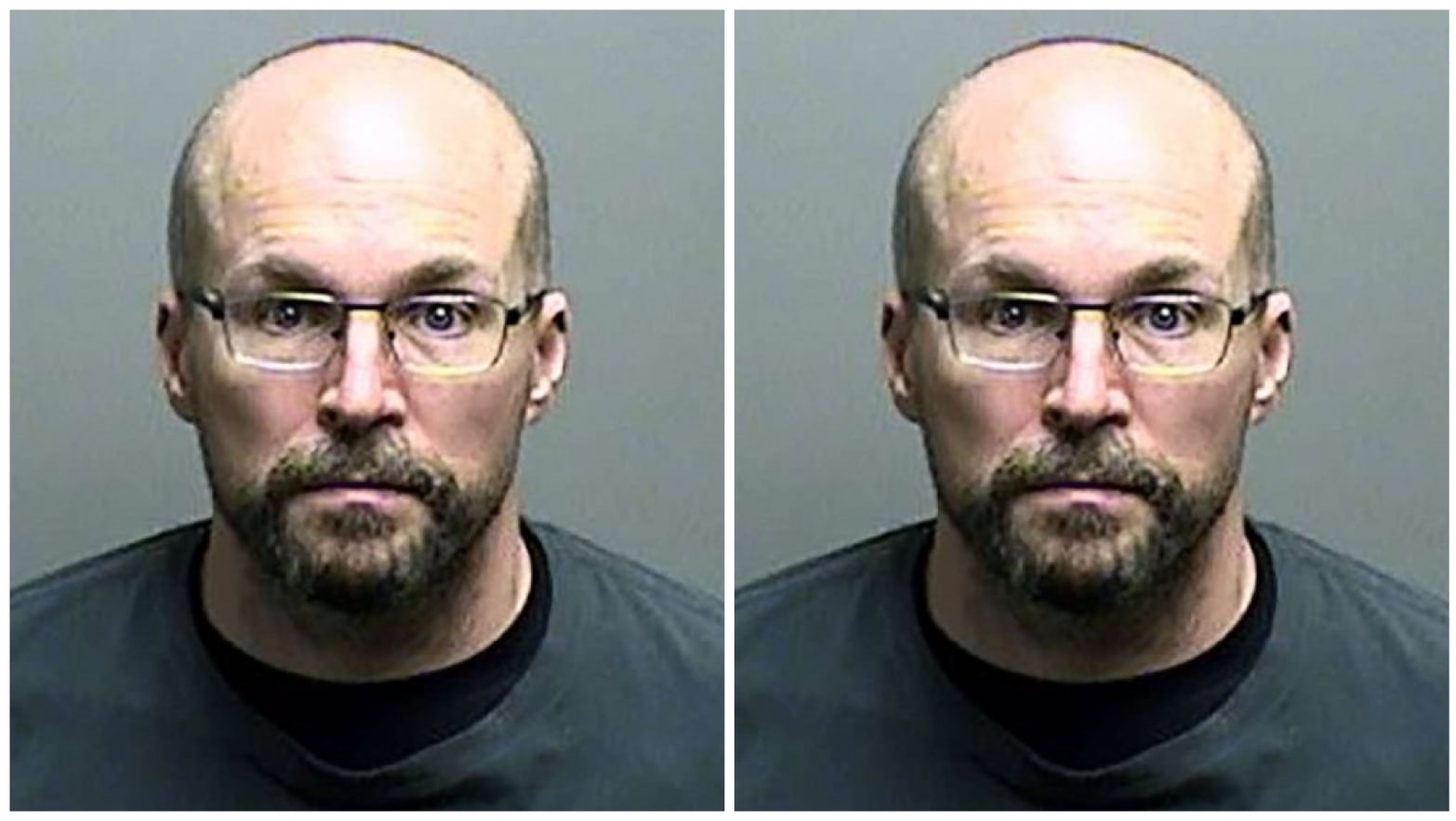
The Wisconsin pharmacist who intentionally sabotaged hundreds of doses of the Moderna coronavirus vaccine because he thought COVID-19 was a hoax, also believes the earth is flat and the sky is actually a “shield put up by the Government to prevent individuals from seeing God.”
That’s according to a newly-unsealed FBI search warrant application obtained by The Daily Beast, which the bureau filed earlier this month requesting permission to analyze an iPhone, a laptop, and a thumb drive seized from Steven Brandenburg when he was arrested in late December.
- Rogue Pharmacist Arrested After 57 People Get Stale VaccineLAST THING WE NEEDMatt Taylor, Kelly Weill
Federal authorities accused Brandenburg, 46, of purposely destroying 570 doses of the vaccine by twice removing a box containing the vials from a refrigerator at Advocate Aurora Health Systems in Grafton, WI, where he worked the night shift. Brandenburg knew this could spoil the vaccine, which can only survive for up to 12 hours outside of refrigeration, said prosecutors. The damaged doses that Brandenburg tampered with were subsequently given to at least 57 patients.
The warrant application, filed in federal court by FBI Special Agent Lindsay Schloemer, reveals that Brandenburg’s delusions went far beyond doubting the reality of the coronavirus. Not only did Brandenburg insist the “microchipped” vaccine would “turn off people’s birth control and make others infertile,” he was convinced that the physical world around him was not what it seemed, a coworker told investigators.
“Some of the conspiracy theories Brandenburg told [the coworker] about included: the earth is flat; the sky is not real, rather it is a shield put up by the Government to prevent individuals from seeing God; and Judgment Day is coming,” the 26-page filing says.
The coworker, identified in the document as pharmacy technician Sarah Sticker, told authorities that Brandenburg carried a .45-caliber handgun to work, which he said he needed “in case the military came to take him away.” Cops seized several firearms from Brandenburg’s home on New Year’s Eve.
Sticker, who is reportedly the one that discovered the vaccines Brandenburg removed from the refrigerator on Dec. 24 and Dec. 25, told investigators that Brandenburg tried to “guilt trip” her after learning she turned him in.
“If I lose this job, I lose my kids,” Brandenburg allegedly told Sticker, who said she feared Brandenburg was becoming “desperate” or “unhinged.”
Sticker, who was unable to be reached for comment, also told investigators she saw Brandenburg researching the vaccine on his work computer, looking to see if there was a mechanism on the boxes that tracked the vials’ temperature.“My actions were inexcusable and I deeply apologize for the harm I have caused.”— Steven Brandenburg
When interviewed by law enforcement, Brandenburg at first tried to explain away what he did as a simple mistake. He said that his attempt to render the vaccine doses ineffective was “a spontaneous act,” and that he “wasn’t thinking straight due to what was going on in his life.”
“Investigators asked how this could be a spontaneous act when Brandenburg did it two days in a row,” says the warrant application. “Brandenburg did not have an answer.”
In a subsequent interview, followed by an email included in the warrant application, Brandenburg confessed that he in fact did spoil the vaccines because he thought they would “alter the recipient’s DNA.” He further explained that he was in the midst of a “very contentious divorce” and wasn’t sleeping properly.
“My actions were inexcusable and I deeply apologize for the harm I have caused,” Brandenburg wrote.
According to divorce records reviewed by Milwaukee ABC News affiliate WISN, Brandenburg’s wife Gretchen told a judge that her husband was storing bulk food and guns in multiple rental units, fearing that the government was planning attacks on the electrical grid and the nation’s computer networks. She said she was so scared for her safety, and that of her children’s, that she left town.
Last week, Brandenburg—who has since been fired from his job—agreed to plead guilty to two counts of attempting to tamper with consumer products with reckless disregard, and faces up to 10 years in prison and a $250,000 fine on each charge. His lawyer, Jason Baltz, did not respond to a request for comment. Brandenburg is due back in court on Feb. 9.
Word-Built World: Faustian
Feb 1, 2021 (wsmith@wordsmith.org)
This week’s words
faustian

Faust in His Studio, c. 1840Art: Ary Scheffer (1795-1858)
A.Word.A.Daywith Anu Garg
Faustian
PRONUNCIATION:(FOU-stee-uhn)
MEANING:adjective: Surrendering one’s integrity for something, such as power, money, fame, etc.
ETYMOLOGY:After the legend of Faust who sold his soul to the devil. Earliest documented use: 1876.
NOTES:The legend of Faust is based upon a real person, Johann Georg Faust (c. 1480-1540), a magician, astrologer, and alchemist. The story has been tackled countless times, from Christopher Marlow in his play Doctor Faustus and Goethe in his play Faust to The Simpsons episode “Bart Sells His Soul”.
For a detailed treatment of Faust, check out this BBC article. As the author summarizes, “Our challenge today is that, to some extent, we are all in a Faustian bind. We are plagued by politicians offering easy answers to complex problems — especially when those easy answers are empty promises. The legend warns us to be wary of the cult of the ego, the seductions of fame, and the celebration of power. These are hollow triumphs, and short-lived.”
The new mind control
The internet has spawned subtle forms of influence that can flip elections and manipulate everything we say, think and do
Robert Epstein is a senior research psychologist at the American Institute for Behavioral Research and Technology in California. He is the author of 15 books, and the former editor-in-chief of Psychology Today.
Brought to you by Curio, an Aeon partner
Edited by Pam Weintraub
Over the past century, more than a few great writers have expressed concern about humanity’s future. In The Iron Heel (1908), the American writer Jack London pictured a world in which a handful of wealthy corporate titans – the ‘oligarchs’ – kept the masses at bay with a brutal combination of rewards and punishments. Much of humanity lived in virtual slavery, while the fortunate ones were bought off with decent wages that allowed them to live comfortably – but without any real control over their lives.
In We (1924), the brilliant Russian writer Yevgeny Zamyatin, anticipating the excesses of the emerging Soviet Union, envisioned a world in which people were kept in check through pervasive monitoring. The walls of their homes were made of clear glass, so everything they did could be observed. They were allowed to lower their shades an hour a day to have sex, but both the rendezvous time and the lover had to be registered first with the state.
In Brave New World (1932), the British author Aldous Huxley pictured a near-perfect society in which unhappiness and aggression had been engineered out of humanity through a combination of genetic engineering and psychological conditioning. And in the much darker novel 1984 (1949), Huxley’s compatriot George Orwell described a society in which thought itself was controlled; in Orwell’s world, children were taught to use a simplified form of English called Newspeak in order to assure that they could never express ideas that were dangerous to society.
These are all fictional tales, to be sure, and in each the leaders who held the power used conspicuous forms of control that at least a few people actively resisted and occasionally overcame. But in the non-fiction bestseller The Hidden Persuaders (1957) – recently released in a 50th-anniversary edition – the American journalist Vance Packard described a ‘strange and rather exotic’ type of influence that was rapidly emerging in the United States and that was, in a way, more threatening than the fictional types of control pictured in the novels. According to Packard, US corporate executives and politicians were beginning to use subtle and, in many cases, completely undetectable methods to change people’s thinking, emotions and behaviour based on insights from psychiatry and the social sciences.
Most of us have heard of at least one of these methods: subliminal stimulation, or what Packard called ‘subthreshold effects’ – the presentation of short messages that tell us what to do but that are flashed so briefly we aren’t aware we have seen them. In 1958, propelled by public concern about a theatre in New Jersey that had supposedly hidden messages in a movie to increase ice cream sales, the National Association of Broadcasters – the association that set standards for US television – amended its code to prohibit the use of subliminal messages in broadcasting. In 1974, the Federal Communications Commission opined that the use of such messages was ‘contrary to the public interest’. Legislation to prohibit subliminal messaging was also introduced in the US Congress but never enacted. Both the UK and Australia have strict laws prohibiting it.
Subliminal stimulation is probably still in wide use in the US – it’s hard to detect, after all, and no one is keeping track of it – but it’s probably not worth worrying about. Research suggests that it has only a small impact, and that it mainly influences people who are already motivated to follow its dictates; subliminal directives to drink affect people only if they’re already thirsty.
Packard had uncovered a much bigger problem, however – namely that powerful corporations were constantly looking for, and in many cases already applying, a wide variety of techniques for controlling people without their knowledge. He described a kind of cabal in which marketers worked closely with social scientists to determine, among other things, how to get people to buy things they didn’t need and how to condition young children to be good consumers – inclinations that were explicitly nurtured and trained in Huxley’s Brave New World. Guided by social science, marketers were quickly learning how to play upon people’s insecurities, frailties, unconscious fears, aggressive feelings and sexual desires to alter their thinking, emotions and behaviour without any awareness that they were being manipulated.
By the early 1950s, Packard said, politicians had got the message and were beginning to merchandise themselves using the same subtle forces being used to sell soap. Packard prefaced his chapter on politics with an unsettling quote from the British economist Kenneth Boulding: ‘A world of unseen dictatorship is conceivable, still using the forms of democratic government.’ Could this really happen, and, if so, how would it work?
The forces that Packard described have become more pervasive over the decades. The soothing music we all hear overhead in supermarkets causes us to walk more slowly and buy more food, whether we need it or not. Most of the vacuous thoughts and intense feelings our teenagers experience from morning till night are carefully orchestrated by highly skilled marketing professionals working in our fashion and entertainment industries. Politicians work with a wide range of consultants who test every aspect of what the politicians do in order to sway voters: clothing, intonations, facial expressions, makeup, hairstyles and speeches are all optimised, just like the packaging of a breakfast cereal.
Fortunately, all of these sources of influence operate competitively. Some of the persuaders want us to buy or believe one thing, others to buy or believe something else. It is the competitive nature of our society that keeps us, on balance, relatively free.
But what would happen if new sources of control began to emerge that had little or no competition? And what if new means of control were developed that were far more powerful – and far more invisible – than any that have existed in the past? And what if new types of control allowed a handful of people to exert enormous influence not just over the citizens of the US but over most of the people on Earth?
It might surprise you to hear this, but these things have already happened.
Google decides which web pages to include in search results, and how to rank them. How it does so is one of the best-kept secrets in the world, like the formula for Coca-Cola
To understand how the new forms of mind control work, we need to start by looking at the search engine – one in particular: the biggest and best of them all, namely Google. The Google search engine is so good and so popular that the company’s name is now a commonly used verb in languages around the world. To ‘Google’ something is to look it up on the Google search engine, and that, in fact, is how most computer users worldwide get most of their information about just about everything these days. They Google it. Google has become the main gateway to virtually all knowledge, mainly because the search engine is so good at giving us exactly the information we are looking for, almost instantly and almost always in the first position of the list it shows us after we launch our search – the list of ‘search results’.
That ordered list is so good, in fact, that about 50 per cent of our clicks go to the top two items, and more than 90 per cent of our clicks go to the 10 items listed on the first page of results; few people look at other results pages, even though they often number in the thousands, which means they probably contain lots of good information. Google decides which of the billions of web pages it is going to include in our search results, and it also decides how to rank them. How it decides these things is a deep, dark secret – one of the best-kept secrets in the world, like the formula for Coca-Cola.
Because people are far more likely to read and click on higher-ranked items, companies now spend billions of dollars every year trying to trick Google’s search algorithm – the computer program that does the selecting and ranking – into boosting them another notch or two. Moving up a notch can mean the difference between success and failure for a business, and moving into the top slots can be the key to fat profits.
Late in 2012, I began to wonder whether highly ranked search results could be impacting more than consumer choices. Perhaps, I speculated, a top search result could have a small impact on people’s opinions about things. Early in 2013, with my associate Ronald E Robertson of the American Institute for Behavioral Research and Technology in Vista, California, I put this idea to a test by conducting an experiment in which 102 people from the San Diego area were randomly assigned to one of three groups. In one group, people saw search results that favoured one political candidate – that is, results that linked to web pages that made this candidate look better than his or her opponent. In a second group, people saw search rankings that favoured the opposing candidate, and in the third group – the control group – people saw a mix of rankings that favoured neither candidate. The same search results and web pages were used in each group; the only thing that differed for the three groups was the ordering of the search results.
To make our experiment realistic, we used real search results that linked to real web pages. We also used a real election – the 2010 election for the prime minister of Australia. We used a foreign election to make sure that our participants were ‘undecided’. Their lack of familiarity with the candidates assured this. Through advertisements, we also recruited an ethnically diverse group of registered voters over a wide age range in order to match key demographic characteristics of the US voting population.
All participants were first given brief descriptions of the candidates and then asked to rate them in various ways, as well as to indicate which candidate they would vote for; as you might expect, participants initially favoured neither candidate on any of the five measures we used, and the vote was evenly split in all three groups. Then the participants were given up to 15 minutes in which to conduct an online search using ‘Kadoodle’, our mock search engine, which gave them access to five pages of search results that linked to web pages. People could move freely between search results and web pages, just as we do when using Google. When participants completed their search, we asked them to rate the candidates again, and we also asked them again who they would vote for.
We predicted that the opinions and voting preferences of 2 or 3 per cent of the people in the two bias groups – the groups in which people were seeing rankings favouring one candidate – would shift toward that candidate. What we actually found was astonishing. The proportion of people favouring the search engine’s top-ranked candidate increased by 48.4 per cent, and all five of our measures shifted toward that candidate. What’s more, 75 per cent of the people in the bias groups seemed to have been completely unaware that they were viewing biased search rankings. In the control group, opinions did not shift significantly.
This seemed to be a major discovery. The shift we had produced, which we called the Search Engine Manipulation Effect (or SEME, pronounced ‘seem’), appeared to be one of the largest behavioural effects ever discovered. We did not immediately uncork the Champagne bottle, however. For one thing, we had tested only a small number of people, and they were all from the San Diego area.
Over the next year or so, we replicated our findings three more times, and the third time was with a sample of more than 2,000 people from all 50 US states. In that experiment, the shift in voting preferences was 37.1 per cent and even higher in some demographic groups – as high as 80 per cent, in fact.
We also learned in this series of experiments that by reducing the bias just slightly on the first page of search results – specifically, by including one search item that favoured the other candidate in the third or fourth position of the results – we could mask our manipulation so that few or even no people were aware that they were seeing biased rankings. We could still produce dramatic shifts in voting preferences, but we could do so invisibly.
Still no Champagne, though. Our results were strong and consistent, but our experiments all involved a foreign election – that 2010 election in Australia. Could voting preferences be shifted with real voters in the middle of a real campaign? We were skeptical. In real elections, people are bombarded with multiple sources of information, and they also know a lot about the candidates. It seemed unlikely that a single experience on a search engine would have much impact on their voting preferences.
To find out, in early 2014, we went to India just before voting began in the largest democratic election in the world – the Lok Sabha election for prime minister. The three main candidates were Rahul Gandhi, Arvind Kejriwal, and Narendra Modi. Making use of online subject pools and both online and print advertisements, we recruited 2,150 people from 27 of India’s 35 states and territories to participate in our experiment. To take part, they had to be registered voters who had not yet voted and who were still undecided about how they would vote.
Unlike subliminal stimuli, SEME has an enormous impact – like Casper the ghost pushing you down a flight of stairs
Participants were randomly assigned to three search-engine groups, favouring, respectively, Gandhi, Kejriwal or Modi. As one might expect, familiarity levels with the candidates was high – between 7.7 and 8.5 on a scale of 10. We predicted that our manipulation would produce a very small effect, if any, but that’s not what we found. On average, we were able to shift the proportion of people favouring any given candidate by more than 20 per cent overall and more than 60 per cent in some demographic groups. Even more disturbing, 99.5 per cent of our participants showed no awareness that they were viewing biased search rankings – in other words, that they were being manipulated.
SEME’s near-invisibility is curious indeed. It means that when people – including you and me – are looking at biased search rankings, they look just fine. So if right now you Google ‘US presidential candidates’, the search results you see will probably look fairly random, even if they happen to favour one candidate. Even I have trouble detecting bias in search rankings that I know to be biased (because they were prepared by my staff). Yet our randomised, controlled experiments tell us over and over again that when higher-ranked items connect with web pages that favour one candidate, this has a dramatic impact on the opinions of undecided voters, in large part for the simple reason that people tend to click only on higher-ranked items. This is truly scary: like subliminal stimuli, SEME is a force you can’t see; but unlike subliminal stimuli, it has an enormous impact – like Casper the ghost pushing you down a flight of stairs.
We published a detailed report about our first five experiments on SEME in the prestigious Proceedings of the National Academy of Sciences (PNAS) in August 2015. We had indeed found something important, especially given Google’s dominance over search. Google has a near-monopoly on internet searches in the US, with 83 per cent of Americans specifying Google as the search engine they use most often, according to the Pew Research Center. So if Google favours one candidate in an election, its impact on undecided voters could easily decide the election’s outcome.
Keep in mind that we had had only one shot at our participants. What would be the impact of favouring one candidate in searches people are conducting over a period of weeks or months before an election? It would almost certainly be much larger than what we were seeing in our experiments.
Other types of influence during an election campaign are balanced by competing sources of influence – a wide variety of newspapers, radio shows and television networks, for example – but Google, for all intents and purposes, has no competition, and people trust its search results implicitly, assuming that the company’s mysterious search algorithm is entirely objective and unbiased. This high level of trust, combined with the lack of competition, puts Google in a unique position to impact elections. Even more disturbing, the search-ranking business is entirely unregulated, so Google could favour any candidate it likes without violating any laws. Some courts have even ruled that Google’s right to rank-order search results as it pleases is protected as a form of free speech.
Does the company ever favour particular candidates? In the 2012 US presidential election, Google and its top executives donated more than $800,000 to President Barack Obama and just $37,000 to his opponent, Mitt Romney. And in 2015, a team of researchers from the University of Maryland and elsewhere showed that Google’s search results routinely favoured Democratic candidates. Are Google’s search rankings really biased? An internal report issued by the US Federal Trade Commission in 2012 concluded that Google’s search rankings routinely put Google’s financial interests ahead of those of their competitors, and anti-trust actions currently under way against Google in both the European Union and India are based on similar findings.
In most countries, 90 per cent of online search is conducted on Google, which gives the company even more power to flip elections than it has in the US and, with internet penetration increasing rapidly worldwide, this power is growing. In our PNAS article, Robertson and I calculated that Google now has the power to flip upwards of 25 per cent of the national elections in the world with no one knowing this is occurring. In fact, we estimate that, with or without deliberate planning on the part of company executives, Google’s search rankings have been impacting elections for years, with growing impact each year. And because search rankings are ephemeral, they leave no paper trail, which gives the company complete deniability.
Power on this scale and with this level of invisibility is unprecedented in human history. But it turns out that our discovery about SEME was just the tip of a very large iceberg.
Recent reports suggest that the Democratic presidential candidate Hillary Clinton is making heavy use of social media to try to generate support – Twitter, Instagram, Pinterest, Snapchat and Facebook, for starters. At this writing, she has 5.4 million followers on Twitter, and her staff is tweeting several times an hour during waking hours. The Republican frontrunner, Donald Trump, has 5.9 million Twitter followers and is tweeting just as frequently.
Is social media as big a threat to democracy as search rankings appear to be? Not necessarily. When new technologies are used competitively, they present no threat. Even through the platforms are new, they are generally being used the same way as billboards and television commercials have been used for decades: you put a billboard on one side of the street; I put one on the other. I might have the money to erect more billboards than you, but the process is still competitive.
What happens, though, if such technologies are misused by the companies that own them? A study by Robert M Bond, now a political science professor at Ohio State University, and others published in Nature in 2012 described an ethically questionable experiment in which, on election day in 2010, Facebook sent ‘go out and vote’ reminders to more than 60 million of its users. The reminders caused about 340,000 people to vote who otherwise would not have. Writing in the New Republic in 2014, Jonathan Zittrain, professor of international law at Harvard University, pointed out that, given the massive amount of information it has collected about its users, Facebook could easily send such messages only to people who support one particular party or candidate, and that doing so could easily flip a close election – with no one knowing that this has occurred. And because advertisements, like search rankings, are ephemeral, manipulating an election in this way would leave no paper trail.
Are there laws prohibiting Facebook from sending out ads selectively to certain users? Absolutely not; in fact, targeted advertising is how Facebook makes its money. Is Facebook currently manipulating elections in this way? No one knows, but in my view it would be foolish and possibly even improper for Facebook not to do so. Some candidates are better for a company than others, and Facebook’s executives have a fiduciary responsibility to the company’s stockholders to promote the company’s interests.
The Bond study was largely ignored, but another Facebook experiment, published in 2014 in PNAS, prompted protests around the world. In this study, for a period of a week, 689,000 Facebook users were sent news feeds that contained either an excess of positive terms, an excess of negative terms, or neither. Those in the first group subsequently used slightly more positive terms in their communications, while those in the second group used slightly more negative terms in their communications. This was said to show that people’s ‘emotional states’ could be deliberately manipulated on a massive scale by a social media company, an idea that many people found disturbing. People were also upset that a large-scale experiment on emotion had been conducted without the explicit consent of any of the participants.
Facebook’s consumer profiles are undoubtedly massive, but they pale in comparison with those maintained by Google, which is collecting information about people 24/7, using more than 60 different observation platforms – the search engine, of course, but also Google Wallet, Google Maps, Google Adwords, Google Analytics, Chrome, Google Docs, Android, YouTube, and on and on. Gmail users are generally oblivious to the fact that Google stores and analyses every email they write, even the drafts they never send – as well as all the incoming email they receive from both Gmail and non-Gmail users.
If Google set about to fix an election, it could identify just those voters who are undecided. Then it could send customised rankings favouring one candidate to just those people
According to Google’s privacy policy – to which one assents whenever one uses a Google product, even when one has not been informed that he or she is using a Google product – Google can share the information it collects about you with almost anyone, including government agencies. But never with you. Google’s privacy is sacrosanct; yours is nonexistent.
Could Google and ‘those we work with’ (language from the privacy policy) use the information they are amassing about you for nefarious purposes – to manipulate or coerce, for example? Could inaccurate information in people’s profiles (which people have no way to correct) limit their opportunities or ruin their reputations?
Certainly, if Google set about to fix an election, it could first dip into its massive database of personal information to identify just those voters who are undecided. Then it could, day after day, send customised rankings favouring one candidate to just those people. One advantage of this approach is that it would make Google’s manipulation extremely difficult for investigators to detect.
Extreme forms of monitoring, whether by the KGB in the Soviet Union, the Stasi in East Germany, or Big Brother in 1984, are essential elements of all tyrannies, and technology is making both monitoring and the consolidation of surveillance data easier than ever. By 2020, China will have put in place the most ambitious government monitoring system ever created – a single database called the Social Credit System, in which multiple ratings and records for all of its 1.3 billion citizens are recorded for easy access by officials and bureaucrats. At a glance, they will know whether someone has plagiarised schoolwork, was tardy in paying bills, urinated in public, or blogged inappropriately online.
As Edward Snowden’s revelations made clear, we are rapidly moving toward a world in which both governments and corporations – sometimes working together – are collecting massive amounts of data about every one of us every day, with few or no laws in place that restrict how those data can be used. When you combine the data collection with the desire to control or manipulate, the possibilities are endless, but perhaps the most frightening possibility is the one expressed in Boulding’s assertion that an ‘unseen dictatorship’ was possible ‘using the forms of democratic government’.
Since Robertson and I submitted our initial report on SEME to PNAS early in 2015, we have completed a sophisticated series of experiments that have greatly enhanced our understanding of this phenomenon, and other experiments will be completed in the coming months. We have a much better sense now of why SEME is so powerful and how, to some extent, it can be suppressed.
We have also learned something very disturbing – that search engines are influencing far more than what people buy and whom they vote for. We now have evidence suggesting that on virtually all issues where people are initially undecided, search rankings are impacting almost every decision that people make. They are having an impact on the opinions, beliefs, attitudes and behaviours of internet users worldwide – entirely without people’s knowledge that this is occurring. This is happening with or without deliberate intervention by company officials; even so-called ‘organic’ search processes regularly generate search results that favour one point of view, and that in turn has the potential to tip the opinions of millions of people who are undecided on an issue. In one of our recent experiments, biased search results shifted people’s opinions about the value of fracking by 33.9 per cent.
Perhaps even more disturbing is that the handful of people who do show awareness that they are viewing biased search rankings shift even further in the predicted direction; simply knowing that a list is biased doesn’t necessarily protect you from SEME’s power.
Remember what the search algorithm is doing: in response to your query, it is selecting a handful of webpages from among the billions that are available, and it is ordering those webpages using secret criteria. Seconds later, the decision you make or the opinion you form – about the best toothpaste to use, whether fracking is safe, where you should go on your next vacation, who would make the best president, or whether global warming is real – is determined by that short list you are shown, even though you have no idea how the list was generated.
The technology has made possible undetectable and untraceable manipulations of entire populations that are beyond the scope of existing regulations and laws
Meanwhile, behind the scenes, a consolidation of search engines has been quietly taking place, so that more people are using the dominant search engine even when they think they are not. Because Google is the best search engine, and because crawling the rapidly expanding internet has become prohibitively expensive, more and more search engines are drawing their information from the leader rather than generating it themselves. The most recent deal, revealed in a Securities and Exchange Commission filing in October 2015, was between Google and Yahoo! Inc.
Looking ahead to the November 2016 US presidential election, I see clear signs that Google is backing Hillary Clinton. In April 2015, Clinton hired Stephanie Hannon away from Google to be her chief technology officer and, a few months ago, Eric Schmidt, chairman of the holding company that controls Google, set up a semi-secret company – The Groundwork – for the specific purpose of putting Clinton in office. The formation of The Groundwork prompted Julian Assange, founder of Wikileaks, to dub Google Clinton’s ‘secret weapon’ in her quest for the US presidency.
We now estimate that Hannon’s old friends have the power to drive between 2.6 and 10.4 million votes to Clinton on election day with no one knowing that this is occurring and without leaving a paper trail. They can also help her win the nomination, of course, by influencing undecided voters during the primaries. Swing voters have always been the key to winning elections, and there has never been a more powerful, efficient or inexpensive way to sway them than SEME.
We are living in a world in which a handful of high-tech companies, sometimes working hand-in-hand with governments, are not only monitoring much of our activity, but are also invisibly controlling more and more of what we think, feel, do and say. The technology that now surrounds us is not just a harmless toy; it has also made possible undetectable and untraceable manipulations of entire populations – manipulations that have no precedent in human history and that are currently well beyond the scope of existing regulations and laws. The new hidden persuaders are bigger, bolder and badder than anything Vance Packard ever envisioned. If we choose to ignore this, we do so at our peril.Information and communicationPolitics and governmentPolitical philosophy
18 February 2016
Charles Raison On New Treatments For Depression
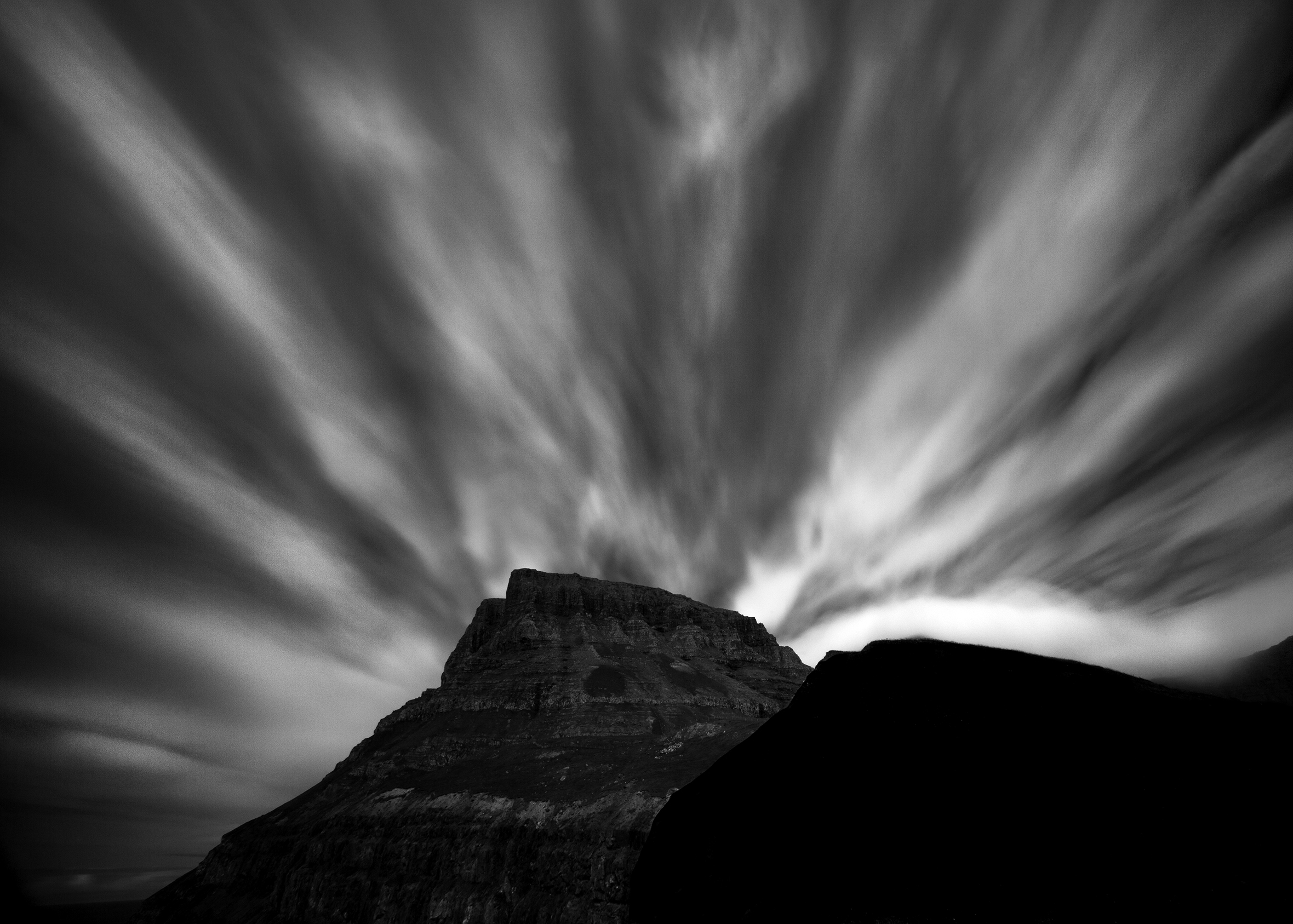 © Cole Thompson THE SUN INTERVIEW
Parting The Clouds
BY SARAH CONOVER • FEBRUARY 2021 (thesunmagazine.org)
I was listening to the radio a while back when something caught my ear. Dr. Charles Raison was talking about a crisis in the treatment and diagnosis of mental illnesses. As one of the roughly 27 million Americans taking antidepressants, I was alarmed by his claim that there is little scientific basis for the way we diagnose depression, and that the Diagnostic and Statistical Manual of Mental Disorders, the therapist’s bible, was mostly “folk wisdom.” He stated that most common pharmaceutical treatments don’t seem to work for roughly a quarter of the people who are prescribed them — and may even intensify symptoms. When they do work, there is concern that patients will get worse when they stop taking the medications. And there are no long-term studies of how antidepressants affect the brain when used indefinitely; most were approved based on studies that lasted only six to eight weeks. I had taken them for years.
A professor of psychiatry and human ecology at the University of Wisconsin–Madison, Raison believes depression isn’t a single thing but a cloud of related mental and physical states unique to each person; there is no one symptom that every depressed person experiences. “It’s all kind of hunt-and-peck,” he says. “We have an array of treatment options that we just start throwing at people because we don’t know why, biologically, they’re depressed.” Meanwhile depression is growing to epidemic proportions in the United States, with few truly novel treatments approved over the last three decades.
Growing up in California’s San Joaquin Valley, Raison started out as a journalist; his family had owned a small-town newspaper there for a hundred years. In 1984, while working on his PhD in English, he underwent psychotherapy, and the experience inspired him to become a psychiatrist. Though it meant going back to take all the undergrad science courses he had skipped, he accomplished his goal and later became part of a team that identified connections among the immune system, inflammation, and mental health. He has since been at the forefront of research into new treatments for depression, many of which have been a part of human cultures for millennia: compassion meditation, sweat lodges, fasting, and psychedelics — in particular psilocybin, the active ingredient in hallucinogenic mushrooms. He says experiments have shown that psilocybin can put people into a “state of resilience” against whatever is causing their depression.
Raison is the director of clinical and translational research for Usona Institute, a nonprofit medical-research organization conducting studies on psilocybin. If results are positive, their work would support FDA approval for psilocybin as a treatment for major depression. He’s also a visiting professor at Emory University in Atlanta, Georgia, where he serves as director of research on spiritual health and hosts Emory’s Health Is Everything podcast. He is the author, with Vladimir Maletic, of The New Mind-Body Science of Depression.
These discussions took place by phone, both before and during the isolation and upheaval from the coronavirus. In May 2020 The Washington Post reported that nearly half of Americans surveyed said the coronavirus pandemic was harming their mental health. Raison says data have shown that, over time, loneliness is as lethal as smoking two packs of cigarettes a day. Our conversation ranged from the evolutionary role of depression, to the validity of psychiatric diagnoses, to the potential of ancient practices to heal our modern malaise.
Conover: An April 2019 article in The Atlantic suggested that psychiatrists don’t want to admit mental illness is still a mystery. Do you agree with that?
Raison: Yes, that’s true. There have been significant advances in psychiatry since the first modern Diagnostic and Statistical Manual (DSM) came out in 1980, but we still haven’t been able to do two critical things.
The first is to identify and develop more-effective treatments for various conditions. Tom Insel, a former head of the National Institute of Mental Health, said that we as a country got very little out of the billions of dollars the NIMH spent during his tenure.
The other thing we haven’t been able to do is figure out what to give to whom. We can diagnose someone as depressed, for example, but there is no one thing that all depressed people have wrong with them. If I have a bad stomachache, the doctor is going to figure out whether it is a perforated bowel or a bacterial infection or my appendix that’s the problem. We don’t have that clarity in psychiatry. We’re not able to look at someone and say, “Ah! The cause of your depression is X, and here is the definitive treatment.”
Conover: You’ve been critical of the diagnoses in the DSM, saying it gets a lot wrong.
Raison: It’s not that the diagnoses in the DSM are worthless; there is wisdom in them. We know that if you have a manic episode, for instance, it’s very likely that you’re going to have a depressive episode, and also that you’re going to have more manic episodes when you’re young and more depressive episodes when you’re older, on average. The DSM is like folk wisdom — valuable, clinical folk wisdom. And nobody’s replaced it with anything better. This is why psychiatry is in a crisis. We’ve realized that it’s mostly bunk scientifically, but we haven’t figured out what to do next.
Back in the day, I was a true believer in the DSM. I would see patients, make a diagnosis, and give them a drug. And some patients did really well. Now we’ve lost that certainty. I see young doctors in training who don’t know what to do when a patient says she’s going to kill herself. We’ve replaced a fictitious certainty with an honest confusion. Maybe there is some good in knowing what you don’t know, but I worry about psychiatry becoming paralyzed.
Conover: Has the development of new psychiatric drugs contributed to the loss of faith in diagnoses?
Raison: Yes, starting in the 1990s Big Pharma developed atypical antipsychotics that worked just as well for bipolar disorder as they did for schizophrenia. And then the same medications turned out to have antidepressant effects. So all of a sudden there were these medicines that worked for everything. If something works for everything, then who needs to figure out which disorder a person has, right?
SSRIs [selective serotonin reuptake inhibitors] changed the treatment of depression around the same time. All of a sudden antidepressants were tolerable. Before that, people had a really hard time with unpleasant side effects. Nobody ever stayed on antidepressants if they didn’t have to. But many people could take SSRIs for a long time and not seem too much the worse for wear. And these SSRIs worked for depression, they worked for anxiety, they worked for obsessive-compulsive disorder, and on and on. It was a sea change.
What we didn’t understand until a couple of years ago is that, although antidepressants help most patients — the ones who are really, really depressed often start feeling a lot better — about 25 percent of people do worse on the antidepressant than on a placebo.
Another problem is that a lot of people who respond positively to an antidepressant lose that response over time. And when people with chronic depression stop taking an antidepressant, they are at a high risk of crashing back into depression again. It’s as if, over time, the brain tries to overcome the effects of the antidepressant and go back to being depressed. Take away the drug, and the brain overshoots its goal. So, many people are left with a choice: Do I stay on this antidepressant for the rest of my life, even though it’s not doing much for me? Or do I get off it and risk doing worse? Sometimes, when the drug starts to lose its effectiveness, you can up the dose, but the patient will ultimately become even more resistant over time. There is concern now that antidepressants make for a worse disease course in the long run.
Conover: Does going straight to a diagnosis in order to prescribe a drug undercut the relationship between a patient and a clinician?
Raison: Sometimes, definitely. Ironically psychiatrists often have less interaction with patients than other doctors do. We see people for about ten minutes, then write them a prescription. We’re like these pill-dispensing machines, especially in outpatient practices. There’s a different kind of psychiatry for inpatient services, where you’re dealing with people who are extremely ill. The sicker you are, the more likely psychiatry is to help you. It’s less effective for people who are out in the world.
Psychiatry may be too focused on getting rid of illness and not focused enough on enhancing wellness. Some negative emotions can add depth to life. There’s a great Tom Waits lyric: “If I exorcise my devils / Well, my angels may leave, too.” People on SSRIs sometimes complain that life is flatter, less intense. But getting rid of those negative symptoms can also be very helpful. Ultimately patients want wellness. The question is: How much wellness?
Conover: Most of us think of depression as a chemical imbalance in the brain, but you say it’s a disorder of consciousness.
Raison: There is a deep philosophical issue here. Some neurologists and psychologists believe that consciousness doesn’t really exist; it’s just an illusion produced by the brain. Then there’s the Western religious belief that consciousness is a soul or spirit that’s separate from the brain, and the brain is just a receiver. I don’t believe either. I think that consciousness is a product of the brain’s activity, but it can also influence brain function in some way. There’s a dialogue. Now, if consciousness is created by the activity of the brain, then of course consciousness is chemical, and so are mental illnesses. And so is feeling happy, and feeling scared, and enjoying a good movie. It’s all chemical. But the idea of depression as a simple chemical imbalance is unbelievably crude. The neurotransmitters that are most often targeted — norepinephrine, serotonin, and dopamine — aren’t always found at abnormal levels in depressed people.
The brain operates in circuits, and depression probably occurs when your circuits fire in repetitive ways that produce depressive, unhappy thoughts. But acting like we can identify a specific cause hides as much as it reveals.
Conover: A study published in Psychiatry Research suggests that psychiatric diagnoses are all worthless.
Raison: I don’t subscribe to that. It’s true that the diagnoses we have in psychiatry are just descriptions of symptoms. Kleptomania is a description of people who like to steal things; it doesn’t tell you the cause of their compulsion. But some psychiatric diagnoses do tell you that if a patient presents in a certain way, they’re likely to respond better to this drug, or they’re likely to develop this other symptom next. It’s not perfect, but it’s better than nothing.
Obviously in medicine we need to know what’s causing the problem and to have a means of treating the cause. But, as I said, with a diagnosis of major depression, there is no one thing causing the problem. The problem itself can be different for different patients. According to the DSM you have to have five out of nine possible symptoms to be diagnosed with major depression. That means two people can both have major depression and have only one symptom in common.
My coauthor, Vlad Maletic, talks about a study in which researchers tried to count how many different presentations of depression there were in a large patient population. Among four thousand patients there were two thousand different presentations. Some people slept too much; others, too little. Some enjoyed life but felt horrible about themselves. Others felt fine about themselves but said life seemed empty. Unhappiness, a loss of interest in the world, anxiety, physical pain, sleep problems, exhaustion — depression symptoms are what we experience when adversity gets the better of us, and we see them across cultures. About six years ago a group of anthropologists went to the jungles of Bolivia to study the Tsimané, one of the last remaining aboriginal tribes there. The anthropologists developed a questionnaire in the native language to assess depression, and damned if the Tsimané didn’t have exactly the same symptoms that we do in the developed Western world.
Clearly humans evolved the capacity to become depressed, but why? Why has nature allowed depression to be so common? It must be doing something good for us. That doesn’t mean depression feels good or typically results in good outcomes nowadays, but it has served enough of an adaptive purpose that it’s been maintained in human populations. One possibility is that it’s telling us to make a change. Sometimes, though it’s hard when you are depressed, it’s useful to ask, What is this depression trying to tell me?
Conover: Are brain scans and genetic tests useful in treating depression?
Raison: Brain scans are good if you have a stroke or multiple sclerosis, which cause big injuries to the brain. For depression? No. The brain is super complex. Yes, some depressed people seem to have a certain type of brain activity, but lots of them don’t have that pattern. For a test to be clinically useful, it has to produce reliable and consistent results. We are just not there.
Some genetic tests that have become popular are beginning to fall apart on closer examination. No single gene is going to predict depression. Genes are so dependent on conditions that they are essentially unpredictable — or maybe they’re predictable, but you’d have to be God to decipher them.
Conover: You’ve been researching the effects of the psychedelic psilocybin on depression. Are your findings promising?
Raison: One fascinating thing about psychedelics is that the experiences they often induce seem to change people’s narratives about themselves, and about the world, for the better. Depression has elements of a narrative disorder, one that arises from the stories we tell ourselves about our lives: difficult childhood stories; stories of adversity and loss, of not getting the love we need at key points. Studies suggest that a psychedelic experience, if done in a proper, clinical context, radically changes people’s personal stories. Sometimes they realize that it’s just a story. Other times they come away with a more positive story, the feeling that they are contributing to something much larger than themselves. Someone’s narrative may become “I’m meant to be here. Things that are difficult are part of life.”
It also affects people spiritually. Fundamentalists become more universalist. Atheists become more agnostic. Agnostics often become believers. One study recruited people who wanted to meditate. Half were given the drug, and half got a placebo. The people who got the psilocybin meditated more and reported more satisfaction with meditation. A Swiss colleague of mine named Franz Vollenweider gave Zen Buddhist monks at a monastery psilocybin, and many of them said they had arrived at what they were looking for.
Robin Carhart-Harris at Imperial College London has shown that, after taking psychedelics, participants in the study were less enamored of authoritarian power structures. They came into the study thinking we need a strongman to lead us and left thinking we need to have more openness.
Conover: Do you have any solid findings from your own research about psilocybin?
Raison: We are still in the middle of our study. At this point there have been just five completed studies in the scientific literature looking at high-dose psilocybin for the treatment of depression. The first two were published four or five years ago, one from New York University and the other from Johns Hopkins. Both enrolled people with potentially life-threatening cancer and clinically significant anxiety and depression. They didn’t just give these people a psilocybin pill and tell them to take it at home and see what happens. Participants got six to eight hours of psychological preparation, and they had two therapists or facilitators with them when they took the dose. Half of them got a placebo, and half got a single high dose of psilocybin — enough to guarantee a powerful psychedelic experience. Their depression was measured beforehand and again about five weeks later. Then the researchers did a crossover, which means they ran the experiment again, and everybody who got the placebo the first time got active treatment the second time, and vice versa.
The results were quite striking: In both studies a single dose of psilocybin induced a powerful antidepressant response that was maintained for five weeks. Six months after the crossover, 70 to 80 percent of people were in remission from their depression without other treatments. This is unheard of in psychiatry! NYU has followed up with sixteen of its participants for four years now. A couple of them got a little psychotherapy, and one or two went on antidepressants, but none of them has had severe depression or anxiety since.
In the Carhart-Harris psilocybin study at Imperial College London, the participants didn’t have cancer, but they were classified as treatment-resistant for depression. Each had failed at least two antidepressant trials. These patients got essentially the same result as those in the other studies: their depression decreased considerably. Even six months later their symptoms were cut in half. The effect was not as durable as in the cancer-patient studies. After five or six months a number of the participants went back on antidepressants, but they were getting more benefit than they had before. This suggests a prolonged beneficial effect even in a difficult-to-treat population.
More recently the same people who did the cancer study at Johns Hopkins did a small study with people who had regular major depression. They did not have to be treatment-resistant, although many of them were. This study was published, and it shows the same pattern of results: a huge and long-lasting impact of high-dose psilocybin in reducing depression.
At Usona Institute we are in the middle of what’s called a Phase 2 study of psilocybin. Our hope is that, if our study succeeds, psilocybin will be approved by the FDA for treatment of major depression.
My colleagues at MAPS, the Multidisciplinary Association for Psychedelic Studies, are prescribing MDMA, also known as ecstasy or Molly, for post-traumatic stress disorder, and it’s showing promise. When combined with psychotherapy, there’s profound improvement that can last for years.
Clearly humans evolved the capacity to become depressed, but why? Why has nature allowed depression to be so common?
Conover: Are MDMA and psilocybin similar drugs?
Raison: No, they’re different agents. Classic psychedelics like psilocybin, mescaline, ayahuasca, and LSD work mostly by interacting with a postsynaptic serotonin receptor. They produce vivid psychedelic states: you see hallucinations, your sense of time can change, and you often have mystical experiences.
MDMA is mostly a serotonin releaser, and it tends to produce profound emotional experiences — feelings of love, kindness, and being connected with everybody. That’s why it’s been called the “love drug.” In the MAPS studies patients also undergo twelve psychotherapy sessions, three of which are conducted after receiving either MDMA or a placebo. These sessions are extremely powerful. People are able to look at their trauma without negative emotions flooding them. They’re able to hold the trauma in this open, loving space.
Conover: Could a bad experience with a psychedelic push some people deeper into depression?
Raison: Almost certainly yes, just as there is compelling evidence that some people are made much worse by antidepressants like Prozac and Zoloft. Anything that has a beneficial effect on the brain in some can have the opposite effect in others. There are people who become agitated when you give them a drug to relax them. That’s just the nature of the brain.
There is not going to be a magic pill. Depression is a hardwired response to adversity. To get rid of it, I think we’d have to rebuild who we are as human beings. I sometimes worry that psychedelics are being oversold. The hopes being pinned on them are so great that there’s going to be disillusionment and backlash when they don’t solve everyone’s problems.
Conover: But you’ve also said people report that psychedelics are like “a year of psychotherapy in a day.”
Raison: That’s just a metaphor, an attempt to get across the fact that people can have profound psychological experiences. But let’s talk about psychotherapy. I’ve got a colleague at the University of California, San Francisco, who is studying how people with depression get better through psychotherapy: They don’t get a little bit better every day. Rather they tend to experience sudden gains. They have a particularly good session where all of a sudden something clicks, and they’re way better. Then they have a couple of sessions that are sort of ho-hum before something clicks again. What psychedelics do, when they work, is induce a massive sudden gain. People are more likely to quit smoking and drinking; they’re less likely to feel anxious. Those outcomes are associated with the quality of the psychedelic experience. In general those who experience a sense of oneness with others or with the universe are more likely to report feeling happier overall.
When people have an emotional breakthrough in a psychedelic session, that, too, seems to predict well-being. It means that you confronted your personal problems and either resolved them or came to some sort of acceptance of them.
Conover: What is psilocybin doing for people in biological terms? What happens in the brain?
Raison: Classic psychedelics like psilocybin cause a rapid change in brain activity. Normally there are many more connections within brain areas than there are across brain areas, and areas of the brain that are farther apart don’t talk to each other nearly as much as areas that are side-by-side. When you give people psilocybin, that changes. All of a sudden widely divergent parts of the brain start talking to one another. Parts of the deep temporal lobe that aren’t usually connected with consciousness become connected.
Depression is a sort of rigid brain state in which people have negative thoughts over and over again. One possibility is that psilocybin disrupts that brain activity, and when it re-forms, it comes together differently. Another possibility — and these are not mutually exclusive — is that areas of the brain that don’t usually have a voice suddenly get heard. Psychedelics give the unconscious a chance to speak. People often describe a psychedelic experience as if it were coming from outside of them. I think that when parts of your brain you don’t normally listen to start speaking right to you, it feels like it’s coming from the outside. That’s what happens with schizophrenia and psychotic disorders — people hear voices that seem to be coming from outside of their head. Of course it’s just their brain talking to them. All the feelings they pushed down and didn’t know they felt are all of a sudden right in front of them.
Another thing that happens with psychedelics is ego dissolution. Many people get the sense that the boundaries of the self have blurred, and their consciousness has become part of a larger whole.
Conover: Consciousness is a complex concept. What does it mean to you?
Raison: Philosopher David Chalmers famously spoke of the “hard problem of consciousness.” It’s not hard to figure out the brain patterns that produce consciousness; it’s just hard to understand how physical reactions can produce something nonphysical. That is the mysterious part. Nobody really has an answer for it scientifically.
The work I do has made me aware of how precious consciousness is. It’s everything we value in life. One of the scary possibilities with artificial intelligence is we might invent these hyperbrilliant entities, but there’s nobody home, so to speak. Computers are getting smarter and smarter, but there’s no indication that they are going to develop consciousness.
I think consciousness is far more ephemeral than most of us realize. I see it as this evanescent, miraculous thing that provides sort of an illusion of continuity, a sense of a continuous stream of presence.
One of the great questions about consciousness is whether it’s an emergent quality of certain material systems or a fundamental element of the physical world. The latter view is called panpsychism. It has strong detractors, but I find it an interesting concept. Perhaps there are some basic building blocks of consciousness, just as matter is made of atoms.
What I’m attempting to do with psilocybin is engage consciousness directly using a pharmacological agent. All the data we have so far suggest that the intense experiences psychedelics provide do change consciousness. To the degree that subjects in our psychedelic studies have a sort of unitary mystical experience — connecting with “God” or “the universe” — they become less depressed.
Conover: You started your career in the field of immunopsychiatry, which didn’t work out as you expected. What is it?
Raison: Immunopsychiatry grew out of the discovery that the immune system plays a surprisingly large role in how we think and feel and respond to stress. Back in the late nineties Andy Miller, my mentor at Emory University in Atlanta, thought that maybe depression was an inflammatory state. There’s a logic to this. A lot of the symptoms of a fever resemble symptoms of depression — you sleep a lot, lose your appetite, are exhausted all the time — and a fever is nothing but an inflammatory response caused by the immune system.
He and I and others did a series of studies that showed how interferon — which your body’s immune system uses to fight disease — produced most of the same changes to hormones and brain function that you see in depressed people. This was pretty powerful evidence that inflammation could cause depression. The problem was that if depression is an inflammatory disorder, then anti-inflammatories should work as antidepressants, and we found that they don’t. In fact, in our study the placebo did better than the anti-inflammatory. I often tell people that maybe we should have been studying saline, because that was our placebo, and it worked wonders!
The immune system and its interactions with the brain are way more complicated than we thought — no big surprise there. At lower levels inflammatory molecules appear to protect against depression.
I feel depression might have evolved as a protective response to infection. Depressed people usually run a mildly elevated body temperature, which helps the body beat infections. Also many genes that have been associated with depression seem to provide some protection against various pathogens.
Early in human evolution, one of the primary causes of death was infection from wounding. Over time the brain evolved to link stress with wounding, and it began to activate the immune system in response to stress to prepare for the impending wounding-caused infection. Nowadays if we get stressed, we still get inflammation, even when we don’t need the protection from wounding.
We’re finding that, in Western nations, people tend to maintain mildly elevated levels of inflammation all the time. The same pattern does not appear in people living more traditional human lifestyles. The anthropologist Thom McDade, at Northwestern, went down to the Amazon rain forest, where infection is still a common way to die, and he drew blood repeatedly on people who were mostly agriculturalists and foragers. He found that, when they get sick, their inflammation goes through the roof, but if they recover, their inflammation goes down to almost zero. In the U.S., on the other hand, we just walk around with chronic mild elevation, which has been shown to increase the risk of heart attack, diabetes, cancer, dementia, and depression.
Conover: Psychologist James Hillman theorized that people in modern Western societies often get sick because our buildings are sick, the institutions we live within are sick — everything surrounding us is sick. Do you agree?
Raison: Life in the modern world may be better than in the 1700s and the 1800s, but the modern world has its own set of issues. There’s a lot of separation from nature, for example. There’s some evidence that mental illnesses increase the farther you are from green spaces. Literally having a park nearby reduces the risk of psychosis and depression. Now, we don’t know whether the cause is psychological or if it’s because green spaces are a rich source of microorganisms that modulate the immune system. But it’s safe to say humans have a preference for the kind of natural spaces in which they evolved. I think one of the great stressors, and one that nobody’s studied adequately, is the loss of our natural world. It used to be that the world you were born into looked the same when you died. I can think of very few places that are the same now as they were when I was a kid. Even national parks don’t look the same. There is some unrecognized grief over all this loss. Novelist John Spivey says that we’re disconnected from a sense of place and have come to rely on each other too much. Earlier Indigenous people were able to have a relationship with their home turf that met some of their emotional needs; now we have to lean on each other for that.
Conover: And we end up disappointed.
Raison: Yes, because people are inconstant. The problem is that, because of climate change, the mountains are now inconstant, too. Fields are inconstant. If I love a place, I grieve it already, because I know that in a few years it won’t look the same.
Conover: You have some familiarity with ancient wisdom traditions and spiritual practices. Are there any that could be helpful to people with depression?
Raison: I think many have promise. There’s been a lot of work with compassion meditation [a form of mindfulness meditation focused on nonjudgmental awareness and alleviation of suffering — Ed.]. Emory University has one of the most interesting Tibetan Buddhist programs in the United States right now. Recently they had scientists go to India and teach at monasteries, and they have monks on campus. They’re starting a K-12 compassion program for schools both in the slums of India and in Aspen, Colorado. I serve as the director of research on spiritual health at Emory. We’ve been teaching compassion meditation to hospital chaplains, and the initial results are that patients feel less depressed when they see chaplains who’ve had this training.
There’s evidence that fasting, which is widely practiced in spiritual traditions, has antidepressant effects. If you deprive yourself of food, it sponsors elevated states of mind. This might be why some people who get depressed don’t eat: it’s an attempt at self-treatment.
Hyperthermia, or overheating the body, is also a powerful antidepressant. The use of heat for spiritual purposes and healing — sweat lodges, for example — is widespread, especially in Indigenous societies.
There is not going to be a magic pill. Depression is a hardwired response to adversity. To get rid of it, I think we’d have to rebuild who we are as human beings.
Conover: How do these nondrug approaches like heat or fasting work?
Raison: They are what I call “adaptive stressors.” Survival was difficult for our ancestors. You had to work for your food and shelter. If you have to run down your meal, or get to it before a scavenger, you’re more likely to be successful if your brain gives you an emotional reward for running. Now, instead of spending six hours chasing down a gazelle, you can go to the grocery store and buy meat, but you will not get the same emotional boost, because evolution paired that payoff with the hard way of achieving the goal. When we achieve goals via shortcuts, our achievements don’t fully satisfy, because we are deprived of those adaptive stressors. I believe this goes a long way toward explaining the ennui of the modern world.
Psychedelics are physical stressors, too: Your heart rate goes up. Your blood pressure goes up. And they are psychological stressors. Many people who have a mystical experience during their session will first go through a dark night of the soul, in which they confront their demons. They’re brought face-to-face with things they do not want to think about, and they’re forced to experience them fully, which produces a beneficial change in their mental state.
Conover: Does the anesthetic ketamine help with depression?
Raison: Ketamine has been rigorously studied, and it does have an effect compared to a placebo. Many people who are very depressed will feel considerably better within an hour or two after a ketamine treatment. It’s been approved by the FDA. Ketamine doesn’t work for everyone, but it works for a lot of people for whom the standard antidepressants fail.
It produces strange psychological effects. Many people feel they are floating out of their body. It’s not a psychedelic, but at high doses it can produce hallucinations.
Because ketamine is legal, some psychiatrists are starting to use it the way we use psychedelics in our studies: to give patients a high dose and sit with them and help them through the experience, then have them do psychotherapy. But it is also clear that ketamine has direct effects on the brain that reduce depression whether or not the drug is paired with psychotherapy.
Conover: What about other psychedelics like ayahuasca?
Raison: Ayahuasca has been used ritually in shamanic ceremonies in South America for centuries. There are now a couple of small studies — fifteen to twenty people — showing that ayahuasca has antidepressant effects. That shouldn’t be surprising. A lot of vets with PTSD go down to South America for ayahuasca ceremonies, but I hear that scene has gotten seedy. In the Peruvian Amazon you can drive down the street and see signs saying, AYAHUASCA HERE.
Conover: Why isn’t it being used instead of psilocybin in the U.S.?
Raison: Because it’s a botanical brew. To get psilocybin approved, we have to have a purity of .1 percent — only one part in a thousand can be off. Ayahuasca is like a soup. There’s no way the FDA can approve it. It also produces a lot of nausea and is a harder experience for people. It’s more intense and can be darker, although some swear by it.
Something researchers are very interested in is the venom of the Sonoran Desert toad, which contains a potent psychedelic agent called 5-MeO-DMT. Last I heard, it’s going for a hundred dollars a gram down in Mexico, and the toads are in danger of extinction because people are hunting them down. It’s not that hard to synthesize 5-MeO-DMT, though. You can’t make it into a pill, but you can take it as an intermuscular injection or an IV, or you can smoke it, in which case the effect comes on in about five seconds.
Conover: Are researchers interested in it just because it’s more potent?
Raison: It reportedly has a very different psychological effect than other psychedelics. One of the leaders in the field says it’s not a psychedelic; it’s a transcendelic. It often puts people into a state where everything goes white. There’s no ego, no self, only this core basic awareness.
Conover: Where does LSD fit in relation to the other psychedelics we’ve discussed?
Raison: There has been renewed interest in it from drug companies, but it’s less studied than psilocybin, in part because LSD got a bad rap as a counterculture drug. It’s also a very long-lasting experience — like twelve hours. On the other hand, it has an effect on the dopamine system that’s not apparent in other psychedelics. Dopamine is a neurotransmitter connected to the brain’s reward system. There is probably untapped therapeutic potential there.
Conover: There have been no new accepted treatments for depression in a while. Is it a lack of new candidates, or is it because new drugs aren’t accepted by the psychiatric field?
Raison: It’s the lack of new pharmaceuticals. In fact, until ketamine came along, all antidepressants operated on some combination of norepinephrine, serotonin, and dopamine. None of these antidepressants is appreciatively different from the others when tested on large groups. Still, it’s good to have many options available, because people respond idiosyncratically to antidepressants. It can take some trial and error before you hit upon one that really makes a difference for you. I recently saw someone who was on Zoloft, and it really helped with anxiety, but it turned them into a zombie. So they went on vortioxetine, and — boom — it was like a miracle.
Conover: Do you think we’re overprescribing antidepressants?
Raison: Hard to say. Depression seems to have gotten more common since 1990. Depression also used to be a relapsing-remitting condition, and now it seems more often to be chronic. I wonder whether the increased use of antidepressants has helped make the disease more intractable. That’s never been proven, but I worry about it.
Conover: If someone reading this has depression, what would you suggest they do?
Raison: Clearly I am critical of psychiatry. Having said that, I would tell them to try to find a psychiatrist who seems to care about you, who has time for you, and with whom you feel a connection. If the doctor sees you for six minutes and spends her or his entire time typing on the computer, keep moving.
If you are really depressed and want to try an antidepressant, try it. If it works well for you, count yourself lucky. You’ve been given a reprieve. Now you have to decide whether you’re going to take this medication for the rest of your life. If you want to go off it, get into therapy. Studies show that tapering off an antidepressant while in therapy may protect against relapse.
If you fail with one antidepressant, try another. If you fail on more than a couple, the best data suggest that you’re not likely to find a pill that works for you, but there are other things that might work. The one I think is the least disruptive is transcranial magnetic stimulation, or TMS. It helps a lot of people who don’t do well on meds. You sit in a chair, and the doctor uses electromagnets to deliver magnetic pulses to your brain. It’s not uncomfortable.
For people who are really, really depressed, the best treatment is still electroconvulsive therapy, or ECT. It’s got a bad reputation, but it can work. I don’t recommend it for someone who’s just unhappy. This is for people who have not responded to medicines and are really up a creek. I could tell you stories of people who got back into the world because of ECT. Not everyone has access to TMS or ECT because of geography, or insurance, or whatever, but it’s amazing to me that more people don’t use those treatments.
We’ve been talking about some interesting possibilities that are on the horizon. Something they all share is that, rather than taking a pill every day, the treatments are infrequent, because the person feels better for an extended period afterward. Psychedelics work like that. Our research suggests hyperthermia has that quality. With ketamine people can go for a few weeks or a month before they need another treatment, so you aren’t bathing your brain in a chemical all the time.
There is a new drug, a hormone called brexanolone. Depressed people take it every day for two weeks, then stop. The ongoing antidepressant effect may last for many weeks afterward. Nobody knows why, but it does seem to have that pattern. The FDA is requiring a yearlong study.
I am optimistic about these treatments. I believe over time they will prove much more effective than regular antidepressants.
Conover: Some of my friends who are general practitioners tell me their patients see antidepressants as no big deal.
Raison: One of the rules of the universe is that there’s no free lunch. Medicines come with costs. Of course, there are plenty of people for whom the costs are well worth it. If your life is falling apart and you’re thinking about killing yourself, taking an antidepressant is a hell of a lot better than being in that state.
But sometimes maybe depression is something you need to go through, because it can teach you something. This is why people get frustrated with me: I can’t give a single answer! What I see are situation-specific choices. The goal of much of my work has been to give people some alternative to taking a pill every day, because there seems to be mounting evidence that it’s not beneficial for the brain. For depression and anxiety, I talk about using an antidepressant as a stabilizing mechanism while we think about how to build up a patient’s resilience in other ways.
One place we’ve gone wrong in the treatment of depression is that we treat it like a bacterial infection. Antibiotics directly kill the bacteria but do nothing to strengthen the immune system. In fact, antibiotics can weaken immunity because they do all the work for us.
Like antibiotics, antidepressants don’t seem to strengthen what is already inside us. When they work, they directly “kill” depressive symptoms. What we need to do is treat depression like a virus and develop “vaccines,” which work by strengthening the immune system.
In mental health a vaccine-like treatment would induce changes in how we think and feel — and, presumably, how our brain functions — that would far outlast the drug’s presence in the body. A patient’s well-being would be self-sustaining and generated by the natural activity of the brain and body rather than by the ongoing impact of a foreign substance. We already know that good psychotherapy has this characteristic. People maintain protection from depression long after the therapy is finished. We’ve also shown that ancient wellness practices like hyperthermia produce a long-lasting antidepressant effect. Other things like meditation and exercise you have to do regularly to get the effect, but they certainly produce improvements in mood that outlast the activities themselves. And all the data so far suggest that a single treatment, or two treatments, with psychedelics can relieve depression for an extended period, because the psychedelics cause the patient to see the world differently.
I want to be clear that, like antibiotics, antidepressants are lifesavers for many patients and should be used without hesitation when the depression has not responded to other interventions or when it has gotten so problematic that the patient needs outside help to keep themselves together. But in an ideal future we would use “vaccine” types of treatment first, and we’d discover more approaches that build resiliency.
One of the rules of the universe is that there’s no free lunch. Medicines come with costs. Of course, there are plenty of people for whom the costs are well worth it.
Conover: Is depression just a result of the modern world, something we have to deal with now?
Raison: Depression is not a modern phenomenon. It is ancient. But it’s becoming more common and more persistent in much of the modern world, which suggests that, for all modernity’s opportunities and pleasures, it’s likely producing more depression. An obvious culprit is smog. We don’t usually talk about pollution and depression in the same breath, but study after study has shown that smog is a serious risk factor. So is secondhand smoke. And many of us consume diets shown to increase the risk of depression. The speed that computers have brought to our lives produces chronic stress, which is a major risk factor for depression. We know that these things are bad for us, yet we can’t help ourselves.
Conover: Smartphones and social media have become dopamine dispensers. Are they making us more depressed?
Raison: I don’t know the answer to that. My theory is yes. It goes back to the adaptive stressors we were talking about. These technologies are shortcuts, easy alternatives to the older, more arduous ways of reaching our goals. With Facebook you’re suddenly connected with everybody in a way you never could have been before. It’s easy. You get a hundred likes on something, and you feel important. You get dissed on Facebook, and you get depressed. These things have an addictive quality. You get just enough of what you want that you get hooked on it, but you don’t get the full satisfaction of sitting down with people, smelling them, and seeing them in a three-dimensional space. And that’s the problem.
One reason the modern world may be so depressing is that many of its aspects play off of our evolutionary needs. We have a need to be connected with other people, so the online world gives us thousands of “friends.” We evolved to have a need for high-calorie foods, so we get hooked on sweets. When food was not always easy to find, we needed to conserve energy, so now we spend our days sitting down. The list goes on and on, but at its heart is the fact that we live largely artificial lives, filled with plentiful but insipid substitutes for the types of experiences that bring more solid and long-lasting well-being.
When the world is burning, is art a waste of time?
R. Alan Brooks|TEDxMileHigh (ted.com)
Is art worth it? “Hell yeah,” says graphic novelist R. Alan Brooks — art has the power to scare dictators, inspire multitudes and change hearts and minds across the world. Reflecting on his journey to become an artist at a time when the world felt like it was burning, Brooks shares how creating something from a place of sincerity and passion can positively impact people in ways you may never know.
This talk was presented to a local audience at TEDxMileHigh, an independent event. TED’s editors chose to feature it for you.
ABOUT THE SPEAKER
ABOUT TEDX
TEDx was created in the spirit of TED’s mission, “ideas worth spreading.” It supports independent organizers who want to create a TED-like event in their own community.


