
Monthly Archives: January 2021
Mars conjunct Uranus – I see RED
On January 20-21, 2021 we have an explosive transit: Mars conjunct Uranus at 6° Taurus.
This is the first Mars-Uranus conjunction in Taurus since 1942 – so this is a completely new Martian energy that very few of us have ever witnessed before.
Taurus is a calm and steady sign UNLESS it is triggered at a visceral level. Taurus rules our possessions, our energy levels, everything we ‘own’ so that we can survive.
Taurus is also the sign of personal values. These personal values are NOT to be confused with the beliefs, principles or visions for the future we build in Sagittarius and Aquarius.
When we’re so far in the zodiac (Sagittarius, Aquarius) our beliefs are influenced by society. Taurus’ values are VERY personal – and directly relate to what ‘feels’ right at a gut level.
With Mars conjunct Uranus in Taurus, we will most likely experience the angry and explosive side of Taurus. Think of a bull fighting a matador. The bull gets triggered by the red cloth – and when the bull sees red, there’s nothing it can do, but fight.
Mars and Uranus are further triggered by a square to Jupiter in Aquarius and a conjunction with the Black Moon Lilith. This is NOT energy to be messed with. This is powerful, raw, and intense.
Mars’ anger can turn into rage (Lilith) and Uranus square Jupiter can easily blow things out of proportion. The desire to act from our deepest values can be so powerful, that it can go beyond common sense or what’s socially acceptable.
Mars is the warrior of the zodiac – not only in the sense of actual fighting, but in more general terms. “I express my free will”. “I’ll stand for who I am” .“I take action based on what feels right to me”. “These are my boundaries, and you’d better not cross them”.
Uranus and Lilith share quite a bit in common. They are rebels, unconventional, and have revealing, surprising, and even shocking qualities.
Uranus is the flash of light, the flash of truth. Uranus’ truth is objective, liberating, and totally unconcerned with anyone’s feelings. It is what it is.
Black Moon Lilith is the “Dark side of the Moon” – a symbol for the raw, uncontrolled, and creative feminine energy that cannot be silenced, and doesn’t submit to anyone or anything.
According to the myth, Lilith was so powerful that not even God could tell her what to do. She only did what SHE wanted to do.
Taurus, the primordial bull is a symbol of strength, resourcefulness, and stubbornness. Taurus is our personal values – what feels ‘true’ and doesn’t need to be justified or explained.
When we bring together these archetypal energies, we know we’re up for something BIG. Whatever happens, it is driven by some sort of deeper truth that even if it doesn’t make much sense for us just yet – it will eventually, when the storm is over.
Of course, like with any transit, we can channel this raw, explosive energy into something constructive.
The higher manifestation of Mars conjunct Uranus is taking meaningful action based on your true values and principles.
Mars will give you the drive, and Uranus will inspire you, and as a result, you can achieve things that you would have otherwise, never thought possible.
The Sabian symbol of the Mars-Uranus conjunction is “The woman of Samaria at the ancestral well”.
“The woman of Samaria” is a symbol for what is untraditional, even an outcast of society. Yet, it is to her that Jesus revealed for the first time, that he is the Messiah, “I am He”.
Jesus could not reveal his spiritual status to anyone else, not even to his disciples, because they were already conditioned by “the old order” of society.
The Sabian symbol’s message?
It’s the ‘outcast’, the non-traditional, that is ‘ready’ to receive the spiritual message.
Of course, we can all be “the woman of Samaria” – as long as we allow Mars and Uranus to guide us in finding our own deeper truth.
Astro Butterfly (astrobutterfly.com)
“Truth and Conciliation Commission” | Mark Charles | TEDxTysons
TEDx Talks The son of an American woman of Dutch heritage and a Navajo man, Mark Charles offers a unique perspective on three of the most misinterpreted words in American History. Written in the Papal Bulls of the 15th Century, embedded in our founding documents in the 18th Century, codified as legal precedent in the 19th Century and referenced by the Supreme Court in the 20th and 21st Centuries, the Doctrine of Discovery has been used throughout the history of the United States to keep “We the People” from including all the people. Mark Charles is a dynamic and thought-provoking public speaker, writer, and consultant. The son of an American woman (of Dutch heritage) and a Navajo man, he speaks with insight into the complexities of American history regarding race, culture, and faith in order to help forge a path of healing and conciliation for the nation. Mark serves as the Washington DC correspondent and regular columnist for Native News Online and is the author of the popular blog “Reflections from the Hogan.” Mark is a founding partner of a national conference for Native students called “Would Jesus Eat Frybread?” Mark’s forthcoming book on the Doctrine of Discovery entitled Truth be Told is being published by InterVarsity Press and will be available in 2019. Mark is active on Facebook, Twitter, YouTube and Instagram under the username: wirelesshogan. This talk was given at a TEDx event using the TED conference format but independently organized by a local community. Learn more at https://www.ted.com/tedx
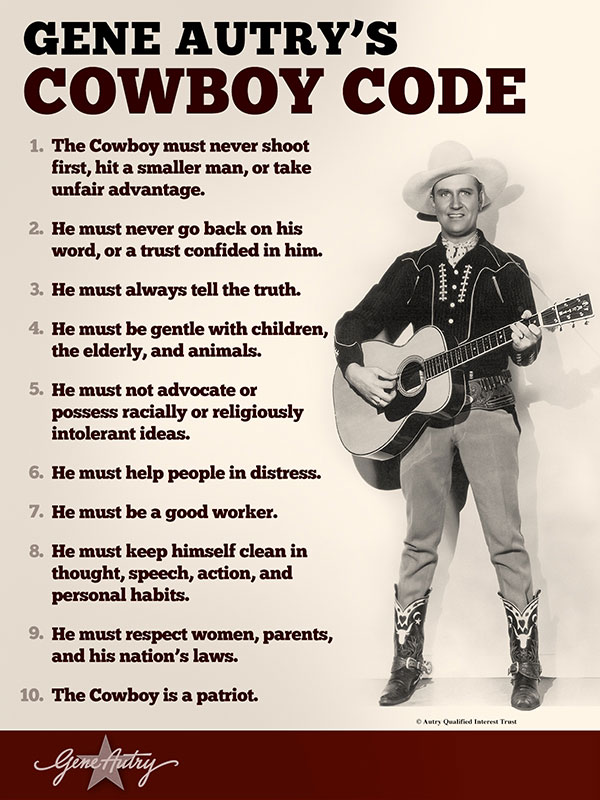
Gene Autry’s Cowboy Code, 1947
Magic

Life Is A Walking || Native American Wisdom
Anasazi Foundation “Life is a walking. At any time in your life you have the power to turn forward.” -Good Buffalo Eagle, THE SEVEN PATHS Anasazi Foundation is a nonprofit 501©(3) wilderness therapy program headquartered in Mesa, Arizona. Anasazi Foundation gives young people an opportunity, through a primitive living experience and a philosophy that invites healing at the hands of nature, to effect a change of heart–a change in one’s whole way of walking in the world. Many of the unique and life-changing teachings at Anasazi Foundation were inspired by two of its co-founders: Ezekiel C. Sanchez (a Totonac Indian whose given name is Good Buffalo Eagle) and his wife, Pauline Martin Sanchez (a Navajo native whose given name is Gentle White Dove). For more than thirty years these teachings have helped families turn their hearts to one another, begin anew, and walk in harmony in the wilderness of the world. VISIT OUR WEBSITE: ➤➤ https://www.anasazi.org READ OUR BOOKS: ➤➤ THE SEVEN PATHS: https://amzn.to/35hlwbY ➤➤ THE FIVE LEGENDS: https://amzn.to/2xbWKIx FOLLOW OUR TRAIL: ➤➤ NEWSLETTER: http://www.anasazi.org/newsletter/ ➤➤ FACEBOOK: http://www.facebook.com/anasazifounda… ➤➤ INSTAGRAM: http://www.instagram.com/anasazifound… ➤➤ MERCH: https://teespring.com/stores/anasazi-… ➤➤ DONATE: http://www.https://www.donate.anasazi… ==== CREDITS: Video by Stiry Studios: https://www.stiry.com#anasazifoundation#wisdom#wildernesstherapy
Astrology for the week ahead: January 18th- 24th

I believe that the entire universe is in a giant conspiracy for our ultimate well-being, if we can listen to its promptings. All of my work and writings are aimed at helping you listen to this inner guidance.
–David Pond (davidpond.com)
The week at a glance: The eyes of the world are on the US capitol this week with preparations for the inauguration appearing more like a combat zone than a stately transition of power. The astrology couldn’t be more dramatic, with some of the most intense astrology of the year occurring on inauguration day. The cosmic weather is charged with electrifying energy with a sudden release of built up tension—like the energy of earthquakes and lighting storms. This culminates with Mars (the warrior) conjunct Uranus (the revolutionary) on Wednesday. Mars transits heat-up, activate, and are known as “trigger” aspects (unfortunate moniker), releasing the built-up tension. Revolutionary fervor is fueled with bravado, hubris, and reckless abandon on inauguration day, yikes!
The winds of change are a howlin’ in 2021, with Uranus, the planet of sudden expected change, being active all year. There are two levels of working with this activated Uranus energy— fighting for your right to be free; or expressing your right to be free. At the lower level, a person feels the need to fight for their freedom, as in “I am going show them and get a divorce, quit my job, and leave town!” It never works. The skillful, mature level is to get the cosmic joke—if freedom requires permission or approval from others, it is not freedom at all. At the higher level, other people’s feedback and approval doesn’t weigh as heavily on the psyche, and you freely live and express your unique individuality.
At the personal level, for those who can skillfully handle this intense energy, it can lead to breakthroughs, innovative discoveries, and rapid evolutionary growth.
The cosmic surf is up this week, may you ride the waves well!
Monday: Draw on your courage today, get fired up, and get going with the Moon in “just jump” Aries. Good progress can be made with moving forward on your goals and plans with support from the Saturn/Jupiter conjunction.
Tuesday: A bit of excitement is in the air today enhancing communicating and brainstorming with others, with the Moon in spontaneous Aries in harmony to Mercury (the mind) in forward-thinking Aquarius. The Sun moves into Aquarius this afternoon, joining three other planets in the sign of friendships, groups, and social causes.
Wednesday: Red flag warnings for the cosmic weather today with the Moon in Taurus, joining Mars and Uranus, all square the four planets in Aquarius, creating maximum tension—while Mars (anger) conjunct the wild card planet Uranus, sparks a sudden release of the tension. If you can keep your cool and handle the intensity, sudden breakthroughs and discoveries can occur.
Thursday: You might wake up feeling edgy after an anything but restful night, with the Taurus Moon conjunct the heated up, electrifying Mars/Uranus conjunction in the wee hours before dawn. The day smooths out, leading to a comfortable, enjoyable evening with The Moon in harmony to lovely Venus. Enjoy!
Friday: Your head and heart can be pulling you in different directions to start the day with Moon in Taurus square Mercury. Draw on inner strength to get going with support from regenerating Pluto. The afternoon turns busy with the Moon moving into variety-seeking Gemini, and Mars (drive) gets pumped up by Jupiter, inflating the sense of possibilities—don’t bite off more than you can chew.
Saturday: Controlled growth should be the motto today with Mars (taking action) inflated by expansive Jupiter, while the Sun is also conjunct restrictive Saturn. Love and creativity are in the air with Venus being inspired by imaginative Neptune, and communications are enhanced with the Moon in open-minded Gemini supported by the Aquarius planets.
Sunday: Scattered, confused energy can cloud the day with Moon in easily distracted Gemini enticed by illusionary Neptune—perhaps get lost in a movie, or something fanciful, and wait for clarity returning this evening with the support from Mercury, enhancing all communications.
May the stars be with you!
(Contributed by Gwyllm Llwydd)
What neo-Nazis have inherited from original Nazism | DW Documentary
DW Documentary What resemblance do today’s ethnonationalistic ideologies bear to those which surged during the rise of the Nazis in the Weimar-era? Quite a lot, this documentary shows. Germany’s far-right neo-nazi scene is now bigger than at any time since National Socialism. History may not repeat itself, but one can still learn from it. The years of the Weimar Republic were scarred by post-war trauma, political extremism, street fighting, hyper-inflation and widespread poverty. But they also saw economic boom, the establishment of a liberal democratic order and a parliamentary party system. Nobody could really imagine that the Nazis would brush aside the achievements of this young democracy just a few years later. But there were signs, warnings even that all was not well. So how does that resonate today? How do today’s right-wing populist movements and parties achieve their political aims? Which slogans, images and stereotypes played a role then, and which ones are playing a role now? The film also looks beyond Germany’s borders. How has Europe changed in the last few years and how have far-right movements been able to gain such influence? In the interwar period, democracies across the continent collapsed one after the other like a house of cards. What about today? Riding on the coat-tails of the political party the Alternative for Germany (AfD) the far-right has become a factor in both national and state parliaments, united by nationalist and often racist ideologies directly linked to those of the 1930s. At that time, global economic crisis and mass unemployment drove people straight into the fascists’ arms. So what will happen if crisis strikes now? Are our democracies and their achievements today any more stable than they were in the years before the Second World War? ——————————————————————– DW Documentary gives you knowledge beyond the headlines. Watch high-class documentaries from German broadcasters and international production companies. Meet intriguing people, travel to distant lands, get a look behind the complexities of daily life and build a deeper understanding of current affairs and global events. Subscribe and explore the world around you with DW Documentary. Subscribe to DW Documentary: https://www.youtube.com/channel/UCW39… Our other YouTube channels: DW Documental (in spanish): https://www.youtube.com/dwdocumental DW Documentary وثائقية دي دبليو: (in arabic): https://www.youtube.com/dwdocarabia For more documentaries visit also: http://www.dw.com/en/tv/docfilm/s-3610 Instagram https://www.instagram.com/dwdocumentary/ Facebook: https://www.facebook.com/dw.stories DW netiquette policy: https://p.dw.com/p/MF1G
When I get lonely these days

The enduring allure of conspiracies
Conspiracy theories seem to meet psychological needs and can be almost impossible to eradicate. One remedy: Keep them from taking root in the first place.
By Greg Miller 01.14.2021 (knowablemagazine.org)
The United States of America was founded on a conspiracy theory. In the lead-up to the War of Independence, revolutionaries argued that a tax on tea or stamps is not just a tax, but the opening gambit in a sinister plot of oppression. The signers of the Declaration of Independence were convinced — based on “a long train of abuses and usurpations” — that the king of Great Britain was conspiring to establish “an absolute Tyranny” over the colonies.
“The document itself is a written conspiracy theory,” says Nancy Rosenblum, a political theorist emerita at Harvard University. It suggests that there’s more going on than meets the eye, that someone with bad intentions is working behind the scenes.
If conspiracy theories are as old as politics, they’re also — in the era of Donald Trump and QAnon — as current as the latest headlines. Earlier this month, the American democracy born of an eighteenth century conspiracy theory faced its most severe threat yet — from another conspiracy theory, that (all evidence to the contrary) the 2020 presidential election was rigged. Are conspiracy theories truly more prevalent and influential today, or does it just seem that way?
The research isn’t clear. Rosenblum and others see evidence that belief in conspiracy theories is increasing and taking dangerous new forms. Others disagree. But scholars generally do agree that conspiracy theories have always existed and always will. They tap into basic aspects of human cognition and psychology, which may help explain why they take hold so easily — and why they’re seemingly impossible to kill.
Once someone has fully bought into a conspiracy theory, “there’s very little research that actually shows you can come back from that,” says Sander van der Linden, a social psychologist at the University of Cambridge whose research focuses on ways to combat misinformation. “When it comes to conspiracy theories, prevention is better than cure.”
Counting conspiracies
When Joseph Uscinski began studying conspiracy theories a decade ago, he was one of only a handful of scholars — mostly psychologists and political scientists — interested in the topic. “No one cared about this at the time,” says Uscinski, a political scientist at the University of Miami in Florida. American Conspiracy Theories, the 2014 book he cowrote with political scientist Joseph Parent, became a landmark in conspiracy theory research.
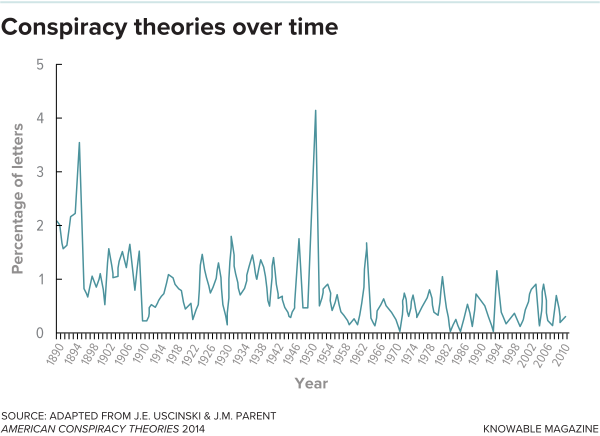
To investigate how conspiracy beliefs have changed with time, Uscinski, Parent and a small army of research assistants analyzed more than 100,000 letters to the editors of the New York Times printed between 1890 and 2010. Among these, they identified 875 letters that dabbled in conspiracy talk — that some group was acting in secret to steal power, or bury the truth, or reap some other benefit at the expense of the common good.
Many of the letters alleged geopolitical conspiracies: In 1890, it was England and Canada conspiring to take back territory from the United States, and in 1906, Japan was supposedly sending soldiers in disguise to prepare to seize Hawaii. Others focused on domestic political conspiracies, such as President Harry Truman covering up Communist infiltration of the government in the 1950s, and the idea that the 9/11 attacks were coordinated by the US to smear the Saudis. Still others were just bizarre, such as a 1973 letter claiming that lesbianism is a CIA-inspired plot.
When Uscinski and Parent graphed the prevalence of such newspaper conspiracy-theory letters between 1890 and 2010, the result was a very jagged line that showed, if anything, a slight downward trend over time (the most prominent peak marks McCarthyism and the Red Scare of the early 1950s). More recent polling research by Uscinski suggests that this overall picture has remained the same — with belief in specific conspiracy theories rising and falling over time, but no evidence for an overall increase. “The general hypothesis that’s put out there in the media is [that] everyone’s becoming conspiracists, and now is the golden age of conspiracy theory,” Uscinski says. “We find no such thing whatsoever.”
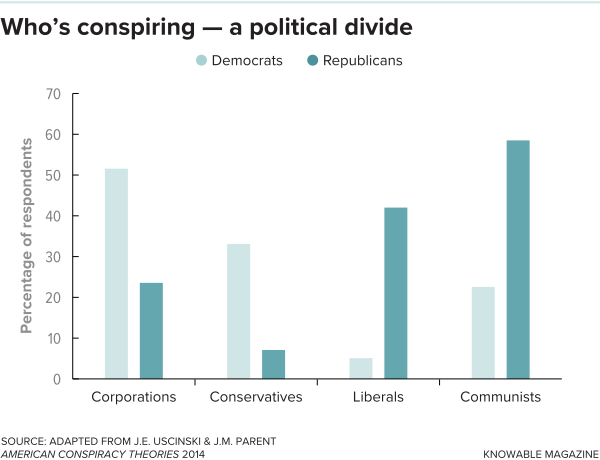
Uscinski’s research suggests that conspiracy thinking is more or less evenly distributed across the political spectrum, with Democrats becoming more vocal about conspiracy theories when Republicans are in power, and vice versa. Democrats tend to be suspicious of corporations and conservatives. Republicans are more likely to be suspicious of communists and liberals. In a chapter memorably titled “Conspiracy Theories Are for Losers,” Uscinski and Parent write that conspiracies are a way for those who’ve lost or lack power to explain their losses, channel their anger, close ranks and regroup.
During his presidency, Donald Trump was the exception that proves the rule, Uscinski says. It’s not easy for one of the most powerful people in the world to claim they’re the victim of a conspiracy (it didn’t work, for instance, when allies of Bill Clinton blamed a “vast right-wing conspiracy” for the president’s troubles during his impeachment trial in the late 1990s). Trump, however, cast himself as a political outsider from the beginning, Uscinski says: “He sets himself up, not only as a victim of the other side, but of both parties and the entire system and what he calls the deep state … so everything is rigged against him.” The Russia inquiry and his 2019 impeachment, Uscinski adds, helped to feed this narrative, which has continued through the chaotic aftermath of the 2020 election.
A new — and dangerous — form
Rosenblum argues that Trump epitomizes a new type of “conspiracy without theory” that relies on sheer assertion and repetition rather than evidence and reason. (Rosenblum is coeditor of the Annual Review of Political Science.) Trump’s baseless tweets that the election was rigged, she says, stand in contrast to Kennedy assassination conspiracists obsessing over bullet trajectories or 9/11 conspiracists diving into data on the temperature at which jet fuel burns. “This conspiracy thinking that’s going on today takes a very different and novel and dangerous form,” she says, because it seeks to delegitimize political rivals, government agencies, the press and others who might stand in the way. “It unsettles the ground on which we argue, negotiate, and even disagree,” she and coauthor Russell Muirhead wrote in their 2019 book, A Lot of People Are Saying: The New Conspiracism and the Assault on Democracy. “It makes democracy unworkable — and ultimately, it makes democracy seem unworthy.”
One of the most influential ideas in conspiracy theory scholarship is that people who identify themselves as politically conservative are more likely to believe in conspiracy theories. In a widely cited 1964 essay in Harper’s Magazine, Columbia University historian Richard Hofstadter argued that a “paranoid style” runs through conservative political movements of the twentieth century, fed by distrust of “cosmopolitans and intellectuals.” Uscinski says his polling research finds no evidence that conservatives are more prone to believe in conspiracy theories than liberals, but other researchers still think there’s something to this idea.
In a recent series of studies, van der Linden and colleagues conducted online surveys of more than 5,000 Americans from across the political spectrum, asking them to rate their political preferences and respond to questions that were developed by psychologists to measure conspiratorial thinking and paranoia. One survey item, for example, asked participants to rate on a scale of 0 to 100 their agreement with the statement: “I think that events which superficially seem to lack a connection are often the result of secret activities.”
People at both extremes of the political spectrum were more prone to conspiracy thinking than those in the middle, but conservatives tended to be more conspiratorial than liberals, the researchers reported in Political Psychology last year. “We think this is convincing evidence … of these differences between liberals and conservatives,” van der Linden says. “I wouldn’t say it’s a large effect, but it wasn’t tiny, either.”
This difference, he thinks, may be rooted in group psychology. “There’s a lot of research that shows that, whereas the liberals are a bit more extroverted and rebellious and so on, conservatives tend to be focused on managing uncertainty and threat and in-group values,” he says. Conspiracy theories are one way to make sense of events that seem overwhelming and may feel as though they threaten the groups and values that people most identify with, he says. “It’s definitely a mechanism to try to restore a sense of agency and control over the narrative.”
Van der Linden is quick to note, however, that liberals aren’t immune from conspiracy thinking. Conspiracy theories about technology seem more popular among liberals, for example, including ones involving pharmaceutical companies and genetically modified crops.
Mind hacks
One reason that conspiracy theories find fertile ground in the human mind has to do with epistemology — the philosophy of how we know what we know (or think we do). Because any individual can know only a tiny sliver of the world firsthand, we have no choice but to accept a great deal of information we can’t verify for ourselves. Most people believe (correctly) that Antarctica is very cold and populated with penguins, despite never having been there. The assumptions and cognitive shortcuts we use to decide what’s true make sense most of the time, but they also leave the door open for bad information, including conspiracy theories.
Since most of the information we encounter in everyday life (at least outside of social media) is true, that creates a bias toward accepting new information, says Nadia Brashier, a psychologist and neuroscientist at Harvard. And hearing a claim multiple times makes it seem even more true. “One of the most insidious influences on our judgment involves repetition,” Brashier says.
Dozens of studies have documented this “illusory truth effect,” mainly by asking participants to rate the veracity of trivia, rumors, product claims, fake news reports and other bits of information, Brashier and Duke University psychologist and neuroscientist Elizabeth Marsh write in a recent Annual Review of Psychology paper about how people determine what’s true. Even people who recognize a statement as false the first time they see it are more likely to judge it as probably true after seeing it multiple times, Brashier says.
Ordinarily, it’s rational to assume that the more times you hear something, the more likely it is to be true, she says. “But we’re seeing bad actors hijack these shortcuts that we use that make sense in a lot of situations [but] that can lead us astray in others.”
Conspiracy theories also take advantage of our tendency to look for patterns and explanations, says Karen Douglas, a psychologist who studies conspiracy thinking at the University of Kent in the United Kingdom. Pattern detection serves us well in everyday life, Douglas says: It’s how we piece together how people typically behave in given situations, for example. Believing in a bogus conspiracy theory amounts to seeing a pattern that’s not really there.
In a 2018 paper, Douglas and colleagues recruited hundreds of volunteers online and quizzed them about their belief in various conspiracy theories, some well-known ones and some invented by the researchers. Participants who agreed more strongly with a sample of well-known conspiracy theories were more likely than others to also see meaningful patterns in a series of random coin tosses and in the chaotic, splotchy paintings of abstract expressionist artist Jackson Pollock. “It seems that seeing patterns in random phenomena such as coin tosses and abstract paintings relates to the tendency to see patterns in political and social events that are happening in the world,” Douglas says.
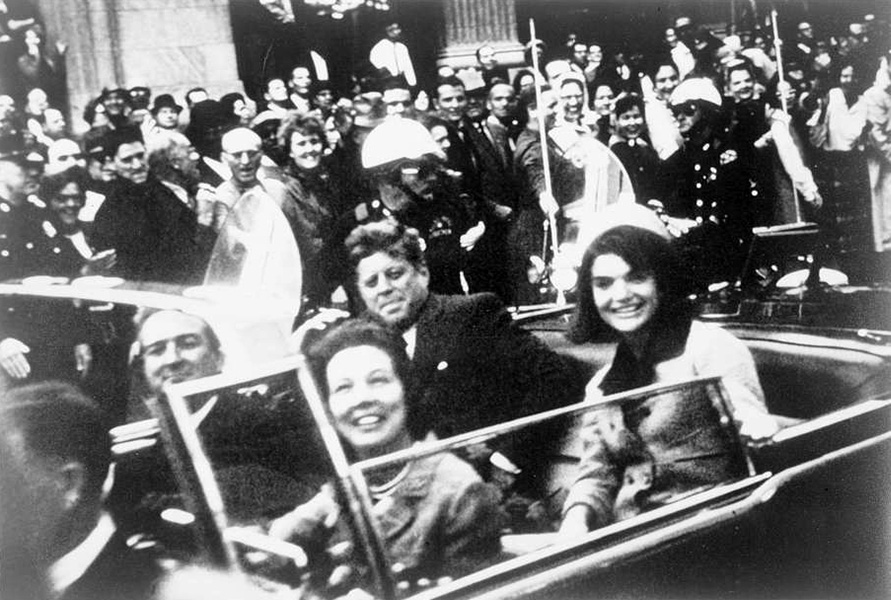
Such studies reveal a human tendency to attribute events to the intentional actions of others rather than to pure chance, Douglas says. Work by others has shown that we also tend to assume that when something huge happens, something huge must have caused it. This also feeds into conspiracy thinking, Douglas says. The assassination of John F. Kennedy was too momentous an event to have been pulled off by a lone gunman, conspiracists argue. Surely the US government was involved — or the KGB, or the Mafia.
Social and emotional factors are likely at play as well. “People are most susceptible to conspiracy theories when particular psychological needs are frustrated,” Douglas says. “Specifically, people need knowledge and certainty to feel safe, secure and in control, and to feel good about themselves and the social groups they belong to.” When these needs are unmet — say, amidst the fear and uncertainty of a global pandemic — conspiracy theories might seem to offer consolation, Douglas says.

But her research suggests that they might actually do the opposite. “Reading about conspiracy theories, instead of making people feel more powerful, makes people feel less powerful,” she says. It may even make people less likely to take actions that would give them more control over their situation. In experiments where volunteers read about conspiracy theories before answering questionnaires about their likelihood to engage in various behaviors, Douglas and others have found evidence that conspiracy theories reduce people’s inclination to vote, to vaccinate their children, or to help fight climate change. The people in such studies also express greater prejudice and a greater inclination to commit petty crime, at least in their responses to researchers.
“Our reasoning is that if people perceive that others are conspiring and doing antisocial things, then it seems OK for people to do these things too,” Douglas says. “Also, if they feel that the world is run by a select few and that everything is determined, why bother to go out and vote or engage with a corrupt system?” She adds, however, that more work is needed to determine whether these responses in conspiracy belief studies actually translate to antisocial behaviors in the real world.
Countering conspiracies
Talking a true believer out of their belief in a conspiracy can be nearly impossible. (The believer will assume you’re hopelessly naïve or, worse, that you’re part of the cover-up). Even when conspiracy theories have bold predictions that don’t come true, such as QAnon’s claim that Trump would win reelection, followers twist themselves in logical knots to cling to their core beliefs. “These beliefs are important to people, and letting them go means letting go of something important that has determined the way they see the world for some time,” Douglas says.
As a result, some researchers think that preventing conspiracy theories from taking hold in the first place is a better strategy than fact-checking and debunking them after they do — and they have been hard at work developing and testing such strategies. Van der Linden sees inoculation as a useful metaphor here. “I think one of the best solutions we have is to actually inject people with a weakened dose of the conspiracy … to help people build up mental or cognitive antibodies,” he says.
One way he and his colleagues have been trying to do that (no needles required) is by developing online games and apps. In a game called Bad News, for example, players assume the role of a fake news creator trying to attract followers and evolve from a social media nobody into the head of a fake-news empire. The 15-minute game is meant to teach people how fake news spreads so that they can recognize it more readily. (In one of the activities, players create and promote their own conspiracy theory.)
To assess the game’s effects, van der Linden and colleagues recruited more than 14,000 people to play Bad News. Before and after playing, participants were asked to identify misinformation within a selection of real and made-up tweets and headlines. Playing the game improved players’ resistance to fake news, the researchers reported in 2019: When presented with dubious tweets and news headlines, they were more likely to rate them as unreliable. The researchers termed the improvement “small to moderate.” A follow-up study found that it persisted for at least three months after the game was played.
More recently, the researchers created a game based on Bad News that specifically tackles conspiracies and other misinformation related to Covid-19. Called Go Viral!, it was developed with support from the UK government and released in October. The World Health Organization and the United Nations have promoted the game as a resource for fighting misinformation, “so that we can hopefully reach millions of people around the world,” van der Linden says.
Stopping the spread
The critical question — pushing the vaccine metaphor to its limits — is how to achieve herd immunity, the point at which enough of the population is immune so that conspiracy theories can’t go viral. It might be difficult to do that with games because they require people to take the time to engage, says Gordon Pennycook, a behavioral scientist at the University of Regina in Canada. So Pennycook has been working on interventions that he believes will be easier to scale up.
His research suggests that people are pretty good at spotting fake news, including bogus conspiracy theories — but that doesn’t mean they don’t share fake stuff on social media. “People are sharing headlines that they could identify as being false if they bothered to think about it,” he says.
To counter this, Pennycook and colleagues have been developing ways to nudge people to think more critically about the information they share without explicitly telling them to do so. In one recent study conducted online, they asked 856 volunteers to rate how likely they would be to share various Covid-19 news headlines — some true ones from credible sources, others that were bogus or debunked — if they saw them on social media. Before doing this, roughly half the participants were asked to rate the accuracy of a single, politically neutral headline unrelated to Covid-19 (one had to do with a neutron star discovery, another had to do with Seinfeld coming to Netflix). Taking a moment to contemplate accuracy made participants nearly three times more discerning in what they decided to share, the researchers reported in Psychological Science last year.
Social media companies have started to deploy similar strategies: An example is Twitter’s recent rollout of a prompt that advises users to read an article before sharing it. Pennycook thinks that such moves are worthwhile. In a recent study, yet to be published, he and colleagues found that a 30-second video prompting people to think about accuracy cut viewers’ willingness to share fake news in half (at least as reported on a survey — the researchers weren’t able to track the actual social media behavior).
Even as researchers push to develop such measures, they acknowledge that eradicating bogus conspiracy theories may not be possible. Conspiracy theories flourished as far back as the Roman Empire, and they inspired an angry mob to storm the US Capitol just last week. Specific theories may come and go, but the allure of conspiracy theories for people trying to make sense of events beyond their control seems more enduring. For better — and of late, very much for worse — they appear to be a permanent part of the human condition.
Greg Miller is a science journalist based in Portland, Oregon. Or is he? Follow him on Twitter @dosmonos.
(Contributed by Michael Kelly, H.W.)